Category Archives: the brown boy dilemma

The Male Files: The Soul of a King

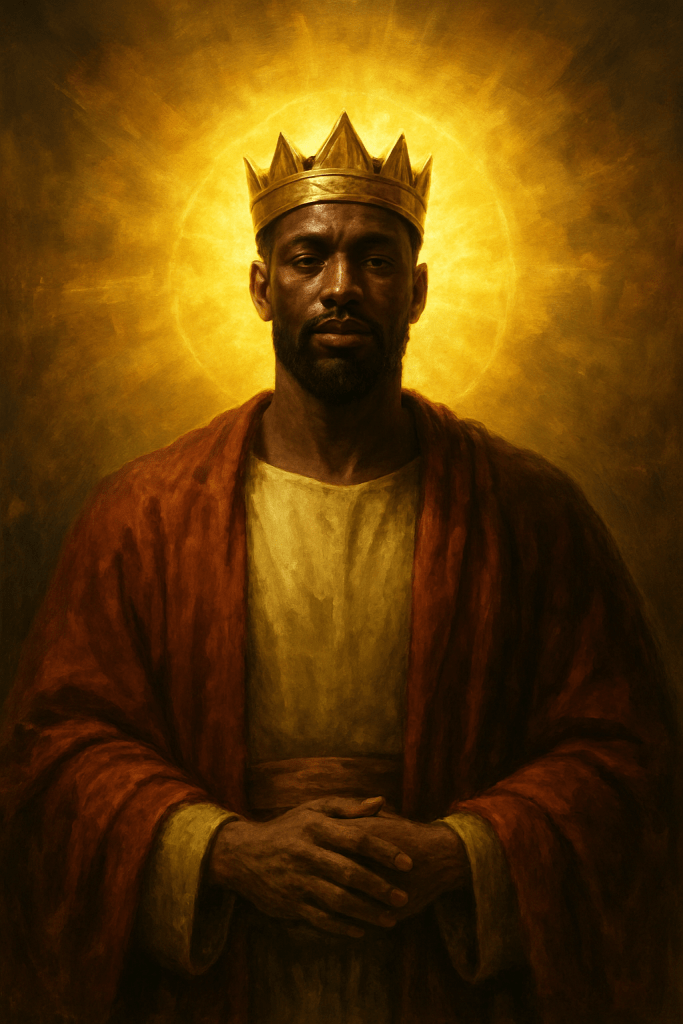
In a world that often diminishes the spiritual authority and divine design of manhood, the soul of a king stands as both a mystery and a mandate. The King, in biblical and spiritual context, represents more than status—he embodies stewardship, wisdom, and submission to the will of God. To understand the soul of a king is to look beyond the crown and into the inner workings of purpose, identity, and divine responsibility. Scripture reminds us that true kingship is not measured by dominance or wealth, but by righteousness and humility. As Proverbs 16:12 declares, “It is an abomination to kings to commit wickedness: for the throne is established by righteousness” (KJV).

A king’s soul must be anchored in divine order. He is not self-appointed but chosen by God for leadership, both in his home and his community. David, the shepherd who became Israel’s greatest king, was anointed long before he ascended the throne. His kingship began in obscurity, formed through worship and warfare in the fields (1 Samuel 16:13). This reveals a spiritual truth: kings are forged in secret before they are revealed in public. The soul of a king must first learn servanthood before exercising dominion.

The greatest danger to any man’s kingship is pride. When the soul exalts itself above God, authority becomes corrupted. King Saul’s fall serves as a solemn warning that disobedience and ego can strip a man of divine favor. As 1 Samuel 15:23 states, “For rebellion is as the sin of witchcraft, and stubbornness is as iniquity and idolatry” (KJV). The soul of a king must therefore remain teachable, repentant, and obedient to the voice of God, lest his throne become his prison.

A true king governs not only others but himself. He rules over his emotions, his impulses, and his tongue. Proverbs 25:28 warns, “He that hath no rule over his own spirit is like a city that is broken down, and without walls” (KJV). The disciplined soul becomes a fortress of stability in a chaotic world. Kingship without self-control leads to ruin, but kingship with restraint establishes peace within and around.

The soul of a king is also a soul of service. Christ, the King of Kings, modeled leadership through humility and sacrifice. In Matthew 20:28, He declared, “The Son of man came not to be ministered unto, but to minister, and to give his life a ransom for many” (KJV). The essence of spiritual royalty lies in serving others with love, compassion, and justice. A king who refuses to serve cannot sustain his rule, for service is the foundation of divine leadership.

A king’s wisdom is his crown. Solomon prayed not for riches or victory, but for understanding. His request pleased the Lord, who granted him both wisdom and prosperity (1 Kings 3:9–13). This teaches that a king’s greatness flows from his ability to discern the will of God. The soul of a king listens more than it speaks, meditates before it acts, and seeks counsel before making decisions.

The heart of a king must also be tender toward the people. David’s compassion for his soldiers and his grief over Absalom’s rebellion show that true kingship carries emotional weight. The soul of a king is not hardened by power but softened by empathy. He feels deeply, yet governs wisely. His strength lies in his balance—firm in justice, but rich in mercy, reflecting God’s own heart.

Righteous kingship demands spiritual warfare. Every true king faces opposition, not only from the external world but from the unseen realm. The adversary seeks to dethrone men from their spiritual position through temptation, lust, and pride. Yet the armor of God remains his defense. As Ephesians 6:11 instructs, “Put on the whole armour of God, that ye may be able to stand against the wiles of the devil” (KJV). The soul of a king must be battle-ready, clothed in faith and truth.

The anointed man’s path is often lonely. Isolation refines the king’s character and tests his endurance. In moments of solitude, he learns to hear the whisper of the Spirit, as Elijah did in the wilderness (1 Kings 19:12). The king’s solitude is not abandonment but preparation. God hides His chosen ones before revealing their destiny.

Kingship is not inherited by blood alone but by covenant. Every man who walks in faith becomes part of a royal priesthood (1 Peter 2:9). This means that kingship is not about title or throne, but about alignment with God’s will. The modern man, therefore, is called to rule with integrity in his sphere—whether as father, husband, leader, or mentor. His throne is wherever his obedience to God establishes dominion.

The soul of a king must be anchored in humility. The world teaches men to boast, but Scripture reminds them to kneel. In Micah 6:8, the prophet writes, “What doth the Lord require of thee, but to do justly, and to love mercy, and to walk humbly with thy God?” (KJV). The posture of humility attracts divine favor and guards the king from self-destruction.

Every king must also confront his inner wounds. Generational trauma, fatherlessness, and societal rejection often leave men broken beneath their crowns. Yet healing is the key to righteous rule. Psalm 34:18 declares, “The Lord is nigh unto them that are of a broken heart; and saveth such as be of a contrite spirit” (KJV). A healed soul becomes a vessel of restoration for others.

A true king leads his family with love and spiritual vision. His leadership begins in the home, where his example shapes generations. Ephesians 5:23 affirms, “For the husband is the head of the wife, even as Christ is the head of the church” (KJV). Yet this headship is not tyranny; it is sacrificial love, mirroring Christ’s devotion to the Church.

The king’s relationship with God defines his reign. His prayer life is his strategy, his worship is his weapon, and his faith is his fortress. Without intimacy with God, his crown becomes heavy and his vision fades. Psalm 27:4 captures the king’s longing: “One thing have I desired of the Lord… that I may dwell in the house of the Lord all the days of my life” (KJV).

The soul of a king must also learn forgiveness. Unforgiveness poisons authority and corrupts purpose. Joseph, though betrayed by his brothers, forgave and ruled with compassion (Genesis 50:20). Forgiveness is the hallmark of a matured king—it signifies mastery over bitterness and alignment with divine mercy.

A righteous king uplifts the poor and defends the oppressed. His rule extends justice, not exploitation. Proverbs 29:14 teaches, “The king that faithfully judgeth the poor, his throne shall be established forever” (KJV). The true measure of a man’s kingship lies not in his wealth but in his compassion.

The soul of a king must remain teachable under divine authority. Even King David, though anointed, sought the counsel of prophets and priests. This humility preserved his throne and renewed his heart. Every king who submits to God’s Word ensures that his rule endures beyond his lifetime.

Kingship also demands accountability. A man’s power must be checked by moral principle and spiritual discipline. Without accountability, authority becomes abuse. Nathan’s rebuke of David (2 Samuel 12:7) illustrates that even kings must be corrected. True strength lies not in being above reproach, but in receiving it with wisdom.

The soul of a king is eternal. Earthly crowns tarnish, but spiritual legacy endures. When a man governs with love, integrity, and truth, he becomes a reflection of the eternal King, Christ Himself. His rule transcends generations, shaping destinies long after his physical reign has ended.

Ultimately, the soul of a king is a heart surrendered to God. His purpose is not to be worshipped, but to worship; not to rule alone, but to reflect divine rulership on earth. The world needs such kings—men of valor, humility, and faith—who will rise in righteousness and restore the moral order of nations. For as Revelation 19:16 declares, “He hath on his vesture and on his thigh a name written, KING OF KINGS, AND LORD OF LORDS” (KJV).


References (KJV Bible)
1 Samuel 15:23; 1 Samuel 16:13; 1 Kings 3:9–13; 1 Kings 19:12; 2 Samuel 12:7; Ephesians 5:23; Ephesians 6:11; Genesis 50:20; Micah 6:8; Matthew 20:28; Psalm 27:4; Psalm 34:18; Proverbs 16:12; Proverbs 25:28; Proverbs 29:14; Revelation 19:16; 1 Peter 2:9.


Black Thought Collective

The intellectual and cultural contributions of Black people, when examined collectively, form a rich tapestry of thought that spans centuries, continents, and disciplines. The Black Thought Collective is not merely an academic exercise—it is a recognition of the shared consciousness, resilience, and creative genius of people of African descent. It encompasses reflections on freedom, justice, identity, spirituality, culture, and social responsibility, offering a lens through which the world can better understand the Black experience.

Historical Foundations of Black Thought

Black intellectual thought has deep roots, stretching from African kingdoms and philosophical traditions to the African diaspora. Scholars such as W. E. B. Du Bois articulated the dual consciousness of being Black in a world dominated by Eurocentric norms, highlighting the tensions of identity, freedom, and self-perception (Du Bois, 1903). Similarly, Carter G. Woodson emphasized the importance of education and historical knowledge in combating systemic oppression (Woodson, 1933). These early foundations established the principle that Black people’s collective reflection is not only valid but essential for social transformation.

Resistance and Liberation in Thought

Black thought is often forged in the crucible of struggle. From the era of slavery to the modern civil rights movement, Black intellectuals and activists have confronted oppression with innovative strategies and visionary ideas. The writings of Du Bois (1999) on Reconstruction, the activism of Frederick Douglass, and the political philosophy embedded in contemporary movements like #BlackLivesMatter (Taylor, 2016) all demonstrate that Black thought functions as both critique and guide for collective liberation.

Cultural and Artistic Contributions

Art, music, literature, and philosophy serve as essential vessels of Black collective consciousness. Jazz, hip-hop, African oral traditions, and literary works by Toni Morrison, James Baldwin, and bell hooks articulate both the pain and the triumph of Black life. These cultural productions are not merely aesthetic; they are intellectual interventions, shaping social understanding and advancing discourse on identity, equity, and justice (hooks, 2000; Coates, 2015).

Contemporary Intellectual Discourse

Modern Black thought encompasses sociology, political theory, education, and philosophy. Scholars like Cornel West (2001) and Charles Mills (1997) interrogate the persistent effects of racial hierarchies, systemic injustice, and epistemic exclusion. Collectively, Black intellectuals challenge dominant paradigms, demanding recognition of structural inequities while proposing pathways to equity and collective flourishing (Glaude, 2016).

Spiritual and Moral Dimensions

Faith and spirituality have historically played a central role in shaping Black thought. The moral imperatives embedded in religious traditions—from African spiritual systems to Christianity—inform principles of justice, communal responsibility, and ethical leadership. Black thought consistently integrates the spiritual with the practical, emphasizing that liberation encompasses mind, body, and soul.

Intersectionality and Inclusivity

The Black Thought Collective is inherently intersectional. Gender, class, sexuality, and geographic location intersect with race to produce diverse perspectives within the collective. The insights of Black women intellectuals, including bell hooks and Kimberlé Crenshaw, underscore how multiple axes of oppression and identity inform nuanced understandings of justice and empowerment (hooks, 2000; Taylor, 2016).

Global Perspective

Black thought is not confined to the United States; it resonates across the African diaspora. Intellectuals from the Caribbean, Latin America, Europe, and Africa have contributed perspectives on colonization, migration, cultural identity, and global solidarity. Figures such as Frantz Fanon, Ngũgĩ wa Thiong’o, and Chimamanda Ngozi Adichie highlight the universal and adaptable nature of Black thought, bridging local experience with global consciousness.

Education and Knowledge Production

Education has been both a site of oppression and liberation. Black scholars have emphasized the production and dissemination of knowledge that centers Black experience, countering narratives imposed by colonial and Eurocentric institutions. Woodson’s advocacy for historically accurate education and contemporary calls for decolonized curricula continue this legacy (Woodson, 1933; Painter, 2010).

The Collective Mindset

The strength of Black thought lies in its collective nature. While individual thinkers contribute distinct perspectives, the synthesis of voices creates a holistic understanding of Black life, culture, and aspiration. This collective intelligence fosters resilience, innovation, and strategies for social, political, and cultural advancement.

Future Directions

Looking forward, the Black Thought Collective will continue to evolve. Emerging scholars, activists, and cultural creators are expanding the discourse to include technology, environmental justice, global health, and other contemporary challenges. By integrating historical insight with modern innovation, Black thought remains dynamic, relevant, and transformative.

Conclusion

The Black Thought Collective is a living testament to the intellectual, cultural, and spiritual vitality of Black people. It demonstrates that collective reflection is not merely academic but a vital tool for liberation, empowerment, and social change. Understanding and valuing these contributions is essential for a more just, equitable, and inclusive world. The collective wisdom of Black people offers profound insights into humanity, justice, and the ongoing pursuit of freedom.


References

Alexander, M. (2012). The new Jim Crow: Mass incarceration in the age of colorblindness. The New Press.

Coates, T.-N. (2015). Between the world and me. Spiegel & Grau.

Du Bois, W. E. B. (1903). The souls of Black folk. A. C. McClurg & Co.

Du Bois, W. E. B. (1999). Black reconstruction in America, 1860–1880. Free Press. (Original work published 1935)

Glaude, E. S., Jr. (2016). Democracy in Black: How race still enslaves the American soul. Crown Publishing Group.

hooks, b. (2000). Where we stand: Class matters. Routledge.

Mills, C. W. (1997). The racial contract. Cornell University Press.

Painter, N. I. (2010). The history of White people. W. W. Norton & Company.

Taylor, K.-Y. (2016). From #BlackLivesMatter to Black liberation. Haymarket Books.

West, C. (2001). Race matters. Beacon Press.

Woodson, C. G. (1933). The mis-education of the Negro. Associated Publishers.

Yancy, G. (2018). Black bodies, white gazes: The continuing significance of race in America. Rowman & Littlefield.

Dilemma: Exalted by Heaven, Dismissed by Earth.

To be chosen by Heaven yet questioned by humanity is a paradox the righteous have known since ancient days. There is a sacred ache carried by those whose souls are stamped with divine appointment, yet whose footsteps walk through a world that refuses to recognize their worth. It is the internal tug-of-war between divine identity and earthly invisibility—where God calls you “beloved,” but society calls you “less.”

This dilemma is not imagined; it is lived in the marrow of Black existence. From prophets overlooked by their own brethren to kings treated as commoners in foreign lands, history echoes with the cry: How does one carry majesty in a world that denies your crown?

It is a spiritual condition wrapped in sociological reality. Blackness—rich in heritage, woven with divine pigment and ancestral royalty—has been treated as a burden instead of a blessing. The ones Heaven elevated have been made to crawl through earthly systems built to shrink them. Yet their essence refuses diminishment; greatness leaks through every attempt to confine it.

This world will often pretend not to see the brilliance it fears. When melanin glows like bronze tempered by sacred fire, when identity is rooted not in ego but calling, the earth responds with discomfort. To be divinely marked means to be misunderstood by those who measure worth through carnal lenses.

Scripture shows this pattern repeatedly. Joseph was favored by Heaven but thrown into pits by men. David was anointed yet ignored in his father’s house. Christ Himself—Sinless, Sovereign, Salvation incarnate—was despised and rejected before exaltation. Their identity was never defined by human acceptance; Heaven had already spoken.

So too with the Black soul molded in dignity yet raised in a world programmed to pretend it sees nothing worthy. It is not a flaw of the divine—it is the blindness of a fallen age. A world corrupted by hierarchy sees threat in what God sees as treasure.

This dismissal is both systemic and spiritual. Colonial theology, media manipulation, and economic suppression attempted to erase divinely appointed glory. But Heaven’s decree cannot be undone by human distortion. The oppressed do not lose their anointing simply because oppressors fail to recognize it.

The heartache arises not from pride but purpose. Deep inside is the yearning to be known as God intended—to be seen not for flesh alone, but for spirit, mind, lineage, and destiny. When the earth rejects what God has ordained, it carves silent wounds in the soul.

Yet rejection often functions as refinement. The dismissed learn stillness, depth, and resilience. Their prayer life sharpens. Their vision deepens. They walk through fire and emerge as vessels that do not crumble under praise nor break under pressure. Heaven hides what Hell would try to kill.

To be unseen is sometimes preparation. Hiddenness is not punishment—it is consecration. When God sets you apart, the world may mistake you for forgotten, but Heaven is shaping something sacred out of sight. The overlooked learn to stand without applause, believe without validation, and rise without permission.

And there is a particular weight for Black men and women whose bodies carry the language of divinity—skin kissed by creation’s first dawn, features carved from ancient kings, hair spiraling like galaxies. The world’s refusal to honor what God honored only confirms spiritual inversion: light is feared when it is not pale.

But destiny does not negotiate with human insecurity. The same ones dismissed by earth will one day stand in positions prepared for them before time. Those once ignored become the standard. The rejected stone becomes the cornerstone. The first shall be last and the last first.

This tension—exalted above yet reduced below—produces a depth of character unrivaled by ease. To endure rejection while wearing unseen royalty requires humility, steadfastness, and a spirit anchored in truth rather than opinion.

In the quiet of prayer, the overlooked hear their true name. In the scriptures, they find reflection. In ancestry, they find proof. In oppression, they find prophecy. And in endurance, they discover their crown was never given by the world, so it can never be taken by it.

For when Heaven exalts you, earth’s dismissal becomes irrelevant. The world does not validate calling—it merely reacts to it. And reaction is evidence of reality. God’s chosen often walk through seasons where applause is muted, doors are slow to open, and honor feels distant. But what is delayed by man is never denied by God.

To be dismissed is not to be devalued. To be unseen is not to be ordinary. To be rejected is not to be unworthy. When God has spoken, human silence cannot negate divine proclamation.

How White Supremacy Affected Black People — and the Theology of Being “Chosen”

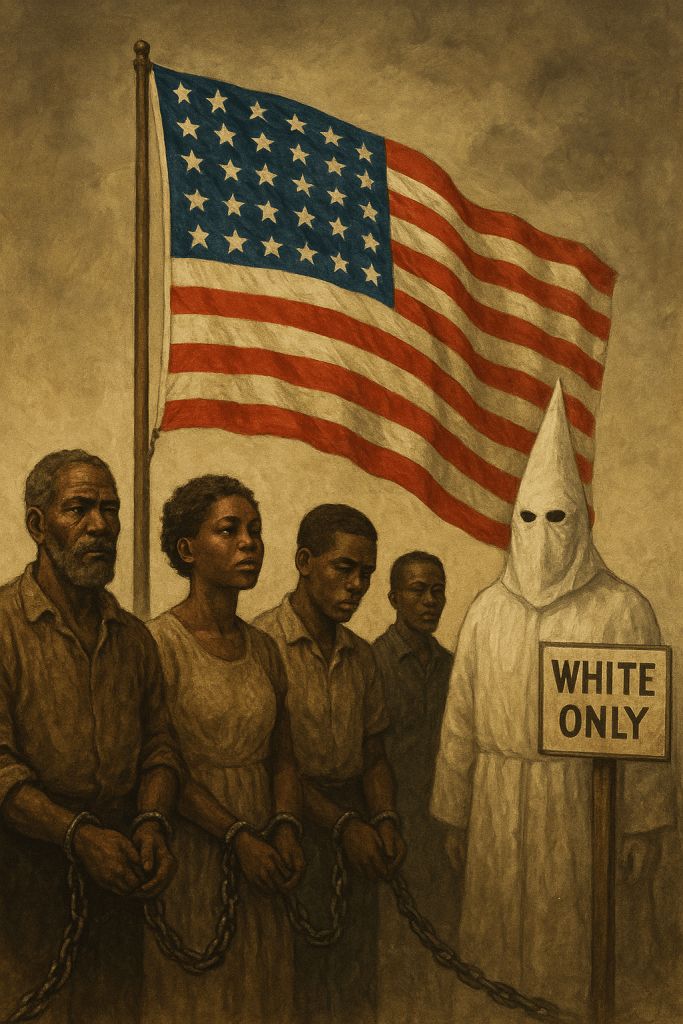
White supremacy was not merely an attitude; it was a global power system constructed to elevate whiteness as superior and to suppress African and Afro-diasporic people socially, spiritually, psychologically, and economically. It operated through:

  • Colonization
  • Enslavement and racial caste systems
  • Cultural erasure and forced assimilation
  • Colorism and beauty hierarchy
  • Misinterpretation of scripture to justify oppression
  • Educational, legal, and religious denial of African dignity and history

Its purpose was to break identity so the oppressed would forget who they were.

Psychological and Spiritual Strategy

White supremacy was not only physical — it was mental and spiritual. It sought to:

  • Strip African people of language, lineage, and legacy
  • Replace self-knowledge with inferiority narratives
  • Destroy family and masculine leadership structure
  • Shame dark skin, African features, and indigenous faith practice
  • Remove memory of royalty, priesthood, and ancient civilizations
  • Disconnect Black people from scripture and covenant identity

To dominate a people, you first must make them forget themselves.


Biblical Framework: The Chosen Motif

The idea of Black people being “chosen” is not about supremacy—but identity, survival, and covenant continuity through suffering.

In scripture, the chosen:

  • Suffered captivity (Deut. 28)
  • Were scattered among nations
  • Were despised and rejected
  • Lost language and heritage
  • Were restored and remembered by God in due time

This echoes the journey of African descendants, especially in the Americas.

Scriptural Parallels (KJV)

“And ye shall be plucked from off the land… and the LORD shall scatter thee among all people.”
— Deuteronomy 28:63–64

“They shall be for a reproach and a proverb and a byword.”
— Deuteronomy 28:37

“Princes shall come out of Egypt; Ethiopia shall soon stretch out her hands unto God.”
— Psalm 68:31

“Ye are a chosen generation, a royal priesthood.”
— 1 Peter 2:9

The suffering of African people aligns historically and spiritually with the pattern of God’s chosen in scripture — not because they sought dominance, but because they carried a divine assignment.


Being Chosen Does Not Mean Superior — It Means Set Apart

To be chosen in scripture means:

  • Chosen for responsibility
  • Chosen for the covenant
  • Chosen to endure trial and exile
  • Chosen to return to truth and faith
  • Chosen to shine God’s glory in humility, not pride

It is a burden before it is a blessing.

Just as Israel suffered before restoration, Black struggle reflects refining, not rejection.


Reclamation After Oppression

White supremacy attempted to erase identity.

But the very survival, resilience, creativity, spiritual power, and rising global awakening of Black people proves a divine seal that oppression could not break.

Reclaiming identity means:

  • Loving one’s God-given skin and features
  • Re-educating after historical distortion
  • Reconnecting to scripture with open eyes
  • Honoring African legacy and dignity
  • Walking in humility, faith, and purpose

Chosen identity produces service, not arrogance; spiritual authority, not domination.


The Pain and the Crown

White supremacy tried to bury the truth:

  • That dark skin is not curse but divine design
  • That African civilizations birthed mathematics, science, philosophy, and monarchy
  • That African presence in scripture is undeniable
  • That God uses the oppressed as vessels of His glory

The world rejected what Heaven sealed.

Like Joseph, like David, like Christ — dismissal precedes elevation.


Conclusion

Black suffering was not proof of inferiority —
it was the mark of a people whose identity threatened the world’s illusions.

Oppression did not erase destiny;
it revealed it.

Not chosen to rule over others —
but chosen to remind humanity who God is.

Chosen for endurance, for faith, for testimony,
and for the rising that the world cannot stop.


“The stone which the builders refused is become the head stone of the corner.”

— Psalm 118:22 (KJV)

So walk upright, bronze soul. Heaven sees you. Heaven backs you. Heaven named you before the world tried to rename you. And one day, what was whispered in spiritual realms will be undeniable in earthly ones.

Earth may overlook you, but Heaven never will.
And Heaven’s validation is the only crown that endures.


Scriptural References (KJV)
Psalm 118:22
Isaiah 53:3
1 Samuel 16:7
Romans 8:30
Matthew 20:16
Genesis 37–50 (Joseph narrative)

Dilemma: Police Harassment

Police harassment of Black Americans remains a pressing moral, social, and structural crisis in the United States. It is not limited to isolated incidents, but reflects recurring patterns of enforcement, disrespect, and disproportionate force, tied intimately to racialised histories and institutional practices. Understanding why this occurs demands engagement with racism, power, training, neighbourhood conditions, and the embedded culture of policing.

One reason police harassment happens with such frequency and racial skew is the legacy of racialised policing practices—rooted in slave patrols, segregation era policing, and the enforcement of racial hierarchy. These historical antecedents help explain why Black people are often treated as suspects, targets, or threats rather than equal citizens. The institutional memory of policing still carries layers of the “othering” of Black bodies.

Data show the disparity clearly. According to the Prison Policy Initiative, in 2022, Black people were over three times as likely as white people to experience the threat or use of force in their most recent police encounter. Prison Policy Initiative. The same dataset found that Black people reported higher rates of being handcuffed, searched, or having weapons used against them, even when controlling for initiation.

Another survey revealed that 42 % of African Americans said they personally experienced unfair treatment by police—being stopped, searched, questioned, physically threatened, or abused. Among those, 22 % reported such mistreatment in the past year. Equity in America. A separate poll found that 24 % of young Black adults reported being harassed by police, compared to significantly lower rates among whites. PBS

More dramatically, research from the Harvard T.H. Chan School of Public Health shows that Black Americans are approximately 3.23 times more likely than white Americans to be killed during a police encounter. Harvard Public Health. Meanwhile, a database from Statista indicates that in 2024 to November, there were 277 Black people killed by police in the U.S., at a rate of 6.2 per million, compared to 2.4 per million for white Americans. Statista

Why do so many officers harass Black people or treat them more harshly? There are several interacting factors: implicit and explicit racial bias, discretionary power in stops/searches/enforcement, law enforcement cultures that valorise control and suspicion, and the spatial realities of policing in predominantly Black communities. Research using smartphone data showed police presence is higher in Black neighbourhoods after controlling for density and crime—thus exposure alone increases the chance of harassment. arXiv

Police discretion plays a major role: when an officer stops an individual, the decision to search, question, or use force is shaped by perceptions of threat, compliance, demeanour—and research suggests that for Black individuals, this threshold is lower. A large‑scale study of state patrol stops found that Black drivers were stopped, searched, and arrested at higher rates than white drivers, controlling for many variables. arXiv

The institutional placement of many police forces in neighbourhoods with concentrated disadvantage and racial segregation exacerbates the dynamic. Black communities have historically been over‑policed, under‑resourced, and subject to environmental stressors—thus law enforcement becomes a vector of control rather than a partner of community safety. The deployment patterns, stop frequencies and local enforcement priorities all contribute to disparate harassment outcomes.

The role of racism is foundational. Racism doesn’t mean every officer consciously hates Black people, but it means the system of policing—and the broader criminal‐legal system—is structured in ways that devalue Black lives, normalise suspicion of Black persons, and grant officers broad latitude to treat Black bodies as less deserving of dignity. The repeated pattern of harassment, stops, searches, and use of force underscores this structural dimension.

Harassment is not just about physical force—it includes psychological stress, demeaning interaction, being treated like a criminal before any crime is committed, being over‐policed for minor infractions, and being more likely to have force used or threatened. The cumulative effect of multiple daily exposures to disrespect and coercion produces what some scholars call “racialised trauma”.

Consider the case of George Floyd. On May 25, 2020, George Floyd, a 46‑year‑old Black man, was arrested by the Minneapolis Police Department after being accused of using a counterfeit $20 bill. Officer Derek Chauvin, who is white, pressed his knee into Floyd’s neck for over nine minutes while Floyd was handcuffed and lying face down. Floyd repeatedly said he could not breathe. Al Jazeera+2PBS+2

Chauvin was found guilty on all charges—second‑degree unintentional murder, third‐degree murder, and second‐degree manslaughter—on April 20, 2021. PBS+1 He was later sentenced to 22.5 years in prison. Al Jazeera The case became a global symbol of police violence against Black people and sparked huge protests through the Black Lives Matter movement and beyond.

The Floyd case illustrates many of the themes of harassment: an officer treating a Black man as a threat, using excessive force, ignoring pleas of distress, and being held accountable only after overwhelming public outrage and video evidence. It reminds us that even when overt hatred may not be the driver, the system allows and legitimates harassment.

In analysing harassment, one must note that harassment in policing doesn’t just occur in fatal encounters. The bulk of harassment consists of non‑fatal stops, handcuffing, searches, threats of force, shouting and demeaning conduct. The 2022 Survey by the Bureau of Justice Statistics (via Prison Policy Initiative summary) found that Black people experienced enforcement actions in 18 % of street stops (versus 15 % for whites) and 8 % were searched or arrested (versus 6 % for whites). Prison Policy Initiative

Educationally and economically, the toll of police harassment is severe. Black individuals facing repeated policing are more likely to experience stress, distrust of legal institutions, disruption in job search or mobility, and negative health outcomes—including heightened risk of hypertension, mental‑health disorders and premature mortality. The linkage from harassment to broader life outcomes is increasingly recognised in social science.

From a theological perspective, the dignity of Black persons is undermined when harassment becomes routine. The imago Dei (Genesis 1:27) is ignored when state agents treat Black bodies as disposable or suspect. The prophetic tradition calling for justice (Isaiah 1, Amos 5) demands that the church and polity recognise and resist the systemic dehumanisation of Black people through police harassment.

In practical terms, addressing police harassment requires multi‑layered reform: changing officer training and culture; limiting discretionary stops, searches and use of force; increasing accountability and transparency; reducing over‑policing of Black neighbourhoods; empowering community oversight; and de‑racialising perceptions of threat. Structural changes must accompany individual reform.

The dilemma remains deeply stubborn because the system of policing is woven into larger economic, social, and racial structures: poverty, residential segregation, educational inequality and criminal‐legal system entanglement. Reform of policing alone, without addressing these root conditions will not fully dismantle the pattern of harassment.

In sum, police harassment of Black Americans is not an occasional anomaly but a predictable outcome of racialised policing, discretion, structural inequality, and institutional culture. The data confirm what lived experience tells us: Black people are more likely to be stopped, searched, threatened, handcuffed, and killed by police than white people—simply because they are Black. The case of George Floyd underscores the severity of the consequences when the system fails utterly. Recognition, repentance, systemic reform, and reparative action are necessary if we are to move toward justice.

References

The Male Files: Unlocking His Mind, One Secret at a Time.

Photo by cottonbro studio on Pexels.com

Understanding men is a complex endeavor, but it is essential for building healthy relationships. Men’s thoughts, desires, and fears are often guided by both biological instincts and emotional experiences. By studying these patterns, women can better navigate relationships and understand why men behave the way they do.

One of the first things to understand is why many men are attracted to physical beauty. Scripture acknowledges the human tendency to notice outward appearances, but it also warns against valuing it above the heart. “Favor is deceitful, and beauty is vain: but a woman that feareth the Lord, she shall be praised” (Proverbs 31:30, KJV). Men are naturally visual beings, but God calls them to pursue character as well as appearance.

Biologically, men are wired to respond to visual stimuli. Evolutionary psychology suggests that physical attraction signals fertility and health, which historically increased the chances of reproduction. This does not excuse superficiality, but it explains why initial attraction is often visual.

Although men should be providers, men often seek 50/50 relationships, desiring balance in effort, respect, and contribution. They want partners who will not only love them but also complement them spiritually, emotionally, and practically. “Two are better than one; because they have a good reward for their labour” (Ecclesiastes 4:9, KJV). Men value equality in partnership because it allows shared growth and stability.

The secrets of men often revolve around unspoken needs. Many struggle with expressing vulnerability, fearing judgment or rejection. Proverbs 20:5 (KJV) says, “Counsel in the heart of man is like deep water; but a man of understanding will draw it out.” Men often hide fears, hurts, and insecurities deep inside, and it takes patience and wisdom to uncover them.

Money is another sensitive subject for men. Many feel pressure to provide and fear failure if they cannot meet financial expectations. 1 Timothy 5:8 (KJV) reminds us, “But if any provide not for his own, and specially for those of his own house, he hath denied the faith, and is worse than an infidel.” This responsibility can create anxiety and affect relational dynamics.

Sex is also central in male psychology. Men often struggle with strong sexual desires, and societal pressures have conditioned them to expect instant gratification. While waiting for marriage is biblically encouraged, “Flee fornication. Every sin that a man doeth is without the body; but he that committeth fornication sinneth against his own body” (1 Corinthians 6:18, KJV), many men wrestle with self-control due to both hormones and cultural influences.

Many men fear vulnerability in love. Opening up about emotions, past trauma, or fears of inadequacy can feel risky. Yet, Proverbs 27:6 (KJV) teaches, “Faithful are the wounds of a friend; but the kisses of an enemy are deceitful.” True intimacy requires honesty, even when it is uncomfortable or risky.

Insecurities about appearance are also common. Men are often silent about their struggles with weight, hair loss, or other physical concerns. This silence can be misinterpreted as confidence, but beneath it may lie fear of rejection or inadequacy. Psalm 139:14 (KJV) affirms, “I will praise thee; for I am fearfully and wonderfully made.” God reminds men and women alike of inherent worth.

Fear influences male behavior in relationships. Some men fear emotional dependency, others fear betrayal, and some fear failure. These fears can cause withdrawal, defensiveness, or even aggression. “The heart is deceitful above all things, and desperately wicked: who can know it?” (Jeremiah 17:9, KJV). Men, like women, must confront these fears to love fully.

Men’s past hurts often shape present interactions. Childhood trauma, broken relationships, or rejection can create defensive patterns. Ephesians 4:31–32 (KJV) instructs, “Let all bitterness, and wrath, and anger, and clamor, and evil speaking, be put away from you, with all malice: And be ye kind one to another, tenderhearted, forgiving one another, even as God for Christ’s sake hath forgiven you.” Healing past wounds is critical for relational success.

Commitment can feel risky because vulnerability exposes men to emotional pain. Proverbs 22:3 (KJV) says, “A prudent man foreseeth the evil, and hideth himself; but the simple pass on, and are punished.” Men may hesitate to commit fully until trust is established.

Men’s desire for beauty often intersects with societal expectations. Media, peers, and culture emphasize physical perfection, which reinforces surface-level attraction. Yet, Song of Solomon 4:7 (KJV) highlights spiritual and emotional beauty: “Thou art all fair, my love; there is no spot in thee.” This reminds men that true beauty encompasses more than the exterior.

Financial concerns impact male decision-making in relationships. Men may delay commitment or engagement until they feel capable of providing, even if their partner is ready. Proverbs 13:11 (KJV) teaches, “Wealth gotten by vanity shall be diminished: but he that gathereth by labour shall increase.” Men often equate financial stability with relational readiness.

Sexual desire can conflict with spiritual principles. Men may struggle with patience in waiting for marital intimacy. 1 Thessalonians 4:3–5 (KJV) emphasizes, “This is the will of God, even your sanctification, that ye should abstain from fornication; That every one of you should know how to possess his vessel in sanctification and honour; Not in the lust of concupiscence, even as the Gentiles which know not God.” Spiritual discipline is essential for navigating this tension.

Men often compartmentalize their emotions due to fear of appearing weak. This behavior may be misunderstood by partners as disinterest or detachment. Ecclesiastes 7:10 (KJV) advises, “Say not thou, What is the cause that the former days were better than these? for thou dost not enquire wisely concerning this.” Understanding requires patience and empathy.

Trust is a central concern for men. Betrayal or dishonesty in prior relationships can create internal walls. Proverbs 3:5–6 (KJV) encourages reliance on God: “Trust in the LORD with all thine heart; and lean not unto thine own understanding. In all thy ways acknowledge him, and he shall direct thy paths.” Men must reconcile faith with relational trust to overcome fears.

Fear of inadequacy also drives secrecy about desires, weaknesses, and vulnerabilities. Men may hide insecurities about appearance, finances, or emotional depth to maintain social status or protect their ego. Romans 12:2 (KJV) reminds believers, “And be not conformed to this world: but be ye transformed by the renewing of your mind, that ye may prove what is that good, and acceptable, and perfect, will of God.” Transformation begins with honesty before God and self.

Some men equate control with masculinity, fearing that vulnerability signals weakness. Yet, true strength lies in transparency and courage. Joshua 1:9 (KJV) says, “Have not I commanded thee? Be strong and of a good courage; be not afraid, neither be thou dismayed: for the LORD thy God is with thee whithersoever thou goest.” God’s presence empowers men to embrace vulnerability confidently.

Emotional withdrawal is often misunderstood. Silence may not indicate indifference but an internal struggle to process feelings. Ecclesiastes 3:1, 7 (KJV) teaches, “To every thing there is a season, and a time to every purpose under the heaven… a time to keep silence, and a time to speak.” Timing matters in male emotional expression.

Insecurity about appearance can affect relationship initiation. Men may fear rejection or judgment based on body image, height, or other physical attributes. 1 Samuel 16:7 (KJV) states, “But the LORD said unto Samuel, Look not on his countenance, or on the height of his stature; because I have refused him: for the LORD seeth not as man seeth; for man looketh on the outward appearance, but the LORD looketh on the heart.” God values character above external traits.

Men’s past experiences with women shape expectations and fears. Trauma, unfaithfulness, or dishonesty in prior partners can make trust and commitment challenging. Colossians 3:13 (KJV) reminds believers to “forgive one another, if any man have a quarrel against any: even as Christ forgave you, so also do ye.” Forgiveness is a step toward relational healing.

Finally, understanding men requires compassion and discernment. Unlocking his mind involves patience, empathy, and acknowledgment of both his strengths and vulnerabilities. Proverbs 20:5 (KJV) reiterates, “Counsel in the heart of man is like deep water; but a man of understanding will draw it out.” A wise partner guides and supports without judgment.

Men want love that honors their needs, respects their fears, and challenges them to grow spiritually, emotionally, and morally. True intimacy is built on trust, patience, and mutual respect. 1 Corinthians 13:4–7 (KJV) defines this love: “Charity suffereth long, and is kind; charity envieth not; charity vaunteth not itself, is not puffed up… beareth all things, believeth all things, hopeth all things, endureth all things.”

In conclusion, men’s secrets are not mysteries to be feared but truths to be understood. Their desires for beauty, equality, and intimacy are natural, but fears, insecurities, and past hurts complicate them. By applying biblical wisdom, patience, and empathy, women can navigate relationships with discernment and grace, unlocking the heart and mind of the men they love.


References (KJV)

  • Proverbs 20:5; 27:6; 31:30; 3:5–6
  • Ecclesiastes 4:9; 7:10; 3:1,7; 4:12
  • 1 Corinthians 6:18; 13:4–7
  • 1 Thessalonians 4:3–5
  • 1 Samuel 16:7
  • Psalm 139:14; 30:5; 147:3; 34:18
  • Jeremiah 17:9
  • Romans 12:2
  • Ephesians 4:31–32
  • Colossians 3:13
  • Joshua 1:9

The Altar of American Exceptionalism: Promise, Peril, and Consequence.

American exceptionalism is the belief that the United States occupies a unique moral, political, and historical position among nations. Rooted in Puritan theology, Enlightenment ideals, and revolutionary mythology, it has long framed the nation as chosen, exemplary, and destined for leadership. This belief has functioned as both a guiding philosophy and a civic religion, shaping national identity and public policy across generations.

At its best, American exceptionalism has inspired aspirational ideals. The language of liberty, equality, and self-governance provided a moral vocabulary that fueled abolitionism, civil rights movements, and democratic reforms. By holding itself to a proclaimed higher standard, the nation created a framework through which citizens could critique injustice and demand alignment between principle and practice.

The Declaration of Independence stands as a canonical text of exceptionalist thought, asserting universal rights while situating the American experiment as historically unprecedented. This rhetoric energized oppressed groups who invoked its promises to expose hypocrisy. Frederick Douglass’s famous question—what to the slave is the Fourth of July—demonstrates how exceptionalist ideals could be turned inward as a moral indictment rather than an excuse for complacency.

Yet American exceptionalism has also functioned as an altar upon which truth is sacrificed. When national myth hardens into unquestionable dogma, it suppresses historical accountability. Slavery, Indigenous dispossession, segregation, and imperial expansion were often justified or minimized under the assumption that America’s intentions were inherently benevolent, regardless of outcomes.

The doctrine has repeatedly blurred the line between patriotism and moral exemption. Foreign interventions, from Manifest Destiny to twentieth-century wars, were frequently framed as civilizing missions rather than power pursuits. Exceptionalism provided the moral cover for empire, allowing violence to be narrated as virtue and domination as destiny.

Domestically, exceptionalism has obscured structural inequality. The insistence that America is uniquely free and just has been used to delegitimize claims of systemic racism, economic exploitation, and gender inequality. If the nation is already exceptional, then disparities are framed as personal failures rather than institutional designs.

This mindset has been particularly damaging to Black Americans. The contradiction between exceptionalist rhetoric and lived reality produced what W.E.B. Du Bois called “double consciousness,” a constant negotiation between national belonging and exclusion. Black resistance movements have historically navigated the tension between appealing to American ideals and rejecting America’s false innocence.

American exceptionalism also reshaped capitalism into a moral narrative. Wealth accumulation became equated with virtue, and poverty with moral deficiency. The “American Dream” promised upward mobility while masking the racialized and class-based barriers that structured opportunity. Exceptionalism thus sanctified inequality under the guise of meritocracy.

In education, exceptionalist narratives often sanitize history. Textbooks emphasize triumph while minimizing atrocity, creating citizens who inherit pride without responsibility. This selective memory weakens democratic capacity, as honest self-critique is replaced with defensive nationalism.

Religiously, exceptionalism has fused with Christian nationalism, transforming the state into a quasi-divine instrument. Biblical language of chosenness has been selectively applied to America, displacing its original covenantal context. This theological distortion elevates the nation above moral law rather than subjecting it to prophetic judgment.

The psychological effects of exceptionalism are equally profound. It fosters cognitive dissonance when reality contradicts belief, leading to denial rather than reform. Citizens may experience identity threat when confronted with injustice, responding with hostility instead of empathy.

Globally, exceptionalism damages credibility. When the United States preaches democracy while tolerating human rights abuses at home and abroad, its moral authority erodes. Allies perceive hypocrisy, while adversaries exploit inconsistency, weakening international trust.

However, rejecting blind exceptionalism does not require abandoning national aspiration. A critical patriotism can preserve ethical commitment without mythological arrogance. Nations, like individuals, mature through accountability rather than denial.

Some scholars argue for a post-exceptionalist identity grounded in democratic humility. This approach views the United States not as above history but within it—capable of learning from other nations and from its own marginalized voices. Such humility strengthens rather than weakens democratic life.

The civil rights movement offers a model of reformed exceptionalism. Leaders like Martin Luther King Jr. appealed to America’s professed ideals while exposing its moral bankruptcy. Their vision did not worship the nation; it called it to repentance.

In this sense, American exceptionalism becomes most ethical when desacralized. When stripped of infallibility, it can function as an aspirational ethic rather than a shield against critique. The danger lies not in national ideals, but in their absolutization.

The future of American democracy depends on whether exceptionalism remains an altar or becomes a mirror. A mirror reflects both beauty and blemish, demanding growth. An altar demands worship and excuses failure.

Ultimately, the question is not whether America is exceptional, but how it understands exceptionality. If exceptionalism justifies power without justice, it corrodes the nation’s soul. If it compels responsibility proportional to power, it may yet serve a moral purpose.

The effects of American exceptionalism are therefore paradoxical. It has empowered liberation and legitimated oppression, inspired reform and excused violence. Its legacy demands discernment rather than devotion.

A transformed national consciousness would replace myth with memory, arrogance with accountability, and supremacy with service. Only then can the United States pursue greatness without sacrificing truth upon the altar of its own exceptionalism.


References

Appleby, J. (2018). The virtues of liberalism. Oxford University Press.

Bellah, R. N. (1967). Civil religion in America. Daedalus, 96(1), 1–21.

Du Bois, W. E. B. (1903). The souls of Black folk. A.C. McClurg & Co.

King, M. L., Jr. (1963). Why we can’t wait. Harper & Row.

Lipset, S. M. (1996). American exceptionalism: A double-edged sword. W.W. Norton.

Mills, C. W. (1997). The racial contract. Cornell University Press.

Zinn, H. (2003). A people’s history of the United States. HarperCollins.

Dilemma: Dark Skin Penalty

The dark skin penalty refers to the systematic disadvantages imposed on individuals with darker complexions within societies shaped by white supremacy and colonial hierarchy. Unlike overt racism, this penalty operates subtly, often normalized as preference or coincidence, yet its consequences are profound and measurable. It represents the inverse of light skin privilege and functions as a social tax placed on visible Blackness.

Historically, the dark skin penalty was engineered during slavery and colonialism, where darkness was equated with inferiority, savagery, and danger. European racial ideology constructed Blackness as a problem to be controlled, while lighter skin was positioned as closer to civility and trustworthiness. These ideas were enforced through law, theology, and violence.

Within slavery, darker-skinned enslaved people were disproportionately assigned to the most brutal labor, exposed to harsher punishment, and denied even marginal privileges afforded to lighter-skinned individuals. Darkness became associated with disposability, while lighter skin functioned as a buffer within the racial caste system.

After emancipation, these hierarchies did not dissolve. They were absorbed into Black communities as internalized beliefs. Dark skin came to symbolize struggle, unattractiveness, and threat, while lightness symbolized opportunity. This psychological inheritance transformed external oppression into internal policing.

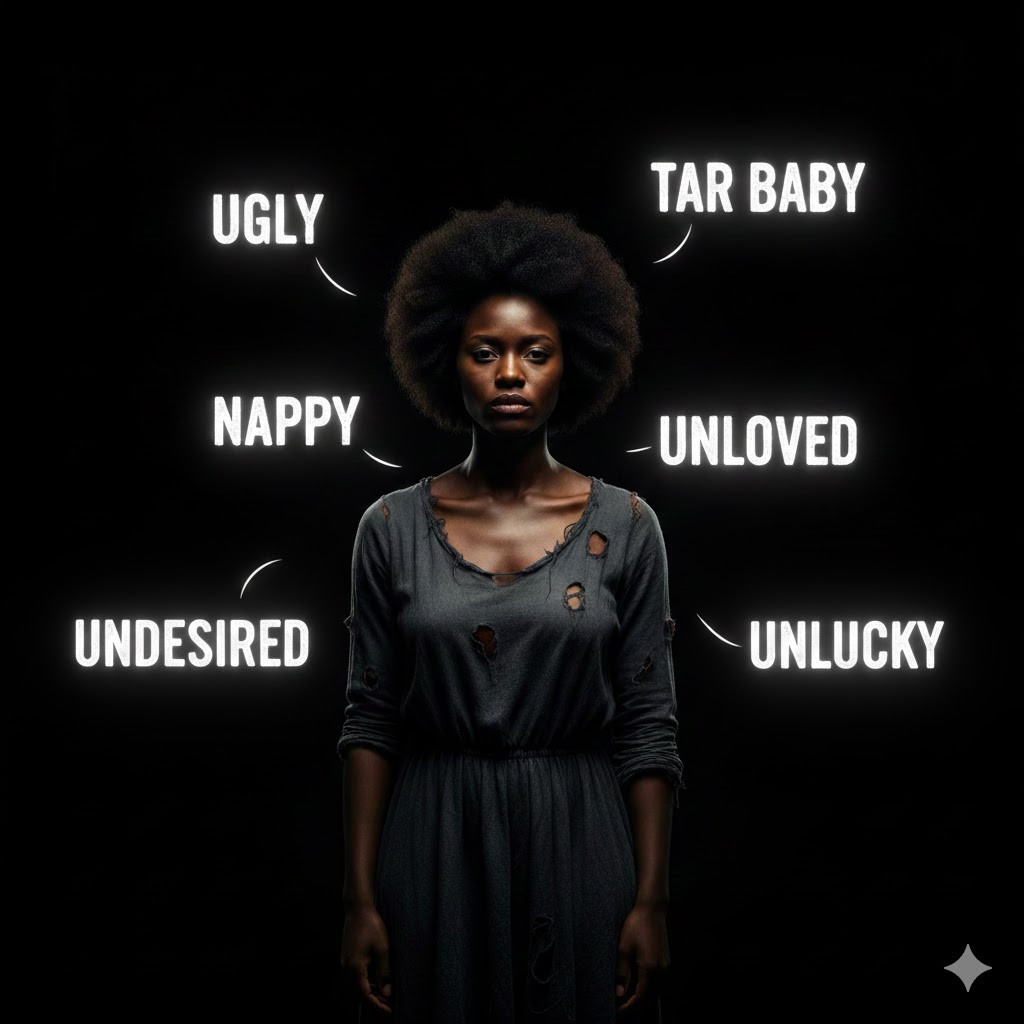
Beauty standards remain one of the most visible expressions of the dark skin penalty. Darker-skinned women are frequently excluded from dominant beauty narratives, described as less feminine, less soft, or less desirable. Empirical research confirms that darker skin is rated as less attractive due to entrenched Eurocentric aesthetics (Hunter, 2007).

In romantic and marital contexts, darker-skinned women experience higher rates of rejection and lower likelihood of marriage offers. They are often sexualized without being valued for long-term partnership, reflecting a dehumanizing pattern rooted in colonial hypersexualization (Russell et al., 1992).

Darker-skinned men also bear a severe penalty. They are more likely to be perceived as aggressive, criminal, or intellectually inferior. These stereotypes follow them into schools, workplaces, and public spaces, shaping expectations and treatment regardless of behavior.

The criminal justice system magnifies this penalty. Studies demonstrate that darker-skinned Black men receive longer sentences and harsher punishment than lighter-skinned Black men for similar crimes, revealing that skin tone itself influences legal outcomes (Monk, 2019).

In the job market, darker skin correlates with lower wages, fewer promotions, and higher unemployment rates. Employers often unconsciously associate darker skin with incompetence or danger, despite identical credentials (Monk, 2014). Professionalism becomes racially coded.

Educational environments also reflect this bias. Darker-skinned children are disciplined more harshly, perceived as less capable, and tracked into lower academic pathways. Early exposure to penalty shapes confidence and long-term achievement.

Within families, the dark skin penalty is often reinforced through differential treatment. Darker-skinned children may receive less praise, harsher discipline, or fewer resources, while lighter-skinned siblings are protected and celebrated. These dynamics communicate worth long before language can articulate it.

The psychological consequences are severe. Dark-skinned individuals face higher risks of depression, anxiety, and diminished self-esteem due to chronic devaluation. Fanon described this as epidermalization of inferiority, where the body itself becomes a site of shame (Fanon, 1952).

Media representation compounds the penalty. Darker-skinned people are underrepresented or typecast as villains, aggressors, or side characters, while lighter-skinned individuals dominate narratives of love, success, and heroism. Repetition normalizes hierarchy.

Spiritually, the dark skin penalty contradicts biblical truth. Scripture affirms that God is no respecter of persons and judges by the heart rather than appearance (1 Samuel 16:7; Acts 10:34, KJV). Color-based judgment is therefore a moral failure.

The Bible explicitly condemns partiality. James warns that favoring one person over another based on external markers makes one guilty of sin (James 2:1–9, KJV). Colorism violates divine law as surely as overt injustice.

The dark skin penalty fractures communal solidarity. It redirects pain inward, encouraging comparison and resentment rather than collective resistance. This fragmentation benefits oppressive systems by weakening unity.

Healing requires intentional confrontation of these biases. Naming the penalty dismantles denial. Silence allows harm to masquerade as normalcy. Scripture teaches that truth precedes freedom (John 8:32, KJV).

Cultural restoration demands redefining beauty, intelligence, and worth outside colonial frameworks. African history and theology affirm darkness as original, powerful, and divine in its own right (Diop, 1974).

Psychological healing must accompany social reform. Therapeutic approaches that address racial trauma align with Scripture’s call for renewal of the mind (Romans 12:2, KJV). Without healing, internalized penalty persists even in success.

The abolition of the dark skin penalty requires both structural change and spiritual repentance. Institutions must address bias, and individuals must unlearn inherited hierarchies. Liberation is incomplete without both.

Ultimately, the dark skin penalty is not a reflection of deficiency but of distortion. It reveals the depth of colonial damage, not the worth of those who bear it. Divine justice demands its dismantling.

Until dark skin is affirmed as fully human, fully beautiful, and fully worthy, inequality will continue to reproduce itself within oppressed communities. God’s standard remains unchanged: all flesh stands equal before Him.


References

The Holy Bible, King James Version. (1611). Various passages.

Russell, K., Wilson, M., & Hall, R. (1992). The color complex: The politics of skin color among African Americans. Anchor Books.

Hunter, M. (2007). “The persistent problem of colorism.” Sociology Compass, 1(1), 237–254.

Monk, E. P. (2014). “Skin tone stratification among Black Americans.” Social Forces, 92(4), 1317–1337.

Monk, E. P. (2019). “The color of punishment.” Ethnic and Racial Studies, 42(10), 1593–1612.

Fanon, F. (1952). Black skin, white masks. Grove Press.

Cross, W. E. (1991). Shades of Black: Diversity in African-American identity. Temple University Press.

Diop, C. A. (1974). The African origin of civilization: Myth or reality. Lawrence Hill Books.

Wilkerson, I. (2020). Caste: The origins of our discontents. Random House.

The Elephant in the Room: Racism

Racism remains the elephant in the room—visible, disruptive, and damaging—yet persistently denied or minimized in public discourse. It is not merely a collection of individual prejudices but a system of power that organizes opportunity, value, and belonging along racial lines. Its endurance lies not only in overt hostility but in silence, deflection, and the refusal to name it plainly.

Historically, racism was constructed to justify conquest, enslavement, and exploitation. European colonial expansion required an ideology that could reconcile Christian morality with economic brutality. Race became that justification, transforming human difference into a hierarchy of worth and rationalizing domination as destiny.

In the United States, racism was institutionalized through slavery, segregation, and discriminatory law. Even after formal barriers fell, the architecture of inequality remained intact. Housing policy, education funding, labor markets, and policing continued to reproduce racial disparity without explicit racial language.

One of racism’s most effective strategies is normalization. When inequality is framed as natural or cultural, responsibility disappears. Outcomes are blamed on behavior rather than barriers, allowing systemic harm to persist without accountability.

Psychologically, racism operates by shaping perception. Implicit bias research shows that people absorb racial stereotypes regardless of intent. These unconscious associations influence decisions in hiring, discipline, medical care, and sentencing, often without the decision-maker recognizing the bias at work.

Racism also fractures identity. W. E. B. Du Bois described this as double consciousness—the internal conflict of seeing oneself through the eyes of a society that devalues you. This fracture exacts a psychological toll that compounds across generations.

Colorism functions as racism’s internal extension. By privileging proximity to whiteness within communities of color, it reproduces hierarchy without external enforcement. This internalization demonstrates how deeply racism penetrates social life and self-concept.

Economically, racism concentrates disadvantage. Racial wealth gaps are not the result of spending habits but of historic exclusion from asset-building opportunities such as homeownership, education access, and fair wages. These gaps persist because policy choices continue to protect accumulated advantage.

In the criminal justice system, racism manifests through surveillance, sentencing disparities, and differential use of force. Black and Brown communities experience policing not as protection but as occupation, a reality documented across decades of empirical research.

Education systems mirror these inequalities. Schools serving marginalized communities are underfunded, overpoliced, and underestimated. Expectations shape outcomes, and racism lowers the ceiling long before potential can be demonstrated.

Healthcare outcomes reveal another dimension. Racial bias contributes to higher maternal mortality, undertreatment of pain, and reduced access to quality care. These disparities are not biological but structural, rooted in unequal treatment and mistrust born of history.

Media representation reinforces racial narratives. Whiteness is normalized as universal, while Blackness is often framed through pathology or exception. Repetition turns stereotype into common sense, shaping public opinion and policy priorities.

Faith communities are not exempt. Scripture condemns partiality, yet churches have often mirrored racial segregation and silence. James warns that favoritism is sin, not culture (James 2:1–9, KJV), calling believers to repentance rather than rationalization.

The Bible confronts racism at its root by affirming shared humanity. “And hath made of one blood all nations of men” (Acts 17:26, KJV) dismantles every racial hierarchy. Racism is therefore not only social injustice but theological error.

Resistance to naming racism often masquerades as calls for unity or civility. Yet unity without truth is denial. Healing requires confession, and confession requires naming harm without euphemism.

Psychologically, confronting racism provokes discomfort, particularly for those who benefit from the status quo. Defensiveness protects identity but stalls progress. Growth demands the humility to listen without centering oneself.

Structural change is essential. Individual goodwill cannot substitute for policy reform. Fair housing, equitable education funding, healthcare access, and accountable policing are necessary to dismantle systemic harm.

Education that tells the full truth is also critical. Sanitized history sustains ignorance, while honest history equips societies to avoid repetition. Memory is a moral responsibility.

Hope lies not in denial but in courage. Communities that confront racism directly build stronger solidarity and more durable justice. Silence fractures trust; truth repairs it.

Ultimately, racism persists because it is tolerated. What is unchallenged becomes tradition. Scripture teaches that justice is not optional but required: “What doth the Lord require of thee, but to do justly, and to love mercy, and to walk humbly” (Micah 6:8, KJV).

The elephant in the room will not leave on its own. It must be named, confronted, and removed. Only then can societies move from performative concern to transformative justice, grounded in truth, accountability, and shared humanity.


References

The Holy Bible, King James Version. (1611). Various passages.

Du Bois, W. E. B. (1903). The souls of Black folk. A. C. McClurg & Co.

Fanon, F. (1952). Black skin, white masks. Grove Press.

Alexander, M. (2010). The new Jim Crow: Mass incarceration in the age of colorblindness. The New Press.

Wilkerson, I. (2020). Caste: The origins of our discontents. Random House.

Bonilla-Silva, E. (2017). Racism without racists. Rowman & Littlefield.

Pager, D., & Shepherd, H. (2008). “The sociology of discrimination.” Annual Review of Sociology, 34, 181–209.

Williams, D. R., & Mohammed, S. A. (2013). “Racism and health I.” Behavioral Medicine, 39(2), 47–56.

Moral Arc of the Universe: Divine Justice

The phrase “the moral arc of the universe bends toward justice” has become a modern axiom for hope amid oppression, yet its roots reach far deeper than contemporary rhetoric. Embedded within sacred texts, prophetic traditions, and moral philosophy is the conviction that justice is not accidental but woven into the structure of reality itself.

Divine justice, unlike human justice, is not limited by courts, time, or political power. Scripture presents justice as an attribute of God’s very nature, inseparable from righteousness, truth, and mercy. This justice unfolds across generations, often slowly yet inevitably.

In the Hebrew Bible, justice is portrayed as a covenantal concept. Blessings and consequences are tied to moral obedience, emphasizing that societies reap what they sow. The God of Israel is repeatedly described as one who “loveth judgment” and refuses to overlook oppression.

The suffering of the oppressed occupies a central place in biblical theology. From the cries of the Hebrews in Egypt to the laments of the prophets, divine justice is activated by injustice, violence, and exploitation of the vulnerable.

Justice in Scripture is not merely punitive but restorative. The aim is not destruction for its own sake but correction, repentance, and the reordering of moral life. Judgment clears space for renewal.

Throughout history, empires have mistaken dominance for permanence. Biblical narratives consistently challenge this illusion, portraying the downfall of powerful nations as the natural consequence of arrogance and cruelty.

The prophets functioned as moral witnesses, confronting kings, priests, and systems that exploited the poor. Their warnings reveal that injustice carries an expiration date, even when it appears entrenched.

Divine justice operates on a timeline that frustrates human impatience. Generations may suffer before justice manifests, yet Scripture insists that delay is not denial. Time itself becomes an instrument of reckoning.

The transatlantic slave trade represents one of history’s most profound moral violations. Millions were reduced to property, families were destroyed, and human dignity was systematically denied. Such injustice stands in direct opposition to divine order.

Though slavery was legally abolished, its moral consequences continue through economic inequality, social stratification, and psychological trauma. Divine justice addresses not only the original sin but its lingering effects.

In biblical thought, God hears blood crying from the ground. This imagery conveys that suffering leaves a moral residue in the earth itself, demanding response beyond human tribunals.

Justice also requires remembrance. Forgetting injustice enables repetition, while memory honors the victims and resists moral amnesia. Scripture repeatedly commands remembrance as an ethical duty.

The arc of justice is often revealed through reversal. The humbled are lifted, and the exalted are brought low. This pattern disrupts linear narratives of power and success.

Human participation in divine justice is not optional. Prophets, apostles, and reformers are called to act as agents of righteousness, aligning their lives with God’s moral will.

Faith without justice is portrayed as hollow. Ritual, prayer, and worship lose meaning when divorced from ethical action, particularly toward the marginalized.

Divine justice affirms the worth of those deemed disposable by society. In this sense, justice is inseparable from dignity, restoring value where it has been denied.

The moral arc bends not because humanity wills it so, but because justice is embedded in creation by divine decree. History bends under moral weight.

Hope in divine justice does not excuse passivity. Rather, it empowers perseverance, anchoring resistance in the assurance that oppression is temporary.

Justice, in biblical vision, culminates not only in judgment but in peace. Shalom represents restored relationships between God, humanity, and creation.

The moral arc of the universe ultimately testifies that injustice is unsustainable. Divine justice, though patient, is inexorable, affirming that truth, accountability, and restoration will prevail.


References

The Holy Bible, King James Version. (1611/1769).

Cone, J. H. (1997). God of the oppressed. Orbis Books.

Heschel, A. J. (2001). The prophets. Harper Perennial Modern Classics.

King, M. L., Jr. (1968). Where do we go from here: Chaos or community? Beacon Press.

Niebuhr, R. (1932). Moral man and immoral society. Charles Scribner’s Sons.

The Soul Journal of a Black Man and Woman Around the World.

The soul journal of a Black man and woman around the world is not written with ink alone, but with memory, blood, prayer, and survival. It is a living record of a people who have traversed continents, oceans, and empires while carrying culture, faith, and identity within their bodies. Across Africa, the Americas, Europe, the Caribbean, and the Middle East, Black existence has been shaped by displacement and resilience, loss and continuity.

At the center of this journal is the soul—what Scripture calls the inner being. The Bible teaches that the soul bears witness to suffering and joy alike: “All my bones shall say, Lord, who is like unto thee” (Psalm 35:10, KJV). For Black men and women, the soul has often been the final refuge when the body was owned, policed, or violated by systems of domination.

The Black man’s global journey has been marked by labor without rest and strength without recognition. From plantations to ports, from mines to factories, his physicality was exploited while his humanity was denied. Yet Scripture affirms that manhood is not defined by chains or caricatures but by divine purpose: “Be watchful, stand firm in the faith, act like men, be strong” (1 Corinthians 16:13, KJV).

The Black woman’s soul journal bears a distinct weight. She has carried nations in her womb while being denied protection for her own body. Her labor—both visible and invisible—built households, economies, and cultures across the world. Proverbs declares, “Strength and honour are her clothing; and she shall rejoice in time to come” (Proverbs 31:25, KJV), a truth often delayed but never erased.

Across the African continent, the soul journal begins with memory—languages, names, spiritual systems, and kinship structures that predate colonization. These roots testify that Black identity did not begin in slavery but in civilization. Archaeology and history confirm advanced African societies long before European contact (Diop, 1974).

The transatlantic slave trade violently interrupted this continuity, scattering Black men and women across the globe. Families were torn apart, yet culture survived in fragments—songs, rhythms, proverbs, and prayers. The Bible’s lament echoes this experience: “By the rivers of Babylon, there we sat down, yea, we wept, when we remembered Zion” (Psalm 137:1, KJV).

In the Americas, the soul journal records a theology forged under oppression. Enslaved Africans encountered Christianity through the lens of white supremacy, yet reinterpreted Scripture through lived suffering. The Exodus story became a mirror, and the God who heard Israel’s cry was recognized as the same God who heard theirs (Cone, 1975).

In the Caribbean and Latin America, Black men and women blended African spirituality with imposed European religion, creating syncretic expressions that preserved ancestral memory. These practices were often demonized, reflecting fear of Black autonomy rather than theological concern. The soul journal notes resistance disguised as worship.

In Europe, Black existence has often been rendered invisible, yet the soul journal persists through migration, art, and intellectual contribution. From Moorish Spain to modern Britain and France, Black men and women have shaped culture while being excluded from national narratives (Olusoga, 2016).

The psychological dimension of the soul journal reveals trauma carried across generations. Studies on intergenerational trauma align with biblical understanding that wounds can echo beyond one lifetime (Yehuda et al., 2016; Exodus 20:5). Yet the same Scripture affirms that healing can also be inherited through righteousness.

For Black men, the soul journal often records the struggle between vulnerability and survival. Societies that criminalize Black masculinity discourage emotional expression, yet Scripture calls men to wisdom, gentleness, and discipline of the heart (Micah 6:8, KJV).

For Black women, the journal documents a tension between strength and exhaustion. The “strong Black woman” trope conceals pain while demanding endless resilience. Christ’s invitation—“Come unto me, all ye that labour and are heavy laden, and I will give you rest” (Matthew 11:28, KJV)—speaks directly to this burden.

Love and partnership appear throughout the journal as acts of defiance. Black love has survived forced breeding, family separation, and economic sabotage. Song of Solomon’s celebration of Blackness—“I am black, but comely” (Song of Solomon 1:5, KJV)—stands as a biblical affirmation of beauty long denied.

Faith remains a central entry in the soul journal. Prayer circles, hush harbors, mosques, churches, and ancestral rituals all reflect a longing for divine justice. Hebrews affirms that faith is evidence of things unseen, a truth embraced by people forced to hope beyond visible circumstances (Hebrews 11:1, KJV).

The journal also records anger—righteous anger born of injustice. Scripture does not silence this emotion but warns against its corruption into bitterness (Ephesians 4:26–27, KJV). Protest, art, and scholarship have become vessels through which anger is refined into purpose.

Across the diaspora, creativity serves as both memory and medicine. Music, literature, dance, and visual art document experiences history often omits. Du Bois described this as “double consciousness,” a constant negotiation between self-perception and imposed identity (Du Bois, 1903).

Healing emerges in the journal as a collective task. Community, storytelling, and truth-telling become sacred acts. Psychology affirms what Scripture already taught—that confession, lament, and restoration are essential to wholeness (Psalm 34:18, KJV).

The soul journal ultimately resists erasure. Despite colonization, racism, and global displacement, Black men and women continue to name themselves, love one another, and seek God. Revelation’s vision of every nation and people before the throne affirms that Black souls were never peripheral to divine history (Revelation 7:9, KJV).

This journal is unfinished. Each generation adds pages through endurance and hope. What binds its entries together is not merely suffering, but a sacred insistence on life. As Scripture declares, “We are troubled on every side, yet not distressed… cast down, but not destroyed” (2 Corinthians 4:8–9, KJV).


References

The Holy Bible, King James Version. (1611). Various passages.

Cone, J. H. (1975). God of the oppressed. Orbis Books.

Diop, C. A. (1974). The African origin of civilization: Myth or reality. Lawrence Hill Books.

Du Bois, W. E. B. (1903). The souls of Black folk. A. C. McClurg & Co.

Fanon, F. (1952). Black skin, white masks. Grove Press.

Olusoga, D. (2016). Black and British: A forgotten history. Pan Macmillan.

Wilkerson, I. (2020). Caste: The origins of our discontents. Random House.

Yehuda, R., et al. (2016). “Holocaust exposure induced intergenerational effects on FKBP5 methylation.” Biological Psychiatry, 80(5), 372–380.