Category Archives: the brown boy dilemma

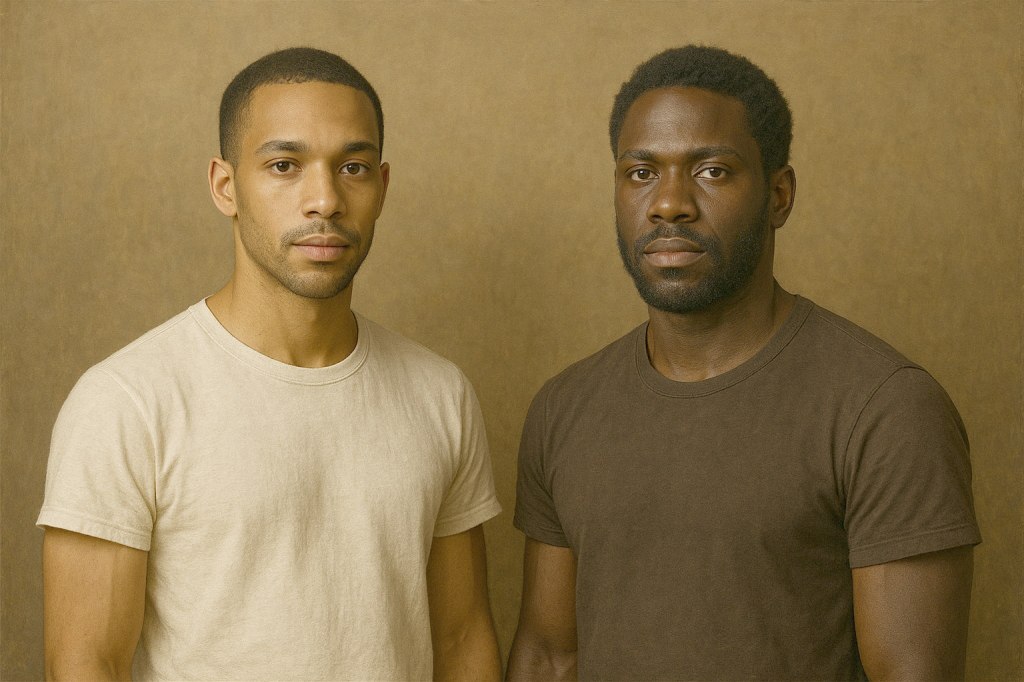
Black Men and Colorism: The Hidden Wounds of Shade and Identity.

Colorism, the preferential treatment of lighter skin within a racial group, remains one of the most insidious and unspoken wounds in the Black community. For Black men, its effects stretch across centuries—from the brutal days of slavery to the modern workplace and the realm of romantic relationships. This silent divider, rooted in white supremacy, has shaped self-perception, opportunity, and the psychology of manhood itself.

During slavery, color determined labor and proximity to power. Lighter-skinned Black men, often the offspring of white slave owners, were more likely to work inside the plantation homes, serving as butlers, drivers, or craftsmen. In contrast, darker-skinned men endured the harshest field labor, under the blazing sun, viewed as stronger but less intelligent. This early stratification sowed seeds of division that still bear fruit in today’s society.

The color hierarchy in slavery was not only a social construct—it was a method of control. By favoring lighter slaves and pitting them against darker ones, slave masters ensured that unity among Black men remained fractured. Scripture warns of such division, “Every kingdom divided against itself is brought to desolation” (Matthew 12:25, KJV). Colorism became one of the most effective psychological chains ever forged.

After emancipation, many lighter-skinned Black men found greater access to education and economic advancement through institutions that valued European features. Some were even able to “pass” as white to escape racial discrimination entirely. Meanwhile, darker men were left to face the full brutality of Jim Crow laws, systemic oppression, and exclusion from economic resources. This dual reality bred resentment, confusion, and a longing for acceptance that persists through generations.

In modern times, colorism still influences the way Black men are perceived in the workforce. Studies reveal that lighter-skinned Black men often receive more job offers, higher salaries, and better treatment than their darker counterparts (Keith & Herring, 1991). This reality echoes James 2:9, “But if ye have respect to persons, ye commit sin, and are convinced of the law as transgressors” (KJV). Society’s preference for lightness continues to sin against God’s creation by judging men based on melanin rather than merit.

In love and relationships, colorism manifests in subtle but damaging ways. Dark-skinned men are often stereotyped as hypermasculine, aggressive, or intimidating, while lighter-skinned men are portrayed as more desirable or approachable. Media representation reinforces these narratives, making it difficult for Black men to escape the psychological confines of stereotype.

Many Black women, themselves victims of colorism, have internalized similar biases. Preference for lighter-skinned men can mirror a subconscious belief that proximity to whiteness offers safety or beauty. Yet, as Proverbs 31:30 reminds us, “Favour is deceitful, and beauty is vain: but a woman that feareth the Lord, she shall be praised” (KJV). God’s measure of manhood is not complexion but character.

The entertainment industry has historically perpetuated color-based casting. From old Hollywood to hip-hop videos, lighter-skinned men were often depicted as romantic leads or cultural icons, while darker men were relegated to roles of brute strength or villainy. This not only limited opportunities but distorted self-image for young Black boys growing up without balanced representation.

Within the Black community, these divisions create invisible walls. Darker-skinned men may feel alienated or undervalued, developing insecurities masked as arrogance or emotional detachment. Conversely, lighter-skinned men sometimes face accusations of not being “Black enough,” leading to confusion about belonging and cultural authenticity.

This internal conflict is a remnant of colonial thinking that sought to rank human worth by appearance. The Apostle Paul’s teaching in Acts 17:26, “And hath made of one blood all nations of men for to dwell on all the face of the earth,” (KJV) directly dismantles this lie. God’s word affirms equality where man’s systems deny it.

The psychological damage of colorism among Black men is also seen in competition and mistrust. Brotherhood weakens when one man’s skin tone becomes another’s burden. The enemy exploits these differences to divide families, churches, and communities. Unity, which should be their strength, becomes fractured by suspicion and jealousy.

Historically, colorism also influenced leadership and politics within the Black race. During the early 20th century, the “Blue Vein Societies” and elite circles favored light-skinned men, granting them influence in civil and educational institutions. This bias hindered collective liberation, as some leaders subconsciously sought validation through proximity to whiteness rather than solidarity with their darker brethren.

Spiritually, colorism contradicts divine creation. Genesis 1:27 declares, “So God created man in his own image.” To despise one’s brother for the shade of his skin is to insult the very image of God. Black men, whether light or dark, embody divine beauty and strength born of survival and grace.

Colorism also shapes dating dynamics in the age of social media. Online algorithms often amplify Eurocentric features, pushing lighter-skinned Black men to the forefront of visibility. This artificial hierarchy damages self-esteem and perpetuates false notions of worthiness. The result is an identity crisis masked by aesthetics and status.

In workplaces, darker-skinned Black men report more incidents of racial profiling, microaggressions, and stereotyping. Their assertiveness is often mistaken for aggression, while their confidence is labeled as arrogance. Meanwhile, lighter men may be tokenized or expected to conform to white comfort. Both experiences rob Black men of full authenticity.

Even in brotherhood, sports, and ministry, shade bias can subtly influence trust and leadership preference. The healing of this generational trauma requires spiritual renewal, honesty, and repentance. “Be kindly affectioned one to another with brotherly love; in honour preferring one another” (Romans 12:10, KJV).

Healing from colorism begins when Black men learn to see each other as divine reflections rather than societal projections. The rebuilding of unity must be intentional—celebrating every shade as a manifestation of God’s artistry. Only then can they reclaim identity beyond colonial lies.

In the end, colorism is not merely a social problem—it is a spiritual sickness born of racism. It thrives where ignorance reigns and where self-hate is disguised as preference. Through faith, education, and love, the Black man can rediscover his worth not in complexion, but in divine purpose.

For centuries, Black men have been divided by hue yet united by struggle. The path to healing requires collective repentance and re-education. When Black men recognize that their worth is not in tone but in testimony, they reclaim what slavery and colonization tried to destroy: brotherhood, dignity, and divine identity.

References

Holy Bible, King James Version. (1611).

Keith, V. M., & Herring, C. (1991). Skin tone and stratification in the Black community. American Journal of Sociology, 97(3), 760–778.

Russell, K., Wilson, M., & Hall, R. (2013). The Color Complex (Revised): The Politics of Skin Color Among African Americans. Anchor Books.

Hunter, M. (2007). The persistent problem of colorism: Skin tone, status, and inequality. Sociology Compass, 1(1), 237–254.


Rebirth: Rising from the Ashes of Injustice.

Photo by PNW Production on Pexels.com

The story of Black people across the diaspora is one of divine endurance amidst a systematic erasure of identity. From the shores of Africa to the plantations of America, from segregation to mass incarceration, we have endured centuries of deliberate dehumanization. Yet even as the world sought to define us by chains and color, God defined us by covenant and purpose. The loss of identity among Black people did not happen overnight—it was a calculated dismantling of history, memory, and spiritual heritage.

When the first Africans were stolen from their homelands, they were not only enslaved in body but stripped of name, language, and lineage. Generations were born without the knowledge of tribe or ancestry, left to inherit an identity crafted by their oppressors. This manufactured identity was meant to destroy self-worth and disconnect us from divine origin. The oppressors’ strategy was clear: if you erase a people’s memory, you can control their destiny. Yet Scripture reminds us, “My people are destroyed for lack of knowledge” (Hosea 4:6, KJV).

White supremacy, disguised as civilization and Christianity, became the justification for centuries of cruelty. From the transatlantic slave trade to Jim Crow segregation, white institutions created a theology of dominance that placed Black people outside the circle of humanity. Enslavers misused the Bible, weaponizing Scripture to legitimize injustice. But truth cannot be silenced forever. Just as Pharaoh learned in Egypt, “Let my people go” (Exodus 5:1, KJV) was not merely a command—it was divine prophecy.

Racism in its purest form is not just hatred; it is a spiritual sickness—a delusion of superiority that blinds the oppressor to God’s image in others. The white system of dominance taught Black people that to be Black was to be cursed, when in fact, it was a reflection of divine beauty. Genesis 1:27 declares, “So God created man in his own image.” To hate the Black image is, therefore, to despise the image of God Himself.

The psychological impact of racism birthed a deep identity crisis. For centuries, Black people were told that they were inferior, uncivilized, and cursed descendants of Ham. This false doctrine seeded generational trauma and internalized oppression. Even after emancipation, the freed were still mentally enslaved by a society that controlled their access to opportunity, dignity, and justice.

Jim Crow laws, lynchings, and segregation reinforced a message of rejection. “White Only” signs were more than social barriers—they were psychological shackles. They said to an entire race, “You are less.” The spirit of inferiority became the silent chain many still carry today. Yet Christ declared, “The last shall be first, and the first last” (Matthew 20:16, KJV). What the world despised, God destined.

The loss of identity also manifested in cultural disconnection. African names were replaced with slave names, tribal histories were replaced with plantation stories, and indigenous spiritualities were demonized. The very rhythm of the drum—a heartbeat of Africa—was banned because it carried freedom in its sound. In trying to silence the song, white oppressors hoped to silence the soul. But the spirit of God cannot be bound.

Through centuries of violence, Black resilience became our resistance. Every time we prayed, sang, and survived, we reclaimed a fragment of our stolen selves. The Black church became both womb and weapon—a place of worship and warfare. It reminded the community that our worth was not defined by man’s laws but by divine decree. The enslaved could not read, but they could feel God’s presence in the fire, and they knew that deliverance was promised.

The systemic racism of white America continues to evolve. From plantation overseers to police brutality, the tools have changed but the spirit remains. Modern racism hides behind policies and institutions rather than whips and chains. It appears in discriminatory hiring practices, school funding inequities, and biased judicial systems. The knee on the neck of George Floyd became a global symbol of the centuries-old weight of white supremacy pressing against Black existence.

This consistent devaluation leads to spiritual fatigue—a numbness that makes many wonder if change is even possible. But faith calls us higher. Romans 8:37 declares, “Nay, in all these things we are more than conquerors through him that loved us.” Even when the world denies our humanity, heaven affirms it.

The loss of identity among Black people has also created internal division—colorism, classism, and the rejection of our own features as “less beautiful.” These are the psychological scars of colonization. When a people begin to despise their own reflection, the enemy’s work is complete. Yet, we are reminded that “I am black, but comely” (Song of Solomon 1:5, KJV). Our skin is not a curse but a crown.

White racism did not only target the body—it sought to corrupt the soul. It told Black men they were predators and Black women they were property. It told children that their history began in chains, not in kingdoms. It told a people made in God’s image that they were inferior. But God is a restorer. Joel 2:25 promises, “And I will restore to you the years that the locust hath eaten.” The restoration of Black identity begins when truth replaces lies.

The rebirth of identity is spiritual before it is social. It requires reconnection with our true origin—not slavery, but royalty; not oppression, but divine election. When we rediscover who we are in God, we become immune to the lies of white supremacy. The rebirth begins in the heart, where the Spirit testifies that we are children of the Most High.

Healing from the trauma of racism also demands forgiveness—not to excuse the oppressor, but to free the oppressed. Unforgiveness becomes another form of bondage. Yet, forgiveness without justice is incomplete. True reconciliation requires repentance. Luke 19:8 reminds us of Zacchaeus, who repented and restored fourfold what he had stolen. Likewise, America must face the moral debt of slavery and racism with truth and restitution.

The Black community must also heal from within. We must stop measuring ourselves by white standards of success or beauty. Our identity is divine, not derivative. Our heritage is ancient, not accidental. When we love our features, our culture, and our God-given uniqueness, we dethrone the false gods of whiteness that have ruled for centuries.

Education becomes a key to rebirth. When we study our history—the kingdoms of Mali, Kush, and Songhai; the scholars of Timbuktu; the prophets of Ethiopia—we recover the memory of greatness. Proverbs 4:7 says, “Wisdom is the principal thing; therefore get wisdom.” Knowledge of self is knowledge of God’s handiwork.

The rebirth also requires collective responsibility. We cannot wait for white acceptance to affirm Black excellence. We must build, create, and uplift from within. Every Black entrepreneur, teacher, and activist becomes a prophet of restoration. Each act of love within our community repairs what racism tried to destroy.

Racism may have burned our homes, but not our hope. The ashes of injustice become the soil of rebirth. Out of centuries of oppression rises a people who still sing, still dream, and still believe in redemption. Like the phoenix, we rise from the fire renewed, not ruined.

This rebirth calls us back to faith. It calls us to see ourselves through the eyes of God, not through the lens of those who despised us. It calls us to rebuild our families, reclaim our history, and restore our spiritual foundations. Isaiah 61:3 promises that God will give us “beauty for ashes, the oil of joy for mourning.”

In the end, the rebirth of Black identity is the fulfillment of divine prophecy. What was once buried will rise. What was once broken will be healed. What was once forgotten will be remembered. The kingdom that was scattered will be gathered again.

So we rise—out of oppression, out of miseducation, out of despair. We rise because our story is not defined by racism, but by resurrection. And when the world asks how we survived, we will say: “Because greater is he that is in us, than he that is in the world” (1 John 4:4, KJV).

Our rebirth is not revenge—it is revelation. We are the descendants of kings and prophets, not slaves. We are the chosen of God, reborn from the ashes of injustice, standing tall in the light of truth. The fire did not destroy us—it revealed us.


References

  • The Holy Bible, King James Version (KJV).
  • Alexander, M. (2010). The New Jim Crow: Mass Incarceration in the Age of Colorblindness. The New Press.
  • Du Bois, W. E. B. (1903). The Souls of Black Folk. A. C. McClurg & Co.
  • Cone, J. H. (1970). A Black Theology of Liberation. Orbis Books.
  • Asante, M. K. (2003). Afrocentricity: The Theory of Social Change. African American Images.
  • Fanon, F. (1952). Black Skin, White Masks. Grove Press.
  • hooks, b. (1992). Black Looks: Race and Representation. South End Press.
  • Wilkerson, I. (2020). Caste: The Origins of Our Discontents. Random House.

Divine Identity: Rediscovering Who We Are in God.

Photo by Tima Miroshnichenko on Pexels.com

The search for identity among Black people is not merely historical—it is deeply spiritual. Beneath centuries of oppression and distortion lies a divine truth: we are not accidents of history, but instruments of prophecy. Our existence, heritage, and resilience are written in Scripture long before slavery’s chains and colonization’s lies. Rediscovering who we are in God is both revelation and revolution, a holy awakening that reclaims what was stolen and restores what was silenced.

When God created humanity, He made no mistakes. “So God created man in his own image, in the image of God created he him; male and female created he them” (Genesis 1:27, KJV). This divine image was not limited to one hue or heritage. Yet through centuries of white supremacy, the face of God was painted pale, and His people were depicted as European. This distortion of divinity not only whitened Christ but wounded the collective soul of Black people, teaching us to worship a reflection that excluded us.

To rediscover divine identity is to strip away colonial religion and uncover covenant truth. The Bible is not a European book—it is a Middle Eastern and African text. Many of its central figures were people of color, dwelling in lands like Egypt, Ethiopia, and Canaan. Moses was mistaken for an Egyptian (Exodus 2:19). Christ Himself hid in Africa as a child (Matthew 2:13–15). Simon of Cyrene, who carried His cross, was an African man (Mark 15:21). The Scriptures themselves reveal that the story of salvation is inseparable from the African presence.

White supremacy sought to erase that truth, using false imagery to associate holiness with whiteness and sin with Blackness. This lie, repeated for centuries, fractured the spiritual self-perception of the Black race. Yet the Bible stands in defiance of such deception. “His head and his hairs were white like wool, as white as snow; and his eyes were as a flame of fire” (Revelation 1:14, KJV). The description of Christ in Revelation, with hair like wool and feet like burned brass, contradicts the Western portrayal and restores cultural truth.

For centuries, Black people were taught to see themselves as cursed descendants of Ham—a false doctrine birthed from racist misinterpretation of Genesis 9. But nowhere in Scripture does God curse Ham himself, nor his African lineage. This myth became one of the greatest theological weapons of white supremacy, used to justify slavery and colonization. The true curse, however, fell upon those who twisted God’s Word for oppression.

The rediscovery of divine identity begins with understanding that our spiritual history predates slavery. We are descendants of strength, wisdom, and divine favor. The same God who walked with Abraham and Moses also walked with us through plantations and prisons. We are not forgotten—we are chosen. “But ye are a chosen generation, a royal priesthood, an holy nation, a peculiar people” (1 Peter 2:9, KJV).

To be chosen does not mean to be superior—it means to be set apart for divine purpose. Throughout Scripture, God’s chosen people endured captivity, exile, and oppression. Their suffering was not a sign of rejection but a pathway to redemption. Likewise, the Black experience mirrors the biblical pattern of exile and restoration. Our history of enslavement and struggle bears prophetic resemblance to the children of Israel in Egypt and Babylon.

Our rediscovery must also dismantle the illusion that European Christianity holds a monopoly on truth. Long before Rome adopted the cross, African nations knew God by many names. Ethiopia embraced Christianity centuries before Europe, as recorded in Acts 8:27–39, where an Ethiopian eunuch was baptized by Philip. The first Christian nations were not white—they were African and Semitic. This truth reclaims the faith that was hijacked and used as a tool of oppression.

Spiritual amnesia among Black people has led to generational despair. Many have forgotten that they are the descendants of kings, prophets, and builders of civilizations. The world labeled us slaves, but God called us heirs. “And if children, then heirs; heirs of God, and joint-heirs with Christ” (Romans 8:17, KJV). To rediscover divine identity is to walk again in the authority of inheritance.

Racism has always targeted identity because identity shapes destiny. When a people forget who they are, they become easily controlled. But once they remember, they become unstoppable. This is why the awakening of Black consciousness—rooted in Scripture and history—is so threatening to systems of oppression. Spiritual ignorance maintains bondage; spiritual knowledge births freedom.

The church must reclaim its prophetic voice. Too often, pulpits have preached comfort rather than conviction, submission rather than liberation. True gospel truth uplifts the oppressed and rebukes the oppressor. “Learn to do well; seek judgment, relieve the oppressed, judge the fatherless, plead for the widow” (Isaiah 1:17, KJV). The rediscovery of divine identity demands a return to justice as a sacred duty.

Divine identity is not only racial—it is moral and spiritual. It calls for holiness, integrity, and righteousness. A people who rediscover their divine roots must also live as divine representatives. The world must see through us the reflection of God’s character, not just His color. For identity without virtue becomes vanity, and heritage without holiness becomes hypocrisy.

Healing from false identity also involves reclaiming beauty. The Eurocentric ideal of attractiveness has long devalued melanin, natural hair, and African features. But when God created diversity, He called it good. “And God saw every thing that he had made, and, behold, it was very good” (Genesis 1:31, KJV). To see beauty in Blackness is to see beauty in God’s own creation.

Education plays a sacred role in this awakening. When we study Scripture alongside history, we uncover the continuity between biblical truth and African legacy. We see that wisdom, science, and faith flourished in Africa long before colonial distortion. Rediscovering divine identity means returning to our intellectual and spiritual roots, understanding that knowledge and faith were never meant to be enemies.

Black unity is essential for divine restoration. Division—by colorism, denomination, or class—weakens collective power. Christ prayed, “That they all may be one” (John 17:21, KJV). Our unity is a form of resistance; it restores the divine order that racism tried to destroy. When we love one another as God loves us, we heal the fractures of history.

This rediscovery also demands repentance—from the oppressors who built systems of white supremacy, and from the oppressed who have internalized self-hate. Healing begins when truth replaces lies, and when both sides humble themselves before the Creator. “If my people, which are called by my name, shall humble themselves, and pray… then will I hear from heaven, and will forgive their sin, and will heal their land” (2 Chronicles 7:14, KJV).

To rediscover divine identity is to understand that we are not merely descendants of Africa—we are descendants of God. We are the bridge between suffering and salvation, the living evidence of divine endurance. Our story is not a tragedy; it is a testimony.

As we rise from centuries of distortion, the world will see the restoration of a people once despised but now divinely defined. We are the light the darkness could not extinguish. We are the fulfillment of prophecy—the stone that the builders rejected, becoming the cornerstone of a new era (Psalm 118:22, KJV).

Our calling now is to live in the fullness of who we are—to walk in royal humility, to lead in righteous strength, to love with divine compassion. The rediscovery of identity is not just about knowing our past; it is about shaping our future according to God’s will.

Let this be our declaration: We are not who the world says we are. We are who God says we are. We are chosen, redeemed, and restored. We are the children of the Most High, created in His image, commissioned for His glory. Our divine identity has been reclaimed, and no system, no lie, no power on earth can strip it away again.


References

  • The Holy Bible, King James Version (KJV).
  • Cone, J. H. (1970). A Black Theology of Liberation. Orbis Books.
  • Asante, M. K. (2003). Afrocentricity: The Theory of Social Change. African American Images.
  • Ben-Jochannan, Y. (1970). African Origins of Major Western Religions. Alkebu-Lan Books.
  • Williams, C. (1987). The Destruction of Black Civilization. Third World Press.
  • Wilkerson, I. (2020). Caste: The Origins of Our Discontents. Random House.
  • Du Bois, W. E. B. (1903). The Souls of Black Folk. A. C. McClurg & Co.

Stereotypes of Black Men: Fallacies, Facts, and Faith + Stereotypes of Black Women: Myths, Misrepresentations, and the Truth

Photo by Muhammad-Taha Ibrahim on Pexels.com

BLACK MEN:

Stereotypes of Black men have historically been used as powerful tools of oppression, rooted in slavery and colonial propaganda. Myths of hypersexuality, laziness, violence, and irresponsibility continue to frame perceptions, shaping public policy, media portrayals, and personal relationships. These stereotypes are not harmless—they carry devastating effects on how Black men are treated within society.

One of the most common stereotypes is that Black men are inherently violent or criminal. This image was popularized during the Jim Crow era and reinforced through biased media coverage and criminal justice policies such as “stop and frisk” and mass incarceration. In truth, studies show crime rates are linked more strongly to poverty and systemic inequality than to race.

Another destructive fallacy is that Black men are “deadbeat fathers.” This stereotype suggests Black men abandon their families at higher rates than other groups. However, research from the Centers for Disease Control reveals that Black fathers who live with their children are more involved in daily child-rearing than fathers of other racial groups. This finding challenges the myth and underscores the need to dismantle false narratives.

The marriage rate stereotype further complicates matters. Critics claim Black men are unwilling to marry, pointing to lower marriage rates in the African American community. While it is true that marriage rates are lower, this is not due to a lack of commitment but rather to economic instability, systemic barriers, and historical disruptions of family structures from slavery onward.

Divorce among Black men is also misrepresented. Statistics indicate higher divorce rates in Black communities, but these outcomes are often tied to financial stressors, unemployment, and discrimination that place strain on marriages. The stereotype that Black men are poor partners is misleading, as the root issue is societal and structural rather than individual.

Another stereotype is that Black men are uneducated or intellectually inferior. This belief has roots in pseudoscientific racism of the 19th century. Today, although disparities exist due to unequal access to quality education, Black men continue to excel academically in multiple disciplines, earning advanced degrees, contributing to STEM, and leading in arts, politics, and theology.

The hypersexualization of Black men is one of the most enduring myths. Dating back to slavery, enslaved Black men were portrayed as dangerous predators to justify lynchings and segregation. In modern times, this stereotype persists in media portrayals of athletes, entertainers, and even news coverage. This myth erases the humanity of Black men and devalues their roles as husbands, leaders, and fathers.

Employment stereotypes also persist, portraying Black men as lazy or dependent. This fallacy ignores the structural racism in hiring practices, wage disparities, and generational economic disadvantages. Despite barriers, Black men have historically shown resilience, from building thriving Black Wall Street communities to excelling in diverse professions.

Prejudice against Black men often takes subtle forms, known as microaggressions. Questions like “What are you mixed with?” or assumptions about aggression reveal ingrained stereotypes. These daily slights damage self-esteem, create stress, and perpetuate societal inequality.

Statistically, Black men face higher rates of unemployment and incarceration, not because of inherent flaws, but because of systemic racism, discriminatory laws, and biased policing. These statistics are often weaponized to reinforce negative stereotypes rather than addressing the true structural causes that produce these disparities.

Within family life, Black men often serve as strong anchors. Contrary to myths, studies show that many Black men take pride in fatherhood, mentorship, and marriage. This reality, however, is underreported, as negative narratives sell better in mainstream media.

Racism also creates distorted realities where the sins of a few are placed upon the many. When one Black man commits a crime, it becomes a commentary on the entire race, unlike in white communities where crimes are individualized. This collective stereotyping is an injustice that Black men bear daily.

The myth of emotional detachment further harms Black men. Society often portrays them as stoic, unfeeling, or emotionally unavailable. Yet, studies in psychology show Black men experience the same depth of love, grief, and vulnerability as anyone else but often mask emotions due to survival in a hostile society.

The biblical perspective contradicts these harmful stereotypes. The Bible affirms the value of men as providers, protectors, and leaders in righteousness. “Lo, children are an heritage of the Lord: and the fruit of the womb is his reward” (Psalm 127:3 KJV). Many Black men live faithfully to this calling despite societal barriers.

Scripture also challenges the stereotype of laziness. “In all labour there is profit: but the talk of the lips tendeth only to penury” (Proverbs 14:23 KJV). Black men, historically and presently, have labored tirelessly, from building the foundations of America under slavery to contributing to modern industries.

Racism in stereotypes is also exposed by the Bible’s teaching on justice and truth. “Judge not according to the appearance, but judge righteous judgment” (John 7:24 KJV). To judge an entire group of men based on appearance or isolated cases is unrighteous and perpetuates inequality.

Marriage and fatherhood stereotypes are dismantled by Scripture, which upholds the husband as the head of the home in love and sacrifice. “Husbands, love your wives, even as Christ also loved the church, and gave himself for it” (Ephesians 5:25 KJV). Many Black men embrace this calling, serving their families faithfully, even amid economic and social hardships.

The truth about Black men cannot be summarized in statistics alone. While challenges exist, they are not inherent flaws of character but reflections of centuries of systemic inequality. The resilience, faith, and brilliance of Black men defy the shallow narratives imposed upon them.

Moving forward requires challenging these stereotypes head-on. Education, community advocacy, and faith-based initiatives can help dismantle lies and build healthier narratives. Uplifting stories of Black men as leaders, scholars, and fathers must be centered more often.

Ultimately, the fallacies about Black men are not only harmful but false. The truth, supported by data and Scripture, is that Black men are human beings with complexity, resilience, and divine worth. Society must reject false labels and embrace the reality of Black men as image-bearers of God, capable of love, leadership, and greatness.

Photo by Mwabonje Ringa on Pexels.com

BLACK WOMEN:

The stereotypes of Black women are deeply entrenched in historical racism, dating back to slavery, colonialism, and early media portrayals. These images have reduced Black women to caricatures, stripping them of individuality and humanity. Myths such as the “angry Black woman,” the “Jezebel,” the “Mammy,” and the “Strong Black Woman” continue to shape how society perceives and interacts with them.

One of the most damaging stereotypes is the “angry Black woman.” This trope portrays Black women as loud, irrational, and hostile, silencing their legitimate grievances against racism and sexism. In truth, Black women often express justified frustration in contexts where they face compounded injustices, yet society labels them unfairly to dismiss their concerns.

The “Jezebel” stereotype hypersexualizes Black women, framing them as promiscuous and immoral. This myth was created during slavery to justify the sexual exploitation of Black women by enslavers. Today, it is perpetuated in music videos, movies, and fashion narratives, often reducing Black women to sexual objects rather than recognizing their dignity.

The “Mammy” stereotype paints Black women as self-sacrificing caretakers whose sole purpose is to serve white families. While rooted in slavery and domestic servitude, this image still lingers in portrayals of Black women as “strong” and endlessly nurturing, often at the expense of their own well-being.

The “Strong Black Woman” stereotype seems positive on the surface but is equally harmful. It assumes Black women can endure limitless suffering without support, placing unfair expectations upon them. While resilience is a reality in Black women’s lives, it should not erase their right to vulnerability and care.

Marriage rates among Black women are often scrutinized in public debates, sometimes weaponized as evidence of broken families. While studies show Black women marry at lower rates than other groups, this is not due to unwillingness but to systemic factors like imbalanced gender ratios, economic instability, and incarceration rates among Black men.

Divorce rates for Black women are similarly inflated in stereotype discourse. While Black women experience higher divorce rates, much of this stems from the economic and racial pressures that strain marriages, rather than personal failings. To reduce this issue to a stereotype ignores structural inequities.

Another fallacy is that Black women do not value education. In reality, Black women are among the fastest-growing groups in higher education. According to the National Center for Education Statistics, Black women consistently enroll in and graduate from colleges and universities at higher rates than their male counterparts, often carrying their communities forward academically.

Motherhood stereotypes also distort reality. Society has painted the image of the “welfare queen,” a derogatory myth suggesting Black women exploit government systems. This stereotype was heavily pushed during the Reagan era, despite evidence that the majority of welfare recipients were white. Black mothers, in truth, often work tirelessly to support and nurture their children under difficult circumstances.

In terms of parenting, Black women are frequently cast as single mothers who cannot raise successful children. Yet statistics show many children of single Black mothers excel academically, professionally, and spiritually. This truth contradicts the stereotype of dysfunction and highlights resilience.

The stereotype of Black women as “loud” is another form of silencing. Their voices are often policed in professional, educational, and social spaces. Yet the assertiveness of Black women should be understood as confidence and strength rather than reduced to a negative trope.

The stereotype of Black women as less beautiful than other women is also pervasive, rooted in Eurocentric beauty standards. Media often privileges light skin, straight hair, and Eurocentric features, while devaluing darker skin and natural textures. Yet global movements toward natural beauty, melanin celebration, and cultural pride are dismantling these lies.

Biblically, beauty is not defined by Eurocentric features but by God’s creation. “I will praise thee; for I am fearfully and wonderfully made: marvellous are thy works; and that my soul knoweth right well” (Psalm 139:14 KJV). This verse affirms that Black women’s natural hair, skin, and features are divinely crafted.

The Jezebel stereotype is particularly contradicted by Scripture. The Bible honors women who walk in purity and dignity. “In like manner also, that women adorn themselves in modest apparel, with shamefacedness and sobriety” (1 Timothy 2:9 KJV). Black women are called to live in holiness, not to embody society’s sexualized caricatures.

The Mammy stereotype is equally unbiblical. While caregiving is noble, no woman’s worth should be reduced to servitude. The virtuous woman of Proverbs 31 demonstrates balance—she provides, nurtures, manages, and honors God, reflecting complexity rather than one-dimensionality.

The “angry Black woman” trope also crumbles under biblical truth. Anger in Scripture is not inherently wrong; it is righteous when directed against injustice. “Be ye angry, and sin not: let not the sun go down upon your wrath” (Ephesians 4:26 KJV). Black women’s anger at oppression is often righteous and should be respected as a call for justice.

Another truth that dispels stereotypes is the spiritual leadership of Black women. Historically, they have been the backbone of churches, movements, and families, carrying faith and culture forward. This reality contradicts the stereotype of weakness or dysfunction.

The truth about Black women cannot be defined by stereotypes, statistics alone, or media portrayals. Black women embody resilience, beauty, intellect, faith, and creativity. Their experiences cannot be reduced to tropes rooted in racism and sexism.

Ultimately, stereotypes of Black women are both false and harmful. They erase individuality, diminish worth, and perpetuate racism. Society must reject these lies and embrace the truth: Black women are fearfully and wonderfully made, image-bearers of God, and vital to the flourishing of family, church, and community.

References

Alexander, M. (2010). The New Jim Crow: Mass Incarceration in the Age of Colorblindness. The New Press.
Centers for Disease Control and Prevention. (2013). Fathers’ Involvement With Their Children: United States, 2006–2010.
Western, B., & Pettit, B. (2010). Incarceration & social inequality. Daedalus, 139(3), 8–19.
Wilson, W. J. (2012). The Truly Disadvantaged: The Inner City, the Underclass, and Public Policy. University of Chicago Press.
The Holy Bible, King James Version (KJV).Alexander, M. (2010). The New Jim Crow: Mass Incarceration in the Age of Colorblindness. The New Press.
Collins, P. H. (2000). Black Feminist Thought: Knowledge, Consciousness, and the Politics of Empowerment. Routledge.
Harris-Perry, M. (2011). Sister Citizen: Shame, Stereotypes, and Black Women in America. Yale University Press.
National Center for Education Statistics. (2022). Digest of Education Statistics.
The Holy Bible, King James Version (KJV).

The Tone Dilemma: Shades, Society, and Self. #thebrowngirldilemma

Photo by Sherman Trotz on Pexels.com

Color has always been more than a visual spectrum; it is a social construct, a mirror, and a measure of worth. Within the global Black community, skin tone occupies a complex intersection between identity, desirability, and belonging. From the honey tones of the Caribbean to the deep, blue-black hues of the African continent, melanin has been both a mark of pride and a point of prejudice. “The Tone Dilemma” explores how shades shape not only perception but also selfhood in a world that still clings to colonial hierarchies of beauty.

Historically, lighter complexions were often privileged under systems of slavery and colonization. House slaves, typically of mixed ancestry, were afforded proximity to power and comfort, while darker-skinned laborers toiled in the fields. This social stratification created an enduring internalized bias within the Black diaspora—one that subtly persists in contemporary beauty standards, employment opportunities, and media representation (Hunter, 2007).

Media remains a powerful amplifier of these hierarchies. Mainstream entertainment often uplifts lighter-skinned actors and models as the “universal” standard of Black beauty. The visibility of women like Zendaya or Halle Bailey is often celebrated, yet darker-skinned counterparts face limited opportunities or hyper-stereotyping. These imbalances reaffirm a color-coded aesthetic ideal that devalues richness of tone in favor of proximity to whiteness (Monk, 2014).

In social contexts, skin tone still dictates desirability. Studies show that lighter-skinned Black individuals are often perceived as more intelligent, trustworthy, and attractive by both non-Black and Black evaluators (Keith & Herring, 1991). Such associations stem from centuries of racial conditioning that tied whiteness to purity and darkness to danger. These implicit biases are not simply aesthetic—they influence dating preferences, hiring decisions, and even police encounters.

The internal dialogue among Black individuals about color is often unspoken yet deeply felt. Many recall being teased for being “too dark” or “not dark enough.” In some cases, light-skinned people are accused of privilege or arrogance, while dark-skinned individuals battle invisibility. This circular wound fractures unity and obscures the collective beauty of the Black experience.

Colorism’s impact extends beyond self-esteem; it affects access to resources. Research shows that darker-skinned individuals within the same racial group often experience lower socioeconomic mobility and harsher sentencing in criminal justice systems (Viglione et al., 2011). The shade of one’s skin, thus, becomes a determinant not just of beauty but of life outcomes.

Social media has introduced both remedy and risk. Movements like #MelaninMagic and #BlackGirlMagic have helped reframe narratives by celebrating darker tones and rejecting Eurocentric norms. Yet, even within these digital affirmations, filters and curated imagery can reinforce unrealistic expectations. The quest for validation remains intertwined with the politics of color.

Historically, beauty rituals have also reflected these tensions. The global market for skin-lightening products, estimated at billions annually, exposes how deep the wound runs. These creams—often harmful—represent both aspiration and alienation: a longing to belong to a beauty paradigm that was never designed to include melanin (Glenn, 2008).

Within the African diaspora, however, there is a growing reclamation of color as divine art. The warm siennas, golden ambers, and deep obsidians of Black skin reflect ancestry, geography, and resilience. In African spiritual traditions, darker skin was often viewed as sacred, symbolizing closeness to the earth and the Creator’s fire.

Yet healing from colorism requires confrontation. It demands acknowledging how internalized whiteness seeps into love, art, and identity. Conversations about skin tone must be honest, not accusatory—spaces where both pain and pride coexist.

Educators and parents play a crucial role in reprogramming young minds. Teaching children that melanin is both science and soul—a biological blessing and a cultural crown—can shift generational narratives. Representation in dolls, books, and media also matters, shaping how future generations define “beautiful.”

The psychology of shade preference has roots in colonial trauma but thrives through modern reinforcement. The more society commodifies lightness, the more darkness must be defended, not as a counter-ideal but as an equal truth.

Artists and photographers have become crucial in this cultural renaissance. Through visual storytelling, they depict the full tonal spectrum of Blackness as poetry—each shade a note in a larger symphony of identity. Their work challenges the myth of uniformity and celebrates diversity within the diaspora.

In romantic relationships, the tone dilemma also manifests subtly. Some individuals admit to “preferences” shaped not by attraction but by social conditioning. To unlearn such biases is to rediscover love as something unbound by colonial logic.

Faith communities have also begun addressing the color divide. Biblical texts remind believers that humanity was created in God’s image—an image that encompasses the full range of human color. Reclaiming this theology can restore spiritual balance where self-hatred once lingered.

Educational curricula can integrate lessons about colorism into racial justice education. When students learn that skin shade variation is a natural adaptation to sunlight exposure and not a hierarchy of worth, science becomes liberation.

Psychologists encourage affirmations, visibility, and community healing spaces to dismantle tone-based trauma. Group dialogues and art therapy allow individuals to rewrite their narratives, transforming shame into self-acceptance.

Ultimately, the tone dilemma is not simply about pigment—it is about power, perception, and pride. To transcend it, we must see skin not as a scale but as a spectrum of strength.

When Black skin, in all its hues, is celebrated as divine design rather than divided by degrees, the world will finally begin to reflect its true beauty—a beauty that was never meant to be measured, only marveled at.

References
Glenn, E. N. (2008). Yearning for lightness: Transnational circuits in the marketing and consumption of skin lighteners. Gender & Society, 22(3), 281–302.
Hunter, M. (2007). The persistent problem of colorism: Skin tone, status, and inequality. Sociology Compass, 1(1), 237–254.
Keith, V. M., & Herring, C. (1991). Skin tone and stratification in the Black community. American Journal of Sociology, 97(3), 760–778.
Monk, E. P. (2014). Skin tone stratification among Black Americans, 2001–2003. Social Forces, 92(4), 1313–1337.
Viglione, J., Hannon, L., & DeFina, R. (2011). The impact of light skin on prison time for Black female offenders. The Social Science Journal, 48(1), 250–258.

The Radiance of Manhood: Inner Glory and Outer Grace. #thebrownboydilemma

Photo by nappy on Pexels.com

The concept of manhood has long been a subject of philosophical, theological, and sociocultural exploration. In every civilization, men have been seen as bearers of strength, leadership, and wisdom. Yet, the true essence of manhood extends far beyond physical power or dominance—it is a divine harmony between inner glory and outer grace. This balance, rooted in spiritual integrity, moral courage, and emotional intelligence, reflects the full radiance of what it means to be a man created in the image of God (Genesis 1:27, KJV).

The inner glory of manhood begins with the soul’s alignment to divine purpose. A man’s strength is first spiritual, derived not from material possessions or societal approval but from his relationship with his Creator. Proverbs 20:7 (KJV) declares, “The just man walketh in his integrity: his children are blessed after him.” This passage captures how righteousness and virtue illuminate a man’s life, allowing his inner light to guide others. True manhood therefore begins with the cultivation of moral discipline and faith.

Grace, on the other hand, adorns this inner glory with humility and gentleness. In a world that often equates masculinity with aggression, the gracious man stands apart—his demeanor balanced with empathy and self-control. As Ephesians 4:2 advises, “With all lowliness and meekness, with longsuffering, forbearing one another in love,” grace becomes not weakness but refined strength. Outer grace reflects a man’s spiritual maturity, showing that power, when guided by love, becomes sacred.

The biblical model of manhood presents figures who embody this radiance. King David’s courage and repentance, Joseph’s integrity in adversity, and Christ’s sacrificial love each reveal dimensions of masculine glory. These men were not flawless, yet their willingness to confront their weaknesses and seek divine correction magnified their greatness. Their inner struggles produced outer brilliance—proof that manhood is a spiritual evolution, not a static identity.

In society today, however, masculinity is often distorted by hyper-individualism and materialism. Many men measure their worth through status, wealth, or appearance, rather than through character. This cultural shift has led to emotional detachment and identity crises among men, who feel pressured to perform rather than to be. Modern psychology identifies this as “toxic masculinity,” a behavioral pattern rooted in repression and domination rather than authentic self-expression (Connell, 2005).

Restoring the radiance of manhood thus requires spiritual renewal. When a man learns to reconcile his strength with vulnerability, he begins to reflect divine balance. Vulnerability allows empathy, creativity, and connection—attributes essential to emotional and relational well-being. As Christ wept and yet led nations to salvation, so too must men learn that expressing emotion is not a betrayal of manhood but a testament to humanity.

Manhood’s outer grace is also expressed through physical bearing and presence. The body itself, designed by divine wisdom, is a vessel of beauty and dignity. In art and scripture, the male form often symbolizes strength under control—power refined by discipline. The psalmist affirms this divine craftsmanship: “I will praise thee; for I am fearfully and wonderfully made” (Psalm 139:14, KJV). Physical grace, when aligned with spiritual purpose, becomes an outward manifestation of inner harmony.

Furthermore, the radiant man honors his responsibilities—to his family, his community, and his nation. Leadership is not about dominance but service. Christ’s model of servant leadership in John 13:14–15—washing His disciples’ feet—redefines authority as humility in action. A man’s greatness is not measured by how many serve him but by how many he serves with compassion and justice.

Historically, men of great virtue have understood this principle. From African kings who ruled with moral order to civil rights leaders who fought for justice through nonviolence, true masculine power has always been intertwined with purpose. Men like Dr. Martin Luther King Jr. embodied the dual essence of strength and grace—fearless in conviction yet tender in compassion. His life was an example of spiritual radiance channeled through righteous leadership.

In the realm of aesthetics, manhood’s grace has often been misunderstood. The celebration of male beauty is frequently reduced to superficiality, neglecting the soul beneath the surface. Yet, outer beauty, when expressed through dignity, posture, and poise, mirrors the divine order of creation. Just as the sun’s light reveals the earth’s splendor, so a man’s countenance can reveal the brightness of his spirit.

The radiance of manhood also involves intellectual depth. A wise man cultivates knowledge not to dominate others but to enlighten himself and uplift his community. Proverbs 4:7 teaches, “Wisdom is the principal thing; therefore get wisdom: and with all thy getting get understanding.” Knowledge without humility leads to arrogance, but wisdom with grace births discernment—the ability to lead with empathy and vision.

In relationships, radiant men are protectors, not possessors. They nurture love through emotional safety and mutual respect. The Apostle Paul wrote, “Husbands, love your wives, even as Christ also loved the church, and gave himself for it” (Ephesians 5:25, KJV). This sacrificial love demonstrates that authentic manhood thrives on giving, not taking; on cherishing, not controlling.

A man’s inner glory also shines brightest in adversity. Trials refine the soul like fire purifies gold. Each challenge endured with faith and humility strengthens his character. James 1:12 reminds, “Blessed is the man that endureth temptation: for when he is tried, he shall receive the crown of life.” Resilience, therefore, is a radiant virtue—the ability to rise, learn, and grow even through suffering.

Community plays a vital role in shaping manhood. Brotherhood, mentorship, and accountability nurture spiritual maturity. In Proverbs 27:17, it is written, “Iron sharpeneth iron; so a man sharpeneth the countenance of his friend.” Through fellowship, men learn compassion, wisdom, and purpose. The radiant man uplifts other men, creating a legacy of empowerment rather than competition.

In the modern era, the crisis of identity among men calls for a return to sacred principles. Masculinity must be redefined not by domination or stoicism but by balance—spirit and body, intellect and emotion, strength and tenderness. This integration restores divine order within the male soul and, consequently, within society.

Art, literature, and theology all affirm that beauty and power coexist within manhood. Whether in Michelangelo’s David or in the poetic psalms of David himself, we see how form and faith intertwine. Both express the eternal truth that the body is a temple and the soul its light. To behold a man walking in integrity and grace is to witness divine art in motion.

The radiance of manhood, then, is a call to restoration—a return to God’s original design where men embody holiness in every dimension. When a man honors his Creator, he honors his being; when he loves others selflessly, his light expands beyond himself. Such men transform families, nations, and generations.

Ultimately, manhood’s radiance is not self-derived but divinely bestowed. It is the reflection of God’s image through human form and spirit. Every act of kindness, every word of truth, every display of courage is a beam of that heavenly light shining through the vessel of man.

The world today yearns for men who live with inner glory and outer grace—men whose presence heals, whose strength uplifts, and whose humility inspires. These are the radiant men, the bearers of divine brilliance, who walk not by sight but by faith, illuminating the world with the glory of God’s love.


References

Connell, R. W. (2005). Masculinities (2nd ed.). University of California Press.

Holy Bible, King James Version. (2017). Cambridge University Press.

King, M. L. Jr. (1963). Strength to love. Harper & Row.

Lewis, C. S. (1943). The abolition of man. Oxford University Press.

Wilcox, W. B., & Kline, K. (2019). Gender and the soul: A sociological and theological exploration of masculinity and virtue. Oxford University Press.

Wright, N. T. (2012). After you believe: Why Christian character matters. HarperOne.

Dilemma: Hate Crimes

A Scholarly Examination of Systemic Violence and Racial Terror

These photographs are the property of their respective owners. No copyright infringement intended.

The history of Black people in America is tragically punctuated by acts of racial terror, lynching, and systemic injustice. Hate crimes against African Americans have not only taken individual lives but also reinforced centuries of inequality and fear. This essay highlights ten of the most significant hate crimes in American history, revealing a consistent pattern of racialized violence that continues to reverberate in the present day.

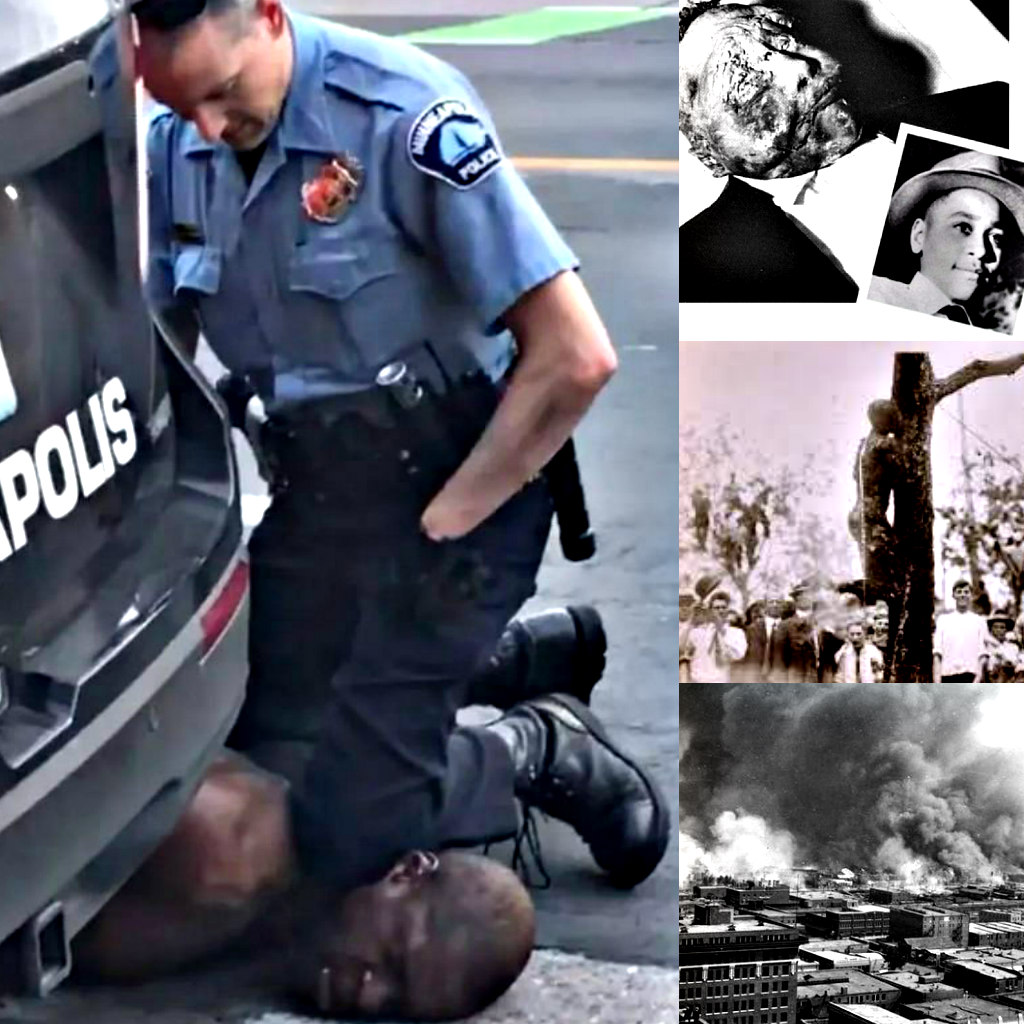
The lynching of Emmett Till in 1955 stands as one of the most notorious hate crimes in U.S. history. At only fourteen years old, Till was brutally murdered in Mississippi for allegedly whistling at a white woman. His mutilated body, displayed publicly by his mother, Mamie Till-Mobley, exposed the horror of racial hatred to the world. The acquittal of his murderers by an all-white jury demonstrated the deep complicity of the justice system in racial violence (Whitfield, 1988).

The 1921 Tulsa Race Massacre remains one of the most devastating racial attacks on Black prosperity. White mobs destroyed the prosperous Greenwood District, known as “Black Wall Street,” killing an estimated 300 people and displacing thousands. The massacre wiped out decades of economic progress and reinforced the racial hierarchy that dominated early 20th-century America (Ellsworth, 1992).

Another brutal episode occurred during the Rosewood Massacre of 1923 in Florida, where a false accusation against a Black man led to the burning of an entire Black town. Dozens were killed, and survivors fled into swamps to escape white mobs. The incident was later recognized by the state of Florida, which awarded reparations to survivors decades later (D’Orso, 1996).

The Birmingham Church Bombing of 1963, which killed four young girls—Addie Mae Collins, Denise McNair, Carole Robertson, and Cynthia Wesley—shocked the conscience of the nation. The bombing, carried out by Ku Klux Klan members, occurred during the height of the civil rights movement and symbolized white resistance to desegregation and Black empowerment (McWhorter, 2001).

The murder of Medgar Evers in 1963, a civil rights leader and NAACP field secretary in Mississippi, represented another targeted act of racial terrorism. Evers was assassinated in his driveway for his efforts to secure voting rights and challenge segregation. His death galvanized the civil rights movement and intensified national awareness of southern racism (Marable, 1984).

The lynching of Jesse Washington in 1916 in Waco, Texas, was one of the most barbaric acts of mob violence ever recorded. A crowd of thousands gathered to watch as Washington was tortured and burned alive. The atrocity highlighted the normalization of public lynching as entertainment and a tool of white supremacy (Dray, 2002).

The Central Park Five case (1989) exposed how systemic racism can manifest within the criminal justice system without physical lynching. Five Black and Latino teenagers were wrongfully convicted of raping a white woman in Central Park. Media bias, coerced confessions, and racial profiling led to years of imprisonment before their exoneration. The case illustrated how racial fear could replace evidence in shaping narratives (Burns, 2011).

The Charleston Church Massacre in 2015 further proved that racial hatred still thrives in modern America. Dylann Roof entered the historic Emanuel AME Church and murdered nine Black worshipers during Bible study. This act of terror targeted a sacred space and echoed the domestic terrorism once carried out by the Ku Klux Klan (Thompson, 2016).

The murder of James Byrd Jr. in 1998 in Jasper, Texas, was a gruesome reminder that lynching never truly ended. Byrd was chained to the back of a truck and dragged for miles by three white supremacists. His death prompted national outrage and led to the 2009 Matthew Shepard and James Byrd Jr. Hate Crimes Prevention Act, expanding federal hate crime laws (Coleman, 2010).

The killing of George Floyd in 2020 reignited the global fight against racial injustice. Floyd’s death, captured on video as a white police officer knelt on his neck for over nine minutes, symbolized centuries of institutionalized violence against Black bodies. His dying words, “I can’t breathe,” became a rallying cry for the Black Lives Matter movement, leading to one of the largest civil rights protests in modern history (Clayton, 2020).

Each of these incidents illustrates how racism in America transcends time, geography, and form—manifesting in lynchings, massacres, police brutality, and judicial bias. The persistence of hate crimes underscores that racial violence is not an aberration but a fundamental feature of the American racial order.

Historically, these acts were often justified or ignored by law enforcement and political institutions, revealing systemic complicity. The failure to hold perpetrators accountable reinforced cycles of violence and mistrust within the Black community (Alexander, 2010).

Modern hate crimes, including the murders of Trayvon Martin, Ahmaud Arbery, and Breonna Taylor, continue this legacy. Each incident reflects a continuum of racialized fear and control rooted in America’s original sin—slavery and white supremacy (Taylor, 2016).

Sociologists argue that hate crimes against Black Americans are not merely individual acts but collective expressions of dominance intended to maintain racial hierarchy (Feagin, 2013). The violence communicates that Black progress and autonomy are met with punishment.

Media framing has often contributed to victim-blaming and the criminalization of Black identity. From Emmett Till to George Floyd, victims are frequently portrayed as threatening or non-compliant, a tactic that subtly absolves perpetrators (Entman & Rojecki, 2000).

Education about these events remains essential for dismantling ignorance and denial. Erasing or minimizing racial atrocities fosters a dangerous cultural amnesia that perpetuates prejudice (Loewen, 1995).

The psychological impact on Black Americans—manifested in generational trauma, mistrust of institutions, and internalized fear—continues to affect community health and cohesion (Comas-Díaz et al., 2019).

Despite this painful history, Black resilience endures. The collective response to racial violence has birthed justice movements, from civil rights to Black Lives Matter, reaffirming the enduring spirit of a people determined to live free and equal.

Ultimately, these ten hate crimes are not isolated tragedies but interconnected chapters in the story of America’s racial conscience. Understanding them demands not only remembrance but transformation—a collective moral reckoning that ensures such hatred never again defines the nation’s soul.


References

Alexander, M. (2010). The New Jim Crow: Mass Incarceration in the Age of Colorblindness. New Press.
Burns, S. (2011). The Central Park Five: The Untold Story Behind One of New York City’s Most Infamous Crimes. Knopf.
Clayton, J. (2020). George Floyd and the Rebirth of the Movement for Black Lives. Journal of Race and Social Justice, 5(2), 45–58.
Coleman, W. (2010). Hate Crimes in America: James Byrd Jr. and Beyond. Oxford University Press.
Comas-Díaz, L., Hall, G. N., & Neville, H. A. (2019). Racial trauma: Theory, research, and healing. American Psychologist, 74(1), 1–12.
D’Orso, M. (1996). Like Judgment Day: The Ruin and Redemption of a Town Called Rosewood. Perennial.
Dray, P. (2002). At the Hands of Persons Unknown: The Lynching of Black America. Random House.
Ellsworth, S. (1992). Death in a Promised Land: The Tulsa Race Riot of 1921. LSU Press.
Entman, R. M., & Rojecki, A. (2000). The Black Image in the White Mind: Media and Race in America. University of Chicago Press.
Feagin, J. R. (2013). Racist America: Roots, Current Realities, and Future Reparations. Routledge.
Loewen, J. W. (1995). Lies My Teacher Told Me: Everything Your American History Textbook Got Wrong. New Press.
Marable, M. (1984). Race, Reform, and Rebellion: The Second Reconstruction in Black America. University Press of Mississippi.
McWhorter, D. (2001). Carry Me Home: Birmingham, Alabama, the Climactic Battle of the Civil Rights Revolution. Simon & Schuster.
Taylor, K.-Y. (2016). From #BlackLivesMatter to Black Liberation. Haymarket Books.
Thompson, E. (2016). Charleston shooting: White supremacy, religion, and the politics of forgiveness. Journal of American Culture, 39(4), 385–392.
Whitfield, S. J. (1988). A Death in the Delta: The Story of Emmett Till. Johns Hopkins University Press.

ChatGPT can make mistakes. Check important info.

The Art of the Male Form: Power, Presence, and Perception.

Photo by ROCKETMANN TEAM on Pexels.com

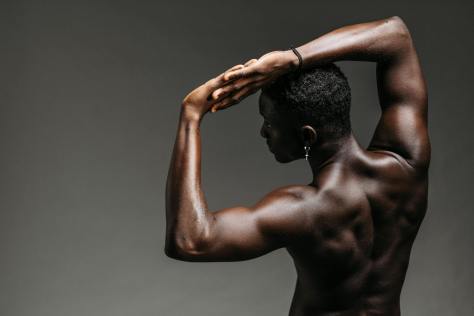
The human male form has long been a subject of fascination in art, science, and culture, reflecting not only physicality but also social hierarchies, cultural ideals, and psychological projections. Across centuries, the representation of the male body has evolved, embodying changing conceptions of masculinity, strength, and beauty. From classical sculptures of Greece and Rome to contemporary photography and film, the male form has been interpreted as a canvas of power and presence.

Historically, the Greek ideal celebrated the male body as a perfect balance of symmetry, proportion, and athleticism. Sculptures such as Polykleitos’ Doryphoros exemplified mathematical precision, with the canon of proportions establishing standards for physical perfection that would influence Western art for millennia. This idealized vision of masculinity combined both aesthetic beauty and moral virtue, suggesting that bodily perfection mirrored inner excellence.

The Renaissance reintroduced classical principles while emphasizing dynamic motion and individual expression. Artists such as Michelangelo in David portrayed not only physical strength but also psychological tension and heroic presence. The male form became an emblem of intellectual and spiritual power, reflecting a holistic understanding of human potential. Renaissance art thus bridged the external and internal, situating the male body as both a physical marvel and a symbolic vessel of identity.

In non-Western contexts, the male form has been depicted through varied cultural lenses. In African art, the male figure often embodies communal roles, leadership, and spiritual vitality rather than purely aesthetic ideals. Carvings, masks, and statues depict muscularity and posture as markers of social and ceremonial significance. Similarly, in East Asian traditions, male figures have symbolized wisdom, martial skill, and filial duty, emphasizing presence over purely sculptural beauty.

Contemporary representations of the male body have expanded to encompass a spectrum of forms, challenging classical notions of beauty and strength. Media, fashion, and advertising frequently spotlight muscular, lean physiques, reinforcing cultural ideals tied to health, athleticism, and desirability. These portrayals, however, often obscure the diversity of natural male forms, creating pressures that intersect with gender norms and body image concerns.

The perception of male strength and virility is deeply intertwined with visual cues. Broad shoulders, defined musculature, and upright posture convey dominance and confidence, signaling both physical capability and social authority. Yet these traits are culturally mediated; in some societies, intellectual presence, sartorial elegance, or artistic skill may supersede raw physicality as markers of masculine power.

Psychologically, the male form operates as a site of projection for both men and women. Men may internalize societal ideals as standards for self-worth, while women may perceive these traits through lenses of attraction, protection, or social status. The interaction of biology, culture, and psychology produces a complex matrix in which physicality, behavior, and charisma intersect.

Artistic depiction often emphasizes narrative alongside form. Paintings, photographs, and sculptures do not merely replicate anatomy but evoke story, emotion, and character. The male form thus becomes a storytelling tool, capable of conveying vulnerability, aggression, heroism, or intimacy depending on context. Such portrayals can redefine social perceptions of masculinity beyond mere physical prowess.

The study of anatomy underpins much of the artistic representation of the male body. Knowledge of skeletal structure, muscle distribution, and movement enables artists to render the body convincingly and expressively. Anatomical studies by Leonardo da Vinci and modern biomechanics research illustrate how understanding physiology enhances both aesthetic and functional interpretation of form.

In cinema and performance, the male body functions as a medium of narrative embodiment. Action films, dance, and theater utilize posture, gesture, and musculature to communicate character, intent, and emotion. Actors’ physical training is integral to credibility, reinforcing cultural associations between physical form and personal agency.

Clothing and adornment further influence perception. Tailored suits, armor, traditional garments, or casual attire interact with the body’s contours to project authority, elegance, or approachability. Fashion, therefore, becomes a form of embodied rhetoric, shaping how presence is interpreted socially and aesthetically.

The intersection of race and the male form reveals additional layers of perception. Societal biases often exaggerate or stereotype certain physiques, influencing both admiration and marginalization. Scholarly research highlights how media representation of Black, Asian, and Indigenous men can reinforce prejudicial narratives while simultaneously offering opportunities for celebration and redefinition of power.

Athleticism, historically celebrated in art and society, continues to reinforce ideals of the male form. Sports icons, Olympians, and bodybuilders exemplify disciplined cultivation of the body, symbolizing perseverance, control, and societal admiration. These figures operate at the nexus of corporeal excellence and symbolic authority.

The sexualization of the male form has also evolved, reflecting shifting cultural mores. Where once nudity implied heroism, divinity, or philosophical ideal, contemporary eroticized representations carry complex implications regarding consent, objectification, and agency. The male body thus navigates multiple discourses simultaneously: aesthetic, athletic, sexual, and symbolic.

Media proliferation intensifies scrutiny of the male form. Social platforms, advertising, and global cinema perpetuate standards of muscularity, height, and symmetry, creating feedback loops that influence self-perception and social judgment. These pressures can foster both aspiration and anxiety, highlighting the psychosocial dimensions of bodily representation.

Philosophically, the male form invites reflection on mortality, temporality, and embodiment. Aging, injury, and transformation challenge ideals of constancy and perfection, offering opportunities for more nuanced understandings of masculinity. Imperfection, once marginalized in classical aesthetics, now contributes to narratives of resilience, authenticity, and wisdom.

Cross-disciplinary studies, incorporating anthropology, psychology, and art history, illuminate the interplay between biology and culture in shaping perceptions of the male form. Evolutionary theory, for example, considers sexual selection, strength signaling, and social hierarchy as factors influencing both appearance and societal valuation. Cultural studies, in turn, examine media representation, ritual, and mythology as determinants of perception.

Digital technology and virtual spaces are redefining the male form in contemporary imagination. CGI, motion capture, and social media avatars allow manipulation of physique, posture, and expression beyond natural limits, raising questions about authenticity, aspiration, and identity. Such developments extend the discourse of perception into immersive and interactive arenas.

Ultimately, the art of the male form transcends mere anatomy. It is a dialogue among power, presence, and perception, reflecting the interdependence of physicality, culture, and cognition. The male body is both observed and experienced, a site of aesthetic contemplation, social negotiation, and personal embodiment.

Contemporary discourse urges inclusivity, diversity, and critical reflection, challenging narrow definitions of strength and beauty. Recognizing variation, vulnerability, and agency broadens appreciation of the male form beyond traditional paradigms. In this light, art, science, and lived experience converge to create a dynamic understanding of masculinity as both human and culturally mediated.

In conclusion, the male form remains a compelling locus of study and representation. Its power lies not solely in muscle or height but in the interplay of physicality, presence, and perception, shaped by history, culture, and psychology. From the classical canon to modern media, the male body continues to articulate ideals, challenge assumptions, and inspire contemplation, affirming its enduring significance in human imagination and social life.

References

Frontiers in Psychology. (2023). Body image dissatisfaction in men: Causes and consequences. https://www.frontiersin.org/journals/psychology/articles/10.3389/fpsyg.2023.1116686/full

Metropolitan Museum of Art. (n.d.). Anatomy in the Renaissance. https://www.metmuseum.org/essays/anatomy-in-the-renaissance

PubMed. (2002). Impact of media images on male body image. https://pubmed.ncbi.nlm.nih.gov/11920996/

Smarthistory. (n.d.). Polykleitos, Doryphoros (Spear Bearer). https://smarthistory.org/polykleitos-doryphoros-spear-bearer/

Smarthistory. (n.d.). Depictions of the human figure and animals in African art. https://smarthistory.org/depictions-of-the-human-figure-and-animals/

Italian Renaissance. (n.d.). Michelangelo’s David: Analysis and history. https://www.italianrenaissance.org/michelangelos-david/

Science Museum, UK. (n.d.). Anatomy, art, and science. https://www.sciencemuseum.org.uk/objects-and-stories/medicine/anatomy-art-and-science

The Boar. (2020, June). Male bodies in film: Representations of masculinity. https://theboar.org/2020/06/male-bodies-film/

Vogue Business. (2021). Sizing is stopping consumers from shopping: Here’s what brands need to know. https://www.voguebusiness.com/story/fashion/sizing-is-stopping-consumers-from-shopping-heres-what-brands-need-to-know

The Times. (n.d.). Unhealthy skinny models: Fashion week report. https://www.thetimes.co.uk/article/vogue-report-unhealthy-skinny-models-fashion-week-jj3qwhf9w

Smithsonian Asian Art Museum. (n.d.). Facing East: Portraits from Asia. https://asia.si.edu/whats-on/exhibitions/facing-east-portraits-from-asia/

Dilemma: Celebrity Worship

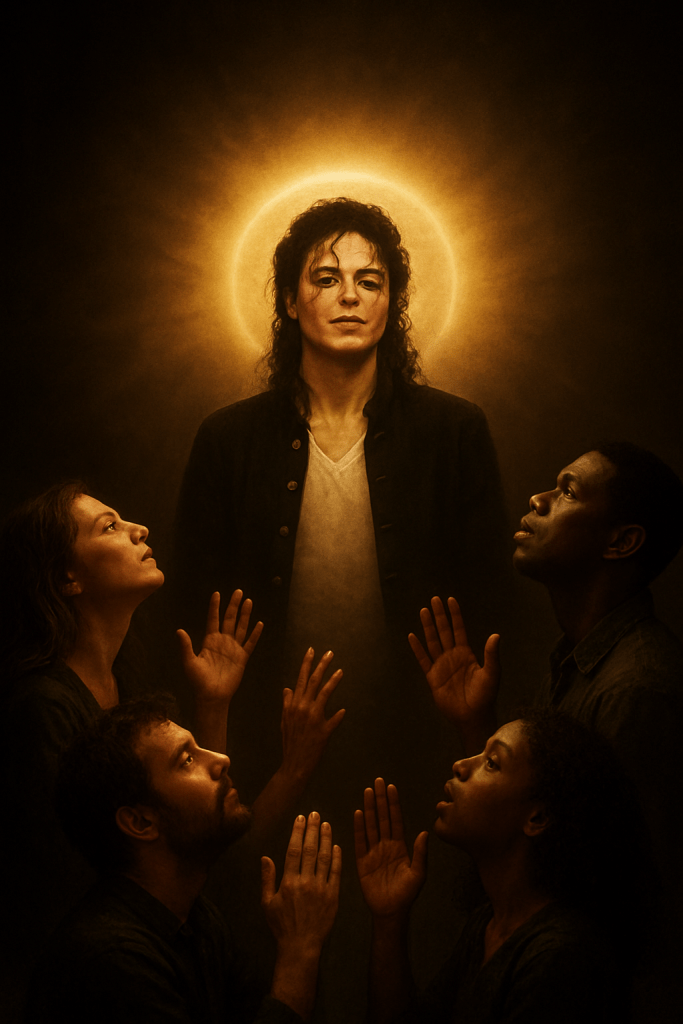
In the modern world, celebrity worship has evolved into a cultural phenomenon that often mirrors religious devotion. From the adoration of musical icons like Michael Jackson and Elvis Presley to the idolization of figures such as Beyoncé and Denzel Washington, society has elevated entertainers to near-divine status. This fascination exposes a deep psychological and spiritual dilemma: humanity’s innate need to worship something greater than itself, redirected toward mortal figures rather than the Creator. As Scripture warns, “Thou shalt have no other gods before me” (Exodus 20:3, KJV).

Celebrity worship taps into an ancient human instinct—the desire to admire, imitate, and find meaning through others. Psychologically, this drive originates from the human need for connection and validation. According to Horton and Wohl (1956), the concept of “parasocial relationships” explains how individuals form one-sided emotional bonds with public figures. These attachments often fill voids of loneliness or inadequacy, creating the illusion of intimacy with someone who represents perfection or success.

The rise of celebrity culture can be traced to the intersection of media, capitalism, and human psychology. The entertainment industry capitalizes on this psychological vulnerability by marketing celebrities as products of aspiration and fantasy. In essence, fans are sold the illusion that by adoring the star, they too participate in their glamour and power. As the Apostle Paul cautioned, “They changed the glory of the incorruptible God into an image made like to corruptible man” (Romans 1:23, KJV).

Michael Jackson’s global fame illustrates the height of this phenomenon. Often referred to as the “King of Pop,” Jackson’s fans displayed forms of devotion that blurred the line between admiration and worship. His death in 2009 triggered worldwide mourning akin to the passing of a religious leader. Sociologists argue that this reflects a transfer of spiritual energy from traditional religion to popular culture. The stage, once symbolic of performance, becomes a modern altar where fame replaces faith.

Elvis Presley, famously dubbed the “King of Rock and Roll,” experienced similar deification. Even decades after his death, Graceland functions as a pilgrimage site for millions. His image—reproduced endlessly on posters, candles, and memorabilia—represents a form of secular sainthood. This reflects what psychologist Raymond Cattell termed “idolized leadership,” where figures of influence become substitutes for spiritual or moral authority. Scripture warns of such misplaced adoration: “Little children, keep yourselves from idols” (1 John 5:21, KJV).

Beyoncé’s cultural influence demonstrates how celebrity worship has adapted in the digital age. Her fan base, famously called the “BeyHive,” exhibits behaviors paralleling religious devotion—defending her reputation online, memorizing her words, and attending concerts with reverence akin to worship. Critics note how her persona blends empowerment with divinity, often portraying herself in celestial imagery. The line between art and idolatry becomes dangerously thin when admiration turns to veneration.

Even actors like Denzel Washington, admired for his talent and faith-driven discipline, are not immune to idolization. While Washington himself frequently credits God for his success, audiences often elevate him to symbolic perfection—confusing his roles and virtues with divine attributes. This conflation reflects humanity’s tendency to worship the image of excellence rather than its Creator. As Jesus stated, “No man can serve two masters” (Matthew 6:24, KJV).

Psychologically, celebrity worship satisfies deep emotional and cognitive needs. The “celebrity worship syndrome,” described by McCutcheon et al. (2002), suggests that excessive admiration can lead to dependency, obsession, and delusion. Individuals begin to integrate the celebrity into their identity, blurring reality with fantasy. In such cases, worship is not merely admiration—it becomes a coping mechanism for self-esteem, loneliness, or unmet purpose.

The entertainment industry exploits this vulnerability by sustaining constant exposure through social media, interviews, and marketing. Algorithms feed audiences with curated perfection, reinforcing parasocial attachments. Psychologist Erich Fromm’s theory of “escape from freedom” posits that individuals seek to lose themselves in something greater when overwhelmed by anxiety or isolation. For many, celebrities become the modern substitute for gods—flawed but glorified beings who embody power, beauty, and control.

From a biblical perspective, celebrity worship represents a form of idolatry that endangers the soul. The Book of Exodus makes this clear: “Thou shalt not make unto thee any graven image” (Exodus 20:4, KJV). In the ancient world, idols were statues of wood and stone; today, they are screens and stages. Whether through music videos, award shows, or social media, modern culture has recreated the temple of Baal in the form of entertainment.

The moral dilemma lies not in appreciation but in obsession. God allows the admiration of human talent, yet He forbids replacing Him with it. When fans attribute salvific power to their favorite artists—believing they “saved” or “completed” them—they cross into spiritual deception. As Paul warned the Galatians, “How turn ye again to the weak and beggarly elements, whereunto ye desire again to be in bondage?” (Galatians 4:9, KJV).

Furthermore, celebrity worship reflects a crisis of identity. In a culture saturated with media, individuals define themselves by association rather than authenticity. The image of a celebrity becomes a mirror reflecting what fans wish to be—beautiful, successful, and adored. Yet such imitation breeds dissatisfaction, as comparison inevitably produces envy and inadequacy. This aligns with the biblical warning: “For where envying and strife is, there is confusion and every evil work” (James 3:16, KJV).

The phenomenon also exposes society’s spiritual hunger. As traditional faith declines, many turn to celebrities for meaning and inspiration. Concerts resemble revivals, red carpets replace temples, and award speeches echo sermons of self-worship. Psychologically, this reveals humanity’s persistent need for transcendence—an emptiness that only divine relationship can fill. Augustine’s words remain timeless: “Our hearts are restless until they find rest in Thee.”

For Christians, the challenge is to navigate admiration without idolatry. Scripture instructs believers to honor human excellence while maintaining perspective: “Cease ye from man, whose breath is in his nostrils” (Isaiah 2:22, KJV). Recognizing talent should lead to thanksgiving, not worship. True reverence belongs only to God, who grants every gift and ability.

Celebrities themselves often struggle under the weight of their own idolization. The psychological pressure of maintaining perfection leads to mental health crises, addiction, and isolation. Michael Jackson’s tragic decline exemplifies how fame, when equated with godhood, destroys the human spirit. His life became a cautionary tale—a mirror reflecting society’s unholy obsession with image and perfection.

Elvis’s death similarly revealed the emptiness of worldly adoration. Surrounded by fans who worshiped him as divine, he died lonely and medicated. The idol becomes both the object and victim of the worship it commands. As Psalm 115:8 warns, “They that make them are like unto them; so is every one that trusteth in them.”

The Church must reclaim the narrative of worship, teaching discernment in a celebrity-driven age. Believers are called to honor God through the lens of humility, not through obsession with fame. Jesus Himself rejected worldly glory, declaring, “My kingdom is not of this world” (John 18:36, KJV). When society replaces spiritual devotion with celebrity fascination, it bows to a false kingdom built on vanity and illusion.

Ultimately, the psychological roots of celebrity worship reveal humanity’s spiritual need. In seeking perfection, belonging, and hope, people look toward stars instead of the Creator of stars. This misplaced devotion perpetuates the illusion that salvation lies in fame and beauty. Yet true deliverance comes only from the One who created both.

Celebrity worship, therefore, is not simply a cultural fad—it is a spiritual crisis. It reveals the human heart’s hunger for transcendence, love, and significance. When these longings are misdirected toward entertainers, the result is emptiness. The remedy lies in realigning the object of worship: from the stage to the sanctuary, from the mortal to the eternal.


References

Fromm, E. (1941). Escape from Freedom. Farrar & Rinehart.
Horton, D., & Wohl, R. R. (1956). Mass communication and para-social interaction. Psychiatry, 19(3), 215–229.
McCutcheon, L. E., Lange, R., & Houran, J. (2002). Conceptualization and measurement of celebrity worship. British Journal of Psychology, 93(1), 67–87.
Cattell, R. B. (1950). Personality: A systematic theoretical and factual study. McGraw-Hill.
Holy Bible, King James Version. (1611). Cambridge University Press.
Augustine. (398 CE). Confessions. Translated by R.S. Pine-Coffin. Penguin Classics.
Twenge, J. M. (2013). The Narcissism Epidemic: Living in the Age of Entitlement. Free Press.
Ward, S. J. (2011). Idol worship: The psychology of celebrity worship. Journal of Media Psychology, 23(1), 15–25.

The Conversations About Colorism Are Being Hijacked by Black Men — Why?

Photo by Jep Gambardella on Pexels.com

In recent years, colorism—the discrimination within the Black community based on skin tone—has reemerged as a central topic in discussions on race, identity, and representation. Yet, as the conversation has gained visibility, a troubling pattern has surfaced: Black men increasingly dominate or redirect discussions that were originally centered on the lived experiences of Black women. This phenomenon reveals not only gendered power dynamics but also deeper insecurities, social conditioning, and historical patterns of male-centered discourse in the Black community.

Colorism affects both genders, but its manifestations differ sharply. For Black women, it often determines beauty standards, desirability, and social value (Hunter, 2007). For Black men, colorism intersects more with social perception, criminalization, and masculinity (Hall, 2010). Yet, when colorism is discussed publicly—particularly online—many Black men position themselves as equal or greater victims, reframing the issue around their own grievances. This redirection often invalidates or minimizes the gendered suffering that darker-skinned Black women have historically endured.

At the root of this hijacking is defensiveness. Many Black men interpret critiques of colorism as personal attacks rather than systemic analysis. When Black women point out that men frequently idealize lighter-skinned women in media, dating, and social hierarchies, some men respond by claiming they too experience colorism from women. While men can experience shade bias, the scale, visibility, and historical roots of female-targeted colorism are far deeper.

This defensiveness is also a product of patriarchal conditioning. In patriarchal societies, men are socialized to lead conversations—even those about women’s pain. Within the Black community, this dynamic is intensified by centuries of emasculation under white supremacy, leading some Black men to over-assert authority in racial and gender dialogues (hooks, 2004). When colorism is raised, they may subconsciously reclaim the center stage to reestablish power and control over the narrative.

Furthermore, the male gaze in Black culture often amplifies colorist biases. From hip-hop videos to film and advertising, light-skinned women are frequently depicted as the ideal partner or feminine standard. When women challenge this imagery, some men perceive it as an indictment of their preferences rather than a critique of systemic conditioning (Stephens & Phillips, 2003). The reaction is often defensive, shifting focus from accountability to victimhood.

Social media has magnified this divide. Online platforms provide visibility for darker-skinned women to share their experiences of exclusion, ridicule, and invisibility. However, whenever these conversations gain traction, they are often derailed by men insisting that “colorism affects Black men too” or “dark-skinned men are fetishized, so it’s not the same.” These counterarguments distort the conversation’s intent, transforming a gendered critique into a false equivalence.

The fetishization of dark-skinned men—often cited by male participants—does not equate to systemic bias. It is frequently a hypersexualized stereotype rooted in colonial myths of Black male virility (Collins, 2000). This fetishization benefits neither gender, but it differs fundamentally from the colorist exclusion and humiliation endured by darker-skinned women in beauty, marriage, and media representation.

Another reason for male hijacking of colorism discourse lies in emotional illiteracy. Many Black men are not encouraged to process vulnerability or collective responsibility. Instead of engaging empathetically with women’s experiences, they intellectualize or deflect the issue to avoid guilt. This response is symptomatic of broader issues of gender relations and communication in the Black community.

Historically, the conversation around colorism was initiated by Black women scholars and activists, such as Alice Walker, who coined the term “colorism” in 1982 (Walker, 1982). Later scholars like Margaret Hunter (2007) and Ronald Hall (2010) analyzed how color hierarchies shape gendered oppression. Yet, as the discourse entered mainstream culture, male voices increasingly reframed the issue as a unisex problem, erasing the distinctly gendered dimensions.

Part of the reason this hijacking persists is because Black women’s pain is often minimized in both white and Black spaces. The intersection of race and gender renders their experiences less visible. When women assert that colorism harms them uniquely, they are accused of “dividing the community.” This silencing mirrors historical patterns in which Black women were expected to prioritize racial unity over gender justice (Crenshaw, 1991).

Another factor is male privilege within Blackness. Even within an oppressed racial group, men often benefit from patriarchal structures that validate their voices more than women’s. Thus, when Black men speak on colorism, their perspectives receive more attention and legitimacy, even when their narratives distort or misrepresent the issue.

Media representation further amplifies this imbalance. Films, songs, and podcasts that address colorism often feature male-led discussions, focusing on how men are “judged for being too dark” or “overlooked by women.” Meanwhile, darker-skinned actresses and public figures are still underrepresented, underpaid, or stereotyped (Monk, 2014). The structural inequity remains gendered, even if both genders experience forms of bias.

There is also an economic incentive behind this derailment. Male creators and influencers who discuss colorism from a male-centered perspective often gain larger audiences, as their narratives resonate with both male defensiveness and patriarchal norms. In contrast, women who speak about colorism face online harassment, accusations of bitterness, or dismissal as “divisive feminists.”

Psychologically, the hijacking of colorism discourse reflects projection. Many men project their internalized pain—stemming from racism, classism, or emotional neglect—onto discussions about women. Rather than confronting their own conditioning, they reframe the issue to validate their victimhood. This projection protects the ego but prevents accountability.

Colorism is, at its core, a gendered system of preference and exclusion. While men may experience it in terms of status or stereotype, women endure it in ways that intersect with desirability, marriage prospects, and self-worth. When men dominate these conversations, they obscure these nuances, flattening a multidimensional issue into a one-size-fits-all grievance narrative.

The solution lies not in silencing Black men but in rebalancing the dialogue. True allyship requires men to listen, not lead, when the topic concerns women’s pain. They must learn to amplify women’s voices without centering themselves. Doing so transforms the conversation from competition into collaboration.

Academically and culturally, it is vital to reassert that Black women’s experiences of colorism are foundational to the discourse. Their stories, research, and activism birthed this conversation; erasing or minimizing them reproduces the very inequality colorism exposes. The aim should not be to debate who suffers more, but to dismantle the structures that create suffering altogether.

Ultimately, the hijacking of colorism discussions by Black men is a reflection of unresolved patriarchal dynamics within the Black community. It reveals the lingering effects of colonial trauma—how oppression can turn inward, causing those once silenced to silence others. Healing requires courage: the courage for men to decenter themselves and for women to reclaim their voices unapologetically.

In the end, the conversation about colorism must return to its rightful center: the Black woman’s experience. Her story is not a subset of the Black struggle—it is the mirror that reflects how deeply white supremacy has fractured our perception of beauty, worth, and identity. Until her truth is fully heard and honored, the dialogue remains incomplete.


References

Collins, P. H. (2000). Black Feminist Thought: Knowledge, Consciousness, and the Politics of Empowerment. Routledge.
Crenshaw, K. (1991). Mapping the Margins: Intersectionality, Identity Politics, and Violence against Women of Color. Stanford Law Review, 43(6), 1241–1299.
Hall, R. E. (2010). The Melanin Millennium: Skin Color as 21st Century International Discourse. Springer.
hooks, b. (2004). We Real Cool: Black Men and Masculinity. Routledge.
Hunter, M. (2007). The Persistent Problem of Colorism: Skin Tone, Status, and Inequality. Sociology Compass, 1(1), 237–254.

Monk, E. P. (2014). Skin Tone Stratification among Black Americans, 2001–2003. Social Forces, 92(4), 1313–1337.
Stephens, D. P., & Phillips, L. D. (2003). Freaks, Gold Diggers, Divas, and Dykes: The Sociohistorical Development of Adolescent African American Women’s Sexual Scripts. Sexuality & Culture, 7(1), 3–49.
Walker, A. (1982). In Search of Our Mothers’ Gardens: Womanist Prose. Harcourt Brace.