Category Archives: The Black Man

Algorithms of Black Manhood

This photograph is the property of its respective owner. No copyright infringement is intended.

Black manhood has never been formed in isolation; it has always been shaped, surveilled, and disciplined by external systems of power. In the digital age, algorithms now join history, media, and law as invisible architects of how Black men are seen, sorted, rewarded, and punished. These systems do not merely reflect society—they reproduce its biases at scale.

Algorithms are often framed as neutral tools driven by data, yet data itself is historical. Because Black men have been disproportionately criminalized, excluded, and stereotyped, the datasets used to train algorithms inherit these distortions. As a result, digital systems frequently encode old racial myths into new technological forms.

One of the most enduring myths shaping Black manhood is criminality. Predictive policing algorithms, facial recognition software, and risk assessment tools consistently flag Black men as higher risk, not because of inherent behavior, but because past policing practices over-targeted Black communities. The algorithm learns the bias and calls it probability.

These systems extend surveillance beyond the street and into everyday life. Credit scoring, hiring software, insurance assessments, and social media moderation all participate in ranking Black men’s trustworthiness, competence, and value. Manhood becomes something quantified, filtered, and judged by machines that cannot understand context, humanity, or history.

Media algorithms further distort Black masculinity. Platforms reward content that reinforces familiar tropes—hypermasculinity, aggression, emotional detachment—because such content drives engagement. Nuanced representations of Black fatherhood, vulnerability, or intellectual depth are less likely to be amplified, not because they lack value, but because they disrupt profitable narratives.

This creates a feedback loop. Black men who wish to be seen or heard online may feel pressure to perform algorithm-approved versions of masculinity. Authenticity is punished, while caricature is rewarded. Over time, performance replaces self-definition.

The workplace is not exempt from algorithmic shaping. Automated résumé screeners trained on historically white, male corporate profiles may downgrade Black male candidates based on names, schools, or speech patterns. Leadership potential is filtered through coded assumptions about what authority is supposed to look and sound like.

Education systems increasingly rely on algorithmic assessment as well. Disciplinary prediction tools and behavioral analytics disproportionately flag Black boys as future problems, reinforcing a school-to-prison pipeline under the guise of efficiency. Manhood is framed early as deviance rather than potential.

Dating apps and social platforms also reveal algorithmic hierarchies of desire. Studies show that Black men are often ranked lower or fetishized based on racialized assumptions about dominance, danger, or athleticism. Even intimacy is shaped by code that translates bias into preference.

The emotional cost of this constant evaluation is significant. When manhood is continuously questioned, monitored, or misread, it produces hypervigilance, stress, and alienation. Black men must navigate not only social expectations, but automated judgments they cannot see or contest.

Historically, Black manhood has been policed through law, violence, and propaganda. Algorithms represent a quieter continuation of this control—less visible, more technical, and therefore harder to challenge. Power becomes abstracted behind dashboards and models.

Yet algorithms are created by people, not destiny. Their values, priorities, and blind spots reflect the cultures that build them. When diversity, ethics, and historical literacy are absent from tech development, bias becomes automated rather than eliminated.

Resistance begins with literacy. Understanding how algorithms work, where data comes from, and who benefits from these systems empowers communities to question their authority. Transparency is not a technical luxury; it is a civil rights necessity.

Scholars and activists have begun calling for algorithmic accountability, demanding audits, bias testing, and inclusive design. These efforts recognize that justice in the digital age requires more than representation—it requires structural intervention.

Redefining Black manhood outside algorithmic constraints is also essential. Manhood cannot be reduced to data points, threat scores, or engagement metrics. It must be reclaimed as relational, ethical, spiritual, and communal.

Faith traditions, cultural memory, and intergenerational knowledge offer counter-algorithms—value systems that affirm dignity beyond performance or prediction. These frameworks resist reduction and insist on humanity over efficiency.

The danger of algorithmic manhood is not only misrepresentation, but inevitability. When systems are treated as objective, their outcomes feel unchangeable. Challenging this myth reopens space for agency and reform.

A future that honors Black manhood must confront the technologies shaping it. This includes diversifying tech leadership, regulating high-stakes algorithms, and centering those most harmed by automated decision-making.

Ultimately, algorithms do not define Black manhood—power does. And power can be challenged. By exposing how digital systems encode old hierarchies, society can begin to imagine technologies that serve justice rather than reproduce inequality.

Black manhood has survived centuries of distortion. It will also survive algorithms. But survival is not the goal. Liberation requires that technology be reshaped to recognize Black men not as risks to be managed, but as full human beings worthy of complexity, care, and self-definition.

References

Benjamin, R. (2019). Race after technology: Abolitionist tools for the new Jim Code. Polity Press.

Browne, S. (2015). Dark matters: On the surveillance of Blackness. Duke University Press.

Buolamwini, J., & Gebru, T. (2018). Gender shades: Intersectional accuracy disparities in commercial gender classification. Proceedings of Machine Learning Research, 81, 1–15.

Eubanks, V. (2018). Automating inequality: How high-tech tools profile, police, and punish the poor. St. Martin’s Press.

Noble, S. U. (2018). Algorithms of oppression: How search engines reinforce racism. NYU Press.

O’Neil, C. (2016). Weapons of math destruction: How big data increases inequality and threatens democracy. Crown.

Rios, V. M. (2011). Punished: Policing the lives of Black and Latino boys. NYU Press.

The Wounded Man: Online Masculinity Movements and the Quest for Purpose

The wounded man does not announce himself bleeding—he appears stoic, articulate, and armored in ideology. The suffering of modern men is frequently misread as rebellion when it is really a crisis of belonging, affirmation, and paternal absence. The Bible foreshadowed the cost of shepherdless manhood: “Smite the shepherd, and the sheep shall be scattered” (Zech. 13:7, KJV).

In every generation, men look for language to describe their pain. Today, that language is often supplied by online masculinity movements—digital nations without elders, mentors, or covenantal accountability. Scripture warns when men lead themselves without God: “Every way of a man is right in his own eyes: but the Lord pondereth the hearts” (Prov. 21:2, KJV).

The wounded man is born first from inner rupture. He is shaped by rejection before religion, culture, or politics ever reach him. “The spirit of a man will sustain his infirmity; but a wounded spirit who can bear?” (Prov. 18:14, KJV). This verse reads like a diagnosis of modern male psychology.

Today’s movements promise a reinstallation of masculine strength, yet many boys never received an original spiritual installation at all. The internet becomes a father figure when fathers become absentee statistics. God speaks against leaders who scatter rather than strengthen: “Woe unto the shepherds that do feed themselves!” (Ezek. 34:2, KJV).

Loneliness fuels digital membership. Men find in online spaces the fraternity that reality failed to provide. But scripture explains purpose is not found in numbers of followers, but divine ordering: “The steps of a good man are ordered by the Lord” (Psa. 37:23, KJV).

Many wounded males adopt hyper-dominance rhetoric because pain distrusts softness. Tenderness is interpreted as loss of authority rather than evidence of healing. Yet scripture teaches God draws nearest to brokenness, not bravado: “The Lord is nigh unto them that are of a broken heart” (Psa. 34:18, KJV).

Online masculine rhetoric often hardens men outward instead of transforming them inward. Hardened men build platforms; healed men build families. The Bible defines masculine power through self-rule, not gender rule: “He that ruleth his spirit is better than he that taketh a city” (Prov. 16:32, KJV).

The wounded man is often angry at the wrong villain. He blames women for wounds fathers created, or culture for wounds neglect cultivated. Scripture redirects accountability: “Let each man prove his own work… for every man shall bear his own burden” (Gal. 6:4-5, KJV).

The crisis of purpose is a crisis of vision. Online movements rise when boys become men without prophetic direction. Scripture declares this clearly: “Where there is no vision, the people perish” (Prov. 29:18, KJV).

Many think masculinity was lost because feminism rose. But masculinity fractured because fatherhood fell, community eroded, and spiritual responsibility was abandoned. God instructs men to provide, not posture: “But if any provide not for his own house, he hath denied the faith” (1 Tim. 5:8, KJV).

The wounded man seeks purpose in self-help rhetoric rather than divine help rhetoric. He scrolls mentorship instead of submitting to it. Scripture indicts self-direction without God: “There is a way that seemeth right unto a man, but the end thereof are the ways of death” (Prov. 14:12, KJV).

Many of these communities use scripture selectively to validate hierarchy while ignoring holiness. But scripture calls masculinity to love, sacrifice, protection, and spiritual guidance. “Husbands, love your wives, even as Christ also loved the church, and gave himself for it” (Eph. 5:25, KJV).

The ideology of conquest appeals to men because trauma creates appetite for control. But purpose is not dominion—purpose is obedience. “To obey is better than sacrifice” (1 Sam. 15:22, KJV). That is the verse the manosphere rarely remembers.

The wounded man fears irrelevance more than he fears sin. He fears being average more than he fears disobedience. Yet scripture states, “For all have sinned, and come short of the glory of God” (Rom. 3:23, KJV). God equalizes sin so holiness can individualize purpose.

Many wounded men convert disappointment into doctrine. Their movements disciple pain instead of discipling repentance. Scripture warns about building identity on emotional deception: “The heart is deceitful above all things, and desperately wicked” (Jer. 17:9, KJV).

Viral masculinity movements disciples outrage faster than pastors disciple healing. The wounded boy is celebrated when he becomes rebellious but ignored when he becomes righteous. Yet God rewards spiritual endurance, not perpetual grievance. “If ye endure chastening, God dealeth with you as sons” (Heb. 12:7, KJV).

True sonship requires correction. The manosphere creates brotherhood without rebuke; God creates manhood through rebuke. “Whom the Lord loveth he correcteth” (Prov. 3:12, KJV).

The wounded man does not lack strength—he lacks aim. Misguided power builds loud followings, but misdirected strength builds relational casualties. God defines purpose Himself: “The Lord is my rock… the horn of my salvation” (Psa. 18:2, KJV).

Many boys were wounded into men who no longer trust love, community, or covenant. Disconnection becomes a masculinity badge rather than a trauma symptom. But scripture commands restoration of heart before restoration of manhood. “A new heart also will I give you, and a new spirit will I put within you” (Ezek. 36:26, KJV).

Purpose cannot be crowd-sourced; it must be God-breathed. Influence is temporary; calling is eternal. “For the gifts and calling of God are without repentance” (Rom. 11:29, KJV).

Masculine healing does not mean the absence of struggle—it means the absence of surrender to sin. Scripture assures dominion’s reversal: “Sin shall not have dominion over you” (Rom. 6:14, KJV).

The wounded man seeks societal recognition; the healed man seeks divine alignment. The greatest dilemma is that men are trying to become “unbreakable” while God calls them to become new. “If any man be in Christ, he is a new creature: old things are passed away” (2 Cor. 5:17, KJV).

The quest for purpose ends only when a man stops asking the internet to define him and allows scripture to realign him. Healing masculinity means rescuing boys before they become statistics—and restoring men before they become hardened headlines.


📚 References

American Psychological Association. (2017). Guidelines for Psychological Practice with Boys and Men. APA.

Baumeister, R. F. (1991). Meanings of Life. Guilford Press.

Berger, J. M. (2018). Extremism and grievance communities online: Social identity, group narratives, and radical belonging. International Centre for Counter-Terrorism, 9(2), 1–25.

Ging, D. (2019). Manosphere cultures, male trauma, and the rise of digital masculine identity movements. Social Media + Society, 5(2), 1–14.

hooks, b. (2004). The Will to Change: Men, Masculinity, and Love. Washington Square Press.

Kimmel, M. (2013). Angry White Men: American Masculinity at the End of an Era. Nation Books.

Ribeiro, M., Ottoni, R., West, R., Almeida, V., & Meira Jr., W. (2020). The evolution of grievance masculinity networks across the web. International AAAI Conference on Web and Social Media Proceedings, 14, 196–207.

Schnyder, U., & Cloitre, M. (2015). Evidence-Based Treatments for Trauma-Related Psychological Disorders in Adults. Springer.

Tatum, B. D. (1997). Why Are All the Black Kids Sitting Together in the Cafeteria? Basic Books.

Van Valkenburgh, S. P. (2021). Masculinity and neoliberalism in the manosphere. Men and Masculinities, 24(1), 84–103.

Wilson, J. (2024). The mainstreaming of misogynistic male-grievance ideology online. Feminist Media Studies, 24(2), 259–276.

The Holy Bible, King James Version. (1611). Cambridge University Press.

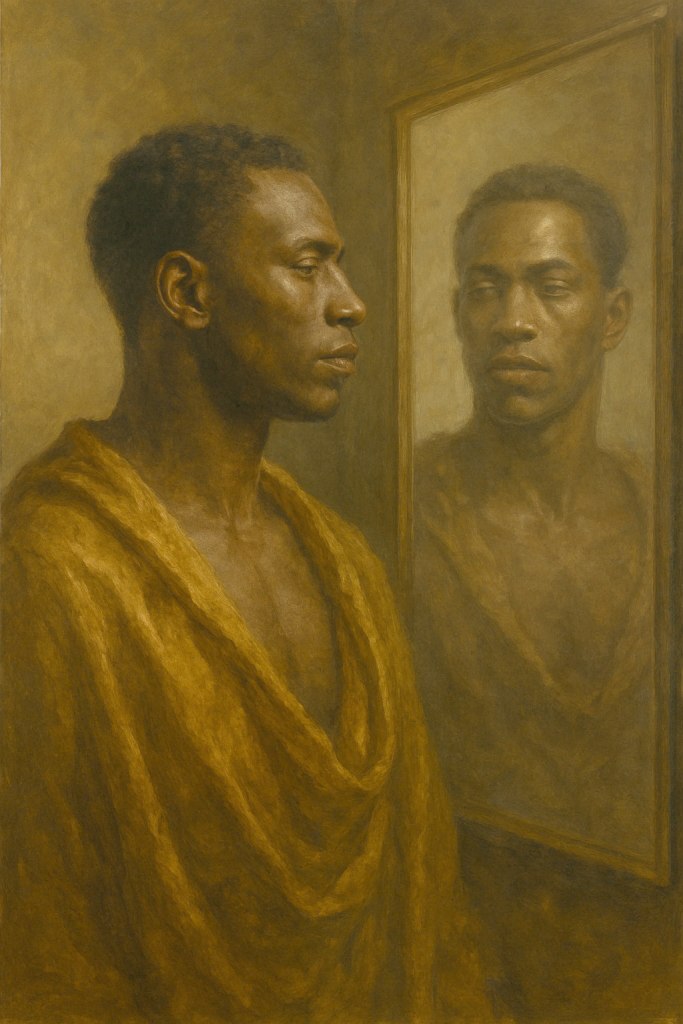
The Beauty of Strength: Black Masculinity in the Mirror of History.

The story of Black masculinity is one of both suffering and sublimity—of men whose beauty has been distorted by oppression yet refined by endurance. From the chains of slavery to the boardrooms of modern society, the image of the Black man has continually evolved, reflecting a history of resistance, resilience, and redemption. The beauty of his strength lies not in brute force but in the spiritual, intellectual, and emotional fortitude that has allowed him to survive centuries of dehumanization.

To understand Black masculinity, one must look into the mirror of history, where reflection becomes revelation. The first distortion appeared under colonialism, when European powers constructed false hierarchies of humanity. The Black man was cast as savage, incapable of reason or refinement, his physical strength seen as both his value and his curse (Fanon, 1952). Yet beneath these imposed identities existed a sacred masculinity shaped by ancient African civilizations—nations that valued wisdom, artistry, and spirituality as measures of true manhood.

In precolonial Africa, masculinity was integrative, not dominating. Kings, warriors, and priests carried the dual duty of protection and provision with humility before the divine. Empires like Mali and Kush celebrated male beauty as divine order, where strength was married to grace, and leadership to love. Such conceptions were violently disrupted by the slave trade, which turned the Black male body into an economic commodity rather than a sacred vessel (Gomez, 1998).

The transatlantic slave trade fractured identity and redefined manhood under bondage. The Black man’s physical strength was exploited for labor, while his emotional expression was suppressed to prevent rebellion. In these conditions, strength became survival. Yet even in the most brutal systems, enslaved men found ways to redefine masculinity—through song, brotherhood, and faith. Their resilience was a spiritual act of resistance, preserving fragments of humanity within an inhumane world (Franklin & Moss, 2000).

The Reconstruction era offered a fleeting glimpse of restored dignity. Freed Black men sought to build families, own land, and educate themselves, embodying the beauty of responsibility and renewal. But white supremacist backlash sought to reimpose dominance, inventing myths like the “Black brute” stereotype to criminalize strength and reassert racial hierarchy (Alexander, 2010). Even today, this narrative persists through media caricatures that equate Black masculinity with danger rather than discipline.

Yet throughout history, the Black man’s image has also been self-reclaimed. The Harlem Renaissance redefined masculine beauty through art, intellect, and poise. Figures like Langston Hughes, Duke Ellington, and Alain Locke offered new models of manhood that combined confidence with creativity. Their aesthetic grace challenged America’s obsession with fear-based masculinity, celebrating a balance of strength and sensitivity (Huggins, 2007).

The Civil Rights Movement further revealed the moral beauty of Black masculinity. Men like Martin Luther King Jr. and Malcolm X embodied courage rooted in conviction, using moral authority as a weapon stronger than any sword. Their leadership showed that real power flows not from domination but from disciplined love—a love that demands justice. Their public images, often demonized, actually reflected divine fortitude in human form.

In this mirror of history, one also sees the emotional cost of constant resilience. The Black man has often been denied the right to be vulnerable, to express pain without judgment. Society’s expectation of hypermasculinity has become both armor and prison. Yet, when he allows his authentic emotions to emerge, his humanity shines. This emotional transparency reclaims beauty from the battlefield of survival.

The modern Black man stands at a crossroads—torn between ancestral wisdom and contemporary pressure. While Western society continues to commodify and caricature his body, he is learning to define himself anew: as lover, father, thinker, and spiritual being. The rise of movements like “Black Men Heal” and “Brotherhood Circles” mark a cultural shift toward holistic manhood rooted in wellness and self-awareness (Akbar, 1996).

Physical beauty has always been central to the mythologizing of Black masculinity. From the statuesque athletes to the stoic revolutionaries, his physique evokes awe and envy. Yet, to reduce him to mere muscle is to miss the poetry in his posture—the story written in his skin. His form carries ancestral memory; his eyes hold a depth forged by generations of endurance. His beauty is not performance but persistence.

In the arts, new visual and literary movements seek to restore balance to the image of the Black man. Photographers like Gordon Parks and painters like Kehinde Wiley reimagine him with royal dignity—no longer subject but sovereign. These representations undo centuries of degradation and invite viewers to see what history tried to conceal: that the Black man is both warrior and work of art.

Spiritually, the Black man’s strength is mirrored in his faith journey. From the spirituals of the fields to the sermons of the pulpit, he has drawn divine power from affliction. His relationship with God has always been intimate, rooted in the belief that suffering births purpose. As scripture declares, “My strength is made perfect in weakness” (2 Corinthians 12:9, KJV). His beauty lies in this paradox—the capacity to endure without hardening his heart.

The legacy of fatherhood also reveals the beauty of strength. Despite systemic attempts to dismantle the Black family, many men have restored their lineage through love and guidance. Their nurturing presence redefines masculinity not as dominance but stewardship. To lead a household with patience and principle is one of the highest forms of strength.

The psychological struggle of the Black man cannot be separated from his social context. The trauma of racial profiling, economic exclusion, and intergenerational pain continues to shape self-image. Yet, healing begins when he sees himself not through the lens of oppression but reflection—when he recognizes his worth as created, not constructed. Therapy, faith, and community serve as mirrors that restore the vision blurred by history’s distortion.

Education and artistry have always been liberating forces for the Black man. The intellectual elegance of W. E. B. Du Bois, the musical mastery of Miles Davis, and the poetic boldness of Tupac Shakur represent beauty expressed through brilliance. Knowledge and creativity become new forms of strength—unseen but transformative.

Black masculinity today exists in many forms: the activist, the artist, the scholar, the father, the dreamer. Each expression expands the definition of beauty and strength. No longer confined to Eurocentric ideals or media stereotypes, these men reflect a truth as old as Africa itself—that strength is not oppression, but the ability to stand with grace under fire.

When the Black man looks in the mirror of history, he sees scars—but he also sees survival. He sees the reflection of kings, prophets, laborers, and poets. He sees divine design where others saw degradation. The mirror becomes a portal of remembrance, not regret.

The beauty of strength in Black masculinity, therefore, is both ancient and evolving. It is found in the quiet moments as much as in the heroic ones. It is not just a reflection of what was, but a prophecy of what will be: the restoration of dignity, the reconciliation of power and peace. In that reflection, the Black man finally beholds himself—not as the world has seen him, but as God has made him.


References (APA 7th Edition)

Akbar, N. (1996). Breaking the chains of psychological slavery. Mind Productions.
Alexander, M. (2010). The new Jim Crow: Mass incarceration in the age of colorblindness. The New Press.
Fanon, F. (1952). Black skin, white masks. Grove Press.
Franklin, J. H., & Moss, A. A. (2000). From slavery to freedom: A history of African Americans. McGraw-Hill.
Gomez, M. A. (1998). Exchanging our country marks: The transformation of African identities in the colonial and antebellum South. University of North Carolina Press.
Huggins, N. I. (2007). Harlem Renaissance. Oxford University Press.
The Holy Bible, King James Version. (1611/2017). King James Bible Online. https://www.kingjamesbibleonline.org/

The Brown Boy Dilemma VS Reality

Photo by Marcelo Chagas on Pexels.com

To the Black man,
whose eyes carry storms and suns,
whose silence hides the weight of centuries,
whose steps echo chains yet walk in kingship,
You
are more than the world’s lies,
You are God’s reflection in living flesh.

The life of the brown boy—whether African American, Afro-Caribbean, or African diasporic—is marked by a constant negotiation between inner dilemmas and outer realities. While society crafts stereotypes and systems that define him, he simultaneously wrestles with the truth of his worth, identity, and purpose. This conflict, often invisible to outsiders, is both a psychological battle and a spiritual struggle.

Brown boys grow up under the heavy burden of perception. From childhood, they are labeled as threats, troublemakers, or destined for failure (Ferguson, 2000). This creates a dilemma: does one live according to these imposed perceptions, or fight to prove them wrong? The weight of stereotypes alters how boys see themselves, shaping identity in harmful ways.

The reality, however, is that stereotypes are not mere words but policies and structures. Disproportionate rates of school suspensions, policing, and incarceration reflect systemic bias (Alexander, 2010). The “school-to-prison pipeline” becomes less a metaphor and more a lived reality for many brown boys.

Masculinity adds another layer to this struggle. Brown boys are often told that to be a man is to be tough, emotionless, and dominant. Yet reality shows that this narrow definition harms them by suppressing vulnerability and emotional health (Majors & Billson, 1992). Behind the façade of strength often lies a boy struggling in silence, with suppressed emotions manifesting in destructive ways. Studies show higher risks of depression, anxiety, and trauma among young men of color who lack safe outlets for expression (Watkins, Green, Rivers, & Rowell, 2006).

Identity is also contested ground. Society tells brown boys they are less intelligent, less capable, or destined only for sports and entertainment. The dilemma is whether to accept this limited script or break beyond it. Yet history testifies to the brilliance of Black men—figures such as Frederick Douglass, Malcolm X, and countless unnamed scholars, builders, and leaders who defied systemic limitations.

Colorism deepens the wound. Darker-skinned boys often internalize rejection, believing themselves less desirable or less worthy (Hunter, 2007). The dilemma becomes whether to mold themselves to fit Eurocentric standards of beauty and success or embrace their authentic selves. Yet the reality is anchored in divine truth: every brown boy is made in the image of God. Genesis 1:27 (KJV) declares, “So God created man in his own image… male and female created he them.” The reality of divine creation affirms worth beyond society’s lies.

In education, the struggle persists. Teachers and institutions often carry lowered expectations, creating a dilemma: should boys conform to these expectations or resist through excellence? (Noguera, 2008). The reality is that many do resist, excelling academically, pursuing higher education, and breaking generational barriers. Each success story represents resilience against systemic odds.

Belonging becomes yet another tension. Brown boys often feel caught between two worlds—too Black for mainstream society, yet pressured to prove authenticity within their own communities. This double consciousness, described by Du Bois (1903/1994), creates constant tension. Yet strong communities—churches, mentoring programs, cultural institutions—offer belonging. In these spaces, brown boys are affirmed, nurtured, and equipped to thrive.

The question of the future looms heavily. Many fear whether they will live long enough to fulfill their dreams, given the higher risks of violence and premature death among young men of color (CDC, 2020). Yet reality also holds hope. Many become fathers, leaders, pastors, teachers, and entrepreneurs, reshaping narratives for the next generation. Their survival and success testify to resilience and possibility.

For those raised in faith, there is the dilemma of reconciling suffering with belief. How can a just God allow such struggles? Scripture offers perspective: suffering can birth strength and purpose. Romans 8:28 (KJV) affirms, “And we know that all things work together for good to them that love God.” Thus, the struggles of brown boys can become testimonies of endurance and divine calling.

The dilemmas of perception, masculinity, identity, and belonging are real, but so are the realities of resilience, brilliance, and divine worth. The challenge is bridging the two—turning dilemmas into platforms for growth. The brown boy’s dilemma versus reality reveals a complex truth: society’s lies are strong, but his reality is stronger. He is more than stereotypes, more than statistics, and more than systems of oppression. He is a creation of God, a carrier of legacy, and a vessel of possibility. His reality—rooted in resilience and divine image—can always overcome the dilemma.


References

  • Alexander, M. (2010). The new Jim Crow: Mass incarceration in the age of colorblindness. The New Press.
  • Du Bois, W. E. B. (1994). The souls of Black folk. Dover. (Original work published 1903)
  • Ferguson, A. A. (2000). Bad boys: Public schools in the making of Black masculinity. University of Michigan Press.
  • Hunter, M. (2007). The persistent problem of colorism: Skin tone, status, and inequality. Sociology Compass, 1(1), 237–254.
  • Majors, R., & Billson, J. M. (1992). Cool pose: The dilemmas of Black manhood in America. Lexington Books.
  • Noguera, P. (2008). The trouble with Black boys: …And other reflections on race, equity, and the future of public education. Jossey-Bass.
  • Watkins, D. C., Green, B. L., Rivers, B. M., & Rowell, K. L. (2006). Depression and Black men: Implications for future research. Journal of Men’s Health and Gender, 3(3), 227–235.
  • Centers for Disease Control and Prevention (CDC). (2020). Leading causes of death reports, 1981–2018.

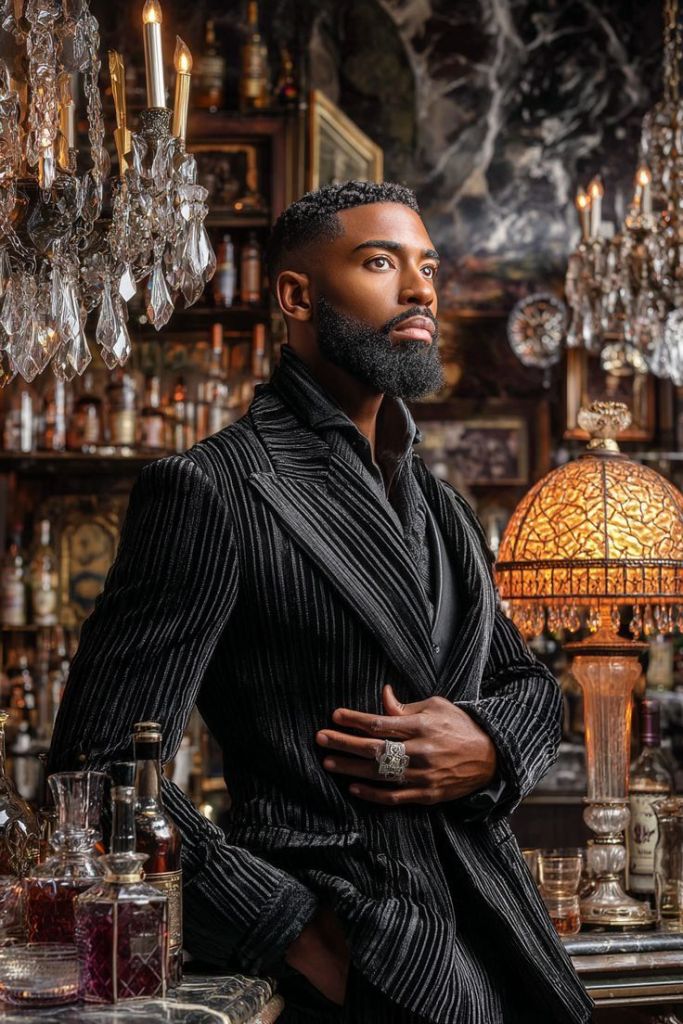
Who is that Man? #thebrownboydilemma

Photo by Luca Nardone on Pexels.com

The Black man of today carries a story written in both resilience and struggle. He is the son of kings, the descendant of enslaved men, and the product of a system that has often sought to break his spirit. From slavery to mass incarceration, from redlining to police brutality, life has tried to strip away his worth. Yet, despite wounds and weariness, the Black man continues to stand, fight, and love. His existence is both a testimony and a triumph.

The desires of the Black man often mirror the universal needs of all men: to be respected, to protect, to provide, to love, and to leave a legacy. Psychologist Abraham Maslow (1943) taught that every human strives for basic needs, belonging, and self-actualization. For many Black men, these desires are pursued under the weight of systemic barriers. Yet scripture reminds us that fulfillment is not ultimately in society’s approval but in God’s purpose. “Delight thyself also in the Lord: and he shall give thee the desires of thine heart” (Psalm 37:4, KJV).

Life, however, has often beaten the Black man down. Generational trauma from slavery, Jim Crow, and ongoing racism weighs heavily. Many die young—from violence, illness, or despair—before realizing their God-given potential. Psychology identifies this as “toxic stress,” a prolonged exposure to adversity that affects both mental and physical health (McEwen, 2000). Yet the Bible assures that suffering is not the end. “We are troubled on every side, yet not distressed; we are perplexed, but not in despair” (2 Corinthians 4:8, KJV).

But who is a good man? The Bible paints a clear picture. A good man is one who fears God, seeks wisdom, and lives with integrity. Proverbs 20:7 (KJV) declares, “The just man walketh in his integrity: his children are blessed after him.” A good man is not perfect, but he is faithful, responsible, and kind. He disciplines himself and puts others above selfish ambition.

Qualities of a good man are further echoed in psychology. Research highlights empathy, responsibility, honesty, and emotional intelligence as traits of healthy masculinity (Goleman, 1995). These qualities not only shape strong husbands and fathers but also heal communities. Where the world has tried to define the Black man as broken, lazy, or dangerous, God and psychology agree that goodness is possible, teachable, and transferable.

A good man is also a provider, not only in material terms but in spiritual and emotional support. 1 Timothy 5:8 (KJV) says, “But if any provide not for his own, and specially for those of his own house, he hath denied the faith, and is worse than an infidel.” Provision includes love, security, and leadership, not just finances. In psychology, attachment theory shows that men who are emotionally present help raise children who are more secure and resilient.

A good man also controls his passions. In a world where temptation abounds, a man must master his desires rather than be mastered by them. Proverbs 16:32 (KJV) teaches, “He that is slow to anger is better than the mighty; and he that ruleth his spirit than he that taketh a city.” Psychology aligns, teaching the importance of self-regulation and delayed gratification for long-term success (Mischel, 2014).

Finally, the good man leaves a legacy. For the Black man, this means rewriting the narrative handed down by history. He becomes the father who stays, the leader who serves, the brother who uplifts, and the man who worships God above all. His worth is not measured by his income, his appearance, or his status, but by his faithfulness to God and his love for others.

In conclusion, the Black man of today is not simply a victim of life’s hardships—he is a survivor, a dreamer, and, when guided by God’s Word, a good man in every sense. The world may undervalue him, but heaven esteems him highly. For it is written, “The steps of a good man are ordered by the Lord: and he delighteth in his way” (Psalm 37:23, KJV). The good man is the man who rises above pain, honors God, and builds a future brighter than his past.


References

  • Goleman, D. (1995). Emotional intelligence: Why it can matter more than IQ. Bantam Books.
  • Maslow, A. H. (1943). A theory of human motivation. Psychological Review, 50(4), 370–396.
  • McEwen, B. S. (2000). The neurobiology of stress: From serendipity to clinical relevance. Brain Research, 886(1-2), 172–189.
  • Mischel, W. (2014). The Marshmallow Test: Mastering self-control. Little, Brown.
  • The Holy Bible, King James Version (KJV).