
Category Archives: the bible

Girl Talk Series: Confidence in God — Seeking His Kingdom First.

Ladies, take a deep breath and be encouraged. I know life can test your strength, shake your faith, and make you question your worth. But I came to remind you today — you are not forgotten, you are not overlooked, and you are not unloved. God sees you exactly where you are, even in the moments when you feel unseen or unheard.

Sometimes we put so much energy into being strong for everyone else that we forget where our true strength comes from. But beloved, your confidence does not have to come from what you wear, who approves of you, or what you’ve accomplished. Your confidence comes from knowing who your Father is and trusting that He is in full control of your story.

When you seek God first, everything else begins to fall into divine order. When you trust Him through fasting, praying, and staying steadfast in His Word, your heart will find peace even in uncertainty. Remember the words of Matthew 6:33 (KJV):

“But seek ye first the kingdom of God, and his righteousness; and all these things shall be added unto you.”

Sis, you don’t have to chase what God has already prepared for you. The key is to keep your eyes on Him — not on fear, not on doubt, not on people. Be encouraged and walk in confidence knowing that your identity is rooted in Christ. He has chosen you, equipped you, and called you to rise above every storm with grace and faith.

So fix your crown, hold your head high, and trust that God’s plan for your life is still unfolding beautifully — even when you can’t see it yet. Stay strong, stay prayerful, and stay confident in God.

In a world that constantly tells women to find confidence in outer beauty, career success, or romantic validation, the Word of God calls us to anchor our confidence in something far greater — in Him. True confidence is not found in mirrors, money, or men; it is found in the quiet assurance that God’s promises never fail. When a woman places her identity and strength in God, she becomes unshakable — not because of her own power, but because she stands firmly on His.


Confidence Rooted in Faith, Not Feelings

Feelings shift with seasons, but faith stands when emotions falter. The world teaches self-confidence, but the Spirit teaches God-confidence. The difference is profound: self-confidence depends on human ability, while God-confidence depends on divine faithfulness.

Philippians 1:6 (KJV) reminds us:

“Being confident of this very thing, that he which hath begun a good work in you will perform it until the day of Jesus Christ.”

Confidence in God means trusting that He is not finished with you yet. Every trial, delay, and disappointment is shaping you for purpose. When your strength runs out, His grace steps in.


Seek His Kingdom First

The foundation of spiritual confidence begins with Matthew 6:33 (KJV):

“But seek ye first the kingdom of God, and his righteousness; and all these things shall be added unto you.”

Too often, we seek love, validation, or success before we seek God. But the order matters. When we prioritize His Kingdom — prayer, righteousness, service, and obedience — He aligns our desires with His divine timing. Seeking God first doesn’t mean ignoring your goals; it means allowing Him to guide your steps toward them.

Confidence comes from knowing that you don’t have to chase blessings — blessings will follow those who chase God.


Be Encouraged: God is Your Strength

When storms arise, remember that confidence in God is not denial of weakness but acknowledgment of His strength. Isaiah 40:31 (KJV) declares:

“But they that wait upon the Lord shall renew their strength; they shall mount up with wings as eagles; they shall run, and not be weary; and they shall walk, and not faint.”

Waiting is not weakness — it’s worship. The woman who waits on God is never stagnant; she’s being renewed. Every prayer whispered through tears, every moment spent in faith instead of fear, builds endurance and spiritual muscle.


Stay Strong in the Lord

Spiritual confidence is not arrogance; it is quiet resilience rooted in trust. The Apostle Paul reminds us in Ephesians 6:10 (KJV):

“Finally, my brethren, be strong in the Lord, and in the power of his might.”

To stay strong in the Lord means clothing yourself in His armor daily — truth, righteousness, faith, and prayer. The world may strip you of titles, relationships, or comfort, but nothing can remove what God placed within you. When your heart wavers, His Word stabilizes your soul.


Fast, Pray, and Stay Grounded in His Word

Confidence grows in consecration. Fasting and prayer disconnect you from worldly noise and reconnect you to divine clarity. Mark 9:29 (KJV) reminds us:

“This kind can come forth by nothing, but by prayer and fasting.”

When you fast, you feed your spirit and starve your doubt. When you pray, you strengthen your relationship with the One who holds your destiny. Through these disciplines, your confidence becomes unshakable — not because circumstances are perfect, but because your faith is anchored in the eternal.


Encouragement for the Waiting Season

Sometimes confidence in God means believing even when you don’t see results. Waiting is not punishment; it’s preparation. Habakkuk 2:3 (KJV) assures:

“For the vision is yet for an appointed time… though it tarry, wait for it; because it will surely come, it will not tarry.”

God’s delays are divine strategies. Your answered prayer may not come on your timeline, but it will come on His — and it will be worth every tear, every prayer, every test.


Confidence Through Trials

Trials do not destroy confidence; they reveal it. When your faith is tested, it proves your endurance. James 1:2-4 (KJV) encourages:

“My brethren, count it all joy when ye fall into divers temptations; knowing this, that the trying of your faith worketh patience.”

Confidence in God allows you to face the fire without fear. Like the three Hebrew boys in Daniel 3, your confidence must say, “Even if He doesn’t deliver me, I still won’t bow.” That is unbreakable trust.


Let Your Confidence Reflect His Glory

The confident woman of God walks with quiet authority. She doesn’t boast in herself but in the One who saved her. Her confidence is humility in motion — knowing her worth without pride, walking in faith without fear.

Jeremiah 17:7 (KJV) says:

“Blessed is the man that trusteth in the Lord, and whose hope the Lord is.”

Your confidence is not in how the world sees you but in how God designed you. You are fearfully and wonderfully made (Psalm 139:14), chosen (1 Peter 2:9), and loved with everlasting love (Jeremiah 31:3).


Encouraged to Persevere

Confidence in God means pressing forward when others would quit. The journey of faith is not always easy, but it is always worth it. Galatians 6:9 (KJV) reminds us:

“And let us not be weary in well doing: for in due season we shall reap, if we faint not.”

Be encouraged, woman of God. Stay consistent in prayer, steadfast in fasting, and strong in faith. You may be waiting, but you are not forgotten. You may be tested, but you are not defeated. Your confidence is your crown — and your faith is the key that unlocks divine reward.


Conclusion: Walk Boldly in Divine Confidence

Confidence in God is not a one-time decision; it’s a daily walk of faith. Every morning you rise, declare His promises over your life. Every challenge you face, remember who fights for you. When you seek His kingdom first, you’ll find that confidence isn’t something you must build — it’s something God plants within you.

Walk boldly, daughter of the King. Fast and pray. Stay strong and encouraged. Your confidence is not in what you can do, but in what God is already doing through you.


References

  • The Holy Bible, King James Version
  • Habakkuk 2:3; Matthew 6:33; Philippians 1:6; Isaiah 40:31; Ephesians 6:10; Mark 9:29; Jeremiah 17:7; Psalm 139:14; Galatians 6:9; 1 Corinthians 13:4–5; Proverbs 18:19; 1 Peter 2:9; Jeremiah 31:3
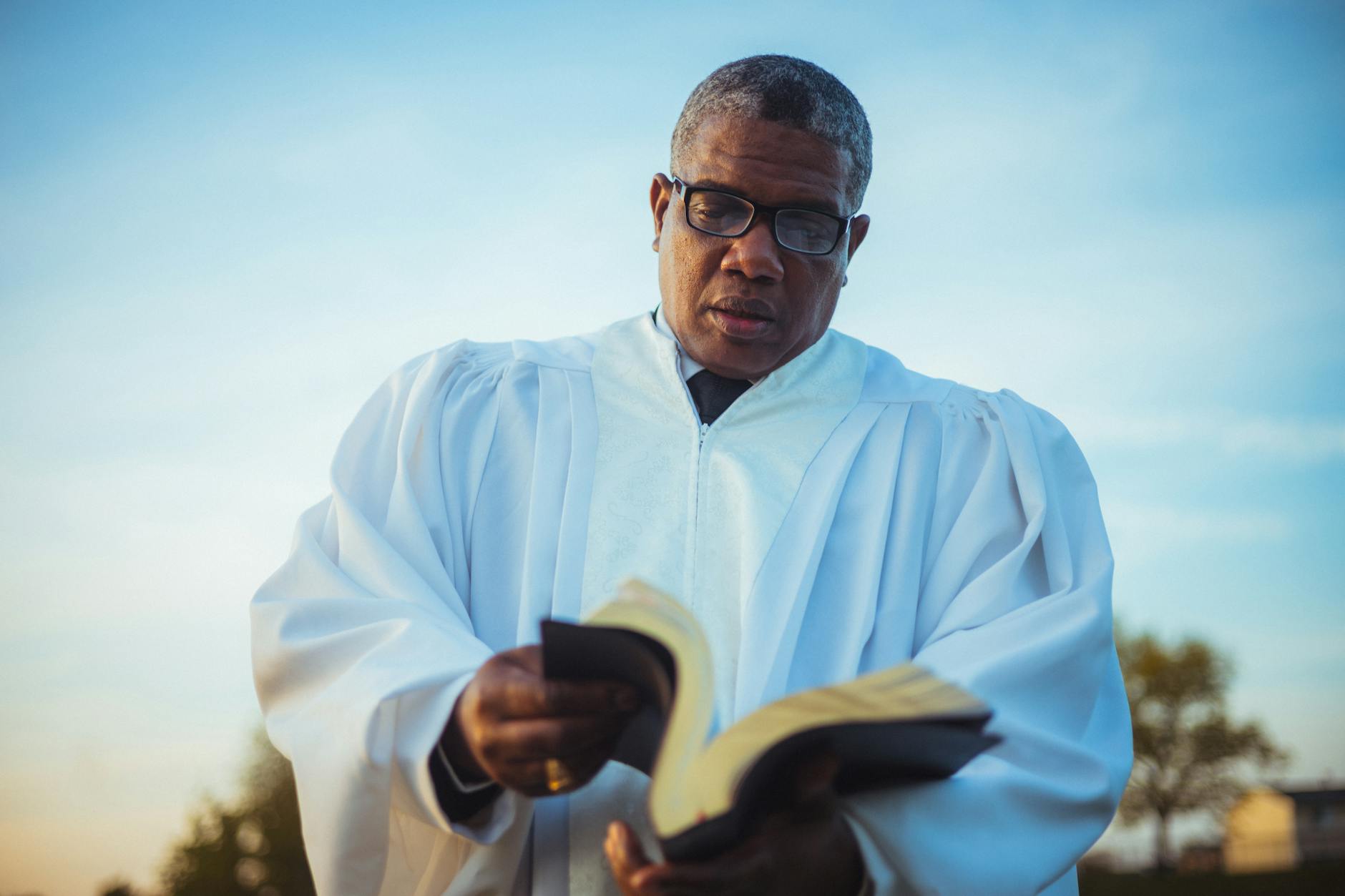

Religious Legalism: The Burden of Law Over Grace.

Photo by Samuel Peter on Pexels.com

GOD IS GUIDE

Religious legalism refers to the excessive or rigid adherence to religious laws, traditions, and rituals as the primary means of attaining righteousness or divine favor. It represents a distortion of faith that prioritizes outward conformity to rules rather than inward transformation of the heart. Legalism is not confined to one faith tradition—it manifests across religious systems whenever human effort is exalted above divine grace. From a biblical standpoint, legalism undermines the message of salvation through faith, replacing relationship with regulation.

The term “legalism” derives from the Latin legalis, meaning “about the law.” In a theological sense, it denotes the belief that moral or ceremonial laws are sufficient for justification before God. The Apostle Paul vigorously opposed such thinking, especially among early Christians who attempted to impose Mosaic law on Gentile converts. In Galatians 2:16 (KJV), Paul declares, “Knowing that a man is not justified by the works of the law, but by the faith of Jesus Christ.” This verse crystallizes the distinction between grace-centered faith and law-centered religion.

Legalism often emerges when religious communities elevate human traditions to the level of divine command. The Pharisees in the New Testament epitomized this tendency. While they sought to preserve Jewish purity through strict observance of the Torah, their zeal for rules eclipsed compassion and mercy. Christ rebuked them, saying, “This people draweth nigh unto me with their mouth… but their heart is far from me” (Matthew 15:8, KJV). Legalism thus fosters hypocrisy, where outward piety masks inner spiritual decay.

At its core, religious legalism distorts the purpose of divine law. The Mosaic Law was never intended as a means of salvation but as a mirror to reveal human sinfulness and the need for grace (Romans 3:20). Legalists, however, misinterpret law as a ladder to reach God rather than a light to expose dependence upon Him. In doing so, they replace humility with pride, and faith with performance.

Historically, legalism has shaped many religious movements. In medieval Christianity, for instance, salvation was often portrayed as achievable through penance, indulgences, and ritual observance. The Protestant Reformation, led by Martin Luther, emerged in opposition to this mentality. Luther’s rallying cry—sola fide (faith alone)—was a direct response to the oppressive legalism of the institutional church (McGrath, 2012).

Legalism also reappears in modern religious contexts. In many Christian denominations, holiness is mistakenly measured by external codes of conduct: dress, dietary laws, church attendance, or avoidance of secular culture. While moral discipline is valuable, when it becomes the basis of worthiness, it crosses into legalistic bondage. The Apostle Paul warned against such enslavement: “Stand fast therefore in the liberty wherewith Christ hath made us free” (Galatians 5:1, KJV).

Psychologically, legalism appeals to the human desire for control. It provides a checklist faith—predictable, measurable, and self-validating. Yet this illusion of control breeds spiritual anxiety. Individuals striving to earn divine approval often experience guilt, shame, and fear of failure (Crabb, 1991). Legalism, therefore, replaces joy with judgment and freedom with fear.

Sociologically, legalistic religion fosters division. It creates hierarchies of holiness, separating the “righteous” from the “sinners.” This exclusivity contradicts Christ’s example of inclusivity and compassion. Jesus dined with tax collectors and sinners, demonstrating that divine grace transcends moral boundaries (Luke 5:30–32). Legalism, however, builds walls where grace builds bridges.

In the Hebrew Bible, the law (Torah) was given as a covenantal guide, not a prison. It reflected God’s holiness and instructed Israel in righteous living. Yet the prophets repeatedly criticized empty ritualism. Isaiah 1:13–17 portrays God’s disdain for sacrifices performed without justice and mercy. Thus, even under the Old Covenant, the spirit of the law was always superior to its letter.

In contemporary faith practice, legalism manifests through denominational rigidity, dogmatic exclusivity, and moral policing. It often masquerades as holiness but lacks love. The Apostle Paul identified love as the fulfillment of the law (Romans 13:10). Therefore, without love, obedience becomes oppression.

Grace, by contrast, liberates believers from the tyranny of performance. Ephesians 2:8–9 (KJV) reminds us: “For by grace are ye saved through faith… not of works, lest any man should boast.” Grace does not negate moral responsibility; rather, it transforms obedience from obligation into devotion. When believers act from love rather than fear, faith becomes authentic and alive.

Theologically, legalism denies the sufficiency of Christ’s atonement. To seek justification through rules is to imply that the cross was inadequate. Paul confronts this heresy directly in Galatians 2:21: “If righteousness come by the law, then Christ is dead in vain.” Thus, legalism is not merely a theological error—it is a spiritual insult to divine grace.

Legalism also corrodes spiritual discernment. When focus shifts to rule-keeping, believers lose sensitivity to the Holy Spirit. The Spirit leads in truth, flexibility, and relational intimacy, whereas legalism enforces rigidity and ritualism (2 Corinthians 3:6). “The letter killeth,” Paul writes, “but the spirit giveth life.”

In community settings, legalistic leaders often manipulate followers through guilt-based control. This authoritarian spirituality equates obedience to human authority with obedience to God. Such environments breed spiritual abuse and suppress authentic faith expression (Enroth, 1992).

Conversely, grace-oriented communities foster accountability through love, not fear. They recognize that moral growth arises from inner transformation, not external enforcement. The fruit of the Spirit—love, joy, peace, and gentleness (Galatians 5:22)—cannot flourish in legalistic soil.

The balance between law and grace remains central to Christian ethics. Law reveals God’s standard; grace empowers believers to live by it. Jesus Himself affirmed the law’s moral essence while fulfilling its redemptive purpose: “Think not that I am come to destroy the law… but to fulfil” (Matthew 5:17, KJV). Thus, the law points to Christ, and Christ perfects the law through love.

Beyond Christianity, legalism appears in other faith traditions as well. In Islam, excessive focus on ritual purity can obscure the spirit of submission (Islam literally meaning “surrender”). In Judaism, rabbinic traditions evolved to protect Torah observance but occasionally burdened followers with excessive detail (Neusner, 2004). The pattern is universal: when ritual replaces relationship, faith becomes formulaic.

Philosophically, legalism mirrors Kantian moralism—duty for duty’s sake—divorced from grace or divine empowerment. In contrast, Christian theology affirms synergism between divine initiative and human response: “For it is God which worketh in you both to will and to do of his good pleasure” (Philippians 2:13, KJV).

In pastoral practice, overcoming legalism requires teaching believers their identity in Christ. True holiness flows from understanding one’s position as a child of grace, not a slave to law. When people rest in divine acceptance, obedience becomes an act of gratitude rather than fear.

Spiritually, the antidote to legalism is love. Love fulfills, transcends, and redefines the law. As Jesus summarized, “Thou shalt love the Lord thy God… and thy neighbour as thyself” (Matthew 22:37–39, KJV). This twofold commandment distills religion into relationship.

Ultimately, religious legalism is the human attempt to earn what can only be received. It is the soul’s rebellion disguised as righteousness. Grace alone liberates the believer from this deception, restoring the simplicity of faith and the joy of divine fellowship. As Romans 8:2 (KJV) declares, “For the law of the Spirit of life in Christ Jesus hath made me free from the law of sin and death.”

References

Crabb, L. J. (1991). Understanding people: Deep longings for relationship. Zondervan.
Enroth, R. (1992). Churches that abuse. Zondervan.
McGrath, A. E. (2012). Christian theology: An introduction (5th ed.). Wiley-Blackwell.
Neusner, J. (2004). The perfection of Torah: Studies in the sociology of religion and Judaism. Brill.
The Holy Bible, King James Version. (1769/2017). Cambridge University Press.

Let God’s Will Be Done in Your Life

Photo by Nothing Ahead on Pexels.com

Introduction

To submit to the will of God is to align one’s life with divine purpose and wisdom. The KJV Bible emphasizes that God’s plans are perfect, even when human understanding is limited: “For my thoughts are not your thoughts, neither are your ways my ways, saith the Lord” (Isaiah 55:8). Letting His will be done requires trust, humility, and surrender, knowing that God’s design is ultimately for our good.


2. Trusting God’s Plan

Trust is the foundation of surrender. Proverbs 3:5–6 exhorts: “Trust in the LORD with all thine heart; and lean not unto thine own understanding. In all thy ways acknowledge him, and he shall direct thy paths.” Human desire often conflicts with divine intention, but yielding to God ensures guidance beyond our limited perception.


3. Patience in the Process

God’s timing differs from human timing. Ecclesiastes 3:1 reminds us: “To everything there is a season, and a time to every purpose under the heaven.” Letting His will be done requires patience, understanding that delays or detours may serve a higher purpose, shaping character and faith.


4. Surrendering Personal Desires

Surrender is not passive but an active choice to prioritize God’s will over self-interest. Jesus prayed in Gethsemane: “O my Father, if it be possible, let this cup pass from me: nevertheless not as I will, but as thou wilt” (Matthew 26:39). True spiritual maturity involves embracing God’s plan even when it diverges from personal preferences.


5. Obedience as Evidence of Faith

Obedience demonstrates trust in God’s sovereignty. James 1:22 instructs: “But be ye doers of the word, and not hearers only, deceiving your own selves.” Faith without action is incomplete; yielding to God’s will is expressed through daily choices aligned with His Word.


6. Letting Go of Control

Human beings naturally desire control over circumstances, yet God calls for relinquishment. Psalm 37:5 declares: “Commit thy way unto the LORD; trust also in him; and he shall bring it to pass.” By releasing control, believers allow God to orchestrate outcomes that surpass human imagination.


7. Spiritual Growth Through Trials

Challenges and trials often reveal God’s will. Romans 8:28 assures: “And we know that all things work together for good to them that love God, to them who are the called according to his purpose.” Embracing God’s will during hardships strengthens faith, perseverance, and reliance on His promises.


8. Prayer as a Means of Alignment

Prayer is a vital channel for understanding and accepting God’s will. Jesus taught: “After this manner therefore pray ye: Our Father which art in heaven, Hallowed be thy name. Thy kingdom come. Thy will be done in earth, as it is in heaven” (Matthew 6:9–10). Through consistent prayer, believers cultivate discernment and inner peace.


9. The Blessings of Submission

Submission to God brings spiritual fulfillment. Psalm 40:8 proclaims: “I delight to do thy will, O my God: yea, thy law is within my heart.” When the believer aligns life with divine purpose, blessings manifest in guidance, peace, and strengthened relationship with God.


10. Conclusion

Letting God’s will be done is a lifelong journey of faith, obedience, and trust. By surrendering desires, embracing patience, and practicing continual prayer, believers align with God’s perfect plan. As Philippians 2:13 reminds us: “For it is God which worketh in you both to will and to do of his good pleasure.” True peace and purpose arise when one yields fully to His will.

The Bible Series: “”Ruth and Boaz”” : A Covenant Love That Endures.

This artwork is the property of its respective owner. No copyright infringement intended.

“Two souls divinely woven in time,
One from sorrow, one steadfast and kind.
She gleaned in the fields with faith as her guide,
He opened his heart, with honor as pride.
Their love was not sudden, but rooted in grace,
A story eternal no culture can replace.
Ruth and Boaz, a union so pure,
A testament of love that forever endures.”

The love story of Ruth and Boaz is among the most beautiful narratives of covenant faith, devotion, and divine providence in the Bible. Ruth was a Moabite woman, widowed after her marriage to Mahlon, the son of Elimelech and Naomi (Ruth 1:2-5, KJV). After her husband’s death, Ruth chose to remain faithful to Naomi, declaring, “whither thou goest, I will go; and where thou lodgest, I will lodge: thy people shall be my people, and thy God my God” (Ruth 1:16, KJV). Boaz, on the other hand, was a wealthy landowner of Bethlehem, a kinsman of Elimelech, known for his honor, kindness, and godly character.

From the beginning of the account, Ruth’s loyalty sets her apart. Though she could have returned to her own family and gods, she committed herself to Naomi and to the God of Israel. This choice was more than a gesture of affection—it was a declaration of faith and identity. In leaving Moab, she symbolically left behind idolatry and embraced the covenant people of God. This shows how love and faith intertwine; Ruth’s devotion was not just emotional, but deeply spiritual.

When Ruth and Naomi returned to Bethlehem during barley harvest, Ruth went to glean in the fields, an act permitted by Mosaic law for the poor and strangers (Leviticus 19:9-10, KJV). Providence guided her steps to the field of Boaz, where she would not only find provision, but also destiny. Boaz immediately noticed her diligence, humility, and grace, even before knowing her full story. His first words to her were words of protection and kindness, instructing her to remain in his fields and assuring her safety (Ruth 2:8-9, KJV).

Boaz’s actions reflected a man of noble character. He was a protector, provider, and a man sensitive to God’s law. Unlike many who could have ignored Ruth’s plight as a poor foreigner, Boaz went beyond obligation and showed compassion. He even commanded his reapers to leave extra grain for her (Ruth 2:15-16, KJV). His treatment of Ruth demonstrates that true love is not predatory or self-seeking, but nurturing, honorable, and rooted in respect.

Ruth, in turn, demonstrated her humility and gratitude. She asked Boaz why he would show her such kindness as a stranger, to which he responded that he had heard of her loyalty to Naomi and her faithfulness after her husband’s death (Ruth 2:11-12, KJV). This exchange highlights how character and reputation play a role in forming godly unions. Ruth’s heart and actions preceded her, and Boaz valued her inner beauty as much as her outward grace.

Naomi, recognizing the favor Ruth had found, instructed her in the custom of the kinsman-redeemer (Leviticus 25:25, KJV). A close relative of a deceased man could redeem the widow, securing lineage and inheritance. Naomi guided Ruth to approach Boaz at the threshing floor, a symbolic and delicate act of trust. Ruth obeyed, laying herself at Boaz’s feet, a gesture of humility and request for covering (Ruth 3:7-9, KJV). Her request was not one of seduction, but of covenant—seeking the shelter of his role as redeemer.

Boaz, again proving his integrity, did not take advantage of her vulnerability. Instead, he blessed her for her kindness and noble character. He promised to fulfill his duty, yet also acknowledged there was a nearer kinsman who had first right (Ruth 3:12-13, KJV). This shows his righteousness in following the law of God rather than rushing into desire. Even in love, he placed honor and God’s order above personal inclination.

The next day, Boaz presented the matter before the elders at the gate. The nearer kinsman declined, unwilling to jeopardize his own inheritance, thereby leaving the right to Boaz. In the presence of witnesses, Boaz formally redeemed Ruth, securing her as his wife and perpetuating the name of her late husband (Ruth 4:9-10, KJV). This moment marked the union of love, law, and legacy.

Their marriage was blessed not only by the community but by God. Ruth bore Obed, who became the father of Jesse, and the grandfather of King David (Ruth 4:17, KJV). This makes Ruth a part of the direct lineage of Christ, underscoring the divine significance of her love story. A Moabite widow, once an outsider, became central in God’s redemptive plan.

The love story of Ruth and Boaz teaches many timeless lessons. First, it shows the beauty of faithfulness and loyalty, as Ruth’s devotion positioned her for blessings beyond imagination. Second, it highlights the importance of character, as Boaz’s integrity and compassion made him a man worthy of trust. Third, it demonstrates that true love is grounded in covenant, not just emotion—it is about responsibility, faith, and legacy.

For modern relationships, Ruth and Boaz serve as the ultimate example. They remind us that love should be God-centered, respectful, and marked by patience. Boaz did not rush the process, and Ruth did not manipulate the outcome. Instead, both walked in faith, and God orchestrated their union at the right time. Their story assures us that when love is aligned with God’s will, it leads not just to romance, but to generational blessings.

The poetic beauty of Ruth and Boaz is that their love was never just about themselves. It was about God’s larger plan of redemption. What began as sorrow and loss for Ruth became the pathway to hope and restoration. Her story teaches that God can turn grief into joy, emptiness into fullness, and ordinary faithfulness into extraordinary legacy.

Ruth and Boaz’s story also elevates the dignity of women. Ruth was not seen as a mere possession or burden, but as a woman of virtue. Boaz acknowledged her worth and honored her as such. This narrative challenges cultures that devalue women and instead celebrates the woman of strength and loyalty as precious in God’s sight.

The legacy of their love continues to inspire because it was rooted not in superficial attraction but in covenant. Unlike many modern relationships that emphasize fleeting passion, their union stood on respect, faith, and divine timing. Theirs is not only a love story—it is a God story.

In the end, Ruth and Boaz show us what happens when faith and love meet in obedience. It is a reminder that love, when consecrated by God, becomes more than personal satisfaction—it becomes part of divine history. Their union produced not only joy for themselves but hope for the world, culminating in the birth of Christ centuries later.

As the book of Ruth concludes, the once-bitter Naomi rejoiced, the widowed Ruth was restored, and the honorable Boaz was blessed. Their story reminds us of the words of 1 Corinthians 13:13 (KJV): “And now abideth faith, hope, charity, these three; but the greatest of these is charity.” Their love was charity in action—faithful, enduring, and eternal.


📖 KJV Bible References

  • Ruth 1:2-5, 16
  • Ruth 2:8-12, 15-16
  • Ruth 3:7-13
  • Ruth 4:9-10, 17
  • Leviticus 19:9-10
  • Leviticus 25:25
  • 1 Corinthians 13:13

Celebrity Spotlight: Kyrie Irving – Talent, Identity, and Revelation.

This photograph is the property of its respective owner. No copyright infringement intended.

Kyrie Irving, born March 23, 1992, in Melbourne, Australia, is a professional basketball player widely regarded for his extraordinary skill, agility, and creativity on the court. Raised in the United States by parents Drederick Irving and Elizabeth Larson, Kyrie grew up with an early exposure to sports, particularly basketball, influenced by his father’s professional experience in the sport. His heritage traces to African-American roots, and he has consistently expressed pride in exploring the deeper dimensions of his cultural and ancestral identity.

These photographs are the property of their respective owners. No copyright infringement intended.

Kyrie’s basketball career is distinguished by numerous accolades. After a stellar tenure at Duke University, he was selected first overall by the Cleveland Cavaliers in the 2011 NBA Draft. He won the NBA Rookie of the Year (2012), was a six-time NBA All-Star, and earned the NBA Championship in 2016, famously hitting the series-clinching three-pointer in Game 7 of the Finals. Beyond his on-court excellence, Kyrie is known for his ball-handling wizardry and clutch performance in high-pressure games.

However, Kyrie has faced public controversy and backlash due to his exploration of truth about history, identity, and spirituality. He has spoken openly about the African roots of Native American and Hebrew people, highlighting suppressed histories that challenge mainstream narratives. This perspective has sparked tension in public discourse, as many media and institutional entities resist such revelations.

His experiences reflect a broader societal issue: the deliberate erasure or distortion of Black history. Acts of suppression, misinformation, and systemic racism have historically aimed to prevent Black people from understanding their true lineage. Deuteronomy 28:37 (KJV) warns, “And thou shalt become an astonishment, a proverb, and a byword among all nations whither the LORD shall lead thee.” This verse aligns with the reality that oppressed communities are often misrepresented to maintain control over knowledge and perception.

Kyrie’s journey also illuminates the psychological impact of discovering suppressed truths. Research in racial identity development shows that uncovering historical erasure can evoke both empowerment and conflict, as one reconciles mainstream narratives with ancestral reality (Cross, 1991). Kyrie’s courage in asserting his understanding of history demonstrates the tension between personal truth and public perception.

The family plays a central role in his narrative. Kyrie has credited his parents for instilling discipline, curiosity, and resilience. His father, Drederick Irving, introduced him to competitive basketball and emphasized understanding life beyond the court. His mother, Elizabeth Larson, provided support while emphasizing education and character development, teaching Kyrie to navigate fame with integrity.

Kyrie has also encountered cultural resistance. Those invested in maintaining a Eurocentric view of history often react negatively to revelations about African heritage, Hebrew ancestry, or spiritual identity. Proverbs 4:23 (KJV) instructs, “Keep thy heart with all diligence; for out of it are the issues of life.” Preserving knowledge and self-awareness is critical in resisting societal deception.

Despite challenges, Kyrie continues to use his platform to educate, inspire, and reclaim narratives for Black people. He emphasizes pride in African heritage, understanding of historical oppression, and the importance of seeking truth. His advocacy is not only cultural but also spiritual, encouraging youth to explore identity while remaining grounded in God’s word.

The hostility he faces reflects a broader pattern of suppression throughout history. Enemies of truth often sow confusion, hatred, and fear to maintain dominance. Psalm 83:1–3 (KJV) speaks to this spiritual reality: “Keep not thou silence, O God: hold not thy peace, and be not still, O God… they have taken crafty counsel against thy people, and consulted against thy hidden ones.” Those who seek to hide truth often target those courageous enough to reveal it.

In conclusion, Kyrie Irving embodies the intersection of extraordinary talent, personal exploration, and cultural revelation. His biography and career achievements are remarkable, but his journey into understanding identity underscores the systemic forces that obscure historical truth from Black people. Through faith, resilience, and public advocacy, Kyrie challenges false narratives, aligning with the biblical principle of walking in light and truth (John 8:32, KJV): “And ye shall know the truth, and the truth shall make you free.”

Biographical & Career References


Identity & Heritage References

  • Irving, K. (2021). Public interviews discussing African/Hebrew heritage. CNN, “Kyrie Irving on African roots and identity”.
  • Ben-Jochannan, Y. A. A. (1974). Africa: Mother of Western Civilization. Alkebu-Lan Books.
  • DeGruy, J. (2005). Post Traumatic Slave Syndrome: America’s Legacy of Enduring Injury and Healing. Joy DeGruy Publications.
  • Cross, W. E. (1991). Shades of Black: Diversity in African-American Identity. Temple University Press.

Biblical References (KJV)

  • Deuteronomy 28:37 – “And thou shalt become an astonishment, a proverb, and a byword among all nations whither the LORD shall lead thee.”
  • Psalm 83:1–3 – Addresses oppression and conspiracies against God’s people.
  • John 8:32 – “And ye shall know the truth, and the truth shall make you free.”
  • Genesis 1:27 – Affirmation that all humans are made in God’s image.
  • Proverbs 4:23 – “Keep thy heart with all diligence; for out of it are the issues of life.”

Media Coverage of Controversy & Public Response

  • The Guardian. (2021). Kyrie Irving sparks debate over historical identity claims.
  • The New York Times. (2021). Kyrie Irving, identity, and controversy in the NBA.
  • Sports Illustrated. (2021). Kyrie Irving on cultural heritage and social responsibility.

Misplaced Trust: A Biblical and Psychological Examination.

Photo by cottonbro studio on Pexels.com

1. Introduction to Trust

Trust is the foundation of all meaningful human relationships. It provides stability, fosters intimacy, and allows communities to flourish. Yet trust, when misplaced, becomes a source of pain, betrayal, and disillusionment. Misplaced trust occurs when we invest our confidence, loyalty, or faith in people, systems, or ideas that cannot sustain or honor it. Scripture repeatedly warns against placing ultimate trust in humans rather than God, highlighting the spiritual and emotional dangers of trusting in the wrong sources (Jeremiah 17:5, KJV).

2. Defining Misplaced Trust

Misplaced trust can be defined as the act of relying on something or someone unworthy of our confidence. It is not simply a matter of being deceived, but of allowing our hope or dependence to rest where it does not belong. Proverbs 3:5 (KJV) instructs believers to “trust in the LORD with all thine heart; and lean not unto thine own understanding.” To misplace trust is to direct that trust toward fallible human wisdom or unreliable foundations.

3. The Psychological Impact

Psychologically, misplaced trust can lead to heartbreak, trauma, and a loss of self-confidence. Betrayal from trusted individuals creates what psychologists call a “violation of core assumptions,” shaking our belief in safety and predictability (Janoff-Bulman, 1992). This can result in anxiety, depression, or hypervigilance in future relationships.

4. Trusting in People Over God

One of the clearest biblical warnings is found in Jeremiah 17:5 (KJV): “Thus saith the LORD; Cursed be the man that trusteth in man, and maketh flesh his arm, and whose heart departeth from the LORD.” Placing ultimate faith in human beings leads to disappointment because all people are limited and prone to failure. Even well-intentioned individuals can break trust due to weakness, sin, or changing circumstances.

5. Trusting in Wealth

Another form of misplaced trust is reliance on riches. Proverbs 11:28 (KJV) declares, “He that trusteth in his riches shall fall: but the righteous shall flourish as a branch.” When people trust in material wealth for security, they discover how fragile money can be. Economic collapse, job loss, or unexpected disaster can strip away what once seemed secure.

6. Trusting in Governments and Systems

Human governments, while necessary, cannot be the ultimate source of salvation or justice. Psalm 146:3 (KJV) warns, “Put not your trust in princes, nor in the son of man, in whom there is no help.” History is filled with examples of governments oppressing rather than protecting their people, from the enslavement of the Israelites in Egypt to modern instances of systemic injustice.

7. Trusting in False Teachers

Spiritual leaders can be a blessing, but Scripture warns against placing blind trust in any man without discernment. Jesus cautioned against false prophets, saying, “Beware of false prophets, which come to you in sheep’s clothing, but inwardly they are ravening wolves” (Matthew 7:15, KJV). Misplaced trust in corrupt spiritual leaders can lead to spiritual abuse, heresy, and disillusionment with faith itself.

8. Trusting in Our Own Strength

Another danger is trusting in our own abilities rather than God’s power. Proverbs 28:26 (KJV) says, “He that trusteth in his own heart is a fool: but whoso walketh wisely, he shall be delivered.” Human understanding is limited and subject to error. Misplaced self-confidence can lead to pride, poor decision-making, and spiritual downfall.

9. Personal Relationships

On a personal level, misplaced trust may appear in friendships or romantic relationships where loyalty is given too quickly or to someone with proven dishonesty. For example, Samson placed trust in Delilah despite her repeated betrayals (Judges 16). His failure to discern her true motives led to his capture and humiliation.

10. Family Betrayal

Misplaced trust can also occur within families. Joseph’s brothers betrayed him, selling him into slavery despite being his own blood (Genesis 37). Joseph’s story illustrates that even those closest to us can misuse our trust, teaching the need for discernment even in family dynamics.

11. Political and Social Examples

Many people misplace trust in political leaders, believing they will bring ultimate justice or salvation. History shows countless examples where such trust led to devastation, including oppressive regimes and corrupt rulers. This reinforces the biblical principle that only God’s kingdom can bring perfect justice (Isaiah 9:7).

12. Trust in False Promises

People often trust in empty promises because they sound appealing. This is why Scripture warns about flattery and deceitful words (Proverbs 26:28). Misplaced trust in charming but dishonest individuals can lead to financial scams, emotional manipulation, or exploitation.

13. The Cost of Misplaced Trust

The emotional cost of misplaced trust is high. Broken trust creates pain, sometimes leading to bitterness or cynicism. Hebrews 12:15 (KJV) warns against allowing “any root of bitterness” to spring up, as it can trouble the soul and defile many.

14. Restoring Trust After Betrayal

While misplaced trust can wound deeply, healing is possible through forgiveness and God’s restoration. Joseph forgave his brothers, saying, “Ye thought evil against me; but God meant it unto good” (Genesis 50:20, KJV). Forgiveness allows believers to release bitterness and find peace, even when trust cannot be fully restored.

15. Developing Discernment

The solution to misplaced trust is not cynicism but discernment. Believers are called to “try the spirits whether they are of God” (1 John 4:1, KJV). This means testing words, actions, and character against Scripture before investing trust.

16. Balancing Trust and Caution

Healthy trust involves both openness and wisdom. Jesus taught His followers to be “wise as serpents, and harmless as doves” (Matthew 10:16, KJV). This balance prevents naivety while keeping the heart free from paranoia.

17. Placing Ultimate Trust in God

The Bible repeatedly urges believers to place their ultimate confidence in God. Psalm 37:3 (KJV) instructs, “Trust in the LORD, and do good; so shalt thou dwell in the land, and verily thou shalt be fed.” Trusting in God provides a firm foundation that cannot be shaken by human failure.

18. Psychological Resilience

When trust is grounded in God, psychological resilience grows. Research shows that faith can buffer against the negative effects of betrayal by providing a sense of meaning and hope (Pargament, 1997). Spiritually rooted trust allows believers to endure human disappointment without collapsing emotionally.

19. Practical Steps to Avoid Misplaced Trust

Practically, believers can avoid misplaced trust by seeking wise counsel (Proverbs 11:14), setting healthy boundaries, and waiting for consistent character to be proven before granting deep trust. Prayerful reflection helps align decisions with God’s will.

✅ List of Misplaced Trusts People Commonly Have

1. Trusting in People More Than God

  • Believing others have the answers to life’s problems rather than seeking God first (Jeremiah 17:5).
  • Example: Relying on friends or mentors for direction before praying about decisions.

2. Trusting in Wealth and Material Possessions

  • Finding security in money, savings, or status instead of the Lord (Proverbs 11:28).
  • Example: Believing financial success can solve every problem.

3. Trusting in Governments and Political Leaders

  • Expecting political figures to bring ultimate peace and justice (Psalm 146:3).
  • Example: Believing a new leader or policy will fix all societal issues.

4. Trusting in Relationships for Fulfillment

  • Looking to a spouse, partner, or friend to fill emotional or spiritual emptiness instead of God.
  • Example: Becoming co-dependent and devastated when that person fails.

5. Trusting in Ourselves (Self-Reliance)

  • Depending solely on personal strength, intellect, or feelings (Proverbs 28:26).
  • Example: Ignoring prayer or godly counsel because you think you “know best.”

6. Trusting in Charm or Flattery

  • Being swayed by smooth words and appearances instead of proven character (Proverbs 26:28).
  • Example: Falling for empty promises in business deals or relationships.

7. Trusting in False Teachers or Leaders

  • Following spiritual leaders blindly without testing their doctrine (Matthew 7:15).
  • Example: Joining a religious movement that leads people away from biblical truth.

8. Trusting in Cultural Norms or Society’s Approval

  • Allowing the world’s standards to define right and wrong rather than Scripture (Romans 12:2).
  • Example: Compromising moral convictions to “fit in.”

9. Trusting in Technology and Science as Ultimate Saviors

  • Believing human innovation can fix every spiritual or moral problem.
  • Example: Placing hope in AI, medicine, or new inventions instead of seeking God’s wisdom.

10. Trusting in Luck, Horoscopes, or Superstition

  • Seeking guidance from fortune tellers, astrology, or rituals (Deuteronomy 18:10-12).
  • Example: Checking zodiac signs before making life decisions.

11. Trusting in Revenge or Human Justice Alone

  • Believing personal retaliation will bring peace (Romans 12:19).
  • Example: Taking vengeance into your own hands instead of trusting God’s justice.

12. Trusting in Fame, Popularity, or Human Praise

  • Finding worth in likes, followers, or human validation (John 12:43).
  • Example: Compromising values to gain approval from others.

13. Trusting in Physical Strength, Beauty, or Youth

  • Building identity on outward appearance rather than inner character (Proverbs 31:30).
  • Example: Obsessing over looks, thinking they guarantee happiness or success.

14. Trusting in Past Experiences or Traditions Over Truth

  • Relying on “how things have always been done” instead of asking God for fresh direction (Mark 7:8).
  • Example: Holding onto harmful family traditions because they are familiar.

15. Trusting in Addiction or Coping Mechanisms

  • Using substances, pornography, or entertainment as a source of comfort instead of prayer (Psalm 46:1).
  • Example: Turning to alcohol when stressed instead of turning to God.

16. Trusting in Human Justice Systems Alone

  • Believing courts, police, or institutions will always deliver perfect justice.
  • Example: Losing faith when corruption or bias is exposed.

17. Trusting in False Hope or Empty Promises

  • Believing that “quick fixes” or get-rich-quick schemes will solve deep issues.
  • Example: Falling for scams or shady business deals because they seem promising.

18. Trusting in Military Power or Weapons for Security

  • Believing armies or weapons guarantee peace (Psalm 20:7).
  • Example: Thinking a nation’s military strength ensures its safety.

19. Trusting in Emotions as Ultimate Truth

  • Making decisions based solely on feelings without discernment (Jeremiah 17:9).
  • Example: Justifying sinful choices because they “feel right.”

20. Trusting in False Gods or Idols

  • Placing faith in anything that takes God’s rightful place—careers, money, celebrities, or even self (Exodus 20:3-4).
  • Example: Worshipping success or fame as the highest goal in life.

Conclusion

Misplaced trust is a universal human struggle that can lead to pain, betrayal, and disillusionment. Yet Scripture provides guidance to redirect trust toward God, who never fails. By cultivating discernment, practicing forgiveness, and grounding hope in the Lord, believers can experience relationships with both wisdom and peace, avoiding the devastating consequences of misplaced loyalty.


References

  • Janoff-Bulman, R. (1992). Shattered assumptions: Towards a new psychology of trauma. Free Press.
  • Pargament, K. I. (1997). The psychology of religion and coping: Theory, research, practice. Guilford Press.
  • The Holy Bible, King James Version.

Black History, Has It Been Whitewashed?

This artwork is the property of its respective owner. No copyright infringement intended.

Black history is more than a subject taught in February; it is the story of humanity itself, tracing the contributions, struggles, and triumphs of people of African descent from antiquity to the present. Yet for centuries, much of this history has been systematically erased, misrepresented, or “whitewashed.” Whitewashing refers to the deliberate alteration of historical narratives to favor Eurocentric perspectives, minimizing or excluding Black presence, contributions, and identity. This erasure is not merely academic—it shapes the psychology of Black people and the collective consciousness of society.

Hollywood has played a major role in this process. Biblical movies, for instance, have often depicted Hebrews, Egyptians, and early Christians as European in appearance, despite the geographical and anthropological evidence pointing to their African and Semitic roots. Films like The Ten Commandments (1956) portrayed Pharaoh and Moses as white men, subtly reinforcing the idea that leadership, divinity, and chosenness are synonymous with whiteness. This not only distorts biblical truth but also conditions audiences to associate Blackness with servitude rather than divine purpose.

The Bible itself points to a different narrative. Many key figures—Moses, Joseph, and even Christ—spent time in Africa. Christ was hidden in Egypt as a child (Matthew 2:13-15, KJV), which would not have been a safe hiding place if He were a pale-skinned foreigner who stood out among the population. The Song of Solomon 1:5 (KJV) proclaims, “I am black, but comely,” affirming that dark skin was celebrated in ancient texts. The erasure of this truth diminishes the representation of Black identity in the biblical narrative.

Black history, in its truest sense, includes the kingdoms of Mali, Ghana, and Songhai; the libraries of Timbuktu; the inventions, music, and philosophies of African civilizations. It also includes the Middle Passage, slavery, and systemic oppression that followed. To study Black history is to study resilience, creativity, and faith. It is the acknowledgment of a people who survived one of the greatest crimes in human history and still found ways to bless the nations with culture, innovation, and spiritual depth.

The whitewashing of slavery is one of the most dangerous forms of historical erasure. Some school systems now refer to enslaved people as “workers” or claim that slavery was “beneficial” because it taught Africans “skills.” This revisionist narrative strips away the brutality of chattel slavery—the whippings, the family separations, the psychological warfare. Exodus 1:13-14 (KJV) describes how the Egyptians “made the children of Israel to serve with rigour,” which mirrors the forced labor and oppression endured by Africans in the Americas.

From a psychological standpoint, erasing or minimizing slavery has generational effects. Theories of intergenerational trauma suggest that the pain of slavery has been passed down genetically and emotionally (DeGruy, 2005). When history is hidden, Black communities are denied the opportunity to heal, grieve, and demand justice. It is psychologically disorienting to live in a world that denies the truth of your ancestors’ suffering while expecting you to “move on.”

The question arises: why would white society want to keep slavery hidden? The answer is multifaceted. To confront slavery honestly would require acknowledging that the wealth of nations like the United States, Britain, and France was built on Black suffering. It would also raise moral questions about reparations, justice, and restitution. Psychologically, some white individuals experience “white guilt” and prefer to avoid discomfort by sanitizing history (Spanierman & Cabrera, 2015).

The color of Black people has also been a point of erasure. In many educational and media portrayals, African Americans are depicted as a monolith, ignoring the diversity of skin tones, cultures, and histories. Colorism, which privileges lighter skin, has further complicated the narrative. Media representation often favors light-skinned actors to portray Black historical figures, which subtly communicates that lighter Blackness is more palatable to mainstream audiences.

Social media, while a tool for education, has also perpetuated whitewashing. Algorithms tend to amplify Eurocentric beauty standards and reward creators who fit into those ideals, often sidelining darker-skinned voices. Memes, viral trends, and TikTok dances created by Black users are frequently appropriated by non-Black influencers who gain more recognition and profit, leaving the originators invisible.

Whitewashing in education is particularly concerning. In some states, curriculum reforms have sought to limit or remove discussions of systemic racism and slavery from classrooms. This deprives young students—both Black and white—of a truthful understanding of history. Hosea 4:6 (KJV) warns, “My people are destroyed for lack of knowledge.” When history is withheld, it becomes easier to repeat cycles of oppression.

Psychologically, representation matters because it shapes identity. Social identity theory suggests that people derive part of their self-esteem from the groups to which they belong (Tajfel & Turner, 1986). When Black people see their history erased or distorted, it sends a message that they are insignificant or inferior. This can create internalized racism, self-hate, and low collective esteem.

The whitewashing of Black biblical history also has spiritual consequences. If Black people are taught that they have no place in sacred history, they may view Christianity as a “white man’s religion,” leading to spiritual disillusionment. Yet Acts 8:27-39 recounts the Ethiopian eunuch’s conversion and baptism, showing that Africans were among the first Christians. Reclaiming this narrative restores dignity and belonging.

The Bible takes place in Africa and the Middle East — regions where people historically had darker skin tones. The Hebrews, Egyptians, Ethiopians, and early Christians were not Northern Europeans. Yet, for centuries, European artists, church leaders, and later Hollywood filmmakers deliberately depicted them as white. This was not an accident — it was part of a larger project to make Christianity look “Western” and to align holiness, divinity, and authority with whiteness.

Here are a few key points you might find powerful:

  • Geography matters: The Bible’s events took place in regions like Egypt, Canaan, Babylon, and Jerusalem — all hot, sun-drenched places where people would have been brown-skinned or Black. Even Jesus’ family fled to Egypt (Matthew 2:13–15, KJV), a place where He would not have stood out if He were pale.
  • Biblical descriptions: Song of Solomon 1:5 (KJV) says, “I am black, but comely.” Lamentations 5:10 describes skin “black like an oven” from famine. Jeremiah 8:21 says, “I am black; astonishment hath taken hold on me.” These passages suggest that many biblical people were visibly dark-skinned.
  • Historical evidence: Ancient Israelite art, Egyptian tomb paintings, and archaeological records show people with brown to black skin tones, curly or woolly hair, and features common in African and Afro-Asiatic populations.
  • Whitewashing as control: When Europeans colonized Africa and enslaved Africans, they spread images of a white Jesus and white saints to justify slavery and teach that salvation came through European culture. This psychological tactic convinced many enslaved people that whiteness was divine and blackness was cursed — a lie that still shapes perceptions today.
  • Psychological effects: Seeing only white biblical figures can make Black and Brown believers feel disconnected from Scripture or think that God does not look like them. This is why representation matters — it shapes self-esteem, spiritual confidence, and cultural pride.

Slavery itself was justified using twisted theology, with slaveholders quoting Ephesians 6:5 (“Servants, be obedient to them that are your masters”) out of context, while ignoring the liberating themes of Scripture. This manipulation of the Word was an early form of whitewashing, reframing oppression as divine will rather than sin.

In popular culture, the whitewashing of Black music, dance, and language continues. Jazz, blues, and hip-hop—all birthed in Black communities—have been monetized by corporations while excluding the originators from full benefit. This economic exploitation mirrors historical patterns of taking from Black bodies and minds without acknowledgment.

The erasure of Black heroes is another tactic of whitewashing. Figures like Crispus Attucks, Ida B. Wells, and Garrett Morgan are rarely celebrated alongside Washington or Lincoln, despite their crucial roles in shaping American history. When they are mentioned, their Blackness is often downplayed, making them “race-neutral” heroes rather than distinctly Black ones.

This whitewashing creates a false sense of racial harmony by pretending racism never existed. It allows society to maintain systemic inequities while claiming progress. Proverbs 17:15 (KJV) warns against justifying the wicked, stating, “He that justifieth the wicked, and he that condemneth the just, even they both are abomination to the Lord.” To whitewash history is to justify wickedness and silence the righteous.

Psychologists argue that confronting historical injustice is essential for collective healing. Truth-telling initiatives, such as truth and reconciliation commissions, have been used in countries like South Africa to address systemic oppression. The United States has yet to fully reckon with its history of slavery, which is why racial tensions remain unresolved.

Social media activism has become one of the most powerful tools in combating whitewashing. Hashtags like #BlackLivesMatter and #BlackHistory365 have brought hidden stories to light, challenging mainstream narratives. This democratization of information gives Black people a voice that was long suppressed.

In conclusion, Black history has been whitewashed through media, education, religion, and social systems, but the truth continues to resurface. The erasure of slavery, Black biblical history, and cultural contributions has psychological and spiritual consequences that affect generations. Reclaiming Black history is not just an academic exercise but an act of resistance, healing, and restoration. To know Black history is to know the full story of humanity—and to resist the forces that seek to erase God’s image in Black bodies.


References

  • DeGruy, J. (2005). Post Traumatic Slave Syndrome: America’s Legacy of Enduring Injury and Healing. Joy DeGruy Publications.
  • Spanierman, L. B., & Cabrera, N. L. (2015). The emotions of White racism. Educational Psychologist, 50(3), 187–203.
  • Tajfel, H., & Turner, J. C. (1986). The social identity theory of intergroup behavior. In S. Worchel & W. Austin (Eds.), Psychology of intergroup relations (pp. 7–24). Nelson-Hall.

Key KJV Scriptures: Matthew 2:13-15; Song of Solomon 1:5; Exodus 1:13-14; Hosea 4:6; Acts 8:27-39; Proverbs 17:15; 1 Samuel 16:7; Proverbs 29:25.

Different Layers of Rebellion Against The Most High Yah (GOD) Sin.Transgression.Iniquity

Photo by Maruxa Lomoljo Koren on Pexels.com

Rebellion against the Most High Yah is not always the same in degree, motive, or manifestation. Scripture shows that sin, transgression, and iniquity represent different layers of disobedience, each carrying its own weight and consequence. Understanding the distinctions between them is crucial for spiritual growth, repentance, and restoration. These terms are not interchangeable, and a deeper understanding can help believers identify hidden patterns of rebellion in their own lives.

Sin is the most general of the three terms. It is commonly defined as “missing the mark” of God’s standard. Sin is falling short of the glory of God (Romans 3:23). It is any thought, action, or omission that violates God’s law or His perfect will. Sin can be intentional or unintentional, and it is part of the fallen nature inherited from Adam.

Transgression goes a step further. It refers to the willful crossing of a known boundary. When one transgresses, one knowingly steps over the line that Yah has drawn. It is a more deliberate form of disobedience than general sin because it involves awareness of the law and a conscious choice to break it.

Iniquity is in the heart (dangerous), the deepest layer of rebellion. Iniquity is not just an act but a twisted or perverse condition of the heart. It is the bent toward sin, the moral distortion that drives people to repeat sinful patterns without repentance. Iniquity can be generational, passing from one generation to another if not confessed and broken through prayer and obedience.

Sin can manifest in many forms. For example, lying, gossiping, overeating, and failing to do what one knows is right all fall under sin. James 4:17 reminds us, “Therefore to him that knoweth to do good, and doeth it not, to him it is sin.” Even neglecting prayer, ignoring the poor, or withholding forgiveness are sins of omission that separate believers from Yah’s presence.

Transgression might look like someone knowingly violating the Sabbath rest, stealing despite understanding the commandment, or continuing in sexual immorality after hearing the truth of God’s Word. David prayed in Psalm 32:1, “Blessed is he whose transgression is forgiven, whose sin is covered.” This shows that transgressions need acknowledgment and forgiveness to be removed.

Iniquity digs deeper, revealing what is wrong at the heart level. It could manifest as a person with a hidden pattern of pride, lust, or manipulation that continues even after outward repentance. Isaiah 53:5 says of Yahusha (Jesus), “the LORD hath laid on him the iniquity of us all.” This demonstrates that iniquity is heavy, deep-rooted, and must be atoned for by divine intervention.

A real-life example of sin might be a person losing their temper and yelling at a coworker in the heat of the moment. They did not plan to do it, but they still missed the mark of patience and kindness.

A real-life example of transgression would be a believer who knows adultery is forbidden but continues an affair despite conviction. This is stepping across a clear boundary with full awareness.

A real-life example of iniquity would be generational addiction or idolatry that continues through a family line because no one repents and turns from it. For instance, a lineage where father, son, and grandson are all involved in alcoholism or sexual perversion reflects iniquity that needs deliverance and cleansing.

Sin can be repented of quickly through confession and turning back to God. Transgression requires a deeper repentance, acknowledging the willful nature of the act and asking for cleansing. Iniquity may require fasting, prayer, deliverance, and breaking generational curses, because it affects both the present and the future.

Sin categories can be divided into sins of omission (not doing what is right), sins of commission (doing what is wrong), and heart sins (pride, envy, covetousness). Each of these damages the believer’s relationship with Yah and requires confession and renewal.

Transgression categories include rebellion against divine authority, trespassing on what is holy, and knowingly violating the conscience. These require humility to admit fault and turn back to obedience.

Iniquity categories include hidden motives, perversions of justice, long-standing habits of wickedness, and generational sin patterns. These go beyond individual acts and speak to a corrupted inner condition that must be restored by the blood of Yahusha and the work of the Holy Spirit.

Recognizing the layers of rebellion allows a believer to pray more specifically. Confession becomes targeted: “Father, forgive me for my sin,” “Father, forgive my transgression,” or “Father, cleanse me from iniquity.” Each prayer addresses a different depth of spiritual need.

King David understood these layers when he cried, “Wash me throughly from mine iniquity, and cleanse me from my sin” (Psalm 51:2). He was not only asking forgiveness for what he had done but asking Yah to cleanse his inner nature from the perverse inclination that led to adultery and murder.

Yah is merciful and ready to forgive all three levels. Exodus 34:7 declares that He “forgiveth iniquity and transgression and sin,” showing that His grace is sufficient to restore the repentant heart completely.

Believers should take care not to minimize sin, excuse transgression, or hide iniquity. The Most High calls His people to holiness. 1 Peter 1:16 reminds us, “Be ye holy; for I am holy.” Holiness is not possible without recognizing and removing the different layers of rebellion from one’s life.

Walking in righteousness requires constant self-examination. Psalm 139:23–24 says, “Search me, O God, and know my heart: try me, and know my thoughts: And see if there be any wicked way in me, and lead me in the way everlasting.” This prayer is a safeguard against hidden iniquity.

Sin

  • Definition: Missing the mark of God’s standard; falling short of His glory (Romans 3:23).
  • Examples: Losing temper, gossiping, failing to pray, ignoring the needy, not doing what you know is right (James 4:17).
  • Biblical References (KJV): Romans 3:23, James 4:17.

Transgression

  • Definition: Willful rebellion or knowingly crossing a boundary set by God (Psalm 32:1).
  • Examples: Adultery despite knowing it is wrong, stealing knowingly, lying under oath, breaking the Sabbath after understanding its holiness.
  • Biblical References (KJV): Psalm 32:1, Exodus 20:14.

Iniquity

  • Definition: A deep-rooted, twisted condition of the heart that leads to repeated sin patterns; moral corruption (Isaiah 53:5).
  • Examples: Generational addiction, cycles of lust, prideful motives, manipulation, perversions of justice that continue unrepented.
  • Biblical References (KJV): Isaiah 53:5, Exodus 34:7, Psalm 51:2.

Ultimately, understanding sin, transgression, and iniquity is not about condemnation but about freedom. The Most High Yah wants His children to walk in light, healed from hidden cycles of rebellion. Through repentance, renewal, and the power of the Spirit, believers can live lives that please the Most High and reflect His righteousness.


References

  • The Holy Bible, King James Version (KJV): Exodus 20:14, Exodus 34:7, Psalm 32:1, Psalm 51:2, Psalm 139:23–24, Isaiah 53:5, Romans 3:23, James 4:17, 1 Peter 1:16.
  • Strong, J. (1890). Strong’s Exhaustive Concordance of the Bible. Abingdon Press.
  • Vine, W. E. (1940). Vine’s Expository Dictionary of Biblical Words. Thomas Nelson Publishers.
  • Henry, M. (1991). Matthew Henry’s Commentary on the Whole Bible. Hendrickson Publishers.

The Bible Series: The Queen of Sheba

The Queen of Sheba is one of the most fascinating figures in biblical history, embodying wisdom, wealth, and diplomacy. She is renowned for her visit to King Solomon, a journey that has captivated scholars, theologians, and historians for centuries. While the Bible provides limited information about her personal background, her story has had a lasting impact on biblical narrative, African and Arabian history, and cultural lore.

Her exact lineage is not explicitly detailed in Scripture, but she is traditionally associated with the kingdom of Sheba, believed by most scholars to have been located in the region that is now modern-day Yemen and parts of Ethiopia (1 Kings 10:1; 2 Chronicles 9:1, KJV). The kingdom of Sheba was noted for its wealth, trade networks, and prosperity, making the Queen a figure of considerable influence and authority. Some traditions suggest she was of noble or royal descent, entrusted with the governance and diplomatic affairs of her people.

The Queen of Sheba is most famously known for her journey to Jerusalem to meet King Solomon. According to 1 Kings 10:1–2 (KJV), she came “to prove him with hard questions,” bringing with her spices, gold, and precious stones. Her visit demonstrates her curiosity, intelligence, and political acumen. She sought to test Solomon’s renowned wisdom, which God had granted him in abundance, and her arrival reflects the diplomatic interactions between kingdoms during this era.

Her impact on King Solomon and the biblical narrative was profound. Solomon’s wisdom impressed her greatly, and she praised the God of Israel, acknowledging the divine source of his understanding. 1 Kings 10:3–4 (KJV) records that she spoke of “all that was in thine heart; nothing was too hard for thee,” highlighting the mutual respect and admiration between the two rulers. Her recognition of Solomon’s God underscores her spiritual insight and capacity for acknowledging divine authority.

The Queen’s gifts to Solomon were equally significant. Gold, spices, and precious stones symbolized the wealth of her kingdom and the esteem in which she held Solomon. In turn, Solomon gave her “all her desire, whatsoever she asked” (1 Kings 10:13, KJV). This exchange illustrates the ancient practice of gift-giving as a means of diplomacy, alliance-building, and recognition of wisdom and power.

Her story reflects the significance of female leadership in the ancient world. The Queen of Sheba demonstrates that women held power, influence, and diplomatic authority even in male-dominated societies. Her ability to negotiate, question, and engage with the wisest king of Israel illustrates that wisdom and leadership are not confined by gender.

From a biblical perspective, her recognition of Solomon’s God and her worshipful response (1 Kings 10:5, KJV) highlight a spiritual dimension of her character. She was open to truth and divine wisdom, demonstrating humility despite her own wealth and power. This interaction emphasizes that spiritual discernment often transcends nationality, culture, and personal status.

Her visit also had economic and cultural implications. The trade of gold, spices, and rare commodities between Sheba and Israel strengthened regional alliances and established patterns of wealth exchange in the ancient Near East. These exchanges contributed to the prosperity of Solomon’s reign and the international renown of Israel as a center of wisdom and trade.

In Scripture, the Queen of Sheba serves as a symbol of inquisitiveness, courage, and reverence for divine wisdom. Her willingness to travel great distances, to test knowledge, and to offer gifts reflects a proactive and discerning spirit, illustrating how nations could engage with Israel respectfully and meaningfully.

1 Kings 10:6–7 (KJV) describes her astonishment at Solomon’s palace, his table, and the wealth of Israel. Her visit therefore highlights not only spiritual and intellectual admiration but also a recognition of material abundance and strategic governance. Shebeans and Israelites alike could witness the blessings of God manifesting in tangible prosperity.

The Queen of Sheba’s narrative also underscores the universal reach of God’s wisdom. Her recognition of the Lord’s power and Solomon’s God-given wisdom signals that divine truth transcends boundaries. She exemplifies how individuals outside of Israel could encounter God’s glory and acknowledge His sovereignty.

Her story inspired later biblical and historical interpretations. Jewish, Christian, and Islamic traditions expand upon her narrative, portraying her as a wise and discerning monarch whose life was intertwined with divine providence. While extra-biblical sources offer embellishments, the biblical account remains concise, focusing on wisdom, gifts, and worship as hallmarks of her visit.

2 Chronicles 9:1–12 (KJV) parallels the account in 1 Kings 10, affirming the Queen’s journey, her questions, and the treasures exchanged. This repetition in Scripture emphasizes the significance of her visit, reinforcing her role as a notable historical and spiritual figure in Israel’s story.

The Queen of Sheba is also a figure of inspiration in African and Arabian cultural history. Her legacy transcends Scripture, influencing art, literature, and folklore. Her visit to Solomon symbolizes intercultural dialogue, the pursuit of wisdom, and the bridging of nations through mutual respect and recognition of divine guidance.

Biblical scholars often note that her engagement with Solomon exemplifies the virtue of humility in the pursuit of wisdom. Despite her own prominence and resources, she approached Solomon as a seeker, acknowledging that human understanding is enriched by divine insight.

Her impact on Solomon’s reign cannot be understated. The encounter reaffirmed Israel’s international stature and showcased the appeal of Godly wisdom to foreign nations. She validated the importance of Israel’s covenant relationship with God, offering a tangible example of how divine favor attracts recognition from afar.

Finally, the Queen of Sheba reminds us of the integration of wealth, power, and spiritual discernment. Her story teaches that material prosperity is best guided by wisdom, reverence, and humility. She remains a timeless model for leadership, diplomacy, and the recognition of God’s hand in human affairs.

In conclusion, the Queen of Sheba is a remarkable biblical figure whose influence resonates in history, culture, and faith. Her lineage, wisdom, and diplomatic engagement with Solomon reveal a woman of insight, courage, and reverence. She embodies the beauty of intellect, leadership, and spiritual discernment, leaving a legacy that continues to inspire scholars, theologians, and believers across generations.


KJV Bible References

  • 1 Kings 10:1–13, KJV
  • 2 Chronicles 9:1–12, KJV
  • Genesis 12:1, KJV (contextual reference on divine calling and journey)
  • Psalm 139:14, KJV (on being “fearfully and wonderfully made”)