Category Archives: the bible

The Bible Series: Footsteps of Faith

Theme Scripture: 2 Corinthians 5:7 – “For we walk by faith, not by sight.”

Photo by Askar Abayev on Pexels.com

Introduction

Faith is not passive—it is active movement in the direction God calls us, even when the path is uncertain. Every step taken in obedience to His Word, guided by prayer and trust, becomes a testimony of His faithfulness.


1. Faith is the Foundation of Every Step

Walking with God begins with trusting Him fully, believing His promises, and surrendering personal understanding.

  • Hebrews 11:1 – “Now faith is the substance of things hoped for, the evidence of things not seen.”
  • Faith requires stepping forward, even when the destination is not visible.

2. Trust Over Circumstance

Life often presents obstacles that challenge our trust. Footsteps of faith are not dictated by fear but by confidence in God’s plan.

  • Proverbs 3:5-6 – Trust in the LORD with all thine heart; lean not unto thine own understanding…

3. Guided by the Word

The Bible serves as our map and compass, providing direction for every step.

  • Psalm 119:105 – “Thy word is a lamp unto my feet, and a light unto my path.”

4. Courage in the Unknown

Faith involves moving forward where you cannot see, knowing God sees the full journey.

  • Joshua 1:9 – “Be strong and of a good courage; be not afraid, neither be thou dismayed…”

5. Daily Commitment

Faithful footsteps are built daily through prayer, worship, obedience, and meditation on God’s promises.

  • Lamentations 3:22-23 – “His mercies are new every morning; great is thy faithfulness.”

6. The Power of Small Steps

Even incremental acts of faith matter. Every step aligned with God produces spiritual growth and strengthens character.

  • Zechariah 4:10 – “For who hath despised the day of small things?”

7. Overcoming Fear and Doubt

Fear may tempt us to stop walking, but faith presses forward with trust in God’s provision.

  • Isaiah 41:10 – “Fear thou not; for I am with thee…”

8. Community Encouragement

Walking in faith is often strengthened through fellowship, mentorship, and shared testimony.

  • Hebrews 10:24-25 – “And let us consider one another to provoke unto love and to good works…”

9. Faith in Action

Faith is proven by action. Walking by faith means making choices, helping others, and living in obedience even when it costs us.

  • James 2:17 – “Faith, if it hath not works, is dead, being alone.”

10. Eternal Perspective

Footsteps of faith look beyond temporary trials to the eternal reward God promises.

  • 2 Corinthians 4:18 – “While we look not at the things which are seen, but at the things which are not seen…”

Conclusion

To walk in the footsteps of faith is to trust, obey, and move forward with courage, knowing that God goes before you. Each step is a declaration that His promises are true, His love is steadfast, and His plan is perfect.

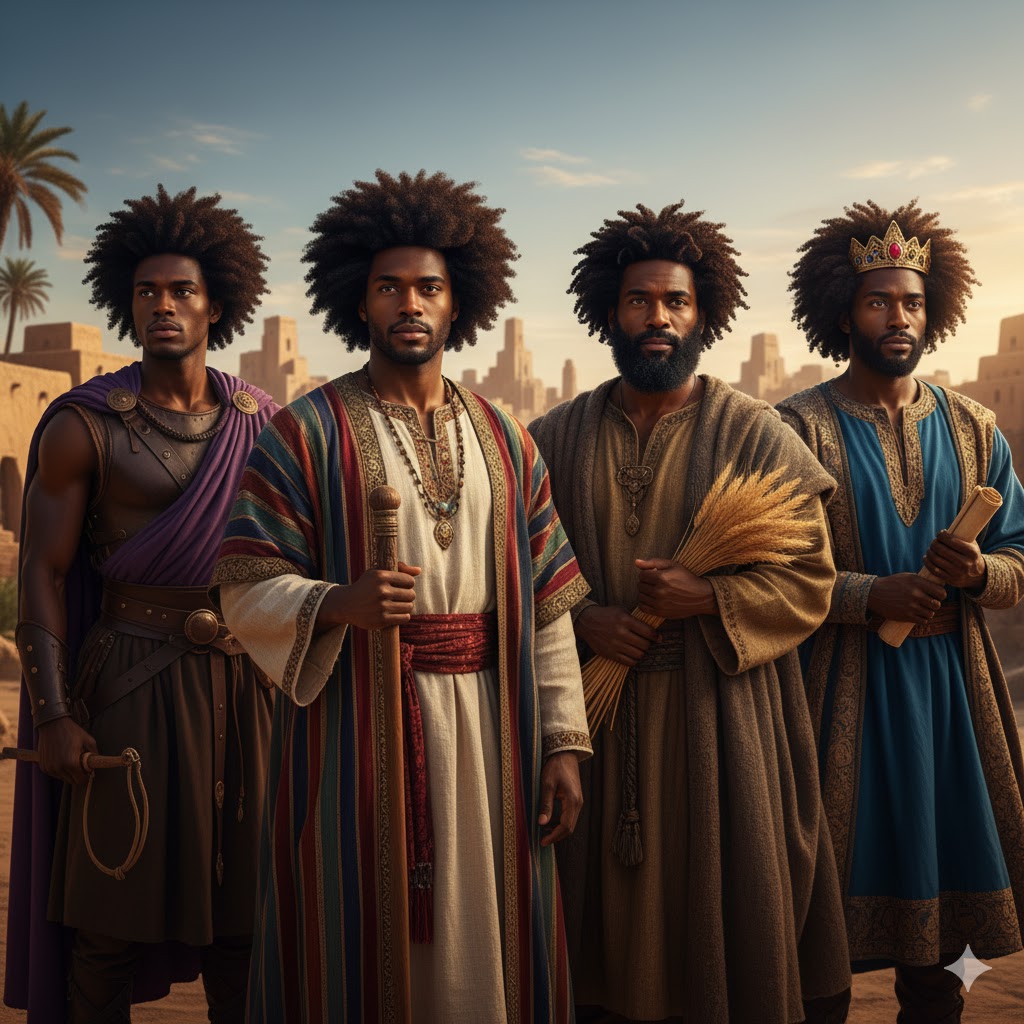
The Bible Series: Masculine Archetypes — David, Joseph, Boaz, Solomon, and Christ-Like Manhood.

Biblical masculinity is not defined merely by physical strength or social status. Rather, it is rooted in covenant identity, moral authority, obedience to God, protective leadership, and sacrificial love. The Scriptures present layered archetypes—each revealing a dimension of righteous manhood and offering a blueprint for spiritual, emotional, and cultural formation. These archetypes counter modern distortions of masculinity rooted in ego, domination, and superficial conquest. Instead, they elevate purpose, humility, stewardship, and divine calling as the true hallmarks of masculine greatness.

David: The Warrior-Poet King
David embodies paradoxical masculine beauty—ferocity in battle paired with artistic tenderness. His courage against Goliath reflects heroic faith, not arrogance. Scripture declares, “The LORD saveth not with sword and spear” (1 Samuel 17:47, KJV), showing that David’s strength came from trust in God. Yet he also wept, repented, wrote psalms, and worshiped openly. His masculinity embraced emotional intelligence and spiritual intimacy. His failures remind men to repent quickly and return to righteousness. David teaches that a man can wield both the harp and the sword—balanced power rooted in divine purpose.

Joseph: The Moral Leader and Visionary Provider
Joseph reveals integrity under pressure and excellence in adversity. Sold into slavery, falsely accused, and imprisoned, he maintained righteousness. When tempted sexually, he fled, declaring, “How then can I do this great wickedness, and sin against God?” (Genesis 39:9, KJV). His restraint and purity positioned him for elevation. As a provider during famine, Joseph exemplifies strategic wisdom, patience, and forgiveness. He shows that real masculine power is self-control, foresight, and the ability to rise without bitterness. Joseph models destiny leadership—meekness that matures into national authority.

Boaz: The Noble Protector and Redeemer
Boaz personifies protective masculinity rooted in kindness and covenant responsibility. He noticed Ruth not merely for beauty but for character and loyalty. Boaz protected her dignity, provided provision, and acted honorably as kinsman-redeemer, reflecting a man who values lineage preservation and community ethics. Scripture notes his generosity and godliness: “The LORD recompense thy work” (Ruth 2:12, KJV). He demonstrates that masculine strength serves, protects, and uplifts womanhood. Boaz teaches that a man does not exploit vulnerability; he covers it with dignity, commitment, and righteous leadership.

Solomon: The Wise King and Builder
Solomon represents intellectual brilliance, kingly refinement, and creative authority. His request for wisdom rather than riches reflects spiritual maturity (1 Kings 3:9–12). He constructed the Temple—symbolizing that masculinity builds, organizes, and leaves legacy. Although his later life warns against unchecked desire and divided loyalty, Solomon’s wisdom literature (Proverbs, Ecclesiastes, Song of Solomon) shapes biblical ethics of discipline, justice, and godly courtship. Solomon’s archetype emphasizes mental strength, discernment, cultural sophistication, and the stewardship of power under divine law.

Christ-Like Manhood: The Perfect Model
Christ embodies the fulfillment of righteous masculinity. He was firm yet gentle, authoritative yet humble, lion and lamb. He washed feet, blessed children, confronted corruption, healed the broken, and gave His life for His people. Scripture declares, “Greater love hath no man than this, that a man lay down his life for his friends” (John 15:13, KJV). Christ-like masculinity rejects pride, domination, and violence for their own sake; instead, it champions sacrifice, servant-leadership, holiness, truth, discipline, emotional capacity, and uncompromising moral courage.

Unity of Archetypes in Biblical Manhood
David teaches bravery and worship; Joseph teaches purity and perseverance; Boaz teaches honorable love and protection; Solomon teaches wisdom and excellence; Christ synthesizes them all into godly kingship and sacrificial love. These archetypes reveal that a biblical man is warrior, provider, visionary, priest, protector, and servant. He leads not by ego but by obedience. He conquers not nations, but himself. He builds not just houses, but homes and legacies rooted in righteousness.

In an age confused by shallow masculinity—defined by appearance, dominance, and applause—Scripture calls men to deeper identity. Biblical manhood is covenant manhood: purposeful, disciplined, humble, courageous, and rooted in divine calling. True masculine glory shines brightest not through force, but through faithfulness, character, and love.


References

Henry, M. (2010). Commentary on the whole Bible. Hendrickson.
Lewis, G. (2019). Biblical masculinity and covenant leadership. Kingdom Press.
Tripp, P. D. (2012). War of words: Redeeming communication. P&R Publishing.
Wright, N. T. (2011). Jesus and the victory of God. Fortress Press.

Dilemma: First Black Religion?!

The question of the first Black religion is not merely historical—it is existential, cultural, and theological. For many, religion is tied to identity, ancestry, trauma, and liberation. The dilemma emerges when history asserts one origin, scripture hints another, and lived experience narrates yet another.

Long before colonization, African spirituality flourished in elaborate cosmologies. These systems honored divine hierarchy, ancestral intercession, sacred symbols, covenantal obedience, and moral law. In parallel, biblical scripture references lands populated by Cushites, Egyptians, Ethiopians, and early civilizations where Black peoples interfaced with God’s unfolding plan (Gen. 10:6).

The lineage of Ham—particularly through Cush, Mizraim, and Canaan—places Africa at the dawn of human migration, culture, and worship. Though often misrepresented due to later interpretations, scripture never describes Ham as cursed in skin, but in lineage outcome concerning Canaan only (Gen. 9:25).

The Bible clearly presents Cush as a progenitor of nations in Africa. The Hebrew term Cush historically corresponds to regions of Northeast Africa, modern Sudan, Ethiopia, Eritrea, and the Nile Valley. These were lands where worship, civilization, and monarchal structures first developed.

African spirituality centered upon the belief in a supreme creator long before Western intrusions. This mirrors biblical revelation that God made Himself known to early nations, even outside later Israelite identity formation. Scripture affirms that all nations descend from one blood under God’s dominion (Acts 17:26).

Black contact with biblical worship begins even in patriarchal narratives. Moses married a Black Cushite woman, indicating cultural and religious intersections before formalized Judaic religion emerged (Num. 12:1). This disrupts the narrative that Black spiritual identity began only through Western Christianity.

Ethiopia is mentioned dozens of times in scripture, often as a land already acquainted with monarchy, worship, prophecy, and divine awareness. “Princes shall come out of Egypt; Ethiopia shall soon stretch out her hands unto God” (Psa. 68:31). This implies pre-existing spiritual consciousness and later global alignment toward Yahweh.

The dilemma intensifies when analyzing the transatlantic slave trade. Enslaved Africans were forcibly baptized into Christianity—a religion used both to console the oppressed and to justify the oppressor. Yet scripture declares that God sides with the afflicted: “He shall deliver the needy when he crieth; the poor also, and him that hath no helper” (Psa. 72:12).

Colonial Christianity reframed African spirituality as pagan, though much of it was built on a belief in one high God, sacred law, covenant allegiance, and moral accountability. This resembles the biblical world before the codified Torah existed—where God spoke, not systems.

Abraham encountered Melchizedek, a priest outside his nation, already worshipping the most high God (Gen. 14:18). This supports the theological idea that God’s first priesthood and worship were not geographically European.

Egypt, a Black African empire, was the first nation where God demonstrated Himself in national judgment and spiritual distinction. The Exodus confrontations show Yahweh contending with Egypt’s religion, not introducing spirituality to the world for the first time (Exo. 7:5).

God made Himself known in Egypt through plague and judgment: “And the Egyptians shall know that I am the Lord, when I stretch forth mine hand upon Egypt” (Exo. 7:5). This verifies Africa as the stage for one of God’s earliest religious confrontations.

Africa was not spiritually empty—it was spiritually contested. The world’s first recorded civilization, religious systems, libraries, priesthoods, temple economies, astronomy, sacred initiations, and moral codes began on African soil.

The Queen of Sheba—an African monarch—recognized Solomon through divine fascination, wealth exchange, and theological awe (1 Kings 10). This demonstrates that African worship already operated in sacred curiosity toward Yahweh before forced conversions ever existed.

Another scriptural Ethiopian, Ebed-melech, feared God, rescued the prophet Jeremiah, and was divinely delivered for his faithfulness, showing independent African knowledge of Yahweh before Christian imperialism (Jer. 38:7-13; 39:16-18).

Then comes Philip and the Ethiopian eunuch, a royal treasury official already reading the prophet Isaiah before being instructed and baptized (Acts 8:27-38). This passage is central to the argument that Black peoples engaged biblical religion before Western mediation, dismantling the claim that Christianity was Africa’s first encounter with God.

“He was led as a sheep to the slaughter” (Isa. 53:7; Acts 8:32) foreshadows Christ’s redemptive suffering—a passage preserved in Africa’s royal religious archives long before institutional Christianity dominated the continent.

Some assert that the “slave Bible” created a counterfeit Christian origin for Black people. But scripture pre-dates slavery and repeatedly spotlights African worshipers siding with God’s prophets, kings, and divine revelation (Psa. 87:4).

African spirituality practiced sacred law long before Western religion arrived. This reflects biblical truth: “I have put my law in their inward parts, and write it in their hearts” (Jer. 31:33). God embedded spiritual cognition into early peoples before institutions claimed ownership of Him.

Faithful obedience—not geographical religion—is the foundation of true worship. Jesus confirms this principle: “They that worship him must worship him in spirit and in truth” (John 4:24). Truth existed before titles like Christianity even did.

The real dilemma is not whether Black religion began in Africa or in the Bible—the crisis is when the world convinced Black people their spirituality came from chains, not the covenant.

God foretold long suffering for His chosen people: “And ye shall be sold unto your enemies… and no man shall buy you” (Deut. 28:68). Many scholars connect this to the transatlantic captivity as a prophetic cycle, showing that biblical identity could explain the Black religious experience more than colonial religion ever did.

Still, the truth remains: scripture shows Black peoples worshiping God, protecting prophets, reading prophecy, engaging the priesthood, serving royal courts, and stretching hands toward Yahweh before Christianity baptized Africa by force.

The dilemma of First Black Religion confronts three realities: Africa birthed the world’s oldest spiritual systems, the Bible records Africa’s earliest interactions with God, and slavery weaponized Christianity into both comfort and confusion.

Black religion did not begin in Europe, in plantations, or in forced baptism. It began wherever God first spoke to Black peoples—and scripture confirms that Africa heard His voice early, often, and sovereignly.

The question now shifts from origins to inheritance. God promised restoration: “And the Lord thy God will turn thy captivity… and have compassion upon thee, and will return and gather thee from all the nations” (Deut. 30:3).

The future of Black religion, identity, and covenant is not found in the hands that rewrote history, but in the God who wrote ancestry, suffering, deliverance, and spiritual consciousness into scripture from the beginning.


References

The Holy Bible, King James Version.
American Bible Society. (1611). KJV.

The Woman God Built

The woman God built is a masterpiece of divine intention, created to reflect His glory and manifest His purpose on earth. She is a woman of faith, rooted in prayer and devotion, trusting God’s timing and sovereignty. Proverbs 31:25 (KJV) says, “Strength and honour are her clothing; and she shall rejoice in time to come.” Her confidence and joy stem not from worldly recognition, but from her steadfast trust in the Lord.

She loves God with all her heart, soul, and mind, embodying the command of Matthew 22:37 (KJV): “Thou shalt love the Lord thy God with all thy heart, and with all thy soul, and with all thy mind.” Her devotion is evident in her daily choices, her priorities, and the way she cultivates her spiritual life. Prayer, worship, and meditation on the Word are her daily bread, sustaining her in times of challenge and triumph alike.

The woman God built keeps His laws and seeks to live righteously. She understands that obedience is an act of love and reverence. Deuteronomy 5:33 (KJV) teaches, “Ye shall walk in all the ways which the Lord your God hath commanded you, that ye may live, and that it may be well with you…” Her commitment to God’s statutes reflects discipline, wisdom, and a heart aligned with divine will.

She is modest in her appearance and demeanor, valuing purity and self-respect. 1 Timothy 2:9-10 (KJV) instructs, “In like manner also, that women adorn themselves in modest apparel…not with broided hair, or gold, or pearls, or costly array; But (which becometh women professing godliness) with good works.” Modesty is her crown, revealing that her worth is not determined by fashion, popularity, or fleeting trends.

Kindness flows naturally from her character. Proverbs 31:26 (KJV) declares, “She openeth her mouth with wisdom; and in her tongue is the law of kindness.” She speaks with grace, uplifts others, and extends compassion even when it is difficult. Her heart is tender toward those in need, and she actively seeks to bless others through acts of service and encouragement.

Strength is a defining characteristic of the woman God built. She is resilient in the face of trials, steadfast in adversity, and unwavering in her commitments. Joshua 1:9 (KJV) reminds her, “Have not I commanded thee? Be strong and of a good courage; be not afraid, neither be thou dismayed: for the Lord thy God is with thee whithersoever thou goest.” Her strength is both physical and spiritual, anchored in God’s presence.

She is wise, making choices guided by discernment and understanding. Proverbs 3:13-14 (KJV) teaches, “Happy is the man that findeth wisdom, and the man that getteth understanding. For the merchandise of it is better than the merchandise of silver, and the gain thereof than fine gold.” Her decisions honor God and benefit those around her, demonstrating that wisdom is both practical and godly.

Faith fuels her hope. Romans 12:12 (KJV) exhorts, “Rejoicing in hope; patient in tribulation; continuing instant in prayer.” Even in difficult seasons, she trusts God’s promises, knowing that His timing is perfect. Her faith shapes her perspective, enabling her to see opportunity in challenge and blessing in the midst of struggle.

The woman God built is a pillar of her household. Proverbs 31:27 (KJV) affirms, “She looketh well to the ways of her household, and eateth not the bread of idleness.” She manages responsibilities with diligence and care, ensuring that her family is nurtured, guided, and protected. Her home is a reflection of her values, discipline, and love.

She is generous and charitable, giving of her time, resources, and gifts to help others. Proverbs 31:20 (KJV) says, “She stretcheth out her hand to the poor; yea, she reacheth forth her hands to the needy.” Her generosity is not for recognition but stems from a heart attuned to God’s call to love and serve.

Patience defines her interactions with others. Ecclesiastes 7:8 (KJV) reminds us, “Better is the end of a thing than the beginning thereof: and the patient in spirit is better than the proud in spirit.” She responds with calm, understanding, and grace, recognizing that growth—her own and others’—requires time and nurturing.

Her character is unshakeable. Proverbs 31:30 (KJV) teaches, “Favour is deceitful, and beauty is vain: but a woman that feareth the Lord, she shall be praised.” The foundation of her life is God’s fear, guiding her moral compass and shaping her relationships, priorities, and conduct.

She is humble, acknowledging that every gift and talent is from God. James 4:6 (KJV) reminds us, “But he giveth more grace. Wherefore he saith, God resisteth the proud, but giveth grace unto the humble.” Her humility allows her to learn, grow, and uplift others without seeking personal acclaim.

A spirit of joy permeates her life. Nehemiah 8:10 (KJV) says, “The joy of the Lord is your strength.” Even amidst challenges, she finds delight in God’s presence, daily blessings, and the successes of those around her. Her joy is contagious, inspiring and uplifting those in her sphere of influence.

She is a woman of integrity, whose words and actions are consistent and reliable. Proverbs 10:9 (KJV) teaches, “He that walketh uprightly walketh surely: but he that perverteth his ways shall be known.” Her integrity builds trust, respect, and admiration, and she honors God by keeping her commitments faithfully.

She embodies self-discipline, regulating her thoughts, emotions, and actions. 1 Corinthians 9:27 (KJV) emphasizes, “But I keep under my body, and bring it into subjection: lest that by any means, when I have preached to others, I myself should be a castaway.” Discipline enables her to pursue her purpose consistently and live according to God’s standards.

The woman God built is courageous, facing challenges with faith and determination. Deuteronomy 31:6 (KJV) declares, “Be strong and of a good courage, fear not, nor be afraid of them: for the Lord thy God, he it is that doth go with thee; he will not fail thee, nor forsake thee.” Her courage inspires others and demonstrates reliance on God above all.

She is discerning in relationships, valuing those who align with her faith, values, and vision. Proverbs 13:20 (KJV) teaches, “He that walketh with wise men shall be wise: but a companion of fools shall be destroyed.” By surrounding herself with godly influences, she cultivates growth, encouragement, and mutual accountability.

She celebrates others, lifting sisters and peers with encouragement and affirmation. Romans 12:10 (KJV) exhorts, “Be kindly affectioned one to another with brotherly love; in honour preferring one another.” Her support fosters community, unity, and empowerment among women of faith.

Ultimately, the woman God built is a reflection of divine purpose, strength, and beauty. She is a testament to God’s design, blending faith, wisdom, integrity, and love. Proverbs 31:31 (KJV) concludes, “Give her of the fruit of her hands; and let her own works praise her in the gates.” Her life is a living tribute to God’s glory, inspiring generations to walk in obedience, grace, and faith.


References:

  • Holy Bible, King James Version (1611). Proverbs 31:25, 26, 27, 30, 31; Matthew 22:37; Deuteronomy 5:33, 31:6; 1 Timothy 2:9-10; Joshua 1:9; Proverbs 3:13-14; Romans 12:12; Ecclesiastes 7:8; 2 Corinthians 12:9; James 4:6; Nehemiah 8:10; 1 Corinthians 9:27; Proverbs 10:9; Romans 12:10; Titus 2:3-4.

Psychology Series: Psychology Through a Biblical Lens – Understanding the Mind and Spirit

Psychology, the study of the mind and behavior, intersects profoundly with faith. While modern psychology explores human thought, emotion, and behavior, the Bible provides guidance for the heart, mind, and soul, revealing that true understanding begins with God (Proverbs 2:6).

The human mind is complex, capable of reasoning, creativity, and reflection. Scripture reminds us that our thoughts must align with God’s truth. Isaiah 26:3 declares: “Thou wilt keep him in perfect peace, whose mind is stayed on thee: because he trusteth in thee.” Peace of mind is found in trusting God rather than relying solely on human understanding.

Emotions are a central aspect of human psychology. God designed us to experience joy, sorrow, anger, and compassion. Psalm 34:18 encourages: “The LORD is nigh unto them that are of a broken heart; and saveth such as be of a contrite spirit.” Emotional healing begins with God’s presence and care.

Cognitive processes, including thought patterns and memory, influence behavior. Romans 12:2 advises: “And be not conformed to this world: but be ye transformed by the renewing of your mind, that ye may prove what is that good, and acceptable, and perfect, will of God.” Transforming the mind spiritually helps align thoughts with righteousness.

Behavioral psychology emphasizes actions shaped by environment and reinforcement. Galatians 6:7 warns: “Be not deceived; God is not mocked: for whatsoever a man soweth, that shall he also reap.” Our actions produce consequences, and understanding this helps cultivate self-discipline and moral responsibility.

Mental health struggles, such as anxiety and depression, are common. Philippians 4:6-7 instructs: “Be careful for nothing; but in every thing by prayer and supplication with thanksgiving let your requests be made known unto God. And the peace of God, which passeth all understanding, shall keep your hearts and minds through Christ Jesus.” Prayer and faith provide relief and guidance.

Stress management is another area where psychology and faith intersect. Matthew 11:28-30 reminds believers: “Come unto me, all ye that labour and are heavy laden, and I will give you rest.” God’s comfort can reduce anxiety and support mental resilience.

Human relationships impact psychological well-being. Proverbs 13:20 teaches: “He that walketh with wise men shall be wise: but a companion of fools shall be destroyed.” Healthy relationships foster emotional stability, while toxic influences can lead to harm.

Self-esteem and identity are central to modern psychology. Psalm 139:14 affirms: “I will praise thee; for I am fearfully and wonderfully made: marvellous are thy works; and that my soul knoweth right well.” Understanding that we are created in God’s image fosters dignity and self-worth.

Addiction and destructive behaviors challenge mental health. 1 Corinthians 10:13 provides hope: “There hath no temptation taken you but such as is common to man: but God is faithful, who will not suffer you to be tempted above that ye are able; but will with the temptation also make a way to escape.” God offers strength to overcome harmful habits.

Cognitive-behavioral principles can be aligned with biblical teaching. By replacing sinful or harmful thought patterns with God-honoring truths, believers can cultivate spiritual and mental health. 2 Corinthians 10:5 instructs: “Casting down imaginations, and every high thing that exalteth itself against the knowledge of God, and bringing into captivity every thought to the obedience of Christ.”

Developmental psychology emphasizes stages of growth. Proverbs 22:6 underscores early spiritual formation: “Train up a child in the way he should go: and when he is old, he will not depart from it.” Moral and emotional habits established early can guide lifelong behavior.

Forgiveness is critical for psychological well-being. Holding resentment fosters bitterness and stress. Colossians 3:13 commands: “Forbearing one another, and forgiving one another, if any man have a quarrel against any: even as Christ forgave you, so also do ye.” Releasing grudges promotes emotional and spiritual health.

Gratitude and positivity influence mental resilience. 1 Thessalonians 5:16-18 says: “Rejoice evermore. Pray without ceasing. In every thing give thanks: for this is the will of God in Christ Jesus concerning you.” Positive focus nurtures mental well-being.

Stress from societal pressures is amplified when individuals rely on worldly measures. Proverbs 3:5-6 reminds: “Trust in the LORD with all thine heart; and lean not unto thine own understanding. In all thy ways acknowledge him, and he shall direct thy paths.” Faith-centered guidance mitigates anxiety and indecision.

Trauma and suffering affect psychological health. Psalm 147:3 offers assurance: “He healeth the broken in heart, and bindeth up their wounds.” God’s care provides restoration where human efforts fall short.

Coping strategies, such as prayer, meditation on scripture, and fellowship, align with modern therapeutic techniques while rooting solutions in God’s Word. Philippians 4:8 instructs: “Finally, brethren, whatsoever things are true, whatsoever things are honest, whatsoever things are just, whatsoever things are pure…think on these things.”

Identity and purpose are central to psychological fulfillment. Jeremiah 29:11 affirms: “For I know the thoughts that I think toward you, saith the LORD, thoughts of peace, and not of evil, to give you an expected end.” Understanding divine purpose strengthens resilience and motivation.

Empathy and compassion contribute to emotional intelligence. Romans 12:15 teaches: “Rejoice with them that do rejoice, and weep with them that weep.” Caring for others enhances social bonds and personal fulfillment.

Finally, psychology and faith together encourage holistic growth. Mind, body, and spirit are interconnected. 1 Thessalonians 5:23 prays: “And the very God of peace sanctify you wholly; and I pray God your whole spirit and soul and body be preserved blameless unto the coming of our Lord Jesus Christ.” True mental and emotional health flourishes when aligned with God’s guidance.


References

  • The Holy Bible, King James Version (KJV)
  • Proverbs 2:6; 13:20; 22:6; 3:5-6
  • Isaiah 26:3
  • Psalm 34:18; 139:14; 147:3
  • Philippians 4:6-7, 4:8
  • Romans 12:2, 12:15
  • Matthew 11:28-30
  • Joshua 24:15
  • 1 Corinthians 10:13
  • 2 Corinthians 10:5
  • Colossians 3:13
  • Jeremiah 29:11
  • 1 Thessalonians 5:16-18, 5:23
  • Galatians 6:7

Difficulties Are Necessary for Life

Difficulties are not proof that life has failed—rather, they testify that life is working according to God’s refining process, for affliction enlarges the soul and tutors the spirit (Smith, 2020).

Scripture reveals that trials serve a divine purpose. Paul declares that tribulations produce patience, shaping believers through progressive sufferings that build spiritual stamina, not destruction (Romans 5:3-4, KJV).

Life’s challenges are God’s crucible. Proverbs teaches that just as silver is tried in the furnace, human hearts are tested by the Lord Himself (Proverbs 17:3, KJV).

Hardship marches beside every calling. Christ warns that in the world, believers shall have tribulation—not may, but will, affirming that difficulty is stitched into earthly existence (John 16:33, KJV).

Suffering awakens prayer. Distress becomes the spiritual trumpet that calls men and women to cry toward God, who promises to hear them and deliver them out of all troubles (Psalm 34:17, KJV).

The wilderness is necessary for maturity. Deuteronomy reveals that God led Israel into hard places to humble them, prove them, and reveal what was truly in their heart (Deuteronomy 8:2, KJV).

Struggles expose spiritual hunger. When earthly strength collapses, dependence on God rises, for man lives by every Word of God, not bread alone (Deuteronomy 8:3, KJV).

Affliction produces obedience. Psalm 119 teaches that suffering teaches statutes—pain becomes the unwilling teacher of righteousness (Psalm 119:71, KJV).

Trials extract faith from theory into reality. James echoes this truth, proving that faith matures through testing, though Job lived it long before it was written (James 1:2-3, KJV).

Difficulty births endurance. Hebrews reminds believers that chastening corrects and proves sonship, for God disciplines those He loves (Hebrews 12:6-7, KJV).

Storms test spiritual roots. Christ teaches that houses built on sand collapse under trouble, while those founded on rock survive—it is not the absence of storm, but the foundation that matters (Matthew 7:24-27, KJV).

Hardship develops courage. Joshua was commanded to be strong because the assignment ahead was heavy, not easy (Joshua 1:9, KJV).

Suffering silences pride. Paul described being given a thorn to keep him from self-exaltation—pain became a shield against arrogance (2 Corinthians 12:7-9, KJV).

Adversity expands compassion. Those wounded by life often become vessels of gentleness, for God comforts us so we may comfort others (2 Corinthians 1:3-4, KJV).

Hard seasons cultivate spiritual perception. Elijah heard God’s voice after fire, wind, and earthquake—difficulty cleared his hearing (1 Kings 19:11-12, KJV).

Affliction proves calling. Joseph’s pit and prison preceded his palace—pain processed a dream before privilege manifested (Genesis 37-41, KJV).

Trials reveal loyalty. Ruth clung tighter when loss grew heavier, showing that difficulties do not break the faithful, they anchor them (Ruth 1:16-17, KJV).

Suffering produces hope, not despair. Biblical hope is not optimism—it is expectation grown in suffering, rooted in God’s faithfulness (Romans 8:18, KJV).

Hardship is spiritually proportional. The greater the impact, the heavier the pressure, for glory outweighs suffering when purpose is understood (Romans 8:28;18, KJV).

Thus, difficulties are not evidence of God’s absence—often they are the evidence of His involvement, molding believers into instruments able to survive what the untested self could never carry (Romans 5:3-5, KJV).


References

Beck, A. T. (1976). Cognitive therapy and emotional disorders. International Universities Press.

Frankl, V. E. (2006). Man’s search for meaning. Beacon Press. (Original work published 1946)

Masten, A. (2014). Ordinary magic: Resilience in development. Guilford Press.

Smith, J. (2020). Resilience and faith under pressure. Journal of Psychology & Spirituality, 12(4), 201-219.

Taleb, N. N. (2012). Antifragile: Things that gain from disorder. Random House.

The King James Version Bible. (Authorized, 1611/1769).

Chosen Royalty: Marriage for the Sons and Daughters of Zion (The Marriage Series)

Marriage, in the eyes of the Most High, is not merely a social custom or cultural expectation. It is a divine covenant, a sacred union designed to reflect His glory, His order, and His love. For the sons and daughters of Zion, marriage carries an even deeper significance: it is a representation of covenant identity, spiritual inheritance, and kingdom legacy. You are not ordinary people. You are chosen vessels, called to manifest God’s intention for love, leadership, unity, and righteousness on the earth.

A royal marriage begins with knowing who you are. Before a man becomes a husband and before a woman becomes a wife, both must know their identity as God’s elect. Scripture declares, “Ye are a chosen generation, a royal priesthood, an holy nation, a peculiar people” (1 Peter 2:9, KJV). When you understand that you come from royalty, you will not settle for broken love, counterfeit partnerships, or relationships that compromise your calling. Royalty requires discernment.

For the daughters of Zion, preparing for marriage does not begin with finding a man but with finding purpose. A queen develops inward beauty—wisdom, modesty, strength, and virtue—long before she wears a crown. Like the Proverbs 31 woman, she is clothed with strength and honor, and she opens her mouth with wisdom (Proverbs 31:25–26). She knows that her value is spiritual before it is physical. Her worth is not in curves, complexion, or outward adornment, but in her God-given identity.

For the sons of Zion, preparing for marriage begins with learning to lead under God’s authority. A king cannot love his queen properly until he learns to submit to the King of Kings. Scripture instructs husbands to love their wives “even as Christ also loved the church, and gave himself for it” (Ephesians 5:25, KJV). This is sacrificial love—protective, patient, righteous, and accountable. A royal husband is not a tyrant; he is a shepherd, a covering, and a pillar.

When both king and queen understand God’s order, marriage becomes a partnership of purpose. The Most High never intended for men and women to compete with one another. Instead, He designed them to complement each other—both bearing divine strength, both walking in unity. “Two are better than one; because they have a good reward for their labour” (Ecclesiastes 4:9, KJV). Royal marriages are not accidental; they are intentional.

Communication is one of the foundations of a royal covenant. The tongue can build or destroy a household. Scripture teaches, “A soft answer turneth away wrath: but grievous words stir up anger” (Proverbs 15:1, KJV). Kings and queens must learn the discipline of loving speech—words that heal, uplift, and guide. A royal home is governed by peace, not chaos.

Purity is another pillar. In a world saturated with lust, temptation, and impulsive desires, the Most High calls His people to holiness. “For this is the will of God, even your sanctification, that ye should abstain from fornication” (1 Thessalonians 4:3, KJV). Purity protects the mind. Purity guards the heart. Purity prepares the soul to love without bondage or brokenness.

Forgiveness is the oil that keeps the royal covenant from growing brittle. No marriage is perfect. No partner is flawless. Yet the Most High commands us to forgive one another, even as He forgave us (Colossians 3:13). A king forgives. A queen forgives. They choose restoration over resentment, healing over distance, unity over pride.

A royal marriage also requires spiritual warfare. The enemy hates godly unions because they produce righteous generations. Therefore, couples must pray together, read scripture together, and stand in agreement. “When the enemy shall come in like a flood, the Spirit of the LORD shall lift up a standard against him” (Isaiah 59:19, KJV). A praying marriage is a powerful marriage.

Accountability is the shield of royalty. Wise couples surround themselves with elders, mentors, or spiritual leadership who can correct and counsel them. “Where no counsel is, the people fall” (Proverbs 11:14, KJV). A royal house is not built alone—it is built within a community of righteousness.

Financial stewardship is also part of royal order. Money is one of the top causes of marital conflict, but God’s wisdom provides clarity. “Be thou diligent to know the state of thy flocks” (Proverbs 27:23, KJV). Kings and queens budget together, plan together, save together, and build generational wealth—not just for themselves but for their children.

Speaking of children, they are the arrows of the kingdom. “Lo, children are an heritage of the LORD” (Psalm 127:3, KJV). A royal marriage understands that parenting is part of the covenant. The spiritual, emotional, and educational well-being of the next generation is a divine responsibility. Sons must be trained as kings. Daughters must be nurtured as queens.

Love in a royal marriage must be active, not passive. It is patient, kind, stable, and enduring (1 Corinthians 13:4–7). It is not dependent on feelings alone but on commitment and covenant. Real love works. Real love forgives. Real love stays.

Humility is the crown jewel of a godly union. Pride destroys, but humility restores. Scripture says, “With the lowly is wisdom” (Proverbs 11:2, KJV). Kings lead with humility. Queens carry themselves with grace. Humility keeps the marriage teachable and flexible.

Submission—often misunderstood—is a two-way principle rooted in respect and order. Wives are called to submit to their husbands as unto the Lord (Ephesians 5:22), and husbands are commanded to love sacrificially. Submission is not domination; it is alignment with God’s structure for protection and harmony.

A royal marriage also requires emotional maturity. You cannot bring unresolved wounds into a covenant and expect peace. Healing—inner, spiritual, and emotional—is essential. “He healeth the broken in heart” (Psalm 147:3, KJV). The Most High restores what trauma has stolen.

Celebration is another key practice. Kings and queens honor each other. They affirm each other. They celebrate each other’s achievements, strengths, and growth. Royal marriages thrive in an atmosphere of appreciation.

Service is the heart of Christ-like love. Yeshua taught that the greatest among us is the servant (Matthew 23:11). In a royal marriage, each partner serves the other—not out of obligation but out of devotion.

Finally, the covenant stands unshaken. A royal marriage is not built on convenience but on divine purpose. It is a representation of God’s eternal love for His people—a love that endures, protects, and restores. For the sons and daughters of Zion, marriage is more than companionship. It is a kingdom assignment.

Chosen Royalty means you marry with vision. You love with intention. You build with faith. You walk as living examples of God’s order and righteousness. Your union becomes a testimony, a legacy, and a royal lineage that reflects the glory of the Most High.


References (KJV):
1 Peter 2:9; Proverbs 31:25–26; Ephesians 5:25; Ecclesiastes 4:9; Proverbs 15:1; 1 Thessalonians 4:3; Colossians 3:13; Isaiah 59:19; Proverbs 11:14; Proverbs 27:23; Psalm 127:3; 1 Corinthians 13:4–7; Proverbs 11:2; Ephesians 5:22; Psalm 147:3; Matthew 23:11.

What is the difference between having Joy and being Happy?

Joy and happiness are often used interchangeably in casual conversation, but when examined closely—especially through a biblical and psychological lens—they are distinct experiences with different sources, durations, and functions. Happiness is commonly contingent: it rises and falls with circumstances, achievements, moods, and sensory pleasures. Joy, on the other hand, is described in Scripture as a deep, abiding spiritual fruit that flows from union with God and is sustained even amid trial. “Rejoice in the Lord alway: and again I say, Rejoice” (Philippians 4:4, KJV) points to a rejoicing rooted beyond circumstance.

Happiness is usually reactive. When something good happens — a promotion, a compliment, a pleasant afternoon — we feel happy. Those pleasant emotional states are valuable and healthy, but they are essentially responses to external stimuli. Because they are stimulus-dependent, they are ephemeral. Feelings change; moods pass. The natural instability of happiness is precisely why Scripture repeatedly points believers to a higher, anchorable state: joy that persists when feelings waver.

Joy is purposeful and supernatural in origin. The Bible teaches that joy is a fruit of the Spirit (Galatians 5:22, KJV), a byproduct of God’s presence working within a person. Joy often coexists with hardship in Scripture: Paul and Silas “prayed, and sang praises unto God: and the prisoners heard them” (Acts 16:25, KJV). Their singing in chains models a joy not erased by pain. This shows that joy is an anchored state rooted in divine realities rather than in transient comforts.

Functionally, happiness tends to be evaluative — “I feel good because things are going well.” Joy is covenantal — “I rest in God’s person, promises, and purposes.” Where happiness answers the question “How do I feel now?” joy answers “Whose am I, and what is true despite how I feel?” Joy draws its energy from objective truth about God (His faithfulness, sovereignty, mercy), while happiness draws from subjective appraisal of life events.

Psychologically, happiness and joy also engage different cognitive processes. Happiness is often linked to reward systems and hedonic well-being — pleasurable sensations and satisfaction. Joy aligns more with eudaimonic well-being: meaning, purpose, and self-transcendence. Eudaimonic states sustain flourishing over time because they are tied to identity, values, and a sense of calling. The Christian account aligns joy with eudaimonia because joy grows from knowing God and participating in His purposes.

Joy is resilient. Because it is based on the character and promises of God, it survives disappointments, losses, and seasons of doubt. Habakkuk learned to “rejoice in the Lord” even “when the fig tree shall not blossom” (Habakkuk 3:17–18, KJV). That posture is not emotional denial; it is a deliberate orientation toward God’s covenantal goodness despite the absence of expected blessings. Joy thus has a stabilizing, garrisoning effect on the heart.

Happiness can become idolatrous when pursued as an end in itself. Chasing mood elevation, comfort, or social approbation can hollow a life of depth because the pursuit centers the self and its pleasures. Jesus warns against laying up treasures on earth (Matthew 6:19–21, KJV) — a caution that can apply to lives built around comfort and immediate gratification. Joy, conversely, reorders affections toward God, aligning pleasures under divine priorities.

One practical difference is how each shapes behavior. Happiness often leads to self-oriented seeking (more of what made one feel good). Joy, rooted in gratitude and worship, prompts sacrifice, service, and endurance. A joyful person is more likely to love sacrificially, forgive readily, and persevere, because joy’s source calls for outward expression rather than inward hoarding.

Emotionally, happiness is surface-level pleasantness; joy runs deeper and touches the will as well as the affections. You can choose acts that cultivate joy — prayer, worship, Scripture meditation, community — even when feelings are flat. Choosing such practices is not mechanical; it is an act of faith. “Rejoice evermore” (1 Thessalonians 5:16, KJV) reads like a command because joy is something God wants cultivated, not merely stumbled upon.

Theologically, God Himself is the spring of joy. Scripture affirms that joy is found in God’s presence: “In thy presence is fullness of joy; at thy right hand there are pleasures for evermore” (Psalm 16:11, KJV). That verse situates joy not as a byproduct of favorable circumstances but as an effect of intimate fellowship with God. Thus, the Christian is invited into a joy that transcends transient successes and failures.

Where happiness seeks validation through achievements or relationships, joy finds identity in being God’s beloved. This distinction shifts dependence away from the fickleness of human approval and toward the unchangeable divine affection. When identity rests on God, the soul’s equilibrium is less shaken by rejection, loss, or changing social status.

Joy also has a communal dynamic. The New Testament repeatedly connects joy with corporate worship and shared faith: “These things have I spoken unto you, that my joy might remain in you, and that your joy might be full” (John 15:11, KJV). Joy is multiplied in the gathered life of the church, sustained by mutual encouragement, sacraments, and shared testimony. Happiness, while it can be shared, often remains individual and situational.

In suffering, the difference becomes visible and poignant. Happiness may be absent in suffering; joy can be present. Consider James 1:2–3 (KJV): “My brethren, count it all joy when ye fall into divers temptations;” James urges believers to interpret trials through the lens of spiritual growth—a perspective that allocates joy even to hard seasons because of their long-term sanctifying effect.

Cultivating joy requires spiritual disciplines. Regular prayer, Scripture intake, worship, confession, and fellowship create the soil for joy to grow. These practices align the mind with divine truth and recondition affections away from ephemeral satisfactions. While happiness may be passively experienced when conditions align, joy is often the fruit of intentional spiritual formation.

Psychological tools—gratitude practices, meaning-making, perspective-taking—overlap with spiritual disciplines and can facilitate joy. Gratitude, for instance, trains attention toward gifts rather than deficits and is linked to deeper well-being. In the Biblical view, gratitude points back to God as the giver, making gratitude both a psychological and spiritual gateway to joy.

It is important to acknowledge healthy happiness: God delights in good gifts (James 1:17, KJV), and savoring life’s pleasures with thanksgiving is righteous. Joy does not cancel enjoyment; it grounds it. The wise Christian enjoys good things but does not idolize them. Joy gives permission to be glad in God’s gifts without making those gifts ultimate.

A pastoral implication is honesty. Christians should not pretend to feel upbeat when exhausted or grieving. Joy is not emotional fakery; it is rooted hope and trust. Sermons, counseling, and discipleship that foster joy do so by cultivating trust in God’s promises while giving space for authentic feeling and lament (Psalm 13 shows lament moving toward trust).

Finally, joy bears witness. The resilience, peace, and hope of a joyful people testify to a reality beyond this world. Jesus promised that joy is an evangelistic commodity: “They shall recover themselves again, and shall come to Zion with songs and everlasting joy” (Isaiah 35:10, KJV). The contrast between a joy-filled life and a culture of fleeting happiness can draw others toward the source of enduring gladness.

In short, happiness is a gift tied to favorable moments and changing feelings; joy is a fruit rooted in God’s character, experienced in His presence, cultivated by spiritual habits, and proven resilient in trials. Christians are called not to despise happiness but to seek that deeper joy which transforms suffering into testimony and pleasure into praise.


References

Holy Bible, King James Version. (2017). Thomas Nelson. (Original work published 1611)

Csikszentmihalyi, M. (1990). Flow: The psychology of optimal experience. Harper & Row.

Emmons, R. A. (2007). Thanks!: How practicing gratitude can make you happier. Houghton Mifflin.

Frankl, V. E. (2006). Man’s search for meaning. Beacon Press.

James, W. (1902). The varieties of religious experience. Longmans, Green, and Co.

Lewis, C. S. (1955). Surprised by joy: The shape of my early life. Harcourt.

Seligman, M. E. P. (2002). Authentic happiness: Using the new positive psychology to realize your potential for lasting fulfillment. Free Press.

Volf, M. (1996). Exclusion and embrace: A theological exploration of identity, otherness, and reconciliation. Abingdon Press.

Watts, R. (2014). Joy as a theological category: An exploration of joy in Christian life. Journal of Christian Studies, 12(1), 45–62.

The Bible Series: What was the false Christianity used to control enslaved people?

During the transatlantic slave trade and the centuries of bondage that followed, enslavers in the Americas constructed a false version of Christianity designed to pacify, manipulate, and dominate African people. This was not true biblical faith but a political weapon deliberately engineered to uphold racial hierarchy, economic exploitation, and social control. Enslaved Africans quickly recognized that the Christianity of the slave master contradicted both Scripture and the spirit of the God of justice, yet this distorted theology was imposed on them through law, violence, and psychological manipulation.

The “Slave Bible”: Christianity Rewritten for Control

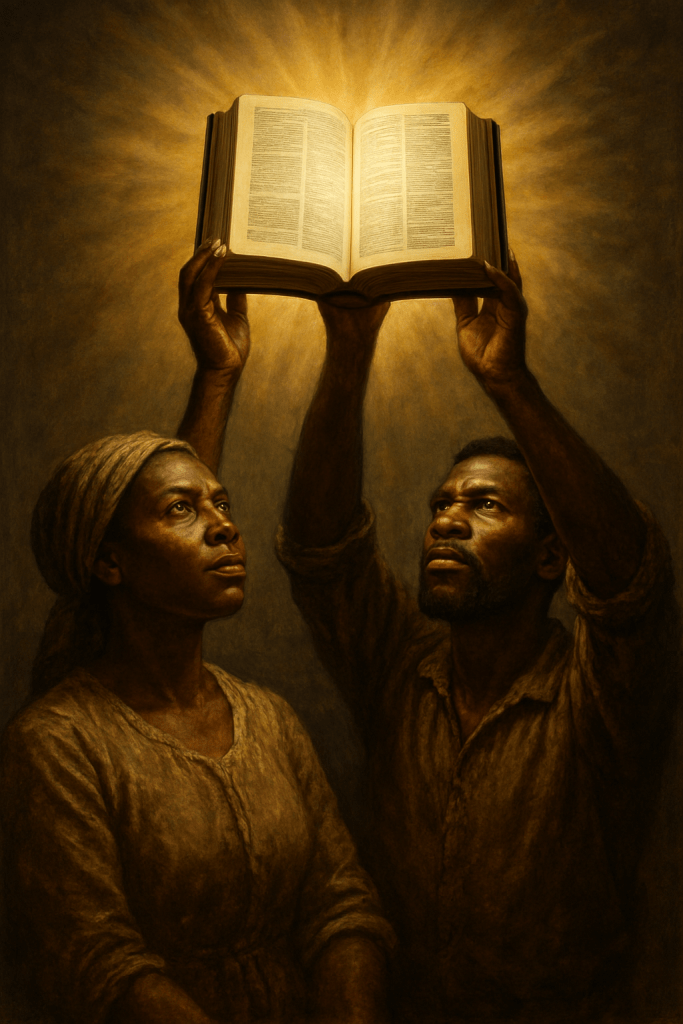
Slaveholders created an edited version of Scripture often called The Slave Bible (published in 1807 by the Society for the Conversion of Negro Slaves). This Bible omitted as much as 90% of the Old Testament and 50% of the New Testament.

Removed sections included:

  • The Exodus story
  • Passages about freedom and liberation
  • Scriptures against oppression
  • Texts about God judging unjust rulers
  • Lines affirming Israel’s identity, dignity, and divine purpose

Left in were:

  • Scriptures about obedience
  • Passages about servants submitting to masters
  • Verses promoting patience in suffering

It was a theological tool of psychological enslavement.


White Supremacist Christian Doctrine

Slaveholders used a twisted theology that claimed:

  • Africans were “cursed” (misusing the Curse of Ham)
  • Slavery was God’s will
  • Whites were divinely ordained rulers
  • Black people were naturally inferior
  • Saving souls was more important than saving bodies
  • Obedience to the master = obedience to God

This doctrine had no biblical basis, but it was taught to justify kidnapping, rape, brutality, terror, and forced labor.


Enslavement Suppressed the Real Biblical Themes

The enslavers intentionally hid the Bible’s central themes:

  • Liberation (Exodus, Isaiah, Luke 4:18)
  • God’s anger at oppression
  • Justice and righteousness
  • Equality of all people
  • Condemnation of kidnapping (Exodus 21:16)
  • Prophecy about Israel going into slavery (Deuteronomy 28)

Enslaved Africans quickly realized the true Bible was a book of freedom, not submission.


Christianity Was Used as Propaganda

White preachers delivered sermons tailored to slaves:

  • “Be obedient to your masters.”
  • “God wants you to accept your place.”
  • “Heaven will reward you for your suffering.”
  • “Do not question authority.”

This version of Christianity served plantations—not God.


Enslaved People Were Forbidden to Read

Slaveowners passed laws making it illegal for Africans to:

  • Read the Bible
  • Learn to read or write
  • Gather for worship without white oversight
  • Preach freely

Why?

Because the true Bible inspires:

  • liberation
  • identity
  • dignity
  • resistance to injustice
  • divine worthiness

Slaveholders knew the real Scriptures would destroy the slave system.


The Creation of the “Missionary Slave Church”

Enslavers established controlled churches with:

  • White pastors
  • Supervised sermons
  • Carefully selected verses
  • No teaching about Exodus or justice
  • No Hebrew identity
  • No African dignity

This church preached loyalty to the plantation rather than loyalty to God.


The Real Christianity of the Enslaved Was Different

The enslaved Africans created their own underground faith traditions:

  • Secret prayer meetings (“hush harbors”)
  • Spirit-led worship
  • Use of coded spirituals
  • Identification with ancient Israel
  • Reading the full Bible in secret
  • Hope of divine justice and liberation

They saw themselves as the children of Israel in bondage.


Misuse of Paul’s Letters

Slaveholders twisted Paul’s letters about servants in the Roman household system and applied them to chattel slavery, which is fundamentally different.

Biblically:

  • Chattel slavery is condemned.
  • Kidnapping is punishable by death.
  • God liberates oppressed people.
  • Masters and servants in Scripture were not racial, hereditary, or lifelong bondage.

Slaveowners selectively misinterpreted Scripture to protect their wealth.


The Curse of Ham: The Biggest Lie

Enslavers falsely taught that Africans were descendants of Ham and “cursed to be slaves.”
This lie:

  • is not in the Bible
  • misquotes Genesis
  • was created in the Middle Ages to justify racism
  • became a tool of colonial oppression

Biblically, the curse was on Canaan—not all African people.


Why Did Slaveholders Need This False Christianity?

Because true Christianity:

  • condemns slavery
  • empowers the oppressed
  • reveals the humanity of all people
  • uplifts the poor
  • demands justice
  • has a God who destroys oppressive empires (Egypt, Babylon, Assyria, Rome)

False Christianity was the only way to maintain slavery’s brutality while pretending to be righteous.


It Was Christianity Without Christ

It lacked:

  • love
  • justice
  • mercy
  • repentance
  • righteousness
  • truth
  • liberation

It was a political religion masquerading as faith.


The Real Bible Was a Threat to Slavery

Once enslaved Africans encountered the full Scriptures, many identified more with Moses than with Paul, and more with Israel than with Rome.

This realization fueled:

  • rebellions
  • escapes
  • abolitionist movements
  • The formation of independent Black churches

The real gospel is a gospel of freedom.


The false Christianity used to control enslaved people was:

  • a colonial weapon
  • a manipulated theology
  • a stripped-down Bible
  • a slave-owner-approved religion
  • a tool of white supremacy
  • a distortion of Scripture
  • completely opposed to true biblical teaching

The enslaved were given a religion of obedience, while they discovered a God of liberation.

The heart of this false Christianity lay in its selective use of Scripture. Slaveowners removed or rewrote large portions of the Bible to eliminate themes of liberation, divine justice, and human dignity. The infamous “Slave Bible,” published in 1807, cut out nearly all references to freedom, rebellion, and God’s judgment of oppressive rulers. What remained were verses emphasizing obedience, submission, and quiet suffering. This intentional mutilation of the Word of God reveals how deeply slave societies feared the truth of Scripture.

Another core component of this false faith was the misinterpretation of key biblical passages. Enslavers twisted Paul’s instructions to servants—directed at Roman household servants, not enslaved Africans—to justify racial slavery. They also weaponized the so-called Curse of Ham, falsely teaching that African people were destined by God to be slaves. This was a complete distortion of Genesis, where the curse was placed on Canaan, not on Ham, and certainly not on an entire continent of people. Such teachings served the interests of white supremacy, not the teachings of Christ.

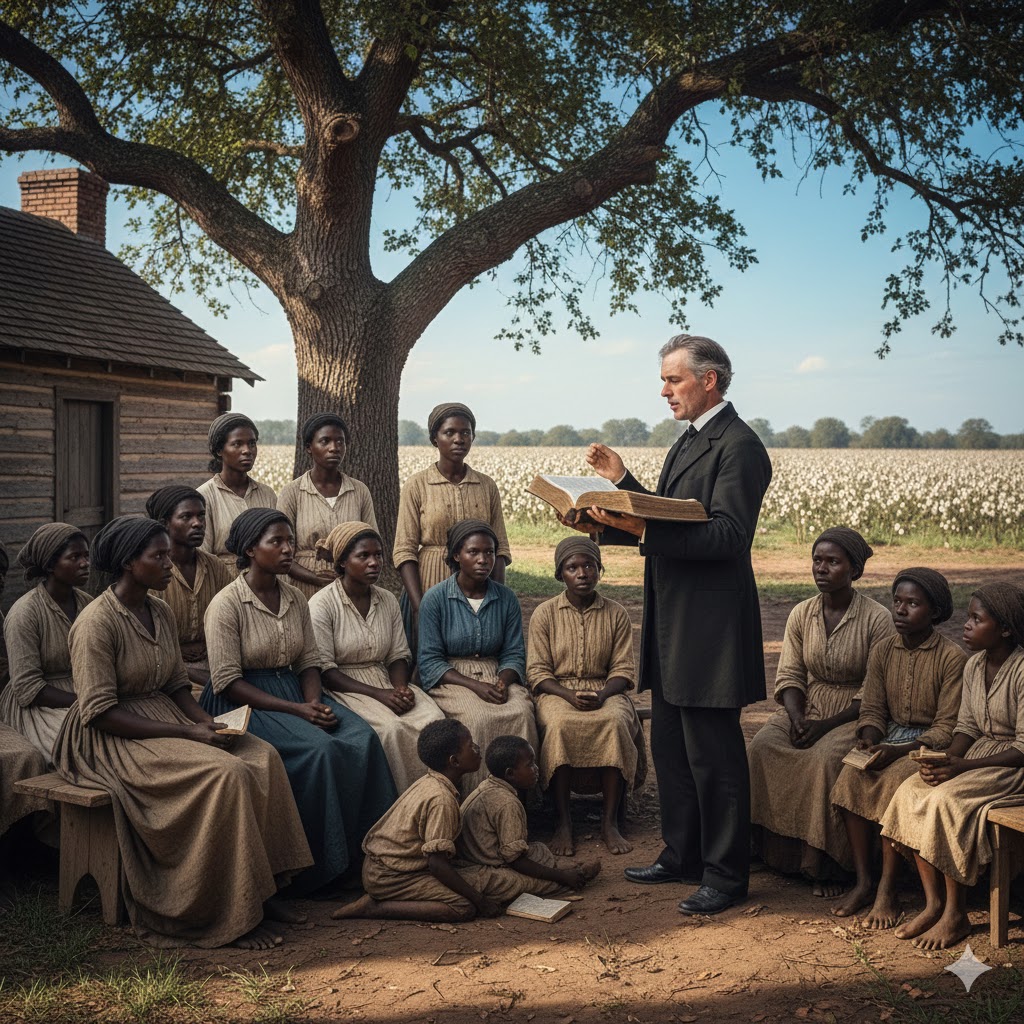
To maintain control, slaveholders created highly monitored “plantation churches.” In these spaces, white preachers delivered sermons promoting obedience and reinforcing racial hierarchy. Enslaved people were forbidden to gather independently for worship or to read Scripture for themselves. Laws were enacted across the South prohibiting Black literacy, because the master class understood that an educated believer—armed with the full truth of the Bible—posed a threat to the entire slave system.

This corrupted Christianity also taught enslaved Africans that their suffering was divinely ordained and that they should accept their earthly bondage in exchange for heavenly reward. Such doctrine had no biblical foundation and directly contradicted the character of a God who liberates His people from oppression, from Egypt to Babylon. By promising spiritual salvation while denying physical freedom, enslavers created a theology that separated the soul from the body, ensuring Black labor remained controlled while white consciences remained untroubled.

Yet enslaved Africans discerned the difference between the slave master’s religion and the liberating God of Scripture. In secret gatherings known as “hush harbors,” they forged a true and living Christianity rooted in Exodus, the prophets, the Psalms, and the teachings of Jesus. These clandestine meetings were spaces of healing, communal strength, and spiritual resistance. They prayed for deliverance, sang coded spirituals, and interpreted Scripture through the lens of their lived suffering, affirming a God who hears the cries of the oppressed.

One of the most striking differences between enslaved people’s faith and the enslavers’ religion was the identification with Ancient Israel. Enslaved Africans saw themselves in the story of Moses and the Hebrews—people chosen, persecuted, and promised deliverance by the Most High. This connection was not accidental; it emerged from both spiritual intuition and cultural memory. The master’s Christianity feared this narrative because it empowered enslaved people to see themselves as a sacred people, not property.

The false Christianity of the slaveholder was a Christianity of control, not conversion. Its purpose was not salvation but subjugation. The gospel presented to enslaved people required no repentance from the enslaver, no justice, no righteousness, no love for neighbor. It fabricated a God who blessed the whip, sanctioned the auction block, and smiled upon exploitation. Such a God was an idol created in the image of white supremacy, not the God of Abraham, Isaac, and Jacob.

This enslaver religion also functioned as a political tool. It stabilized the economic foundation of the South by training enslaved people to be compliant, fearful, and psychologically dependent. The message was clear: disobedience to the master meant disobedience to God. This spiritual intimidation reinforced the legal and physical terror already used to maintain slavery.

Despite this oppressive system, enslaved Africans consistently resisted. They sought out the full Bible, interpreted Scripture on their own terms, and cultivated a theology of liberation centuries before formal emancipation. Their understanding of God was holistic—addressing body, spirit, community, and collective freedom. This real Christianity fueled rebellions, escapes, and abolitionist movements, demonstrating the power of faith when aligned with truth.

The false Christianity of slavery also had long-lasting effects. It helped build structures of racism within American churches that persist today. Segregated congregations, discriminatory theology, and racial bias in religious institutions can all be traced back to the slaveholder’s version of faith. This legacy demands honest reckoning and structural repentance from modern Christianity.

Theologically, the Christianity used to control enslaved people was heretical. It denied the prophetic tradition, ignored Christ’s teachings about justice, and contradicted the biblical command to free the oppressed. It rewrote Scripture to accommodate human cruelty. By transforming the Bible into a plantation manual, enslavers positioned themselves not as followers of Christ but as manipulators of His Word.

Enslaved people, however, preserved the truth. Their Christianity was closer to the biblical narrative than the faith preached by their captors. They understood God as deliverer, protector, and judge of unjust nations. Their spirituals, prayers, and testimonies proclaimed a theology of hope in the face of terror, dignity in the face of dehumanization, and destiny in the face of denial.

This distinction between the master’s religion and the enslaved people’s faith became central to the moral authority of Black churches after emancipation. The Black church emerged as a center of community empowerment, civil rights activism, and spiritual resilience precisely because its roots were grounded in liberation, not oppression.

The enslavers’ Christianity was an empire-serving religion, aligned with power rather than truth. It rejected the biblical mandate to “proclaim liberty to the captives” and comfort the brokenhearted. It silenced the prophets and crucified Christ, who stood with the marginalized. Enslaved Africans recognized this and refused to accept a God who endorsed their suffering.

In the end, the false Christianity used to enslave Black people was a counterfeit gospel—one designed to erase identity, suppress resistance, and perpetuate injustice. Yet the enslaved uncovered the true God beneath the lies, reading between the lines, trusting their own spiritual intuition, and embracing a faith that affirmed their humanity and promised their freedom.

This powerful distinction—between a religion of domination and a faith of liberation—continues to shape the spiritual landscape of Black communities today. The legacy of true Christianity, preserved by the enslaved, is a testament to resilience, revelation, and the unbreakable connection between divine truth and human freedom.

References
Blight, D. W. (2018). Frederick Douglass: Prophet of freedom. Simon & Schuster.
Cone, J. H. (2011). The cross and the lynching tree. Orbis Books.
Gomez, M. A. (1998). Exchanging our country marks: The transformation of African identities in the colonial and antebellum South. University of North Carolina Press.
Horsley, R. A. (2003). Jesus and empire: The kingdom of God and the new world disorder. Fortress Press.
Raboteau, A. J. (2004). Slave religion: The “invisible institution” in the antebellum South. Oxford University Press.
Williams, D. (1993). Theology and the Black experience. Fortress Press.

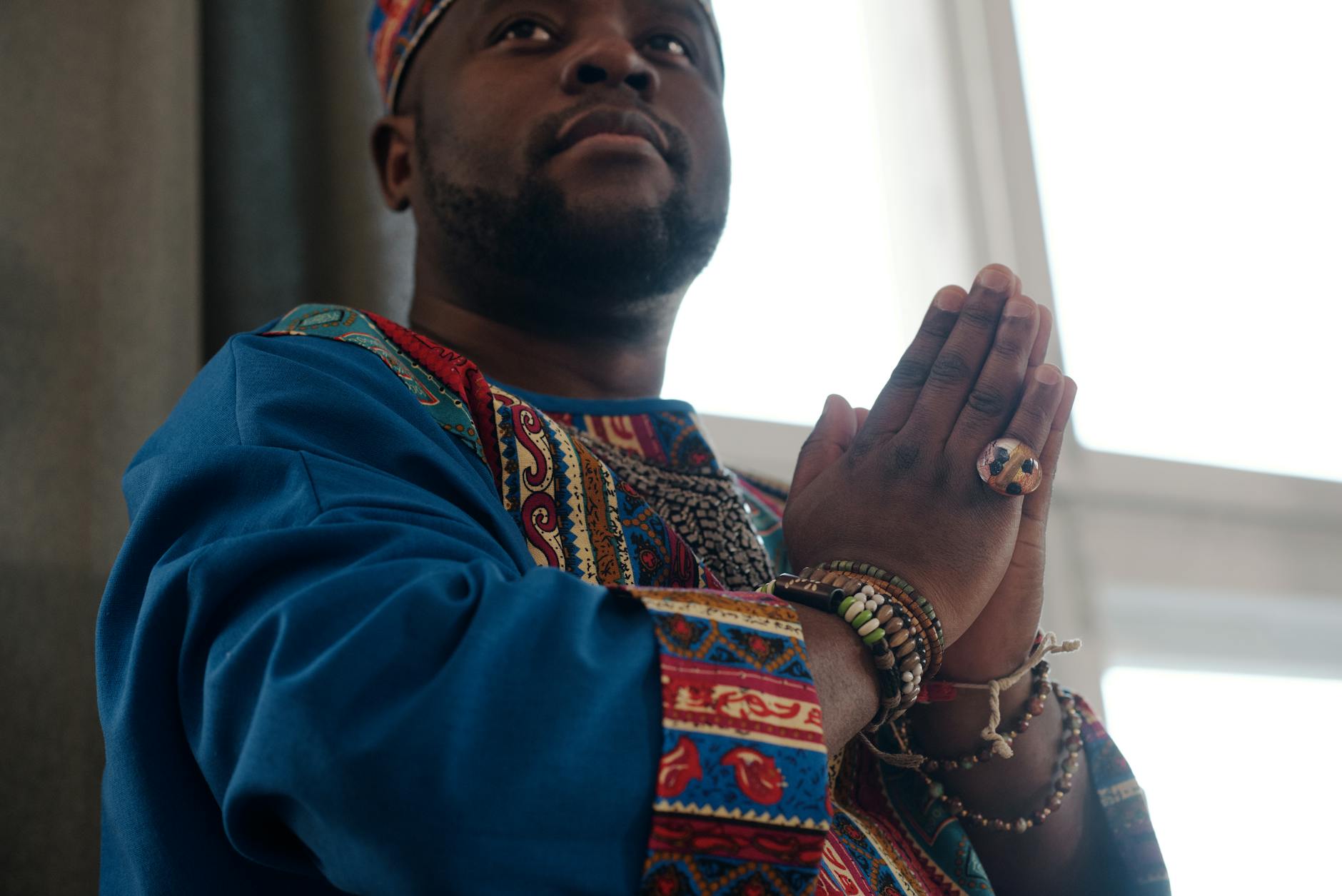
Who are you in Christ? #Chosen

This photograph is the property of its respective owner. No copyright infringement intended.

Your identity in Christ is the foundation of your spiritual journey, your purpose, your relationships, and the way you stand in a world that constantly pressures you to conform. Scripture teaches that true purpose is not found in people, material things, or validation from society, but in God alone. When you know who you are in Christ, you walk with confidence, clarity, and divine authority.

Knowing who you are in Christ begins with understanding that you were created intentionally and fearfully by God. Psalm 139:14 (KJV) declares, “I will praise thee; for I am fearfully and wonderfully made.” This truth applies to both women and men, reminding every soul that identity is rooted in divine craftsmanship, not culture’s opinions.

The world constantly tries to define identity through trends, status, money, and performance, but God defines you by His love, His calling, and His Word. Romans 12:2 (KJV) warns believers, “And be not conformed to this world: but be ye transformed by the renewing of your mind.” Transformation begins when you stop letting people shape you and allow God to renew you.

Identity truly begins when you receive Christ as Lord and Savior. According to 2 Corinthians 5:17 (KJV), “If any man be in Christ, he is a new creature.” In Christ, your past no longer has power to label you; you are recreated through grace.

Women in Christ are called daughters of the King—chosen, valuable, cherished, and empowered by God. Galatians 3:26 (KJV) affirms, “For ye are all the children of God by faith in Christ Jesus.” This means your worth is not up for debate; it is determined by God Himself.

Men in Christ are called sons of God—leaders in character, protectors of righteousness, and carriers of spiritual authority. Psalm 1 describes the blessed man who delights in God’s Word and prospers in his purpose. Strength in Christ is defined by spiritual obedience, not worldly dominance.

The purpose for both women and men begins with one clear instruction: “But seek ye first the kingdom of God, and his righteousness” (Matthew 6:33, KJV). True purpose is not found through ambition, comparison, or validation, but through seeking God first and trusting His guidance.

As you seek God, He reveals your identity, gifts, and calling. Ephesians 2:10 (KJV) declares that you are God’s workmanship, created for good works He prepared for you. Purpose is not random—it is woven into your spiritual DNA.

Being in Christ also means breaking free from people-pleasing. Galatians 1:10 (KJV) challenges every believer with the question, “Do I seek to please men? … I should not be the servant of Christ.” Living for applause traps you; living for Christ frees you.

Women often face immense pressure to conform to beauty standards, social expectations, and external validation. Proverbs 31:30 (KJV) reminds us that “favour is deceitful, and beauty is vain: but a woman that feareth the LORD, she shall be praised.” God honors character over cosmetics.

Men face pressure to appear strong, successful, and unshakable, but true strength comes from God. Joshua 1:9 (KJV) says, “Be strong and of a good courage… for the LORD thy God is with thee.” Strength in Christ is rooted in presence, not performance.

Your identity is not to impress people, but to reflect Christ. Matthew 5:16 (KJV) encourages believers, “Let your light so shine before men.” Your light is your God-given character, integrity, and obedience—not your status.

Identity in Christ means living free from condemnation. Romans 8:1 (KJV) teaches, “There is therefore now no condemnation to them which are in Christ Jesus.” Your identity is not defined by guilt but by grace.

When you know who you are in Christ, your relationships become healthier because you are not seeking completion in another person. You understand 1 John 4:19 (KJV): “We love him, because he first loved us.” God’s love stabilizes your heart.

A woman in Christ walks with dignity, strength, wisdom, and purpose. She embodies the faith of Mary, the courage of Esther, the leadership of Deborah, and the grace of the virtuous woman. Her identity flows from God, not culture.

A man in Christ walks in humility, leadership, prayer, compassion, and spiritual insight. Christ is his model—John 13 shows the Messiah washing feet, demonstrating that leadership is shown through service.

When you walk in your God-given identity, you detach from worldly validation. Colossians 3:2 (KJV) teaches, “Set your affection on things above, not on things on the earth.” You begin to crave purpose instead of popularity and righteousness instead of recognition.

God often allows challenges to strengthen your identity. Ephesians 6:10–11 (KJV) instructs believers to put on the whole armor of God. Identity becomes your armor—your confidence, your clarity, and your spiritual authority.

Walking in Christ brings peace that people cannot give. John 14:27 (KJV) says, “My peace I give unto you.” When you stop performing for others, peace settles into your spirit.

Daily fellowship with God—through prayer, Scripture, worship, and obedience—keeps your purpose aligned. Psalm 37:23 (KJV) confirms that “the steps of a good man are ordered by the LORD.” Purpose is revealed step by step, not rushed by pressure.

Ultimately, in Christ you are chosen, forgiven, loved, strengthened, and called. Your purpose is to glorify God, to reflect His character, and to walk boldly in your divine identity. When you seek God first, you no longer need to conform, impress, or perform. Your identity becomes anchored in the One who created you, redeemed you, and called you for such a time as this.

References (KJV)
Psalm 139:14
Romans 12:2
2 Corinthians 5:17
Galatians 3:26
Psalm 1
Matthew 6:33
Ephesians 2:10
Galatians 1:10
Proverbs 31:30
Joshua 1:9
Matthew 5:16
Romans 8:1
1 John 4:19
Colossians 3:2
Ephesians 6:10–11
John 14:27
Psalm 37:23