Category Archives: the bible

Are You Tired of Struggling and Waiting?

Life often feels like a series of obstacles, disappointments, and delays. Struggling and waiting can wear down even the strongest among us. You may ask, “How long, Lord?” or “Why am I still here, still praying, still hoping?” The Bible acknowledges the reality of struggle and the frustration of waiting, yet it also provides answers for those who persevere in faith.

1. God Sees Your Struggle

Psalm 34:17–18 (KJV) declares: “The righteous cry, and the Lord heareth, and delivereth them out of all their troubles. The Lord is nigh unto them that are of a broken heart; and saveth such as be of a contrite spirit.”
Even when life feels overwhelming, God is present. Your pain is not ignored, your tears are not unnoticed. The Lord sees the travail of your soul and is preparing a way to deliver you.

2. Waiting Has a Purpose

Ecclesiastes 3:1 (KJV) reminds us: “To everything there is a season, and a time to every purpose under the heaven.”
Waiting is not wasted time. Every delay carries divine instruction, character development, or preparation for the next season. The seed planted in the dark soil of waiting will bear fruit in God’s appointed time.

3. Strength Is Formed Through Trials

James 1:2–4 (KJV) says: “My brethren, count it all joy when ye fall into divers temptations; Knowing this, that the trying of your faith worketh patience. But let patience have her perfect work, that ye may be perfect and entire, wanting nothing.”
Struggles are not signs of failure; they are opportunities for spiritual refinement. Patience and perseverance strengthen faith and produce completeness.

4. God’s Timing Is Perfect

Habakkuk 2:3 (KJV) instructs: “For the vision is yet for an appointed time, but at the end it shall speak, and not lie: though it tarry, wait for it; because it will surely come, it will not tarry.”
Your breakthrough may not arrive when you expect, but God’s timing is flawless. Faith requires trusting the process, even when the waiting feels indefinite.

5. Prayer Opens the Way

Psalm 37:7–9 (KJV) says: “Rest in the Lord, and wait patiently for him: fret not thyself because of him who prospereth in his way…for evildoers shall be cut off: but those that wait upon the Lord, they shall inherit the earth.”
Consistent prayer aligns your heart with God’s will. It cultivates peace amidst uncertainty and prepares your spirit to receive what God has promised.

6. Perseverance Produces Reward

Galatians 6:9 (KJV) encourages: “And let us not be weary in well doing: for in due season we shall reap, if we faint not.”
Faithfulness and perseverance are key to experiencing God’s promises. The harvest comes in God’s timing—never too early, never too late.

7. Seek God’s Perspective

Isaiah 55:8–9 (KJV) reminds us: “For my thoughts are not your thoughts, neither are your ways my ways, saith the Lord. For as the heavens are higher than the earth, so are my ways higher than your ways, and my thoughts than your thoughts.”
Your understanding is limited; God’s plan encompasses eternity. Struggling and waiting often prepare you for blessings you cannot yet see.


Revealed Answers for the Weary

  1. Rest in God’s Presence – Your struggles are not unnoticed; He is near.
  2. Understand the Season – Every wait has purpose; your life is being shaped.
  3. Grow in Patience and Faith – Trials refine your character.
  4. Trust God’s Timing – He is never late; your season will come.
  5. Pray Continuously – Prayer strengthens hope and aligns you with God.
  6. Persevere Without Fainting – Rewards are promised to the faithful.
  7. Seek God’s Perspective – His ways surpass human understanding; wait in trust.

Conclusion

Struggling and waiting are not signs of failure—they are part of God’s divine process of preparation. Scripture provides assurance that patience, perseverance, and faith will be rewarded. The key is to remain steadfast, trust in His timing, and align your heart with His purpose. The answers are already revealed in the Word: God sees, God prepares, and God delivers.


References

The Holy Bible, King James Version. (1769/2017). Cambridge University Press.

Oswald, R. (2016). Waiting on God: The secret of trusting in His timing. Moody Publishers.

Stanley, A. (2013). The principles of waiting on God. Thomas Nelson.

Johnson, S. M. (2019). Faith through trials: Biblical lessons for perseverance. Zondervan.

Spiritual Posture

Spiritual posture refers to the inner orientation of the soul toward God, truth, and moral responsibility. It is not defined by outward appearance, religious vocabulary, or ritual performance, but by the condition of the heart. Scripture consistently emphasizes that posture precedes action, and that who a person is inwardly determines how they respond to trials, blessings, correction, and calling.

At its foundation, spiritual posture is about alignment. To be rightly postured is to be submitted to divine authority rather than ego, fear, or public opinion. Proverbs teaches that “in all thy ways acknowledge him, and he shall direct thy paths,” underscoring that direction flows from submission, not ambition. A misaligned posture leads even gifted individuals into confusion.

Humility is the cornerstone of spiritual posture. The Bible repeatedly affirms that God resists the proud but gives grace to the humble. Humility is not self-hatred or weakness; it is accurate self-assessment in the presence of God. It recognizes dependence on divine wisdom rather than personal intellect or status.

Spiritual posture is revealed most clearly under pressure. Trials expose whether one is rooted in faith or merely comfort. When adversity arises, the heart either bows in trust or hardens in resentment. Scripture describes this testing as refinement, where faith is purified rather than destroyed.

Obedience is another essential dimension of posture. Many desire spiritual authority without submission, revelation without discipline, or blessing without obedience. Yet Jesus Himself modeled obedience, stating that He came not to do His own will, but the will of the Father. Spiritual maturity is demonstrated through consistency, not convenience.

Repentance is a posture, not a one-time event. A repentant heart remains teachable, responsive, and accountable. Rather than defending wrongdoing, it seeks correction and restoration. Scripture describes repentance as life-giving, aligning the believer back into fellowship and clarity.

Faith functions as posture as well. Faith is not denial of reality, but trust in God’s sovereignty despite uncertainty. A faithful posture rests in God’s promises even when outcomes are delayed. This kind of faith produces endurance rather than anxiety.

Spiritual posture also governs how one handles blessing. Prosperity tests posture just as suffering does. Scripture warns that abundance can lead to pride, forgetfulness, and moral compromise. A grounded posture remembers the source of blessing and practices gratitude rather than entitlement.

Prayer reflects posture through approach. Some pray from desperation, others from performance, but true prayer flows from reverence and intimacy. Jesus taught His disciples to pray with acknowledgment of God’s holiness before petitioning for needs, reinforcing order and humility.

Silence before God is often overlooked but essential. A healthy posture includes listening, waiting, and restraint. Scripture teaches that God’s voice is not always in noise or spectacle, but in stillness. A restless posture struggles to hear divine instruction.

Spiritual posture shapes relationships with others. Those aligned with God demonstrate patience, forgiveness, and discernment. They do not need to dominate conversations or prove righteousness. Instead, their presence reflects peace and integrity.

Forgiveness is a posture of release. Holding resentment distorts spiritual alignment and burdens the soul. Scripture teaches that forgiveness is not approval of harm, but refusal to remain bound to it. A forgiving posture restores spiritual flow and emotional health.

Discernment grows from posture rather than intelligence alone. When the heart is aligned with truth, wisdom follows. Scripture distinguishes between earthly wisdom and divine wisdom, noting that the latter is pure, peaceable, and gentle. Discernment protects against deception and spiritual pride.

Spiritual posture also involves endurance. Many begin well but falter due to impatience or distraction. Scripture repeatedly calls believers to stand firm, remain vigilant, and endure sound doctrine. Posture sustains longevity in faith.

Identity is inseparable from posture. When identity is rooted in God rather than social validation, posture stabilizes. External praise or criticism loses power when the inner self is anchored in divine purpose.

The posture of service reflects Christlike character. Scripture teaches that greatness in the kingdom is measured by servanthood, not status. Serving from humility rather than obligation transforms labor into worship.

Spiritual warfare is often fought at the level of posture. Pride, fear, and bitterness weaken spiritual defenses, while humility, faith, and obedience strengthen them. Scripture instructs believers to stand, not strive, emphasizing position rather than panic.

Spiritual posture influences how truth is spoken. Truth delivered without love becomes harsh, while love without truth becomes permissive. A balanced posture maintains both conviction and compassion.

Transformation requires posture change. Renewing the mind involves rejecting old patterns of thought rooted in fear, shame, or domination. Scripture describes this renewal as ongoing, requiring daily surrender.

Ultimately, spiritual posture determines spiritual trajectory. Those who walk uprightly are not immune to hardship, but they remain anchored. God honors alignment over appearance and faithfulness over performance.

Spiritual posture is the quiet power behind visible fruit. When the heart is bowed, the life stands firm. In a world driven by image, ambition, and noise, a rightly postured soul becomes a testimony of peace, authority, and divine order.


References

Bonhoeffer, D. (1959). The cost of discipleship. SCM Press.

Foster, R. J. (1998). Celebration of discipline: The path to spiritual growth. HarperCollins.

Keller, T. (2014). Prayer: Experiencing awe and intimacy with God. Dutton.

The Holy Bible, King James Version. (1611/1987). Cambridge University Press.

Willard, D. (2002). Renovation of the heart: Putting on the character of Christ. NavPress.

Biblical Exegesis and Racialized Aesthetics: Deuteronomy 28, the Apocrypha, and the Theology of Appearance

Biblical exegesis demands disciplined attention to text, context, and theology. Yet interpretation is never neutral. Throughout history, Scripture has been filtered through cultural assumptions about the body, beauty, and belonging. One of the most persistent distortions is racialized aesthetics—the assignment of moral, spiritual, and intellectual value to physical appearance along racial lines. When this aesthetic hierarchy enters biblical interpretation, it produces theological error, ethical harm, and spiritual injustice.

Racialized aesthetics did not originate in Scripture; they were imposed upon it. The biblical text consistently resists appearance-based judgment, yet Christian interpretation—especially within Western traditions—has often elevated visual traits aligned with power while diminishing those associated with the oppressed. This article argues that faithful exegesis requires dismantling aesthetic hierarchies and recovering Scripture’s rejection of visual virtue.

The Hebrew Bible establishes early that appearance is an unreliable indicator of divine favor. In 1 Samuel 16:7, God explicitly rejects physical stature as a criterion for leadership, declaring that divine judgment penetrates beyond what the eye can see. This moment is not incidental; it is theological. It exposes the human tendency to confuse visibility with worth and confronts it directly.

Deuteronomy 28 further complicates the relationship between embodiment and judgment. The chapter details blessings for covenant obedience and curses for disobedience, many of which are experienced visibly—on bodies, families, and communities. These curses include displacement, enslavement, public humiliation, and generational suffering. Importantly, the text does not frame these visible afflictions as evidence of moral inferiority, but as the result of covenantal violation within a specific historical framework.

However, later interpreters racialized these visible conditions, detaching them from covenant theology and reassigning them to biological destiny. Enslaved African peoples, whose suffering mirrored Deuteronomy 28’s curses, were not read as participants in biblical history but as objects of divine rejection. This inversion transformed Scripture from a witness against oppression into a weapon of justification.

The Apocrypha reinforces Scripture’s critique of appearance-based judgment. Sirach warns against pride rooted in external beauty and cautions that honor does not arise from outward display but from wisdom and righteousness. Wisdom of Solomon condemns rulers who mistake power and splendor for moral authority, reminding readers that God judges motives rather than monuments.

These texts reveal a consistent biblical anthropology: the body is meaningful but not determinative of virtue. Beauty is acknowledged but relativized. Power is visible but accountable. Racialized aesthetics violates this framework by treating physical traits as theological evidence.

The New Testament intensifies this critique. Jesus repeatedly confronts religious leaders who rely on external markers of holiness. His condemnation of “whited sepulchres” exposes aesthetic righteousness as a form of deception—clean surfaces concealing ethical decay. The warning is unmistakable: visual holiness can coexist with moral corruption.

Paul’s epistles further dismantle embodied hierarchy. In Galatians, Paul rejects ethnic, social, and gender distinctions as determinants of spiritual status. This declaration is not abstract theology; it is a direct challenge to systems that rank bodies according to worth. Any theology that reintroduces visual hierarchy contradicts apostolic teaching.

Despite these textual correctives, Christian theology absorbed racialized aesthetics through colonial expansion, Enlightenment racial theory, and artistic representation. Christ was rendered through Eurocentric imagery, saints were depicted as pale and symmetrical, and holiness became visually coded. Over time, whiteness was unconsciously equated with godliness, while Blackness was associated with curse, carnality, or distance from God.

This aesthetic theology shaped ecclesial life. Leadership, credibility, and spiritual authority were disproportionately granted to those whose appearance aligned with dominant norms. Even today, churches often reward visual respectability while overlooking ethical substance.

Psychologically, this mirrors the halo effect—the cognitive bias in which attractiveness produces assumed virtue. When baptized into theology, the halo effect becomes a doctrinal error. It replaces discernment with impression and confuses presentation with obedience.

Biblical wisdom literature directly challenges this confusion. Proverbs warns that beauty without discretion is dangerous, while Ecclesiastes insists that external advantage is fleeting. These texts call believers to value fear of God over visual appeal and righteousness over reputation.

A faithful exegetical method must therefore interrogate not only Scripture but the interpreter. What bodies do we trust instinctively? Whose suffering do we spiritualize or dismiss? Without confronting these questions, interpretation risks perpetuating injustice under the guise of orthodoxy.

Theologically, racialized aesthetics constitutes idolatry. It elevates created form over divine command and assigns salvific meaning to appearance. Scripture consistently condemns such distortions, not because beauty is evil, but because it is insufficient as a moral measure.

Recovering biblical exegesis requires hermeneutical repentance—a willingness to unlearn aesthetic hierarchies and re-center Scripture’s ethical vision. This includes recognizing that divine election does not follow visual logic and that suffering bodies are not theological failures.

In a digital age dominated by image curation and performative holiness, this recovery is urgent. Faith is increasingly evaluated through visibility rather than fruit, branding rather than obedience. Scripture stands in opposition to this trend, insisting that righteousness is revealed through action, justice, and covenantal faithfulness.

Ultimately, biblical exegesis and racialized aesthetics are incompatible. One seeks truth through disciplined reading; the other imposes hierarchy through visual bias. To read Scripture faithfully is to reject the lie that appearance reveals virtue and to affirm that God’s judgment rests beyond the reach of the eye.


References

Banks, P. (2021). Black aesthetics and the Bible: Reading scripture through embodied experience. Fortress Press.

Cone, J. H. (1997). God of the oppressed (Rev. ed.). Orbis Books.

Felder, C. H. (Ed.). (1991). Stony the road we trod: African American biblical interpretation. Fortress Press.

Gafney, W. (2017). Womanist midrash: A reintroduction to the women of the Torah and the Throne. Westminster John Knox Press.

Jennings, W. J. (2010). The Christian imagination: Theology and the origins of race. Yale University Press.

Kidd, T. S. (2006). The forging of races: Race and scripture in the Protestant Atlantic world. Cambridge University Press.

Sugirtharajah, R. S. (2012). Exploring postcolonial biblical criticism: History, method, practice. Wiley-Blackwell.

Taylor, P. C. (2016). Black is beautiful: A philosophy of Black aesthetics. Wiley-Blackwell.

Wimbush, V. L. (2014). White men wrote the Bible: Theological racism and the politics of interpretation. Continuum.

The Holy Bible, King James Version. (1611/2017).

The Apocrypha. (Sirach; Wisdom of Solomon).

The Gospel of Beauty: For man looketh on the outward appearance, but the Lord looketh on the heart.

In a society increasingly obsessed with physical appearance, the tension between outward beauty and inner virtue has never been more pressing. Scripture repeatedly underscores that while humans are prone to judge based on external features, God evaluates the character and intentions of the heart. The Apostle Samuel’s words in 1 Samuel 16:7 (KJV) illustrate this: “But the Lord said unto Samuel, Look not on his countenance, or on the height of his stature; because I have refused him: for the Lord seeth not as man seeth; for man looketh on the outward appearance, but the Lord looketh on the heart.”

Physical beauty, while celebrated culturally, is transient. Societal standards continually shift, creating pressure to conform to ideals that are both fleeting and often unattainable. This emphasis on outward appearance fosters vanity, envy, and superficial judgment, diverting attention from moral, spiritual, and relational substance.

The Bible consistently contrasts external allure with internal virtue. Proverbs 31:30 (KJV) asserts: “Favor is deceitful, and beauty is vain: but a woman that feareth the Lord, she shall be praised.” Here, the text emphasizes reverence, wisdom, and moral integrity as enduring qualities far surpassing aesthetic appeal.

Men, too, are subject to this cultural fixation. In 1 Peter 3:3-4 (KJV), spiritual instruction guides believers: “Whose adorning let it not be that outward adorning of plaiting the hair, and of wearing of gold, or of putting on of apparel; But let it be the hidden man of the heart, in that which is not corruptible, even the ornament of a meek and quiet spirit, which is in the sight of God of great price.” True beauty emanates from humility, meekness, and spiritual devotion rather than fashion or cosmetics.

Social psychology mirrors this biblical principle. Studies on the “halo effect” show that attractive individuals are often assumed to possess positive traits; however, research also suggests that outward beauty does not predict ethical behavior, compassion, or integrity (Eagly et al., 1991). The wisdom of Scripture anticipates this insight, teaching discernment beyond superficial appearances.

Vanity and obsession with outward appearance can disrupt relationships and spiritual growth. When individuals prioritize beauty over character, they risk fostering pride, insecurity, and shallow social connections. Conversely, cultivating inner virtue promotes resilience, meaningful relationships, and spiritual fulfillment.

The Psalms reinforce the primacy of the heart over appearance. Psalm 51:10 (KJV) pleads: “Create in me a clean heart, O God; and renew a right spirit within me.” God’s concern is not outward perfection but purity of intent, ethical integrity, and contrition, qualities invisible to human eyes yet central to divine evaluation.

Biblical narratives illustrate that God often chooses those overlooked by society. Moses, a reluctant leader with apparent deficiencies in confidence; David, the youngest son of Jesse, overlooked for physical stature; and Esther, a woman of quiet virtue elevated to influence, exemplify God’s attention to character over appearance (Exodus 3, 1 Samuel 16, Esther 2).

Beauty, therefore, is not condemned but reframed. 1 Timothy 2:9-10 (KJV) instructs: “In like manner also, that women adorn themselves in modest apparel, with shamefacedness and sobriety; not with broided hair, or gold, or pearls, or costly array; But (which becometh women professing godliness) with good works.” True adornment lies in righteous actions and godly conduct.

Cultural and technological influences exacerbate the human tendency to equate beauty with value. Social media, advertising, and entertainment industries often perpetuate narrow ideals, while Scripture provides an enduring corrective: God measures worth by moral, relational, and spiritual integrity.

The New Testament further emphasizes the enduring nature of inner qualities. Galatians 5:22-23 (KJV) describes the fruit of the Spirit—love, joy, peace, longsuffering, gentleness, goodness, faith, meekness, temperance—which constitute lasting beauty far beyond physical allure.

Discerning God’s perspective requires intentional cultivation of the heart. Prayer, study of Scripture, and acts of service shift focus from external validation to divine affirmation, reinforcing humility, integrity, and spiritual maturity.

Parents and mentors have a responsibility to teach this principle. Encouraging children to value kindness, diligence, and godly character over appearance fosters resilience against societal pressures and nurtures lifelong spiritual and relational flourishing.

The dangers of valuing appearance above character are also illustrated in narrative warnings. Proverbs 31:25-26 (KJV) praises the virtuous woman: “Strength and honour are her clothing; and she shall rejoice in time to come. She openeth her mouth with wisdom; and in her tongue is the law of kindness.” Strength, honor, wisdom, and kindness surpass transient beauty in both societal and divine evaluation.

In communal life, the prioritization of inner virtue cultivates trust, empathy, and ethical behavior. A society that mirrors God’s evaluation—honoring the heart over the outward appearance—promotes justice, relational depth, and enduring value.

Christian leaders and teachers can model this principle, valuing and affirming individuals for character, service, and spiritual devotion rather than attractiveness or charm, thereby reinforcing a culture that reflects divine priorities.

Ultimately, the Gospel of Beauty calls for a reversal of conventional judgment. Human eyes may favor external traits, but God’s perspective emphasizes eternal qualities. Aligning personal and communal evaluation with this principle fosters moral clarity and spiritual depth.

Believers are reminded to cultivate discernment and humility. 1 Samuel 16:7 (KJV) serves as a perpetual guide: resist superficial judgment, prioritize inner virtue, and honor God’s assessment over societal perception.

In conclusion, while the world celebrates outward beauty, Scripture consistently teaches that God looks at the heart. True beauty is measured in character, integrity, service, and devotion. Aligning life with these principles ensures enduring worth, divine favor, and relational richness beyond the fleeting admiration of human eyes.

References

Eagly, A. H., Ashmore, R. D., Makhijani, M. G., & Longo, L. C. (1991). What is beautiful is good, but…: A meta-analytic review of research on the physical attractiveness stereotype. Psychological Bulletin, 110(1), 109–128.

Holy Bible, King James Version (KJV). 1 Samuel 16:7; Proverbs 31:30; 1 Peter 3:3-4; Psalm 51:10; 1 Timothy 2:9-10; Galatians 5:22-23; Proverbs 31:25-26.

Wolf, N. (1991). The beauty myth: How images of beauty are used against women. HarperCollins.

Langlois, J. H., Kalakanis, L., Rubenstein, A. J., Larson, A., Hallam, M., & Smoot, M. (2000). Maxims or myths of beauty? A meta-analytic and theoretical review. Psychological Bulletin, 126(3), 390–423.

Who Benefits When the Curriculum is Sanitized, and the History is Whitewashed?

When education omits uncomfortable truths or sanitizes history, it does more than distort knowledge—it shapes identities and values in ways that serve the powerful. A whitewashed curriculum often conceals oppression, marginalization, and systemic injustice, leaving students with a skewed perception of reality.

Sanitizing history benefits those who wish to maintain societal dominance. By minimizing the moral failures of the powerful and glorifying selective narratives, the truth about injustice is obscured. Proverbs 18:13 warns, “He that answereth a matter before he heareth it, it is folly and shame unto him.” Without hearing the full account, society cannot respond with justice.

Whitewashing history perpetuates ignorance. Students grow up unaware of the struggles and resilience of oppressed peoples, creating a populace less likely to recognize injustice in the present. Knowledge of history is a form of power, and withholding it sustains inequity.

This sanitized narrative also undermines moral development. Encountering the realities of human sin is essential for cultivating discernment. Romans 1:18–20 states, “For the wrath of God is revealed from heaven against all ungodliness and unrighteousness of men, who hold the truth in unrighteousness.” Suppressing truth allows unrighteousness to flourish.

Those most harmed by whitewashing are communities whose histories are erased or distorted. Cultural and spiritual identity are shaped by knowledge of one’s past. Deuteronomy 32:7 teaches, “Remember the days of old, consider the years of many generations: ask thy father, and he will shew thee; thy elders, and they will tell thee.” History forms the backbone of identity, and its erasure impoverishes future generations.

Sanitized curricula also obscure the mechanisms of systemic oppression. Understanding slavery, colonization, segregation, and exploitation is essential to preventing their recurrence. Ignorance of these realities benefits the descendants of oppressors, who inherit both unexamined privilege and historical myths.

Economic and social power is often maintained through control of narratives. Ecclesiastes 8:11 reminds us, “Because sentence against an evil work is not executed speedily, therefore the heart of the sons of men is fully set in them to do evil.” Delay or denial of historical accountability allows injustices to continue unnoticed.

Whitewashing history also influences psychological and social development. When young people are taught incomplete or sanitized histories, they may internalize inferiority or fail to appreciate their heritage. Understanding one’s ancestry builds resilience and pride.

Sanitized education can manipulate national or cultural identity. By presenting selective histories, institutions foster loyalty to ideologies that serve dominant groups, rather than encouraging critical thinking or moral responsibility. Proverbs 23:23 states, “Buy the truth, and sell it not; also wisdom, and instruction, and understanding.” Truth must be sought and taught, even when uncomfortable.

In contrast, confronting history honestly fosters justice. Awareness of past wrongs equips society to correct present inequities and cultivate empathy. Psalm 82:3–4 exhorts, “Defend the poor and fatherless: do justice to the afflicted and needy. Deliver the poor and needy: rid them out of the hand of the wicked.” Education that recognizes oppression is a tool for justice.

Those in power benefit materially and socially from sanitized curricula. Wealth and influence are preserved, and social hierarchies remain unchallenged. Historical truths that might provoke moral or political reform are hidden.

Religious texts emphasize the importance of remembering and teaching truth. Proverbs 4:7 teaches, “Wisdom is the principal thing; therefore get wisdom: and with all thy getting get understanding.” Knowledge of history is part of this wisdom.

The erasure of marginalized histories also diminishes collective memory. When atrocities or injustices are minimized, lessons from the past are lost, and societies are more likely to repeat mistakes.

Furthermore, sanitized curricula often valorize the oppressor’s narrative, embedding it as a universal truth. This skews morality and erodes empathy, teaching young people to admire figures or institutions without critical evaluation.

A society that ignores historical suffering undermines the spiritual imperative to pursue justice. Isaiah 1:17 instructs, “Learn to do well; seek judgment, relieve the oppressed, judge the fatherless, plead for the widow.” Ignorance of oppression prevents action aligned with divine justice.

The consequences of whitewashed education are multi-generational. When children grow up unaware of historical realities, social inequalities persist, and systemic injustices are perpetuated silently.

Reclaiming historical truth empowers oppressed communities. Knowledge of ancestral struggles and victories fosters resilience, identity, and social cohesion. Deuteronomy 4:9 emphasizes the importance of remembering and teaching what one has learned: “Take ye therefore good heed unto yourselves; for ye saw no manner of similitude on the day that the LORD spake unto you in Horeb out of the midst of the fire.” Awareness preserves wisdom across generations.

In conclusion, sanitized curricula and whitewashed history benefit the powerful by preserving privilege and suppressing accountability. Yet, God commands the pursuit of truth, justice, and understanding, calling societies to confront their past and act rightly.

True education must confront reality fully. Only through honesty in teaching history can justice, empathy, and spiritual discernment flourish. Societies that conceal history cheat themselves of moral and spiritual growth, while those who face it with courage honor God and humanity alike.


References (KJV Bible):

  • Proverbs 18:13
  • Romans 1:18–20
  • Psalm 82:3–4
  • Deuteronomy 32:7
  • Ecclesiastes 8:11
  • Proverbs 23:23
  • Proverbs 4:7
  • Isaiah 1:17
  • Deuteronomy 4:9

Truth & Ink

Body art, particularly tattoos, has become a powerful medium for self-expression, identity formation, and cultural commentary. Across communities, tattoos function as markers of personal narrative, aesthetic preference, and social affiliation. They communicate individuality, heritage, and values, allowing the body to serve as a living canvas. Yet, while tattoos can signify empowerment and creativity, there is a spiritual and ethical dimension to consider: the Most High commands respect for the body as His temple and explicitly discourages permanent markings on it.

Historically, tattoos have held diverse meanings. In many Indigenous and African cultures, body markings were symbolic of status, lineage, spiritual protection, or rites of passage (DeMello, 2000; Sanders, 1989). Each symbol and placement carried intentionality, reflecting communal values as much as personal identity. In contemporary contexts, tattoos often serve similar functions: they preserve memory, communicate affiliation, or declare personal beliefs. They can also serve as aesthetic statements, reflecting the wearer’s taste, artistic sensibility, and engagement with cultural trends.

Psychologically, tattoos contribute to self-concept and personal empowerment. Koch, Roberts, Armstrong, and Owen (2010) found that individuals use body art to externalize internal identity, bolster self-esteem, and assert autonomy over social presentation. Tattoos can signal resilience, commemorate life experiences, and foster a sense of belonging within subcultures or communities. From a social perspective, tattooed individuals navigate both admiration and stigma; perceptions are influenced by cultural context, aesthetics, and social norms (Irwin, 2001; Fischer & Gullage, 2020).

In Black communities, tattooing intersects with racialized aesthetics and identity. Young (2011) observes that tattoos are a medium for negotiating authenticity, heritage, and self-presentation. They provide visibility and narrative control in a society that often marginalizes Black bodies. Tattoos can honor ancestral lineage, spiritual beliefs, or cultural symbolism, allowing individuals to claim and display their stories visually.

Despite the expressive potential of tattoos, the Bible addresses the spiritual and ethical considerations of marking the body. Leviticus 19:28 instructs, “Ye shall not make any cuttings in your flesh for the dead, nor print any marks upon you: I am the LORD.” This directive emphasizes that the body is sacred, created by God as a temple for the spirit (1 Corinthians 6:19–20). Altering it permanently through inked symbols may violate the intention to preserve the sanctity and integrity of the physical vessel entrusted to humanity by the Most High.

The tension between aesthetic freedom and spiritual obedience is central to “Truth & Ink.” While tattoos can empower and express individuality, they may simultaneously obscure the principle that the body belongs to God and should remain unmarked. Cultural admiration for body art must be weighed against spiritual directives and the understanding that true honor arises not from external embellishment but from character, obedience, and righteous living.

Sociologically, tattoos continue to navigate complex social perceptions. They can confer identity, group affiliation, and social visibility, yet they are often associated with deviance or nonconformity in mainstream contexts (Sweetman, 1999; Velliquette, Murray, & Creyer, 1998). The aesthetic value of tattoos is frequently mediated by societal norms, race, gender, and cultural capital, demonstrating that even seemingly personal choices are deeply entangled with collective perception.

Media and popular culture amplify tattoo visibility, shaping norms and desirability. Films, music, and social media present body art as markers of creativity, rebellion, or prestige. While this fosters cultural acceptance and artistic innovation, it can inadvertently downplay spiritual and ethical concerns, encouraging the perception that physical adornment is equivalent to personal or moral expression.

The Most High’s guidance offers a counter-narrative: while outward adornment may appeal to human aesthetics, the ultimate value lies in holiness, integrity, and stewardship of the body. Tattoos, while culturally and personally meaningful, risk drawing attention away from spiritual devotion and the acknowledgment that the human form is a sacred vessel.

Educational efforts and spiritual reflection can help individuals navigate the tension between cultural trends and divine instruction. Understanding the historical significance of tattoos, the social implications of aesthetic choices, and the biblical guidance on bodily sanctity fosters a holistic perspective on self-expression. Communities and families can teach younger generations about the spiritual importance of respecting the body while honoring cultural heritage through non-permanent or symbolic forms of expression.

In conclusion, “Truth & Ink” explores the duality of tattoo culture: its capacity to empower, memorialize, and express identity, and its potential conflict with divine instruction regarding the body. Tattoos are more than decorative symbols; they are cultural, psychological, and social statements that carry meaning for both the wearer and the community. Yet, the Most High reminds humanity that the ultimate expression of honor and beauty lies in stewardship of the body, moral integrity, and obedience to His commands. True adornment flows not from ink upon the skin but from a life marked by righteousness, wisdom, and spiritual devotion.


References

Atkinson, M. (2003). Tattooed: The sociogenesis of a body art. University of Toronto Press.

DeMello, M. (2000). Bodies of inscription: A cultural history of the modern tattoo community. Duke University Press.

Fischer, A. R., & Gullage, A. (2020). The social meaning of tattoos: Identity, deviance, and personal expression. Journal of Social Psychology, 160(4), 450–463. https://doi.org/10.1080/00224545.2019.1640432

Irwin, K. (2001). Legitimacy and the tattoo: Resistance, self-expression, and social negotiation. Sociological Review, 49(3), 495–514. https://doi.org/10.1111/1467-954X.00386

Koch, J. R., Roberts, A., Armstrong, M. L., & Owen, D. C. (2010). Tattooing as a window into the self: Personality, self-esteem, and the motivation for body art. Psychology of Aesthetics, Creativity, and the Arts, 4(2), 129–138. https://doi.org/10.1037/a0018622

Pitts, V. (2003). In the flesh: The cultural politics of body modification. Palgrave Macmillan.

Sanders, C. R. (1989). Customizing the body: The art and culture of tattooing. Philadelphia: Temple University Press.

Sweetman, P. (1999). Anchoring the (postmodern) self? Body modification, fashion and identity. Body & Society, 5(2–3), 51–76. https://doi.org/10.1177/1357034X99005002003

Velliquette, A., Murray, J. B., & Creyer, E. H. (1998). The tattoo renaissance: An ethnographic exploration. Advances in Consumer Research, 25, 357–362.

Young, J. L. (2011). Tattoos and identity in Black communities: Negotiating aesthetics, authenticity, and social meaning. Journal of Black Studies, 42(8), 1223–1244. https://doi.org/10.1177/0021934711411246

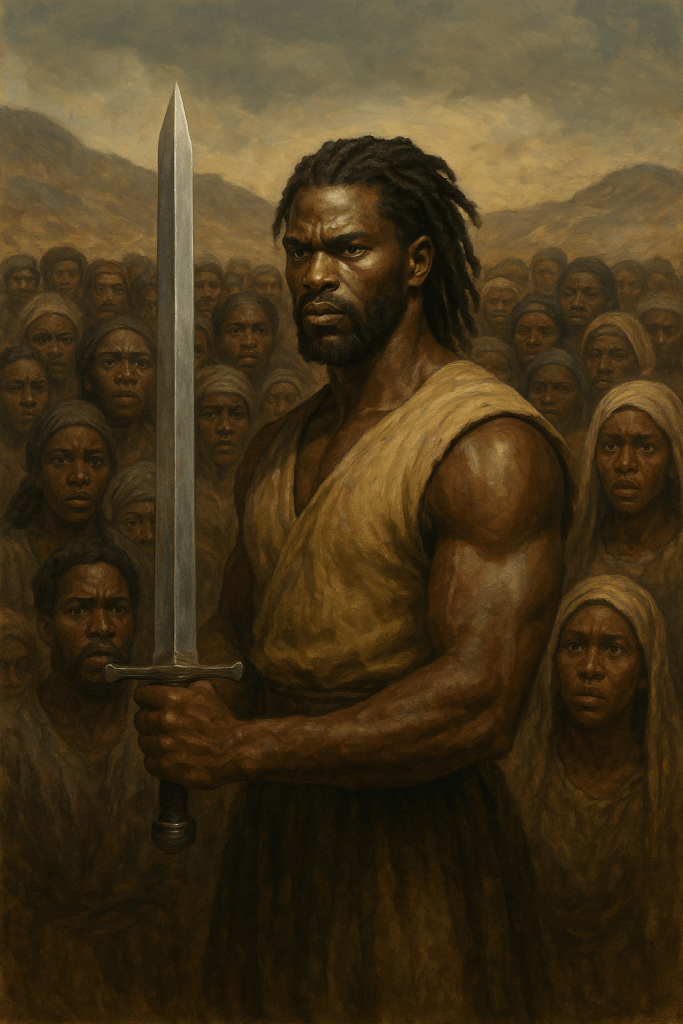
The Bible Series: The Story of Gideon and Midian.

The account of Gideon and the Midianites unfolds during a dark period in Israel’s history, when the people repeatedly turned away from the covenant and suffered oppression as a consequence. The book of Judges situates this narrative in a cycle of sin, servitude, supplication, and salvation, revealing both human frailty and divine mercy according to the LORD’s enduring faithfulness.

Midian’s oppression of Israel was severe and systematic, stripping the land of its produce and driving the people into dens and caves. The Israelites cried unto the LORD, acknowledging that their distress was linked to disobedience, and the text emphasizes that economic devastation and fear had become daily realities in the promised land.

Before deliverance came, the LORD sent a prophet to remind Israel of His saving acts, declaring that He brought them out of Egypt and delivered them from the hand of all their oppressors. This rebuke framed the coming salvation as an act of grace rather than reward, exposing the spiritual root of Israel’s suffering.

Gideon is introduced not as a mighty warrior but as a fearful man threshing wheat by the winepress to hide it from Midian. This setting underscores the humility of Gideon’s beginnings and the contrast between human weakness and divine calling.

The Angel of the LORD greeted Gideon with words that seemed contradictory to his circumstances, calling him a “mighty man of valour.” This divine address reveals God’s perspective, which speaks identity and purpose into situations that appear barren and defeated.

Gideon questioned how deliverance could come through him, citing his clan’s insignificance and his own low status. The LORD’s response redirected Gideon’s focus from self-assessment to divine presence, promising, “Surely I will be with thee.”

A sign was given to Gideon through an offering consumed by fire, confirming the LORD’s commission. Gideon’s fear turned to reverence as he recognized the holiness of the encounter, building an altar and naming it “The LORD is peace.”

The call to deliver Israel began at home, as Gideon was instructed to tear down his father’s altar to Baal and cut down the grove beside it. This act demonstrated that spiritual reform must precede national victory and that idolatry could not coexist with covenant faithfulness.

Though Gideon acted by night out of fear, the LORD honored his obedience. When opposition arose from the men of the city, Gideon’s father defended him, declaring that Baal should plead for himself if he were truly a god.

As Midian gathered with Amalek and the children of the east, the Spirit of the LORD clothed Gideon, empowering him to call Israel to arms. Yet even in leadership, Gideon sought reassurance, revealing the patience of God with those who desire confirmation of His will.

The sign of the fleece demonstrated God’s condescension to Gideon’s weakness, granting clarity without rebuke. This moment highlights the balance between faith and divine compassion within the narrative.

When the army assembled, the LORD reduced Gideon’s forces to prevent Israel from boasting that victory came by human strength. The deliberate shrinking of the army underscored that salvation belongs to the LORD alone.

The final selection of three hundred men emphasized obedience and alertness rather than military might. Through this unlikely company, God prepared to display His power unmistakably.

On the eve of battle, the LORD strengthened Gideon by revealing a Midianite’s dream foretelling defeat by Gideon’s hand. Gideon’s worship in response illustrates faith matured through divine reassurance.

The strategy of trumpets, pitchers, and lamps defied conventional warfare, signaling that the victory would be miraculous. When the men cried, “The sword of the LORD, and of Gideon,” confusion seized the enemy camp.

The Midianites turned their swords upon one another and fled, fulfilling the LORD’s promise of deliverance. Israel pursued, and the oppressors were subdued, marking a decisive turning point.

Despite victory, Gideon refused kingship, declaring that the LORD alone would rule over Israel. This confession affirmed divine sovereignty, though later actions revealed lingering human weakness.

Gideon’s request for gold led to the creation of an ephod that became a snare to Israel, reminding readers that even faithful leaders can falter. The narrative remains honest about the complexity of righteousness and leadership.

The land had rest for forty years in the days of Gideon, reflecting the peace that follows obedience and divine intervention. Yet the cycle of Judges warns that peace is often temporary when remembrance fades.

The story of Gideon and Midian ultimately testifies to God’s power perfected in weakness, calling every generation to trust not in numbers or strength, but in the presence and promises of the LORD.

References

The Holy Bible, King James Version. Judges 6–8.

She Is Shulamite in Brown: Loved, Not Compared.

The Shulamite is a central figure in the Song of Solomon (Song of Songs) in the King James Version of the Bible, celebrated for her beauty, sensuality, and beloved status. She represents the ideal of feminine virtue, desire, and intimacy, yet her character is often misunderstood or misappropriated. She is a Black or brown-skinned woman in the biblical narrative, often interpreted as a representation of a woman fully embraced in her own skin, proud of her heritage, and cherished for her intrinsic worth (Song of Solomon 1:5–6, KJV).

The Shulamite’s brownness is highlighted in the text: “I am black, but comely, O ye daughters of Jerusalem” (Song of Solomon 1:5, KJV). This acknowledgment of her dark skin is not a limitation but a declaration of beauty and dignity. She stands as a model for self-acceptance, unapologetic in her appearance, and fully loved for who she is. Her character challenges societies that equate fairness with favor, asserting that worth is inherent, not comparative.

The Shulamite lived in Shulam (or Shunem), a region in ancient Israel, giving her the name “Shulamite.” She embodies the ideal beloved woman, both physically appealing and morally grounded, whose beauty is holistic—spiritual, emotional, and physical. Her brownness, celebrated in scripture, is integral to her identity and her desirability.

Biblically, the Shulamite’s love story is with King Solomon, the wisest man of Israel, though she is not defined solely by this relationship. The text emphasizes mutual love, respect, and admiration. Unlike many narratives where women are objects of comparison, the Shulamite is loved uniquely, for herself, not measured against other women (Song of Solomon 2:16, KJV).

Her narrative teaches that beauty is multifaceted. While society often emphasizes physical appearance alone, the Shulamite’s appeal encompasses confidence, poise, character, and spirituality. Her brown skin is a source of pride, not shame, highlighting a biblical affirmation of melanin-rich beauty.

The Shulamite is also a symbol of agency and voice. She speaks openly about desire, fear, and longing. She is not passive but actively expresses love and commands attention through both words and presence. This autonomy challenges the reduction of women to mere physicality or comparison.

In Black and brown communities today, the Shulamite serves as a powerful archetype. She represents self-love, resisting societal hierarchies that favor lighter skin. Her example validates darker skin tones, encouraging pride, confidence, and recognition of divine favor despite external prejudice.

The Shulamite’s brownness is frequently misinterpreted by Eurocentric translations or artwork, which often depict her with lighter skin. Recognizing her true skin tone restores cultural and spiritual integrity, affirming that God delights in her appearance as He created it.

Her story also emphasizes relational equality. Solomon’s love for her is personal, tender, and unwavering. He values her character alongside her appearance, demonstrating that true affection is holistic and not conditional upon conformity to societal beauty standards.

In the Song of Solomon, she is contrasted with others only to highlight her uniqueness, not to diminish her worth. The text teaches that comparison is unnecessary when one is fully embraced and valued by God and by those who truly love them (Song of Solomon 1:8–10, KJV).

The Shulamite’s wisdom extends beyond romance. She navigates societal pressures and male attention with discernment. She balances desire with dignity, modeling how women can assert themselves in relationships while maintaining self-respect.

Her narrative also underscores the divine intention behind diverse beauty. Scripture repeatedly affirms that God is no respecter of persons (Acts 10:34, KJV). The Shulamite’s brown skin and unique traits are celebrated, not subordinated, demonstrating that true beauty is in God’s creation, not human comparison.

The Shulamite inspires contemporary discussions around colorism. She embodies resistance to the idea that darker-skinned women must conform to Eurocentric ideals to be desirable, proving that divine approval and human admiration are independent of societal bias.

Spiritually, the Shulamite reflects the intimacy between God and His people. Her self-assuredness and acceptance mirror the believer’s call to embrace God’s design fully, including one’s physical attributes. Her narrative is an invitation to celebrate God’s image in diverse forms.

Her brown skin is a source of identity, pride, and relational power. By acknowledging her melanin, she asserts that value is intrinsic, not assigned by external standards. This principle challenges centuries of social prejudice favoring lighter tones.

The Shulamite’s love is mutual and affirming. She is not defined by comparison to other women but by the depth of connection with her beloved, exemplifying the principle that worth is relationally and spiritually grounded rather than competitively measured.

Her voice, confidence, and presence teach that women should speak, act, and love without seeking validation through societal benchmarks. Her beauty is self-contained and self-affirmed, a model for self-love and divine recognition.

In literary and theological studies, the Shulamite is increasingly understood as a symbol of marginalized beauty and voice. Scholars highlight her role in demonstrating that God honors diversity, contrasts human standards, and delights in those whom society may overlook.

The Shulamite remains a powerful icon for women of color, especially Black and brown women. She affirms that their beauty, dignity, and worth are not contingent upon comparison, but are fully loved by God and those who embrace true affection.

Her legacy is timeless: to be Shulamite in brown is to embody confidence, dignity, and divine love. She teaches that self-worth is intrinsic, beauty is multifaceted, and comparison is unnecessary when one is fully embraced and valued.


References

The Holy Bible, King James Version. (1611). Song of Solomon 1:5–6, 2:16, 1:8–10.

West, M. L. (2007). The Songs of Solomon: A study of poetic love and symbolism. Oxford University Press.

Alter, R. (2010). The Art of Biblical Poetry. Basic Books.

Knight, F. (1995). Song of Songs: A Black woman’s reflection. Journal of Biblical Literature, 114(2), 215–230.

Hobbs, J. (2018). Melanin and the Bible: Reclaiming brown and Black beauty in scripture. Faith & Culture Review, 12(1), 45–62.

Hunter, M. (2007). The persistent problem of colorism: Skin tone, status, and inequality. Sociology Compass, 1(1), 237–254.

How European/White Views of the Bible Differ from African/Black Views

Worldview Shapes Interpretation

European biblical interpretation largely developed within imperial, Greco-Roman, and later Enlightenment frameworks, emphasizing hierarchy, legalism, and institutional authority. African and Black biblical interpretation, by contrast, has historically been experiential, communal, oral, and survival-centered, reading Scripture through lived oppression rather than abstract theology.

The Bible as Empire vs. the Bible as Survival

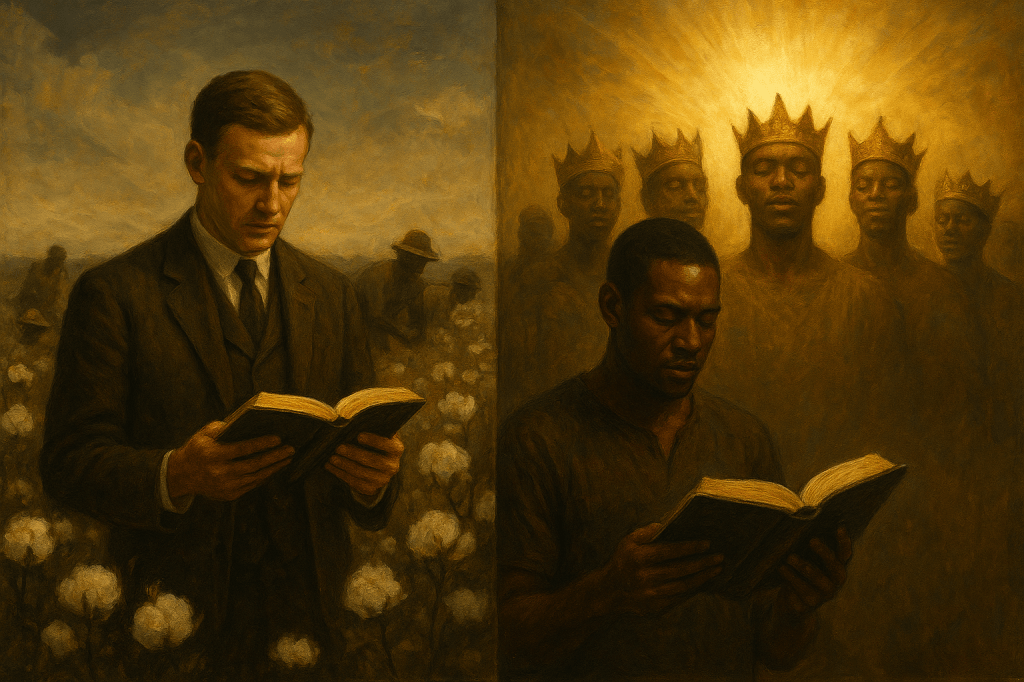
For Europe, the Bible often functioned as a tool of empire—used to justify monarchy, colonialism, and racial hierarchy. For African and African-descended peoples, the Bible became a text of endurance, liberation, and divine justice amid enslavement, exile, and sufferingEuropean Emphasis on Control and Order

European theology prioritized:

  • Church authority
  • Doctrinal uniformity
  • Obedience to rulers (Romans 13 emphasized)
  • Salvation abstracted from material conditions

This lens often muted or reinterpreted passages about oppression, captivity, and divine judgment against empires.

African/Black Emphasis on Exodus and Justice

African and Black readers gravitated toward:

  • Exodus
  • Deuteronomy 28
  • The prophets
  • Psalms of lament
  • Revelation’s overthrow of empire

Scripture was read as God siding with the oppressed, not legitimizing oppression.

Historical Memory vs. Abstract Theology

African biblical interpretation preserved historical consciousness—genealogy, land, lineage, and curses/blessings—while European theology increasingly spiritualized Scripture, detaching it from concrete history.

Deuteronomy 28 as a Point of Divergence

Europe largely framed Deuteronomy 28 as ancient Israelite history only. Many African-descended interpreters see it as a prophetic template, mapping captivity, forced labor, ships, loss of identity, and global dispersion onto the transatlantic slave trade.

The Role of the Enlightenment

The European Enlightenment desacralized Scripture, elevating reason over revelation, which later influenced canon criticism, textual skepticism, and selective theology that privileged Western norms.


What Books Were Removed from the Bible?

The Apocrypha / Deuterocanonical Books

Several books were removed or relegated to “non-canonical” status, particularly in Protestant Bibles after the 16th century.

Removed or excluded books include:

  • 1 Esdras
  • 2 Esdras (4 Ezra)
  • Tobit
  • Judith
  • Wisdom of Solomon
  • Sirach (Ecclesiasticus)
  • Baruch
  • Letter of Jeremiah
  • Additions to Esther
  • Prayer of Azariah
  • Susanna
  • Bel and the Dragon
  • 1 Maccabees
  • 2 Maccabees

These books were never “lost” to Africa—only excluded by Europe.

Why Were These Books Removed?

Key reasons include:

  • They challenged centralized church power
  • They emphasized divine justice against oppressors
  • They reinforced covenantal law and judgment
  • They complicated European theological control

Martin Luther and later Protestant reformers removed them from standard Bibles, labeling them “useful but not inspired.”

Political Theology at Work

Books like the Wisdom of Solomon condemn unjust rulers. Maccabees celebrate resistance to the empire. Baruch emphasizes exile and repentance. These themes conflicted with colonial and imperial agendas.

Suppression of Apocalyptic Knowledge

Books like Enoch and 2 Esdras contain cosmology, angelology, and judgment narratives that undermine human supremacy and racial hierarchy.

Race and Canon Formation

Europeans controlling the canon during colonial expansion ensured Scripture could be used to:

  • Enforce obedience
  • Justify slavery
  • Silence rebellion
  • Promote passive salvation

African-descended readers later reclaimed Scripture against these distortions.


African Christianity Predates Europe

Africa Is Not a Late Convert

Christianity flourished in Ethiopia, Egypt, Nubia, and North Africa centuries before Europe institutionalized the Church.

Biblical Geography Is African-Centered

Scripture references:

  • Cush
  • Mizraim (Egypt)
  • Ethiopia
  • Libya

African peoples are not marginal to the Bible—they are foundational.

Oral Tradition vs. Written Control

African biblical engagement preserved oral memory, song, lament, and testimony, while Europe emphasized written codices controlled by elite institutions.


Theological Consequences of Removal

Loss of Justice-Centered Theology

Removing books narrowed theology away from historical accountability, exile, and covenant justice.

Spiritualization of Suffering

European theology often reframed suffering as divinely ordained rather than divinely condemned—an interpretation enslaved people instinctively rejected.

Black Biblical Hermeneutics

Black theology reads Scripture from the bottom up, centering God’s response to suffering bodies, not abstract doctrine.

Scripture as Resistance

For African-descended peoples, the Bible became a counter-text, exposing the hypocrisy of Christian slaveholders and affirming divine judgment.


Conclusion: Two Bibles, Two Lenses

European Christianity often used the Bible to rule.
African and Black Christianity used the Bible to survive.

The difference is not the text itself, but who controls interpretation, which books are included, and whose suffering is acknowledged. Reclaiming the removed books and reading Scripture through historical truth restores the Bible’s original moral power.


References

The Holy Bible, King James Version. (1611/1769).

The Ethiopian Orthodox Tewahedo Church Canon.

Cone, J. H. (1997). God of the oppressed. Orbis Books.

Heschel, A. J. (2001). The prophets. Harper Perennial.

Pagels, E. (1979). The gnostic gospels. Random House.

Charlesworth, J. H. (Ed.). (1983). The Old Testament pseudepigrapha. Yale University Press.

Just Leave: Exodus from Babylon to the Holy Scriptures

Just leave. That’s the command our spirits whisper when the world grows too loud, too heavy, and too hostile for our survival. But even that command requires clarity, because no man can touch us when we choose truth over bondage, identity over illusion, and liberation over fear. Yet we often respond with the question, “Leave and go where?” It is a valid question, a necessary question, but it is the wrong first question. Before we ask where, we must ask what we are leaving behind.

Leave the mythology. The mythology that insists your worth is measured by proximity to whiteness, by respectability, by silence, or by a palatable softness that does not disturb the empire. Leave the mythology that you must shrink to survive, that your power is dangerous, that your heritage is a burden instead of a blessing.

Leave the lie that you are three-fifths human. That wicked arithmetic still circulates in institutions, in policies, in economic systems, and in subtle social cues that undervalue your intellect, your labor, and your life. Leave the lie that your blood is inherently rebellious, your mind inherently inferior, or your dreams too large for the box they try to confine you in.

Leave the shame they taught you about your hair. The shame that made you hide your curls, your coils, your kinks. Leave the shame they taught you about your skin—its richness, its radiance, its history written in melanin and memory. Leave the shame they placed on your body, treating it as a commodity, a spectacle, or a threat instead of a temple.

Leave the history they curated for you. The watered-down version that sanitizes oppression and glorifies the oppressor. Leave the edited pages, the missing chapters, the erased kingdoms, the silenced voices. Leave the lies that tell you your people began in chains instead of civilizations.

Leave the doctrine that suffering is noble. Especially the doctrine that teaches patience as a virtue only when your suffering benefits those in power. Leave the sermons that glorify endurance when liberation is possible, necessary, and divine.

Leave the celebrity pastors who preach prosperity while their people drown. Leave those who sell visions of wealth without demanding justice, who offer emotional sugar but no spiritual nourishment, who build kingdoms for themselves instead of communities for their people.

Leave the political parties that arrive every four years with promises as temporary as campaign posters. Leave the illusion of loyalty to institutions that invest in your vote but not your well-being. Leave the cycles of hope and disappointment that steal generations of possibility.

Leave the schools that teach your children to dislike their reflection. The schools that discipline their curiosity, punish their brilliance, and withhold their history. Leave the educators who mistake cultural difference for deficiency and who lower expectations instead of raising understanding.

Leave the media that shapes your imagination into narrow roles. The media that scripts you as a sidekick, victim, or clown instead of a leader, builder, and originator. Leave the narratives that deny you complexity, nuance, and humanity.

Leave the debt cycles that suffocate your future. The predatory systems disguised as opportunity, the loans that become chains, the credit traps that mimic freedom but deliver bondage. Leave the financial mythology that praises hustle but hides exploitation.

Leave every system that extracts your labor but denies your dignity. Systems that benefit from your creativity, resilience, and intellect while rewarding you with crumbs. Leave the corporate cultures that want your ideas but not your leadership.

Leave the trauma industries that profit from your pain. The news cycles that sensationalize Black suffering, the social platforms that amplify outrage but not solutions, the institutions that study your wounds but ignore their origins.

Leave the relationships that drain your energy. The people who demand emotional labor without reciprocity, who expect your loyalty without offering love, who take your light but panic when you shine too brightly.

Leave the internal oppressor you inherited. The voice that tells you to dim your brilliance, to fear your own greatness, to distrust your intuition. Leave the self-doubt planted by centuries of psychological warfare.

Leave the silence. The silence that protects those who harm you and imprisons those who carry the truth. Leave the silence that keeps wounds unhealed, stories untold, and futures unbuilt.

Leave the smallness you did not choose. The smallness projected onto you by systems, people, and histories that could not comprehend your magnitude. Leave the places that cannot hold the weight of your calling.

Leave the fear that you must choose between survival and authenticity. Liberation does not ask you to abandon yourself; it invites you to return to yourself. Leave the assumption that freedom is elsewhere—it is first within.

Leave the question “Leave and go where?” behind long enough to ask the deeper question: “Leave what?” Because the departure begins long before the destination is revealed. Leaving is a mental exodus, a spiritual shedding, a reclamation of identity that precedes any physical move.

Just leave—leave the lies, the limitations, the labels. Leave until you rediscover the truth: that you are untouchable, unbreakable, immeasurable, and destined for more than survival. Leave until you walk fully into the power that was always yours.

References
Alexander, M. (2010). The new Jim Crow: Mass incarceration in the age of colorblindness. The New Press.
hooks, b. (1994). Teaching to transgress: Education as the practice of freedom. Routledge.
Kendi, I. X. (2019). How to be an antiracist. One World.
Taylor, K.-Y. (2016). From #BlackLivesMatter to Black liberation. Haymarket Books.
West, C. (1993). Race matters. Beacon Press.