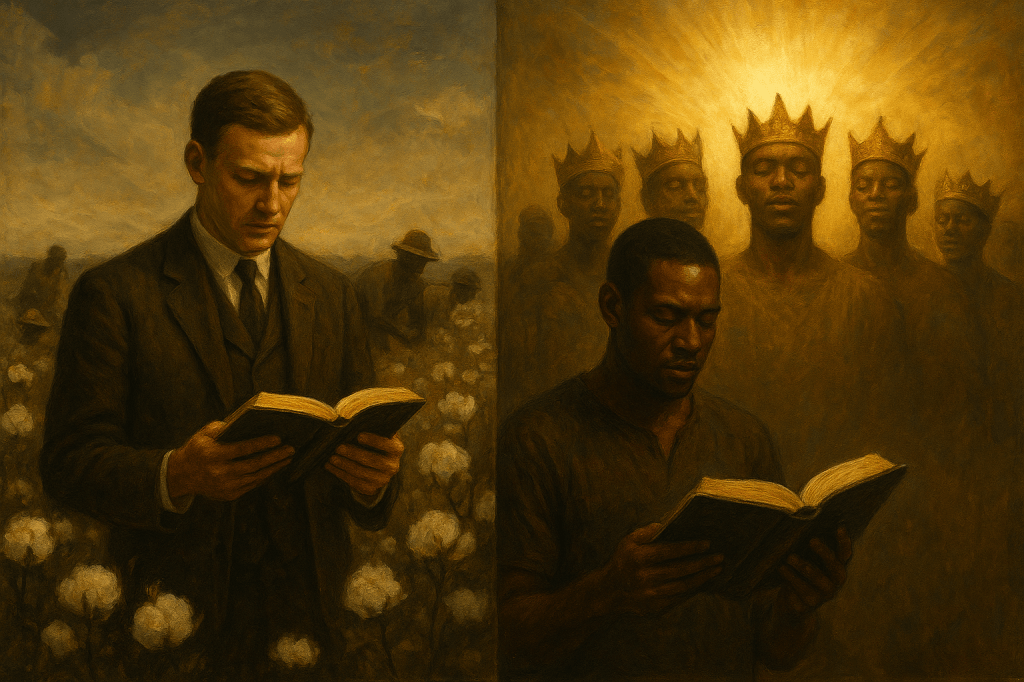
Category Archives: The Bible says..

The Bible Series: Reading the 1611 KJV Bible with Apocrypha: A Guide to Living a Godly Life

The 1611 King James Version (KJV) of the Bible, including the Apocrypha, is a monumental work that has guided millions in understanding God’s purpose for humanity. Its language, poetry, and depth offer both instruction and inspiration. The KJV is not merely a historical artifact; it is a blueprint for righteous living, a spiritual map for navigating the complexities of life.

Living life according to the 1611 KJV requires recognition that God is the ultimate guide. The scriptures repeatedly emphasize that human understanding is limited, and divine wisdom is essential. Proverbs 3:5–6 instructs, “Trust in the Lord with all thine heart; and lean not unto thine own understanding. In all thy ways acknowledge him, and he shall direct thy paths.”

The inclusion of the Apocrypha in the 1611 KJV provides additional wisdom and moral instruction. Books such as Wisdom of Solomon, Ecclesiasticus (Sirach), and Tobit offer guidance on ethics, discipline, and the rewards of godly living. They reinforce principles of honesty, compassion, and humility, which are central to a life pleasing to God.

A key aspect of the Bible as a guidebook is its emphasis on obedience to God’s laws. The Torah, Psalms, and prophetic writings illustrate that blessings follow adherence to divine instruction. Deuteronomy 28, for instance, outlines the consequences of obedience and disobedience, highlighting that life thrives under God’s guidance.

The KJV with Apocrypha also reveals the identity of the biblical Israelites, providing a historical and spiritual context for understanding God’s covenant people. Scriptural genealogies, tribal delineations, and prophetic visions clarify who the Israelites were and their enduring legacy in spiritual and earthly history. Recognizing this lineage helps believers see themselves within God’s plan and encourages faithfulness to His commands.

The Bible serves as a blueprint for moral and ethical conduct. The teachings of Jesus in the Gospels, complemented by the wisdom literature of the Old Testament and the Apocrypha, emphasize love, integrity, and justice. Followers are called to live honorably, treating others with fairness, showing mercy, and practicing humility.

Prayer and meditation are central practices derived from the scriptures. Engaging with God daily, reading His Word, and reflecting upon it allows believers to internalize divine guidance. Psalms, in particular, provide models for prayer, lamentation, praise, and thanksgiving, demonstrating a holistic spiritual life.

The 1611 KJV teaches that life is a journey of righteousness, not merely a pursuit of personal gain. Ecclesiasticus 2:1–6 in the Apocrypha reminds readers that God tests the faithful, but perseverance, patience, and humility lead to spiritual maturity and divine favor. Life is meant to be lived in alignment with God’s principles rather than worldly expectations.

One of the most profound lessons of the 1611 KJV is the centrality of truth. John 17:17 declares, “Sanctify them through thy truth: thy word is truth.” Living according to God’s Word means embracing reality as God presents it, rejecting deception, and striving for integrity in all areas of life.

The scriptures also provide guidance on community and relationships. The biblical Israelites were taught to honor parents, care for neighbors, and protect the vulnerable. This communal ethic extends to modern life, encouraging believers to cultivate strong, morally grounded relationships and to resist selfishness or exploitation.

Wisdom and discernment are recurring themes in the 1611 KJV with Apocrypha. Readers are encouraged to seek knowledge and understanding that aligns with God’s will. Proverbs and Wisdom literature offer instructions on avoiding foolishness, envy, and pride, guiding individuals toward righteous decision-making.

The Apocrypha emphasizes justice and equity, reinforcing moral principles found in canonical texts. It challenges readers to act fairly, assist the poor, and maintain honesty in trade and social interactions. Living by these standards cultivates a life pleasing to God and beneficial to society.

The Bible also teaches spiritual resilience. Trials, adversity, and temptation are inevitable, but scripture provides encouragement. Psalms, Lamentations, and Wisdom literature affirm that God’s presence offers comfort, strength, and guidance through hardships. Believers are encouraged to trust in God’s providence rather than succumb to despair.

A key aspect of using the Bible as a guide is understanding the historical and prophetic context. Knowledge of the biblical Israelites, their covenant, and prophetic messages allows readers to interpret lessons meaningfully. History demonstrates God’s faithfulness and warns of consequences for disobedience, making scripture both instructional and cautionary.

The 1611 KJV encourages moral reflection and self-examination. Believers are instructed to examine their motives, actions, and desires in light of God’s Word. Apocryphal texts, like Ecclesiasticus, reinforce this by advocating introspection and the correction of moral failings.

Faith expressed through action is another cornerstone. The Bible teaches that belief must manifest in deeds. Generosity, charity, and ethical behavior are proof of one’s commitment to God, aligning personal conduct with spiritual principles rather than mere lip service.

Righteous leadership is modeled in the Bible. Leaders are called to serve with humility, wisdom, and justice. The example of Moses, David, and other biblical figures illustrates that God values character and faithfulness above political or military power. These lessons guide modern believers in positions of influence.

The 1611 KJV with Apocrypha also addresses human frailty and repentance. Scriptures remind readers that sin is inevitable, but God provides a path to restoration. Confession, repentance, and renewed commitment are essential for spiritual health and maintaining alignment with God’s will.

Education and knowledge are vital. Understanding scripture requires study, contemplation, and discussion. The Bible is not merely read; it is studied as a guide for daily life, moral decisions, and spiritual growth, with the Apocrypha enriching comprehension of historical and ethical lessons.

Ultimately, the 1611 KJV Bible with Apocrypha is a complete guide to life. It outlines moral principles, spiritual practices, historical truths, and prophetic insights. It offers a framework for righteous living, teaches obedience, provides wisdom, and reveals God as the ultimate guide. By studying it faithfully, believers gain clarity on their purpose, the nature of the biblical Israelites, and the truths necessary for living a life aligned with God’s will.

References

The Holy Bible, King James Version, 1611. Including the Apocrypha.

Anderson, B. W. (1999). Understanding the Old Testament. Prentice Hall.

Frymer-Kensky, T. (2002). Reading the Bible as History: The New Historicism. Yale University Press.

Aitken, J. K. (2007). A Short History of the Bible. Continuum International.

McKenzie, J. L., & Graham, L. K. (1998). The Hebrew Bible Today: An Introduction to Critical Issues. Westminster John Knox Press.

Knight, G. A. F. (2011). The Biblical Israelite Identity: Origins, History, and Faith. Cambridge Scholars Publishing.

Sanders, E. P. (2007). The Historical Figure of Jesus. Penguin.

Biblical Exegesis and Racialized Aesthetics: Deuteronomy 28, the Apocrypha, and the Theology of Appearance

Biblical exegesis demands disciplined attention to text, context, and theology. Yet interpretation is never neutral. Throughout history, Scripture has been filtered through cultural assumptions about the body, beauty, and belonging. One of the most persistent distortions is racialized aesthetics—the assignment of moral, spiritual, and intellectual value to physical appearance along racial lines. When this aesthetic hierarchy enters biblical interpretation, it produces theological error, ethical harm, and spiritual injustice.

Racialized aesthetics did not originate in Scripture; they were imposed upon it. The biblical text consistently resists appearance-based judgment, yet Christian interpretation—especially within Western traditions—has often elevated visual traits aligned with power while diminishing those associated with the oppressed. This article argues that faithful exegesis requires dismantling aesthetic hierarchies and recovering Scripture’s rejection of visual virtue.

The Hebrew Bible establishes early that appearance is an unreliable indicator of divine favor. In 1 Samuel 16:7, God explicitly rejects physical stature as a criterion for leadership, declaring that divine judgment penetrates beyond what the eye can see. This moment is not incidental; it is theological. It exposes the human tendency to confuse visibility with worth and confronts it directly.

Deuteronomy 28 further complicates the relationship between embodiment and judgment. The chapter details blessings for covenant obedience and curses for disobedience, many of which are experienced visibly—on bodies, families, and communities. These curses include displacement, enslavement, public humiliation, and generational suffering. Importantly, the text does not frame these visible afflictions as evidence of moral inferiority, but as the result of covenantal violation within a specific historical framework.

However, later interpreters racialized these visible conditions, detaching them from covenant theology and reassigning them to biological destiny. Enslaved African peoples, whose suffering mirrored Deuteronomy 28’s curses, were not read as participants in biblical history but as objects of divine rejection. This inversion transformed Scripture from a witness against oppression into a weapon of justification.

The Apocrypha reinforces Scripture’s critique of appearance-based judgment. Sirach warns against pride rooted in external beauty and cautions that honor does not arise from outward display but from wisdom and righteousness. Wisdom of Solomon condemns rulers who mistake power and splendor for moral authority, reminding readers that God judges motives rather than monuments.

These texts reveal a consistent biblical anthropology: the body is meaningful but not determinative of virtue. Beauty is acknowledged but relativized. Power is visible but accountable. Racialized aesthetics violates this framework by treating physical traits as theological evidence.

The New Testament intensifies this critique. Jesus repeatedly confronts religious leaders who rely on external markers of holiness. His condemnation of “whited sepulchres” exposes aesthetic righteousness as a form of deception—clean surfaces concealing ethical decay. The warning is unmistakable: visual holiness can coexist with moral corruption.

Paul’s epistles further dismantle embodied hierarchy. In Galatians, Paul rejects ethnic, social, and gender distinctions as determinants of spiritual status. This declaration is not abstract theology; it is a direct challenge to systems that rank bodies according to worth. Any theology that reintroduces visual hierarchy contradicts apostolic teaching.

Despite these textual correctives, Christian theology absorbed racialized aesthetics through colonial expansion, Enlightenment racial theory, and artistic representation. Christ was rendered through Eurocentric imagery, saints were depicted as pale and symmetrical, and holiness became visually coded. Over time, whiteness was unconsciously equated with godliness, while Blackness was associated with curse, carnality, or distance from God.

This aesthetic theology shaped ecclesial life. Leadership, credibility, and spiritual authority were disproportionately granted to those whose appearance aligned with dominant norms. Even today, churches often reward visual respectability while overlooking ethical substance.

Psychologically, this mirrors the halo effect—the cognitive bias in which attractiveness produces assumed virtue. When baptized into theology, the halo effect becomes a doctrinal error. It replaces discernment with impression and confuses presentation with obedience.

Biblical wisdom literature directly challenges this confusion. Proverbs warns that beauty without discretion is dangerous, while Ecclesiastes insists that external advantage is fleeting. These texts call believers to value fear of God over visual appeal and righteousness over reputation.

A faithful exegetical method must therefore interrogate not only Scripture but the interpreter. What bodies do we trust instinctively? Whose suffering do we spiritualize or dismiss? Without confronting these questions, interpretation risks perpetuating injustice under the guise of orthodoxy.

Theologically, racialized aesthetics constitutes idolatry. It elevates created form over divine command and assigns salvific meaning to appearance. Scripture consistently condemns such distortions, not because beauty is evil, but because it is insufficient as a moral measure.

Recovering biblical exegesis requires hermeneutical repentance—a willingness to unlearn aesthetic hierarchies and re-center Scripture’s ethical vision. This includes recognizing that divine election does not follow visual logic and that suffering bodies are not theological failures.

In a digital age dominated by image curation and performative holiness, this recovery is urgent. Faith is increasingly evaluated through visibility rather than fruit, branding rather than obedience. Scripture stands in opposition to this trend, insisting that righteousness is revealed through action, justice, and covenantal faithfulness.

Ultimately, biblical exegesis and racialized aesthetics are incompatible. One seeks truth through disciplined reading; the other imposes hierarchy through visual bias. To read Scripture faithfully is to reject the lie that appearance reveals virtue and to affirm that God’s judgment rests beyond the reach of the eye.


References

Banks, P. (2021). Black aesthetics and the Bible: Reading scripture through embodied experience. Fortress Press.

Cone, J. H. (1997). God of the oppressed (Rev. ed.). Orbis Books.

Felder, C. H. (Ed.). (1991). Stony the road we trod: African American biblical interpretation. Fortress Press.

Gafney, W. (2017). Womanist midrash: A reintroduction to the women of the Torah and the Throne. Westminster John Knox Press.

Jennings, W. J. (2010). The Christian imagination: Theology and the origins of race. Yale University Press.

Kidd, T. S. (2006). The forging of races: Race and scripture in the Protestant Atlantic world. Cambridge University Press.

Sugirtharajah, R. S. (2012). Exploring postcolonial biblical criticism: History, method, practice. Wiley-Blackwell.

Taylor, P. C. (2016). Black is beautiful: A philosophy of Black aesthetics. Wiley-Blackwell.

Wimbush, V. L. (2014). White men wrote the Bible: Theological racism and the politics of interpretation. Continuum.

The Holy Bible, King James Version. (1611/2017).

The Apocrypha. (Sirach; Wisdom of Solomon).

How European/White Views of the Bible Differ from African/Black Views

Worldview Shapes Interpretation

European biblical interpretation largely developed within imperial, Greco-Roman, and later Enlightenment frameworks, emphasizing hierarchy, legalism, and institutional authority. African and Black biblical interpretation, by contrast, has historically been experiential, communal, oral, and survival-centered, reading Scripture through lived oppression rather than abstract theology.

The Bible as Empire vs. the Bible as Survival

For Europe, the Bible often functioned as a tool of empire—used to justify monarchy, colonialism, and racial hierarchy. For African and African-descended peoples, the Bible became a text of endurance, liberation, and divine justice amid enslavement, exile, and sufferingEuropean Emphasis on Control and Order

European theology prioritized:

  • Church authority
  • Doctrinal uniformity
  • Obedience to rulers (Romans 13 emphasized)
  • Salvation abstracted from material conditions

This lens often muted or reinterpreted passages about oppression, captivity, and divine judgment against empires.

African/Black Emphasis on Exodus and Justice

African and Black readers gravitated toward:

  • Exodus
  • Deuteronomy 28
  • The prophets
  • Psalms of lament
  • Revelation’s overthrow of empire

Scripture was read as God siding with the oppressed, not legitimizing oppression.

Historical Memory vs. Abstract Theology

African biblical interpretation preserved historical consciousness—genealogy, land, lineage, and curses/blessings—while European theology increasingly spiritualized Scripture, detaching it from concrete history.

Deuteronomy 28 as a Point of Divergence

Europe largely framed Deuteronomy 28 as ancient Israelite history only. Many African-descended interpreters see it as a prophetic template, mapping captivity, forced labor, ships, loss of identity, and global dispersion onto the transatlantic slave trade.

The Role of the Enlightenment

The European Enlightenment desacralized Scripture, elevating reason over revelation, which later influenced canon criticism, textual skepticism, and selective theology that privileged Western norms.


What Books Were Removed from the Bible?

The Apocrypha / Deuterocanonical Books

Several books were removed or relegated to “non-canonical” status, particularly in Protestant Bibles after the 16th century.

Removed or excluded books include:

  • 1 Esdras
  • 2 Esdras (4 Ezra)
  • Tobit
  • Judith
  • Wisdom of Solomon
  • Sirach (Ecclesiasticus)
  • Baruch
  • Letter of Jeremiah
  • Additions to Esther
  • Prayer of Azariah
  • Susanna
  • Bel and the Dragon
  • 1 Maccabees
  • 2 Maccabees

These books were never “lost” to Africa—only excluded by Europe.

Why Were These Books Removed?

Key reasons include:

  • They challenged centralized church power
  • They emphasized divine justice against oppressors
  • They reinforced covenantal law and judgment
  • They complicated European theological control

Martin Luther and later Protestant reformers removed them from standard Bibles, labeling them “useful but not inspired.”

Political Theology at Work

Books like the Wisdom of Solomon condemn unjust rulers. Maccabees celebrate resistance to the empire. Baruch emphasizes exile and repentance. These themes conflicted with colonial and imperial agendas.

Suppression of Apocalyptic Knowledge

Books like Enoch and 2 Esdras contain cosmology, angelology, and judgment narratives that undermine human supremacy and racial hierarchy.

Race and Canon Formation

Europeans controlling the canon during colonial expansion ensured Scripture could be used to:

  • Enforce obedience
  • Justify slavery
  • Silence rebellion
  • Promote passive salvation

African-descended readers later reclaimed Scripture against these distortions.


African Christianity Predates Europe

Africa Is Not a Late Convert

Christianity flourished in Ethiopia, Egypt, Nubia, and North Africa centuries before Europe institutionalized the Church.

Biblical Geography Is African-Centered

Scripture references:

  • Cush
  • Mizraim (Egypt)
  • Ethiopia
  • Libya

African peoples are not marginal to the Bible—they are foundational.

Oral Tradition vs. Written Control

African biblical engagement preserved oral memory, song, lament, and testimony, while Europe emphasized written codices controlled by elite institutions.


Theological Consequences of Removal

Loss of Justice-Centered Theology

Removing books narrowed theology away from historical accountability, exile, and covenant justice.

Spiritualization of Suffering

European theology often reframed suffering as divinely ordained rather than divinely condemned—an interpretation enslaved people instinctively rejected.

Black Biblical Hermeneutics

Black theology reads Scripture from the bottom up, centering God’s response to suffering bodies, not abstract doctrine.

Scripture as Resistance

For African-descended peoples, the Bible became a counter-text, exposing the hypocrisy of Christian slaveholders and affirming divine judgment.


Conclusion: Two Bibles, Two Lenses

European Christianity often used the Bible to rule.
African and Black Christianity used the Bible to survive.

The difference is not the text itself, but who controls interpretation, which books are included, and whose suffering is acknowledged. Reclaiming the removed books and reading Scripture through historical truth restores the Bible’s original moral power.


References

The Holy Bible, King James Version. (1611/1769).

The Ethiopian Orthodox Tewahedo Church Canon.

Cone, J. H. (1997). God of the oppressed. Orbis Books.

Heschel, A. J. (2001). The prophets. Harper Perennial.

Pagels, E. (1979). The gnostic gospels. Random House.

Charlesworth, J. H. (Ed.). (1983). The Old Testament pseudepigrapha. Yale University Press.

Girl Talk Series: You are worthy!

Black woman, this is written directly to you. You are worthy—not because the world says so, but because the Most High declared it long before you took your first breath. Your beauty, your brilliance, your Blackness, your soul, and your very existence are intentional. You are not an accident, not overlooked, and not forgotten. You are a chosen vessel, crafted with divine detail, shaped through generations of survival, and crowned with a spiritual inheritance that cannot be taken. Scripture tells us, “Thou art all fair, my love; there is no spot in thee” (Song of Solomon 4:7, KJV). Walk into that truth, sis. You are worthy.

Black women carry a weight that is both ancestral and divine. You have stood in the gaps when no one stood for you. You have been the backbone of families, communities, and movements. Yet even in your strength, you deserve softness, gentleness, and love. The Most High sees your labor, your tears, and your silent prayers. He calls you precious, for the Word says, “Since thou wast precious in my sight… I have loved thee” (Isaiah 43:4, KJV).

You are worthy because you belong to a chosen lineage. The Scriptures speak of a people who were scattered, oppressed, and afflicted, yet never abandoned by God. Many scholars and believers identify the descendants of the transatlantic slave trade within these prophetic narratives. That means you are not just a woman trying to survive—you are a daughter of the covenant, a living testament to prophecy, and a reminder that the Most High keeps His word. “For thou art an holy people unto the LORD thy God… above all people that are upon the face of the earth” (Deuteronomy 7:6, KJV).

Your Blackness is good. Your melanin is not a curse; it is a covering, a crown, and a reflection of divine craftsmanship. The world has tried to twist it into something lesser, but God Himself said that what He made is “very good.” From the deep richness of your skin to the coils of your hair, you are a masterpiece. You are the embodiment of resilience and radiance that continues to shine in environments designed to dim you.

Black woman, you are not defined by rejection. Though society often overlooks you, Scripture reminds you that you are chosen even when man rejects you. “The stone which the builders refused is become the head stone of the corner” (Psalm 118:22, KJV). You are foundational—nothing can be built without you. Your worth is not attached to acceptance from a world that fears your power. Your value is secured in the Most High.

The pain you’ve carried has not gone unnoticed. Your heartbreaks, disappointments, and seasons of isolation serve a greater purpose. The Father sometimes hides His best treasures before revealing them to the world. Even Christ Himself said, “Blessed are they that mourn: for they shall be comforted” (Matthew 5:4, KJV). You will be comforted. Your tears water the soil where your blessings will grow.

You are worthy of love—not the bare minimum, not the half-hearted, not the conditional—but divine, abundant, patient, and joyful love. The kind that mirrors God’s heart. The kind that cherishes you, protects you, and honors the queen you are. “Charity never faileth” (1 Corinthians 13:8, KJV). You deserve a love that does not fail.

You are not too strong, too loud, too emotional, or too much. You are everything the Most High intended you to be. Even your voice carries the weight of generations. Your passion is purpose. Your fire is your anointing. The world may try to shame your intensity, but God uses it to shake foundations and birth change.

Black woman, your mind is brilliant. Your thoughts carry wisdom, creativity, and strategy. The Most High equipped you not only with beauty but with intellect and discernment. Proverbs 31 describes a woman who “openeth her mouth with wisdom” (Proverbs 31:26, KJV). That is you—wise, insightful, and spiritually attuned.

Your body is sacred. Not an object, not a stereotype, not something to be exploited. It is a temple and a testimony. Every curve, every scar, every inch is part of your story. The world commodifies what God sanctified. Don’t let culture cheapen what heaven crowned.

Your spirit is powerful, stronger than iron chains and generational attacks. You are a warrior who has survived what others could not. When the enemy sought to destroy your ancestors, the Most High preserved your bloodline. You are walking evidence of divine protection. “No weapon that is formed against thee shall prosper” (Isaiah 54:17, KJV).

You are worthy of rest. You do not have to earn your existence. You do not have to be everyone’s savior. Even the Proverbs 31 woman rested in the strength of God, not her own. Peace is your birthright, not a reward for exhaustion.

Your voice matters. Your testimony matters. Your journey matters. The Most High has given you spiritual authority and influence. Whether you speak softly or boldly, heaven backs your words when they are aligned with His will.

Your future is blessed. Even if your past was heavy, your destiny is not determined by it. The Most High specializes in turning ashes into beauty. “He will give you beauty for ashes” (Isaiah 61:3, KJV). Your next season is one of transformation and elevation.

You are not alone. The Most High walks with you, covers you, and carries you. Even in silence, He is working. Even in darkness, He is present. “I will never leave thee, nor forsake thee” (Hebrews 13:5, KJV). His love is unwavering.

Your femininity is divine. It is both soft and strong. You carry the breath of God and the legacy of women who built nations. There is nothing ordinary about you. Your presence shifts atmospheres. Your prayers move mountains.

Your dreams are valid. Your gifts are needed. Your purpose is real. You were created with intention, and the kingdom suffers when you diminish your light. Arise, queen. Shine unapologetically. “Arise, shine; for thy light is come” (Isaiah 60:1, KJV).

Your lineage is royal. You descend from a people the Most High calls His own—a people who endured captivity yet remain spiritually undefeated. You are part of that victory. You are the daughter of survivors, prophets, and kings.

You are worthy of joy—overflowing, abundant, untouchable joy. Joy that the world cannot give and cannot steal. You deserve to smile without apology and laugh without restraint because the Most High delights in you.

You are chosen. You are loved. You are seen. You are protected. You are celebrated by heaven even when earth fails to honor you. The Most High has called you worthy and nothing can overturn His declaration.

Black woman, rise into your identity. You are worthy—not just of love but of honor, rest, joy, and divine purpose. The Most High chose you, and that makes you unstoppable.


References (KJV)

Deuteronomy 7:6; Isaiah 43:4; Song of Solomon 4:7; Psalm 118:22; Matthew 5:4; 1 Corinthians 13:8; Proverbs 31:26; Isaiah 54:17; Isaiah 61:3; Hebrews 13:5; Isaiah 60:1.

Difficulties Are Necessary for Life

Difficulties are not proof that life has failed—rather, they testify that life is working according to God’s refining process, for affliction enlarges the soul and tutors the spirit (Smith, 2020).

Scripture reveals that trials serve a divine purpose. Paul declares that tribulations produce patience, shaping believers through progressive sufferings that build spiritual stamina, not destruction (Romans 5:3-4, KJV).

Life’s challenges are God’s crucible. Proverbs teaches that just as silver is tried in the furnace, human hearts are tested by the Lord Himself (Proverbs 17:3, KJV).

Hardship marches beside every calling. Christ warns that in the world, believers shall have tribulation—not may, but will, affirming that difficulty is stitched into earthly existence (John 16:33, KJV).

Suffering awakens prayer. Distress becomes the spiritual trumpet that calls men and women to cry toward God, who promises to hear them and deliver them out of all troubles (Psalm 34:17, KJV).

The wilderness is necessary for maturity. Deuteronomy reveals that God led Israel into hard places to humble them, prove them, and reveal what was truly in their heart (Deuteronomy 8:2, KJV).

Struggles expose spiritual hunger. When earthly strength collapses, dependence on God rises, for man lives by every Word of God, not bread alone (Deuteronomy 8:3, KJV).

Affliction produces obedience. Psalm 119 teaches that suffering teaches statutes—pain becomes the unwilling teacher of righteousness (Psalm 119:71, KJV).

Trials extract faith from theory into reality. James echoes this truth, proving that faith matures through testing, though Job lived it long before it was written (James 1:2-3, KJV).

Difficulty births endurance. Hebrews reminds believers that chastening corrects and proves sonship, for God disciplines those He loves (Hebrews 12:6-7, KJV).

Storms test spiritual roots. Christ teaches that houses built on sand collapse under trouble, while those founded on rock survive—it is not the absence of storm, but the foundation that matters (Matthew 7:24-27, KJV).

Hardship develops courage. Joshua was commanded to be strong because the assignment ahead was heavy, not easy (Joshua 1:9, KJV).

Suffering silences pride. Paul described being given a thorn to keep him from self-exaltation—pain became a shield against arrogance (2 Corinthians 12:7-9, KJV).

Adversity expands compassion. Those wounded by life often become vessels of gentleness, for God comforts us so we may comfort others (2 Corinthians 1:3-4, KJV).

Hard seasons cultivate spiritual perception. Elijah heard God’s voice after fire, wind, and earthquake—difficulty cleared his hearing (1 Kings 19:11-12, KJV).

Affliction proves calling. Joseph’s pit and prison preceded his palace—pain processed a dream before privilege manifested (Genesis 37-41, KJV).

Trials reveal loyalty. Ruth clung tighter when loss grew heavier, showing that difficulties do not break the faithful, they anchor them (Ruth 1:16-17, KJV).

Suffering produces hope, not despair. Biblical hope is not optimism—it is expectation grown in suffering, rooted in God’s faithfulness (Romans 8:18, KJV).

Hardship is spiritually proportional. The greater the impact, the heavier the pressure, for glory outweighs suffering when purpose is understood (Romans 8:28;18, KJV).

Thus, difficulties are not evidence of God’s absence—often they are the evidence of His involvement, molding believers into instruments able to survive what the untested self could never carry (Romans 5:3-5, KJV).


References

Beck, A. T. (1976). Cognitive therapy and emotional disorders. International Universities Press.

Frankl, V. E. (2006). Man’s search for meaning. Beacon Press. (Original work published 1946)

Masten, A. (2014). Ordinary magic: Resilience in development. Guilford Press.

Smith, J. (2020). Resilience and faith under pressure. Journal of Psychology & Spirituality, 12(4), 201-219.

Taleb, N. N. (2012). Antifragile: Things that gain from disorder. Random House.

The King James Version Bible. (Authorized, 1611/1769).

Chosen Royalty: Marriage for the Sons and Daughters of Zion (The Marriage Series)

Marriage, in the eyes of the Most High, is not merely a social custom or cultural expectation. It is a divine covenant, a sacred union designed to reflect His glory, His order, and His love. For the sons and daughters of Zion, marriage carries an even deeper significance: it is a representation of covenant identity, spiritual inheritance, and kingdom legacy. You are not ordinary people. You are chosen vessels, called to manifest God’s intention for love, leadership, unity, and righteousness on the earth.

A royal marriage begins with knowing who you are. Before a man becomes a husband and before a woman becomes a wife, both must know their identity as God’s elect. Scripture declares, “Ye are a chosen generation, a royal priesthood, an holy nation, a peculiar people” (1 Peter 2:9, KJV). When you understand that you come from royalty, you will not settle for broken love, counterfeit partnerships, or relationships that compromise your calling. Royalty requires discernment.

For the daughters of Zion, preparing for marriage does not begin with finding a man but with finding purpose. A queen develops inward beauty—wisdom, modesty, strength, and virtue—long before she wears a crown. Like the Proverbs 31 woman, she is clothed with strength and honor, and she opens her mouth with wisdom (Proverbs 31:25–26). She knows that her value is spiritual before it is physical. Her worth is not in curves, complexion, or outward adornment, but in her God-given identity.

For the sons of Zion, preparing for marriage begins with learning to lead under God’s authority. A king cannot love his queen properly until he learns to submit to the King of Kings. Scripture instructs husbands to love their wives “even as Christ also loved the church, and gave himself for it” (Ephesians 5:25, KJV). This is sacrificial love—protective, patient, righteous, and accountable. A royal husband is not a tyrant; he is a shepherd, a covering, and a pillar.

When both king and queen understand God’s order, marriage becomes a partnership of purpose. The Most High never intended for men and women to compete with one another. Instead, He designed them to complement each other—both bearing divine strength, both walking in unity. “Two are better than one; because they have a good reward for their labour” (Ecclesiastes 4:9, KJV). Royal marriages are not accidental; they are intentional.

Communication is one of the foundations of a royal covenant. The tongue can build or destroy a household. Scripture teaches, “A soft answer turneth away wrath: but grievous words stir up anger” (Proverbs 15:1, KJV). Kings and queens must learn the discipline of loving speech—words that heal, uplift, and guide. A royal home is governed by peace, not chaos.

Purity is another pillar. In a world saturated with lust, temptation, and impulsive desires, the Most High calls His people to holiness. “For this is the will of God, even your sanctification, that ye should abstain from fornication” (1 Thessalonians 4:3, KJV). Purity protects the mind. Purity guards the heart. Purity prepares the soul to love without bondage or brokenness.

Forgiveness is the oil that keeps the royal covenant from growing brittle. No marriage is perfect. No partner is flawless. Yet the Most High commands us to forgive one another, even as He forgave us (Colossians 3:13). A king forgives. A queen forgives. They choose restoration over resentment, healing over distance, unity over pride.

A royal marriage also requires spiritual warfare. The enemy hates godly unions because they produce righteous generations. Therefore, couples must pray together, read scripture together, and stand in agreement. “When the enemy shall come in like a flood, the Spirit of the LORD shall lift up a standard against him” (Isaiah 59:19, KJV). A praying marriage is a powerful marriage.

Accountability is the shield of royalty. Wise couples surround themselves with elders, mentors, or spiritual leadership who can correct and counsel them. “Where no counsel is, the people fall” (Proverbs 11:14, KJV). A royal house is not built alone—it is built within a community of righteousness.

Financial stewardship is also part of royal order. Money is one of the top causes of marital conflict, but God’s wisdom provides clarity. “Be thou diligent to know the state of thy flocks” (Proverbs 27:23, KJV). Kings and queens budget together, plan together, save together, and build generational wealth—not just for themselves but for their children.

Speaking of children, they are the arrows of the kingdom. “Lo, children are an heritage of the LORD” (Psalm 127:3, KJV). A royal marriage understands that parenting is part of the covenant. The spiritual, emotional, and educational well-being of the next generation is a divine responsibility. Sons must be trained as kings. Daughters must be nurtured as queens.

Love in a royal marriage must be active, not passive. It is patient, kind, stable, and enduring (1 Corinthians 13:4–7). It is not dependent on feelings alone but on commitment and covenant. Real love works. Real love forgives. Real love stays.

Humility is the crown jewel of a godly union. Pride destroys, but humility restores. Scripture says, “With the lowly is wisdom” (Proverbs 11:2, KJV). Kings lead with humility. Queens carry themselves with grace. Humility keeps the marriage teachable and flexible.

Submission—often misunderstood—is a two-way principle rooted in respect and order. Wives are called to submit to their husbands as unto the Lord (Ephesians 5:22), and husbands are commanded to love sacrificially. Submission is not domination; it is alignment with God’s structure for protection and harmony.

A royal marriage also requires emotional maturity. You cannot bring unresolved wounds into a covenant and expect peace. Healing—inner, spiritual, and emotional—is essential. “He healeth the broken in heart” (Psalm 147:3, KJV). The Most High restores what trauma has stolen.

Celebration is another key practice. Kings and queens honor each other. They affirm each other. They celebrate each other’s achievements, strengths, and growth. Royal marriages thrive in an atmosphere of appreciation.

Service is the heart of Christ-like love. Yeshua taught that the greatest among us is the servant (Matthew 23:11). In a royal marriage, each partner serves the other—not out of obligation but out of devotion.

Finally, the covenant stands unshaken. A royal marriage is not built on convenience but on divine purpose. It is a representation of God’s eternal love for His people—a love that endures, protects, and restores. For the sons and daughters of Zion, marriage is more than companionship. It is a kingdom assignment.

Chosen Royalty means you marry with vision. You love with intention. You build with faith. You walk as living examples of God’s order and righteousness. Your union becomes a testimony, a legacy, and a royal lineage that reflects the glory of the Most High.


References (KJV):
1 Peter 2:9; Proverbs 31:25–26; Ephesians 5:25; Ecclesiastes 4:9; Proverbs 15:1; 1 Thessalonians 4:3; Colossians 3:13; Isaiah 59:19; Proverbs 11:14; Proverbs 27:23; Psalm 127:3; 1 Corinthians 13:4–7; Proverbs 11:2; Ephesians 5:22; Psalm 147:3; Matthew 23:11.

God, Where Are You? – Why Hast Thou Forsaken Me? #themosthighgodofIsrael

There are moments in every believer’s life when the heavens feel shut and prayer seems to fall back down in silence. These are the seasons that stretch the soul and test the very core of faith. When we cry, “God, where are You?” or ask, “Why hast Thou forsaken me?” we enter a sacred place of wrestling—a place where the silence of God feels louder than His voice. These moments can be frightening, humbling, and deeply transformative.

Throughout Scripture, many of God’s greatest servants faced long seasons of divine silence. The silence was not abandonment but preparation. It was not rejection but refining. In those quiet hours, God was shaping them into vessels strong enough to carry His glory. But in the moment, His silence often felt like distance. Even Jesus Himself, on the cross, cried out, “My God, my God, why hast thou forsaken me?” (Matthew 27:46, KJV). If the Son of God felt that anguish, how much more do we as His children?

Often, when God is silent, He is not absent. Silence is a language of Heaven—a divine classroom where the Holy Spirit teaches endurance, faith, and trust without visible evidence. Sometimes the Lord withdraws the feeling of His presence so that we learn to lean on what He has spoken, not on what we feel. “For we walk by faith, not by sight” (2 Corinthians 5:7, KJV). His silence tests whether our faith is built on feelings or on His Word.

Job is the ultimate example of suffering without explanation. He cried out repeatedly, asking God to answer him, defend him, and reveal the purpose of his pain. Yet for many chapters, Heaven remained silent. Job lost his children, his health, his wealth, and his comfort—yet God did not speak immediately. The silence was part of Job’s refining. And when God finally answered out of the whirlwind, Job realized that the silence had produced humility, revelation, and spiritual maturity (Job 38–42, KJV).

During silent seasons, God is often working behind the scenes in ways we cannot see. Daniel prayed for understanding, but the answer was delayed by spiritual warfare in the unseen realm for twenty-one days (Daniel 10:12–13, KJV). What looked like silence was actually a battle in the heavens on his behalf. Many believers experience similar unseen warfare, unaware that God’s response is on the way.

Sometimes God is silent because He is testing our obedience. King Saul lost his kingdom because he acted out of fear when God seemed slow in responding (1 Samuel 13:8–14, KJV). Silence exposes whether we will wait on God—or move ahead of Him. The silence becomes a spiritual X-ray, showing what is in our hearts.

Other times, God is teaching us to seek Him more deeply. When David said, “I cried unto the Lord… and He heard me not” (Psalm 22:2, KJV), it was not because God rejected him, but because God was drawing him into deeper intimacy. A silent God often produces a louder prayer life. We learn to press in, to cry out, to depend on Him alone.

God’s silence can also protect us. Sometimes, He withholds an answer because the timing is not right. If he opened a door too soon, it could destroy us. If he revealed a truth too early, it might overwhelm us. “To every thing there is a season” (Ecclesiastes 3:1, KJV). His silence becomes a shield, guarding us from premature blessings.

In many cases, silence is preparation for elevation. Joseph experienced thirteen years of silence—betrayed, enslaved, and imprisoned (Genesis 37–41, KJV). God never explained Himself during those years. But when the silence broke, Joseph stepped into destiny. What felt like divine abandonment was divine positioning.

The refining process during the silent seasons is often compared to gold being purified. “He shall sit as a refiner and purifier of silver” (Malachi 3:3, KJV). Gold is heated until impurities rise to the surface. In the same way, God allows pressure and silence to expose what must be removed from our hearts—fear, pride, impatience, insecurity, or doubt. He purifies us so that His image may shine in us.

The silence of God is also meant to strengthen spiritual hearing. Sometimes He whispers because He wants us closer. Elijah expected God in the wind, earthquake, and fire, yet the Lord spoke in a still small voice (1 Kings 19:11–12, KJV). Silence heightens sensitivity so we can discern His whisper when it comes.

Jesus experienced silence in Gethsemane. He prayed, “If it be possible, let this cup pass from me” (Matthew 26:39, KJV). Yet Heaven offered no alternative path. The silence confirmed the assignment. Sometimes God’s silence is not a “no,” but a divine affirmation that we must endure the path set before us.

When God is silent, He is often building spiritual endurance. James wrote, “The trying of your faith worketh patience” (James 1:3, KJV). Without trials, faith remains shallow. Silence strengthens the roots of belief so that we can withstand storms that feelings cannot.

Even when we cannot hear Him, God is speaking through His Word. Scripture becomes life in silent seasons. The promises of God become louder than the absence of His voice. “I will never leave thee, nor forsake thee” (Hebrews 13:5, KJV). Silence cannot contradict what He has already spoken.

Silent seasons also reveal the condition of our worship. Do we praise God only when we feel Him? Or do we praise Him because He is worthy? Job declared, “Though he slay me, yet will I trust in him” (Job 13:15, KJV). Worship in silence carries a fragrance that Heaven honors.

God’s silence may come before great revelation. After four hundred years of silence between Malachi and Matthew, God broke the silence with the birth of Jesus—the greatest revelation in human history. Long silence often precedes divine breakthrough.

When God is silent, believers must remain faithful in prayer, fasting, reading the Word, and serving. Silence is not a sign to stop; it is a sign to press forward. Those who endure the silence emerge stronger, wiser, and more anointed.

Eventually, God always answers. He may not answer the way we expect, but He answers in the way that transforms us. His silence molds us into vessels ready for His glory. When we look back, we realize He was closest in the moments that felt the loneliest.

God’s silence is not abandonment—it is divine refinement. It is the molding of character, the strengthening of faith, and the deepening of relationships. In the silence, God shapes us into gold. And when the season ends, He brings forth a testimony that could only be birthed in silence. God is Guide! HE is still in control. Be encouraged, my brothers and sisters.


KJV References
Job 13:15; Job 38–42; Psalm 22:2; Matthew 27:46; Matthew 26:39; Daniel 10:12–13; 1 Samuel 13:8–14; Ecclesiastes 3:1; Genesis 37–41; Malachi 3:3; 1 Kings 19:11–12; Hebrews 13:5; James 1:3; 2 Corinthians 5:7.

The Bible Series: Led by His Spirit

Photo by Oladimeji Ajegbile on Pexels.com

Key Scripture: Romans 8:14 – “For as many as are led by the Spirit of God, they are the sons of God.”

Introduction

Walking with Christ is not just about following rules or attending church; it’s about being led by the Holy Spirit. When the Spirit guides you, your life aligns with God’s will, your decisions are sanctified, and your heart reflects His love.


1. Understanding Spirit-Led Living

Being led by the Spirit means surrendering personal control and letting God guide your steps. It requires listening, discernment, and obedience.

  • Galatians 5:16 – “Walk in the Spirit, and ye shall not fulfil the lust of the flesh.”

2. The Evidence of Spirit-Led Life

A Spirit-led life produces fruit in character, decisions, and relationships.

  • Galatians 5:22-23 – “But the fruit of the Spirit is love, joy, peace, longsuffering, gentleness, goodness, faith, meekness, temperance.”

3. Daily Surrender

Spirit-led living requires daily submission: letting go of pride, self-will, and worldly desires. Prayer, meditation, and scripture study are key.

  • Proverbs 3:5-6 – “Trust in the LORD with all thine heart; and lean not unto thine own understanding. In all thy ways acknowledge him, and he shall direct thy paths.”

4. Discernment Through the Spirit

The Holy Spirit guides you in making godly decisions, discerning truth, and avoiding deception.

  • John 16:13 – “Howbeit when he, the Spirit of truth, is come, he will guide you into all truth…”

5. Spirit-Led Relationships

Being led by the Spirit transforms how you interact with others. Love, patience, forgiveness, and humility flow naturally.


6. Overcoming Challenges

Even in trials, the Spirit empowers you to persevere, resist temptation, and remain faithful.

  • Romans 8:26-27 – The Spirit helps us in our weaknesses, interceding when we cannot pray.

7. Living as a Child of God

Romans 8:14 reminds us that those who are led by the Spirit are God’s children. This identity brings peace, confidence, and purpose.


Conclusion

To be led by His Spirit is to walk daily in God’s guidance, let His truth shape your thoughts, and allow His love to flow through your actions. It is the ultimate expression of sonship and an intimate relationship with the Father.

👄 The Power of the Mouth: Life, Death, and the Discipline of Speech 👄

Photo by Andre Moura on Pexels.com

👄👄👄👄

“Death and life are in the power of the tongue: and they that love it shall eat the fruit thereof” (Proverbs 18:21, KJV).

This timeless biblical truth underscores the immense influence of our words, reminding us that the mouth is not simply a tool for communication but a powerful instrument capable of shaping destinies, forging relationships, and even determining life’s trajectory. In both Scripture and psychology, the spoken word is understood to possess a lasting impact that can heal or harm, build or destroy, bless or curse. Words, once released, cannot be retrieved—they are like arrows loosed from a bow, finding their target whether for good or evil.

From a biblical perspective, the mouth reveals the true state of the heart: “Out of the abundance of the heart the mouth speaketh” (Matthew 12:34, KJV). The late Dr. Myles Munroe often warned that “your mouth is the most dangerous weapon you have,” cautioning that excessive talking dilutes one’s power and influence. Silence, in contrast, is a shield that guards wisdom and preserves authority. As Proverbs 17:28 (KJV) states, “Even a fool, when he holdeth his peace, is counted wise: and he that shutteth his lips is esteemed a man of understanding.” Psychology agrees, recognizing that verbal restraint can prevent impulsive statements that damage relationships, reputations, and self-esteem. The discipline of speech—choosing when to speak and when to remain silent—is a hallmark of emotional intelligence.

📜 Biblical Warnings vs. Psychological Insights on Speech

Biblical Warnings (KJV)Psychological Insights
“Death and life are in the power of the tongue: and they that love it shall eat the fruit thereof.” (Proverbs 18:21)Words can shape beliefs, influence self-esteem, and impact mental health; they can function as either encouragement or emotional harm (Beck, 2011).
“Even a fool, when he holdeth his peace, is counted wise: and he that shutteth his lips is esteemed a man of understanding.” (Proverbs 17:28)Silence is associated with emotional intelligence and impulse control, key to maintaining credibility and avoiding conflict (Goleman, 1995).
“A froward man soweth strife: and a whisperer separateth chief friends.” (Proverbs 16:28)Gossip erodes trust, damages reputations, and can lead to social ostracism; linked to insecurity and social dominance motives (Feinberg et al., 2012).
“Out of the abundance of the heart the mouth speaketh.” (Matthew 12:34)Speech reflects internal attitudes, biases, and emotions; language can reveal personality traits and underlying thought patterns (Pennebaker et al., 2003).
“The tongue is a fire… and it is set on fire of hell.” (James 3:6)Verbal aggression can escalate conflict, provoke retaliation, and cause long-term relational breakdown (Anderson & Bushman, 2002).
“Let thy words be few.” (Ecclesiastes 5:2)Speaking less reduces the risk of miscommunication, enhances active listening, and increases perceived competence (Knapp et al., 2014).

The dangers of careless words can be devastating. For example, a person may make a false accusation against a colleague in a moment of frustration. Even if retracted later, the damage to the colleague’s reputation might linger, influencing workplace dynamics, trust, and career prospects. In psychological terms, such verbal harm can lead to social ostracism, emotional distress, and even depression in the victim. Biblically, this aligns with James 3:6 (KJV): “The tongue is a fire, a world of iniquity… and it is set on fire of hell.” Words, like sparks, can ignite destructive fires that are difficult to extinguish once they spread.

Talking about others—particularly in gossip—has been condemned in both Scripture and moral philosophy. Proverbs 16:28 (KJV) warns, “A froward man soweth strife: and a whisperer separateth chief friends.” Gossip not only undermines trust but corrodes the character of the one who spreads it. In friendships, one careless comment can undo years of loyalty. In organizational or ministry settings, gossip can split communities, tarnish leaders, and quench the Spirit’s work. Psychologists note that gossip often stems from insecurity, envy, or the desire for social power, yet it always comes at the expense of others and ultimately harms the speaker’s integrity.

Because words have wings, as Dr. Munroe put it, “you cannot control where they land.” Once released, they travel beyond the speaker’s reach, taking on lives of their own. This is why wisdom counsels restraint: fewer words mean fewer opportunities for misunderstanding, misrepresentation, and mischief. Ecclesiastes 5:2 (KJV) admonishes, “Be not rash with thy mouth, and let not thine heart be hasty to utter any thing before God: for God is in heaven, and thou upon earth: therefore let thy words be few.” Speaking less not only reduces the risk of harm but preserves the mystery and authority of the speaker—protecting one’s power.

Consider the scenario of a public leader who reacts in anger during a press interview, making derogatory remarks about a fellow official. Those words, captured on camera, are replayed, analyzed, and shared across media. Not only does this damage the leader’s public image, but it may also lead to political fallout, strained alliances, and loss of credibility. The incident illustrates that words, once spoken, cannot be retrieved, and the consequences may outlast the moment of speech. Both Scripture and psychology affirm that mastering the tongue is essential for personal integrity, relational harmony, and spiritual maturity.

In conclusion, the mouth is a divine instrument entrusted to humanity for life-giving purposes. Misused, it becomes a weapon of destruction; disciplined, it becomes a fountain of blessing. As believers, we are called to guard our speech, using it to edify and not to tear down, to heal and not to wound. Silence can be strength, and words can be life—but only when chosen wisely. Remember: once released, words cannot be recalled, and they will bear fruit—whether for life or for death.


If you want, I can also prepare a concise side-by-side chart of “Biblical Warnings About the Mouth” versus “Psychological Insights on Speech” to accompany this paper, so it reads as both academic and devotional. That would make it even more powerful. Would you like me to make that?

📚 References

Anderson, C. A., & Bushman, B. J. (2002). Human aggression. Annual Review of Psychology, 53(1), 27–51. https://doi.org/10.1146/annurev.psych.53.100901.135231

Beck, A. T. (2011). Cognitive therapy of depression. Guilford Press.

Feinberg, M., Willer, R., Stellar, J., & Keltner, D. (2012). The virtues of gossip: Reputational information sharing as prosocial behavior. Journal of Personality and Social Psychology, 102(5), 1015–1030. https://doi.org/10.1037/a0026650

Goleman, D. (1995). Emotional intelligence: Why it can matter more than IQ. Bantam Books.

Knapp, M. L., Vangelisti, A. L., & Caughlin, J. P. (2014). Interpersonal communication and human relationships (7th ed.). Pearson Higher Ed.

Pennebaker, J. W., Mehl, M. R., & Niederhoffer, K. G. (2003). Psychological aspects of natural language use: Our words, our selves. Annual Review of Psychology, 54(1), 547–577. https://doi.org/10.1146/annurev.psych.54.101601.145041