Category Archives: the bible

Hebrewism

Hebrewism is a multifaceted concept that encompasses the language, culture, spiritual worldview, and identity associated with the ancient Hebrews, often identified biblically as the children of Israel. Rooted in antiquity, Hebrewism extends beyond mere ethnicity; it embodies a covenantal relationship with God, a structured moral law, and a distinctive way of life preserved through sacred texts such as the Torah and the broader canon of Scripture.

At its linguistic core, Hebrewism refers to the Hebrew language, one of the oldest Semitic languages, which carries unique idioms, poetic structures, and symbolic expressions. Biblical Hebrew is rich in imagery and layered meanings, often conveying spiritual truths through metaphor and repetition. Understanding Hebrew linguistically allows deeper interpretation of scripture, as many meanings are lost in translation.

Culturally, Hebrewism reflects a communal and covenant-based society governed by divine law. Practices such as dietary restrictions, Sabbath observance, and ceremonial rituals defined the daily life of ancient Israelites. These customs were not arbitrary but were intended to set the people apart as holy and distinct among the nations.

Theologically, Hebrewism is grounded in monotheism—the belief in one God—and a covenantal framework established with key patriarchs such as Abraham, Isaac, and Jacob. This covenant outlined blessings for obedience and consequences for disobedience, forming the foundation of Israelite identity and destiny.

Historically, the Hebrews are traced through biblical narratives that span from Mesopotamia to Egypt and eventually to the land of Canaan. Key events such as the Exodus and the establishment of the kingdom of Israel shaped their national consciousness and spiritual identity. These events are central to understanding Hebrewism as both a faith and a historical experience.

The destruction of the First and Second Temples and subsequent dispersions contributed to what is often referred to as the Diaspora. This scattering led to the spread of Hebrew culture and religious practice across different regions, while also introducing challenges of maintaining identity in foreign lands.

In examining how Black people fit into Hebrewism, one encounters a range of perspectives, some of which are theological, historical, and cultural. Certain groups assert that people of African descent are descendants of the ancient Israelites, drawing connections between biblical prophecies and the historical experiences of Black populations, particularly in the Americas.

Loss of identity refers to a state in which an individual or group becomes disconnected from their true sense of self—culturally, spiritually, psychologically, or historically. It is the erosion or displacement of one’s original identity, often replaced by imposed beliefs, values, or labels.

At the individual level, loss of identity can occur through trauma, social pressure, or prolonged exposure to environments that discourage authenticity. A person may begin to question who they are, adopting behaviors or perspectives that do not align with their core self in order to survive or be accepted.

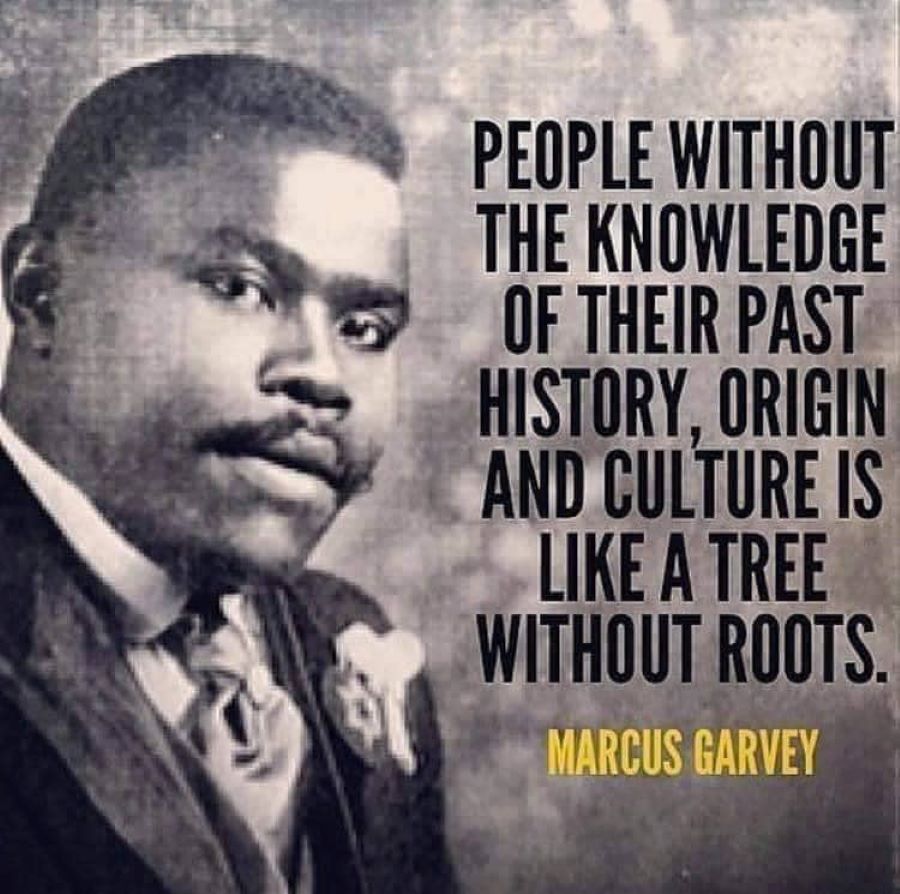
At the collective level—especially in the context of Black history—the loss of identity is deeply tied to historical processes such as slavery, colonisation, and systemic oppression. During the Transatlantic Slave Trade, Africans were stripped of their names, languages, spiritual systems, and cultural practices. This was not accidental—it was a deliberate attempt to erase identity and replace it with one that served the interests of a dominant सत्ता.

This erasure created generations disconnected from their ancestral roots. Cultural memory was fragmented, and in its place emerged imposed identities shaped by racial hierarchies. Over time, this led to internal conflicts about self-worth, belonging, and purpose—closely tied to what W. E. B. Du Bois described it as double consciousness.

Loss of identity can also manifest through assimilation, where individuals feel pressure to conform to dominant cultural norms at the expense of their own heritage. This often results in code-switching, self-censorship, and the suppression of cultural expression.

Psychologically, it may lead to confusion, low self-esteem, or a fractured sense of self. Spiritually, it can create a disconnection from purpose, heritage, and belief systems that once grounded a people. Socially, it may appear as a division within communities, where shared identity becomes unclear or contested.

Yet, loss of identity is not always permanent. It can also be the beginning of a reclamation process—a journey of rediscovery, where individuals and communities seek to reconnect with their history, culture, and truth.

Simple definition

Loss of identity = the disconnection from one’s true self, roots, or heritage—often caused by external forces like oppression, assimilation, or cultural erasure.

One frequently cited framework in this discussion is found in Deuteronomy 28, which outlines blessings and curses tied to covenantal obedience. Some interpret the curses—such as enslavement, oppression, and displacement—as paralleling the experiences of Africans during the Transatlantic Slave Trade.

This interpretive approach is often associated with movements collectively referred to as Hebrew Israelite traditions. These groups seek to reclaim a perceived lost identity by aligning their history with that of the biblical Israelites, emphasizing restoration, repentance, and adherence to biblical law.

The concept of identity loss is central to these interpretations. The stripping of names, languages, and spiritual systems during slavery is viewed as a severing of original identity, which Hebrewism seeks to restore. This aligns with broader discussions of cultural erasure and reclamation within the African diaspora.

Scholars such as W. E. B. Du Bois have explored the psychological impact of such disconnection, particularly through the lens of double consciousness. While not explicitly tied to Hebrewism, this framework helps explain the internal conflict experienced by those navigating multiple identities.

It is important to note that mainstream academic scholarship generally distinguishes between ancient Israelites of the Near East and modern populations, including those of African descent. Genetic, archaeological, and historical evidence is often used to trace these distinctions, though debates and alternative interpretations persist.

At the same time, Africa has long been connected to biblical narratives. Regions such as Cush (often associated with parts of modern-day Sudan and Ethiopia) and figures like the Ethiopian eunuch in the New Testament highlight the presence of African peoples within the biblical world. This demonstrates that African identity is not foreign to scripture.

Religious identity, particularly within Christianity, has also shaped how Black communities engage with Hebrewism. The Bible has served as both a tool of oppression and a source of liberation, with enslaved Africans drawing strength from stories of deliverance and divine justice.

Modern expressions of Hebrewism among Black communities often emphasise a return to biblical laws, names, and practices. This can include observing dietary laws, celebrating biblical feasts, and adopting Hebrew names as a means of reclaiming identity and spiritual heritage.

Critics of these movements argue that some interpretations lack historical and textual support, cautioning against conflating spiritual identity with ethnic lineage. Nonetheless, the emotional and cultural resonance of these beliefs underscores a deeper desire for belonging and historical continuity.

Hebrewism, therefore, operates on multiple levels: as an ancient tradition, a religious framework, and, for some, a pathway to identity restoration. Its meanings shift depending on context, reflecting both historical realities and contemporary interpretations.

The intersection of Hebrewism and Black identity highlights broader themes of displacement, resilience, and the search for truth. Whether viewed through a scholarly or faith-based lens, the conversation reveals the enduring impact of history on present identity.

Ultimately, Hebrewism invites a deeper exploration of who a people are, where they come from, and how they understand their place in the world. For many, it is not merely about the past but about shaping a future grounded in perceived truth and restored dignity.

As discussions continue, it is essential to approach the topic with both intellectual rigor and cultural sensitivity. The narratives surrounding Hebrewism and Black identity are complex, deeply personal, and often contested, requiring careful study and respectful dialogue.

References

The Holy Bible, King James Version. (1611).

Du Bois, W. E. B. (1903). The Souls of Black Folk. Chicago, IL: A. C. McClurg & Co.

Sanders, E. P. (1992). Judaism: Practice and Belief, 63 BCE–66 CE. London, UK: SCM Press.

Finkelstein, I., & Silberman, N. A. (2001). The Bible Unearthed: Archaeology’s New Vision of Ancient Israel and the Origin of Its Sacred Texts. New York, NY: Free Press.

Goldenberg, D. M. (2003). The Curse of Ham: Race and Slavery in Early Judaism, Christianity, and Islam. Princeton, NJ: Princeton University Press.


The Baby Mama Culture

Baby-mama culture refers to a normalized social framework where motherhood and fatherhood occur outside of marriage, often detached from covenantal stability, economic cooperation, and spiritual accountability (Reid-Merritt, 2016). In many communities, particularly those shaped by historical ruptures in family structure, children are born into relational instability rather than covenantal unity.

The phenomenon begins at its root—sexual relations without marital commitment. Scripture frames sex as sacred and covenant-bound: “Marriage is honourable in all, and the bed undefiled: but whoremongers and adulterers God will judge” (Hebrews 13:4, KJV). The biblical worldview denies neutrality—sexual union creates consequence, whether lifelong or burdensome.

Rather than husband and wife, the terms baby-mama and baby-father replace covenant language with consumer-relationship labels, stripping parental identity from spiritual foundation. Proverbs warns that this erosion begins in the mouth and heart: “Keep thy heart with all diligence; for out of it are the issues of life” (Proverbs 4:23, KJV).

Without marriage, co-parenting often shifts into legal co-management rather than spiritual stewardship, introducing child-support systems as substitutes for shared responsibility. “The borrower is servant to the lender” (Proverbs 22:7, KJV) applies symbolically—dependency on state-enforced support turns family matters into institutional debt.

In many cases, fathers become associated more with financial obligation than household presence. While child support can enforce provision, it cannot enforce fatherhood. The Bible asserts a father is more than a provider—he is a guide: “And ye fathers, provoke not your children to wrath: but bring them up in the nurture and admonition of the Lord” (Ephesians 6:4, KJV).

For many Black fathers today, systemic barriers compound cultural misalignment. The family dislocation introduced through slavery makes this conversation generational—Black fathers historically were denied legal marriage and paternal rights, creating historical precedent for fractured kinship models (Franklin, 2010).

Thus, baby-mama culture is not only moral—it is structural and historical. “The fathers have eaten sour grapes, and the children’s teeth are set on edge” (Jeremiah 31:29, KJV) symbolizes generational consequence, though scripture later clarifies personal accountability is required moving forward.

Child-support culture often traps fathers in economic survival mode, where wages are garnished, employment is limited, and housing or credit is compromised. Deuteronomy prophetically warns what disobedience to the covenant brings: “He shall lend to thee, and thou shalt not lend to him: he shall be the head, and thou shalt be the tail” (Deuteronomy 28:44, KJV).

Many fathers still fight to make it. Some hold multiple jobs, trades, delivery routes, construction shifts, night work, entrepreneurial side hustles, hustling not from irresponsibility but from necessity. Paul affirms provision is required, even without cultural praise: “But if any provide not for his own…he hath denied the faith” (1 Timothy 5:8, KJV).

The pressure on these fathers is immense. They serve as financial pillars but emotional ghosts, absent from many narratives, holidays, school mornings, and prayers at night. This imbalance creates psychological distance even when provision is technically met (Payne, 2023).

Mothers also carry burdens. Raising children without marital structure often forces women into masculine economic roles without masculine protection, reversing divine design. Peter outlines the feminine posture that cultivates peace: “Let it not be that outward adorning only…but a meek and quiet spirit” (1 Peter 3:3-4, KJV).

Many relationships collapse into resentment because they begin without covenant alignment. Jesus clarifies what foundationless unions lack: “For out of the abundance of the heart the mouth speaketh” (Matthew 12:34, KJV). When love is thin, words grow sharp, accusations louder than agreements.

Children become unintended theologians of family dysfunction, internalizing instability as normal. Solomon says training begins early: “Train up a child in the way he should go…” (Proverbs 22:6, KJV). A child trained without a model may grow mastered by the culture that raised him.

Community implications extend beyond the household. When men are isolated from fatherhood identity, they often seek validation in alpha culture, street brotherhood, clubs, charisma, cars, and currency, rather than wives and wisdom (Dyson, 2004).

Paul teaches the danger of ungoverned desire: “Flee also youthful lusts…” (2 Timothy 2:22, KJV). Lust builds children but does not build kingdoms, legacies, or homes. Desire without discipleship produces responsibility without reverence.

Many fathers spiritually collapse not because they reject God but because they reject God’s order first, then wonder why life rejects them back. James warns that disordered living destabilizes every direction: “A double-minded man is unstable in all his ways” (James 1:8, KJV).

Healing begins when men reclaim identity beyond economy and court systems. David prayed for restoration not externally but inwardly: “Create in me a clean heart, O God…” (Psalm 51:10, KJV). Restoration requires spiritual re-centring, not just relationship repair.

Fatherhood also demands discipline over the tongue, accountability in + out of conflict. Solomon says: “Death and life are in the power of the tongue” (Proverbs 18:21, KJV). Fathers must speak identity into children, not hostility into mothers.

Likewise, women must discern love from loneliness to prevent repeating cycles. Ruth found covering before the creation of the legacy. Boaz represented the covenant before the seed (Ruth 4, KJV). Biblical design demands “wife first, then womb”, not womb then warfare.

Child support may ensure bread, but Bible culture ensures blessing. Isaac and Rebekah built a legacy through a covenant, not courts (Genesis 25:20-21, KJV). When covenant governs creation, provision flows naturally, not forcefully.

Many fathers survive—but survival is not scripture’s endgame. God calls men into government, legacy, and lineage: “The glory of children is their fathers” (Proverbs 17:6, KJV). God never said the glory of checks is their fathers ‘ presence, name, guidance, or covering.

To dismantle baby-mama culture, the counterculture must be covenant revival, identity restoration, sexual discipline, shared spiritual stewardship, and fathers elevated beyond economic footnotes into apostolic heads of household again (Malachi 4:6, KJV): “And he shall turn the heart of the fathers to the children, and the heart of the children to their fathers…”


References

Dyson, M. (2004). The Michael Eric Dyson Reader. Basic Civitas.
Franklin, J. H. (2010). From Slavery to Freedom. McGraw-Hill.
Reid-Merritt, P. (2016). Fallen Daughters of Eve. Kensington.
Reid, M., & Cazenave, N. (2023). Black family cultural analysis. Journal of Black Family Studies.
Payne, R. (2023). Economic strain on non-custodial fathers. Urban Social Economics Review.

Realms of the Afterlife: A Biblical Exploration of Sheol, the Abyss, Tartarus, Gehenna, and the Lake of Fire.

The concept of the afterlife stands as one of the most profound and layered themes within biblical theology, revealing a structured spiritual reality beyond physical death. Scripture does not present a singular destination for the dead, but rather multiple realms, each with distinct purposes, meanings, and theological implications rooted in both Hebrew and Greek traditions.

Within the Old Testament, the earliest and most foundational understanding of the afterlife is expressed through the term Sheol. Derived from Hebrew, Sheol refers broadly to the grave or the realm of the dead, encompassing all who have departed from the land of the living.

Sheol is best understood as the first level or realm of the afterlife, a neutral domain where both the righteous and the wicked reside after death. It is not portrayed as a place of torment, but rather as a shadowy existence removed from the activities of the living world.

Ecclesiastes 9:10 (KJV) affirms this understanding, stating that there is no work, knowledge, or wisdom in Sheol. This suggests a state of stillness and inactivity rather than conscious suffering or reward.

Similarly, Psalm 6:5 (KJV) declares that in death there is no remembrance of God, reinforcing the idea that Sheol is a place devoid of active worship or awareness.

The patriarch Jacob references Sheol in Genesis 37:35 (KJV), expressing his expectation to descend there in mourning. This passage further confirms that Sheol was not viewed as a place of punishment, but as the inevitable destination of all humanity.

As biblical revelation progresses, particularly into the New Testament, a more detailed and differentiated understanding of the afterlife begins to emerge, introducing additional realms beyond Sheol.

One such realm is the Abyss, often translated as the “bottomless pit.” Unlike Sheol, the Abyss is not associated with human souls, but with spiritual confinement and judgment.

In Luke 8:31 (KJV), demons plead with Christ not to be cast into the Abyss, revealing their fear of this place as one of imprisonment and restriction.

Revelation 20:1–3 (KJV) describes Satan being bound and cast into the Abyss for a thousand years, indicating that this realm serves as a temporary prison for rebellious spiritual beings.

This distinction highlights an important theological principle: different realms exist for different types of beings, reflecting divine order and justice within the unseen world.

Another significant term found in the New Testament is Tartarus, which appears in 2 Peter 2:4 (KJV). This passage explains that God cast certain fallen angels into chains of darkness, delivering them into a place of judgment.

Tartarus is understood as a deeper and more severe realm of confinement than the Abyss, specifically reserved for angels who committed grave transgressions, often associated with the events described in Genesis 6.

This realm is characterised by darkness and restraint, emphasising the seriousness of rebellion against divine authority and the certainty of judgment.

The use of the term Tartarus, though rooted in the Greek language, is adapted within Scripture to communicate a distinctly biblical concept of divine punishment for fallen angels.

Moving further into the teachings of Christ, the term Gehenna emerges as a central concept related to judgment and destruction. Unlike Sheol, Gehenna is not neutral, but is explicitly associated with punishment.

Gehenna derives from the Valley of Hinnom, a location historically linked to idolatry and child sacrifice, as recorded in Jeremiah 7:31 (KJV). Over time, it became a symbol of divine wrath.

In Matthew 10:28 (KJV), Christ warns that God has the authority to destroy both soul and body in Gehenna, underscoring its role as a place of judgment.

Mark 9:43 (KJV) further describes Gehenna as a place of unquenchable fire, reinforcing its association with destruction and irreversible consequence.

Gehenna represents a transition in biblical theology from the neutral concept of Sheol to a more defined understanding of moral accountability and divine justice.

The final and most ultimate realm described in Scripture is the Lake of Fire, which represents the culmination of divine judgment.

Revelation 20:14–15 (KJV) declares that death and hell are cast into the Lake of Fire, identifying it as the “second death.” This signifies the complete and final end of all that opposes God.

Unlike Sheol, the Abyss, or Tartarus, which function as temporary or intermediate states, the Lake of Fire is eternal and irreversible.

Matthew 25:41 (KJV) reveals that this place was prepared for the devil and his angels, yet it also becomes the final destination for those not found written in the Book of Life.

This ultimate realm reflects the full expression of divine justice, where all rebellion is permanently judged and removed.

When examined together, these realms reveal a structured progression within biblical eschatology. Sheol serves as the initial realm of the dead, followed by places of confinement such as the Abyss and Tartarus, leading to judgment in Gehenna, and culminating in the eternal reality of the Lake of Fire.

This layered understanding challenges simplified interpretations of the afterlife and calls for a deeper engagement with Scripture in its original linguistic and cultural context.

It also reflects the nature of God as both just and orderly, assigning different realms according to the nature and actions of both human beings and spiritual entities.

The distinctions between these realms emphasise the seriousness of moral accountability and the reality of divine judgment throughout the biblical narrative.

At the same time, the New Testament message offers hope through redemption, emphasising that deliverance from judgment is made possible through faith and obedience.

Ultimately, the study of these realms is not merely an exploration of death, but a theological reflection on justice, mercy, and the eternal destiny of creation.


References

The Holy Bible, King James Version. (1611).

Bauckham, R. (1993). The Theology of the Book of Revelation. Cambridge University Press.

Brueggemann, W. (2002). Theology of the Old Testament. Fortress Press.

Charles, R. H. (1913). A Critical and Exegetical Commentary on the Revelation of St. John. T&T Clark.

France, R. T. (2007). The Gospel of Matthew. Eerdmans.

Green, J. B. (2008). Body, Soul, and Human Life: The Nature of Humanity in the Bible. Baker Academic.

Heiser, M. S. (2015). The Unseen Realm. Lexham Press.

Wright, N. T. (2008). Surprised by Hope. HarperOne.

Lack of Knowlege

Hosea 4:6 (KJV) declares, “My people are destroyed for lack of knowledge: because thou hast rejected knowledge, I will also reject thee.” This scripture is a sobering reminder that ignorance is not just a personal issue—it can have generational, spiritual, and societal consequences. When people reject truth, they open the door to destruction, confusion, and bondage. Knowledge, in the biblical sense, is not merely intellectual information but deep understanding, discernment, and wisdom that lead to righteous living.

The danger of lacking knowledge begins with spiritual blindness. Without understanding who God is and what His Word says, people are vulnerable to false doctrines, manipulative leaders, and destructive choices. Proverbs 29:18 (KJV) warns, “Where there is no vision, the people perish: but he that keepeth the law, happy is he.” Vision here refers to divine revelation and guidance. When revelation is absent, chaos reigns.

Lack of knowledge also leads to cycles of oppression. History shows that when people are kept from education, they are easier to control. During slavery in America, it was illegal to teach enslaved Africans to read, precisely because knowledge would empower them to question their oppression and fight for freedom. This is why the Bible, literacy, and education were such powerful tools of liberation.

Psychologically, ignorance breeds fear and superstition. People without knowledge often rely on rumor, myth, or cultural tradition rather than truth. This can lead to destructive behaviors, prejudice, and generational curses. When individuals gain understanding—through study, therapy, and self-reflection—they can break free from unhealthy patterns and make wiser decisions.

Another danger of lacking knowledge is exploitation. Unscrupulous people take advantage of those who do not know their rights, their worth, or their purpose. Proverbs 22:3 (KJV) says, “A prudent man foreseeth the evil, and hideth himself: but the simple pass on, and are punished.” Without discernment, people fall into traps—whether financial scams, abusive relationships, or spiritual deception.

Lack of biblical knowledge specifically puts believers at risk of spiritual death. Jesus told the Sadducees, “Ye do err, not knowing the scriptures, nor the power of God” (Matthew 22:29, KJV). Without Scripture, people rely on human wisdom or popular culture for moral guidance, which often leads them away from God’s truth.

Overcoming ignorance requires an intentional pursuit of knowledge. Proverbs 4:7 (KJV) instructs, “Wisdom is the principal thing; therefore get wisdom: and with all thy getting get understanding.” This means believers must actively study, learn, and seek understanding—not only from books but from God through prayer, fasting, and fellowship.

Knowledge of the Bible is the foundation of true wisdom. Psalm 119:105 (KJV) says, “Thy word is a lamp unto my feet, and a light unto my path.” Scripture illuminates the right path and exposes lies. Regular Bible study, meditation on Scripture, and hearing sound teaching help believers grow in spiritual maturity and avoid deception.

Knowledge of self is also essential. Socrates famously said, “Know thyself,” and this wisdom aligns with Scripture’s call to self-examination. 2 Corinthians 13:5 (KJV) instructs, “Examine yourselves, whether ye be in the faith.” Understanding one’s identity in Christ brings confidence, purpose, and resilience against manipulation.

Psychology affirms that self-awareness is key to emotional intelligence and healthy decision-making. When people understand their strengths, weaknesses, and triggers, they are better equipped to respond rather than react, and to pursue growth rather than repeat mistakes.

Communal knowledge is just as important as individual knowledge. Black history, for instance, has often been suppressed or whitewashed, leaving generations disconnected from their heritage. Reclaiming historical knowledge restores dignity, pride, and collective power. Hosea’s warning applies here too: forgetting the past leads to cultural and spiritual destruction.

Another way to overcome lack of knowledge is mentorship and discipleship. In the Bible, knowledge was often passed down orally and through apprenticeship. Paul discipled Timothy (2 Timothy 2:2, KJV), teaching him sound doctrine so that he could teach others. Today, mentorship helps people grow spiritually, professionally, and personally.

The Holy Spirit also plays a critical role in imparting knowledge. John 14:26 (KJV) promises that the Comforter will “teach you all things, and bring all things to your remembrance.” This means that divine revelation is not limited to human intellect—God Himself is willing to teach those who are willing to learn.

A lack of knowledge about health and wellness can also lead to destruction. Many illnesses are preventable through education about nutrition, exercise, and mental health. The Bible encourages stewardship of the body: “Know ye not that your body is the temple of the Holy Ghost?” (1 Corinthians 6:19, KJV).

Financial ignorance is another area where people perish. Proverbs 21:20 (KJV) notes that “There is treasure to be desired and oil in the dwelling of the wise; but a foolish man spendeth it up.” Learning budgeting, saving, and investing protects families from generational poverty and exploitation.

Overcoming lack of knowledge also requires humility. Proverbs 12:1 (KJV) says, “Whoso loveth instruction loveth knowledge: but he that hateth reproof is brutish.” Some reject knowledge because it challenges their worldview or pride. A teachable spirit allows one to grow and avoid destruction.

Social media can be both a danger and a blessing in this regard. While misinformation spreads quickly online, digital platforms also provide access to education, theology, and history. The key is discernment—testing every message against Scripture and credible sources.

Ultimately, knowledge must lead to action. James 1:22 (KJV) warns, “But be ye doers of the word, and not hearers only, deceiving your own selves.” Knowing what is right without doing it is self-deception. True knowledge transforms character and behavior.

In conclusion, lack of knowledge is dangerous because it leads to destruction—spiritually, emotionally, financially, and culturally. The solution is a relentless pursuit of truth: knowledge of God through His Word, knowledge of self through reflection, and knowledge of the world through study and discernment. When we seek wisdom, God promises to give it liberally (James 1:5, KJV). Knowledge is not just power—it is protection, freedom, and the life path.


References

  • DeGruy, J. (2005). Post Traumatic Slave Syndrome: America’s Legacy of Enduring Injury and Healing. Joy DeGruy Publications.
  • Goleman, D. (1995). Emotional Intelligence: Why It Can Matter More Than IQ. Bantam Books.
  • hooks, b. (1995). Killing Rage: Ending Racism. Henry Holt and Company.
  • Tatum, B. D. (2017). Why Are All the Black Kids Sitting Together in the Cafeteria? Basic Books.

Key KJV Scriptures: Hosea 4:6; Proverbs 29:18; Proverbs 4:7; Psalm 119:105; 2 Corinthians 13:5; 1 Corinthians 6:19; Proverbs 21:20; James 1:22; Matthew 22:29; John 14:26.

Right Calling, Wrong Posture

Many people are blessed with a divine calling, a purpose, or a gift from God. Yet, possessing a calling is not enough; the posture with which we approach it determines whether we fulfill our destiny or miss it entirely. A right calling in the wrong posture can lead to frustration, stagnation, and spiritual misalignment.

1. God Honors Posture, Not Just Talent

1 Samuel 16:7 (KJV) teaches: “But the Lord said unto Samuel, Look not on his countenance, or on the height of his stature; because I have refused him: for the Lord seeth not as man seeth; for man looketh on the outward appearance, but the Lord looketh on the heart.”
God values heart posture—humility, obedience, and faith—more than natural talent or outward appearance. You may be gifted, but without the right heart posture, your calling can be misused or ignored.

2. Pride Misaligns the Call

Proverbs 16:18 (KJV) warns: “Pride goeth before destruction, and an haughty spirit before a fall.”
Many individuals pursue their calling with arrogance, entitlement, or impatience. A posture of pride can blind a person to divine guidance, causing missteps even in areas where they are skilled. True readiness requires humility and teachability.

3. Impatience Can Distort the Mission

Ecclesiastes 3:1 (KJV) reminds us: “To everything there is a season, and a time to every purpose under the heaven.”
Rushing ahead of God’s timing, seeking recognition too early, or forcing results creates friction. The right calling requires patience; the wrong posture invites burnout and frustration.

4. Lack of Faith Weakens Impact

Hebrews 11:6 (KJV) teaches: “But without faith it is impossible to please him: for he that cometh to God must believe that he is, and that he is a rewarder of them that diligently seek him.”
Even with a correct calling, if faith is absent, one will fail to execute it effectively. Fear, doubt, or inaction undermine potential. Posture of trust and obedience strengthens calling.

5. Disobedience Nullifies Blessing

Joshua 1:7–8 (KJV) instructs: “Only be thou strong and very courageous, that thou mayest observe to do according to all the law…that thou mayest prosper whithersoever thou goest. This book of the law shall not depart out of thy mouth…that thou mayest make thy way prosperous, and that thou mayest have good success.”
Divine calling must align with God’s instructions. Talent without obedience is like a river without water—it looks promising but fails to nourish. Wrong posture in disobedience prevents true success.

6. Humility and Servanthood Elevate the Calling

Matthew 23:11 (KJV) declares: “But he that is greatest among you shall be your servant.”
God’s kingdom prioritizes servant leadership. Even when called to greatness, the posture of humility, service, and love ensures that the calling fulfills its divine purpose.

7. Listening and Aligning Your Spirit

Proverbs 3:5–6 (KJV) states: “Trust in the Lord with all thine heart; and lean not unto thine own understanding. In all thy ways acknowledge him, and he shall direct thy paths.”
Right posture involves continual spiritual alignment—prayer, discernment, and submission. A misaligned heart or ego can distort God’s calling into personal ambition.


Conclusion

A divine calling is a gift, but posture determines impact. Right calling, wrong posture, leads to wasted potential, frustration, and misalignment with God’s will. The correct posture—humility, obedience, patience, faith, and servanthood—ensures that the calling becomes a blessing, both spiritually and practically. Aligning posture with purpose allows God’s promises to manifest fully in one’s life.


References

Grudem, W. (2004). Systematic theology: An introduction to biblical doctrine. Inter-Varsity Press.

Stanley, A. (2012). The principle of posture in purpose: Aligning heart and calling. Thomas Nelson.

The Holy Bible, King James Version. (1769/2017). Cambridge University Press.

Oswald, R. (2015). Living in your calling: Posture, obedience, and impact. Moody Publishers.

The Biblical Battle of the Sexes

The relationship between men and women has always been a subject of divine attention, from the creation narrative to modern marriage. Scripture lays out the roles, responsibilities, and relational dynamics meant to honor God and preserve order in society. Yet human misinterpretation, pride, and selfishness often create conflict between the sexes. Understanding the biblical framework is essential for harmony and spiritual alignment.

From the very beginning, God established the distinction of man and woman. Genesis 2:18 (KJV) declares, “It is not good that the man should be alone; I will make him an help meet for him.” Women were created not as inferior but as companions, complementing men’s strengths and weaknesses. This original design was meant to foster unity, not conflict.

Despite this, the fall introduced discord into male-female relationships. Genesis 3:16 (KJV) prophesies, “Unto the woman he said…thy desire shall be to thy husband, and he shall rule over thee.” The dynamic of desire and authority became a source of tension, not because of God’s design, but due to sin and the distortion of divine order. This tension is still evident today in relational struggles.

Throughout the Old Testament, women demonstrated influence, courage, and wisdom. Figures like Deborah, Esther, and Ruth exemplify godly leadership. Yet men, at times, misused their authority or failed to recognize women’s spiritual capacity, leading to imbalance. This highlights that the battle of the sexes is not about supremacy but proper alignment to God’s purpose.

Ephesians 5:22–33 (KJV) provides clarity on marital roles. Wives are called to submit in love, while husbands are commanded to love sacrificially. The interplay of love and submission creates a harmonious relational structure. Misunderstanding or neglect of these principles often fuels conflict and resentment.

The battle is not limited to marriage. Workplace, community, and spiritual contexts also reflect gender tension. Men sometimes assert dominance, women sometimes resist authority, and both can act from pride rather than humility. Proverbs 16:18 (KJV) warns that pride precedes destruction, emphasizing the need for godly posture in all relationships.

Communication failure is a major contributor to the biblical battle of the sexes. James 1:19 (KJV) instructs, “Let every man be swift to hear, slow to speak, slow to wrath.” Many conflicts arise from misunderstanding, assumptions, and reactive behavior. Listening with patience and empathy mitigates unnecessary tension.

Emotional intelligence is also rooted in Scripture. Men are encouraged to exercise gentleness and self-control, while women are exhorted to nurture and teach with wisdom. Galatians 5:22–23 (KJV) identifies the fruit of the Spirit as essential for relational health, including love, patience, and kindness, which counteract the destructive impulses of the flesh.

Sexual desire and temptation are central to the battle of the sexes. 1 Corinthians 7:3–5 (KJV) emphasizes mutual fulfillment and consent within marriage, warning against neglect or selfishness. Misaligned sexual expectations create relational strife, highlighting the need for communication, restraint, and mutual respect. Flee Fornication.

Power dynamics must be rooted in servanthood rather than domination. Matthew 20:26–28 (KJV) teaches that greatness is found in serving others. The battle of the sexes is often fueled by the misuse of power, yet true biblical leadership models humility and care, promoting peace rather than conflict.

Cultural influences exacerbate these struggles. Societal pressures, media narratives, and secular ideologies often distort gender roles, encouraging competition rather than cooperation. Romans 12:2 (KJV) calls believers to resist conformity to the world, instead embracing God’s wisdom in relational conduct.

Forgiveness is key in resolving conflict. Colossians 3:13 (KJV) reminds us to “forgive one another, even as Christ forgave you.” Men and women alike must release grudges and pride to restore harmony. The failure to forgive amplifies resentment, perpetuating the biblical battle of the sexes across generations.

Godly mentorship and counsel are essential. Proverbs 11:14 (KJV) states, “Where no counsel is, the people fall: but in the multitude of counsellors there is safety.” Seeking guidance from spiritually mature leaders can prevent misunderstandings and promote alignment with God’s design.

The role of prayer cannot be overstated. 1 Thessalonians 5:17 (KJV) instructs believers to pray without ceasing. Men and women must seek God’s guidance in their interactions, asking for wisdom, patience, and clarity to navigate relational complexities.

Self-examination is equally important. Psalm 139:23–24 (KJV) encourages introspection, asking God to reveal our faults and motives. Recognizing one’s contributions to conflict fosters accountability and opens the door for reconciliation and spiritual growth.

Financial stewardship also impacts relational health. Mismanagement of resources often leads to stress and disagreement between men and women. Proverbs 21:20 (KJV) underscores the value of prudent saving and wise spending, creating stability that mitigates relational tension.

The battle is sometimes spiritual. Ephesians 6:12 (KJV) reminds believers that the struggle is not against flesh and blood but against spiritual forces. Satan exploits pride, lust, and insecurity to pit men and women against each other. Recognizing the spiritual dimension shifts the focus from blame to collaboration and prayerful resistance.

Education and knowledge empower both sexes. Women and men equipped with a biblical understanding of their roles can navigate challenges with wisdom. Titus 2:3–5 (KJV) exhorts women to teach and encourage, while men are called to lead with discernment and integrity, balancing responsibility and compassion.

Embracing diversity within gender strengths fosters cooperation. Romans 12:4–5 (KJV) reminds us that the body has many members, each valuable. Recognizing and honoring complementary gifts reduces tension and encourages unity in purpose and function.

The ultimate solution to the battle of the sexes is submission to God’s Word. Matthew 6:33 (KJV) instructs believers to seek first the kingdom of God and His righteousness. When both men and women prioritize God above ego, cultural expectation, or pride, relational battles diminish, and divine alignment increases.

Finally, hope remains central. Jeremiah 29:11 (KJV) promises a future and hope. Men and women who commit to God’s guidance, apply biblical wisdom, and cultivate humility can overcome relational conflict, fostering partnerships that glorify God and demonstrate His love to the world.


References

Collins, P. H. (2000). Black feminist thought: Knowledge, consciousness, and the politics of empowerment (2nd ed.). Routledge.

Grudem, W. (2004). Systematic theology: An introduction to biblical doctrine. Inter-Varsity Press.

hooks, b. (2004). We real cool: Black men and masculinity. Routledge.

The Holy Bible, King James Version. (1769/2017). Cambridge University Press.

Majors, R., & Billson, J. M. (1992). Cool pose: The dilemmas of Black manhood in America. Lexington Books.

Franklin, A. J. (2004). From brotherhood to manhood: How Black men rescue their relationships and dreams from the invisibility syndrome. Wiley.

Bible Study Series: Closer Walk with God

A closer walk with God is the lifelong pursuit of intimacy, obedience, and spiritual maturity. It is not defined merely by religious attendance or verbal confession but by consistent communion and transformation of the heart. Scripture reveals that relationship with God is both covenantal and experiential—rooted in faith yet expressed through daily living. To walk closely with God requires intentionality, humility, and surrender.

From the beginning, Scripture portrays God as desiring fellowship with humanity. In Genesis 3:8 (KJV), God walked in the garden in the cool of the day, illustrating relational proximity. Though sin disrupted that communion, the biblical narrative reveals God’s redemptive plan to restore intimate fellowship. A closer walk with God, therefore, begins with reconciliation through faith and continues through sanctification.

Faith is the foundation of spiritual closeness. Hebrews 11:6 (KJV) declares, “But without faith it is impossible to please him: for he that cometh to God must believe that he is, and that he is a rewarder of them that diligently seek him.” Faith requires trust beyond circumstances, anchoring the believer in confidence that God is both present and responsive.

Prayer is central to cultivating intimacy with God. 1 Thessalonians 5:17 (KJV) instructs believers to “Pray without ceasing.” Continuous prayer does not imply constant verbalization but rather a posture of awareness and dependence. Prayer fosters alignment, gratitude, confession, and intercession, deepening relational connection.

Equally essential is meditation on Scripture. Psalm 1:2 (KJV) describes the blessed individual whose “delight is in the law of the Lord; and in his law doth he meditate day and night.” Engaging Scripture daily renews the mind, clarifies values, and strengthens discernment. It is through the Word that believers learn God’s character, promises, and expectations.

Obedience reflects genuine closeness. John 14:15 (KJV) records Christ’s words: “If ye love me, keep my commandments.” Obedience is not legalism but evidence of devotion. A closer walk with God is demonstrated through ethical decisions, compassion toward others, and integrity in private and public life.

Repentance also sustains intimacy. 1 John 1:9 (KJV) assures believers, “If we confess our sins, he is faithful and just to forgive us our sins, and to cleanse us from all unrighteousness.” Confession restores fellowship when missteps occur. It reflects humility and acknowledgment of human imperfection.

Humility itself is foundational. James 4:8 (KJV) urges, “Draw nigh to God, and he will draw nigh to you.” Drawing near requires submission and the relinquishing of pride. God responds to those who approach Him with reverence and sincerity.

Worship strengthens spiritual connection. Psalm 95:6 (KJV) invites believers to “O come, let us worship and bow down: let us kneel before the Lord our maker.” Worship shifts focus from self to God, magnifying His sovereignty and goodness. It nurtures gratitude and awe, essential components of closeness.

Trust in adversity deepens faith. Proverbs 3:5–6 (KJV) instructs, “Trust in the Lord with all thine heart; and lean not unto thine own understanding. In all thy ways acknowledge him, and he shall direct thy paths.” Trusting God amid uncertainty fosters reliance on divine wisdom rather than human reasoning.

Patience is another dimension of a closer walk. Psalm 27:14 (KJV) counsels believers to “Wait on the Lord.” Waiting refines character and strengthens perseverance. Spiritual growth often unfolds gradually, requiring endurance and hope.

Community plays a role in spiritual maturity. Hebrews 10:25 (KJV) emphasizes not forsaking assembling together. Fellowship with other believers provides encouragement, accountability, and shared worship, reinforcing individual growth.

Love is the supreme evidence of intimacy with God. 1 John 4:8 (KJV) states, “He that loveth not knoweth not God; for God is love.” A closer walk manifests in compassion, forgiveness, and service to others, reflecting God’s character.

The Holy Spirit empowers this journey. Galatians 5:22–23 (KJV) lists the fruit of the Spirit: “love, joy, peace, longsuffering, gentleness, goodness, faith, meekness, temperance.” These qualities signify spiritual maturity and indicate divine influence in daily life.

Discipline and spiritual habits contribute to growth. Paul writes in 1 Corinthians 9:27 (KJV), “But I keep under my body, and bring it into subjection.” Spiritual disciplines such as fasting, study, and prayer cultivate self-control and attentiveness to God’s voice.

Forgiveness fosters freedom and relational harmony. Ephesians 4:32 (KJV) encourages believers to be “kind one to another, tenderhearted, forgiving one another.” Harboring resentment hinders closeness, while forgiveness aligns the heart with divine mercy.

Gratitude strengthens awareness of God’s presence. 1 Thessalonians 5:18 (KJV) instructs believers to give thanks in all circumstances. Gratitude reshapes perspective, focusing attention on divine provision rather than perceived lack.

Bible Study Companion Guide: Closer Walk with God

Week 1: Drawing Near Through Prayer and Faith

Focus Scriptures: Hebrews 11:6; Philippians 4:6–7; James 4:8
Reflection Questions:

  1. What does it mean to “diligently seek” God in your daily life?
  2. How do you currently handle moments when God seems silent?
  3. In what areas do you struggle to maintain faith and trust?

Journaling Prompts:

  • Write about a time when you felt closest to God. What circumstances allowed that closeness?
  • Identify areas in your life where faith could grow. How can you intentionally seek God there this week?

Action Steps:

  • Commit to at least 10 minutes of uninterrupted prayer daily.
  • Practice gratitude by listing three blessings each day.
  • Journal any impressions, scripture verses, or thoughts that arise during prayer.

Week 2: The Word as Your Guide

Focus Scriptures: Psalm 1:2; Romans 12:2; Colossians 3:16
Reflection Questions:

  1. How do you currently engage with God’s Word? Is it routine or sporadic?
  2. What scriptures have brought peace or clarity in past struggles?
  3. How does meditating on God’s Word affect your decisions?

Journaling Prompts:

  • Choose one verse to memorize and meditate on daily. Record how it influences your thoughts or choices.
  • Write about an area of life where God’s Word challenges you to grow.

Action Steps:

  • Dedicate a set time each day for Bible reading.
  • Reflect on the passages and write 1–2 insights per day.
  • Apply one insight from scripture in a practical way (e.g., patience, kindness, self-control).

Week 3: Obedience, Humility, and Love

Focus Scriptures: John 14:15; 1 John 4:8; Micah 6:8
Reflection Questions:

  1. How do you define obedience in your life?
  2. Are there areas where pride prevents you from drawing closer to God?
  3. How is your love for others an extension of your love for God?

Journaling Prompts:

  • List one way you can show obedience to God this week in your actions or choices.
  • Reflect on someone you find difficult to love or forgive. How can God guide your heart toward compassion?

Action Steps:

  • Practice humility in conversations—listen more than speak.
  • Show intentional acts of love, kindness, or service to at least one person daily.
  • Write a short prayer asking God to help you grow in obedience and love.

Week 4: Perseverance, Peace, and Spiritual Maturity

Focus Scriptures: Galatians 6:9; Psalm 27:14; Proverbs 3:5–6
Reflection Questions:

  1. How do you maintain spiritual peace during trials or uncertainty?
  2. Where have you experienced spiritual growth through perseverance?
  3. What areas require patience and trust in God’s timing?

Journaling Prompts:

  • Write about a challenge you are currently facing. How can patience and faith change your response?
  • Record moments where God’s peace guided your decisions.

Action Steps:

  • Identify one stressful situation and consciously follow God’s peace before acting.
  • Continue daily prayer, scripture reading, and journaling to reinforce spiritual habits.
  • Reflect weekly on growth in character, confidence, and closeness with God.

Additional Tips for Your Bible Study

  • Use a prayer journal to track daily communion with God and insights from scripture.
  • Pair reflection with small group discussions to gain perspective and encouragement.
  • Incorporate worship and praise into your daily routine to strengthen spiritual connection.
  • Evaluate progress each week and adjust practices as needed to maintain intentional spiritual growth.

Service embodies devotion. Micah 6:8 (KJV) summarizes God’s requirement: “to do justly, and to love mercy, and to walk humbly with thy God.” Serving others with integrity and compassion reflects a genuine commitment to God’s purposes.

Spiritual perseverance ensures continuity. Galatians 6:9 (KJV) reminds believers not to grow weary in well doing. Consistent effort, even when enthusiasm wanes, sustains spiritual vitality and deepens reliance on God.

Ultimately, a closer walk with God is both relational and transformative. It involves faith, obedience, humility, worship, community, love, and perseverance. As believers draw near, they experience the fulfillment of James 4:8: God draws near in return. This reciprocal relationship shapes identity, character, and purpose, guiding the believer toward spiritual maturity and eternal hope.


References

Bible. (1769/2017). King James Version. (Original work published 1611).

Scriptural references: Genesis 3:8; Psalm 1:2; 27:14; 95:6; Proverbs 3:5–6; Micah 6:8; John 14:15; Romans 12:2; 1 Corinthians 9:27; Galatians 5:22–23; 6:9; Hebrews 10:25; 11:6; James 4:8; 1 John 1:9; 4:8; 1 Thessalonians 5:17–18; Ephesians 4:32.

The Bible Series: The Kiss – Betrayal, Destiny, and the Fulfillment of Prophecy

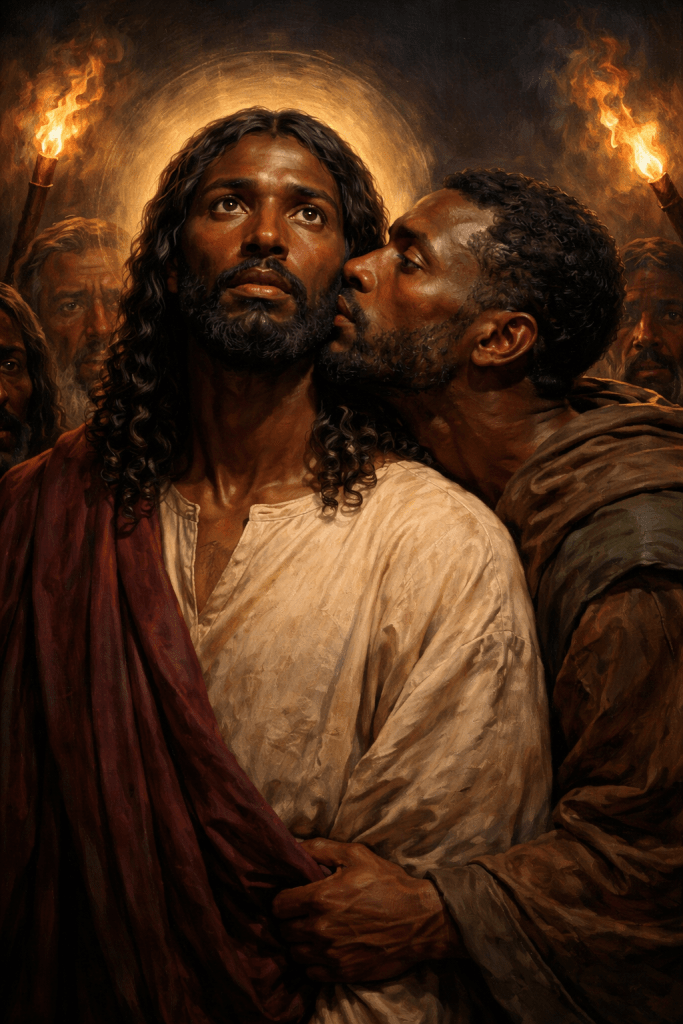
The moment commonly known as “the kiss of betrayal” is one of the most dramatic and spiritually significant events recorded in the New Testament. In the Gospels, the disciple Judas Iscariot identifies Jesus to the arresting authorities with a kiss on the cheek in the Garden of Gethsemane. This act, described in the Gospel of Matthew 26:47–50 and the Gospel of Luke 22:47–48, transformed a gesture of affection and respect into a symbol of treachery. The event has since become an enduring metaphor for betrayal carried out under the appearance of friendship.

Judas Iscariot was one of the original twelve disciples chosen personally by Jesus. The twelve apostles represented the foundational leadership of the early Christian movement, entrusted with spreading Christ’s teachings. According to the Gospel of Mark 3:13–19, Judas was called just like the others—Peter, James, John, and the rest—and he traveled with Jesus during His ministry. Judas witnessed miracles, heard Christ’s teachings, and participated in the communal life of the disciples.

Despite his privileged position, the Gospels portray Judas as having a conflicted character. In the Gospel of John 12:4–6, he is described as the keeper of the disciples’ money bag and is accused of stealing from it. This detail suggests that Judas struggled with greed and personal ambition, weaknesses that eventually contributed to his betrayal. His role among the disciples was therefore paradoxical: a trusted follower who secretly harbored moral corruption.

The betrayal begins to take shape during the final days of Jesus’ ministry in Jerusalem. Religious authorities viewed Jesus as a political and theological threat. His growing influence among the people alarmed the leaders of the temple, who feared unrest and Roman intervention. According to the Gospel of Matthew 26:14–16, Judas approached the chief priests and asked what they would give him if he delivered Jesus to them.

The priests agreed to pay Judas thirty pieces of silver. This amount, referenced in the Gospel of Matthew 26:15, carries symbolic significance because it echoes the prophecy found in the Book of Zechariah 11:12–13, where thirty pieces of silver is the price placed on a shepherd rejected by his people. In ancient Israelite law, this sum also corresponded to the compensation paid for a slave accidentally killed (Exodus 21:32). Thus, the price reflects both prophetic fulfillment and the tragic undervaluation of Christ.

The Gospel writers also emphasize the spiritual dimension behind Judas’s decision. In the Gospel of Luke 22:3, it is written that “Satan entered into Judas.” This phrase suggests that Judas’s betrayal was not merely a human act of greed but part of a larger spiritual conflict between divine purpose and demonic influence. The narrative frames Judas as someone who opened himself to evil through his choices.

Similarly, the Gospel of John 13:27 recounts that after receiving bread from Jesus at the Last Supper, Satan entered Judas again, prompting Jesus to say, “What thou doest, do quickly.” This passage illustrates the tension between human free will and divine foreknowledge. Jesus knew the betrayal was imminent and allowed it to unfold according to the plan that would ultimately lead to redemption.

The betrayal itself occurs in the Garden of Gethsemane shortly after the Last Supper. Judas leads a crowd of soldiers and temple officials to the place where Jesus had gone to pray. To identify Him in the darkness, Judas tells the authorities that the man he greets with a kiss is the one they should arrest. This signal transforms an intimate greeting into an act of deception.

When Judas approaches Jesus, he greets Him respectfully and kisses Him on the cheek. According to the Gospel of Matthew 26:49, he says, “Hail, Rabbi.” Jesus responds with calm awareness, asking, “Friend, wherefore art thou come?” The response reveals both sorrow and understanding. In the Gospel of Luke 22:48, Jesus asks, “Judas, betrayest thou the Son of man with a kiss?”

The kiss, therefore, becomes symbolic of betrayal disguised as loyalty. In the ancient Mediterranean world, a kiss was a sign of respect between a disciple and a teacher. By using this gesture as a signal to arrest Jesus, Judas weaponized trust. The act represents the tragedy of intimate betrayal—being harmed by someone within one’s own circle.

The question of why Judas betrayed Jesus has been debated for centuries by theologians and historians. Some scholars argue that greed motivated him, as suggested by the payment of silver. Others believe he may have been disillusioned with Jesus, expecting a political messiah who would overthrow Roman rule. When Jesus instead spoke of sacrifice and the spiritual kingdom, Judas may have turned against Him.

Another interpretation suggests that Judas attempted to force Jesus to reveal His power. Some scholars speculate that Judas believed arresting Jesus would provoke Him to demonstrate divine authority and establish His kingdom. If this theory holds, Judas’s betrayal may have been rooted in misunderstanding rather than pure malice.

Theologically, Judas also plays a role within the framework of prophecy and divine purpose. Jesus’ betrayal was foretold in passages such as the Book of Psalms 41:9, which says, “Mine own familiar friend… hath lifted up his heel against me.” Early Believers interpreted this as a prophetic foreshadowing of Judas’s actions.

Because of these prophecies, some theologians argue that Judas fulfilled a role necessary for the events leading to the crucifixion. Without the betrayal, Jesus might not have been arrested in the manner described in the Gospels. From this perspective, Judas’s actions became part of the unfolding plan for redemption.

However, the presence of divine purpose does not eliminate personal responsibility. Christian theology generally holds that Judas acted out of his own choices and desires. His betrayal demonstrates how human weakness can align with darker spiritual forces, resulting in tragic consequences.

After Jesus was condemned, Judas experienced deep remorse. According to the Gospel of Matthew 27:3–5, he returned the thirty pieces of silver to the priests, confessing that he had betrayed innocent blood. The priests refused responsibility, leaving Judas overwhelmed by guilt.

Judas then threw the silver into the temple and left. The Gospel account states that he went away and hanged himself. This tragic end illustrates the destructive weight of guilt and the devastating consequences of betrayal.

The chief priests later used the returned money to purchase a field known as the “Field of Blood.” This event again aligns with the prophecy in Zechariah 11:13 and contributes to the narrative symbolism surrounding Judas’s actions.

Despite his betrayal, the story of Judas serves as a cautionary lesson within Biblical teaching. It demonstrates how proximity to truth does not guarantee faithfulness. Judas walked with Jesus, witnessed miracles, and heard divine teaching, yet still chose betrayal.

The message behind the story of Judas and the kiss is therefore multifaceted. It warns against greed, hypocrisy, and spiritual vulnerability. It also emphasizes the sovereignty of God, showing that even acts of betrayal cannot ultimately thwart divine purpose.

Finally, the betrayal leads directly to Jesus’ crucifixion and resurrection, which form the foundation of the followers of Christ. What appeared to be a moment of darkness ultimately became part of the narrative of redemption. The kiss of betrayal, therefore, stands as both a symbol of human treachery and a turning point in the story of salvation.


References

Bauckham, R. (2015). Jesus: A very short introduction. Oxford University Press.

Brown, R. E. (1994). The death of the Messiah: From Gethsemane to the grave. Yale University Press.

Ehrman, B. D. (2014). How Jesus became God. HarperOne.

The Holy Bible, King James Version. (1769/2017). Cambridge University Press.

Wright, N. T. (2012). How God became king: The forgotten story of the Gospels. HarperOne.

The Virtuous Woman Code

Photo by Fotoboy on Pexels.com

The virtuous woman is a reflection of God’s glory and wisdom. She embodies strength, grace, and unwavering faith, serving as a beacon to her family and community. Proverbs 31:30 declares, “Favor is deceitful, and beauty is vain: but a woman that feareth the Lord, she shall be praised.” Her worth is measured not by fleeting appearances but by her devotion to God.

A virtuous woman is a woman of faith. Her life is anchored in trust and obedience to God’s Word. She prays consistently, seeking His guidance in all matters, knowing that her strength comes from Him. Philippians 4:6 exhorts, “Be careful for nothing; but in every thing by prayer and supplication with thanksgiving let your requests be made known unto God.”

She is a woman of integrity. Her actions align with her words, and her character remains steadfast under pressure. Proverbs 11:3 affirms, “The integrity of the upright shall guide them: but the perverseness of transgressors shall destroy them.” Integrity allows her to lead by example, inspiring trust and respect.

A virtuous woman is diligent in her responsibilities. She manages her household, nurtures her family, and contributes to her community with wisdom and skill. Proverbs 31:27 highlights, “She looketh well to the ways of her household, and eateth not the bread of idleness.” Her diligence reflects her commitment to God’s order and purpose.

Humility defines her demeanor. She does not seek acclaim but honors God through service and modesty. James 4:10 reminds, “Humble yourselves in the sight of the Lord, and he shall lift you up.” Humility cultivates wisdom, patience, and relational harmony.

A virtuous woman is compassionate. She extends mercy and kindness to those in need, embodying Christ’s love. Micah 6:8 instructs, “He hath shewed thee, O man, what is good; and what doth the Lord require of thee, but to do justly, and to love mercy, and to walk humbly with thy God?” Compassion strengthens her community and her testimony.

She exercises self-control, governing her emotions and desires with wisdom. Proverbs 25:28 warns, “He that hath no rule over his own spirit is like a city that is broken down, and without walls.” Through self-discipline, she maintains peace and integrity in her personal and family life.

A virtuous woman is wise in counsel. She listens, discerns, and offers guidance rooted in Scripture. Proverbs 31:26 teaches, “She openeth her mouth with wisdom; and in her tongue is the law of kindness.” Her counsel uplifts, corrects, and instructs with love.

She values education and growth, seeking knowledge that strengthens her mind and spirit. Proverbs 4:7 encourages, “Wisdom is the principal thing; therefore get wisdom: and with all thy getting get understanding.” Her pursuit of understanding equips her for leadership and influence.

Faithfulness marks her relationships. She honors her commitments and fosters trust in her marriage, family, and friendships. Luke 16:10 states, “He that is faithful in that which is least is faithful also in much.” Her loyalty reflects her reverence for God and His covenant principles.

A virtuous woman is a steward of her resources. She manages finances and possessions responsibly, ensuring provision for her family and generosity toward others. Proverbs 31:16 reveals, “She considereth a field, and buyeth it: with the fruit of her hands she planteth a vineyard.” Stewardship demonstrates wisdom and foresight.

She exemplifies courage, facing life’s challenges with faith and resilience. Joshua 1:9 encourages, “Be strong and of a good courage; be not afraid, neither be thou dismayed: for the Lord thy God is with thee whithersoever thou goest.” Courage strengthens her spirit and inspires those around her.

Patience is her companion. She understands that God’s timing is perfect and that growth comes through trials. Romans 5:3-4 teaches, “…tribulation worketh patience; And patience, experience; and experience, hope.” Patience enables her to persevere and remain steadfast in faith.

She cultivates purity of heart and mind. Philippians 4:8 instructs, “Whatsoever things are true, whatsoever things are honest, whatsoever things are just, whatsoever things are pure, whatsoever things are lovely…think on these things.” Her thoughts and actions honor God and protect her influence.

A virtuous woman nurtures spiritual growth in others. She mentors younger women, teaches her children, and encourages her peers in righteousness. Titus 2:3-5 instructs older women to guide the young, reflecting a legacy of godly mentorship.

She is confident in her God-given identity. She does not compare herself to others but embraces her unique gifts and purpose. Proverbs 31:25 affirms, “Strength and honour are her clothing; and she shall rejoice in time to come.” Confidence grounded in God produces joy and stability.

Her speech is uplifting, avoiding gossip and negativity. Proverbs 31:26 emphasizes, “She openeth her mouth with wisdom; and in her tongue is the law of kindness.” Words of encouragement and truth build up her household and community.

A virtuous woman is faithful in worship. She prioritizes communion with God through prayer, study, and obedience. Psalm 122:1 declares, “I was glad when they said unto me, Let us go into the house of the Lord.” Worship shapes her character and aligns her heart with God’s will.

She demonstrates perseverance in adversity, trusting God to sustain her through trials. James 1:12 assures, “Blessed is the man that endureth temptation: for when he is tried, he shall receive the crown of life, which the Lord hath promised to them that love him.” Her steadfastness models faith under pressure.

Ultimately, the virtuous woman’s life is a testimony of God’s wisdom, grace, and guidance. Proverbs 31:30 summarizes, “Favor is deceitful, and beauty is vain: but a woman that feareth the Lord, she shall be praised.” Her legacy is eternal, shaped by devotion, integrity, and love.

Egypt: The Place of Bondage — Is it Babylon?

In the Bible, Egypt (Hebrew: Mitzrayim) is often used symbolically as the place of bondage, suffering, and enslavement for the children of Israel. Literally, it refers to the land where Israel was enslaved under Pharaoh until God delivered them through Moses (Exodus 12–14). However, later biblical writers often used “Egypt” metaphorically to represent any place of oppression and captivity.

For example, Deuteronomy 28:68 (KJV) says:

“And the Lord shall bring thee into Egypt again with ships, by the way whereof I spake unto thee, thou shalt see it no more again: and there ye shall be sold unto your enemies for bondmen and bondwomen, and no man shall buy you.”

This prophecy has been interpreted by many, especially within Black Hebraic and Israelite circles, as pointing not just to literal Egypt, but to a second bondage — one involving ships, mass enslavement, and dispersal. The transatlantic slave trade is often connected to this verse because millions of Africans were taken in slave ships and sold across the Americas.


Babylon: Symbol of Captivity

Babylon, on the other hand, represents a different type of bondage in Scripture. The historical Babylon was where Judah was exiled after the Babylonian conquest (2 Kings 25). Spiritually, Babylon is often used in the Bible as a symbol of worldly power, idolatry, and moral corruption. In Revelation, “Mystery Babylon” is described as a global power that seduces nations and persecutes the saints (Revelation 17–18).

Thus, Babylon often symbolizes spiritual captivity — being under the influence of a corrupt, ungodly world system — while Egypt often symbolizes physical captivity and hard labor.


Egypt and Babylon in Prophecy

Isaiah 52:4 (KJV) says:

“Thus saith the Lord God, My people went down aforetime into Egypt to sojourn there; and the Assyrian oppressed them without cause.”

This shows that God saw Egypt and later oppressors as part of the same narrative: foreign domination of His people.

Revelation 11:8 (KJV) offers a fascinating connection:

“And their dead bodies shall lie in the street of the great city, which spiritually is called Sodom and Egypt, where also our Lord was crucified.”

Here, Egypt is used spiritually to describe a future place of bondage. Some interpreters suggest that the modern systems of oppression, mass incarceration, debt slavery, and economic exploitation are a type of spiritual Egypt — a continuation of that same cycle of bondage.


Egypt vs. Babylon: A Biblical Comparison

AspectEgypt (Mitzrayim)Babylon
Meaning“Mitzrayim” in Hebrew means “narrow place, straits” — a place of confinement.“Babel/Babylon” means “confusion by mixing” — a place of spiritual corruption.
Historical RolePhysical place of slavery where Israel was held in bondage under Pharaoh (Exodus 1–14).Ancient empire that conquered Judah and exiled its people (2 Kings 25).
SymbolismRepresents physical captivity, forced labor, oppression, and hardship.Represents spiritual captivity, idolatry, worldliness, and moral decay.
Key ScriptureExodus 20:2 – “I am the LORD thy God, which have brought thee out of the land of Egypt, out of the house of bondage.”Revelation 17–18 – “Mystery, Babylon the Great, the Mother of Harlots and Abominations of the Earth.”
Prophetic MeaningIn Deuteronomy 28:68, Egypt can symbolize a future return to bondage, often linked to slavery via ships (transatlantic slave trade).In Revelation, Babylon is seen as a future or present global system of economic and spiritual oppression.
Form of BondagePhysical — slavery, chains, forced labor, economic exploitation (sharecropping, prison labor).Spiritual — false religion, cultural indoctrination, economic control, moral confusion.
Modern ParallelsDebt slavery, mass incarceration, racial oppression, systemic poverty.Consumerism, secularism, media manipulation, moral compromise.
End-Times RoleRepresents the final “house of bondage” from which God’s people must be delivered (Deut. 30:3).Represents the world empire God will judge before the Kingdom is restored (Rev. 18:2–4).
Call to ActionExodus 3:10 – “Come now therefore, and I will send thee unto Pharaoh, that thou mayest bring forth my people…” (Deliverance from oppression).Revelation 18:4 – “Come out of her, my people, that ye be not partakers of her sins…” (Separation from spiritual corruption).

This chart makes it clear that Egypt = physical bondage and Babylon = spiritual/worldly bondage — and that both still exist in different forms today.

Hebraic-Israelite Perspective

Many teachers in the Israelite movement equate Egypt in Deuteronomy 28 with America (or the West in general), viewing it as the modern “house of bondage.” Similarly, they sometimes equate America with “Mystery Babylon” in Revelation, because it is seen as a dominant empire that exports culture, idolatry, and economic exploitation worldwide.

From this view, Egypt = the condition of physical bondage, while Babylon = the system of spiritual, economic, and cultural captivity. Together, they describe both the external and internal struggles of the children of Israel in the modern era.


Summary

  • Egypt (Mitzrayim) = The house of bondage (Exodus 20:2), symbolizing physical slavery and hard labor.
  • Babylon = Spiritual captivity, idolatry, and global oppression, as seen in Revelation’s “Mystery Babylon.”
  • Today’s world can be seen as both Egypt (economic bondage through debt, wage slavery, mass incarceration) and Babylon (spiritual and cultural enslavement through media, moral decay, and false worship).

In short, Egypt in prophecy represents the condition of oppression, and Babylon represents the system of oppression. They overlap in meaning — both point to captivity, but one is physical and one is spiritual.

References

Biblical References

  • Exodus 1–14 – Narrative of Israel’s bondage in Egypt and deliverance through Moses.
  • Exodus 20:2 (KJV) – “I am the LORD thy God, which have brought thee out of the land of Egypt, out of the house of bondage.”
  • Deuteronomy 28:68 (KJV) – Prophecy of returning to Egypt “again with ships.”
  • Isaiah 52:4 (KJV) – Mentions Israel’s oppression in Egypt and by Assyria.
  • 2 Kings 25 – Historical account of Judah’s exile to Babylon.
  • Jeremiah 50:8 (KJV) – “Remove out of the midst of Babylon, and go forth out of the land of the Chaldeans.”
  • Revelation 11:8 (KJV) – Describes the “great city… spiritually called Sodom and Egypt.”
  • Revelation 17–18 (KJV) – Prophecy concerning Mystery Babylon and her final destruction.
  • Revelation 18:4 (KJV) – “Come out of her, my people, that ye be not partakers of her sins…”

Scholarly & Theological Sources

  • Assmann, J. (1997). Moses the Egyptian: The memory of Egypt in Western monotheism. Harvard University Press.
  • Collins, J. J. (2016). The Bible after Babel: Historical criticism in a postmodern age. Eerdmans.
  • Hayes, J. H., & Holladay, C. R. (2007). Biblical exegesis: A beginner’s handbook (3rd ed.). Westminster John Knox Press.
  • Keener, C. S. (2014). Revelation (NIV Application Commentary). Zondervan.
  • Wright, N. T. (2012). How God became King: The forgotten story of the Gospels. HarperOne.
  • Walton, J. H. (2006). Ancient Near Eastern thought and the Old Testament. Baker Academic.