Category Archives: slavery

Dilemma: Earthy Injustice

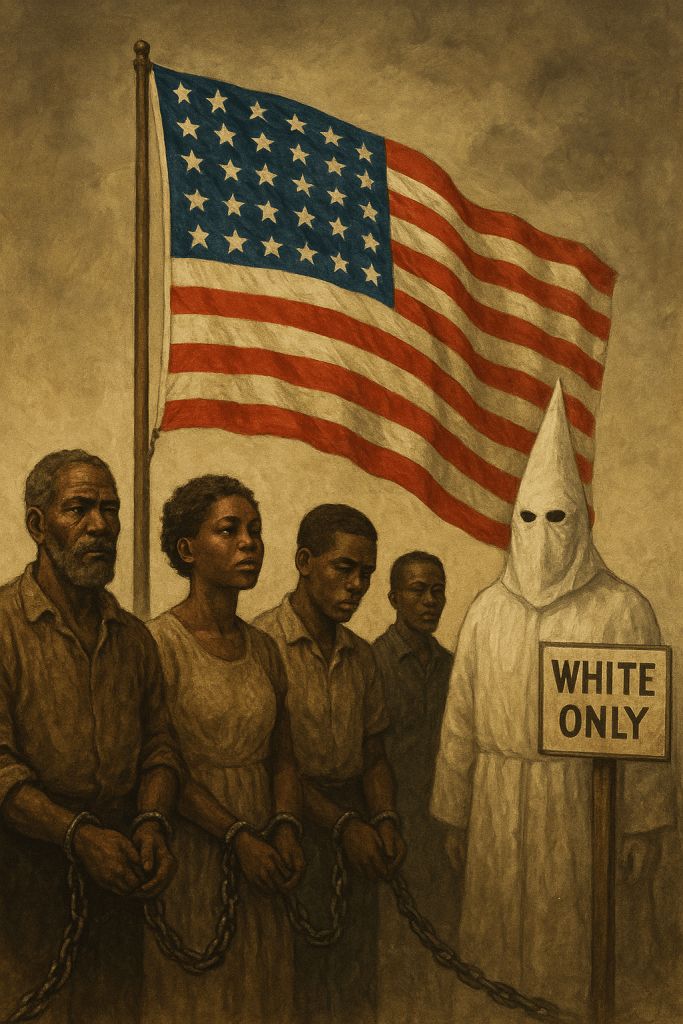
Earthly injustice is not an abstract concept but a lived reality etched into human history through conquest, enslavement, exploitation, and systemic inequality. It manifests wherever power divorces itself from morality and institutions prioritize profit, dominance, or comfort over human dignity.

From ancient empires to modern nation-states, injustice has been sustained by laws that favor the powerful and narratives that normalize suffering. These systems rarely collapse on their own; they persist until confronted by truth, resistance, and moral reckoning.

Scripture consistently identifies injustice as a violation of divine order. The Bible portrays God as attentive to imbalance, especially when the poor, the stranger, and the captive are crushed under unjust structures.

Earthly injustice thrives on dehumanization. When a group is stripped of identity, history, or worth, oppression becomes administratively easy and morally invisible to those who benefit from it.

Slavery represents one of the clearest examples of institutionalized injustice. Human beings were transformed into commodities, families into property, and labor into stolen wealth, all under legal and theological justification.

The transatlantic slave trade fused economic ambition with racial ideology, producing a hierarchy that outlived slavery itself. Its aftershocks remain embedded in wealth disparities, social stratification, and global inequality.

Colonialism extended injustice across continents, extracting resources while erasing cultures. Colonized peoples were taught to doubt their own humanity while serving the prosperity of distant empires.

Earthly injustice is often maintained through selective morality. Religious texts are quoted to demand obedience while passages condemning oppression are ignored or reinterpreted.

The Bible’s prophets repeatedly confronted this hypocrisy. They condemned societies that upheld ritual purity while neglecting justice, mercy, and compassion.

Injustice also operates psychologically. Generations exposed to domination may internalize inferiority, fulfilling the goals of oppression without the need for constant force.

Modern injustice frequently disguises itself as neutrality. Policies framed as fair or colorblind often perpetuate historical inequities by refusing to address unequal starting points.

Earthly courts can legalize injustice, but legality does not equate to righteousness. History records many laws that were lawful yet morally indefensible.

Scripture insists that injustice leaves a moral residue. Blood cries from the ground, wages withheld cry out, and suffering demands divine attention.

Those who endure injustice often develop alternative moral visions rooted in survival, faith, and communal care. These visions challenge dominant definitions of success and power.

Resistance to injustice takes many forms, from open rebellion to quiet endurance. Each asserts that oppression does not have the final word.

Earthly injustice is sustained by forgetting. When societies erase past crimes, they create conditions for repetition rather than repair.

Justice requires more than condemnation; it requires restoration. Repairing harm involves truth-telling, accountability, and material redress.

The Bible warns that unchecked injustice invites judgment. Nations that exalt themselves through exploitation eventually encounter collapse, whether through internal decay or external consequence.

Earthly injustice exposes the limits of human systems. It reveals the need for a higher moral authority beyond political power or economic interest.

The persistence of injustice does not negate justice’s existence. Rather, it testifies to the urgency of aligning human action with divine standards of righteousness.


References

The Holy Bible, King James Version. (1611/1769).

Cone, J. H. (1997). God of the oppressed. Orbis Books.

Du Bois, W. E. B. (1903). The souls of Black folk. A. C. McClurg & Co.

Heschel, A. J. (2001). The prophets. Harper Perennial.

Williams, E. (1944). Capitalism and slavery. University of North Carolina Press.

The Altar of American Exceptionalism: Promise, Peril, and Consequence.

American exceptionalism is the belief that the United States occupies a unique moral, political, and historical position among nations. Rooted in Puritan theology, Enlightenment ideals, and revolutionary mythology, it has long framed the nation as chosen, exemplary, and destined for leadership. This belief has functioned as both a guiding philosophy and a civic religion, shaping national identity and public policy across generations.

At its best, American exceptionalism has inspired aspirational ideals. The language of liberty, equality, and self-governance provided a moral vocabulary that fueled abolitionism, civil rights movements, and democratic reforms. By holding itself to a proclaimed higher standard, the nation created a framework through which citizens could critique injustice and demand alignment between principle and practice.

The Declaration of Independence stands as a canonical text of exceptionalist thought, asserting universal rights while situating the American experiment as historically unprecedented. This rhetoric energized oppressed groups who invoked its promises to expose hypocrisy. Frederick Douglass’s famous question—what to the slave is the Fourth of July—demonstrates how exceptionalist ideals could be turned inward as a moral indictment rather than an excuse for complacency.

Yet American exceptionalism has also functioned as an altar upon which truth is sacrificed. When national myth hardens into unquestionable dogma, it suppresses historical accountability. Slavery, Indigenous dispossession, segregation, and imperial expansion were often justified or minimized under the assumption that America’s intentions were inherently benevolent, regardless of outcomes.

The doctrine has repeatedly blurred the line between patriotism and moral exemption. Foreign interventions, from Manifest Destiny to twentieth-century wars, were frequently framed as civilizing missions rather than power pursuits. Exceptionalism provided the moral cover for empire, allowing violence to be narrated as virtue and domination as destiny.

Domestically, exceptionalism has obscured structural inequality. The insistence that America is uniquely free and just has been used to delegitimize claims of systemic racism, economic exploitation, and gender inequality. If the nation is already exceptional, then disparities are framed as personal failures rather than institutional designs.

This mindset has been particularly damaging to Black Americans. The contradiction between exceptionalist rhetoric and lived reality produced what W.E.B. Du Bois called “double consciousness,” a constant negotiation between national belonging and exclusion. Black resistance movements have historically navigated the tension between appealing to American ideals and rejecting America’s false innocence.

American exceptionalism also reshaped capitalism into a moral narrative. Wealth accumulation became equated with virtue, and poverty with moral deficiency. The “American Dream” promised upward mobility while masking the racialized and class-based barriers that structured opportunity. Exceptionalism thus sanctified inequality under the guise of meritocracy.

In education, exceptionalist narratives often sanitize history. Textbooks emphasize triumph while minimizing atrocity, creating citizens who inherit pride without responsibility. This selective memory weakens democratic capacity, as honest self-critique is replaced with defensive nationalism.

Religiously, exceptionalism has fused with Christian nationalism, transforming the state into a quasi-divine instrument. Biblical language of chosenness has been selectively applied to America, displacing its original covenantal context. This theological distortion elevates the nation above moral law rather than subjecting it to prophetic judgment.

The psychological effects of exceptionalism are equally profound. It fosters cognitive dissonance when reality contradicts belief, leading to denial rather than reform. Citizens may experience identity threat when confronted with injustice, responding with hostility instead of empathy.

Globally, exceptionalism damages credibility. When the United States preaches democracy while tolerating human rights abuses at home and abroad, its moral authority erodes. Allies perceive hypocrisy, while adversaries exploit inconsistency, weakening international trust.

However, rejecting blind exceptionalism does not require abandoning national aspiration. A critical patriotism can preserve ethical commitment without mythological arrogance. Nations, like individuals, mature through accountability rather than denial.

Some scholars argue for a post-exceptionalist identity grounded in democratic humility. This approach views the United States not as above history but within it—capable of learning from other nations and from its own marginalized voices. Such humility strengthens rather than weakens democratic life.

The civil rights movement offers a model of reformed exceptionalism. Leaders like Martin Luther King Jr. appealed to America’s professed ideals while exposing its moral bankruptcy. Their vision did not worship the nation; it called it to repentance.

In this sense, American exceptionalism becomes most ethical when desacralized. When stripped of infallibility, it can function as an aspirational ethic rather than a shield against critique. The danger lies not in national ideals, but in their absolutization.

The future of American democracy depends on whether exceptionalism remains an altar or becomes a mirror. A mirror reflects both beauty and blemish, demanding growth. An altar demands worship and excuses failure.

Ultimately, the question is not whether America is exceptional, but how it understands exceptionality. If exceptionalism justifies power without justice, it corrodes the nation’s soul. If it compels responsibility proportional to power, it may yet serve a moral purpose.

The effects of American exceptionalism are therefore paradoxical. It has empowered liberation and legitimated oppression, inspired reform and excused violence. Its legacy demands discernment rather than devotion.

A transformed national consciousness would replace myth with memory, arrogance with accountability, and supremacy with service. Only then can the United States pursue greatness without sacrificing truth upon the altar of its own exceptionalism.


References

Appleby, J. (2018). The virtues of liberalism. Oxford University Press.

Bellah, R. N. (1967). Civil religion in America. Daedalus, 96(1), 1–21.

Du Bois, W. E. B. (1903). The souls of Black folk. A.C. McClurg & Co.

King, M. L., Jr. (1963). Why we can’t wait. Harper & Row.

Lipset, S. M. (1996). American exceptionalism: A double-edged sword. W.W. Norton.

Mills, C. W. (1997). The racial contract. Cornell University Press.

Zinn, H. (2003). A people’s history of the United States. HarperCollins.

How European/White Views of the Bible Differ from African/Black Views

Worldview Shapes Interpretation

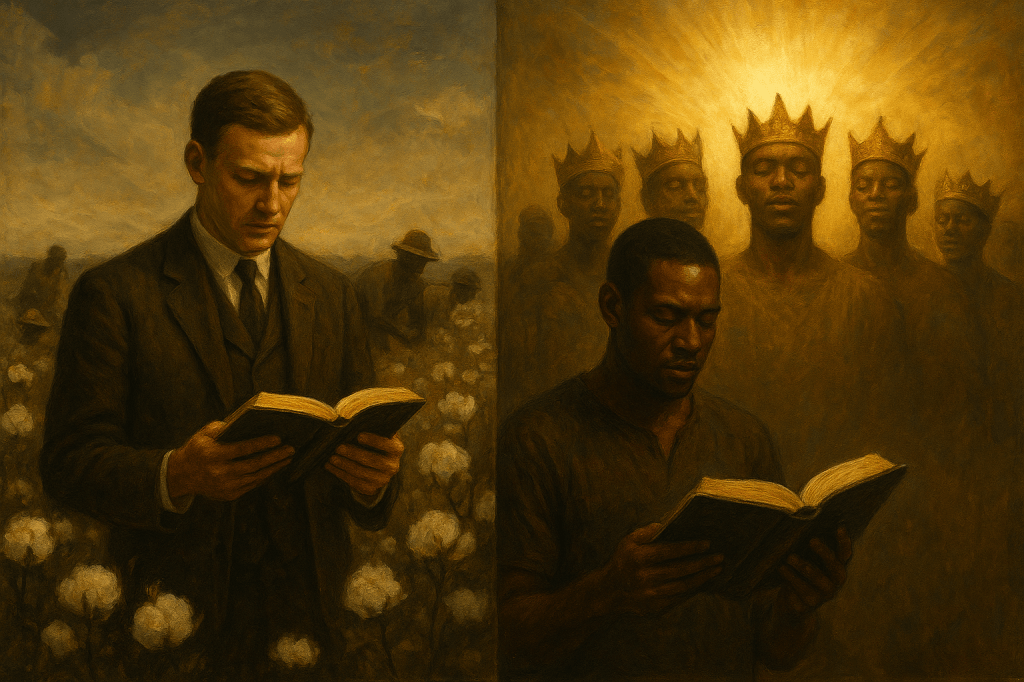
European biblical interpretation largely developed within imperial, Greco-Roman, and later Enlightenment frameworks, emphasizing hierarchy, legalism, and institutional authority. African and Black biblical interpretation, by contrast, has historically been experiential, communal, oral, and survival-centered, reading Scripture through lived oppression rather than abstract theology.

The Bible as Empire vs. the Bible as Survival

For Europe, the Bible often functioned as a tool of empire—used to justify monarchy, colonialism, and racial hierarchy. For African and African-descended peoples, the Bible became a text of endurance, liberation, and divine justice amid enslavement, exile, and sufferingEuropean Emphasis on Control and Order

European theology prioritized:

  • Church authority
  • Doctrinal uniformity
  • Obedience to rulers (Romans 13 emphasized)
  • Salvation abstracted from material conditions

This lens often muted or reinterpreted passages about oppression, captivity, and divine judgment against empires.

African/Black Emphasis on Exodus and Justice

African and Black readers gravitated toward:

  • Exodus
  • Deuteronomy 28
  • The prophets
  • Psalms of lament
  • Revelation’s overthrow of empire

Scripture was read as God siding with the oppressed, not legitimizing oppression.

Historical Memory vs. Abstract Theology

African biblical interpretation preserved historical consciousness—genealogy, land, lineage, and curses/blessings—while European theology increasingly spiritualized Scripture, detaching it from concrete history.

Deuteronomy 28 as a Point of Divergence

Europe largely framed Deuteronomy 28 as ancient Israelite history only. Many African-descended interpreters see it as a prophetic template, mapping captivity, forced labor, ships, loss of identity, and global dispersion onto the transatlantic slave trade.

The Role of the Enlightenment

The European Enlightenment desacralized Scripture, elevating reason over revelation, which later influenced canon criticism, textual skepticism, and selective theology that privileged Western norms.


What Books Were Removed from the Bible?

The Apocrypha / Deuterocanonical Books

Several books were removed or relegated to “non-canonical” status, particularly in Protestant Bibles after the 16th century.

Removed or excluded books include:

  • 1 Esdras
  • 2 Esdras (4 Ezra)
  • Tobit
  • Judith
  • Wisdom of Solomon
  • Sirach (Ecclesiasticus)
  • Baruch
  • Letter of Jeremiah
  • Additions to Esther
  • Prayer of Azariah
  • Susanna
  • Bel and the Dragon
  • 1 Maccabees
  • 2 Maccabees

These books were never “lost” to Africa—only excluded by Europe.

Why Were These Books Removed?

Key reasons include:

  • They challenged centralized church power
  • They emphasized divine justice against oppressors
  • They reinforced covenantal law and judgment
  • They complicated European theological control

Martin Luther and later Protestant reformers removed them from standard Bibles, labeling them “useful but not inspired.”

Political Theology at Work

Books like the Wisdom of Solomon condemn unjust rulers. Maccabees celebrate resistance to the empire. Baruch emphasizes exile and repentance. These themes conflicted with colonial and imperial agendas.

Suppression of Apocalyptic Knowledge

Books like Enoch and 2 Esdras contain cosmology, angelology, and judgment narratives that undermine human supremacy and racial hierarchy.

Race and Canon Formation

Europeans controlling the canon during colonial expansion ensured Scripture could be used to:

  • Enforce obedience
  • Justify slavery
  • Silence rebellion
  • Promote passive salvation

African-descended readers later reclaimed Scripture against these distortions.


African Christianity Predates Europe

Africa Is Not a Late Convert

Christianity flourished in Ethiopia, Egypt, Nubia, and North Africa centuries before Europe institutionalized the Church.

Biblical Geography Is African-Centered

Scripture references:

  • Cush
  • Mizraim (Egypt)
  • Ethiopia
  • Libya

African peoples are not marginal to the Bible—they are foundational.

Oral Tradition vs. Written Control

African biblical engagement preserved oral memory, song, lament, and testimony, while Europe emphasized written codices controlled by elite institutions.


Theological Consequences of Removal

Loss of Justice-Centered Theology

Removing books narrowed theology away from historical accountability, exile, and covenant justice.

Spiritualization of Suffering

European theology often reframed suffering as divinely ordained rather than divinely condemned—an interpretation enslaved people instinctively rejected.

Black Biblical Hermeneutics

Black theology reads Scripture from the bottom up, centering God’s response to suffering bodies, not abstract doctrine.

Scripture as Resistance

For African-descended peoples, the Bible became a counter-text, exposing the hypocrisy of Christian slaveholders and affirming divine judgment.


Conclusion: Two Bibles, Two Lenses

European Christianity often used the Bible to rule.
African and Black Christianity used the Bible to survive.

The difference is not the text itself, but who controls interpretation, which books are included, and whose suffering is acknowledged. Reclaiming the removed books and reading Scripture through historical truth restores the Bible’s original moral power.


References

The Holy Bible, King James Version. (1611/1769).

The Ethiopian Orthodox Tewahedo Church Canon.

Cone, J. H. (1997). God of the oppressed. Orbis Books.

Heschel, A. J. (2001). The prophets. Harper Perennial.

Pagels, E. (1979). The gnostic gospels. Random House.

Charlesworth, J. H. (Ed.). (1983). The Old Testament pseudepigrapha. Yale University Press.

Dilemma: Forced Diaspora

The dilemma of forced diaspora stands as one of the most defining and devastating realities in human history, particularly for African-descended peoples whose displacement reshaped the modern world. This rupture was not merely geographic but spiritual, psychological, and generational, severing people from land, language, kinship systems, and sacred memory.

Diaspora, in its truest sense, implies scattering. Forced diaspora, however, denotes violent expulsion—movement without consent, carried out through domination, coercion, and terror. The transatlantic slave trade exemplifies this condition, transforming human beings into cargo and redefining captivity as commerce.

Within the Hebrew Bible, displacement functions as both a consequence and a warning. Deuteronomy 28 in the King James Version presents blessings for obedience and curses for disobedience, culminating in exile, captivity, and foreign domination. The chapter is not abstract theology; it is historically grounded prophecy rooted in covenantal law.

Deuteronomy 28 begins with prosperity and national elevation, but the latter portion details systematic collapse. Hunger, poverty, loss of sovereignty, and enslavement emerge as consequences when a people fall under divine judgment. These themes recur throughout biblical history, particularly in the experiences of Israel.

Verse 48 declares that the people would serve enemies “in hunger, and in thirst, and in nakedness, and in want of all things,” while verse 68 foretells transportation into bondage by ships. This specific imagery has drawn sustained attention in diasporic biblical interpretation.

The reference to ships in Deuteronomy 28:68 is striking, as captivity in the ancient Near East was typically overland. The verse’s maritime language suggests a future mode of enslavement distinct from earlier Assyrian or Babylonian exiles, intensifying its interpretive gravity.

The Middle Passage, spanning the fifteenth through nineteenth centuries, involved the forced shipment of millions of Africans across the Atlantic Ocean. Conditions aboard slave ships included extreme overcrowding, disease, starvation, and death, reflecting the dehumanization described in Deuteronomy’s curses.

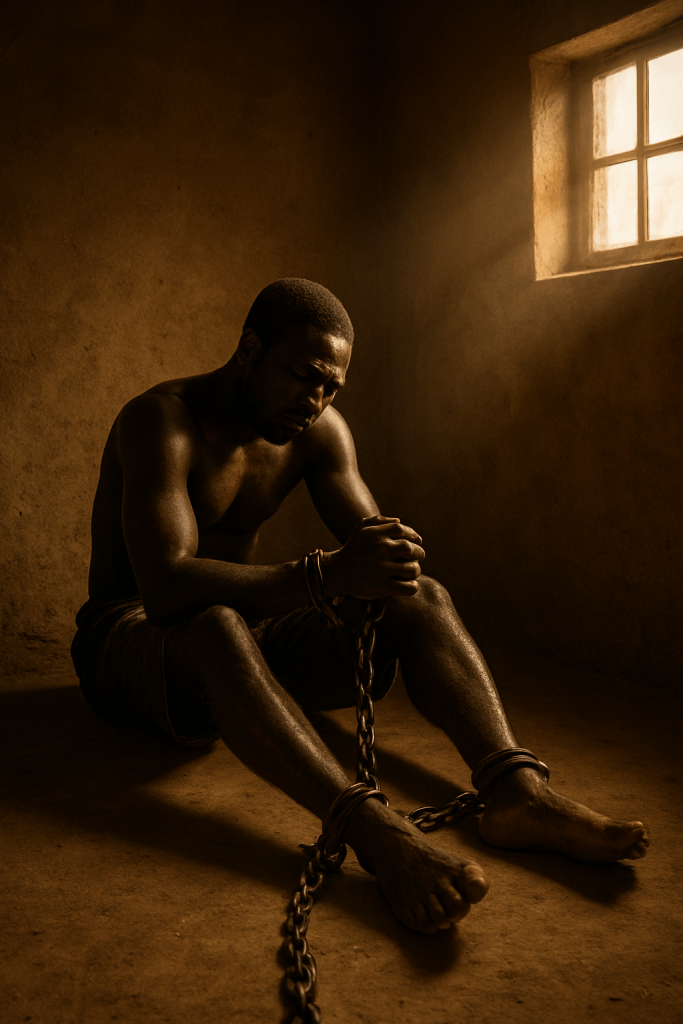
Men, women, and children were chained in holds, stripped of identity, and reduced to inventory. The loss of names, languages, and familial ties parallels the biblical language of becoming “a byword and a proverb” among nations, as stated in Deuteronomy 28:37.

The Middle Passage was not an isolated event but the center of a global economic system dependent upon forced labor. European empires extracted wealth through plantations, mines, and infrastructure built upon the backs of enslaved Africans.

Forced labor in the Americas mirrored the biblical description of unrelenting servitude. Enslaved people labored without rest, legal protection, or compensation, echoing Deuteronomy 28:65, which describes no ease, trembling hearts, and failing eyes.

The plantation system institutionalized violence, sexual exploitation, and family separation. Children were sold away from parents, marriages were unrecognized, and kinship networks were deliberately destroyed to prevent resistance.

This systematic breaking of family structures resonates with Deuteronomy 28:32, which warns that sons and daughters would be given to another people, with no power to rescue them. The verse reflects a loss of agency that defined chattel slavery.

Forced diaspora also produced cultural amnesia. African cosmologies, languages, and governance systems were suppressed, replaced by imposed identities rooted in racial hierarchy. Yet fragments survived through music, oral tradition, and spiritual practice.

The introduction of Christianity to enslaved Africans occurred within contradiction. While Scripture was used to justify bondage, enslaved people discerned liberation themes within the text, identifying with Israel’s suffering and hope for deliverance.

Biblical narratives of exile—from Egypt to Babylon—offered frameworks for understanding suffering without surrendering dignity. The God who judged also promised restoration, a tension deeply embedded in Deuteronomy 30’s assurance of return.

Forced diaspora produced a transnational Black identity forged through shared trauma. Though stripped of homeland, African-descended peoples formed new cultures across the Caribbean, South America, and North America.

Resistance took many forms, including revolts, maroon societies, work slowdowns, and spiritual endurance. These acts challenged the totalizing power of forced labor systems and affirmed retained humanity.

Economic exploitation under slavery laid the foundation for modern global capitalism. Wealth extracted from forced labor financed industrialization, universities, banks, and nation-states, while the enslaved inherited poverty.

The end of legal slavery did not end the conditions described in Deuteronomy 28. Sharecropping, convict leasing, segregation, and mass incarceration functioned as continuations of forced labor under new legal frameworks.

Psychological captivity followed physical captivity. Generations internalized narratives of inferiority imposed to rationalize enslavement, fulfilling Deuteronomy 28:34, which speaks of madness for the sight of one’s eyes.

The forced diaspora fractured identity, producing questions of origin, belonging, and purpose. Many descendants of the enslaved continue to search archives, DNA, and Scripture for an ancestral connection.

Theological interpretations linking Deuteronomy 28 to the African diaspora remain contested, yet their persistence reflects an attempt to reconcile history with sacred text. For many, Scripture becomes a map through trauma.

The curse language of Deuteronomy is inseparable from covenant responsibility. In biblical theology, judgment is never arbitrary; it functions as correction rather than annihilation.

Importantly, Deuteronomy 28 does not conclude Israel’s story. Later prophets promise regathering, healing, and restoration, emphasizing divine faithfulness beyond punishment.

Forced diaspora, while devastating, did not erase African-descended peoples. Survival itself stands as testimony to resilience under conditions designed to destroy.

Cultural contributions born from displacement—music, language, theology, and political thought—have reshaped global civilization, often without acknowledgment of their origins.

Memory remains central to healing. To remember the Middle Passage is to resist erasure and affirm the humanity of those who endured it.

Scripture, when read with historical awareness, becomes a site of reckoning rather than oppression. Deuteronomy 28 challenges readers to confront how power, obedience, and justice intersect.

The dilemma of forced diaspora persists in contemporary inequalities, reminding the world that history is not past. The echoes of ships, chains, and fields remain embedded in modern systems.

Yet the biblical narrative insists that captivity is not the final word. Justice, restoration, and truth remain integral to divine order.

Forced diaspora stands as both a warning and a witness—a warning against unchecked power and a witness to the enduring strength of a people who survived the unthinkable.


References

The Holy Bible, King James Version. (1611/1769). Deuteronomy 28–30.

Curtin, P. D. (1969). The Atlantic slave trade: A census. University of Wisconsin Press.

Gomez, M. A. (2005). Reversing sail: A history of the African diaspora. Cambridge University Press.

Smallwood, S. E. (2007). Saltwater slavery: A middle passage from Africa to American diaspora. Harvard University Press.

Williams, E. (1944). Capitalism and slavery. University of North Carolina Press.

Dilemma: 400 years later…

The arrival of the first documented Africans to the shores of what would become the United States began in 1619, initiating a 400-year historical continuum that cannot be reduced to a single era or chapter but must be read as an unfolding system of captivity and racial stratification rooted in both economic exploitation and social demonization. The transatlantic slave trade expanded across the Americas over the next two centuries, cementing a global architecture of forced labor that built Western wealth while systematically devastating African communities and fracturing family lineage. This reality fulfills the ancient warning that curses follow a disobedient and oppressed people, for scripture foretold a nation that would experience alien ruin, humiliation, and subjugation: “The stranger that is within thee shall get up above thee very high; and thou shalt come down very low” (Deuteronomy 28:43, KJV).

Slavery did not begin by accident but by law, religion, and commerce. By the mid-1600s, colonial legislatures had codified Africans and their descendants into permanent hereditary servitude, legally positioning Black bodies as property rather than persons, creating a condition where captivity could be inherited like a surname. Plantations multiplied across the Southern colonies, where cotton would later emerge as “king,” demanding labor on a scale that turned land into empire and humans into fuel. Yet the Bible condemns the very foundation of such enterprise: “He that stealeth a man, and selleth him… shall surely be put to death” (Exodus 21:16, KJV). The theft was never the land alone — it was identity, labor, movement, and posterity.

Even after the Thirteenth Amendment of 1865 formally abolished chattel slavery, its exception clause allowed a rapid pivot into criminalized bondage, birthing the era of convict leasing, where Black men were arrested on arbitrary charges, leased to corporations, and worked under conditions nearly indistinguishable from plantation labor. The cotton field remained, only relabeled. This legislative loophole reframed chains as “justice,” transforming freedom into illusion. Scripture again provides clarity: “The wicked walk on every side, when the vilest men are exalted” (Psalm 12:8, KJV). When power itself is corrupt, deliverance cannot be legal alone — it must also be spiritual.

Reconstruction offered a brief but luminous disruption of bondage. Black Americans built schools, entered political office, established land ownership, and reconnected fragments of stolen ancestry. But progress provoked terror, and by 1877, federal retreat enabled Southern states to regenerate racial hierarchy through Jim Crow laws, insulating white privilege and criminalizing Black mobility. Between 1870 and 1950, thousands of Black Americans were lynched in public acts of racial terrorism, not as random violence but as a national message: Black advancement would be met with blood. The psalmist described this spirit precisely: “They have said, Come, and let us cut them off from being a nation” (Psalm 83:4, KJV). The objective was erasure.

The Great Migration (1916–1970) relocated millions of Black families from the agricultural South to the industrial North, seeking wages rather than whipping posts, safety rather than spectacle deaths. But northern opportunity carried its own forms of apartheid: redlining maps, restricted labor unions, segregated schools, employment ceilings, and policing systems that followed Black communities like a shadow. The physical field changed, but the captivity matured into systems rather than signposts. Scripture declared the emotional condition of displaced people longing for justice and homeland: “By the rivers of Babylon, there we sat down, yea, we wept” (Psalm 137:1, KJV).

The 1960s Civil Rights Movement confronted segregation at its legal roots, demanding equal access to education, voting, housing, and public participation. Its leaders spoke like prophets disrupting empires: “Let judgment run down as waters, and righteousness as a mighty stream” (Amos 5:24, KJV). Yet many of the same state systems that resisted abolition resisted civil rights — governors blocking doors, officers turning hoses, lawmakers filibustering dignity. Progress was wrestled, never gifted.

Following civil rights legislation came a new form of containment — the War on Drugs, hyper-policing, and mass incarceration. From the 1980s onward, prisons expanded faster than schools, sentencing laws grew harsher, and policing strategies militarized, targeting Black neighborhoods with a disproportionality that mirrors an economic draft. Men descended from sharecroppers became inmates leased through labor programs inside industrial prisons. The plantation evolved into a complex, adaptable organism. As Proverbs illuminated the mechanics of inequality: “The rich ruleth over the poor” (22:7, KJV). For Black America, poverty was not incidental but intentional infrastructure.

In modern expression, hatred manifests not in auction blocks but in algorithms, policing districts, wage gaps, and judicial disparities. Hate crimes continue at alarming frequency, motivated by the same racial animus that once governed slave patrols, lynch mobs, and segregated institutions. Police brutality killings operate as extrajudicial punishments disproportionately borne by Black citizens, echoing the terror logic of the past. “They break in pieces thy people, O Lord, and afflict thine heritage” (Psalm 94:5, KJV). The cries are the same; only the arenas differ.

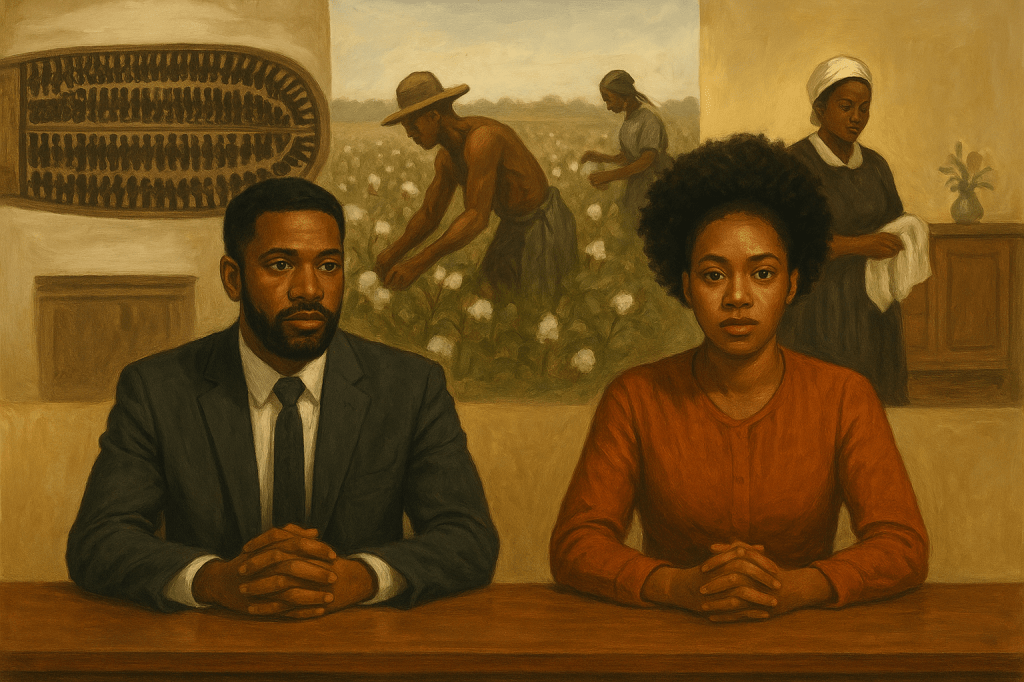
Reparations promised in 1865 through “40 acres and a mule” never materialized nationally, representing not only a breach of contract but a breach of justice. No federal reparative policy has been enacted despite centuries of documented theft, labor extraction, and structural disenfranchisement. The field and the counter today form an economic diptych — continuity rather than contrast: from unpaid cotton labor to underpaid service labor, from stolen land to inaccessible mortgages, from patrolled movement to policed existence, from literal chains to institutional ones.

The psychological captivity is often strongest. Media systems still export narratives that position Black identity as inferior, criminal, or disposable, reproducing a cognitive caste system that shapes public perception, opportunity distribution, and even self-esteem. Solomon teaches that perception becomes self-governing: “As he thinketh in his heart, so is he” (Proverbs 23:7, KJV). When a people lives under 400 years of negative mirrors, liberation must reconstruct the mind, not only the nation.

Understanding the Biblical “400-Year” Hardship Motif

In the Bible, long periods of suffering are often tied to exile, purification, oppression, and divine timing, not arbitrary catastrophe. The closest explicit reference to 400 years appears in Genesis 15:13–14 (KJV), where God tells Abram:

“Know of a surety that thy seed shall be a stranger in a land that is not theirs, and shall serve them; and they shall afflict them four hundred years; And also that nation, whom they shall serve, will I judge: and afterward shall they come out with great substance.”

This passage establishes three key principles:

  1. Suffering within foreign lands can be part of divine assignment — “a land that is not theirs.”
  2. The suffering serves a formative purpose for a chosen lineage — Abram’s seed is not destroyed, but shaped.
  3. The timeline ends with judgment of the oppressor and advancement of the oppressed — “I will judge” + “come out with great substance.”

Other biblical exiles follow similar structure, though without the number 400 attached. Israel’s bondage in Egypt, Judah’s exile into Babylon, and the scattering of tribes under imperial conquest all follow a recognizable pattern:

  • Identity is attacked
  • Oppression is used as endurance training
  • God times deliverance to align with spiritual readiness rather than political apology
  • Restoration is communal, covenantal, and spiritual before material

(Deuteronomy 30:3–5, Jeremiah 29:10–14, Psalm 126:1-3, KJV)

Thus, when people today speak of “400 years later,” they are usually drawing a parallel between African-descended suffering in America (beginning in 1619) and the Genesis 15 captivity framework, combining historical trauma with biblical typology. This is a symbolic theological claim, not a literal prophetic decree.

Du Bois (1903) noted that Black history in America has often been interpreted through a dual lens of diaspora and spiritual yearning, mirroring Hebraic exile themes. This interpretive tradition became especially strong in the African-American church and in later Afro-Hebraic movements. (Du Bois, 1903; Wilkerson, 2010)


Why 2025 Is Being Discussed as the “Cycle’s End”

The belief that “the 400-year test ends in 2025” is an example of contemporary sacred-historical reinterpretation, similar to how different generations calculated messianic or jubilee timelines in their own eras. The Bible shows that humans frequently attach chronology to hope:

  • Daniel expected restoration after 70 years because Jeremiah prophesied it (Daniel 9:2, KJV)
  • Israelites expected the Messiah based on timeline readings of prophets (Luke 3:15, KJV)
  • The Jubilee cycle (Leviticus 25) shaped conversations of liberation and return

Likewise, many Black thought movements today use 1619 → 2019/2025 as a rhetorical timeline to emphasize:

  • How long has injustice persisted
  • How delayed deliverance feels
  • How captivity keeps evolving
  • The moral debt owed to Black descendants has not been acknowledged or repaired

(Rothstein, 2017; Stevenson, 2014)

However, the Bible consistently teaches that God’s deliverance is not triggered by the clock alone, but by covenant remembrance and collective turning toward Him:

“Then ye shall call upon me, and ye shall go and pray unto me, and I will hearken unto you. And ye shall seek me, and find me, when ye shall search for me with all your heart.”
(Jeremiah 29:12-13, KJV)

This shows that spiritual awakening precedes systemic reversal in God’s economy.


What Has Changed vs. What Hasn’t

What has changed since 1619:

  • Black Americans are no longer enslaved as legal property
  • Literacy, land ownership, political office, scholarship, and cultural expression are possible
  • The Bible is now read by Black communities rather than read at them

(Woodson, 1933; Du Bois, 1903)

What has not changed at the root level :

  • Violence against Black bodies continues through hate-motivated crimes
  • Law enforcement injustice appears through disproportionate lethal force and brutality
  • No federal reparative restoration has been enacted for descendants of slavery
  • The wealth gap persists, restricting intergenerational mobility
  • Oppression remains structural, not individual alone
  • Bondage evolved from chains on bodies → chains on systems → chains on narratives → chains on economics → chains on mobility and life expectancy

(Muhammad, 2011; Rothstein, 2017; Stevenson, 2014)

Biblically, this mirrors a shift like captivity rather than the removal of it. Egypt began as physical bondage, but later exile became psychological, political, and spiritual scattering.


Yet transformation, though unfinished, remains possible. The biblical arc of exodus shows that freedom is not immediate but fought for, walked into, prayed into, and inherited by those who refuse to remain Egypt-minded. “Stand fast therefore in the liberty wherewith Christ hath made us free, and be not entangled again with the yoke of bondage” (Galatians 5:1, KJV). Black America has been made free in spirit — the labor left is to be made free in systems, policies, safety, economy, body, and legacy.

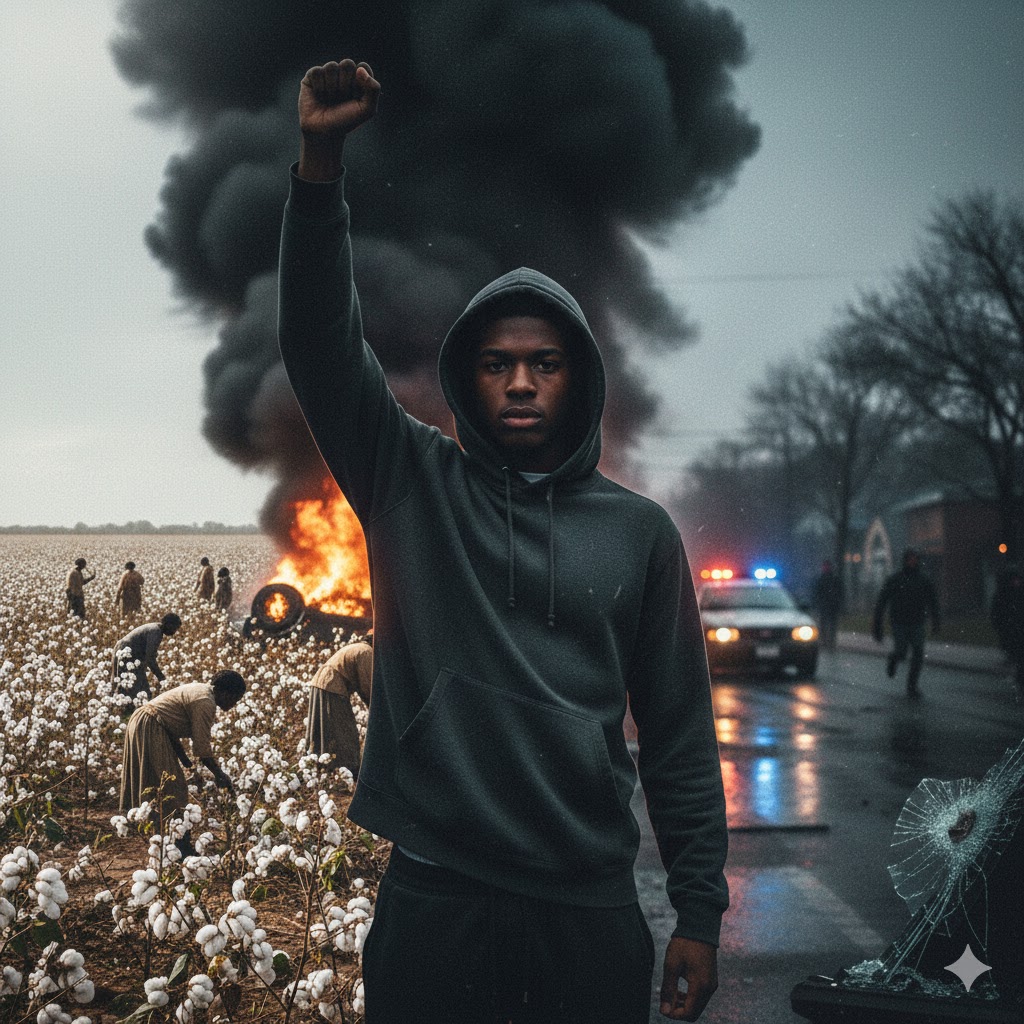
Bondage persists, but so does chosen resistance. The cotton field, the counter, the classroom, the courtroom, the wealth gap, the police district — these are the new Red Seas, new wildernesses, and new pleas for divine justice. Deliverance is still in motion. Liberation has begun, but emancipation is still the mission. And the question is no longer “Were we enslaved?” but “Why are the chains so adaptive, and where will exodus lead next?”

References

Bibb, H. (1849). Narrative of the Life and Adventures of Henry Bibb, an American Slave. Author.

Du Bois, W. E. B. (1903). The Souls of Black Folk. A. C. McClurg & Co.

Equal Justice Initiative. (2022). Lynching in America: Confronting the Legacy of Racial Terror (3rd ed.). Author.

Feagin, J. (2020). The racism: A short history (2nd ed.). Routledge.

Genovese, E. D. (1976). Roll, Jordan, Roll: The World the Slaves Made. Pantheon Books.

Higginbotham, A. L. (1978). In the Matter of Color: Race and the American Legal Process. Oxford University Press.

King James Bible. (1611). King James Version (KJV).

King, M. L., Jr. (1963). “I Have a Dream.” Speech presented at the March on Washington for Jobs and Freedom, Washington, D.C.

Muhammad, K. G. (2011). The Condemnation of Blackness: Race, Crime, and the Making of Modern Urban America. Harvard University Press.

National Archives. (2024). 13th Amendment to the U.S. Constitution: Abolition of Slavery (except as punishment for crime). U.S. Government.

Rothstein, R. (2017). The Color of Law: A Forgotten History of How Our Government Segregated America. Liveright Publishing.

Smith, S. (2016). Generations of captivity: A history of African-American slavery. Journal of Cultural History, 12(4), 45–67.

Stevenson, B. (2014). Just Mercy: A Story of Justice and Redemption. Spiegel & Grau.

Wilkerson, I. (2010). The Warmth of Other Suns: The Epic Story of America’s Great Migration. Random House.

Woodson, C. G. (1933). The Mis-Education of the Negro. Associated Publishers.

Exodus 21:16 – “He that stealeth a man, and selleth him… shall surely be put to death.”

Deuteronomy 28:37 – “Thou shalt become an astonishment, a proverb, and a byword, among all nations.”

Deuteronomy 28:43 – “The stranger that is within thee shall get up above thee very high; and thou shalt come down very low.”

Proverbs 22:7 – “The borrower is servant to the lender.”

Proverbs 23:7 – “As he thinketh in his heart, so is he.”

Psalm 12:8 – “The wicked walk on every side, when the vilest men are exalted.”

Psalm 83:4 – “Let us cut them off from being a nation.”Psalm 94:5 – “They break in pieces thy people, O Lord, and afflict thine heritage.”

Galatians 5:1 – “Stand fast therefore in the liberty wherewith Christ hath made us free, and be not entangled again with the yoke of bondage.”


The Wrath of Black Resilience

Black resilience is not a gentle force; it is a righteous wrath forged through centuries of pressure, pain, and perseverance. It is the fire that refuses to be extinguished, the power that rises from ashes with dignity still intact. This resilience is both a shield and a sword, shaped by generational survival and spiritual endurance.

The wrath of Black resilience is not destructive—it is transformative. It is the fierce determination to exist in a world that has tried, repeatedly, to erase, distort, or diminish Black life. This resilience emerges from the collision of suffering and hope, forming a strength unmatched in its depth and sacred in its origin.

This wrath carries memory. It remembers slave ships, plantations, whips, auctions, and chains. It remembers the cries of mothers whose children were torn from their arms and the prayers whispered in dark cabins to a God who seemed far yet remained present. Memory sharpens resilience into conviction.

It is a wrath tempered by wisdom. Black people have learned to survive without surrendering their humanity. The resilience that flows through the diaspora is a testimony to what happens when faith meets fire and refuses to break. It is refusal wrapped in courage—refusal to bow, to be silent, or to disappear.

The wrath of Black resilience is seen in the unyielding pursuit of justice. It is the righteous anger that propelled rebellions, marches, sit-ins, and court battles. It is the same spirit that fueled leaders like Malcolm X, Fannie Lou Hamer, Marcus Garvey, and Ida B. Wells—individuals who understood that survival alone was not enough; liberation was the goal.

It is a sacred wrath, aligned with the God of the oppressed. Scripture affirms that the Most High hears the cries of the afflicted. Black resilience draws strength from this divine truth, knowing that justice is not merely a human demand but a spiritual inheritance. This wrath becomes a holy resistance against systems of exploitation and dehumanization.

Yet, Black resilience also holds tenderness. Despite centuries of brutality, Black communities created art, music, family, culture, and spiritual practices that nourished life. This duality—wrath against injustice, tenderness toward each other—is the secret to its power.

This resilience is generational. From enslaved ancestors to modern activists, the flame of endurance has been passed down like a torch. Each generation fans it into something greater—revival, rebellion, restoration. The wrath of resilience ensures that the trauma of the past does not silence the future.

It also manifests in economic creativity. From sharecropping to Black Wall Street, from entrepreneurship to global influence, Black communities have repeatedly built and rebuilt despite sabotage and systemic barriers. This relentless reconstruction is a form of wrathful hope—hope that refuses to die.

The wrath of Black resilience is poetic. It sings through spirituals and hip-hop, dances through jazz and blues, and speaks through literature, sermons, and scholarship. Art becomes protest; creativity becomes survival; expression becomes liberation.

It is seen in Black love—the protective, enduring, healing love that withstands external assault. Black families have survived legal restrictions, targeted destabilization, and economic pressure. Yet the love still blossoms. That love is an act of defiance.

This resilience is intellectual as well. Black scholars have dismantled false histories, reconstructed truth, and reclaimed identity. The wrath here is quiet but profound—a refusal to let lies prevail. Knowledge becomes warfare, and scholarship becomes a pathway to cultural redemption.

The wrath of Black resilience also operates spiritually. Through Christianity, Islam, African traditional religions, and Hebrew Israelite faith practices, Black communities cultivated belief systems that affirmed their worth when the world denied it. Faith became resistance; prayer became strategy.

This resilience is communal. It is seen in mutual aid networks, church gatherings, neighborhood protection, and intergenerational mentorship. Black communities have learned that survival is collective work. Their wrath is unified; their resilience, intertwined.

Even in grief, Black resilience rises. Mourning becomes movement; sorrow becomes strategy. Whether after lynchings, massacres, police brutality, or generational trauma, the community finds a way to speak, march, organize, and heal without losing its soul.

The wrath of Black resilience is global. In Africa, the Caribbean, South America, and throughout the diaspora, colonization could not destroy the spirit of the people. Revolutions erupted; cultures survived; languages adapted; identities persisted. The global Black experience is one of endurance and rebirth.

This resilience is also prophetic. It does not simply react to injustice—it anticipates liberation. It sees beyond present oppression to future restoration. Black resilience believes in the possibility of a world made right, and it fights relentlessly until that vision becomes reality.

The wrath of resilience is not rage without direction—it is purpose wrapped in fire. It is the sharpened edge of survival and the disciplined determination to rise above systems built for destruction. It is righteousness standing firm against wickedness.

Ultimately, the wrath of Black resilience is a divine inheritance. It is the echo of ancestors, the strength of the present generation, and the promise of those yet to come. It is the collective heartbeat of a people who refuse to die, refuse to bend, and refuse to be forgotten.


References

Alexander, M. (2012). The new Jim Crow: Mass incarceration in the age of colorblindness. The New Press.

Cone, J. H. (1975). God of the oppressed. Orbis Books.

Davis, A. (2016). Freedom is a constant struggle: Ferguson, Palestine, and the foundations of a movement. Haymarket Books.

Gates, H. L. (2019). Stony the road: Reconstruction, white supremacy, and the rise of Jim Crow. Penguin Press.

Wells, I. B. (2020). Crusade for justice: The autobiography of Ida B. Wells. University of Chicago Press.

West, C. (2017). Race matters. Beacon Press.

Dilemma: Reparations

“Reparations are not about a handout—they are about restoring justice, repairing wounds, and reconciling with the truth of our shared history.” — Dr. Cornel West

Reparations have long stood at the center of Black America’s moral, historical, and spiritual struggle for justice. They represent not merely financial compensation but a public acknowledgment of the harm inflicted upon millions of African-descended people who endured chattel slavery, racial terrorism, legal segregation, and generational dispossession. Yet despite the magnitude of these injustices, the United States has continually resisted granting African Americans what has been afforded to other groups. This dilemma reflects the nation’s unresolved relationship with truth, accountability, and its own historical narrative.

Reparations remain a contentious issue because they force America to confront its past without euphemism. They require the nation to admit that slavery was not an accidental blemish but a deliberate economic system built on inhumanity. The refusal to offer reparations stems from the denial of responsibility—an unwillingness to accept that the wealth of the nation was constructed through Black suffering. While some argue that time has healed old wounds, generational inequality remains a living consequence that can be traced through the socioeconomic conditions of Black communities today.

Black people deserve reparations because the injustices committed against them were unique in scale, duration, and brutality. Enslaved Africans were legally defined as property, denied humanity, and subjected to violence, rape, forced family separations, and the destruction of cultural identity. Even after emancipation, racist laws such as Black Codes, Jim Crow legislation, redlining, and discriminatory policing reinforced the conditions of inequality. Reparations acknowledge that the effects of slavery did not end in 1865; they echo across generations.

America’s lies to Black people have been vast and intentional. The promise of “forty acres and a mule” never materialized. The idea that freedom would naturally lead to equality proved untrue as the nation constructed new systems of oppression. Meanwhile, myths were created to distort history: that slavery was benevolent, that Black people were inferior, and that racial disparities were due to cultural failings rather than structural inequities. These lies became embedded in school curricula, political rhetoric, and national identity.

Responsibility for this legacy lies not only with the enslavers but also with the federal government, religious institutions, financial corporations, and those who profited from Black labor. Each played a role in perpetuating harm. The U.S. Constitution protected slavery, banks insured enslavers’ “property,” and churches often misused Scripture to justify bondage. Collectively, these institutions built wealth by extracting the life force of an entire people, while simultaneously shaping a narrative that minimized their culpability.

One of the most insidious aspects of American slavery was its misuse of the Bible. Passages were selectively cited to suggest divine approval for slavery, while the liberating themes of the Exodus, justice, and human dignity were ignored. Enslavers weaponized religion to control enslaved people, teaching obedience while forbidding them from reading Scripture in full. Yet Black people found in the Bible—especially the King James Version—promises of deliverance, justice, and divine retribution against oppressors. They recognized that true biblical teaching contradicted the slaveholder’s theology.

The torture inflicted on Black people was systematic and state-sanctioned. Whippings, brandings, mutilation, forced breeding, sexual assault, medical experimentation, and psychological terror were common tools of control. Enslaved children were sold away from their parents; women were violated for profit; men were dehumanized to break their spirit. After slavery, brutality continued through lynching, convict leasing, and racial massacres such as Tulsa in 1921 and Rosewood in 1923. These acts were not isolated incidents but expressions of a national ideology that devalued Black life.

Native Americans also endured genocide, land theft, cultural destruction, and forced assimilation. In some cases, the U.S. government offered financial settlements, land returns, and federal recognition—imperfect but tangible forms of reparative justice. Their experience demonstrates that reparations are not unprecedented; America has the capacity to compensate groups it has harmed. The contrast raises the question: why were African Americans excluded?

The purpose of slavery was economic exploitation and racial domination. The outcome was the creation of a racial caste system where whiteness became associated with power and Blackness with subjugation. The legacy includes wealth disparities, underfunded schools, mass incarceration, health inequalities, and cultural erasure. Generations of Black families have been denied the opportunity to accumulate wealth, resulting in the deep socioeconomic chasm we observe today.

The answer to the dilemma lies in truth-telling, repair, and systemic transformation. Reparations are not merely about money but about addressing the structural conditions that slavery created. They involve formal apologies, financial restitution, educational investments, land returns, business grants, policy reforms, and national remembrance. They require acknowledging the ongoing nature of racial inequality.

Reparations are defined as compensation given to a group for past harms, typically by the government responsible for those harms. They may include monetary payments, community investments, or institutional reforms. Historically, reparations have been provided to Holocaust survivors, Japanese Americans interned during World War II, Native American tribes, and victims of certain state injustices. The absence of reparations for African Americans reveals a contradiction in American values.

Many ethnic groups have received reparations because their suffering was publicly acknowledged as unjust and undeserved. Yet Black suffering was normalized, rationalized, or erased. The failure to grant reparations to Black people is not due to logistical difficulty but to a societal unwillingness to confront racism’s foundational role in American identity. This reluctance is reinforced by political rhetoric that portrays reparations as divisive rather than healing.

Efforts to remove Black history from schools, libraries, and public discourse represent a modern continuation of historical erasure. By censoring slavery, Jim Crow, and systemic racism, America seeks to avoid accountability. This suppression not only distorts national memory but also undermines progress toward justice. When a nation refuses to teach its children the truth, it ensures that oppression will repeat itself in new forms.

The solution begins with acknowledging historical facts without dilution. Reparations commissions should gather documentation, hear testimonies, and formulate actionable plans. Churches and corporations should be required to confess their roles in slavery and contribute to repair. Educational institutions must restore truthful curricula. Policies should address wealth gaps through homeownership grants, student loan forgiveness, and investments in Black-owned businesses and schools.

Spiritually, the Bible affirms reparations. In Exodus, God commands Egypt to compensate the Israelites for their forced labor. In Luke 19:8 (KJV), Zacchaeus pledges to restore fourfold what he has taken unjustly. These passages demonstrate that repentance requires both confession and restitution. Justice is incomplete without repair.

A national program of reparations would not erase the past, but it would create a foundation for healing and reconciliation. It would honor the resilience of Black people whose ancestors endured the unthinkable. It would affirm that America is capable of truth, justice, and transformation.

Reparations are not charity—they are the moral debt owed to a people whose contributions built the nation while their humanity was denied. They represent not only compensation but also dignity restored. For Black America, reparations are not merely a request—they are a rightful claim grounded in history, faith, and justice.

Only through honesty, restitution, and a commitment to systemic change can America move beyond its broken legacy. Reparations are not the end of the story, but they are the beginning of a new chapter where truth prevails over denial and justice triumphs over inequality.

References
Alexander, M. (2012). The new Jim Crow: Mass incarceration in the age of colorblindness. The New Press.
Coates, T.-N. (2014). The case for reparations. The Atlantic.
Du Bois, W. E. B. (1903). The souls of Black folk. A.C. McClurg.
Horne, G. (2018). The apocalypse of settler colonialism. Monthly Review Press.
King James Bible. (1769/2021). King James Version.
West, C. (1993). Race matters. Beacon Press.
Zinn, H. (2005). A people’s history of the United States. Harper Perennial.

Slave Master’s Name: What’s in a Name?

Photo by Heiner on Pexels.com

The question “What’s in a name?” takes on profound significance when examined through the lens of the African American experience. For enslaved Africans in America, a name was not merely a word of identity—it was a marker of power, ownership, and erasure. During slavery, the forced renaming of African people was a deliberate act of dehumanization designed to sever their connection to their heritage, ancestry, and language. A name once symbolized lineage, culture, and divine meaning; under slavery, it became a brand of bondage and submission to another man’s will.

When Africans were captured and sold into slavery, their original names—often rooted in powerful spiritual, ethnic, or familial significance—were stripped from them. Names like Kwame, Amina, Kofi, and Nia, each carrying meanings of time, birth order, and spiritual identity, were replaced by European Christian or Anglo-Saxon names such as John, Mary, William, and Sarah. This erasure of identity served the purpose of domination. The enslaved person’s name was a psychological reminder of who owned them. It was not merely about convenience; it was about control (Gates, 2014).

Slave masters often assigned their own surnames to enslaved individuals, creating an imposed lineage of ownership rather than kinship. For instance, an enslaved person on the Washington plantation might bear the last name Washington, while another under Thomas Jefferson might carry the name Jefferson. In this way, enslaved people’s identities were legally and socially tied to their oppressors. A name like “Samuel Washington” or “Mary Jefferson” became a haunting symbol of both enslavement and survival—marking one’s oppressor as the source of their new “identity.”

The changing of names also erased tribal and cultural continuity. Africans brought to the Americas came from diverse kingdoms and ethnic groups—Yoruba, Igbo, Akan, Mandinka, Wolof, and many others (Diop, 1974). Their names often reflected ancestral lineage, birth circumstances, or divine connection. When these names were replaced, a spiritual violence occurred. Names like Chukwuemeka (“God has done well”) or Adebayo (“He came in joy”) were replaced with names that carried no connection to ancestry or meaning.

During slavery, it was common for enslaved people to be renamed multiple times—once by slave traders, again by plantation owners, and sometimes even by overseers. For example, Olaudah Equiano, a captured Igbo man, was renamed “Gustavus Vassa” by his enslaver, after a Swedish king. He resisted the name but was beaten until he accepted it (Equiano, 1789). This forced renaming was a common practice meant to break resistance and reinforce subservience.

The act of naming also became a tool of Christianization. Slaveholders and missionaries imposed biblical names as a means of “civilizing” Africans and aligning them with Christian doctrine. Enslaved people were often baptized under names like Joseph, Ruth, David, or Elizabeth—names that symbolized European religious identity rather than African heritage (Raboteau, 1978). This symbolic rebirth under a slave master’s or biblical name was presented as salvation, though it truly represented cultural annihilation.

Following emancipation, many freed people grappled with the question of whether to keep their slave names or rename themselves. Some retained the surnames of their former masters as a way of tracing ancestry or simply because they had no other familial record to return to. Others, like Frederick Douglass—born Frederick Bailey—chose new names to reclaim agency. Douglass selected his surname after reading The Lady of the Lake, symbolizing his rebirth as a free man (Douglass, 1845).

The name “African American” itself is part of this evolving story of identity. Coined in the late 20th century, it was popularized by Jesse Jackson in 1988 as a way to connect Black Americans to their ancestral homeland and assert a dual identity—both African in origin and American in citizenship (Smith, 1992). Before this, the community had been labeled in various ways throughout history: Negro, Colored, Black, and earlier, slave. Each term carried social, political, and psychological weight, reflecting how America perceived its Black population.

In earlier centuries, names like Negro and Colored were formalized through laws and documents, yet they were terms of separation. The word Negro derived from the Spanish and Portuguese for “black,” but in America, it became synonymous with inferiority. Colored was adopted during the post-slavery era to denote distinction without open insult but still implied otherness. By the 1960s, Black became a term of pride, reclaimed during the Civil Rights and Black Power movements to symbolize strength, beauty, and unity (Tate, 2017).

Before these shifts, derogatory labels such as nigger, coon, boy, and mulatto were used to demean and dehumanize. These names were tools of oppression designed to maintain social hierarchy and racial subordination (Kennedy, 2002). Even the term mulatto—referring to mixed ancestry—was rooted in the Spanish word for mule, an animal hybrid, underscoring the contempt with which racial mixing was viewed.

The question of naming also extends to geography and identity formation. Enslaved Africans were taken from various parts of West and Central Africa, yet once in America, they were homogenized under the single racial label “Black.” This racialization eliminated ethnic distinctions that once existed among Akan, Yoruba, or Igbo peoples. Thus, the African diaspora’s names were rewritten by colonial power, creating what Frantz Fanon called a “zone of non-being,” where identity was reduced to servitude (Fanon, 1952).

Even after slavery, names continued to serve as markers of respectability or resistance. During the Reconstruction era and into Jim Crow, many African Americans adopted European names as a survival strategy—hoping to be treated with greater dignity. Later, during the 1960s and 1970s, a wave of cultural renaissance led many to reclaim African or Arabic names like Malcolm X, Assata Shakur, Imani, and Kwame as acts of self-determination and resistance to Eurocentric naming conventions (Karenga, 1967).

Names like Booker T. Washington, Sojourner Truth, and Harriet Tubman represent another powerful layer of renaming and self-definition. Sojourner Truth, born Isabella Baumfree, chose her name after receiving what she described as divine inspiration, reflecting her mission to “travel up and down the land” spreading truth. Tubman, born Araminta Ross, renamed herself after her mother and took her husband’s surname as an act of rebirth and liberation.

The persistence of slave masters’ names among African Americans today—such as Jefferson, Washington, Johnson, and Jackson—remains a haunting legacy of slavery’s reach. These surnames can be found throughout the Black community, yet they often obscure the true ethnic and familial histories that predate captivity. In this way, the very names many African Americans bear are silent monuments to centuries of oppression and survival.

The significance of names also intersects with identity politics and genealogical research. DNA testing and ancestral studies have reignited the search for lost African lineages, offering modern descendants the opportunity to reconnect with their ancestral names and origins. Many African Americans have begun adopting African surnames or reclaiming indigenous ones as acts of spiritual and cultural reclamation.

Thus, the question “What’s in a name?” becomes one of historical and existential weight. A name can be a chain or a key—a symbol of bondage or liberation. Enslaved Africans were stripped of their birthright through renaming, but through resilience, their descendants continue to redefine themselves in defiance of history’s imposed labels.

Today, movements like “Reclaiming Our Names” and cultural renaissances within the African diaspora underscore a truth that transcends centuries: identity cannot be fully erased, only buried and revived. Names like Kemet, Asante, Zulu, Nubia, and Ebo are once again spoken with pride, connecting generations to a pre-slavery legacy that colonialism sought to destroy.

In the end, to understand the story of the African American name is to understand the story of America itself—one of erasure, resistance, and rebirth. The names of slave masters still echo in many Black households, but so too does the unyielding spirit of those who survived. In reclaiming their names, African Americans are not just rewriting history; they are restoring the sacred link between identity and freedom.


References

Diop, C. A. (1974). The African Origin of Civilization: Myth or Reality. Lawrence Hill Books.
Douglass, F. (1845). Narrative of the Life of Frederick Douglass, an American Slave. Boston: Anti-Slavery Office.
Equiano, O. (1789). The Interesting Narrative of the Life of Olaudah Equiano. London.
Fanon, F. (1952). Black Skin, White Masks. Grove Press.
Gates, H. L. Jr. (2014). The African Americans: Many Rivers to Cross. PBS Books.
Karenga, M. (1967). Introduction to Black Studies. University of Sankore Press.
Kennedy, R. (2002). Nigger: The Strange Career of a Troublesome Word. Pantheon.
Raboteau, A. J. (1978). Slave Religion: The “Invisible Institution” in the Antebellum South. Oxford University Press.
Smith, R. C. (1992). Racism and the African American Experience. American Political Science Review, 86(2), 593–606.
Tate, S. A. (2017). Black Women’s Bodies and the Nation: Race, Gender, and Culture. Palgrave Macmillan.

Dilemma: Slave Codes

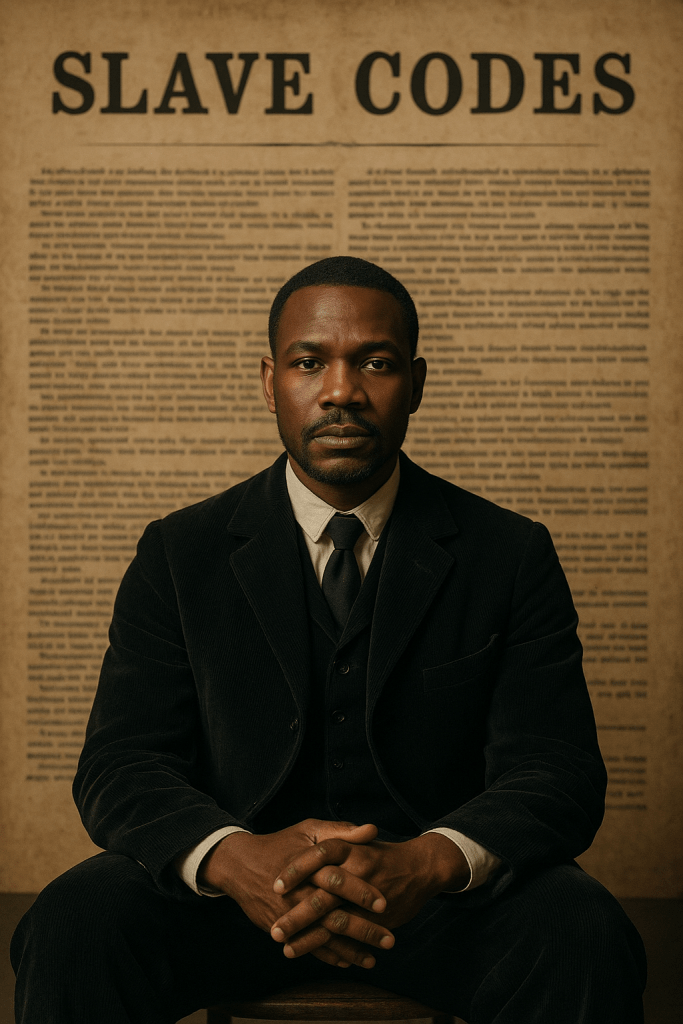
The institution of slavery in the Americas was not sustained by force alone but was codified through laws designed to regulate every aspect of enslaved Africans’ lives. These laws, known as slave codes, were crafted to protect the economic interests of slaveholders and to enforce racial hierarchy. The dilemma lies in how these codes dehumanized an entire race while simultaneously creating a legal system that institutionalized racism and justified the oppression of millions of African people (Higginbotham, 1978).

Slave codes emerged in the 17th century as colonial powers sought to control the growing African populations brought through the transatlantic slave trade. The first formalized set of slave codes appeared in Barbados in 1661, serving as a model for other colonies, including Virginia and South Carolina. These laws defined enslaved Africans not as human beings but as property—chattel—to be bought, sold, and inherited (Hall, 1992).

One of the most striking aspects of the slave codes was their comprehensive control over enslaved people’s daily lives. They restricted movement, prohibited literacy, and punished gatherings. Enslaved individuals were forbidden from assembling without white supervision, owning property, or testifying in court against white people (Berlin, 2003). These measures ensured that enslaved Africans remained socially, politically, and economically powerless.

The Virginia Slave Codes of 1705 marked a turning point in colonial America. This legislation legally solidified racial slavery by declaring that all imported non-Christian servants were to be enslaved for life. It also mandated that the status of the child followed that of the mother, guaranteeing that slavery would perpetuate across generations (Morgan, 1975). This legal structure created a hereditary caste system that positioned Blackness as synonymous with bondage.

Religious justifications often accompanied these codes. Many European colonists invoked Christianity as a moral defense for enslavement, claiming that slavery “civilized” Africans and exposed them to the gospel. However, the same laws barred the baptism of enslaved individuals from granting them freedom, illustrating the hypocrisy of such reasoning (Raboteau, 1978).

Punishments under the slave codes were brutal and served to instill fear. Whipping, branding, mutilation, and even death were common responses to resistance or attempted escape. These punishments were public spectacles meant to deter others from rebellion. The system used violence as both punishment and psychological warfare (Genovese, 1974).

The dilemma of the slave codes also extended to poor white laborers. While these laws primarily targeted Africans, they simultaneously elevated whiteness as a privileged status. Poor whites, who might otherwise have aligned with enslaved Africans due to shared economic hardship, were instead granted social superiority through racial distinction (Roediger, 1991).

This legal racial divide ensured that class solidarity among the oppressed was nearly impossible. By creating a buffer of racial privilege, the slave codes prevented the unity that could have challenged the planter elite. In this way, the laws not only oppressed Black people but also manipulated white identity for the benefit of the ruling class.

Slave codes also restricted education, fearing that literacy would inspire rebellion or awareness of rights. Enslaved individuals caught reading or writing could face severe punishment. By denying education, the system sought to suppress intellect and self-awareness among the enslaved population (Cornelius, 1991).

Religion, however, became a space of resistance. Despite prohibitions, enslaved Africans created secret worship gatherings known as “hush harbors,” blending African spiritual traditions with Christian teachings. These gatherings subverted the slave codes’ attempt to control their souls, showing that faith could serve as a form of rebellion (Raboteau, 1978).

The economic motivation behind the codes cannot be overstated. The laws protected the immense profits generated by slave labor on plantations. The human cost of this wealth accumulation was deliberately ignored, replaced by a moral rationalization that framed Africans as less than human. This economic greed formed the foundation for modern racial capitalism (Baptist, 2014).

Rebellion was the greatest fear of slaveholders, and thus the codes expanded after every insurrection. Following uprisings like the Stono Rebellion (1739) and Nat Turner’s Rebellion (1831), colonies tightened restrictions—limiting movement, banning assembly, and empowering militias to patrol enslaved communities (Egerton, 2004). The more resistance occurred, the harsher the legal controls became.

These codes were not isolated to the colonial period. After the Civil War, similar restrictions resurfaced through “Black Codes,” which sought to control freedmen by limiting their rights to work, vote, and move freely. Thus, the spirit of the slave codes lived on, transitioning from slavery to segregation (Litwack, 1998).

The legal legacy of slave codes profoundly shaped American law enforcement and criminal justice. Laws that once criminalized Black freedom evolved into modern systems of racial profiling, mass incarceration, and economic disenfranchisement. This continuity reveals how deeply the ideology of control was embedded in American governance (Alexander, 2010).

Psychologically, the slave codes inflicted generational trauma. They taught Black people that their lives were subject to constant surveillance and punishment. At the same time, they conditioned white society to associate authority with dominance over Black bodies, a mindset that still lingers in systemic racism today (hooks, 1992).

The slave codes also stripped enslaved people of family integrity. Enslaved marriages had no legal recognition, and children could be sold away at any moment. This destruction of kinship ties was another method of control, ensuring emotional dependency on slaveholders rather than familial bonds (Gutman, 1976).

Despite the overwhelming control, enslaved Africans continuously resisted—through work slowdowns, escapes, sabotage, and the preservation of culture. Their defiance proved that no law could extinguish the human will for freedom. Even within the confines of the slave codes, they found ways to reclaim their humanity (Franklin & Schweninger, 1999).

The dilemma of the slave codes challenges America’s moral conscience. These laws expose the hypocrisy of a nation that declared liberty and justice while codifying racial slavery. They reveal how systemic racism was not accidental but carefully engineered and legally enforced.

Understanding the history of the slave codes is essential to confronting present-day inequalities. They remind us that the struggle for justice requires dismantling the legal and psychological remnants of slavery that persist in modern institutions. The codes may have been abolished, but their legacy continues to echo through every system built upon their foundation.


References

Alexander, M. (2010). The New Jim Crow: Mass Incarceration in the Age of Colorblindness. New Press.
Baptist, E. E. (2014). The Half Has Never Been Told: Slavery and the Making of American Capitalism. Basic Books.
Berlin, I. (2003). Generations of Captivity: A History of African-American Slaves. Harvard University Press.
Cornelius, J. D. (1991). “When I Can Read My Title Clear”: Literacy, Slavery, and Religion in the Antebellum South. University of South Carolina Press.
Egerton, D. R. (2004). He Shall Go Out Free: The Lives of Denmark Vesey. Rowman & Littlefield.
Franklin, J. H., & Schweninger, L. (1999). Runaway Slaves: Rebels on the Plantation. Oxford University Press.
Genovese, E. D. (1974). Roll, Jordan, Roll: The World the Slaves Made. Pantheon Books.
Gutman, H. G. (1976). The Black Family in Slavery and Freedom, 1750–1925. Vintage Books.
Hall, N. A. T. (1992). Slave Society in the British Leeward Islands at the End of the Eighteenth Century. Yale University Press.
Higginbotham, A. L. (1978). In the Matter of Color: Race and the American Legal Process. Oxford University Press.
hooks, b. (1992). Black Looks: Race and Representation. South End Press.
Litwack, L. F. (1998). Trouble in Mind: Black Southerners in the Age of Jim Crow. Knopf.
Morgan, E. S. (1975). American Slavery, American Freedom: The Ordeal of Colonial Virginia. W. W. Norton & Company.
Raboteau, A. J. (1978). Slave Religion: The “Invisible Institution” in the Antebellum South. Oxford University Press.
Roediger, D. R. (1991). The Wages of Whiteness: Race and the Making of the American Working Class. Verso

The Mulatto: The Complex Legacy of Mixed-Race Identity in Slavery.

During the transatlantic slave trade and the centuries of chattel slavery that followed in the Americas, a tragic and complex racial hierarchy emerged. At its center was the “Mulatto”—a person of mixed African and European ancestry. The term itself, derived from the Spanish and Portuguese mulato, meaning “young mule,” was intended to signify something unnatural—a mix between species. This offensive origin reveals the dehumanizing way in which enslaved people were viewed, even those who bore the blood of their enslavers.

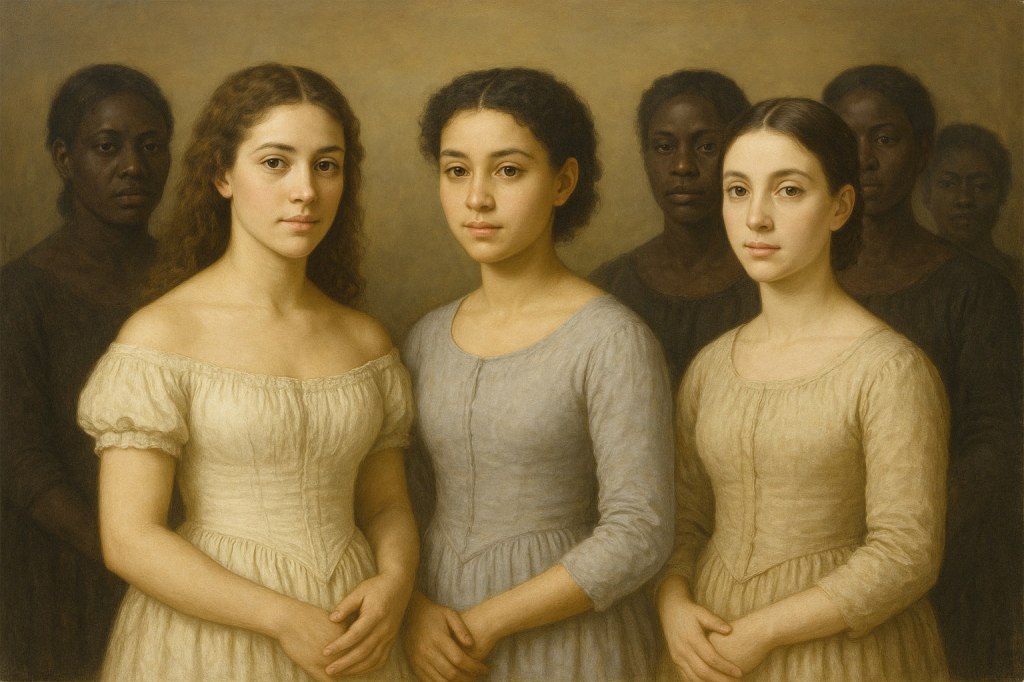
Mulattoes often came into existence through non-consensual sexual relationships between white male slave owners and enslaved African women. These unions were rarely romantic or voluntary; they were products of exploitation, coercion, and the unchecked power of white patriarchy. The children of these unions occupied an ambiguous social status. They were visibly lighter and sometimes given privileges over darker-skinned Africans, yet they were still enslaved and denied full humanity.

Economically, lighter-skinned slaves were often valued more highly in the slave markets. Auction records from New Orleans, Charleston, and the Caribbean show that Mulattoes, Quadroons, and Octoroons—terms denoting fractions of African ancestry—were sold for higher prices due to their perceived proximity to whiteness. In some cases, a beautiful light-skinned woman could fetch thousands of dollars—sometimes twice the price of a strong field laborer (Berry, 2007).

The hierarchy extended as follows: a Mulatto was half African, half European; a Quadroon was one-quarter African; and an Octoroon was one-eighth African. Each degree of whiteness supposedly brought refinement, beauty, and docility, qualities European buyers associated with superiority. This false racial science was a cornerstone of both slavery and early American eugenics.

Quadroon and Octoroon women, especially in New Orleans and parts of Louisiana, were sometimes groomed for what was known as the “plaçage” system. Under this arrangement, wealthy white men entered into unofficial unions with mixed-race women who were often educated, well-dressed, and trained in European manners. These relationships were not legal marriages but resembled concubinage. In exchange for companionship, these women received homes, money, and privileges denied to field slaves (Clark, 2013).

Plantation wives often felt deep resentment and humiliation over their husbands’ relationships with these women. The presence of mixed-race children—who sometimes lived in close proximity to the white household—served as constant reminders of betrayal. Historical letters and diaries reveal the rage, jealousy, and psychological torment many white women endured as they silently tolerated this hypocrisy (White, 1999).

Mulattoes, Quadroons, and Octoroons often worked inside the master’s home as cooks, maids, and nurses rather than in the fields. Their lighter complexion was falsely associated with higher intelligence and beauty. They became symbols of white men’s domination over both Black bodies and the institution of the family. This system reinforced colorism—a social order that persists even today.

Despite their elevated positions, these individuals lived under the same oppressive laws as all enslaved Africans. The “one-drop rule” in America classified anyone with African ancestry as Black, ensuring that even the lightest Octoroon remained enslaved if born to an enslaved mother. This legal principle ensured that slavery perpetuated itself across generations, regardless of physical appearance.

Mulattoes also faced rejection from both sides of society. They were often too “Black” to be accepted by whites, and too “white” to be fully trusted by darker-skinned slaves. This liminal identity created a painful dual consciousness—one that mirrored W.E.B. Du Bois’s later description of the “two-ness” of being both Black and American.

The valuation of mixed-race people as commodities is evident in slave ledgers and advertisements. For example, in the 1850s, a young Octoroon woman could sell for up to $3,000—a staggering sum when a skilled field hand might sell for $1,000 (Johnson, 1999). The intersection of race, beauty, and sex created a disturbing marketplace of human trafficking.

In urban centers like New Orleans, Charleston, and Havana, mixed-race women became central to elite social scenes. Some even gained temporary freedoms or wealth, though their status was always precarious. Freedom papers could be revoked, and any sign of rebellion risked severe punishment.

The plantation economy used these women as both workers and instruments of control. Their presence created divisions among enslaved people—divisions based on skin tone that mirrored European racial ideologies. This psychological warfare weakened unity among the enslaved, reinforcing white supremacy.

Christianity was also manipulated to justify this system. Slaveholders preached obedience while violating every moral tenet of the Bible. Yet enslaved people, including Mulattoes, found in Scripture the promise of deliverance. The story of Moses, the Exodus, and Deuteronomy 28 became powerful symbols of hope and identity.

After emancipation, colorism continued to shape Black communities. Some mixed-race families gained social advantages through education, passing, or wealth. Others were caught between worlds—accepted by neither the white elite nor the broader Black population.

The legacy of the Mulatto is thus deeply ambivalent. It reveals both the violence of racial oppression and the resilience of identity. The beauty, intelligence, and strength of mixed-race descendants are testimonies not to European “refinement” but to African endurance and divine grace.

The language of “Quadroon” and “Octoroon” has since been rejected as racist pseudoscience. Yet the scars of this history remain visible in modern discussions of beauty standards, social hierarchy, and representation in media.

For plantation wives, the mixed-race presence was a symbol of both moral failure and racial anxiety. For white men, it represented unchecked power. For the enslaved, it was a daily reminder of a world built on sexual exploitation and systemic cruelty.

Ultimately, the story of the Mulatto is not about privilege but pain—a reflection of how slavery corrupted family, faith, and love. It reveals the perverse intersection of race and desire that shaped America’s social fabric.

Today, scholars revisit these histories not merely to recount suffering, but to reclaim truth. The bloodlines of the enslaved, the Mulatto, the Quadroon, and the Octoroon tell a story of survival—one written not by choice, but by resilience and faith in freedom’s promise.

References

Berry, D. R. (2007). The Price for Their Pound of Flesh: The Value of the Enslaved from Womb to Grave, in the Building of a Nation. Beacon Press.

Clark, E. (2013). The Strange History of the American Quadroon: Free Women of Color in the Revolutionary Atlantic World. University of North Carolina Press.

Johnson, W. (1999). Soul by Soul: Life Inside the Antebellum Slave Market. Harvard University Press.

White, D. G. (1999). Ar’n’t I a Woman?: Female Slaves in the Plantation South. W.W. Norton & Company.