

Category Archives: sex farms

The Dangers of Pre-Marital Sex: A Biblical Warning Against Fornication.

Photo by MART PRODUCTION on Pexels.com

Pre-marital sex has become normalized in modern culture, often viewed as a rite of passage or an expression of love outside the covenant of marriage. However, Scripture consistently warns against fornication, not because God wants to withhold joy, but because He desires to protect His people from destruction. The dangers of pre-marital sex are not merely physical; they extend into the spiritual, emotional, and relational realms.

The Word of God clearly identifies fornication as sin. Paul admonishes believers to “Flee fornication. Every sin that a man doeth is without the body; but he that committeth fornication sinneth against his own body” (1 Corinthians 6:18, KJV). Unlike many other sins, sexual sin uniquely harms the body, soul, and spirit, leaving behind scars that are not easily erased.

From the beginning, God designed sex as a sacred gift within marriage. Genesis 2:24 declares, “Therefore shall a man leave his father and his mother, and shall cleave unto his wife: and they shall be one flesh.” The act of becoming “one flesh” was never intended to be casual but covenantal. Pre-marital sex distorts this divine union, creating bonds outside of God’s will.

One major danger of pre-marital sex is the spiritual bondage it creates through soul ties. When two people engage in intimacy, they are joined in a union deeper than the physical. Paul reinforces this truth: “What? know ye not that he which is joined to an harlot is one body? for two, saith he, shall be one flesh” (1 Corinthians 6:16, KJV). Such ungodly unions can lead to confusion, guilt, and emotional entanglement.

Pre-marital sex also opens the door to God’s judgment. Hebrews 13:4 reminds us: “Marriage is honourable in all, and the bed undefiled: but whoremongers and adulterers God will judge.” When sex occurs outside of marriage, it becomes defiled, bringing dishonor to both the body and the relationship. God’s design for intimacy is not meant to be played with.

Culturally, fornication often leads to broken relationships. What may begin with passion often ends with pain, betrayal, or abandonment. Without the commitment of marriage, many couples are left vulnerable to mistrust, jealousy, and heartache. Proverbs 6:32 warns, “But whoso committeth adultery with a woman lacketh understanding: he that doeth it destroyeth his own soul.” Though directed at adultery, the principle also applies to fornication—sexual sin destroys.

Pre-marital sex also carries the danger of physical consequences. Sexual diseases, unintended pregnancies, and broken homes are direct outcomes of ignoring God’s design. Galatians 6:7 declares, “Be not deceived; God is not mocked: for whatsoever a man soweth, that shall he also reap.” Those who sow seeds of fornication often reap painful harvests.

Emotionally, fornication leaves deep wounds. Many experience guilt, shame, and regret long after the act. Instead of love, sex outside marriage often brings emptiness. The Bible calls us to purity because it safeguards the heart. 1 Thessalonians 4:3–4 states, “For this is the will of God, even your sanctification, that ye should abstain from fornication: That every one of you should know how to possess his vessel in sanctification and honour.”

Pre-marital sex also hinders spiritual growth. Sin creates separation from God. Isaiah 59:2 says, “But your iniquities have separated between you and your God, and your sins have hid his face from you, that he will not hear.” Fornication creates a barrier in prayer and weakens one’s relationship with Christ.

Another danger is the loss of trust and respect in relationships. When intimacy is pursued before marriage, the foundation of commitment is shaky. Many couples who indulge in fornication before marriage struggle with infidelity and distrust later. God’s way is always meant to secure lasting peace and stability.

The Bible also highlights that pre-marital sex dishonors the temple of the Holy Spirit. Paul states, “Know ye not that your body is the temple of the Holy Ghost which is in you, which ye have of God, and ye are not your own?” (1 Corinthians 6:19, KJV). Fornication desecrates this temple and grieves the Spirit within.

Furthermore, pre-marital sex damages one’s witness as a believer. Christians are called to be holy and separate. Romans 12:1–2 urges us to present our bodies as living sacrifices, holy and acceptable to God. When believers compromise with fornication, it undermines their testimony to the world.

God offers a better way. In marriage, intimacy is pure, safe, and blessed. Proverbs 5:18–19 celebrates marital love: “Let thy fountain be blessed: and rejoice with the wife of thy youth… let her breasts satisfy thee at all times; and be thou ravished always with her love.” This is the joy and safety that God intended—love rooted in covenant.

The devil, however, seeks to corrupt God’s gift by tempting people into pre-marital sex. John 10:10 warns, “The thief cometh not, but for to steal, and to kill, and to destroy.” Fornication steals innocence, destroys relationships, and kills destinies. Recognizing this, believers must resist the enemy’s schemes.

The pressure of modern society makes chastity seem outdated, but God’s Word never changes. Malachi 3:6 declares, “For I am the LORD, I change not.” His standards for holiness remain the same regardless of shifting cultural values. True believers must choose obedience over conformity.

Those struggling with pre-marital sex are not without hope. God offers forgiveness and restoration. 1 John 1:9 assures us, “If we confess our sins, he is faithful and just to forgive us our sins, and to cleanse us from all unrighteousness.” Through repentance and surrender, God heals the broken and restores purity.

Another safeguard is accountability. Believers are called to encourage one another in holiness. Hebrews 10:24–25 reminds us to provoke one another unto love and good works. Walking with godly friends, mentors, and spiritual leaders strengthens the commitment to purity.

Paul also offers practical wisdom in 1 Corinthians 7:9: “But if they cannot contain, let them marry: for it is better to marry than to burn.” Marriage is God’s ordained solution to sexual desire, and it protects against the dangers of fornication. Choosing marriage honors God’s design and prevents unnecessary pain.

Ultimately, pre-marital sex is dangerous because it undermines God’s perfect plan for humanity. While the world promotes it as freedom, Scripture reveals it as bondage. True freedom comes in Christ, who empowers believers to live holy lives, walking in righteousness rather than sin.

In conclusion, pre-marital sex is not harmless entertainment—it is a destructive sin with spiritual, emotional, and physical consequences. God calls His people to flee fornication, to guard their hearts, and to honor marriage. By choosing purity, believers not only protect themselves but also glorify God with their bodies, which belong to Him.

References (KJV Bible):

  • “Flee fornication. Every sin that a man doeth is without the body; but he that committeth fornication sinneth against his own body.” (1 Corinthians 6:18, KJV)
  • “Marriage is honourable in all, and the bed undefiled: but whoremongers and adulterers God will judge.” (Hebrews 13:4, KJV)
  • “For this is the will of God, even your sanctification, that ye should abstain from fornication.” (1 Thessalonians 4:3, KJV)
  • “Know ye not that your bodies are the members of Christ? shall I then take the members of Christ, and make them the members of an harlot? God forbid.” (1 Corinthians 6:15, KJV)
  • “Let us walk honestly, as in the day; not in rioting and drunkenness, not in chambering and wantonness, not in strife and envying.” (Romans 13:13, KJV)
  • “But if they cannot contain, let them marry: for it is better to marry than to burn.” (1 Corinthians 7:9, KJV
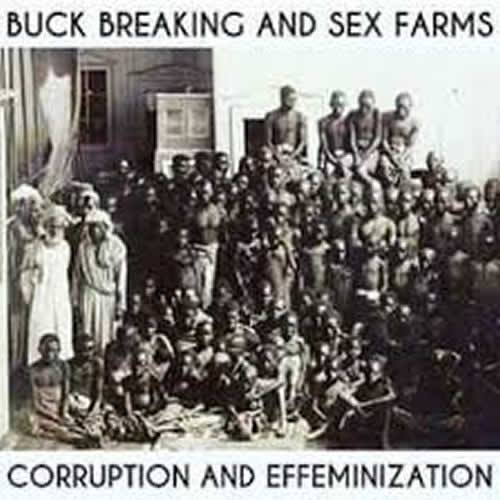
Black History: Buck Breaking/Breaking the Buck and Sex Farms.

This photograph is the property of its respective owner.


Buck-Breaking: A Historical Analysis of Sexual Violence, Power, and Psychological Warfare During American Slavery

“Buck-breaking” was a term associated with one of the most heinous and dehumanizing practices employed during the transatlantic slavery era, particularly in the Caribbean and parts of the American South. This form of sexual violence was a deliberate tool of psychological and social control, weaponized by white slaveholders to emasculate enslaved Black men, traumatize enslaved families, and dismantle any sense of resistance within the Black community.

Definition and Origins

The term buck-breaking refers to the forced sexual violation of enslaved Black men—referred to derogatorily as “bucks” by slaveholders—typically by white male enslavers. Though not widely discussed in mainstream historical texts, references to such acts are found in historical accounts, oral traditions, and emerging scholarship on slavery and sexual violence. The practice is believed to have been most rampant in the Caribbean, particularly in Jamaica and Barbados, but was also used in the American South to suppress rebellion and instill fear (Fanon, 2008; Patterson, 1982).

Purpose of Buck-Breaking

The purpose of buck-breaking was multifaceted. First, it served as a method of breaking the spirit of enslaved Black men who displayed signs of resistance or insubordination. By publicly humiliating them through sexual violence, slave owners sought to destroy their masculinity and assert total dominance. Secondly, it psychologically devastated enslaved women and children who were forced to witness the violation of their husbands, fathers, and sons. The psychological terror inflicted served as a preventive mechanism against organized rebellion (Hine, 1994).

Moreover, by using sexual violence as a spectacle, white enslavers aimed to invert traditional gender roles and strip Black men of agency, pride, and familial authority. This public act of dehumanization sent a clear message: resistance would be met with degradation, not just punishment.

Psychological Impact and Legacy

The psychological impact of such acts cannot be overstated. Enslaved families who witnessed these violations were left traumatized, with long-term implications for self-worth, masculinity, and kinship bonds. As psychiatrist Frantz Fanon (2008) noted in Black Skin, White Masks, the colonial project was not merely about physical domination but also psychological fragmentation—an internalized sense of inferiority reinforced through brutality and humiliation.

In the post-slavery era, the trauma of buck-breaking has been theorized to contribute to various sociocultural dynamics within the African American community, including distrust, the suppression of vulnerability in men, and familial disintegration.

Modern Symbolism and Myths

One controversial claim connects the modern trend of “sagging pants” to buck-breaking, arguing that it originated as a marker of sexual violation during slavery. While this claim is popular in some Afrocentric and activist circles, it is not widely supported by mainstream historical scholarship. Most academic sources trace sagging to 20th-century prison culture, where belts were often confiscated (Alexander, 2010).

Nevertheless, such narratives—true or symbolic—reflect ongoing struggles to interpret and reclaim historical trauma in a modern context.

The Caste System and Sexual Politics of Slavery

Buck-breaking fits within a broader racial caste system that valorized whiteness and weaponized Blackness. Enslaved Black men were commodified based on perceived physical strength and virility, which made their bodies both a source of economic productivity and sexual threat in the eyes of the white supremacist regime. This further justified acts of violence to control, neuter, and dehumanize them. Scholar Saidiya Hartman (1997) has written extensively on how the Black body, particularly during slavery, was the site of spectacular violence and commodified suffering.

The practice was employed as a strategic tool to:

  • Emasculate enslaved men and negate any sense of masculine authority or defiance, thus neutralizing potential rebellion.
  • Instill terror among enslaved communities by forcing families and peers to witness the sexual shame of defiance (Urban Dictionary; Face2Face Africa) Wyatt O’Brian Evans.
  • Reinforce power dynamics, making clear that black bodies were commodities to be abused and controlled.

According to emerging scholarship, “sex farms” were plantations or compound-like areas maintained for the systematic sexual exploitation of enslaved men. Slaveholders allegedly transported enslaved males from plantation to plantation for group sexual assaults, creating a traveling circuit—a grotesque and institutionalized practice (RasTafari TV) rastafari.tv.

The trauma of buck-breaking became a weapon of psychological subjugation. Witnessing a father or brother publicly violated aimed to:

  • Undermine self-worth and family cohesion.
  • Criminalize resistance internally: enslaved men who survived this abuse often left trauma not addressed and seldom spoken of (Jennings & White, via Project MUSE; TalkAfricana) Reddit+13Project MUSE+13TalkAfricana+13.

Scholars argue the degradation of masculinity under slavery contributed to long-term disruptions in identity, familial protective roles, and community cohesion (Jennings et al.; Fanon’s frameworks) Project MUSETalkAfricana.

Slaveholders also operated breeding farms where enslaved women—and sometimes men—were forcibly impregnated to increase the enslaved labor force. While breeding farms chiefly targeted women, male exploitation was part of the broader system of sexual commodification (Wikipedia; Sublette) rastafari.tv+5Wikipedia+5Wikipedia+5.

Due to stigma and silencing, rape of male slaves was rarely documented in legal records. Most evidence appears in slave narratives and case studies—making direct quantification difficult, yet multiple historians affirm these abuses occurred (Project MUSE; TalkAfricana) Wikipedia+15Project MUSE+15TalkAfricana+15.

Deuteronomy 28:68 (KJV)

“And the Lord shall bring thee into Egypt again with ships, by the way whereof I spake unto thee, Thou shalt see it no more again: and there ye shall be sold unto your enemies for bondmen and bondwomen, and no man shall buy you.”

This verse is part of the curses listed in Deuteronomy 28 for Israel’s disobedience, and many in the African American and Hebrew communities interpret it as a prophetic reference to the transatlantic slave trade, including the horrific abuses such as buck-breaking. It reflects divine foresight into the suffering of a people taken into captivity by ships, sold into slavery, and dehumanized.


Lamentations 5:11–13 (KJV)

“They ravished the women in Zion, and the maids in the cities of Judah. Princes are hanged up by their hand: the faces of elders were not honoured. They took the young men to grind, and the children fell under the wood.”

This passage mourns the violent humiliation and abuse of both men and women in the time of Judah’s destruction. The word “ravished” refers to rape and sexual abuse, and “took the young men to grind” is understood by many biblical scholars to imply forced labor and sexual humiliation.


Isaiah 3:9 (KJV)

“The shew of their countenance doth witness against them; and they declare their sin as Sodom, they hide it not. Woe unto their soul! for they have rewarded evil unto themselves.”

While originally a rebuke to the people of Judah, this verse indicts all who, like the men of Sodom, openly commit abominable acts—such as sexual assault or humiliation—and refuse to repent. It reflects God’s judgment against those who violate others.

Conclusion and Theological Reflections

The atrocity of buck-breaking is not merely a historical footnote—it is a wound in the collective memory of the African diaspora. Understanding it is crucial to unpacking the complex intersection of race, sexuality, power, and trauma. For believers, it is also a call to lament, to pursue justice, and to reclaim dignity lost through centuries of dehumanization. Scripture reminds us that every person is made in the image of God (Genesis 1:27), and that the destruction of one’s dignity—especially through acts of sexual violence—is an affront to the Creator Himself. Deliverance from such trauma involves truth-telling, communal healing, and a return to a biblical vision of wholeness, where no one’s humanity is reduced to their body, race, or utility.

References:

Alexander, M. (2010). The New Jim Crow: Mass Incarceration in the Age of Colorblindness. The New Press.

Fanon, F. (2008). Black Skin, White Masks (R. Philcox, Trans.). Grove Press.

Hartman, S. (1997). Scenes of Subjection: Terror, Slavery, and Self-Making in Nineteenth-Century America. Oxford University Press.

Hine, D. C. (1994). Hine Sight: Black Women and the Re-construction of American History. Indiana University Press.

Patterson, O. (1982). Slavery and Social Death: A Comparative Study. Harvard University Press.

Face2Face Africa. (2019). 5 horrifying ways enslaved African men were sexually exploited and abused by their white masters 3CHICSPOLITICO+1Wyatt O’Brian Evans+1.


Jennings, T. A., et al. (2024). Sexual abuse of Black men under American slavery. Project MUSE Journal. Project MUSE


TalkAfricana. (2023, May 30). Buck Breaking: How slave masters used rape to emasculate enslaved African men. TalkAfricana


RasTafari TV. (2024). Sex farms during slavery & the effeminization of Black Men. Wikipedia+13rastafari.tv+13Project MUSE+13