Category Archives: science

The Sigma Female

Photo by murat esibatir on Pexels.com

The concept of the Sigma female has emerged in recent years as a counterpart to the widely discussed archetypes of Alpha and Beta personalities. While the terms Alpha and Beta have roots in mid-20th-century studies of social hierarchies in animals, the Sigma designation is newer, largely popularized through internet culture, self-help literature, and modern psychology-inspired discourse. The Sigma female represents a woman who is independent, self-sufficient, and unconcerned with fitting into traditional dominance hierarchies, yet commands respect through quiet confidence and resilience.

History of the Term

The notion of Alpha and Beta hierarchies originates from studies of wolf packs by biologist Rudolf Schenkel in 1947, later expanded by David Mech in the 1970s. While these concepts became entrenched in popular culture, the “Sigma” archetype is far more modern, appearing in online forums and sociocultural commentary around the early 2010s. The Sigma male concept gained traction first, symbolizing men who thrive outside hierarchies. Soon after, writers and commentators extended the term to describe women who embody similar traits of independence and nonconformity.

Who Coined the Sigma Female?

Although there is no singular psychologist who “invented” the term, cultural commentators, especially within manosphere and self-development circles, began to distinguish Sigma females as a response to overused Alpha-Beta dichotomies. It was essentially a grassroots, internet-driven evolution of social archetypes rather than a strictly academic creation. Scholars in psychology now examine it as a cultural phenomenon reflecting contemporary women’s shifting roles in society.

Core Characteristics of a Sigma Female

The Sigma female is primarily defined by her independence. She neither seeks dominance over others, like the Alpha, nor does she passively follow, like the Beta. Instead, she walks her own path. Traits often attributed to her include introversion, high intelligence, adaptability, emotional depth, and self-reliance. She can lead but does not seek leadership for validation, choosing influence over visibility.

🔺 Comparison Chart: Alpha vs. Beta vs. Sigma Female

TraitAlpha Female 🦁Beta Female 🕊️Sigma Female 🐺
Core IdentityDominant leader, thrives on visibility and control.Supportive, nurturing, seeks harmony and security.Independent, self-sufficient, thrives outside hierarchies.
Social RoleCommands attention, often the “queen bee.”Follower or peacemaker in groups.Loner or quiet influencer, moves in and out of social spaces by choice.
MotivationRecognition, power, status.Stability, approval, belonging.Freedom, authenticity, personal growth.
Leadership StyleDirect, commanding, assertive.Supportive, cooperative, avoids conflict.Subtle, influential, leads by example, not force.
Confidence SourceExternal validation, dominance in group.Approval and affirmation from others.Internal self-trust, discipline, and autonomy.
EmpathyCan be high but secondary to ambition.Very high, often prioritizes others over self.Deep, quiet empathy—authentic but selective.
ToleranceTolerates followers but not rivals.Tolerates much, often avoids confrontation.Does not tolerate manipulation, dishonesty, or disrespect.
Romantic AttractionAttracted to high-status, powerful men.Attracted to protective, stable partners.Attracted to strong, emotionally intelligent men (often Stoic or Sigma males).
View of IndependenceLeads groups but thrives within them.Relies on group approval and security.Fully independent, comfortable alone, thrives in solitude.
Perception by MenPowerful, sometimes intimidating but desirable.Gentle, approachable, less threatening.Mysterious, magnetic, often intimidating because of her self-sufficiency.
Archetypal SymbolThe Lioness 🦁The Dove 🕊️The Lone Wolf 🐺

📌 Key Takeaway:

  • Alpha = Power in dominance.
  • Beta = Power in cooperation.
  • Sigma = Power in independence.

Psychological Framework

From a psychological perspective, the Sigma female can be associated with traits of high self-efficacy (Bandura, 1997), introversion (Jung, 1921), and autonomy (Deci & Ryan, 1985). Her confidence is rooted internally, rather than from external validation. This positions her within self-determination theory, which emphasizes autonomy, competence, and relatedness as pillars of motivation.

Unique Empathy of the Sigma Female

Though often reserved, Sigma females are noted for their deep empathy. They listen carefully, feel emotions profoundly, and connect with others on an intuitive level. Unlike Alpha personalities, who may dominate conversations, Sigmas observe and analyze, often offering insight only when it is meaningful. This makes their empathy less performative and more authentic, rooted in genuine care.

What a Sigma Female Will Not Tolerate

Sigma females are known for their strong boundaries. They will not tolerate manipulation, dishonesty, or disrespect. Because they value authenticity, they are quick to withdraw from toxic relationships or environments. This intolerance is not rooted in arrogance but in self-preservation and recognition of their worth.

Positive Traits of the Sigma Female

The Sigma female embodies a range of positive traits: adaptability, resilience, creativity, independence, and emotional intelligence. She is often misunderstood as aloof, but her quiet strength inspires admiration. These qualities enable her to thrive in solitude and in community, shifting seamlessly between roles depending on context.

Distinctions from the Alpha Female

Unlike the Alpha, the Sigma does not need the spotlight. While Alpha women lead overtly and command attention, Sigma women influence subtly, often preferring to lead by example rather than directive authority. The Alpha thrives in social dominance; the Sigma thrives in self-mastery.

Distinctions from the Beta Female

In contrast to Beta women, who often seek comfort, harmony, and direction from others, Sigma women are comfortable with discomfort and uncertainty. Beta females may rely more heavily on group approval, whereas Sigmas prefer to remain self-reliant and are unafraid of solitude.

Men Who Attract Sigma Females

The Sigma female is drawn to men who are strong, emotionally intelligent, and respectful of her independence. Stoic men, who embody resilience and self-control, often appeal to Sigma women because they mirror her inner strength. Another Sigma male may also be compatible, as both value autonomy and depth, though this pairing requires balance to avoid emotional distance.

Beliefs of the Sigma Female

A Sigma female believes in authenticity, personal freedom, and living according to her values rather than societal expectations. She often rejects shallow trends, materialism, and empty validation. Her philosophy is one of intentionality, seeking meaning rather than approval.

Men’s Perception of the Sigma Female

Men often perceive Sigma females as mysterious, alluring, and somewhat intimidating. Because she does not chase attention or validation, her presence can be both attractive and challenging to men accustomed to traditional dynamics. She commands respect naturally, even without seeking it.

The Psychology of Attraction to Sigma Women

Research on attraction suggests that independence and competence increase desirability (Eastwick et al., 2014). The Sigma female embodies both, making her appealing to men who value substance over surface. However, insecure men may feel threatened by her autonomy.

How to Know If You Are a Sigma Female

A woman may identify as Sigma if she prefers independence, feels comfortable in solitude, values authenticity above popularity, sets strong boundaries, and navigates life with quiet strength. Unlike Alphas or Betas, she defines herself on her own terms, unconcerned with fitting neatly into categories.

Sigma Female in Leadership

Though not always seeking formal leadership roles, Sigma females often rise to leadership because of their competence, reliability, and innovative thinking. They lead without ego, inspiring through authenticity rather than dominance.

Cultural Relevance of the Sigma Female

The rise of the Sigma female archetype reflects cultural shifts toward valuing authenticity, individuality, and female empowerment beyond traditional hierarchies. It symbolizes resistance to being defined solely in relation to men or group dynamics, aligning with modern feminist thought.

Critiques of the Sigma Archetype

Some psychologists critique the Sigma concept as pseudoscientific, pointing out that it lacks rigorous empirical validation. However, its popularity in culture highlights people’s need for new ways of understanding complex identities. It functions more as a symbolic tool than a scientific classification.

The Strength of the Sigma Female

Ultimately, the Sigma female is unique because she thrives outside the expectations of others. Her empathy, strength, and independence make her not only rare but also inspiring. She proves that true confidence does not shout—it simply exists, unwavering.

Conclusion

The Sigma female represents a woman who is both grounded and transcendent, existing beyond hierarchies yet shaping them through her quiet influence. She is not an Alpha, nor a Beta, but something else entirely: a self-sustained force who redefines what it means to be powerful. Her story is not just cultural—it is psychological, spiritual, and deeply human.


📚 References

  • Bandura, A. (1997). Self-efficacy: The exercise of control. New York: W.H. Freeman.
  • Deci, E. L., & Ryan, R. M. (1985). Intrinsic motivation and self-determination in human behavior. Springer Science & Business Media.
  • Eastwick, P. W., Eagly, A. H., Finkel, E. J., & Johnson, S. E. (2014). Implicit and explicit preferences for physical attractiveness in a partner. Personality and Social Psychology Bulletin, 40(9), 1081–1093.
  • Jung, C. G. (1921). Psychological types. Princeton University Press.
  • Schenkel, R. (1947). Ausdrucks-Studien an Wölfen. Behaviour, 1(1), 81–129.
  • Mech, D. (1970). The Wolf: The Ecology and Behavior of an Endangered Species. University of Minnesota Press.

The Science of Beauty (Celebrity Edition)

Beauty has long captivated philosophers, artists, theologians, and scientists alike, prompting a timeless question: Is beauty a biologically grounded reality, or is it shaped by the beholder’s eye and cultural imagination? Contemporary research suggests the answer lies at the intersection of both. Beauty, though subjective in its cultural expressions, draws from deeply embedded evolutionary cues, genetic factors, and perceptual biases that shape human attraction and social response.

Human beings are biologically attuned to detect cues of health, vitality, and fertility, which often manifest physically. From skin clarity to facial symmetry and body proportions, these physical traits historically signaled reproductive fitness in ancestral environments. Modern psychology calls these traits “fitness indicators,” linking beauty to evolutionary survival mechanisms (Gangestad & Scheyd, 2005).

Yet beauty is also profoundly psychological, shaped by memory, cultural storytelling, spiritual symbolism, and personal experience. One person may be moved by sharp cheekbones and porcelain skin, another by full lips and rich melanin, another by youthful softness and roundness—differences rooted not only in personal taste but also in social history and racial conditioning.

At its core, beauty involves four primary pillars of facial aesthetics: symmetry, averageness, sexual dimorphism (masculinity or femininity), and skin quality. Each contributes to how observers process faces rapidly and subconsciously, forming impressions within milliseconds (Willis & Todorov, 2006).

Symmetry often reflects developmental stability and genetic health. Faces with high symmetry evoke greater automatic liking and trust, even across cultures. Yet perfect symmetry is neither common nor necessary; slight asymmetry can add human uniqueness and charm—what many call “character.”

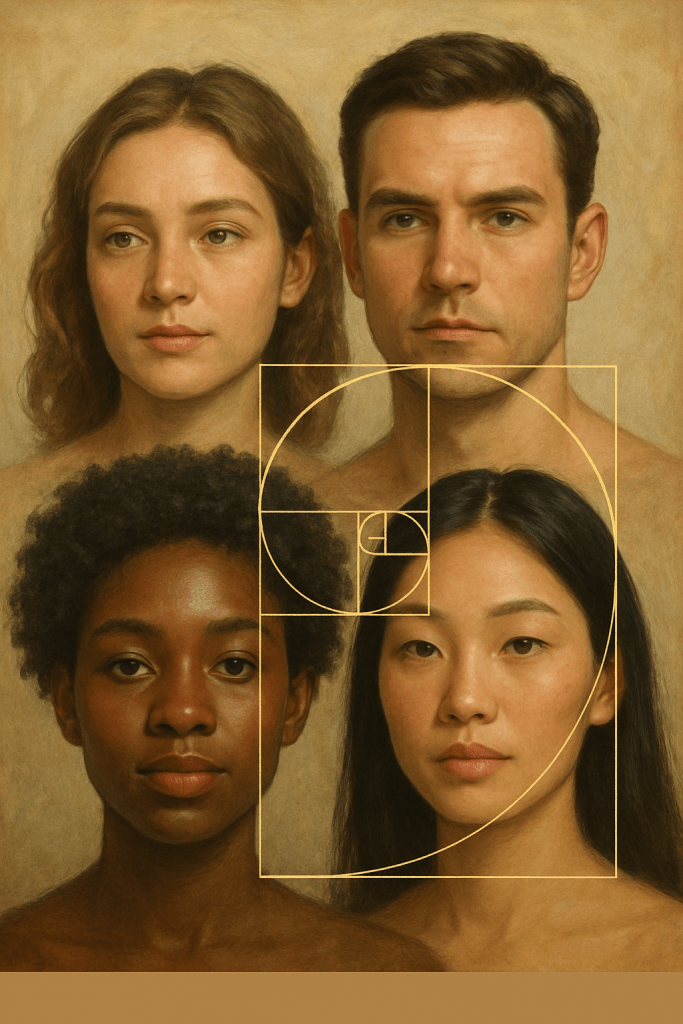
Averageness, or the degree to which a face resembles a statistical norm, is another universal beauty marker. Averaged facial composites are consistently rated as attractive across ethnic groups, a finding famously demonstrated in computer-generated studies (Langlois & Roggman, 1990). The logic is evolutionary: average features may represent genetic diversity and health.

Sexual dimorphism signals fertility and hormone levels. Feminine features in women—large eyes, full lips, high cheekbones, and a soft jawline—are often preferred, while masculine traits in men—defined jaws, brow prominence, and broader faces—signal strength and protection. However, preferences for masculinity versus gentleness in male faces fluctuate with social context and female hormonal cycles (Penton-Voak et al., 1999).

Skin quality communicates health, youth, and vitality. Smooth texture, even tone, and luminosity are associated with strong immune systems and good nutrition. Across global cultures, clear skin maintains its status as a beauty cornerstone.

Skin color, however, reflects complex biological and sociocultural meaning. Biologically, melanin protects against ultraviolet damage; culturally, shades of skin have been politicized, especially in societies shaped by colonialism and caste stratification. While media norms historically elevated lighter tones, global appreciation for diverse skin tones continues to grow, particularly as cultural representation expands.

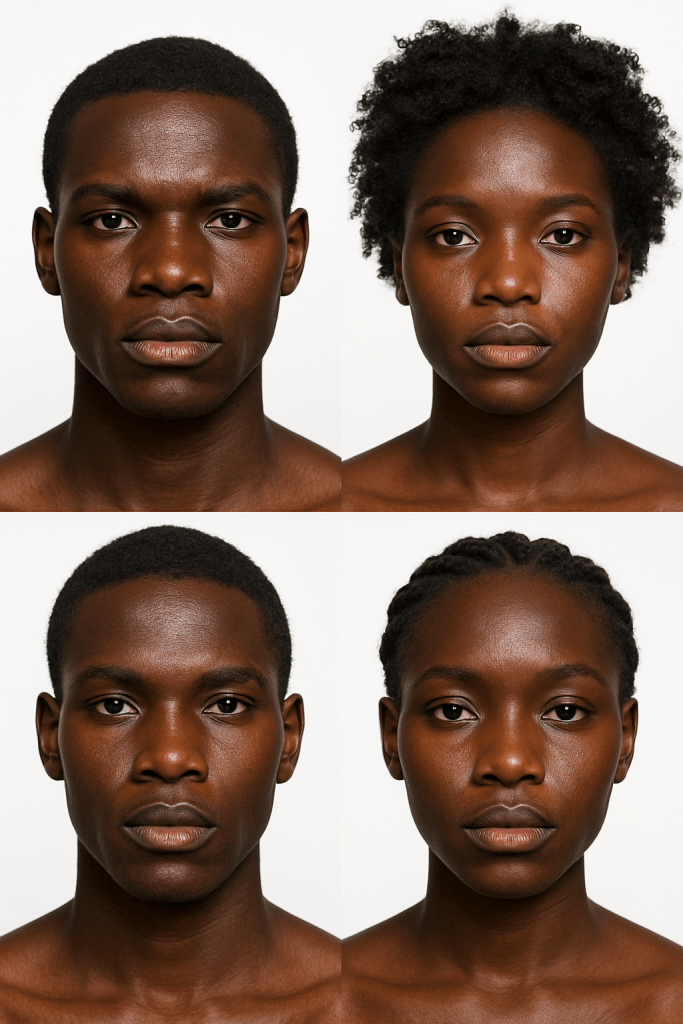
Facial features carry racial aesthetics rooted in ancestry and geography. African diasporic features—strong cheekbones, full lips, deeper eye shapes, and rich melanin—reflect adaptation to equatorial environments and hold beauty that is regal, ancestral, and ancient. East and South Asian features carry their own elegance, harmony, and distinct eye and jaw structures shaped by climate and evolution. European features, often associated with delicate bone structure and lighter pigmentation, reflect northern climate adaptations.

Preferences across racial groups can shift depending on exposure and cultural power. Research shows that beauty ideals mirror societies’ dominant ethnic imagery and media representation (Rhodes, 2006). When representation expands, perception expands; when representation narrows, imagination shrinks.

Beyond the face, body proportions also influence attraction. The hourglass figure—waist-to-hip ratio around 0.7—is cross-culturally linked to fertility and hormonal balance in women (Singh, 1993). The V-shaped torso in men—broad shoulders tapering to the waist—signals strength and physical capability. Yet contemporary beauty movements increasingly celebrate diversity in body shapes, challenging rigid biological interpretations.

Psychology reminds us that beauty also resides in the emotional aura one carries—confidence, grace, humor, humility, and depth. A mathematically beautiful face with a cold spirit lacks radiance; a sincere and joyful countenance shines regardless of ratio perfection.

Culturally, beauty narratives can become oppressive if stripped from humanity. When beauty becomes a tool of hierarchy, exclusion, or racial bias, it harms self-worth and limits collective imagination. Yet when understood as both art and biology, wonder and science, beauty becomes empowering—a study in divine craftsmanship and evolutionary brilliance.

Across civilizations, beauty has also symbolized holiness and divinity. In sacred traditions, beauty reflects harmony, order, and spiritual balance. To see beauty rightly is, in a sense, to see God’s fingerprint in human form.

Modern neuroscience reveals that beauty activates the brain’s reward system, lighting up emotional and cognitive pathways associated with pleasure, meaning, and social connection (Ishizu & Zeki, 2011). Beauty is not trivial—it shapes social bonds, inspires creativity, and nurtures emotional well-being.

Still, beauty remains plural. What one considers ethereal, another overlooks. This plurality reminds humanity to honor the diverse expressions of creation rather than idolize a single mold.

True sophistication lies in appreciating structural science while honoring cultural dignity and individual uniqueness.

The Aesthetics of Feminine Beauty: Structure, Ancestry, and Archetype

Angelina Jolie — The Geometry of Allure & Evolutionary Feminine Magnetism

Angelina Jolie occupies a uniquely enduring place in global beauty discourse, often referenced as a benchmark for feminine facial aesthetics in modern Western and global culture. Her beauty blends structural precision with sensual softness, positioning her as an exemplar of balanced sexual dimorphism—where feminine softness coexists with sculpted angularity. This duality creates a visual signature that is both delicate and commanding, an interplay that captivates biological instinct and artistic perception.

Lips: The Icon of Fullness & Sexual Dimorphism

Jolie’s lips are among the most frequently studied and emulated features in contemporary cosmetic literature. Naturally voluminous and rich in vermilion visibility, her lips signal estrogen dominance, youthfulness, and reproductive health—universal biological cues linked to attraction. From an evolutionary standpoint, fuller lips are associated with sexual maturity and fertility, which explains their cross-cultural desirability. Her upper-to-lower lip balance (slightly fuller lower lip) reflects proportions considered near ideal in facial aesthetics, driving her influence on modern beauty standards and cosmetic enhancement trends.

Cat-Like Eyes: Exotic Shape & Feminine Intensity

Jolie’s almond-shaped, slightly upturned “cat eyes” provide a dramatic focal point in her facial architecture. Eyes of this shape elongate the face visually and create a natural femme fatale quality—mysterious, intense, and slightly predatory in aesthetic psychology. The subtle upward tilt at the lateral canthus gives a lifted effect that conveys alertness, youth, and emotional depth. Wide palpebral fissure dimensions, combined with thick lash framing and contrasting scleral brightness, reinforce a look associated with sensual power and aristocratic elegance across cultures.

Cheekbones: Sculpted Definition & High-Angle Contour

Her high, sharply contoured cheekbones are hallmarks of classical facial beauty, associated with genetic refinement, low facial adiposity, and strong bone density. Prominent cheekbones create natural shadow structures, emphasizing facial depth and camera-readability—features prized in film and photography. Their angular projection enhances facial sculpting, achieving a balance between feminine softness and architectural definition, a combination found in many historically celebrated beauties and fine-art portrait archetypes.

Face Shape: A Harmonious Fusion of Angles & Curves

Jolie’s face shape—an oval base with diamond-like cheek prominence and tapered jawline—is highly prized in aesthetic science. Oval-diamond hybrid shapes distribute facial volume evenly while maintaining lift, contour, and visual flow. Her structure avoids heaviness in the lower face, maintaining an upward geometric movement associated with youth, vitality, and social dominance in facial perception research.

The slightly squared yet refined jaw adds strength without sacrificing femininity, creating a commanding presence that appeals to psychological constructs of confidence, leadership, and sophistication. Her bone structure exemplifies the balance between grace and power, traits often found in individuals who become cultural icons rather than mere beauties.

Cultural & Psychological Impact

Angelina Jolie’s phenotype shaped early-21st-century beauty norms, influencing media, fashion, and cosmetic ideals for decades. Yet her beauty transcends formulaic metrics. Her features—dramatic yet harmonious, exotic yet classical—create a face of mythic proportions, one that feels ancient and modern at once. She represents beauty that is not merely symmetrical, but expressive, sculptural, cinematic, and biologically resonant.

Her look reminds scholars and admirers that beauty is not a checklist, but an orchestration: a synergy of proportion, emotion, bone structure, and presence.

Angelina Jolie is not simply a beautiful woman—she is a case study in aesthetic equilibrium, where genetics, evolution, and artistic design converge to create a face that altered global beauty psychology for a generation.

Halle Berry — The Hybrid Genetic Ideal & Cross-Cultural Feminine Symmetry

Halle Berry represents one of the most widely discussed embodiments of cross-ethnic beauty, often cited in academic and media discussions for her balanced facial proportions, luminous skin tone, and universal appeal. Her beauty illustrates the evolutionary concept of hybrid vigor—sometimes observed in mixed-ancestry individuals—where genetic blending may produce heightened symmetry, structural balance, and perceived attractiveness due to diverse gene pools contributing to developmental stability.

Facially, Berry’s beauty aligns with key scientific markers: high cheekbones, large almond-shaped eyes, harmonious jaw contours, and soft feminine curvature in facial geometry. Her lips sit in ideal proportion to her facial width, offering fullness without exaggeration, reflecting the evolutionary preference for cues of health and fertility. Her bone structure exemplifies moderate facial dimorphism, balancing feminine refinement with subtle strength—traits often favored in attraction psychology for signaling both approachability and resilience.

Her medium-to-deep melanin richness carries biological advantages, including photoprotection and even skin tone, which historically signaled youth, vitality, and genetic health. Socially, Berry’s complexion sits at a complex intersection of racial aesthetics in Western society—light enough to fit Eurocentric media structures, yet richly melanated enough to embody the ancestry of African diasporic beauty. Her global appeal underscores how diverse phenotypic representation expands beauty norms, showing that elegance, symmetry, and melanin co-exist powerfully in the global beauty landscape.

Culturally, Halle Berry’s ascent challenges Hollywood’s historically narrow beauty standards while simultaneously showing the psychological impact of representation. Her presence in leading roles positioned Black women—particularly women of African descent with mixed heritage—at the forefront of mainstream desirability and cinematic admiration. In beauty science, she serves as a living example of the harmony between genetic diversity, feminine softness, and symmetrical architecture, demonstrating that the world’s perception of beauty is enriched when multiple ancestral aesthetics are elevated.


Aishwarya Rai BachchanThe Golden Ratio & Classical Indian Beauty Aesthetics

Aishwarya Rai Bachchan is globally regarded as one of the most mathematically and symmetrically balanced faces ever studied in beauty science. Numerous aesthetic analyses and plastic-surgery research forums reference her facial structure when examining the Golden Ratio (Phi ≈ 1.618) and the harmony of classical beauty proportions. With wide-set almond eyes, a delicately sculpted nose, high cheekbones, balanced brow arches, and a soft yet defined jawline, her face demonstrates significant alignment with geometric principles associated with visual harmony.

Her eyes—large, bright, and elongated—anchor her facial expression, enhanced by long ciliary framing and a luminous scleral contrast. Eye prominence is a universal beauty cue linked to perceptions of youthfulness and warmth. Rai’s lips present gentle fullness, maintaining proportion with her nose-to-chin ratio and facial width, while her skin tone—creamy golden-brown with undertones reflecting South Asian pigmentation—embodies the richness of subcontinental ancestry shaped by climate, diet, and genetic evolution.

Unlike Western beauty ideals, Rai exemplifies South Asian feminine archetypes: soft sensuality, serene expression, refined bone structure, and traditionally prized features such as expressive eyes, smooth skin, and balanced facial width-to-height ratios. Her aesthetic presence challenges the assumption that Western features define universal beauty, proving that global admiration expands when the media honors diverse phenotypes rather than conforming them to European standards.

Her legacy also represents India’s historical relationship with beauty—rooted in classical sculpture, Ayurveda, temple aesthetics, and cinematic glamour. She symbolizes a bridge between biology and cultural symbolism, demonstrating how evolutionary symmetry, genetic ancestry, and cultural identity converge to produce a beauty standard that is both scientifically admired and spiritually revered.

Through her worldwide impact, Rai reinforces a central truth in beauty theory: when different regions of the world are seen through their own aesthetic lens—not filtered through colonial beauty hierarchies—new archetypes emerge that reshape global perception.

Lupita Nyong’o — Melanin Majesty & the Reclamation of African Aesthetics

Lupita Nyong’o stands as a living counter-narrative to colorism, Eurocentric hierarchy, and media-driven beauty conditioning. Her deep ebony complexion represents the highest concentration of eumelanin—an evolutionary masterpiece formed under intense equatorial sunlight, offering superior photoprotection and antioxidant capacity. In biological terms, her skin reflects genetic strength, evolutionary adaptation, and biochemical richness.

Her facial structure—high cheekbones, balanced forehead ratio, sculpted jaw, and refined nasolabial contour—embodies classic East African beauty typology. While Western beauty messaging historically marginalized phenotypes like hers, Nyong’o’s global rise demonstrates a profound perceptual shift: society’s expanding ability to see beauty without colonial filters. She represents the scientific and spiritual sanctity of melanin—a reminder that beauty does not exist only where power once resided.

Her presence in luxury fashion, cosmetics, and cinema marks a critical psychological milestone: the re-education of the global eye, where African features are no longer contextualized by struggle alone but by regality, brilliance, purity, and cosmic depth.


Naomi Campbell — Supermodel Proportions & Runway Phenotype Perfection

Naomi Campbell occupies a distinct place in beauty science: the aerodynamic runway phenotype. Her face exhibits sharp angles, pronounced cheekbones, elongated bone structure, and symmetrical alignment that photographs with precision under high fashion lighting—features evolutionarily rare and visually commanding.

Genetically rooted in Afro-Caribbean ancestry with African origins, her facial and body proportions align with elite model requirements—long limbs, narrow waist, and a naturally elongated silhouette. Her allure lies not only in symmetry but in a predictive aesthetic: her presence anticipated and reshaped fashion’s future acceptance of global beauty archetypes long before diversity became corporate vocabulary.

Campbell embodies the endurance of beauty—her longevity challenges stereotypes that feminine allure expires with age. She exists as a beauty constant, proving that genetic elegance paired with discipline and presence can transcend decades.


Sophia Loren — Mediterranean Femininity, Maturity & Timeless Aesthetic Biology

Sophia Loren represents fertility, warmth, and classical European sensuality rooted in Mediterranean genetics. Her full lips, olive complexion, voluptuous hourglass frame, and deep-set eyes reflect a phenotype sculpted by Italy’s climate, diet, and cultural ideals of womanhood.

Her beauty shines not only in youth but in maturation—demonstrating the biology of aging attractiveness. While collagen decreases and skin texture shifts over time, Loren’s charisma and poise reconstruct desirability beyond youthful symmetry alone. She represents the scientific truth that confidence, emotional intelligence, and feminine self-possession amplify beauty in ways no algorithm can quantify.

Loren proves beauty is not merely a stage of life but a temperament and inheritance, where maturity can refine rather than diminish allure.


Monica Bellucci — Voluptuous Elegance & Curvilinear Facial Harmony

Monica Bellucci is celebrated for her high romantic femininity—full lips, balanced brow-to-chin ratio, luminous olive skin tone, and soft jaw curvature. She exemplifies the classical Roman ideal: rounded features, sensual warmth, and proportional symmetry.

Bellucci’s appeal increases with age, embodying “slow beauty”—a style rooted in patience, subtle expression, and the unhurried grace of a woman who exists beyond the male gaze’s urgency. Her mature presence defies Western pressure toward hyper-youth, proving that feminine allure deepens with lived experience.

Her phenotype demonstrates that beauty science is not exclusively concerned with numerical symmetry—softer geometry and emotional magnetism hold equal power.


Rihanna — Asymmetry Allure, Fashion Evolution & Global Aesthetic Disruption

Rihanna’s beauty defies classic symmetry. Her face carries subtle asymmetries—slightly varied eye height, sharp nasal structure, and angular cheekbones—which paradoxically intensify her appeal. This supports contemporary research showing controlled asymmetry can enhance uniqueness and memorability, qualities prized in entertainment and fashion psychology.

Her Caribbean heritage expresses itself in golden-brown undertones, full lips, defined bone angles, and radiant melanin—a phenotype rooted in African ancestry and island hybridity.

Rihanna’s power lies in rebellion against aesthetic predictability. She transitions between tomboy streetwear, haute couture royalty, and avant-garde experimentalism. Her beauty is kinetic, culturally fluid, and emotionally bold—a demonstration that aesthetic dominance in the modern era belongs not only to symmetry, but to audacity, originality, and identity mastery.

The Aesthetics of Masculine Beauty: Structure, Ancestry, and Archetype

Masculine beauty carries its own evolutionary, spiritual, and sociocultural language. Unlike feminine aesthetics—often oriented toward softness, symmetry, and fertility cues—male attractiveness typically combines strength, structure, dominance, emotional command, and noble restraint. Across civilizations, philosophers, sculptors, and poets sought to define manly allure: not merely in muscle or features, but in presence, posture, and the unspoken aura of discipline and legacy.

Modern research emphasizes facial width-to-height ratio, pronounced jawlines, cheekbone projection, brow ridge shape, skin luminosity, vocal resonance, and posture as biological signals tied to testosterone, genetic vitality, and leadership psychology. Yet science alone cannot measure charisma, dignity, emotional intelligence, and ancestral weight—qualities deeply expressed in Black male beauty.

The following case studies explore how three contemporary figures exemplify this masculine aesthetic paradigm.


Idris Elba — The Sovereign Masculine Archetype

Idris Elba embodies the regal masculine template—a fusion of strength, maturity, and quiet dominance. His face reveals structural masculinity: a broad and angular mandible, balanced zygomatic arch, deep-set eyes, and a pronounced brow ridge. These features signal high testosterone equilibrium, conveying confidence and genetic fitness without aggression.

Elba’s rich melanin tone enhances facial definition and symmetry perception, while his salt-and-pepper beard symbolizes wisdom, virility, and maturity—traits increasingly valued in global beauty psychology, countering youth-fixated Western standards. His voice—deep, resonant, and paced with intentional cadence—reinforces alpha calmness rather than performative dominance.

Culturally, he represents a shift from Hollywood’s historically Eurocentric masculine standard, standing as an international symbol of Black elegance, romantic power, and ancestral nobility. His beauty lies not only in his bone structure, but in restraint, confidence, and sovereign emotional command—the beauty of a king in stillness.


Morris Chestnut — Symmetry, Warm Masculinity & Melanin Radiance

Morris Chestnut exemplifies the harmonious masculine ideal—strength balanced by warmth, approachability, and emotional presence. His facial geometry demonstrates symmetrical alignment, strong cheek projection, refined jaw shape, and balanced eye spacing, amplifying perceptions of reliability and trustworthiness.

Chestnut’s smooth, deep brown complexion reflects a youth-preserving melanin advantage and a velvety visual texture associated with vitality, health, and masculine elegance. His physique presents the archetypal mesomorphic V-shape with balanced muscularity—not exaggerated, but powerful, athletic, and functional.

Unlike harsh or stoic masculine portrayals, Chestnut’s beauty carries emotion—softness without fragility, strength without intimidation, affection without surrender. He represents the psychological appeal of a man who protects, honors, and loves deeply—where masculine beauty meets moral presence and relational steadiness.

He is the beloved protector archetype, a man whose beauty feels like home.

Brad Pitt — Symmetry, Masculine Bone Architecture, and the Evolutionary Template of Western Male Beauty

Brad Pitt remains one of the most enduring examples of Western masculine beauty, functioning not only as a cultural icon but also as an anatomical benchmark in aesthetic and evolutionary studies. His face exhibits exceptional synthesis of symmetry, proportional golden-ratio alignment, and sexually dimorphic facial structure, making him a biological ideal often used in academic discussions on human attractiveness. Like classical sculpture and Renaissance male portraiture, Pitt’s beauty sits at the intersection of mathematical harmony and primal masculine signaling — a rare duality that fuels universal appeal.

Genetically, Pitt represents Northern European ancestry, with phenotypic traits associated with Anglo-Germanic and Celtic lineages — lighter pigmentation, angular craniofacial structure, and pronounced brow ridge formation. These phenotypes historically symbolize noble lineage and heroic archetypes in European art and cinema. Evolutionary theorists argue that traits like high jawbone density, pronounced midface projection, and balanced brow structure correlate with both high prenatal androgen exposure and perceived genetic fitness, further positioning Pitt within a biological category associated with dominance, health, and competitive success.

Pitt’s facial symmetry is a primary contributor to his aesthetic ranking. His facial thirds (forehead, midface, lower face) display balanced proportion, and his jawline is sharply squared yet smooth at transition points — a structural harmony rarely seen naturally without surgical intervention. His cheekbones are prominent but not excessively wide, maintaining a masculine yet elegant silhouette. Studies on golden ratio facial mapping frequently align his eye spacing, nose-to-lip distance, and jawline angles with idealized phi-based ratios, reinforcing the mathematical underpinnings of his attractiveness.

Ultimately, Brad Pitt’s face and career demonstrate that beauty is not merely an accident of biology, but a convergence of genetics, symmetry, evolutionary signaling, and myth-building. His structure aligns with measurable scientific ideals, while his cultural positioning amplifies those signals into legend. He is not simply “attractive”; he is a case study in how symmetry, proportion, sexual dimorphism, and sociocultural storytelling unite to create a near-universal masculine ideal. Pitt’s image endures as both specimen and symbol — a living blueprint for modern Western male beauty.

Michele Morrone — Mediterranean Genetic Aesthetics, Sexual Dimorphism, and the Romance-Warrior Archetype

Michele Morrone embodies the modern Mediterranean masculine ideal — a fusion of sculpted facial symmetry, deep pigmentation richness, and sensual expressiveness. His features align with classical Southern European beauty archetypes similar to ancient Roman busts and Renaissance masculine portraiture. Morrone’s appearance exists at the intersection of rugged virility and poetic seduction, making him a compelling evolutionary and cultural study in male attractiveness across global audiences. As with iconic “Italian Lover” archetypes, his beauty derives not only from structural precision but also from emotional depth and sultry allure.

Genetically, Morrone represents the Southern Italian / Mediterranean genetic cluster, characterized by higher melanin levels, darker eye and hair pigmentation, dense facial hair growth, and pronounced midface projection. These phenotypes historically emerge from regions where sunlight, climate, and evolutionary sexual selection favored stronger pigmentation and soft yet dominant bone structure. His phenotype reflects ancient Italic and Levantine genetic exchanges — a beauty narrative rooted in both Roman nobility and ancient Eastern influence, producing a hybrid of warrior masculinity and sensual mystique.

Morrone’s beauty is defined by both structural balance and striking sexual dimorphism. His deep-set hooded eyes, strong brow ridge, and masculine orbital depth convey primal dominance and intensity — traits associated with testosterone symmetry and mate-selection preference. His high, sculpted cheekbones, narrow midface taper, and angular jawline reinforce a predatory masculine silhouette, yet his smooth malar transition, full lips, and warm eye softness provide romantic contrast. Like Pitt, he represents dual signaling, but Morrone leans more heavily into the seductive-dominant phenotype rather than the heroic-noble archetype.

Ultimately, Michele Morrone represents the Mediterranean apex of male beauty — a harmonious convergence of bone architecture, pigmentation advantage, sensual expressiveness, and evolutionary sexual dimorphism. His aesthetic is mathematically balanced yet emotionally charged, scientific yet poetic. In him, symmetry meets soul, masculine strength meets romantic danger, and ancient phenotype meets modern cinematic fantasy. Morrone stands not merely as a handsome man but as an embodied phenotype-myth — a living testament to how genetics, psychology, culture, and archetypal storytelling construct global male beauty.


Regé-Jean Page — Aristocratic Geometry & Refined Masculinity

Regé-Jean Page represents the aristocratic masculine phenotype: high cheekbones, narrow nasal bridge, tapered jawline, and symmetrical contours suggesting refined androgen expression rather than brute strength. His features evoke classical sculpture—elegant, chiseled, poetic, and noble.

A signature trait is his gaze—controlled, observant, emotionally intelligent—communicating internal life rather than stoic emptiness. Beauty science recognizes the allure of expressive masculine eyes as a cue of cognitive depth, empathy, and courtship intelligence.

His skin tone—a smooth espresso-warm hue—reflects Sub-Saharan ancestry blended with European structural proportions, yielding a hybrid aristocratic profile treasured in global aesthetics: ancient yet modern, royal yet youthful, commanding yet romantic.

He embodies the gentleman-warrior aesthetic: not the brute, but the refined sovereign; not the conqueror, but the enlightened ruler—the masculine ideal framed not only by bone, but by dignity.


Closing Reflection: The Divine Craftsmanship of Masculine Beauty

The beauty of men is not accidental—it is architectural, ancestral, and spiritual. In all of them, we see sovereignty, warmth, and devotion. An aristocratic refinement. Each represents a chapter in the book of masculine creation:

  • Strength without brutality
  • Leadership without arrogance
  • Beauty without vanity
  • Emotion without weakness
  • Power anchored in restraint

Such men redefine beauty as heritage, posture, discipline, and presence, reminding a fractured world that true masculine allure is not born in muscle alone, but in character, ancestry, and sacred purpose.

Ultimately, beauty is not merely what the world sees; it is what the soul radiates. Science gives language to structure, but spirit, culture, memory, and emotion complete the portrait.

Beauty is both seen and felt, shaped by biology and breathed through humanity. In its purest form, beauty is a gift—rooted in nature, refined through culture, and crowned by individuality.


References

Gangestad, S. W., & Scheyd, G. J. (2005). The evolution of human physical attractiveness. Annual Review of Anthropology, 34, 523–548.

Ishizu, T., & Zeki, S. (2011). Toward a brain-based theory of beauty. PLOS ONE, 6(7).

Langlois, J. H., & Roggman, L. A. (1990). Attractive faces are only average. Psychological Science, 1(2), 115–121.

Penton-Voak, I. S., et al. (1999). Menstrual cycle alters face preference. Nature, 399(6738), 741–742.

Rhodes, G. (2006). The evolutionary psychology of facial beauty. Annual Review of Psychology, 57, 199–226.

Singh, D. (1993). Adaptive significance of female physical attractiveness. Journal of Personality and Social Psychology, 65(2), 293–307.

Willis, J., & Todorov, A. (2006). First impressions: Making up your mind after a 100-ms exposure. Psychological Science, 17(7), 592–598.

What are the Neuro Linguistic Programming Techniques You Can Use Instantly?

Neuro-Linguistic Programming, commonly known as NLP, explores how language, thought patterns, and behavior interact to shape human experience. At its core, NLP suggests that small shifts in perception and communication can produce immediate changes in emotional states and responses.

One instantly usable NLP technique is anchoring. Anchoring involves associating a specific physical action, word, or image with a desired emotional state. By consciously recalling a confident or calm moment and pairing it with a gesture, individuals can later activate that state on demand.

Reframing is another foundational NLP tool that can be applied immediately. This technique involves changing the meaning assigned to a situation rather than the situation itself. By asking what else an experience could represent or what lesson it offers, emotional responses often shift rapidly.

Mirroring and matching are interpersonal NLP techniques that improve rapport. Subtly aligning posture, tone, or pacing with another person can create a sense of psychological safety and connection. When people feel understood, communication becomes more fluid and effective.

Language patterns play a critical role in NLP. Simply changing from absolute language such as “always” or “never” to more flexible phrasing like “sometimes” or “so far” can reduce internal pressure and open space for growth and problem-solving.

Visualization is an NLP strategy that engages the brain’s sensory systems. By vividly imagining a successful outcome using sight, sound, and feeling, individuals prime their nervous system for confidence and preparedness. The brain often responds to imagined success similarly to real experience.

The swish pattern is a rapid NLP technique designed to interrupt unwanted habits or thoughts. It works by replacing a negative mental image with a compelling positive one in quick succession, weakening the old association and strengthening a new, empowering response.

State management is central to NLP practice. Instead of asking why one feels a certain way, NLP focuses on how to shift states. Simple actions such as changing posture, breathing rhythm, or focus can immediately alter emotional energy.

Meta-cognition, or thinking about thinking, is another NLP-aligned skill. Becoming aware of internal dialogue allows individuals to challenge unhelpful narratives and consciously replace them with constructive language.

NLP emphasizes sensory awareness through representational systems. Paying attention to whether one thinks primarily in images, sounds, or feelings can enhance communication and self-understanding. Adjusting language to match these systems increases clarity and impact.

Future pacing is an NLP technique that mentally rehearses desired behaviors in upcoming situations. By imagining oneself responding calmly or confidently in advance, the brain becomes familiar with the behavior, making it easier to execute when the moment arrives.

Chunking is a cognitive NLP strategy that manages overwhelm. Breaking large goals into smaller, achievable steps reduces resistance and increases motivation. Conversely, chunking up helps individuals reconnect with purpose by seeing the bigger picture.

Pattern interruption is a fast NLP tool for shifting emotional states. Doing something unexpected, such as changing physical position or altering speech tempo, disrupts automatic reactions and creates space for conscious choice.

NLP also teaches precision in questioning. Asking better questions, such as “What specifically do I want instead?” directs attention toward solutions rather than problems, influencing both mindset and behavior instantly.

Submodalities refer to the fine details of mental imagery, such as brightness, size, or distance. Changing these qualities can dramatically alter emotional intensity. For example, shrinking or dimming a distressing image often reduces its emotional charge.

Rapport with oneself is just as important as rapport with others. NLP encourages aligning values, beliefs, and actions to reduce internal conflict. When inner communication improves, external behavior often follows.

NLP techniques can be particularly effective in moments of anxiety or self-doubt. Redirecting attention, shifting language, or adjusting body posture can calm the nervous system within minutes, restoring a sense of control.

Critics note that NLP varies in empirical support, yet many techniques align with established cognitive-behavioral and psychological principles. Its practical appeal lies in its accessibility and immediate applicability.

Ethical use of NLP is essential. Techniques designed to enhance communication and self-regulation should never be used to manipulate or coerce. Responsible practice prioritizes consent, authenticity, and personal growth.

Ultimately, NLP offers a toolkit rather than a doctrine. The techniques that work best are those applied with self-awareness, intention, and consistency. Small shifts in language, focus, and behavior can create meaningful changes in daily life.


References

Bandler, R., & Grinder, J. (1975). The structure of magic I: A book about language and therapy. Science and Behavior Books.

Dilts, R. (1990). Changing belief systems with NLP. Meta Publications.

Dilts, R., Grinder, J., Bandler, R., DeLozier, J., & Cameron-Bandler, L. (1980). Neuro-Linguistic Programming: The study of the structure of subjective experience. Meta Publications.

Kahneman, D. (2011). Thinking, fast and slow. Farrar, Straus and Giroux.

Linder-Pelz, S., & Hall, L. M. (2007). The empirical case for NLP. NLP World.

Tosey, P., & Mathison, J. (2010). Neuro-linguistic programming as an innovation in education and teaching. The Curriculum Journal, 21(4), 433–456.

The Science of Beauty: Decoding the Biology, Psychology, and Perception of Aesthetics.

Beauty has long fascinated philosophers, scientists, and artists alike, as it intersects both the tangible and intangible aspects of human existence. While often considered subjective, beauty also possesses measurable biological and psychological dimensions that have been studied across disciplines such as evolutionary biology, neuroscience, and sociology. The science of beauty seeks to understand why certain features, forms, and proportions are universally regarded as attractive and how these perceptions influence human behavior and social dynamics.

Evolutionary biology offers a foundation for understanding beauty through the lens of survival and reproduction. Charles Darwin’s theory of sexual selection posits that beauty functions as a biological signal of health, fertility, and genetic fitness (Darwin, 1871). Facial symmetry, for instance, is often interpreted as an indicator of developmental stability and resistance to disease, leading individuals with symmetrical faces to be perceived as more attractive.

Symmetry is not merely an aesthetic ideal but a biological marker. Studies show that facial symmetry is associated with optimal hormone levels, fewer genetic mutations, and stronger immune systems (Rhodes, 2006). This biological alignment resonates subconsciously with observers, who interpret symmetry as a sign of good genes—a preference encoded over millennia of human evolution.

Another key concept in the science of beauty is the “golden ratio,” or phi (approximately 1.618), which describes a mathematical proportion found throughout nature, architecture, and the human body. Research has shown that faces approximating the golden ratio are consistently rated as more attractive (Marquardt, 2002). The Marquardt facial mask, designed to reflect these ideal proportions, has become a scientific model for analyzing facial harmony.

However, beauty extends beyond mathematics. Facial features such as full lips, clear skin, and high cheekbones also influence perceptions of attractiveness because they are subconsciously associated with youth, vitality, and reproductive capability (Etcoff, 1999). These traits act as visual cues that have guided human mate selection throughout history.

Neuroscience further enriches our understanding by exploring how the brain responds to beauty. Neuroimaging studies show that when individuals view faces they perceive as beautiful, the brain’s reward center—the medial orbitofrontal cortex—is activated (Aharon et al., 2001). This activation mirrors responses to pleasurable stimuli such as music or food, suggesting that beauty engages both cognitive and emotional circuits.

Psychological research has long examined the “halo effect,” a cognitive bias where physically attractive individuals are perceived as more intelligent, kind, and capable (Dion, Berscheid, & Walster, 1972). This effect reveals how deeply ingrained visual perception is in shaping human judgment and social hierarchies.

Cultural and racial variations complicate the notion of universal beauty. While certain traits are globally appreciated, cultural contexts shape aesthetic ideals. For example, Western media historically favored Eurocentric features—fair skin, narrow noses, and lighter eyes—whereas African, Asian, and Indigenous societies have celebrated diverse beauty markers such as darker skin tones, fuller bodies, and textured hair (Hunter, 2011).

In the modern era, beauty is also intertwined with media influence and technology. Social media platforms amplify specific beauty standards through filters, digital editing, and algorithms that reward particular looks. This digital aesthetic homogenization can distort self-perception and promote unrealistic ideals (Fardouly & Vartanian, 2016).

The cosmetics and fashion industries further reinforce the commercial side of beauty. The global beauty industry, valued at over $500 billion, capitalizes on insecurities by marketing transformation as empowerment. Yet this commodification raises ethical questions about authenticity and self-worth (Jones, 2021).

Beauty perception is also influenced by hormones and genetics. For example, testosterone levels are linked to masculine facial features such as a strong jawline, while estrogen contributes to features considered feminine, such as soft skin and fuller lips (Thornhill & Gangestad, 1999). These biological signals influence attraction subconsciously, reflecting reproductive compatibility.

Beyond physical features, behavioral expressions such as confidence, warmth, and kindness can enhance perceived attractiveness. Research suggests that beauty is dynamic—animated expressions, body language, and voice tone can transform how a person is viewed (O’Doherty et al., 2003).

The role of melanin in beauty has also been scientifically explored. Melanin not only determines skin tone but also provides photoprotection and age resistance (Kaidbey et al., 1979). Yet, despite its biological advantage, darker skin has often been devalued in societies shaped by colonial and colorist histories.

The psychological toll of beauty bias is profound. Studies link appearance-based discrimination to lower self-esteem, depression, and social anxiety (Rumsey & Harcourt, 2005). This underscores the importance of diversifying beauty ideals to promote psychological well-being and cultural inclusivity.

Beauty also intersects with moral and spiritual philosophy. Biblical and philosophical traditions have long grappled with whether beauty is a reflection of inner goodness or mere external vanity. As Proverbs 31:30 (KJV) reminds us, “Favor is deceitful, and beauty is vain: but a woman that feareth the Lord, she shall be praised.”

Modern science aligns with this idea by revealing that kindness, empathy, and positive energy can alter facial perception—literally making individuals appear more attractive through microexpressions and improved emotional resonance (Little, Burt, & Perrett, 2006).

Aesthetic medicine and cosmetic surgery have blurred the line between natural and artificial beauty. While technological advancements allow individuals to enhance or alter features, the psychological motivation often stems from conformity to societal pressures rather than personal fulfillment (Sarwer et al., 2005).

From a sociological perspective, beauty functions as a form of cultural capital. French sociologist Pierre Bourdieu (1984) argued that aesthetic preferences are tied to social class and education, reinforcing social hierarchies by defining what is considered “refined” or “desirable.”

The future of beauty science lies in inclusivity and authenticity. With increased awareness of genetic diversity, researchers are beginning to celebrate broader definitions of beauty that reflect global humanity rather than narrow ideals. This evolution aligns with the growing understanding that beauty is both innate and learned—an interplay of biology, culture, and consciousness.

Ultimately, the science of beauty reveals a profound truth: beauty is both a mirror and a mystery. It reflects our biological heritage while embodying the values of the societies we build. To understand beauty is to understand humanity itself—a species constantly seeking harmony between the seen and the unseen, the body and the soul.


References

Aharon, I., Etcoff, N., Ariely, D., Chabris, C. F., O’Connor, E., & Breiter, H. C. (2001). Beautiful faces have variable reward value: fMRI and behavioral evidence. Neuron, 32(3), 537–551.

Bourdieu, P. (1984). Distinction: A social critique of the judgement of taste. Harvard University Press.

Darwin, C. (1871). The descent of man, and selection in relation to sex. John Murray.

Dion, K., Berscheid, E., & Walster, E. (1972). What is beautiful is good. Journal of Personality and Social Psychology, 24(3), 285–290.

Etcoff, N. (1999). Survival of the prettiest: The science of beauty. Anchor Books.

Fardouly, J., & Vartanian, L. R. (2016). Social media and body image concerns: Current research and future directions. Current Opinion in Psychology, 9, 1–5.

Hunter, M. (2011). Race, gender, and the politics of skin tone. Routledge.

Jones, M. (2021). Beauty and capitalism: The cultural economy of aesthetics. Palgrave Macmillan.

Kaidbey, K. H., Agin, P. P., Sayre, R. M., & Kligman, A. M. (1979). Photoprotection by melanin—a comparison of black and Caucasian skin. Journal of the American Academy of Dermatology, 1(3), 249–260.

Little, A. C., Burt, D. M., & Perrett, D. I. (2006). Assortative mating for perceived facial personality traits. Personality and Individual Differences, 40(5), 973–984.

Marquardt, S. R. (2002). Dr. Stephen Marquardt’s Phi Mask: The mathematical formula of beauty. Journal of Aesthetic Dentistry, 12(2), 55–65.

O’Doherty, J., Winston, J., Critchley, H., Perrett, D., Burt, D. M., & Dolan, R. J. (2003). Beauty in a smile: The role of medial orbitofrontal cortex in facial attractiveness. Neuropsychologia, 41(2), 147–155.

Rhodes, G. (2006). The evolutionary psychology of facial beauty. Annual Review of Psychology, 57, 199–226.

Rumsey, N., & Harcourt, D. (2005). The psychology of appearance. Open University Press.

Sarwer, D. B., Crerand, C. E., & Didie, E. R. (2005). Body image and cosmetic medical treatments. Body Image, 2(4), 321–333.

Thornhill, R., & Gangestad, S. W. (1999). Facial attractiveness. Trends in Cognitive Sciences, 3(12), 452–460.

Beauty Is in the Eyes of the Beholder

Beauty has fascinated philosophers, scientists, and artists for centuries, yet it remains one of the most complex and debated concepts in human experience. When someone says, “Beauty is in the eyes of the beholder,” they acknowledge that what we find attractive is not universal. Two people can look at the same face—Brad Pitt, Denzel Washington, Aishwarya Rai Bachchan, or Kim Kardashian—and have completely different reactions. Some may see perfection, while others feel no attraction at all. This divergence raises a profound question: how can one object or person produce such opposite interpretations?

Human perception of beauty emerges from the interplay between biology, culture, psychology, and personal experience. While some elements of attractiveness are rooted in genetic preferences for health, symmetry, or fertility, these biological cues do not act alone. They are filtered through upbringing, environment, history, and learned values. Thus, beauty can be both subjective and objective at the same time—anchored in natural instincts yet shaped by social forces.

Beauty becomes subjective because each person’s mind interprets stimuli differently. The brain does not merely record what the eyes see; it interprets, edits, analyzes, and assigns meaning. Experiences from childhood, cultural exposure, family influences, societal ideals, and even personal insecurities shape how we judge attractiveness. Two people standing side-by-side may share the same visual input but generate entirely different emotional responses.

Opposing views arise because people possess individual histories that influence how they categorize beauty. Someone raised in a family that praises lighter skin may grow up prioritizing those features, while another who grows up surrounded by deep-toned beauty may find richness in melanin to be the ultimate ideal. In this sense, environment acts like a lens that shapes the raw genetic instincts built into us.

While some individuals find global icons like Brad Pitt or Aishwarya Rai incredibly attractive, others may not respond emotionally to their features. This does not diminish the beauty of the individual; it highlights the complexity of perception. Attraction depends not only on the features themselves but also on how a person’s brain interprets those features in relation to memories, associations, and internal biases.

Childhood plays a powerful role in shaping what we find attractive. Children absorb subtle messages from parents, television, social media, and peers. They observe which faces receive praise, who is considered desirable, and how beauty is talked about. These early impressions become mental templates—what psychologists call “imprinting”—that influence adult preferences. A child repeatedly exposed to a certain beauty ideal is more likely to absorb that ideal subconsciously.

Genetics contributes to attraction by shaping innate preferences. Humans across cultures tend to favor certain biological cues such as facial symmetry, clear skin, proportional features, and expressions of health. These cues signal good genes, fertility, and survival advantages. For example, symmetry suggests developmental stability, while clear skin signals health. However, genetics does not dictate which specific faces each person finds beautiful; it merely provides a blueprint for general tendencies.

Beauty is subjective because perception relies on neural pathways formed over time. The brain creates shortcuts known as heuristics to interpret attractiveness quickly. These heuristics depend heavily on exposure, conditioning, and familiarity. What one person recognizes as beautiful, another may interpret differently based on the mental filters they’ve developed. In other words, beauty is partly a reflection of the beholder’s inner world.

It is true that everyone who looks at you views you differently. Each observer applies their own criteria, experiences, social conditioning, and emotional states to the image before them. You do not appear the same to all people because people do not possess identical mental frameworks. Every face becomes a personal puzzle that each mind solves in its own way.

Opinions of beauty are formed through a mixture of biological impulses and cognitive associations. The brain’s reward pathway, especially the release of dopamine, influences how strongly we react to certain features. If a particular face or feature activates positive associations—perhaps it resembles a loved one or cultural icon—the viewer experiences attraction. If it triggers negative or unfamiliar associations, attraction diminishes.

Many of our thoughts about beauty originate from early exposure. Family shapes our initial ideals when we are young. Culture adds another layer by reinforcing images, standards, and expectations through media and tradition. Religion and community can shift perceptions by emphasizing modesty, purity, strength, or specific gender roles. These influences blend into a personal algorithm that defines what each person considers beautiful.

The subjectivity of beauty is amplified by social comparison. People learn to categorize faces through repeated exposure, and these categories evolve with societal values. When society celebrates a certain celebrity, body type, hairstyle, or skin tone, our understanding of beauty shifts along with it. Over time, these societal shifts influence how individuals form preferences.

In addition, personal experiences shape perception. A person who associates a specific facial type with a negative memory may feel aversion, even if that facial type is widely considered attractive. Conversely, someone who has positive emotional experiences associated with certain features may find those features beautiful regardless of societal standards.

Cultural diversity plays a tremendous role in shaping beauty standards. What is ideal in one society may be average or even unappealing in another. For example, some cultures prize fuller figures, while others emphasize slimness. Some value high cheekbones, while others prioritize softer features. Beauty does not exist in a vacuum—it is embedded in cultural narratives.

Genetics also influences how we perceive beauty through evolutionary psychology. Humans are drawn to cues that historically increased the likelihood of survival and reproduction. For example, certain facial ratios—like the distance between the eyes and mouth—are universally preferred because they signal youthfulness and health. Yet these universal preferences do not override cultural and personal variation.

Beauty appears subjective because the brain reacts not only to physical features but also to emotional meaning. A face can become more attractive to someone they love, admire, or trust, while it can become less attractive if associated with negative experiences. Attraction is not static; it evolves depending on emotional context.

Our reactions to beauty also stem from cognitive biases. Familiarity bias makes us favor what we already know. Similarity bias makes us find people more attractive if they resemble us or our loved ones. Novelty bias can make unfamiliar beauty thrilling or intimidating, depending on a person’s personality and past experiences.

Beauty can shift over time because the mind is adaptable. As people experience different cultures, travel, relationships, and life changes, their perceptions of beauty expand. What one considered unattractive years earlier may become appealing as they mature or as societal standards evolve.

Psychology suggests that beauty perception is linked to identity. People often gravitate toward beauty that validates their sense of self—culturally, racially, spiritually, or emotionally. Thus, beauty becomes a mirror reflecting not only the object being viewed but also the inner state of the viewer.

Opposing views on beauty are also influenced by environment and exposure. Someone raised in an environment where natural hair, melanated skin, or certain facial features were celebrated will grow up with different ideals than someone surrounded by Eurocentric standards. Beauty is a reflection of cultural conditioning.

Subjectivity in beauty is further shaped by emotional connection. A person may find someone more attractive after learning about their personality, kindness, or intelligence. Conversely, someone physically beautiful may become unattractive if their behavior is cruel. The emotional dimension modifies the visual perception.

Another contributor to beauty’s subjectivity is personal insecurity. People often project their desires, fears, or self-judgments onto their perception of others. A person insecure about their own appearance may judge beauty more harshly, while someone confident or emotionally balanced may find beauty in a wider range of faces.

Opinions about beauty also depend on social trends. Celebrities, influencers, and media continually reshape what is considered desirable. As trends evolve—from voluptuous bodies to slim waists, from tanned skin to porcelain tones—public preferences shift with them. Beauty becomes a moving target.

The neurological basis of attraction reveals that the brain rewards patterns it finds aesthetically pleasing. These patterns may include facial symmetry, proportionality, and the golden ratio. Yet the brain’s reward center can be trained to find new patterns beautiful with enough exposure.

Beauty remains subjective because no two people share identical life experiences. The emotional, genetic, cultural, and psychological ingredients that form a person’s preferences are unique. Thus, beauty varies as widely as personalities, languages, and worldviews.

The idea that everyone sees you differently is grounded in neuroscience. Each person’s brain processes visual stimuli through unique connections formed over the years. Thus, you exist in many forms—thirty people see thirty different versions of you, shaped by their internal narratives.

Ultimately, the subjectivity of beauty emphasizes the diversity of human experience. What one person finds breathtaking, another may overlook. This diversity enriches the human story, preventing beauty from becoming a rigid or uniform standard.

Beauty is both personal and universal. It is rooted in biology but refined by culture, shaped by childhood, altered by experience, and influenced by personality. This interplay ensures that no definition of beauty is final or absolute.

Our thoughts about beauty arise from a combination of instinct and experience. While evolutionary biology gives us a framework, the mind colors perception through memory, emotion, and environment. Therefore, beauty remains one of the most personal judgments a human can make.

In the end, beauty’s subjectivity is what makes it powerful. It reminds us that attraction is not a science to be perfected but a reflection of the beholder’s inner world. Beauty lives in perception, memory, culture, genetics, and soul. It is as varied and precious as the people who define it.

References

Bzdok, D., Langner, R., Schilbach, L., Jakobs, O., Roski, C., Caspers, S., … Eickhoff, S. B. (2011). Neural correlates of emotional valence judgments: A functional MRI meta-analysis. NeuroImage, 54(3), 2233–2244.

Darwin, C. (1871). The descent of man, and selection in relation to sex. London: John Murray.

DeBruine, L. M., & Jones, B. C. (2017). Face preferences. In Encyclopedia of evolutionary psychological science (pp. 1–12). Springer.

Etcoff, N. (1999). Survival of the prettiest: The science of beauty. Anchor Books.

Grammer, K., Fink, B, Møller, A. P., & Thornhill, R. (2003). Darwinian aesthetics: Sexual selection and the biology of beauty. Biological Reviews, 78(3), 385–407.

Jones, B. C., DeBruine, L. M., Little, A. C., & Feinberg, D. R. (2007). Social transmission of face preferences among humans. Proceedings of the Royal Society B, 274(1611), 899–903.

Langlois, J. H., Kalakanis, L., Rubenstein, A. J., Larson, A., Hallam, M., & Smoot, M. (2000). Maxims or myths of beauty? A meta-analytic and theoretical review. Psychological Bulletin, 126(3), 390–423.

Little, A. C., Jones, B. C., & DeBruine, L. M. (2011). Facial attractiveness: evolutionary based research. Philosophical Transactions of the Royal Society B, 366(1571), 1638–1659.

Rhodes, G. (2006). The evolutionary psychology of facial beauty. Annual Review of Psychology, 57, 199–226.

Said, C. P., & Todorov, A. (2011). A statistical model of facial attractiveness. Psychological Science, 22(9), 1183–1190.

Thornhill, R., & Gangestad, S. W. (1999). Facial attractiveness. Trends in Cognitive Sciences, 3(12), 452–460.

Zebrowitz, L. A. (1997). Reading faces: Window to the soul? Westview Press.

Negroid Type: From Pseudoscience to Sacred Heritage

The term Negroid has long been one of the most controversial concepts in the study of human variation. Once used by anthropologists to categorize people of African descent, it has since become emblematic of the pseudo-scientific ideologies that underpinned racism, colonialism, and slavery. Yet, beyond its misuse, the study of African physical diversity, genetics, and spirituality reveals a deeper truth: the African phenotype represents the foundation of humanity itself.

Origins of the Term
The classification “Negroid” emerged in the late eighteenth and nineteenth centuries as part of the typological system developed by European naturalists such as Johann Friedrich Blumenbach. Blumenbach (1779) divided humankind into five “races”: Caucasoid, Mongoloid, Malayan, American, and Negroid. These categories, though influential, were based on superficial physical traits such as skin color, hair texture, and cranial measurements—not on actual biological lineage.

Scientific Racism and Colonial Expansion
Throughout the nineteenth century, the concept of the Negroid type became weaponized to justify slavery, imperialism, and racial hierarchy. Scientists like Samuel George Morton and Josiah C. Nott collected skulls and measured crania, falsely concluding that Africans had smaller brains and thus lesser intelligence. These ideas, later termed “scientific racism,” provided a veneer of legitimacy to the transatlantic slave trade and segregationist ideologies (Gould, 1996).

The Myth of Racial Purity
Racial typologies assumed that human groups were biologically distinct and hierarchically ordered. However, modern genetics has decisively refuted the notion of “pure races.” The Human Genome Project revealed that all humans share over 99.9% of their DNA, and that genetic variation within Africa is greater than that found between all other continents combined (Tishkoff et al., 2009). Thus, Africa is not a singular type, but the cradle of all human diversity.

Anthropological Evolution
Contemporary anthropology has moved away from fixed racial typologies toward an understanding of clinal variation—continuous, overlapping patterns of traits shaped by environment and adaptation. Features once associated with the so-called Negroid type—broad noses, full lips, dark skin, and tightly curled hair—are now recognized as adaptive responses to tropical climates, offering protection against ultraviolet radiation and dehydration (Jablonski, 2004).

Reclaiming the African Image
Despite its colonial misuse, many Afrocentric scholars have sought to reclaim the imagery associated with African phenotypes. The so-called Negroid features are not markers of inferiority but signatures of ancestral distinction and beauty. From the pyramids of Kemet to the kingdoms of Mali, Songhai, and Benin, these features have been celebrated in sculpture, iconography, and divine representation (Diop, 1974).

Theological Dimensions
In biblical interpretation, several theologians and Hebraic scholars suggest that many of the ancient Israelites and patriarchal figures were people of African or Afro-Asiatic descent (Hotep, 2012). Scriptures such as Jeremiah 8:21 and Song of Solomon 1:5 (“I am black but comely”) reflect an awareness of dark skin within sacred contexts. The “Negroid” image thus becomes not merely anthropological but theological—a reflection of divine creation in melanin.

The Melanin Doctrine
Melanin, the pigment responsible for skin color, has become central to Afrocentric spirituality and scientific theology. It is viewed not only as a biological substance but as a symbol of resilience, energy absorption, and divine intelligence. Modern science supports its importance as a natural protector against solar radiation and free radicals, granting both physiological and psychological strength (Barnes, 1998).

The Role of Genetics
Genetic anthropology has revealed that haplogroups such as E1B1A, prevalent among West and Central Africans, trace back tens of thousands of years and connect to ancient migrations across the Nile Valley and the Levant. This lineage further challenges Eurocentric narratives by demonstrating that African ancestry is central to the genesis of civilization, language, and spirituality (Keita & Boyce, 2005).

African Beauty and the Divine Aesthetic
Throughout art, history, and media, features once denigrated under “Negroid typology” have reemerged as powerful symbols of divine beauty. Full lips, coiled hair, and rich melanin have become icons of aesthetic authenticity. Artists, scholars, and theologians alike now celebrate these traits as reflections of the Imago Dei—the image of God expressed through African physiognomy.

The Psychological Aftermath of Typology
The lasting effects of racial classification systems manifest in colorism, internalized racism, and self-rejection among people of African descent. The colonial distortion of beauty and worth has caused generational trauma. However, through education, cultural pride, and spiritual renewal, many communities are redefining blackness as a state of sacred dignity rather than inherited shame (hooks, 1992).

Decolonizing Anthropology
To move forward, anthropology must continue to deconstruct Eurocentric frameworks and amplify African epistemologies. Decolonized scholarship acknowledges that Africa is not a peripheral contributor to human evolution—it is the epicenter. This perspective redefines the so-called Negroid type not as a scientific label but as an ancestral spectrum of human origin and identity.

The Biblical Lineage of Nations
Several biblical genealogies align with African migrations. Ham, the progenitor of Cush, Mizraim, and Canaan, is traditionally associated with African civilizations. Afro-Hebraic interpretations propose that the original Israelites shared ancestral links with these Afro-Asiatic peoples, connecting scriptural heritage to African identity (Ben-Yehuda, 2018).

Africa as Mother of Civilization
Civilizations such as ancient Nubia, Egypt, and Ethiopia challenge Western assumptions of white antiquity. These empires exhibited complex governance, literacy, architecture, and theology millennia before Europe’s Renaissance. Thus, the “Negroid” type, once portrayed as primitive, is historically proven to be the architect of civilization itself (Diop, 1974).

The Curse Narrative Debunked
The misuse of the biblical “curse of Ham” narrative historically justified slavery and segregation. However, critical exegesis reveals no divine condemnation of blackness; rather, this interpretation was fabricated to sustain white supremacy (Goldenberg, 2003). Modern theology restores the African presence in scripture as one of blessing, innovation, and covenantal purpose.

The Beauty of Diversity Within Africa
The African continent hosts immense phenotypic and cultural diversity—from the tall Nilotic peoples to the compact Bantu and the ancient Khoisan. Such variety proves the inadequacy of “Negroid” as a unifying label. Instead, Africa embodies a mosaic of adaptation, creativity, and divine design, representing the full expression of human potential.

The Modern Genetic Synthesis
Modern population genetics reinforces that all non-African peoples descend from small groups of Africans who migrated out of the continent roughly 60,000 years ago. Thus, every human phenotype, whether European or Asian, carries ancestral African DNA. Humanity, in essence, is a global expression of African origin (Stringer, 2016).

Cultural Redemption and Reeducation
To reclaim African identity, education must confront the falsehoods of racial hierarchy. Cultural and genetic literacy can restore self-worth among diasporic peoples. The truth that humanity originated in Africa dismantles the lie of inferiority and honors the spiritual narrative of creation found in Genesis: “And God formed man of the dust of the ground.”

Spiritual Anthropology
Beyond science, spiritual anthropology recognizes that the human form is a vessel of divine wisdom. The so-called Negroid type, with its radiant melanin and ancestral features, becomes a living testimony to divine craftsmanship. Through faith, knowledge, and cultural restoration, African descendants rediscover their sacred lineage as both biological and spiritual heirs of humanity.

Conclusion
The term Negroid type should no longer signify a scientific category but a journey—from misclassification to reclamation, from pseudoscience to sacred truth. Africa is not merely the continent of blackness; it is the womb of the world. By reinterpreting the narrative through historical critique, Afrocentric pride, and theological revelation, we affirm that to study the African face is to gaze upon the mirror of creation itself.


References (APA 7th Edition)

Barnes, J. (1998). Melanin: The key to freedom. Black Classic Press.
Ben-Yehuda, Y. (2018). Hebrew Israelites and the African connection: An Afrocentric biblical interpretation. Africana Studies Review, 12(3), 45–62.
Blumenbach, J. F. (1779). On the natural varieties of mankind. Göttingen.
Diop, C. A. (1974). The African origin of civilization: Myth or reality. Lawrence Hill Books.
Goldenberg, D. M. (2003). The curse of Ham: Race and slavery in early Judaism, Christianity, and Islam. Princeton University Press.
Gould, S. J. (1996). The mismeasure of man. W. W. Norton & Company.
hooks, b. (1992). Black looks: Race and representation. South End Press.
Hotep, U. (2012). The African origins of the Hebrew people. Kemet University Journal of African Spirituality, 8(2), 33–58.
Jablonski, N. G. (2004). The evolution of human skin and skin color. Annual Review of Anthropology, 33, 585–623.
Keita, S. O. Y., & Boyce, A. J. (2005). Genetics, history, and identity: The case of the African peoples. American Anthropologist, 107(1), 12–23.
Stringer, C. (2016). The origin of our species. Penguin Books.
Tishkoff, S. A., et al. (2009). The genetic structure and history of Africans and African Americans. Science, 324(5930), 1035–1044.

The Origins of White Skin

The study of human pigmentation, particularly the origins of white skin, intertwines anthropology, genetics, and evolutionary biology. Understanding how and why skin color diversified requires an exploration of migration patterns, environmental adaptation, and genetic mutations that shaped the physical diversity among humankind. This essay will explore the scientific, historical, and sociocultural dimensions of white skin evolution through an integrative scholarly lens.

The terms “white” and “black” are social and symbolic designations, not literal reflections of human pigmentation. Scientifically and anthropologically, all humans fall along a spectrum of brown skin tones determined by melanin concentration, hemoglobin visibility, and other pigmentary factors.

In biological terms, skin color arises from three main pigments: melanin, carotene, and hemoglobin. Melanin, produced by melanocytes, gives skin its brown to dark brown shades. Carotene adds yellow or golden undertones, while hemoglobin contributes pink to red hues visible through lighter skin. Therefore, so-called “white” people actually possess light beige or pinkish skin tones, influenced by low melanin levels and higher visibility of underlying blood vessels (Jablonski, 2021).

Similarly, “black” skin is not black in the literal sense but represents varying concentrations of eumelanin that create rich brown tones ranging from bronze to deep espresso. Under sunlight, darker skin often reveals golden, red, or blue undertones rather than pure blackness. This continuous gradation underscores that human pigmentation exists along a chromatic continuum, not binary categories.

The labels white and black originated during European colonial expansion to reinforce social hierarchies, not biological realities. In the 17th and 18th centuries, racial theorists used color as a metaphor for moral and intellectual worth—“white” symbolizing purity and civilization, and “black” denoting savagery and sin (Smedley & Smedley, 2011). These associations, rooted in ideology rather than anatomy, shaped enduring racial constructs that persist today.

Modern genetics and anthropology confirm that all humans share over 99.9% identical DNA, and differences in skin color are governed by a handful of genes (Norton et al., 2007). Thus, color terminology reflects cultural identity and historical power dynamics more than any genuine biological division.

In truth, all people are various shades of brown—from the lightest ivory to the deepest mahogany—demonstrating our shared origin and diversity within unity. As the biblical verse reminds, “And hath made of one blood all nations of men” (Acts 17:26, KJV). Science and scripture converge here: humanity’s distinctions are aesthetic and adaptive, not hierarchical.

Early human populations originated in sub-Saharan Africa, where high ultraviolet radiation levels favored dark skin pigmentation rich in melanin. Melanin serves as a natural barrier protecting the skin from UV-induced damage and degradation of folate, an essential nutrient for reproductive success (Jablonski & Chaplin, 2010). Thus, the earliest Homo sapiens possessed dark skin as a biological adaptation to equatorial sunlight.

As human groups migrated northward out of Africa roughly 60,000 years ago, they encountered regions with lower UV exposure. In these environments, dark pigmentation became less advantageous. To maintain adequate vitamin D synthesis—a process reliant on UV-B radiation—lighter skin gradually evolved through natural selection (Norton et al., 2007).

One of the most significant genetic factors in light skin evolution is the SLC24A5 gene. A single nucleotide change in this gene (Ala111Thr) is strongly associated with light pigmentation among Europeans (Lamason et al., 2005). This mutation, which likely arose around 8,000 years ago, spread rapidly due to selective pressures in northern latitudes where sunlight was weaker.

Another key gene, SLC45A2, also contributes to depigmentation in European populations (Stokowski et al., 2007). Together with TYR and OCA2 genes, these variants represent a cluster of evolutionary adaptations that reshaped melanin production, producing the light skin phenotypes common in Europe.

The emergence of white skin was not instantaneous but gradual. Genetic modeling suggests multiple independent depigmentation events occurred among non-African populations. East Asians, for example, developed lighter skin through different genetic pathways (notably the DCT and MFSD12 genes), demonstrating convergent evolution (Yamaguchi et al., 2018).

Archaeogenetic evidence indicates that early Europeans, such as the Mesolithic hunter-gatherers of Western Europe, still had dark skin and blue eyes (Olalde et al., 2014). It was only during the Neolithic agricultural revolution—when farming spread from the Near East—that genes for lighter skin became dominant in Europe.

This agricultural transition likely accelerated depigmentation. Diets deficient in vitamin D due to reduced consumption of animal products made lighter skin advantageous for efficient synthesis of the vitamin from limited sunlight (Hofmanová et al., 2016). Thus, whiteness as a phenotype arose through both environmental and dietary adaptation.

Cultural evolution soon intersected with biological change. As populations developed hierarchies, skin color became symbolically charged—first as a marker of regional origin, later as a social construct of superiority and purity (Smedley & Smedley, 2011). The scientific origins of white skin were therefore overlaid by ideological meanings during the rise of European colonialism.

European societies, beginning in the Renaissance and Enlightenment periods, reinterpreted physical difference through racial taxonomy. Thinkers like Linnaeus and Blumenbach used skin color to classify humanity, cementing whiteness as the “norm” of civilization (Eze, 1997). These frameworks distorted evolutionary diversity into hierarchical racial structures.

The biological reality, however, undermines these racialized assumptions. Modern genomic data reveal that skin color variation represents a small portion of overall genetic diversity among humans—roughly 0.1% of total DNA difference (Lewontin, 1972). Thus, “race” is more a sociopolitical invention than a biologically discrete category.

The theological narrative also influenced perceptions of white skin. In medieval Europe, depictions of Adam and Eve as white reinforced Eurocentric conceptions of divine image-bearing, contrasting with African and Semitic biblical origins (Goldenberg, 2003). This ideological whiteness would later justify slavery, colonialism, and systemic inequality.

Anthropologically, lighter skin in Eurasia should be seen not as superiority but as regional adaptation. It parallels the Inuit’s dietary vitamin D compensation or the dark skin retention of equatorial peoples despite varying UV exposure—each reflecting environmental equilibrium rather than hierarchy (Jablonski, 2021).

The adaptation process reveals the remarkable plasticity of the human genome. Mutations in pigmentation genes often occurred within a few thousand years—a rapid pace in evolutionary terms—demonstrating the strong influence of climate and diet on phenotype (Liu et al., 2015).

Moreover, studies of ancient DNA reveal that pigmentation genes continued evolving even in historical times. For example, the allele for light eyes and skin (HERC2/OCA2) rose in frequency in Europe during the Bronze Age (Mathieson et al., 2015). This continuous selection underscores skin color as a dynamic trait rather than a fixed racial essence.

Socially, the valorization of whiteness became a cultural invention with far-reaching consequences. Colonial narratives equated light skin with intelligence, civility, and divine favor—distortions that persist in global colorism today (Hunter, 2013). The origin of white skin, therefore, cannot be divorced from the ideologies it later inspired.

Biomedically, understanding the genetics of pigmentation informs research into health disparities. Lighter skin correlates with higher risks of UV-related cancers and folate deficiency, while darker skin populations in northern latitudes face vitamin D deficiencies (Nina et al., 2019). Both extremes highlight the adaptive trade-offs of human evolution.

The story of white skin also illustrates humanity’s shared ancestry. Despite visible differences, all modern humans trace their lineage to a common African origin roughly 200,000 years ago (Stringer, 2016). Skin color differences merely represent evolutionary responses along a continuum of adaptation.

From a spiritual-humanistic perspective, these findings reaffirm the unity of mankind. As the Apostle Paul declared, “And hath made of one blood all nations of men” (Acts 17:26, KJV). Scientific inquiry thus harmonizes with scriptural truth: diversity is divine design, not division.

Contemporary discussions on race and identity must therefore distinguish between biological pigmentation and sociocultural constructs. Whiteness as an identity emerged not from genetics but from power, empire, and ideology—constructed upon natural adaptation but weaponized through social stratification.

Ultimately, the origins of white skin testify to human resilience and adaptability. Our ancestors’ capacity to evolve physically, migrate globally, and adapt spiritually underscores the interconnectedness of all humanity under one Creator.

Science continues to demystify color, revealing that beneath the epidermis lies a shared human essence. In understanding how white skin evolved, we come closer to transcending the myths it inspired and embracing the unity embedded in our DNA.

References

Eze, E. C. (1997). Race and the Enlightenment: A reader. Blackwell.
Goldenberg, D. M. (2003). The curse of Ham: Race and slavery in early Judaism, Christianity, and Islam. Princeton University Press.
Hofmanová, Z., et al. (2016). Early farmers from across Europe directly descended from Neolithic Aegeans. Proceedings of the National Academy of Sciences, 113(25), 6886–6891.
Hunter, M. (2013). Race, gender, and the politics of skin tone. Routledge.
Jablonski, N. G., & Chaplin, G. (2010). Human skin pigmentation as an adaptation to UV radiation. Proceedings of the National Academy of Sciences, 107(Suppl 2), 8962–8968.
Jablonski, N. G. (2021). Living color: The biological and social meaning of skin color. University of California Press.
Lamason, R. L., et al. (2005). SLC24A5, a putative cation exchanger, affects pigmentation in zebrafish and humans. Science, 310(5755), 1782–1786.
Lewontin, R. C. (1972). The apportionment of human diversity. Evolutionary Biology, 6, 381–398.
Liu, F., et al. (2015). Genetics of skin color variation. Annual Review of Genomics and Human Genetics, 16, 99–120.
Mathieson, I., et al. (2015). Genome-wide patterns of selection in ancient Eurasians. Nature, 528(7583), 499–503.
Nina, G., et al. (2019). Pigmentation and health: The evolutionary legacy of skin color adaptation. Nature Reviews Genetics, 20(10), 705–718.
Norton, H. L., et al. (2007). Genetic evidence for the convergent evolution of light skin in Europeans and East Asians. Molecular Biology and Evolution, 24(3), 710–722.
Olalde, I., et al. (2014). Derived immune and ancestral pigmentation alleles in a 7,000-year-old Mesolithic European. Nature, 507(7491), 225–228.
Smedley, A., & Smedley, B. D. (2011). Race in North America: Origin and evolution of a worldview. Westview Press.
Stokowski, R. P., et al. (2007). A genomewide association study of skin pigmentation in a South Asian population. American Journal of Human Genetics, 81(6), 1119–1132.
Stringer, C. (2016). The origin and evolution of Homo sapiens. Philosophical Transactions of the Royal Society B, 371(1698), 20150237.
Yamaguchi, Y., et al. (2018). Diverse pathways to depigmentation: Evolution of light skin in different human populations. Pigment Cell & Melanoma Research, 31(3), 338–350.

Are You an Empath? Understanding the Science, Psychology, and Spirituality of Empathy.

Photo by Ivan Samkov on Pexels.com

Empathy is a defining human capacity — the ability to feel, understand, and share the emotions of others. While compassion and kindness are universal virtues, some individuals are wired with an unusually heightened sensitivity to other people’s feelings. These individuals are commonly referred to as empaths. In psychology and neuroscience, empathy is not just a personality trait but also a complex interaction between emotional intelligence, brain function, and social learning. The concept of the “dark empath” and the personality profiles associated with empathy, grounding the discussion in science, psychology, and spirituality.

Defining Empathy
Empathy is classically defined as the ability to recognize, understand, and share the feelings of others (Decety & Cowell, 2014). In neuroscience, it is associated with activity in the anterior insula, anterior cingulate cortex, and mirror neuron system, which allows us to “mirror” others’ emotions as if they were our own. The Bible reflects this principle when it commands, “Rejoice with them that do rejoice, and weep with them that weep” (Romans 12:15, KJV). This ability to emotionally attune to others is foundational to compassion, healthy relationships, and moral behavior.

Signs of an Empath
An empath typically exhibits a range of signs: heightened emotional sensitivity, deep compassion, intuition about others’ feelings, and a tendency to absorb the emotional energy of a room. Empaths often feel overwhelmed in crowds, need time alone to recharge, and are drawn to helping professions. Psychology also notes that empaths may experience “emotional contagion” — the automatic sharing of emotions — more intensely than the average person.

Different Types of Empaths
Research and popular psychology identify several categories of empaths:

  • Emotional Empath – Feels others’ emotions deeply.
  • Physical Empath – Senses other people’s physical pain or discomfort.
  • Intuitive Empath – Has strong gut feelings or spiritual discernment about others.
  • Cognitive Empath – Understands others’ perspectives intellectually.
  • Animal Empath – Connects strongly with animals’ emotions and needs.
  • Plant/Nature Empath – Feels restored and connected to nature’s rhythms.
  • Dark Empath – Possesses high empathy but uses it manipulatively.

This classification demonstrates that empathy is not one-size-fits-all; it expresses itself differently depending on personality, environment, and moral orientation.

The Dark Empath and the Dark Triad
Psychologists have recently explored the concept of the “dark empath” — someone with high emotional intelligence who uses it for manipulation rather than compassion. This overlaps with the “Dark Triad” personality traits: narcissism, Machiavellianism, and psychopathy. A dark empath can exploit others’ vulnerabilities while appearing compassionate. This is why discernment is key — not all who appear empathetic have pure motives. Proverbs 26:23 warns, “Burning lips and a wicked heart are like a potsherd covered with silver dross.”

Empathy and Personality Types
Certain personality traits correlate with empathy. Individuals high in agreeableness (from the Big Five personality model) tend to have greater empathic concern. Highly sensitive persons (HSPs) also score higher on measures of emotional empathy. Conversely, those with antisocial traits show reduced empathic processing. Empaths may gravitate toward roles as counselors, mediators, or caregivers, embodying a nurturing and compassionate personality style.

Example of an Empathic Person
Mother Teresa is a well-known example of an empathic individual. She dedicated her life to caring for the poorest and most destitute, embodying compassion and sacrificial service. Her empathy was both emotional (sharing in the suffering of others) and active (motivating concrete acts of care). Neuroscientific studies suggest that acts of empathy release oxytocin, which reinforces feelings of connection and prosocial behavior.

Neuroscience of Empathy
Empathy is rooted in brain circuitry. Mirror neurons — first discovered in primates — allow humans to internally “simulate” the actions and feelings of others. Functional MRI studies show that empathic people display heightened activation in brain regions responsible for emotion regulation, perspective-taking, and compassion. This biological foundation highlights that empathy is both a learned and innate capacity, one that can be strengthened through mindfulness, prayer, and relational practice.

Psychological Benefits and Challenges
While empathy is essential for healthy relationships, it can also be burdensome. Empaths may suffer from compassion fatigue, emotional burnout, or difficulty distinguishing their own feelings from those of others. Boundaries are essential — even Jesus withdrew from the crowds to pray (Luke 5:16), modeling emotional rest and spiritual renewal. Learning to regulate empathy helps individuals avoid codependency and maintain mental health.

Spiritual Dimension of Empathy
Empathy reflects the heart of God, who is described as “touched with the feeling of our infirmities” (Hebrews 4:15). In the Christian life, empathy becomes a vehicle for Christlike love, encouraging believers to bear one another’s burdens (Galatians 6:2). Spiritually mature empathy moves beyond sentiment into action — advocating for justice, caring for the marginalized, and offering forgiveness. When guided by the Holy Spirit, empathy becomes not just emotional resonance but a force for kingdom transformation.


Conclusion
Empathy is a profound human capacity that integrates neuroscience, psychology, and spirituality. Whether expressed as emotional sensitivity, intuitive discernment, or compassionate action, empathy allows us to connect deeply with others. However, it must be balanced with wisdom, boundaries, and discernment to avoid manipulation or emotional exhaustion. The study of empaths — including the dark empath — reminds us that empathy is powerful, and like all power, it must be stewarded well.


References

  • Decety, J., & Cowell, J. M. (2014). The complex relation between morality and empathy. Trends in Cognitive Sciences, 18(7), 337–339.
  • Heym, N., Firth, J., Kibowski, F., Sumich, A., Egan, V., & Bowler, D. M. (2020). The dark empath: Characterising dark triad traits in empathy. Personality and Individual Differences, 167, 110261.
  • Neff, K. D. (2011). Self-Compassion: The Proven Power of Being Kind to Yourself. HarperCollins.
  • Siegel, D. J. (2010). Mindsight: The New Science of Personal Transformation. Bantam.
  • The Holy Bible, King James Version. (1769/2023). (Romans 12:15; Proverbs 26:23; Galatians 6:2; Hebrews 4:15; Luke 5:16).

Genetics of a People: The Science of Ancestry and Haplogroups.

Photo by bareed_shotz on Pexels.com

In the search for identity, few tools have been as revolutionary as the study of genetics. Modern science allows us to trace human migrations, family lineages, and even ancient biblical connections through markers passed down in DNA. Among these markers, haplogroups—clusters of related genetic signatures inherited from a common ancestor—offer profound insights into the origins and journeys of entire peoples.

For those of African descent, haplogroup studies are especially significant. Y-DNA haplogroup E1b1a (E-M2), for instance, is one of the most common paternal lineages among West and Central Africans, regions heavily impacted by the transatlantic slave trade (Underhill et al., 2000). This same lineage is carried today by millions of African Americans, linking them genetically to ancestral homelands. Mitochondrial DNA (mtDNA), inherited maternally, likewise carries the story of women whose resilience sustained generations through migration, captivity, and survival.

What makes these findings powerful is not merely the science, but the resonance they have with Scripture. The Bible often speaks of “seed,” “bloodline,” and “generations” as carriers of both covenant and identity (Genesis 17:7; Deuteronomy 7:9, KJV). In this sense, haplogroups can be viewed as scientific confirmations of heritage and continuity, testifying to the endurance of a people across time and dispersion.

Understanding haplogroups does more than satisfy curiosity—it challenges the narratives of erasure imposed by colonialism and slavery. It allows descendants of the African diaspora to reclaim history not just through oral tradition or written record, but through the very code of their being. Genetics, then, becomes both a science and a witness, affirming that identity is neither lost nor forgotten, but inscribed in every cell.


📖 References

  • Underhill, P. A., Shen, P., Lin, A. A., Jin, L., Passarino, G., Yang, W. H., … & Oefner, P. J. (2000). Y chromosome sequence variation and the history of human populations. Nature Genetics, 26(3), 358–361.
  • Holy Bible, King James Version.

The Genetics of Black People #thescienceofblackbeauty

Photo by Merlin Lightpainting on Pexels.com

The genetics of Black people provides a profound window into human history, identity, and resilience. Through the lens of science, anthropology, and biblical reflection, one discovers that African-descended populations carry the richest genetic diversity on Earth. This diversity not only traces back to the earliest human origins but also tells the story of migration, adaptation, and survival. To understand Black genetics is to understand the foundations of humanity itself.

Africa as the Genetic Cradle

Modern genetics affirms what archaeology and anthropology have long suggested: Africa is the cradle of humanity. Studies of mitochondrial DNA (mtDNA) and Y-chromosome lineages confirm that all modern humans trace their ancestry to Africa approximately 200,000 years ago (Tishkoff et al., 2009). This means that the genetic diversity seen among Black people is not only vast but also foundational to the human story.

Haplogroups and Lineages

Among African and African diasporic populations, haplogroups such as E1b1a are highly prevalent. This Y-DNA lineage is especially common among West and Central Africans, as well as among African Americans and Afro-Caribbeans (Underhill et al., 2001). Such markers provide genetic evidence of ancestral ties that link dispersed Black populations back to Africa, particularly the regions most affected by the transatlantic slave trade.

Melanin as a Genetic Gift

One of the most visible genetic traits of Black people is melanin, the pigment responsible for skin color. Far from being a mere aesthetic trait, melanin serves as a protective adaptation against ultraviolet radiation. It reduces the risk of DNA damage while regulating vitamin D synthesis (Jablonski & Chaplin, 2000). In biblical reflection, one could argue that melanin symbolizes divine design: “I am black, but comely” (Song of Solomon 1:5, KJV).

Adaptation and Survival

Genetics reveals that traits common among African populations were shaped by evolutionary pressures. For example, the sickle cell trait—a genetic adaptation—provides resistance against malaria, a deadly disease endemic to parts of Africa. This illustrates how Black genetics embodies survival strategies written into DNA through centuries of environmental challenges.

The Transatlantic Slave Trade and Genetic Disruption

The forced displacement of millions of Africans through the transatlantic slave trade disrupted genetic continuity, yet it also created new diasporic lineages. African Americans, for example, typically show a mixture of West and Central African ancestry, with smaller proportions of European and Native American ancestry due to centuries of enslavement, coercion, and survival (Bryc et al., 2015). Genetics, therefore, serves as a testimony of trauma but also of resilience.

Diaspora Diversity

The African diaspora is far from monolithic. Afro-Caribbeans, Afro-Latinos, and African Americans all share African genetic roots but reflect distinct admixture histories. For instance, Afro-Brazilians often display higher proportions of African ancestry compared to African Americans, due to Brazil’s massive role in the slave trade (Telles, 2004). Yet across the diaspora, the shared thread is an undeniable African genetic legacy.

Health Implications in Genetics

The genetics of Black people also intersects with health in powerful ways. Certain conditions such as hypertension and diabetes are disproportionately prevalent among African-descended populations, influenced not only by genetics but also by systemic inequalities (Gravlee, 2009). Understanding genetic predispositions must go hand in hand with addressing structural racism in healthcare.

Misuse of Genetics in Racism

History has shown how genetics was misused to justify slavery, colonialism, and segregation. Pseudoscientific racism claimed that Black people were biologically inferior. Modern genetics refutes these falsehoods, affirming that race is a social construct, while genetic diversity within Africa surpasses that of all other continents combined (Lewontin, 1972).

Biblical Reflections on Ancestry

The Bible teaches that all humanity is made in the image of God (Genesis 1:27, KJV). Yet for Black people, genetics and scripture converge in unique ways. Deuteronomy 28 has been interpreted by some as prophetic, aligning the experiences of the African diaspora with the curses of Israel. While debated, this perspective connects genetics, history, and spiritual identity in profound ways.

Marriage of Science and Scripture

Rather than conflict, genetics and scripture can complement one another. Science reveals the pathways of migration and adaptation, while scripture reminds us of divine purpose. Acts 17:26 (KJV) declares: “And hath made of one blood all nations of men for to dwell on all the face of the earth.” This verse resonates deeply with the genetic truth that all humans share common African ancestry.

Genetics and Identity Formation

For many Black individuals, DNA testing has become a tool for reclaiming lost heritage. Commercial genetic tests allow descendants of the diaspora to trace their lineages back to specific African regions. This process provides not only scientific validation but also psychological healing from centuries of disconnection caused by slavery.

Psychology of Genetic Roots

Psychology suggests that knowing one’s ancestry strengthens self-esteem and identity formation (Phinney, 1990). For Black people, genetic awareness can counter narratives of erasure. By affirming African origins and resilience, genetics helps restore pride and a sense of belonging within the larger human family.

🧬 The Genetic Makeup of Black People

1. Genetic Diversity in Africa

Science shows that people of African descent carry the highest genetic diversity in the world. This is because Africa is the cradle of humankind, where modern Homo sapiens first evolved about 200,000 years ago (Tishkoff et al., 2009). Populations that migrated out of Africa carried only a subset of this genetic variation, which makes non-African groups less genetically diverse.


2. Haplogroups in African Populations

One of the most common paternal lineages in Sub-Saharan Africa is the Y-DNA haplogroup E1b1a. It is especially dominant among West and Central Africans and their descendants in the Americas due to the Transatlantic Slave Trade (Wood et al., 2005).

On the maternal side, African women often carry mtDNA haplogroups L0–L3, some of the oldest lineages in the world. These haplogroups trace directly back to the first mothers of humanity (Salas et al., 2002).


3. Skin Color and Melanin

The dark skin of Black people is due to high melanin production (specifically eumelanin). This adaptation evolved in Africa to protect against ultraviolet (UV) radiation, reducing risks of skin cancer and preserving folate, a vitamin essential for reproduction (Jablonski & Chaplin, 2010).


4. Health and Genetic Traits

Certain genetic traits in African populations arose as adaptations to local environments. For example:

  • The sickle-cell trait provides protection against severe malaria, which is widespread in Africa (Kwiatkowski, 2005).
  • Variants in the Duffy antigen receptor gene protect many West Africans from Plasmodium vivax malaria (Miller et al., 1976).

However, these adaptations can have trade-offs. For instance, carrying two sickle-cell alleles leads to sickle-cell disease.


5. Admixture and the Diaspora

Black populations outside Africa, especially in the Americas, often have mixed ancestry. African Americans, for example, typically have West and Central African ancestry but also varying degrees of European and Native American admixture due to historical slavery, colonization, and forced mixing (Bryc et al., 2015).


6. Genetics, Identity, and Misuse

Science has confirmed that while genetic diversity exists, race is not a strict biological category. Instead, it reflects clusters of ancestry shaped by migration and geography. Unfortunately, genetics has been historically misused to justify racism. Today, genetic studies highlight shared humanity and deep African origins of all people (Graves, 2005).


📖 Biblical Reflection (KJV)

  • “And hath made of one blood all nations of men for to dwell on all the face of the earth” (Acts 17:26).
  • “I will say to the north, Give up; and to the south, Keep not back: bring my sons from far, and my daughters from the ends of the earth” (Isaiah 43:6).

Genetic Continuity Across Generations

Despite centuries of oppression, African-descended people carry forward genetic continuity that cannot be erased. Each generation inherits not only biological traits but also stories of endurance. Psalm 139:14 (KJV) reminds us: “I will praise thee; for I am fearfully and wonderfully made.” Genetics affirms this biblical truth.

Cultural Implications of Genetics

Black culture—music, food, language, and spirituality—often reflects deep genetic memory. Anthropologists note that certain rhythms, agricultural practices, and even healing traditions among diasporic communities trace back to African roots. Genetics, therefore, is not only biological but also cultural.

The Ethics of Genetic Research

While genetic science holds promise, ethical considerations remain. Historically, Black communities have been exploited in medical and genetic research, such as the Tuskegee Syphilis Study. Thus, the pursuit of genetic knowledge must be grounded in justice, equity, and respect.

Future of Black Genetics

As technology advances, the genetics of Black people will play a central role in medicine, anthropology, and identity studies. Genetic research promises better healthcare outcomes when tailored to African ancestry. Moreover, it enriches global understanding of human origins and diversity.

Spiritual Continuity and Covenant

In scripture, covenant symbolizes continuity. Just as marriage is a covenant binding two into one flesh, so too does genetics bind generations into one continuous story (Genesis 2:24, KJV). For Black people, genetics reveals that despite historical fractures, divine continuity has preserved identity across centuries.

Walk Toward Eternal Truth

Genetics is not merely about physical lineage—it also points toward eternal truth. For believers, DNA testifies of God’s handiwork, inscribed into the very code of life. It calls humanity to unity rather than division, reminding us that science and scripture both declare the dignity of Black people.

Conclusion

The genetics of Black people is a narrative of origins, endurance, and divine purpose. From the haplogroups of Africa to the diasporic survival of slavery, from melanin’s protective gift to the misuse of science in racism, genetics tells a story of resilience. Scripture confirms this dignity, affirming that God’s covenant transcends race and history. To study Black genetics is not only to learn about biology but also to witness the unfolding of both science and spirit in one of humanity’s most profound stories. The genetics of Black people tells a story that stretches from the dawn of humanity in Africa to the present-day struggles for justice and identity. It encompasses haplogroups, slavery, melanin, health, psychology, and theology. More than science, genetics is a living testimony of survival, a record of God’s providence, and a foundation for future generations to reclaim both heritage and destiny.


📚 References

Bryc, K., Durand, E. Y., Macpherson, J. M., Reich, D., & Mountain, J. L. (2015). The genetic ancestry of African Americans, Latinos, and European Americans across the United States. The American Journal of Human Genetics, 96(1), 37–53. https://doi.org/10.1016/j.ajhg.2014.11.010

Gravlee, C. C. (2009). How race becomes biology: Embodiment of social inequality. American Journal of Physical Anthropology, 139(1), 47–57. https://doi.org/10.1002/ajpa.20983

Jablonski, N. G., & Chaplin, G. (2000). The evolution of human skin coloration. Journal of Human Evolution, 39(1), 57–106. https://doi.org/10.1006/jhev.2000.0403

Lewontin, R. C. (1972). The apportionment of human diversity. Evolutionary Biology, 6, 381–398. https://doi.org/10.1007/978-1-4684-9063-3_14

Phinney, J. S. (1990). Ethnic identity in adolescents and adults: Review of research. Psychological Bulletin, 108(3), 499–514. https://doi.org/10.1037/0033-2909.108.3.499

Telles, E. E. (2004). Race in another America: The significance of skin color in Brazil. Princeton University Press.

Tishkoff, S. A., et al. (2009). The genetic structure and history of Africans and African Americans. Science, 324(5930), 1035–1044. https://doi.org/10.1126/science.1172257

Underhill, P. A., et al. (2001). The phylogeography of Y chromosome binary haplotypes and the origins of modern human populations. Annals of Human Genetics, 65(1), 43–62. https://doi.org/10.1046/j.1469-1809.2001.6510043.x

Bryc, K., Durand, E. Y., Macpherson, J. M., Reich, D., & Mountain, J. L. (2015). The genetic ancestry of African Americans, Latinos, and European Americans across the United States. American Journal of Human Genetics, 96(1), 37–53. https://doi.org/10.1016/j.ajhg.2014.11.010

Graves, J. L. (2005). The race myth: Why we pretend race exists in America. Dutton.

Jablonski, N. G., & Chaplin, G. (2010). Human skin pigmentation as an adaptation to UV radiation. Proceedings of the National Academy of Sciences, 107(Supplement 2), 8962–8968. https://doi.org/10.1073/pnas.0914628107

Kwiatkowski, D. P. (2005). How malaria has affected the human genome and what human genetics can teach us about malaria. American Journal of Human Genetics, 77(2), 171–192. https://doi.org/10.1086/432519

Miller, L. H., Mason, S. J., Clyde, D. F., & McGinniss, M. H. (1976). The resistance factor to Plasmodium vivax in Blacks: The Duffy-blood-group genotype, FyFy. New England Journal of Medicine, 295(6), 302–304. https://doi.org/10.1056/NEJM197608052950602

Salas, A., Richards, M., De la Fe, T., Lareu, M. V., Sobrino, B., Sánchez-Diz, P., … & Carracedo, Á. (2002). The making of the African mtDNA landscape. American Journal of Human Genetics, 71(5), 1082–1111. https://doi.org/10.1086/344348

Tishkoff, S. A., Reed, F. A., Friedlaender, F. R., Ehret, C., Ranciaro, A., Froment, A., … & Williams, S. M. (2009). The genetic structure and history of Africans and African Americans. Science, 324(5930), 1035–1044. https://doi.org/10.1126/science.1172257

Wood, E. T., Stover, D. A., Ehret, C., Destro-Bisol, G., Spedini, G., McLeod, H., … & Hammer, M. F. (2005). Contrasting patterns of Y chromosome and mtDNA variation in Africa: Evidence for sex-biased demographic processes. European Journal of Human Genetics, 13(7), 867–876. https://doi.org/10.1038/sj.ejhg.5201370