Category Archives: Renewing the mind

Dilemma: Renewing the Mind

Photo by Na Urchin on Pexels.com

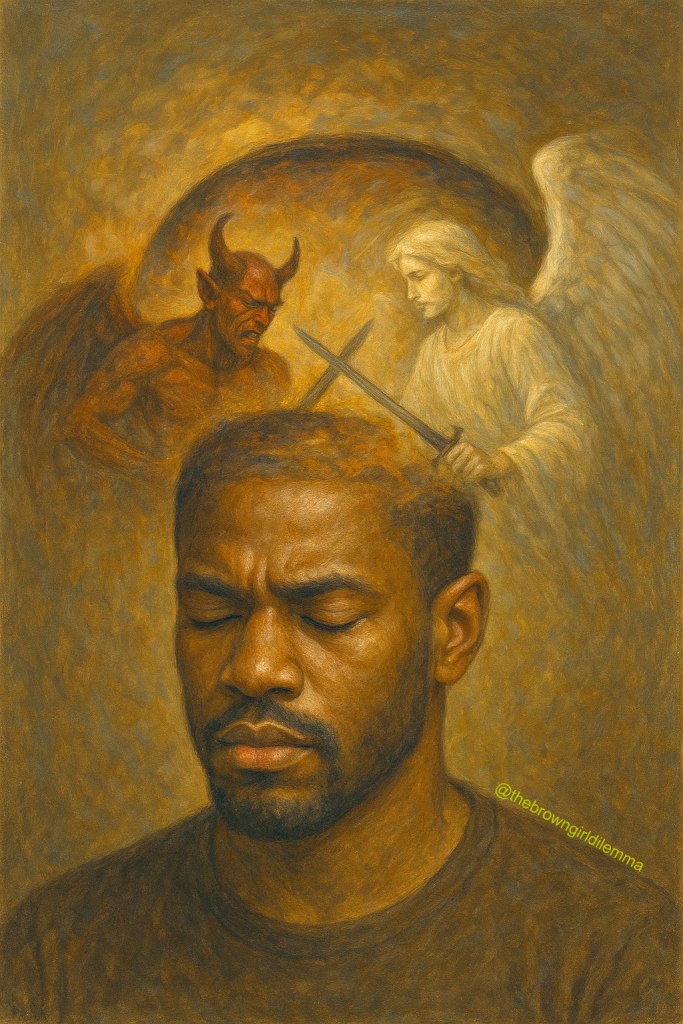
The mind is a battlefield. Every day, thoughts vie for dominance, shaping emotions, decisions, and behaviors. For many, particularly in communities burdened by systemic oppression, trauma, and cultural pressures, renewing the mind is not optional—it is essential for spiritual, emotional, and psychological health. Romans 12:2 instructs, “And be not conformed to this world: but be ye transformed by the renewing of your mind, that ye may prove what is that good, and acceptable, and perfect, will of God.”

Renewing the mind begins with awareness. The first step is recognizing thought patterns that limit, harm, or deceive. Negative self-talk, internalized oppression, and unexamined assumptions often dictate behavior subconsciously. Awareness creates the possibility of intentional transformation.

Cultural conditioning heavily influences the mind. From media representation to educational bias, society transmits messages about worth, beauty, and possibility. For Black individuals, these messages can perpetuate internalized racism, colorism, and inferiority complexes (Hunter, 2007). Renewal requires discerning these external lies from divine truth.

Trauma complicates mental renewal. Historical oppression, family dysfunction, and personal experiences can create deeply embedded cognitive patterns. Therapy, journaling, and prayer are vital tools to unearth these patterns and replace them with healthier perspectives (Van der Kolk, 2014).

Scripture is central to the process. Biblical meditation on God’s Word reshapes thought. Philippians 4:8 exhorts believers to think on “whatsoever things are true, whatsoever things are honest, whatsoever things are just…pure, lovely, of good report.” Filling the mind with truth displaces toxic thinking.

Self-reflection is a spiritual discipline. Daily evaluation of thoughts, motivations, and reactions helps identify areas of conformity to worldly patterns versus alignment with God’s will. This practice cultivates discernment and intentional living.

Mind renewal is also psychological. Cognitive-behavioral strategies, such as challenging distorted thinking and reframing negative beliefs, complement spiritual practices. Science shows that thought patterns can physically reshape neural pathways over time (Siegel, 2012).

Community plays a role. Mentorship, accountability partners, and support groups reinforce positive thinking. Sharing struggles, insights, and victories prevents isolation and encourages consistency in mental transformation.

Renewal requires deliberate replacement. Thoughts rooted in fear, resentment, or envy must be replaced with gratitude, faith, and hope. Practicing affirmations grounded in Scripture empowers the mind to internalize divine perspectives.

Meditation and prayer are essential tools. Quiet reflection allows individuals to discern between worldly pressures and God’s voice. Listening attentively to the Spirit fosters clarity and wisdom, helping the mind align with divine purpose.

Education informs renewal. Understanding psychology, history, and personal ancestry contextualizes challenges and combats internalized lies. Knowledge about the self and the world strengthens resilience against external conditioning.

Forgiveness frees the mind. Holding grudges, shame, or resentment sustains toxic thinking. Colossians 3:13 instructs believers to forgive as God forgave, liberating the mind from bondage and opening space for renewal.

Creative expression aids transformation. Writing, art, music, and movement help externalize internal conflicts, providing perspective and emotional release. This process reinforces new, constructive thought patterns. 🎨🖋️

Consistency is key. Renewing the mind is ongoing, not a one-time act. Daily disciplines—prayer, Scripture, reflection, therapy, and community engagement—maintain the transformation and prevent regression into old patterns.

Ultimately, renewing the mind is liberation. It restores identity, cultivates wisdom, and aligns the believer with God’s design. By intentionally reshaping thought patterns, individuals rise above societal lies, generational trauma, and personal limitations, living fully in purpose and truth.


References

  • Hunter, M. (2007). The persistent problem of colorism: Skin tone, status, and inequality. Sociology Compass, 1(1), 237–254.
  • Siegel, D. J. (2012). The developing mind: How relationships and the brain interact to shape who we are. Guilford Press.
  • Van der Kolk, B. (2014). The body keeps the score: Brain, mind, and body in the healing of trauma. Penguin Books.
  • The Holy Bible, King James Version.

Black Thought Collective

The intellectual and cultural contributions of Black people, when examined collectively, form a rich tapestry of thought that spans centuries, continents, and disciplines. The Black Thought Collective is not merely an academic exercise—it is a recognition of the shared consciousness, resilience, and creative genius of people of African descent. It encompasses reflections on freedom, justice, identity, spirituality, culture, and social responsibility, offering a lens through which the world can better understand the Black experience.

Historical Foundations of Black Thought

Black intellectual thought has deep roots, stretching from African kingdoms and philosophical traditions to the African diaspora. Scholars such as W. E. B. Du Bois articulated the dual consciousness of being Black in a world dominated by Eurocentric norms, highlighting the tensions of identity, freedom, and self-perception (Du Bois, 1903). Similarly, Carter G. Woodson emphasized the importance of education and historical knowledge in combating systemic oppression (Woodson, 1933). These early foundations established the principle that Black people’s collective reflection is not only valid but essential for social transformation.

Resistance and Liberation in Thought

Black thought is often forged in the crucible of struggle. From the era of slavery to the modern civil rights movement, Black intellectuals and activists have confronted oppression with innovative strategies and visionary ideas. The writings of Du Bois (1999) on Reconstruction, the activism of Frederick Douglass, and the political philosophy embedded in contemporary movements like #BlackLivesMatter (Taylor, 2016) all demonstrate that Black thought functions as both critique and guide for collective liberation.

Cultural and Artistic Contributions

Art, music, literature, and philosophy serve as essential vessels of Black collective consciousness. Jazz, hip-hop, African oral traditions, and literary works by Toni Morrison, James Baldwin, and bell hooks articulate both the pain and the triumph of Black life. These cultural productions are not merely aesthetic; they are intellectual interventions, shaping social understanding and advancing discourse on identity, equity, and justice (hooks, 2000; Coates, 2015).

Contemporary Intellectual Discourse

Modern Black thought encompasses sociology, political theory, education, and philosophy. Scholars like Cornel West (2001) and Charles Mills (1997) interrogate the persistent effects of racial hierarchies, systemic injustice, and epistemic exclusion. Collectively, Black intellectuals challenge dominant paradigms, demanding recognition of structural inequities while proposing pathways to equity and collective flourishing (Glaude, 2016).

Spiritual and Moral Dimensions

Faith and spirituality have historically played a central role in shaping Black thought. The moral imperatives embedded in religious traditions—from African spiritual systems to Christianity—inform principles of justice, communal responsibility, and ethical leadership. Black thought consistently integrates the spiritual with the practical, emphasizing that liberation encompasses mind, body, and soul.

Intersectionality and Inclusivity

The Black Thought Collective is inherently intersectional. Gender, class, sexuality, and geographic location intersect with race to produce diverse perspectives within the collective. The insights of Black women intellectuals, including bell hooks and Kimberlé Crenshaw, underscore how multiple axes of oppression and identity inform nuanced understandings of justice and empowerment (hooks, 2000; Taylor, 2016).

Global Perspective

Black thought is not confined to the United States; it resonates across the African diaspora. Intellectuals from the Caribbean, Latin America, Europe, and Africa have contributed perspectives on colonization, migration, cultural identity, and global solidarity. Figures such as Frantz Fanon, Ngũgĩ wa Thiong’o, and Chimamanda Ngozi Adichie highlight the universal and adaptable nature of Black thought, bridging local experience with global consciousness.

Education and Knowledge Production

Education has been both a site of oppression and liberation. Black scholars have emphasized the production and dissemination of knowledge that centers Black experience, countering narratives imposed by colonial and Eurocentric institutions. Woodson’s advocacy for historically accurate education and contemporary calls for decolonized curricula continue this legacy (Woodson, 1933; Painter, 2010).

The Collective Mindset

The strength of Black thought lies in its collective nature. While individual thinkers contribute distinct perspectives, the synthesis of voices creates a holistic understanding of Black life, culture, and aspiration. This collective intelligence fosters resilience, innovation, and strategies for social, political, and cultural advancement.

Future Directions

Looking forward, the Black Thought Collective will continue to evolve. Emerging scholars, activists, and cultural creators are expanding the discourse to include technology, environmental justice, global health, and other contemporary challenges. By integrating historical insight with modern innovation, Black thought remains dynamic, relevant, and transformative.

Conclusion

The Black Thought Collective is a living testament to the intellectual, cultural, and spiritual vitality of Black people. It demonstrates that collective reflection is not merely academic but a vital tool for liberation, empowerment, and social change. Understanding and valuing these contributions is essential for a more just, equitable, and inclusive world. The collective wisdom of Black people offers profound insights into humanity, justice, and the ongoing pursuit of freedom.


References

Alexander, M. (2012). The new Jim Crow: Mass incarceration in the age of colorblindness. The New Press.

Coates, T.-N. (2015). Between the world and me. Spiegel & Grau.

Du Bois, W. E. B. (1903). The souls of Black folk. A. C. McClurg & Co.

Du Bois, W. E. B. (1999). Black reconstruction in America, 1860–1880. Free Press. (Original work published 1935)

Glaude, E. S., Jr. (2016). Democracy in Black: How race still enslaves the American soul. Crown Publishing Group.

hooks, b. (2000). Where we stand: Class matters. Routledge.

Mills, C. W. (1997). The racial contract. Cornell University Press.

Painter, N. I. (2010). The history of White people. W. W. Norton & Company.

Taylor, K.-Y. (2016). From #BlackLivesMatter to Black liberation. Haymarket Books.

West, C. (2001). Race matters. Beacon Press.

Woodson, C. G. (1933). The mis-education of the Negro. Associated Publishers.

Yancy, G. (2018). Black bodies, white gazes: The continuing significance of race in America. Rowman & Littlefield.

How to Outgrow the Old Version of Yourself

Outgrowing the old self is not self-improvement alone—it is spiritual metamorphosis, a God-led evolution requiring death of the former identity so the new one may live (Colossians 3:9-10, KJV).

Scripture teaches that transformation begins in the mind. Renewal is the birthplace of change, requiring believers to unlearn old thought-patterns and receive divine reframing (Romans 12:2, KJV).

The old self cannot simply be managed—it must be put off. Growth demands the removal of former garments of identity that no longer align with kingdom design (Ephesians 4:22-24, KJV).

Outgrowing requires honesty. David prayed for God to search him, revealing that self-inspection is incomplete without God’s involvement (Psalm 139:23-24, KJV).

The old version dissolves through repentance. Turning away is both a spiritual direction change and an identity departure (Acts 3:19, KJV).

Growth often begins in isolation. Moses, Jacob, and Christ Himself encountered identity shifts in secluded places where God reshaped their calling (Matthew 4:1-2, KJV; Genesis 32:24-28, KJV).

The old self is rooted in flesh; the new self must walk in spirit. Outgrowing requires a new operating system powered by the Spirit of God (Galatians 5:16-17, KJV).

Old desires must be replaced, not merely removed. Delighting in God creates appetite for a new identity (Psalm 37:4, KJV).

Outgrowing reveals opposition. When Saul became Paul, friction followed because growth intimidates stagnation around it (Acts 9:3-6, KJV; 2 Timothy 3:12, KJV).

You outgrow yourself by embracing obedience over emotion. Christ modeled yielded submission, not preference (Luke 22:42, KJV).

The old self is loud; the new self requires stillness. Elijah heard God after chaos passed—growth follows listening (1 Kings 19:11-12, KJV).

Accountability accelerates maturation. Scripture encourages iron sharpening iron—growth requires friction with intention (Proverbs 27:17, KJV).

Outgrowing requires endurance. Running the race means leaving old pace, old weights, and old hindrances behind (Hebrews 12:1-2, KJV).

The old self seeks credit; the new self gives glory to God. Growth shifts ambition from self-centered to God-center (1 Corinthians 10:31, KJV).

Your circle may shrink when you grow. Abraham was called to leave the familiar to become what God named him (Genesis 12:1-4, KJV).

Old habits die through the practice of righteousness. The new self forms through repetition of obedience, not nostalgia (James 1:22-25, KJV).

Forgiveness releases old identity prisons. Letting go of offenses frees internal space for growth (Matthew 6:14-15, KJV).

You outgrow yourself when hardship becomes fertilizer, not failure. Faith reframes pain into processing (Romans 5:3-5, KJV).

The old version resists because comfort comforts the corpse. Growth requires walking into new, unfamiliar grace-assignments (Philippians 3:13-14, KJV).

You outgrow the old self by allowing God to finish the story He began in you—proving that transformation is not self-promotion, but divine completion (Philippians 1:6, KJV).


References

Beck, A. T. (1976). Cognitive Therapy and Emotional Disorders. International Universities Press.
Masten, A. S. (2014). Ordinary Magic: Resilience in Development. Guilford Press.
Taleb, N. N. (2012). Antifragile: Things That Gain From Disorder. Random House.
The Holy Bible, King James Version (Authorized 1611/1769). Colossians 3:9-10; Romans 12:2; Ephesians 4:22-24; Psalm 139:23-24; Acts 3:19; Matthew 4:1-2; Galatians 5:16-17; Psalm 37:4; Acts 9:3-6; 2 Timothy 3:12; Proverbs 27:17; Proverbs 27:17; Hebrews 12:1-2; 1 Corinthians 10:31; Genesis 12:1-4; James 1:22-25; Matthew 6:14-15; Romans 5:3-5; Philippians 3:13-14; Philippians 1:6.

The Battlefield Is Your Mind

The greatest battles in life are not fought with weapons or on open fields but within the quiet chambers of the human mind. It is here, in the unseen realm of thoughts, that the enemy wages war for control of the soul. The Apostle Paul reveals this truth in 2 Corinthians 10:4–5 (KJV): “For the weapons of our warfare are not carnal, but mighty through God to the pulling down of strong holds; casting down imaginations, and every high thing that exalteth itself against the knowledge of God.” The mind is the battlefield where victory or defeat begins.

Every action originates from a thought, and every sin begins as an idea before it becomes a deed. Satan understands this principle, which is why he attacks the mind with lies, fear, doubt, and confusion. He knows that if he can control your thinking, he can influence your emotions and ultimately your behavior. The first step to freedom, therefore, is to renew the mind with the truth of God’s Word. Romans 12:2 (KJV) teaches, “And be not conformed to this world: but be ye transformed by the renewing of your mind.”

The carnal mind—the mind left unrenewed—operates according to the patterns of the world. It is influenced by lust, pride, and self-centeredness. But the spiritual mind seeks the will of God and discerns truth from deception. The conflict between these two natures mirrors the spiritual war between flesh and spirit. As believers, we are commanded to “let this mind be in you, which was also in Christ Jesus” (Philippians 2:5, KJV).

When Eve entertained the serpent’s suggestion in the Garden of Eden, the battle was lost in her mind before it was lost through her action. The devil’s weapon was not force—it was persuasion. He planted a seed of doubt, saying, “Yea, hath God said…” (Genesis 3:1, KJV). This same tactic is used today when the enemy whispers lies contrary to God’s promises, causing believers to question their faith, their worth, and their purpose.

The mind, when left unguarded, becomes fertile ground for the enemy’s deceptions. That is why Scripture warns, “Keep thy heart with all diligence; for out of it are the issues of life” (Proverbs 4:23, KJV). The “heart” in biblical language often represents the mind—the seat of thought and intention. Guarding it means being selective about what we allow to influence our thinking: the media we consume, the conversations we entertain, and the thoughts we dwell upon.

Paul identifies negative mental strongholds as arguments and imaginations that rise against divine truth. These strongholds can be pride, fear, bitterness, or unbelief—mental fortresses that enslave the soul. But through the Word of God, we have power to “bring into captivity every thought to the obedience of Christ” (2 Corinthians 10:5, KJV). This is spiritual warfare in its most personal form.

Renewing the mind begins with replacing lies with truth. When anxiety attacks, believers must recall Philippians 4:6–7, which says, “Be careful for nothing; but in every thing by prayer and supplication with thanksgiving let your requests be made known unto God.” Peace enters where fear once ruled when the Word governs the thought life. Meditation on Scripture reprograms the mental pattern from defeat to victory.

The devil’s battlefield strategy is to distort reality through illusion. He seeks to convince the believer that circumstances are hopeless, that sin is harmless, or that God is distant. Yet, as Jesus declared, “Ye shall know the truth, and the truth shall make you free” (John 8:32, KJV). Truth dispels darkness, but it must be internalized through consistent study and meditation on God’s Word.

The process of renewal requires discipline. It means rejecting negative thoughts and aligning one’s thinking with divine principles. Philippians 4:8 gives believers a clear mental focus: “Whatsoever things are true, whatsoever things are honest, whatsoever things are just, whatsoever things are pure, whatsoever things are lovely… think on these things.” The believer must choose to think righteously even when emotions or situations tempt otherwise.

When Elijah fled into the wilderness, his mind was overwhelmed with fear and despair, even after great victories. God had to restore him not with more miracles but by recalibrating his mind and spirit. This shows that even the most anointed individuals can fall victim to mental fatigue if they neglect spiritual renewal.

In the New Testament, the word “repent” (Greek: metanoia) literally means “to change one’s mind.” True repentance, therefore, is not only confession of sin but transformation of thought. It is a mental turning—from deception to truth, from death to life. Renewing the mind is not a one-time event; it is a lifelong process of sanctification.

The battlefield of the mind also reveals how spiritual warfare manifests in anxiety, depression, pride, and confusion. These are not merely emotional states—they are spiritual attacks aimed at destabilizing faith. When believers respond with prayer, praise, and the Word, they neutralize these mental assaults and restore spiritual clarity.

One of the most powerful weapons for mental warfare is the Word of God itself. Jesus demonstrated this in the wilderness when tempted by Satan. Each time the enemy presented a lie, Jesus responded, “It is written” (Matthew 4:4, KJV). His victory shows that the mind anchored in Scripture cannot be easily shaken by deception.

Faith also plays a central role in overcoming mental warfare. Ephesians 6:16 instructs believers to take up “the shield of faith, wherewith ye shall be able to quench all the fiery darts of the wicked.” Those fiery darts are often thoughts—accusations, temptations, and fears. Faith deflects them by trusting God’s promises over the enemy’s suggestions.

A renewed mind views challenges through the lens of faith, not fear. It interprets trials as opportunities for growth rather than signs of failure. Romans 8:6 declares, “To be carnally minded is death; but to be spiritually minded is life and peace.” The peace of God is not the absence of war but the presence of divine stability amid chaos.

The human mind is a sacred space meant to host divine wisdom. Proverbs 23:7 reminds us, “For as he thinketh in his heart, so is he.” What occupies the mind eventually manifests in one’s life. This is why believers must continually feed their minds with spiritual nourishment, prayer, and worship to maintain victory in thought.

Renewing the mind requires the daily application of the Word—reading, confessing, and believing it. Transformation begins when truth replaces lies, faith overcomes fear, and divine purpose replaces confusion. The Spirit of God works through the mind that is yielded, humble, and receptive to His voice.

Ultimately, the mind determines the direction of the soul. The battle may rage, but victory belongs to those who anchor their thoughts in Christ. Isaiah 26:3 promises, “Thou wilt keep him in perfect peace, whose mind is stayed on thee: because he trusteth in thee.” Peace is not found in the absence of conflict but in the presence of unwavering focus on God.

In conclusion, the battlefield of the mind is where destiny is decided. Satan’s lies lose power when confronted by divine truth. The believer who renews their mind daily through Scripture, prayer, and faith walks in liberty and spiritual strength. The victory of the cross extends into the human mind, transforming it from a place of conflict into a sanctuary of peace, guided by the Spirit of truth.

References

  • The Holy Bible, King James Version (KJV): 2 Corinthians 10:4–5; Romans 12:2; Philippians 2:5; Genesis 3:1; Proverbs 4:23; Philippians 4:6–8; John 8:32; Matthew 4:4; Ephesians 6:16; Romans 8:6; Proverbs 23:7; Isaiah 26:3.

Girl Talk Series: 8 Mind Traps of Women

Photo by Mikhail Nilov on Pexels.com

Ladies, the battlefield of the mind is where many of life’s greatest struggles are fought and either won or lost. The enemy uses subtle lies, fears, and insecurities to trap women in cycles of comparison, worry, unforgiveness, and self-doubt. These “mind traps” are designed to keep you from walking in the freedom, joy, and confidence that the Most High Yah has called you to. But you are not powerless. The Word of God is the weapon that breaks these strongholds. By meditating on Scripture, praying daily, and aligning your thoughts with truth, you can renew your mind and walk in victory. As 2 Corinthians 10:5 (KJV) reminds us, we must “cast down imaginations, and every high thing that exalteth itself against the knowledge of God,” bringing every thought into obedience to Christ.

The mind is one of the most powerful battlefields for every believer, and women are not exempt from the war that takes place in their thoughts. The enemy of our souls often uses subtle lies and mental traps to keep women bound in cycles of fear, insecurity, and emotional instability. Understanding these mental traps is crucial for breaking free and living in the freedom that the Most High Yah provides. The King James Bible reminds us in 2 Corinthians 10:5 to cast down imaginations and bring every thought into the obedience of Christ.

One of the first mind traps many women fall into is comparison. This is the tendency to measure one’s worth against other women’s appearance, status, or success. Comparison breeds discontentment and envy. Galatians 6:4 advises, “But let every man prove his own work, and then shall he have rejoicing in himself alone, and not in another.” A woman must anchor her identity in Yah’s Word, not in social media feeds or cultural standards of beauty.

The second mind trap is fear and worry. Many women wrestle with anxiety over the future, their children, finances, or relationships. This trap robs them of peace and rest. Philippians 4:6–7 reminds believers to “be careful for nothing” but to bring everything to God in prayer. Women who continually meditate on worst-case scenarios often end up living in emotional torment rather than faith.

A third trap is people-pleasing. Women sometimes sacrifice their own boundaries and well-being to gain approval from others. This can lead to burnout and resentment. Proverbs 29:25 warns, “The fear of man bringeth a snare: but whoso putteth his trust in the LORD shall be safe.” A godly woman learns to seek God’s approval above human validation.

Another mental snare is unforgiveness and bitterness. Holding onto past hurts keeps a woman chained to the pain and anger of what was done to her. Hebrews 12:15 warns about a root of bitterness springing up and defiling many. Choosing to forgive is not about excusing the offense but about releasing oneself from the emotional grip of the offender.

The fifth mind trap is low self-worth. Women who believe they are unworthy of love or respect may tolerate mistreatment or remain in unhealthy relationships. Psalm 139:14 declares, “I will praise thee; for I am fearfully and wonderfully made.” Renewing the mind with Scripture can rebuild confidence and dignity.

A sixth mental trap is resentment toward men. Past betrayals or disappointments can lead to generalizing all men as untrustworthy or unworthy of respect. This creates division between genders and hinders healthy relationships. Ephesians 4:31 commands believers to “let all bitterness, and wrath, and anger… be put away from you.”

Seventh, many women fall into the trap of overthinking and negative self-talk. Replaying conversations, imagining worst outcomes, and mentally punishing oneself for past mistakes can paralyze decision-making. Philippians 4:8 provides the cure: meditate on what is true, honest, just, pure, and lovely.

Lastly, a subtle but dangerous trap is self-reliance apart from God. When a woman feels she must handle everything in her own strength, she risks burnout and pride. Proverbs 3:5–6 counsels, “Trust in the LORD with all thine heart; and lean not unto thine own understanding.” Trusting Yah with every aspect of life allows His wisdom to guide her steps.

8 Mind Traps of Women (KJV Bible Perspective)

  • Comparison – Measuring self-worth against other women, leading to envy and discontentment (Galatians 6:4).
  • Fear & Worry – Constant anxiety about the future, finances, relationships, or children, stealing peace (Philippians 4:6–7).
  • People-Pleasing – Seeking human approval over God’s, often at the expense of personal boundaries (Proverbs 29:25).
  • Unforgiveness & Bitterness – Holding onto hurt and offense, poisoning the heart (Hebrews 12:15).
  • Low Self-Worth – Believing one is unworthy of love, dignity, or respect, leading to unhealthy choices (Psalm 139:14).
  • Resentment Toward Men – Harboring anger or distrust toward men due to past betrayal, causing relational barriers (Ephesians 4:31).
  • Overthinking & Negative Self-Talk – Replaying mistakes or fears, crippling confidence and decision-making (Philippians 4:8).
  • Self-Reliance Apart from God – Trying to manage life in one’s own strength, leading to burnout and pride (Proverbs 3:5–6).

In conclusion, these eight mind traps—comparison, fear, people-pleasing, unforgiveness, low self-worth, resentment, overthinking, and self-reliance—are common pitfalls that women face. The solution lies in renewing the mind through Scripture, prayer, and accountability. Romans 12:2 reminds us to be “transformed by the renewing of your mind,” proving that true freedom begins in the thought life. When women identify these traps and replace lies with biblical truth, they can walk in peace, joy, and spiritual strength.

References:

Comparison – Measuring self-worth against other women, leading to envy and discontentment.

  • KJV Reference: “But let every man prove his own work, and then shall he have rejoicing in himself alone, and not in another.” (Galatians 6:4)

Fear & Worry – Constant anxiety about the future, finances, relationships, or children, stealing peace.

  • KJV Reference: “Be careful for nothing; but in every thing by prayer and supplication with thanksgiving let your requests be made known unto God. And the peace of God… shall keep your hearts and minds through Christ Jesus.” (Philippians 4:6–7)

People-Pleasing – Seeking human approval over God’s, often at the expense of personal boundaries.

  • KJV Reference: “The fear of man bringeth a snare: but whoso putteth his trust in the LORD shall be safe.” (Proverbs 29:25)

Unforgiveness & Bitterness – Holding onto hurt and offense, poisoning the heart.

  • KJV Reference: “Looking diligently lest any man fail of the grace of God; lest any root of bitterness springing up trouble you, and thereby many be defiled.” (Hebrews 12:15)

Low Self-Worth – Believing one is unworthy of love, dignity, or respect, leading to unhealthy choices.

  • KJV Reference: “I will praise thee; for I am fearfully and wonderfully made: marvellous are thy works; and that my soul knoweth right well.” (Psalm 139:14)

Resentment Toward Men – Harboring anger or distrust toward men due to past betrayal, causing relational barriers.

  • KJV Reference: “Let all bitterness, and wrath, and anger, and clamour, and evil speaking, be put away from you, with all malice.” (Ephesians 4:31)

Overthinking & Negative Self-Talk – Replaying mistakes or fears, crippling confidence and decision-making.

  • KJV Reference: “Finally, brethren, whatsoever things are true, whatsoever things are honest, whatsoever things are just, whatsoever things are pure, whatsoever things are lovely, whatsoever things are of good report; if there be any virtue, and if there be any praise, think on these things.” (Philippians 4:8)

Self-Reliance Apart from God – Trying to manage life in one’s own strength, leading to burnout and pride.

  • KJV Reference: “Trust in the LORD with all thine heart; and lean not unto thine own understanding. In all thy ways acknowledge him, and he shall direct thy paths.” (Proverbs 3:5–6)

The Subtle Way the Devil Enters Your Mind : The Battlefield of the Mind.

Photo by Pavel Danilyuk on Pexels.com

Satan, also called the adversary, is introduced in the Bible as the tempter, deceiver, and accuser of the brethren (Revelation 12:9-10, KJV). His very name means “adversary,” and he stands in opposition to God and His creation. In Scripture, Satan is described as a fallen angel who rebelled against God, taking with him a host of angels that became demons (Isaiah 14:12-15; Ezekiel 28:12-17). His goal is not merely to cause trouble but to destroy, to steal, and to kill (John 10:10, KJV). He operates subtly, seeking to corrupt humanity by separating us from God through sin, deception, and doubt.

Spiritual warfare refers to the ongoing conflict between the kingdom of God and the kingdom of darkness. It is not a physical battle but a spiritual one, waged through thoughts, beliefs, and behaviors. Paul explains that “we wrestle not against flesh and blood, but against principalities, against powers, against the rulers of the darkness of this world, against spiritual wickedness in high places” (Ephesians 6:12, KJV). This category of warfare involves prayer, discernment, resisting temptation, and using the Word of God as a weapon to overcome deception.

A psychological stronghold is a mental pattern or belief system that holds a person captive and prevents them from experiencing freedom. These are deeply entrenched thoughts or emotional habits that are often rooted in fear, trauma, guilt, shame, or false teaching. Paul writes about “casting down imaginations, and every high thing that exalteth itself against the knowledge of God” (2 Corinthians 10:4-5, KJV). In psychology, this parallels cognitive schemas—mental frameworks that distort reality and create repetitive, self-sabotaging cycles.

Darkness often enters through addictive storytelling and entertainment. Many films, shows, and books glorify sin, normalize immorality, and desensitize viewers to violence and perversion. The devil uses these stories as a way to shift moral boundaries and shape cultural values. This is why Proverbs 4:23 warns, “Keep thy heart with all diligence; for out of it are the issues of life” (KJV). Psychologically, exposure to repeated dark imagery and narratives reinforces neural pathways, making sinful behavior seem less shocking and more acceptable over time. This is a subtle way the enemy conditions the mind to tolerate and even celebrate what God calls evil (Isaiah 5:20, KJV).

The devil, or Satan, is portrayed in Scripture as the father of lies (John 8:44, KJV), a roaring lion seeking to devour (1 Peter 5:8, KJV), and a deceiver who masquerades as an angel of light (2 Corinthians 11:14, KJV). His objective is to separate humanity from God through sin, rebellion, and unbelief. His methods include temptation, accusation, deception, and oppression. Psychologically, his influence can be seen in patterns of compulsive sin, condemnation, addictive cycles, and intrusive thoughts that lead people into despair.

Spiritually, believers are instructed to resist the devil by submitting to God (James 4:7, KJV). This involves prayer, fasting, meditating on Scripture, and cultivating discernment to recognize and reject lies. Psychology supports the practice of renewing the mind—shifting thoughts away from destructive narratives toward life-giving truths—which aligns with Romans 12:2’s call to be transformed by the renewing of the mind.

The mind is the primary battleground where spiritual warfare is fought. The Apostle Paul tells believers to cast down imaginations and every high thing that exalts itself against the knowledge of God (2 Corinthians 10:4-5, KJV). Our thoughts, beliefs, and perceptions shape our actions, and if Satan can plant lies and distortions in our thinking, he can control behavior and lead us away from righteousness. Psychology confirms this principle, as cognitive-behavioral science shows that distorted thoughts produce destructive emotions and habits. Therefore, guarding the mind is a spiritual and psychological necessity.

Satan uses various devices to manipulate the human mind, and Paul warns believers not to be ignorant of his devices (2 Corinthians 2:11, KJV). These devices include temptation, accusation, distraction, deception, and discouragement. Temptation entices us with desires contrary to God’s will, while accusation keeps us bound in guilt and shame. Distraction turns our focus away from God’s truth, deception causes us to believe lies as if they were true, and discouragement saps our hope and faith. Each of these tactics attacks mental and emotional stability, leaving a person vulnerable to sin.

The metaphor of the serpent in Scripture represents cunning and subtlety. Genesis 3 describes Satan as appearing in the form of a serpent, “more subtil than any beast of the field” (Genesis 3:1, KJV). The serpent represents deception that does not come with obvious danger but slithers silently, appearing harmless before striking. Psychologically, this can be likened to intrusive thoughts that seem small at first but slowly distort reality, leading to destructive choices. The serpent’s whisper is a metaphor for the small but persuasive suggestions Satan uses to cause doubt about God’s Word.

In the modern world, serpent-like deception can take the form of social media manipulation, addictive entertainment, and false teachings. Social media algorithms can feed a constant stream of envy-inducing content, stirring discontent and covetousness. Entertainment may normalize sinful behavior, making it seem acceptable or even desirable. False teachings can twist Scripture to justify sin, leading believers astray. These subtle influences act like snakes in the grass—barely noticeable until their venom spreads through the mind and affects behavior.

Sin follows a methodical pattern, both biblically and psychologically. James 1:14-15 (KJV) explains that every man is tempted when drawn away by his own lust, and when lust conceives, it brings forth sin, and sin brings forth death. This process starts in the mind as a thought, then becomes a desire, then turns into an action, and finally produces a consequence. Psychologists identify a similar chain reaction in addictive behaviors, where thoughts trigger cravings, leading to compulsive behavior that leads to destruction if left unchecked.

Another device Satan uses is masquerading as an angel of light (2 Corinthians 11:14, KJV). He does not always come with obvious evil but often disguises sin as something good, harmless, or even pleasurable. This psychological trick is known as cognitive reframing, where something destructive is presented as desirable or beneficial. This is why sinful behavior often appears enticing — it is wrapped in pleasure but leads to pain. This deception makes vigilance over one’s thoughts critical.

The battlefield of the mind is not won by human willpower alone but by spiritual weapons. Believers are told to put on the whole armor of God, including the helmet of salvation and the sword of the Spirit, which is the Word of God (Ephesians 6:10-17, KJV). Scripture renews the mind (Romans 12:2), replacing lies with truth. From a psychological perspective, this is similar to cognitive restructuring, where distorted thoughts are replaced with reality-based thinking. God’s Word provides the highest reality and ultimate truth.

Ultimately, the key to winning the battle of the mind is to stay alert and sober, as Peter warns: “Be sober, be vigilant; because your adversary the devil, as a roaring lion, walketh about, seeking whom he may devour” (1 Peter 5:8, KJV). The subtle way the devil enters the mind can be resisted through awareness, Scripture, prayer, and renewing the mind daily. The believer must recognize that sin begins in thought, and by capturing those thoughts early, they prevent Satan from gaining a foothold.

References

Holy Bible, King James Version. (1769/2023). Cambridge University Press.

Beck, J. S. (2020). Cognitive behavior therapy: Basics and beyond (3rd ed.). Guilford Press.

Clinton, T., & Ohlschlager, G. (2002). Competent Christian counseling: Foundations and practice of compassionate soul care. WaterBrook Press.

Dobson, E. (2017). The adversary: The Christian versus demon activity. Moody Publishers.

Miller, M. J., & Cuttler, C. (2023). Cognitive distortions and their relationship to anxiety and depression: A meta-analytic review. Clinical Psychology Review, 102, 102156. https://doi.org/10.1016/j.cpr.2023.102156

Powlison, D. (2019). Safe and sound: Standing firm in spiritual battles. New Growth Press.

Ward, P. (2021). Spiritual warfare and the armor of God: Biblical strategies for the battlefield of the mind. Crossway.

Dilemma: Mental Slavery

Understanding, Overcoming, and Renewing the Mind.

Photo by Ketut Subiyanto on Pexels.com

Mental slavery refers to the psychological condition in which individuals internalize beliefs of inferiority, limitation, or subservience imposed by external systems of oppression. Unlike physical slavery, which confines the body, mental slavery confines the mind, influencing behavior, self-worth, and worldview. It perpetuates cycles of disempowerment, even long after the end of legal slavery. Psychologists describe mental slavery as a form of internalized oppression, where the oppressed adopt the value system of the oppressor (Welsing, 1991). Biblically, this is akin to captivity of the mind: “And be not conformed to this world: but be ye transformed by the renewing of your mind, that ye may prove what is that good, and acceptable, and perfect, will of God” (Romans 12:2, KJV).

Origins of Mental Slavery

Mental slavery originated during the transatlantic slave trade, where Africans were forcibly removed from their homelands and subjected to dehumanization, brutality, and cultural erasure. Enslavers imposed narratives of inferiority, instilling in enslaved people the belief that they were subhuman, incapable of self-determination, and dependent on their oppressors. This psychological conditioning was reinforced through generations via systemic oppression, segregation, and institutionalized racism.

Impact on Ancestors

Our ancestors endured extreme physical, emotional, and psychological trauma. They were denied education, cultural expression, family integrity, and autonomy. Beyond physical exploitation, slavery instilled fear, dependency, and internalized inferiority, affecting generational mindset. Even in freedom, descendants inherit remnants of these beliefs, manifesting as self-doubt, colorism, and acceptance of societal hierarchies that devalue Black life.

Psychological Impact Today

Mental slavery continues to affect Black communities through low self-esteem, internalized racism, identity conflicts, and susceptibility to societal conditioning. Psychologists observe that it contributes to cycles of poverty, educational disparities, and social marginalization. The mental burden often results in anxiety, depression, and diminished motivation, creating barriers to realizing full potential (Hunter, 2007).

Understanding Mental Slavery Through the Bible

The KJV Bible provides principles for overcoming mental slavery by emphasizing spiritual freedom and mind renewal. Jesus declared: “If the Son therefore shall make you free, ye shall be free indeed” (John 8:36, KJV). Freedom begins in the mind, aligning thoughts and beliefs with God’s truth rather than the lies imposed by oppression. Scripture repeatedly emphasizes that the mind and heart are central to liberation (Romans 12:2; 2 Corinthians 10:5, KJV).

Renewing the Mind

Renewal of the mind involves rejecting false narratives, embracing God’s Word, and cultivating a spiritual, moral, and intellectual identity rooted in truth. Daily practices include prayer, meditation on Scripture, affirmations, education, and exposure to empowering narratives. “Casting down imaginations, and every high thing that exalteth itself against the knowledge of God, and bringing into captivity every thought to the obedience of Christ” (2 Corinthians 10:5, KJV). Renewal requires discipline, community, and conscious effort.

Overcoming Mental Slavery

Overcoming mental slavery entails both individual and collective strategies:

  • Education: Learning history, culture, and personal heritage restores identity and pride.
  • Therapy & Counseling: Addressing generational trauma and internalized beliefs.
  • Faith & Spiritual Practice: Grounding identity in God’s truth rather than societal lies.
  • Community & Mentorship: Engaging with supportive networks that model empowerment and resilience.

Mental Slavery Healing Guide: Breaking Generational Mind Chains


1. Daily Affirmations and Spiritual Alignment

  • “If the Son therefore shall make you free, ye shall be free indeed” (John 8:36, KJV).
  • “I reject every lie of inferiority and embrace my God-given worth.”
  • “My mind is renewed by God’s Word, not the world’s standards” (Romans 12:2, KJV).

Practice: Repeat affirmations morning and evening, or write them in a journal. Pair with prayer to internalize truth.


2. Scripture Meditation and Mind Renewal

  • Meditate on verses that affirm identity, freedom, and power in Christ:
    • 2 Corinthians 10:5: “Casting down imaginations, and every high thing that exalteth itself against the knowledge of God.”
    • Romans 12:2: Emphasizes transformation through mind renewal.
  • Visualize each thought and belief aligning with God’s truth rather than oppressive narratives.

3. Education and Historical Awareness

  • Study the history of slavery, colonialism, and colorism to understand the roots of mental slavery.
  • Read biographies of Black leaders, scholars, and revolutionaries who resisted oppression.
  • Teaching history accurately restores pride, identity, and resilience.

4. Psychological Tools

  • Journaling: Record experiences of internalized bias and victories over negative thoughts.
  • Cognitive Restructuring: Identify and challenge thoughts of inferiority, replacing them with affirming truths.
  • Therapy or Counseling: Seek professionals trained in racial trauma, intergenerational oppression, and self-esteem issues.

5. Faith-Based Practices

  • Daily prayer for clarity, courage, and mental freedom.
  • Fasting and extended prayer sessions can strengthen spiritual discipline and focus.
  • Attend Bible study groups that emphasize spiritual empowerment and mental renewal.

6. Community and Mentorship

  • Surround yourself with mentors and peers who embody empowerment and pride in Black identity.
  • Participate in community programs that focus on leadership, entrepreneurship, and cultural affirmation.
  • Engage in dialogue about mental slavery to normalize experiences and foster collective healing.

7. Cultural Affirmation and Personal Expression

  • Celebrate natural hair, skin, and features; avoid conforming to Eurocentric standards for approval.
  • Explore cultural arts, music, and literature to strengthen identity and counter societal conditioning.
  • Represent Black beauty, achievement, and intellect publicly to inspire others.

8. Action Steps for Daily Freedom

  1. Begin each day with Scripture, prayer, and affirmations.
  2. Educate yourself on history and cultural identity.
  3. Practice cognitive and emotional strategies to reject internalized oppression.
  4. Engage in faith communities and mentorship programs.
  5. Express identity authentically through personal appearance, creativity, and leadership.

Conclusion

Mental slavery is a profound, generational challenge, rooted in the dehumanization of our ancestors and perpetuated by societal systems. Its psychological impact is pervasive, influencing identity, self-perception, and social outcomes. However, the KJV Bible provides a framework for liberation through the renewal of the mind, spiritual alignment, and embracing God-given worth. By understanding its origins, acknowledging its effects, and actively pursuing mental and spiritual freedom, Black individuals and communities can break the chains of mental slavery and reclaim empowerment, dignity, and purpose.


References

Biblical References (KJV)

  • Romans 12:2
  • 2 Corinthians 10:5
  • John 8:36

Psychology & Sociology References

  • Welsing, F. C. (1991). The Isis Papers: The Keys to the Colors. Third World Press.
  • Hunter, M. L. (2007). The Persistent Problem of Colorism: Skin Tone, Status, and Inequality. Sociology Compass, 1(1), 237–254.
  • Clark, R., & Clark, K. (1947). Racial Identification and Preference in Negro Children. Journal of Negro Education, 16(3), 169–176.