Category Archives: purpose

The Dating Playbook: Sacred Signals

Dating, when viewed through a sacred lens, is not a game of conquest but a process of discernment. Scripture teaches that relationships are meant to glorify God, not gratify unchecked desire. In a culture that normalizes fornication and emotional excess, sacred dating requires intentional boundaries and spiritual clarity.

The foundation of the dating playbook is placing God first. “Seek ye first the kingdom of God, and his righteousness” (Matthew 6:33, KJV) establishes divine order. When God leads, attraction is governed by wisdom rather than impulse, and desire is submitted to purpose.

Sacred signals begin with self-consecration. Purity is not merely physical abstinence but mental and emotional discipline. Scripture warns that lust conceived in the heart precedes sin in action (Matthew 5:28, KJV). Guarding the mind is essential to guarding the body.

Fornication is explicitly condemned in Scripture, not to restrict joy but to protect the covenant. “Flee fornication” (1 Corinthians 6:18, KJV) is a command rooted in love, acknowledging that sexual sin carries spiritual, emotional, and generational consequences.

Sacred dating emphasizes restraint over urgency. Rushing intimacy clouds discernment and forges soul ties before character is revealed. Patience allows truth to surface without the distortion of physical bonding.

A godly relationship values clarity over ambiguity. Intentions are stated early, avoiding emotional manipulation and prolonged confusion. “Let your communication be, Yea, yea; Nay, nay” (Matthew 5:37, KJV) reflects righteous transparency.

Sacred signals include respect for boundaries. A partner who pressures purity reveals misalignment with God’s will. Love that honors God will also honor limits, understanding that self-control is evidence of spiritual maturity (Galatians 5:22–23, KJV).

Community accountability is a biblical safeguard. Wise counsel from elders, mentors, and faith-filled peers provides protection against deception and self-delusion. “In the multitude of counsellors there is safety” (Proverbs 11:14, KJV).

Prayer is not an accessory to dating—it is the compass. Prayer invites God into the process, aligning hearts and exposing motives. Relationships birthed in prayer are sustained by grace rather than passion alone.

Sacred dating evaluates fruit, not fantasy. Consistency, humility, repentance, and obedience to God matter more than charisma or chemistry. “By their fruits ye shall know them” (Matthew 7:20, KJV).

Emotional purity matters as much as physical purity. Oversharing, dependency, and premature intimacy can create counterfeit closeness. Sacred signals preserve emotional wholeness until the covenant provides covering.

Waiting is not weakness; it is worship. Honoring God with the body acknowledges that it is His temple (1 Corinthians 6:19–20, KJV). Delay becomes devotion when obedience is chosen over appetite.

Sacred dating prepares for marriage, not experimentation. Each interaction is weighed against the question: Does this union help us serve God more faithfully? Purpose, not pleasure, remains the measuring rod.

When purity is kept, peace follows. Even if a relationship ends, obedience ensures there is no regret rooted in compromise. God honors those who honor Him (1 Samuel 2:30, KJV).

The dating playbook concludes with trust. God is not withholding love—He is refining it. Sacred signals guide believers away from harm and toward covenant, where love is holy, disciplined, and enduring.


References

The Holy Bible, King James Version. (1769/2017).

Cloud, H., & Townsend, J. (1992). Boundaries in dating. Zondervan.

Piper, J. (2009). This momentary marriage. Crossway.

Wheat, E. (2003). How to save your marriage before it starts. Zondervan.

Flirting With Destiny

From the first moment, there was a sense of something greater at work. Their smiles, glances, and gentle exchanges hinted at a story being written long before they met. It was more than attraction—it was destiny flirting with the edges of their lives, a quiet whisper of God’s design.

They recognized that what they shared could only be orchestrated by the Most High. “Many are the plans in a man’s heart; but the counsel of the LORD, that shall stand” (Proverbs 19:21, KJV). Their interaction was not happenstance; it was purpose unfolding in real time.

Interest arose not from impulse, but from alignment with God’s will. Each word and look carried weight, reinforcing the sense that this was part of a divine plan. Scripture reminds us that relationships are gifts when pursued according to God’s guidance: “Every good gift and every perfect gift is from above” (James 1:17, KJV).

There was a playful tension, a knowing smile that suggested destiny was at work. Yet, even in lightheartedness, they maintained reverence for God’s timing. They understood that God’s purpose for a relationship is more important than human desire. “Delight thyself also in the LORD; and he shall give thee the desires of thine heart” (Psalm 37:4, KJV).

Each encounter was intentional, though unseen. He spoke with patience and respect, and she responded with discernment and grace. Together, they navigated the early moments of attraction without rushing, allowing destiny to tease rather than force their hearts.

Destiny is often subtle, appearing in small confirmations: shared laughter, mutual respect, and faith-aligned values. They noticed these moments, feeling that God’s hand was guiding their connection. “The steps of a good man are ordered by the LORD: and he delighteth in his way” (Psalm 37:23, KJV).

Flirting with destiny was not reckless. It carried the weight of responsibility and awareness. They honored God first in their hearts and minds, understanding that purity and obedience safeguard the purpose of their union. “Flee fornication” (1 Corinthians 6:18, KJV) was a reminder that discipline preserves destiny.

As their conversations deepened, they began to see the potential for a relationship rooted in faith. They discussed dreams, prayer, and service to God, realizing that alignment in purpose matters far more than fleeting attraction. “Can two walk together, except they be agreed?” (Amos 3:3, KJV).

Every smile and laugh was infused with anticipation. They sensed that God was preparing their hearts, orchestrating circumstances that would allow their relationship to flourish when the time was right. “To everything there is a season, and a time to every purpose under the heaven” (Ecclesiastes 3:1, KJV).

They understood that destiny is never forced. God’s timing is perfect, and every step they took was part of preparation. Moments of attraction were tempered with prayer and patience, acknowledging that His plan supersedes their impulses.

Mutual admiration was grounded in character, not merely appearance. They recognized integrity, faithfulness, and humility in one another, understanding that God shapes relationships through virtue and alignment with His will. “Favour is deceitful, and beauty is vain: but a woman that feareth the LORD, she shall be praised” (Proverbs 31:30, KJV).

Even in playful banter, their focus remained on what God desired for them. Every glance or smile was filtered through faith, ensuring that affection did not surpass obedience. The tension was sacred, not sinful—a dance choreographed by divine purpose.

Destiny teased, but they were patient. Each interaction strengthened awareness that God’s purpose cannot be hurried. They were learning to trust the unfolding, believing that when God ordains, hearts align effortlessly. “For I know the thoughts that I think toward you, saith the LORD, thoughts of peace, and not of evil, to give you an expected end” (Jeremiah 29:11, KJV).

Flirting with destiny required humility. They acknowledged that this connection was a gift, not a right. Gratitude and reverence shaped every encounter, and they approached one another with a sense of stewardship over what God was cultivating.

By the day’s end, both recognized that the spark they felt was not mere coincidence. It was God teasing the edges of their destiny, a gentle nudge toward a purpose-filled relationship. They had glimpsed the possibility of something sacred, intentional, and guided by Him alone.

Their hearts were stirred, curiosity awakened, and faith strengthened. Flirting with destiny was not just an experience—it was preparation for a covenant aligned with God’s will, a relationship whose foundation rested on divine purpose, mutual respect, and obedient hearts.


References

The Holy Bible, King James Version. (1769/2017). Cambridge University Press.

Scriptures referenced:
Amos 3:3; 1 Corinthians 6:18; Ecclesiastes 3:1; James 1:17; Jeremiah 29:11; Psalm 37:4, 37:23; Proverbs 19:21; Proverbs 31:30.

Are You Tired of Struggling and Waiting?

Life often feels like a series of obstacles, disappointments, and delays. Struggling and waiting can wear down even the strongest among us. You may ask, “How long, Lord?” or “Why am I still here, still praying, still hoping?” The Bible acknowledges the reality of struggle and the frustration of waiting, yet it also provides answers for those who persevere in faith.

1. God Sees Your Struggle

Psalm 34:17–18 (KJV) declares: “The righteous cry, and the Lord heareth, and delivereth them out of all their troubles. The Lord is nigh unto them that are of a broken heart; and saveth such as be of a contrite spirit.”
Even when life feels overwhelming, God is present. Your pain is not ignored, your tears are not unnoticed. The Lord sees the travail of your soul and is preparing a way to deliver you.

2. Waiting Has a Purpose

Ecclesiastes 3:1 (KJV) reminds us: “To everything there is a season, and a time to every purpose under the heaven.”
Waiting is not wasted time. Every delay carries divine instruction, character development, or preparation for the next season. The seed planted in the dark soil of waiting will bear fruit in God’s appointed time.

3. Strength Is Formed Through Trials

James 1:2–4 (KJV) says: “My brethren, count it all joy when ye fall into divers temptations; Knowing this, that the trying of your faith worketh patience. But let patience have her perfect work, that ye may be perfect and entire, wanting nothing.”
Struggles are not signs of failure; they are opportunities for spiritual refinement. Patience and perseverance strengthen faith and produce completeness.

4. God’s Timing Is Perfect

Habakkuk 2:3 (KJV) instructs: “For the vision is yet for an appointed time, but at the end it shall speak, and not lie: though it tarry, wait for it; because it will surely come, it will not tarry.”
Your breakthrough may not arrive when you expect, but God’s timing is flawless. Faith requires trusting the process, even when the waiting feels indefinite.

5. Prayer Opens the Way

Psalm 37:7–9 (KJV) says: “Rest in the Lord, and wait patiently for him: fret not thyself because of him who prospereth in his way…for evildoers shall be cut off: but those that wait upon the Lord, they shall inherit the earth.”
Consistent prayer aligns your heart with God’s will. It cultivates peace amidst uncertainty and prepares your spirit to receive what God has promised.

6. Perseverance Produces Reward

Galatians 6:9 (KJV) encourages: “And let us not be weary in well doing: for in due season we shall reap, if we faint not.”
Faithfulness and perseverance are key to experiencing God’s promises. The harvest comes in God’s timing—never too early, never too late.

7. Seek God’s Perspective

Isaiah 55:8–9 (KJV) reminds us: “For my thoughts are not your thoughts, neither are your ways my ways, saith the Lord. For as the heavens are higher than the earth, so are my ways higher than your ways, and my thoughts than your thoughts.”
Your understanding is limited; God’s plan encompasses eternity. Struggling and waiting often prepare you for blessings you cannot yet see.


Revealed Answers for the Weary

  1. Rest in God’s Presence – Your struggles are not unnoticed; He is near.
  2. Understand the Season – Every wait has purpose; your life is being shaped.
  3. Grow in Patience and Faith – Trials refine your character.
  4. Trust God’s Timing – He is never late; your season will come.
  5. Pray Continuously – Prayer strengthens hope and aligns you with God.
  6. Persevere Without Fainting – Rewards are promised to the faithful.
  7. Seek God’s Perspective – His ways surpass human understanding; wait in trust.

Conclusion

Struggling and waiting are not signs of failure—they are part of God’s divine process of preparation. Scripture provides assurance that patience, perseverance, and faith will be rewarded. The key is to remain steadfast, trust in His timing, and align your heart with His purpose. The answers are already revealed in the Word: God sees, God prepares, and God delivers.


References

The Holy Bible, King James Version. (1769/2017). Cambridge University Press.

Oswald, R. (2016). Waiting on God: The secret of trusting in His timing. Moody Publishers.

Stanley, A. (2013). The principles of waiting on God. Thomas Nelson.

Johnson, S. M. (2019). Faith through trials: Biblical lessons for perseverance. Zondervan.

Kingdom Wealth: God’s Blueprint for Prosperity and Purpose.

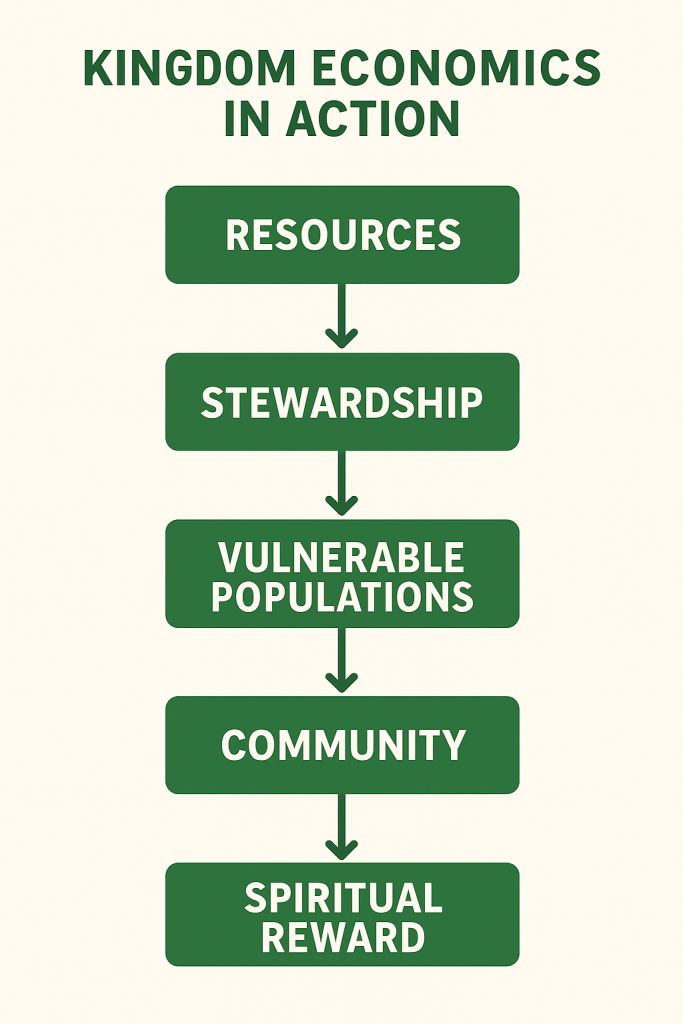
The concept of wealth within the biblical framework transcends material accumulation and economic prosperity. True kingdom wealth is rooted in stewardship, divine purpose, and service to others rather than self-indulgence or exploitation. The Most High’s design for wealth has always been redemptive, restorative, and righteous. As Deuteronomy 8:18 (KJV) declares, “But thou shalt remember the LORD thy God: for it is he that giveth thee power to get wealth, that he may establish his covenant.”

In contrast to the materialism and capitalism that dominate worldly systems, biblical prosperity is covenantal—it exists to advance the will of God, care for the poor, and sustain the community. Wealth in the Kingdom is a trust, not a trophy. It is never meant to enslave the believer’s heart but to empower righteous influence.

The Psychology of Wealth and Purpose

From a psychological perspective, wealth tends to magnify the moral and emotional state of its possessor. Materialism often leads to a distorted self-concept, where identity becomes tied to possessions (Kasser, 2016). In contrast, individuals guided by intrinsic values—such as compassion, stewardship, and purpose—display greater emotional stability and fulfillment. Scripture reinforces this truth in Luke 12:15 (KJV): “A man’s life consisteth not in the abundance of the things which he possesseth.”

The Kingdom mindset therefore shifts the believer’s focus from acquisition to assignment. This transformation represents a renewal of the mind (Romans 12:2), where wealth becomes an instrument of righteousness. Kingdom wealth serves people, not pride.

Stewardship vs. Ownership

In biblical theology, humans are not owners but stewards of God’s resources. Psalm 24:1 (KJV) affirms, “The earth is the LORD’s, and the fulness thereof.” Every possession—whether land, talent, or intellect—belongs ultimately to God. This truth humbles the heart and neutralizes greed. Psychologically, stewardship fosters gratitude, accountability, and ethical decision-making, countering the ego-driven impulses of capitalism.

Wealth as a Test of Character

Wealth reveals what is hidden in the heart. Proverbs 11:28 (KJV) warns, “He that trusteth in his riches shall fall.” The psychology of power and wealth often exposes deeper insecurities, leading to overcompensation through control, consumption, or social dominance. In God’s Kingdom, however, power is authenticated through service (Mark 10:44). The greatest test of prosperity is whether one remains humble and generous amid abundance.

The Kingdom Economy

Unlike the capitalist model based on competition and scarcity, the Kingdom economy is grounded in abundance and cooperation. In Acts 4:34–35 (KJV), the early church practiced communal distribution: “Neither was there any among them that lacked.” Their model demonstrates divine equity, where prosperity is shared, not hoarded. Kingdom economics thus aligns with divine justice, prioritizing human need over greed.

Wealth and Responsibility

The Bible consistently associates wealth with moral responsibility. In 1 Timothy 6:17–18 (KJV), Paul instructs, “Charge them that are rich… that they be rich in good works, ready to distribute, willing to communicate.” The accumulation of wealth without generosity invites judgment (James 5:1–3). From a psychological lens, generosity enhances well-being, while greed fuels anxiety and social isolation (Layous et al., 2012).

The Devil’s Counterfeit Kingdom

When Satan offered Jesus “all the kingdoms of the world” in Matthew 4:8–9 (KJV), he was not lying about possessing them temporarily. The “kingdoms” represent systems—political, economic, religious, and cultural—governed by pride, corruption, and idolatry. These include Babylon (economic greed), Rome (military power), Egypt (enslavement and control), and Sodom (pleasure and moral decay). Each symbolizes a facet of worldly dominion designed to draw humanity away from divine authority.

Who Truly Holds Power?

While earthly rulers boast of influence, Scripture affirms that all true power belongs to God. Psalm 62:11 (KJV) states, “Power belongeth unto God.” The devil’s power is temporal and deceptive, operating through fear, manipulation, and vanity. The believer’s power, by contrast, flows from righteousness, truth, and the indwelling Spirit of God (Acts 1:8).

The Ethics of Giving and Receiving

Biblical wealth ethics emphasize balance—both giving and receiving in alignment with God’s will. Proverbs 3:9–10 (KJV) encourages, “Honour the LORD with thy substance… so shall thy barns be filled with plenty.” Giving is not loss but investment into eternal purpose. Psychologically, altruistic giving correlates with increased happiness and self-worth (Post, 2005).

God’s Heart for Widows

The Bible repeatedly emphasizes that widows are among the most vulnerable members of society. In ancient Israel, widows often lacked financial support because they were dependent on their husbands. God commands His people to care for them, reflecting His justice and mercy:

  • Deuteronomy 10:18 (KJV):“He doth execute the judgment of the fatherless and widow, and loveth the stranger, in giving him food and raiment.”
    • God Himself is described as a defender and provider for widows. Helping widows aligns us with His character.
  • Psalm 68:5 (KJV):“A father of the fatherless, and a judge of the widows, is God in his holy habitation.”
    • God identifies as the protector of widows, showing that caring for them is an extension of worshiping Him.

2. Old Testament Instructions

In the Mosaic Law, caring for widows was often tied to practical provision, especially through gleaning, charity, and justice:

  • Exodus 22:22–24 (KJV):“Ye shall not afflict any widow, or fatherless child. If thou afflict them in any wise, and they cry at all unto me, I will surely hear their cry.”
    • Oppressing a widow was equated with oppressing God Himself. The law ensured widows were protected, not exploited.
  • Deuteronomy 14:29 (KJV): The tithe and offerings were to be shared with “the stranger, the fatherless, and the widow.”
    • God’s economic system included widows as beneficiaries, ensuring they could survive even if they lacked a male provider.
  • Ruth 2:2–3 (KJV): Ruth, a widow, was allowed to glean in Boaz’s field.
    • This illustrates practical giving: providing access to resources and opportunity, not only handouts.

3. New Testament Principles

In the New Testament, the church formalized support for widows as part of spiritual and social responsibility:

  • 1 Timothy 5:3–4 (KJV):“Honour widows that are widows indeed. But if any widow have children or nephews, let them learn first to shew piety at home, and to requite their parents: for that is good and acceptable before God.”
    • The apostle Paul distinguishes between widows who are truly alone and those with family. Giving is primarily for those who lack other support.
  • 1 Timothy 5:9–10 (KJV): Paul outlines qualifications for widows who receive support from the church. They must be reputable, have a good testimony, and show hospitality.
    • This shows that giving to widows was not indiscriminate; it was intended to support godly women in need.
  • James 1:27 (KJV):“Pure religion and undefiled before God and the Father is this, To visit the fatherless and widows in their affliction, and to keep himself unspotted from the world.”
    • Caring for widows is a central marker of true, undefiled religion.

4. Psychological and Spiritual Effects of Giving to Widows

Psychologically, giving to widows combats societal neglect, reduces fear and isolation, and reinforces dignity. It fosters empathy and gratitude, while breaking selfishness in the giver.

Spiritually, giving reflects God’s heart, cultivates generosity, and aligns the giver with kingdom principles of justice, mercy, and righteousness (Proverbs 19:17). It is both a blessing for the widow and a spiritual investment for the giver.


5. Modern Application

In contemporary practice, giving to widows can take many forms:

  1. Financial Support – Direct gifts, stipends, or assistance with bills.
  2. Community Assistance – Helping with groceries, housing, or medical needs.
  3. Spiritual Encouragement – Visiting, praying with, and mentoring widows.
  4. Opportunity Creation – Providing jobs, training, or means of self-sufficiency.

The principle remains the same: widows who lack other support are to be cared for as a reflection of God’s love.


Summary:
Giving to widows in the Bible is both a command and a blessing. It demonstrates godliness (James 1:27), honors God’s heart (Deut. 10:18), and is part of a believer’s duty to the vulnerable. True giving is intentional, respectful, and empowering, not merely a formality or charity.

Capitalism vs. Kingdom Commerce

Capitalism thrives on competition, but the Kingdom thrives on cooperation. The capitalist mindset promotes profit even at the expense of people, while the Kingdom system promotes productivity that blesses the community. Proverbs 16:8 (KJV) declares, “Better is a little with righteousness than great revenues without right.” Kingdom wealth prioritizes justice and sustainability over short-term gain.

Materialism and the Empty Self

Materialism offers a false sense of security and identity. The psychological phenomenon known as the “empty self” (Cushman, 1990) describes modern individuals who fill emotional voids with consumerism. This aligns with Ecclesiastes 5:10 (KJV): “He that loveth silver shall not be satisfied with silver.” The more we pursue things, the less fulfilled we become.

The Role of Contentment

Contentment anchors the believer against covetousness. Philippians 4:11 (KJV) declares, “I have learned, in whatsoever state I am, therewith to be content.” Contentment is not complacency but spiritual stability—the confidence that God is the source of all provision. Psychologically, contentment reduces envy and fosters peace of mind.

Economic Justice and the Poor

The Bible commands economic justice. Proverbs 19:17 (KJV) promises, “He that hath pity upon the poor lendeth unto the LORD.” Neglecting the poor is a spiritual offense (Ezekiel 16:49). Capitalist societies often ignore systemic poverty, perpetuating inequality through unjust systems. Kingdom wealth, by contrast, redistributes blessings to uplift others.

Wealth and Worship

Money is morally neutral—it becomes holy or corrupt depending on intent. Jesus warned in Matthew 6:24 (KJV): “Ye cannot serve God and mammon.” Worshipping wealth enslaves the soul, while surrendering it sanctifies our stewardship. Kingdom-minded believers see every dollar as an opportunity to manifest God’s glory through impact.

The Transformation of Power

In worldly terms, power controls others. In the Kingdom, power serves others. Jesus redefined authority in John 13 when He washed His disciples’ feet. Kingdom power is exercised through humility, self-discipline, and obedience. True power is never domination—it is transformation.

The Psychological Trap of Greed

Greed is both spiritual and psychological bondage. It originates from fear of lack and manifests as insatiable craving. Research links greed to increased depression and moral disengagement (Seuntjens et al., 2015). Spiritually, greed is idolatry (Colossians 3:5). The cure is gratitude—a posture that restores perspective and peace.

Restoring the Divine Order of Wealth

God designed wealth to sustain creation and bless humanity. When believers align finances with faith, they reverse the curse of exploitation. Malachi 3:10 (KJV) highlights the principle of tithing as a covenant of trust and reciprocity. Obedience in giving opens spiritual and material abundance.

Cultural Power and Influence

The “kingdoms of this world” include cultural dominance—media, education, and entertainment. These systems shape thought, normalize sin, and influence behavior. Kingdom citizens are called to engage culture without conforming to it (Romans 12:2). Influence should lead to illumination, not imitation.

Reclaiming Dominion

When Christ rose from the grave, He declared, “All power is given unto me in heaven and in earth” (Matthew 28:18, KJV). This statement reclaimed humanity’s lost dominion. The believer’s authority, therefore, is not in possessions but in position—being seated with Christ in heavenly places (Ephesians 2:6).

Wealth and the End Times

Revelation 18 depicts Babylon’s economic collapse, symbolizing the fall of corrupt world systems. Those who trusted in materialism mourned, but the saints rejoiced because divine justice prevailed. This eschatological vision warns believers not to build eternal hope on temporary wealth.

Power Reimagined Through Service

Jesus taught that leadership in the Kingdom is servant-centered (Matthew 20:26–28). This redefines greatness as the ability to lift others rather than exalt oneself. The psychology of servant leadership demonstrates higher emotional intelligence and resilience (Greenleaf, 2002).

The Eternal Value of Generosity

Generosity is a heavenly investment that yields eternal dividends. Matthew 6:20 (KJV) instructs, “Lay up for yourselves treasures in heaven.” Acts of giving create legacy, spiritual growth, and divine favor. The more one gives, the more one reflects the image of the Giver.

Conclusion

Kingdom wealth is not defined by possessions but by purpose. It aligns prosperity with righteousness, power with service, and influence with integrity. Materialism, capitalism, and the worldly pursuit of power lead to spiritual poverty, while Kingdom stewardship produces eternal fruit. True wealth is measured not by what one owns but by what one gives. In the end, all power, all glory, and all wealth belong to the Most High, who alone reigns forever.


References (KJV & Academic):

  • The Holy Bible, King James Version.
  • Cushman, P. (1990). Why the self is empty: Toward a historically situated psychology. American Psychologist, 45(5), 599–611.
  • Kasser, T. (2016). Materialistic values and goals. Annual Review of Psychology, 67, 489–514.
  • Layous, K., et al. (2012). The benefits of prosocial spending. Journal of Positive Psychology, 7(5), 377–389.
  • Post, S. (2005). Altruism, happiness, and health: It’s good to be good. International Journal of Behavioral Medicine, 12(2), 66–77.
  • Seuntjens, T. G., et al. (2015). Greed: A motivational and social comparison perspective. Personality and Individual Differences, 74, 153–158.
  • Greenleaf, R. K. (2002). Servant leadership: A journey into the nature of legitimate power and greatness. Paulist Press.


Let God’s Will Be Done in Your Life

Photo by Nothing Ahead on Pexels.com

Introduction

To submit to the will of God is to align one’s life with divine purpose and wisdom. The KJV Bible emphasizes that God’s plans are perfect, even when human understanding is limited: “For my thoughts are not your thoughts, neither are your ways my ways, saith the Lord” (Isaiah 55:8). Letting His will be done requires trust, humility, and surrender, knowing that God’s design is ultimately for our good.


2. Trusting God’s Plan

Trust is the foundation of surrender. Proverbs 3:5–6 exhorts: “Trust in the LORD with all thine heart; and lean not unto thine own understanding. In all thy ways acknowledge him, and he shall direct thy paths.” Human desire often conflicts with divine intention, but yielding to God ensures guidance beyond our limited perception.


3. Patience in the Process

God’s timing differs from human timing. Ecclesiastes 3:1 reminds us: “To everything there is a season, and a time to every purpose under the heaven.” Letting His will be done requires patience, understanding that delays or detours may serve a higher purpose, shaping character and faith.


4. Surrendering Personal Desires

Surrender is not passive but an active choice to prioritize God’s will over self-interest. Jesus prayed in Gethsemane: “O my Father, if it be possible, let this cup pass from me: nevertheless not as I will, but as thou wilt” (Matthew 26:39). True spiritual maturity involves embracing God’s plan even when it diverges from personal preferences.


5. Obedience as Evidence of Faith

Obedience demonstrates trust in God’s sovereignty. James 1:22 instructs: “But be ye doers of the word, and not hearers only, deceiving your own selves.” Faith without action is incomplete; yielding to God’s will is expressed through daily choices aligned with His Word.


6. Letting Go of Control

Human beings naturally desire control over circumstances, yet God calls for relinquishment. Psalm 37:5 declares: “Commit thy way unto the LORD; trust also in him; and he shall bring it to pass.” By releasing control, believers allow God to orchestrate outcomes that surpass human imagination.


7. Spiritual Growth Through Trials

Challenges and trials often reveal God’s will. Romans 8:28 assures: “And we know that all things work together for good to them that love God, to them who are the called according to his purpose.” Embracing God’s will during hardships strengthens faith, perseverance, and reliance on His promises.


8. Prayer as a Means of Alignment

Prayer is a vital channel for understanding and accepting God’s will. Jesus taught: “After this manner therefore pray ye: Our Father which art in heaven, Hallowed be thy name. Thy kingdom come. Thy will be done in earth, as it is in heaven” (Matthew 6:9–10). Through consistent prayer, believers cultivate discernment and inner peace.


9. The Blessings of Submission

Submission to God brings spiritual fulfillment. Psalm 40:8 proclaims: “I delight to do thy will, O my God: yea, thy law is within my heart.” When the believer aligns life with divine purpose, blessings manifest in guidance, peace, and strengthened relationship with God.


10. Conclusion

Letting God’s will be done is a lifelong journey of faith, obedience, and trust. By surrendering desires, embracing patience, and practicing continual prayer, believers align with God’s perfect plan. As Philippians 2:13 reminds us: “For it is God which worketh in you both to will and to do of his good pleasure.” True peace and purpose arise when one yields fully to His will.

Great Things Are Birthed in Isolation: You Were Not Born to Be Ordinary.

Photo by cottonbro studio on Pexels.com

Isolation is not always punishment; often, it is preparation. Some of the greatest stories in Scripture and history reveal that God separates His chosen vessels before He elevates them. Moses spent forty years in the desert before returning to lead Israel. Jesus spent forty days in the wilderness before launching His public ministry. The wilderness was not a place of weakness, but of shaping.

The Bible declares: “But the LORD is with me as a mighty terrible one: therefore my persecutors shall stumble” (Jeremiah 20:11, KJV). In times of isolation, you discover that the presence of God is more than enough. You were never designed to be ordinary, and so the process required to mold you cannot be common.

Isolation strips away distractions. When you are surrounded by constant noise, you cannot hear the still, small voice of God. Elijah experienced this in 1 Kings 19:12, where the Lord was not in the earthquake, fire, or wind, but in a gentle whisper. Psychology echoes this truth: solitude increases self-awareness, emotional regulation, and creativity (Long & Averill, 2003).

In solitude, God often births greatness. Joseph was betrayed by his brothers and cast into prison, yet it was in that very place of abandonment that his gift of interpretation brought him before Pharaoh. Had Joseph not endured isolation, he would never have been positioned for elevation. “But the LORD was with Joseph, and shewed him mercy” (Genesis 39:21, KJV).

You were not born to be ordinary. The extraordinary requires extraordinary preparation. Ordinary seeds grow on the surface, but precious jewels are formed under the pressure of the earth, hidden away for years. Psychology refers to this as post-traumatic growth—where trials and isolation produce resilience, wisdom, and purpose (Tedeschi & Calhoun, 1996).

Isolation is where vision is sharpened. Habakkuk records: “I will stand upon my watch, and set me upon the tower, and will watch to see what he will say unto me” (Habakkuk 2:1, KJV). Towers are lonely places, but they are vantage points. God often removes you from the crowd so you can see what others cannot.

Greatness is never birthed in comfort zones. Abraham was called to leave his father’s house, his country, and his kin to walk by faith (Genesis 12:1, KJV). That separation made him the father of many nations. Similarly, psychology teaches that stepping away from familiar environments allows people to form new identities and embrace personal growth (Erikson, 1968).

Even Jesus withdrew from the crowd to pray. Luke 5:16 (KJV) says, “And he withdrew himself into the wilderness, and prayed.” If the Son of God needed solitude to recharge, align, and birth strength, how much more do we? Isolation, therefore, is not a curse—it is a catalyst.

Ordinary people fear being alone, but extraordinary people recognize the power of consecration. When Samson revealed his secret to Delilah, his power was stripped, but when he stood alone in the temple, God returned his strength (Judges 16:28-30). Separation preserved his calling, even in his final act.

In isolation, you learn to depend solely on God. Psalm 62:5 (KJV) declares: “My soul, wait thou only upon God; for my expectation is from him.” Psychology calls this internal locus of control, the belief that your destiny is shaped not by external applause but by inner strength (Rotter, 1966).

Many fear isolation because it exposes hidden wounds, insecurities, and fears. But that exposure is necessary for healing. David spent time alone in caves, wrestling with his fears, yet those same caves became sanctuaries where he penned psalms of trust. His isolation birthed his intimacy with God.

When the crowd is removed, motives are revealed. Some people cling to you for what they can gain, not for who you are. In isolation, those false attachments are cut away, leaving only what is authentic. “They went out from us, but they were not of us” (1 John 2:19, KJV).

Isolation transforms your mind. Romans 12:2 (KJV) says, “Be not conformed to this world: but be ye transformed by the renewing of your mind.” Psychology supports this by noting that solitude allows cognitive restructuring—reframing thoughts and building resilience (Beck, 1979).

Every birthing requires labor, and labor is never done in public. Mothers travail in hidden spaces before presenting new life. Likewise, God often hides your development until it is time to reveal your greatness. Isaiah 49:2 (KJV) says: “In the shadow of his hand hath he hid me, and made me a polished shaft.”

Great leaders are never forged in crowds but in silence. Nelson Mandela, confined in prison for 27 years, emerged as a symbol of reconciliation. His isolation prepared him for destiny. Psychology calls this resilience, the ability to transform suffering into strength.

You were not born to be ordinary, because the God who created you is extraordinary. Ephesians 2:10 (KJV) reminds us: “For we are his workmanship, created in Christ Jesus unto good works.” Greatness is already coded in your DNA; isolation simply activates what is dormant.

Isolation is not abandonment—it is consecration. Jesus said: “Ye have not chosen me, but I have chosen you, and ordained you” (John 15:16, KJV). When God chooses you, He sets you apart. Psychology defines this as individuation—the process of becoming your true, unique self (Jung, 1953).

Even nature testifies that greatness is born in hidden places. Seeds break in darkness before sprouting into light. Caterpillars transform in cocoons before becoming butterflies. Your isolation season is not death—it is metamorphosis.

When the world sees your breakthrough, they will think it happened overnight. But you will know it was forged in silence, tears, and prayer. Isolation is the furnace that molds ordinary vessels into extraordinary instruments of God.

Therefore, embrace your season of solitude. You were not born to blend in, but to stand out. You were not created for mediocrity, but for greatness. And great things are always birthed in isolation.


📚 References

  • Beck, A. T. (1979). Cognitive therapy of depression. Guilford Press.
  • Erikson, E. H. (1968). Identity: Youth and crisis. Norton.
  • Jung, C. G. (1953). Collected works of C. G. Jung: Vol. 7. Two essays on analytical psychology. Princeton University Press.
  • Long, C. R., & Averill, J. R. (2003). Solitude: An exploration of benefits of being alone. Journal for the Theory of Social Behaviour, 33(1), 21–44.
  • Rotter, J. B. (1966). Generalized expectancies for internal versus external control. Psychological Monographs, 80(1), 1–28.
  • Tedeschi, R. G., & Calhoun, L. G. (1996). The posttraumatic growth inventory. Journal of Traumatic Stress, 9(3), 455–471.

Walking in Power and Purpose.

Photo by Ivan Siarbolin on Pexels.com

One of my male friends once told me that, perched on high heels, I looked like a walking skyscraper. At first, I laughed at the compliment, but later I thought about how it connected to the greater reality of life. When it comes to walking in power and purpose, the two run parallel—just as a skyscraper towers with strength and presence, so too must we stand tall in our calling, unshaken and unwavering in who God created us to be. For women, especially, our walk is more than fashion; it is about stepping into authority, confidence, and divine assignment.

Walking in purpose begins with understanding that we were created intentionally by God. Jeremiah 29:11 (KJV) reminds us, “For I know the thoughts that I think toward you, saith the LORD, thoughts of peace, and not of evil, to give you an expected end.” Purpose is not random; it is already written in heaven. Our role is to align with His will so that every step reflects His plan.

To walk in power means to walk in the authority God has given through His Spirit. Luke 10:19 (KJV) declares, “Behold, I give unto you power to tread on serpents and scorpions, and over all the power of the enemy: and nothing shall by any means hurt you.” This power is not from our own strength, but from the indwelling of the Holy Ghost. It equips us to resist temptation, overcome opposition, and fulfill our divine assignments.

Purpose and power cannot be separated. Power without purpose becomes dangerous, and purpose without power becomes weak. Together, they form the perfect balance to make us effective in our walk with God. Like a skyscraper anchored deep into the ground to hold its height, we too must be anchored in Christ to sustain the weight of our calling.

Walking in purpose requires discipline. It means saying no to distractions and yes to obedience. Jesus Himself modeled this when He said, “I must work the works of him that sent me, while it is day” (John 9:4, KJV). He understood His assignment and was determined to finish it. Similarly, we must be intentional about where we place our time, energy, and resources.

Walking in power means understanding spiritual authority. The enemy will always try to shake us, but 2 Timothy 1:7 (KJV) declares, “For God hath not given us the spirit of fear; but of power, and of love, and of a sound mind.” This authority helps us silence lies, walk in boldness, and speak life over ourselves and others.

We must also remember that walking in purpose is not for personal gain but for service. Purpose always aligns with building God’s kingdom and blessing others. Esther did not become queen to bask in luxury; she was called to save her people (Esther 4:14, KJV). Likewise, we are not positioned in jobs, relationships, or communities by accident. Our steps are assignments.

Sometimes walking in purpose will feel uncomfortable. Moses hesitated when God called him, worrying about his speech (Exodus 4:10, KJV). Jeremiah feared he was too young (Jeremiah 1:6, KJV). But God reassures us that His strength is made perfect in weakness (2 Corinthians 12:9, KJV). Walking in power means trusting Him even when we feel inadequate.

The pursuit of purpose requires intimacy with God. Without prayer, fasting, and studying His Word, we cannot clearly hear His instructions. Psalm 119:105 (KJV) reminds us, “Thy word is a lamp unto my feet, and a light unto my path.” Just as skyscrapers are built with blueprints, our lives must follow God’s divine blueprint.

Walking in purpose also means walking in integrity. Proverbs 10:9 (KJV) says, “He that walketh uprightly walketh surely: but he that perverteth his ways shall be known.” A person’s anointing will always be undermined if their character does not match their calling. Power must always be exercised with humility and truth.

Here are 10 tips to walk in power and purpose:

Seek God daily for direction (Proverbs 3:5-6, KJV).
Embrace your identity in Christ (1 Peter 2:9, KJV).
Guard your mind and spirit against distractions (Philippians 4:8, KJV).
Walk by faith, not by sight (2 Corinthians 5:7, KJV).
Develop a lifestyle of prayer and fasting (Matthew 17:21, KJV).
Surround yourself with godly counsel and community (Proverbs 11:14, KJV).
Pursue holiness in word and deed (1 Peter 1:16, KJV).
Serve others as Christ served (Mark 10:45, KJV).
Speak life and walk in authority (Proverbs 18:21, KJV).
Remain steadfast even through trials (James 1:12, KJV).

These practices are not just spiritual rituals but daily disciplines that ground us in God’s plan. Just as a skyscraper must have constant maintenance to stay strong, so too must our walk with God be nurtured continually.

Walking in power also means recognizing spiritual warfare. The devil seeks to derail those walking in purpose. Ephesians 6:11 (KJV) tells us to “Put on the whole armour of God, that ye may be able to stand against the wiles of the devil.” Spiritual battles require spiritual weapons, and we are not defenseless when clothed in His armor.

Purpose often involves sacrifice. Jesus said in Luke 9:23 (KJV), “If any man will come after me, let him deny himself, and take up his cross daily, and follow me.” Power and purpose do not come without cost, but the reward far outweighs the price. Eternal significance is worth more than temporary comfort.

Walking in power means walking with confidence, not arrogance. Confidence is rooted in God’s promises, while arrogance relies on self. Philippians 4:13 (KJV) declares, “I can do all things through Christ which strengtheneth me.” When our source is Christ, we can walk boldly without pride.

Purpose is revealed in steps, not leaps. God may not show us the entire journey, but He will guide us step by step. Abraham left his homeland not knowing where he was going, but trusting God (Genesis 12:1-4, KJV). Similarly, we walk in purpose one obedient step at a time, and the full picture unfolds in God’s timing.

Walking in power and purpose also impacts others. When we stand tall in God’s authority, we inspire others to do the same. Paul told Timothy to “be thou an example of the believers” (1 Timothy 4:12, KJV). Our obedience becomes a testimony that can unlock courage in those around us.

Ultimately, power and purpose belong to God. Revelation 4:11 (KJV) declares, “Thou art worthy, O Lord, to receive glory and honour and power: for thou hast created all things, and for thy pleasure they are and were created.” Our lives are not our own; they exist for His glory. Walking in power and purpose means surrendering our will to His divine plan.

✨ Walking in Power and Purpose: 10 Biblical Keys

Key Verse

“The steps of a good man are ordered by the LORD: and he delighteth in his way.” — Psalm 37:23 (KJV)


1. Seek God First

  • Scripture: Matthew 6:33 (KJV)
  • Meaning: Prioritize God above career, relationships, and personal ambitions.

2. Know Your Identity in Christ

  • Scripture: 2 Corinthians 5:17 (KJV)
  • Meaning: Remember you are a new creation, not defined by past mistakes.

3. Stay Rooted in Scripture

  • Scripture: Psalm 119:105 (KJV)
  • Meaning: God’s Word is your roadmap for walking in His purpose.

4. Pray Consistently

  • Scripture: 1 Thessalonians 5:17 (KJV)
  • Meaning: Prayer is your daily lifeline to power, direction, and peace.

5. Fast for Clarity and Strength

  • Scripture: Isaiah 58:6 (KJV)
  • Meaning: Fasting breaks strongholds and clears spiritual vision.

6. Guard Your Circle

  • Scripture: Proverbs 27:17 (KJV)
  • Meaning: Walk with those who sharpen your faith and push you toward purpose.

7. Obey God Even When It’s Hard

  • Scripture: 1 Samuel 15:22 (KJV)
  • Meaning: Obedience is better than sacrifice. God rewards faithfulness.

8. Use Your Gifts to Serve Others

  • Scripture: 1 Peter 4:10 (KJV)
  • Meaning: Your talents are not just for you—they’re for Kingdom impact.

9. Reject Fear and Walk in Faith

  • Scripture: 2 Timothy 1:7 (KJV)
  • Meaning: Fear is not from God. Boldness comes from His Spirit.

10. Rest in God’s Timing

  • Scripture: Ecclesiastes 3:1 (KJV)
  • Meaning: Purpose unfolds in God’s season, not by rushing ahead.

🔥 Takeaway: Power is authority given by God; purpose is His assignment for your life. When you align both, you become a walking testimony of His glory.

Like the skyscraper that rises tall against the skyline, those who walk in power and purpose stand as beacons of God’s glory in a world full of compromise. Our foundation is Christ, our strength is the Spirit, and our mission is love. The world will always take notice of a life fully surrendered to God.


📖 KJV Bible References
Jeremiah 29:11; Luke 10:19; John 9:4; 2 Timothy 1:7; Esther 4:14; Exodus 4:10; Jeremiah 1:6; 2 Corinthians 12:9; Psalm 119:105; Proverbs 10:9; Proverbs 3:5-6; 1 Peter 2:9; Philippians 4:8; 2 Corinthians 5:7; Matthew 17:21; Proverbs 11:14; 1 Peter 1:16; Mark 10:45; Proverbs 18:21; James 1:12; Ephesians 6:11; Luke 9:23; Philippians 4:13; Genesis 12:1-4; 1 Timothy 4:12; Revelation 4:11.