Category Archives: Pride

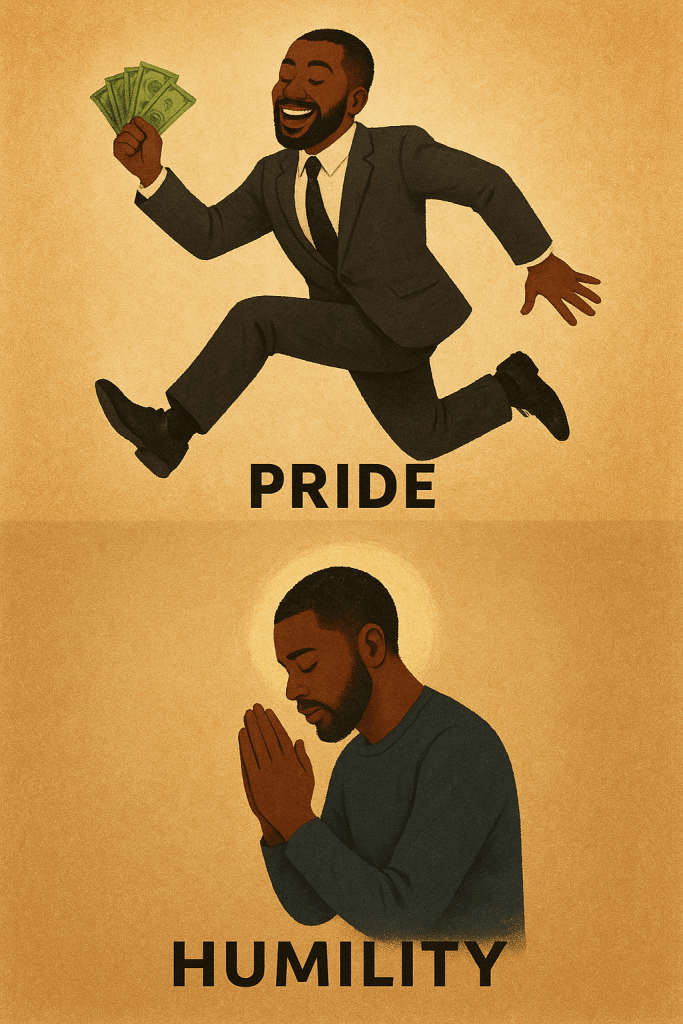
Pride or Humility?

Pride and humility represent two opposing forces in the spiritual and moral life of every believer. Pride exalts the self, while humility exalts God. The Bible often contrasts these traits to show how one leads to destruction and the other to divine favor. Pride focuses inward, seeking recognition and control, whereas humility focuses upward, seeking submission to the Most High. Understanding the nature of both helps us discern the path that aligns with righteousness and truth.

Pride, at its core, is self-exaltation. It is the elevation of one’s own will, wisdom, or worth above others—and even above God. Scripture describes pride as the root of rebellion, the seed of disobedience, and the foundation of sin. In Proverbs 16:18 (KJV), it warns, “Pride goeth before destruction, and an haughty spirit before a fall.” This verse reveals that pride precedes downfall, for it blinds a person to correction, truth, and repentance.

The origin of pride can be traced back to Satan himself. Once known as Lucifer, he was an angel of light who allowed pride to consume his heart. In Isaiah 14:12–15 (KJV), it says, “How art thou fallen from heaven, O Lucifer, son of the morning!… For thou hast said in thine heart, I will ascend into heaven, I will exalt my throne above the stars of God.” His desire to be like the Most High led to his downfall. Pride transformed a glorious being into the adversary of all righteousness.

Lucifer’s pride was rooted in self-glorification. He desired worship, power, and independence from God’s authority. This spirit of pride did not end with his fall; it entered humanity in the Garden of Eden. When Satan tempted Eve, he promised that eating the forbidden fruit would make her “as gods, knowing good and evil” (Genesis 3:5, KJV). That temptation was pride disguised as enlightenment—the same rebellion that led to Lucifer’s expulsion from heaven.

The danger of pride lies in its subtlety. It often disguises itself as confidence, ambition, or success, yet its core motive is self-centeredness. Pride closes the heart to instruction and correction. It blinds the eyes of the proud so that they no longer see their faults or need for God. In Obadiah 1:3 (KJV), it declares, “The pride of thine heart hath deceived thee.” Pride deceives the soul, leading it into false security and spiritual blindness.

Pride not only affects individuals but also nations and societies. Babylon, Egypt, and even Israel fell because of pride. In Daniel 4, King Nebuchadnezzar learned this lesson when his arrogance caused God to humble him. After losing his kingdom and living among beasts, he finally acknowledged, “Those that walk in pride he is able to abase” (Daniel 4:37, KJV). Pride brings humiliation, but humility brings restoration.

Ten Attributes of Pride

  1. Arrogance – A sense of superiority that elevates oneself above others. (Proverbs 8:13) “Pride, and arrogancy, and the evil way, and the froward mouth, do I hate.”
  2. Self-Reliance – Depending on one’s own wisdom and strength instead of trusting in God. (Proverbs 3:5–6) “Lean not unto thine own understanding.”
  3. Boastfulness – Constantly speaking of one’s achievements or abilities to gain praise. (Proverbs 27:2) “Let another man praise thee, and not thine own mouth.”
  4. Unteachableness – Refusing correction, counsel, or instruction from others. (Proverbs 13:10) “Only by pride cometh contention: but with the well advised is wisdom.”
  5. Judgmental Spirit – Looking down on others and magnifying their flaws while excusing one’s own. (Luke 18:11–12) The Pharisee who exalted himself in prayer.
  6. Desire for Recognition – Craving validation, admiration, and honor from men instead of from God. (Matthew 6:1–2) “Take heed that ye do not your alms before men, to be seen of them.”
  7. Rebellion – Resisting authority and divine instruction; refusing to submit to God’s will. (1 Samuel 15:23) “Rebellion is as the sin of witchcraft, and stubbornness is as iniquity and idolatry.”
  8. Envy and Competition – Comparing oneself to others and striving to outshine them. (Galatians 5:26) “Let us not be desirous of vain glory, provoking one another, envying one another.”
  9. Hypocrisy – Pretending righteousness while harboring pride in the heart. (Matthew 23:27) “Ye are like unto whited sepulchres… within full of hypocrisy and iniquity.”
  10. Ingratitude – Failing to acknowledge God as the source of all blessings. (Deuteronomy 8:14, 17) “Then thine heart be lifted up… and thou say in thine heart, My power and the might of mine hand hath gotten me this wealth.”

The attributes of prideful people are easy to recognize in Scripture. They are boastful, arrogant, unteachable, and often quick to judge others. They rely on their own understanding rather than God’s wisdom. Proverbs 21:4 (KJV) describes pride as a sin of the heart: “An high look, and a proud heart… is sin.” The proud speak more than they listen, seek praise rather than peace, and strive to be served rather than to serve.

In contrast, humility is the posture of submission and reverence before God. It is not weakness but strength under control. A humble person recognizes their dependence on the Creator and acknowledges that all wisdom, success, and life flow from Him. James 4:6 (KJV) reminds believers, “God resisteth the proud, but giveth grace unto the humble.” Grace is the reward of humility—it opens doors that pride closes.

The Bible gives us many examples of humble men and women who found favor with God. Moses is called “very meek, above all the men which were upon the face of the earth” (Numbers 12:3, KJV). Despite leading an entire nation, Moses never exalted himself; he depended on God for guidance. His humility allowed him to be used mightily by the Most High.

King David also exemplified humility when confronted by the prophet Nathan after his sin with Bathsheba. Rather than defending himself, David repented deeply, saying, “Create in me a clean heart, O God” (Psalm 51:10, KJV). His willingness to confess and seek forgiveness restored his relationship with the Lord. Humility brought redemption where pride would have brought destruction.

The ultimate model of humility is Yahusha HaMashiach (Jesus Christ). Philippians 2:5–8 (KJV) declares that though He was in the form of God, He “made himself of no reputation, and took upon him the form of a servant.” His humility led Him to the cross, where He laid down His life for others. True humility, therefore, is sacrificial—it seeks to serve, not to be served.

Humility produces a spirit of gratitude. The humble recognize that all blessings come from God and not from personal merit. They walk in thankfulness, not entitlement. This attitude keeps them grounded even in seasons of success. 1 Peter 5:6 (KJV) instructs, “Humble yourselves therefore under the mighty hand of God, that he may exalt you in due time.” Exaltation comes through surrender, not self-promotion.

The danger of pride is not only moral but spiritual. Pride distances a person from God’s presence. It was pride that caused Saul to lose his kingdom, while humility crowned David. Pride whispers, “I don’t need God,” but humility cries, “Without You, I can do nothing.” This distinction determines the outcome of one’s destiny.

Those who possess humility often demonstrate patience, gentleness, and compassion. They listen more than they speak and give more than they receive. Their speech is seasoned with grace, and their actions reflect love. Colossians 3:12 (KJV) encourages believers to “put on therefore… humbleness of mind, meekness, longsuffering.” These attributes reflect the very heart of the Messiah.

Humility also invites wisdom. Proverbs 11:2 (KJV) states, “When pride cometh, then cometh shame: but with the lowly is wisdom.” Pride closes the ears to instruction, but humility opens the heart to learning. Those who are humble are teachable, willing to grow, and quick to correct their wrongs. This posture of openness allows God to shape their character.

Pride, on the other hand, isolates. It separates people from community and from truth. A proud heart cannot fellowship because it always seeks to dominate. Pride makes one defensive and resentful of correction. In contrast, humility builds relationships because it values peace over ego. The humble understand that strength lies in unity and love.

Spiritually, humility is essential for prayer and repentance. The Most High does not hear the prayers of the proud-hearted, for they approach Him without reverence. 2 Chronicles 7:14 (KJV) declares, “If my people, which are called by my name, shall humble themselves, and pray… then will I hear from heaven.” Humility opens the door to divine mercy and restoration.

Ten Attributes of Humility

  1. Meekness – A gentle and patient spirit that endures without anger or pride. (Matthew 5:5) “Blessed are the meek: for they shall inherit the earth.”
  2. Teachability – A willingness to receive correction, wisdom, and instruction. (Proverbs 9:9) “Give instruction to a wise man, and he will be yet wiser.”
  3. Gratitude – Recognizing that every blessing and ability comes from God. (1 Thessalonians 5:18) “In every thing give thanks: for this is the will of God in Christ Jesus concerning you.”
  4. Dependence on God – Trusting in the Lord rather than in one’s own strength or understanding. (Proverbs 3:5–6) “Trust in the Lord with all thine heart… and he shall direct thy paths.”
  5. Repentance – A heart that quickly acknowledges sin and seeks forgiveness. (Psalm 51:17) “A broken and a contrite heart, O God, thou wilt not despise.”
  6. Servanthood – A desire to serve others rather than to be served. (Mark 10:44–45) “Whosoever of you will be the chiefest, shall be servant of all.”
  7. Obedience – Submitting to God’s will and commandments without resistance. (Philippians 2:8) “He humbled himself, and became obedient unto death, even the death of the cross.”
  8. Patience – Enduring trials, offenses, and delays without murmuring or resentment. (Ephesians 4:2) “With all lowliness and meekness, with longsuffering, forbearing one another in love.”
  9. Compassion – Showing mercy and understanding toward others, even those who do wrong. (Colossians 3:12) “Put on therefore… bowels of mercies, kindness, humbleness of mind, meekness, longsuffering.”
  10. God-Centeredness – Living to glorify God rather than self. (James 4:10) “Humble yourselves in the sight of the Lord, and he shall lift you up.”

The fruit of humility is peace. A humble spirit does not strive or compare but rests in God’s will. Pride produces envy and contention, while humility produces contentment. The humble can rejoice in others’ success because they know their worth comes from God, not human approval. This mindset frees them from jealousy and self-ambition.

In the end, pride and humility determine our spiritual trajectory. Pride leads to a fall, but humility leads to exaltation. The proud seek glory for themselves; the humble give glory to God. Micah 6:8 (KJV) summarizes this truth beautifully: “What doth the Lord require of thee, but to do justly, and to love mercy, and to walk humbly with thy God?”

Therefore, believers are called to reject pride in all its forms and to cultivate humility daily. Pride is the spirit of Satan—rebellion and self-worship—while humility is the spirit of Christ—obedience and love. Choosing humility is choosing life, for it invites grace, wisdom, and divine favor. The humble will be lifted up in due time, for God honors those who walk low before Him.


References (KJV Bible)

  • Proverbs 16:18
  • Isaiah 14:12–15
  • Genesis 3:5
  • Obadiah 1:3
  • Daniel 4:37
  • Proverbs 21:4
  • James 4:6
  • Numbers 12:3
  • Psalm 51:10
  • Philippians 2:5–8
  • 1 Peter 5:6
  • Proverbs 11:2
  • Colossians 3:12
  • 2 Chronicles 7:14
  • Micah 6:8

Self Worship: Look at Me.

In modern culture, self-worship has become a pervasive phenomenon. Rooted in narcissism, pride, and the desire for constant validation, self-worship manifests as an insatiable need to be noticed, admired, and glorified. “Pride goeth before destruction, and an haughty spirit before a fall” (Proverbs 16:18, KJV). Those who seek constant adoration often elevate themselves above moral and spiritual law, pursuing influence at any cost.

Self-worship is distinct from healthy self-esteem. While confidence honors God’s creation, narcissism elevates the self to an almost divine status, demanding attention, admiration, and often worship from others. “Ye shall be as gods, knowing good and evil” (Genesis 3:5, KJV) illustrates humanity’s temptation to elevate itself beyond divine authority.

Arrogance is a hallmark of self-worship. Individuals act superior to peers, dismissing counsel, humility, or accountability. This behavior aligns with the psychological concept of grandiose narcissism, characterized by an inflated sense of importance and entitlement (Miller et al., 2011).

Haughtiness is often performed publicly. Social media amplifies the desire for visibility, likes, and followers, creating a feedback loop where attention fuels ego. “When pride cometh, then cometh shame: but with the lowly is wisdom” (Proverbs 11:2, KJV). The pursuit of recognition can blind individuals to consequences or ethical responsibility.

Many celebrities embody this phenomenon, whether by design or circumstance. Kanye West, for example, has spoken publicly about feeling like a genius and has sought near-divine reverence in his performances and public statements. His persona illustrates the psychological intersection of narcissism, ambition, and fame.

Self-worship often involves performing acts meant to display power, wealth, or talent, not for service, but for adoration. Lavish lifestyles, designer clothing, and public gestures can signal superiority and attract followers who reinforce the worship of the self. “Their throat is an open sepulchre; with their tongues they have used deceit” (Romans 3:13, KJV).

The desire to see one’s name in lights reflects deep-seated ego gratification. Whether on stage, social media, or in headlines, self-worship thrives on visibility. The individual’s sense of worth becomes externally measured, not internally grounded or spiritually aligned.

Psychology identifies this behavior as a combination of narcissistic personality traits, entitlement, and attention-seeking. Constant admiration reinforces self-concept, creating dependency on public validation rather than God-centered identity (American Psychiatric Association, 2013).

A haughty spirit often leads to moral compromise. To maintain image or power, individuals may disregard ethical boundaries, relationships, or spiritual obligations. “The way of a fool is right in his own eyes: but he that hearkeneth unto counsel is wise” (Proverbs 12:15, KJV). Pride blinds judgment and fosters destructive patterns.

Self-worship can extend to spiritual distortion. Some claim prophetic or divine authority over others, implicitly or explicitly encouraging worship directed at the self rather than God. “Thou shalt worship the Lord thy God, and him only shalt thou serve” (Matthew 4:10, KJV). Worship diverted to the self becomes idolatry.

The “selling of one’s soul” is a metaphorical extension of this behavior, representing the pursuit of power, fame, or influence at the expense of integrity or divine alignment. “The heart is deceitful above all things, and desperately wicked” (Jeremiah 17:9, KJV). Elevating the self above God carries eternal consequences.

Psychologically, self-worship can mask insecurity. The outward display of confidence, superiority, and arrogance often hides deep vulnerability, fear of insignificance, and existential anxiety (Twenge & Campbell, 2009). Attention-seeking becomes a coping mechanism for internal emptiness.

Self-worship is addictive. Praise, fame, and admiration trigger dopamine release in the brain, creating cycles of reinforcement. Over time, the individual prioritizes personal glorification above relationships, ethics, and spiritual devotion, aligning with modern understandings of behavioral reinforcement in psychology.

A public example of self-worship gone to extremes is Michael Jackson, whose public persona, need for validation, and life decisions reflected the psychological and social pressures of fame, identity, and the pursuit of adulation. His struggles highlight the destructive potential of elevating self above God or community.

Celebrity culture fuels self-worship in broader society. Young audiences emulate ostentatious lifestyles, seeking attention, validation, and affirmation through likes, follows, and public visibility. Social learning theory explains how observation of admired figures shapes behavior and self-perception.

Theological warnings abound. “Every one that is proud in heart is an abomination to the Lord” (Proverbs 16:5, KJV). Scripture consistently contrasts humility with pride, warning of divine judgment and the spiritual peril of self-idolatry.

Vanity, often celebrated in media, is a visible manifestation of self-worship. Physical appearance, talent, or achievements become vehicles for ego elevation rather than instruments of service or gratitude. “All that is in the world, the lust of the flesh, and the lust of the eyes, and the pride of life, is not of the Father” (1 John 2:16, KJV).

Consequences of self-worship include isolation, estrangement, and spiritual emptiness. Relationships suffer as the individual prioritizes self-interest over empathy, loyalty, and shared values. “Pride goeth before destruction, and an haughty spirit before a fall” (Proverbs 16:18, KJV).

Humility counters self-worship. Recognizing God as the source of talent, beauty, and influence restores perspective. “Humble yourselves therefore under the mighty hand of God, that he may exalt you in due time” (1 Peter 5:6, KJV). God-centered identity replaces the need for personal glorification.

Self-worship is ultimately a spiritual danger, aligning the heart with pride, deception, and temporary earthly accolades rather than eternal purpose. Awareness, self-examination, and submission to God’s authority provide a path to freedom from the compulsions of ego-driven adulation.


References

  1. American Psychiatric Association. (2013). Diagnostic and statistical manual of mental disorders (5th ed.). Arlington, VA: American Psychiatric Publishing.
  2. Miller, J. D., et al. (2011). Grandiose and vulnerable narcissism: A nomological network analysis. Journal of Personality, 79(5), 1013–1042.
  3. Twenge, J. M., & Campbell, W. K. (2009). The narcissism epidemic: Living in the age of entitlement. Free Press.
  4. The Holy Bible, King James Version. (1611). Cambridge Edition.
  5. Campbell, W. K., & Miller, J. D. (2011). The handbook of narcissism and narcissistic personality disorder. Wiley.
  6. Jackson, M. (2009). Moonwalk: The autobiography. New York: Doubleday.

Understanding Toxic Pride: Grandiose Narcissism, Arrogance, Haughty, and Conceited People.

This photograph is the property of its respective owner. No copyright infringement intended.

Human interactions are often complicated by prideful attitudes and toxic personalities. Among the most challenging are grandiose narcissists, arrogant individuals, haughty personalities, and conceited people. While these traits may seem similar, they have distinct psychological and spiritual characteristics that affect relationships and personal well-being.

Grandiose narcissism is a psychological condition marked by an inflated sense of self-importance, entitlement, and a lack of empathy. Individuals with this trait often seek admiration and validation constantly. Proverbs 16:18 (KJV) warns, “Pride goeth before destruction, and an haughty spirit before a fall.” Grandiose narcissists live largely in self-centered worlds, undermining others to maintain dominance.

Arrogance, while similar to narcissism, differs in that it often manifests as overconfidence and disdain for others’ opinions. An arrogant person assumes superiority but may not have the manipulative tendencies of a full narcissist. Romans 12:3 (KJV) reminds believers, “For I say, through the grace given unto me, to every man that is among you, not to think of himself more highly than he ought to think…”

Haughtiness is a spiritual and relational posture that communicates contempt and pride. A haughty person looks down on others, displaying disdain for humility or instruction. Psalm 101:5 (KJV) declares, “Whoso privily slandereth his neighbour, him will I cut off: him that hath an high look and a proud heart will not I suffer.” Haughtiness alienates relationships and obstructs reconciliation.

Conceit refers to exaggerated self-regard and vanity. Conceited individuals focus on their achievements or talents, often boasting openly. 1 Corinthians 13:4 (KJV) teaches, “Charity suffereth long, and is kind; charity envieth not; charity vaunteth not itself, is not puffed up.” Conceit, unlike narcissism, may lack intentional harm but still fosters pride and relational imbalance.

Grandiose narcissists are often manipulative and emotionally exploitative. They may use charm, deceit, or intimidation to control perception and relationships. Arrogance, by contrast, may not involve strategic manipulation; it is more a mindset of superiority. Haughtiness is relationally destructive, creating distance and resentment. Conceit is often socially visible but may coexist with humility in other areas of life.

Psychologically, grandiose narcissists have deep insecurity masked by self-aggrandizement. Arrogance is often rooted in overconfidence or fear of inadequacy. Haughtiness can stem from a desire to dominate socially or spiritually. Conceit may be fueled by societal praise or personal ambition. Understanding the root helps in discerning the type of prideful personality.

Spiritually, all four traits are condemned in Scripture. Proverbs 8:13 (KJV) states, “The fear of the LORD is to hate evil: pride, and arrogancy, and the evil way, and the froward mouth, do I hate.” Pride in any form distances the soul from God and disrupts human relationships.

Interacting with these personalities requires wisdom. Proverbs 22:24-25 (KJV) advises, “Make no friendship with an angry man; and with a furious man thou shalt not go: Lest thou learn his ways, and get a snare to thy soul.” Boundaries and discernment are essential for protection.

For personal freedom, the first step is spiritual awareness. Recognizing that God opposes the proud (James 4:6, KJV) and humbles the arrogant allows believers to release the need for approval or validation from toxic individuals.

Forgiveness is crucial. While toxic personalities are not excused, holding onto bitterness empowers them. Ephesians 4:31-32 (KJV) instructs, “Let all bitterness, and wrath, and anger, and clamour, and evil speaking, be put away from you, with all malice: And be ye kind one to another, tenderhearted, forgiving one another, even as God for Christ’s sake hath forgiven you.”

Boundaries protect freedom. Grandiose narcissists and arrogant people often disregard others’ limits. Setting firm boundaries, emotionally, financially, and relationally, is a biblical safeguard (Matthew 10:14, KJV).

Discernment is essential. 1 John 4:1 (KJV) counsels, “Beloved, believe not every spirit, but try the spirits whether they are of God: because many false prophets are gone out into the world.” Recognizing prideful or manipulative patterns prevents relational entanglement.

Prayer and spiritual armor strengthen resistance. Ephesians 6:11 (KJV) exhorts believers to “Put on the whole armour of God, that ye may be able to stand against the wiles of the devil.” Spiritual preparation helps navigate toxic relationships with grace and wisdom.

Community accountability is vital. Sharing experiences with trusted spiritual mentors or counselors prevents isolation and enables wise guidance (Proverbs 15:22, KJV). Toxic personalities thrive on secrecy and manipulation; community provides protection.

Humility and self-reflection counter toxic influence. Grandiose narcissists target insecure individuals. Strengthening self-knowledge and confidence in God’s identity reduces vulnerability (Philippians 2:3, KJV).

Letting go of relational ties, when necessary, is sometimes the healthiest path. Proverbs 13:20 (KJV) teaches, “He that walketh with wise men shall be wise: but a companion of fools shall be destroyed.” Distance from toxic personalities safeguards spiritual and emotional well-being.

Reclaiming peace involves meditation on God’s Word. Isaiah 26:3 (KJV) promises, “Thou wilt keep him in perfect peace, whose mind is stayed on thee: because he trusteth in thee.” Spiritual focus preserves serenity amid external pride or manipulation.

Ultimately, freedom from grandiose narcissists, arrogant, haughty, or conceited people combines discernment, prayer, boundaries, humility, and biblical wisdom. Proverbs 29:25 (KJV) states, “The fear of man bringeth a snare: but whoso putteth his trust in the LORD shall be safe.” Trusting God over human approval liberates the heart.

In conclusion, understanding the differences between these prideful personalities is crucial for spiritual, emotional, and relational health. By recognizing their traits, relying on Scripture, and implementing boundaries, believers can protect themselves and maintain godly relationships while walking in freedom and peace.


References

  • Byrd, A., & Tharps, L. (2014). Hair story: Untangling the roots of Black hair in America. St. Martin’s Press.
  • Craig, M. L. (2002). Ain’t I a beauty queen?: Black women, beauty, and the politics of race. Oxford University Press.
  • McMinn, M. (1996). Psychology, theology, and spirituality in Christian counseling. Tyndale.
  • Parrott, L., & Parrott, L. (2006). Love talk. Zondervan.
  • Twenge, J. M., & Campbell, W. K. (2009). The narcissism epidemic: Living in the age of entitlement. Free Press.
  • American Psychiatric Association. (2013). Diagnostic and statistical manual of mental disorders (5th ed.). Arlington, VA: APA.
  • KJV Bible references: Proverbs 16:18; Romans 12:3; Psalm 101:5; 1 Corinthians 13:4; Proverbs 8:13; James 4:6; Proverbs 22:24-25; Ephesians 4:31-32; Matthew 10:14; 1 John 4:1; Ephesians 6:11; Proverbs 15:22; Philippians 2:3; Proverbs 13:20; Isaiah 26:3; Proverbs 29:25.