Category Archives: Physical Beauty

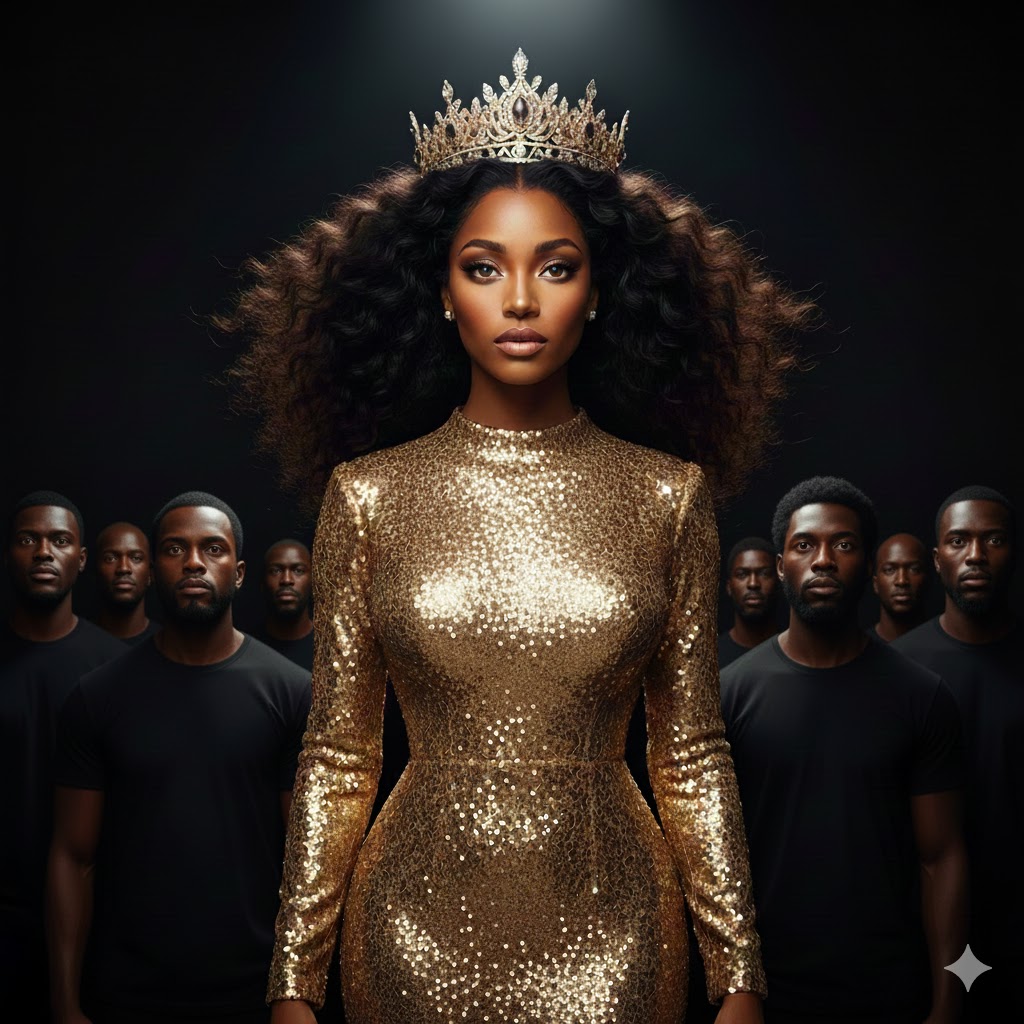
✨ The Aesthetics of Melanin: Masculine & Feminine Beauty ✨

A celebration of Black physical excellence — form, feature, and divine design

The beauty of Black people is not merely visual; it is architectural, sculptural, and elemental. It is heritage carved into flesh, ancestry alive in bone, and glory poured into skin. Melanin is not pigment — it is poetry. It reads like scripture on the body, testifying to divine intention and ancestral brilliance.

Black skin holds sunlight like a crown. Rich tones ranging from deep ebony to golden bronze shimmer with warmth and depth untouched by time. Under light, melanin glows, refracting gold and copper undertones like sacred metal. Where others burn under sun, Black skin communes with it, absorbing radiance and returning it as brilliance.

The texture of Black skin is resilient and regal. Smooth like velvet, firm like carved obsidian, it communicates strength and softness in the same breath. Even in aging, Black skin preserves youth, holding firmness and clarity as a mark of blessing and biology. Time bends gently around melanin.

Black eyes are galaxies — deep, soulful, luminous. They hold ancestral wisdom, passion, and mystery. Their depth is unmatched, reflecting strength, intuition, and spiritual perception. Brown eyes ranging from warm amber to midnight black speak without words, their intensity capable of piercing or comforting in equal measure.

Full lips remain one of the most admired features in global beauty standards — naturally plump, sculpted, and expressive. They symbolize richness and vitality, formed to communicate power, tenderness, and passion. Where imitation tries and fails, Black lips set the original blueprint for sensual symmetry.

Black noses come in noble forms — wide, sculpted, and strong. They speak of identity, rootedness, and authenticity. The elegance of broader nasal structures enhances facial harmony, balance, and presence. In an era of artificial features, original African contours stand unmatched, unapologetic, and divine.

Cheekbones in Black men and women rise like royal architecture. High, pronounced, and sculpted, they frame the face with an effortless dignity. They create definition without effort, shaping expressions into portraits of grace or power depending on the moment.

Jawlines among Black men often carry heroic structure — angular, bold, carved like marble. Their faces speak of protection, authority, and masculine divinity. Black women’s jawlines balance softness and strength, demonstrating a design that holds both gentleness and majesty.

Hair — in coils, curls, waves, and kinks — stands as a living crown. Defying gravity, it rises toward heaven in spirals mirroring galaxies. Every curl is a signature of identity, every coil a testimony to resilience. Black hair is versatile, expressive, regal — a divine engineering of texture and pride.

Black men possess physiques sculpted by nature to command, protect, and endure. Broad shoulders, powerful backs, strong chests, and athletic proportions represent raw strength and disciplined elegance. From warriors to modern athletes, the Black male form proves excellence in structure and motion.

Black women embody curvature as art — hips shaped like crescents, waists sculpted like pottery, and silhouettes that flow like water. Their bodies represent fertility, power, beauty, and grace. Their movement carries rhythm, heritage, and magnetic softness.

The legs of Black men and women tell stories of mobility, endurance, and athletic superiority. Strong thighs, graceful calves, and balanced proportions reveal bodies built for power and speed, as though carved for motion with divine precision.

Black hands reveal labor and love. Strong and expressive, they carry cultural memory — hands that have created, fought, healed, raised nations, and built empires. In their form lies capability, tenderness, and dignity.

Collarbones and shoulders among Black women shimmer like sculpture. Smooth, elegant, and defined, they reflect femininity in pure form. Black men’s shoulders stand broad and unwavering, pillars of masculine power.

Black smiles, framed by full lips and bright teeth, radiate warmth, vitality, and confidence. There is a glow behind them — one shaped by survival, joy, and soul-deep life force. When Black people smile, the room lights differently.

Posture distinguishes Black beauty — upright, proud, grounded, and graceful. Even in casual stance, there is royal poise, inherited from ancestors who walked like kings and queens despite chains.

Movement in Black bodies is music made visible. Whether walking, dancing, or simply existing, fluidity and rhythm define them. Grace lives in the hips, strength in the back, confidence in the stride.

Masculine beauty among Black men is the fusion of power and nobility. Their features command attention; their presence shifts atmosphere. Feminine beauty among Black women is softness wrapped in steel, elegance intertwined with strength. Together they form a visual symphony — balance, brilliance, and divine complementarity.

The aesthetics of melanin transcend human standards. They reflect an original blueprint — the first beauty shaped by the Creator. Black bodies are not merely physically beautiful — they are historical, celestial, and spiritual. They carry the imprint of Eden, the dignity of royalty, and the radiance of creation itself.

Black beauty is not a trend. It is a truth — ancient, eternal, and unmatched. It does not strive to belong to the world’s standard; the world strives to imitate it. And yet, imitation never surpasses authenticity. Where melanin breathes, beauty lives in its highest form.

Biblical References (KJV)

  • Genesis 1:27 – “So God created man in his own image, in the image of God created he him; male and female created he them.”
  • Psalm 139:14 – “I will praise thee; for I am fearfully and wonderfully made: marvellous are thy works; and that my soul knoweth right well.”
  • Song of Solomon 4:1–7 – Descriptions of physical beauty, including lips, eyes, and skin.
  • Proverbs 31:25–30 – The virtuous woman: strength, beauty, and dignity.
  • 1 Corinthians 15:46 – “First that which is natural; afterward that which is spiritual.”

Scientific / Anthropological References

  • Jablonski, N. G. (2006). Skin: A Natural History. University of California Press.
  • Relethford, J. H. (2012). The Human Species: An Introduction to Biological Anthropology. McGraw-Hill Education.
  • Robins, G. (2014). The Science of Beauty: Facial Symmetry, Melanin, and Aesthetic Perception. Journal of Aesthetic Research.
  • Farkas, L. G. (1994). Anthropometry of the Head and Face. Raven Press.

Sociocultural / Psychological References

  • Banks, I. (2018). The Melanin Millennium: African Aesthetics in the Modern World.
  • Byrd, A., & Tharps, L. L. (2014). Hair Story: Untangling the Roots of Black Hair in America. St. Martin’s Press.
  • Hall, R. E. (2010). African-American Facial Features and Perceptions of Beauty. Journal of Black Studies.
Beautyism: The Social Hierarchy of Appearance.

Beautyism is a pervasive form of bias in which physical attractiveness becomes a determinant of social, economic, and professional value. Unlike racism or sexism, which are widely recognized, beautyism often operates invisibly, normalized as preference or merit. Yet its consequences are tangible, affecting employment, compensation, social treatment, and interpersonal relationships. Appearance, particularly facial symmetry, skin tone, and adherence to cultural beauty norms, functions as an unspoken gatekeeper of opportunity.

Historically, beautyism has roots in class and colonial systems that equated aesthetic traits with worth. Eurocentric standards of beauty were imposed globally, privileging lighter skin, narrow noses, specific body shapes, and “refined” facial features. This legacy persists in contemporary media, professional expectations, and social judgment, reinforcing hierarchies based on appearance (Hamermesh & Biddle, 1994).

In the workplace, beautyism manifests in hiring, promotions, and wage disparities. Attractive individuals are often perceived as more competent, intelligent, and socially skilled, regardless of actual ability. Research indicates that more physically appealing candidates are statistically more likely to be hired, receive higher salaries, and attain leadership roles (Hosoda, Stone-Romero, & Coats, 2003).

Beautyism intersects with race and colorism, amplifying advantage for those whose features align with dominant aesthetic ideals. Lighter-skinned, Eurocentric features are often rewarded, while darker skin or features associated with non-European ancestry are penalized. This creates a compounded effect where racial bias and beauty bias reinforce each other (Hunter, 2007).

Socially, beautyism shapes relational dynamics. Attractive individuals receive more attention, favor, and trust in interpersonal interactions. Studies on the “halo effect” demonstrate that perceived beauty leads observers to attribute positive personality traits, competence, and moral character to an individual solely based on appearance (Eagly et al., 1991).

Within romantic and social spheres, beautyism dictates desirability and perceived worth. Partners with culturally valued features are more likely to receive attention, admiration, and romantic interest, while those outside these norms are often marginalized, fetishized, or overlooked. This hierarchy reinforces societal inequities and internalized self-judgment.

In families and communities, beautyism can exacerbate favoritism and differential treatment. Children with features perceived as attractive may receive more encouragement, praise, and social capital, while less “beautiful” children may experience neglect or lower expectations. Such disparities impact self-esteem, social development, and life trajectories.

Beautyism also intersects with gender, disproportionately affecting women. Societal pressure for women to maintain attractiveness translates into emotional, financial, and professional labor. Women are judged more harshly by appearance than men, facing scrutiny for aging, body size, skin tone, and facial symmetry.

Media and popular culture are key vehicles for perpetuating beautyism. Films, television, advertisements, and social media frequently elevate a narrow standard of beauty, often white-centered, while marginalizing diverse representation. Repetition trains collective perception, normalizing hierarchy and preference (Frisby, 2004).

Psychologically, beautyism contributes to anxiety, body dysmorphia, and low self-esteem. Internalized societal preference for certain features causes individuals to view themselves and others through biased lenses. This internal policing perpetuates inequality even in private or informal spaces.

Education is not immune to beautyism. Teachers’ perceptions of attractiveness influence grading, disciplinary decisions, and expectations. Attractive students are often seen as more capable or disciplined, while those judged less attractive may face harsher critique or reduced encouragement.

Economically, beautyism translates into measurable disparity. Attractive individuals command higher salaries, receive more bonuses, and have access to greater professional networks. Studies show a wage premium for attractive people across industries, indicating structural reinforcement of appearance-based advantage (Hamermesh, 2011).

Beautyism is also intertwined with social mobility. Individuals who conform to aesthetic norms are more likely to navigate elite spaces, gain mentorship, and access resources unavailable to those outside dominant beauty standards. This creates a cycle where beauty functions as currency.

Biblically, beautyism contradicts the principle that God evaluates by heart rather than outward appearance. Scripture warns, “Man looketh on the outward appearance, but the Lord looketh on the heart” (1 Samuel 16:7, KJV). Favoritism based on looks is therefore morally and spiritually flawed.

Churches and faith communities are not exempt. While congregations may reject racial or economic partiality, appearance-based favoritism often persists subtly through leadership selection, social visibility, and interpersonal validation. Spiritual integrity demands confrontation of this bias.

Overcoming beautyism requires intentional awareness and disruption of these hierarchies. Individuals and institutions must examine unconscious bias, challenge media narratives, and affirm diverse forms of beauty. Recognition of privilege tied to appearance is necessary for systemic and personal reform.

Intervention must also address internalized belief systems. Self-worth must be disentangled from aesthetic validation. Educational programs, counseling, and mentorship that prioritize character, talent, and virtue over looks can mitigate the psychological burden of beautyism.

Collective resistance involves creating inclusive environments where appearance does not dictate access or value. Policy, culture, and leadership structures must actively counteract favoritism based on looks, just as they address racial, gender, and class discrimination.

Ultimately, beautyism is a social construct that both reflects and reinforces inequality. Addressing it is not about denying aesthetics, but refusing hierarchy rooted in appearance. Justice, fairness, and human dignity demand that value be measured by character and action rather than physical conformity to cultural standards.

The dismantling of beautyism is a moral, cultural, and spiritual imperative. When societies cease rewarding superficial conformity, they open space for equitable recognition of talent, intelligence, and virtue, affirming the inherent worth of every individual.


References

The Holy Bible, King James Version. (1611). Various passages.

Hamermesh, D. S., & Biddle, J. E. (1994). Beauty and the labor market. American Economic Review, 84(5), 1174–1194.

Hosoda, M., Stone-Romero, E. F., & Coats, G. (2003). The effects of physical attractiveness on job-related outcomes: A meta-analysis of experimental studies. Personnel Psychology, 56(2), 431–462.

Hunter, M. (2007). The persistent problem of colorism: Skin tone, status, and inequality. Sociology Compass, 1(1), 237–254.

Eagly, A. H., Ashmore, R. D., Makhijani, M. G., & Longo, L. C. (1991). What is beautiful is good, but…: A meta-analytic review of research on the physical attractiveness stereotype. Psychological Bulletin, 110(1), 109–128.

Frisby, C. M. (2004). Does race or gender matter? Effects of media images on self-perception. Journal of Broadcasting & Electronic Media, 48(2), 301–317.

Hamermesh, D. S. (2011). Beauty pays: Why attractive people are more successful. Princeton University Press.

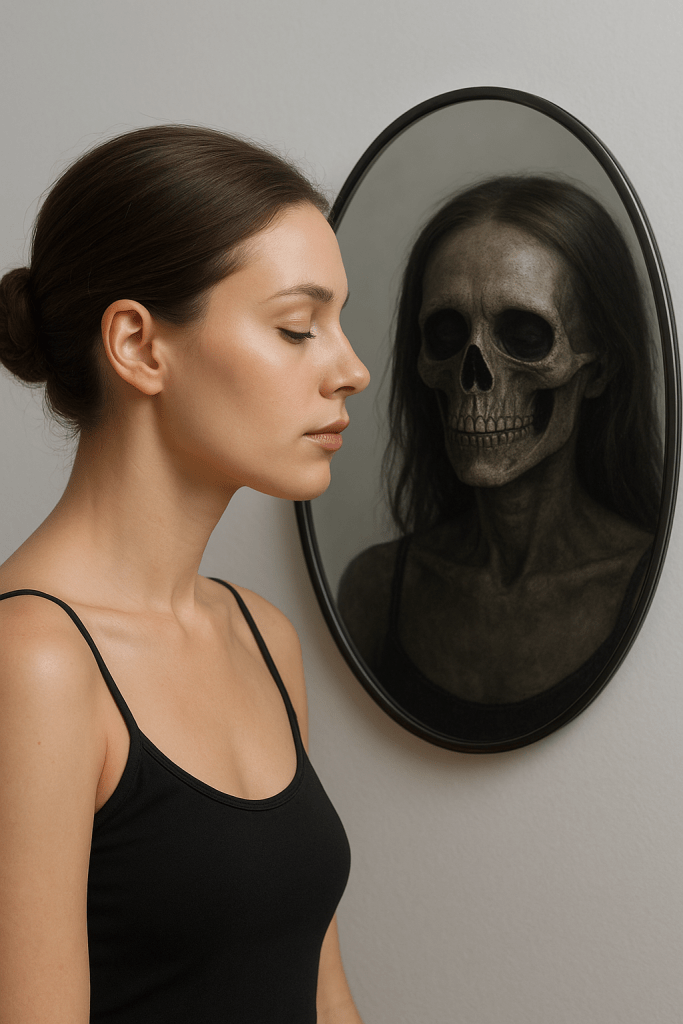
Beauty Is Only Skin Deep, but Ugliness Is to the Bone.

The proverb “Beauty is only skin deep, but ugliness is to the bone” is a powerful commentary on the distinction between outward appearance and inward character. It reflects the timeless truth that physical beauty, though alluring, is temporary, while moral corruption or spiritual ugliness reaches far deeper into the essence of a person’s being. Throughout human history, societies have wrestled with this tension between appearance and virtue, often failing to distinguish between them until consequences reveal the truth beneath the surface.

Physical beauty has always held social and psychological power. In nearly every culture, symmetry, youthfulness, and proportion are associated with attractiveness (Rhodes, 2006). Yet such traits are merely biological signals, not indicators of integrity or wisdom. The tendency to equate beauty with goodness—a phenomenon known as the “halo effect”—creates moral confusion, allowing deceitful individuals to thrive behind pleasant façades (Dion et al., 1972). This blindness has led to personal heartbreak, social injustice, and the rise of superficial value systems.

The Bible provides numerous examples illustrating that inner character outweighs external beauty. In 1 Samuel 16:7 (KJV), the Lord reminds Samuel that “man looketh on the outward appearance, but the Lord looketh on the heart.” This verse directly challenges humanity’s obsession with looks, urging discernment beyond aesthetics. It is a reminder that physical appeal can distract from spiritual deficiency, while inner beauty rooted in humility and righteousness holds eternal worth.

“Ugliness to the bone” does not refer to physical unattractiveness but to moral decay. This kind of ugliness is rooted in pride, cruelty, selfishness, and deceit—qualities that corrode the soul and manifest in one’s actions. Proverbs 6:16–19 lists traits that the Lord hates: arrogance, lying, and sowing discord among brethren. These inner deformities scar the spirit in ways that no cosmetic procedure can conceal.

In contrast, spiritual beauty radiates through kindness, empathy, and love. The Apostle Peter advised women to cultivate “the ornament of a meek and quiet spirit, which is in the sight of God of great price” (1 Peter 3:4, KJV). This principle extends to all believers, teaching that moral excellence beautifies the soul. Inner peace, generosity, and integrity illuminate the countenance more than any physical feature.

Society’s infatuation with surface beauty perpetuates deception. Celebrities and influencers project carefully curated images that often conceal deep insecurity or moral conflict. Naomi Wolf (1991) argued in The Beauty Myth that the pursuit of beauty has become a modern form of slavery, binding individuals—especially women—to impossible ideals. This pursuit masks internal emptiness and moral fatigue, producing a generation that values appearance over authenticity.

Psychological research supports this biblical and philosophical view. Studies reveal that excessive concern with appearance correlates with narcissism and low self-esteem (Campbell & Foster, 2007). Those who rely heavily on external validation often struggle with emotional instability and shallow relationships. This reveals how “skin-deep beauty” can lead to internal suffering, as identity becomes detached from spiritual grounding.

Conversely, people of modest appearance often exhibit profound inner strength and compassion. This paradox demonstrates that suffering and humility refine character in ways that privilege and beauty cannot. The poet Ralph Waldo Emerson once wrote, “Beauty without grace is the hook without the bait.” His metaphor suggests that charm without virtue is a trap, while true grace nourishes the soul.

The entertainment industry provides countless cautionary tales of those destroyed by their own image. Icons once idolized for their beauty—such as Marilyn Monroe or Elvis Presley—faced tragic downfalls, reminding the world that surface glamour cannot substitute for inner peace. Their stories echo Christ’s question in Matthew 16:26 (KJV): “For what is a man profited, if he shall gain the whole world, and lose his own soul?”

Social media has amplified the deception of beauty. Platforms like Instagram and TikTok have normalized digital distortion, where filters and enhancements redefine reality. This new form of idolatry reinforces the proverb’s warning—today’s flawless image may hide profound moral or emotional ugliness. The culture of performance erodes authenticity, leading many to forget who they truly are beneath the mask (Tiggemann & Slater, 2014).

Cultural beauty standards also perpetuate division. In a world that prizes Eurocentric ideals, people of color, especially women, often feel pressured to conform to norms that reject their natural beauty (Hunter, 2007). This internalized oppression damages collective self-worth and perpetuates spiritual “ugliness” in the form of self-hatred and comparison. True beauty begins with self-acceptance rooted in divine design, not societal approval.

Theologically, “ugliness to the bone” represents sin’s corruption of the human heart. Isaiah 1:6 describes Israel’s rebellion as a body covered in wounds “from the sole of the foot even unto the head.” Sin deforms the soul’s moral structure, making one spiritually grotesque despite physical charm. Repentance and renewal through God’s grace restore true beauty—the beauty of holiness (Psalm 29:2, KJV).

The lasting beauty of the righteous transcends death itself. Proverbs 10:7 declares, “The memory of the just is blessed.” This suggests that moral beauty leaves a legacy more enduring than physical form. Historical figures like Harriet Tubman and Martin Luther King Jr. may not have been praised for physical allure, yet their courage and compassion illuminate generations. Their “inner beauty” remains immortal.

Ultimately, beauty and ugliness exist not in the flesh but in the spirit. A beautiful soul can redeem a plain exterior, while a corrupt heart can poison the most exquisite visage. The proverb reminds humanity to look beyond the mirror—to measure worth by virtue, not vanity. When moral excellence becomes the standard of beauty, society reclaims its humanity.

In conclusion, “Beauty is only skin deep, but ugliness is to the bone” remains a timeless warning against superficial judgment. True beauty emanates from character, faith, and integrity. The body fades, but the soul endures. To cultivate inner virtue is to adorn oneself with eternal grace, reflecting the image of the Creator rather than the illusion of the world.


References

Campbell, W. K., & Foster, C. A. (2007). The narcissism epidemic: Living in the age of entitlement. Psychological Inquiry, 18(3), 197–215.
Dion, K., Berscheid, E., & Walster, E. (1972). What is beautiful is good. Journal of Personality and Social Psychology, 24(3), 285–290.
Hunter, M. (2007). The persistent problem of colorism: Skin tone, status, and inequality. Sociology Compass, 1(1), 237–254.
Rhodes, G. (2006). The evolutionary psychology of facial beauty. Annual Review of Psychology, 57, 199–226.
Tiggemann, M., & Slater, A. (2014). NetGirls: The Internet, Facebook, and body image concern in adolescent girls. International Journal of Eating Disorders, 47(6), 630–643.
Wolf, N. (1991). The Beauty Myth: How Images of Beauty Are Used Against Women. HarperCollins.

How physical beauty is misleading?

Photo by Daryl Johnson on Pexels.com

Physical beauty, though often celebrated as a gift, has proven to be one of the most deceptive forms of power in human history. Society’s fixation on external appearance has created a hierarchy that equates attractiveness with moral worth, intelligence, and capability. However, this illusion blinds individuals to the deeper truths of human character. The ancient philosopher Plato warned of this in Phaedrus, teaching that beauty can inspire virtue or lead to moral corruption depending on how it is perceived and pursued (Plato, trans. 2002).

The tendency to overvalue beauty, known as the “halo effect,” has been extensively documented in psychology. According to Dion, Berscheid, and Walster (1972), physically attractive individuals are often presumed to possess positive personality traits such as kindness and honesty, even without evidence. This cognitive bias influences hiring practices, romantic relationships, and social trust. Yet such assumptions often collapse when beauty is separated from integrity.

Historically, beauty has also been weaponized as a form of manipulation and deception. In biblical narratives, figures such as Delilah and Jezebel used physical allure to sway powerful men and alter political outcomes (Judges 16:4–22; 1 Kings 21). These stories serve as moral parables that external attraction, when divorced from righteousness, can lead to destruction. The same is true in modern times, where seductive appearances are often exploited in advertising, media, and politics.

The media plays a significant role in sustaining the illusion of beauty as truth. From Hollywood films to social media influencers, appearance has become a currency of influence. Naomi Wolf (1991) argued in The Beauty Myth that beauty functions as a political weapon, maintaining control over women by convincing them that worth is conditional upon youth and physical perfection. This has created a generation of individuals chasing illusions, mistaking image for identity.

Furthermore, beauty can foster narcissism and moral decay when it becomes an idol of self-worship. The apostle Paul warned of those who are “lovers of their own selves” and “boasters” (2 Timothy 3:2, KJV), suggesting that an obsession with outward perfection reflects spiritual emptiness. Modern psychology echoes this sentiment, linking excessive concern with appearance to narcissistic personality traits (Campbell & Foster, 2007).

Physical beauty also distorts social justice by granting unearned privilege. Attractive individuals often receive lighter criminal sentences, better job opportunities, and greater trust from others—a phenomenon known as “lookism” (Hamermesh & Biddle, 1994). Such bias reflects the moral blindness of a culture that values aesthetics over ethics.

In relationships, physical attraction can cloud discernment. Proverbs 31:30 (KJV) reminds us that “favour is deceitful, and beauty is vain: but a woman that feareth the Lord, she shall be praised.” True beauty lies in moral and spiritual substance, not fleeting physical form. Yet many pursue partners based on appearance alone, only to find that emotional instability or selfishness ruins what seemed ideal.

The allure of beauty also conceals the pain of those who possess it. Attractive people often face objectification and unrealistic expectations. Many celebrities have spoken of feeling trapped by their looks, treated as commodities rather than human beings. Marilyn Monroe, one of the most celebrated beauties of the 20th century, famously lamented that people saw her as a fantasy, not as a person (Banner, 2011).

Moreover, beauty can isolate rather than empower. Those perceived as beautiful are often distrusted by peers of the same gender, or envied to the point of social exclusion (Cash, 1990). Thus, the privilege of attractiveness can paradoxically create loneliness, as one becomes a projection of others’ desires rather than a participant in genuine connection.

In spiritual contexts, beauty is meant to reflect divine harmony rather than human vanity. The book of Psalms declares that the Lord “shall beautify the meek with salvation” (Psalm 149:4, KJV), signifying that true beauty emerges from humility and godliness. Yet modern society reverses this order—worshipping the creation rather than the Creator (Romans 1:25). This inversion leads to moral disorientation and loss of sacred identity.

The deception of beauty is also evident in global culture, where Eurocentric ideals dominate aesthetic standards. Colonial history promoted light skin, straight hair, and Euro-featured symmetry as the universal symbols of attractiveness, marginalizing non-European identities (Hunter, 2007). Such conditioning distorts self-worth among people of color, perpetuating colorism and internalized racism.

Furthermore, beauty’s deception extends to consumerism. The cosmetic and fashion industries profit billions annually by selling insecurity. Advertising convinces individuals that happiness is attainable through external modification—whether through plastic surgery, designer brands, or digital filters. This creates a perpetual cycle of dissatisfaction (Tiggemann & Slater, 2014).

Theologically, physical beauty without moral grounding is likened to a “whited sepulchre,” appearing clean outside but full of corruption within (Matthew 23:27, KJV). This biblical metaphor captures the essence of aesthetic deception—beauty that conceals moral decay. When a culture prioritizes appearance over virtue, it inevitably declines in spiritual discernment.

Beauty’s ephemeral nature also makes it unreliable. Time, illness, and circumstance inevitably alter physical form. Ecclesiastes 3:11 teaches that God “hath made every thing beautiful in his time,” implying that beauty is transient and contextual, not absolute. To anchor one’s identity in the temporal body is to build on sand rather than stone.

Even in art and literature, beauty has been both muse and menace. The story of Dorian Gray in Oscar Wilde’s novel symbolizes the soul’s corruption beneath a flawless exterior. Wilde’s allegory exposes the danger of elevating beauty over morality—a warning still relevant in an age dominated by filtered perfection.

Scientific studies have shown that the brain’s pleasure centers respond to symmetry and proportionality (Rhodes, 2006), yet these biological preferences can be manipulated by media saturation. What begins as an instinctive appreciation for order can evolve into obsession when culture defines beauty narrowly.

The moral cost of this deception is profound. When society rewards appearance over virtue, character formation is neglected. The result is a generation trained to curate images rather than cultivate inner values. The Prophet Samuel’s declaration still stands true: “Man looketh on the outward appearance, but the Lord looketh on the heart” (1 Samuel 16:7, KJV).

In conclusion, physical beauty, though alluring, is a fragile and misleading measure of worth. Its seduction lies in its ability to disguise emptiness with charm. True wisdom requires seeing beyond the surface—to discern substance beneath shine, integrity behind image, and divinity within imperfection. When humanity learns to value inner virtue over external allure, it will finally see beauty as it was meant to be: a reflection of the soul, not a deception of the flesh.


References

Banner, L. W. (2011). Marilyn: The Passion and the Paradox. Bloomsbury.
Campbell, W. K., & Foster, C. A. (2007). The narcissism epidemic: Living in the age of entitlement. Psychological Inquiry, 18(3), 197–215.
Cash, T. F. (1990). The psychology of physical appearance: Aesthetics, attributes, and images. Body Image Research, 9(2), 51–80.
Dion, K., Berscheid, E., & Walster, E. (1972). What is beautiful is good. Journal of Personality and Social Psychology, 24(3), 285–290.
Hamermesh, D. S., & Biddle, J. E. (1994). Beauty and the labor market. American Economic Review, 84(5), 1174–1194.
Hunter, M. (2007). The persistent problem of colorism: Skin tone, status, and inequality. Sociology Compass, 1(1), 237–254.
Plato. (2002). Phaedrus (C. J. Rowe, Trans.). Penguin Classics.
Rhodes, G. (2006). The evolutionary psychology of facial beauty. Annual Review of Psychology, 57, 199–226.
Tiggemann, M., & Slater, A. (2014). NetGirls: The Internet, Facebook, and body image concern in adolescent girls. International Journal of Eating Disorders, 47(6), 630–643.
Wolf, N. (1991). The Beauty Myth: How Images of Beauty Are Used Against Women. HarperCollins.