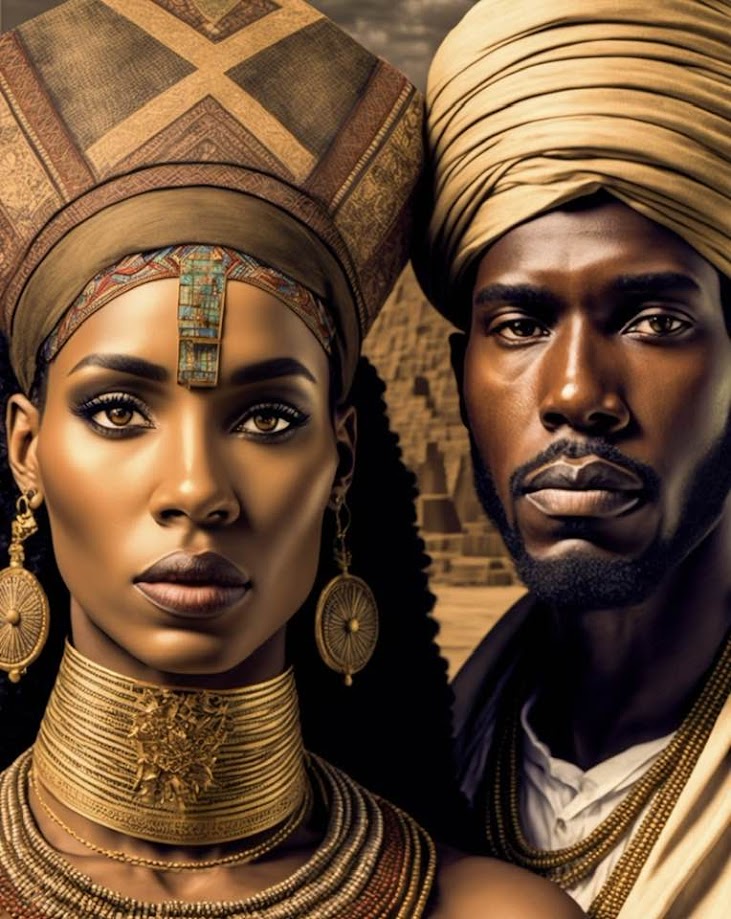
Category Archives: love

❤️ When a Man Loves a Woman❤️

Understanding a man’s love can be complex, but the Bible gives timeless wisdom about godly love and how it manifests in action and character. True love is patient, selfless, protective, and rooted in faith (1 Corinthians 13:4-7). A man who loves a woman in a godly way will reflect these principles in his words, actions, and priorities.


1. He Protects and Provides

A man who loves a woman will seek to protect her physically, emotionally, and spiritually, and take responsibility for providing support.
KJV Reference: Ephesians 5:25 – “Husbands, love your wives, even as Christ also loved the church, and gave himself for it.”

  • Love involves sacrifice and stewardship.
  • Providing isn’t always material; it includes guidance, encouragement, and spiritual leadership.

2. He Shows Respect and Honor

A loving man honors a woman’s dignity and treats her with respect.
KJV Reference: 1 Peter 3:7 – “Likewise, ye husbands, dwell with them according to knowledge, giving honour unto the wife, as unto the weaker vessel, and as being heirs together of the grace of life; that your prayers be not hindered.”

  • He listens, values her opinions, and does not belittle her.

3. He Communicates Honestly

A man in love will be transparent and open with his feelings, struggles, and intentions.
KJV Reference: Proverbs 24:26 – “Every man shall kiss his lips that giveth answer wisely.”

  • He speaks truthfully and avoids deception.
  • Communication fosters trust and intimacy.

4. He Seeks Her Best Interests

Love is selfless. A man who loves a woman seeks her spiritual, emotional, and personal growth.
KJV Reference: Philippians 2:3-4 – “Let nothing be done through strife or vainglory; but in lowliness of mind let each esteem other better than themselves. Look not every man on his own things, but every man also on the things of others.”

  • He encourages her dreams, supports her goals, and prays for her.

5. He Is Faithful and Loyal

Commitment is a hallmark of biblical love. A man in love remains loyal in heart, mind, and action.
KJV Reference: Proverbs 20:6 – “Most men will proclaim every one his own goodness: but a faithful man who can find?”

  • Love is shown by consistent faithfulness, not just words.

6. He Shows Patience and Understanding

True love exercises patience, especially during disagreements or challenges.
KJV Reference: 1 Corinthians 13:4-5 – “Charity suffereth long, and is kind; charity envieth not; charity vaunteth not itself, is not puffed up… thinketh no evil.”

  • He listens, forgives, and gives her grace.

7. He Acts with Gentleness and Tenderness

A loving man treats a woman with care and tenderness, honoring her heart and emotions.
KJV Reference: Colossians 3:19 – “Husbands, love your wives, and be not bitter against them.”

  • Love is soft, not harsh; it nurtures rather than criticizes.

8. He Prays for Her and Encourages Spiritual Growth

A man who loves a woman desires her closeness to God and prays on her behalf.
KJV Reference: 1 Thessalonians 5:17-18 – “Pray without ceasing. In every thing give thanks: for this is the will of God in Christ Jesus concerning you.”

  • His love is intertwined with faith and spiritual encouragement.

9. He Invests Time and Attention

Actions speak louder than words. A man in love prioritizes time with a woman, showing that she matters.
KJV Reference: Ecclesiastes 3:1 – “To every thing there is a season, and a time to every purpose under the heaven.”

  • Time spent together builds emotional intimacy and shared life experiences.

10. He Sacrifices Personal Desires

A man who truly loves a woman will sometimes set aside his own preferences to uplift, support, or bless her.
KJV Reference: John 15:13 – “Greater love hath no man than this, that a man lay down his life for his friends.”

  • Sacrifice in love mirrors Christ’s example of selflessness.

Signs a Man Loves You – The Male Files (KJV-Based)

Sign of LoveWhat It Looks LikeScripture Reference (KJV)
Protects and ProvidesSacrifices for your well-being, offers guidance and supportEphesians 5:25 – “Husbands, love your wives, even as Christ also loved the church, and gave himself for it.”
Honors and Respects YouTreats you with dignity, values your opinions1 Peter 3:7 – “…giving honour unto the wife, as unto the weaker vessel…”
Communicates HonestlyShares feelings, intentions, and struggles openlyProverbs 24:26 – “Every man shall kiss his lips that giveth answer wisely.”
Seeks Your Best InterestsEncourages your growth, prays for you, supports your goalsPhilippians 2:3-4 – “Look not every man on his own things, but every man also on the things of others.”
Faithful and LoyalRemains committed in heart and actionProverbs 20:6 – “Most men will proclaim every one his own goodness: but a faithful man who can find?”
Patient and UnderstandingListens, forgives, shows grace1 Corinthians 13:4-5 – “Charity suffereth long, and is kind… thinketh no evil.”
Gentle and TenderTreats you with care, avoids harshnessColossians 3:19 – “Husbands, love your wives, and be not bitter against them.”
Prays for You & Encourages Spiritual GrowthDesires your closeness to God1 Thessalonians 5:17-18 – “Pray without ceasing… for this is the will of God…”
Invests Time and AttentionPrioritizes meaningful moments togetherEcclesiastes 3:1 – “To every thing there is a season, and a time to every purpose under the heaven.”
Sacrifices Personal DesiresPuts your needs above his own when necessaryJohn 15:13 – “Greater love hath no man than this, that a man lay down his life for his friends.”

Conclusion

A man’s love is not measured by fleeting words or material gifts but by consistent, godly actions. He seeks her welfare, honors her as a co-heir of grace, and leads with humility, patience, and faith. Observing these signs, rooted in Scripture, provides clarity for discerning genuine love in a relationship.


Psychology Series: Love and War in Relationships ❤️‍🔥💍

Love and relationships carry both heavenly purpose and human struggle. The Scriptures reveal that love is not merely emotional delight, but spiritual discipline, sacrifice, and resilience. In the psychology of human bonding, attraction is only the beginning; attachment, covenant, humility, and conflict resolution determine the destiny of a union. Relationships become arenas where character is tested, trust is refined, and spiritual maturity emerges.

The Bible teaches that love is divine in origin, rooted in God’s love for humanity (1 John 4:7–8, KJV). Yet Scripture also acknowledges earthly conflict, revealing relationships as battlegrounds of self-will, insecurity, and spiritual forces. Paul warns, “For we wrestle not against flesh and blood…” (Ephesians 6:12, KJV). Many conflicts in relationships are spiritual battles masked as emotional disputes.

From a psychological standpoint, attachment theory suggests that early parental bonds shape how individuals love and trust others (Bowlby, 1988). The Bible aligns with this principle by emphasizing the foundation of family upbringing and godly parenting (Proverbs 22:6, KJV). Broken childhood attachments often manifest as fear, abandonment anxiety, or emotional withdrawal in adult relationships.

Love requires intention, not infatuation. “Charity suffereth long, and is kind” (1 Corinthians 13:4, KJV). Patience, gentleness, and self-control parallel psychological findings that emotional regulation predicts relationship stability (Gottman, 2014). Relationship success is less about compatibility and more about discipline and emotional self-governance.

War emerges when ego, insecurity, and unmet expectations collide. Scripture calls believers to humility (Philippians 2:3, KJV), yet pride fuels quarrels (Proverbs 13:10, KJV). Modern psychology affirms this truth: ego defense mechanisms often provoke conflict instead of healing it (Freud, 1920). Couples must choose surrender over stubbornness.

Spiritual warfare in relationships is real. The enemy attacks unity because covenant love mirrors Christ and the Church (Ephesians 5:25–32, KJV). Psychology labels persistent cycles of conflict as relational trauma patterns, but Scripture identifies the deeper root—spiritual opposition, generational iniquities, and unhealed soul wounds (Exodus 20:5, KJV).

Forgiveness is the bridge from war to reconciliation. Jesus commands forgiveness seventy times seven (Matthew 18:21–22, KJV). Psychological research supports forgiveness as a tool to reduce stress and improve emotional well-being (Worthington, 2013). Resentment becomes emotional poison; forgiveness becomes liberation.

Yet forgiveness does not excuse sin nor eliminate boundaries. “Be ye angry, and sin not” (Ephesians 4:26, KJV). Psychology teaches that healthy relationships require conflict, but constructive, not destructive, communication (Gottman, 2014). Couples must learn discipline in dialogue, not emotional violence.

Men and women often engage differently in relational conflict. Scripture describes woman as “an help meet” and man as leader and protector (Genesis 2:18; Ephesians 5:23, KJV). Psychology finds gender-based communication differences, yet mutual honor and understanding remain universal necessities. True headship is love, not dominance; true submission is honor, not silence.

War arises when roles are misunderstood or abused. Couples who operate outside God’s design breed disorder (1 Corinthians 14:40, KJV). Modern culture encourages independence to the point of relational detachment. Yet Scripture teaches unity—“two shall become one flesh” (Genesis 2:24, KJV). Oneness is strength; division breeds defeat.

Love must be guarded, for the human heart is vulnerable to temptation and emotional drift. “Keep thy heart with all diligence” (Proverbs 4:23, KJV). Emotional infidelity often precedes physical betrayal; psychology calls this gradual erosion attachment transfer. Scripture calls it adultery of the heart (Matthew 5:28, KJV).

Covenant love endures trials. “Many waters cannot quench love” (Song of Solomon 8:7, KJV). Relationships thrive when couples commit to spiritual intimacy and shared faith. Prayer, fasting, and worship invite divine strength into relational battles (Matthew 18:20, KJV). Psychology also affirms shared values and rituals strengthen bonds.

Love demands accountability and correction. “As iron sharpeneth iron” (Proverbs 27:17, KJV). Healthy confrontation refines character; avoidance breeds bitterness. Research shows that constructive conflict predicts longevity, not conflict avoidance (Gottman & Silver, 1999). True love shapes, not suffocates.

Healing requires vulnerability. Adam and Eve hid after sin (Genesis 3:8, KJV), symbolizing the psychological reflex to withdraw when wounded. Healing begins when couples choose emotional exposure over emotional armor. Love cannot grow where walls remain.

Sacrifice is the backbone of covenant love. Christ modeled sacrificial love (John 15:13, KJV). Modern psychology echoes that selflessness creates secure attachment and trust. Relationships flourish when both partners prioritize unity over individual comfort.

Emotional safety fosters intimacy. “Perfect love casteth out fear” (1 John 4:18, KJV). Fear destroys love; security nurtures it. Couples must build trust through honesty, empathy, and transparency. Hidden agendas and secret wounds invite spiritual and emotional sabotage.

In relationships, pride destroys, but humility heals. “God resisteth the proud, but giveth grace unto the humble” (James 4:6, KJV). Apologies, repentance, and reflection become spiritual weapons and psychological tools for reconciliation.

Maturity transforms love from chemistry to covenant. Attraction begins relationships; spiritual and emotional discipline sustain them. Scripture calls believers to grow in grace (2 Peter 3:18, KJV), while psychology calls for emotional intelligence. Both demand intentional growth.

Love is warfare and worship. It is where flesh dies and spirit rises. When couples choose prayer over pride, forgiveness over offense, and purpose over passion, love becomes a weapon against darkness instead of a battlefield for destruction.

True victory in love requires God. “Except the Lord build the house, they labour in vain that build it” (Psalm 127:1, KJV). With God, love becomes a sanctuary; without Him, love becomes a war zone. Successful relationships are not found—they are built, guarded, prayed over, and sanctified.


References

  • Bowlby, J. (1988). A secure base: Parent-child attachment and healthy human development. Basic Books.
  • Freud, S. (1920). Beyond the pleasure principle. Freud Publishing.
  • Gottman, J. (2014). What makes love last? Simon & Schuster.
  • Gottman, J., & Silver, N. (1999). The seven principles for making marriage work. Harmony Books.
  • Worthington, E. (2013). Forgiveness and reconciliation. Routledge.
  • Holy Bible, King James Version.

Beyond Survival: Thriving Black Love in a Broken System.

Photo by Ricky Esquivel on Pexels.com

Black love is more than romance—it is resistance. In a world that has worked tirelessly to fracture, redefine, and commodify the bonds between Black men and women, love becomes a radical act of restoration. To love, to forgive, to build, and to remain committed within a system designed to destroy that unity is nothing short of divine warfare. Beyond survival, thriving Black love is a reawakening—a return to the sacred covenant that once anchored families, communities, and nations.

For centuries, the foundation of Black love was attacked through slavery, segregation, and systemic racism. Enslaved Africans were denied legal marriage, stripped of parental rights, and separated from their partners. Yet, even under these dehumanizing conditions, they found ways to love—through whispered vows, hidden ceremonies, and songs sung in the night. That love was not fragile; it was forged in fire. It became the first example of thriving love in a system that sought to erase it.

Today, remnants of that same broken system remain. Incarceration rates, economic disparity, and media misrepresentation all conspire to divide the Black household. The image of the strong Black man and the virtuous Black woman has been distorted, leaving behind stereotypes that discourage partnership and unity. Yet despite these forces, Black love endures. It blooms in adversity, reminding the world that God’s design for love was never contingent on circumstances.

Thriving Black love is not about perfection—it’s about perseverance. It means choosing to grow where the soil is cracked, to heal generational wounds instead of recycling them. When a Black couple commits to love one another through honesty, faith, and restoration, they are repairing what was historically broken. Their love becomes both personal healing and collective revolution.

The biblical foundation of love calls for covenant, not convenience. “Two are better than one; because they have a good reward for their labour” (Ecclesiastes 4:9, KJV). Within the context of Black love, this scripture reflects more than companionship—it is divine partnership. It reminds the Black man and woman that their union is not a transaction but a transformation. Together, they embody strength that transcends oppression.

In thriving love, vulnerability becomes sacred. For too long, Black love has been portrayed as stoic or transactional—rooted in survival, not softness. Yet true intimacy allows both partners to remove their armor without fear. When the Black man feels safe to weep and the Black woman feels safe to rest, healing begins. This safety is a divine exchange that births emotional abundance and spiritual alignment.

Thriving Black love also requires truth-telling. It acknowledges trauma but refuses to be defined by it. It confronts the generational pain that has shaped distrust, abandonment, and miscommunication. Through prayer, counseling, and patience, couples can reclaim what systemic injustice stole—the ability to love freely without fear of loss.

Faith remains the cornerstone of thriving love. Without God, relationships often become replicas of worldly dysfunction. The Creator established marriage as covenant, not contract. When Black couples center their love on divine principles—honor, submission, forgiveness, and purpose—they transform not only their relationship but the generations that follow.

Beyond survival, Black love becomes prophetic. It tells the truth about redemption—that we can rebuild from ruins. It speaks hope into broken homes and lost sons. It declares that healing is possible even when history says otherwise. In that sense, every thriving Black couple becomes a sermon in motion, preaching restoration through their unity.

Culturally, thriving Black love challenges the narrative that independence equals strength. The myth of the “strong Black woman” and the “emotionally unavailable Black man” has caused emotional disconnection. But thriving love redefines strength—it is not isolation but interdependence. It says, “We rise together.”

Economically, thriving love builds legacies. When Black couples unite with shared financial vision and discipline, they reclaim generational wealth stolen through systemic inequality. From shared businesses to property ownership, they begin to create the stability their ancestors dreamed of. Love then becomes an act of economic liberation.

Socially, thriving Black love restores community. Strong marriages model stability for children and inspire others to pursue love with purpose. When men honor women and women respect men, families thrive, and communities rebuild. It’s not just about romance—it’s about revolution.

Psychologically, thriving love dismantles internalized shame. It teaches that love is not earned through pain or performance but given freely. Black men learn that masculinity includes tenderness. Black women learn that submission is not subservience but trust. Both rediscover their value in God’s original design.

Spiritually, thriving love mirrors divine union. Christ’s relationship with His Church exemplifies sacrificial love, patience, and endurance. In the same way, thriving Black love must be rooted in service and humility. It must look beyond temporary attraction toward eternal purpose.

The modern world celebrates lust but mocks loyalty. It glorifies self-love but neglects covenant love. Yet Black love remains countercultural—it endures. It reminds us that to love in truth and spirit is to wage war against the forces that profit from our division. Every Black couple that thrives becomes a symbol of divine defiance.

Beyond survival, love becomes legacy. It is passed down through laughter, through faith, through shared prayers at midnight. It is seen in the small gestures—a hand held, a word spoken in kindness, a decision to stay. It is a daily act of rebellion against despair.

Thriving Black love also celebrates individuality. It does not erase differences but honors them. The man and woman bring distinct strengths to the covenant—one leads, one nurtures, both serve. Together, they reflect the wholeness of God’s image.

Ultimately, thriving Black love is the restoration of Eden in the midst of Babylon. It reminds us that even in a broken world, divine harmony is still possible. When two souls rooted in faith, culture, and purpose unite, they build something eternal—something that transcends oppression and outlives pain.

To love and be loved in Blackness is to proclaim freedom. Beyond survival lies a deeper truth: we were never meant to merely endure—we were meant to flourish. In the mirror of God’s design, thriving Black love is not only possible; it is holy.

References

  • The Holy Bible, King James Version. (Ecclesiastes 4:9; Ephesians 5:22–33).
  • hooks, b. (2000). All About Love: New Visions. Harper Perennial.
  • Baldwin, J. (1962). The Fire Next Time. Dial Press.
  • Davis, A. (1981). Women, Race, & Class. Random House.
  • Hill Collins, P. (2000). Black Feminist Thought: Knowledge, Consciousness, and the Politics of Empowerment. Routledge.
  • Akbar, N. (1996). Know Thyself. Mind Productions.
  • Boyd-Franklin, N. (2003). Black Families in Therapy: Understanding the African American Experience. Guilford Press.
  • West, C. (1993). Race Matters. Beacon Press.

How a Woman Evaluates a Man

Photo by Chermiti Mohamed on Pexels.com

When it comes to relationships, the way a woman evaluates a man is not based on shallow impressions alone. Women, especially those who are guided by faith and wisdom, often look deeper than physical appearance or charm. They look for qualities that will sustain a lifelong covenant, not just a fleeting attraction. The Bible reminds us, “Favour is deceitful, and beauty is vain: but a woman that feareth the LORD, she shall be praised” (Proverbs 31:30, KJV). In the same way, a wise woman evaluates a man based on his character, his spiritual devotion, and his capacity to provide stability and love.

The foundation of a woman’s evaluation often begins with whether a man is godly. A godly man acknowledges the authority of God in his life and allows Scripture to guide his actions. The Word declares, “But seek ye first the kingdom of God, and his righteousness; and all these things shall be added unto you” (Matthew 6:33, KJV). A man who prioritizes God’s kingdom demonstrates that his decisions and relationships will be grounded in faith and obedience, which brings security to a woman’s heart.

Women also look at how a man carries himself in his daily walk. Integrity, honesty, and consistency are vital markers of a man’s worthiness. Proverbs 20:7 affirms, “The just man walketh in his integrity: his children are blessed after him” (KJV). A woman understands that a man who is truthful and dependable today will likely continue to be so as a husband and father. His integrity becomes the bedrock on which she can build trust.

Provision is another major factor. This does not mean only financial provision, but also emotional, spiritual, and protective provision. A man who takes responsibility for his household mirrors the biblical charge: “But if any provide not for his own, and specially for those of his own house, he hath denied the faith, and is worse than an infidel” (1 Timothy 5:8, KJV). Women evaluate a man’s willingness to sacrifice and labor for the well-being of those entrusted to his care.

Equally important is his ability to lead with humility and love. Leadership in the biblical sense does not mean dominance but stewardship and service. Ephesians 5:25 states, “Husbands, love your wives, even as Christ also loved the church, and gave himself for it” (KJV). A woman evaluates if a man has the capacity to lead not by control, but by example, by nurturing and sacrificing for her good.

The spiritual life of a man is also deeply examined. A man who spends time in prayer, studies Scripture, and walks in the Spirit will influence his household toward righteousness. Women take note of how a man worships, how he handles trials, and whether he depends on God’s strength. A prayerful man is a covering, and a woman will discern this as part of his worthiness.

Character traits such as patience, kindness, and humility are also vital. A woman evaluates whether a man shows the fruit of the Spirit in his actions, as outlined in Galatians 5:22–23. These traits demonstrate that the man is not led by his flesh, but by the Spirit of God. His behavior under stress or in conflict reveals his true maturity.

Respect for women is another critical measure. A woman watches how a man treats his mother, sisters, or other women in his life. His level of respect demonstrates whether he will cherish her or demean her. Colossians 3:19 commands, “Husbands, love your wives, and be not bitter against them” (KJV). Respect sets the foundation for honor in marriage.

Wisdom and decision-making ability also play a role in how a woman evaluates a man. She observes whether he can make sound choices, guided by discernment and prayer. Proverbs 24:3 states, “Through wisdom is an house builded; and by understanding it is established” (KJV). A man’s ability to lead with wisdom indicates his potential as a strong husband and father.

Financial stewardship is another lens of evaluation. Women notice whether a man manages his resources wisely, regardless of the amount he possesses. Proverbs 13:22 reminds us, “A good man leaveth an inheritance to his children’s children” (KJV). This shows that responsible financial habits reflect foresight, discipline, and concern for future generations.

A woman also looks for emotional stability in a man. Can he handle stress without lashing out? Does he communicate openly rather than bottling things inside or resorting to anger? Proverbs 16:32 teaches, “He that is slow to anger is better than the mighty; and he that ruleth his spirit than he that taketh a city” (KJV). A woman finds safety in a man who governs his emotions with maturity.

Faithfulness is perhaps one of the most significant qualities. A woman evaluates if a man has wandering eyes or if he demonstrates loyalty. Proverbs 31:11 says, “The heart of her husband doth safely trust in him, so that he shall have no need of spoil” (KJV). Faithfulness builds trust, and trust is the cornerstone of marriage.

Humility is another measure. Women notice when a man is prideful versus when he demonstrates a teachable spirit. James 4:6 reminds us, “God resisteth the proud, but giveth grace unto the humble” (KJV). A humble man acknowledges his need for God and is open to growth. Such a posture makes him easier to build with.

A man’s vision and purpose are also significant. Women evaluate whether he has goals and direction, or if he is simply drifting through life. Proverbs 29:18 warns, “Where there is no vision, the people perish” (KJV). A man with purpose inspires confidence, as his vision can cover and include his wife in a shared mission.

Consistency in actions versus words is also critical. A woman will notice if a man makes promises but fails to follow through. Matthew 5:37 instructs, “But let your communication be, Yea, yea; Nay, nay: for whatsoever is more than these cometh of evil” (KJV). Reliability is a reflection of true strength.

Forgiveness and grace matter as well. A woman will evaluate how a man responds when wronged—does he hold grudges, or does he extend mercy? Colossians 3:13 says, “Forbearing one another, and forgiving one another… even as Christ forgave you, so also do ye” (KJV). Forgiveness demonstrates Christlikeness and relational maturity.

Generosity is another measure. Women notice whether a man is selfish or if he shares his time, resources, and love freely. Proverbs 11:25 affirms, “The liberal soul shall be made fat: and he that watereth shall be watered also himself” (KJV). A generous spirit shows a heart aligned with God.

Accountability is crucial in evaluation. A woman considers whether a man is open to correction and accountable to godly mentors. Proverbs 27:17 states, “Iron sharpeneth iron; so a man sharpeneth the countenance of his friend” (KJV). A man who isolates himself and resists accountability is a danger to himself and others.

Above all, women evaluate if a man is aligned with God’s design for marriage. The Bible declares, “Whoso findeth a wife findeth a good thing, and obtaineth favour of the LORD” (Proverbs 18:22, KJV). This scripture reminds both men and women that marriage is God-ordained, and a man’s ability to seek and value a wife reveals his recognition of divine favor.

Ultimately, how a woman evaluates a man is not rooted in vanity but in godly wisdom. She looks for the evidence of Christ in him—his leadership, his provision, his protection, and his faith. While society may encourage surface-level attraction, the biblical model equips women to discern a man’s true worth. In doing so, she prepares herself for a covenant that reflects God’s love and design.

References

  • Allison, G. (2015). Sojourners and strangers: The doctrine of the church. Crossway.
  • Chapman, G. (2015). The 5 love languages: The secret to love that lasts. Northfield Publishing.
  • Cloud, H. (2009). Integrity: The courage to meet the demands of reality. HarperCollins.
  • Cloud, H., & Townsend, J. (2010). Boundaries in dating. Zondervan.
  • Covey, S. R. (2004). The 7 habits of highly effective people. Free Press.
  • Eldredge, J. (2001). Wild at heart: Discovering the secret of a man’s soul. Thomas Nelson.
  • Enright, R. D., & Fitzgibbons, R. P. (2015). Forgiveness therapy: An empirical guide for resolving anger and restoring hope. American Psychological Association.
  • Gottman, J., & Silver, N. (2015). The seven principles for making marriage work. Harmony Books.
  • Keller, T. (2011). The meaning of marriage. Dutton.
  • Keller, T., & Keller, K. (2015). God’s wisdom for navigating life. Viking.
  • Larson, J. H., & Holman, T. B. (2013). Premarital predictors of marital quality and stability. Routledge.
  • Lewis, R. (2018). Real men don’t read romance. Harvest House.
  • Noller, P., & Feeney, J. A. (2013). Close relationships: Functions, forms and processes. Psychology Press.
  • Ortberg, J. (2014). The life you’ve always wanted: Spiritual disciplines for ordinary people. Zondervan.
  • Piper, J., & Grudem, W. (2012). Recovering biblical manhood and womanhood. Crossway.
  • Ramsey, D. (2011). The total money makeover. Thomas Nelson.
  • Stanton, G. T. (2012). Why marriage matters: Thirty conclusions from the social sciences. Institute for American Values.
  • Stanley, C. (2008). Living the extraordinary life: Nine principles to discover it. Thomas Nelson.
  • Wilcox, W. B., & Wolfinger, N. H. (2016). Soul mates: Religion, sex, love, and marriage among African Americans and Latinos. Oxford University Press.

The Bible Series: “”Ruth and Boaz”” : A Covenant Love That Endures.

This artwork is the property of its respective owner. No copyright infringement intended.

“Two souls divinely woven in time,
One from sorrow, one steadfast and kind.
She gleaned in the fields with faith as her guide,
He opened his heart, with honor as pride.
Their love was not sudden, but rooted in grace,
A story eternal no culture can replace.
Ruth and Boaz, a union so pure,
A testament of love that forever endures.”

The love story of Ruth and Boaz is among the most beautiful narratives of covenant faith, devotion, and divine providence in the Bible. Ruth was a Moabite woman, widowed after her marriage to Mahlon, the son of Elimelech and Naomi (Ruth 1:2-5, KJV). After her husband’s death, Ruth chose to remain faithful to Naomi, declaring, “whither thou goest, I will go; and where thou lodgest, I will lodge: thy people shall be my people, and thy God my God” (Ruth 1:16, KJV). Boaz, on the other hand, was a wealthy landowner of Bethlehem, a kinsman of Elimelech, known for his honor, kindness, and godly character.

From the beginning of the account, Ruth’s loyalty sets her apart. Though she could have returned to her own family and gods, she committed herself to Naomi and to the God of Israel. This choice was more than a gesture of affection—it was a declaration of faith and identity. In leaving Moab, she symbolically left behind idolatry and embraced the covenant people of God. This shows how love and faith intertwine; Ruth’s devotion was not just emotional, but deeply spiritual.

When Ruth and Naomi returned to Bethlehem during barley harvest, Ruth went to glean in the fields, an act permitted by Mosaic law for the poor and strangers (Leviticus 19:9-10, KJV). Providence guided her steps to the field of Boaz, where she would not only find provision, but also destiny. Boaz immediately noticed her diligence, humility, and grace, even before knowing her full story. His first words to her were words of protection and kindness, instructing her to remain in his fields and assuring her safety (Ruth 2:8-9, KJV).

Boaz’s actions reflected a man of noble character. He was a protector, provider, and a man sensitive to God’s law. Unlike many who could have ignored Ruth’s plight as a poor foreigner, Boaz went beyond obligation and showed compassion. He even commanded his reapers to leave extra grain for her (Ruth 2:15-16, KJV). His treatment of Ruth demonstrates that true love is not predatory or self-seeking, but nurturing, honorable, and rooted in respect.

Ruth, in turn, demonstrated her humility and gratitude. She asked Boaz why he would show her such kindness as a stranger, to which he responded that he had heard of her loyalty to Naomi and her faithfulness after her husband’s death (Ruth 2:11-12, KJV). This exchange highlights how character and reputation play a role in forming godly unions. Ruth’s heart and actions preceded her, and Boaz valued her inner beauty as much as her outward grace.

Naomi, recognizing the favor Ruth had found, instructed her in the custom of the kinsman-redeemer (Leviticus 25:25, KJV). A close relative of a deceased man could redeem the widow, securing lineage and inheritance. Naomi guided Ruth to approach Boaz at the threshing floor, a symbolic and delicate act of trust. Ruth obeyed, laying herself at Boaz’s feet, a gesture of humility and request for covering (Ruth 3:7-9, KJV). Her request was not one of seduction, but of covenant—seeking the shelter of his role as redeemer.

Boaz, again proving his integrity, did not take advantage of her vulnerability. Instead, he blessed her for her kindness and noble character. He promised to fulfill his duty, yet also acknowledged there was a nearer kinsman who had first right (Ruth 3:12-13, KJV). This shows his righteousness in following the law of God rather than rushing into desire. Even in love, he placed honor and God’s order above personal inclination.

The next day, Boaz presented the matter before the elders at the gate. The nearer kinsman declined, unwilling to jeopardize his own inheritance, thereby leaving the right to Boaz. In the presence of witnesses, Boaz formally redeemed Ruth, securing her as his wife and perpetuating the name of her late husband (Ruth 4:9-10, KJV). This moment marked the union of love, law, and legacy.

Their marriage was blessed not only by the community but by God. Ruth bore Obed, who became the father of Jesse, and the grandfather of King David (Ruth 4:17, KJV). This makes Ruth a part of the direct lineage of Christ, underscoring the divine significance of her love story. A Moabite widow, once an outsider, became central in God’s redemptive plan.

The love story of Ruth and Boaz teaches many timeless lessons. First, it shows the beauty of faithfulness and loyalty, as Ruth’s devotion positioned her for blessings beyond imagination. Second, it highlights the importance of character, as Boaz’s integrity and compassion made him a man worthy of trust. Third, it demonstrates that true love is grounded in covenant, not just emotion—it is about responsibility, faith, and legacy.

For modern relationships, Ruth and Boaz serve as the ultimate example. They remind us that love should be God-centered, respectful, and marked by patience. Boaz did not rush the process, and Ruth did not manipulate the outcome. Instead, both walked in faith, and God orchestrated their union at the right time. Their story assures us that when love is aligned with God’s will, it leads not just to romance, but to generational blessings.

The poetic beauty of Ruth and Boaz is that their love was never just about themselves. It was about God’s larger plan of redemption. What began as sorrow and loss for Ruth became the pathway to hope and restoration. Her story teaches that God can turn grief into joy, emptiness into fullness, and ordinary faithfulness into extraordinary legacy.

Ruth and Boaz’s story also elevates the dignity of women. Ruth was not seen as a mere possession or burden, but as a woman of virtue. Boaz acknowledged her worth and honored her as such. This narrative challenges cultures that devalue women and instead celebrates the woman of strength and loyalty as precious in God’s sight.

The legacy of their love continues to inspire because it was rooted not in superficial attraction but in covenant. Unlike many modern relationships that emphasize fleeting passion, their union stood on respect, faith, and divine timing. Theirs is not only a love story—it is a God story.

In the end, Ruth and Boaz show us what happens when faith and love meet in obedience. It is a reminder that love, when consecrated by God, becomes more than personal satisfaction—it becomes part of divine history. Their union produced not only joy for themselves but hope for the world, culminating in the birth of Christ centuries later.

As the book of Ruth concludes, the once-bitter Naomi rejoiced, the widowed Ruth was restored, and the honorable Boaz was blessed. Their story reminds us of the words of 1 Corinthians 13:13 (KJV): “And now abideth faith, hope, charity, these three; but the greatest of these is charity.” Their love was charity in action—faithful, enduring, and eternal.


📖 KJV Bible References

  • Ruth 1:2-5, 16
  • Ruth 2:8-12, 15-16
  • Ruth 3:7-13
  • Ruth 4:9-10, 17
  • Leviticus 19:9-10
  • Leviticus 25:25
  • 1 Corinthians 13:13

When Ebony Meets Onyx: The Dance of Us 🖤✨

Photo by NOVEMBER IMAGE on Pexels.com

Black love is a sacred rhythm. When Ebony meets Onyx, two distinct yet harmonizing souls begin a dance that is both ancient and revolutionary. This is not just romance—it is the joining of histories, traumas, dreams, and futures. It is a dance choreographed by survival and softened by grace.

The meeting of Black men and Black women is layered with complexity. History has not been kind to their love. Colonialism and slavery sought to dismantle the Black family, separating husbands from wives and children from parents. Yet, love persisted. Secret marriages, whispered promises, and broom-jumping ceremonies were acts of defiance and devotion (King, 2011).

Today, the dance continues, but new obstacles appear. Mass incarceration disproportionately removes Black men from homes, while societal pressures burden Black women with the expectation of endless strength (Alexander, 2010). The result is a relational tension that sometimes feels like a dance with one partner missing.

Psychologically, this dance is about healing attachment wounds. Black couples often carry intergenerational trauma that affects how they trust, communicate, and show affection. Research in trauma psychology shows that secure relationships can actually rewire the brain, restoring safety where there was once fear (Siegel, 2012).

The dance is also spiritual. The union of man and woman is a reflection of divine love. Genesis 2:24 declares, “Therefore shall a man leave his father and his mother, and shall cleave unto his wife: and they shall be one flesh.” When Ebony and Onyx dance in unity, they become a living parable of God’s covenant.

But this dance is not always smooth. Gender wars fueled by stereotypes create friction. Black men are labeled as irresponsible or absent, while Black women are stereotyped as angry or domineering (Collins, 2000). These caricatures must be unlearned for authentic intimacy to flourish.

Communication is the rhythm that keeps the dance flowing. Without honest dialogue, couples misstep and collide. Healthy Black relationships require vulnerability—Black men opening up despite societal messaging that equates emotions with weakness, and Black women finding safe spaces to rest from the pressure of perfection.

Forgiveness is the choreography that keeps the dance alive. Every relationship encounters pain—whether from betrayal, disappointment, or misunderstanding. Forgiveness, both of self and of one’s partner, resets the rhythm and allows the dance to continue (Matthew 6:14–15).

Economics also affects the dance. Financial stress can strain even the strongest relationships. Studies show that economic stability contributes to marital satisfaction (Conger et al., 2010). When Ebony and Onyx build together—saving, investing, and dreaming—they turn their dance floor into an empire.

Culture fuels the soundtrack of Black love. From slow jams to spoken word, from soul food dinners to Sunday mornings in church, culture provides the music that guides each step. Black love is celebrated in everything from gospel duets to R&B ballads to street art murals. 🎶

Representation matters, too. Seeing images of Black couples thriving in media helps rewrite the narrative. Films like Love Jones and shows like Queen Sugar capture the nuance, passion, and vulnerability of Black relationships, showing the world that this dance is beautiful.

Raising children is one of the most powerful parts of the dance. When sons see their fathers lead with integrity and daughters see their mothers loved well, they learn the steps to healthy relationships. This is how generational cycles are broken and re-scripted for the better.

Spiritually, prayer can reset the dance floor. Couples who pray together have higher levels of relational satisfaction and resilience (Mahoney et al., 2013). Prayer invites God to lead, making Him the DJ of the dance.

Ultimately, when Ebony meets Onyx, they teach the world about resilience, about passion, about grace. Their dance is not just for themselves but for the generations watching, waiting, and learning. This is a dance that refuses to die, no matter how often history has tried to silence its music.

And so, the dance continues—sometimes tender, sometimes fierce, always sacred. Ebony and Onyx, hand in hand, moving together toward healing, wholeness, and legacy. Their dance is the sound of survival turning into celebration.


References

  • Alexander, M. (2010). The new Jim Crow: Mass incarceration in the age of colorblindness. The New Press.
  • Collins, P. H. (2000). Black feminist thought: Knowledge, consciousness, and the politics of empowerment. Routledge.
  • Conger, R. D., Conger, K. J., & Martin, M. J. (2010). Socioeconomic status, family processes, and individual development. Journal of Marriage and Family, 72(3), 685–704.
  • King, W. (2011). Stolen childhood: Slave youth in nineteenth-century America. Indiana University Press.
  • Mahoney, A., Pargament, K. I., Murray-Swank, A., & Murray-Swank, N. (2013). Religion and the sanctification of family relationships. Review of Religious Research, 44(3), 220–236.
  • Siegel, D. J. (2012). The developing mind: How relationships and the brain interact to shape who we are. Guilford Press.

Cocoa & Crown: The Story of Black Love 👑🤎

Photo by Enock Mensah on Pexels.com

Black love is more than romance—it is revolution. In a world that has systematically tried to dismantle Black families, Black love stands as a testimony of survival and hope. From the plantations where love was forbidden, to the present day where media often distorts images of Black relationships, every Black couple that chooses each other is participating in a radical act of restoration. ✊🏾🤎

Historically, the love between Black men and women has been under attack. Enslavement ripped husbands from wives and sold children away from mothers. Marriage among enslaved Africans was often not legally recognized, leaving couples vulnerable to forced separation (King, 2011). Yet even then, they jumped the broom, exchanged secret vows, and carved out sacred spaces for intimacy despite the chains. This resilience was the earliest chapter of Cocoa & Crown.

After Emancipation, the Black family became a target for Jim Crow laws, systemic poverty, and racial violence. Sociologists note that Black love survived despite mass incarceration, economic deprivation, and social disinvestment (Alexander, 2010). Black couples built churches, schools, and businesses together, proving that their love was both personal and political. 👑🏾

Psychologically, Black love carries intergenerational trauma but also intergenerational strength. Epigenetic research suggests that trauma can leave biological imprints, yet so can resilience (Yehuda et al., 2016). This means Black love is not just about two people—it is about rewriting genetic memory, passing on healing instead of pain.

Gender dynamics complicate this story. Black men have been stereotyped as absentee fathers or hypersexual predators, while Black women have been portrayed as angry, emasculating, or undesirable (Collins, 2000). These harmful narratives create division and distrust, shaping how Black men and women approach love. Cocoa & Crown calls for breaking those stereotypes and rediscovering each other’s humanity.

Spiritually, Black love is a reflection of God’s covenant love. Marriage was designed as a picture of Christ and the Church (Ephesians 5:25–33), meaning that when a Black man loves a Black woman well, it is a sermon to the world about God’s faithfulness. When a Black woman honors and supports her Black man, she reflects the beauty and strength of the Bride of Christ. This is why spiritual warfare often targets Black unions—they carry prophetic power. ✝️🤎

Healing must begin with honest dialogue. Black men must face the wounds they carry from systemic emasculation and the pressures of hypermasculinity. Black women must process the pain of being expected to be “strong” to the point of self-neglect. Together, they must create safe spaces to be vulnerable and rebuild trust. 💬🏾

Forgiveness is a cornerstone of Cocoa & Crown. Many relationships carry scars from betrayal, misunderstanding, and generational baggage. Forgiveness allows couples to move forward rather than remain chained to past hurts (Matthew 18:21–22). Therapy, prayer, and mentorship can all play a role in this healing process.

Economically, Black love thrives when partners support each other’s growth. Couples who build together—saving, investing, and creating generational wealth—turn love into legacy. This is how Cocoa & Crown becomes more than passion; it becomes partnership. 💼👑

Representation matters. Seeing images of Black couples who love each other deeply, publicly, and without apology inspires others to do the same. Television shows like Black Love (OWN) and films like Love Jones and Queen & Slim offer alternative narratives to the toxic stereotypes that flood mainstream media. 🎥🤎

Culturally, Black love is flavored by music, language, and shared struggle. It is the way we dance together at cookouts, the way we grieve together at funerals, the way we pray together during hard times. It is romance rooted in rhythm, tenderness born of trial. 🎶✊🏾

Raising children within Black love is also revolutionary. When sons see their fathers loving their mothers well, they learn what true manhood looks like. When daughters see their mothers respected and cherished, they learn what love they should accept. Strong Black unions become training grounds for future generations of kings and queens. 👑👶🏾

Black love must also transcend competition. Sometimes colonial conditioning pits Black men and women against one another, turning relationships into battlegrounds for power. True love is not about domination but mutual submission (Ephesians 5:21). It is about laying down ego to build something greater than the sum of two individuals.

Ultimately, Cocoa & Crown is a story of restoration. It is a call to honor the beauty, vulnerability, and sacredness of Black love. It is a reminder that despite centuries of attempts to erase it, this love remains. It blooms in protest, prays through pain, and dances in joy. It wears its crown proudly. 👑🤎

The story is still being written. Every time a Black man and woman choose each other, choose forgiveness, choose partnership, they add another chapter. Cocoa & Crown is not just a love story—it is a legacy story. And it is one the world needs to see.


References

  • Alexander, M. (2010). The new Jim Crow: Mass incarceration in the age of colorblindness. The New Press.
  • Collins, P. H. (2000). Black feminist thought: Knowledge, consciousness, and the politics of empowerment. Routledge.
  • King, W. (2011). Stolen childhood: Slave youth in nineteenth-century America. Indiana University Press.
  • Yehuda, R., Daskalakis, N. P., Lehrner, A., et al. (2016). Influences of maternal and paternal PTSD on epigenetic regulation of the glucocorticoid receptor gene in Holocaust survivor offspring. American Journal of Psychiatry, 173(8), 856–864.

Recognizing False Concepts of Love

Photo by Kamila Rodrigues on Pexels.com

Love ❤️ is one of the most powerful forces in human experience, yet it is also one of the most misunderstood. Society often distorts the true meaning of love, presenting counterfeits 💔 that leave individuals emotionally wounded and spiritually depleted. Recognizing false concepts of love is essential for maintaining healthy relationships 💞, spiritual growth 🙏, and psychological well-being 🧠. The Bible reminds us that “God is love” (1 John 4:8, KJV), establishing that real love reflects God’s character. Anything contrary to His nature is not love but deception.

💔 What is not love must first be identified to understand love correctly. Infatuation, control, abuse, and selfishness masquerade as love but fail the test of patience, kindness, and selflessness found in 1 Corinthians 13:4-7 (KJV). When a person manipulates, isolates, or demands rather than gives, this is not love but bondage. Psychology agrees 🧠 that love cannot thrive where coercion or fear 😨 is present, as love promotes safety, trust 🤝, and mutual respect (Hendrick & Hendrick, 2006).

🎭 Trickery of love often comes in the form of words without actions. Many people say “I love you” ❤️, but their behavior contradicts their statement. Love is not simply a feeling or a phrase—it is verified by actions 💪. Jesus taught, “If ye love me, keep my commandments” (John 14:15, KJV). Likewise, true love in human relationships is demonstrated through consistency, loyalty 🛡️, and care. Empty words or “love bombing” 💣 followed by neglect or abuse are signs of manipulation rather than affection.

🔥 Lust vs. Love is a confusion many face. Lust seeks to consume, while love seeks to serve 🌱. Lust is self-centered, focusing on gratification, whereas love is other-centered, seeking the highest good for the beloved. In psychology, this distinction is clear: lust is primarily a biological drive, whereas love involves emotional bonding 🫂, commitment 💍, and long-term investment (Fisher, 2016). The Bible warns against lust, teaching that it leads to sin and spiritual death ☠️ (James 1:14-15, KJV).

💔 Toxic concepts of love are prevalent in music 🎶, movies 🎬, and social media 📱. They glorify possessiveness, jealousy 😠, and unhealthy dependency as if they were signs of passion. In reality, these behaviors often lead to emotional abuse and cycles of dysfunction. Psychology categorizes these as “anxious” or “disorganized” attachment styles, which stem from unresolved trauma 💭 and lead to unstable bonds (Mikulincer & Shaver, 2019). Love is not supposed to drain a person but to nurture them 🌸.

⚠️ False ideas about love open individuals up to dangerous relationships with narcissists 😈, manipulators 🎭, and fakers 🤥. When a person believes love means enduring any treatment, they may tolerate disrespect, dishonesty, and emotional neglect. Scripture warns believers to “be not unequally yoked together with unbelievers” (2 Corinthians 6:14, KJV), which extends to aligning with people who do not embody godly love.

💪 Love is an action word. Biblical love is not passive but actively seeks to build 🏗️, protect 🛡️, and heal 🩹. The parable of the Good Samaritan (Luke 10:33-34, KJV) shows love as compassion in action—caring for the wounded, sacrificing time ⏳ and resources 💰, and demonstrating mercy. In psychological terms, love manifests through pro-social behaviors such as empathy 🫶, sacrifice, and support (Batson, 2011).

Almost always, there is a sign from true love that sets it apart from counterfeit affection. True love produces peace ☮️, not chaos. It encourages personal growth 🌱, not diminishment. It respects boundaries 🚦 and celebrates individuality. When love is genuine, it aligns with the fruits of the Spirit—love ❤️, joy 😊, peace 🕊️, longsuffering, gentleness 🤗, goodness, faith 🙌, meekness, and temperance (Galatians 5:22-23, KJV).

🔗 Soul ties significantly affect relationships, particularly those formed through sexual intimacy. The Bible teaches that “the two shall be one flesh” (Genesis 2:24, KJV), meaning that sexual union bonds individuals physically 🫀, emotionally 💭, and spiritually 🙏. When these bonds are created outside of marriage 💔, they can tether individuals to toxic partners and hinder future relationships. Psychology confirms that repeated breakups after sexual involvement can lead to emotional fragmentation 🧩 and trust issues (Lehmiller, 2018).

🚩 Toxic people in relationships drain emotional energy ⚡ and leave psychological scars. They may gaslight, manipulate, or belittle their partners, leaving them feeling confused 😵 and unworthy. Recognizing red flags early is critical. Proverbs 4:23 (KJV) advises, “Keep thy heart with all diligence; for out of it are the issues of life.” Protecting one’s emotional and spiritual health requires setting boundaries ✋ and, when necessary, walking away 🚶‍♀️ from harmful relationships.

👨‍👧 Lack of father involvement in a child’s life deeply affects their ability to give and receive love later on. Children who grow up without a nurturing father often struggle with attachment and trust issues 💔. Biblically, fathers are instructed to “bring them up in the nurture and admonition of the Lord” (Ephesians 6:4, KJV). Psychology supports this, showing that paternal absence is linked to higher rates of depression 😢, delinquency, and insecure attachment in adulthood (Allen & Daly, 2007).

💬 Lack of affirmations during childhood can distort one’s understanding of love. When children are not affirmed, they may grow up seeking validation through unhealthy relationships 💔. The Bible shows God affirming Jesus publicly: “This is my beloved Son, in whom I am well pleased” (Matthew 3:17, KJV). This affirmation was identity-shaping 🌱, just as verbal affirmation is critical in human development (Chapman, 2015).

🕊️ Love must be grounded in truth. Lies, deceit 🕸️, and half-truths erode trust and compromise the foundation of a relationship. True love “rejoiceth not in iniquity, but rejoiceth in the truth” (1 Corinthians 13:6, KJV). A love that hides, manipulates, or deceives is not love but selfishness seeking to protect its own interest.

🤍 Forgiveness is also a mark of true love, but forgiveness does not mean allowing repeated harm. The Bible calls us to forgive (Matthew 6:14-15, KJV) but also to walk in wisdom 🦉. Psychology notes that boundaries are essential for relational health—love without boundaries often leads to codependency 🔗 and burnout (Cloud & Townsend, 2016).

🌱 Healthy love encourages growth and maturity. It challenges destructive behaviors, offers accountability 📖, and helps each person become their best self. Hebrews 10:24 (KJV) exhorts believers to “provoke unto love and to good works,” indicating that real love inspires positive action.

🛠️ The world frequently tells people that love should be effortless, but love requires work 🧱 and commitment 🫂. Even in marriage 💍, the effort to communicate, forgive, and stay faithful must be intentional. Research shows that relationship satisfaction is highest when both partners actively invest ❤️ in maintaining the bond (Gottman & Silver, 2015).

🧭 Recognizing false concepts of love requires discernment. Discernment comes from aligning one’s mind with Scripture 📖 and renewing the mind (Romans 12:2, KJV). The believer must weigh every relationship and every claim of love against God’s standard of holiness and selflessness.

🪞 Psychologically, self-awareness is key to breaking cycles of toxic love. Therapy 🛋️, counseling, and introspection can help individuals identify harmful patterns and heal from past wounds 🩹. Spiritually, prayer 🙏 and seeking God’s wisdom offer clarity about who belongs in one’s life.

🎯 In conclusion, love is more than a feeling or fleeting passion. It is rooted in God’s character, expressed through consistent actions 🤲, and evidenced by its fruits 🍇. Recognizing false love protects one from heartache 💔, deception 🎭, and spiritual harm. By combining biblical truth 📖 with psychological insight 🧠, individuals can learn to give and receive love in ways that heal rather than harm.

💖 True love builds, heals, and restores. False love wounds, manipulates, and destroys. The task for every believer is to discern the difference 🔎, guard their heart 🛡️, and pursue love ❤️ that reflects God’s design—holy, patient, kind, and enduring.


References

  • Allen, S., & Daly, K. (2007). The effects of father involvement: A summary of the research evidence. Father Involvement Research Alliance.
  • Batson, C. D. (2011). Altruism in humans. Oxford University Press.
  • Chapman, G. (2015). The 5 love languages: The secret to love that lasts. Northfield Publishing.
  • Fisher, H. (2016). Anatomy of love: A natural history of mating, marriage, and why we stray. W. W. Norton & Company.
  • Gottman, J., & Silver, N. (2015). The seven principles for making marriage work. Harmony Books.
  • Hendrick, C., & Hendrick, S. (2006). Measuring respect in close relationships. Journal of Social and Personal Relationships, 23(6), 881–899.
  • Lehmiller, J. (2018). The psychology of human sexuality. Wiley-Blackwell.
  • Mikulincer, M., & Shaver, P. R. (2019). Attachment in adulthood: Structure, dynamics, and change. Guilford Press.
  • The Holy Bible, King James Version.

Boy Meets Girl Series: Dating in the 21st Century

Photo by Polina Tankilevitch on Pexels.com

Meeting Someone in Today’s World

In the 21st century, people meet through a variety of channels: social events, mutual friends, educational or work settings, and increasingly, online dating platforms. Psychology identifies social environments, shared interests, and physical proximity as key predictors for initial attraction (Finkel et al., 2012). The Bible encourages relationships formed in the context of righteousness and community: “Be ye not unequally yoked together with unbelievers: for what fellowship hath righteousness with unrighteousness?” (2 Corinthians 6:14, KJV). Meeting someone in godly environments, such as church or faith-based social gatherings, increases the likelihood of shared values and compatibility.

Types of Dating and Success Rates

Modern dating includes casual dating, serious relationships, and online dating. Psychological research suggests that online dating has mixed success rates, with many connections ending due to misrepresentation or unrealistic expectations (Rosenfeld & Thomas, 2012). Face-to-face interactions often allow better evaluation of character and compatibility. Other forms of dating, such as group activities or mentorship-based introductions, foster safer and more meaningful connections.

Online Dating: Pitfalls and Precautions

While online dating can expand one’s pool of potential partners, it carries notable risks. Catfishing, deception, and short-term motivations are common. Success depends on discernment and clear communication. Psychologically, individuals can overemphasize physical attraction or profile presentation, ignoring red flags or mismatched values. Proverbs 4:23 warns, “Keep thy heart with all diligence; for out of it are the issues of life” (KJV), emphasizing vigilance in evaluating intentions.

Attracting Someone in Person

Attractiveness is not only physical but also rooted in character, confidence, and social intelligence. Body language, active listening, humility, and kindness are consistently linked with positive social perception (Riggio, 2010). Biblically, inner beauty is paramount: “Whose adorning let it not be that outward adorning of plaiting the hair, and of wearing of gold, or of putting on of apparel; But let it be the hidden man of the heart, in that which is not corruptible, even the ornament of a meek and quiet spirit, which is in the sight of God of great price” (1 Peter 3:3-4, KJV).

Biblical Outlook on Dating and Purity

Scripture calls believers to abstinence and sexual purity. Fleeing fornication protects both physical and emotional well-being: “Flee fornication. Every sin that a man doeth is without the body; but he that committeth fornication sinneth against his own body” (1 Corinthians 6:18, KJV). Dating with the goal of marriage and godly companionship aligns with these principles, emphasizing respect, accountability, and covenantal intent.

Warning Signs of a Bad Person and Testing Motives

Identifying character early in dating is critical. Warning signs include dishonesty, manipulation, disrespect, selfishness, and disregard for spiritual or moral values. Testing motives can involve observing consistency, accountability to family or church, and responses to challenges or disagreements. Proverbs 22:1 states, “A good name is rather to be chosen than great riches, and loving favour rather than silver and gold” (KJV). Evaluating character over superficial traits is essential.

Expectations: Good and Bad People

Not everyone in dating is compatible or trustworthy. Psychologically, individuals bring their past experiences, attachment styles, and emotional intelligence to relationships. Biblically, believers are encouraged to discern wisely, pray for guidance, and seek counsel from mentors or spiritual leaders (Proverbs 15:22, KJV). Recognizing both positive and negative traits allows individuals to make informed, prudent decisions and avoid destructive relationships.

Dating Checklist: Navigating Relationships Wisely

1. Where to Meet People

  • In Public, Faith-based events, or community gatherings (2 Corinthians 6:14, KJV).
  • Educational or work settings with shared values.
  • Social or hobby groups that align with personal interests.
  • Caution: Online dating is possible but requires discernment (Rosenfeld & Thomas, 2012).

2. Testing Motives

  • Observe consistency: Are words and actions aligned over time?
  • Accountability: Do they respect family, mentors, or spiritual authority?
  • Conflict response: How do they handle disagreements or stress?
  • Transparency: Are they honest about past relationships and intentions?
  • Motivation: Do they value a God-centered relationship or self-gratification?

3. Warning Signs of a Bad Partner

  • Dishonesty or frequent exaggeration.
  • Disrespect for your boundaries or values.
  • Self-centeredness or lack of empathy.
  • Pressuring for physical intimacy or ignoring your convictions (1 Corinthians 6:18, KJV).
  • Negative influence on your spiritual or emotional growth.

4. Attracting Someone God’s Way

  • Focus on inner beauty: kindness, humility, patience, and faith (1 Peter 3:3-4, KJV).
  • Practice confidence, good communication, and active listening.
  • Engage in meaningful activities and community service—shared purpose attracts like-minded people.

5. Dating Boundaries and Purity

  • Abstain from premarital sex and sexualized behavior (1 Corinthians 6:18, KJV).
  • Protect emotional and spiritual intimacy until readiness for marriage.
  • Avoid excessive physical or emotional dependency.

6. Evaluating Compatibility

  • Shared values: faith, family orientation, life goals.
  • Communication styles: can you resolve conflicts and understand each other?
  • Emotional intelligence: empathy, patience, and resilience.
  • Spiritual alignment: do you encourage each other’s walk with God?

7. Expectations in a Relationship

  • Not every connection will lead to marriage; be prepared to walk away from mismatches.
  • Focus on growth, discernment, and mutual respect.
  • Trust God’s guidance and seek counsel when uncertain (Proverbs 15:22, KJV).

8. Red Flags Checklist

  • Pushes boundaries or pressures physical intimacy.
  • Shows manipulation or controlling behavior.
  • Lack of accountability or transparency.
  • Repeated patterns of dishonesty or irresponsibility.

9. Positive Indicators

  • Consistency and honesty in words and actions.
  • Respect for boundaries and faith.
  • Shared spiritual vision and life goals.
  • Encouragement, support, and emotional stability.

Conclusion

Dating in the 21st century presents both opportunities and challenges. Balancing psychological insight with biblical wisdom helps navigate relationships responsibly. Meeting people in godly environments, pursuing purity, evaluating character, and seeking divine guidance ensures that dating aligns with long-term spiritual and emotional health. By understanding motives, testing character, and prioritizing inner beauty and godly compatibility, individuals increase the likelihood of forming healthy, lasting relationships.


References

Biblical References (KJV)

  • 2 Corinthians 6:14
  • Proverbs 4:23
  • 1 Peter 3:3-4
  • 1 Corinthians 6:18
  • Proverbs 22:1
  • Proverbs 15:22

Psychology and Sociology References
Finkel, E. J., Eastwick, P. W., Karney, B. R., Reis, H. T., & Sprecher, S. (2012). Online dating: A critical analysis from the perspective of psychological science. Psychological Science in the Public Interest, 13(1), 3–66.

Rosenfeld, M. J., & Thomas, R. J. (2012). Searching for a mate: The rise of the Internet as a social intermediary. American Sociological Review, 77(4), 523–547.

Riggio, R. E. (2010). Introduction to communication: Behavioral and social science perspectives. Routledge.

When Love Looks Different: Brown Girls and Men’s Standards. #thebrowngirldilemma

Photo by Diovana Pereira on Pexels.com

Love is often defined through cultural scripts, expectations, and standards—standards that rarely emerge in a vacuum. For Brown girls, these standards of love are shaped not only by individual men but also by legacies of racism, sexism, and colorism that have long dictated who is worthy of affection and how love should be expressed. When men’s standards collide with the lived realities of Brown girls, love can look very different—sometimes distorted by bias, sometimes strengthened by resilience.

Historically, the beauty and worth of Black and Brown women have been measured against Eurocentric ideals. Slavery and colonialism positioned lighter skin, straighter hair, and softer features as more “desirable,” leaving darker-skinned women devalued within both White and Black communities. These standards infiltrated love and partnership, creating hierarchies where Brown girls were too often overlooked or asked to compromise their selfhood to fit narrow molds of desirability. Thus, love for them has often come with an unspoken weight: proving they are “enough” in a world that tells them otherwise.

The Bible speaks against such partiality. James 2:9 (KJV) declares, “But if ye have respect to persons, ye commit sin, and are convinced of the law as transgressors.” Men’s standards that elevate some women while diminishing others based on skin tone or appearance reflect a bias that Scripture identifies as sinful. True love, biblically, is not bound by superficial preferences but by covenantal commitment, sacrifice, and respect (1 Corinthians 13:4–7). For Brown girls, this distinction is crucial: love must be measured not by societal validation but by the character and integrity of the one offering it.

Psychologically, the weight of biased standards creates what researchers call “internalized colorism.” Many Brown girls internalize messages that they are less attractive or less marriageable, leading to lower self-esteem and difficulties in relationships (Hunter, 2007). These psychological scars often surface when men, influenced by these same standards, express preference for lighter skin or Eurocentric beauty features. In such cases, Brown girls are not only navigating romantic rejection but also confronting centuries of systemic devaluation packaged as “personal preference.”

Yet, despite these wounds, Brown girls continue to redefine love on their own terms. Many resist the pressure to conform to men’s biased standards, instead embracing natural hair, deep skin tones, and cultural pride. In doing so, they model resilience and challenge the very hierarchies that once excluded them. Psychology affirms that this kind of self-acceptance can strengthen resilience and foster healthier relationships, since individuals with higher self-regard are less likely to settle for unhealthy or one-sided partnerships (Neff, 2011).

At the same time, some men are unlearning inherited biases and embracing broader, healthier definitions of love. They are recognizing that true beauty lies in authenticity, that a partner’s value is not determined by external standards but by inner strength, faith, and shared vision. When men remove the filter of bias, love between Brown girls and men becomes transformative, rooted not in the shadows of prejudice but in mutual respect and care.

For families and communities, the challenge lies in teaching young men and women to reject harmful standards and to build relationships grounded in God’s word rather than cultural distortions. Romans 12:2 (KJV) calls believers to resist conformity to worldly patterns and to be transformed by the renewing of the mind. When applied to love, this means rethinking how attraction, standards, and commitment are shaped—not by superficiality but by the spiritual and psychological health of both partners.

Ultimately, when love looks different for Brown girls, it is not a reflection of their lack but of the brokenness of societal standards. By unmasking the biases that shape men’s standards, embracing God’s vision for love, and practicing psychological resilience, Brown girls can step into relationships that affirm their worth rather than question it. In doing so, they not only heal personal wounds but also dismantle generational lies about who is worthy of love.


References

  • The Holy Bible, King James Version.
  • Hunter, M. (2007). The persistent problem of colorism: Skin tone, status, and inequality. Sociology Compass, 1(1), 237–254.
  • Neff, K. D. (2011). Self-compassion: The proven power of being kind to yourself. HarperCollins.