Category Archives: love

Where Two Hearts Agree

Marriage, according to Scripture, is not merely a social contract but a divine agreement between two souls who submit their union to God. Biblical marriage begins long before vows are spoken; it begins with alignment of the heart, mind, and spirit. Where two hearts agree, there is shared purpose, mutual reverence, and obedience to God’s design for love. This agreement is not rooted in emotion alone, but in covenant.

The Bible establishes marriage as sacred from the beginning. In Genesis, God declares, “It is not good that the man should be alone” (Genesis 2:18, KJV). Marriage was created to reflect divine order, companionship, and balance. When two hearts agree, they honor the original intent of marriage as God designed it, not as culture redefines it.

Agreement of the heart requires spiritual unity. Amos 3:3 asks, “Can two walk together, except they be agreed?” Biblical marriage demands agreement not only in values but in faith. When two people walk toward God together, their union becomes stable, purposeful, and protected from confusion.

Purity before marriage is foundational to this agreement. Scripture commands believers to flee fornication, reminding us that sexual sin uniquely harms the body and spirit. “Flee fornication. Every sin that a man doeth is without the body; but he that committeth fornication sinneth against his own body” (1 Corinthians 6:18, KJV). Purity is not restriction; it is preservation.

Keeping oneself pure before marriage honors God and safeguards emotional intimacy. Sexual discipline allows love to mature without being rushed by physical desire. When two hearts agree to wait, they demonstrate self-control, respect, and fear of the Lord, which Scripture identifies as wisdom.

Hebrews 13:4 declares, “Marriage is honourable in all, and the bed undefiled: but whoremongers and adulterers God will judge” (KJV). This verse affirms both the sanctity of marriage and the importance of purity beforehand. A pure foundation leads to an undefiled covenant.

Biblical love is patient and disciplined. First Corinthians 13 teaches that love “seeketh not her own” and “endureth all things” (1 Corinthians 13:5–7, KJV). Waiting until marriage reflects a love that prioritizes obedience over impulse and long-term commitment over temporary pleasure.

Agreement also requires mutual accountability. Ecclesiastes 4:9–10 reminds us that two are stronger together, especially when one falls. In a God-centered relationship, both individuals help one another remain holy, guarded, and focused on righteousness rather than temptation.

The world often glorifies premarital intimacy as proof of love, yet Scripture teaches the opposite. True love is proven through obedience. Jesus said, “If ye love me, keep my commandments” (John 14:15, KJV). Couples who honor purity demonstrate their love for God and for one another.

Purity protects the soul from unnecessary wounds. Sexual intimacy creates spiritual bonds, and when formed outside of covenant, those bonds often lead to confusion, pain, and attachment without security. God’s command is not punishment but protection.

Biblical marriage reflects Christ’s relationship with the Church. Ephesians 5:25 instructs husbands to love their wives as Christ loved the Church and gave Himself for it. Such love is sacrificial, disciplined, and holy. It begins with honor, not indulgence.

When two hearts agree, they resist pressure and temptation together. They understand that waiting is an act of worship. Romans 12:1 calls believers to present their bodies as living sacrifices, holy and acceptable unto God. Purity before marriage is part of that sacrifice.

Agreement also means shared vision. Proverbs 29:18 warns that where there is no vision, the people perish. Couples aligned in God’s purpose understand that marriage is about legacy, not just romance. Purity safeguards that vision.

God blesses obedience. Deuteronomy 28 outlines blessings that follow those who diligently obey the Lord. While often applied broadly, the principle remains: obedience invites favor. Couples who honor God’s order invite peace, trust, and spiritual covering into their future marriage.

Waiting before marriage builds trust. When two hearts agree to honor boundaries, they show reliability and discipline. These traits become essential once marriage begins, especially during trials, conflicts, and seasons of testing.

Biblical purity also teaches patience. Lamentations 3:25 reminds us that the Lord is good to those who wait for Him. Waiting together strengthens faith and deepens emotional connection without compromising spiritual integrity.

Marriage entered into with purity carries less baggage and fewer regrets. Psalm 119:9 asks, “Wherewithal shall a young man cleanse his way? by taking heed thereto according to thy word” (KJV). God’s Word cleanses, guides, and preserves love.

Where two hearts agree, there is peace. Isaiah 32:17 states that the work of righteousness shall be peace, and the effect of righteousness quietness and assurance forever. Purity produces peace rather than anxiety or fear of judgment.

Biblical marriage is not about perfection but submission. When both individuals submit to God first, they can submit to one another in love. This submission begins before marriage through obedience and restraint.

Ultimately, where two hearts agree, God dwells in the midst. Marriage founded on purity, faith, and covenant reflects His glory. Such unions do not merely survive—they testify. They stand as evidence that God’s design for love is still holy, powerful, and worth waiting for.

References (KJV Bible)

Genesis 2:18
Amos 3:3
1 Corinthians 6:18
Hebrews 13:4
1 Corinthians 13:4–7
John 14:15
Ecclesiastes 4:9–10
Ephesians 5:25
Romans 12:1
Proverbs 29:18
Deuteronomy 28
Lamentations 3:25
Psalm 119:9
Isaiah 32:17


The Covenant of Melanin: God’s Blueprint for Black Marriage 👑🤎

Photo by Zexy Zw.com on Pexels.com

Marriage is sacred. In the context of Black love, it carries an added layer of historical and spiritual weight. Black couples are called not only to love one another but to honor God, preserve lineage, and reclaim the legacy of union disrupted by slavery and systemic oppression. This is God’s blueprint for Black marriage: a covenant rooted in faith, fidelity, and purpose.

The covenant begins with God. Genesis 2:24 states, “Therefore shall a man leave his father and his mother, and shall cleave unto his wife: and they shall be one flesh.” This divine principle is the foundation of all marriages, emphasizing unity, mutual respect, and partnership. Black couples must see their union as sacred, not social or transactional.

Historically, African marriages honored both families and communities. Kings and queens, like Mansa Musa of Mali or Queen Nzinga of Ndongo, ruled in partnership, demonstrating that love and leadership are intertwined (Levtzion, 2000; Heywood, 2017). These examples show that marriage is both relational and communal, carrying responsibilities beyond the individual couple.

Slavery and colonialism attempted to sever Black unions. Families were separated, and marriages were often illegal or unrecognized. Despite this, love persisted, maintained through spiritual connection, secret ceremonies, and resilient commitment (Berlin, 1998). Modern Black marriage is a reclamation of that sacred history.

Psychologically, Black couples carry intergenerational trauma. Mass incarceration, economic inequality, and social marginalization create challenges for intimacy and trust (Alexander, 2010). Counseling, mentorship, and faith-based support can help couples navigate these obstacles while restoring relational strength.

Mutual respect is central to God’s blueprint. Ephesians 5:21–33 instructs husbands to love their wives as Christ loved the church and wives to respect their husbands. This reciprocal dynamic mirrors the principle of kings and queens ruling side by side, where neither diminishes the other.

Communication is the lifeblood of covenantal marriage. Black couples must practice honesty, vulnerability, and active listening. Historical oppression often fosters defensive or guarded communication, but intentional dialogue fosters intimacy and shared vision (Siegel, 2012).

Spiritual alignment strengthens the covenant. Couples who pray, study scripture, and worship together create a relational environment resilient to external pressures. Ecclesiastes 4:12 affirms that a threefold cord—including God—is not easily broken. ✝️

Economic partnership also plays a vital role. Generational wealth, budgeting, and joint decision-making reflect the practical wisdom of African royalty, ensuring that love is supported by stability and shared responsibility. 💼👑

Colorism and societal pressures challenge Black marriages. Recognizing the value of all shades and rejecting internalized hierarchies ensures that love is based on authenticity, not conformity (Hunter, 2007). Couples must affirm one another fully to honor God’s design.

Forgiveness is essential in covenantal love. Colossians 3:13 reminds couples to forgive as God forgave them. Forgiveness prevents resentment from undermining trust and allows couples to grow together spiritually and emotionally.

Parenting within this covenant transmits legacy. Children raised in marriages rooted in God’s blueprint witness models of respect, partnership, and faith. Sons learn to lead with integrity, and daughters learn to expect reverence, reshaping generational cycles. 👶🏾

Cultural affirmation enriches the covenant. Music, art, rituals, and African heritage reinforce identity, pride, and shared purpose. Celebrating these roots strengthens marital bonds and situates love within a broader historical and spiritual context. 🎶🌍

Rebuilding trust in the Black community also matters. Mentorship, community support, and representation of thriving Black marriages combat societal narratives of dysfunction. Couples who model covenantal love inspire hope and continuity.

Ultimately, the covenant of melanin is a divine design. Black marriage is sacred, resilient, and purposeful. When couples honor God, respect one another, and embrace their shared heritage, they reflect His glory and restore the legacy of love disrupted by history. Black marriage is not just personal—it is prophetic, communal, and eternal. 👑🤎


References

  • Alexander, M. (2010). The new Jim Crow: Mass incarceration in the age of colorblindness. The New Press.
  • Berlin, I. (1998). Many thousands gone: The first two centuries of slavery in North America. Harvard University Press.
  • Bradbury, R. (1998). The Nubian queens: Ancient African women and power. Oxford University Press.
  • Heywood, L. M. (2017). Njinga of Angola: Africa’s warrior queen. Harvard University Press.
  • Hunter, M. (2007). The persistent problem of colorism: Skin tone, status, and inequality. Sociology Compass, 1(1), 237–254.
  • Levtzion, N. (2000). Ancient Ghana and Mali. Africana Publishing.
  • Siegel, D. J. (2012). The developing mind: How relationships and the brain interact to shape who we are. Guilford Press.

The Dating Playbook: First-Date Butterflies

First-date butterflies are a near-universal experience, cutting across gender, culture, and age. That fluttering in the stomach, the racing heart, the heightened awareness—these sensations often arrive before a word is spoken. For many men and women, butterflies are interpreted as a sign of attraction, chemistry, or destiny. Yet beneath the romance lies a complex interaction of psychology, biology, and emotion that deserves careful examination.

From a physiological perspective, butterflies are a stress response. When a person anticipates social evaluation—especially from someone they desire—the brain activates the sympathetic nervous system. Adrenaline and cortisol are released, redirecting blood flow away from digestion and toward muscles and vital organs. This process creates the familiar sensation in the stomach commonly described as “butterflies” (Sapolsky, 2004).

Psychologically, butterflies reflect anticipation mixed with uncertainty. On a first date, both men and women are navigating impression management, fear of rejection, and hope for connection. The mind oscillates between excitement and anxiety, producing emotional arousal. This state is not inherently negative; it signals that something meaningful feels at stake (Baumeister & Leary, 1995).

For men, butterflies often intertwine with performance pressure. Cultural expectations around confidence, leadership, and provision can heighten anxiety about saying the right thing or making a good impression. Men may internalize nervousness as weakness, yet research shows that anxiety before romantic encounters is common and human across genders (Leary, 2010).

For women, butterflies may be amplified by emotional attunement and relational awareness. Women are often socialized to be more sensitive to interpersonal cues, safety, and emotional compatibility. This heightened awareness can intensify nervous excitement, especially when a woman perceives potential long-term significance in the interaction (Gilligan, 1982).

While butterflies are often romanticized, they are not synonymous with love. Attraction fueled by novelty and uncertainty activates dopamine pathways in the brain, similar to other reward-seeking behaviors. This explains why early dating can feel intoxicating yet unstable. Dopamine thrives on anticipation, not security (Fisher, Aron, & Brown, 2006).

This raises an important question: are butterflies dangerous? On their own, no. However, when butterflies are mistaken for discernment, they can become misleading. Strong emotional arousal can impair judgment, causing individuals to overlook red flags or rationalize unhealthy behavior. Scripture warns against leaning solely on feelings, reminding believers that “he that trusteth in his own heart is a fool” (Proverbs 28:26, KJV).

Butterflies can also be rooted in unresolved attachment wounds. Individuals with anxious or avoidant attachment styles may experience heightened arousal in uncertain relationships because unpredictability mirrors familiar emotional patterns. What feels like chemistry may actually be nervous system dysregulation rather than genuine compatibility (Hazan & Shaver, 1987).

Overcoming unhealthy butterflies begins with self-awareness. Rather than suppressing nervousness, individuals benefit from observing it. Asking reflective questions—Why am I anxious? What am I hoping for? What am I afraid of losing?—helps separate excitement from emotional dependency. Calm curiosity restores agency.

From a psychological standpoint, grounding techniques are effective. Slow breathing, realistic expectations, and reframing the date as a conversation rather than an evaluation reduce excessive arousal. When the nervous system is regulated, discernment improves, allowing attraction to coexist with clarity (Siegel, 2012).

Biblically, peace is presented as a guiding principle in relationships. Scripture teaches that “God is not the author of confusion, but of peace” (1 Corinthians 14:33, KJV). While peace does not mean absence of excitement, it suggests stability rather than chaos. Persistent anxiety, obsession, or fear should prompt reflection rather than pursuit.

The Bible also emphasizes wisdom over impulse. “The simple believeth every word: but the prudent man looketh well to his going” (Proverbs 14:15, KJV). Butterflies should not override character assessment. Observing consistency, values, and behavior over time aligns with both psychological research and biblical counsel.

It is also important to distinguish butterflies from joy. Joy is steady and life-giving, while anxiety-driven excitement fluctuates. Galatians identifies peace as a fruit of the Spirit (Galatians 5:22, KJV), suggesting that relationships rooted in godly alignment should increasingly produce emotional safety rather than emotional turmoil.

For those who experience intense butterflies, patience is essential. The Bible advises believers to “try the spirits whether they are of God” (1 John 4:1, KJV). Time reveals intentions, patterns, and maturity—elements no first date can fully display. Slowing the pace protects the heart.

Men and women alike benefit from reframing butterflies as information rather than instruction. Feelings provide data, not decisions. When emotions are submitted to wisdom, prayer, and observation, attraction can mature into genuine affection rather than impulsive attachment.

Prayer plays a central role in navigating early dating emotions. Philippians encourages believers to bring anxiety to God, promising peace that guards the heart and mind (Philippians 4:6–7, KJV). Prayer does not eliminate butterflies but places them within divine order.

Healthy dating involves both heart and mind. Emotional arousal may spark interest, but shared values, respect, and spiritual alignment sustain connection. As Amos asks, “Can two walk together, except they be agreed?” (Amos 3:3, KJV). An agreement requires more than chemistry.

Ultimately, butterflies are neither proof of destiny nor signs of danger by default. They are signals of heightened emotional engagement at the threshold of possibility. When acknowledged, examined, and balanced with wisdom, they can coexist with healthy discernment.

First-date butterflies remind us that vulnerability is part of human connection. Yet Scripture and psychology agree that lasting relationships are built not on nervous excitement alone, but on peace, truth, and intentional love. Discernment transforms butterflies from a driving force into a passing sensation—noticed, but not obeyed.


References

Baumeister, R. F., & Leary, M. R. (1995). The need to belong: Desire for interpersonal attachments as a fundamental human motivation. Psychological Bulletin, 117(3), 497–529.

Fisher, H., Aron, A., & Brown, L. L. (2006). Romantic love: A mammalian brain system for mate choice. Philosophical Transactions of the Royal Society B, 361(1476), 2173–2186.

Gilligan, C. (1982). In a different voice: Psychological theory and women’s development. Harvard University Press.

Hazan, C., & Shaver, P. (1987). Romantic love conceptualized as an attachment process. Journal of Personality and Social Psychology, 52(3), 511–524.

Leary, M. R. (2010). Social anxiety: The causes, consequences, and treatment of fears of negative evaluation. Guilford Press.

Sapolsky, R. M. (2004). Why zebras don’t get ulcers (3rd ed.). Holt Paperbacks.

Siegel, D. J. (2012). The developing mind: How relationships and the brain interact to shape who we are. Guilford Press.

The Holy Bible, King James Version. (1611).

She Is Shulamite in Brown: Loved, Not Compared.

The Shulamite is a central figure in the Song of Solomon (Song of Songs) in the King James Version of the Bible, celebrated for her beauty, sensuality, and beloved status. She represents the ideal of feminine virtue, desire, and intimacy, yet her character is often misunderstood or misappropriated. She is a Black or brown-skinned woman in the biblical narrative, often interpreted as a representation of a woman fully embraced in her own skin, proud of her heritage, and cherished for her intrinsic worth (Song of Solomon 1:5–6, KJV).

The Shulamite’s brownness is highlighted in the text: “I am black, but comely, O ye daughters of Jerusalem” (Song of Solomon 1:5, KJV). This acknowledgment of her dark skin is not a limitation but a declaration of beauty and dignity. She stands as a model for self-acceptance, unapologetic in her appearance, and fully loved for who she is. Her character challenges societies that equate fairness with favor, asserting that worth is inherent, not comparative.

The Shulamite lived in Shulam (or Shunem), a region in ancient Israel, giving her the name “Shulamite.” She embodies the ideal beloved woman, both physically appealing and morally grounded, whose beauty is holistic—spiritual, emotional, and physical. Her brownness, celebrated in scripture, is integral to her identity and her desirability.

Biblically, the Shulamite’s love story is with King Solomon, the wisest man of Israel, though she is not defined solely by this relationship. The text emphasizes mutual love, respect, and admiration. Unlike many narratives where women are objects of comparison, the Shulamite is loved uniquely, for herself, not measured against other women (Song of Solomon 2:16, KJV).

Her narrative teaches that beauty is multifaceted. While society often emphasizes physical appearance alone, the Shulamite’s appeal encompasses confidence, poise, character, and spirituality. Her brown skin is a source of pride, not shame, highlighting a biblical affirmation of melanin-rich beauty.

The Shulamite is also a symbol of agency and voice. She speaks openly about desire, fear, and longing. She is not passive but actively expresses love and commands attention through both words and presence. This autonomy challenges the reduction of women to mere physicality or comparison.

In Black and brown communities today, the Shulamite serves as a powerful archetype. She represents self-love, resisting societal hierarchies that favor lighter skin. Her example validates darker skin tones, encouraging pride, confidence, and recognition of divine favor despite external prejudice.

The Shulamite’s brownness is frequently misinterpreted by Eurocentric translations or artwork, which often depict her with lighter skin. Recognizing her true skin tone restores cultural and spiritual integrity, affirming that God delights in her appearance as He created it.

Her story also emphasizes relational equality. Solomon’s love for her is personal, tender, and unwavering. He values her character alongside her appearance, demonstrating that true affection is holistic and not conditional upon conformity to societal beauty standards.

In the Song of Solomon, she is contrasted with others only to highlight her uniqueness, not to diminish her worth. The text teaches that comparison is unnecessary when one is fully embraced and valued by God and by those who truly love them (Song of Solomon 1:8–10, KJV).

The Shulamite’s wisdom extends beyond romance. She navigates societal pressures and male attention with discernment. She balances desire with dignity, modeling how women can assert themselves in relationships while maintaining self-respect.

Her narrative also underscores the divine intention behind diverse beauty. Scripture repeatedly affirms that God is no respecter of persons (Acts 10:34, KJV). The Shulamite’s brown skin and unique traits are celebrated, not subordinated, demonstrating that true beauty is in God’s creation, not human comparison.

The Shulamite inspires contemporary discussions around colorism. She embodies resistance to the idea that darker-skinned women must conform to Eurocentric ideals to be desirable, proving that divine approval and human admiration are independent of societal bias.

Spiritually, the Shulamite reflects the intimacy between God and His people. Her self-assuredness and acceptance mirror the believer’s call to embrace God’s design fully, including one’s physical attributes. Her narrative is an invitation to celebrate God’s image in diverse forms.

Her brown skin is a source of identity, pride, and relational power. By acknowledging her melanin, she asserts that value is intrinsic, not assigned by external standards. This principle challenges centuries of social prejudice favoring lighter tones.

The Shulamite’s love is mutual and affirming. She is not defined by comparison to other women but by the depth of connection with her beloved, exemplifying the principle that worth is relationally and spiritually grounded rather than competitively measured.

Her voice, confidence, and presence teach that women should speak, act, and love without seeking validation through societal benchmarks. Her beauty is self-contained and self-affirmed, a model for self-love and divine recognition.

In literary and theological studies, the Shulamite is increasingly understood as a symbol of marginalized beauty and voice. Scholars highlight her role in demonstrating that God honors diversity, contrasts human standards, and delights in those whom society may overlook.

The Shulamite remains a powerful icon for women of color, especially Black and brown women. She affirms that their beauty, dignity, and worth are not contingent upon comparison, but are fully loved by God and those who embrace true affection.

Her legacy is timeless: to be Shulamite in brown is to embody confidence, dignity, and divine love. She teaches that self-worth is intrinsic, beauty is multifaceted, and comparison is unnecessary when one is fully embraced and valued.


References

The Holy Bible, King James Version. (1611). Song of Solomon 1:5–6, 2:16, 1:8–10.

West, M. L. (2007). The Songs of Solomon: A study of poetic love and symbolism. Oxford University Press.

Alter, R. (2010). The Art of Biblical Poetry. Basic Books.

Knight, F. (1995). Song of Songs: A Black woman’s reflection. Journal of Biblical Literature, 114(2), 215–230.

Hobbs, J. (2018). Melanin and the Bible: Reclaiming brown and Black beauty in scripture. Faith & Culture Review, 12(1), 45–62.

Hunter, M. (2007). The persistent problem of colorism: Skin tone, status, and inequality. Sociology Compass, 1(1), 237–254.

The Marriage Series: Togetherness

Marriage is a divine institution established by God to reflect His covenant of love and faithfulness. It is more than a social contract; it is a spiritual union designed to cultivate intimacy, trust, and lifelong companionship. Togetherness in marriage is built upon a foundation of mutual commitment, respect, and shared purpose.

God’s design for marriage is clear in Genesis 2:24 (KJV): “Therefore shall a man leave his father and his mother, and shall cleave unto his wife: and they shall be one flesh.” Cleaving signifies total devotion, unity of purpose, and the willingness to prioritize one another above all else. True togetherness requires emotional, spiritual, and physical alignment.

Faithfulness is the cornerstone of a strong marital bond. Proverbs 5:18-19 (KJV) encourages delight in one’s spouse: “Let thy fountain be blessed: and rejoice with the wife of thy youth. Let her be as the loving hind and pleasant roe; let her breasts satisfy thee at all times; and be thou ravished always with her love.” Fidelity nurtures trust and allows intimacy to flourish.

Sexual purity before marriage is a critical element in building a lasting foundation. Hebrews 13:4 (KJV) reminds, “Marriage is honourable in all, and the bed undefiled: but whoremongers and adulterers God will judge.” Waiting to engage in sexual intimacy until marriage strengthens emotional bonds and aligns the couple with God’s design, ensuring a sacred and unifying experience.

The vow “let no man put asunder” echoes Jesus’ teaching in Matthew 19:6 (KJV): “Wherefore they are no more twain, but one flesh. What therefore God hath joined together, let not man put asunder.” Togetherness requires the couple to resist external pressures, conflict, and temptation that seek to divide the union.

Guarding one’s spouse is both an act of love and spiritual responsibility. 1 Corinthians 7:3-4 (KJV) instructs, “Let the husband render unto the wife due benevolence: and likewise also the wife unto the husband. The wife hath not power of her own body, but the husband: and likewise also the husband hath not power of his own body, but the wife.” Protecting the physical, emotional, and spiritual well-being of one another fosters safety and trust.

Mutual respect forms the heart of togetherness. Ephesians 5:33 (KJV) exhorts, “Nevertheless let every one of you in particular so love his wife even as himself; and the wife see that she reverence her husband.” When both partners honor one another’s dignity, the marriage becomes a reflection of Christ’s love for the Church.

Communication is a vital tool in maintaining unity. James 1:19 (KJV) teaches, “Wherefore, my beloved brethren, let every man be swift to hear, slow to speak, slow to wrath.” Open, honest, and patient communication strengthens emotional intimacy and prevents misunderstandings from eroding the bond.

Shared spiritual growth anchors the marriage in God’s truth. Couples who pray together, study the Word, and worship together cultivate alignment of purpose and vision. Amos 3:3 (KJV) asks, “Can two walk together, except they be agreed?” Agreement in spiritual priorities ensures resilience in times of trial.

Patience is essential for togetherness, especially during seasons of conflict or growth. Colossians 3:13 (KJV) instructs, “Forbearing one another, and forgiving one another, if any man have a quarrel against any: even as Christ forgave you, so also do ye.” Marriage requires grace, understanding, and willingness to forgive to maintain unity.

Financial stewardship is another aspect of marital togetherness. Couples who plan, budget, and work toward shared goals strengthen trust and reduce tension. Proverbs 21:20 (KJV) notes, “There is treasure to be desired and oil in the dwelling of the wise; but a foolish man spendeth it up.” Joint responsibility in finances reflects cooperation and foresight.

Physical affection and emotional presence deepen marital connection. Song of Solomon 2:16 (KJV) expresses romantic devotion: “My beloved is mine, and I am his: he feedeth among the lilies.” Regular expressions of love, encouragement, and intimacy reinforce the bond of togetherness.

Equality in decision-making and mutual support fosters a sense of partnership. Ecclesiastes 4:9-10 (KJV) highlights, “Two are better than one; because they have a good reward for their labour. For if they fall, the one will lift up his fellow.” Marriage thrives when both partners share responsibilities and celebrate successes together.

Conflict resolution grounded in humility preserves togetherness. Matthew 18:15-17 (KJV) provides guidance on reconciliation and addressing grievances directly. Couples who approach disagreements with a desire for resolution rather than victory maintain trust and unity.

Celebration of milestones strengthens the sense of partnership. Whether through anniversaries, achievements, or personal growth, acknowledging each other’s contributions fosters gratitude and shared joy. Philippians 1:3 (KJV) states, “I thank my God upon every remembrance of you.” Gratitude nurtures emotional intimacy.

Commitment to one another in sickness and in health reflects steadfast togetherness. 1 Corinthians 13:7 (KJV) affirms, “Love endureth all things, believeth all things, hopeth all things, endureth all things.” Enduring challenges together reinforces the depth and resilience of marital love.

Shared vision and goal-setting align life paths. Couples who discuss dreams, family planning, and personal aspirations ensure that the marriage is dynamic, forward-looking, and collaborative. Amos 3:3 (KJV) reinforces walking together in agreement, highlighting the importance of alignment in purpose.

Encouragement and affirmation of one another’s strengths enhance self-esteem and relational satisfaction. Proverbs 31:28 (KJV) celebrates a faithful wife: “Her children arise up, and call her blessed; her husband also, and he praiseth her.” Mutual encouragement fosters togetherness and nurtures individual growth.

Spiritual protection of the marriage ensures that togetherness is preserved against external threats. Ephesians 6:10-11 (KJV) calls believers to “Put on the whole armour of God, that ye may be able to stand against the wiles of the devil.” A spiritually fortified marriage withstands temptations, trials, and societal pressures.

Togetherness requires ongoing effort, intentionality, and prioritization. Ecclesiastes 9:9 (KJV) reminds, “Live joyfully with the wife whom thou lovest all the days of the life of thy vanity…” Actively investing in the relationship daily ensures longevity, satisfaction, and a reflective witness of God’s love.

Finally, marriage is a testimony to God’s covenantal love. Malachi 2:14 (KJV) declares, “Yet ye say, Wherefore? Because the LORD hath been witness between thee and the wife of thy youth…” Togetherness is a reflection of divine faithfulness, showing the world the power of love, commitment, and unity as ordained by God.


References

Genesis 2:24, KJV.
Matthew 19:6, KJV.
Proverbs 5:18-19, KJV.
Hebrews 13:4, KJV.
1 Corinthians 7:3-4, KJV.
Ephesians 5:33, KJV.
James 1:19, KJV.
Amos 3:3, KJV.
Colossians 3:13, KJV.
Proverbs 21:20, KJV.
Song of Solomon 2:16, KJV.
Ecclesiastes 4:9-10, KJV.
1 Corinthians 13:7, KJV.
Proverbs 31:28, KJV.
Ephesians 6:10-11, KJV.
Ecclesiastes 9:9, KJV.
Malachi 2:14, KJV.
Guerrero, L. K., & Floyd, K. (2006). Nonverbal communication in close relationships. Mahwah, NJ: Lawrence Erlbaum.
Chapman, G. (2015). The 5 Love Languages: The Secret to Love That Lasts. Chicago: Northfield Publishing.

Psychology Series: Love is a Choice

Love is often misunderstood as merely an emotion that fluctuates with circumstances, moods, or attraction. While feelings of affection and passion can be transient, true love—biblical love and psychologically mature love—is a conscious decision to act in the best interest of another, regardless of changing emotions. Understanding love as a choice empowers individuals to cultivate lasting relationships grounded in commitment, respect, and moral integrity.

From a psychological perspective, love involves both affective and behavioral components. Sternberg’s triangular theory of love distinguishes intimacy, passion, and commitment, highlighting that commitment—the choice to remain steadfast—is essential for enduring relationships (Sternberg, 1986). Without intentionality, affection alone cannot sustain a partnership through challenges or conflicts.

The Bible reinforces the notion that love is a deliberate choice, not merely a feeling. In 1 Corinthians 13:4-7 (KJV), the apostle Paul writes, “Charity suffereth long, and is kind; charity envieth not; charity vaunteth not itself, is not puffed up… Beareth all things, believeth all things, hopeth all things, endureth all things.” This passage illustrates love as a consistent action, marked by patience, humility, and perseverance.

Choosing to love requires discipline and self-control. Galatians 5:22-23 (KJV) presents the fruits of the Spirit, including love, as qualities cultivated intentionally through spiritual practice. Psychologically, the development of self-regulation, empathy, and perspective-taking strengthens one’s capacity to love consistently, even when emotions fluctuate.

Love as choice is evident in marital and familial contexts. Ephesians 5:25 (KJV) instructs, “Husbands, love your wives, even as Christ also loved the church, and gave himself for it.” The comparison to Christ’s sacrificial love emphasizes intentional action, suggesting that commitment supersedes transient emotional states.

Many people mistake romantic attraction for love, yet attraction is primarily emotional and often temporary. Psychologically, infatuation can be intense but fleeting, driven by novelty, physical chemistry, and idealization of the other person (Fisher, 2004). Choosing love requires seeing beyond these temporary feelings to embrace the whole person.

Love involves intentional prioritization of another’s well-being. Philippians 2:3-4 (KJV) encourages, “Let nothing be done through strife or vainglory; but in lowliness of mind let each esteem other better than themselves. Look not every man on his own things, but every man also on the things of others.” This outward-focused perspective underscores that love is expressed through deliberate acts of care and consideration.

Forgiveness is a core component of choosing love. Colossians 3:13 (KJV) instructs, “Forbearing one another, and forgiving one another, if any man have a quarrel against any: even as Christ forgave you, so also do ye.” Psychologically, forgiveness involves cognitive and emotional regulation, demonstrating that love is enacted through conscious decisions rather than purely emotional responses.

Commitment to love also requires navigating challenges and adversity. James 1:12 (KJV) notes, “Blessed is the man that endureth temptation: for when he is tried, he shall receive the crown of life.” Love exercised in difficulty reflects the choice to uphold relational integrity even when feelings waver.

Understanding love as a choice helps prevent disillusionment in relationships. Partners who rely solely on emotions may misinterpret temporary dissatisfaction as failure, whereas recognizing love as a deliberate commitment enables resilience and constructive problem-solving.

Cognitive-behavioral psychology supports the practice of intentional love. Actions such as expressing gratitude, active listening, and performing kind gestures reinforce affectionate bonds, demonstrating that love can be strengthened through deliberate behaviors rather than left to chance (Baumeister & Leary, 1995).

Love as choice also protects against impulsive relational decisions. Proverbs 3:5-6 (KJV) advises, “Trust in the LORD with all thine heart; and lean not unto thine own understanding. In all thy ways acknowledge him, and he shall direct thy paths.” Seeking divine guidance in love reflects intentionality, ensuring decisions align with higher principles rather than fleeting desires.

Romantic love, parental love, and friendship all require the same principle: consistent commitment. 1 John 3:18 (KJV) states, “My little children, let us not love in word, neither in tongue; but in deed and in truth.” Love expressed through action, not merely feeling, sustains and nurtures relationships across time.

Choosing to love does not eliminate emotions but channels them constructively. Psychologists note that affective experiences fluctuate, but intentional love ensures that actions remain consistent, preventing relational instability caused by emotional volatility (Hendrick & Hendrick, 2000).

Sacrificial love is perhaps the ultimate expression of choice. John 15:13 (KJV) affirms, “Greater love hath no man than this, that a man lay down his life for his friends.” Acts of selflessness, whether literal or symbolic, exemplify love enacted through decision rather than momentary feeling.

Psychological studies on relationship satisfaction indicate that couples who consciously prioritize commitment, empathy, and supportive behavior report higher long-term satisfaction than those who rely solely on passion or attraction (Gottman, 1999). This research validates the biblical and practical understanding of love as a choice.

Daily acts of love, such as encouragement, patience, and attentiveness, reinforce relational bonds. Proverbs 16:24 (KJV) observes, “Pleasant words are as an honeycomb, sweet to the soul, and health to the bones.” Intentional communication strengthens emotional connection and demonstrates the conscious practice of love.

Choosing love also entails setting boundaries and honoring oneself while honoring others. Healthy relational love requires balance between self-care and altruism, ensuring that love is sustainable and authentic. Psychologically, this prevents codependency and emotional burnout.

The transformative power of choosing love extends beyond individual relationships. Acts of intentional love create ripples of kindness, compassion, and community cohesion. Matthew 5:16 (KJV) instructs, “Let your light so shine before men, that they may see your good works, and glorify your Father which is in heaven.” Love chosen and enacted reflects divine purpose in the world.

Finally, understanding love as a choice elevates it from fleeting emotion to enduring covenant. Colossians 3:14 (KJV) concludes, “And above all these things put on charity, which is the bond of perfectness.” Love consistently becomes the adhesive of relationships, the foundation of families, and a reflection of God’s eternal faithfulness.


References

1 Corinthians 13:4-7, KJV.
Galatians 5:22-23, KJV.
Ephesians 5:25, KJV.
Philippians 2:3-4, KJV.
Colossians 3:13, KJV.
James 1:12, KJV.
Proverbs 3:5-6, KJV.
1 John 3:18, KJV.
John 15:13, KJV.
Proverbs 16:24, KJV.
Colossians 3:14, KJV.
Sternberg, R. J. (1986). A triangular theory of love. Psychological Review, 93(2), 119–135.
Fisher, H. (2004). Why We Love: The Nature and Chemistry of Romantic Love. New York: Henry Holt.
Baumeister, R. F., & Leary, M. R. (1995). The need to belong: Desire for interpersonal attachments as a fundamental human motivation. Psychological Bulletin, 117(3), 497–529.
Hendrick, S. S., & Hendrick, C. (2000). Love. Sage Publications.
Gottman, J. (1999). The Seven Principles for Making Marriage Work. New York: Three Rivers Press.

Psychology Series: Biblical Masculinity & Femininity in Love 👑💍🌹

Divine Order, Sacred Roles, and Spiritual Chemistry

In a world that increasingly blurs divine distinctions, Scripture reminds us that love thrives when men and women operate within God’s design—not culture’s confusion. Biblical masculinity and femininity are not chains, but sacred structures meant to cultivate honor, harmony, and covenant strength. True love is kingdom architecture, not emotional improvisation.

God created male and female intentionally (Genesis 1:27, KJV). Masculinity reflects leadership, protection, and sacrifice. Femininity reflects nurturing, wisdom, and influence. Together, they mirror Christ and the Church (Ephesians 5:25–32, KJV). When roles align, love becomes worship; when distorted, relationships collapse into power struggles.

Psychology affirms God’s structure. Masculine energy is associated with provision, direction, and grounded strength; feminine energy with emotional intelligence, intuition, and relational bonding (Gilligan, 1982). These are not limitations but complementary strengths. What the world calls “old-fashioned,” Heaven calls order.

Biblical masculinity begins with spiritual leadership. “The head of the woman is the man” (1 Corinthians 11:3, KJV). But headship is not domination—it is responsibility. Leadership means covering, guiding, praying, and sacrificing. A man leads like Christ: with humility, love, and servant authority (Mark 10:45, KJV).

A masculine heart provides safety. “Husbands, love your wives, even as Christ also loved the church” (Ephesians 5:25, KJV). This love is not passive or selfish—it is brave, protective, and generous. A real man fights for his household spiritually and physically, not for ego but for covenant and legacy.

Biblical masculinity also means self-discipline. The strong man rules his spirit (Proverbs 16:32, KJV). Emotional maturity, not emotional suppression, reflects strength. Psychology confirms this: emotional regulation predicts relational stability (Gottman, 2014). Stoicism without tenderness is not strength—it is brokenness pretending to be order.

A godly man does not fear intimacy; he cultivates it. He initiates clarity, commitment, and connection. He does not manipulate, abandon, or remain lukewarm. His yes is yes, his no is no (Matthew 5:37, KJV).

Biblical femininity is not subservience; it is divine influence and noble strength. The virtuous woman is wise, industrious, nurturing, and strong (Proverbs 31:10–31, KJV). She builds her home with wisdom (Proverbs 14:1, KJV). She does not compete with her man—she crowns him, multiplies his vision, and brings peace.

Submission in Scripture is reverence and honor, not oppression (Ephesians 5:22, KJV). Submission is the power to yield strength in love, not surrender identity. A feminine spirit invites leadership instead of challenging it for dominance. Psychology affirms mutual respect fosters relational harmony (Fincham & Stanley, 2019).

Femininity is emotional intelligence and spiritual influence. It softens, nurtures, and inspires. Yet it is strong enough to say no to chaos and sin. A godly woman is not silent—she is wise. She speaks with grace and truth (Proverbs 31:26, KJV). Her strength is quiet thunder wrapped in peace.

Together, biblical masculine and feminine roles create sacred equilibrium. Man leads with love; woman responds with respect (Ephesians 5:33, KJV). Both submit first to God. Neither is superior; both are essential. When both walk in order, heaven touches earth in their union.

Sin distorted roles. Adam failed to protect; Eve acted independently (Genesis 3:6, KJV). Since then, men have drifted toward passivity or domination, women toward control or rebellion. Culture idolizes independence, but scripture exalts interdependence—“two are better than one” (Ecclesiastes 4:9, KJV).

Modern culture mocks biblical order as control and weakness. But rebellion against divine design produces loneliness, mistrust, and relational warfare. Psychological research now confirms the emotional decline tied to hookup culture, role confusion, and relational instability (Finkel et al., 2014). God’s Word stands unchanged.

Biblical masculinity does not crush femininity; it cultivates it. Biblical femininity does not diminish masculinity; it amplifies it. Love becomes a dance—not a duel. Masculinity gives direction; femininity gives purpose. Masculinity builds the house; femininity turns it into a home.

Kingdom love thrives on honor and humility. Men sacrifice pride; women surrender fear. Men lead with tenderness; women submit with confidence. Both forgive, serve, and grow. Christ is the center; covenant is the glue; holiness is the foundation.

In true biblical love, the man protects her heart, and the woman protects his purpose. He gives identity and covering; she gives peace and multiplication. He pours; she fills. He builds; she beautifies. She is his crown, not his competitor (Proverbs 12:4, KJV).

Submission and headship are not power struggles—they are love languages. Spiritual masculinity says, “I’ll go first—I’ll protect, pray, and lead.” Spiritual femininity says, “I will honor, nurture, and uplift.” Together they say, “We will serve the Lord” (Joshua 24:15, KJV).

When men become Christ-like kings and women become Spirit-filled queens, love becomes supernatural strength, not emotional fragility. Godly couples build legacy, raise warriors, and reflect Christ’s love on earth. Their union becomes ministry.

Biblical masculinity and femininity in love is not outdated; it is eternal. It is God’s blueprint for flourishing. When we return to divine order, we find peace, passion, and purpose restored. Love becomes what it was always meant to be—holy, purposeful, and victorious.


References

  • American Psychiatric Association. (2013). DSM-5.
  • Eccles, J. S., & Harold, R. (1991). Gender role socialization in the family.
  • Finkel, E. et al. (2014). The suffocation of marriage.
  • Fincham, F., & Stanley, S. (2019). Sacred Marriage and Relationship Commitment.
  • Gilligan, C. (1982). In a Different Voice.
  • Gottman, J. (2014). What Makes Love Last.
  • Holy Bible, King James Version.

Dilemma: Being Pro-Black Does Not Mean Being Anti-White.

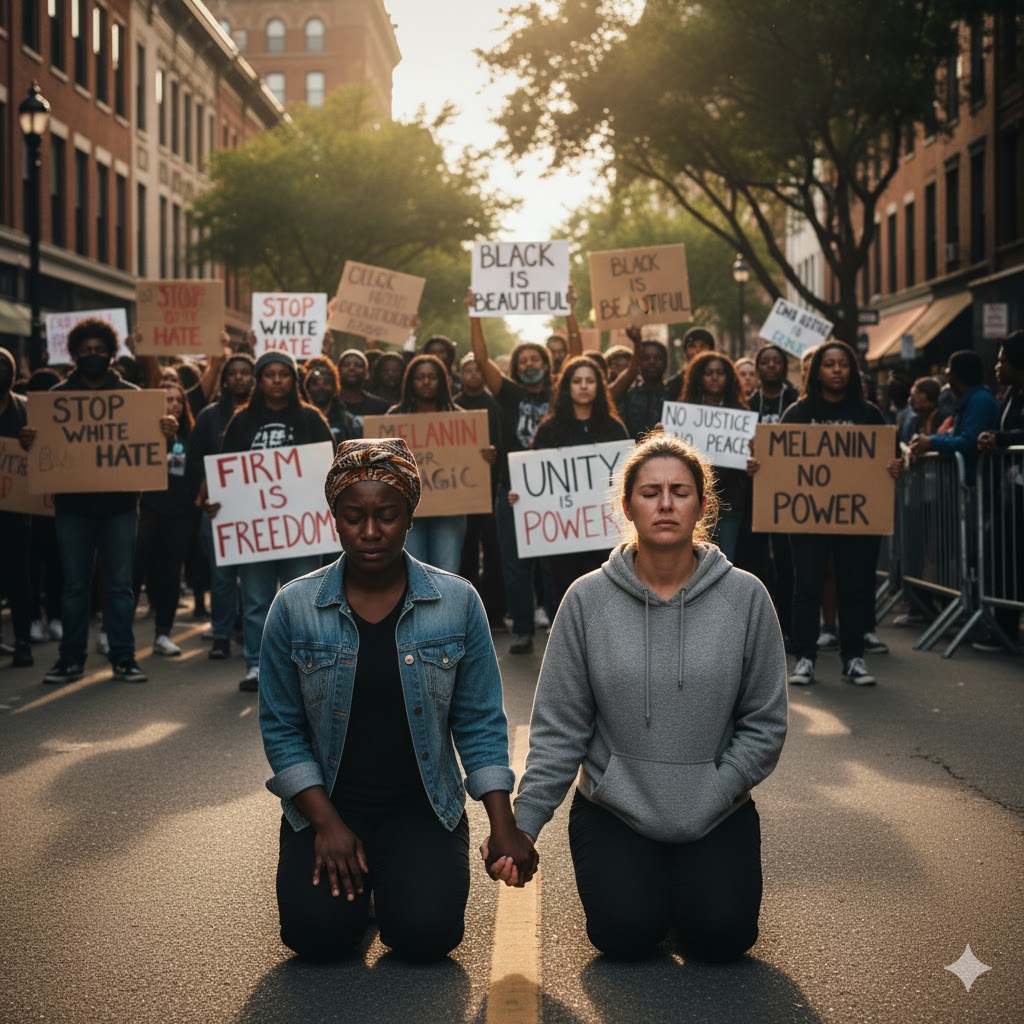
I believe that in every nation, there are both good and bad people. I do not believe that every white person is evil, nor do I subscribe to the idea that being pro-Black requires hating anyone of another race. Some of my closest friends are white, and many of the greatest opportunities and support I have received in life have come from individuals who do not look like me. However, I do not like how Black people were treated at the hands of white people throughout history. They did some evil things to my people—enslaving, dehumanizing, and oppressing generations in ways that still echo today. Yet even in my pain, I do not excuse treating people badly with racism and hate. My faith and conscience teach me that evil should not be repaid with evil. I believe in accountability, truth, and love that heals rather than destroys.

The phrase “being pro-Black” has been misunderstood by many, often distorted by social media and political rhetoric. To be pro-Black is to affirm, protect, and uplift the value of Black life, culture, and history in a world that has too often devalued it. It means loving who we are without apology, restoring what has been stolen, and healing what has been broken. Yet it does not mean to hate or reject others. It is possible—and necessary—to celebrate one’s heritage while still embracing universal humanity (hooks, 1992).

The false assumption that pro-Blackness equals anti-whiteness often stems from fear and guilt rather than understanding. Historically, those in power have portrayed Black pride as a threat to the status quo. During the Civil Rights Movement, for instance, calls for equality were met with accusations of aggression or reverse racism. But love of self is not hatred of others. The same world that celebrates Italian heritage or Irish pride should not condemn Black people for loving themselves and seeking liberation (West, 2001).

To be pro-Black is to reject oppression, not to reject individuals. It is to stand against systems that perpetuate inequality, from slavery to segregation to modern-day mass incarceration. When Black people advocate for justice, they are not attacking white people—they are attacking racism, a sin and a structure that dehumanizes both the oppressed and the oppressor (King, 1963).

The Bible itself speaks to the unity of humanity and the diversity of creation. Acts 17:26 (KJV) declares, “And hath made of one blood all nations of men for to dwell on all the face of the earth.” This scripture reveals that ethnic difference was never meant to divide us but to display the beauty of divine variety. Therefore, affirming Black identity aligns with biblical truth, not contradiction. God does not erase our color; He sanctifies it for His glory.

I have personally encountered compassion and understanding from white allies who have listened, supported, and helped amplify Black voices. Their actions remind me that allyship is not about guilt—it’s about shared humanity. Many white individuals throughout history have stood against racial injustice, from the abolitionists who risked their lives to end slavery to modern-day activists who march beside us in solidarity (Alexander, 2010).

Being pro-Black means loving the legacy of our ancestors—the kings and queens, the inventors, scholars, artists, and visionaries who built civilizations long before colonial contact. It means unlearning internalized inferiority and celebrating the brilliance of melanin, rhythm, creativity, and resilience. None of this requires hatred toward others. It requires healing, remembrance, and restoration of self-worth.

Racism thrives when people believe they must compete for dignity. The truth is, dignity is not a scarce resource—it is divinely infinite. Every race can celebrate its heritage without diminishing another’s. The problem arises when celebration turns into supremacy. White supremacy, not whiteness, is the enemy of humanity; it is the spiritual and social lie that some people are inherently superior to others.

Being pro-Black is an act of spiritual alignment. It is about returning to the image of God within the Black man and woman, distorted for centuries by slavery, colonialism, and Eurocentric theology. It is a declaration that our skin is not a curse but a crown. To affirm this truth does not exclude others from divine love but insists that all people recognize and respect Black humanity as equal in worth and wonder.

Many misunderstandings about pro-Blackness arise from the pain of history. The trauma of slavery and racial violence has left scars across generations. For some, anger toward injustice may appear as hatred toward white people, but more often it is grief, unhealed pain, and frustration over centuries of inequity. True pro-Black love transforms that pain into purpose—it heals instead of hardens.

Cultural pride must be rooted in love, not resentment. The late theologian Howard Thurman (1949) wrote that hatred “confuses the issues” and “distorts the personality.” Hatred consumes both victim and perpetrator. Therefore, being pro-Black should never mean exchanging one form of prejudice for another. Instead, it should mean striving for freedom of the soul, mind, and body while extending grace toward others who walk a different path.

Social progress has always depended on cooperation between people of different races. The abolition of slavery, the Civil Rights Movement, and today’s justice movements all demonstrate that racial equality cannot be achieved in isolation. It requires solidarity—a shared vision for humanity’s moral and spiritual evolution. To be pro-Black is to contribute to that evolution by affirming one’s identity while respecting others’.

Love of one’s people does not require permission or apology. Black pride should not be seen as separatist, but as a necessary corrective to centuries of oppression. When others learn to see pro-Blackness as love rather than hate, dialogue replaces division. Dr. Martin Luther King Jr. reminded us that “love is the only force capable of transforming an enemy into a friend.” Such love is active, courageous, and rooted in justice (King, 1963).

To be pro-Black also means telling the truth about history. It means confronting uncomfortable realities—colonialism, slavery, Jim Crow, redlining, and ongoing discrimination—without bitterness but with moral clarity. A people cannot heal from what they refuse to face. Truth-telling is not anti-white; it is pro-truth, and truth sets everyone free (John 8:32).

Pro-Black identity challenges everyone to reflect on their own cultural roots. Just as Black people reclaim their heritage, so can white people embrace theirs responsibly—without superiority, guilt, or shame. Healing the racial divide begins when each group honors its past, learns from it, and walks in humility toward reconciliation.

It is essential to remember that allyship and accountability can coexist. Being pro-Black does not mean excusing racism among non-Black communities; it means calling for transformation in love. Genuine allies understand that fighting racism benefits all humanity, not just one race. The liberation of one group uplifts the moral consciousness of the whole.

The heart of pro-Blackness is not division but divine order. It seeks the restoration of balance—a world where Black children see their worth reflected in books, films, and leadership. When that balance is restored, everyone benefits. A tree that grows strong in its roots provides shade for all who rest beneath it.

In my journey, I have learned that love for my people deepens my compassion for all people. When I see the suffering of others, regardless of race, I am moved by the same empathy that compels me to uplift my own community. The closer one walks with God, the more one recognizes that love cannot be confined by color.

To be pro-Black is to walk in truth, to heal from generational wounds, and to stand tall in divine dignity. It is to know that we can love ourselves without diminishing anyone else. The world becomes more just when every race celebrates its own identity while respecting others’. True power is not found in domination but in understanding.

Ultimately, being pro-Black is about love—love for self, love for community, and love for humanity. It is about breaking the chains of oppression through education, unity, and spiritual awakening. It is a call to rise without resentment, to build without bitterness, and to shine without shade. In the words of Galatians 3:28 (KJV), “There is neither Jew nor Greek, bond nor free… for ye are all one in Christ Jesus.”


References

  • Alexander, M. (2010). The New Jim Crow: Mass Incarceration in the Age of Colorblindness. The New Press.
  • hooks, b. (1992). Black Looks: Race and Representation. South End Press.
  • King, M. L. Jr. (1963). Strength to Love. Harper & Row.
  • Thurman, H. (1949). Jesus and the Disinherited. Abingdon-Cokesbury Press.
  • West, C. (2001). Race Matters. Beacon Press.

He Fell in Love with Brown

He saw her across the crowded room, and the world seemed to slow. The rich, earthy tones of her brown skin radiated warmth that no light fixture could replicate. Her presence was magnetic, a quiet gravity that drew him closer without a word. The psalmist once wrote, “The LORD is my light and my salvation; whom shall I fear?” (Psalm 27:1, KJV). In her, he found a light all his own, unyielding and holy.

Every gesture she made, every smile she offered, felt intentional yet effortless. He marveled at the subtle strength she carried, the kind often overlooked by the world. Scripture tells us that beauty is more than skin deep: “Favor is deceitful, and beauty is vain: but a woman that feareth the LORD, she shall be praised” (Proverbs 31:30, KJV). Her beauty was undeniable, yet her spirit captivated him even more.

He was drawn to the way her laughter filled the space around her, a melody of joy that felt like sacred music. Each note seemed to whisper truths that words could not contain. In her, he sensed a divinely crafted soul, reflecting the Creator’s intricate handiwork. “I praise thee; for I am fearfully and wonderfully made: marvelous are thy works” (Psalm 139:14, KJV). Her very being reminded him of God’s craftsmanship.

There was a quiet dignity in her posture, a confidence that needed no validation from anyone else. He admired the resilience in her eyes, the silent testament to battles fought and survived. As Ecclesiastes 3:11 says, “He hath made every thing beautiful in his time: also he hath set the world in their heart, so that no man can find out the work that God maketh from the beginning to the end” (KJV). She was beautiful, timeless, and perfectly placed.

He remembered the first time she spoke to him. Her voice, rich and warm, resonated with a sincerity that cut through superficial distractions. There was an authenticity in her tone that mirrored the wisdom of Proverbs: “She openeth her mouth with wisdom; and in her tongue is the law of kindness” (Proverbs 31:26, KJV). He felt as though he were listening to truth itself.

Every encounter with her revealed layers of complexity and depth, a world within her that he longed to explore. Her mind was sharp, her thoughts deliberate, yet she carried them with grace. Like Deborah of old, she seemed to be both judge and nurturer, embodying the duality of strength and tenderness (Judges 4:4-5, KJV).

He fell in love with the rhythm of her walk, the sway that spoke of quiet pride and unshakable self-respect. She moved through the world like a queen in exile returning to her throne. It reminded him of the proverb, “The king’s heart is in the hand of the LORD, as the rivers of water: he turneth it whithersoever he will” (Proverbs 21:1, KJV). Her presence had altered the course of his heart in ways beyond his comprehension.

Even her silence spoke volumes. In moments where words failed, he found himself drawn to the poetry of her quietude. “Be still, and know that I am God” (Psalm 46:10, KJV) became a mantra for him, as he discovered in her the beauty of patience and the art of reflection.

He admired her devotion, the way she lived with purpose and integrity. Her faith was evident not just in her words but in her actions. As James 2:17 reminds us, “Even so faith, if it hath not works, is dead, being alone” (KJV). She lived what she believed, and that authenticity stirred him profoundly.

He fell in love with the history she carried in her brown skin, the legacy of ancestors who had survived, thrived, and loved despite a world that sought to erase them. Her existence was a testament to endurance, echoing the promise, “I will bring the blind by a way that they knew not; I will lead them in paths that they have not known” (Isaiah 42:16, KJV). She was a living miracle.

He loved her laughter, her tears, her courage in the face of doubt. Her emotions were not weaknesses but expressions of a heart attuned to life’s depth. “A merry heart doeth good like a medicine: but a broken spirit drieth the bones” (Proverbs 17:22, KJV). He saw in her both medicine and balm, strength and vulnerability intertwined.

He fell in love with the subtle details others often overlooked: the curl of her hair, the glint in her eyes, the cadence of her speech. Each detail was a revelation, a reminder that beauty often resides in what the casual observer misses.

He admired her capacity to forgive, to love despite pain, to hold grace even when wronged. It reminded him of the teachings of Christ, “But I say unto you, Love your enemies, bless them that curse you, do good to them that hate you, and pray for them which despitefully use you, and persecute you” (Matthew 5:44, KJV). Her love was a reflection of divine love, patient and enduring.

In loving her, he found himself aspiring to become better, to rise to the level of integrity and strength she embodied. Her influence was transformative, a living testimony to the scripture, “Iron sharpeneth iron; so a man sharpeneth the countenance of his friend” (Proverbs 27:17, KJV). She refined him, piece by piece.

Finally, he understood that his love was not just for her outward beauty but for her essence—the spirit, the history, the joy, and the faith she carried. In loving her, he found God’s hand at work in his own heart, shaping him, teaching him, drawing him into a higher purpose. “And now abideth faith, hope, charity, these three; but the greatest of these is charity” (1 Corinthians 13:13, KJV). His love for Brown was rooted in something eternal.

He fell in love with Brown, not as one falls for mere appearances, but as one recognizes a sacred work of art, a soul set apart. Her brown skin was the vessel, her spirit the masterpiece, and in loving her, he glimpsed eternity itself.

Loved in Brown

To be loved in Brown is to exist inside a psychology where identity is not earned through proximity but is bestowed through divine and relational election (Cross, 1991).

Brown skin carries a biological testimony of adaptation and protection, yet it also carries a psychological battleground where meaning is often contested before it is understood (Jablonski, 2012).

Historically, complexion classification systems have manufactured emotional hierarchies that assign value by shade, fragmenting self-concept among melanated people (Hunter, 2007).

The psychological scars of colorist cognition mirror intragroup trauma more intimate than racism alone, because colorism harms inside the family, the community, and the internal self-schema (Byrd & Tharps, 2014).

Yet Scripture declares that love originates in God, who anoints individuals not by appearance but by divine choice, meaning brownness never disqualified the beloved (1 Samuel 16:7, KJV).

Humanity’s origin begins in dust animated by divine breath, grounding creation in earth-tones rather than colorless ideals (Genesis 2:7, KJV).

God declared His created image-bearer “very good” before societal gaze formed its hierarchies (Genesis 1:31, KJV).

Attachment psychology later confirmed what Scripture modeled: identity becomes securely integrated when love is stable, yielding confidence rather than shame (Bowlby, 1969/1982; 1 John 4:18, KJV).

Song of Solomon offers a divine aesthetic interruption, recording that brown skin—darkened by exposure—is still considered lovely, chosen, and adored (Song of Solomon 1:5–6, KJV).

Representation research affirms that visibility of brown beauty reconstructs internalized belonging (Tynes et al., 2019).

This aligns spiritually with God calling His chosen even when others call them common (John 15:16, KJV).

Outgrowing the old self requires identity renewal. Scripture commands cognitive renovation, not shade alteration, emphasizing a change of person, not pigment (Romans 12:2, KJV).

To be loved in Brown requires replacing old internal narratives with divine speech, because death and life are governed first by the tongue, then by the heart that believes it (Proverbs 18:21, KJV).

Paul models identity egress by counting former identities as loss so the higher self in Christ could emerge (Philippians 3:7–8, KJV).

The greatest transformations in Scripture occur in hidden, formative margins—browning seasons of isolation, processing, and divine appointment (Genesis 41, KJV; Masten, 2014).

Love becomes healing when it is covenantal, not comparative; Scripture defines love as divine origin rather than emotional consumerism (1 John 4:7–8, KJV).

The theology of love refuses colorist opposition, affirming that love is sparked by God, sustained by God, and defined as God Himself (1 John 4:8, KJV).

To be loved in Brown is not to be loved despite color, but loved in it, as ink holds no shame for the page it colors.

Brownness becomes a crown when loved rightly, not weaponized socially (Ruth 1:16–17, KJV).

Thus, Loved in Brown stands as a divine psychological correction—God-chosen, spiritually secure, communally resilient, visually brilliant, and eternally authored (Genesis 1:31; Philippians 1:6, KJV).


References

Bowlby, J. (1982). Attachment and Loss: Vol. 1. Attachment (2nd ed.). Basic Books. (Original work published 1969).

Byrd, A. D., & Tharps, L. L. (2014). Hair Story: Untangling the Roots of Black Hair in America. St. Martin’s Press.

Cross, W. E. (1991). Shades of Black: Diversity in African American Identity. Temple University Press.

Hunter, M. (2007). The persistent problem of colorism: Skin tone, status, and inequality. Sociology Compass, 1(1), 237–254.

Jablonski, N. G. (2012). Living Color: The Biological and Social Meaning of Skin Color. University of California Press.

Tynes, B. M., Stewart, A. M., & Hamilton, M. W. (2019). Race-related traumatic events online and mental health among adolescents. Developmental Psychology, 55(4), 737–751.

The Holy Bible, King James Version (Authorized 1611/1769). Genesis 1:31; 2:7; 1 Samuel 16:7; Song of Solomon 1:5–6; Proverbs 18:21; Philippians 3:7–8; Philippians 1:6; John 15:16; John 15:16; 1 John 4:7–8; 1 John 4:18; 1 John 4:18.