The story of Black people across the diaspora is one of divine endurance amidst a systematic erasure of identity. From the shores of Africa to the plantations of America, from segregation to mass incarceration, we have endured centuries of deliberate dehumanization. Yet even as the world sought to define us by chains and color, God defined us by covenant and purpose. The loss of identity among Black people did not happen overnight—it was a calculated dismantling of history, memory, and spiritual heritage.
When the first Africans were stolen from their homelands, they were not only enslaved in body but stripped of name, language, and lineage. Generations were born without the knowledge of tribe or ancestry, left to inherit an identity crafted by their oppressors. This manufactured identity was meant to destroy self-worth and disconnect us from divine origin. The oppressors’ strategy was clear: if you erase a people’s memory, you can control their destiny. Yet Scripture reminds us, “My people are destroyed for lack of knowledge” (Hosea 4:6, KJV).
White supremacy, disguised as civilization and Christianity, became the justification for centuries of cruelty. From the transatlantic slave trade to Jim Crow segregation, white institutions created a theology of dominance that placed Black people outside the circle of humanity. Enslavers misused the Bible, weaponizing Scripture to legitimize injustice. But truth cannot be silenced forever. Just as Pharaoh learned in Egypt, “Let my people go” (Exodus 5:1, KJV) was not merely a command—it was divine prophecy.
Racism in its purest form is not just hatred; it is a spiritual sickness—a delusion of superiority that blinds the oppressor to God’s image in others. The white system of dominance taught Black people that to be Black was to be cursed, when in fact, it was a reflection of divine beauty. Genesis 1:27 declares, “So God created man in his own image.” To hate the Black image is, therefore, to despise the image of God Himself.
The psychological impact of racism birthed a deep identity crisis. For centuries, Black people were told that they were inferior, uncivilized, and cursed descendants of Ham. This false doctrine seeded generational trauma and internalized oppression. Even after emancipation, the freed were still mentally enslaved by a society that controlled their access to opportunity, dignity, and justice.
Jim Crow laws, lynchings, and segregation reinforced a message of rejection. “White Only” signs were more than social barriers—they were psychological shackles. They said to an entire race, “You are less.” The spirit of inferiority became the silent chain many still carry today. Yet Christ declared, “The last shall be first, and the first last” (Matthew 20:16, KJV). What the world despised, God destined.
The loss of identity also manifested in cultural disconnection. African names were replaced with slave names, tribal histories were replaced with plantation stories, and indigenous spiritualities were demonized. The very rhythm of the drum—a heartbeat of Africa—was banned because it carried freedom in its sound. In trying to silence the song, white oppressors hoped to silence the soul. But the spirit of God cannot be bound.
Through centuries of violence, Black resilience became our resistance. Every time we prayed, sang, and survived, we reclaimed a fragment of our stolen selves. The Black church became both womb and weapon—a place of worship and warfare. It reminded the community that our worth was not defined by man’s laws but by divine decree. The enslaved could not read, but they could feel God’s presence in the fire, and they knew that deliverance was promised.
The systemic racism of white America continues to evolve. From plantation overseers to police brutality, the tools have changed but the spirit remains. Modern racism hides behind policies and institutions rather than whips and chains. It appears in discriminatory hiring practices, school funding inequities, and biased judicial systems. The knee on the neck of George Floyd became a global symbol of the centuries-old weight of white supremacy pressing against Black existence.
This consistent devaluation leads to spiritual fatigue—a numbness that makes many wonder if change is even possible. But faith calls us higher. Romans 8:37 declares, “Nay, in all these things we are more than conquerors through him that loved us.” Even when the world denies our humanity, heaven affirms it.
The loss of identity among Black people has also created internal division—colorism, classism, and the rejection of our own features as “less beautiful.” These are the psychological scars of colonization. When a people begin to despise their own reflection, the enemy’s work is complete. Yet, we are reminded that “I am black, but comely” (Song of Solomon 1:5, KJV). Our skin is not a curse but a crown.
White racism did not only target the body—it sought to corrupt the soul. It told Black men they were predators and Black women they were property. It told children that their history began in chains, not in kingdoms. It told a people made in God’s image that they were inferior. But God is a restorer. Joel 2:25 promises, “And I will restore to you the years that the locust hath eaten.” The restoration of Black identity begins when truth replaces lies.
The rebirth of identity is spiritual before it is social. It requires reconnection with our true origin—not slavery, but royalty; not oppression, but divine election. When we rediscover who we are in God, we become immune to the lies of white supremacy. The rebirth begins in the heart, where the Spirit testifies that we are children of the Most High.
Healing from the trauma of racism also demands forgiveness—not to excuse the oppressor, but to free the oppressed. Unforgiveness becomes another form of bondage. Yet, forgiveness without justice is incomplete. True reconciliation requires repentance. Luke 19:8 reminds us of Zacchaeus, who repented and restored fourfold what he had stolen. Likewise, America must face the moral debt of slavery and racism with truth and restitution.
The Black community must also heal from within. We must stop measuring ourselves by white standards of success or beauty. Our identity is divine, not derivative. Our heritage is ancient, not accidental. When we love our features, our culture, and our God-given uniqueness, we dethrone the false gods of whiteness that have ruled for centuries.
Education becomes a key to rebirth. When we study our history—the kingdoms of Mali, Kush, and Songhai; the scholars of Timbuktu; the prophets of Ethiopia—we recover the memory of greatness. Proverbs 4:7 says, “Wisdom is the principal thing; therefore get wisdom.” Knowledge of self is knowledge of God’s handiwork.
The rebirth also requires collective responsibility. We cannot wait for white acceptance to affirm Black excellence. We must build, create, and uplift from within. Every Black entrepreneur, teacher, and activist becomes a prophet of restoration. Each act of love within our community repairs what racism tried to destroy.
Racism may have burned our homes, but not our hope. The ashes of injustice become the soil of rebirth. Out of centuries of oppression rises a people who still sing, still dream, and still believe in redemption. Like the phoenix, we rise from the fire renewed, not ruined.
This rebirth calls us back to faith. It calls us to see ourselves through the eyes of God, not through the lens of those who despised us. It calls us to rebuild our families, reclaim our history, and restore our spiritual foundations. Isaiah 61:3 promises that God will give us “beauty for ashes, the oil of joy for mourning.”
In the end, the rebirth of Black identity is the fulfillment of divine prophecy. What was once buried will rise. What was once broken will be healed. What was once forgotten will be remembered. The kingdom that was scattered will be gathered again.
So we rise—out of oppression, out of miseducation, out of despair. We rise because our story is not defined by racism, but by resurrection. And when the world asks how we survived, we will say: “Because greater is he that is in us, than he that is in the world” (1 John 4:4, KJV).
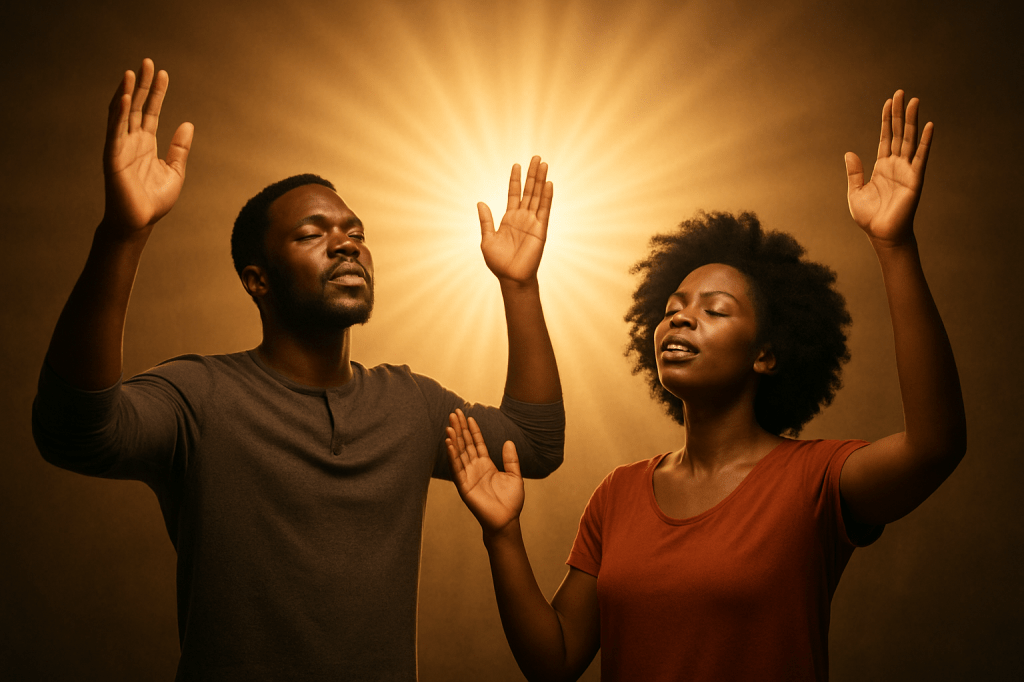
Our rebirth is not revenge—it is revelation. We are the descendants of kings and prophets, not slaves. We are the chosen of God, reborn from the ashes of injustice, standing tall in the light of truth. The fire did not destroy us—it revealed us.
References
- The Holy Bible, King James Version (KJV).
- Alexander, M. (2010). The New Jim Crow: Mass Incarceration in the Age of Colorblindness. The New Press.
- Du Bois, W. E. B. (1903). The Souls of Black Folk. A. C. McClurg & Co.
- Cone, J. H. (1970). A Black Theology of Liberation. Orbis Books.
- Asante, M. K. (2003). Afrocentricity: The Theory of Social Change. African American Images.
- Fanon, F. (1952). Black Skin, White Masks. Grove Press.
- hooks, b. (1992). Black Looks: Race and Representation. South End Press.
- Wilkerson, I. (2020). Caste: The Origins of Our Discontents. Random House.


 THE BROWN GIRL DILEMMA