Category Archives: hate

Active and Covert Racism

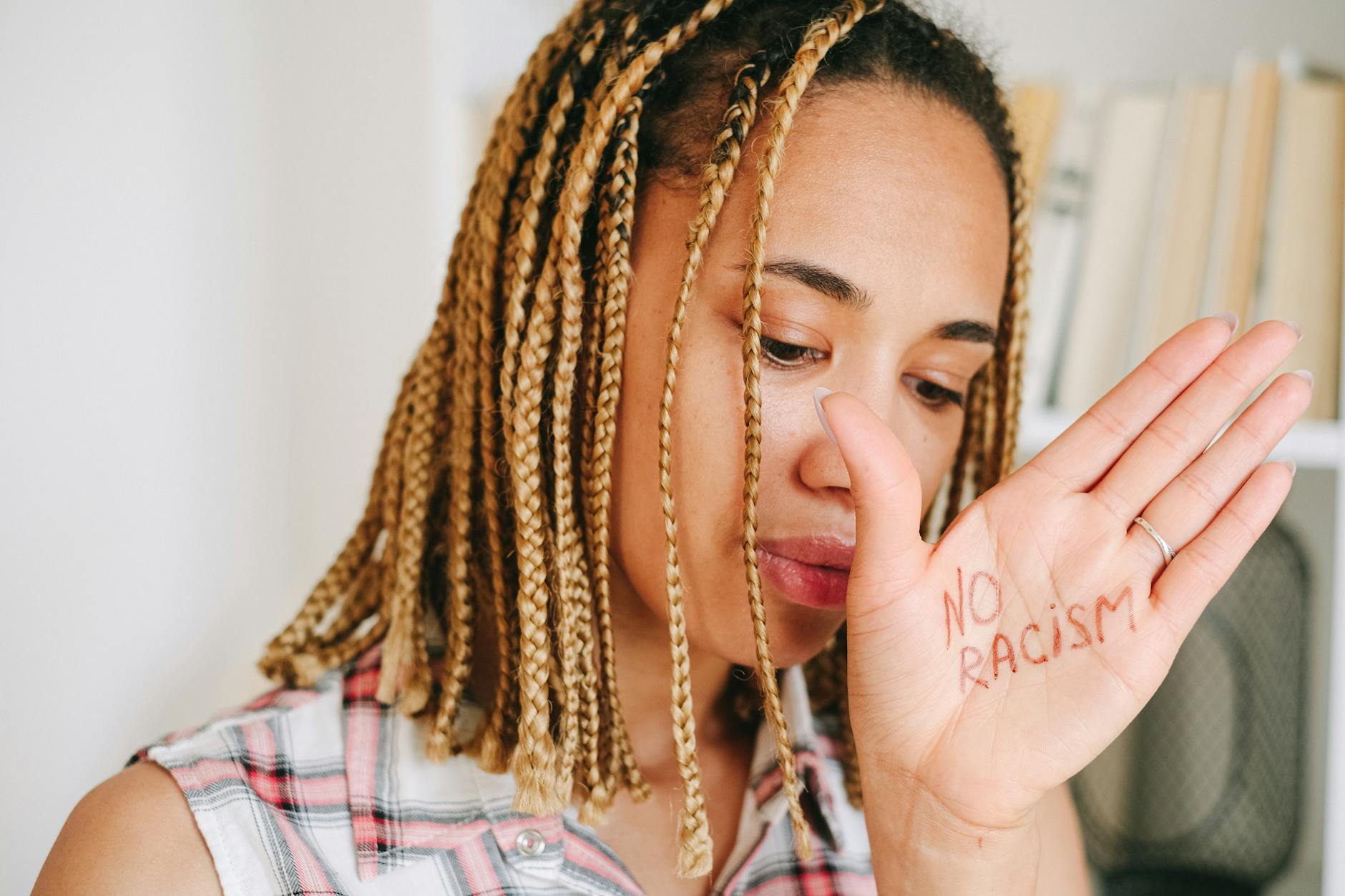
Photo by Ivan Samkov on Pexels.com

Racism operates in both overt and subtle forms—each reinforcing the other to sustain inequality. Active racism refers to direct, intentional acts of racial discrimination, hostility, or violence. Covert racism, by contrast, functions subtly, often hidden beneath social norms, coded language, or institutional practices that appear neutral on the surface. Both are destructive, yet covert racism can be more insidious because it disguises itself within respectability, making it harder to identify, challenge, or dismantle (Tatum, 2017).

Active racism is the most visible and aggressive form of racial prejudice. It includes explicit actions such as hate crimes, racial slurs, segregationist behavior, and overt discrimination in hiring, housing, and public accommodations. Historically, active racism was embodied in slavery, Jim Crow laws, and colonial conquest—systems that openly justified racial hierarchy through law, violence, and pseudoscience (Feagin, 2013).

The modern forms of active racism continue through white supremacist movements, racially motivated attacks, and hate speech, particularly amplified by digital media. Social platforms have become breeding grounds for racial hatred, often protected under the guise of “free speech.” These expressions remind us that active racism is not a relic but a residue—one that mutates across generations (Daniels, 2018).

Covert racism, often referred to as passive racism or subtle racism, manifests through indirect behaviors, coded language, and implicit biases that maintain racial hierarchies without overt hostility. It thrives in environments that claim to be “colorblind” yet perpetuate inequality through silence, avoidance, or denial (Bonilla-Silva, 2014).

Examples of covert racism include discriminatory hiring practices masked as “cultural fit,” biased media narratives, and educational curricula that center whiteness as the norm. It also includes everyday microaggressions—small, often unintentional comments or behaviors that communicate racial inferiority, such as questioning someone’s intelligence or assuming their success is an exception (Sue et al., 2007).

Active racists are those who consciously engage in racism. They believe in racial superiority and act upon it through deliberate harm or exclusion. Covert racists, however, may see themselves as “not racist” while unconsciously supporting racist structures through complicity or inaction. The silence of the latter allows the violence of the former to persist (DiAngelo, 2018).

In the workplace, active racism might appear as open hostility toward employees of color, whereas covert racism might appear as systematic underpromotion, exclusion from networks, or the tokenization of minority staff to showcase “diversity.” Both forms undermine trust, belonging, and professional advancement for people of color (Wingfield, 2019).

In education, active racism historically took the form of segregation and exclusion, while covert racism persists through biased testing, Eurocentric curricula, and lower expectations for Black and brown students. These hidden practices sustain inequities under the appearance of meritocracy (Ladson-Billings, 2006).

Media representation also reflects both forms. Active racism can appear in explicitly racist caricatures or storylines that demonize people of color. Covert racism, however, operates through underrepresentation, stereotypical casting, or framing white experiences as universal (hooks, 1992).

Religious institutions have often participated in both active and covert racism. Historically, theology was used to justify slavery and colonialism. Today, covert racism continues when churches remain silent on racial injustice or treat racial reconciliation as symbolic rather than systemic (Cone, 1984).

Active racism thrives on visible hostility, while covert racism thrives on the illusion of neutrality. The latter often cloaks itself in politeness, professional language, or institutional bureaucracy—making it difficult to call out without social backlash. Its quietness gives it longevity (Ahmed, 2012).

Covert racism also includes implicit bias, the unconscious associations individuals hold about race. Research shows that these biases affect how people evaluate competence, trustworthiness, or threat based on skin color—even among those who consciously reject racism (Greenwald & Krieger, 2006).

Another form of covert racism is colorblind ideology, which denies the relevance of race altogether. While it may seem egalitarian, colorblindness ignores the historical and structural realities that produce racial disparities. By refusing to see race, this ideology refuses to see racism (Bonilla-Silva, 2014).

The criminal justice system reflects both active and covert racism. Active racism is evident in racial profiling and police brutality. Covert racism is embedded in sentencing disparities, cash bail systems, and juror selection—all mechanisms that disproportionately affect people of color under a façade of neutrality (Alexander, 2010).

Healthcare also reveals this duality. Active racism once appeared in medical experimentation on enslaved Africans, such as the procedures performed by J. Marion Sims. Today, covert racism persists through the dismissal of Black patients’ pain, lack of representation in medical research, and inequitable access to treatment (Washington, 2006).

In housing and urban development, active racism took the form of redlining and racial covenants that excluded Black families from homeownership. Covert racism continues through zoning laws, lending practices, and gentrification that displace long-standing communities of color while masking discrimination behind economics (Rothstein, 2017).

Covert racism is often more dangerous than active racism because it can be denied. Those who benefit from it rarely feel responsible, allowing inequality to persist without confrontation. It hides behind policies, euphemisms, and “neutral” systems that reproduce racial stratification (Bonilla-Silva, 2014).

To combat racism effectively, both forms must be recognized and confronted. Focusing solely on overt acts ignores the deeper social structures that perpetuate racial inequality. Anti-racism demands not only condemning active hate but dismantling the silent systems that enable it (Kendi, 2019).

True racial healing begins with acknowledgment. Naming covert racism disrupts its invisibility; exposing active racism confronts its violence. Both require courage, accountability, and education. Only when both are addressed can equity move from theory to transformation.

In the end, active and covert racism function as two sides of the same coin—one loud and unapologetic, the other polite and persistent. The visible wound may scar, but the invisible one festers. Dismantling both requires a collective willingness to see, to speak, and to act against injustice in all its disguises.


References

Ahmed, S. (2012). On being included: Racism and diversity in institutional life. Duke University Press.

Alexander, M. (2010). The new Jim Crow: Mass incarceration in the age of colorblindness. The New Press.

Bonilla-Silva, E. (2014). Racism without racists: Color-blind racism and the persistence of racial inequality in America. Rowman & Littlefield.

Cone, J. H. (1984). For my people: Black theology and the Black church. Orbis Books.

Daniels, J. (2018). Cyber racism: White supremacy online and the new attack on civil rights. Rowman & Littlefield.

DiAngelo, R. (2018). White fragility: Why it’s so hard for White people to talk about racism. Beacon Press.

Feagin, J. R. (2013). Systemic racism: A theory of oppression. Routledge.

Greenwald, A. G., & Krieger, L. H. (2006). Implicit bias: Scientific foundations. California Law Review, 94(4), 945–967.

hooks, b. (1992). Black looks: Race and representation. South End Press.

Kendi, I. X. (2019). How to be an antiracist. One World.

Ladson-Billings, G. (2006). From the achievement gap to the education debt. Educational Researcher, 35(7), 3–12.

Rothstein, R. (2017). The color of law: A forgotten history of how our government segregated America. Liveright Publishing.

Sue, D. W., Capodilupo, C. M., & Holder, A. M. B. (2007). Racial microaggressions in everyday life. American Psychologist, 62(4), 271–286.

Tatum, B. D. (2017). Why are all the Black kids sitting together in the cafeteria? Basic Books.

Washington, H. A. (2006). Medical apartheid: The dark history of medical experimentation on Black Americans from colonial times to the present. Doubleday.

Wingfield, A. H. (2019). Flatlining: Race, work, and health care in the new economy. University of California Press.
Dilemma: The “N” Word

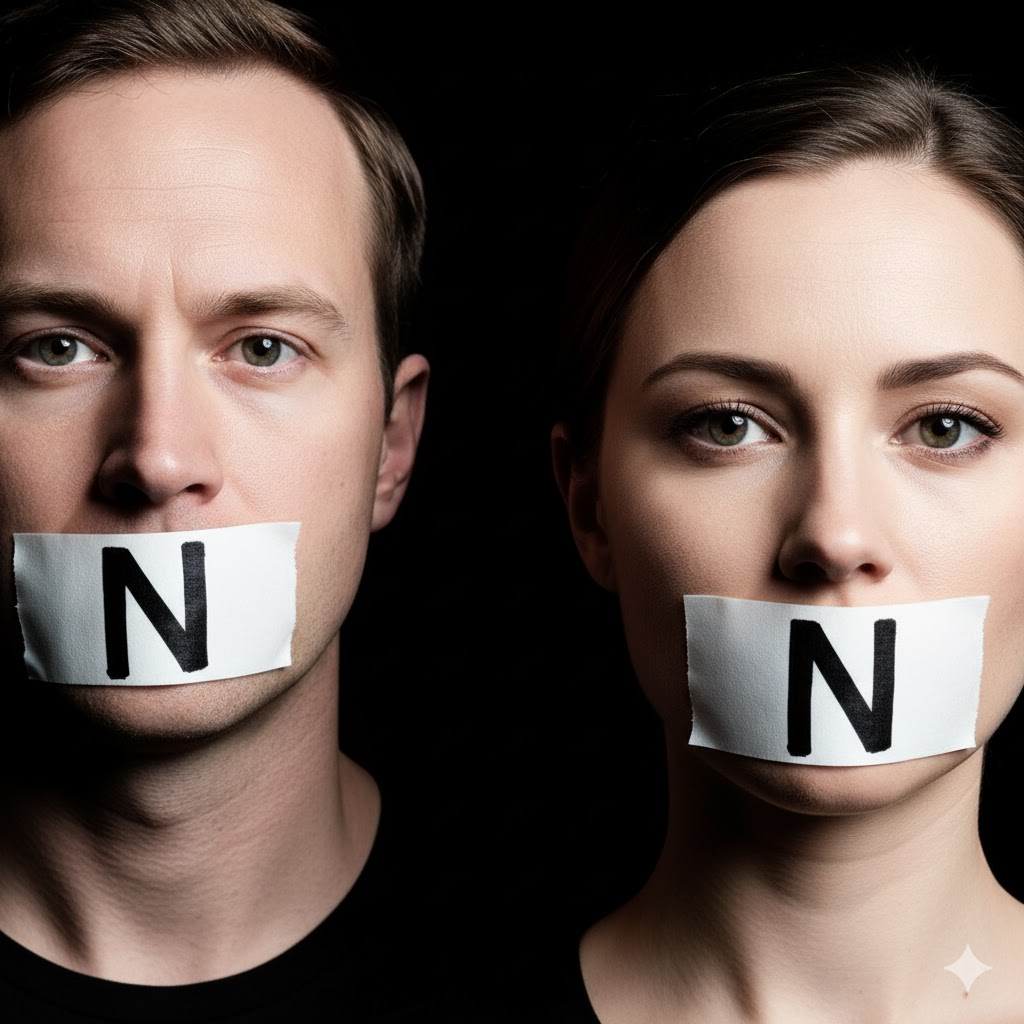
The N‑word is a linguistic atomic bomb: it is capable of inflicting instantaneous injury, yet its power depends on historical context, speaker identity, and audience. It embodies centuries of subjugation, hatred, and oppression, and no neutral intent can erase that history.”
— Randall Kennedy, The N Word: Who Can Say It, Who Shouldn’t, and Why (2007, Beacon Press)

The word commonly referred to as the “N‑word” occupies one of the most charged spaces in the English language, carrying with it a history of slavery, segregation, dehumanisation, and ongoing racial violence. Its use, whether overt or subtle, signals more than mere insult—it implicates power, identity, culture, and memory. The dilemma lies in how the term continues to resonate, be contested, be reclaimed, and to injure.

Originally derived from the Latin niger (black), the term entered the English lexicon as “negro” (black person) and then evolved into “nigger”, a pejorative term whose first recorded uses as a slur date back to the seventeenth century. AAIHS+3PBS+3AA Registry+3 Even though a linguistic transformation occurred, the historic weight of racialised domination never abated. The term became embedded within the lexicon of white supremacy as a tool of dehumanisation.

In its historic usage, the slur served to mark Black persons as inferior, as property, as objects of violence and contempt. Through slavery, lynching, Jim Crow segregation, and systemic disenfranchisement, the word was more than an insult—it was an instrument of terror. AAIHS+2The Washington Post+2 To call someone this word was to place them at the lowest rung of society, to deny their humanity, to reduce them to a racialised subordinate.

Its meaning, however, is not fixed. Recent scholarship emphasises that context matters: the same lexical form may carry different pragmatic values depending on speaker identity, target, setting, intonation and community. A study of various uses of the slur in film and African American intra‑group settings argues that context determines nuance. PMC+1 In other words, the slur’s semantics are entangled with social and cultural dynamics.

When a non‑Black person uses the word towards a Black person, the meaning is rarely neutral. Given the historical legacy, it almost always signals contempt, racial threat or dominance. The slur thus acts as a linguistic embodiment of racial hierarchy—reinforcing what scholar Randall Kennedy called the “atomic bomb of racial slurs.” PBS+1 The emotional weight carried by the utterance cannot be divorced from the structural history.

Within the Black community, some use a variant ending in “‑a” (i.e., “nigga”) as a form of intra‑group address, signalling camaraderie, shared suffering, and cultural belonging. But this intra‑group appropriation remains contested. On one hand, it is reclamation; on the other, it is still rooted in a lexicon of oppression. PMC+1 This duality captures the complexity of language, identity, and power.

From a sociolinguistic and psychological perspective, the impact of the slur is substantial. Hearing or being addressed with the word has been associated with increased stress, lowered self‑esteem, internalised stigma, and social alienation. A qualitative study of African Americans’ feelings toward the word found strong negative reactions when used by non‑Black persons, and ambivalent or contextually bounded responses when used within the Black community. ScholarWorks The marker of difference and devaluation is thus deeply internalised.

The ethical and theological dimensions are equally weighty. If humanity is grounded in the imago Dei (Genesis 1:27) and dignity is recognized as universal, then the use of a slur that denies that dignity is a moral wrong. The N‑word becomes not merely a linguistic issue but a theological one: the denial of image, the denial of voice, the denial of equal worth. The Christian prophetic tradition that calls for justice (Isaiah 1:17; Amos 5:24) compels an interrogation of how language participates in oppression.

At a cultural level, the proliferation of the slur in media, music (especially hip‑hop), literature, and everyday speech complicates its mitigation. One analysis noted that the N‑word appears half a million times a day in social‑media use of the variant “nigga”. The Washington Post+1 This saturation suggests the word is both hyper‑present and normalized in certain contexts, even as it remains banned or taboo in others.

This juxtaposition—between taboo and normalization—underscores the dilemma. For many youth, especially across racial lines, the word may carry diminished sting or may function as slang. Yet for many older generations and for persons subjected to its historical brutality, the word still evokes chains, lynchings, segregation, and racial terror. The generational and intra‑community divide is thus real and significant. Learning for Justice

Moreover, the double standard inherent in discourse is explicit. Many educators and scholars note that Black persons may face fewer consequences (or different ones) when using the variant among themselves, whereas non‑Black persons often face condemnation, social censure, or institutional discipline. Lester, for instance, taught a college‐level course on the N‑word and observed that discussions often revolved around this double standard. Learning for Justice+1 The question of who may legitimately say the word is itself a question of power and membership.

In workplaces, educational institutions, and legal settings, the slur can trigger claims of hostile work environment, harassment, or discriminatory bias. Courts have grappled with whether intra‑racial use by Black workers can also constitute actionable harassment, demonstrating that the slur remains legally potent. Digital Commons@DePaul The law recognises that language can be a vehicle of structural oppression.

Language scholarship emphasises that slurs are performative: they do things—they wound, intimidate, exclude, subordinate. The N‑word performs historical violence, racial demotion, and cultural silencing. It enacts through sound and symbol what structural racism does through policy and practice. The reclamation rhetoric tries to invert that performance, to transform a scar into a badge—but the original wound remains.

Why do people use the N‑word today? Several motivations exist. Some non‑Black speakers may use it in ignorance of its history, other speakers may use it deliberately as taunt or threat. Sometimes it is used for shock, rebellion or humour (though harm remains). Within the Black community, usage may serve as marker of intimacy or cultural identity. But the asymmetry of power remains: when the speaker is non‑Black, the word seldom escapes the baggage of hate. The refusal of some non‑Black persons to recognise the word’s history is itself an expression of racial insensitivity.

When directed at Black persons in peer or social settings by non‑Black persons, the word often functions as a racial insult, an invocation of threat, or a reaffirmation of inferior status. Its use is fundamentally interlinked with racial hostility because of the long history of its deployment in violence, exclusion and demeaning treatment. It is an instrument of racial harm.

In interpersonal relations it also fosters distrust, emotional injury and intergenerational trauma. The repeated hearing or expectation of the word can condition psychological hyper‑vigilance, identity stress and a sense of perpetual othering. The phenomenon of “racial battle fatigue” resonates here: Black individuals develop cumulative stress responses to recurrent micro‑ and macro‑aggressions, among which the N‑word is a symbolic anchor.

At the community level, the ubiquity of the word among youth, popular culture and digital spaces intersects with structural inequalities and racial hierarchies. The word’s presence signals that racial devaluation remains socially acceptable in many contexts. This undermines collective efforts to build inclusive institutions and equal dignity. The normalization of the slur—especially when used casually—reduces the social impetus for change.

From a historical vantage, the N‑word is deeply tied to structural racism: from its evolution during the era of slavery, where it served as a descriptor of enslaved Africans, to the post‑emancipation era where it reinforced segregation and Jim Crow disenfranchisement, to the present where it persists in linguistic and cultural domains. The scholarly review of its history emphasises its continuity across centuries of racial subordination. AA Registry+1

Critically, the mere elimination of the word does not eliminate the racism behind it. Some commentators argue that focusing solely on “banning the word” distracts from addressing the power structures that allowed the word to thrive. One scholar argued that eradicationists confuse the form of the word with the conditions of its use. PMC In other words, the slur is a symptom, not the root, of racial devaluation.

In light of your interest in theology, genetics, identity and historical injustice, the N‑word invites reflection on how language intersects with inherited trauma, communal identity and racialised bodies. For example, when Black lineages (including Y‑DNA haplogroups such as E1b1a) are reclaimed and celebrated, the presence of a slur undermines the narrative of dignity restoration, reminding us that language remains a battleground for identity.

In conclusion, the dilemma of the N‑word is not simply a lexical matter—it is deeply social, historical, psychological, cultural and structural. Its significance lies in the interplay of language and power, identity and trauma, resistance and reclamation. Addressing the issue meaningfully requires attention not only to who uses the word, but the reasons behind its use, the relational context, the historical weight, and the healing work that must accompany language transformation.

References
Lester, N. A. (2011). Straight talk about the N‑word. Learning for Justice. Retrieved from https://www.learningforjustice.org/magazine/fall-2011/straight-talk-about-the-nword Learning for Justice
Rahman, J. (2014). Contextual determinants on the meaning of the N word. Philosophy & Social Criticism, 40(2), 123‑141. https://doi.org/10.1177/0191453714550430 PMC
Kennedy, R. (2007). The N Word: Who Can Say It, Who Shouldn’t, and Why. Beacon Press. (Referenced in Kennedy’s public commentary). Digital Commons@DePaul+1
National Association for the Advancement of Colored People. (2014). NAACP official position on the use of the word “nigger” and the “N‑word.” Retrieved from https://naacp.org/resources/naacp-official-position-use-word-nigger-and-n-word NAACP
“Analysis of the Reclamation and Spread of the N‑word in Pop Culture.” (n.d.). Undergraduate Showcase. Retrieved from https://www.journals.uc.edu/index.php/Undergradshowcase/article/download/4116/3123 Journals at UC
“A brief history: The word nigger.” African American Registry. (n.d.). Retrieved from https://aaregistry.org/story/nigger-the-word-a-brief-history/ AA Registry

Dilemma: Hate Crimes

A Scholarly Examination of Systemic Violence and Racial Terror

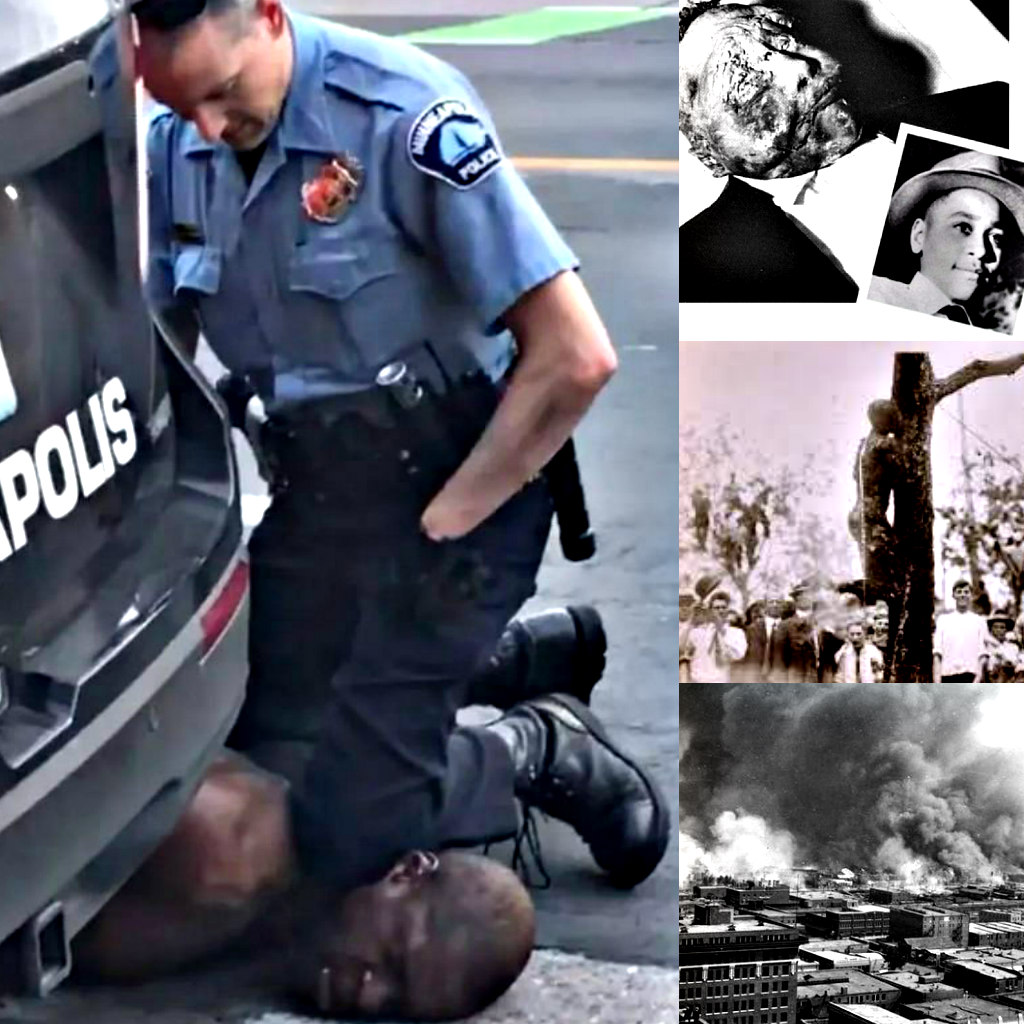
These photographs are the property of their respective owners. No copyright infringement intended.

The history of Black people in America is tragically punctuated by acts of racial terror, lynching, and systemic injustice. Hate crimes against African Americans have not only taken individual lives but also reinforced centuries of inequality and fear. This essay highlights ten of the most significant hate crimes in American history, revealing a consistent pattern of racialized violence that continues to reverberate in the present day.

The lynching of Emmett Till in 1955 stands as one of the most notorious hate crimes in U.S. history. At only fourteen years old, Till was brutally murdered in Mississippi for allegedly whistling at a white woman. His mutilated body, displayed publicly by his mother, Mamie Till-Mobley, exposed the horror of racial hatred to the world. The acquittal of his murderers by an all-white jury demonstrated the deep complicity of the justice system in racial violence (Whitfield, 1988).

The 1921 Tulsa Race Massacre remains one of the most devastating racial attacks on Black prosperity. White mobs destroyed the prosperous Greenwood District, known as “Black Wall Street,” killing an estimated 300 people and displacing thousands. The massacre wiped out decades of economic progress and reinforced the racial hierarchy that dominated early 20th-century America (Ellsworth, 1992).

Another brutal episode occurred during the Rosewood Massacre of 1923 in Florida, where a false accusation against a Black man led to the burning of an entire Black town. Dozens were killed, and survivors fled into swamps to escape white mobs. The incident was later recognized by the state of Florida, which awarded reparations to survivors decades later (D’Orso, 1996).

The Birmingham Church Bombing of 1963, which killed four young girls—Addie Mae Collins, Denise McNair, Carole Robertson, and Cynthia Wesley—shocked the conscience of the nation. The bombing, carried out by Ku Klux Klan members, occurred during the height of the civil rights movement and symbolized white resistance to desegregation and Black empowerment (McWhorter, 2001).

The murder of Medgar Evers in 1963, a civil rights leader and NAACP field secretary in Mississippi, represented another targeted act of racial terrorism. Evers was assassinated in his driveway for his efforts to secure voting rights and challenge segregation. His death galvanized the civil rights movement and intensified national awareness of southern racism (Marable, 1984).

The lynching of Jesse Washington in 1916 in Waco, Texas, was one of the most barbaric acts of mob violence ever recorded. A crowd of thousands gathered to watch as Washington was tortured and burned alive. The atrocity highlighted the normalization of public lynching as entertainment and a tool of white supremacy (Dray, 2002).

The Central Park Five case (1989) exposed how systemic racism can manifest within the criminal justice system without physical lynching. Five Black and Latino teenagers were wrongfully convicted of raping a white woman in Central Park. Media bias, coerced confessions, and racial profiling led to years of imprisonment before their exoneration. The case illustrated how racial fear could replace evidence in shaping narratives (Burns, 2011).

The Charleston Church Massacre in 2015 further proved that racial hatred still thrives in modern America. Dylann Roof entered the historic Emanuel AME Church and murdered nine Black worshipers during Bible study. This act of terror targeted a sacred space and echoed the domestic terrorism once carried out by the Ku Klux Klan (Thompson, 2016).

The murder of James Byrd Jr. in 1998 in Jasper, Texas, was a gruesome reminder that lynching never truly ended. Byrd was chained to the back of a truck and dragged for miles by three white supremacists. His death prompted national outrage and led to the 2009 Matthew Shepard and James Byrd Jr. Hate Crimes Prevention Act, expanding federal hate crime laws (Coleman, 2010).

The killing of George Floyd in 2020 reignited the global fight against racial injustice. Floyd’s death, captured on video as a white police officer knelt on his neck for over nine minutes, symbolized centuries of institutionalized violence against Black bodies. His dying words, “I can’t breathe,” became a rallying cry for the Black Lives Matter movement, leading to one of the largest civil rights protests in modern history (Clayton, 2020).

Each of these incidents illustrates how racism in America transcends time, geography, and form—manifesting in lynchings, massacres, police brutality, and judicial bias. The persistence of hate crimes underscores that racial violence is not an aberration but a fundamental feature of the American racial order.

Historically, these acts were often justified or ignored by law enforcement and political institutions, revealing systemic complicity. The failure to hold perpetrators accountable reinforced cycles of violence and mistrust within the Black community (Alexander, 2010).

Modern hate crimes, including the murders of Trayvon Martin, Ahmaud Arbery, and Breonna Taylor, continue this legacy. Each incident reflects a continuum of racialized fear and control rooted in America’s original sin—slavery and white supremacy (Taylor, 2016).

Sociologists argue that hate crimes against Black Americans are not merely individual acts but collective expressions of dominance intended to maintain racial hierarchy (Feagin, 2013). The violence communicates that Black progress and autonomy are met with punishment.

Media framing has often contributed to victim-blaming and the criminalization of Black identity. From Emmett Till to George Floyd, victims are frequently portrayed as threatening or non-compliant, a tactic that subtly absolves perpetrators (Entman & Rojecki, 2000).

Education about these events remains essential for dismantling ignorance and denial. Erasing or minimizing racial atrocities fosters a dangerous cultural amnesia that perpetuates prejudice (Loewen, 1995).

The psychological impact on Black Americans—manifested in generational trauma, mistrust of institutions, and internalized fear—continues to affect community health and cohesion (Comas-Díaz et al., 2019).

Despite this painful history, Black resilience endures. The collective response to racial violence has birthed justice movements, from civil rights to Black Lives Matter, reaffirming the enduring spirit of a people determined to live free and equal.

Ultimately, these ten hate crimes are not isolated tragedies but interconnected chapters in the story of America’s racial conscience. Understanding them demands not only remembrance but transformation—a collective moral reckoning that ensures such hatred never again defines the nation’s soul.


References

Alexander, M. (2010). The New Jim Crow: Mass Incarceration in the Age of Colorblindness. New Press.
Burns, S. (2011). The Central Park Five: The Untold Story Behind One of New York City’s Most Infamous Crimes. Knopf.
Clayton, J. (2020). George Floyd and the Rebirth of the Movement for Black Lives. Journal of Race and Social Justice, 5(2), 45–58.
Coleman, W. (2010). Hate Crimes in America: James Byrd Jr. and Beyond. Oxford University Press.
Comas-Díaz, L., Hall, G. N., & Neville, H. A. (2019). Racial trauma: Theory, research, and healing. American Psychologist, 74(1), 1–12.
D’Orso, M. (1996). Like Judgment Day: The Ruin and Redemption of a Town Called Rosewood. Perennial.
Dray, P. (2002). At the Hands of Persons Unknown: The Lynching of Black America. Random House.
Ellsworth, S. (1992). Death in a Promised Land: The Tulsa Race Riot of 1921. LSU Press.
Entman, R. M., & Rojecki, A. (2000). The Black Image in the White Mind: Media and Race in America. University of Chicago Press.
Feagin, J. R. (2013). Racist America: Roots, Current Realities, and Future Reparations. Routledge.
Loewen, J. W. (1995). Lies My Teacher Told Me: Everything Your American History Textbook Got Wrong. New Press.
Marable, M. (1984). Race, Reform, and Rebellion: The Second Reconstruction in Black America. University Press of Mississippi.
McWhorter, D. (2001). Carry Me Home: Birmingham, Alabama, the Climactic Battle of the Civil Rights Revolution. Simon & Schuster.
Taylor, K.-Y. (2016). From #BlackLivesMatter to Black Liberation. Haymarket Books.
Thompson, E. (2016). Charleston shooting: White supremacy, religion, and the politics of forgiveness. Journal of American Culture, 39(4), 385–392.
Whitfield, S. J. (1988). A Death in the Delta: The Story of Emmett Till. Johns Hopkins University Press.

ChatGPT can make mistakes. Check important info.

The Most Hated People: Black People

Photo by nappy on Pexels.com

Throughout history, Black people have endured hatred, oppression, and marginalization on a global scale. This phenomenon is not merely social or political; it has deep spiritual and psychological roots. The Bible, particularly the King James Version, offers insight into why Black people have been hated, how God allows this suffering, and how the forces of darkness exploit it. Understanding these dynamics is essential for empowerment, resilience, and spiritual victory.


Biblical Foundations: Why Black People Are Hated

The hatred toward Black people is hinted at in Scripture as a form of prophetic suffering. Deuteronomy 28:37 states, “And thou shalt become an astonishment, a proverb, and a byword among all nations whither the LORD shall lead thee” (KJV). The Israelites, often linked biblically to Black Africans through E1b1a haplogroups and historical migrations, were marked for suffering as a consequence of God’s covenant and the lessons of obedience. This hatred, though painful, serves as a tool in God’s providential plan to teach, refine, and ultimately elevate His people spiritually.

Scripture also warns of the spiritual adversary behind oppression: “Be sober, be vigilant; because your adversary the devil, as a roaring lion, walketh about, seeking whom he may devour” (1 Peter 5:8, KJV). The devil manipulates human sin and societal prejudice to sow division, hatred, and despair, targeting Black people as part of a larger plan to weaken God’s chosen people.


Psychological Dimensions of Hatred

From a psychological perspective, the hatred of Black people is rooted in fear, envy, and the need for domination. Social psychology explains this as in-group/out-group bias, scapegoating, and internalized superiority complexes. Historical trauma, such as slavery and colonization, reinforced narratives that dehumanized Black people, creating generational cycles of oppression. Modern psychology identifies implicit bias, colorism, and structural racism as extensions of these long-standing prejudices, perpetuated unconsciously in societies worldwide.

The psychological impact of being hated manifests as internalized oppression, lowered self-esteem, and hyper-vigilance. Yet the Bible offers resilience strategies: “Fear thou not; for I am with thee: be not dismayed; for I am thy God” (Isaiah 41:10, KJV). Faith, identity in God, and historical consciousness serve as buffers against the toxic effects of hatred.


The Role of the Devil

Satan’s involvement in the hatred of Black people cannot be understated. He works to divide, oppress, and distort identity. As John 10:10 warns, “The thief cometh not, but for to steal, and to kill, and to destroy” (KJV). By promoting false narratives, enslavement, and systemic oppression, the devil aims to suppress Black excellence, spiritual awareness, and societal influence. Recognizing this spiritual warfare is critical to understanding that hatred is not merely human sin but also a tool of darkness.


The Meaning of Blackness

Blackness is more than skin color; it represents resilience, divine heritage, and a reflection of God’s creative diversity. Psalm 139:14 states, “I will praise thee; for I am fearfully and wonderfully made” (KJV). Black identity, therefore, is sacred and intentional. Historically, Black people have been leaders, prophets, and nation-builders, and their cultural and spiritual contributions reflect God’s favor and purpose, even when society hates them.


How to Overcome Hatred

Overcoming hatred requires a combination of spiritual, psychological, and practical strategies:

  1. Faith in God’s Sovereignty: Trusting that God can turn suffering into blessing (Genesis 50:20).
  2. Community and Mentorship: Strengthening ties within Black communities to resist isolation and despair.
  3. Education and Awareness: Learning history, understanding systemic oppression, and reclaiming identity.
  4. Spiritual Warfare: Prayer, fasting, and studying Scripture to resist the devil’s schemes (Ephesians 6:11-12).

How Black People Can Deal with Hatred

Dealing with hatred requires resilience, wisdom, and spiritual discernment:

  • Identity Affirmation: Embrace biblical and historical truths about heritage.
  • Psychological Healing: Engage in therapy, counseling, or group support to process generational trauma.
  • Advocacy and Leadership: Transform experiences of hatred into activism, mentorship, and leadership.
  • Forgiveness and Wisdom: Maintain a biblical posture of righteousness without compromising self-respect (Romans 12:17-21).

Conclusion

The hatred of Black people is both a historical and spiritual reality, sanctioned at times in Scripture for refinement, exploited by human sin, and magnified by Satan’s schemes. Yet Blackness carries divine meaning, and God equips His people to overcome hatred through faith, resilience, and wisdom. Understanding the interplay of biblical principles, psychological realities, and spiritual warfare empowers Black individuals and communities to thrive despite oppression. The journey from suffering to victory is both personal and communal, guided by Scripture, history, and divine purpose.


References

Biblical References (KJV)

  • Deuteronomy 28:37
  • 1 Peter 5:8
  • Isaiah 41:10
  • John 10:10
  • Psalm 139:14
  • Genesis 50:20
  • Ephesians 6:11-12
  • Romans 12:17-21

Secondary Sources
Fanon, F. (1967). Black Skin, White Masks. Grove Press.

Grier, W. H., & Cobbs, P. M. (1968). Black Rage. Basic Books.

Harris, S. (2015). The Psychological Effects of Racism on African Americans. American Psychological Association.

West, C. (1993). Race Matters. Beacon Press.