This photograph is the property of its respective owner.
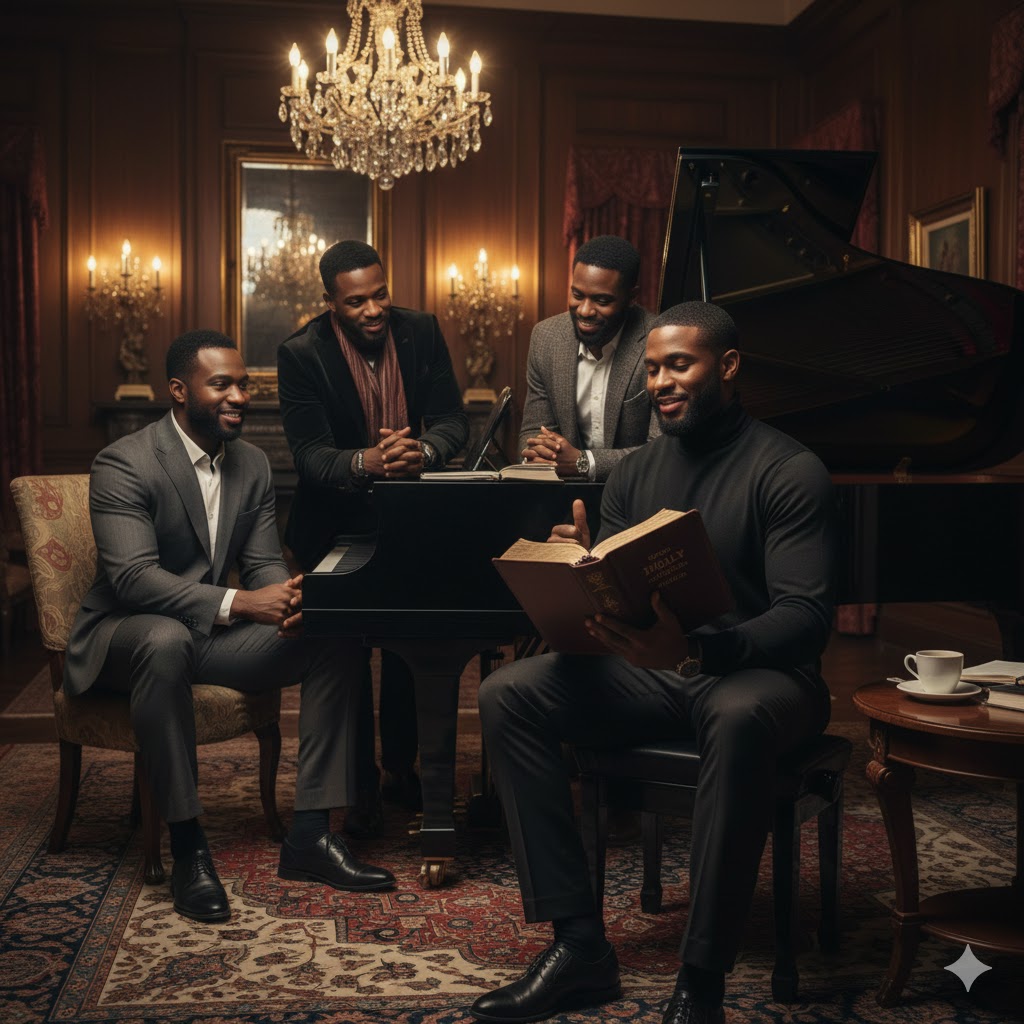
The strength of a Black man is not measured solely in physical ability, wealth, or social influence. True strength encompasses character, resilience, spiritual grounding, emotional intelligence, and responsibility. It is forged through trials, adversity, and a deliberate commitment to purpose.
Historically, Black men have endured systemic oppression, slavery, and societal devaluation. Yet, strength is reflected in their endurance, leadership, and preservation of culture. From African kings like Mansa Musa to civil rights leaders such as Martin Luther King Jr., Black men have demonstrated resilience, wisdom, and vision that transcend generations.
Biblical strength is both moral and spiritual. In 1 Corinthians 16:13 (KJV), Paul exhorts, “Watch ye, stand fast in the faith, quit you like men, be strong.” Here, strength is equated with faithfulness, courage in adversity, and steadfastness in moral convictions.
Emotional strength is critical. A strong Black man processes emotions constructively, maintains integrity, and leads with compassion. Proverbs 20:7 (KJV) emphasizes, “The just man walketh in his integrity: his children are blessed after him.” Legacy, therefore, is part of strength.
Responsibility defines a strong man. Providing for family, protecting community, and honoring God are essential expressions of manhood. Strength without responsibility is incomplete and unsustainable.
Spiritual grounding anchors strength. Prayer, scripture, and devotion provide clarity, perseverance, and wisdom. Psalm 1:3 (KJV) compares a righteous man to a tree planted by rivers of water, symbolizing growth, fruitfulness, and enduring impact.
Resilience is forged through adversity. Black men navigate systemic pressures, stereotypes, and societal challenges, yet resilience transforms hardship into growth, echoing James 1:2-4 (KJV), which teaches that trials develop perseverance and mature character.
Cultural strength strengthens identity. Awareness of African heritage and ancestral achievements provides a foundation of pride and purpose, enhancing personal and communal strength.
Mentorship and leadership reflect true strength. Proverbs 27:17 (KJV) says, “Iron sharpeneth iron; so a man sharpeneth the countenance of his friend.” A strong man uplifts others, multiplies influence, and builds lasting impact through guidance and support.
Relational strength is equally important. Loving and nurturing family, friends, and partners demonstrates balance, emotional intelligence, and integrity. Ephesians 5:25 (KJV) highlights sacrificial love as the model for godly men.
Financial and intellectual strength are tools, not goals. Knowledge, strategic thinking, and financial literacy empower men to protect, provide, and lead effectively (Proverbs 22:7, KJV).
Physical strength matters only when disciplined and guided by wisdom. Aggression without moral grounding undermines true strength. Physical ability should serve purpose, protection, and community well-being.
Legacy is the ultimate measure of strength. A Black man’s influence on family, community, and culture reflects his character, faith, and resilience. Strength ensures future generations inherit wisdom, courage, and integrity.
Understanding identity is vital. Men grounded in history, faith, and self-awareness navigate life confidently, resisting societal narratives that seek to diminish their value. Knowledge of self and purpose fosters unshakeable strength.
Moral courage distinguishes true strength. Standing firm in conviction despite opposition, fear, or marginalization reflects biblical examples such as Daniel in the lion’s den.
Forgiveness and emotional mastery demonstrate strength. Matthew 5:44 (KJV) teaches, “But I say unto you, Love your enemies, bless them that curse you.” Restraint, patience, and understanding are marks of mature strength.
Ultimately, the strength of a Black man is an offering—to God, family, and community. It is a holistic cultivation of character, faith, resilience, and wisdom, impacting generations and fulfilling divine purpose.
Fake Strength vs True Strength
Fake Strength
True Strength
Physical power without discipline
Moral, emotional, and spiritual power guided by integrity
Wealth used for self-gratification
Financial acumen used to provide, protect, and empower others
Dominance or aggression over others
Leadership through service, mentorship, and compassion
Pride without purpose
Humility rooted in faith and responsibility
Ignoring emotional growth
Emotional intelligence, self-awareness, and vulnerability
Short-term gains and image
Long-term legacy and generational impact
Influence based on fear or intimidation
Influence based on respect, wisdom, and example
Avoiding challenges
Resilience and perseverance through trials
Isolation from community
Building relationships, mentorship, and communal uplift
Neglecting faith or purpose
Spiritual grounding and alignment with God’s calling
References
Holy Bible, King James Version. (1611). Thomas Nelson.
Guthrie, D. (1994). The NIV application commentary: Proverbs. Grand Rapids, MI: Zondervan.
Wright, C. J. H. (2002). Old Testament ethics for the people of God. Downers Grove, IL: InterVarsity Press.
Aune, D. E. (2013). Reconsidering the role of men in the Bible: Biblical theology for contemporary men. New York, NY: Continuum.
Harrison, J. (2020). Black masculinity, resilience, and leadership in historical perspective. Chicago, IL: University of Chicago Press.
This photograph is the property of its respective owner. No copyright infringement intended
Ladies – The matters of the heart are among the most sacred and sensitive aspects of a woman’s spiritual and emotional life. Many women carry wounds from abandonment, betrayal, rejection, and unmet expectations, often wondering if a man will ever truly love them in a way that heals rather than harms. Yet Scripture teaches that before any man can love us well, we must first understand the nature of God’s love, because all healthy love flows from Him. This series is an encouragement to women to seek not just romance, but restoration, wholeness, and divine alignment with a man who has a heart after God.
A woman gets over a broken heart not by erasing the pain, but by healing through it with truth, time, and transformation. Healing is not denial; it is intentional restoration of the soul, the mind, and the spirit. Biblically and psychologically, heartbreak is a form of grief—you are mourning not just a person, but a dream, an attachment, and a future you imagined. That loss must be processed, not suppressed.
First, she must allow herself to grieve honestly. Many women rush to “be strong” and pretend they are fine, but unprocessed pain becomes emotional scars. Scripture reminds us that even Jesus wept (John 11:35). Tears are not weakness; they are release. A broken heart needs permission to feel before it can heal.
Second, she must detach emotionally and spiritually from what hurt her. This includes cutting unhealthy soul ties, limiting contact, and resisting the urge to revisit memories that reopen wounds. From a psychological standpoint, attachment bonds activate the same neural pathways as addiction—so withdrawal is real. Healing requires space (Proverbs 4:23).
Third, she must rebuild her identity outside of the relationship. Many women lose themselves in love—adopting someone else’s needs, habits, and emotional rhythms. Heartbreak forces a woman to ask: Who am I without him? Healing begins when she reconnects to her own purpose, gifts, and calling (Jeremiah 29:11).
Fourth, she must release forgiveness, not for his benefit, but for her freedom. Forgiveness is not excusing behavior—it is choosing not to let pain control your future. Unforgiveness keeps emotional ties alive. Forgiveness breaks the psychological loop of replaying the trauma (Ephesians 4:31–32).
Fifth, she must renew her mind. The thoughts that follow heartbreak are often distorted: I wasn’t enough. I’ll never love again. Everyone leaves. These are trauma-based beliefs, not truth. Scripture teaches, “Be ye transformed by the renewing of your mind” (Romans 12:2). Healing requires replacing lies with reality.
Sixth, she must return to God as her emotional source. Many women unknowingly turn men into emotional idols—looking to them for validation, security, and self-worth. When the relationship ends, so does the emotional foundation. God restores the heart by becoming the primary source of love again (Psalm 62:5).
Seventh, she must set new boundaries. Heartbreak often reveals patterns—choosing unavailable men, ignoring red flags, over-giving, or tolerating disrespect. Growth comes when pain becomes wisdom. Boundaries are not walls; they are filters for future peace.
Eighth, she must move her body and environment. Trauma is stored in the nervous system, not just the mind. Exercise, sunlight, walking, cleaning, and changing surroundings help regulate emotions and reduce depressive symptoms. Healing is physiological as well as spiritual.
Ninth, she must stop romanticizing the past. The brain tends to remember the good and minimize the harm. This is called selective memory bias. Healing requires remembering the truth, not the fantasy. If it was healthy, it wouldn’t have broken her.
Tenth, she must stop seeking closure from the person who broke her. Closure comes from within, not from conversations, apologies, or explanations. A person who couldn’t love you properly cannot heal what they damaged.
Eleventh, she must invest in supportive relationships—friends, mentors, counselors, and faith communities. Isolation intensifies heartbreak. Safe people provide perspective, accountability, and emotional grounding (Proverbs 11:14).
Twelfth, she must grieve the illusion, not just the person. Many women are hurt more by losing the idea of what could have been than the actual man. Healing means accepting reality, not chasing potential.
Thirteenth, she must reclaim her self-worth. Heartbreak often damages confidence and desirability. But worth does not come from being chosen—it comes from being created by God. “I am fearfully and wonderfully made” (Psalm 139:14).
Fourteenth, she must learn to be alone without being lonely. Solitude builds emotional independence. A healed woman does not fear being alone—she fears being emotionally unsafe.
Fifteenth, she must stop numbing the pain through rebound relationships, substances, overworking, or distractions. Avoidance delays healing. Pain that is numbed returns stronger.
Sixteenth, she must develop emotional discernment. Not every man who is kind is sent by God. Not every connection is alignment. Discernment protects future peace more than attraction ever could.
Seventeenth, she must rewrite the narrative. Heartbreak is not proof she failed—it is evidence she outgrew what could not sustain her. Many relationships end not because you were unlovable, but because you were becoming someone incompatible with dysfunction.
Eighteenth, she must trust time, not urgency. Healing is not linear. Some days feel strong, others feel fragile. This is normal. The nervous system needs time to recalibrate.
Nineteenth, she must believe love is still possible without desperation. A healed woman does not chase love—she attracts it through wholeness. She no longer needs to be chosen; she chooses wisely.
Finally, she must understand this truth: A broken heart is not the end of her story—it is the beginning of her awakening. Pain reveals where she gave too much, tolerated too little, and expected God from a human. When the heart heals, it does not become harder—it becomes wiser, softer, and spiritually stronger.
A woman does not get over a broken heart—she grows through it and emerges as a version of herself who no longer abandons her own needs for someone else’s love.
A broken heart is not merely emotional pain; it is a spiritual injury that affects self-worth, identity, and trust. The Bible acknowledges this reality when it says, “The Lord is nigh unto them that are of a broken heart; and saveth such as be of a contrite spirit” (Psalm 34:18, KJV). God does not dismiss heartbreak—He draws near to it. Healing begins when a woman allows God to mend what people have damaged.
Many women ask, Will he heal my broken heart? Will he make me feel special? Will he love me endlessly? These are not shallow questions; they reflect a deep longing to be seen, cherished, and emotionally safe. However, no man can replace God as the ultimate healer. A man can support the healing process, but only God can restore the soul (Psalm 23:3). When a woman expects a man to do what only God can do, she risks entering relationships rooted in emotional dependency rather than spiritual health.
God’s love is fundamentally different from human love. Scripture defines it as agape love—a selfless, unconditional, sacrificial love that seeks the good of the other (1 Corinthians 13:4–7). God’s love is patient, kind, not abusive, not manipulative, not temporary, and not based on performance. Unlike human affection, God’s love does not fluctuate with mood, appearance, or mistakes (Romans 8:38–39).
A major question many women carry is, How will I know if he really loves me? Biblical love is not proven through words, gifts, or sexual chemistry—it is proven through consistent character, spiritual leadership, protection, and sacrifice (Ephesians 5:25). A man who truly loves you will not rush your body while neglecting your soul. He will desire your holiness more than your availability.
The Bible is clear about sexual boundaries: no fornication. “Flee fornication” (1 Corinthians 6:18) is not a suggestion; it is a command. God restricts sex to marriage not to punish women, but to protect their emotional, spiritual, and psychological well-being. Sex creates soul ties, and when formed outside of covenant, those ties often produce trauma, confusion, and delayed healing.
One of the most dangerous traps is mistaking lust for love. Lust is driven by desire for the body; love is driven by commitment to the soul. Many women are loved physically but not emotionally, desired sexually but not honored spiritually. A godly man will not reduce you to your looks—he will recognize you as a daughter of God, not an object of pleasure.
The Bible warns, “The heart is deceitful above all things, and desperately wicked: who can know it?” (Jeremiah 17:9). This verse reminds women not to rely solely on feelings when choosing a partner. Emotions can lie, attraction can blind, and chemistry can override discernment. Wisdom comes from the Spirit, not from butterflies.
A godly man is defined not by charm, income, or physical appearance, but by character and integrity. He fears God, honors women, keeps his word, practices self-control, and walks in humility (Proverbs 1:7; Galatians 5:22–23). He does not manipulate, ghost, exploit, or emotionally withhold.
Integrity means a man is the same in private as he is in public. He does not perform righteousness; he lives it. His lifestyle aligns with his language. His actions match his promises. He does not lead with ego but with accountability and spiritual discipline.
The Bible also describes a godly man as a provider, not just financially, but emotionally, spiritually, and intellectually. “If any provide not for his own… he hath denied the faith” (1 Timothy 5:8). Provision includes money, yes—but also wisdom, stability, protection, and leadership. A man who cannot manage his own life cannot lead a woman’s heart.
A man heals a broken heart not by being perfect, but by being safe. Safety means emotional consistency, respect for boundaries, honest communication, and spiritual covering. Healing happens when a woman is no longer anxious about abandonment, betrayal, or emotional games.
A healed relationship feels peaceful, not chaotic. It feels secure, not confusing. God is not the author of emotional torment. “For God is not the author of confusion, but of peace” (1 Corinthians 14:33). If a man brings anxiety, instability, and constant doubt, he is not sent by God.
True love does not rush intimacy; it cultivates trust. It allows space for healing, growth, prayer, and self-discovery. A godly man will never pressure a woman to compromise her values to keep him.
Many women secretly ask, Does he want me for my looks? Physical attraction is natural, but it must never be the foundation. Beauty fades, bodies change, but character sustains love (Proverbs 31:30). A man who only praises your appearance will leave when it no longer satisfies his ego.
God’s intention for love is not consumption but covenant. Covenant means commitment, sacrifice, responsibility, and accountability before God. Love is not about being chosen—it is about being covered.
The ultimate goal of dating is not validation, marriage, or companionship—it is alignment with God’s will. A relationship should bring you closer to God, not farther from Him. If you have to disobey God to keep a man, he is not your blessing.
Healing also requires women to stop romanticizing broken men. A woman is not called to be a therapist, savior, or rehabilitation center. You are called to be a daughter of God, not a fixer of wounded masculinity.
A man with a heart of God will pray with you, not prey on you. He will protect your purity, not exploit your vulnerability. He will value your peace more than his pleasure.
In the end, the greatest love story is not between a woman and a man—it is between a woman and God. When God heals the heart first, He attracts the right partner later. Wholeness precedes union. Healing comes before romance.
The true question is not Will he love me endlessly? but Am I rooted in the One whose love never ends? Because when God fills the heart, no man can break it again.
References
The Holy Bible, King James Version. (1769/2017). Cambridge University Press.
Cloud, H., & Townsend, J. (2002). Boundaries in dating: How healthy choices grow healthy relationships. Zondervan.
Chapman, G. (2010). The five love languages: The secret to love that lasts. Northfield Publishing.
Lewis, C. S. (1960). The four loves. Harcourt, Brace & World.
Peck, M. S. (1978). The road less traveled: A new psychology of love, traditional values, and spiritual growth. Simon & Schuster.
Piper, J. (2012). This momentary marriage: A parable of permanence. Crossway.
Stanley, A. (2011). The new rules for love, sex, and dating. Zondervan.
Worthington, E. L. (2005). Relationship repair: Healing the wounds of a troubled marriage. InterVarsity Press.
Wilkinson, B. (2000). The prayer of Jabez. Multnomah Publishers.
Smith, C. (2003). Soul searching: The religious and spiritual lives of American teenagers. Oxford University Press.
In loving memory of my late husband, who was indeed – a needle in a haystack.
In today’s world, finding a good man/Godly man — a man of character, integrity, and divine order — can feel like searching for a needle in a haystack. The term “good man” has become blurred by societal confusion, shifting gender norms, and the rise of self-centered ideologies. Yet, biblically and psychologically, the essence of a good man remains anchored in his role as a protector, provider, and priest of his household. He is not perfect, but principled; not flawless, but faithful. His strength lies not in domination but in devotion — to God, to purpose, and to those he loves.
The foundation of a Godly man begins with his relationship with God. Before Adam was given Eve, he was given responsibility — to work, to guard, and to obey (Genesis 2:15, KJV). This divine order reveals that a true man is defined not by what he possesses, but by what he stewards. His identity is grounded in purpose, not pleasure. The psychology of a good man, therefore, flows from internal alignment — he knows who he is because he knows Who created him.
In psychological terms, the good man exhibits high emotional intelligence and self-regulation. He is not ruled by impulse or ego but guided by wisdom and empathy. The apostle Paul describes such a man in Galatians 5:22–23 (KJV): “But the fruit of the Spirit is love, joy, peace, longsuffering, gentleness, goodness, faith, meekness, temperance.” These traits are not signs of weakness; they are evidence of divine strength under control — the hallmark of godly masculinity.
A good man is rare because his value is not measured by superficial metrics. Society often glorifies wealth, status, and charisma, but Scripture exalts virtue, diligence, and faithfulness. Proverbs 20:6 (KJV) observes, “Most men will proclaim every one his own goodness: but a faithful man who can find?” The good man does not seek applause; he seeks purpose. He is consistent even when unseen, honorable even when unpraised.
The psychology of a provider extends beyond financial security. A good man provides emotionally, spiritually, and mentally. He builds an atmosphere of peace within his home, offering stability in chaos and clarity in confusion. He listens before he reacts, prays before he speaks, and leads by example. His provision is holistic — he feeds the soul as much as the body, recognizing that leadership without love is tyranny.
Scripture commands men to provide because provision is a form of love. 1 Timothy 5:8 (KJV) declares, “But if any provide not for his own, and specially for those of his own house, he hath denied the faith.” Provision, therefore, is not optional — it is a divine duty. The good man understands that to provide is to mirror the heart of God, who daily supplies the needs of His people (Philippians 4:19, KJV).
Psychologically, providing gives a man purpose and identity. Men who are unable to fulfill this role often experience anxiety, shame, or feelings of inadequacy. Yet, true provision is not limited to financial ability — it extends to presence, protection, and prayer. The good man knows that his presence itself is a covering. His voice calms, his actions secure, and his prayers preserve.
In relationships, the good man operates with integrity and transparency. He does not manipulate affection or exploit emotions. Instead, he nurtures love through honor and commitment. Ephesians 5:25 (KJV) instructs, “Husbands, love your wives, even as Christ also loved the church, and gave himself for it.” His love is sacrificial — not possessive. He does not seek to control but to cultivate.
The psychology of a good man is marked by humility and growth. He is teachable, accountable, and self-aware. He acknowledges his flaws without being defined by them. Such humility reflects Proverbs 27:17 (KJV): “Iron sharpeneth iron; so a man sharpeneth the countenance of his friend.” The good man surrounds himself with wise counsel, understanding that maturity is not a destination but a journey.
One of the greatest attributes of a good man is emotional strength — not stoicism, but steadiness. He feels deeply yet manages wisely. He is the calm in the storm, a grounding presence that anchors those around him. Psychologically, this emotional balance stems from secure attachment and spiritual discipline. His peace flows from his connection to the Prince of Peace.
The scarcity of good men in modern times is not due to divine absence but to societal misalignment. Men are often taught to chase success over substance, validation over virtue. Yet, the Word of God offers an antidote: “Seek ye first the kingdom of God, and his righteousness; and all these things shall be added unto you” (Matthew 6:33, KJV). The good man understands that success without spiritual grounding is emptiness disguised as achievement.
A good man’s character is revealed in adversity. Pressure exposes the foundation upon which a man is built. While others crumble under trials, he stands firm, echoing the psalmist’s declaration, “He shall be like a tree planted by the rivers of water” (Psalm 1:3, KJV). His roots go deep, nourished by faith and endurance. He is stable because his source is divine, not circumstantial.
Psychologically, this resilience is linked to purpose and self-discipline. The good man sees challenges not as threats but as opportunities for growth. He processes pain through prayer and transforms disappointment into determination. His mindset reflects Romans 5:3–4 (KJV): “We glory in tribulations also: knowing that tribulation worketh patience; and patience, experience; and experience, hope.”
In his role as a husband and father, the good man reflects the heart of the Heavenly Father. He disciplines with love, leads with fairness, and covers his family with prayer. His presence brings peace; his consistency builds trust. He understands that his role is not to dominate but to demonstrate — to model godliness in action. His family finds safety in his strength because his strength comes from God.
The psychology of a good man also includes stewardship over his emotions, resources, and relationships. He practices restraint and discernment, refusing to squander what God has entrusted to him. This self-control, as described in Proverbs 16:32 (KJV), is a mark of true power: “He that is slow to anger is better than the mighty; and he that ruleth his spirit than he that taketh a city.”
A good man’s vision is generational. He thinks beyond the moment, planting seeds for the future. He leaves a legacy not of possessions but of principles. His life becomes a testimony of faithfulness that his children can follow. Proverbs 13:22 (KJV) affirms this, saying, “A good man leaveth an inheritance to his children’s children.” His impact transcends time because it is rooted in righteousness.
Spiritually, the good man walks in alignment with divine authority. He understands headship not as superiority but as service. Christ modeled leadership through humility, and the good man mirrors that same posture. He bends his knee before God so he can stand upright before men. His authority is effective because it is submitted.
In today’s culture, where broken masculinity is often celebrated, the good man stands out. He does not conform to chaos but embodies order. His silence carries wisdom, and his decisions reflect discernment. He is firm yet gentle, powerful yet peaceful. The world may not easily recognize him, but heaven does. He is the “needle in the haystack” — the remnant of righteous men who walk uprightly before the Lord.
Ultimately, the psychology of a good man is a blend of divine design and disciplined development. He is who he is because of grace, growth, and godly guidance. He is not self-made but Spirit-shaped. His life, though imperfect, points to perfection found only in Christ. He lives not for applause but for purpose, embodying Micah 6:8 (KJV): “He hath shewed thee, O man, what is good; and what doth the LORD require of thee, but to do justly, and to love mercy, and to walk humbly with thy God?”
A needle in the haystack — that’s what he is. Rare, refined, and righteous. The good man is not extinct; he is simply hidden — often overlooked by a world too distracted to value depth. But to the woman of wisdom, the family of faith, and the kingdom of God, he is priceless. For when you find a good man, you have found not luck, but divine favor.
A watchman in the shadows is a rare figure, often unnoticed by the crowd yet deeply known by God. He is the needle in the haystack, not because he seeks distinction, but because his character is forged in obedience, restraint, and reverence for the Most High. In a world drawn to noise and spectacle, his strength is quiet, disciplined, and immovable.
Scripture presents the watchman as one appointed by God to observe, discern, and warn, not for personal glory, but for communal preservation. “Son of man, I have made thee a watchman unto the house of Israel” (Ezekiel 33:7, KJV). This role demands spiritual alertness, moral clarity, and a willingness to stand firm even when few are listening.
This man is a leader not by title but by example. His authority flows from integrity rather than charisma. Like David before his anointing, he learns governance in obscurity, tending what God has already placed in his hands while awaiting divine timing (1 Samuel 16:11–13).
He is a provider in the fullest biblical sense, understanding that provision extends beyond finances into protection, guidance, and spiritual covering. Scripture teaches that a man who fails to care for his household has “denied the faith” (1 Timothy 5:8, KJV). The watchman takes this charge seriously, preparing himself mentally, emotionally, spiritually, and economically.
As a man of God, his private life aligns with his public confession. He fears the Lord, not with terror, but with awe, reverence, and submission. “The fear of the Lord is the beginning of wisdom” (Proverbs 9:10, KJV), and wisdom shapes his decisions, relationships, and priorities.
He teaches the Bible not as performance, but as stewardship. Whether from a pulpit, a living room, or quiet conversation, he rightly divides the Word of truth (2 Timothy 2:15). His teaching is rooted in context, humility, and a desire to see lives transformed rather than applauded.
This watchman understands spiritual warfare. He knows that leadership attracts resistance, and obedience provokes opposition. Therefore, he remains vigilant in prayer, armored in righteousness, and grounded in truth (Ephesians 6:11–18). His strength is sustained by communion with God rather than public validation.
He is a needle in the haystack because he resists cultural distortions of masculinity. He does not confuse dominance with strength or silence with apathy. Instead, he embodies biblical manhood marked by accountability, discipline, compassion, and courage (Micah 6:8).
Like the sons of Issachar, he understands the times and knows what must be done (1 Chronicles 12:32). He discerns seasons, recognizes patterns, and responds with wisdom rather than impulse. His insight makes him valuable, even when misunderstood.
The watchman walks with restraint in matters of desire and pleasure. He guards his eyes, his thoughts, and his heart, recognizing that purity is power, not deprivation. “Keep thy heart with all diligence; for out of it are the issues of life” (Proverbs 4:23, KJV).
He is often hidden because God develops leaders in isolation before elevation. Jesus Himself spent thirty years in relative obscurity before three years of ministry that changed the world. Preparation precedes manifestation (Luke 2:52).
This man is after God’s own heart, not because he is flawless, but because he is repentant, teachable, and aligned with God’s will (Acts 13:22). When corrected, he submits. When humbled, he learns. When called, he responds.
He understands covenant responsibility. If married, he loves his wife as Christ loved the church, sacrificially and intentionally (Ephesians 5:25). If single, he honors God with patience and discipline, refusing to compromise purpose for convenience.
The watchman carries the burden of intercession. He prays not only for himself, but for his family, his community, and future generations. Like Job, he stands in the gap, offering prayers of protection and alignment (Job 1:5).
He does not chase platforms, but he is prepared for them. When opportunity comes, he is rooted enough to withstand scrutiny and pressure. His foundation has been laid in truth, not image.
Though he dwells in the shadows, heaven knows his name. Angels are dispatched at the prayers he whispers. God weighs his obedience and records his faithfulness (Malachi 3:16).
The watchman is misunderstood because he refuses shortcuts. He chooses longevity over popularity, holiness over hype, and obedience over applause. His path is narrow, but it is secure (Matthew 7:13–14).
He recognizes that leadership begins with self-governance. He disciplines his body, renews his mind, and submits his spirit to God daily (1 Corinthians 9:27; Romans 12:2).
When crisis arises, he is steady. When confusion spreads, he brings clarity. When fear grips others, he remains anchored. His confidence is not in circumstance, but in God’s sovereignty (Psalm 46:1).
A watchman in the shadows may not trend, but he transforms. His impact is generational, his influence eternal. Long after noise fades, his obedience echoes in lives changed and destinies aligned.
Such a man is rare, refined by God, hidden until appointed. He stands alert on the wall, faithful at his post, watching not for recognition, but for the glory of the Most High.
References
Carson, D. A. (1996). Exegetical fallacies (2nd ed.). Grand Rapids, MI: Baker Academic.
Holy Bible, King James Version. (1769/2017). Cambridge Edition.
Piper, J. (2013). Desiring God: Meditations of a Christian hedonist. Colorado Springs, CO: Multnomah.
Tozer, A. W. (1948). The pursuit of God. Harrisburg, PA: Christian Publications.
Wright, N. T. (2012). How God became king. New York, NY: HarperOne.
Manhood is not defined by age, wealth, or status. True manhood is measured by character, responsibility, and spiritual integrity. For Black men, the journey toward authentic masculinity often intersects with societal pressures, cultural expectations, and the call of God’s Word. Understanding what it means to be a man is both a personal and spiritual pursuit.
Historically, Black men have been subjected to narratives that distort masculinity. From slavery to systemic oppression, stereotypes have painted them as irresponsible, violent, or absent. These false images create internal and external obstacles to embracing God-honoring manhood.
Biblical manhood begins with identity in God. “Be strong and of a good courage, fear not, nor be afraid of them: for the Lord thy God, he it is that doth go with thee” (Deuteronomy 31:6, KJV). A man’s confidence and purpose are rooted not in external validation, but in God’s calling.
True manhood requires self-discipline. Proverbs 25:28 warns, “He that hath no rule over his own spirit is like a city that is broken down, and without walls” (KJV). Controlling one’s emotions, desires, and decisions is foundational to spiritual and personal growth.
Responsibility is a hallmark of manhood. Black men are often measured by their ability to provide, protect, and lead. Yet the Bible emphasizes spiritual leadership first: guiding one’s family, community, and self in righteousness.
Character development is non-negotiable. Integrity, honesty, and humility distinguish a man from a boy. “The just man walketh in his integrity: his children are blessed after him” (Proverbs 20:7, KJV). Legacy is built through principled living.
A man must confront and overcome fleshly desires. Sinful patterns—lust, greed, anger, and pride—undermine growth. Paul admonishes believers: “Mortify therefore your members which are upon the earth” (Colossians 3:5, KJV). Discipline over the flesh empowers freedom.
Courage is central to manhood. Black men are called to confront injustice, pursue truth, and make difficult decisions. Joshua 1:9 commands, “Be strong and of a good courage; be not afraid, neither be thou dismayed: for the Lord thy God is with thee whithersoever thou goest” (KJV). Courage is both spiritual and practical.
Mentorship and guidance are crucial. Proverbs 27:17 declares, “Iron sharpeneth iron; so a man sharpeneth the countenance of his friend” (KJV). Surrounding oneself with godly and wise men accelerates growth and strengthens accountability.
Emotional intelligence is essential. Society often teaches Black men to suppress vulnerability. However, emotional awareness enhances relationships, leadership, and resilience. God created men with the capacity to feel deeply and empathize.
Faith-centered manhood integrates work, prayer, and service. James 2:17 reminds, “Even so faith, if it hath not works, is dead, being alone” (KJV). Spiritual commitment is demonstrated through action, not mere belief.
Financial stewardship is part of biblical manhood. Proverbs 13:11 states, “Wealth gotten by vanity shall be diminished: but he that gathereth by labour shall increase” (KJV). Discipline in finances reflects maturity, responsibility, and foresight.
Marriage and family provide arenas for growth. Husbands and fathers are called to love, lead, and sacrifice. Ephesians 5:25 instructs, “Husbands, love your wives, even as Christ also loved the church” (KJV). Leadership in the home begins with service.
Mentally, a man must resist societal pressures that promote toxic masculinity. Strength is not domination; authority is not oppression. True power aligns with justice, compassion, and accountability.
Health and fitness reflect stewardship of God’s temple. 1 Corinthians 6:19–20 teaches, “Ye are not your own; for ye are bought with a price: therefore glorify God in your body” (KJV). Physical discipline complements spiritual discipline.
A man must embrace patience. Growth, recognition, and fulfillment rarely arrive instantly. Ecclesiastes 7:8 notes, “Better is the end of a thing than the beginning thereof” (KJV). Patience cultivates wisdom and stability.
Community involvement shapes identity. Black men grow by uplifting others, mentoring youth, and contributing to the collective good. Leadership is measured not only by personal success but by the impact on society.
Humility is critical to lasting influence. Pride isolates; humility attracts guidance and multiplies respect. Philippians 2:3 urges, “Let nothing be done through strife or vainglory; but in lowliness of mind let each esteem other better than themselves” (KJV).
Perseverance is non-negotiable. Trials, discrimination, and setbacks test faith and character. Romans 5:3–4 teaches, “…tribulation worketh patience; And patience, experience; and experience, hope” (KJV). Endurance shapes legacy.
Ultimately, becoming a true man is a lifelong pursuit. It is measured by faith, integrity, love, and service. A man who aligns his life with God’s Word walks with confidence, purpose, and honor, leaving a legacy that transcends circumstance.
References
The Holy Bible, King James Version. (1769/2017). Cambridge University Press.
Hammond, R. (2018). Manhood and faith: Rediscovering biblical masculinity. Baker Academic.
Glaude, E. S., Jr. (2010). In a shade of blue: African American men and identity in contemporary society. Beacon Press.
Greene, J. (2014). Black male identity and the spiritual journey. Journal of African American Studies, 18(2), 145–163.
Hooks, B. (2004). The will to change: Men, masculinity, and love. Washington Square Press.
As women, we often make lists of qualities we desire in a partner—handsome, successful, funny, charming. Yet beyond our lists and checkboxes, one question remains: who truly meets God’s standard for a husband? The Ephesians 5 man is loyal to God, disciplined in his faith, and committed to walking in righteousness. Before we choose with our hearts or eyes, we must first ask: What does God say about the man we should marry? True discernment begins not with desire, but with alignment to God’s Word and purpose.
In a world where character often takes a backseat to charm or appearance, the Ephesians 5 man stands apart. He is a man committed to God, walking in holiness, and striving to love as Christ loves the church. His purity, discipline, and devotion make him a partner worthy of respect and trust.
The foundation of an Ephesians 5 man is faith. He places God at the center of his life, seeking guidance through prayer, scripture, and obedience. “Husbands, love your wives, even as Christ also loved the church, and gave himself for it” (Ephesians 5:25, KJV). His love is not superficial; it is sacrificial and intentional.
Purity is non-negotiable. He keeps himself morally and spiritually clean, guarding his heart, eyes, and actions. By remaining disciplined in thought and deed, he honors God and his future wife. “Flee fornication. Every sin that a man doeth is without the body; but he that committeth fornication sinneth against his own body” (1 Corinthians 6:18, KJV).
An Ephesians 5 man understands responsibility. He is accountable for his words, actions, and decisions, recognizing that leadership in the home begins with integrity and self-control. Proverbs 20:7 teaches, “The just man walketh in his integrity: his children are blessed after him” (KJV).
Faithful men protect and provide—not merely financially, but spiritually, emotionally, and relationally. Their presence fosters security, trust, and encouragement. “But I would have you know, that the head of every man is Christ; and the head of the woman is the man; and the head of Christ is God” (1 Corinthians 11:3, KJV).
Discipline is a hallmark of godly manhood. He exercises self-control in speech, conduct, and desires. By keeping the flesh under subjection, he avoids sin and remains focused on God’s purpose. “But I keep under my body, and bring it into subjection: lest that by any means, when I have preached to others, I myself should be a castaway” (1 Corinthians 9:27, KJV).
An Ephesians 5 man values covenant relationships. He does not enter lightly into marriage or commitments but understands the sacred responsibility of leadership, loyalty, and lifelong devotion. Malachi 2:14–15 underscores the importance of honoring covenant love.
Respect is integral to his interactions. He treats women with honor, patience, and kindness, reflecting the love Christ shows the church. “Likewise, ye husbands, dwell with them according to knowledge, giving honour unto the wife” (1 Peter 3:7, KJV).
He is proactive in spiritual growth. Daily prayer, scripture study, and church participation strengthen his relationship with God, which directly impacts his ability to lead and love. “Study to shew thyself approved unto God, a workman that needeth not to be ashamed, rightly dividing the word of truth” (2 Timothy 2:15, KJV).
An Ephesians 5 man does not compromise under pressure. He resists societal temptations, peer pressure, and personal desires that would lead him away from purity or righteousness. His steadfastness demonstrates integrity and discernment.
He understands the power of accountability. Surrounding himself with godly men, mentors, or spiritual guides ensures he remains grounded in truth. Proverbs 27:17 states, “Iron sharpeneth iron; so a man sharpeneth the countenance of his friend” (KJV).
Humility marks his leadership. He does not dominate or control but serves, listens, and nurtures. Christ-like leadership is rooted in sacrifice, empathy, and servant-heartedness. Philippians 2:3–4 teaches, “Let nothing be done through strife or vainglory; but in lowliness of mind let each esteem other better than themselves” (KJV).
Patience and perseverance strengthen his character. Trials refine his faith and his capacity to love faithfully. “Knowing this, that the trying of your faith worketh patience” (James 1:3, KJV). A man who endures builds trust and security for his partner.
An Ephesians 5 man is emotionally mature. He communicates effectively, processes emotions responsibly, and nurtures relational health, rejecting toxic patterns of anger, pride, or immaturity.
He prioritizes spiritual and emotional intimacy over superficial attraction. The connection he seeks is anchored in God’s Word and shared devotion, not fleeting desire or lust. “Flee fornication…glorify God in your body” (1 Corinthians 6:18–20, KJV).
Selflessness is central. He seeks the welfare of his partner, lifting her up spiritually, emotionally, and practically. Love is demonstrated in action, not just words. “Husbands, love your wives…as Christ also loved the church” (Ephesians 5:25, KJV).
Integrity shapes his reputation. His actions align with his words, and he models accountability, honesty, and trustworthiness in all areas of life. Proverbs 10:9 teaches, “He that walketh uprightly walketh surely: but he that perverteth his ways shall be known” (KJV).
He respects boundaries—his own and others’—ensuring that relationships develop with care, patience, and holiness. Boundaries protect purity and honor God’s design for relationships.
Ultimately, the Ephesians 5 man reflects God’s love in every area of life. By remaining pure, disciplined, faithful, and servant-hearted, he models the standard for biblical manhood. Women who seek such men are encouraged to recognize, affirm, and align with God’s design for relationships.
Being in the presence of an Ephesians 5 man is transformative. Men who walk in holiness, love sacrificially, and keep themselves pure inspire respect, admiration, and partnership. This is the man who elevates, protects, and cherishes—a true reflection of God’s heart.
References
The Holy Bible, King James Version. (1769/2017). Cambridge University Press.
Cloud, H., & Townsend, J. (1992). Boundaries: When to say yes, how to say no to take control of your life. Zondervan.
Eggerichs, E. (2004). Love & respect: The love she most desires; the respect he desperately needs. Thomas Nelson.
Hunter, M. A. (2010). The masculinity of faith: Biblical principles for Black men. Journal of African American Studies, 14(3), 215–230.
A good man is often defined by what he does not do. He is not abusive, not immoral, not reckless, and not irresponsible. He may be polite, educated, emotionally pleasant, and socially admired. Yet Scripture teaches that goodness alone is not the standard for covenant. A man can be good in character and still be wrong in assignment.
God’s will for your life is not determined by appearances or resumes. It is revealed through alignment, obedience, and spiritual purpose. Proverbs reminds us that there is a way that seemeth right unto a man, but the end thereof is the way of death. What looks safe, stable, and sensible can still lead you away from God’s intention.
Many men look exceptional on paper. They have jobs, charm, manners, and ambition. They check boxes that society praises, but marriage is not a checklist—it is a calling. Scripture shows that destiny connections are not built on optics but on obedience and divine order.
A man being “good” does not mean he is God’s will for you. Saul was tall, impressive, and admired, yet David was chosen by God. The Lord looks on the heart, not outward qualifications. God’s will prioritizes spiritual compatibility over social approval.
A man who is God’s will must love God before he loves you. This love is not verbal or occasional but demonstrated through submission to God’s authority. A man who truly loves God seeks to obey Him, not negotiate with Him. Without this foundation, love becomes unstable.
Purity is not outdated; it is biblical alignment. A man who keeps himself pure before God demonstrates self-control, reverence, and fear of the Lord. Scripture teaches that the body is the temple of the Holy Ghost. A man who disregards this will often disregard covenant boundaries later.
Many women confuse intention with action. A man may promise marriage, leadership, or provision, but faith without works is dead. A man who consistently speaks without movement is revealing his true posture. Godly men act because obedience produces fruit.
A good man who delays obedience is not ready for the covenant. Marriage is a responsibility, not romance. Scripture warns against slothfulness and double-mindedness. A man who cannot steward discipline in his walk with God will struggle to steward a household.
Not all good men understand covenant. Covenant is not an emotional attachment; it is a spiritual responsibility before God. Malachi speaks of marriage as a covenant, not a contract. Without covenant understanding, commitment becomes conditional.
A man may treat you kindly but still lack spiritual leadership. Kindness without headship leads to confusion. The Bible assigns husbands the role of loving leadership under Christ. If a man resists accountability, he is not prepared to lead.
Being non-abusive does not equal being aligned. The absence of harm is not the presence of purpose. God does not call women to settle for neutrality. He calls them to alignment, peace, and growth in Him.
Some men are good companions but poor coverings. Spiritual covering requires prayer, discipline, and sacrifice. A man unwilling to intercede, correct, or protect spiritually is not operating in biblical manhood.
A man who avoids responsibility often masks it with charm. Scripture warns that smooth words can deceive the heart. Consistency, not charisma, reveals maturity. Godly men are steady, not performative.
Discerning the wrong man requires listening to the Holy Spirit, not silencing Him. Discomfort, delay, and confusion are often signals. God is not the author of confusion but of peace. Peace does not mean perfection, but it does mean alignment.
Many women stay because a man is “almost right.” Almost obedient is still disobedient. Partial surrender is not surrender at all. God does not bless compromise that delays obedience.
A good man may be meant for someone else. This truth requires humility and trust in God’s sovereignty. Not every good person is your person. Release is not rejection; it is redirection.
Waiting on God’s will protects your future. Scripture teaches that those who wait on the Lord renew their strength. Patience is not passive; it is active trust. God honors those who honor His order.
Marriage should draw you closer to God, not further from Him. If a relationship dulls your prayer life, weakens conviction, or causes you to justify sin, it is misaligned. God’s will produces fruit, not confusion.
God cares more about who a man is becoming than how he appears now. Character, obedience, and covenant understanding matter more than potential. Potential without discipline often becomes disappointment.
A good man who is the wrong man can delay your purpose. God’s will is not simply about avoiding bad men, but discerning the right one. Trusting God requires releasing what looks good to receive what is ordained.
References
Proverbs 14:12 – “There is a way which seemeth right unto a man, but the end thereof are the ways of death.”
1 Samuel 16:7 – “For the Lord seeth not as man seeth; for man looketh on the outward appearance, but the Lord looketh on the heart.”
Matthew 6:33 – “But seek ye first the kingdom of God, and his righteousness; and all these things shall be added unto you.”
1 Corinthians 6:19–20 – “What? know ye not that your body is the temple of the Holy Ghost… therefore glorify God in your body.”
James 2:17 – “Even so faith, if it hath not works, is dead, being alone.”
Malachi 2:14 – “The Lord hath been witness between thee and the wife of thy youth… yet is she thy companion, and the wife of thy covenant.”
1 Corinthians 11:3 – “The head of every man is Christ; and the head of the woman is the man.”
1 Corinthians 14:33 – “For God is not the author of confusion, but of peace.”
Isaiah 40:31 – “But they that wait upon the Lord shall renew their strength.”
Romans 8:14 – “For as many as are led by the Spirit of God, they are the sons of God.”
Transformation from sin to godliness is one of the most universal dilemmas of the human soul. Scripture frames this not as self-improvement, but as spiritual rebirth, renewing the inner man before altering outward behavior. “Except a man be born again, he cannot see the kingdom of God” (John 3:3, KJV).
Many struggle because they want transformation without surrender. Humanity seeks to edit habits while God calls for a full spiritual transition. “Lean not unto thine own understanding” (Prov. 3:5, KJV) dismantles the belief that change originates in human reasoning alone.
Sin is more than wrongdoing—it is nature. The dilemma is not simply escaping sinful behavior but escaping a sinful heart. “For the imagination of man’s heart is evil from his youth” (Gen. 8:21, KJV).
Conviction, not shame, initiates transition. When sin meets the light of truth, it exposes rather than merely condemns. “All things that are reproved are made manifest by the light” (Eph. 5:13, KJV).
Acknowledgment precedes deliverance. People cannot repent from what they refuse to name. “He that covereth his sins shall not prosper” (Prov. 28:13, KJV) emphasizes confession as a theological prerequisite for moral conversion.
Repentance is often romanticized, yet it is warfare. Transformation is resisted because sin is familiar even when it is destructive. Paul echoes this struggle: “For the good that I would I do not: but the evil which I would not, that I do” (Rom. 7:19, KJV).
The dilemma intensifies when sin masquerades as identity, pleasure, or coping. Many hold onto sin because it once served as emotional anesthesia. Yet scripture asserts that obedience to God replaces bondage with liberty: “Ye shall know the truth, and the truth shall make you free” (John 8:32, KJV).
Transformation requires the dismantling of self-delusion. Spiritual becoming demands that illusions of self-righteousness die first. “There is a way which seemeth right unto a man, but the end thereof are the ways of death” (Prov. 14:12, KJV).
True godliness cannot be inherited culturally, mimicked publicly, or worn cosmetically. It is internal legislation. God promised a new covenant of inward law: “I will put my law in their inward parts, and write it in their hearts” (Jer. 31:33, KJV).
Many face the dilemma of wanting God but not wanting to lose autonomy. Submission feels like erasure until one realizes it is the pathway to sanctification. “Submit yourselves therefore to God. Resist the devil, and he will flee from you” (James 4:7, KJV) merges surrender and resistance in the same breath.
Godliness demands separation from former attachments. Sin nurtures alliances; holiness cuts them. “Come out from among them, and be ye separate” (2 Cor. 6:17, KJV) signals that transformation sometimes means exile from environments that once normalized sin.
Renewal is gradual in expression but instantaneous in source. People assume transformation is self-generated progress, yet the Bible reveals it as divine activation. “A new heart also will I give you, and a new spirit will I put within you” (Ezek. 36:26, KJV).
This new heart rejects sin by new appetite, not old restraint. Holiness emerges when desire changes before discipline does. “Delight thyself also in the Lord; and he shall give thee the desires of thine heart” (Psa. 37:4, KJV).
Sin is addictive because it promises control, escape, or relief. Godliness challenges addiction not by negation but by superior spiritual fulfillment. “The Lord is my shepherd; I shall not want” (Psa. 23:1, KJV) reframes scarcity, longing, and dependence.
Transformation makes the inner life visible before the outer life becomes accountable. Behavior eventually bows to new spiritual authority. “Be not conformed to this world: but be ye transformed by the renewing of your mind” (Rom. 12:2, KJV).
The mind must be rewired because sin is first a belief system before it is a lifestyle. The battleground begins in thought patterns. “Casting down imaginations… and bringing into captivity every thought to the obedience of Christ” (2 Cor. 10:5, KJV).
Obedience becomes evidence of inner transformation, not the cause. Works reveal salvation, not produce it. “Faith without works is dead” (James 2:20, KJV).
Transformation carries suffering because growth wounds pride, pleasure, and human comfort. But scripture teaches suffering is part of purification, not proof of abandonment. “We must through much tribulation enter into the kingdom of God” (Acts 14:22, KJV).
Godliness does not coexist with arrogance. Meekness is the posture of spiritual transformation. “God resisteth the proud, but giveth grace unto the humble” (James 4:6, KJV).
Deliverance does not mean desire never returns. It means desire no longer owns the believer. The struggle may whisper, but it cannot command. “Sin shall not have dominion over you” (Rom. 6:14, KJV).
The dilemma of transformation is that humanity wants arrival without process, strength without vulnerability, and holiness without crucifixion of the flesh. Yet scripture confirms spiritual death to sin is prerequisite. “They that are Christ’s have crucified the flesh with the affections and lusts” (Gal. 5:24, KJV).
Godliness is not mere abstinence from evil but alignment with divine nature. It is embodiment of God’s character through righteousness, truth, mercy, and obedience. “Herein is my Father glorified, that ye bear much fruit” (John 15:8, KJV).
The transition from sin to God reflects God’s patience with His people, His correction as love, and His rewriting of human nature through spirit infusion, not external law performance alone. “Whom the Lord loveth he correcteth” (Prov. 3:12, KJV).
The final dilemma is not whether change is possible, but whether submission will be chosen over self-management. Scripture assures the believer that transformation is not accidental but divine destiny once surrendered. “Being confident of this very thing, that he which hath begun a good work in you will perform it” (Phil. 1:6, KJV).
References
The Holy Bible, King James Version. (1611). Cambridge University Press. American Bible Society. (1816). KJV Standard Text.
Ladies, wisdom calls for discernment, especially when it comes to the men you allow access to your heart, body, and future. The Bible repeatedly warns that relationships shape destiny, character, and spiritual health. Paying attention to the patterns, fruit, and spirit of the man around you is not judgmental—it is biblical self-preservation.
Modern dating, as practiced today, is a relatively new social construct and often lacks biblical structure or accountability. Scripture emphasizes intention, covenant, and purpose rather than emotional experimentation. Without discernment, many women find themselves emotionally depleted by men who were never meant to lead, love, or commit.
Among all the men you may encounter, the rarest is the needle in the haystack—the Godly man. He is uncommon not because God stopped making him, but because discipline, obedience, and integrity are costly. This man embodies godly wisdom not only in his speech but also in his consistent actions.
The Godly man loves as Christ loves the church, sacrificially and responsibly. He understands authority and submission in a biblical sense, meaning he leads with humility and strength, not control. “Husbands, love your wives, even as Christ also loved the church, and gave himself for it” (Ephesians 5:25, KJV).
He is understanding yet firm, compassionate yet principled. His godliness is internal before it is external; his faith is not performative but transformative. Like David, he is a man after God’s own heart, striving daily to align his will with the Most High (1 Samuel 13:14, KJV).
This man is intentional. He does not waste time, emotions, or bodies. He keeps himself for marriage, honors boundaries, and values covenant over convenience. “Marriage is honourable in all, and the bed undefiled” (Hebrews 13:4, KJV).
He is also a provider—financially, spiritually, emotionally, and mentally. Scripture states plainly, “If any provide not for his own… he hath denied the faith” (1 Timothy 5:8, KJV). However, this type of man requires something equally rare: a Godly woman prepared to recognize, respect, and walk alongside him.
The most common man encountered in dating culture today is the narcissist. He is charming, confident, and initially intoxicating. He enters your life with love-bombing, excessive compliments, and intense attention designed to create emotional dependency.
Over time, the narcissist reveals his true nature. He is unfaithful, manipulative, and emotionally abusive. He gaslights, deflects responsibility, and slowly erodes a woman’s confidence while feeding his ego. Scripture warns of men who are “lovers of their own selves” (2 Timothy 3:2, KJV).
Another man many women meet is the wanderer. He is polite, respectful, and seemingly kind, but emotionally unavailable. He enjoys your presence without offering direction, vision, or commitment. Though not overtly harmful, his indecision leads to disappointment.
The wanderer disappears when accountability or depth is required. He lacks clarity about you and about himself. “Where there is no vision, the people perish” (Proverbs 29:18, KJV). A man without vision cannot lead a relationship.
The showboat is another dangerous type. He lies about his status, character, intentions, or accomplishments. You are constantly confused because his words and actions never align. Deception is his default language.
Scripture is clear about such men: “A lying tongue hateth those that are afflicted by it” (Proverbs 26:28, KJV). With the showboat, you never truly know who you are dealing with because authenticity is absent.
The religious man presents himself as spiritually impressive. He quotes Scripture fluently, knows religious language, and appears holy on the surface. Yet his life does not reflect obedience, humility, or transformation.
He has information about God but no intimacy with Him. Christ warned of those who “say, Lord, Lord” yet do not do the will of the Father (Matthew 7:21, KJV). Appearance without fruit is spiritual deception.
The whoremonger or fornicator is openly driven by lust. His conversations are sexual, his focus is your body, and his intentions are carnal. He pressures boundaries and treats intimacy as entertainment rather than a covenant.
Scripture speaks sternly on this behavior, declaring that the fornicator sins against his own body (1 Corinthians 6:18, KJV). A man enslaved to lust cannot offer faithful love or spiritual leadership.
Closely related is the non-provider. He lacks ambition, responsibility, and accountability. He avoids work, neglects family obligations, and prioritizes pleasure over purpose. This man drains rather than builds.
The Bible does not romanticize laziness. “He that is slothful in his work is brother to him that is a great waster” (Proverbs 18:9, KJV). A man unwilling to labor cannot sustain a household or honor a woman.
Discernment requires prayer, not desperation. Women are encouraged to seek God before seeking companionship. “In all thy ways acknowledge him, and he shall direct thy paths” (Proverbs 3:6, KJV). Prayer sharpens perception.
Fasting is also a powerful tool for clarity. Biblically, fasting humbles the soul and heightens spiritual sensitivity. It helps strip away emotional attachment and reveals the truth that feelings may obscure (Isaiah 58:6, KJV).
Pay attention to patterns, not promises. Fruit reveals character over time. “Ye shall know them by their fruits” (Matthew 7:16, KJV). Consistency matters more than charm.
Guard your heart diligently, for relationships influence purpose and peace. “Keep thy heart with all diligence; for out of it are the issues of life” (Proverbs 4:23, KJV). Wisdom protects future joy.
Ultimately, the goal is not simply to avoid bad men, but to become a woman anchored in God, capable of discernment and discipline. When aligned with the Most High, confusion decreases and clarity increases.
The Godly Man (The Needle in the Haystack)
Who he is He is authentic, consistent, and intentional. His godliness is internal before it is external. His actions align with Scripture, not just his words. He honors boundaries, keeps himself for marriage, leads with humility, and loves as Christ loves the church. He provides, plans, and pursues with clarity and purpose.
How to recognize him He is patient, not rushed. He is consistent over time. He prays without performing. He shows discipline in finances, sexuality, and speech. His leadership feels safe, not forced.
How to position yourself for him Become a Godly woman yourself. Develop prayer discipline, obedience, emotional maturity, and self-respect. This man is not attracted to chaos or compromise. Two cannot walk together unless they agree.
The Narcissist (The Most Common)
Who he is He is self-centered, manipulative, and emotionally dangerous. He love-bombs early, gives excessive compliments, and moves too fast emotionally. Over time, he becomes critical, dismissive, unfaithful, and mentally draining. He gaslights, deflects blame, and lacks accountability.
How to recognize him He talks mostly about himself. He rushes intimacy. He avoids responsibility. He makes you question your reality. He has a pattern of broken relationships where everyone else is “the problem.”
How to avoid him Do not be impressed by charm. Watch how he handles correction and disappointment. Set boundaries early and observe his reaction. Narcissists reveal themselves when they cannot control you.
The Wanderer (Nice but Unavailable)
Who he is He is polite, respectful, and pleasant, but emotionally absent. He enjoys your presence without offering vision, direction, or commitment. He drifts in and out of your life and disappears when depth is required.
How to recognize him He avoids defining the relationship. He makes no future plans with you. He is inconsistent in communication. He keeps you emotionally close but relationally distant.
How to avoid him Ask direct questions early. Require clarity. If he avoids commitment, believe him. Do not invest emotionally where there is no vision.
The Showboat (The Liar and Pretender)
Who he is He exaggerates or lies about who he is, what he has, and what he intends. His words and actions never align. You feel confused more than secure because authenticity is missing.
How to recognize him His stories change. He avoids transparency. He performs rather than connects. He resists accountability and hates being questioned.
How to avoid him Slow everything down. Verify consistency over time. Ask questions and observe behavior. Truth does not fear time or scrutiny.
The Religious Man (Form Without Fruit)
Who he is He knows Scripture but does not live it. He presents as holy but lacks integrity behind closed doors. His faith is performative, not transformative.
How to recognize him He quotes Scripture but disrespects boundaries. He talks about God but lacks humility, repentance, or discipline. His private life contradicts his public image.
How to avoid him Watch his fruit, not his vocabulary. Observe how he treats people when no one is watching. True godliness produces consistent character.
The Whoremonger / Fornicator
Who he is He is ruled by lust. His conversations are sexual, his focus is your body, and his intentions are physical rather than covenantal. He has a reputation for sleeping around and cannot commit.
How to recognize him He pushes sexual boundaries early. He constantly sexualizes conversations. He pressures you to compromise. He speaks loosely about past partners.
How to avoid him Establish firm boundaries immediately. Refuse sexual conversation outside of marriage. Lust-driven men remove themselves when denied access.
The Non-Provider (The Lazy Man)
Who he is He avoids responsibility. He lacks ambition, discipline, and direction. He does not work consistently and neglects leadership in his life and household.
How to recognize him He has excuses instead of progress. He avoids work. He lacks goals. He expects others to carry his weight.
How to avoid him Pay attention to his work ethic. Do not confuse potential with effort. A man unwilling to provide cannot sustain a future.
Final Wisdom for Avoidance
Pray before you attach. Fast when emotions cloud judgment. Watch patterns, not promises. Set boundaries early and keep them. Do not ignore red flags for loneliness. Discernment is protection, not fear.
When you are anchored in God, emotionally disciplined, and clear in your standards, the wrong men lose access—and the right man recognizes you without confusion.
God is not the author of chaos or emotional torment. His design for relationships reflects order, love, and truth. Trust Him to reveal what is hidden and remove what is harmful.
The right man will not require you to abandon your convictions, compromise your body, or question your worth. He will complement your walk with God, not compete with it. When you know who you are in Christ, you recognize who does not belong.
References (KJV)
The Holy Bible, King James Version. 1 Samuel 13:14 Proverbs 3:6; Proverbs 4:23; Proverbs 18:9; Proverbs 26:28; Proverbs 29:18 Isaiah 58:6 Matthew 7:16, 21 1 Corinthians 6:18 Ephesians 5:25 1 Timothy 5:8 Hebrews 13:4
The male body, according to biblical theology, is not merely a biological structure but a visible expression of purpose, order, and responsibility. God’s design for the male form reflects strength governed by righteousness, power restrained by wisdom, and authority tempered by humility. In Scripture, physical strength is never separated from moral obligation.
From the beginning, God formed man with intention. Adam was created to cultivate, protect, and steward (Genesis 2:15, KJV). His physical design corresponded with his calling. Strength was not for domination, but for service. The male body was shaped to labor, defend, and build within God’s created order.
Biblical masculinity emphasizes functional strength rather than ornamental beauty. While Scripture acknowledges attractiveness, it consistently elevates character over appearance. True male beauty is measured by obedience, discipline, and faithfulness rather than aesthetic appeal alone.
The Psalms frequently associate strength with righteousness. “The Lord is my strength and my shield” (Psalm 28:7, KJV) frames strength as something derived from God rather than self-exaltation. The male form becomes beautiful when it reflects dependence on divine authority rather than personal pride.
In Proverbs, strength without wisdom is portrayed as dangerous. “He that is slow to anger is better than the mighty; and he that ruleth his spirit than he that taketh a city” (Proverbs 16:32, KJV). The most admirable strength is self-governed strength, where power is mastered rather than unleashed recklessly.
The male physique in Scripture is often connected to protection. Men are repeatedly called to guard households, communities, and faith. This protective role gives meaning to physical strength, transforming it from aggression into responsibility.
The New Testament deepens this framework. Christ, the ultimate model of manhood, embodied strength through sacrifice. His power was revealed not through domination, but through endurance, restraint, and submission to the Father’s will. The male form finds its highest expression when aligned with Christ-like character.
Paul instructs men to love sacrificially, especially within marriage. “Husbands, love your wives, even as Christ also loved the church, and gave himself for it” (Ephesians 5:25, KJV). Strength becomes beautiful when it is willing to give rather than take.
Cultural distortions often redefine male beauty as aggression, sexual conquest, or physical intimidation. Scripture rejects this model. Biblical strength is measured by faithfulness, integrity, and the ability to stand firm without cruelty or excess.
Psychological research supports this biblical framing. Studies show that men who integrate strength with emotional regulation and moral clarity experience healthier relationships and greater psychological well-being than those who rely on dominance-based identity.
The male body also reflects discipline. Athleticism, labor, and endurance are praised in Scripture when exercised with self-control. Paul compares spiritual life to physical training, acknowledging the value of bodily discipline while placing greater emphasis on godliness (1 Timothy 4:8, KJV).
Righteous strength also includes restraint in sexuality. The male form is powerful, yet Scripture calls men to govern desire rather than be ruled by it. Self-control is repeatedly listed as evidence of spiritual maturity.
The beauty of the male form is further revealed through leadership. Biblical leadership is not coercive but accountable. Men are instructed to lead as servants, understanding that authority is stewardship, not entitlement.
Historically, societies that honored righteous masculinity valued strength paired with honor. Modern culture often divorces strength from virtue, producing confusion, violence, and identity crisis among men. Scripture offers a corrective framework.
The male body ages, weakens, and changes, yet righteousness preserves dignity. Scripture teaches that strength rooted solely in physical capacity fades, but strength anchored in character endures.
The prophet Micah summarizes masculine virtue succinctly: to do justly, love mercy, and walk humbly with God. These qualities redefine strength as moral clarity rather than physical force.
True masculine beauty is therefore functional, moral, and purposeful. It is a strength that builds rather than destroys, protects rather than exploits, and leads without arrogance.
When men understand their bodies as instruments of service rather than symbols of ego, they reclaim dignity. The male form becomes a testimony rather than a spectacle.
Righteous strength also benefits the community. Families, churches, and societies flourish when men embody disciplined power rather than unchecked dominance. Strength ordered by righteousness produces stability.
The beauty of the male form ultimately points beyond itself. It reflects the Creator’s intent that power exists to uphold life, justice, and truth. When strength is aligned with righteousness, it becomes a visible expression of divine order.
In God’s design, the male form is not merely strong—it is accountable. Its beauty is revealed not in how much it can conquer, but in how faithfully it can serve under God’s authority.
References
The Holy Bible, King James Version. Genesis 2:15 Psalm 28:7 Proverbs 16:32 Ephesians 5:25 1 Timothy 4:8 Micah 6:8
Connell, R. W. (2005). Masculinities (2nd ed.). University of California Press.
Levant, R. F., & Richmond, K. (2016). The gender role strain paradigm and masculinity ideologies. Psychology of Men & Masculinity, 17(2), 111–119.
Peterson, C., & Seligman, M. E. P. (2004). Character strengths and virtues. Oxford University Press.
Where faith, history, and truth illuminate the Black experience.










 THE BROWN GIRL DILEMMA