Category Archives: Girl Talk Series

Girl Talk Series: The Types of Men you will Encounter in the Dating Process.

Ladies, wisdom calls for discernment, especially when it comes to the men you allow access to your heart, body, and future. The Bible repeatedly warns that relationships shape destiny, character, and spiritual health. Paying attention to the patterns, fruit, and spirit of the man around you is not judgmental—it is biblical self-preservation.

Modern dating, as practiced today, is a relatively new social construct and often lacks biblical structure or accountability. Scripture emphasizes intention, covenant, and purpose rather than emotional experimentation. Without discernment, many women find themselves emotionally depleted by men who were never meant to lead, love, or commit.

Among all the men you may encounter, the rarest is the needle in the haystack—the Godly man. He is uncommon not because God stopped making him, but because discipline, obedience, and integrity are costly. This man embodies godly wisdom not only in his speech but also in his consistent actions.

The Godly man loves as Christ loves the church, sacrificially and responsibly. He understands authority and submission in a biblical sense, meaning he leads with humility and strength, not control. “Husbands, love your wives, even as Christ also loved the church, and gave himself for it” (Ephesians 5:25, KJV).

He is understanding yet firm, compassionate yet principled. His godliness is internal before it is external; his faith is not performative but transformative. Like David, he is a man after God’s own heart, striving daily to align his will with the Most High (1 Samuel 13:14, KJV).

This man is intentional. He does not waste time, emotions, or bodies. He keeps himself for marriage, honors boundaries, and values covenant over convenience. “Marriage is honourable in all, and the bed undefiled” (Hebrews 13:4, KJV).

He is also a provider—financially, spiritually, emotionally, and mentally. Scripture states plainly, “If any provide not for his own… he hath denied the faith” (1 Timothy 5:8, KJV). However, this type of man requires something equally rare: a Godly woman prepared to recognize, respect, and walk alongside him.

The most common man encountered in dating culture today is the narcissist. He is charming, confident, and initially intoxicating. He enters your life with love-bombing, excessive compliments, and intense attention designed to create emotional dependency.

Over time, the narcissist reveals his true nature. He is unfaithful, manipulative, and emotionally abusive. He gaslights, deflects responsibility, and slowly erodes a woman’s confidence while feeding his ego. Scripture warns of men who are “lovers of their own selves” (2 Timothy 3:2, KJV).

Another man many women meet is the wanderer. He is polite, respectful, and seemingly kind, but emotionally unavailable. He enjoys your presence without offering direction, vision, or commitment. Though not overtly harmful, his indecision leads to disappointment.

The wanderer disappears when accountability or depth is required. He lacks clarity about you and about himself. “Where there is no vision, the people perish” (Proverbs 29:18, KJV). A man without vision cannot lead a relationship.

The showboat is another dangerous type. He lies about his status, character, intentions, or accomplishments. You are constantly confused because his words and actions never align. Deception is his default language.

Scripture is clear about such men: “A lying tongue hateth those that are afflicted by it” (Proverbs 26:28, KJV). With the showboat, you never truly know who you are dealing with because authenticity is absent.

The religious man presents himself as spiritually impressive. He quotes Scripture fluently, knows religious language, and appears holy on the surface. Yet his life does not reflect obedience, humility, or transformation.

He has information about God but no intimacy with Him. Christ warned of those who “say, Lord, Lord” yet do not do the will of the Father (Matthew 7:21, KJV). Appearance without fruit is spiritual deception.

The whoremonger or fornicator is openly driven by lust. His conversations are sexual, his focus is your body, and his intentions are carnal. He pressures boundaries and treats intimacy as entertainment rather than a covenant.

Scripture speaks sternly on this behavior, declaring that the fornicator sins against his own body (1 Corinthians 6:18, KJV). A man enslaved to lust cannot offer faithful love or spiritual leadership.

Closely related is the non-provider. He lacks ambition, responsibility, and accountability. He avoids work, neglects family obligations, and prioritizes pleasure over purpose. This man drains rather than builds.

The Bible does not romanticize laziness. “He that is slothful in his work is brother to him that is a great waster” (Proverbs 18:9, KJV). A man unwilling to labor cannot sustain a household or honor a woman.

Discernment requires prayer, not desperation. Women are encouraged to seek God before seeking companionship. “In all thy ways acknowledge him, and he shall direct thy paths” (Proverbs 3:6, KJV). Prayer sharpens perception.

Fasting is also a powerful tool for clarity. Biblically, fasting humbles the soul and heightens spiritual sensitivity. It helps strip away emotional attachment and reveals the truth that feelings may obscure (Isaiah 58:6, KJV).

Pay attention to patterns, not promises. Fruit reveals character over time. “Ye shall know them by their fruits” (Matthew 7:16, KJV). Consistency matters more than charm.

Guard your heart diligently, for relationships influence purpose and peace. “Keep thy heart with all diligence; for out of it are the issues of life” (Proverbs 4:23, KJV). Wisdom protects future joy.

Ultimately, the goal is not simply to avoid bad men, but to become a woman anchored in God, capable of discernment and discipline. When aligned with the Most High, confusion decreases and clarity increases.

The Godly Man (The Needle in the Haystack)

Who he is
He is authentic, consistent, and intentional. His godliness is internal before it is external. His actions align with Scripture, not just his words. He honors boundaries, keeps himself for marriage, leads with humility, and loves as Christ loves the church. He provides, plans, and pursues with clarity and purpose.

How to recognize him
He is patient, not rushed. He is consistent over time. He prays without performing. He shows discipline in finances, sexuality, and speech. His leadership feels safe, not forced.

How to position yourself for him
Become a Godly woman yourself. Develop prayer discipline, obedience, emotional maturity, and self-respect. This man is not attracted to chaos or compromise. Two cannot walk together unless they agree.


The Narcissist (The Most Common)

Who he is
He is self-centered, manipulative, and emotionally dangerous. He love-bombs early, gives excessive compliments, and moves too fast emotionally. Over time, he becomes critical, dismissive, unfaithful, and mentally draining. He gaslights, deflects blame, and lacks accountability.

How to recognize him
He talks mostly about himself. He rushes intimacy. He avoids responsibility. He makes you question your reality. He has a pattern of broken relationships where everyone else is “the problem.”

How to avoid him
Do not be impressed by charm. Watch how he handles correction and disappointment. Set boundaries early and observe his reaction. Narcissists reveal themselves when they cannot control you.


The Wanderer (Nice but Unavailable)

Who he is
He is polite, respectful, and pleasant, but emotionally absent. He enjoys your presence without offering vision, direction, or commitment. He drifts in and out of your life and disappears when depth is required.

How to recognize him
He avoids defining the relationship. He makes no future plans with you. He is inconsistent in communication. He keeps you emotionally close but relationally distant.

How to avoid him
Ask direct questions early. Require clarity. If he avoids commitment, believe him. Do not invest emotionally where there is no vision.


The Showboat (The Liar and Pretender)

Who he is
He exaggerates or lies about who he is, what he has, and what he intends. His words and actions never align. You feel confused more than secure because authenticity is missing.

How to recognize him
His stories change. He avoids transparency. He performs rather than connects. He resists accountability and hates being questioned.

How to avoid him
Slow everything down. Verify consistency over time. Ask questions and observe behavior. Truth does not fear time or scrutiny.


The Religious Man (Form Without Fruit)

Who he is
He knows Scripture but does not live it. He presents as holy but lacks integrity behind closed doors. His faith is performative, not transformative.

How to recognize him
He quotes Scripture but disrespects boundaries. He talks about God but lacks humility, repentance, or discipline. His private life contradicts his public image.

How to avoid him
Watch his fruit, not his vocabulary. Observe how he treats people when no one is watching. True godliness produces consistent character.


The Whoremonger / Fornicator

Who he is
He is ruled by lust. His conversations are sexual, his focus is your body, and his intentions are physical rather than covenantal. He has a reputation for sleeping around and cannot commit.

How to recognize him
He pushes sexual boundaries early. He constantly sexualizes conversations. He pressures you to compromise. He speaks loosely about past partners.

How to avoid him
Establish firm boundaries immediately. Refuse sexual conversation outside of marriage. Lust-driven men remove themselves when denied access.


The Non-Provider (The Lazy Man)

Who he is
He avoids responsibility. He lacks ambition, discipline, and direction. He does not work consistently and neglects leadership in his life and household.

How to recognize him
He has excuses instead of progress. He avoids work. He lacks goals. He expects others to carry his weight.

How to avoid him
Pay attention to his work ethic. Do not confuse potential with effort. A man unwilling to provide cannot sustain a future.


Final Wisdom for Avoidance

Pray before you attach. Fast when emotions cloud judgment. Watch patterns, not promises. Set boundaries early and keep them. Do not ignore red flags for loneliness. Discernment is protection, not fear.

When you are anchored in God, emotionally disciplined, and clear in your standards, the wrong men lose access—and the right man recognizes you without confusion.

God is not the author of chaos or emotional torment. His design for relationships reflects order, love, and truth. Trust Him to reveal what is hidden and remove what is harmful.

The right man will not require you to abandon your convictions, compromise your body, or question your worth. He will complement your walk with God, not compete with it. When you know who you are in Christ, you recognize who does not belong.


References (KJV)

The Holy Bible, King James Version.
1 Samuel 13:14
Proverbs 3:6; Proverbs 4:23; Proverbs 18:9; Proverbs 26:28; Proverbs 29:18
Isaiah 58:6
Matthew 7:16, 21
1 Corinthians 6:18
Ephesians 5:25
1 Timothy 5:8
Hebrews 13:4


Girl Talk Series: The Temporary Shell

Ladies, I want you to hear this truth deep in your hearts: your looks don’t define you, and the things you own will not follow you when your time on this earth ends. All the attention, admiration, or envy that surrounds beauty and wealth is temporary—fading like mist in the morning sun. What truly matters, what truly lasts, is what you do for Christ. Every act of love, every sacrifice made in His name, every life you touch for His glory carries eternal weight. The mirror can show a face, and the world can praise possessions, but only the life surrendered to God leaves a mark that will never fade. “For we brought nothing into this world, and it is certain we can carry nothing out” (1 Timothy 6:7). Let us fix our eyes on what endures, not the temporary shell that surrounds us.

Beauty, though celebrated and sought after in every age, is fleeting. The mirror may flatter, and society may applaud, but these external adornments are temporary. In the eyes of God, what endures is not the curve of a cheekbone, the glow of skin, or the shine of hair, but the state of the heart and the soul. “For what is a man profited, if he shall gain the whole world, and lose his own soul?” (Matthew 16:26). True worth lies beyond appearances.

From the earliest moments of life, girls are taught to chase looks, to measure themselves by a superficial standard. Magazines, screens, and social media reinforce the notion that beauty is paramount. Yet, every wrinkle, every gray hair, and every mark that time leaves is a reminder that the shell we live in is temporary. “They that be wise shall shine as the brightness of the firmament; and they that turn many to righteousness as the stars for ever and ever” (Daniel 12:3). Wisdom and righteousness outshine the fleeting glow of youth.

It is natural to desire admiration, to want to feel beautiful and valued. But vanity is hollow when it dominates the spirit. “Favor is deceitful, and beauty is vain: but a woman that feareth the LORD, she shall be praised” (Proverbs 31:30). The praise of men fades like mist, but reverence for God creates an eternal honor that cannot be taken away. A woman’s truest beauty is expressed through her faith, kindness, and courage.

Society often tells women that their value is in their skin tone, body shape, or facial symmetry. Yet, the Apostle Peter reminds us: “Whose adorning let it not be that outward adorning of plaiting the hair, and of wearing of gold, or of putting on of apparel; But let it be the hidden man of the heart, in that which is not corruptible, even the ornament of a meek and quiet spirit, which is in the sight of God of great price” (1 Peter 3:3-4). The heart, not the flesh, carries eternal significance.

Every trend fades. The lipstick, the high heels, the designer bag—all are temporary. Death comes for all, and no earthly beauty can accompany the soul into eternity. “Then shall the dust return to the earth as it was: and the spirit shall return unto God who gave it” (Ecclesiastes 12:7). The body, as wondrous as it may be, is merely a vessel for the spirit.

Many women struggle with insecurity, measuring their worth against others. Yet, God’s word calls us to a higher standard, one not rooted in comparison but in divine purpose. “For ye see your calling, brethren, how that not many wise men after the flesh, not many mighty, not many noble, are called” (1 Corinthians 1:26). True significance is found in living a life of faith, not in being the most admired or envied.

The temptation to overvalue appearances is ancient. Even King Solomon warned that worldly pursuits and pleasures ultimately leave the soul unsatisfied. “Vanity of vanities, saith the Preacher, vanity of vanities; all is vanity” (Ecclesiastes 1:2). Physical beauty, unchecked by spiritual depth, is an empty treasure.

Self-love in the form of prideful vanity is dangerous because it obscures the eternal. It convinces the soul that the body is the measure of success. But Scripture declares: “Man that is in honour, and understandeth not, is like the beasts that perish” (Psalm 49:20). Honor without wisdom and reverence for God is transient, no better than the beauty of a flower that fades by evening.

True beauty is cultivated inwardly. A gentle spirit, a compassionate heart, and a life devoted to righteousness carry eternal significance. The soul, not the skin, is what God treasures. “Charm is deceitful, and beauty is vain: but a woman that feareth the LORD, she shall be praised” (Proverbs 31:30). These words echo across generations, reminding women that the inner life is far more important than outward adornment.

Society often rewards looks, but it cannot confer eternal value. The admiration one receives for physical appearance is fleeting; it vanishes with the passing seasons. “The fashion of this world passeth away” (1 Corinthians 7:31). What is temporary cannot compete with the eternal promises of God.

The fear of God, however, secures a legacy beyond the flesh. When a woman cultivates humility, integrity, and love, her influence lasts. She leaves a mark not measured by likes or comments, but by the lives she touches and the faith she nurtures. “A good woman is the crown of her husband: but she that maketh ashamed is as rottenness in his bones” (Proverbs 12:4). Her worth is eternal, not temporary.

Physical beauty often invites envy, judgment, and competition. But the spirit of a woman anchored in God is unshakable. She knows her worth is not contingent on the eyes of men but on the heart of the Creator. “Whosoever therefore shall humble himself as this little child, the same is greatest in the kingdom of heaven” (Matthew 18:4). Humility elevates the soul above superficial measures of beauty.

Many women feel pressure to maintain youth, to resist aging, and to preserve their attractiveness. Yet, the natural progression of life is a divine design. “Thou turnest man to destruction; and sayest, Return, ye children of men” (Psalm 90:3). Aging is inevitable, and true beauty evolves when it rests in God rather than worldly standards.

The vanity of beauty is also a distraction. It can pull women away from cultivating spiritual fruit, from seeking a life aligned with God’s will. “Lay not up for yourselves treasures upon earth, where moth and rust doth corrupt, and where thieves break through and steal” (Matthew 6:19). Investing in God is the only pursuit that yields eternal dividends.

Women must understand that looks are temporary, but influence and character endure. The woman who nurtures wisdom, faith, and virtue leaves a lasting legacy, far beyond what mirrors can reflect. “A virtuous woman is a crown to her husband: but she that maketh ashamed is as rottenness in his bones” (Proverbs 12:4). Her light shines long after her physical beauty fades.

Even the most celebrated beauty fades over time. Cleopatra, Helen of Troy, and countless others admired for their physical allure eventually returned to dust. “For we brought nothing into this world, and it is certain we can carry nothing out” (1 Timothy 6:7). The soul alone is prepared for eternity.

Society may pressure women to pursue the temporary shell, but faith offers an alternative. The eternal value of a life rooted in God surpasses all fleeting admiration. “Set your affection on things above, not on things on the earth” (Colossians 3:2). Heaven’s approval outweighs worldly praise.

A woman who understands this truth walks with freedom. She is no longer bound by comparisons or insecurities because her confidence rests in the eternal. “Be ye therefore perfect, even as your Father which is in heaven is perfect” (Matthew 5:48). Perfection is measured by God, not by the shallow judgments of the world.

In every season of life, beauty transforms. It is not diminished by wrinkles, gray hair, or scars. The soul, cultivated in virtue and love, radiates a lasting beauty. “The beauty of a woman is not in the clothes she wears, the figure that she carries, or the way she combs her hair. The beauty of a woman is seen in her eyes, because that is the doorway to her heart, the place where love resides” (adapted from 1 Samuel 16:7). God sees beyond the temporary shell to the eternal heart.

Ultimately, women are called to prioritize the eternal over the temporal. Beauty is a fleeting reflection of the Creator, a temporary shell that cannot follow us beyond death. “For what shall it profit a man, if he shall gain the whole world, and lose his own soul?” (Mark 8:36). What matters is the cultivation of a heart that fears God, loves others, and embraces righteousness.

The temporary shell is a reminder, not a curse. It teaches humility, dependence on God, and the pursuit of eternal virtues. When women embrace this truth, they are liberated from the chains of vanity and societal expectation. “But seek ye first the kingdom of God, and his righteousness; and all these things shall be added unto you” (Matthew 6:33). True beauty, eternal beauty, begins in God.

Girl Talk Series: Being That “Ride or Die”

Not for boyfriends. Not for situationships. Not for potential. For the covenant.

🌸 Ladies, Before We Begin… 🌸

Beloved sisters, this conversation is not about being loyal to any man who smiles at you, texts you good morning, or gives you a little attention. The world has romanticized being a “ride or die” for situationships, unproven men, and temporary connections — but Kingdom women do not give wife devotion to boyfriend energy.

This lesson is for covenant, not confusion.
For wives, and for women preparing for the man God has proven, not the man you’re hoping will change.

We are speaking to the woman who understands that loyalty belongs where there is leadership, vision, and God’s covering. To the woman who knows that her heart, her strength, and her devotion are worthy of a man who honors God, honors her, and chooses her publicly and spiritually.

“Every wise woman buildeth her house…”
Proverbs 14:1 (KJV)

We do not build for men still living like boys.
We do not sacrifice for men who do not submit to God.
We do not pour into a vessel that refuses to be filled by the Lord.

Your loyalty is royal.
Your devotion is divine.
Your heart is holy ground.

And the one who receives that kind of love must be a man who has shown consistent character, spiritual maturity, and covenant intention.

This is not about being gullible — it is about being God-led.
Not desperate — but discerning.
Not a placeholder — but a wife in purpose and preparation.

So as we enter this conversation, remember:

You are not proving yourself to a man.
You are preparing yourself for God’s promise.

Let’s talk about what it truly means to stand by a King, and to walk in the grace, wisdom, and strength of a help meet designed by Heaven.

There is a narrative in today’s culture that glorifies being a “ride or die” for any man who shows a little attention. Social media tells women to hold down men who have not proven character, commitment, or covenant. But beloved, God never called daughters of Zion to pour out loyalty, sacrifice, and devotion on untested vessels or unsubmitted men.

This lesson is not for girlfriend status. This is for wives and women preparing for God-ordained marriage, not for anyone entertaining random relationships or men who do not carry the spirit of leadership, responsibility, and faithfulness.

Before you ride, he must have vision.
Before you die to self, he must have died to flesh.
Before you support, he must be submitted to God.

A “ride or die” spirit is righteous when it is covenant-based — when a man has proven himself trustworthy, God-fearing, and aligned with Kingdom purpose. This kind of loyalty belongs inside marriage, not the wilderness of modern dating.

“Whoso findeth a wife findeth a good thing, and obtaineth favour of the LORD.”
Proverbs 18:22 (KJV)

A wife is not “auditioned,” “tested,” or “trial-run.” She is chosen, covered, and covenanted.

💕 A True “Ride or Die” Wife in the Kingdom

She is not desperate — she is discerning.
She does not chase — she is chosen.
She does not break herself — she builds her home.

She stands by her husband because he stands by God.

“Two are better than one… For if they fall, the one will lift up his fellow.”
Ecclesiastes 4:9-10 (KJV)

A Kingdom “ride or die” woman is:

His help meet (Genesis 2:18)
His peace, not his battle (Proverbs 31:26)
His rest, not his restlessness (Proverbs 12:4)
His comfort, not his chaos (Titus 2:4-5)
His support, not his stress (1 Peter 3:1-2)

When she rides, she rides in wisdom, faith, and loyalty.
When she sacrifices, it is for covenant, not confusion.
When she submits, she does so under God’s structure, not man’s ego.

“Wives, submit yourselves unto your own husbands, as unto the Lord.”
Ephesians 5:22 (KJV)

Submission is safe when he submits to God first.


👑 Kingdom “Ride or Die” Looks Like:

  • Praying for him
  • Protecting his name
  • Building him up, not breaking him down
  • Standing with him in spiritual battles
  • Loving him with patience and wisdom
  • Being his rest, warmth, and covering

This is not slavery — it is strength in submission and honor.
This is not weakness — it is divine womanhood.

Remember beloved — loyalty is holy when it is covenant, not chaos.

“The heart of her husband doth safely trust in her…”
Proverbs 31:11 (KJV)

A true “ride or die” woman is not reckless.
She is rooted in God, grounded in peace, and crowned with grace.


🌺 Reflection Questions

  • Am I preparing to be a wife or performing for a boyfriend?
  • Do I give loyalty to men who have not earned leadership?
  • Does the man I envision supporting submit to Christ?
  • Am I building for covenant or clinging to potential?

Girl Talk Series: An Intentional Man

Ladies, always pay attention to an intentional man.
In a dating culture saturated with ambiguity, mixed signals, and emotional convenience, intentionality is a rare and powerful indicator of character. An intentional man does not leave room for confusion because clarity is his language, and purpose is his posture. He understands that a woman’s time, heart, body, and faith are sacred, not casual, and he moves accordingly. Rather than reacting when questioned, he leads with truth, consistency, and visible commitment. His actions align with his words, his pursuit is respectful, and his presence brings peace rather than anxiety—because intentional men do not play games, they pursue with honor.

An intentional man is not merely honest; he is deliberate. While honesty answers questions when asked, intentionality volunteers truth without interrogation. In a culture where ambiguity is often mistaken for romance, an intentional man stands apart by choosing clarity over confusion and purpose over performance.

Biblically, intentionality reflects God’s nature. Scripture reveals a God who plans, declares, and fulfills His word with precision. An intentional man mirrors this divine attribute by aligning his actions, words, and commitments with truth rather than convenience.

Honesty alone can be passive. A man may avoid lying yet still withhold vital information. Intentional transparency, however, actively seeks to protect a woman’s heart, time, and dignity. Proverbs teaches that faithful wounds are better than deceitful kisses, highlighting that truth delivered in love is a form of protection.

Dating, from a biblical lens, is an interview—not an entitlement. An intentional man understands that dating is for discernment, not access. He does not pressure a woman into emotional, physical, or spiritual intimacy prematurely, because he recognizes that sex is reserved for covenant, not curiosity.

Scripture commands believers to flee fornication, emphasizing that sexual discipline is a sign of spiritual maturity. An intentional man does not attempt to negotiate boundaries; he honors them. His restraint is not weakness but strength under authority.

Transparency is evident in visibility. An intentional man does not hide a woman or compartmentalize her existence. He introduces her to his family, community, and spiritual covering, signaling seriousness, accountability, and honorable intent.

Jesus taught that those who walk in the light do not fear exposure. Similarly, an intentional man does not live in secrecy. His life is consistent across spaces—private, public, digital, and spiritual—because integrity leaves no room for dual identities.

Communication is central to intentionality. An intentional man speaks plainly, listens attentively, and seeks understanding rather than dominance. James instructs believers to be swift to hear and slow to speak, a principle that fosters emotional safety and mutual respect.

An intentional man affirms a woman’s worth without objectifying her. His words build confidence rather than dependency. He recognizes her as a daughter of God, not a conquest, and speaks life into her purpose, gifts, and future.

Psychological research affirms that consistent affirmation and emotional reliability foster relational security. Biblically, encouragement is a command, not a courtesy. An intentional man understands the power of his words and uses them responsibly.

Godly intentionality also includes provision—not merely financial, but emotional, spiritual, and moral. A man who plans, saves, and prepares reflects biblical stewardship. Provision begins with foresight, not income level.

An intentional man is teachable and accountable. He submits himself to God, counsel, and correction. Scripture warns that a man who trusts only in his own heart is foolish, underscoring the necessity of humility.

Respect for boundaries is non-negotiable. An intentional man does not test limits to see how much he can take; he honors limits to demonstrate how much he values. Love, according to Scripture, does no harm.

Transparency also includes difficult truths. An intentional man does not future-fake or overpromise. He communicates where he is, what he wants, and what he can offer without manipulation or delay tactics.

Unlike performative spirituality, godliness in an intentional man is consistent and lived. He prays, studies Scripture, and seeks righteousness not to impress but to obey. His faith is not seasonal or situational.

Confidence grows naturally in the presence of an intentional man. His clarity removes anxiety, his consistency removes doubt, and his leadership creates peace. Scripture affirms that God is not the author of confusion.

An intentional man understands that marriage is not a lifestyle upgrade but a covenantal assignment. Therefore, he dates with purpose, not entertainment. His pursuit is aligned with responsibility.

The Bible teaches that whatever is done should be done decently and in order. Intentional dating reflects divine order, protecting both parties from emotional misuse and spiritual compromise.

Ultimately, an intentional man reflects Christ’s love for the church—sacrificial, truthful, patient, and committed. He does not exploit access; he offers covering. He does not demand submission; he earns trust.

Women are not called to chase clarity. When a man is intentional, his intentions are evident. Godly men do not leave women guessing; they lead with truth.

In a world saturated with ambiguity, choosing an intentional man is choosing peace. It is better to wait for transparency than to settle for honesty that requires constant questioning. God honors patience aligned with wisdom.


References

American Psychiatric Association. (2022). DSM-5-TR: Diagnostic and statistical manual of mental disorders (5th ed., text rev.). APA Publishing.

Cloud, H., & Townsend, J. (2017). Boundaries: When to say yes, how to say no to take control of your life. Zondervan.

Gottman, J. M., & Silver, N. (2015). The seven principles for making marriage work. Harmony Books.

Henry, M. (1991). Matthew Henry’s commentary on the whole Bible. Hendrickson. (Original work published 1706)

Piper, J. (2012). This momentary marriage. Crossway.

The Holy Bible, King James Version. (1769/2017). Cambridge University Press.

Townsend, J. (2019). People fuel. Baker Books.

Wright, N. T. (2010). After you believe: Why Christian character matters. HarperOne.

👑 Girl Talk Series: Crowns, Confidence & Calling

Hello Ladies – a crown is more than decoration—it is a declaration. When a woman places a crown on her head, even symbolically, she asserts royalty, identity, and worth. Scripture affirms a woman crowned in dignity: “Strength and honour are her clothing; and she shall rejoice in time to come” (Prov. 31:25, KJV). Ladies, before the world ever defined beauty or worth, God already crowned you in His purpose.

Many women admire crowns without recognizing that they already wear one inwardly. A woman aligned with God carries a spiritual diadem, not a borrowed vanity. “Thou shalt also be a crown of glory in the hand of the Lord” (Isa. 62:3, KJV). The crown is His, but the purpose is yours.

Confidence today is often manufactured through trends, influencers, or aesthetics, yet biblical confidence is nurtured through God’s voice, not echo chambers. “The Lord is my light and my salvation; whom shall I fear?” (Psa. 27:1, KJV). Real confidence begins without fear, not without opposition.

Many women struggle with insecurity because their identity was placed in mirrors instead of meaning. But scripture secures femininity deeper than reflection: “For we are his workmanship, created in Christ Jesus unto good works” (Eph. 2:10, KJV). A woman is crafted, not accidental.

Covenantal confidence does not walk loudly—it walks anchored. Social confidence boasts, but spiritual confidence bows. “Humble yourselves in the sight of the Lord, and he shall lift you up” (James 4:10, KJV). Lift comes after posture, not performance.

Calling is not something chased, but something uncovered through obedience. Many women run after purpose while running from submission. Yet scripture explains alignment brings assignment: “Commit thy works unto the Lord, and thy thoughts shall be established” (Prov. 16:3, KJV).

God’s calling for women includes mentorship, nurture, emotional articulation, and spiritual inheritance transmission. But not every voice online stewards identity correctly. “Take heed what ye hear” (Mark 4:24, KJV). Listening determines shaping.

A woman who walks without calling will eventually walk toward validation markets—likes, praise, trends, competition. But calling frees a woman from comparison prison. “The Lord is the portion of mine inheritance” (Psa. 16:5, KJV). Purpose comes pre-inherited under God.

Many ladies were taught to seek crowns socially—beauty crowns, success crowns, marriage crowns—but not to seek the God who crowns covenantally. Yet scripture promises the most important crowning: “He crowneth thee with lovingkindness and tender mercies” (Psa. 103:4, KJV). Mercy is the first crown, not reward.

The world celebrates outspoken women, but often mocks obedient women. Yet scripture centers quiet strength as divine feminine power: “A meek and quiet spirit… is in the sight of God of great price” (1 Pet. 3:4, KJV).

Many ladies seek confidence through economic or romantic elevation, not realizing divine positioning precedes earthly inheritance. God uplifts womanhood through righteousness, not rivalry. Christ uplifts through covenant, not conquest.

A crowned woman must still carry accountability. Crowns do not remove correction. “Whom the Lord loveth he correcteth” (Prov. 3:12, KJV). If He corrects you, you are not lost, you are loved.

Confidence without covenant becomes vanity, but confidence under covenant becomes testimony. God makes women glorious by spiritual alignment, not social applause. “The Lord shall establish thee an holy people unto himself” (Deut. 28:9, KJV). Purpose stays holy when covenant stays intact.

Many ladies carry a diagnosis of insecurity, father-wounds, fractured religious history, and relational trust ruptures, and bring those unmet needs online to influencers who monetize what God should have fathered. Scripture warns against replacing the shepherd with sectors. “Woe unto the shepherds that destroy and scatter the sheep” (Ezek. 34:2, KJV).

A woman healed under God does not deny femininity; she redefines it through scripture, not trends. She carries faith’s original blueprint, not digital doctrine. Identity was God-instated before platform-marketed.

Girls must stop believing that confidence is the absence of tears, softness, or uncertainty. Strength is not emotional burial; it is emotional clarity surrendered to God. God welcomes the tears that influencers shame. “The Lord is nigh unto them that are of a broken heart” (Psa. 34:18, KJV).

The voices online divide men into alpha/beta ranks, yet scripture reverses the ranking system entirely. “The Lord looketh on the heart” (1 Sam. 16:7, KJV). Purpose is internal rulership, not external hierarchy.

The crisis in modern feminine purpose is that many want crowns without process, confidence without covenant, influence without instruction. Yet scripture confirms true feminine inheritance flows only through divine ordering.

A crowned woman must eventually step into a calling that endures longer than applause. Influence is seasonal, calling is eternal. God began a purpose in you intentionally, and scripture promises the follow-through: “He which hath begun a good work in you will perform it” (Phil. 1:6, KJV).

Covenantal womanhood disciples nurture, guidance, humility, covenant, assignment, and inheritance—not opinion gladiatorship or grievance markets. The internet has microphones; God has mantles.

The real power of a crowned woman is not dominating rooms—but discerning them. “Give not that which is holy unto the dogs” (Matt. 7:6, KJV). Discernment is feminine spiritual rulership.

Purpose-seeking ends only when noise bows to knowledge, grievances bow to God, insecurity bows to identity, trends bow to scripture, and womanhood bows to a covenant that does not scatter under social duress. Godliness is not a trend; it is an eternal feminine inheritance installed by the spirit over the stage.

Therefore, ladies, wear your crowns spiritually first. Walk in God’s confidence before social confidence. Uncover calling through obedience rather than ideological markets. Your crown is not your burden—lack of covenant is. But once covenant returns, crowns become testimonies, confidence becomes inheritance, and calling becomes performed destiny.


📚 References

The Holy Bible, King James Version. (1611). Cambridge University Press.

hooks, b. (2004). The Will to Change: Men, Masculinity, and Love. Washington Square Press.

Tatum, B. D. (1997). Why Are All the Black Kids Sitting Together in the Cafeteria? Basic Books.

Girl Talk Series: What really matters Beauty, Brains, or Righteousness?

In a world that worships outward beauty, social validation, and intellect, many women find themselves asking: What truly matters most? Is it our appearance, our intelligence, or our righteousness before God? The truth is, while beauty and brains are gifts from the Most High, righteousness is the crown that endures forever. In a society obsessed with aesthetics and achievement, we must be reminded that our eternal worth is not measured by what others see, but by what God sees within.

Beloved daughters, before we polish the outside, we must build the inside. Our skin may glow and our minds may shine, but if our spirits are unclean, the beauty fades and the brilliance dims. The Most High looks beyond the surface—He searches the heart, the intentions, and the purity of our walk. As women of faith, we must learn to prioritize righteousness first, then allow our wisdom and beauty to flow from that divine foundation.

The order of importance, according to the Word of God, is:

  1. Righteousness (Spiritual Beauty)
  2. Brains (Wisdom and Understanding)
  3. Beauty (Outer Appearance)

When righteousness is the root, everything else blossoms in its rightful season.


Righteousness: The True Measure of a Woman

The Scriptures teach that righteousness—our right standing with God—is of eternal value. Proverbs 31:30 (KJV) reminds us:

“Favour is deceitful, and beauty is vain: but a woman that feareth the Lord, she shall be praised.”

This verse is the anchor for every virtuous woman. Physical beauty can captivate for a moment, but spiritual beauty sustains for eternity. When we live in obedience to God, clothed in humility, love, and holiness, we reflect a divine glow that no makeup or mirror can reproduce. The inner beauty of righteousness is the fragrance of heaven on earth—it pleases God and transforms others.


Brains: The Beauty of Wisdom

Next comes the mind—our intellect and understanding. The world celebrates intelligence as power, and in truth, wisdom is indeed a crown. But the Bible distinguishes between worldly knowledge and spiritual wisdom. Proverbs 3:13 (KJV) declares:

“Happy is the man that findeth wisdom, and the man that getteth understanding.”

True intelligence begins with the fear of the Lord (Proverbs 9:10). A woman may hold degrees and titles, but without godly wisdom, her knowledge lacks eternal fruit. Spiritual intelligence allows us to discern truth from deception, to walk in peace, and to make choices aligned with God’s will. The wise woman not only studies books—she studies the Word.


Beauty: A Fleeting Gift of Grace

Finally, we come to outward beauty—something every woman cherishes. Beauty is a divine gift, not a sin, but it was never meant to define us. 1 Samuel 16:7 (KJV) says:

“For the Lord seeth not as man seeth; for man looketh on the outward appearance, but the Lord looketh on the heart.”

While the world teaches us to contour, enhance, and perfect, God calls us to purify, renew, and transform. There is nothing wrong with taking care of our bodies, dressing beautifully, or expressing our femininity—but when appearance becomes an idol, we lose sight of who we are. True beauty flows from a righteous heart and a gentle spirit. As 1 Peter 3:3–4 (KJV) reminds us:

“Whose adorning let it not be that outward adorning of plaiting the hair, and of wearing of gold, or of putting on of apparel;
But let it be the hidden man of the heart, in that which is not corruptible, even the ornament of a meek and quiet spirit, which is in the sight of God of great price.”


Building the Inner Temple

Ladies, our true reflection is not in the mirror—it is in our spirit. We must build the inner temple with prayer, fasting, discipline, and faith. Outward beauty will fade, worldly intelligence will pass, but righteousness will lead us into eternal life.

When we walk in purity, kindness, humility, and obedience, we are building treasures in heaven (Matthew 6:19–21). That is the beauty that never dies. The Proverbs 31 woman was praised not just for her strength or skill, but because “she feareth the Lord.” Her beauty was holy; her intelligence, guided by wisdom; and her righteousness, eternal.


In God’s Eyes

So what really matters in the eyes of God?
It is not the flawless face, nor the perfect résumé—it is the pure heart.
It is not the crown we wear, but the character we keep.
It is not what we look like, but who we are becoming in Christ.

Righteousness is the essence of divine femininity. Brains and beauty will attract the world, but righteousness will attract heaven. When a woman walks in holiness, she walks in power.


Scripture References

  • Proverbs 31:30 – “Favour is deceitful, and beauty is vain: but a woman that feareth the Lord, she shall be praised.”
  • 1 Samuel 16:7 – “For the Lord seeth not as man seeth; for man looketh on the outward appearance, but the Lord looketh on the heart.”
  • 1 Peter 3:3–4 – “Let it be the hidden man of the heart… a meek and quiet spirit, which is in the sight of God of great price.”
  • Proverbs 9:10 – “The fear of the Lord is the beginning of wisdom.”
  • Matthew 6:19–21 – “Lay not up for yourselves treasures upon earth… but lay up for yourselves treasures in heaven.”
  • Proverbs 3:13 – “Happy is the man that findeth wisdom, and the man that getteth understanding.”

Girl Talk Series: SISTERHOOD

Hello My Sisters,

We have got to stick together. In a world that often tries to divide us, discourage us, or turn us against one another, it is more important than ever that we choose unity, love, and spiritual strength. We must lift one another up—not with empty words, but with genuine encouragement, compassion, and a commitment to see each other thrive. We must be happy for one another’s growth, celebrate each other’s victories, and stand firm together through trials and storms. A true sisterhood does not fold under pressure; it grows stronger, wiser, and more rooted in purpose.

As daughters of the Most High, we should encourage each other in Christ, reminding one another of God’s promises, praying for each other daily, and holding each other accountable with grace. Our bond is not just emotional—it is spiritual. We are connected by faith, by testimony, and by the calling God has placed on each of our lives. When one sister falls, another helps her rise. When one sister rejoices, we all rejoice. When one sister struggles, we gather around her to support, uplift, and intercede.

My sisters, let us build a sisterhood that breathes love, cultivates healing, rejects jealousy, and reflects the heart of God. Let us stand together as a living example of Christlike unity, walking in purpose, growing in grace, and shining with a strength that only true sisterhood can produce. Together, we are powerful. Together, we are unbreakable. Together, we rise.

Sisterhood is one of the most sacred bonds a woman can experience, a connection rooted not merely in shared experiences but in shared spirit, shared struggle, and shared purpose. True sisterhood extends beyond biological ties; it is a covenant of support, love, accountability, and spiritual growth. Scripture affirms the power of godly relationships, teaching that “a friend loveth at all times, and a brother is born for adversity” (Proverbs 17:17, KJV). This profound truth highlights that sisterhood is not accidental—it is ordained, refined, and strengthened through life’s challenges.

Sisterhood involves bearing one another’s burdens, as Paul instructs: “Bear ye one another’s burdens, and so fulfil the law of Christ” (Galatians 6:2, KJV). In psychological terms, emotional support bonds women by increasing oxytocin, the hormone associated with trust and bonding. When women share their pain, fears, victories, and testimonies, they create a spiritual and psychological safety net that promotes resilience. This kind of deep connection not only uplifts the spirit but protects mental health.

However, the beauty of sisterhood is often tested by the darker emotions of envy and jealousy. Psychology identifies envy as a painful awareness of another’s advantage, often leading to comparison, resentment, and self-doubt. Jealousy, on the other hand, is rooted in fear—fear of losing attention, affection, or position. The Bible warns against these destructive forces, instructing, “Let us not be desirous of vain glory, provoking one another, envying one another” (Galatians 5:26, KJV). When envy enters a sisterhood, it poisons trust, distorts perception, and replaces harmony with competition.

One of the most devastating betrayals within sisterhood is sleeping with a friend’s husband or boyfriend. This violation not only fractures trust but wounds the soul. Scripture is clear: “Thou shalt not commit adultery” (Exodus 20:14, KJV). Psychological research shows that relational betrayal causes trauma similar to physical injury, shattering the betrayed person’s sense of safety. A sister who honors God will protect her friend’s home, her heart, and her covenant—even when temptation or opportunity arises. True sisterhood safeguards marriages and relationships, not destroys them.

Sisterhood also requires celebration rather than competition. Women flourish when they cheer for one another’s victories instead of comparing them to their own. “Rejoice with them that do rejoice” (Romans 12:15, KJV) is not simply a suggestion; it is a spiritual discipline. Celebrating another sister’s achievements—her marriage, her career, her beauty, her spiritual growth—builds unity and reinforces self-worth. Psychologists note that mutual celebration increases social cohesion and reduces depressive symptoms, proving that joy truly multiplies when shared.

A godly sisterhood encourages spiritual accountability and growth. Sisters in Christ should remind one another of God’s promises, pray together, and gently correct one another when needed. Proverbs declares, “Iron sharpeneth iron; so a man sharpeneth the countenance of his friend” (Proverbs 27:17, KJV). A true sister does not tolerate sin that leads to destruction; she lovingly guides her friend back toward righteousness. This is not judgment—it is protection.

Sisters must keep one another close to God, especially during seasons of weakness. Isolation is dangerous, both spiritually and psychologically, for it makes the heart vulnerable to lies, temptation, and despair. The Bible affirms, “Two are better than one… for if they fall, the one will lift up his fellow” (Ecclesiastes 4:9–10, KJV). Deep sisterhood offers encouragement when faith feels shaky, providing prayer, companionship, and reminders of God’s unfailing love.

Toxic sisterhood, however, must be rejected. Toxic friendships thrive on gossip, manipulation, competition, and emotional instability. These relationships drain rather than strengthen. Paul warns, “Be not deceived: evil communications corrupt good manners” (1 Corinthians 15:33, KJV). Psychology similarly emphasizes that unhealthy friendships increase anxiety, depression, and self-doubt. A sisterhood rooted in Christ requires boundaries, honesty, and emotional maturity—not chaos.

Forgiveness is another vital element. Sisterhood will inevitably face misunderstandings, hurt feelings, or unmet expectations. Yet Christ commands, “Forgive, and ye shall be forgiven” (Luke 6:37, KJV). Forgiveness does not excuse harmful behavior, but it releases bitterness, allowing healing to flow. Psychologically, forgiveness reduces stress, improves emotional well-being, and restores relational stability. Healing is holy work.

Sisters should also hold space for one another’s tears. Emotional expression is therapeutic, and many women find strength in vulnerability. The Bible teaches us to “weep with them that weep” (Romans 12:15, KJV). To sit with a sister in sorrow is to reflect God’s compassion. No judgment. No criticism. Just presence.

A strong sisterhood creates a protective circle where secrets are safe, hearts are honored, and trust is foundational. Trust is essential to psychological security and spiritual connection. Without trust, intimacy cannot grow. Sisters must guard each other’s names and stories, resisting the temptation to gossip or expose private struggles.

Sisterhood also includes accountability in relationships with men. A godly sister warns her friend when she is settling for less than what God desires or when she is drifting into unhealthy romantic patterns. This kind of honesty is love in action. “Faithful are the wounds of a friend” (Proverbs 27:6, KJV). A sister who speaks truth may hurt feelings temporarily, but she protects her friend’s destiny.

Encouragement is a daily responsibility within sisterhood. Words have power—spiritual, emotional, and psychological. Sisters should speak life over one another, reminding each other of God’s promises and unique gifts. “Death and life are in the power of the tongue” (Proverbs 18:21, KJV). Positive affirmation increases self-esteem, motivation, and emotional strength.

Sisterhood also requires humility. Pride destroys relationships, while humility nurtures peace. Scripture commands, “Let nothing be done through strife or vainglory; but in lowliness of mind let each esteem other better than themselves” (Philippians 2:3, KJV). A humble sister knows when to apologize, when to listen, and when to step back.

One of the greatest blessings of sisterhood is having someone who is “closer than a brother” (Proverbs 18:24, KJV). These rare bonds provide lifelong companionship through marriage, motherhood, grief, career changes, and spiritual seasons. They stand as reminders that God never intended us to walk alone.

Sisterhood also teaches patience. Every woman has seasons where she is messy, hurting, confused, or vulnerable. A true sister embraces the whole journey—not just the polished parts. This patience mirrors God’s long-suffering love toward us.

Shared purpose strengthens sisterhood even further. When women unite in prayer, service, ministry, or community work, their collaboration becomes a powerful force. “Where two or three are gathered together in my name, there am I in the midst of them” (Matthew 18:20, KJV). Together, sisters can accomplish what none could do alone.

Sisters celebrate each other’s evolution. Growth should be honored, not feared. When one woman becomes healthier, stronger, more successful, or more spiritual, the entire sisterhood benefits. Healing is contagious. Elevation is inspiring.

Sisterhood also requires emotional maturity. Not every feeling must be spoken, not every offense must be magnified, and not every misunderstanding must escalate. Self-regulation—a core principle in psychology—preserves peace. A wise sister knows how to communicate without attacking, listen without judging, and love without conditions.

Prayer is the glue of godly sisterhood. Sisters who pray together invite the Holy Spirit into their relationship. Prayer softens hearts, heals wounds, restores unity, and invites divine guidance. It is the most powerful expression of love a sister can offer.

Ultimately, sisterhood is a ministry. It is a reflection of Christlike love, rooted in compassion, loyalty, truth, and mutual growth. When women align with God’s design for sisterhood, they become warriors for one another—protectors, encouragers, intercessors, and spiritual companions.

In the end, sisterhood is a sacred calling. It requires integrity, commitment, and heart. But when honored properly, it becomes one of God’s greatest gifts—a bond that nurtures the soul, strengthens the spirit, and endures through every storm. And in this sacred unity, women reflect the love of Christ, shining together with grace, purpose, and divine strength.


References

Beck, J. (2011). Cognitive behavior therapy: Basics and beyond. Guilford Press.
Bible. King James Version.
Felmlee, D., & Faris, R. (2016). Toxic friendships: The effect of relational aggression on adolescent mental health. Social Psychology Quarterly, 79(3), 243–262.
Goleman, D. (2006). Social intelligence: The new science of human relationships. Bantam Books.
Leary, M. R. (2012). The curse of the self: Self-awareness, egotism, and the quality of human life. Oxford University Press.
Tannen, D. (1990). You just don’t understand: Women and men in conversation. HarperCollins.
Toussaint, L., Worthington, E. L., & Williams, D. R. (2020). Forgiveness and mental health: A review. Journal of Behavioral Medicine, 43(3), 427–440.

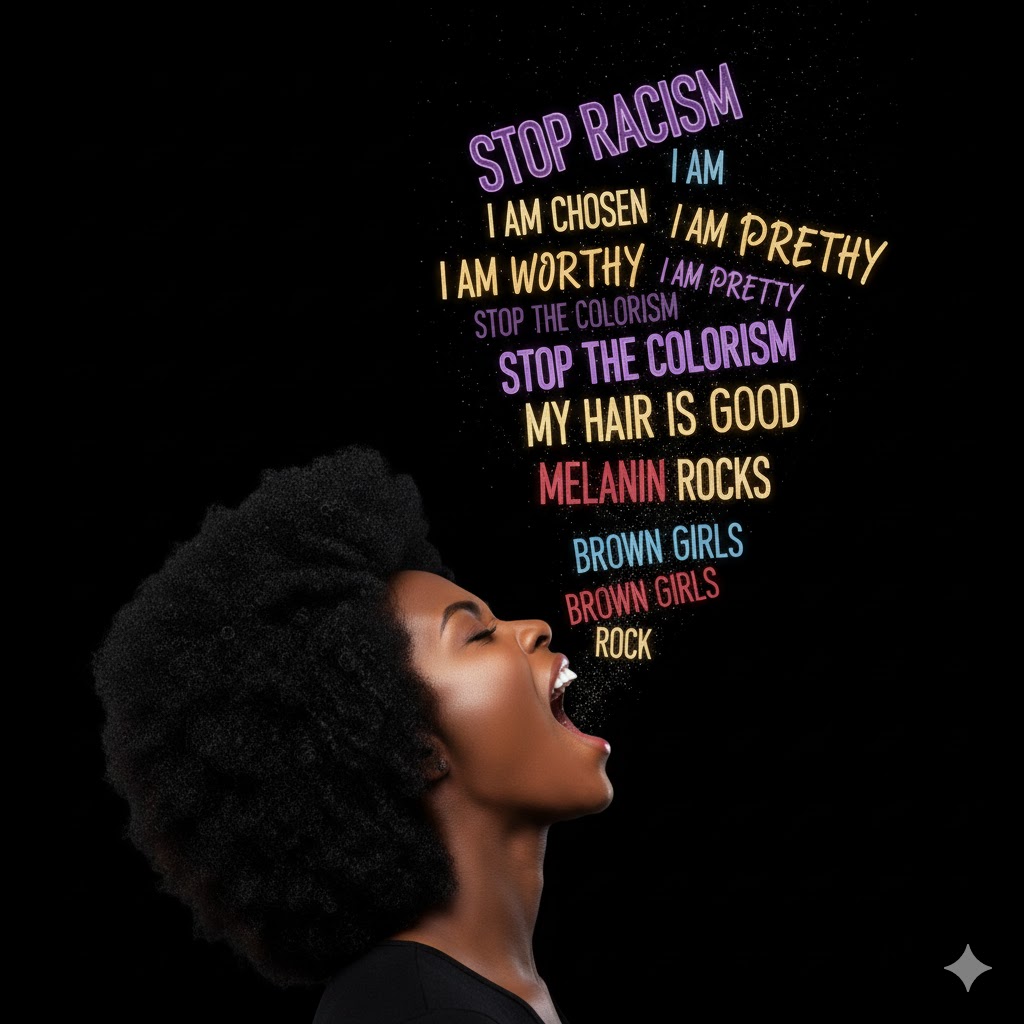
Girl Talk Series: You are worthy!

Black woman, this is written directly to you. You are worthy—not because the world says so, but because the Most High declared it long before you took your first breath. Your beauty, your brilliance, your Blackness, your soul, and your very existence are intentional. You are not an accident, not overlooked, and not forgotten. You are a chosen vessel, crafted with divine detail, shaped through generations of survival, and crowned with a spiritual inheritance that cannot be taken. Scripture tells us, “Thou art all fair, my love; there is no spot in thee” (Song of Solomon 4:7, KJV). Walk into that truth, sis. You are worthy.

Black women carry a weight that is both ancestral and divine. You have stood in the gaps when no one stood for you. You have been the backbone of families, communities, and movements. Yet even in your strength, you deserve softness, gentleness, and love. The Most High sees your labor, your tears, and your silent prayers. He calls you precious, for the Word says, “Since thou wast precious in my sight… I have loved thee” (Isaiah 43:4, KJV).

You are worthy because you belong to a chosen lineage. The Scriptures speak of a people who were scattered, oppressed, and afflicted, yet never abandoned by God. Many scholars and believers identify the descendants of the transatlantic slave trade within these prophetic narratives. That means you are not just a woman trying to survive—you are a daughter of the covenant, a living testament to prophecy, and a reminder that the Most High keeps His word. “For thou art an holy people unto the LORD thy God… above all people that are upon the face of the earth” (Deuteronomy 7:6, KJV).

Your Blackness is good. Your melanin is not a curse; it is a covering, a crown, and a reflection of divine craftsmanship. The world has tried to twist it into something lesser, but God Himself said that what He made is “very good.” From the deep richness of your skin to the coils of your hair, you are a masterpiece. You are the embodiment of resilience and radiance that continues to shine in environments designed to dim you.

Black woman, you are not defined by rejection. Though society often overlooks you, Scripture reminds you that you are chosen even when man rejects you. “The stone which the builders refused is become the head stone of the corner” (Psalm 118:22, KJV). You are foundational—nothing can be built without you. Your worth is not attached to acceptance from a world that fears your power. Your value is secured in the Most High.

The pain you’ve carried has not gone unnoticed. Your heartbreaks, disappointments, and seasons of isolation serve a greater purpose. The Father sometimes hides His best treasures before revealing them to the world. Even Christ Himself said, “Blessed are they that mourn: for they shall be comforted” (Matthew 5:4, KJV). You will be comforted. Your tears water the soil where your blessings will grow.

You are worthy of love—not the bare minimum, not the half-hearted, not the conditional—but divine, abundant, patient, and joyful love. The kind that mirrors God’s heart. The kind that cherishes you, protects you, and honors the queen you are. “Charity never faileth” (1 Corinthians 13:8, KJV). You deserve a love that does not fail.

You are not too strong, too loud, too emotional, or too much. You are everything the Most High intended you to be. Even your voice carries the weight of generations. Your passion is purpose. Your fire is your anointing. The world may try to shame your intensity, but God uses it to shake foundations and birth change.

Black woman, your mind is brilliant. Your thoughts carry wisdom, creativity, and strategy. The Most High equipped you not only with beauty but with intellect and discernment. Proverbs 31 describes a woman who “openeth her mouth with wisdom” (Proverbs 31:26, KJV). That is you—wise, insightful, and spiritually attuned.

Your body is sacred. Not an object, not a stereotype, not something to be exploited. It is a temple and a testimony. Every curve, every scar, every inch is part of your story. The world commodifies what God sanctified. Don’t let culture cheapen what heaven crowned.

Your spirit is powerful, stronger than iron chains and generational attacks. You are a warrior who has survived what others could not. When the enemy sought to destroy your ancestors, the Most High preserved your bloodline. You are walking evidence of divine protection. “No weapon that is formed against thee shall prosper” (Isaiah 54:17, KJV).

You are worthy of rest. You do not have to earn your existence. You do not have to be everyone’s savior. Even the Proverbs 31 woman rested in the strength of God, not her own. Peace is your birthright, not a reward for exhaustion.

Your voice matters. Your testimony matters. Your journey matters. The Most High has given you spiritual authority and influence. Whether you speak softly or boldly, heaven backs your words when they are aligned with His will.

Your future is blessed. Even if your past was heavy, your destiny is not determined by it. The Most High specializes in turning ashes into beauty. “He will give you beauty for ashes” (Isaiah 61:3, KJV). Your next season is one of transformation and elevation.

You are not alone. The Most High walks with you, covers you, and carries you. Even in silence, He is working. Even in darkness, He is present. “I will never leave thee, nor forsake thee” (Hebrews 13:5, KJV). His love is unwavering.

Your femininity is divine. It is both soft and strong. You carry the breath of God and the legacy of women who built nations. There is nothing ordinary about you. Your presence shifts atmospheres. Your prayers move mountains.

Your dreams are valid. Your gifts are needed. Your purpose is real. You were created with intention, and the kingdom suffers when you diminish your light. Arise, queen. Shine unapologetically. “Arise, shine; for thy light is come” (Isaiah 60:1, KJV).

Your lineage is royal. You descend from a people the Most High calls His own—a people who endured captivity yet remain spiritually undefeated. You are part of that victory. You are the daughter of survivors, prophets, and kings.

You are worthy of joy—overflowing, abundant, untouchable joy. Joy that the world cannot give and cannot steal. You deserve to smile without apology and laugh without restraint because the Most High delights in you.

You are chosen. You are loved. You are seen. You are protected. You are celebrated by heaven even when earth fails to honor you. The Most High has called you worthy and nothing can overturn His declaration.

Black woman, rise into your identity. You are worthy—not just of love but of honor, rest, joy, and divine purpose. The Most High chose you, and that makes you unstoppable.


References (KJV)

Deuteronomy 7:6; Isaiah 43:4; Song of Solomon 4:7; Psalm 118:22; Matthew 5:4; 1 Corinthians 13:8; Proverbs 31:26; Isaiah 54:17; Isaiah 61:3; Hebrews 13:5; Isaiah 60:1.

💗 Girl Talk Series: Shrinking in the Presence of People💗

To every daughter of God, every sister, every woman who has ever whispered instead of speaking, stepped back instead of stepping forward, or made herself small so someone else could feel big—this message is for you. You were never designed to shrink. You were never meant to fold yourself into tiny spaces so others could be comfortable. God did not breathe life into you for you to live hidden, muted, or diminished.

You are a light in this world, and light is meant to shine. You are a crown-bearing woman with God-given gifts, purpose, intelligence, beauty, and anointing. There is nothing accidental or excessive about the way He crafted you. Shrinking yourself does not serve God, and it does not serve the world. It only steals the brilliance He placed within you.

So stand tall, sis. Speak boldly. Live fully. Show up as your complete, authentic self—because the world needs the version of you that God created, not the smaller version fear created. You are worthy of being seen, valued, loved, and heard. Step into your fullness with confidence, because God has already approved you.

Do not shrink yourself. There is a quiet, dangerous habit many women develop—a habit of making themselves smaller so others can feel bigger. But you were never created to shrink. Jesus Himself said, “Ye are the light of the world. A city that is set on a hill cannot be hid” (Matthew 5:14, KJV). Your light was designed to stand out, not fade.

Shrinking often begins slowly. You silence parts of yourself little by little—your opinions, your laughter, your brilliance—because someone implied it was “too much.” But being too much for the wrong people simply means you haven’t yet found the people who can handle your fullness.

Black women, especially, are often conditioned to shrink. Society tells them to be quiet but strong, visible but not “too bold,” brilliant but not “intimidating.” These contradictions create emotional exhaustion. Yet God says otherwise: “I will praise thee; for I am fearfully and wonderfully made…” (Psalm 139:14, KJV). There is nothing accidental about your strength.

In relationships, shrinking may feel like the cost of keeping peace—avoiding conflict, tiptoeing around truths, or lowering your standards to keep someone near. But any love that demands your silence is not love; it is captivity. Godly love embraces the whole woman, not fragments of her.

Sometimes shrinking happens within friendships. You become the fixer, the listener, the emotional anchor—but never the one who receives support. You hide your pain so you won’t be a burden. But healthy friendships are reciprocal. Even Jesus had disciples who listened to Him, supported Him, and stood beside Him.

Family expectations can also pressure women to shrink. Many become the “strong daughter,” the “responsible one,” the “helper.” Though serving family can be honorable, shrinking yourself into roles that suffocate your own dreams is not God’s will. Stewardship includes your purpose, your peace, and your identity.

Work and academic spaces often punish confident, outspoken women. You may soften your intelligence or mute your leadership to avoid labels like “aggressive.” But excellence is not arrogance—it is worship. “Whatsoever ye do, do it heartily, as to the Lord” (Colossians 3:23, KJV). God is honored when you step boldly into your calling.

Psychologically, shrinking becomes a survival tactic. If you’ve lived in environments where your authenticity brought criticism, you learn to hide. Over time, hiding feels safer than being seen. But authenticity is healing. Authenticity is freedom.

Many women carry labels assigned in childhood: “bossy,” “loud,” “difficult,” “sassy.” These words were not truth; they were attempts to control a girl growing into power. God’s labels are different: anointed, beloved, chosen, set apart.

Every time you shrink, you limit what God can do through you. You limit the impact you could have, the people you could inspire, and the legacy you could leave. God placed greatness in you for a reason.

Confronting the fear of judgment is part of spiritual maturity. People’s opinions will always shift, but God’s opinion remains. “Be not afraid of their faces…” (Jeremiah 1:8, KJV). Your purpose cannot bow to intimidation.

Rejection is another fear that causes shrinking. Many women want to be liked so badly that they silence their true selves. But there is a difference between being liked and being valued. God values you—fully, completely, eternally.

Healing begins when you root your identity in Scripture instead of society. Society wants you small. God calls you royal. “A chosen generation, a royal priesthood…” (1 Peter 2:9, KJV). Royal women do not hide their crowns.

Reclaiming your voice is the first step. Speak your needs. Say “no” without guilt. Stand firm on your standards. Each act of courage restores a piece of your soul.

Reclaiming yourself also means honoring your gifts. If God made you talented, shine. If He gave you beauty, carry it gracefully. If He gave you wisdom, speak it boldly. Shrinking your gift is dishonoring the Giver.

Choose relationships—romantic, platonic, and professional—that celebrate your growth. People who resent your glow were never meant to walk with you. God will send those who admire your shine because they are secure in their own.

Remember that humility is not self-erasure. Humility is strength under control. Shrinking, however, is insecurity in disguise. God did not call you to invisibility. He called you to impact.

Your boldness is an act of obedience. When you walk in your full identity, you demonstrate what God can do through a woman who refuses to live beneath her calling. Your courage is your ministry.

God wants you to flourish. Your expansion honors Him. Your confidence honors Him. Your unapologetic presence honors Him. As Paul wrote, “Stir up the gift of God, which is in thee…” (2 Timothy 1:6, KJV). Do not let fear smother what God placed inside you.

So, sis, no more shrinking. No more shrinking your voice, your needs, your truth, your beauty, your intelligence, or your purpose. You are not too much—you are God-made, God-called, and God-approved. Step into every room like you belong there, because you do. The world needs your full light, not a dimmed version of it.


Biblical (KJV)

Matthew 5:14
Psalm 139:14
Colossians 3:23
Jeremiah 1:8
1 Peter 2:9
2 Timothy 1:6

References

Brown, B. (2012). Daring greatly: How the courage to be vulnerable transforms the way we live, love, parent, and lead. Gotham Books.
Hooks, B. (2000). All about love: New visions. William Morrow.
Myers, D. G. (2014). Psychology (11th ed.). Worth Publishers.
Wilson, S. (2021). The psychology of self-worth in women. Oxford Press.

Girl Talk Series: Don’t conform to world standards.

Hello, Ladies, the world is loud, demanding, and always shifting its standards. Every day, women are told who to be, what to look like, how to act, and which trends to chase. But the daughters of God are called to something higher—something eternal, unshakeable, and rooted in divine truth. This message is an invitation to step out of the noise and step into God’s purpose, identity, and beauty for your life.

God never designed His daughters to blend in with a broken world. You were created to shine, to walk in holiness, and to embrace a standard set by heaven—not culture. When the world says “fit in,” God says, “Be not conformed.” When the world says “follow your feelings,” God says, “Follow Me.” When the world says “do what everyone else is doing,” God says, “Be set apart.”

Many women feel pressure to look perfect, to act strong even when they’re tired, and to chase validation from people who don’t even know God’s plan for them. But your worth is not in your body shape, relationship status, follower count, or lifestyle. Your worth is in the One who made you, redeemed you, and calls you beloved.

God is raising up a generation of women who choose purpose over popularity, identity over insecurity, and holiness over hype. He desires women who will not measure themselves by worldly expectations but by spiritual truth, discipline, and grace. You are called to walk boldly in who God says you are, even when the world doesn’t understand your choices.

The world teaches comparison; God teaches contentment. While society encourages women to compete, Christ invites you to cultivate sisterhood, peace, and humility. The world promotes an image-driven life; God offers inner transformation that produces fruit, not pressure. You do not have to prove anything to anyone—God’s approval is enough.

When you choose God’s standards, you build your life on a foundation that will not collapse. Everything the world offers is temporary: trends fade, beauty shifts, people change, and applause dies. But the Word of God stands forever. When your identity comes from Scripture, not society, you gain stability that the world cannot take away.

There will always be temptations to compromise. Women today face pressures to dress a certain way, date like the world dates, talk like the world talks, or engage in lifestyles that dishonor God. But you do not belong to the world; you belong to Christ. And what belongs to Christ must reflect Christ.

Choosing God’s standards may feel lonely at times. You may lose friends, opportunities, or popularity. But anything you lose for God, He replaces with something better—peace, joy, wisdom, protection, and divine connections. God never calls you out of the world without calling you into purpose.

Walking in God’s standards means guarding your heart, mind, and spirit. It means evaluating what you watch, what you listen to, who you surround yourself with, and what you allow to influence you. You cannot pour purity into your life while consuming poison from the culture.

Beauty is not determined by worldly standards. True beauty flows from your spirit—your kindness, your character, your wisdom, and your fear of the Lord. Confidence rooted in Christ is more radiant than any makeup, fashion, or trend. Godly beauty never expires; it grows stronger with time.

Your femininity, your strength, and your grace are God-given tools. Womanhood is not defined by the world’s version of “sexual empowerment,” but by God’s design of holiness, gentleness, courage, and compassion. You do not have to imitate culture to walk in your divine femininity.

Living differently requires discipline—praying daily, reading Scripture, fasting, and seeking God’s instruction. While the world runs on impulse, the daughters of God move with intention. Your life becomes a testimony when your choices reflect God’s wisdom rather than worldly impulses.

Your relationships should also reflect God’s standards. Do not settle for worldly men who want your body but not your spirit. Seek a man who honors God, honors you, and values purity and purpose. The world normalizes trauma, toxicity, and drama, but God calls you to peace and covenant.

There is also power in modesty—not just in clothing, but in spirit. Modesty is self-respect. It means carrying yourself with dignity, not desperation. It means knowing your value so deeply that you don’t have to perform, expose, or compromise to feel loved.

Sisterhood is part of walking counterculturally. Instead of competing, comparing, or criticizing, encourage one another. Hold your sisters accountable. Pray together. The world hates unity among women, but God designed community to strengthen your walk.

When you refuse to conform, your life becomes a light to other women. You become proof that it is possible to honor God in a culture of confusion. People will notice your peace, your joy, your purity, your discipline, and your glow. That glow is the presence of God.

Some days will be hard. Your flesh will want comfort, compromise, and approval. But remember: transformation requires sacrifice. You are being shaped into the woman God intended, and that process is worth far more than the world’s applause.

You are called to rise above the chaos, above the lies, above the temporary pleasures. You are chosen, appointed, and set apart. Your purpose is too great, your calling too deep, and your value too high to live according to the world’s standards.

Walk boldly in God’s truth. Don’t shrink. Don’t dim your light. Don’t apologize for your faith. Let your life speak loudly that you belong to God—and that His standard is the only standard you will follow.


KJV Scripture References

  • Romans 12:2 – “And be not conformed to this world…”
  • 1 Peter 1:16 – “Be ye holy; for I am holy.”
  • Psalm 139:14 – “I will praise thee; for I am fearfully and wonderfully made…”
  • Proverbs 31:30 – “Favour is deceitful, and beauty is vain…”
  • 1 John 2:15 – “Love not the world, neither the things that are in the world.”
  • Galatians 1:10 – “Do I seek to please men? For if I yet pleased men, I should not be the servant of Christ.”
  • James 4:4 – “…whosoever therefore will be a friend of the world is the enemy of God.”
  • Matthew 5:14 – “Ye are the light of the world.”
  • Proverbs 4:23 – “Keep thy heart with all diligence…”
  • Joshua 1:9 – “Be strong and of a good courage…”