

Category Archives: genesis

Shocking Facts About Black People: Origins, Identity, and Divine Election.

Photo by Keegan Checks on Pexels.com

1. The Forgotten Truth of African Genesis

Many are shocked to learn that mainstream science affirms what ancient faith traditions long held: human life began in Africa. Anthropological evidence places the earliest Homo sapiens in East Africa over 200,000 years ago (Jablonski, 2023). This aligns with the biblical image of humanity emerging from earth rich in life.

“The Lord God formed man of the dust of the ground…” (Genesis 2:7, KJV)

African soil is deeply iron-rich and dark — mirroring the earliest human remains found.


2. Black People as the Original Human Blueprint

Genetic studies show African populations possess the greatest genetic diversity on earth, marking them as the root population, not a branch (Tishkoff et al., 2009).
This means every other group emerges after — a biological echo of ancient origin.


3. The Bible’s Often-Erased African Presence

Scripture names African peoples repeatedly — Cush, Mizraim, Ethiopia, Sheba, Egypt. These are not background nations; they shaped civilization, science, and scripture itself.

“Princes shall come out of Egypt; Ethiopia shall soon stretch out her hands unto God.” (Psalm 68:31, KJV)

This was a prophecy of future global spiritual awakening.


4. Israel’s Ancient Proximity to Africa

Israel is not a European land. It sits between Africa and Arabia — ancient populations intermixed, traded, intermarried, and shared culture and language.

The Bible notes Moses married an Ethiopian woman (Numbers 12:1, KJV), and when criticized, God defended the union.


5. Chosen People: A Sacred Controversy

Many Black scholars argue the biblical Hebrews were Afro-Asiatic people, not European, and that transatlantic slaves fulfill prophetic curses of Deuteronomy 28.
Scripturally, chosen-ness is covenantal, not racial — yet history echoes the text.

“Ye shall be a chosen generation…” (1 Peter 2:9, KJV)


6. Deuteronomy 28 and the Slave Prophecy Argument

Enslavement, scattering, identity loss, and ships (Deuteronomy 28:68) have led many to connect biblical Israel’s trials with African captivity in the Americas.
This interpretation is contested in academics but embraced by many theologians of African descent.


7. Enslavement Was Foretold — But Not the End

Even in prophetic judgement, God promises restoration:

“I will gather them out of all countries… and I will cause them to dwell safely.”
(Jeremiah 32:37, KJV)

Spiritual liberation follows physical oppression — a theme central to Black history.


8. Ancient African Empires Were Advanced and Divine

Before slavery, Africa produced empires, libraries, mathematics, astronomy, luxury trade, and medicine. Egypt, Kush, Mali, Songhai, Axum — civilizations with spiritual and scholarly brilliance.


9. Slavery Was Systemic — Not Random

The transatlantic slave trade strategically targeted literate, skilled African societies. Many enslaved Africans were nobles, priests, scholars, and warriors — not “savages.”


10. Black Presence in Jesus’ Lineage

Matthew names Tamar, Rahab, Ruth, Bathsheba — all linked to African or Afro-Asiatic lineages. Ethiopia, Egypt, and Israel are intertwined throughout Christ’s narrative.
Jesus Himself hid in Egypt (Matthew 2:13), a sign of cultural likeness.


11. The First Christian Communities Were African

Long before Europe embraced Christianity, Africa had churches, bishops, and monastic systems — in Egypt, Nubia, Ethiopia, and Carthage.


12. Skin as a Symbol of Sacred Design

Melanin is protective, conductive, and biochemically powerful — defending against radiation and disease. It is a gift of climate and creation, not a curse.

“…fearfully and wonderfully made…” (Psalm 139:14, KJV)


13. Black Civilizations Reached the Americas Before Columbus (debated but argued)

Mansa Musa’s Mali empire and ancient Nubian navigators are theorized by scholars to have reached the Americas — challenging Eurocentric discovery narratives.


14. Colorism Was Engineered as a Weapon

Colonial systems made Blackness a burden by law. Identity was psychologically assaulted to fracture power.
Divide-and-rule remains a tool of oppression.


15. Black Genius Has Been Systematically Erased

From inventors to philosophers, countless Black pioneers were hidden or their achievements stolen — including medical, military, and technological innovations.


16. Black Spiritual Memory is Ancient

Rhythm, prophecy, communal worship, and oral tradition trace back to ancient African priesthoods and prophetic orders — echoes of biblical cultures.


17. African Diaspora Rising

Across the world — America, Caribbean, Europe, Africa — Black consciousness is awakening. The long sleep is ending.

“Awake, awake; put on thy strength, O Zion…” (Isaiah 52:1, KJV)


18. Prophecy of Restoration & Return

Biblically, God promises justice for oppressed peoples globally.

“I will restore health unto thee…” (Jeremiah 30:17, KJV)

Many Black theologians view this as both spiritual and historical.


19. Knowledge of Self Was the Greatest Theft

Chains were physical — but ignorance was the real shackle.
Re-education and spiritual awakening are liberation.


20. The Future is Black — and Global

Not exclusionary — but inevitable.
African nations are rising in population, economics, cultural influence, and spiritual voice.
God has a pattern: those despised become leaders.

“The stone which the builders rejected…” (Psalm 118:22, KJV)

Black destiny is not merely survival —
it is restoration and ascension.
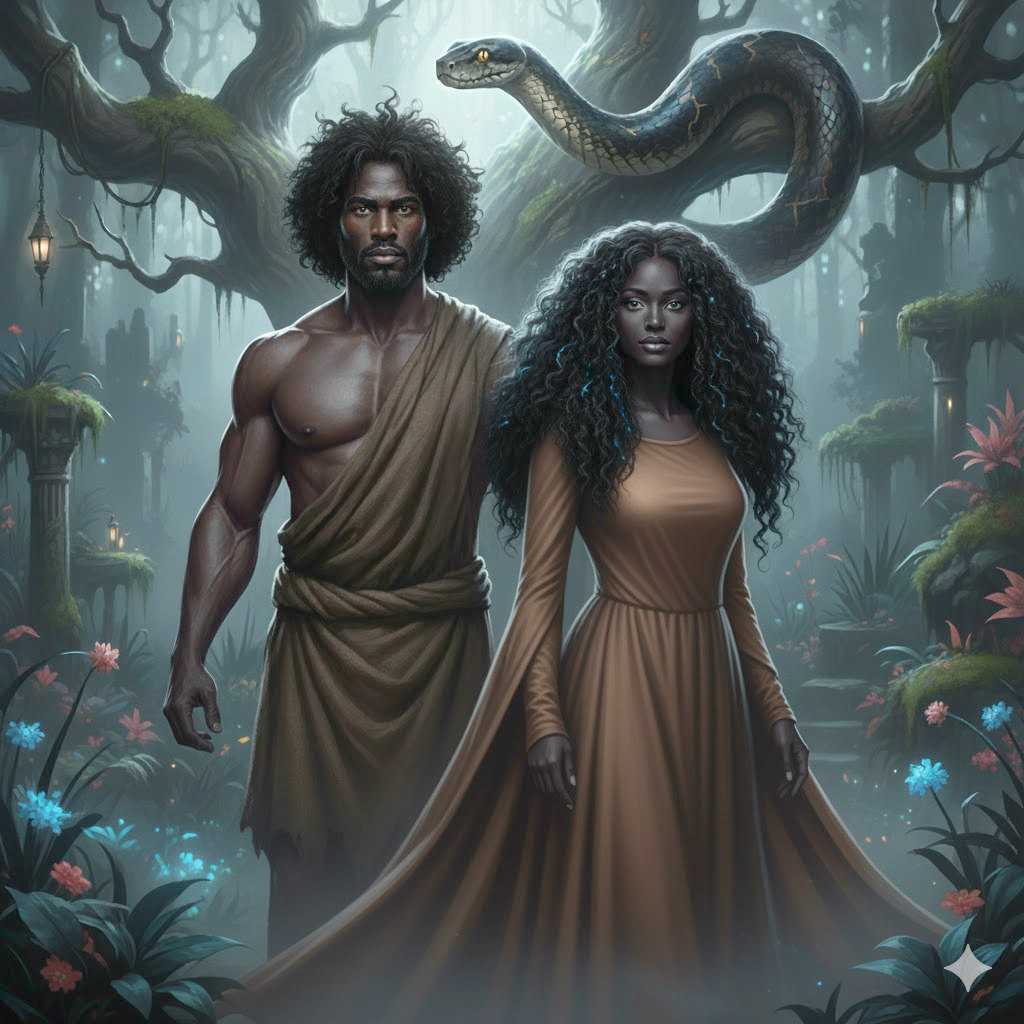
The Bible Series: Adam & Eve

In the beginning, the Most High created the heavens and the earth, forming man from the dust and breathing into him the breath of life. Adam was created in the image of God, molded from the rich soil of the earth (Genesis 2:7, KJV). The Hebrew word for “Adam” means ruddy or of the ground, symbolizing the deep brown hue of the fertile soil. This suggests that Adam and Eve were people of color, their skin reflecting the richness of the earth from which they were formed. Their beauty was natural and divine, representing the perfection of humanity before sin entered the world.

Eve, the first woman, was taken from Adam’s rib—a profound act showing unity, love, and equality. She was not made from his head to rule over him, nor from his feet to be trampled by him, but from his side to walk with him (Genesis 2:21–22, KJV). Together, they embodied harmony, holiness, and purity in the Garden of Eden, a place untouched by corruption. The Most High gave them dominion over creation and one simple command—to abstain from eating from the Tree of the Knowledge of Good and Evil (Genesis 2:16–17, KJV).

The serpent, more subtle than any beast of the field, entered the garden with deception in his heart. This serpent, influenced by Satan, twisted the Most High’s words, planting doubt and rebellion in Eve’s mind. He said, “Ye shall not surely die: For God doth know that in the day ye eat thereof, then your eyes shall be opened” (Genesis 3:4–5, KJV). This manipulation was the seed of sin—the desire to know more than what God allowed, the craving for power and independence from divine authority.

Eve, captivated by what she saw, took the fruit and ate it, then gave it to Adam. The sin was not merely eating forbidden fruit but disobedience—the rejection of divine wisdom for self-gratification. Their eyes were opened, but instead of enlightenment, they found shame. They realized their nakedness and tried to cover themselves with fig leaves, symbolizing the birth of human guilt and fear.

Sin entered the world that day, not through the act itself, but through the spirit of rebellion against the Most High. Humanity was no longer innocent. What was once pure became tainted by pride, lust, and self-will. Their decision shifted the course of history, separating humanity from God and introducing death, pain, and corruption into the world.

The trees in the garden carried deep symbolism. In ancient Hebraic understanding, trees often represented elders or sources of knowledge. To eat from a tree was to partake in wisdom or counsel. Adam and Eve’s choice to eat from the forbidden tree meant seeking counsel apart from the Most High. They exchanged divine guidance for worldly wisdom—a mistake humanity continues to repeat.

The serpent’s deception exposed his true nature as the accuser and destroyer. His goal was to corrupt the image of God within man by appealing to desire and pride. He presented sin as enlightenment and rebellion as freedom. But true freedom comes only through obedience to the Creator, not rebellion against Him.

Adam and Eve’s fall did not only affect them but all of creation. Romans 5:12 (KJV) explains, “Wherefore, as by one man sin entered into the world, and death by sin; and so death passed upon all men.” This marked the beginning of a fallen world where toil, sorrow, and mortality replaced peace and eternal life.

Before the fall, Adam and Eve enjoyed direct fellowship with the Most High. Afterward, they hid among the trees, afraid to face Him. This separation reflected the spiritual death that accompanied their physical existence. Humanity’s bond with God was broken, requiring redemption that would only be fulfilled through Yahusha HaMashiach (Jesus Christ).

Even in judgment, the Most High showed mercy. He clothed them with coats of skins (Genesis 3:21, KJV), foreshadowing the sacrificial system and the ultimate covering through the Messiah’s blood. Though they were cast out of Eden, His love and plan for restoration never ceased.

The color of Adam and Eve, formed from the dust, connects deeply to Africa—the cradle of civilization. The fertile brown and red soils of the East are a reflection of the divine artistry that shaped the first humans. Science and scripture align in this, confirming that humanity’s origins are rooted in a melanated people from the rich lands of the East.

The sin of Adam and Eve also represents the human struggle between spirit and flesh. Their story is not simply about fruit but about the nature of temptation—how desire can cloud obedience, and how curiosity can lead to destruction. The devil still whispers the same lie today: that fulfillment can be found apart from the Most High.

Eve’s vulnerability was not weakness; it was human emotion exploited by deception. Adam’s failure was not ignorance; it was willful disobedience. Together, they symbolize the dual nature of humanity—the intellect and the emotion—both capable of leading astray without divine order.

The Most High’s question, “Where art thou?” (Genesis 3:9, KJV), was not one of location but relationship. Humanity had drifted from its Creator. That question still echoes through time, calling each generation back to repentance and restoration.

From their disobedience came pain in childbirth, toil in labor, and conflict between good and evil. Yet from their lineage came redemption. Eve was called the mother of all living, and through her seed came the promise of salvation. The Most High declared that the seed of the woman would bruise the serpent’s head (Genesis 3:15, KJV), a prophecy fulfilled in Yahusha’s victory over sin and death.

The devil’s act in Eden was the beginning of his war against mankind, but the Most High’s love has always been greater than the serpent’s lies. Though humanity fell, grace arose. The story of Adam and Eve is a mirror to our own lives—every choice we make is a step toward obedience or rebellion.

Their sin introduced death, but it also introduced grace. Through their fall, the Most High revealed His mercy, teaching that even when we fail, He provides a way back. The curse became a path to redemption, and the garden became a memory of what will one day be restored.

Adam and Eve’s story teaches that sin always promises elevation but delivers shame. The devil’s lies have not changed—they simply wear modern faces. But the same God who clothed Adam and Eve still covers us today with His righteousness.

In the end, Adam and Eve’s journey is humanity’s story: created in divine image, tested by temptation, fallen by choice, yet redeemed by grace. The Most High looked beyond their sin and saw their potential for repentance. Through their story, we learn that though sin changed humanity, God’s love never changed. He still calls us to return, to walk in righteousness, and to live by the Spirit rather than the flesh. For in Him alone is true life restored.