Category Archives: dna

The Plantation Palette: How Colorism Was Painted Into Our DNA.

Colorism is not simply a social construct—it is a historical wound written into the subconscious of the African diaspora. It is the shadow of slavery that lingers in how we perceive beauty, worth, and belonging. The plantation, once a site of brutal labor and exploitation, became the first workshop where shades of brown were turned into symbols of hierarchy. Within its cruel order, skin color was not just biology—it became social destiny.

The origins of colorism in the Americas lie in the cruel logic of white supremacy. During slavery, the European masters created a false dichotomy between “house slaves” and “field slaves.” Those with lighter complexions, often the offspring of rape and coercion by white men, were assigned domestic work and treated marginally better. Darker-skinned Africans, whose features reflected their full heritage, were confined to the fields. This system cultivated resentment, insecurity, and self-hatred—ingredients that would harden into generational trauma.

On the plantation, color became code. It signified proximity to whiteness and, therefore, proximity to privilege. The masters engineered this system deliberately, knowing that internal division among the enslaved would ensure control. This was psychological warfare disguised as social order. What began as survival-based favoritism evolved into a culture of comparative value, one that still haunts descendants today.

This plantation palette—the gradation of complexion from light to dark—became the foundation of a pigment hierarchy that endured long after slavery’s abolition. Freedmen’s societies, post-slavery fraternities, and even churches sometimes practiced exclusion based on complexion. The “paper bag test,” requiring one’s skin to be lighter than a brown paper bag, institutionalized colorism within Black spaces. The oppressor’s palette became the people’s poison.

In a cruel twist of history, this bias was internalized. Enslaved and freed Black communities began to mirror the hierarchies imposed upon them. The lighter the skin, the closer one appeared to the master class. The darker the tone, the further one was deemed from beauty, intelligence, and refinement. It was not merely prejudice—it was the plantation’s psychological residue replicated in every generation.

Science and pseudo-genetics in the 19th and 20th centuries gave colorism false legitimacy. Phrenologists and eugenicists claimed that lighter skin signified evolutionary advancement, while darker tones represented savagery. These racist pseudosciences seeped into textbooks, media, and art. Even after slavery, the plantation’s palette painted the world’s perception of Blackness in gradients of acceptance and rejection.

The entertainment industry perpetuated this pigment hierarchy. Early Hollywood refused to cast dark-skinned Black actors in leading roles, preferring “passing” or lighter-toned performers who could fit Eurocentric ideals. In music, Motown executives polished their artists’ images to appeal to white audiences, often selecting those whose skin was “marketable.” The plantation’s palette had evolved from whip to camera, from overseer to director’s chair.

In beauty culture, skin bleaching became a global epidemic. From the Caribbean to Africa to South Asia, the false promise of lighter skin as a ticket to success spread like a virus. Colonialism exported colorism as cultural infection, linking “fairness” to purity and status. Advertisements equating lightness with virtue were not new—they were modern echoes of the plantation’s visual code.

Psychologically, colorism is a form of inherited trauma. Epigenetic studies suggest that stress and oppression can influence gene expression across generations (Yehuda & Bierer, 2009). While color preference itself is cultural, the social stress tied to darker skin—exclusion, discrimination, invisibility—can shape self-perception at a cellular level. Thus, colorism is not merely learned; it is embodied.

The plantation painted identity with a cruel precision: lightness equaled potential, darkness equaled labor. This message infiltrated the bloodstream of the diaspora, turning self-recognition into self-negotiation. Every time a child is told they are “too dark” or “too light,” the plantation speaks again. Its brushstrokes still stain the canvas of our collective consciousness.

However, the story of the plantation palette is also one of resistance. Black communities have long challenged these hierarchies through cultural affirmation. The Harlem Renaissance, the Negritude Movement, and the Black Arts Movement reclaimed the beauty of darkness as divine. Writers like Langston Hughes and Aimé Césaire shattered the myth of inferiority by celebrating melanin as majesty.

Spiritually, the lie of colorism collapses under divine truth. Scripture declares, “I will praise thee; for I am fearfully and wonderfully made” (Psalm 139:14, KJV). The Creator did not craft shades of humanity to rank them, but to reflect His boundless creativity. Melanin is not a mistake—it is a masterpiece. To reclaim our beauty is to reclaim the truth of divine intention.

Sociologically, colorism continues to influence education, employment, and dating patterns. Studies show that lighter-skinned individuals often receive higher income, lighter sentencing, and more favorable treatment in professional and romantic contexts (Hochschild & Weaver, 2007). The plantation may be gone, but its paint still dries unevenly across modern institutions.

Media representation remains a battleground. When dark-skinned women like Lupita Nyong’o, Viola Davis, and Danai Gurira rise to prominence, they challenge centuries of aesthetic bias. Their visibility restores balance to the narrative, reminding the world that beauty does not fade with depth—it deepens. The plantation palette can be repainted when darker hues are centered, celebrated, and seen.

Education is one of the most powerful solvents against colorism. Teaching young people the origins of complexion bias empowers them to unlearn it. When students understand that colorism was manufactured to divide, they begin to heal. Knowledge restores agency; truth restores dignity. The palette can be reclaimed through re-education.

In the realm of relationships, colorism continues to distort love. Preferences shaped by colonial beauty ideals still define desirability in the modern age. Healing requires that both men and women confront these biases honestly—understanding that love conditioned by shade is not love at all, but indoctrination. Liberation begins with reprogramming affection to mirror authenticity.

Culturally, art has always been the great redeemer. Black painters, photographers, and filmmakers are repainting the narrative, giving dark skin the glory it was denied. Through rich tones, shadows, and light, they rewrite the visual language of worth. Every portrait of a dark-skinned figure bathed in golden light is an act of rebellion against the plantation palette.

Economically, industries that profit from color bias must be held accountable. The global skin-lightening market, projected to surpass $12 billion, thrives on the insecurity of colonized beauty ideals (Statista, 2023). Dismantling colorism means dismantling the profit systems built upon it. Freedom is not just emotional—it is financial.

Ultimately, the plantation palette reminds us that identity has been painted, but it can also be repainted. Each generation holds the brush. When we celebrate every shade of brown as sacred, we undo the work of centuries. Our skin becomes testimony, not tragedy. Our reflection becomes revolution.

Colorism was painted into our DNA through trauma, but through truth, it can be washed clean. The time has come to reclaim our palette—to turn shame into pride, division into unity, and pain into art. What was once used to divide us will now define us as divine. We are not products of the plantation; we are the pigments of paradise, unchained and unashamed.

References

  • The Holy Bible, King James Version (Psalm 139:14).
  • Hochschild, J. L., & Weaver, V. (2007). The Skin Color Paradox and the American Racial Order. Social Forces, 86(2), 643–670.
  • Yehuda, R., & Bierer, L. M. (2009). The Relevance of Epigenetics to PTSD: Implications for the DSM-V. Journal of Traumatic Stress, 22(5), 427–434.
  • hooks, b. (1992). Black Looks: Race and Representation. South End Press.
  • Russell, K., Wilson, M., & Hall, R. (1992). The Color Complex: The Politics of Skin Color Among African Americans. Doubleday.
  • Morrison, T. (1992). Playing in the Dark: Whiteness and the Literary Imagination. Vintage.
  • Tate, S. (2009). Black Beauty: Aesthetics, Stylization, Politics. Routledge.
  • Craig, M. L. (2002). Ain’t I a Beauty Queen?: Black Women, Beauty, and the Politics of Race. Oxford University Press.
  • Hall, S. (1997). Representation: Cultural Representations and Signifying Practices. Sage.
  • Davis, A. (1981). Women, Race, & Class. Random House.

E1B1A: The DNA of Greatness — Tracing the Seed of Israel.

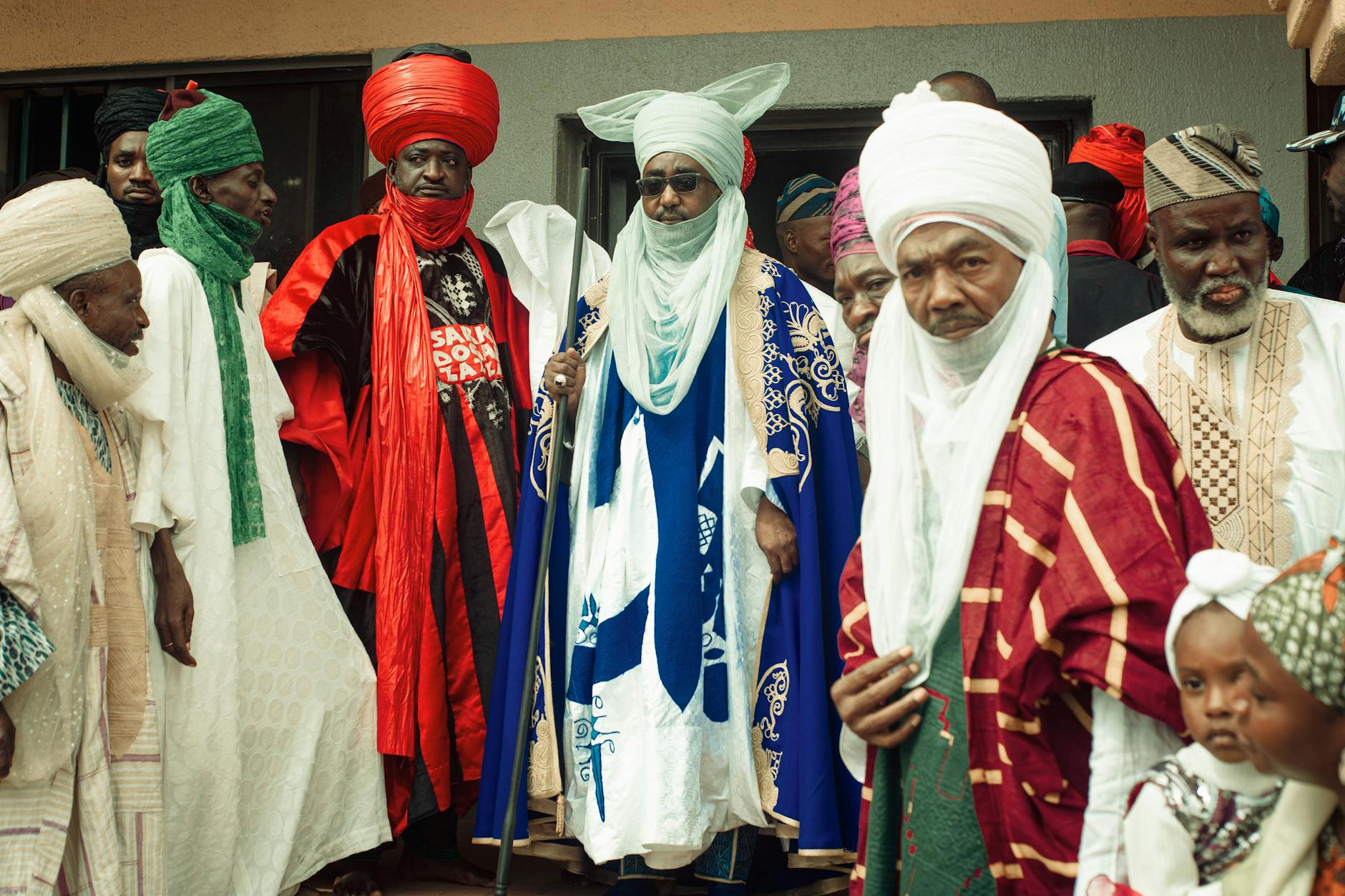
Photo by Muhammad-Taha Ibrahim on Pexels.com

The Y-DNA haplogroup E1B1A is one of the most significant genetic markers in the study of human ancestry, particularly among African populations. Its prevalence in sub-Saharan Africa, especially among West and Central Africans, points to deep historical roots that connect modern descendants to ancient African civilizations. Understanding E1B1A provides insight into the lineage often associated with the biblical Seed of Israel.

Genetic studies indicate that E1B1A likely originated in East Africa and spread westward thousands of years ago. This haplogroup is notably dominant among people of the African diaspora, particularly those whose ancestors were forcibly brought to the Americas during the transatlantic slave trade (Henn et al., 2008). Its prevalence underscores the continuity of African ancestry across continents and centuries.

From a biblical perspective, the Seed of Israel carries promises of covenant, blessing, and nationhood. Scriptures emphasize that God’s covenantal blessings were passed down through the lineages of Abraham, Isaac, and Jacob (Genesis 17:7). Genetic markers like E1B1A offer a modern framework for tracing this lineage in historical and contemporary populations.

The dispersion of E1B1A aligns with historical accounts of migration and conquest. African kingdoms such as Ghana, Mali, and Songhai housed populations with high frequencies of this haplogroup. Their social, economic, and cultural achievements demonstrate a continuity of intelligence, leadership, and resilience—qualities associated biblically with the Israelites (Deuteronomy 28:1–14).

The biblical narrative situates the Israelites as a chosen people, set apart for divine purpose. The connection of E1B1A to African populations reinforces the argument that the original Israelites were of African descent. Psalm 105:6–11 recounts God’s covenant with Abraham and his seed, highlighting the enduring lineage that extends into modern African-descended populations (KJV).

Historically, the transatlantic slave trade severed cultural and genealogical continuity, obscuring the direct lineage of African descendants in the Americas. Despite this disruption, genetic markers like E1B1A provide scientific evidence of enduring heritage and ancestral connection, affirming the biblical promise of the preservation of Israel’s seed (Jeremiah 31:35–37).

Anthropological studies of E1B1A reveal patterns of societal structure, migration, and adaptation. Populations with this haplogroup historically established powerful kingdoms, engaged in sophisticated trade networks, and developed rich cultural traditions. These accomplishments reflect the divine favor and resilience described in Deuteronomy 28:12–13.

The association between E1B1A and leadership traits is notable. Historically, men with this lineage often held positions of authority, governance, and military command. This aligns with the biblical depiction of Israelite men as leaders, judges, and warriors chosen to uphold God’s law and protect their communities (Joshua 1:6–9).

E1B1A also connects to spiritual heritage. The Israelites were entrusted with God’s laws, ethical codes, and covenantal responsibilities. The resilience of African-descended populations, despite centuries of oppression, slavery, and displacement, mirrors the biblical narrative of enduring faith and divine preservation (Psalm 105:8).

Culturally, E1B1A populations have preserved elements of African identity, including language, music, and communal structures, even across diasporic contexts. These cultural continuities serve as living testimony to the endurance of the Seed of Israel, reflecting values emphasized in biblical instruction (Exodus 12:14).

Genetics and scripture intersect in demonstrating continuity and purpose. While DNA provides biological evidence, the Bible provides spiritual and moral context, framing the lineage as not only preserved but chosen and blessed by God (Genesis 28:13–15). Together, these perspectives illuminate the depth of African heritage.

The study of E1B1A challenges Eurocentric historical narratives that have often obscured African achievements. Recognizing the genetic, cultural, and spiritual legacies of E1B1A populations restores historical truth and affirms the presence of the Israelites in Africa (Deuteronomy 28:68).

The distribution of E1B1A among diasporic populations underscores the persistence of identity despite adversity. African-descended people in the Americas, Caribbean, and Europe carry markers of ancient lineage, testifying to the survival of Israel’s seed against historical forces of erasure (Isaiah 49:15–16).

Spiritual reflection on E1B1A emphasizes responsibility and calling. Those who carry this lineage are encouraged to embody principles of justice, wisdom, and leadership, reflecting the covenantal blessings promised to Israel (Proverbs 4:7). The DNA serves not merely as inheritance but as a blueprint for purpose.

Education and awareness of genetic heritage foster empowerment. Understanding the connection between E1B1A and biblical Israel allows African-descended populations to reclaim narratives of dignity, history, and destiny, reinforcing self-worth and communal pride (Jeremiah 33:3).

Modern research on E1B1A includes advanced genetic mapping and population studies. These studies reveal migration patterns, admixture, and historical continuity, providing scientific validation for long-held ancestral knowledge and oral traditions (Henn et al., 2012).

The resilience of E1B1A populations in the face of slavery, colonialism, and systemic oppression demonstrates a living manifestation of biblical promises. Their endurance exemplifies faithfulness and divine protection, echoing Deuteronomy 31:6.

Understanding E1B1A also highlights the intersection of biology, history, and theology. DNA does not exist in isolation—it interacts with culture, belief, and community. Recognizing this interplay enriches both scientific and spiritual understanding of human identity.

Mentorship and intergenerational transmission of knowledge are vital. Passing down awareness of lineage, cultural heritage, and spiritual responsibility ensures that the lessons embedded in E1B1A continue to guide descendants of Israel (Proverbs 22:6).

In conclusion, E1B1A is more than a genetic marker; it is a testament to endurance, heritage, and divine purpose. Tracing this lineage illuminates the biblical Seed of Israel, connecting modern African-descended populations to their ancestral covenant. Recognizing and embracing this inheritance empowers individuals and communities to embody the greatness, resilience, and responsibility embedded in their DNA.


References

Henn, B. M., Botigué, L. R., Gravel, S., Wang, W., Brisbin, A., Byrnes, J. K., … & Bustamante, C. D. (2012). Genomic ancestry of North Africans supports back-to-Africa migrations. PLOS Genetics, 8(1), e1002397. https://doi.org/10.1371/journal.pgen.1002397

Henn, B. M., Cavalli-Sforza, L. L., & Feldman, M. W. (2008). The great human expansion. Proceedings of the National Academy of Sciences, 105(36), 13471–13476. https://doi.org/10.1073/pnas.0805312105

Hunter, M. (2007). The persistent problem of colorism: Skin tone, status, and inequality. Sociology Compass, 1(1), 237–254. https://doi.org/10.1111/j.1751-9020.2007.00014.x

The Holy Bible, King James Version. (n.d.). Genesis 17:7; 28:13–15; Exodus 12:14; Deuteronomy 28:1–14, 28:68, 31:6; Psalm 105:6–11; Isaiah 49:15–16; Proverbs 4:7; 22:6. King James Bible Online. https://www.kingjamesbibleonline.org

The Origins of White Skin

The study of human pigmentation, particularly the origins of white skin, intertwines anthropology, genetics, and evolutionary biology. Understanding how and why skin color diversified requires an exploration of migration patterns, environmental adaptation, and genetic mutations that shaped the physical diversity among humankind. This essay will explore the scientific, historical, and sociocultural dimensions of white skin evolution through an integrative scholarly lens.

The terms “white” and “black” are social and symbolic designations, not literal reflections of human pigmentation. Scientifically and anthropologically, all humans fall along a spectrum of brown skin tones determined by melanin concentration, hemoglobin visibility, and other pigmentary factors.

In biological terms, skin color arises from three main pigments: melanin, carotene, and hemoglobin. Melanin, produced by melanocytes, gives skin its brown to dark brown shades. Carotene adds yellow or golden undertones, while hemoglobin contributes pink to red hues visible through lighter skin. Therefore, so-called “white” people actually possess light beige or pinkish skin tones, influenced by low melanin levels and higher visibility of underlying blood vessels (Jablonski, 2021).

Similarly, “black” skin is not black in the literal sense but represents varying concentrations of eumelanin that create rich brown tones ranging from bronze to deep espresso. Under sunlight, darker skin often reveals golden, red, or blue undertones rather than pure blackness. This continuous gradation underscores that human pigmentation exists along a chromatic continuum, not binary categories.

The labels white and black originated during European colonial expansion to reinforce social hierarchies, not biological realities. In the 17th and 18th centuries, racial theorists used color as a metaphor for moral and intellectual worth—“white” symbolizing purity and civilization, and “black” denoting savagery and sin (Smedley & Smedley, 2011). These associations, rooted in ideology rather than anatomy, shaped enduring racial constructs that persist today.

Modern genetics and anthropology confirm that all humans share over 99.9% identical DNA, and differences in skin color are governed by a handful of genes (Norton et al., 2007). Thus, color terminology reflects cultural identity and historical power dynamics more than any genuine biological division.

In truth, all people are various shades of brown—from the lightest ivory to the deepest mahogany—demonstrating our shared origin and diversity within unity. As the biblical verse reminds, “And hath made of one blood all nations of men” (Acts 17:26, KJV). Science and scripture converge here: humanity’s distinctions are aesthetic and adaptive, not hierarchical.

Early human populations originated in sub-Saharan Africa, where high ultraviolet radiation levels favored dark skin pigmentation rich in melanin. Melanin serves as a natural barrier protecting the skin from UV-induced damage and degradation of folate, an essential nutrient for reproductive success (Jablonski & Chaplin, 2010). Thus, the earliest Homo sapiens possessed dark skin as a biological adaptation to equatorial sunlight.

As human groups migrated northward out of Africa roughly 60,000 years ago, they encountered regions with lower UV exposure. In these environments, dark pigmentation became less advantageous. To maintain adequate vitamin D synthesis—a process reliant on UV-B radiation—lighter skin gradually evolved through natural selection (Norton et al., 2007).

One of the most significant genetic factors in light skin evolution is the SLC24A5 gene. A single nucleotide change in this gene (Ala111Thr) is strongly associated with light pigmentation among Europeans (Lamason et al., 2005). This mutation, which likely arose around 8,000 years ago, spread rapidly due to selective pressures in northern latitudes where sunlight was weaker.

Another key gene, SLC45A2, also contributes to depigmentation in European populations (Stokowski et al., 2007). Together with TYR and OCA2 genes, these variants represent a cluster of evolutionary adaptations that reshaped melanin production, producing the light skin phenotypes common in Europe.

The emergence of white skin was not instantaneous but gradual. Genetic modeling suggests multiple independent depigmentation events occurred among non-African populations. East Asians, for example, developed lighter skin through different genetic pathways (notably the DCT and MFSD12 genes), demonstrating convergent evolution (Yamaguchi et al., 2018).

Archaeogenetic evidence indicates that early Europeans, such as the Mesolithic hunter-gatherers of Western Europe, still had dark skin and blue eyes (Olalde et al., 2014). It was only during the Neolithic agricultural revolution—when farming spread from the Near East—that genes for lighter skin became dominant in Europe.

This agricultural transition likely accelerated depigmentation. Diets deficient in vitamin D due to reduced consumption of animal products made lighter skin advantageous for efficient synthesis of the vitamin from limited sunlight (Hofmanová et al., 2016). Thus, whiteness as a phenotype arose through both environmental and dietary adaptation.

Cultural evolution soon intersected with biological change. As populations developed hierarchies, skin color became symbolically charged—first as a marker of regional origin, later as a social construct of superiority and purity (Smedley & Smedley, 2011). The scientific origins of white skin were therefore overlaid by ideological meanings during the rise of European colonialism.

European societies, beginning in the Renaissance and Enlightenment periods, reinterpreted physical difference through racial taxonomy. Thinkers like Linnaeus and Blumenbach used skin color to classify humanity, cementing whiteness as the “norm” of civilization (Eze, 1997). These frameworks distorted evolutionary diversity into hierarchical racial structures.

The biological reality, however, undermines these racialized assumptions. Modern genomic data reveal that skin color variation represents a small portion of overall genetic diversity among humans—roughly 0.1% of total DNA difference (Lewontin, 1972). Thus, “race” is more a sociopolitical invention than a biologically discrete category.

The theological narrative also influenced perceptions of white skin. In medieval Europe, depictions of Adam and Eve as white reinforced Eurocentric conceptions of divine image-bearing, contrasting with African and Semitic biblical origins (Goldenberg, 2003). This ideological whiteness would later justify slavery, colonialism, and systemic inequality.

Anthropologically, lighter skin in Eurasia should be seen not as superiority but as regional adaptation. It parallels the Inuit’s dietary vitamin D compensation or the dark skin retention of equatorial peoples despite varying UV exposure—each reflecting environmental equilibrium rather than hierarchy (Jablonski, 2021).

The adaptation process reveals the remarkable plasticity of the human genome. Mutations in pigmentation genes often occurred within a few thousand years—a rapid pace in evolutionary terms—demonstrating the strong influence of climate and diet on phenotype (Liu et al., 2015).

Moreover, studies of ancient DNA reveal that pigmentation genes continued evolving even in historical times. For example, the allele for light eyes and skin (HERC2/OCA2) rose in frequency in Europe during the Bronze Age (Mathieson et al., 2015). This continuous selection underscores skin color as a dynamic trait rather than a fixed racial essence.

Socially, the valorization of whiteness became a cultural invention with far-reaching consequences. Colonial narratives equated light skin with intelligence, civility, and divine favor—distortions that persist in global colorism today (Hunter, 2013). The origin of white skin, therefore, cannot be divorced from the ideologies it later inspired.

Biomedically, understanding the genetics of pigmentation informs research into health disparities. Lighter skin correlates with higher risks of UV-related cancers and folate deficiency, while darker skin populations in northern latitudes face vitamin D deficiencies (Nina et al., 2019). Both extremes highlight the adaptive trade-offs of human evolution.

The story of white skin also illustrates humanity’s shared ancestry. Despite visible differences, all modern humans trace their lineage to a common African origin roughly 200,000 years ago (Stringer, 2016). Skin color differences merely represent evolutionary responses along a continuum of adaptation.

From a spiritual-humanistic perspective, these findings reaffirm the unity of mankind. As the Apostle Paul declared, “And hath made of one blood all nations of men” (Acts 17:26, KJV). Scientific inquiry thus harmonizes with scriptural truth: diversity is divine design, not division.

Contemporary discussions on race and identity must therefore distinguish between biological pigmentation and sociocultural constructs. Whiteness as an identity emerged not from genetics but from power, empire, and ideology—constructed upon natural adaptation but weaponized through social stratification.

Ultimately, the origins of white skin testify to human resilience and adaptability. Our ancestors’ capacity to evolve physically, migrate globally, and adapt spiritually underscores the interconnectedness of all humanity under one Creator.

Science continues to demystify color, revealing that beneath the epidermis lies a shared human essence. In understanding how white skin evolved, we come closer to transcending the myths it inspired and embracing the unity embedded in our DNA.

References

Eze, E. C. (1997). Race and the Enlightenment: A reader. Blackwell.
Goldenberg, D. M. (2003). The curse of Ham: Race and slavery in early Judaism, Christianity, and Islam. Princeton University Press.
Hofmanová, Z., et al. (2016). Early farmers from across Europe directly descended from Neolithic Aegeans. Proceedings of the National Academy of Sciences, 113(25), 6886–6891.
Hunter, M. (2013). Race, gender, and the politics of skin tone. Routledge.
Jablonski, N. G., & Chaplin, G. (2010). Human skin pigmentation as an adaptation to UV radiation. Proceedings of the National Academy of Sciences, 107(Suppl 2), 8962–8968.
Jablonski, N. G. (2021). Living color: The biological and social meaning of skin color. University of California Press.
Lamason, R. L., et al. (2005). SLC24A5, a putative cation exchanger, affects pigmentation in zebrafish and humans. Science, 310(5755), 1782–1786.
Lewontin, R. C. (1972). The apportionment of human diversity. Evolutionary Biology, 6, 381–398.
Liu, F., et al. (2015). Genetics of skin color variation. Annual Review of Genomics and Human Genetics, 16, 99–120.
Mathieson, I., et al. (2015). Genome-wide patterns of selection in ancient Eurasians. Nature, 528(7583), 499–503.
Nina, G., et al. (2019). Pigmentation and health: The evolutionary legacy of skin color adaptation. Nature Reviews Genetics, 20(10), 705–718.
Norton, H. L., et al. (2007). Genetic evidence for the convergent evolution of light skin in Europeans and East Asians. Molecular Biology and Evolution, 24(3), 710–722.
Olalde, I., et al. (2014). Derived immune and ancestral pigmentation alleles in a 7,000-year-old Mesolithic European. Nature, 507(7491), 225–228.
Smedley, A., & Smedley, B. D. (2011). Race in North America: Origin and evolution of a worldview. Westview Press.
Stokowski, R. P., et al. (2007). A genomewide association study of skin pigmentation in a South Asian population. American Journal of Human Genetics, 81(6), 1119–1132.
Stringer, C. (2016). The origin and evolution of Homo sapiens. Philosophical Transactions of the Royal Society B, 371(1698), 20150237.
Yamaguchi, Y., et al. (2018). Diverse pathways to depigmentation: Evolution of light skin in different human populations. Pigment Cell & Melanoma Research, 31(3), 338–350.

Genetics of a People: The Science of Ancestry and Haplogroups.

Photo by bareed_shotz on Pexels.com

In the search for identity, few tools have been as revolutionary as the study of genetics. Modern science allows us to trace human migrations, family lineages, and even ancient biblical connections through markers passed down in DNA. Among these markers, haplogroups—clusters of related genetic signatures inherited from a common ancestor—offer profound insights into the origins and journeys of entire peoples.

For those of African descent, haplogroup studies are especially significant. Y-DNA haplogroup E1b1a (E-M2), for instance, is one of the most common paternal lineages among West and Central Africans, regions heavily impacted by the transatlantic slave trade (Underhill et al., 2000). This same lineage is carried today by millions of African Americans, linking them genetically to ancestral homelands. Mitochondrial DNA (mtDNA), inherited maternally, likewise carries the story of women whose resilience sustained generations through migration, captivity, and survival.

What makes these findings powerful is not merely the science, but the resonance they have with Scripture. The Bible often speaks of “seed,” “bloodline,” and “generations” as carriers of both covenant and identity (Genesis 17:7; Deuteronomy 7:9, KJV). In this sense, haplogroups can be viewed as scientific confirmations of heritage and continuity, testifying to the endurance of a people across time and dispersion.

Understanding haplogroups does more than satisfy curiosity—it challenges the narratives of erasure imposed by colonialism and slavery. It allows descendants of the African diaspora to reclaim history not just through oral tradition or written record, but through the very code of their being. Genetics, then, becomes both a science and a witness, affirming that identity is neither lost nor forgotten, but inscribed in every cell.


📖 References

  • Underhill, P. A., Shen, P., Lin, A. A., Jin, L., Passarino, G., Yang, W. H., … & Oefner, P. J. (2000). Y chromosome sequence variation and the history of human populations. Nature Genetics, 26(3), 358–361.
  • Holy Bible, King James Version.