Category Archives: dilemmas

Dilemma: Racialized Double Consciousness

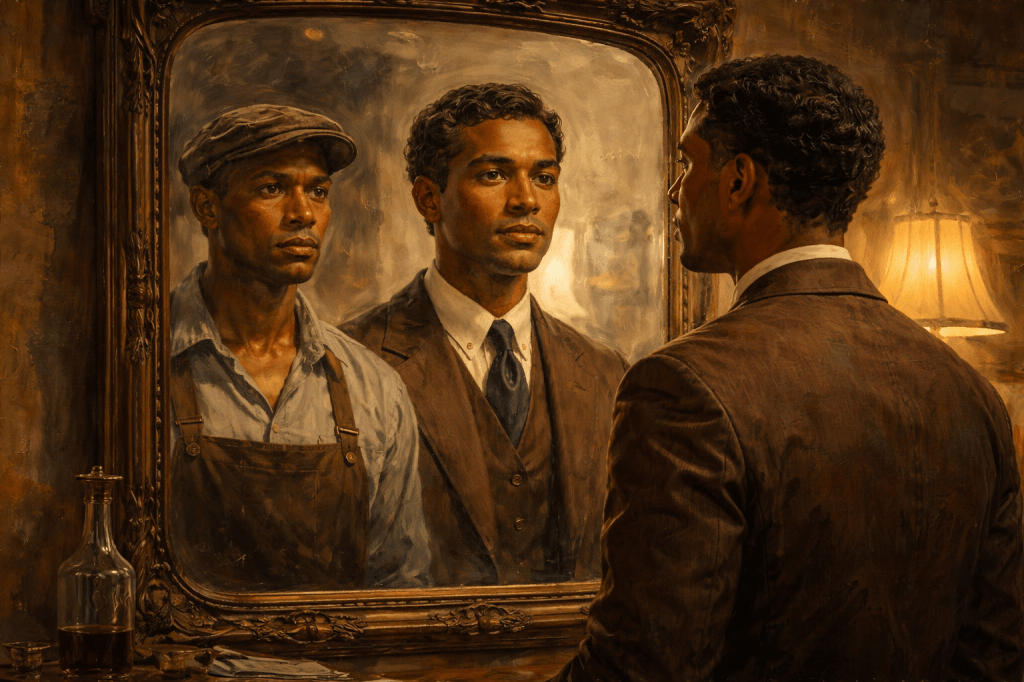
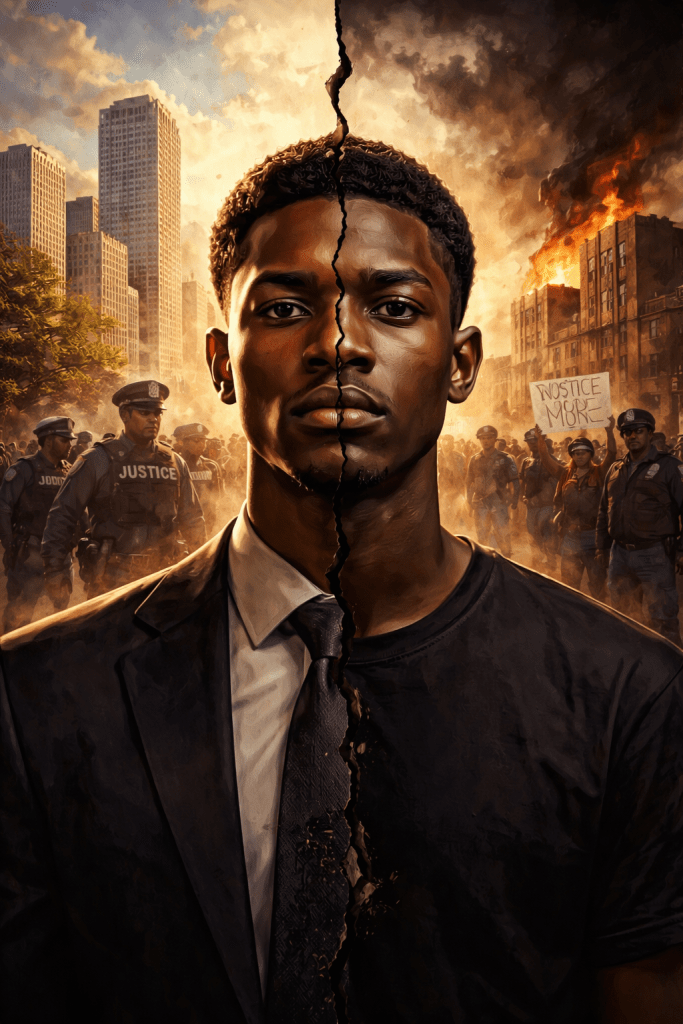
The concept of racialized double consciousness, first articulated by W. E. B. Du Bois remains one of the most enduring frameworks for understanding the psychological and social realities of Black life in America. It describes the internal conflict experienced by Black individuals who must navigate their own cultural identity while simultaneously viewing themselves through the lens of a dominant society that has historically marginalized them. This dual awareness is not merely theoretical; it is lived, embodied, and passed down through generations.

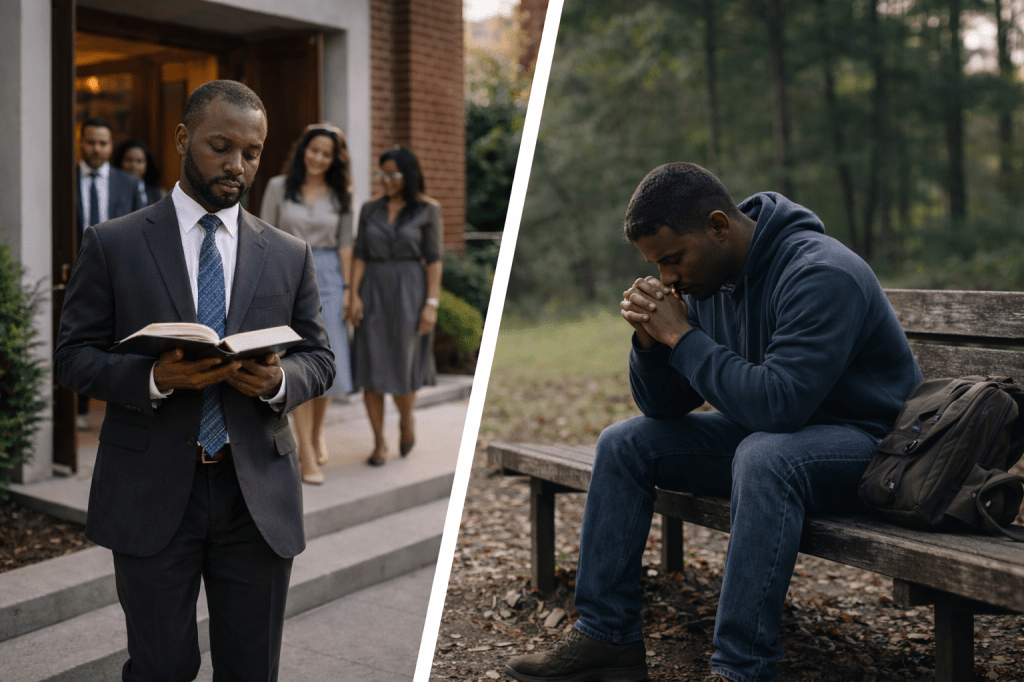
At its core, racialized double consciousness reflects a fractured sense of self. Black individuals are often compelled to reconcile who they are with how they are perceived. This tension produces a heightened awareness of identity, one that requires constant adjustment depending on the social environment. It is both a survival mechanism and a psychological burden, shaping how one speaks, behaves, and even thinks.

The historical roots of this phenomenon are deeply embedded in the legacy of slavery and segregation in the United States. From the era of bondage to the aftermath of the American Civil War, Black identity was constructed in opposition to a dominant white framework that denied full humanity. Even after emancipation, systems of exclusion such as Jim Crow laws reinforced a dual existence—one public and constrained, the other private and authentic.

During the early twentieth century, Du Bois argued that Black Americans were “gifted with second sight,” a profound awareness that allowed them to see both their own world and the world of the dominant culture. While this duality could foster resilience and insight, it also created a persistent sense of internal division. This division continues to shape contemporary experiences of race and identity.

In modern society, racialized double consciousness manifests in professional spaces, where Black individuals often feel pressure to code-switch to conform to dominant cultural norms. This adaptation can involve altering speech, appearance, or behavior to be perceived as acceptable or non-threatening. While effective in navigating systemic barriers, it can also lead to emotional exhaustion and a diminished sense of authenticity.

Education systems also play a significant role in reinforcing this dual awareness. Curricula that center Eurocentric perspectives can marginalize Black history and contributions, forcing Black students to engage with knowledge that does not fully reflect their lived experiences. This dissonance contributes to a fragmented educational identity and underscores the broader societal imbalance.

The media further amplifies racialized double consciousness by perpetuating stereotypes that distort Black identity. From film to news coverage, representations often oscillate between hypervisibility and invisibility. Influential figures such as Lupita Nyong’o have spoken openly about the psychological impact of colorism and representation, highlighting how external perceptions shape internal self-worth.

In addition to media, economic structures reinforce this duality. Wealth disparities, employment discrimination, and limited access to resources create an environment where Black individuals must constantly navigate structural inequities. The tension between aspiration and systemic limitation deepens the conundrum of identity and opportunity.

Racialized double consciousness is also evident in interactions with law enforcement and the criminal justice system. The need to be hyper-aware of one’s behavior in order to avoid suspicion or harm reflects a lived reality rooted in historical and contemporary injustice. This awareness is not abstract; it is often a matter of survival.

Within interpersonal relationships, this duality can influence how Black individuals relate to others, both within and outside their communities. The pressure to conform to external expectations can create internal conflict, particularly when those expectations conflict with cultural values or personal authenticity.

Despite its challenges, racialized double consciousness can also be a source of strength. The ability to navigate multiple cultural frameworks fosters adaptability, resilience, and a nuanced understanding of the world. This “double vision” can empower individuals to challenge dominant narratives and advocate for change.

The Black intellectual tradition has long engaged with this concept, expanding upon Du Bois’s original framework. Scholars have examined how gender, class, and other intersecting identities complicate the experience of double consciousness. Black women, for instance, often navigate multiple layers of marginalization, resulting in a more complex form of dual awareness.

Spirituality and faith traditions also provide a lens through which to understand and cope with this duality. For many, biblical narratives of exile, struggle, and redemption resonate deeply with the Black experience. These frameworks offer both comfort and a means of interpreting historical and contemporary realities.

Artistic expression has become a powerful outlet for articulating the tensions of double consciousness. Through music, literature, and visual art, Black creators explore themes of identity, belonging, and resistance. These expressions not only reflect individual experiences but also contribute to a collective cultural narrative.

The civil rights movement brought national attention to the realities of racial injustice and the internal conflicts it produces. Leaders and activists sought to dismantle the structures that necessitated double consciousness, advocating for a society in which Black identity could exist without compromise.

In contemporary discourse, the concept remains highly relevant. Movements for racial justice continue to highlight the psychological and structural dimensions of inequality. The persistence of systemic racism ensures that double consciousness is not a relic of the past but an ongoing reality.

Global perspectives further enrich the understanding of racialized double consciousness. Black individuals in different parts of the world experience similar tensions, though shaped by distinct cultural and historical contexts. This global dimension underscores the व्यापक impact of racial hierarchies.

The digital age has introduced new dimensions to this experience. Social media platforms allow for both self-expression and surveillance, creating spaces where identity can be affirmed or contested. The visibility afforded by these platforms can amplify both empowerment and scrutiny.

Ultimately, racialized double consciousness speaks to the enduring complexity of Black identity in a world structured by racial inequality. It is a testament to both the resilience and the vulnerability of those who navigate its demands daily.

As society continues to grapple with issues of race and justice, the insights offered by Du Bois remain profoundly relevant. Understanding and addressing the conditions that produce double consciousness is essential to creating a more equitable and inclusive world.

References

Du Bois, W. E. B. (1903). The Souls of Black Folk. Chicago, IL: A. C. McClurg & Co.

Lupita Nyong’o. (2014). Speech on beauty and colorism at Essence Black Women in Hollywood.

Alexander, M. (2010). The New Jim Crow: Mass Incarceration in the Age of Colorblindness. New York, NY: The New Press.

Coates, T.-N. (2015). Between the World and Me. New York, NY: Spiegel & Grau.

Fanon, F. (1952). Black Skin, White Masks. Paris, France: Éditions du Seuil.

Dilemma: Brother Against Brother

The crisis of “brother against brother” has become one of the most painful and complex truths within the Black community. It reflects a deep wound shaped by centuries of trauma, broken family structures, systemic oppression, and internalized self-hatred. Black men—once kings, protectors, innovators, and spiritual pillars of ancient civilizations—now often find themselves positioned as enemies to one another. Instead of building together, many are trapped in cycles of competition, conflict, and destruction. This tragedy is not born from nature but from historical engineering, social influence, and unresolved generational pain.

The issue of Black men killing other Black men continues to devastate families and communities across America. Although crime exists in every racial group, the concentrated violence within predominantly Black neighborhoods stems from systemic disenfranchisement, redlining, poverty, and the deliberate flooding of drugs and guns into urban communities. When resources are scarce and hope feels distant, men begin to see one another not as brothers but as threats. What should be unity becomes rivalry. What should be communal responsibility becomes survival warfare shaped by external design.

Gang culture emerged partly from these conditions. Although some early gangs were formed for protection, many evolved into organizations that perpetuate cycles of retaliation and territorial conflict. The desire to belong—to claim identity, power, or respect—becomes distorted into violence. Instead of competing against the systems that oppress them, young Black men too often compete against each other, losing years of potential to incarceration, injury, or death. This is not a moral failing but the outcome of generational instability and targeted neglect.

The internal conflict is not only physical but also psychological. The media often magnifies images of Black men as hyper-aggressive, criminal, or emotionally unavailable. These portrayals condition society and Black men themselves to see each other through a lens of suspicion rather than solidarity. The result is mistrust, emotional distance, and the belief that vulnerability is weakness. Without emotional literacy or safe spaces for healing, anger becomes the language many men know best.

Adding to this, modern culture pressures Black men to “one-up” each other—financially, socially, and sometimes violently. Masculinity becomes defined by domination rather than compassion, competition rather than collaboration. Whether through bravado, materialism, or street credibility, envy, worth is measured by comparison rather than character. This competitive mindset fractures relationships, weakens unity, and fuels an environment where brotherhood struggles to thrive.

Another layer of this crisis lies in the public rhetoric of some Black male celebrities and influencers who speak harshly against Black women. Instead of uplifting their sisters, they often demean them publicly, reinforcing stereotypes birthed during slavery when Black families were torn apart. This divisive speech harms the community by creating gender wars—brother against sister—and diverting attention from the real systems that undermine Black families. When Black men publicly dishonor Black women, it fractures the very foundation of the community.

Many of these behaviors stem from unresolved trauma. Generations of Black men have carried burdens of discrimination, economic instability, police brutality, and lack of emotional support. Without healthy mentorship or mental health access, pain can easily transform into aggression. Hurt men hurt other men. The cycle continues because healing is rarely prioritized or taught, especially in spaces where survival takes precedence over self-reflection.

There is also the crisis of absent or strained fatherhood, not by choice but because of mass incarceration, economic challenges, and systemic separation of Black families. When young boys do not see healthy examples of love, leadership, and conflict resolution, they mimic what they are exposed to—chaos, hyper-masculinity, or antisocial behavior. Brotherhood cannot flourish when foundational guidance is interrupted.

Educational inequality contributes as well. Underfunded schools, low expectations, and lack of representation limit opportunities for young Black men. When society signals that success is unattainable, alternative paths—often dangerous ones—become appealing. The lack of academic and vocational support creates breeding grounds for conflict, resentment, and hopelessness.

Music and entertainment industries also play a role. While many Black artists use music for storytelling and healing, corporations often elevate content that glorifies violence, rivalry, and disrespect. Young men absorb these messages and normalize them, believing that masculinity is proven through aggression. This corporate exploitation of Black male identity fuels division and devalues life itself.

Moreover, societal institutions consistently pit Black men against one another. Whether through limited job opportunities, biased criminal justice systems, or exploitative sports industries, the message is clear: only one can win. Only one can succeed. Only one can shine. This scarcity mindset erodes unity and fosters envy.

Yet, despite these challenges, many Black men are actively choosing a different path. Across the country, mentors, pastors, coaches, and community leaders are working to restore brotherhood. Programs focused on emotional intelligence, conflict resolution, and empowerment are helping young men unlearn destructive patterns. Healing spaces are emerging where men can be vulnerable without shame, reclaim their identity, and reconnect with each other.

Black men are also reshaping the narrative by celebrating one another’s success instead of competing. Social media movements like #BlackMenSmile and #BlackBoyJoy highlight the beauty, softness, brilliance, and strength of Black manhood beyond stereotypes. These images promote unity and challenge the belief that Black men must perform masculinity through violence or domination.

Reconciliation between Black men and Black women is also essential. Brotherhood cannot thrive when the relationship with Black women is fractured. Both sides must heal the wounds caused by patriarchy, colorism, and internalized racism. True healing requires accountability, empathy, and partnership—not blame.

Spiritual restoration remains a critical component. Many Black men are returning to faith, prayer, and community fellowship as grounding forces. Scripture emphasizes unity: “Behold, how good and how pleasant it is for brethren to dwell together in unity!” (Psalm 133:1, KJV). Reconnecting with God and identity helps to break cycles of destruction and renew purpose.

Additionally, economic empowerment is strengthening brotherhood. Entrepreneurship, cooperative economics, and financial literacy programs are teaching Black men to build together rather than tear each other down. Shared success creates shared loyalty.

Healing also requires emotional honesty. Black men must confront their pain—grief, abandonment, rejection, societal pressure—rather than hiding behind aggression. Vulnerability is not weakness but liberation. When men heal individually, they strengthen the collective.

To end the epidemic of “brother against brother,” society must address the systemic roots while Black men commit to rebuilding each other with accountability and love. The future of Black families, culture, and generations depends on restored unity, emotional healing, and community transformation. Brotherhood can rise again when men recognize that their brothers are not their enemies but their reflections.

References

Alexander, M. (2010). The new Jim Crow: Mass incarceration in the age of colorblindness. The New Press.
Anderson, E. (1999). Code of the street: Decency, violence, and the moral life of the inner city. W.W. Norton.
hooks, b. (2004). We real cool: Black men and masculinity. Routledge.
Majors, R., & Billson, J. (1992). Cool pose: The dilemmas of Black manhood in America. Simon & Schuster.
Staples, R. (1982). Black masculinity. Black Scholar Press.

Dilemma: Denial of Racism and the Racist Mascots.

Racism is more than individual prejudice—it is a system of power, privilege, and oppression that shapes every level of society. It is the belief, whether conscious or unconscious, that one race is superior to another, and this ideology has fueled centuries of injustice toward Black people and other nonwhite groups. Denial of racism, therefore, is a form of complicity. It allows prejudice to persist unchecked, normalizing discrimination under the illusion of equality. In modern America, this denial manifests not only in speech and policy but also in symbols—especially racist mascots that trivialize entire cultures for entertainment and profit (Tatum, 2017).

Racist mascots are public symbols, images, or characters that depict racial or ethnic groups through stereotypes. They include sports team names, cartoon logos, and advertising imagery that caricature people of color, particularly Indigenous, Asian, and Black individuals. The purpose of such mascots has historically been to create a sense of fun or team spirit, but beneath the surface lies the dehumanization of real people. These mascots perpetuate racism by turning living identities into costumes or cartoons, mocking heritage and reinforcing white dominance (King, Davis-Delano, Staurowsky, & Baca, 2006).

Examples of racist mascots include the Washington Redskins (now Commanders), Cleveland Indians (now Guardians), and the use of Native caricatures like “Chief Wahoo.” In addition, Black caricatures such as “Aunt Jemima,” “Uncle Ben,” and the “Sambo” figures have long stood as consumer symbols rooted in slavery and Jim Crow imagery. These depictions present people of color as servile, ignorant, or primitive—images designed to comfort white audiences while reminding Black people of their social “place” (Pilgrim, 2012).

The denial of racism allows these symbols to persist under the justification of “tradition” or “harmless fun.” Yet such arguments ignore the historical and emotional damage caused by these portrayals. To deny racism is to silence the voices of those who endure its consequences. White individuals who resist the removal of racist mascots often do so because acknowledging their harm would mean confronting uncomfortable truths about privilege and the legacies of colonization (Sue et al., 2019).

For Black people, racism manifests not only through overt hatred but also through the cultural symbols that reinforce inferiority. Racist mascots, jokes, and media portrayals perpetuate the myth of white superiority, making it harder for Black individuals to assert pride and dignity. These representations influence how others perceive them—affecting hiring decisions, media representation, and even internalized self-worth. When a culture is continually mocked or minimized, it becomes a psychological burden that echoes across generations (Williams & Mohammed, 2009).

The psychological effect of racist imagery cannot be overstated. Studies show that exposure to racial caricatures can reinforce stereotypes, reduce empathy toward minority groups, and diminish the sense of belonging among young people of color. For Black children, seeing racist imagery in public life communicates a painful message: that their identity is a joke, their culture a costume, and their history unworthy of respect. The harm of these images is cumulative and intergenerational (Clark, 2019).

White supremacy, the ideology that whiteness is inherently superior, underpins both the denial of racism and the creation of racist mascots. It is the invisible hand guiding policies, media narratives, and cultural norms that prioritize white comfort over Black liberation. White supremacy thrives in denial—it insists that racism is a relic of the past while continuing to shape the present. It operates through coded language like “heritage” and “pride,” which often mask bigotry behind nostalgia (Kendi, 2019).

The most blatant expression of white supremacy in American history is the Ku Klux Klan (KKK). Founded after the Civil War, the KKK terrorized Black communities through violence, lynchings, and intimidation. Its mission was to maintain white dominance in political, social, and economic spheres. Members of the Klan saw themselves as defenders of a “pure” America, using fear and brutality to suppress Black advancement. Their robes, burning crosses, and public parades became symbols of white terror and racial hatred (Alexander, 2010).

The impact of the KKK on Black people was devastating. Generations were traumatized by violence and systemic exclusion. Families were torn apart, homes burned, and entire towns destroyed under the pretext of racial purity. Even today, the Klan’s legacy persists in modern hate groups, racial profiling, and police violence. The ideology never died—it evolved into new forms of systemic control such as mass incarceration and economic disenfranchisement.

White supremacy continues to hurt Black people by limiting access to wealth, education, and justice. Redlining, discriminatory hiring, and unequal school funding are structural extensions of the same mindset that birthed the KKK and racist mascots. These systems rely on the same falsehood—that Black people are less deserving of opportunity. By denying racism’s existence, society allows these injustices to flourish behind the facade of fairness (Bonilla-Silva, 2018).

Denial of racism often appears as “colorblindness.” When white individuals claim they “don’t see race,” they erase the lived experiences of Black people who face racism daily. Colorblindness is not equality—it is avoidance. It refuses to confront historical trauma or acknowledge current inequalities. This denial maintains white innocence and blocks progress toward reconciliation and justice (Wise, 2010).

Racist mascots are powerful tools of denial because they hide oppression behind art and entertainment. They turn centuries of suffering into amusement, trivializing racism itself. By normalizing these caricatures, society teaches future generations to see racism as exaggerated or irrelevant. The mascot becomes a smiling mask covering a violent history of enslavement and dehumanization (Fryberg et al., 2008).

To overcome this, institutions must replace symbols of oppression with those of truth and empowerment. Education is key—students should learn the origins of these images and why they are harmful. Removing racist mascots and replacing them with culturally respectful symbols is not “erasing history,” but correcting it. True history must expose oppression, not celebrate it.

Community conversations about race and symbolism are also essential. Many white Americans cling to racist mascots because they lack understanding of their impact. Honest dialogue, paired with empathy and accountability, can transform ignorance into awareness. This process requires humility—the willingness to listen rather than defend.

Faith-based and moral frameworks remind us that racism is a sin of pride. The Bible teaches that all people are created in the image of God (Genesis 1:27, KJV). To deny racism or perpetuate racist symbols is to deny God’s design for equality and justice. The work of dismantling white supremacy is therefore both a social and spiritual responsibility.

For Black people, confronting racist mascots is an act of liberation. It is a declaration that identity will no longer be mocked or commodified. Cultural restoration begins with reclaiming representation—telling stories from within rather than allowing others to define Blackness from without. Every statue removed, logo retired, and stereotype challenged marks a step toward collective healing.

The denial of racism also prevents national unity. A country that refuses to face its truth cannot heal from it. Reconciliation requires repentance—an acknowledgment of harm and a commitment to change. Only when the truth of racism is faced with courage can justice begin to take root.

Ultimately, racist mascots are symptoms of a deeper disease: the refusal to see Black humanity. The denial of racism enables the disease to spread unchecked, poisoning institutions and relationships. Challenging these symbols is not about political correctness—it is about moral clarity. Racism cannot die where denial lives.

The path forward requires truth-telling, accountability, and love rooted in justice. Dismantling racist mascots, confronting white supremacy, and rejecting the lies of the KKK are not acts of division—they are acts of restoration. The goal is not revenge but righteousness. As James Baldwin wrote, “Not everything that is faced can be changed, but nothing can be changed until it is faced.”

References
Alexander, M. (2010). The new Jim Crow: Mass incarceration in the age of colorblindness. The New Press.
Bonilla-Silva, E. (2018). Racism without racists: Color-blind racism and the persistence of racial inequality in America. Rowman & Littlefield.
Clark, C. R. (2019). Psychological impact of racial imagery on youth. Journal of Black Psychology, 45(2), 105–122.
Fryberg, S. A., Markus, H. R., Oyserman, D., & Stone, J. M. (2008). Of warrior chiefs and Indian princesses: The psychological consequences of American Indian mascots. Basic and Applied Social Psychology, 30(3), 208–218.
Kendi, I. X. (2019). How to be an antiracist. One World.
King, C. R., Davis-Delano, L. R., Staurowsky, E. J., & Baca, L. (2006). The Native American mascot controversy: A handbook. Scarecrow Press.
Pilgrim, D. (2012). Understanding Jim Crow: Using racist memorabilia to teach tolerance and promote social justice. Ferris State University.
Sue, D. W., Alsaidi, S., Awad, M. N., Calle, C. Z., & Mendez, N. (2019). Disarming racial microaggressions: Microintervention strategies for targets, White allies, and bystanders. American Psychologist, 74(1), 128–142.
Tatum, B. D. (2017). Why are all the Black kids sitting together in the cafeteria? Basic Books.
Wise, T. (2010). Colorblind: The rise of post-racial politics and the retreat from racial equity. City Lights Books.
Williams, D. R., & Mohammed, S. A. (2009). Discrimination and racial disparities in health: Evidence and needed research. Journal of Behavioral Medicine, 32(1), 20–47.

Dilemmas

The biggest dilemma Black people face in the United States and globally is not a single issue—it is a complex intersection of systemic racism, historical oppression, and structural inequality. Scholars, historians, and social scientists generally agree that these challenges are interconnected, affecting economic opportunity, health, education, justice, and political representation simultaneously. Here’s a breakdown of the major dimensions of this dilemma:

The Weight of Structural Oppression: The Biggest Dilemma Black People Face

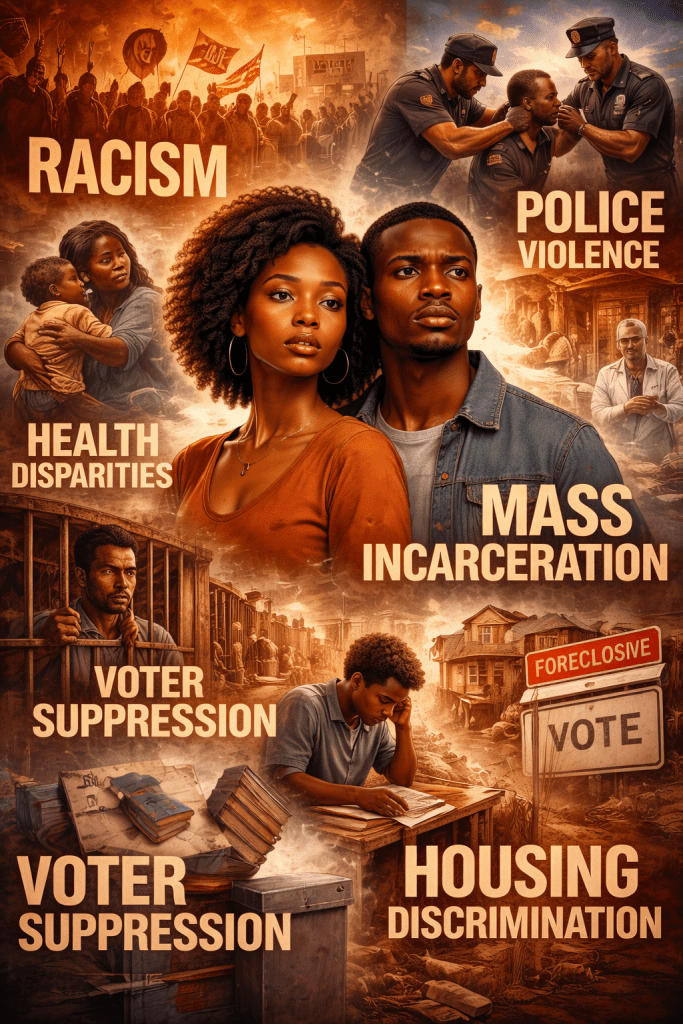
Black people in the United States face a complex web of challenges shaped by centuries of systemic racism, economic inequality, and social marginalization. These intersecting factors have created structural barriers that affect nearly every aspect of life, from housing and education to healthcare and political participation. Understanding the depth of this dilemma requires an examination of historical patterns and contemporary consequences.

Systemic Racism

Systemic or structural racism refers to the ways in which laws, policies, and social institutions create and perpetuate inequality based on race. This includes discriminatory practices in housing, education, employment, and criminal justice. Examples include:

  • Redlining and housing discrimination – Black families were historically denied access to mortgages and homeownership, creating generational wealth gaps.
  • Urban renewal and “Negro removal” – Black neighborhoods were destroyed for highways and development, displacing communities.

2. Economic Inequality

Black people consistently face disparities in income, wealth, and access to employment opportunities. According to Federal Reserve data:

  • The median wealth of Black families is significantly lower than that of white families.
  • Access to high-paying jobs is restricted by both educational and systemic barriers, including bias in hiring and promotion.

Economic inequality compounds other challenges, like housing, healthcare, and education.


3. Criminal Justice and Mass Incarceration

The U.S. criminal justice system disproportionately targets Black individuals:

  • Black Americans are more likely to be stopped, arrested, convicted, and given longer sentences than white Americans for similar offenses.
  • Systems like convict leasing historically re-enslaved Black men after emancipation, while modern mass incarceration continues this legacy in a more subtle form.

This creates cycles of poverty, family disruption, and social stigma.


4. Health Disparities

Black people experience disproportionate health challenges, both from systemic barriers and social determinants:

  • Higher rates of chronic disease, infant mortality, and maternal mortality.
  • Less access to quality healthcare and insurance.
  • The legacy of medical exploitation, such as the Tuskegee Syphilis Study, contributes to mistrust of medical institutions.

5. Educational Inequality

Education is a key pathway to social mobility, yet Black students often face:

  • Segregated schools due to district zoning and residential patterns.
  • Underfunded schools with fewer resources, larger class sizes, and limited access to advanced programs.
  • Bias in curriculum and disciplinary practices that disproportionately penalize Black students.

6. Cultural Stereotypes and Social Perceptions

Black people are frequently subjected to harmful stereotypes:

  • Men: “threatening,” “criminal,” or “hyper-masculine” tropes.
  • Women: “angry,” “jezebel,” or “mammy” archetypes.
  • These stereotypes affect employment, policing, mental health, and social interactions.

7. Political Disenfranchisement

Efforts to suppress Black votes through gerrymandering, voter ID laws, and intimidation continue to limit political influence. Without political power, communities struggle to advocate for systemic change in housing, education, and law enforcement.


8. Intergenerational Trauma

The cumulative effect of slavery, segregation, discrimination, and systemic oppression has created intergenerational trauma. This affects:

  • Mental health outcomes
  • Economic behaviors and financial stability
  • Family structures and community cohesion

One of the most pervasive forces shaping Black life is systemic racism. This form of oppression is embedded within institutions, laws, and social practices that disadvantage Black individuals collectively. Systemic racism manifests in policies that limit access to economic resources, enforce segregation, and perpetuate disparities across generations.

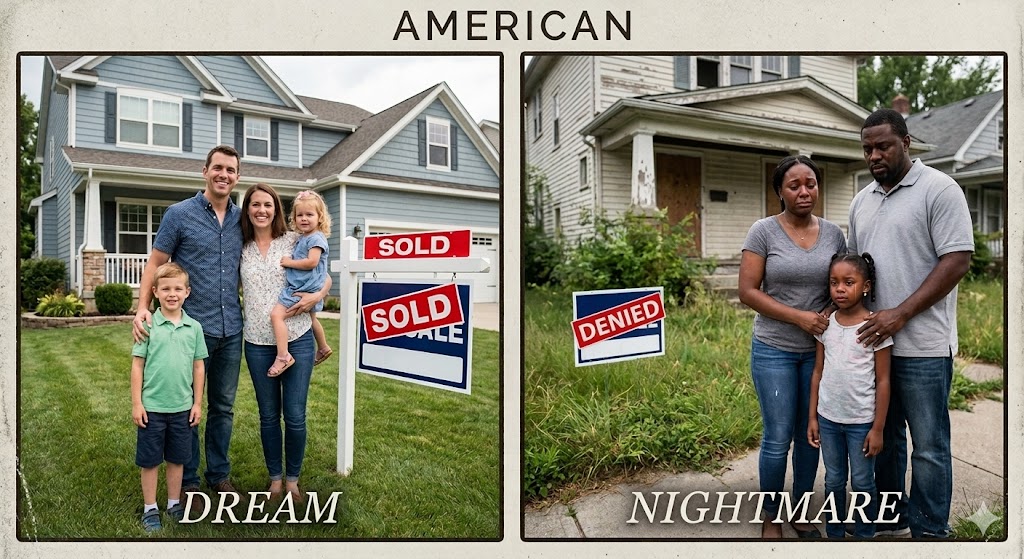
Housing discrimination has historically reinforced racial inequality. Practices such as redlining, blockbusting, and contract selling restricted Black families’ access to safe neighborhoods and homeownership. Redlining, for example, denied mortgages to residents in predominantly Black neighborhoods, preventing them from accumulating wealth through property ownership.

Urban renewal projects in the mid-twentieth century, often referred to as “Negro removal,” further disrupted Black communities. Entire neighborhoods were demolished for highways, commercial developments, and government buildings, displacing families and erasing community networks. These policies reinforced segregation while simultaneously enriching developers and local governments.

Economic inequality remains a central challenge. Black Americans experience higher unemployment rates and lower wages compared with white counterparts. This disparity is compounded by limited intergenerational wealth, which restricts opportunities for education, homeownership, and investment. As a result, economic mobility is often constrained by systemic barriers beyond individual control.

Education is similarly affected by structural inequities. School district zoning often ties educational resources to property taxes, leaving Black students in underfunded schools with fewer academic opportunities. Segregated schools continue to produce gaps in achievement and limit access to higher education and professional careers.

Healthcare disparities also exemplify systemic inequities. Black individuals experience higher rates of chronic illnesses, maternal mortality, and limited access to quality care. Historical exploitation, such as the Tuskegee Syphilis Study, has fostered mistrust toward medical institutions, further complicating healthcare outcomes for Black communities.

Criminal justice disparities are another critical component of structural oppression. Black Americans are disproportionately targeted for policing, incarceration, and harsher sentencing. Practices such as convict leasing in the post-Civil War South and contemporary mass incarceration policies have created cycles of poverty and social instability, particularly affecting Black men.

The labor market has not been immune to racial inequities. Occupational segregation, hiring discrimination, and wage gaps limit economic opportunities for Black workers. Even with equal qualifications, Black individuals frequently face systemic barriers that affect promotions, career progression, and job security.

Political disenfranchisement continues to hinder Black communities. Gerrymandering, voter suppression laws, and historical exclusion from voting limit the ability to influence policies that affect housing, education, healthcare, and criminal justice. This reduces accountability and reinforces systemic inequities.

Cultural and media representation also shapes social experiences. Black people are often portrayed through stereotypes that influence perceptions in employment, law enforcement, and interpersonal interactions. These portrayals contribute to bias, discrimination, and the psychological burden of navigating misrepresentation.

Intergenerational trauma compounds these structural challenges. The cumulative effects of slavery, segregation, and systemic discrimination influence mental health, economic behavior, family dynamics, and community cohesion. This trauma persists across generations, creating challenges that extend beyond immediate social conditions.

Health outcomes are further affected by social determinants such as neighborhood safety, food access, and environmental hazards. Many Black communities live in areas with limited resources, higher exposure to pollution, and reduced access to recreational spaces, exacerbating health disparities.

Despite these challenges, Black communities have demonstrated resilience and agency. Historically, Black churches, civic organizations, and grassroots movements have provided support networks, leadership opportunities, and platforms for advocacy. These institutions have played a critical role in fostering community cohesion and social advancement.

Cultural contributions by Black Americans, from music and literature to art and entrepreneurship, have not only enriched society but also served as forms of resistance and empowerment. Cultural production has allowed Black communities to assert identity, challenge oppression, and build intergenerational pride.

Family and community structures within Black communities have historically been sites of strength. Extended kin networks, cooperative child-rearing, and communal support have mitigated the effects of systemic oppression while fostering resilience.

Economic strategies, including mutual aid, cooperative business ventures, and community investment, have also served as tools to counter structural inequality. These efforts, while often limited by systemic barriers, demonstrate agency and resourcefulness in the face of adversity.

Policy interventions are essential to addressing the multifaceted challenges facing Black Americans. Measures to reduce income inequality, expand access to quality education and healthcare, reform the criminal justice system, and combat discriminatory housing practices are critical to creating equitable opportunities.

Understanding the Black experience requires recognizing both systemic barriers and the resilience of the community. Black Americans navigate a society that historically and continuously marginalizes them, yet they maintain cultural, economic, and social strength that contributes to societal advancement.

The overarching dilemma is that Black people are forced to navigate systems designed historically to exclude them. Every aspect of life—education, work, healthcare, criminal justice, housing—is influenced by these systemic barriers. While resilience, cultural strength, and community networks have enabled survival and progress, the structural challenges continue to create cycles of inequality that affect generations.

In short, the biggest dilemma Black people face is systemic oppression combined with persistent structural inequities, which compound across generations to limit access to opportunity, safety, and wealth.

Ultimately, the biggest dilemma facing Black people is not a matter of individual shortcomings but of persistent systemic inequality and structural oppression. Addressing these interrelated challenges requires comprehensive policy reforms, societal commitment to racial equity, and recognition of the historical context that created these disparities.


References

Alexander, M. (2012). The new Jim Crow: Mass incarceration in the age of colorblindness. The New Press.

Blackmon, D. A. (2008). Slavery by another name: The re-enslavement of Black Americans from the Civil War to World War II. Anchor Books.

Collins, P. H. (2000). Black feminist thought: Knowledge, consciousness, and the politics of empowerment. Routledge.

Crenshaw, K. (1989). Demarginalizing the intersection of race and sex. University of Chicago Legal Forum.

Foner, E. (1988). Reconstruction: America’s unfinished revolution, 1863–1877. Harper & Row.

Hirsch, A. R. (1983). Making the second ghetto: Race and housing in Chicago 1940–1960. University of Chicago Press.

Rothstein, R. (2017). The color of law: A forgotten history of how our government segregated America. Liveright Publishing.

Sugrue, T. J. (2014). The origins of the urban crisis: Race and inequality in postwar Detroit. Princeton University Press.

U.S. Department of Housing and Urban Development. (2023). History of housing discrimination and segregation in the United States.

Wingfield, A. H. (2013). No more invisible man: Race and gender in men’s work. Temple University Press.

The Dilemma of the Black Man and the Black Woman.

The dilemma of the Black man and Black woman is a spiritual, historical, and cultural paradox. Chosen by God, endowed with divine purpose and ancestral greatness, yet marginalized, oppressed, and misrepresented by the world. “For the Lord shall judge His people, and repent Himself for His servants, when He seeth that their power is gone” (Deuteronomy 32:36, KJV). Our divine worth has often clashed with societal perception.

Black men are called to leadership, protection, and spiritual headship. Scripture shows that a godly man is disciplined, righteous, and sacrificial. “He that ruleth his spirit is better than he that taketh a city” (Proverbs 16:32, KJV). Yet, society often diminishes his authority, questions his integrity, and criminalizes his presence. This creates tension between divine calling and worldly expectation.

Black women are called to honor, nurture, and uphold righteousness. The virtuous woman is praised for her fear of God and strength of character. “Who can find a virtuous woman? for her price is far above rubies” (Proverbs 31:10, KJV). Yet, she is often stereotyped, undervalued, and overburdened. The world demands perfection while failing to recognize her godly worth.

The dilemma begins in history. Black men and women have been enslaved, colonized, and systematically oppressed. They were denied education, autonomy, and wealth, yet their spiritual and cultural legacies endured. “They that wait upon the Lord shall renew their strength” (Isaiah 40:31, KJV). Faith sustained their identity through oppression.

For the Black man, societal misrepresentation often targets masculinity. His leadership and strength are viewed with suspicion rather than admiration. Scripture calls men to love and lead with humility: “Husbands, love your wives, even as Christ also loved the church” (Ephesians 5:25, KJV). Yet society frequently equates Black masculinity with aggression or threat.

For the Black woman, the world often reduces her worth to physical appearance or labor. She is resilient, yet society demands emotional perfection. Scripture reminds women of their eternal value: “Favour is deceitful, and beauty is vain: but a woman that feareth the Lord, she shall be praised” (Proverbs 31:30, KJV). Her worth is divine, not superficial.

The dilemma extends to relationships. The Black man struggles to lead spiritually, financially, and morally in a world that often undermines his authority. The Black woman struggles to honor God and maintain dignity in a culture that diminishes her voice. Yet Scripture instructs unity, obedience to God, and mutual respect: “Likewise, ye husbands, dwell with them according to knowledge, giving honour unto the wife” (1 Peter 3:7, KJV).

Education is another battlefield. Black men and women have historically had access denied, yet have produced scholars, thinkers, and inventors. “The heart of the prudent getteth knowledge; and the ear of the wise seeketh knowledge” (Proverbs 18:15, KJV). The dilemma is access and recognition despite capability.

Economically, Black men and women face systemic barriers. They are often denied fair wages, business opportunities, and generational wealth. Yet Scripture teaches diligence and provision: “If any provide not for his own, and specially for those of his own house, he hath denied the faith” (1 Timothy 5:8, KJV). Faith and persistence remain their anchors.

Spiritually, the Black man may wrestle with societal judgment while maintaining leadership and integrity. The Black woman may wrestle with societal objectification while nurturing faith and family. Scripture affirms that God’s view defines true worth: “Man looketh on the outward appearance, but the Lord looketh on the heart” (1 Samuel 16:7, KJV).

Cultural misrepresentation further complicates identity. Black men are often stereotyped as aggressive; Black women as angry or hypersexualized. Both distortions obscure God’s design. The Bible warns against judging by appearance or hearsay: “Judge not according to the appearance, but judge righteous judgment” (John 7:24, KJV).

Health disparities create another layer. Black men face high rates of disease, incarceration, and early mortality. Black women face maternal and systemic health inequities. Yet spiritual endurance sustains them: “Even the youths shall faint and be weary, and the young men shall utterly fall: But they that wait upon the Lord shall renew their strength” (Isaiah 40:30-31, KJV).

Black men and women are often forced to overperform to prove worth. Excellence is expected; failure is punished. Yet Scripture encourages perseverance and faith-driven identity: “But let patience have her perfect work, that ye may be perfect and entire, wanting nothing” (James 1:4, KJV).

The dilemma is compounded by colorism within the community. Lighter skin may be praised; darker skin criticized. Yet beauty and value are rooted in divine creation, not pigment. “So God created man in his own image, in the image of God created he him; male and female created he them” (Genesis 1:27, KJV).

Black men and women must navigate family dynamics where generational trauma persists. Healing and restoration require wisdom and faith. “Train up a child in the way he should go: and when he is old, he will not depart from it” (Proverbs 22:6, KJV). Spiritual and emotional nurturing is central.

The dilemma also affects love and partnership. Black men may struggle to lead without being misjudged. Black women may struggle to honor themselves while nurturing others. Godly love, patience, and discernment are the remedy: “Charity suffereth long, and is kind; charity envieth not; charity vaunteth not itself” (1 Corinthians 13:4, KJV).

Community expectation weighs heavily. Success is celebrated selectively; failure is amplified. Both men and women carry burdens not of their choosing. Scripture encourages unity and support: “Bear ye one another’s burdens, and so fulfil the law of Christ” (Galatians 6:2, KJV).

Despite these dilemmas, God equips His people with purpose. Black men and women are called to honor, wisdom, and influence. “And he said unto me, My grace is sufficient for thee: for my strength is made perfect in weakness” (2 Corinthians 12:9, KJV). Weakness is a canvas for divine strength.

Education, faith, family, and community become tools to navigate systemic obstacles. Black men lead with humility; Black women nurture with resilience. Both serve God’s higher calling while confronting societal injustice. “Trust in the Lord with all thine heart; and lean not unto thine own understanding” (Proverbs 3:5, KJV).

Ultimately, the dilemma is temporal; God’s perspective is eternal. Black identity, when rooted in divine truth, transcends cultural misrepresentation. “For I know the thoughts that I think toward you, saith the Lord, thoughts of peace, and not of evil, to give you an expected end” (Jeremiah 29:11, KJV).

Black men and women are divine reflections, created with purpose, intelligence, and sacred value. Their struggle is real, but their legacy is eternal. “Therefore all things whatsoever ye would that men should do to you, do ye even so to them” (Matthew 7:12, KJV). Treating oneself and each other with Godly love affirms identity.

The dilemma of the Black man and Black woman is multi-layered: historical, social, psychological, and spiritual. Yet, through faith, perseverance, and adherence to God’s Word, it becomes a pathway to triumph, restoration, and divine fulfillment. “Be strong and of a good courage, fear not, nor be afraid of them: for the Lord thy God, he it is that doth go with thee” (Deuteronomy 31:6, KJV).

Biblical References (KJV)

  • Genesis 1:27 — God created man in His image
  • Proverbs 3:5 — Trust in the Lord
  • Proverbs 16:32 — Self-control is better than conquering a city
  • Proverbs 18:15 — The heart of the prudent seeks knowledge
  • Proverbs 22:6 — Train up a child in the way he should go
  • Proverbs 31:10, 30 — The virtuous woman is above rubies
  • Isaiah 40:30-31 — Renewal of strength
  • Isaiah 54:17 — No weapon formed against thee shall prosper
  • Jeremiah 29:11 — God’s thoughts for peace and purpose
  • Matthew 7:12 — The Golden Rule
  • Ephesians 5:25 — Husbands love your wives as Christ loved the church
  • 1 Corinthians 13:4-6 — Charity suffereth long
  • 1 Peter 2:9 — Chosen generation, royal priesthood
  • 1 Peter 3:7 — Husbands dwell with knowledge, giving honor to wives
  • 2 Corinthians 12:9 — God’s strength made perfect in weakness
  • Galatians 6:2 — Bear one another’s burdens
  • Deuteronomy 31:6 — Be strong and courageous
  • Deuteronomy 32:36 — God judges His people
  • Psalm 68:31 — Ethiopia shall stretch out her hands to God
  • Exodus 5:1 — Let my people go

References

Asante, M. K. (1988). Afrocentricity: The theory of social change. African American Images.

Bell, D. (1992). Faces at the bottom of the well: The permanence of racism. Basic Books.

Diop, C. A. (1974). The African origin of civilization: Myth or reality. Lawrence Hill Books.

Du Bois, W. E. B. (1903). The souls of Black folk. A. C. McClurg & Co.

Fanon, F. (1967). Black skin, white masks. Grove Press.

hooks, b. (1995). Killing rage: Ending racism. Henry Holt and Co.

Muhammad, K. G. (2010). The condemnation of Blackness: Race, crime, and the making of modern urban America. Harvard University Press.

Woodson, C. G. (1933). The mis-education of the Negro. Associated Publishers.

Karenga, M. (2002). Introduction to Black studies (3rd ed.). University of Sankore Press.

Oyěwùmí, O. (1997). The invention of women: Making an African sense of Western gender discourses. University of Minnesota Press.

Dilemma: Redlining

The Architecture of Racial Segregation in American Housing

Redlining refers to a discriminatory practice in which financial institutions, lenders, insurers, and government agencies systematically denied or limited access to loans, mortgages, and other financial services to residents of certain neighborhoods based on race or ethnicity. The practice disproportionately targeted Black communities and other minority populations, reinforcing residential segregation and economic inequality across the United States. Redlining became one of the most enduring structural mechanisms used to maintain racial hierarchy in housing, wealth accumulation, and urban development.

The term “redlining” originated from the literal red lines drawn on government-sponsored maps to designate neighborhoods considered risky for mortgage lending. These maps were produced by the Home Owners’ Loan Corporation during the 1930s as part of federal housing initiatives implemented during the Great Depression. Neighborhoods with large Black populations were almost automatically labeled hazardous for investment, regardless of the income or stability of the residents who lived there.

Redlining emerged during the era of sweeping federal housing reform under the Franklin D. Roosevelt administration. In 1933, the U.S. government created the Home Owners’ Loan Corporation to refinance mortgages and prevent mass foreclosures. However, the agency developed color-coded maps to guide lending decisions. Areas marked in green were considered the best investments, while areas marked in red—often where Black Americans lived—were deemed undesirable.

These classifications were further reinforced by policies associated with the Federal Housing Administration (FHA), which was established in 1934. The FHA promoted homeownership through federally insured mortgages but refused to insure loans in neighborhoods with Black residents. This meant that white families could more easily obtain mortgages and build wealth through homeownership, while Black families were largely excluded from these opportunities.

Redlining was not merely an economic practice but a social system that institutionalized racial segregation. Mortgage lenders, real estate brokers, and city planners used these maps to guide investment decisions. Even middle-class Black neighborhoods with stable property values were marked as hazardous. As a result, banks refused to provide loans to Black homeowners seeking to buy, repair, or refinance their properties.

White homeowners and real estate developers frequently benefited from redlining policies. Suburban developments constructed after World War II often included racially restrictive covenants that explicitly prohibited the sale of homes to Black buyers. Developments such as Levittown became symbols of postwar suburban prosperity for white families while simultaneously excluding Black Americans from homeownership opportunities.

Because Black families were prevented from accessing traditional mortgage financing, many were forced into exploitative housing arrangements such as contract buying. Under these arrangements, buyers paid inflated prices for homes but did not gain ownership until the entire payment was completed. Missing even a single payment could result in eviction and loss of all previously paid funds, leaving many Black families financially devastated.

Redlining also restricted Black access to suburban neighborhoods, forcing many African Americans to remain concentrated in urban centers. Cities like Chicago, Detroit, and Baltimore became emblematic of racially segregated housing patterns produced by redlining policies. These patterns shaped the demographic landscape of American cities for generations.

One of the most devastating effects of redlining was its impact on generational wealth. Homeownership is one of the primary mechanisms through which American families accumulate wealth. By denying Black families access to mortgage credit, redlining prevented them from building home equity that could be passed down to future generations.

Redlining also affected neighborhood infrastructure and public services. Communities labeled as hazardous received fewer public investments, including reduced funding for schools, parks, and transportation. Businesses were less likely to open in these areas because banks refused to provide commercial loans, leading to economic stagnation in many Black neighborhoods.

Educational inequality also emerged as a secondary consequence of redlining. Because public school funding in the United States is often tied to local property taxes, neighborhoods with declining property values—often those affected by redlining—experienced underfunded schools. This created a cycle of disadvantage that affected educational attainment among Black children.

Health disparities also correlate with historically redlined neighborhoods. Researchers have found that communities once marked as hazardous often experience higher rates of environmental pollution, limited access to healthcare facilities, and increased prevalence of chronic illnesses such as asthma and hypertension.

Although redlining was formally outlawed with the passage of the Fair Housing Act of 1968, its legacy remains deeply embedded in the American housing system. The law prohibited discrimination in housing based on race, color, religion, or national origin, yet the structural inequalities created by decades of redlining have proven difficult to dismantle.

Modern forms of housing discrimination continue to resemble redlining practices. Some lenders engage in “reverse redlining,” targeting minority communities with predatory loans and subprime mortgages. These financial products often carry higher interest rates and fees, increasing the risk of foreclosure.

Urban scholars have noted that historically redlined neighborhoods still exhibit lower property values compared to areas that were graded favorably in the 1930s. This demonstrates how past policies continue to influence contemporary economic outcomes and spatial inequality.

Redlining also shaped patterns of urban disinvestment that contributed to the decline of many American inner cities during the mid-twentieth century. As white families moved to suburbs with government-backed mortgages, tax bases in urban Black communities declined, limiting municipal resources for infrastructure and public services.

Many historians and sociologists argue that redlining represents one of the clearest examples of structural racism in American policy. Unlike individual acts of prejudice, redlining was embedded within federal institutions, banking systems, and real estate practices, making it a systemic barrier to economic equality.

In recent years, scholars and policymakers have called for reparative housing policies to address the enduring legacy of redlining. Proposals include expanded access to homeownership programs, targeted investments in historically marginalized neighborhoods, and reforms to lending practices to promote equitable access to credit.

Understanding redlining is essential for comprehending the racial wealth gap in the United States. While individual success stories exist, structural barriers created by discriminatory policies significantly shaped economic outcomes for generations of Black Americans.

Ultimately, redlining reveals how government policy, financial institutions, and social attitudes combined to produce lasting racial inequality. Its legacy continues to influence patterns of housing segregation, economic mobility, and urban development in modern American society.


References

Aaronson, D., Hartley, D., & Mazumder, B. (2017). The effects of the 1930s HOLC “redlining” maps. Federal Reserve Bank of Chicago.

Jackson, K. T. (1985). Crabgrass frontier: The suburbanization of the United States. Oxford University Press.

Massey, D. S., & Denton, N. A. (1993). American apartheid: Segregation and the making of the underclass. Harvard University Press.

Rothstein, R. (2017). The color of law: A forgotten history of how our government segregated America. Liveright Publishing.

Satter, B. (2009). Family properties: Race, real estate, and the exploitation of Black urban America. Metropolitan Books.

U.S. Department of Housing and Urban Development. (2023). History of housing discrimination and redlining in America. HUD Archives.

Dilemma: Double Consciousness

The Psychological Struggle of Identity in Black America

Double consciousness is a sociological and psychological concept describing the internal conflict experienced by African Americans who must navigate their identity within a society shaped by racial inequality. The term was first introduced by W. E. B. Du Bois in his groundbreaking book The Souls of Black Folk. Du Bois used the concept to explain how Black Americans often feel divided between their own sense of self and the identity imposed upon them by a racially prejudiced society.

Du Bois famously described double consciousness as a feeling of “two-ness.” According to his explanation, African Americans exist as both Black and American simultaneously, yet these identities are often placed in conflict by social structures that marginalize Blackness. This duality creates a constant awareness of how one is perceived by the dominant culture.

The origins of double consciousness can be traced to the historical conditions created by slavery and racial hierarchy in the United States. From the seventeenth century onward, Black people were legally and socially defined as inferior within a system designed to maintain white supremacy. These conditions forced African Americans to constantly interpret their lives through the lens of both their own experiences and the expectations of a racially stratified society.

During the era of slavery, African Americans were denied basic human rights and subjected to brutal labor systems that treated them as property. Although enslaved people maintained rich cultural traditions and strong communal bonds, they were forced to exist within a social order that rejected their humanity. This contradiction laid the foundation for the psychological tension that Du Bois later described as double consciousness.

Following the American Civil War and the abolition of slavery, African Americans entered a new phase of struggle during Reconstruction. Although freedom brought hope for equality, the reality of discrimination, violence, and political backlash quickly became evident. Black Americans were technically citizens but continued to face widespread exclusion from economic and political power.

The development of Jim Crow laws further intensified the experience of double consciousness. These laws enforced racial segregation and reinforced the idea that Black Americans were second-class citizens. In everyday life, African Americans had to constantly navigate spaces where their presence was restricted or stigmatized.

Double consciousness affected nearly every aspect of social life. Black individuals often felt compelled to monitor their speech, behavior, and appearance in order to avoid reinforcing negative stereotypes. This heightened awareness created a psychological burden that required constant self-regulation.

Education was one area where the tension of double consciousness became particularly visible. African Americans pursued education as a pathway to advancement and empowerment, yet many educational institutions were structured around Eurocentric values that marginalized Black history and culture. Students often learned to succeed within systems that did not fully acknowledge their identity.

The workplace also reflected the pressures of double consciousness. Many Black professionals found themselves navigating predominantly white environments where they felt compelled to prove their competence repeatedly. This experience sometimes required balancing cultural authenticity with professional expectations shaped by white norms.

Cultural expression became one way that African Americans resisted the limitations imposed by double consciousness. Literature, music, art, and religion provided spaces where Black identity could be affirmed and celebrated. Movements such as the Harlem Renaissance allowed Black artists and intellectuals to explore and redefine cultural identity.

The concept of double consciousness also influenced political activism. African American leaders recognized that achieving equality required challenging both external discrimination and internalized perceptions shaped by racism. Activists worked to redefine Black identity in ways that emphasized dignity, strength, and intellectual achievement.

The civil rights movement of the twentieth century further highlighted the tensions of double consciousness. Leaders such as Martin Luther King Jr. encouraged African Americans to demand full citizenship and equality while maintaining moral and cultural integrity. Their efforts helped dismantle many legal forms of segregation.

Despite these advancements, the psychological impact of double consciousness did not disappear. Many African Americans continued to experience subtle forms of discrimination, social bias, and unequal opportunities. As a result, the awareness of being viewed through the lens of race remained a persistent reality.

In modern society, double consciousness often appears in conversations about representation and identity. African Americans frequently navigate expectations from both their own communities and broader society. Balancing these expectations can create complex questions about authenticity and belonging.

Media representation has also influenced the experience of double consciousness. For many years, portrayals of Black people in film, television, and literature were shaped by stereotypes that reinforced negative perceptions. These images contributed to the external gaze that Du Bois described.

Social mobility sometimes intensifies the experience of double consciousness. As African Americans enter professional fields historically dominated by whites, they may find themselves negotiating cultural differences between their personal backgrounds and workplace environments.

At the same time, double consciousness has also fostered resilience and creativity within the Black community. The ability to understand multiple perspectives has contributed to rich intellectual traditions, artistic innovation, and social leadership.

Many scholars argue that the concept remains relevant for understanding race relations today. Issues such as systemic inequality, representation, and cultural identity continue to shape how African Americans navigate society.

Importantly, Du Bois did not view double consciousness solely as a burden. He believed that the ability to see the world from multiple perspectives could also offer unique insight and moral clarity. This dual awareness could empower African Americans to challenge injustice and imagine new possibilities for society.

Ultimately, double consciousness reflects the broader struggle for dignity and equality in a nation built on racial divisions. It captures the psychological complexity of living within a society that simultaneously claims ideals of freedom while historically denying them to many of its citizens.

Understanding double consciousness helps illuminate the historical and contemporary experiences of African Americans. By examining the origins and impact of this concept, scholars and citizens alike can better appreciate the resilience, creativity, and determination that have shaped the Black American journey.


References

Du Bois, W. E. B. (1903). The Souls of Black Folk. A.C. McClurg & Co.

Franklin, J. H., & Moss, A. A. (2000). From Slavery to Freedom: A History of African Americans. McGraw-Hill.

Hine, D. C., Hine, W. C., & Harrold, S. (2014). The African American Odyssey. Pearson.

Gates, H. L., & McKay, N. Y. (2004). The Norton Anthology of African American Literature. W.W. Norton.

Appiah, K. A. (1992). In My Father’s House: Africa in the Philosophy of Culture. Oxford University Press.

Library of Congress. African American history and culture collections.

Smithsonian National Museum of African American History and Culture. Historical resources on race and identity in the United States.

Dilemma: Barriers to Black Advancement- Discrimination in Employment, Housing, and Access to Credit.

Discrimination in the United States persists as a multifaceted and entrenched phenomenon, extending across domains of employment, housing, and lending. For Black Americans, the impact of discriminatory barriers in these arenas compounds historically embedded disadvantages, reflecting systemic patterns of prejudice, exclusion, and economic dispossession. In examining the hiring process, housing access, and discriminatory lending, we uncover the structural mechanisms that limit opportunity for Black individuals – even those with education – and perpetuate racial wealth gaps and labour‑market segregation.

In the domain of hiring, empirical studies consistently reveal that Black applicants face markedly lower callback and employment rates compared to otherwise equally qualified White applicants. A meta‑analysis of field experiments found that since 1989, White applicants receive on average 36 % more callbacks than African Americans, and 24 % more than Latinos, while controlling for applicant education, gender, method, occupation and local labour market context. PubMed+1

Such findings challenge narratives of progress toward racial equality in employment. Despite decades of civil rights legislation, the level of hiring discrimination against African Americans has changed little. PubMed+1 This means that Black applicants—even those with credentials—face structural barriers at the outset of labour‑market entry that their White counterparts do not.

A large correspondence study of more than 83,000 fictitious applications sent to over 11,000 jobs across 108 major U.S. employers found that Black applicants received approximately 21 fewer callbacks per 1,000 applications than White applicants. Becker Friedman Institute+1 The authors further identified that the discrimination was not evenly distributed: a relatively small group of firms accounted for a large share of the lost opportunities for Black applicants.

From a theological or sociological perspective, these patterns amount to more than individual prejudice—they are manifestations of structural injustice, wherein the “imago Dei” of Black persons is undermined by systems that assign lesser value to their human capital. The fact that educated Black individuals may still be rejected highlights that the barrier is not simply about skills or experience, but about race.

When examining layoffs, job instability and employment insecurity, Black workers are recognised to experience higher vulnerability. According to the Pew Research Centre, 41% of Black workers say they have experienced discrimination or unfair treatment by an employer in hiring, pay or promotions because of their race or ethnicity. Pew Research Centre. While the data on indiscriminate layoffs specific to Black educated workers is sparser, the broader context of racial labour‑market disadvantage forms a backdrop.

The labour‐market disadvantage is compounded by social and spatial isolation, lower networks of opportunity, and cumulative disadvantage of prior schooling, which the Brookings Institution notes as contributing factors in the low employment rates among Black men. Brookings This reveals that even when credentials are comparable, the social context for Black workers diverges from that of White workers.

In addition to blatant discrimination in contacts and callbacks, the phenomenon of “taste‐based” discrimination (employer prejudice) combined with search frictions can reproduce racial gaps across skill levels. One labour‑market model shows that discriminatory hiring can account for 44% to 52% of the average wage gap and 16% of the median wealth gap between Black and White workers. arXiv Thus, hiring discrimination is not only a hiring problem but a wealth‑creation hindrance.

Turning to housing, Black Americans similarly face differentiated treatment in the rental and housing markets. A correspondence study of over 25,000 interactions with rental property managers in the fifty largest U.S. cities found that African American and Hispanic/Latinx renters continue to face significant constraints. Russell Sage Foundation. The study links these constraints to higher levels of residential segregation and lower intergenerational income mobility for Black families.

Moreover, home‑ownership trends for Black households reveal persistent structural obstacles. For example, enforcement of fair‑housing policy correlates positively with growth in Black homeownership from the 1970s through the 1990s, yet the rate has stagnated in recent decades. SpringerLink Even when Black families achieve homeownership, they often pay a “premium” relative to Whites or live in lower‑value neighbourhoods—facts that reflect deeper discrimination beyond mere access. Brookings

In the arena of lending, Black applicants similarly confront systemic discrimination in both small business and consumer credit markets. A study of the Paycheck Protection Program (PPP) found that Black‐owned businesses received loans approximately 50% lower than those of White‐owned businesses with comparable characteristics. PubMed. This disparity existed even after controlling for business size, risk, and geography.

In consumer credit markets, adverse differential treatment emerges clearly. For instance, a study of auto lending combined credit‐bureau records with borrower characteristics and found that Black and Hispanic applicants had approval rates 1.5 percentage points lower than equally creditworthy White applicants, and paid higher interest rates by about 70 basis points—consistent with racial bias. OUP Academic These gaps persist even where risk is controlled, indicating bias rather than purely statistical discrimination.

In mortgage lending, a preprint review of data from 2007‑2016 found that White applicants had higher approval rates than Black applicants with identical financial profiles in 23 of 25 analyzable cells, with disparities of 17–18 percentage points in many groups. Preprints Such substantial gaps in approval reflect discriminatory practices in the mortgage market, which in turn inhibit wealth accumulation via home equity for Black families.

These discriminatory patterns in hiring, housing, and lending do not occur in isolation—they intersect and compound. A Black individual who faces difficulty being hired, lives in a less‑valued neighbourhood, pays higher costs for housing, and is denied equitable lending is locked into a spiral of limited upward mobility and constrained wealth accumulation. From a scriptural lens, this resembles the “cursings” described in Deuteronomy 28, where structural injustice results in generational disadvantage.

On hiring: One subtle aspect of discrimination arises in layoffs and job losses during downturns. Though less studied in field experiments, qualitative and quantitative reports suggest that Black workers are disproportionately the first to be laid off in struggling firms, and face longer spells of unemployment when they lose employment. Investopedia The result is a greater wage‑loss and longer recovery time, further deepening racial economic inequality.

The educational attainment of Black applicants does not always shield them from discrimination. Indeed, research shows that even college‑educated Black applicants suffer callback disadvantages. A classic study by Devah Pager found that Black men without criminal records fared about as poorly in callback rates as White men with felony convictions. While newer data exist, the pattern remains: credentials alone do not eliminate racial hiring gaps. Brookings+1

In housing the consequences of discrimination are both direct and indirect. Directly, Black renters are steered to less desirable units or denied access outright. Indirectly, devaluation of homes in Black neighbourhoods reduces generational wealth building. Brookings reports that homes in majority‑Black neighbourhoods are valued about 23 % less than comparable homes in White neighbourhoods—about $48,000 less per home on average. Brookings Such devaluation reflects systemic discounting of Black neighbourhoods and underscores how housing discrimination inhibits capital formation.

Turning to discriminatory lending for wealth creation: The inability of Black families to access mortgages at the same rate as White families with comparable financial profiles restricts their ability to build home‑equity wealth. Homeownership remains one of the primary channels of wealth generation in the United States. The persistent disparities in approval rates and loan terms therefore contribute to the racial wealth divide. The combination of lower approval rates, higher interest rates, and lower appraised values for properties creates a triple bind for Black borrowers.

It is instructive to consider how competition and regulatory oversight may reduce discrimination. In the mortgage context, a working paper showed that greater bank competition following relaxed branching laws in the 1990s reduced the approval differential for Black versus White borrowers by roughly one quarter. Stanford Graduate School of Business This suggests that policy levers can moderate but not eliminate discrimination entirely.

Given these patterns, the ethical and theological implications are profound. From a faith perspective, the consistent undervaluing of Black human potential and the obstruction of access to opportunity reflect a violation of social justice as rooted in scripture. For example, the biblical imperative to “do justice, love mercy” (Micah 6:8) is compromised when structural systems persist in disadvantaging persons based on race. The persistent barriers faced by Black candidates in hiring, housing, and lending call for remedial as well as restorative responses.

Moreover, the intersectionality of these domains intensifies the problem: many Black individuals face simultaneous workplace discrimination, housing segregation and inferior access to credit. As scholars have shown, residential segregation correlates with lower intergenerational income mobility, and discriminatory housing outcomes amplify labour‑market disadvantage. Russell Sage Foundation+1 Addressing one domain without the others is insufficient for full justice.

In considering the lived experience of educated Black applicants who still cannot secure commensurate employment, one must recognise that the barrier is not simply skills or credentials, but employer perception, network bias, and racialised hiring norms. These are harder to quantify, but the experimental evidence on contact rates confirms their reality. The meta‑analysis cited earlier shows little change in hiring discrimination over time despite improvements in education and credentialing among Black jobseekers. PubMed

The context of discriminatory layoffs and job instability means that even when Black workers are hired, they may occupy more precarious positions, less protected from economic downturns and likely to experience choking effects in career progression. The result is a career path that often stalls, reducing lifetime earnings and inhibiting wealth accumulation. From a material‑justice vantage point, this contributes significantly to the wealth gap and economic marginalisation of Black families.

In housing, the longstanding practice of redlining (and its modern equivalents) has meant that Black neighbourhoods have been systematically starved of capital, banking services, and favourable mortgage access. Qualitative work like “Riding the Stagecoach to Hell” documents how Black borrowers received higher‐cost, higher‐risk loans even when controlling for other relevant risk factors. PMC This amplifies debt burdens and slows wealth building.

In small business and entrepreneurial lending, the PPP evidence underscores that seemingly neutral pandemic programmes still reproduced racial disparities in access. The disproportionate relative disadvantage of Black‐owned businesses in PPP loan size demonstrates how even emergency policy initiatives may fall short of equity unless explicitly designed to overcome structural discrimination. PubMed

When assessing solutions, the evidence suggests multi‑pronged approaches. In employment, audit studies and regulatory enforcement (e.g., through the Equal Employment Opportunity Commission) remain vital. On the lending side, increasing competition among lenders and stricter anti‑discrimination oversight show promise, as the branching competition finding indicates. In housing, stronger fair‑housing enforcement and targeted investment in majority‑Black communities are indicated by the homeownership‐law enforcement correlation.

Nevertheless, structural inertia persists. Hiring discrimination has remained largely unchanged for decades; housing discrimination remains robust; and lending discrimination continues despite regulatory regimes. These patterns underscore that the dilemma is not merely one of individual behaviour but of institutional reproduction of racial disadvantage. The theology of restoration thus must engage systemic transformation, not just individual moral change.

Finally, addressing these interlocking domains has implications for economic literacy, financial inclusion, and community wealth in the Black community. From a capitalist society vantage, when half the talent pool is systematically under‑hired, when entire neighbourhoods are devalued via housing discrimination, and when entire segments are denied credit, the economy suffers from inefficiency, under‑utilised human capital, and stunted growth. From a faith perspective, the prophetic vision of justice demands not only legal equality but substantive parity in opportunity and capital access.

In conclusion, the dilemma of discrimination in hiring, housing, and lending remains one of the most persistent structural injustices facing Black Americans. The evidence is clear: the barriers are measurable, the effects are profound, and the remedies require sustained policy, regulatory, theological and communal commitment. Only by understanding the interconnectedness of employment, housing, and credit discrimination—and their cumulative effect on human dignity and societal flourishing—can we hope to move toward genuine racial and economic justice.

References
Borowczyk‑Martins, D., Bradley, J., & Tarasonis, L. (n.d.). Racial discrimination in the U.S. labor market: Employment and wage differentials by skill. Retrieved from https://ideas.repec.org/p/bri/uobdis/14‑637.html
Brookings Institution. (2023, August 31). For Labor Day, Black workers’ views and experiences of work. Pew Research Center. Retrieved from https://www.pewresearch.org/short‑reads/2023/08/31/black‑workers‑views‑and‑experiences‑in-the‑us‑labor-force‑stand‑out‑in‑key‑ways/
Christensen, P., Sarmiento‑Barbieri, I., & Timmins, C. (2021). Racial discrimination and housing outcomes in the United States rental market. (NBER Working Paper 29516). Retrieved from https://www.nber.org/papers/w29516
Ghoshal, R. (2019). Flawed measurement of hiring discrimination against African Americans. North Carolina Sociological Association. Retrieved from https://nc‑soc.org/articles/flawed‑measurement‑of‑hiring‑discrimination‑against‑african‑americans
Kline, P. M., Rose, E. K., & Walters, C. R. (2021). Systemic discrimination among large U.S. employers. IZA Discussion Paper 14634. Retrieved from https://ideas.repec.org/p/iza/izadps/dp14634.html
Leung, W., Zhang, Z., Jibuti, D., Zhao, J., Klein, M., Pierce, C., Robert, L., & Zhu, H. (2020). Race, gender and beauty: The effect of information provision on online hiring biases. arXiv. Retrieved from https://arxiv.org/abs/2001.09753
Massey, D. S., Rugh, J. S., Steil, J. P., & Albright, L. (2016). Riding the stagecoach to hell: A qualitative analysis of racial discrimination in mortgage lending. City & Community, 15(2), 118‑136. doi:10.1111/cico.12179
Perry, A. M. (2021, February 24). How racial disparities in home prices reveal widespread discrimination. Brookings. Retrieved from https://www.brookings.edu/articles/how‑racial‑disparities‑in‑home‑prices‑reveal‑widespread‑discrimination/
Turner, M. A., Ross, S. L., Galster, G. C., & Yinger, J. (2002). Discrimination in metropolitan housing markets: National results from phase 1 of the Housing‑Discrimination Study. U.S. Department of Housing and Urban Development.
(Additional references for auto‑lending and PPP lending studies as cited above).

Dilemma: External Righteousness VS Internal Righteousness

External righteousness refers to visible religious behavior—what people can see, measure, and often praise. It includes practices such as church attendance, public prayer, fasting, modest dress, and moral language. These actions are not inherently wrong; in fact, Scripture encourages godly behavior. However, the dilemma arises when righteousness becomes performative rather than transformative, focused more on appearance than on authentic spiritual change.

Internal righteousness, by contrast, speaks to the condition of the heart. It concerns motives, intentions, desires, and the inner posture of the soul toward God. This form of righteousness is invisible to human eyes but fully known to God. Internal righteousness is not about impressing others but about genuine repentance, humility, and obedience that flows from love rather than fear or social pressure.

Jesus directly addressed this tension in His rebukes of the Pharisees. They were meticulous in observing religious laws, yet their hearts were far from God. In Matthew 23:27 (KJV), Jesus compared them to “whited sepulchres,” beautiful on the outside but full of corruption within. This metaphor captures the essence of external righteousness: polished behavior masking internal decay.

The danger of external righteousness lies in self-deception. When individuals equate holiness with religious performance, they may believe they are spiritually healthy while remaining inwardly unchanged. This creates a false sense of security, where salvation is assumed based on actions rather than genuine faith and transformation.

Internal righteousness begins with repentance. Repentance is not merely apologizing for sin but a deep turning of the heart toward God. Psalm 51:10 (KJV) reflects this internal posture: “Create in me a clean heart, O God; and renew a right spirit within me.” The focus is not on outward correction alone, but on inner renewal.

One of the central theological tensions in Christianity is between justification and sanctification. Justification is the act of being declared righteous before God through faith, while sanctification is the ongoing process of being made righteous in character. External righteousness often skips sanctification and imitates holiness without spiritual substance.

The prophet Samuel articulated this principle when he told Saul, “The Lord looketh on the heart” (1 Samuel 16:7, KJV). God does not evaluate righteousness by surface behavior, status, or reputation. Divine judgment is rooted in the inner life, not public image.

External righteousness is also closely linked to religious pride. When righteousness is visible, it becomes comparable. People begin to measure themselves against others, producing spiritual arrogance. Luke 18:11–12 (KJV) shows the Pharisee boasting in prayer about his fasting and tithing, while the tax collector humbly sought mercy. Jesus affirmed the one with internal righteousness, not the one with external performance.

Internal righteousness produces fruit rather than performance. According to Galatians 5:22–23 (KJV), the fruit of the Spirit includes love, patience, gentleness, and self-control. These are not behaviors that can be easily staged; they emerge from a transformed heart and sustained relationship with God.

A major issue with external righteousness is that it often relies on fear—fear of judgment, fear of rejection, fear of hell. Internal righteousness, however, flows from love. As 1 John 4:18 (KJV) teaches, “Perfect love casteth out fear.” Obedience becomes relational rather than transactional.

Jesus emphasized internal righteousness in the Sermon on the Mount. He redefined sin not only as outward acts but as inward thoughts and intentions. Lust was equated with adultery, and hatred with murder (Matthew 5, KJV). This teaching dismantled the idea that righteousness is merely behavioral compliance.

External righteousness can exist without faith, but internal righteousness cannot. People may follow moral codes for social approval, cultural identity, or personal discipline. Yet without faith, these acts lack spiritual power. Hebrews 11:6 (KJV) states plainly that without faith it is impossible to please God.

Theologically, internal righteousness is rooted in regeneration—the spiritual rebirth described in John 3:3 (KJV). Jesus told Nicodemus that one must be “born again” to see the kingdom of God. This new birth is not behavioral reform but spiritual transformation from within.

Paul’s writings consistently emphasize internal righteousness. In Romans 7, he describes the struggle between outward law and inward sin, concluding that true deliverance comes through Christ, not through the law. The law can expose sin, but only the Spirit can change the heart.

External righteousness often leads to spiritual exhaustion. Maintaining a religious image requires constant effort, control, and self-monitoring. Internal righteousness, however, produces rest. Matthew 11:28 (KJV) invites believers to find rest in Christ, not in religious striving.

Another danger of external righteousness is hypocrisy. When inner desires contradict outer behavior, individuals live double lives. This creates cognitive dissonance and emotional fragmentation. Jesus condemned hypocrisy more than any other sin because it distorts truth and misrepresents God.

Internal righteousness produces integrity, meaning alignment between belief, desire, and action. Integrity does not mean perfection but sincerity. It reflects a heart that genuinely seeks God even while struggling with weakness. Proverbs 4:23 (KJV) affirms this by urging believers to guard the heart, for it shapes all of life.

Spiritually, external righteousness aligns with legalism, while internal righteousness aligns with grace. Legalism focuses on rule-keeping as a means of acceptance. Grace focuses on transformation as a response to acceptance. Ephesians 2:8–9 (KJV) makes clear that salvation is by grace, not by works.

Internal righteousness also reshapes identity. Instead of seeing oneself as “a good person trying to behave,” the believer becomes “a new creation in Christ” (2 Corinthians 5:17, KJV). Righteousness becomes a state of being, not a checklist of actions.

Psychologically, external righteousness is often driven by social validation, while internal righteousness is driven by spiritual conviction. One seeks applause; the other seeks alignment with God. This distinction explains why some people abandon faith when no one is watching—they were living for observers, not for God.

Ultimately, the dilemma between external and internal righteousness is the difference between religion and relationship. Religion emphasizes systems, rituals, and appearances. Relationship emphasizes intimacy, surrender, and transformation. God desires obedience, but He desires the heart first.

True righteousness is not what people see, but what God sees. External righteousness may impress crowds, but internal righteousness transforms lives. According to Jeremiah 17:10 (KJV), God searches the heart and tests the mind, rendering judgment not by performance but by truth within. The real question, therefore, is not how righteous we look—but how righteous we are when no one is watching.


References

Holy Bible (King James Version). (2017). Thomas Nelson.

Bonhoeffer, D. (1995). The cost of discipleship. Touchstone.

Grudem, W. (1994). Systematic theology: An introduction to biblical doctrine. Zondervan.

Piper, J. (2007). What Jesus demands from the world. Crossway.

Tozer, A. W. (1961). The knowledge of the holy. HarperCollins.

Wright, N. T. (2010). After you believe: Why Christian character matters. HarperOne.

Dilemma: Racist Jokes and Not Challenging Them

Racist jokes have long been disguised as “harmless humor,” but they are one of the most insidious tools used to maintain racial hierarchies and normalize prejudice. These jokes may seem trivial to those who tell them, yet they carry deep historical and psychological implications that wound the dignity of Black people and other marginalized groups. The failure to challenge such jokes allows racism to flourish in silence, turning laughter into complicity. Racist humor is not merely a matter of taste—it is a form of cultural violence that reinforces systemic oppression (Sue et al., 2019).

At the core of racist jokes lies the dehumanization of others. By reducing a person or group to a stereotype, humor becomes a weapon rather than a bridge. It permits white individuals to reaffirm superiority under the guise of comedy. When these jokes target Black people, they often draw on centuries-old caricatures born from slavery and Jim Crow imagery—depicting Black individuals as lazy, violent, hypersexual, or unintelligent (Pilgrim, 2012). Such portrayals have shaped how society perceives and mistreats Black lives.

Silence in the face of racist jokes is a form of passive racism. When bystanders laugh or remain quiet, they send a message that prejudice is acceptable or trivial. This silence validates the racist sentiment, giving it space to thrive in social and professional environments. The failure to challenge these remarks reflects what Martin Luther King Jr. described as the “appalling silence of the good people”—the moral inaction that sustains injustice (King, 1963).

Examples of racist jokes are numerous and often recycled across generations. Some of the most common include:

  1. “What do you call a Black pilot? A good example—because you didn’t expect that!”
  2. “Why don’t Black people like country music? Because every time they say ‘yee-haw,’ someone thinks they’re stealing horses.”
  3. “How do you starve a Black man? Hide his food stamps under his work boots.”
  4. “What’s faster than a Black man running with your TV? His mom cashing the check.”
  5. “Why are Black people afraid of chainsaws? Because they start with the sound ‘Run!’”
  6. “What’s the difference between Batman and a Black man? Batman can go to the store without Robin.”
  7. “Why did the Black guy buy a ladder? To get his credit score up.”
  8. “What do you call a Black man in college? A visitor.”
  9. “Why don’t Black people like swimming? They don’t want to wash off their color.”
  10. “What’s the national bird of Black America? The jailbird.”

These examples are painful to read but necessary to expose. Each joke perpetuates a stereotype rooted in anti-Blackness—whether about crime, poverty, education, or worth. They are not mere words; they echo the same ideologies that justified enslavement, segregation, and mass incarceration. Their humor is drawn from the suffering and systemic oppression of Black people.

When racist jokes go unchallenged, they teach observers—especially youth—that racial bias is acceptable. They create cultural permission for future discrimination. What begins as laughter at a “joke” can evolve into bias in hiring decisions, police interactions, or healthcare treatment. Racist humor trains society to see Black pain as entertainment and to dismiss calls for justice as overreactions (Ford & Ferguson, 2004).

Psychologically, racist jokes inflict harm on Black listeners. They reinforce feelings of alienation, shame, and anger. The experience of being mocked or reduced to a stereotype in public settings activates stress responses similar to trauma. Over time, these repeated microaggressions can lead to racial battle fatigue—a state of chronic emotional exhaustion experienced by many Black people navigating white-dominated environments (Smith, 2004).

Sociologically, racist jokes function as bonding rituals among white people. Laughter becomes a shared signal of racial belonging, reinforcing in-group solidarity at the expense of Black humanity. Those who laugh, even uncomfortably, affirm their membership in whiteness. This is why silence is never neutral—it sides with power, not justice. Every unchallenged joke strengthens the invisible architecture of racism in daily life (Billig, 2001).

To overcome this, people must learn to recognize and interrupt racism in real time. The first step is developing moral courage—the ability to speak up even when it feels socially uncomfortable. This can involve simple but firm responses such as: “That’s not funny,” “Why would you say that?”, or “I don’t tolerate racist jokes.” Silence is easy; resistance requires integrity. When someone disrupts the moment, they break the illusion that everyone agrees with the prejudice.

Education also plays a vital role. People must be taught to understand the historical roots of racist humor and how it connects to larger systems of oppression. Anti-racist training, media literacy, and open discussions about bias can dismantle the ignorance that fuels these “jokes.” Understanding that humor has been a tool of white supremacy helps individuals grasp why such comments are never innocent (Hughey & Byrd, 2013).

Accountability must replace passivity. In workplaces, schools, and families, institutions should create clear policies that address discriminatory remarks and jokes. Anti-racism should not be optional—it should be embedded in codes of conduct and enforced through restorative or disciplinary measures. This sends a message that humor is not exempt from ethics.

Healing from the effects of racist humor also requires community solidarity. Black people need spaces where their pain is validated and their identity celebrated. Laughter within Black spaces, however, serves a different function—it becomes an act of resistance and reclamation. When Black comedians address racism, they invert its power by transforming pain into truth-telling and empowerment. The difference lies in who holds the power to define the narrative.

Spiritual and emotional healing are also vital. Scriptures remind believers that “death and life are in the power of the tongue” (Proverbs 18:21, KJV). Racist jokes speak death—death to empathy, to equality, and to the image of God within Black lives. To overcome them, society must relearn the sacred weight of words and choose speech that uplifts rather than degrades.

For white allies, it is essential to examine why silence feels safer than confrontation. Fear of social rejection often outweighs moral responsibility. But true allyship demands discomfort. It means risking relationships to uphold justice and using privilege as a shield for the oppressed rather than a cloak for cowardice.

For Black people, resilience involves not internalizing the lies behind racist humor. These jokes are reflections of ignorance, not truth. Overcoming them means affirming self-worth, reclaiming identity, and surrounding oneself with affirming voices that speak life into Black existence. Education, faith, and cultural pride all serve as antidotes to the poison of ridicule.

On a societal level, challenging racist jokes is a step toward dismantling the normalization of anti-Blackness. When everyday racism becomes unacceptable in private conversations, society takes a measurable step toward equity. The goal is not to police humor but to purify it—to restore its power to unite rather than divide.

In the end, racist jokes are not about laughter but about control. They remind Black people of their supposed “place” in a racial hierarchy that should have been dismantled long ago. To laugh along is to agree; to stay silent is to consent. The only moral option is to challenge it. Every voice raised in truth breaks a link in the chain of systemic racism.

References
Billig, M. (2001). Humor and hatred: The racist jokes of the Ku Klux Klan. Discourse & Society, 12(3), 267–289.
Ford, T. E., & Ferguson, M. A. (2004). Social consequences of disparagement humor: A prejudiced norm theory. Personality and Social Psychology Review, 8(1), 79–94.
Hughey, M. W., & Byrd, W. C. (2013). The souls of white jokes: Whiteness and humor in social media. Ethnic and Racial Studies, 36(10), 1582–1598.
King, M. L. Jr. (1963). Letter from Birmingham Jail.
Pilgrim, D. (2012). The museum of racist memorabilia: The Jim Crow Museum of Racist Imagery. Ferris State University Press.
Smith, W. A. (2004). Black faculty coping with racial battle fatigue: The campus racial climate in a post–civil rights era. New Directions for Teaching and Learning, 2004(98), 27–37.
Sue, D. W., Alsaidi, S., Awad, M. N., Glaeser, E., Calle, C. Z., & Mendez, N. (2019). Disarming racial microaggressions: Microintervention strategies for targets, White allies, and bystanders. American Psychologist, 74(1), 128–142.