
Category Archives: Chattel Slavery

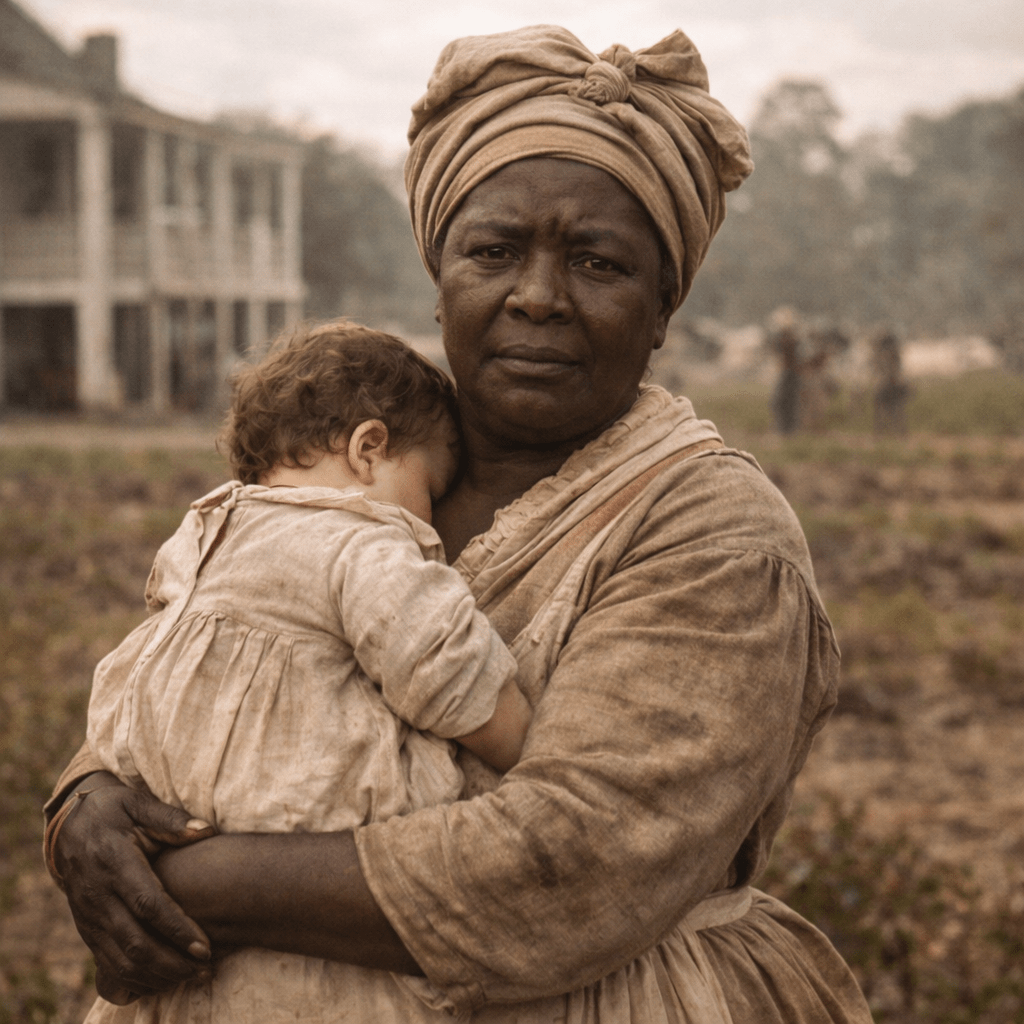
Black Stereotype Series: Mammy – The Origins and Legacy of a Controlling Image.

The “Mammy” stereotype is one of the most enduring and harmful caricatures in American culture, representing Black women as loyal, nurturing, and subservient caretakers of white families. This stereotype has its roots in the era of slavery, evolving into a pervasive image in popular media, advertising, and literature that distorted the realities of Black womanhood.

Historically, a mammy was a Black woman employed by a white household, often enslaved, responsible for raising white children, cooking, cleaning, and managing domestic labor. The role required complete obedience, selflessness, and emotional labor while denying the woman autonomy over her own life.

During slavery, the mammy’s existence was shaped by oppression and survival. While she was sometimes positioned as a maternal figure for white children, she was denied motherhood of her own children, who might be sold, abused, or neglected. This forced nurturing role was a form of psychological control that reinforced white supremacy.

Physical characteristics were often exaggerated in the Mammy stereotype. Popular culture depicted mammies as overweight, dark-skinned, elderly women with wide noses, large eyes, and hair tied in a scarf or kerchief. These features were contrasted against ideals of European beauty to emphasize their “otherness” and justify subservience.

The image of the mammy was not simply descriptive—it was prescriptive. It suggested that Black women were naturally suited for servitude, domestic labor, and caretaking, thereby legitimizing both slavery and racial hierarchies. The mammy became a comforting figure for white society, masking the brutality of slavery behind the illusion of loyalty and affection.

In the post-slavery era, the mammy stereotype persisted in media and advertising. The most famous example is Aunt Jemima, a brand that used a smiling, maternal Black woman as its mascot for pancake syrup and other products. The character reinforced notions that Black women existed to serve white households, normalizing racial subordination for generations.

The creation of the mammy stereotype had multiple causes. It served to ease white guilt over the horrors of slavery, rationalize the economic dependence on enslaved labor, and infantilize Black women as harmless, loyal, and nonthreatening. It also reinforced gendered expectations of women as domestic nurturers, but only within a racialized hierarchy.

Slavery itself created conditions for the mammy figure. Enslaved Black women were separated from their families, forced to work in domestic settings, and denied personal agency. These social realities became simplified and romanticized in cultural narratives, which erased the violence and coercion underlying their labor.

The mammy stereotype also had a visual codification in film and literature. Characters such as Hattie McDaniel in Gone with the Wind epitomized the trope, showing Black women as loyal, jolly, and devoted entirely to white families while remaining sexually desexualized. This image became a template for portrayals of Black women for decades.

Treatment of real-life mammies varied, but it was often harsh and exploitative. While some might have had close bonds with children they cared for, their labor was uncompensated or minimally compensated, and they were frequently subjected to physical punishment, verbal abuse, and systemic neglect.

The stereotype persists in subtle ways in modern culture. Contemporary media still sometimes portrays Black women in caregiving or service-oriented roles, emphasizing nurturing or subservient qualities while neglecting complexity, independence, and agency. These echoes of the mammy reinforce racialized expectations.

A defining aspect of the mammy figure is the emotional labor expected of her. She was imagined as endlessly patient, self-sacrificing, and cheerful regardless of mistreatment or abuse. In reality, enslaved and working Black women often carried immense emotional and physical burdens with no recognition or reward.

The mammy’s image was also carefully codified through dress and posture. Headscarves, aprons, and loose-fitting clothing became shorthand for subservience, domesticity, and age, creating a visual language that signaled loyalty to white households while denying Black women individuality or beauty.

Racist ideologies reinforced the stereotype. By presenting Black women as content in servitude, white society justified ongoing racial hierarchies and minimized the brutality of slavery. The mammy figure served as propaganda, comforting white audiences while erasing Black women’s struggles and resistance.

Advertising and branding further entrenched the mammy stereotype. From Aunt Jemima to various domestic product mascots, corporations leveraged the image of a smiling, motherly Black woman to sell products, perpetuating a reductive and exploitative representation for profit.

The mammy stereotype also intersects with gender oppression. By portraying Black women as caretakers first and individuals second, society denied them sexual, economic, and social autonomy. Their identity was flattened into a role that served white households, leaving little space for recognition of personal aspirations or desires.

Efforts to challenge and dismantle the mammy stereotype have increased in contemporary scholarship and activism. Scholars and cultural critics highlight the harm of these images and advocate for nuanced representations that honor the complexity, strength, and humanity of Black women.

In literature, cinema, and history, Black women’s voices reveal a different narrative than the mammy trope suggests. Enslaved and free women resisted domination in countless ways, asserting their dignity, creating cultural expressions, and protecting families despite systemic oppression.

The mammy stereotype exemplifies how race, gender, and labor intersected under slavery and beyond. It illustrates how visual and cultural symbols can enforce social hierarchies while shaping perceptions of entire communities. Understanding this history is critical to dismantling persistent racial stereotypes.

Ultimately, the mammy figure is not a reflection of reality but a tool of control and propaganda. Recognizing its origins, effects, and ongoing influence helps to contextualize contemporary struggles for representation, equity, and the reclamation of Black women’s narratives and beauty.


References

Giddings, P. (1984). When and Where I Enter: The Impact of Black Women on Race and Sex in America. HarperCollins.

Pilgrim, D. (2012). The Mammy Caricature. Jim Crow Museum of Racist Memorabilia, Ferris State University. Retrieved from https://www.ferris.edu/HTMLS/news/jimcrow/mammies/

Wallace-Sanders, K. (2008). Mammy: A Century of Race, Gender, and Southern Memory. University of Michigan Press.

Hine, D. C., Hine, W. C., & Harrold, S. (2009). The African American Odyssey. Pearson Higher Ed.

Pilgrim, D. (2000). Aunt Jemima and the Mammy Figure. Retrieved from https://www.ferris.edu/HTMLS/news/jimcrow/mammies/

West, C. M. (1995). Mammy, Jezebel, Sapphire, and Their Homegirls: Developing an “Oppositional Gaze” Toward the Images of Black Women. In Black Women in America (pp. 28–42). Indiana University Press.

Hall, K. (1992). Hair as Power: Cultural Identity and Resistance in African American History. Journal of American History, 79(3), 921–939.
History in Black: The Slave Trade

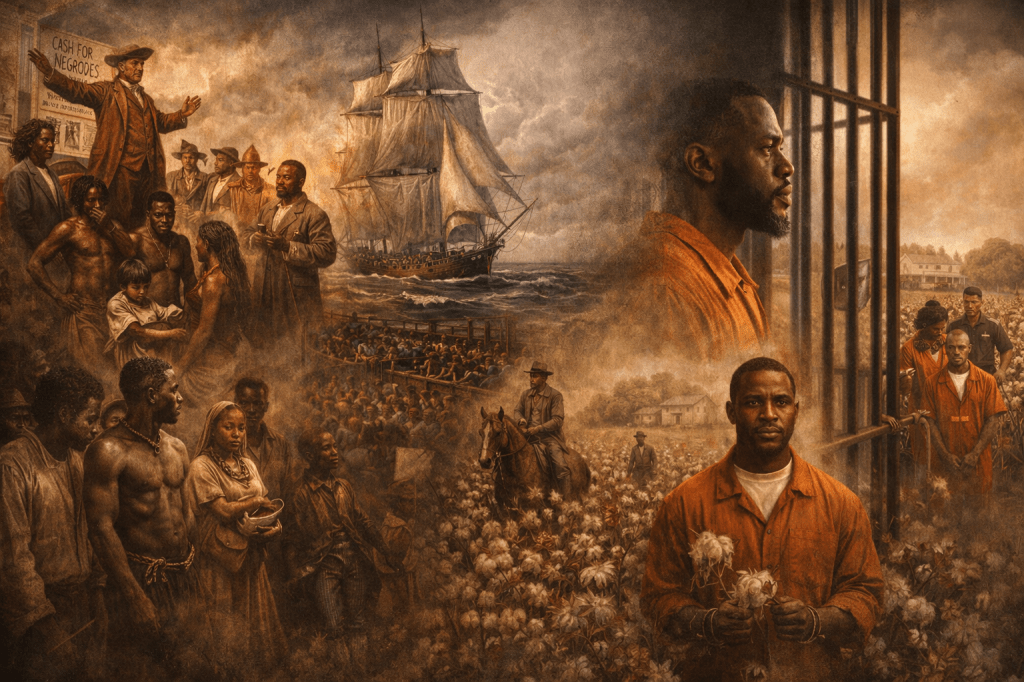
The history of the transatlantic slave trade is one of the most defining and devastating chapters in Black history, shaping the modern world through violence, exploitation, and racial hierarchy. It represents not merely a period of forced labor, but the systematic dehumanization of African peoples and the construction of a global economy built on Black suffering. Slavery was not accidental or natural; it was a deliberate system engineered for profit, power, and domination.

The slave trade began in the late 15th century with European expansion into Africa and the Americas. Portuguese and Spanish traders were among the first to establish routes, followed by the British, French, Dutch, and later Americans. Africa became a central source of labor for European colonies in the so-called “New World,” especially in plantations producing sugar, cotton, tobacco, and coffee.

The primary reason behind the slave trade was economic. European empires needed a massive labor force to exploit land stolen from Indigenous peoples. Africans were targeted because they were already skilled agricultural workers, could survive tropical climates, and were geographically accessible through coastal trading ports. Race was later used to morally justify what was, at its core, an economic crime.

African people were captured through warfare, raids, kidnappings, and betrayal by local intermediaries pressured or coerced into participating. Millions were marched to coastal forts, imprisoned in dungeons, and branded as property. Families were torn apart permanently, with no regard for kinship, language, or humanity.

The Middle Passage was one of the most horrific experiences in human history. Enslaved Africans were packed into ships like cargo, chained, starved, raped, beaten, and thrown overboard. Many died from disease, suicide, or suffocation before ever reaching land. Those who survived arrived psychologically traumatized and physically broken.

Upon arrival in the Americas, Black people were sold at auction and legally reduced to chattel. They were stripped of names, cultures, religions, and identities. Enslaved Africans were treated not as human beings, but as livestock—bred, whipped, mutilated, and worked to death.

Slavery was enforced through extreme violence. Enslaved people were beaten, lynched, raped, and tortured for disobedience. Laws known as slave codes made it illegal for Black people to read, write, gather, or defend themselves. Resistance was punished with death.

Yet, despite unimaginable brutality, enslaved Africans resisted constantly. They escaped, revolted, preserved culture, practiced spiritual traditions, and passed down ancestral knowledge. Revolts such as the Haitian Revolution proved that enslaved people never accepted their condition as legitimate.

In the United States, slavery became the foundation of the national economy. Cotton was king, and enslaved labor made America one of the richest nations on earth. Banks, insurance companies, universities, and governments were directly funded by slave profits.

The Civil War (1861–1865) led to the formal abolition of slavery in the U.S. through the 13th Amendment. However, freedom was largely symbolic. Formerly enslaved people were released into poverty with no land, no resources, and no protection.

Immediately after slavery, Black Americans faced Black Codes, sharecropping, and convict leasing—systems that recreated slavery under new names. Prisons replaced plantations. Chain gangs replaced whips. Black labor remained controlled.

The Jim Crow era legalized racial segregation and terror. Lynchings, racial pogroms, and voter suppression were used to maintain white supremacy. Black people were excluded from housing, education, healthcare, and political power.

The Civil Rights Movement of the 1950s and 60s challenged legal segregation. Figures like Martin Luther King Jr., Malcolm X, and Fannie Lou Hamer fought for basic human rights. Laws changed, but systems did not.

Mass incarceration emerged as the new form of social control. The “War on Drugs” targeted Black communities, filling prisons with nonviolent offenders. Black men became statistically more likely to be incarcerated than to attend college.

Police violence replaced slave patrols. The same logic of control persisted: Black bodies were still viewed as dangerous, disposable, and criminal. Surveillance, brutality, and profiling became modern tools of oppression.

Economic inequality remains rooted in slavery. The racial wealth gap, housing discrimination, school segregation, and healthcare disparities all trace back to stolen labor and denied opportunity.

Globally, the legacy of slavery continues through neocolonialism, resource extraction, and economic dependency across Africa and the Caribbean. Western wealth still rests on historical exploitation.

Culturally, Black identity has been shaped by trauma and resilience. Music, religion, language, and art emerged as tools of survival. Black culture became both a source of global influence and commodification.

Psychologically, slavery created intergenerational trauma. Internalized racism, colorism, and identity fragmentation are modern expressions of historical violence. The mind became another site of colonization.

Legally, slavery was never repaired. There were no reparations, no land restitution, no national healing process. Former enslavers were compensated—former slaves were not.

From slavery to Jim Crow, from segregation to mass incarceration, the system changed in form but not in function. Black people remain disproportionately policed, imprisoned, impoverished, and surveilled.

History in Black reveals a painful truth: slavery did not end—it evolved. The chains became invisible, the plantations became prisons, and the auction blocks became algorithms. What changed were the laws. What did not change was the structure of power.


References

Alexander, M. (2012). The New Jim Crow: Mass incarceration in the age of colorblindness. The New Press.

Baptist, E. E. (2014). The half has never been told: Slavery and the making of American capitalism. Basic Books.

Berlin, I. (2003). Generations of captivity: A history of African-American slaves. Harvard University Press.

Du Bois, W. E. B. (1935). Black reconstruction in America. Free Press.

Equiano, O. (1789). The interesting narrative of the life of Olaudah Equiano. Author.

Equal Justice Initiative. (2017). Lynching in America: Confronting the legacy of racial terror. https://eji.org

Gates, H. L. (2014). The African Americans: Many rivers to cross. PBS.

Hochschild, A. (1998). King Leopold’s ghost. Houghton Mifflin.

Kendi, I. X. (2016). Stamped from the beginning: The definitive history of racist ideas in America. Nation Books.

UNESCO. (2010). The transatlantic slave trade database. https://www.slavevoyages.org

U.S. National Archives. (n.d.). 13th Amendment to the U.S. Constitution. https://www.archives.gov

Washington Post. (2020). Fatal Force: Police shootings database. https://www.washingtonpost.com/graphics/investigations/police-shootings-database/

Williams, E. (1944). Capitalism and slavery. University of North Carolina Press.

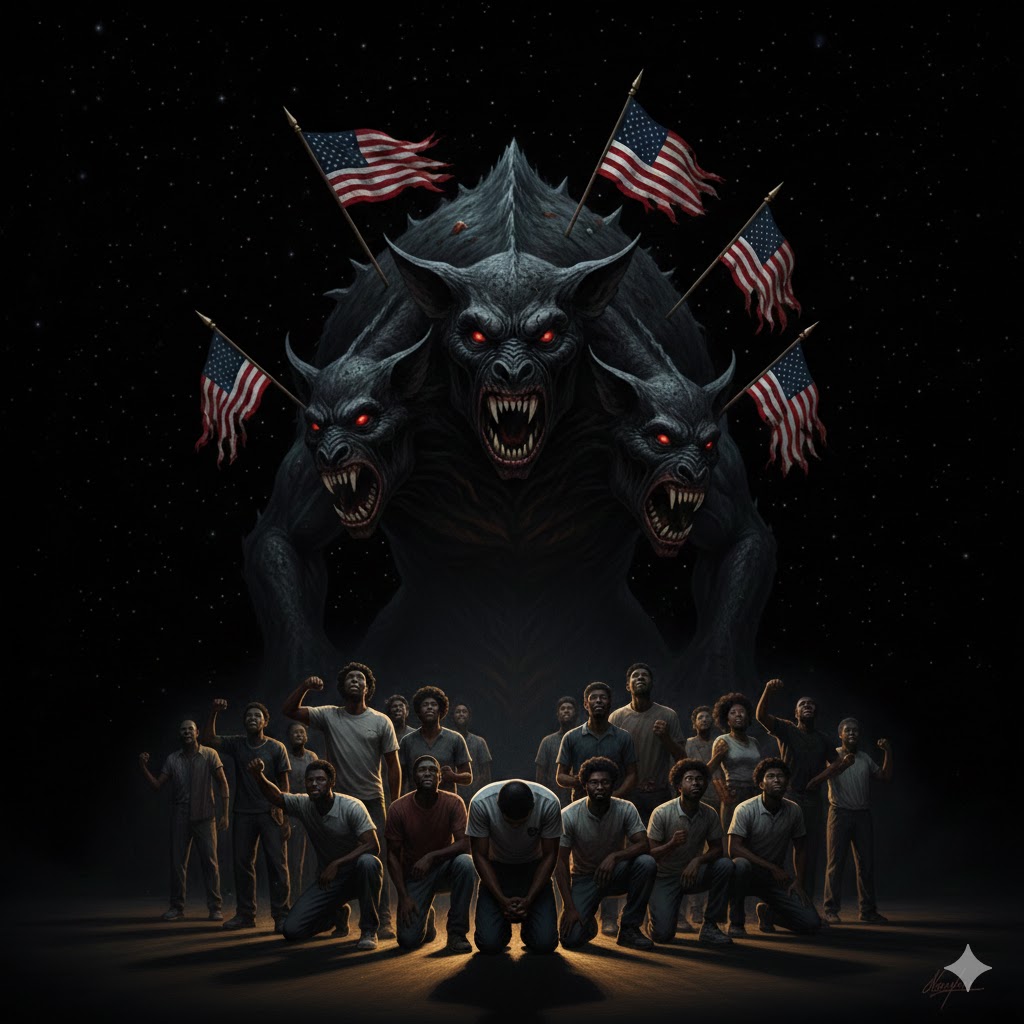
Dilemma : The Beast Nation

The term Beast Nation is not merely rhetorical; it is biblical, symbolic, and historical. In Scripture, beasts represent empires built on domination, violence, deception, and exploitation (Daniel 7; Revelation 13). America, when examined through its treatment of Black and Indigenous peoples, mirrors the characteristics of a prophetic beast—powerful, wealthy, religious in language, yet ruthless in practice.

Colonialism marks the first stage of the Beast Nation. European powers arrived under the banner of “discovery,” yet what followed was invasion, land theft, and cultural annihilation. Indigenous nations were displaced, murdered, and erased to establish settler dominance, fulfilling the biblical pattern of conquest through bloodshed (Habakkuk 2:12, KJV).

Colonial theology weaponized Christianity to justify conquest. Scripture was distorted to portray Europeans as divinely ordained rulers while Africans and Indigenous peoples were cast as subhuman. This manipulation of God’s Word mirrors the beast that speaks “great things and blasphemies” (Revelation 13:5, KJV).

Chattel slavery institutionalized this evil into law. Unlike other forms of servitude, chattel slavery reduced Africans to lifelong, inheritable property. Black bodies became commodities—bought, sold, bred, insured, and punished—stripped of humanity and covenantal identity.

The Bible condemns manstealing explicitly: “He that stealeth a man, and selleth him…shall surely be put to death” (Exodus 21:16, KJV). Yet America built its wealth in direct violation of this command, revealing the moral contradiction at its core.

Reconstruction briefly exposed the Beast Nation’s fear of Black autonomy. Promises of “40 acres and a mule” symbolized restitution and independence, yet these promises were rescinded. Land was returned to former enslavers, while Black families were thrust into sharecropping and debt peonage.

This betrayal echoed Proverbs 20:10: “Divers weights, and divers measures, both of them are alike abomination to the LORD” (KJV). America promised justice publicly while practicing theft privately.

Jim Crow followed as a system of racial terror disguised as law. Segregation, lynching, and voter suppression enforced white supremacy through fear. Black progress was criminalized, and racial hierarchy was violently preserved.

Lynching functioned as public ritual—Black bodies displayed as warnings. Crosses burned beside corpses while churches remained silent or complicit. This hypocrisy fulfilled Isaiah 1:15: “Your hands are full of blood” (KJV).

Surveillance evolved as a modern method of control. Slave patrols became police departments; plantation ledgers became data systems. Black neighborhoods were watched, tracked, and criminalized long before digital technology made surveillance ubiquitous.

The civil rights movement revealed the Beast Nation’s resistance to righteousness. Peaceful protestors were beaten, jailed, assassinated, and vilified. America condemned foreign tyranny while unleashing state violence on its own citizens.

Dr. King’s assassination symbolized the cost of prophetic truth. Like the prophets before him, he confronted power—and paid with his life (Matthew 23:37, KJV).

The War on Drugs marked a new era of legalized oppression. Though drug use was statistically similar across races, Black communities were targeted disproportionately. Mandatory minimums, three-strikes laws, and police militarization fueled mass incarceration.

Scripture warns of unjust laws: “Woe unto them that decree unrighteous decrees” (Isaiah 10:1, KJV). The prison system became a modern plantation, extracting labor and removing generations of Black men and women from their communities.

America proclaims itself the “Land of the Free,” yet millions of Black people lived and died in bondage on that very soil. Freedom was declared selectively, revealing liberty as conditional rather than universal.

It calls itself the “Home of the Brave,” while Indigenous nations were slaughtered, displaced, and confined to reservations. Courage was claimed by conquerors, while resistance was labeled savagery.

“In God We Trust” is stamped on currency that once financed human trafficking, slave ships, and plantations. Mammon was worshiped while God’s commandments were violated (Matthew 6:24, KJV).

“One Nation Under God” rang hollow as Black bodies swung from trees and crosses burned in terror campaigns. God’s name was invoked while His image-bearers were desecrated.

“Liberty and justice for all” existed only for white citizens. Black Americans were excluded from the social contract, taxed without representation, and punished without protection.

Education systems sanitized this history, presenting America as a flawed but noble experiment rather than a predatory empire. Truth was buried beneath patriotism.

Media reinforced the beast’s image, portraying Black resistance as threat and Black suffering as deserved. Narrative control became psychological warfare.

Churches often chose comfort over conviction. Many preached obedience to the state while ignoring God’s demand for justice (Micah 6:8, KJV).

The Beast Nation thrives on amnesia. Forgetting allows repetition; silence permits continuation.

Biblically, beasts fall when truth is revealed and judgment arrives (Daniel 7:26). Empires collapse not from external enemies alone, but from internal corruption.

For Black America, survival has always required spiritual discernment—recognizing systems not merely as flawed, but as adversarial.

The Exodus narrative reminds us that God hears the cries of the oppressed (Exodus 3:7, KJV). Liberation is divine, not granted by empires.

The Beast Nation fears awakening. Knowledge of history, identity, and covenant threatens its legitimacy.

Judgment begins with truth. Repentance demands restitution, not rhetoric.

Until justice flows “like waters, and righteousness like a mighty stream” (Amos 5:24, KJV), America remains a beast clothed in religious language and democratic symbols.


References

Alexander, M. (2012). The new Jim Crow: Mass incarceration in the age of colorblindness. The New Press.

Baptist, E. E. (2014). The half has never been told: Slavery and the making of American capitalism. Basic Books.

Du Bois, W. E. B. (1935). Black reconstruction in America. Free Press.

Horsman, R. (1981). Race and manifest destiny. Harvard University Press.

KJV Bible. (1769/2017). Authorized King James Version.

Wilkerson, I. (2020). Caste: The origins of our discontents. Random House.