
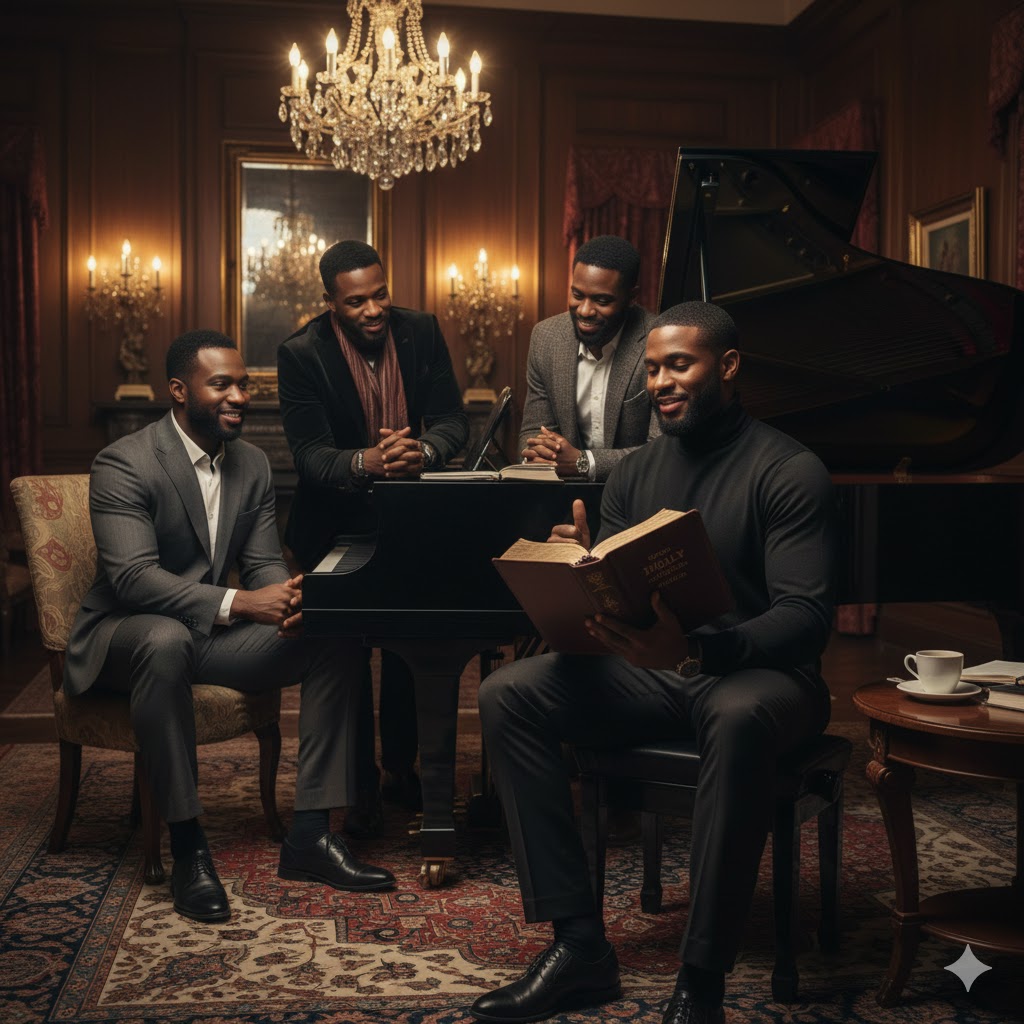
Manhood is not defined by age, wealth, or status. True manhood is measured by character, responsibility, and spiritual integrity. For Black men, the journey toward authentic masculinity often intersects with societal pressures, cultural expectations, and the call of God’s Word. Understanding what it means to be a man is both a personal and spiritual pursuit.
Historically, Black men have been subjected to narratives that distort masculinity. From slavery to systemic oppression, stereotypes have painted them as irresponsible, violent, or absent. These false images create internal and external obstacles to embracing God-honoring manhood.
Biblical manhood begins with identity in God. “Be strong and of a good courage, fear not, nor be afraid of them: for the Lord thy God, he it is that doth go with thee” (Deuteronomy 31:6, KJV). A man’s confidence and purpose are rooted not in external validation, but in God’s calling.
True manhood requires self-discipline. Proverbs 25:28 warns, “He that hath no rule over his own spirit is like a city that is broken down, and without walls” (KJV). Controlling one’s emotions, desires, and decisions is foundational to spiritual and personal growth.
Responsibility is a hallmark of manhood. Black men are often measured by their ability to provide, protect, and lead. Yet the Bible emphasizes spiritual leadership first: guiding one’s family, community, and self in righteousness.
Character development is non-negotiable. Integrity, honesty, and humility distinguish a man from a boy. “The just man walketh in his integrity: his children are blessed after him” (Proverbs 20:7, KJV). Legacy is built through principled living.
A man must confront and overcome fleshly desires. Sinful patterns—lust, greed, anger, and pride—undermine growth. Paul admonishes believers: “Mortify therefore your members which are upon the earth” (Colossians 3:5, KJV). Discipline over the flesh empowers freedom.
Courage is central to manhood. Black men are called to confront injustice, pursue truth, and make difficult decisions. Joshua 1:9 commands, “Be strong and of a good courage; be not afraid, neither be thou dismayed: for the Lord thy God is with thee whithersoever thou goest” (KJV). Courage is both spiritual and practical.
Mentorship and guidance are crucial. Proverbs 27:17 declares, “Iron sharpeneth iron; so a man sharpeneth the countenance of his friend” (KJV). Surrounding oneself with godly and wise men accelerates growth and strengthens accountability.
Emotional intelligence is essential. Society often teaches Black men to suppress vulnerability. However, emotional awareness enhances relationships, leadership, and resilience. God created men with the capacity to feel deeply and empathize.
Faith-centered manhood integrates work, prayer, and service. James 2:17 reminds, “Even so faith, if it hath not works, is dead, being alone” (KJV). Spiritual commitment is demonstrated through action, not mere belief.
Financial stewardship is part of biblical manhood. Proverbs 13:11 states, “Wealth gotten by vanity shall be diminished: but he that gathereth by labour shall increase” (KJV). Discipline in finances reflects maturity, responsibility, and foresight.
Marriage and family provide arenas for growth. Husbands and fathers are called to love, lead, and sacrifice. Ephesians 5:25 instructs, “Husbands, love your wives, even as Christ also loved the church” (KJV). Leadership in the home begins with service.
Mentally, a man must resist societal pressures that promote toxic masculinity. Strength is not domination; authority is not oppression. True power aligns with justice, compassion, and accountability.
Health and fitness reflect stewardship of God’s temple. 1 Corinthians 6:19–20 teaches, “Ye are not your own; for ye are bought with a price: therefore glorify God in your body” (KJV). Physical discipline complements spiritual discipline.
A man must embrace patience. Growth, recognition, and fulfillment rarely arrive instantly. Ecclesiastes 7:8 notes, “Better is the end of a thing than the beginning thereof” (KJV). Patience cultivates wisdom and stability.
Community involvement shapes identity. Black men grow by uplifting others, mentoring youth, and contributing to the collective good. Leadership is measured not only by personal success but by the impact on society.
Humility is critical to lasting influence. Pride isolates; humility attracts guidance and multiplies respect. Philippians 2:3 urges, “Let nothing be done through strife or vainglory; but in lowliness of mind let each esteem other better than themselves” (KJV).
Perseverance is non-negotiable. Trials, discrimination, and setbacks test faith and character. Romans 5:3–4 teaches, “…tribulation worketh patience; And patience, experience; and experience, hope” (KJV). Endurance shapes legacy.
Ultimately, becoming a true man is a lifelong pursuit. It is measured by faith, integrity, love, and service. A man who aligns his life with God’s Word walks with confidence, purpose, and honor, leaving a legacy that transcends circumstance.
References
The Holy Bible, King James Version. (1769/2017). Cambridge University Press.
Hammond, R. (2018). Manhood and faith: Rediscovering biblical masculinity. Baker Academic.
Glaude, E. S., Jr. (2010). In a shade of blue: African American men and identity in contemporary society. Beacon Press.
Greene, J. (2014). Black male identity and the spiritual journey. Journal of African American Studies, 18(2), 145–163.
Hooks, B. (2004). The will to change: Men, masculinity, and love. Washington Square Press.




 THE BROWN GIRL DILEMMA