Category Archives: black history

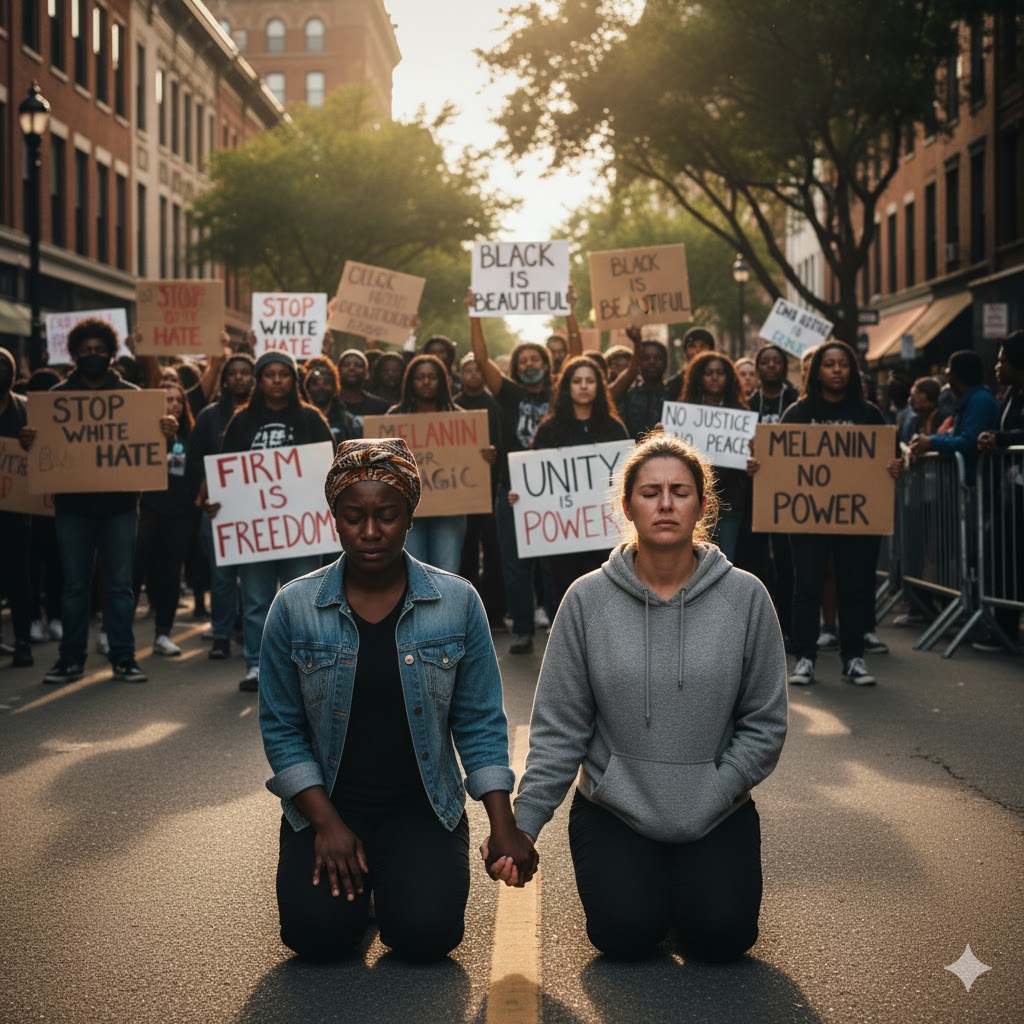
Dilemma: Being Pro-Black Does Not Mean Being Anti-White.

I believe that in every nation, there are both good and bad people. I do not believe that every white person is evil, nor do I subscribe to the idea that being pro-Black requires hating anyone of another race. Some of my closest friends are white, and many of the greatest opportunities and support I have received in life have come from individuals who do not look like me. However, I do not like how Black people were treated at the hands of white people throughout history. They did some evil things to my people—enslaving, dehumanizing, and oppressing generations in ways that still echo today. Yet even in my pain, I do not excuse treating people badly with racism and hate. My faith and conscience teach me that evil should not be repaid with evil. I believe in accountability, truth, and love that heals rather than destroys.

The phrase “being pro-Black” has been misunderstood by many, often distorted by social media and political rhetoric. To be pro-Black is to affirm, protect, and uplift the value of Black life, culture, and history in a world that has too often devalued it. It means loving who we are without apology, restoring what has been stolen, and healing what has been broken. Yet it does not mean to hate or reject others. It is possible—and necessary—to celebrate one’s heritage while still embracing universal humanity (hooks, 1992).

The false assumption that pro-Blackness equals anti-whiteness often stems from fear and guilt rather than understanding. Historically, those in power have portrayed Black pride as a threat to the status quo. During the Civil Rights Movement, for instance, calls for equality were met with accusations of aggression or reverse racism. But love of self is not hatred of others. The same world that celebrates Italian heritage or Irish pride should not condemn Black people for loving themselves and seeking liberation (West, 2001).

To be pro-Black is to reject oppression, not to reject individuals. It is to stand against systems that perpetuate inequality, from slavery to segregation to modern-day mass incarceration. When Black people advocate for justice, they are not attacking white people—they are attacking racism, a sin and a structure that dehumanizes both the oppressed and the oppressor (King, 1963).

The Bible itself speaks to the unity of humanity and the diversity of creation. Acts 17:26 (KJV) declares, “And hath made of one blood all nations of men for to dwell on all the face of the earth.” This scripture reveals that ethnic difference was never meant to divide us but to display the beauty of divine variety. Therefore, affirming Black identity aligns with biblical truth, not contradiction. God does not erase our color; He sanctifies it for His glory.

I have personally encountered compassion and understanding from white allies who have listened, supported, and helped amplify Black voices. Their actions remind me that allyship is not about guilt—it’s about shared humanity. Many white individuals throughout history have stood against racial injustice, from the abolitionists who risked their lives to end slavery to modern-day activists who march beside us in solidarity (Alexander, 2010).

Being pro-Black means loving the legacy of our ancestors—the kings and queens, the inventors, scholars, artists, and visionaries who built civilizations long before colonial contact. It means unlearning internalized inferiority and celebrating the brilliance of melanin, rhythm, creativity, and resilience. None of this requires hatred toward others. It requires healing, remembrance, and restoration of self-worth.

Racism thrives when people believe they must compete for dignity. The truth is, dignity is not a scarce resource—it is divinely infinite. Every race can celebrate its heritage without diminishing another’s. The problem arises when celebration turns into supremacy. White supremacy, not whiteness, is the enemy of humanity; it is the spiritual and social lie that some people are inherently superior to others.

Being pro-Black is an act of spiritual alignment. It is about returning to the image of God within the Black man and woman, distorted for centuries by slavery, colonialism, and Eurocentric theology. It is a declaration that our skin is not a curse but a crown. To affirm this truth does not exclude others from divine love but insists that all people recognize and respect Black humanity as equal in worth and wonder.

Many misunderstandings about pro-Blackness arise from the pain of history. The trauma of slavery and racial violence has left scars across generations. For some, anger toward injustice may appear as hatred toward white people, but more often it is grief, unhealed pain, and frustration over centuries of inequity. True pro-Black love transforms that pain into purpose—it heals instead of hardens.

Cultural pride must be rooted in love, not resentment. The late theologian Howard Thurman (1949) wrote that hatred “confuses the issues” and “distorts the personality.” Hatred consumes both victim and perpetrator. Therefore, being pro-Black should never mean exchanging one form of prejudice for another. Instead, it should mean striving for freedom of the soul, mind, and body while extending grace toward others who walk a different path.

Social progress has always depended on cooperation between people of different races. The abolition of slavery, the Civil Rights Movement, and today’s justice movements all demonstrate that racial equality cannot be achieved in isolation. It requires solidarity—a shared vision for humanity’s moral and spiritual evolution. To be pro-Black is to contribute to that evolution by affirming one’s identity while respecting others’.

Love of one’s people does not require permission or apology. Black pride should not be seen as separatist, but as a necessary corrective to centuries of oppression. When others learn to see pro-Blackness as love rather than hate, dialogue replaces division. Dr. Martin Luther King Jr. reminded us that “love is the only force capable of transforming an enemy into a friend.” Such love is active, courageous, and rooted in justice (King, 1963).

To be pro-Black also means telling the truth about history. It means confronting uncomfortable realities—colonialism, slavery, Jim Crow, redlining, and ongoing discrimination—without bitterness but with moral clarity. A people cannot heal from what they refuse to face. Truth-telling is not anti-white; it is pro-truth, and truth sets everyone free (John 8:32).

Pro-Black identity challenges everyone to reflect on their own cultural roots. Just as Black people reclaim their heritage, so can white people embrace theirs responsibly—without superiority, guilt, or shame. Healing the racial divide begins when each group honors its past, learns from it, and walks in humility toward reconciliation.

It is essential to remember that allyship and accountability can coexist. Being pro-Black does not mean excusing racism among non-Black communities; it means calling for transformation in love. Genuine allies understand that fighting racism benefits all humanity, not just one race. The liberation of one group uplifts the moral consciousness of the whole.

The heart of pro-Blackness is not division but divine order. It seeks the restoration of balance—a world where Black children see their worth reflected in books, films, and leadership. When that balance is restored, everyone benefits. A tree that grows strong in its roots provides shade for all who rest beneath it.

In my journey, I have learned that love for my people deepens my compassion for all people. When I see the suffering of others, regardless of race, I am moved by the same empathy that compels me to uplift my own community. The closer one walks with God, the more one recognizes that love cannot be confined by color.

To be pro-Black is to walk in truth, to heal from generational wounds, and to stand tall in divine dignity. It is to know that we can love ourselves without diminishing anyone else. The world becomes more just when every race celebrates its own identity while respecting others’. True power is not found in domination but in understanding.

Ultimately, being pro-Black is about love—love for self, love for community, and love for humanity. It is about breaking the chains of oppression through education, unity, and spiritual awakening. It is a call to rise without resentment, to build without bitterness, and to shine without shade. In the words of Galatians 3:28 (KJV), “There is neither Jew nor Greek, bond nor free… for ye are all one in Christ Jesus.”


References

  • Alexander, M. (2010). The New Jim Crow: Mass Incarceration in the Age of Colorblindness. The New Press.
  • hooks, b. (1992). Black Looks: Race and Representation. South End Press.
  • King, M. L. Jr. (1963). Strength to Love. Harper & Row.
  • Thurman, H. (1949). Jesus and the Disinherited. Abingdon-Cokesbury Press.
  • West, C. (2001). Race Matters. Beacon Press.
The Dilemmas that Black People Face Today #blackpeopleproblems

The dilemmas Black people face today are not isolated incidents or random social struggles. They are the cumulative result of centuries of oppression, displacement, cultural erasure, forced migration, systemic racism, and generational trauma. These dilemmas cut across spiritual identity, economic access, education, justice, family structure, mental health, and even the image of Blackness itself. They form a complex landscape that Black people must navigate daily while still fighting to build dignity, community, and hope.

One enduring dilemma is the tension between resilience and exhaustion. Black people are praised for their strength, creativity, and spiritual fortitude, yet they are rarely granted the space to be vulnerable, tired, or human. Society often romanticizes Black resilience while ignoring the systems that make resilience necessary. This creates a psychological weight where Black individuals feel pressure to endure silently rather than process emotional wounds.

Another dilemma lies in the legacy of identity fragmentation. Across the diaspora, Black people wrestle with questions of origin, belonging, and cultural continuity. The transatlantic slave trade severed language, history, names, and lineage—leaving many African Americans searching for spiritual and ancestral clarity. This leads to an internal conflict between who society has labeled them to be and who they truly are in God, history, and heritage.

Black people also face the dilemma of visibility versus hypervisibility. In many spaces, they are underrepresented, unheard, and overlooked. In other areas—such as criminal justice, entertainment, and surveillance—they are overly scrutinized, stereotyped, or consumed as spectacle. This paradox creates a constant negotiation between wanting to be seen accurately and wanting to be protected from harmful gaze.

Economically, the dilemma of access without equity remains a major barrier. While Black people may have access to schools, jobs, loans, and housing on paper, systemic practices—such as redlining, wage gaps, discriminatory hiring, and unequal school funding—undermine true equality. The presence of opportunity does not guarantee fairness, and this gap breeds frustration, fatigue, and generational stagnation.

Culturally, Black people face the dilemma of contribution without credit. From music to fashion, science scholarship, the Black world has shaped global culture. Yet those contributions are often appropriated, watered down, or erased, leaving Black creators without recognition or resources. Even in faith spaces, Black biblical history is minimized despite its foundational importance.

Within families, Black communities often face dilemmas created by historical disruption, including mass incarceration, economic instability, and systemic attacks on the Black home. These pressures can create strain in marriages, parenting, and generational continuity, forcing Black families to build structure while battling forces that aim to dismantle it.

Spiritually, there is a dilemma between faith and suffering. Black people often ask, “Where is God in our struggle?”—echoing the cries of Job and the laments of Israel. Yet faith has also been a source of resistance, identity, and liberation throughout Black history. The struggle lies in reconciling divine purpose with earthly injustice.

Colorism creates another dilemma: beauty standards versus self-worth. Internalized Eurocentric ideals can pit dark-skinned and light-skinned individuals against one another, producing wounds that trace back to slavery’s hierarchy. This dilemma shapes relationships, confidence, employment, desirability, and mental health.

In the area of justice, Black people face the dilemma of legal rights versus lived reality. Though laws promise equality, the outcomes—from traffic stops to sentencing—tell a different story. This dissonance reinforces a mistrust in systems meant to protect but instead discriminate.

Mental health remains a growing dilemma, as Black people contend with trauma, stress, discrimination, financial pressure, and societal expectations, all while lacking equitable access to culturally relevant care. Silence around therapy and emotional vulnerability can hinder healing.

Educationally, Black students face the dilemma of expectations versus opportunities. While excellence is often demanded, support is not always given. This leads to underfunded schools, biased assessments, and unequal advancement.

Social media has introduced new dilemmas—hyperexposure, comparison culture, cyberbullying, and the performative nature of modern identity. Though it allows Black voices to rise, it also magnifies criticism, competition, and unrealistic ideals.

And at the heart of all dilemmas lies a deeper spiritual one: the ongoing struggle for self-definition. Black people are constantly reclaiming a narrative that the world has tried to rewrite. This dilemma fuels movements, art, scholarship, and faith-based awakenings that reconnect Black people to origin, dignity, and divine purpose.

Despite these challenges, Black people continue to rise, resist, create, and believe. The dilemmas are real, but so is the power, brilliance, and spiritual calling placed upon the descendants of survival.


References

Alexander, M. (2010). The new Jim Crow: Mass incarceration in the age of colorblindness. The New Press.
Branch, T. (1988). Parting the waters: America in the King years, 1954–1963. Simon & Schuster.
Du Bois, W. E. B. (1903). The souls of Black folk. A. C. McClurg & Co.
hooks, b. (1995). Killing rage: Ending racism. Henry Holt.
Painter, N. I. (2006). Creating Black Americans: African-American history and its meanings. Oxford University Press.
Wilkerson, I. (2020). Caste: The origins of our discontents. Random House.
Woodson, C. G. (1933). The mis-education of the Negro. Associated Publishers.

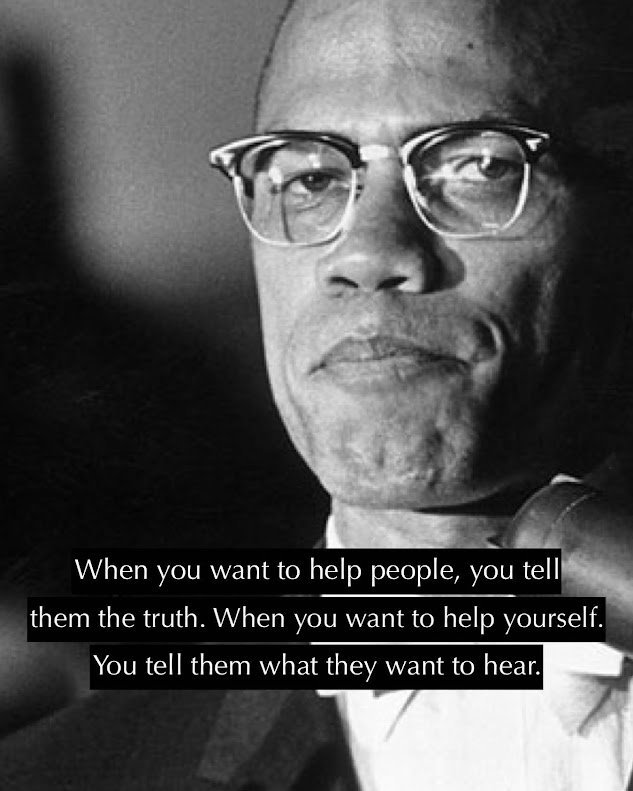
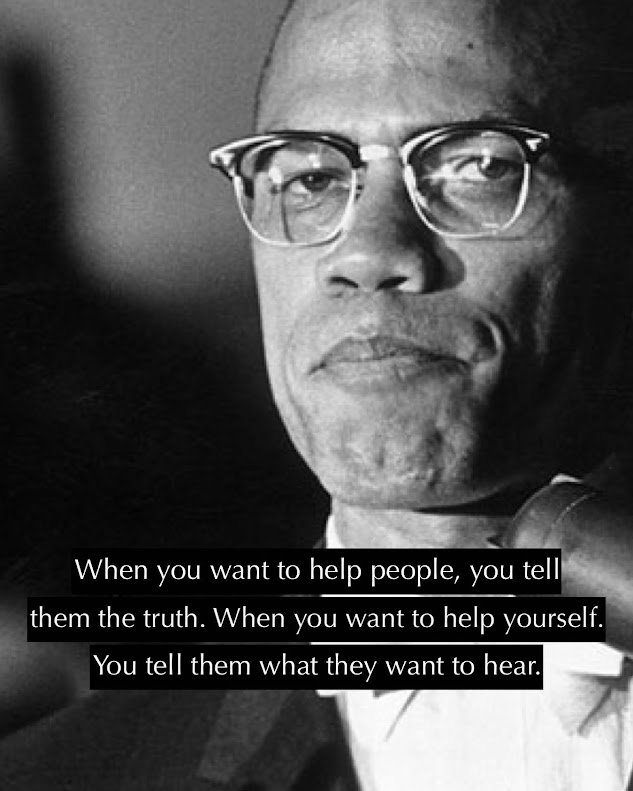
Malcolm says….

This photograph is the property of its respective owner. No copyright infringement intended.

Black Pride & Self-Respect

Malcolm X emphasized that Black people must love themselves first:

“We have been brainwashed, we have been hoodwinked, we have been bamboozled.”

“You can’t hate the roots of a tree and not hate the tree. You can’t hate Africa and not hate yourself.”

“We didn’t land on Plymouth Rock — the rock was landed on us.”

He fought against internalized inferiority and pushed for a mental and spiritual rebirth.


2. Self-Defense & Protection of Black Life

Malcolm rejected passive suffering:

“I am for violence if non-violence means we continue postponing a solution to the American Black man’s problem just to avoid violence.”

“You don’t have a revolution in which you love your enemy.”

His stance was not hatred — it was dignity, safety, and self-preservation.


3. Black Unity

Malcolm believed unity was a divine duty and the key to liberation:

“We need to stop begging the white man for what he cannot give us — freedom.”

“You can’t separate peace from freedom, because no one can be at peace unless he has his freedom.”

He urged Pan-African consciousness and global solidarity.


4. Independence & Self-Determination

He called Black people to build power for themselves:

“If you’re not ready to die for it, put the word ‘freedom’ out of your vocabulary.”

“The future belongs to those who prepare for it today.”


5. The Beauty & Majesty of Blackness

Malcolm preached Black excellence:

“The most disrespected person in America is the Black woman. The most unprotected person in America is the Black woman. The most neglected person in America is the Black woman.”

“You’re not supposed to be so blind with patriotism that you can’t face reality.”

He affirmed Black womanhood, identity, and moral authority.


6. Spiritual Destiny

As his worldview evolved, Malcolm spoke in biblical tones about Black suffering and redemption:

“One day may we all meet together in the light of understanding.”

Toward the end of his life, he emphasized global unity, African sovereignty, and spiritual truth.


Essence of Malcolm X’s Message

Malcolm X said Black people were:

  • A chosen and mighty people
  • Historically oppressed but destined to rise
  • Worthy of dignity, power, and love
  • Capable of creating their own future

His mission was to wake up his people.


In Summary

Malcolm X told Black people:
You are powerful. You are beautiful. Stop apologizing. Rise.

His message remains a prophetic call:

Honor yourself. Protect your people. Know your history. Walk in greatness.

The Wrath of Black Resilience

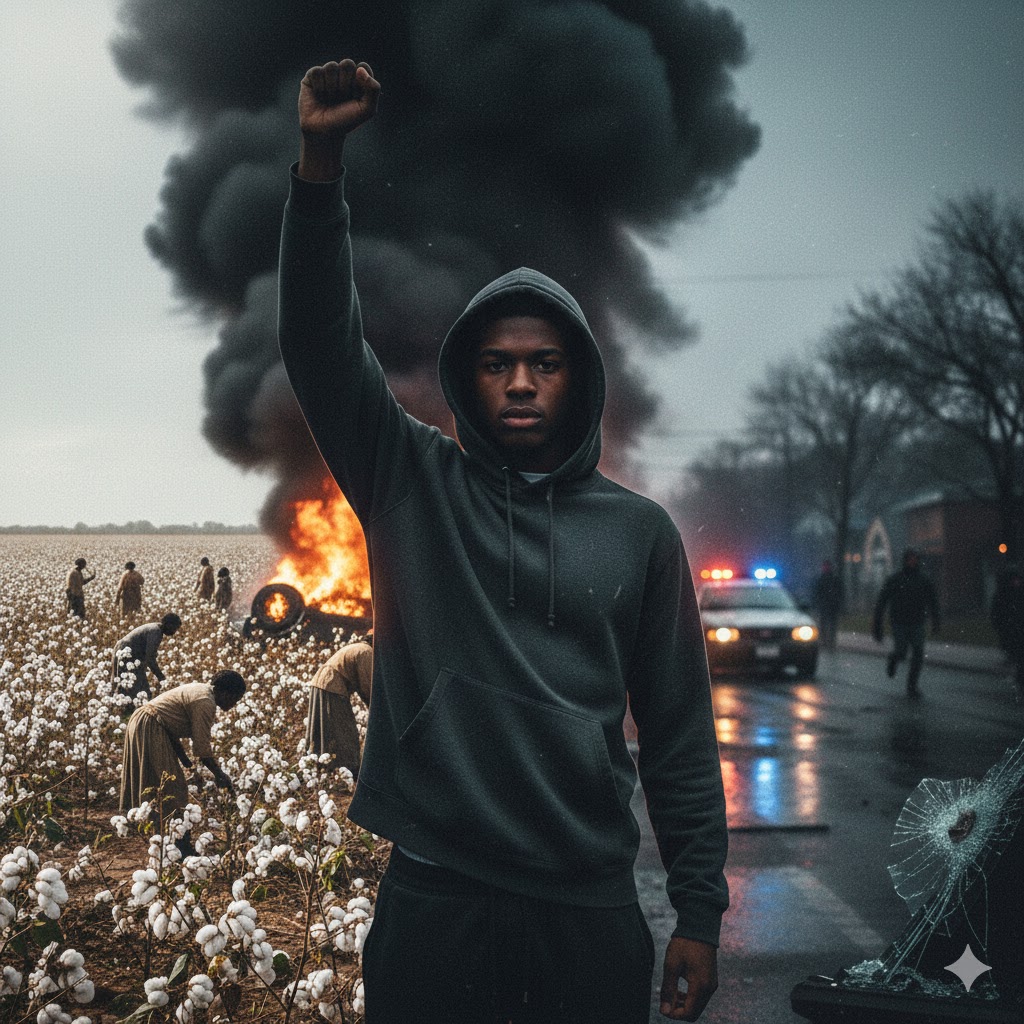
Black resilience is not a gentle force; it is a righteous wrath forged through centuries of pressure, pain, and perseverance. It is the fire that refuses to be extinguished, the power that rises from ashes with dignity still intact. This resilience is both a shield and a sword, shaped by generational survival and spiritual endurance.

The wrath of Black resilience is not destructive—it is transformative. It is the fierce determination to exist in a world that has tried, repeatedly, to erase, distort, or diminish Black life. This resilience emerges from the collision of suffering and hope, forming a strength unmatched in its depth and sacred in its origin.

This wrath carries memory. It remembers slave ships, plantations, whips, auctions, and chains. It remembers the cries of mothers whose children were torn from their arms and the prayers whispered in dark cabins to a God who seemed far yet remained present. Memory sharpens resilience into conviction.

It is a wrath tempered by wisdom. Black people have learned to survive without surrendering their humanity. The resilience that flows through the diaspora is a testimony to what happens when faith meets fire and refuses to break. It is refusal wrapped in courage—refusal to bow, to be silent, or to disappear.

The wrath of Black resilience is seen in the unyielding pursuit of justice. It is the righteous anger that propelled rebellions, marches, sit-ins, and court battles. It is the same spirit that fueled leaders like Malcolm X, Fannie Lou Hamer, Marcus Garvey, and Ida B. Wells—individuals who understood that survival alone was not enough; liberation was the goal.

It is a sacred wrath, aligned with the God of the oppressed. Scripture affirms that the Most High hears the cries of the afflicted. Black resilience draws strength from this divine truth, knowing that justice is not merely a human demand but a spiritual inheritance. This wrath becomes a holy resistance against systems of exploitation and dehumanization.

Yet, Black resilience also holds tenderness. Despite centuries of brutality, Black communities created art, music, family, culture, and spiritual practices that nourished life. This duality—wrath against injustice, tenderness toward each other—is the secret to its power.

This resilience is generational. From enslaved ancestors to modern activists, the flame of endurance has been passed down like a torch. Each generation fans it into something greater—revival, rebellion, restoration. The wrath of resilience ensures that the trauma of the past does not silence the future.

It also manifests in economic creativity. From sharecropping to Black Wall Street, from entrepreneurship to global influence, Black communities have repeatedly built and rebuilt despite sabotage and systemic barriers. This relentless reconstruction is a form of wrathful hope—hope that refuses to die.

The wrath of Black resilience is poetic. It sings through spirituals and hip-hop, dances through jazz and blues, and speaks through literature, sermons, and scholarship. Art becomes protest; creativity becomes survival; expression becomes liberation.

It is seen in Black love—the protective, enduring, healing love that withstands external assault. Black families have survived legal restrictions, targeted destabilization, and economic pressure. Yet the love still blossoms. That love is an act of defiance.

This resilience is intellectual as well. Black scholars have dismantled false histories, reconstructed truth, and reclaimed identity. The wrath here is quiet but profound—a refusal to let lies prevail. Knowledge becomes warfare, and scholarship becomes a pathway to cultural redemption.

The wrath of Black resilience also operates spiritually. Through Christianity, Islam, African traditional religions, and Hebrew Israelite faith practices, Black communities cultivated belief systems that affirmed their worth when the world denied it. Faith became resistance; prayer became strategy.

This resilience is communal. It is seen in mutual aid networks, church gatherings, neighborhood protection, and intergenerational mentorship. Black communities have learned that survival is collective work. Their wrath is unified; their resilience, intertwined.

Even in grief, Black resilience rises. Mourning becomes movement; sorrow becomes strategy. Whether after lynchings, massacres, police brutality, or generational trauma, the community finds a way to speak, march, organize, and heal without losing its soul.

The wrath of Black resilience is global. In Africa, the Caribbean, South America, and throughout the diaspora, colonization could not destroy the spirit of the people. Revolutions erupted; cultures survived; languages adapted; identities persisted. The global Black experience is one of endurance and rebirth.

This resilience is also prophetic. It does not simply react to injustice—it anticipates liberation. It sees beyond present oppression to future restoration. Black resilience believes in the possibility of a world made right, and it fights relentlessly until that vision becomes reality.

The wrath of resilience is not rage without direction—it is purpose wrapped in fire. It is the sharpened edge of survival and the disciplined determination to rise above systems built for destruction. It is righteousness standing firm against wickedness.

Ultimately, the wrath of Black resilience is a divine inheritance. It is the echo of ancestors, the strength of the present generation, and the promise of those yet to come. It is the collective heartbeat of a people who refuse to die, refuse to bend, and refuse to be forgotten.


References

Alexander, M. (2012). The new Jim Crow: Mass incarceration in the age of colorblindness. The New Press.

Cone, J. H. (1975). God of the oppressed. Orbis Books.

Davis, A. (2016). Freedom is a constant struggle: Ferguson, Palestine, and the foundations of a movement. Haymarket Books.

Gates, H. L. (2019). Stony the road: Reconstruction, white supremacy, and the rise of Jim Crow. Penguin Press.

Wells, I. B. (2020). Crusade for justice: The autobiography of Ida B. Wells. University of Chicago Press.

West, C. (2017). Race matters. Beacon Press.

Malcolm X and the Psychology of Black Liberation.

Malcolm X occupies a singular place in the global liberation narrative. More than an activist or orator, he was a psychological architect of Black consciousness—one who shattered internalized inferiority, challenged systems of domination, and reconstructed Black identity on the pillars of knowledge, discipline, dignity, and divine self-worth. His message was not merely political but deeply psychological and spiritual: liberation begins in the mind before it manifests in the world.

Malcolm X understood that oppression functions through psychological mechanisms long before chains or laws are imposed. Colonialism and slavery inflicted wounds on Black identity, systematically eroding self-perception and community cohesion. As he stated, “The greatest mistake of the movement has been trying to organize a sleeping people around specific goals. You have to wake the people up first.” Awakening—not appeasement—was his mission. His emphasis on mental elevation reflected a core truth of liberation psychology: freedom is impossible when the oppressed unconsciously adopt the worldview of their oppressor (Fanon, 1952).

Through teachings rooted in historical reclamation, religious discipline, and moral rectitude, Malcolm X sought to reconstruct the Black psyche. He insisted that Black people must unlearn inferiority, reclaim ancestral dignity, and reject white supremacist valuations of humanity. To him, Black liberation required a sacred internal covenant: “Who taught you to hate yourself?” This question was not rhetorical—it was psychological surgery, cutting away mental chains forged by centuries of dehumanization.

Malcolm X’s philosophy aligns with the principles of Afrocentric psychology, which asserts that healing begins when Black people see themselves as agents of divine and historical purpose (Nobles, 1986). He created a mirror for Black people to witness their brilliance, history, and potential. By redefining self-perception, he disrupted the neurological imprint of oppression. Identity became resistance; pride became political armor.

Self-defense in Malcolm X’s framework extended beyond physical protection. It was also emotional, intellectual, and spiritual defense against systems that distort Black humanity. He believed the oppressed should not tolerate violence, humiliation, or psychological manipulation. His doctrine of self-respect—“We are nonviolent with people who are nonviolent with us”—restored psychological agency. The right to dignity was not negotiable.

Malcolm X’s stance on separation versus integration reflected deeper psychological logic. He opposed integration not out of hatred, but as resistance against internal assimilation into a hostile system. Integration without empowerment, he warned, reinforces dependency and preserves structural dominance. True liberation required building, not begging; creating institutions rooted in Black values, not blending into systems built to erase them.

His later years, shaped by pilgrimage and expanded global consciousness, marked a psychological evolution rather than contradiction. Experiencing a multiracial brotherhood of faith during Hajj led him to condemn racism universally. Yet he never abandoned the psychological duty to uplift Black people. Global human brotherhood remained conditional on justice and equality. His transformation did not soften his message—it broadened its moral and spiritual reach.

Malcolm X challenged Black people to embrace intellectual rigor. He was a student of history, law, sociology, geopolitics, and scripture. He believed literacy and knowledge were weapons, echoing the biblical call to renewal of the mind (Romans 12:2). His discipline—prayer, study, dietary structure, moral constraint—modeled psychological sovereignty. Liberation was not chaos; it was ordered growth.

His advocacy for the protection and elevation of Black women was revolutionary psychological intervention. “The most disrespected person in America is the Black woman.” In affirming her worth, he restored the psychological core of Black family and nationhood. He recognized that no people rise without honoring their mothers, daughters, and sisters.

Malcolm X understood that fear of the oppressor maintains oppression. He believed courage—spiritual, intellectual, communal—breaks generational trauma. His life demonstrated that proximity to oppression does not determine destiny—consciousness does. He did not merely preach freedom; he embodied the psychological evolution required for it.

In the end, Malcolm X was martyred not only for challenging white supremacy but for awakening a sleeping people. His legacy endures because he taught that liberation is not granted—it is claimed. It begins with truth, expands through knowledge, matures in discipline, and manifests in unity and divine conviction.

To study Malcolm X through the lens of psychology is to recognize that his revolution was internal before it was external. He gave Black people back their minds, their names, their dignity, and their sacred understanding of self. His legacy remains a clarion call: liberation begins when the oppressed believe they are worthy of freedom, capable of power, and destined for greatness.


References

Fanon, F. (1952). Black Skin, White Masks. Grove Press.
Nobles, W. (1986). African Psychology: Toward Its Reclamation, Reascension and Revitalization. Black Family Institute.

Slave Master’s Name: What’s in a Name?

Photo by Heiner on Pexels.com

The question “What’s in a name?” takes on profound significance when examined through the lens of the African American experience. For enslaved Africans in America, a name was not merely a word of identity—it was a marker of power, ownership, and erasure. During slavery, the forced renaming of African people was a deliberate act of dehumanization designed to sever their connection to their heritage, ancestry, and language. A name once symbolized lineage, culture, and divine meaning; under slavery, it became a brand of bondage and submission to another man’s will.

When Africans were captured and sold into slavery, their original names—often rooted in powerful spiritual, ethnic, or familial significance—were stripped from them. Names like Kwame, Amina, Kofi, and Nia, each carrying meanings of time, birth order, and spiritual identity, were replaced by European Christian or Anglo-Saxon names such as John, Mary, William, and Sarah. This erasure of identity served the purpose of domination. The enslaved person’s name was a psychological reminder of who owned them. It was not merely about convenience; it was about control (Gates, 2014).

Slave masters often assigned their own surnames to enslaved individuals, creating an imposed lineage of ownership rather than kinship. For instance, an enslaved person on the Washington plantation might bear the last name Washington, while another under Thomas Jefferson might carry the name Jefferson. In this way, enslaved people’s identities were legally and socially tied to their oppressors. A name like “Samuel Washington” or “Mary Jefferson” became a haunting symbol of both enslavement and survival—marking one’s oppressor as the source of their new “identity.”

The changing of names also erased tribal and cultural continuity. Africans brought to the Americas came from diverse kingdoms and ethnic groups—Yoruba, Igbo, Akan, Mandinka, Wolof, and many others (Diop, 1974). Their names often reflected ancestral lineage, birth circumstances, or divine connection. When these names were replaced, a spiritual violence occurred. Names like Chukwuemeka (“God has done well”) or Adebayo (“He came in joy”) were replaced with names that carried no connection to ancestry or meaning.

During slavery, it was common for enslaved people to be renamed multiple times—once by slave traders, again by plantation owners, and sometimes even by overseers. For example, Olaudah Equiano, a captured Igbo man, was renamed “Gustavus Vassa” by his enslaver, after a Swedish king. He resisted the name but was beaten until he accepted it (Equiano, 1789). This forced renaming was a common practice meant to break resistance and reinforce subservience.

The act of naming also became a tool of Christianization. Slaveholders and missionaries imposed biblical names as a means of “civilizing” Africans and aligning them with Christian doctrine. Enslaved people were often baptized under names like Joseph, Ruth, David, or Elizabeth—names that symbolized European religious identity rather than African heritage (Raboteau, 1978). This symbolic rebirth under a slave master’s or biblical name was presented as salvation, though it truly represented cultural annihilation.

Following emancipation, many freed people grappled with the question of whether to keep their slave names or rename themselves. Some retained the surnames of their former masters as a way of tracing ancestry or simply because they had no other familial record to return to. Others, like Frederick Douglass—born Frederick Bailey—chose new names to reclaim agency. Douglass selected his surname after reading The Lady of the Lake, symbolizing his rebirth as a free man (Douglass, 1845).

The name “African American” itself is part of this evolving story of identity. Coined in the late 20th century, it was popularized by Jesse Jackson in 1988 as a way to connect Black Americans to their ancestral homeland and assert a dual identity—both African in origin and American in citizenship (Smith, 1992). Before this, the community had been labeled in various ways throughout history: Negro, Colored, Black, and earlier, slave. Each term carried social, political, and psychological weight, reflecting how America perceived its Black population.

In earlier centuries, names like Negro and Colored were formalized through laws and documents, yet they were terms of separation. The word Negro derived from the Spanish and Portuguese for “black,” but in America, it became synonymous with inferiority. Colored was adopted during the post-slavery era to denote distinction without open insult but still implied otherness. By the 1960s, Black became a term of pride, reclaimed during the Civil Rights and Black Power movements to symbolize strength, beauty, and unity (Tate, 2017).

Before these shifts, derogatory labels such as nigger, coon, boy, and mulatto were used to demean and dehumanize. These names were tools of oppression designed to maintain social hierarchy and racial subordination (Kennedy, 2002). Even the term mulatto—referring to mixed ancestry—was rooted in the Spanish word for mule, an animal hybrid, underscoring the contempt with which racial mixing was viewed.

The question of naming also extends to geography and identity formation. Enslaved Africans were taken from various parts of West and Central Africa, yet once in America, they were homogenized under the single racial label “Black.” This racialization eliminated ethnic distinctions that once existed among Akan, Yoruba, or Igbo peoples. Thus, the African diaspora’s names were rewritten by colonial power, creating what Frantz Fanon called a “zone of non-being,” where identity was reduced to servitude (Fanon, 1952).

Even after slavery, names continued to serve as markers of respectability or resistance. During the Reconstruction era and into Jim Crow, many African Americans adopted European names as a survival strategy—hoping to be treated with greater dignity. Later, during the 1960s and 1970s, a wave of cultural renaissance led many to reclaim African or Arabic names like Malcolm X, Assata Shakur, Imani, and Kwame as acts of self-determination and resistance to Eurocentric naming conventions (Karenga, 1967).

Names like Booker T. Washington, Sojourner Truth, and Harriet Tubman represent another powerful layer of renaming and self-definition. Sojourner Truth, born Isabella Baumfree, chose her name after receiving what she described as divine inspiration, reflecting her mission to “travel up and down the land” spreading truth. Tubman, born Araminta Ross, renamed herself after her mother and took her husband’s surname as an act of rebirth and liberation.

The persistence of slave masters’ names among African Americans today—such as Jefferson, Washington, Johnson, and Jackson—remains a haunting legacy of slavery’s reach. These surnames can be found throughout the Black community, yet they often obscure the true ethnic and familial histories that predate captivity. In this way, the very names many African Americans bear are silent monuments to centuries of oppression and survival.

The significance of names also intersects with identity politics and genealogical research. DNA testing and ancestral studies have reignited the search for lost African lineages, offering modern descendants the opportunity to reconnect with their ancestral names and origins. Many African Americans have begun adopting African surnames or reclaiming indigenous ones as acts of spiritual and cultural reclamation.

Thus, the question “What’s in a name?” becomes one of historical and existential weight. A name can be a chain or a key—a symbol of bondage or liberation. Enslaved Africans were stripped of their birthright through renaming, but through resilience, their descendants continue to redefine themselves in defiance of history’s imposed labels.

Today, movements like “Reclaiming Our Names” and cultural renaissances within the African diaspora underscore a truth that transcends centuries: identity cannot be fully erased, only buried and revived. Names like Kemet, Asante, Zulu, Nubia, and Ebo are once again spoken with pride, connecting generations to a pre-slavery legacy that colonialism sought to destroy.

In the end, to understand the story of the African American name is to understand the story of America itself—one of erasure, resistance, and rebirth. The names of slave masters still echo in many Black households, but so too does the unyielding spirit of those who survived. In reclaiming their names, African Americans are not just rewriting history; they are restoring the sacred link between identity and freedom.


References

Diop, C. A. (1974). The African Origin of Civilization: Myth or Reality. Lawrence Hill Books.
Douglass, F. (1845). Narrative of the Life of Frederick Douglass, an American Slave. Boston: Anti-Slavery Office.
Equiano, O. (1789). The Interesting Narrative of the Life of Olaudah Equiano. London.
Fanon, F. (1952). Black Skin, White Masks. Grove Press.
Gates, H. L. Jr. (2014). The African Americans: Many Rivers to Cross. PBS Books.
Karenga, M. (1967). Introduction to Black Studies. University of Sankore Press.
Kennedy, R. (2002). Nigger: The Strange Career of a Troublesome Word. Pantheon.
Raboteau, A. J. (1978). Slave Religion: The “Invisible Institution” in the Antebellum South. Oxford University Press.
Smith, R. C. (1992). Racism and the African American Experience. American Political Science Review, 86(2), 593–606.
Tate, S. A. (2017). Black Women’s Bodies and the Nation: Race, Gender, and Culture. Palgrave Macmillan.

Reclaiming Truth: A Scholarly Rebuttal to Eurocentric History.

Photo by Deesarkee photos on Pexels.com

Eurocentric history has dominated the narrative of global civilization for centuries, portraying Europe as the cradle of culture, innovation, and morality while minimizing or erasing Africa’s role. This approach not only distorts facts but also perpetuates psychological oppression by marginalizing Black contributions. A careful examination of archaeology, genetics, theology, and anthropology reveals the truth of African primacy and the falsity of Eurocentric supremacy.

1. The Origins of Humanity Are African

Eurocentric historiography often frames humanity as a European achievement. In reality, the oldest Homo sapiens fossils — including Omo Kibish and Herto in Ethiopia — date back over 200,000 years (White et al., 2009). Genetic studies corroborate this: mitochondrial DNA diversity is greatest in African populations, confirming their position as the root of humanity (Tishkoff et al., 2009).

The Eurocentric myth of a “white Adam” contradicts both science and scripture. Genesis 2:7 (KJV) affirms that God formed man from the dust of the earth — the rich soils of Africa, where humanity first emerged.


2. Africa: Cradle of Civilization

Europe often claims credit for early civilization, yet empirical evidence shows that:

  • Ancient Egypt (Kemet) developed writing, mathematics, and monumental architecture over 5,000 years ago (Diop, 1974; Ehret, 2021).
  • Nubia, Axum, Mali, and Songhai established complex urban centers, international trade, metallurgy, and governance before European feudalism (Hunwick, 2003).
  • Timbuktu’s libraries and universities predated European Enlightenment, containing texts on medicine, astronomy, and philosophy (Diagne, 2016).

These facts demonstrate that technological and intellectual foundations attributed to Europe were built upon African precedent.


3. The Erasure of Black Agency in History

European colonial powers systematically erased Black achievements:

  • African scholars, inventors, and leaders were excluded from textbooks.
  • African knowledge of astronomy, navigation, and mathematics was appropriated and reframed as European “discovery.”
  • Artistic and literary contributions were minimized or exoticized.

For example, Greek civilization borrowed heavily from Egypt and other African sources, yet Eurocentric history positions Greece as the originator of philosophy, politics, and art.


4. Slavery and the Myth of Black Inferiority

Slavery is often narrated as punishment for alleged inferiority. In truth, Europeans enslaved educated, skilled, and politically organized Africans, precisely because they were a threat to European economic expansion. This inverted morality reinforced the false narrative of Black incapacity and subservience (Gates, 2014).


5. Biblical Evidence for African Centrality

Scripture repeatedly situates African peoples in positions of significance:

  • Cush, Mizraim, and Put are progenitors in Genesis 10, connecting Africa to the Abrahamic narrative.
  • Moses’ Ethiopian wife (Numbers 12:1–10) and Christ’s sojourn in Egypt (Matthew 2:13–15) affirm Black presence in sacred history.
  • Prophecies in Deuteronomy 28 and Isaiah 11 reflect both the hardships and the eventual restoration of the African diaspora.

6. Genetic Evidence Challenges Racial Hierarchies

Modern genetics contradicts European notions of superiority:

  • Africans harbor the most diverse alleles, indicating evolutionary sophistication and adaptability (Tishkoff et al., 2009).
  • Melanin provides UV protection, free radical scavenging, and neuromelanin in the brain supports cognitive resilience (Zecca et al., 2017).

Biology, therefore, refutes Eurocentric claims that Black people were biologically “less advanced.”


7. Cultural Continuity Across Diaspora

African cultural systems survived the Atlantic slave trade, demonstrating resilience and ingenuity:

  • Music, rhythm, and oral tradition preserved memory and identity.
  • Religion and communal structures adapted while maintaining theological and ethical continuity.
  • These cultural legacies challenge Eurocentric narratives that depict enslaved Africans as passive, cultureless victims.

8. European “Discovery” Is Misnomer

The Eurocentric narrative glorifies Columbus as “discoverer,” ignoring African and Phoenician maritime activity along the Atlantic and Caribbean coasts. African navigators had sophisticated seafaring knowledge long before European expansion (Diop, 1974).


9. Intellectual Resistance

Figures such as Anton Wilhelm Amo, Olaudah Equiano, and Phillis Wheatley challenge Eurocentric intellectual hegemony. Their writings and scholarship demonstrate that African-descended peoples were literate, philosophical, and politically astute despite systemic oppression.


10. The Psychological Weapon of Eurocentric History

By suppressing Black achievement, Europe imposed internalized inferiority, echoing Fanon’s “colonized mind” (Fanon, 1952). The narrative creates generations of people doubting their own worth, perpetuating racial hierarchy.


11. Reclaiming Historical Truth Is Liberation

Education rooted in accurate historiography restores agency. Black people, learning their ancestral contributions, regain cognitive, spiritual, and cultural sovereignty.


12. Melanin as Evidence of Divine Design

Melanin’s biochemical and neuroprotective functions demonstrate intentionality in creation (Hoogduijn, 2021; Solano, 2020). Its presence in skin, hair, and brain aligns with biblical affirmations of sacred human design (Psalm 139:14, KJV).


13. Misconceptions About Blackness in Scripture

Some Eurocentric interpretations attempted to “whiten” biblical figures. Critical scholarship and anthropological evidence reveal that ancient Israelites, Cushites, and Egyptians were likely dark-skinned Afro-Asiatic peoples, challenging European depictions.


14. African Empires Preceded European Expansion

West African kingdoms minted gold coins, established trade routes, and developed governance centuries before the European Renaissance. Mansa Musa’s pilgrimage (1324 CE) displayed wealth, knowledge, and diplomacy unmatched in Europe at the time.


15. Artistic and Scientific Appropriation

From pyramids to Greek philosophy to algebraic systems, Europe frequently appropriated African knowledge. Eurocentric historiography ignores or reassigns these contributions to white actors.


16. Modern Implications

The Eurocentric historical lens still shapes education, policy, and social perception. Reclaiming African-centered history empowers Black communities to rebuild identity, mental health, and socio-political agency.


17. Black Destiny and Restoration

Biblical prophecy supports eventual restoration:

“I will bring again the captivity of my people of Israel… and they shall build the waste cities, and inhabit them.” (Isaiah 49:22, KJV)

This aligns with diasporic resurgence in culture, technology, and global influence.


18. Integrating Science, Scripture, and History

Genetic evidence, archaeological data, and biblical scripture converge to affirm Black centrality in human history. Eurocentric distortion cannot withstand interdisciplinary scrutiny.


19. Conclusion: Rewriting the Narrative

A scholarly rebuttal demands that we:

  1. Recognize Africa as the cradle of humanity.
  2. Acknowledge African civilizations’ intellectual and spiritual achievements.
  3. Correct centuries of historical misrepresentation.
  4. Integrate science, scripture, and culture to reconstruct identity.

20. Call to Action

Black education must center ancestral knowledge, scripture-informed history, and scientific evidence. The liberation of the mind precedes liberation of society. Eurocentric myths are dismantled not through rhetoric alone but through evidence, pride, and scholarly rigor.


References

  • Diop, C. A. (1974). The African origin of civilization: Myth or reality. Lawrence Hill Books.
  • Ehret, C. (2021). Ancient Africa: A global history, to 300 CE. Princeton University Press.
  • Fanon, F. (1952). Black Skin, White Masks. Grove Press.
  • Gates, H. L. (2014). The African Americans: Many rivers to cross. SmileyBooks.
  • Hoogduijn, M. J. (2021). Melanin and its role in skin physiology. International Journal of Molecular Sciences, 22(9), 4352.
  • Hunwick, J. O. (2003). Timbuktu and the Songhay Empire. Brill.
  • Solano, F. (2020). Melanin and melanogenesis: Recent advances in melanocyte biology and function. International Journal of Molecular Sciences, 21(20), 7584.
  • Tishkoff, S. A., et al. (2009). The genetic structure and history of Africans and African Americans. Science, 324(5930), 1035–1044.
  • White, T. D., et al. (2009). Ardipithecus ramidus and early human evolution. Science, 326(5949), 64–86.
  • Zecca, L., et al. (2017). The role of neuromelanin in neurodegenerative diseases. Frontiers in Aging Neuroscience, 9, 1–12.

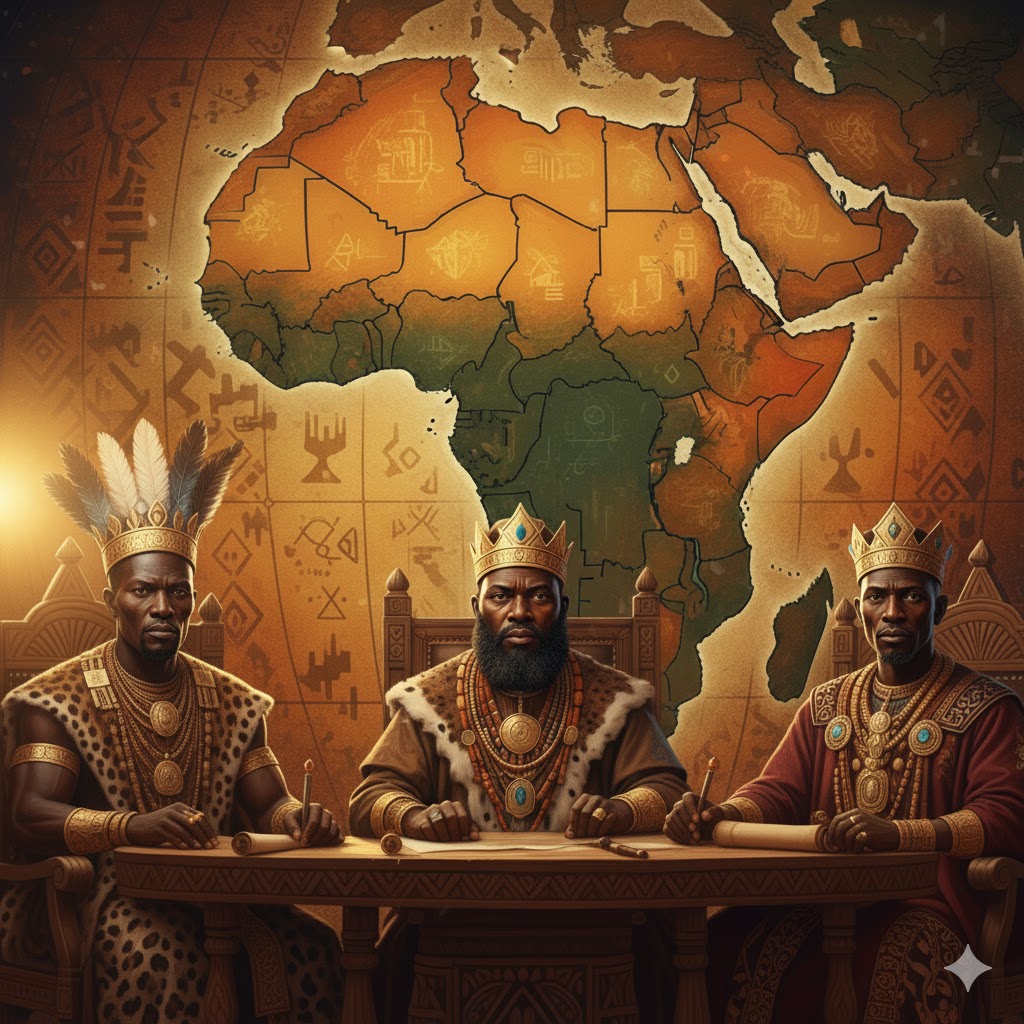
African Kings’ Aesthetic Legacy — Shaka Zulu, Mansa Musa, and the Menelik Lineage.

Across the tapestry of African history, the aesthetic and regal expressions of its kings reveal a profound cultural sophistication. Far more than adornment, African royal aesthetics embodied spiritual authority, political power, divine lineage, and communal identity. This legacy—rooted in ancestral dignity, biblical heritage, and sociopolitical strategy—remains etched in the memory of the African diaspora, shaping contemporary visions of beauty, pride, and leadership.

Shaka Zulu, the legendary king of the Zulu Kingdom, is often remembered for military revolution, but his visual presence was equally symbolic. His regalia—leopard skins, feathered headpieces, and the formidable iklwa spear—embodied authority and spiritual connection to ancestral power. In Zulu culture, leopard skin signified rulership and sacred status, marking Shaka as chosen by both lineage and divine purpose.

Shaka’s aesthetic choices were not mere performance. Royal attire served as psychological warfare, instilling fear in enemies and reverence among followers. His bare-chested stature, adorned in animal skins and traditional ornaments, portrayed strength, discipline, and a warrior-king archetype. This image continues to inspire modern African aesthetics rooted in courage, masculinity, and ethnic honor.

While Shaka’s visual legacy radiates martial might, Mansa Musa’s majesty reflects wealth, scholarship, and spiritual devotion. Known as the wealthiest ruler in recorded history, the emperor of Mali broadcast divine prosperity through gold-embroidered robes, luxurious fabrics, and grand caravans laden with gold during his pilgrimage to Mecca. His aesthetic was sanctified opulence—material abundance presented as a testament to divine favor.

Mansa Musa’s attire and gifts symbolized more than personal wealth; they expressed Mali’s intellectual and religious elevation. His support for Islamic scholarship and architectural development, including the famed Sankore University, reveals a king whose regal splendor mirrored cultural enlightenment. To look upon Musa was to witness the glory of a spiritually anchored kingdom infused with educational prestige.

A great king is often measured not only by wealth or war but by their ability to uplift their nation’s beauty and identity. In both Shaka and Mansa Musa’s reigns, attire communicated a message: African sovereignty was majestic, cultured, and God-ordained. Their legacy resists colonial narratives that sought to reduce African kingdoms to primitiveness.

The Menelik lineage—tracing origins to King Solomon and the Queen of Sheba—offers another dimension to African royal aesthetics: biblical legitimacy. Ethiopian emperors, believed to descend from Menelik I, carried themselves with divine authority. Crowns adorned with crosses, ceremonial robes, lion symbolism, and sacred scepters proclaimed their connection to the Lion of Judah.

This lineage grounded royal aesthetics in scripture, blending Hebraic tradition with African identity. Ethiopian kings and queens, from Menelik to Haile Selassie, wore garments that mirrored priesthood and ancient Israelite tradition—silk robes, jeweled crowns, and embroidered crosses. Their appearance declared covenant heritage and sacred kingship.

The Solomonic tradition did not merely borrow from biblical imagery; it asserted Africa’s centrality in salvation history. Through attire, ritual, and royal posture, Ethiopia preserved a visual theology: that God’s chosen lineage flowed through African bloodlines. Such aesthetics challenged Western religious narratives by rooting biblical heritage in the Black experience.

Across African kingdoms, beauty was political. Regalia conveyed legitimacy, commanded unity, and inspired resistance. It affirmed African dignity against centuries of distortion and erasure. The royal aesthetic stood as evidence that African civilization produced rulers equal to, and often surpassing, those of Europe and Asia.

Moreover, African royal aesthetics fused spirituality and statehood. Kings were more than rulers—they were shepherds, protectors, and spiritual intercessors. Whether through animal symbolism, gold ornamentation, or embroidered sacred garments, regalia reminded subjects that rulership was divine stewardship. Visual splendor communicated sacred responsibility.

Today, the aesthetic legacy of African kings influences modern fashion, leadership imagery, and cultural pride. From contemporary artists drawing inspiration from royal attire to global celebrations of African textiles, jewelry, and hairstyles, the regal memory still reigns. It informs movements reclaiming African identity from colonial distortion.

In the diaspora, this legacy also sustains psychological empowerment. Images of African kings counterbalance narratives of enslavement and inferiority. They offer icons of nobility, strength, and divine selection—foundations for renewed cultural confidence. Aesthetic tradition becomes a tool for spiritual and social restoration.

Biblically, kingship and beauty intertwine with divine covenant. The scriptures declare: “I have said, Ye are gods; and all of you are children of the most High” (Psalm 82:6, KJV). African kings embodied this truth, wearing majesty not for vanity but for sacred duty. Their appearance testified to the divine imprint upon Black identity.

Thus, the aesthetic legacies of Shaka Zulu, Mansa Musa, and the Menelik line are not relics—they are living testimonies. They call today’s generation to reclaim dignity, honor, and spiritual royalty. Through wardrobe, posture, and cultural pride, the descendants of these kingdoms continue to rise, embodying a beauty forged in history and blessed by God.

Below the surface of gold, feathers, hides, and crowns lies a fundamental truth: African kings dressed as heirs of divine promise. Their aesthetic legacy remains a spiritual inheritance—an invitation to walk in royal identity, remembering that Black majesty is not a myth but a recorded, sacred reality.


References
Boahen, A. A. (2011). African perspectives on colonialism. Diasporic Press.
Davidson, B. (1998). A history of West Africa. Longman.
Isaac, S. (2020). Ethiopia and the lineage of Solomon: An African biblical heritage. Hebraic Studies Journal, 12(3), 45–62.
Knight, I. (2015). Zulu rising: The epic story of iSandlwana and Rorke’s Drift. Macmillan.
Levtzion, N., & Hopkins, J. F. P. (Eds.). (2000). Corpus of early Arabic sources for West African history. Markus Wiener.
Trimingham, J. S. (2018). Islam in West Africa. Oxford African Texts.

“THE BROWN PAPER BAG TEST”: Colorism, Class, and the Legacy of Internalized Racism in Black America”


What Was the Brown Paper Bag Test?

The Brown Paper Bag Test was an informal but widely practiced method of color-based discrimination within Black communities—especially among elite African Americans in the early 20th century. In this test, a person’s skin tone was compared to a standard brown paper bag. If their complexion was lighter than the bag, they were allowed access to certain social privileges, such as entry into exclusive clubs, organizations, churches, schools, and social events. If they were darker, they were denied.

This practice was not enforced by white society, but by Black elites who had internalized the racial hierarchies of white supremacy. It was a form of colorism, which is discrimination based on skin tone, often within the same racial or ethnic group.


Historical Origins and Locations

The Brown Paper Bag Test is believed to have originated in the early 1900s, particularly during the post-Reconstruction and Jim Crow era, as Black communities began forming their own institutions amid segregation. The test gained prominence among the so-called “Black bourgeoisie,” especially in southern cities like New Orleans, Charleston, Atlanta, and Savannah, as well as northern cities like Washington D.C., New York, and Philadelphia.

This color-based gatekeeping was especially prevalent in:

  • Black sororities and fraternities
  • Churches
  • Private social clubs
  • HBCUs (Historically Black Colleges and Universities)
  • Debutante balls and elite Black social circles

Why Did It Happen? The Premise Behind the Rule

The Brown Paper Bag Test was rooted in internalized racism and colorism, legacies of colonialism and slavery. During slavery, lighter-skinned Black people—usually mixed-race offspring of white slaveowners and Black women—were often given preferential treatment. They were more likely to work in the house, receive basic education, or even be freed.

After Emancipation, many light-skinned Black people were able to accumulate more wealth, education, and social capital. As they formed upper-class enclaves within the Black community, they sometimes adopted white supremacist values—including the belief that light skin was more beautiful, intelligent, and “civilized.” The Brown Paper Bag Test became a way to preserve that class advantage by controlling access to elite Black spaces.


Organizations and Institutions That Used It

Several prominent Black institutions, especially between 1900 and 1940, were known or rumored to have used the Brown Paper Bag Test, either formally or informally. These include:

  • Alpha Kappa Alpha (AKA) and Delta Sigma Theta sororities
  • Alpha Phi Alpha and Kappa Alpha Psi fraternities
  • The Blue Vein Society – a club for African Americans who were so light-skinned their veins showed
  • Jack and Jill of America, Inc. – an exclusive social club for Black families
  • Certain Black churches and elite congregations
  • The Paper Bag Club in New Orleans, known for having this policy

Note: Many of these organizations have since acknowledged and rejected these practices, striving for inclusivity today.


How Was It Justified Within the Black Community?

Black elites justified the Brown Paper Bag Test through several rationalizations:

  1. Respectability Politics – Light-skinned Black people were perceived to be more “palatable” to white society, and therefore better representatives of the race.
  2. Social Advancement – Gatekeeping was seen as a way to protect upward mobility and avoid association with Blackness perceived as “too low,” “uneducated,” or “uncultured.”
  3. Survival Strategy – Some believed light skin offered better economic opportunities and social access, so prioritizing it helped protect families from racial violence or marginalization.

These justifications were deeply flawed and ultimately damaging, reinforcing white supremacist beauty and value systems within the Black community.


Celebrities Who Would Have “Passed” and Those Who Would Not

Celebrities Who Likely Would Have Passed:

  • Lena Horne – Light-skinned actress and singer often cast in roles that required a “racially ambiguous” appearance.
  • Dorothy Dandridge – The first Black woman nominated for an Oscar; often praised for her “exotic” beauty.
  • Halle Berry – Often referred to as the most beautiful woman in the world.
  • Vanessa Williams – The first Black Miss America, frequently cited for her light eyes and skin tone.

Celebrities Who Would Not Have Passed (Based on Skin Tone):

  • Viola Davis – Known for her rich, dark complexion and celebrated for breaking barriers despite colorist bias in Hollywood.
  • Whoopi Goldberg – Faced open ridicule for not fitting Eurocentric beauty standards.
  • Wesley Snipes – Celebrated for redefining Black masculinity but would have been excluded from elite colorist spaces.
  • Lupita Nyong’o – Famously spoke about feeling unattractive as a child because of her dark skin, until seeing Alek Wek, a dark-skinned model, celebrated publicly.

The Legacy of the Brown Paper Bag Test

Though the literal use of brown paper bags has faded, the mentality behind the test persists in modern forms:

  • Casting biases in film and media
  • Skin-lightening products
  • Dating preferences shaped by colonial standards
  • Disparities in beauty pageants, modeling, and corporate hiring

It also continues to influence mental health, self-esteem, and identity formation among Black youth, who still wrestle with messages that lighter is better.


Conclusion: Unpacking the Internalized Oppression

The Brown Paper Bag Test is a painful symbol of the internalized oppression that colonialism, slavery, and systemic racism embedded into Black consciousness. By confronting this history, we unearth the ways Black communities have been conditioned to self-police, segregate, and discriminate based on proximity to whiteness.

To move forward, Black people must continue the work of decolonizing beauty, class, and value systems—affirming the full spectrum of Blackness, from the darkest skin to the broadest nose, and rejecting any measure of worth tied to the legacy of white supremacy.


References

  • Russell, K., Wilson, M., & Hall, R. (1992). The Color Complex: The Politics of Skin Color in a New Millennium. Anchor Books.
  • Gates, H. L. Jr. (1994). Colored People: A Memoir. Vintage.
  • Hines, D. C. (2004). Black Women in White America: A Documentary History. Vintage.
  • Hunter, M. (2007). The Persistent Problem of Colorism: Skin Tone, Status, and Inequality. Sociology Compass, 1(1), 237–254.
  • Davis, A. (1981). Women, Race, and Class. Random House.

The Slave Files: Anna Julie Cooper

This photograph is the property of its respective owner. No copyright infringement intended.

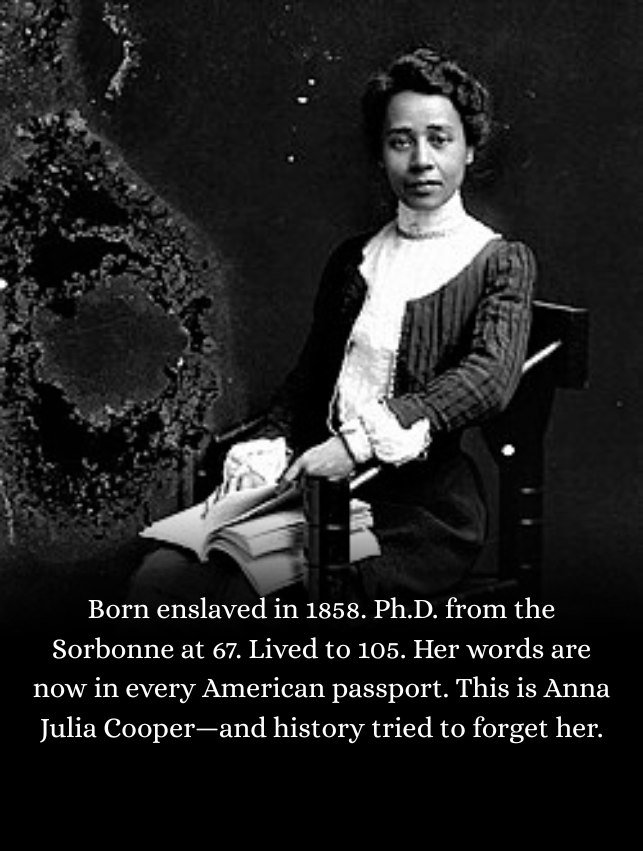
Anna Julia Cooper was born on August 10, 1858 in Raleigh, North Carolina

Anna Julia Cooper was an influential African American educator, scholar, and author whose life and work left a profound impact on Black education and intellectual thought. Born in the late 19th century, she emerged during a period of systemic oppression and racial discrimination, when opportunities for African Americans—particularly women—were severely limited. Despite these obstacles, Cooper dedicated her life to uplifting her community through education, moral leadership, and scholarly contributions.

Cooper’s early life was marked by a determination to pursue learning despite societal barriers. She believed that education was a fundamental tool for liberation and empowerment. Her passion for teaching and scholarship became a central theme in her life, guiding her professional endeavors and public influence.

As an educator, Julia Cooper worked tirelessly to improve access to quality schooling for African Americans. She advocated for rigorous academic standards, the establishment of Black educational institutions, and curricula that fostered critical thinking and self-worth among students. Her efforts emphasized the transformative power of knowledge as a means to resist systemic oppression.

In addition to teaching, Cooper was a prolific writer and thinker. She authored essays and treatises on the moral, social, and intellectual development of African Americans, emphasizing the necessity of self-respect, cultural pride, and educational attainment. Her writings served as a blueprint for Black uplift during the early 20th century.

Cooper also engaged in public speaking and community organizing. She traveled widely, addressing audiences on the importance of education, civic responsibility, and moral development. Her speeches encouraged African Americans to embrace their intellectual potential and challenge societal narratives that sought to marginalize them.

Her impact extended to her mentorship of younger generations of Black scholars and educators. By providing guidance, encouragement, and access to educational resources, Cooper helped cultivate a new class of African American leaders committed to intellectual excellence and social progress.

Anna Julia Cooper’s work was informed by a deep moral and spiritual philosophy. She believed that personal character and ethical integrity were inseparable from educational and professional achievement. Her vision emphasized holistic development—intellectual, moral, and civic—as essential to individual and communal advancement.

Throughout her career, Cooper confronted racism, sexism, and social prejudice. Her ability to navigate these systemic challenges while achieving professional recognition serves as a testament to her resilience and strategic acumen. She became a symbol of Black female agency in a society structured to limit her potential.

Her legacy is visible in the educational institutions she influenced, the students she inspired, and the broader discourse on African American intellectual empowerment. Cooper’s life exemplifies the potential for knowledge and moral courage to transform communities and challenge entrenched inequalities.

Anna Julia Cooper remains a vital figure in African American history, her life and work illustrating the enduring power of education, scholarship, and leadership in advancing justice and equality. Her contributions continue to inspire educators, students, and leaders committed to intellectual rigor and moral responsibility.


References

  1. Gates, H. L., & Higginbotham, E. B. (2014). African American lives. Oxford University Press.
  2. Gutman, H. G. (1976). The black family in slavery and freedom, 1750-1925. Pantheon Books.
  3. Kelley, R. D. G. (1994). Race rebels: Culture, politics, and the Black working class. Free Press.
  4. Theoharis, J. (2018). A more beautiful and terrible history: The uses and misuses of civil rights history. Beacon Press.
  5. Wiggins, W. H. (2000). The intellectual tradition of African Americans: A historical overview. Greenwood Press.