Category Archives: bible

The Male Files: The Spirit of David, Courage, Repentance, and Calling.

Photo by Habib Musliu on Pexels.com

The life of David stands as one of the most profound illustrations of God’s divine orchestration in the midst of human imperfection. From his humble beginnings as a shepherd in Bethlehem to his anointing as King of Israel, David’s story exemplifies courage in battle, steadfast faith, and a heart attuned to God’s calling. His journey is marked by both triumph and failure, demonstrating that divine purpose often intersects with human weakness.

David first enters biblical history in a moment of courage and faith, confronting the Philistine giant Goliath with only a sling and five smooth stones (1 Samuel 17:40, KJV). His courage was rooted not in human strength but in trust in Jehovah. This act was not merely military victory; it was symbolic of spiritual audacity. David’s reliance on God set the foundation for his lifelong recognition as a man after God’s own heart (1 Samuel 13:14, KJV).

Even as a young man, David exhibited the qualities of discernment and strategic patience. When King Saul became jealous and sought his life, David refrained from killing Saul despite opportunities, acknowledging the sovereignty of God over human affairs (1 Samuel 24:6, KJV). This restraint reveals a maturity that transcends physical bravery: a deep recognition of divine timing and justice. Courage for David was inseparable from obedience.

However, David’s story is not one of unbroken righteousness. His sin with Bathsheba, the subsequent orchestration of Uriah’s death, and the resulting confrontation by the prophet Nathan (2 Samuel 11:14-17, KJV) expose the vulnerability of even the most anointed individuals to temptation. David’s actions underscore the human propensity to succumb to desire, ambition, and fear, illustrating that spiritual calling does not eliminate moral responsibility.

Despite his grievous sins, David’s response to conviction exemplifies the centrality of repentance in God’s economy. When confronted by Nathan, David acknowledged his transgression, saying, “I have sinned against the LORD” (2 Samuel 12:13, KJV). His immediate recognition of wrongdoing and humble contrition models the transformative power of confession and the willingness to realign with God’s standards.

Repentance in David’s life is not merely emotional remorse but an active turning toward God. Psalm 51, attributed to David after the Bathsheba incident, is a vivid prayer of contrition, emphasizing the need for inner cleansing, restoration of spirit, and renewal of steadfastness in God (Psalm 51:10-12, KJV). Here, David’s heart becomes the canvas of divine grace, illustrating that repentance restores not only relationship with God but also spiritual vitality.

David’s courage was not limited to military or political arenas; it was also evident in his spiritual leadership. As king, he sought to unite the tribes of Israel, establish Jerusalem as the capital, and bring the Ark of the Covenant into the city (2 Samuel 6:12-15, KJV). These acts required boldness, vision, and the ability to inspire a nation, demonstrating that divine calling often involves risk, leadership, and unwavering faith.

The Spirit of David is marked by deep worship. His psalms, many composed during times of distress or victory, reveal a heart oriented toward God in all circumstances. Psalm 23, for instance, portrays the shepherdly care of the Lord and the security found in His guidance (Psalm 23:1-4, KJV). Even amidst personal failure and political turbulence, David’s devotion remained central to his identity and authority.

David’s life also reflects the tension between human emotion and divine mandate. He experienced grief, anger, jealousy, and fear, yet he continually sought God’s guidance through prayer and prophetic counsel. The episode of Saul’s pursuit demonstrates that even in despair, turning to God rather than acting solely on impulse exemplifies spiritual maturity (1 Samuel 26:23, KJV). Courage for David was inseparable from reliance on the Lord.

The complexity of David’s character is further seen in his family dynamics. His sons, such as Absalom and Adonijah, challenged his authority, leading to rebellion and heartbreak (2 Samuel 15:1-6; 1 Kings 1:5-10, KJV). These trials highlight the interplay of personal sin, divine purpose, and the consequences that ripple through relationships. David’s responses—grief, discernment, and prayer—reveal a blend of kingly wisdom and human vulnerability.

David’s sin with Bathsheba and Uriah also underscores the consequences of unchecked desire. God’s judgment was immediate: the death of the child born from the sin (2 Samuel 12:15, KJV). Yet, in this suffering, David’s faith deepened. He demonstrates that divine discipline, though painful, serves to redirect the heart toward repentance, righteousness, and continued service.

Even in his flaws, David’s reliance on God made him an archetype of resilience. He acknowledged his shortcomings without despair, turning adversity into worship and service. Psalm 34, a reflection on deliverance from fear and persecution, illustrates his philosophy: that fidelity to God transforms suffering into testimony (Psalm 34:1-7, KJV). David’s life exemplifies resilience through both obedience and spiritual reflection.

David’s courage was not merely martial or political; it was moral. He frequently made decisions based on justice rather than expedience. His sparing of Saul’s life, protection of Jonathan’s family, and concern for the widows and orphans under his reign reflect a heart aligned with God’s ethical standards (1 Samuel 26:9-11; 2 Samuel 21:1-3, KJV). The Spirit of David demonstrates that true courage integrates faith with righteousness.

The prophetic interaction with Nathan highlights the integration of divine accountability into leadership. David’s readiness to accept correction models a key principle: humility before God and submission to spiritual authority are essential for sustaining divine favor and moral clarity (2 Samuel 12:1-13, KJV). His acceptance of consequences demonstrates that repentance and obedience restore integrity and calling.

David’s anointing and subsequent kingship also demonstrate that divine calling often precedes perfection. God declared, “I have found David the son of Jesse, a man after mine own heart” (1 Samuel 13:14, KJV), not because David was flawless, but because of his willingness to trust, obey, and seek God’s presence. His life teaches that calling is rooted in devotion and responsiveness rather than sinless performance.

The integration of courage, repentance, and calling manifests in David’s later life. Despite family betrayal, political rebellion, and personal loss, he continued to lead Israel with a combination of wisdom, worship, and strategy (2 Samuel 18:5-15, KJV). His ability to navigate adversity with reliance on God exemplifies the holistic nature of spiritual leadership.

David’s psalms provide an enduring blueprint for confronting sin while embracing divine calling. In Psalm 32, he articulates the blessedness of confession and the relief of forgiveness (Psalm 32:1-5, KJV). The writings underscore that courage is not the absence of sin but the resolve to seek God’s mercy and guidance continually.

The life of David teaches that repentance is an ongoing process, interwoven with personal reflection, prayer, and ethical action. Sin does not negate calling, but unrepented sin impedes the fulfillment of divine purpose. David’s transparency in his struggles affirms that spiritual integrity involves honesty before God and accountability in life.

Ultimately, the Spirit of David is a testament to God’s grace, human frailty, and the redemptive power of repentance. His journey illustrates that courage in battle, moral fortitude, and responsiveness to divine calling can coexist with human imperfection. David becomes a model for believers seeking to navigate life faithfully, balancing accountability, repentance, and the pursuit of God’s purpose.

David’s legacy endures because it encompasses the full spectrum of human experience: triumph, failure, repentance, and divine favor. His life affirms that God’s calling transcends sin and that courage and obedience, when grounded in faith, empower individuals to fulfill divine destiny. In studying David, believers find both a mirror of their struggles and a guide for spiritual excellence, rooted in courage, repentance, and steadfast devotion to God.


References

The Holy Bible, King James Version.

Cone, J. H. (1970). A Black theology of liberation. Orbis Books.

Du Bois, W. E. B. (1903). The souls of Black folk. A. C. McClurg & Co.

Russell, R., & McKnight, S. (2012). King David: The life and legacy of Israel’s greatest king. Baker Academic.

Childs, B. S. (2001). Introduction to the Old Testament as scripture. Fortress Press.
History in Black: The Slave Trade

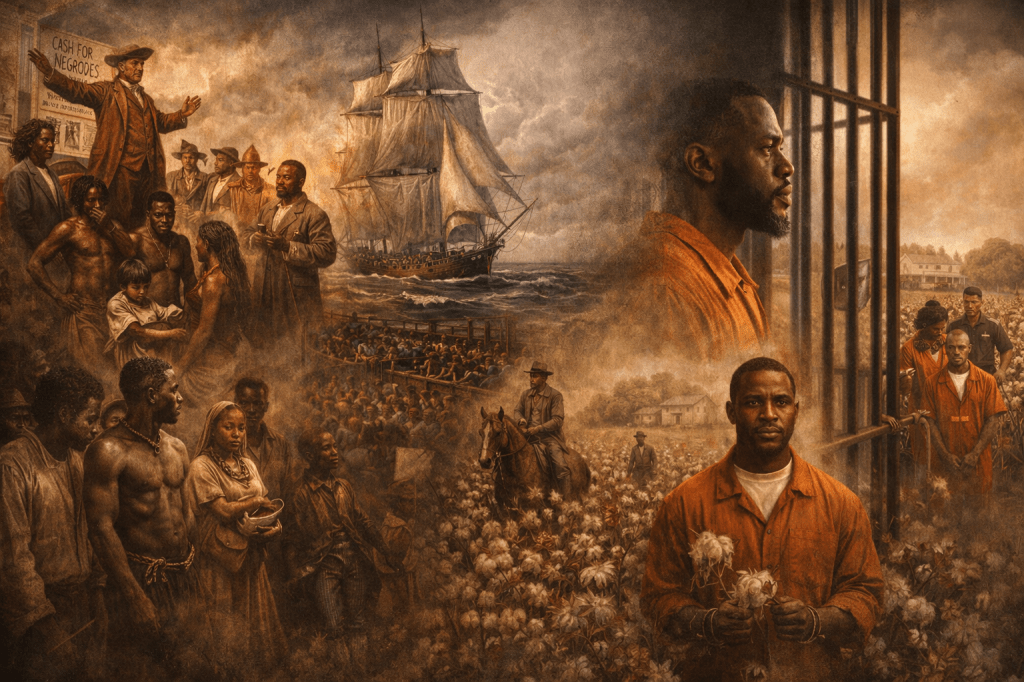
The history of the transatlantic slave trade is one of the most defining and devastating chapters in Black history, shaping the modern world through violence, exploitation, and racial hierarchy. It represents not merely a period of forced labor, but the systematic dehumanization of African peoples and the construction of a global economy built on Black suffering. Slavery was not accidental or natural; it was a deliberate system engineered for profit, power, and domination.

The slave trade began in the late 15th century with European expansion into Africa and the Americas. Portuguese and Spanish traders were among the first to establish routes, followed by the British, French, Dutch, and later Americans. Africa became a central source of labor for European colonies in the so-called “New World,” especially in plantations producing sugar, cotton, tobacco, and coffee.

The primary reason behind the slave trade was economic. European empires needed a massive labor force to exploit land stolen from Indigenous peoples. Africans were targeted because they were already skilled agricultural workers, could survive tropical climates, and were geographically accessible through coastal trading ports. Race was later used to morally justify what was, at its core, an economic crime.

African people were captured through warfare, raids, kidnappings, and betrayal by local intermediaries pressured or coerced into participating. Millions were marched to coastal forts, imprisoned in dungeons, and branded as property. Families were torn apart permanently, with no regard for kinship, language, or humanity.

The Middle Passage was one of the most horrific experiences in human history. Enslaved Africans were packed into ships like cargo, chained, starved, raped, beaten, and thrown overboard. Many died from disease, suicide, or suffocation before ever reaching land. Those who survived arrived psychologically traumatized and physically broken.

Upon arrival in the Americas, Black people were sold at auction and legally reduced to chattel. They were stripped of names, cultures, religions, and identities. Enslaved Africans were treated not as human beings, but as livestock—bred, whipped, mutilated, and worked to death.

Slavery was enforced through extreme violence. Enslaved people were beaten, lynched, raped, and tortured for disobedience. Laws known as slave codes made it illegal for Black people to read, write, gather, or defend themselves. Resistance was punished with death.

Yet, despite unimaginable brutality, enslaved Africans resisted constantly. They escaped, revolted, preserved culture, practiced spiritual traditions, and passed down ancestral knowledge. Revolts such as the Haitian Revolution proved that enslaved people never accepted their condition as legitimate.

In the United States, slavery became the foundation of the national economy. Cotton was king, and enslaved labor made America one of the richest nations on earth. Banks, insurance companies, universities, and governments were directly funded by slave profits.

The Civil War (1861–1865) led to the formal abolition of slavery in the U.S. through the 13th Amendment. However, freedom was largely symbolic. Formerly enslaved people were released into poverty with no land, no resources, and no protection.

Immediately after slavery, Black Americans faced Black Codes, sharecropping, and convict leasing—systems that recreated slavery under new names. Prisons replaced plantations. Chain gangs replaced whips. Black labor remained controlled.

The Jim Crow era legalized racial segregation and terror. Lynchings, racial pogroms, and voter suppression were used to maintain white supremacy. Black people were excluded from housing, education, healthcare, and political power.

The Civil Rights Movement of the 1950s and 60s challenged legal segregation. Figures like Martin Luther King Jr., Malcolm X, and Fannie Lou Hamer fought for basic human rights. Laws changed, but systems did not.

Mass incarceration emerged as the new form of social control. The “War on Drugs” targeted Black communities, filling prisons with nonviolent offenders. Black men became statistically more likely to be incarcerated than to attend college.

Police violence replaced slave patrols. The same logic of control persisted: Black bodies were still viewed as dangerous, disposable, and criminal. Surveillance, brutality, and profiling became modern tools of oppression.

Economic inequality remains rooted in slavery. The racial wealth gap, housing discrimination, school segregation, and healthcare disparities all trace back to stolen labor and denied opportunity.

Globally, the legacy of slavery continues through neocolonialism, resource extraction, and economic dependency across Africa and the Caribbean. Western wealth still rests on historical exploitation.

Culturally, Black identity has been shaped by trauma and resilience. Music, religion, language, and art emerged as tools of survival. Black culture became both a source of global influence and commodification.

Psychologically, slavery created intergenerational trauma. Internalized racism, colorism, and identity fragmentation are modern expressions of historical violence. The mind became another site of colonization.

Legally, slavery was never repaired. There were no reparations, no land restitution, no national healing process. Former enslavers were compensated—former slaves were not.

From slavery to Jim Crow, from segregation to mass incarceration, the system changed in form but not in function. Black people remain disproportionately policed, imprisoned, impoverished, and surveilled.

History in Black reveals a painful truth: slavery did not end—it evolved. The chains became invisible, the plantations became prisons, and the auction blocks became algorithms. What changed were the laws. What did not change was the structure of power.


References

Alexander, M. (2012). The New Jim Crow: Mass incarceration in the age of colorblindness. The New Press.

Baptist, E. E. (2014). The half has never been told: Slavery and the making of American capitalism. Basic Books.

Berlin, I. (2003). Generations of captivity: A history of African-American slaves. Harvard University Press.

Du Bois, W. E. B. (1935). Black reconstruction in America. Free Press.

Equiano, O. (1789). The interesting narrative of the life of Olaudah Equiano. Author.

Equal Justice Initiative. (2017). Lynching in America: Confronting the legacy of racial terror. https://eji.org

Gates, H. L. (2014). The African Americans: Many rivers to cross. PBS.

Hochschild, A. (1998). King Leopold’s ghost. Houghton Mifflin.

Kendi, I. X. (2016). Stamped from the beginning: The definitive history of racist ideas in America. Nation Books.

UNESCO. (2010). The transatlantic slave trade database. https://www.slavevoyages.org

U.S. National Archives. (n.d.). 13th Amendment to the U.S. Constitution. https://www.archives.gov

Washington Post. (2020). Fatal Force: Police shootings database. https://www.washingtonpost.com/graphics/investigations/police-shootings-database/

Williams, E. (1944). Capitalism and slavery. University of North Carolina Press.

Plagues of a Sinful Heart

The concept of the sinful heart is central to biblical theology, describing the internal condition from which destructive behaviors, systems of oppression, and moral decay emerge. Scripture consistently teaches that sin is not merely an external action but an inward plague that shapes thoughts, desires, and intentions. The heart, in biblical language, represents the core of human will and consciousness, making it the primary battleground between righteousness and corruption.

The Bible declares that “the heart is deceitful above all things, and desperately wicked: who can know it?” (Jeremiah 17:9, KJV). This verse frames sin as a condition rather than a momentary failure. A sinful heart distorts perception, justifies wrongdoing, and resists accountability. Like a disease left untreated, it spreads silently until its effects become visible in individual lives and entire societies.

One plague of a sinful heart is pride. Pride elevates the self above God and others, fostering arrogance, entitlement, and domination. Scripture warns, “Pride goeth before destruction, and a haughty spirit before a fall” (Proverbs 16:18, KJV). Pride blinds individuals to their own faults and fuels systems that exploit the vulnerable while excusing injustice as superiority or destiny.

Another manifestation is greed, an insatiable desire for accumulation without regard for moral consequence. The Bible states plainly, “For the love of money is the root of all evil” (1 Timothy 6:10, KJV). Greed transforms human beings into commodities and reduces life to profit margins, giving rise to exploitation, economic oppression, and spiritual emptiness.

Hatred is another plague rooted in the sinful heart. Jesus taught that hatred is morally equivalent to murder in the heart (Matthew 5:21–22, KJV). When hatred is normalized, it dehumanizes others and justifies violence, discrimination, and exclusion. Entire nations have been shaped by this inward corruption, producing laws and cultures that reward cruelty.

Deceit also flows naturally from a sinful heart. Scripture declares, “Out of the heart proceed evil thoughts…false witness, blasphemies” (Matthew 15:19, KJV). Deceit corrodes trust and destabilizes relationships, institutions, and truth itself. When lies become habitual, truth is perceived as a threat rather than a virtue.

The plague of lust represents disordered desire, where pleasure is pursued without restraint or responsibility. Lust reduces people to objects and distorts the sacredness of intimacy. Jesus’ warning that lustful thoughts constitute adultery of the heart (Matthew 5:28, KJV) reveals how deeply sin operates beneath outward behavior.

A sinful heart also produces injustice. When compassion is absent, power is abused. The prophets repeatedly condemned Israel not for ritual failure alone but for hardened hearts that oppressed the poor and ignored the afflicted. “They have hearts like stone,” Ezekiel wrote, describing a people unmoved by suffering (Ezekiel 36:26, KJV).

Racism and tribalism are societal plagues born from sinful hearts that exalt one group over another. Though Scripture affirms that God “hath made of one blood all nations of men” (Acts 17:26, KJV), sinful hearts reject this truth in favor of hierarchy and domination. Such beliefs reflect rebellion against divine order rather than cultural difference.

Fear is another inward plague that fuels sin. Fear of loss, fear of others, and fear of truth lead people to cling to control rather than trust God. Scripture teaches that “the fear of man bringeth a snare” (Proverbs 29:25, KJV). When fear governs the heart, obedience to God becomes secondary to self-preservation.

Hardness of heart is a recurring biblical warning. Pharaoh’s refusal to repent during the Egyptian plagues illustrates how repeated resistance to truth strengthens inner corruption (Exodus 7–11, KJV). A hardened heart becomes incapable of repentance, even in the face of suffering.

The sinful heart also manifests as spiritual blindness. Paul writes that the minds of unbelievers are darkened because of the blindness of their heart (Ephesians 4:18, KJV). This blindness prevents discernment, allowing evil to be rationalized and righteousness to be dismissed as foolishness.

Hypocrisy thrives in sinful hearts that prioritize appearance over transformation. Jesus rebuked religious leaders who honored God outwardly while their hearts remained far from Him (Matthew 15:8, KJV). Such hypocrisy damages faith communities and drives people away from truth.

Unchecked anger is another plague that takes root internally. While righteous anger exists, sinful anger seeks vengeance rather than justice. Scripture warns that “the wrath of man worketh not the righteousness of God” (James 1:20, KJV). Anger lodged in the heart becomes bitterness over time.

The sinful heart resists correction. Proverbs teaches that a fool despises instruction, while wisdom begins with humility (Proverbs 1:7, KJV). Resistance to correction ensures that destructive patterns continue unchecked, reinforcing cycles of harm.

Biblically, the ultimate consequence of a sinful heart is separation from God. Isaiah declares that sin creates a divide between humanity and the Creator (Isaiah 59:2, KJV). This separation is both spiritual and psychological, resulting in alienation, guilt, and restlessness.

Despite its severity, Scripture does not present the sinful heart as beyond repair. God promises, “A new heart also will I give you, and a new spirit will I put within you” (Ezekiel 36:26, KJV). This transformation is not cosmetic but regenerative, replacing corruption with obedience.

Christ’s ministry directly addressed the condition of the heart. Through repentance, faith, and submission to God’s will, individuals are invited into inward renewal. Jesus emphasized that purity begins internally, not through ritual but through surrender (Luke 11:39–40, KJV).

The healing of the sinful heart requires accountability, truth, and divine intervention. Psychological insight confirms that unexamined beliefs and unresolved trauma shape behavior, aligning with biblical teaching that inward change precedes outward reform (Beck, 1976).

Ultimately, the plagues of a sinful heart reveal humanity’s need for redemption rather than self-sufficiency. Scripture concludes that God alone can search and restore the heart (Psalm 51:10, KJV). Where sin once ruled internally, righteousness can reign—if the heart is willingly yielded.


References

The Holy Bible, King James Version. (1611). Various passages.

Beck, A. T. (1976). Cognitive therapy and the emotional disorders. International Universities Press.

Augustine of Hippo. (397). Confessions. Translated editions.

Fanon, F. (1952). Black skin, white masks. Grove Press.

Wilkerson, I. (2020). Caste: The origins of our discontents. Random House.

Lewis, C. S. (1952). Mere Christianity. HarperOne.

Du Bois, W. E. B. (1903). The souls of Black folk. A. C. McClurg & Co.

The Silent Exodus: Why Black Believers Are Leaving the Church

Across America, many Black believers are quietly stepping away from traditional church spaces. What was once the heart of the community—a place of refuge, power, and spiritual identity—has become a place of disappointment for many. This silent exodus is not rooted in rebellion against God, but in disillusionment with systems, leaders, and teachings that no longer reflect biblical truth, justice, or the spiritual hunger of a new generation. As faith evolves, many are seeking God outside the four walls that once defined their spiritual home.

One of the leading reasons for the departure is the rise of the prosperity gospel. This message teaches that wealth is a sign of divine favor and that poverty is a sign of spiritual weakness. But Scripture warns against false teachers who “through covetousness shall they with feigned words make merchandise of you” (2 Peter 2:3, KJV). Many Black believers are recognizing that this gospel has imprisoned them financially, emotionally, and spiritually.

The so-called tithing requirement is another source of frustration. While giving is biblical, many leaders have transformed it into a manipulative obligation. Some teach that failing to pay 10% curses a believer, even though the New Testament emphasizes cheerful, voluntary giving (2 Corinthians 9:7). For many, tithing has become a tool of guilt rather than worship, and people are waking up to the misuse of Scripture.

Stories of preachers buying luxury cars, designer clothes, and mansions using church funds have pushed many away. The contrast between lavish pastoral lifestyles and struggling congregants feels immoral. “Woe be unto the pastors that destroy and scatter the sheep of my pasture!” (Jeremiah 23:1). Black believers sense this imbalance deeply and are tired of watching leaders prosper while their communities suffer.

The “name it and claim it” ideology has caused further spiritual damage. When prayers aren’t answered in expected ways, believers are told their faith is too weak. Yet Jesus Himself said that believers would face trials and tribulations (John 16:33). Faith is not a vending machine, and many are rejecting a doctrine that oversimplifies suffering and blames the believer for every hardship.

The lifestyle of many pastors has also become a source of mistrust. Instead of shepherds serving the flock, some have become celebrities cultivating their own brands. Paul warned of such leaders, describing those “whose god is their belly” (Philippians 3:19). For many, the church feels more like a corporation than a sacred space.

Gen Z, in particular, has walked away in large numbers. They crave authenticity and truth. They are not satisfied with emotional sermons that lack substance or accountability. They question everything, research deeply, and refuse to remain in systems that exploit them spiritually or financially.

The wound of slavery remains a major factor in this shift. During enslavement, Christianity was used as a weapon. Slave owners gave enslaved people chains and a distorted Bible, using select verses to enforce obedience and justify brutality. Passages about liberation and justice were hidden or forbidden. This historical truth forces many modern believers to question how Christianity was presented to them.

Black scholars, theologians, and seekers are now reading Scripture for themselves—and finding that the Bible is not a tool of oppression but one of liberation. They see that Christ came to set the captives free (Luke 4:18), not bind them. Many are reclaiming their identity as God’s chosen people, awakening to spiritual truths long hidden from them.

The “curse of Ham” was one of the greatest lies used against Black people. This fallacy claims that Africans were cursed to be servants, but no Scripture supports this racist myth. Many are leaving churches that still allow such harmful theology to linger in silence.

Another issue is the image of a blonde-haired, blue-eyed Jesus imposed by Western society. This false image disconnects Black believers from the true Afro-Asiatic identity of the Messiah. It promotes white supremacy more than biblical truth. As believers discover historical accuracy, they reject the false image forced upon generations.

Many also leave because church culture has become performance-driven. Lights, cameras, production, and theatrics overshadow Scripture. Worship is sometimes designed to entertain rather than transform. This hollowness creates spiritual emptiness.

Others walk away because they feel unheard. Real questions about justice, identity, history, trauma, and racial healing are often ignored. Instead of addressing community pain, some churches avoid difficult conversations, choosing comfort over truth.

Some depart because the church has become politically entangled. Instead of preaching the Kingdom of God, some pastors preach nationalism, capitalism, or partisan agendas. Believers seeking spiritual food find themselves receiving propaganda instead.

Disconnection grows when churches refuse to confront issues like mental health. Many suffering believers are told to “just pray about it,” leaving them unsupported and unseen. This spiritual minimization pushes people toward therapists, support groups, and online communities instead of the sanctuary.

Some churchgoers are tired of being overworked in ministry while receiving little spiritual nourishment. They volunteer endlessly while pastors demand more, never pouring back into the people who labor for free behind the scenes.

Many leave because church discipline has become abusive. Leaders shame people publicly, gossip about members, or use Scripture as a weapon rather than a guide. Christ did not model this; He led with compassion, correction, and truth.

Others walk away because churches fail to address the real needs of the community—poverty, violence, education, housing, family structure, and injustice. Instead, money is collected while communities around the building remain broken.

Some are leaving because they sense God calling them to a deeper truth. They are not leaving Him—they are leaving systems that have misrepresented Him. They seek raw worship, sound doctrine, biblical accuracy, and spiritual awakening.

What It Means When Mega-Churches Preach Prosperity

Many mega-churches promote the “prosperity gospel,” which teaches that if you sow money, speak positive words, or claim blessings, God will make you wealthy, healthy, and successful. On the surface, it sounds empowering. But the structure behind it reveals something deeper and more concerning.

The preaching of prosperity is often not about the people prospering—it’s about financing the pastor’s lifestyle, expanding the church’s brand, and increasing the institution’s wealth.


1. They Preach Prosperity Because It Is Profitable—for Them

When pastors say things like:

  • “Sow your seed today and watch God move!”
  • “Break the curse by giving your best offering!”
  • “God is going to double your harvest if you plant a sacrificial seed!”

They are essentially turning the pulpit into a spiritual business model. The more people struggle, the more desperate they become for hope. Desperation + Scripture taken out of context = financial gain for the leadership.


2. Members Rarely See the “Promised” Prosperity

If prosperity teaching were truly biblical the way it’s taught:

  • The members would be debt-free.
  • The community around the church would be transformed.
  • The poor would be fed.
  • Single mothers would be supported.
  • Generational poverty would be broken.

But what usually happens?

The congregation struggles while the pastor gets richer.

People keep sowing into a system that never brings the promised results.


3. The Pastor’s Lifestyle Reveals the Real “Prosperity.”

Prosperity preachers often own:

  • Luxury cars
  • Multi-million-dollar homes
  • Designer suits
  • Private jets
  • Personal security teams
  • Investment properties
  • Corporate-level salaries

And yet, many of their members:

  • Work two or three jobs
  • Are behind on rent
  • Can’t afford groceries
  • Stay financially stressed
  • Have no savings or investments

This imbalance exposes that the doctrine is not about universal prosperity but one-directional prosperity flowing upward—from the members to the pastor.


4. They Use Scripture as a Fundraising Tool

Verses like:

  • Malachi 3:10
  • Luke 6:38
  • 3 John 1:2

are preached heavily—but out of context. These messages are crafted to make people emotional so they will give more.

Meanwhile, verses about:

  • financial stewardship
  • caring for the poor
  • justice
  • leaders living modestly
  • accountability

are conveniently ignored.


5. Emotional Manipulation Becomes a Strategy

The formula is predictable:

  1. Play soft music.
  2. Build a testimony about “seed sowing.”
  3. Stir emotions.
  4. Make supernatural promises.
  5. Repetition of “This is your season!”
  6. Pressure giving (multiple offerings in one service).

This emotional moment creates an illusion of spiritual breakthrough when, in reality, it is fundraising disguised as faith.


6. The Focus Shifts from Christ to Cashflow

Instead of preaching:

  • repentance
  • holiness
  • discipleship
  • righteousness
  • justice
  • community building
  • spiritual growth

The sermons revolve around:

  • money
  • success
  • manifestations
  • personal blessing
  • “expecting checks in the mail.”

The gospel becomes a financial transaction instead of a transformational relationship with God.


7. They Teach You to “Believe for Wealth”—But Not How to Build It

Notice they rarely teach:

  • budgeting
  • investing
  • building credit
  • starting a business
  • wealth-building strategies
  • inheritance planning
  • financial literacy

Because real financial literacy breaks dependence.

If members become financially wise, they stop being financially manipulated.

So instead of empowering people to build financial stability, they tell them to “sow their way to prosperity,” which guarantees the church’s wealth—not the members’.


8. Mega-Church Prosperity Is a System

And systems are designed to protect one thing:

The institution and its leadership.

Every sermon, every conference, every seed challenge ultimately feeds the machine that keeps:

  • the lights on,
  • the brand alive,
  • and the pastor is wealthy.

In Short:

Mega-churches that preach prosperity are often preaching their own prosperity, not yours. The system is built so that:

  • You give
  • They receive
  • You believe for miracles
  • They accumulate wealth
  • You stay hopeful
  • They stay rich

This is why many believers are waking up, studying Scripture for themselves, and walking away from systems that exploit their faith.

Ultimately, the silent exodus is not the death of Black faith—it is the beginning of spiritual reformation. Black believers are no longer satisfied with imitation religion. They want truth, freedom, and an authentic connection with God. They hunger for the Word, not manipulation; for liberation, not bondage; for identity, not erasure.

God is calling His people back to Himself. Back to Scripture. Back to the truth. Back to a lifestyle of righteousness. “And ye shall know the truth, and the truth shall make you free” (John 8:32). The exodus is not away from God—it is toward Him.

References (KJV)
John 8:32; 2 Peter 2:3; 2 Corinthians 9:7; Jeremiah 23:1; John 16:33; Philippians 3:19; Luke 4:18; Genesis 9 (context of Ham); John 10:27.

A Biblical View: Come Out and Be Separate.

The Bible repeatedly calls God’s people to a standard of holiness that distinguishes them from the world. In an age where conformity is celebrated, this command remains both radical and relevant. “Wherefore come out from among them, and be ye separate, saith the Lord, and touch not the unclean thing; and I will receive you” (2 Corinthians 6:17, KJV). This verse encapsulates a divine principle: separation is not about superiority, but sanctification. It is about being set apart for the purposes of God.

The Most High never intended His chosen people to blend into systems of corruption, compromise, or sin. From the days of Abraham, God has called His elect to walk a different path. Abraham was commanded to leave his country, his kin, and his father’s house to follow divine instruction (Genesis 12:1). That call was not just geographical—it was spiritual. It represented a break from idolatry, a renunciation of worldly ties that hinder divine purpose.

Throughout Scripture, holiness and separation are inseparable concepts. “Be ye holy; for I am holy” (1 Peter 1:16, KJV). Holiness literally means to be “set apart.” It is a call to moral, spiritual, and cultural distinction from the patterns of this world (Romans 12:2). When believers conform to worldly standards—whether through lust, greed, or pride—they lose their spiritual fragrance and identity. God’s people must therefore maintain purity in both conduct and conviction.

Separation is not isolation. It does not mean withdrawing from the world entirely, but rather refusing to adopt its corrupted values. Christ Himself prayed, “I pray not that thou shouldest take them out of the world, but that thou shouldest keep them from the evil” (John 17:15, KJV). The believer lives in the world, but must not become of it. Like salt in food, or light in darkness, the presence of the righteous should transform, not conform.

In every generation, the people of God have faced the temptation to compromise for acceptance. In ancient Israel, this took the form of idol worship and political alliances with pagan nations. Today, compromise appears as moral relativism, materialism, and cultural assimilation. Yet the Word of God stands unchanging: “Ye cannot drink the cup of the Lord, and the cup of devils” (1 Corinthians 10:21, KJV). The call to come out and be separate remains an act of obedience and courage.

The prophetic voice of Scripture warns against spiritual adultery—the blending of holiness with worldliness. In Revelation 18:4 (KJV), God declares concerning Babylon, “Come out of her, my people, that ye be not partakers of her sins.” Babylon symbolizes the world’s seductive systems of greed, immorality, and false religion. To remain entangled with it is to risk sharing in its judgment. Separation, therefore, is not merely preference; it is protection.

For the descendants of Israel, separation was more than a theological concept—it was a covenant identity. God chose Israel to be “a peculiar treasure unto me above all people” (Exodus 19:5, KJV). That “peculiar” status meant they were to live, worship, and govern differently. Dietary laws, festivals, and moral codes all served as visible reminders of divine distinction. In the same way, today’s believers are called to live visibly different lives marked by righteousness, humility, and truth.

Coming out and being separate also means breaking free from mental and emotional strongholds that bind the soul. Many live in spiritual Babylon—conformed to systems that enslave their minds. True liberation begins when the believer renews the mind with the Word of God (Romans 12:2). Separation begins internally before it manifests externally. A renewed mind leads to a renewed walk.

Too many have mistaken separation for arrogance. But true separation flows from love—love for God, love for truth, and love for purity. When a believer chooses holiness, it is not an act of judgment toward others, but an act of worship toward God. Holiness is the fragrance of a surrendered life. It says, “Lord, I belong to You, not to this world.”

The world often pressures believers to compromise moral standards in the name of progress or acceptance. But Scripture warns that friendship with the world is enmity with God (James 4:4). The believer cannot serve two masters. Just as light and darkness cannot coexist, neither can righteousness and wickedness share the same temple. To “come out” is to take a bold stand for truth, even when it is unpopular.

Separation often requires sacrifice. Those who walk with God must sometimes walk alone. Noah stood apart from his generation when he built the ark. Daniel refused to bow to Babylon’s idols. The three Hebrew boys chose the fiery furnace over compromise. Each act of separation brought divine favor and vindication. God always honors those who honor Him (1 Samuel 2:30).

In modern times, separation also means discerning what we consume—media, music, relationships, and ideologies. The enemy often disguises deception as entertainment or empowerment. But Scripture reminds us, “Abstain from all appearance of evil” (1 Thessalonians 5:22, KJV). Spiritual separation requires discernment, discipline, and devotion to truth.

The principle of separation even extends to the church. The body of Christ must remain distinct from the spirit of the age. When churches begin to mirror worldly culture rather than kingdom culture, they lose spiritual authority. The Church was never meant to entertain—it was meant to enlighten. It is the salt of the earth, not the sugar of society.

Separation also includes a moral refusal to participate in injustice and sin. To “come out” means to reject systems that exploit, oppress, or defile humanity. In Isaiah 52:11 (KJV), the prophet declares, “Depart ye, depart ye, go ye out from thence, touch no unclean thing.” This is both a spiritual and social command—God’s people must not join in the moral decay of the nations.

To be separate is to walk in covenant fidelity. It means guarding the temple of one’s body, mind, and soul. “Know ye not that your body is the temple of the Holy Ghost?” (1 Corinthians 6:19, KJV). A temple cannot be defiled with unholy alliances or habits. Purity attracts the presence of God, while compromise invites chaos.

This call to separation is not only individual—it is communal. The entire nation of Israel was called to be an example to the world, a “light to the Gentiles” (Isaiah 49:6, KJV). Likewise, the modern assembly of believers is called to reflect divine order, love, and integrity in a morally bankrupt world. The higher the calling, the greater the separation required.

Separation is also preparation. Before God can elevate, He must consecrate. When He separated Israel from Egypt, He was not only freeing them from bondage but preparing them for promise. Every separation from sin or ungodly influence is an invitation into greater spiritual power and clarity. God cannot bless what He has not purified.

The ultimate goal of separation is intimacy with God. “I will dwell in them, and walk in them; and I will be their God” (2 Corinthians 6:16, KJV). When we come out from the world’s corruption, we enter into divine communion. The closer we draw to Him, the more distinct we become. Separation is not about exclusion—it’s about elevation into divine presence.

Finally, “coming out and being separate” is not a one-time act, but a lifelong journey. Every day presents choices that either align us with God or pull us toward the world. The believer’s life is a continual exodus from sin toward sanctification. To walk with God requires courage, conviction, and continual cleansing through His Word.

In the end, those who separate themselves unto God will be received as His sons and daughters. “And I will be a Father unto you, and ye shall be my sons and daughters, saith the Lord Almighty” (2 Corinthians 6:18, KJV). This is the divine reward of holiness—fellowship with the Father, protection from the world, and eternal glory with Christ.


References

  • The Holy Bible, King James Version (KJV)
  • Henry, M. (1710). Commentary on the Whole Bible.
  • Tozer, A. W. (1948). The Pursuit of God.
  • Wesley, J. (1765). Sermons on Several Occasions.
  • Moody, D. L. (1899). Secret Power.

The Flesh wars after the Spirit

In every believer’s journey, there lies a hidden battlefield—the war between the flesh and the spirit. It is a conflict as old as humanity itself, one that Paul described vividly when he declared, “For the flesh lusteth against the Spirit, and the Spirit against the flesh” (Galatians 5:17, KJV). This war is not fought with swords or spears but within the chambers of the soul, where desires, thoughts, and willpower contend for dominance. The flesh seeks comfort and indulgence, while the spirit seeks holiness and eternal purpose.

When Adam and Eve fell in the Garden, the harmony between flesh and spirit was broken. The flesh became a vessel of weakness, bound to sin’s cravings, while the spirit longed to reconnect with its divine Source. This separation made mankind susceptible to every temptation that appealed to the senses—the lust of the eyes, the lust of the flesh, and the pride of life (1 John 2:16). The war began there and continues within every son and daughter of Adam.

To walk in the Spirit means to live according to God’s truth, resisting the impulses that draw us away from righteousness. Yet, this is easier said than done. The Apostle Paul confessed his struggle, saying, “For I know that in me (that is, in my flesh,) dwelleth no good thing” (Romans 7:18, KJV). Even the most faithful among us feel the tug-of-war between doing what is right and yielding to weakness.

The flesh wars by deception, whispering lies of pleasure, ease, and satisfaction. It convinces the heart that temporary gratification outweighs eternal gain. However, the spirit discerns the cost, reminding the believer that “to be carnally minded is death; but to be spiritually minded is life and peace” (Romans 8:6, KJV).

Each day presents a new skirmish. The mind becomes the battleground, and thoughts are the weapons. The flesh plants seeds of doubt, jealousy, and lust, while the spirit counters with truth, patience, and love. Victory belongs to the one who surrenders—not to the flesh, but to the will of God.

Fasting and prayer strengthen the spirit’s voice. When the body is denied indulgence, the spirit grows louder. Christ Himself modeled this discipline, fasting forty days in the wilderness while resisting the devil’s temptations (Matthew 4:1–11, KJV). He proved that obedience to God conquers every carnal desire.

But modern believers face new forms of fleshly warfare—materialism, vanity, lust, and the idolization of pleasure. The flesh now disguises itself in convenience, social media validation, and the pursuit of worldly success. Yet the spiritual principles remain unchanged: “They that are Christ’s have crucified the flesh with the affections and lusts” (Galatians 5:24, KJV).

To crucify the flesh is not a one-time act; it is a lifelong discipline. Every temptation is a nail, every denial a hammer. The believer must daily take up their cross, just as Christ commanded (Luke 9:23). Through this continual surrender, the spirit gains ascendancy.

The flesh seeks to enslave, but the spirit seeks to liberate. When we yield to the flesh, sin becomes our master. When we walk in the spirit, we are empowered by grace. This is the divine paradox: surrender brings freedom, and death to self brings life eternal.

Satan, the great manipulator, knows how to exploit the flesh. He tempted Eve through the senses, tempted David through lust, and tempted Christ through hunger and pride. His strategies never change because they still work. That is why the armor of God (Ephesians 6:11–18) is vital—to guard the spirit from the assaults of the flesh and the lies of the enemy.

Yet victory is not by human effort alone. The Spirit of God enables us to overcome. “Walk in the Spirit, and ye shall not fulfil the lust of the flesh” (Galatians 5:16, KJV). This means total dependence on divine strength rather than human willpower.

The fruit of the Spirit—love, joy, peace, longsuffering, gentleness, goodness, faith, meekness, and temperance—are not merely virtues but weapons of war (Galatians 5:22–23). Each one defeats a corresponding sin of the flesh. Love overcomes hatred, peace disarms anxiety, and temperance conquers gluttony.

The flesh wars through impatience and pride, but the spirit waits on the Lord. The mature believer learns to discern these internal battles, recognizing when the flesh is loud and when the spirit is whispering. Spiritual maturity comes when the spirit’s whisper becomes the soul’s command.

The war of flesh versus spirit also manifests in relationships. The flesh seeks dominance, control, and validation, while the spirit seeks humility, forgiveness, and truth. This is why marriages, friendships, and ministries fail—because one or both parties allow the flesh to lead.

Black believers, in particular, face a layered warfare: not only spiritual but social. The systems of racism, colorism, and materialism exploit fleshly divisions, weakening unity and peace. Yet, when the spirit governs, a people once broken can rise in righteousness, dignity, and divine strength.

Victory in the flesh wars demands awareness. The believer must daily examine motives, desires, and actions through the Word of God. Scripture is the mirror that reveals whether the spirit or flesh is winning. As James wrote, “Be ye doers of the word, and not hearers only” (James 1:22, KJV).

Even in moments of failure, grace remains. The blood of Christ cleanses, renews, and restores. God’s Spirit never abandons the repentant heart, for “a broken and a contrite heart, O God, thou wilt not despise” (Psalm 51:17, KJV). The war may continue, but victory is assured through Christ.

Ultimately, the flesh will perish, but the spirit endures forever. What we feed today—flesh or spirit—determines our eternal destiny. To invest in the spirit is to build treasure in heaven (Matthew 6:19–21).

The war may rage, but the outcome is already written. “Nay, in all these things we are more than conquerors through him that loved us” (Romans 8:37, KJV). The believer who walks by faith and not by sight will emerge victorious, clothed in righteousness, crowned with glory, and freed from the bondage of the flesh forevermore.

References

  • The Holy Bible, King James Version (Galatians 5:16–24; Romans 7:18–25; Romans 8:6–13; Matthew 4:1–11; Luke 9:23; Ephesians 6:11–18; James 1:22; Psalm 51:17).
  • Augustine, St. (398). Confessions. Oxford University Press.
  • Lewis, C. S. (1942). The Screwtape Letters. HarperCollins.
  • Tozer, A. W. (1948). The Pursuit of God. Christian Publications.
  • Wright, N. T. (2010). After You Believe: Why Christian Character Matters. HarperOne.

Terrestrial and Celestial: A Biblical Examination.

There exists within Scripture a clear distinction between the terrestrial and the celestial — the earthly realm and the heavenly realm. Understanding this difference allows believers to recognize both the temporary nature of physical life and the eternal significance of spiritual existence. These categories encompass not only creation, but identity, purpose, and destiny (1 Corinthians 15:40, KJV).

The term terrestrial refers to things belonging to the earth — what is physical, temporal, and natural. Humanity was formed from the dust of the ground, making our bodies terrestrial by design (Genesis 2:7, KJV). We walk in this world as citizens of a physical creation, subject to natural laws, aging, and death.

The celestial, by contrast, refers to things belonging to heaven — spiritual, eternal, and divine. God, angels, and the eternal dwelling place of the saints are all celestial realities. The heavens declare the glory of God, revealing His majesty beyond earthly perception (Psalm 19:1, KJV). Celestial things are not bound by the limits of time or decay.

The apostle Paul draws a powerful comparison between these two states of existence. “There are also celestial bodies, and bodies terrestrial,” he writes, emphasizing two distinct forms of being (1 Corinthians 15:40, KJV). The terrestrial body is sown in corruption, yet the celestial body is raised in glory. This contrast points to resurrection hope and the transformation awaiting believers.

The terrestrial life is marked by weakness and limitation. Sickness, fatigue, struggle, and mortality testify to the fragility of earthly existence (Psalm 90:10, KJV). The body ages and returns to dust, reminding mankind that life on earth is fleeting and not the final form intended by God (Genesis 3:19, KJV).

In contrast, the celestial realm is characterized by immortality, holiness, and divine power. Heavenly bodies do not decay nor experience corruption. Those who inherit eternal life will be clothed in celestial glory, transformed by the power of resurrection (Philippians 3:21, KJV). This transformation reveals God’s intention to elevate humanity from dust to divine likeness.

Christ Himself illustrates the bridge between terrestrial and celestial. Born in flesh, He walked the earth in human form, yet His resurrection revealed a celestial nature beyond the limitations of mortality (Luke 24:39, KJV). He became the “firstfruits” of those who shall rise, demonstrating humanity’s destiny (1 Corinthians 15:20, KJV).

The terrestrial world is temporary. Scripture declares that heaven and earth shall pass away, but God’s word remains eternal (Matthew 24:35, KJV). Earthly kingdoms crumble, wealth fades, beauty withers, and glory evaporates. Earthly life is but a vapor that appears for a little time and then vanishes away (James 4:14, KJV).

The celestial kingdom, however, is everlasting. The throne of God endures forever, and the righteous shall dwell with Him in eternal light and glory (Revelation 21:23, KJV). This realm is the believer’s true homeland, for we are “strangers and pilgrims on the earth” awaiting heavenly promise (Hebrews 11:13-16, KJV).

The terrestrial mind focuses on earthly concerns — food, clothing, position, reputation, achievement. Yet Christ commands believers to seek first the kingdom of God, demonstrating that spiritual pursuit must outrank material survival (Matthew 6:33, KJV). Fleshly desires war against the soul because they are bound to earth (1 Peter 2:11, KJV).

The celestial mindset dwells on things above — faith, righteousness, holiness, compassion, truth, and eternity (Colossians 3:2, KJV). Such a mindset is evidence of spiritual maturity, for the spiritually minded live according to the Spirit rather than the flesh (Romans 8:5-6, KJV).

Earthly bodies bear the image of the first Adam, made of dust. Heavenly bodies bear the image of the second Adam, Christ, who is from heaven (1 Corinthians 15:47-49, KJV). This comparison shows that our earthly identity is not the final expression of God’s purpose.

The terrestrial body is weak, susceptible to temptation and influenced by the senses. It requires discipline and submission to the Spirit so that it does not dominate or corrupt the soul (Galatians 5:16-17, KJV). Spiritual warfare takes place within the earthly vessel.

The celestial nature, however, is perfect, unable to sin, and fully aligned with God’s will. It represents the perfection believers will experience in the resurrection, when mortality puts on immortality (1 Corinthians 15:53, KJV). In this transformed state, humanity fulfills its divine calling.

Death marks the separation of terrestrial and celestial identity. The body returns to earth, but the spirit returns to God who gave it (Ecclesiastes 12:7, KJV). This separation reveals the impermanence of flesh and the priority of spiritual existence.

Heavenly reward awaits those who walk by faith rather than sight (2 Corinthians 5:7, KJV). The terrestrial experience tests loyalty, obedience, and faith, shaping the soul for eternal destiny. Every trial on earth prepares believers for celestial glory.

Those who live only for the terrestrial life inevitably perish with it. Scripture warns not to lay treasures on earth, where moth and rust destroy, but to store treasure in heaven (Matthew 6:19-20, KJV). To cling to earthly life is to lose eternal life.

The terrestrial world exists under corruption and bondage due to sin. Creation itself groans for redemption, waiting for the manifestation of the sons of God (Romans 8:18-23, KJV). Redemption promises not only resurrection of the body but renewal of the heavens and earth.

The celestial realm operates under perfect righteousness and divine order. Angels excel in strength, obeying His commandments, revealing the purity of heaven’s structure (Psalm 103:20, KJV). There is no pain, sorrow, or death in the celestial kingdom (Revelation 21:4, KJV).

Believers are called to live as celestial heirs even while in terrestrial bodies. This means walking in the Spirit, practicing holiness, and manifesting the character of Christ on earth (1 John 3:2-3, KJV). The earthly life is training ground for eternal destiny.

Ultimately, terrestrial existence is preparation; celestial existence is fulfillment. The journey of faith moves us from dust to glory, from temporal to eternal, from flesh to Spirit, from earth to heaven. The wise live with eternity in view, recognizing that what is seen is temporary, but what is unseen is eternal (2 Corinthians 4:18, KJV).


References (KJV)
Genesis 2:7; Genesis 3:19; Psalm 19:1; Psalm 90:10; Psalm 103:20; Ecclesiastes 12:7; Matthew 6:19–20; Matthew 6:33; Matthew 24:35; Luke 24:39; John 3:16; Romans 8:5–6; Romans 8:18–23; 1 Corinthians 15:20, 40, 47–53; 2 Corinthians 4:18; 2 Corinthians 5:7; Galatians 5:16–17; Colossians 3:2; Hebrews 11:13–16; James 4:14; 1 Peter 2:11; Philippians 3:21; Revelation 21:4, 23.

Lessons from Biblical Women for Modern Life. #virtuouswomen #womenoffaith

Photo by Tima Miroshnichenko on Pexels.com

Throughout Scripture, women emerge not only as mothers and wives but also as leaders, visionaries, and vessels of divine purpose. From the Old Testament to the New, their stories carry timeless lessons that transcend culture and era. Today, when modern women wrestle with identity, leadership, motherhood, career, and faith, the examples of biblical women provide profound guidance.

Deborah: Leadership with Wisdom and Courage

Deborah, prophetess and judge over Israel (Judges 4–5, KJV), stands as a model of godly leadership. She led Israel in a time of oppression, guiding military strategies while delivering God’s word with authority. Her story teaches modern women that leadership grounded in wisdom, humility, and obedience to God can transform communities. Today, women called to leadership—whether in the church, workplace, or home—can embrace Deborah’s example of courage without compromising grace.

Ruth: Loyalty and Faithfulness

The Moabite woman Ruth demonstrates loyalty and faith even in loss. Her declaration to Naomi, “Thy people shall be my people, and thy God my God” (Ruth 1:16, KJV), reveals a devotion beyond cultural barriers. Ruth’s faithfulness positioned her to be part of the lineage of Christ. Modern life, marked by broken relationships and fleeting commitments, can be enriched by Ruth’s example of perseverance, loyalty, and choosing integrity over convenience.

Esther: Courage to Speak Truth to Power

Queen Esther exemplifies bravery and discernment. Though hesitant at first, she risked her life to plead for her people, embodying the truth that “for such a time as this” (Esther 4:14, KJV), God positions His people to act. In today’s world, where systemic injustice and moral compromise abound, Esther’s courage encourages modern women to speak truth, defend the vulnerable, and use influence for the greater good.

Hannah: Prayer and Perseverance

Hannah’s story (1 Samuel 1, KJV) reveals the power of persistent prayer. Mocked and burdened by barrenness, she poured out her soul to the Lord and was blessed with Samuel, who became a prophet. Her testimony underscores the importance of resilience in prayer and trust in God’s timing. For modern women facing personal struggles—infertility, grief, or unmet desires—Hannah’s perseverance shows that God listens and answers in His divine season.

Mary, Mother of Jesus: Humility and Obedience

Mary’s acceptance of God’s will—“Be it unto me according to thy word” (Luke 1:38, KJV)—reflects radical obedience. Despite the social risks, she embraced her calling as the mother of the Messiah. Her humility and faith inspire modern women to surrender personal ambitions when God calls, trusting that His plans are greater than fear or societal judgment.

Mary Magdalene: Transformation and Devotion

Delivered from seven demons (Luke 8:2, KJV), Mary Magdalene became a devoted follower of Christ and the first to witness His resurrection. Her story shows the transformative power of grace and unwavering devotion. In an age where women often battle stigmas and labels, her example reminds us that past struggles do not disqualify anyone from becoming a faithful servant and witness of Christ.

Modern Application: Living Their Legacy

These women teach lessons still relevant today: Deborah challenges women to lead with wisdom; Ruth teaches loyalty and integrity; Esther embodies courage; Hannah reveals perseverance in prayer; Mary, mother of Jesus, exemplifies humility and obedience; Mary Magdalene represents redemption and devotion. Each narrative emphasizes that biblical womanhood is not passive but active, powerful, and divinely purposed.

In modern life, these lessons remind women to ground their identity in God’s word, resist societal pressures, and walk with strength clothed in faith. Their stories are not distant tales but living testimonies of how faith, character, and obedience bring transformation across generations.


References

  • The Holy Bible, King James Version.
  • Myers, A. C. (Ed.). (1987). The Eerdmans Bible Dictionary. Eerdmans.
  • Trible, P. (1984). Texts of terror: Literary-feminist readings of biblical narratives. Fortress Press.
  • Brenner, A. (1995). The feminist companion to the Bible. Sheffield Academic Press.
  • Day, P. L. (2007). Gender and difference in ancient Israel. Fortress Press.

💍💍 Warning: The Types of People You Should Not Marry 💍💍

Photo by Jasmine Carter on Pexels.com

Marriage is one of the most serious covenants a believer can enter, and the Word of God warns us to be discerning about who we bind ourselves to in this sacred union. Unlike the shifting trends of culture, biblical marriage is not a temporary arrangement, but a divine covenant designed to reflect Christ’s love for the Church (Ephesians 5:25–27, KJV). When two become one flesh, they are no longer individuals walking separately, but a union meant to endure until death (Genesis 2:24, KJV). For this reason, it is crucial to understand the types of people Scripture and wisdom warn us against marrying.

1. Marrying into Addiction
A spouse bound by addiction—whether drugs, alcohol, gambling, or other destructive habits—cannot fully devote themselves to God or to their partner. Addiction enslaves the body and spirit, clouding judgment and tearing families apart. Proverbs 20:1 (KJV) declares, “Wine is a mocker, strong drink is raging: and whosoever is deceived thereby is not wise.” Psychology also confirms that addiction erodes trust, financial stability, and intimacy in marriage, making it a weight too heavy for a covenant to thrive under.

2. Lover of Self (The Narcissist)
Paul warned in 2 Timothy 3:2 (KJV) that in the last days, men shall be “lovers of their own selves, covetous, boasters, proud, blasphemers.” A narcissistic spouse is consumed with self-worship, lacking the humility and empathy necessary for sacrificial love. Psychology identifies narcissism as destructive to marriage because it produces manipulation, lack of accountability, and emotional abuse. True love is selfless, not self-absorbed (1 Corinthians 13:4–5, KJV).

3. The Prideful Person
Pride is the root of rebellion against God. Proverbs 16:18 (KJV) warns, “Pride goeth before destruction, and an haughty spirit before a fall.” A prideful spouse refuses correction, dismisses godly counsel, and places themselves above God’s will. Such a marriage will be built on shaky ground, for pride leaves no room for the humility and submission that marriage requires (Ephesians 5:21, KJV).

4. The Lustful Person
A person who demands sexual intimacy before marriage reveals a heart not surrendered to God. 1 Corinthians 6:18 (KJV) instructs us to “flee fornication,” for sexual sin is a defilement against our own body. If someone cannot honor God and you in purity before marriage, they will likely dishonor the covenant after marriage as well. Psychology also affirms that couples who rush into sexual intimacy before building emotional and spiritual foundations often face higher divorce rates.

5. The Nonbeliever (Unequally Yoked)
Paul is explicit in 2 Corinthians 6:14 (KJV): “Be ye not unequally yoked together with unbelievers.” Marrying someone who does not share your faith will cause division in values, priorities, and spiritual growth. Marriage is difficult enough with unity, but when one spouse walks in light and the other in darkness, conflict is inevitable. The covenant is designed to walk together toward eternity, not to pull one another apart.

6. The Spiritually Lukewarm (Double-Minded)
Revelation 3:16 (KJV) warns that the lukewarm will be spewed out of God’s mouth. A spiritually stagnant or double-minded person lacks stability, leaving their spouse vulnerable to discouragement and compromise. James 1:8 (KJV) says, “A double minded man is unstable in all his ways.” Marrying such a person means living with inconsistency, spiritual apathy, and lack of growth.

7. Marriage is a Covenant, Not a Game
Marriage was never meant to be trial and error, nor a disposable arrangement. Malachi 2:16 (KJV) declares that God hates divorce. The modern world may treat relationships as temporary, but in God’s eyes, marriage is binding until death. It is a covenant not only between two individuals but before the Lord Himself.

8. Biblical Examples of Marriage
We see the beauty of covenant in Adam and Eve (Genesis 2:23–24), Isaac and Rebekah (Genesis 24), and Ruth and Boaz (Ruth 4). These unions were marked by divine appointment, faith, and mutual devotion. While not all biblical marriages were perfect, the pattern reveals that God orchestrates marriage for His glory, not for fleeting desires.

9. Two Becoming One Flesh
Genesis 2:24 (KJV) declares, “They shall be one flesh.” This one-flesh covenant is spiritual, physical, and emotional. To enter lightly is to risk not only your future but your eternal walk with God. Marriage binds two souls, joining destinies, families, and legacies.

10. The Warning of Marriage
The warning is clear: who you marry will either draw you closer to God or pull you away from Him. Marriage can be a path to eternal truth or a snare leading to destruction. The wrong spouse can lead to misery, infidelity, and even spiritual death. God is not playing with us when He commands us to be discerning.

Green Flags (Qualities of a Godly Spouse)

  • Loves God above all else (Matthew 22:37, KJV)
  • Walks in humility and is teachable (Philippians 2:3, KJV)
  • Practices self-control and purity (1 Thessalonians 4:3–4, KJV)
  • Consistent in prayer, Word, and worship (Joshua 1:8, KJV)
  • Shows fruit of the Spirit: love, joy, peace, patience, kindness (Galatians 5:22–23, KJV)
  • Willing to sacrifice and serve (Ephesians 5:25, KJV)
  • Listens and communicates with honesty and gentleness (Proverbs 15:1, KJV)
  • Values covenant, not convenience (Malachi 2:14, KJV)

Red Flags (Types You Should Not Marry)

  • Addicted to substances or destructive behaviors (Proverbs 23:20–21, KJV)
  • Self-absorbed, arrogant, or narcissistic (2 Timothy 3:2, KJV)
  • Prideful, refuses correction or accountability (Proverbs 16:18, KJV)
  • Pressures you into sexual sin (1 Corinthians 6:18, KJV)
  • Does not believe in Christ or rejects faith (2 Corinthians 6:14, KJV)
  • Spiritually stagnant, lukewarm, or double-minded (James 1:8, KJV)
  • Dishonest or manipulative (Proverbs 12:22, KJV)
  • Treats marriage as a casual contract instead of a covenant (Matthew 19:6, KJV)

Final Thought:
If the person you’re considering for marriage draws you closer to God, strengthens your walk, and exhibits the fruit of the Spirit, that is a green flag. If they pull you into sin, pride, or spiritual compromise, that is a red flag. Choose wisely, for marriage is a covenant that echoes into eternity.

11. Waiting on the Right One
Psalm 27:14 (KJV) urges us, “Wait on the Lord: be of good courage, and he shall strengthen thine heart: wait, I say, on the Lord.” Waiting does not mean idleness; it means preparation. God’s timing is perfect, and His chosen spouse will align with His will. Rushing ahead only leads to regret.

12. Preparing for Marriage Biblically
Preparation involves prayer, fasting, studying God’s Word, and developing the fruit of the Spirit (Galatians 5:22–23, KJV). A godly spouse is drawn to godly character, not superficial charm. Preparing also means financial stewardship, emotional maturity, and spiritual strength.

13. Psychology on Marriage
Psychological research confirms that stable marriages are built on trust, communication, shared values, and emotional regulation. Couples who invest in personal growth before marriage often experience healthier relationships. This aligns with Scripture, which calls believers to be “transformed by the renewing of your mind” (Romans 12:2, KJV).

14. Marriage as Walking Together Eternally
Marriage is a journey toward eternity with God. Amos 3:3 (KJV) asks, “Can two walk together, except they be agreed?” A spouse is not just a partner for this life but one who influences your eternal direction. Marriage should lead both toward Christ, not away from Him.

15. Walking Not Toward Eternal Hell
If marriage joins you with someone unfaithful to God, you risk walking together toward destruction. 1 Corinthians 15:33 (KJV) warns, “Be not deceived: evil communications corrupt good manners.” Choosing wrongly is not just about emotional pain; it is about eternal consequences.

16. God’s Covenant vs. Emotional Change
Unlike fleeting emotions, God’s covenant endures. Love may feel different in seasons, but covenant keeps the union strong. Emotions may waver, but the vow before God is unbreakable. This is why discernment before marriage is essential.

17. Guarding Your Heart in Courtship
Proverbs 4:23 (KJV) declares, “Keep thy heart with all diligence; for out of it are the issues of life.” Courtship must be intentional, prayerful, and chaste. Guarding your heart prevents premature intimacy, emotional entanglement, and regret.

18. The Role of Counsel
Proverbs 11:14 (KJV) says, “In the multitude of counsellors there is safety.” Seeking wise counsel from godly leaders and elders ensures discernment in marriage choices. Psychology also affirms that mentorship and premarital counseling improve marital success rates.

19. The Blessing of Godly Marriage
When aligned with God’s will, marriage becomes a wellspring of joy, companionship, and sanctification. Ecclesiastes 4:9–10 (KJV) declares, “Two are better than one; because they have a good reward for their labour. For if they fall, the one will lift up his fellow.” This blessing cannot be experienced with the wrong partner.

20. Final Warning
Marriage is not a playground for emotions but a holy covenant. Choose wisely, wait faithfully, and prepare diligently. God is not mocked, and entering marriage lightly can lead to ruin. But when two walk together in eternal truth, marriage becomes a reflection of Christ’s everlasting covenant with His people—a bond unbroken by time, trial, or temptation.

📚 References

American Psychological Association. (2020). Publication manual of the American Psychological Association (7th ed.). APA.

American Psychological Association. (n.d.). Addiction. In APA dictionary of psychology. Retrieved from https://dictionary.apa.org/addiction

American Psychological Association. (n.d.). Narcissistic personality disorder. In APA dictionary of psychology. Retrieved from https://dictionary.apa.org/narcissistic-personality-disorder

Balswick, J. O., & Balswick, J. K. (2014). The family: A Christian perspective on the contemporary home (4th ed.). Baker Academic.

Fowers, B. J., & Olson, D. H. (1992). Four types of premarital couples: An empirical typology based on PREPARE. Journal of Family Psychology, 6(1), 10–21. https://doi.org/10.1037/0893-3200.6.1.10

Stanley, S. M., Rhoades, G. K., & Markman, H. J. (2006). Sliding versus deciding: Inertia and the premarital cohabitation effect. Family Relations, 55(4), 499–509. https://doi.org/10.1111/j.1741-3729.2006.00418.x

Waite, L. J., & Gallagher, M. (2000). The case for marriage: Why married people are happier, healthier, and better off financially. Broadway Books.


📖 Biblical References (KJV)

  • Amos 3:3
  • Ecclesiastes 4:9–10
  • Ephesians 5:21–27
  • Galatians 5:22–23
  • Genesis 2:23–24
  • James 1:8
  • Malachi 2:14–16
  • Matthew 19:6
  • Proverbs 4:23; 11:14; 12:22; 15:1; 16:18; 20:1; 23:20–21
  • Psalm 27:14
  • Revelation 3:16
  • Romans 12:2
  • 1 Corinthians 6:18; 13:4–5; 15:33
  • 2 Corinthians 6:14
  • 2 Timothy 3:2
  • 1 Thessalonians 4:3–4

Ravished by Love: Building Healthy Marriages and Relationships

“Marriage is not about finding someone to live with; it’s about finding someone you cannot live without.” — Myles Munroe

Photo by Edson Habacuc Rafael on Pexels.com

💖 Ravished by Love 💖

Two souls entwined, a sacred vow,
God at the center, then and now.
Husband leads with gentle care,
Wife supports in love and prayer.

Hearts aligned, their spirits one,
Together walking, till life is done.
In trust, in faith, in joy above,
They are forever ravished by love.

Marriage is more than a legal contract; it is a sacred covenant designed by God to unite two hearts, minds, and spirits. In the Bible, relationships are meant to reflect love, respect, and commitment. “Husbands, love your wives, even as Christ also loved the church, and gave himself for it” (Ephesians 5:25, KJV). This paper examines the nature of healthy relationships, the psychological principles that sustain them, the downfalls of infidelity, and the attributes of successful and unsuccessful marriages.

The Biblical Order of Marriage

  1. God’s Design for Marriage
    Marriage is ordained by God as a covenantal union between a man and a woman. “Therefore shall a man leave his father and his mother, and shall cleave unto his wife: and they shall be one flesh” (Genesis 2:24, KJV). The order begins with leaving parental authority, cleaving (binding together), and achieving unity as one flesh—spiritually, emotionally, and physically. Marriage is intended to reflect the relationship between Christ and the Church (Ephesians 5:25–32).
  2. Spiritual Foundation
    The foundation of biblical marriage is God-centeredness. Couples are to place God at the center of their union, seeking His guidance in all decisions. “Except the LORD build the house, they labour in vain that build it” (Psalm 127:1, KJV). This establishes marriage as a spiritual partnership, not merely a social or emotional arrangement.

Role of the Husband

  1. Loving Leadership
    The husband is called to love sacrificially and lead spiritually. “Husbands, love your wives, even as Christ also loved the church, and gave himself for it” (Ephesians 5:25, KJV). Leadership is servant-hearted, not authoritarian; it models Christ’s selfless love.
  2. Protector and Provider
    The husband is to protect the emotional, physical, and spiritual well-being of his wife. “He that findeth a wife findeth a good thing, and obtaineth favour of the LORD” (Proverbs 18:22, KJV). Provision is not solely financial but encompasses guidance, emotional support, and encouragement toward spiritual growth.
  3. Spiritual Responsibility
    A biblical husband is responsible for fostering spiritual unity: praying together, guiding the family in Godly practices, and exemplifying righteousness. “Dwelling with them according to knowledge… that your prayers be not hindered” (1 Peter 3:7, KJV).

Role of the Wife

  1. Respect and Support
    The wife is called to respect her husband and support him as the head of the household. “Wives, submit yourselves unto your own husbands, as unto the Lord” (Ephesians 5:22, KJV). Submission is voluntary and rooted in mutual respect and God-centered love.
  2. Companionship and Partnership
    The wife is a help meet (Genesis 2:18, KJV), partnering in decision-making, nurturing the family, and supporting the husband’s leadership while exercising her own wisdom and gifts.
  3. Spiritual Influence
    A biblical wife fosters spiritual unity, encourages righteousness in the household, and raises children in the knowledge of God. “Her children arise up, and call her blessed; her husband also, and he praiseth her” (Proverbs 31:28, KJV).

Mutual Responsibilities

While distinct roles exist, marriage is a partnership of mutual love, respect, and commitment:

  • Both are to love God first and each other second (Matthew 22:37–39, KJV).
  • Both are to honor, serve, and support one another in spiritual, emotional, and physical aspects.
  • Both share the responsibility of cultivating a godly household and modeling Christlike love.

Biblical Order of Marriage: Roles & Responsibilities

                GOD
               (Center)
                │
        ┌───────┴────────┐
        │                │
     HUSBAND           WIFE
   (Leader,           (Helper,
  Protector,          Companion,
 Spiritual Guide)     Spiritual Nurturer)
        │                │
        └───────┬────────┘
                │
        MUTUAL RESPONSIBILITIES
   - Love and respect each other
   - Spiritual unity and prayer
   - Emotional support and care
   - Shared decision-making
   - Nurture children and family
   - Honor God through marriage

Explanation:

  • God at the center: The marriage is grounded in His guidance and presence.
  • Husband: Provides leadership, protection, and spiritual guidance, modeling Christlike love.
  • Wife: Provides respect, support, and spiritual nurturing, partnering in decision-making and family stewardship.
  • Mutual Responsibilities: Both partners are equally accountable for love, respect, emotional support, spiritual alignment, and raising a godly household.

Defining a Healthy Relationship

A healthy relationship, both in marriage and romantic partnerships, is one where mutual respect, emotional intelligence, trust, and shared values are present. Psychologically, partners in healthy relationships communicate effectively, validate each other’s feelings, and nurture each other’s growth (Gottman & Silver, 2015). Respect involves honoring each other’s individuality, while commitment reflects unwavering dedication to the partnership. A healthy marriage functions as a fortress of trust, where emotional intimacy, honesty, and mutual support are safeguarded.


The Whisper of Dreams and Pleasing Each Other

In a thriving relationship, couples actively support each other’s goals and dreams—the “whispers of dreams” that each partner harbors. “Likewise, ye husbands, dwell with them according to knowledge, giving honour unto the wife, as unto the weaker vessel, and as being heirs together of the grace of life; that your prayers be not hindered” (1 Peter 3:7, KJV). Pleasing one another involves attentive listening, acts of love, and nurturing the emotional and spiritual connection that strengthens the partnership.

Marriage Framework: Fortress of Trust & Whisper of Dreams

ConceptBiblical Principle (KJV)Psychological PrinciplePractical Application
Fortress of Trust“A threefold cord is not quickly broken.” (Ecclesiastes 4:12)Emotional security, attachment, and consistencyOpen communication, honesty, honoring commitments, safeguarding emotional safety
Respect & Commitment“Husbands, love your wives… giving honour unto the wife” (1 Peter 3:7)Mutual respect, empathy, shared goalsActs of service, validating partner, prioritizing relationship in daily decisions
Whisper of Dreams“Delight thyself also in the LORD; and he shall give thee the desires of thine heart.” (Psalm 37:4)Support for partner’s ambitions, shared vision, positive reinforcementEncouraging partner’s goals, co-creating future plans, celebrating achievements
Emotional Intelligence“Be ye angry, and sin not: let not the sun go down upon your wrath.” (Ephesians 4:26)Recognizing, managing, and expressing emotions constructivelyConflict resolution, empathy in conversations, regulating impulses
Spiritual Alignment“Can two walk together, except they be agreed?” (Amos 3:3)Shared values strengthen relational satisfactionJoint prayer, scripture study, aligning ethical and moral priorities
Intimacy & Affection“Husbands, love your wives… even as Christ also loved the church” (Ephesians 5:25)Physical and emotional bonding, attachment reinforcementRegular affection, attentive listening, maintaining romance and closeness

Explanation:

  • Fortress of Trust represents the protective, stable foundation of marriage: honesty, accountability, and consistent care.
  • Whisper of Dreams symbolizes encouragement, emotional support, and the nurturing of each partner’s aspirations and spiritual growth.

When combined, these principles ensure a healthy, resilient, and God-centered marriage, balancing both security and aspiration, reflecting biblical wisdom and psychological best practices.


Downfalls of Marriage: Infidelity and Polygamy

Infidelity or the taking of a new wife without mutual consent disrupts marital harmony. The Bible warns of the consequences of betrayal: “Thou shalt not commit adultery” (Exodus 20:14, KJV). Psychologically, infidelity erodes trust, triggers emotional trauma, and often leads to divorce or relational dysfunction. When a man takes another wife while neglecting the first, it can result in jealousy, resentment, and the spiritual and emotional weakening of the household. Proverbs 6:32–33 (KJV) notes, “But whoso committeth adultery with a woman lacketh understanding: he that doeth it destroyeth his own soul.”


Attributes of Successful vs. Unsuccessful Relationships

AttributesSuccessful RelationshipsUnsuccessful Relationships
CommunicationHonest, empathetic, active listeningAvoidant, defensive, manipulative
TrustHigh, mutual accountabilityLow, suspicion, betrayal
RespectHonor each other’s individualityDisregard, control, contempt
CommitmentLong-term vision, steadfastnessInconsistency, selfishness
Emotional SupportEncourages growth and validationNeglect, criticism, emotional abuse
Spiritual AlignmentShared faith, values, prayersConflict over faith, moral dissonance

Psychology of Healthy Relationships

Healthy relationships are grounded in emotional intelligence, empathy, and attachment security. Partners understand and regulate emotions, manage conflict constructively, and celebrate each other’s successes. According to Gottman & Silver (2015), couples who engage in regular positive interactions, express appreciation, and resolve conflicts respectfully are more likely to maintain long-term satisfaction.


Outcomes of Marital Choices

A good marriage fosters emotional stability, spiritual growth, family cohesion, and mutual fulfillment. Conversely, a troubled marriage can result in stress, mental health challenges, familial disruption, and spiritual decline. Proverbs 18:22 (KJV) affirms the blessing of a godly marriage: “Whoso findeth a wife findeth a good thing, and obtaineth favour of the LORD.”


Doing the Work for a Successful Marriage

Maintaining a thriving marriage requires intentional effort, including:

  • Open and empathetic communication
  • Shared spiritual and personal goals
  • Consistent acts of love and service
  • Forgiveness and conflict resolution
  • Mutual accountability and respect

A successful relationship is both a fortress of trust and a garden of shared dreams, where love, respect, and faith flourish. Couples are called to labor diligently to protect and nurture their union, understanding that the quality of the relationship directly impacts spiritual, emotional, and physical well-being.

Triangle Theory of Love

The Triangle Theory of Love was developed by psychologist Robert Sternberg (1986) and conceptualizes love as composed of three core components:

  1. Intimacy – Emotional closeness, trust, and bonding. This involves sharing personal thoughts and feelings, feeling understood, and forming a strong emotional connection.
  2. Passion – Physical attraction, sexual desire, and romantic arousal. Passion provides excitement and energy in the relationship.
  3. Commitment – The decision to maintain the relationship long-term and remain faithful. This includes loyalty, stability, and dedication to the partnership.

According to Sternberg, different combinations of these three components create different types of love:

CombinationType of LoveDescription
Intimacy onlyLikingFriendship, emotional closeness without passion or commitment
Passion onlyInfatuationPhysical attraction without emotional depth or long-term commitment
Commitment onlyEmpty LoveCommitment without intimacy or passion; often seen in stagnant relationships
Intimacy + PassionRomantic LoveStrong emotional bond and physical attraction, but no long-term commitment
Intimacy + CommitmentCompanionate LoveDeep friendship and commitment, minimal sexual desire
Passion + CommitmentFatuous LoveCommitment driven by passion without emotional depth; may be unstable
Intimacy + Passion + CommitmentConsummate LoveIdeal love; combines emotional closeness, passion, and long-term dedication

Application in Healthy Relationships

Unequal development in these areas can lead to relational dissatisfaction, infidelity, or emotional disconnect.

Consummate love is considered the goal in long-term romantic relationships and marriage, as it balances emotion, physical attraction, and commitment.

Emotional intelligence, communication, and shared values help maintain all three components.


Conclusion

Ravished with love, a healthy relationship is characterized by respect, commitment, emotional intelligence, and spiritual alignment. Biblical wisdom, psychological principles, and practical effort converge to create marriages that are resilient, fulfilling, and reflective of God’s design. Conversely, neglect, infidelity, and unequal spiritual commitment produce relational decay, emotional pain, and spiritual challenges. In marriage, as in life, “A threefold cord is not quickly broken” (Ecclesiastes 4:12, KJV), demonstrating that love, respect, and faith together are the pillars of enduring relationships. The biblical order of marriage prioritizes God at the center, followed by clear roles: the husband as sacrificial leader, protector, and spiritual guide, and the wife as respectful, supportive, and spiritually nurturing companion. Together, they form a covenant that reflects Christ’s love for the Church, providing a foundation for unity, trust, and mutual growth.


References

  • Bible, King James Version (KJV).
  • Gottman, J., & Silver, N. (2015). The Seven Principles for Making Marriage Work. Harmony Books.
  • Goleman, D. (1995). Emotional Intelligence: Why it Can Matter More Than IQ. Bantam Books.
  • Munroe, M. (2001). Understanding the Purpose and Power of Marriage. Destiny Image Publishers.
  • Bar-On, R. (2006). The Bar-On Model of Emotional-Social Intelligence (ESI). Psicothema, 18, 13–25.

Primary References

  1. Sternberg, R. J. (1986). A triangular theory of love. Psychological Review, 93(2), 119–135. https://doi.org/10.1037/0033-295X.93.2.119
  2. Sternberg, R. J. (1997). Construct validation of a triangular love scale. European Journal of Social Psychology, 27(3), 313–335. https://doi.org/10.1002/(SICI)1099-0992(199705)27:3<313::AID-EJSP820>3.0.CO;2-3
  3. Sternberg, R. J. (1998). Love is a story: A new theory of relationships. Oxford University Press.

Secondary References (Applications in Psychology and Relationships)

  1. Hendrick, C., & Hendrick, S. S. (2002). Love. Sage Publications.
  2. Graham, J. M., Diebels, K. J., & Barnow, Z. B. (2011). Attachment, caregiving, and Sternberg’s triangular theory of love. Personal Relationships, 18(4), 672–692. https://doi.org/10.1111/j.1475-6811.2011.01363.x