Category Archives: Beauty

✨ The Aesthetics of Melanin: Masculine & Feminine Beauty ✨

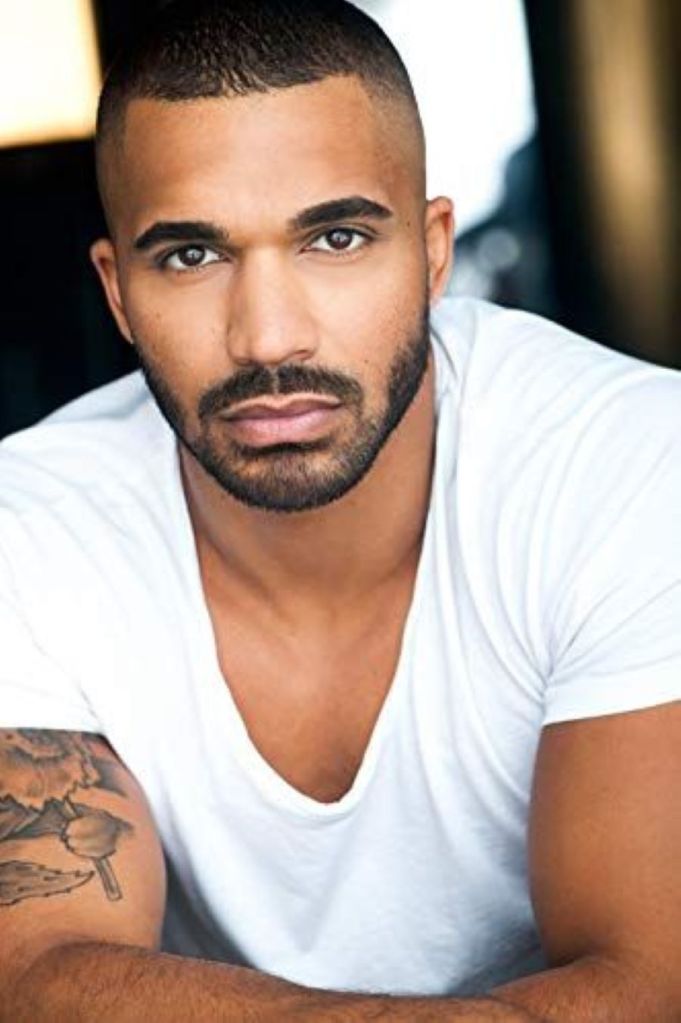
A celebration of Black physical excellence — form, feature, and divine design
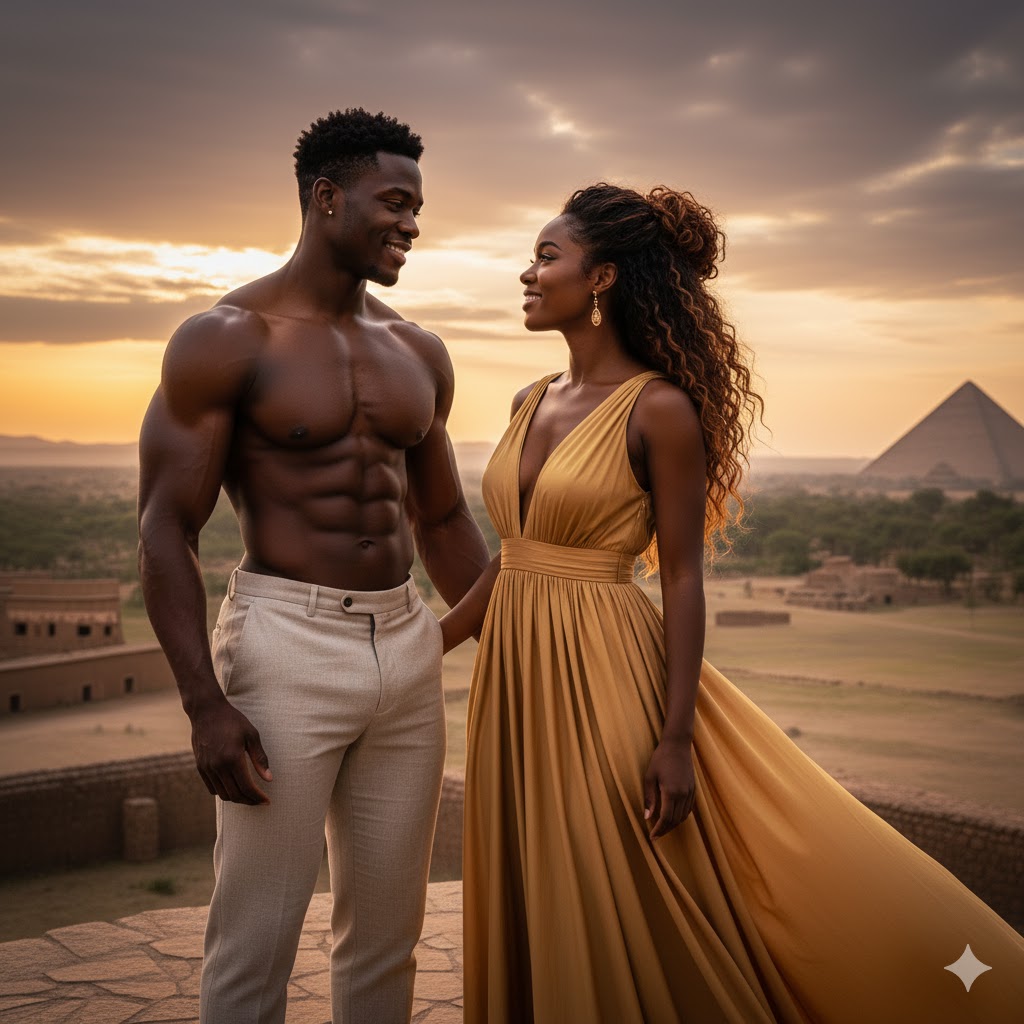
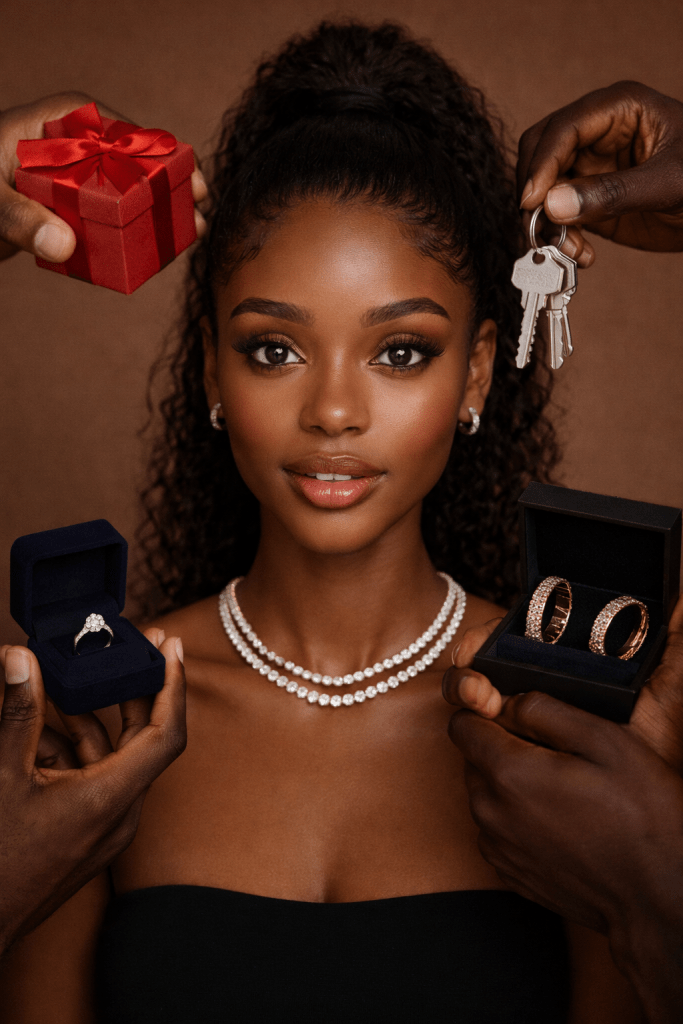
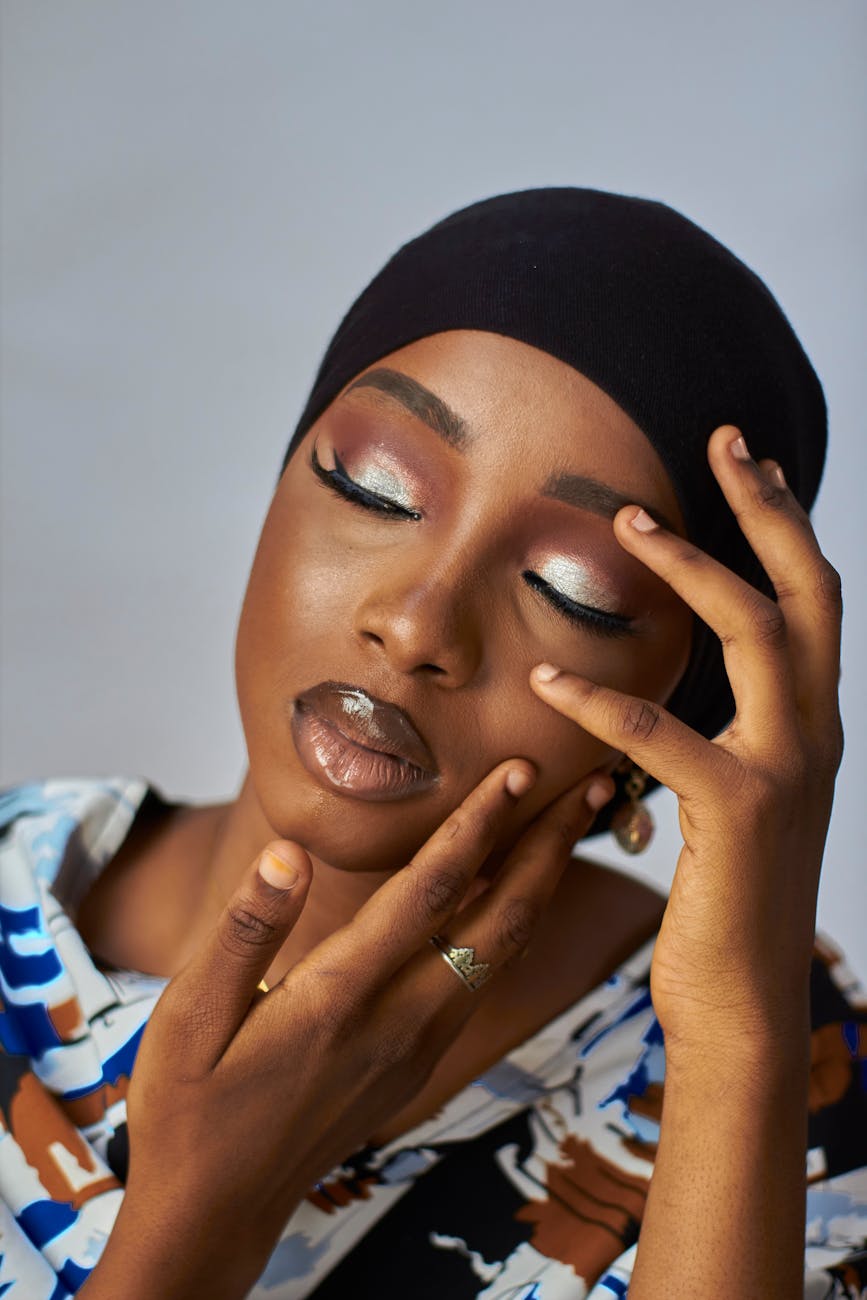
The beauty of Black people is not merely visual; it is architectural, sculptural, and elemental. It is heritage carved into flesh, ancestry alive in bone, and glory poured into skin. Melanin is not pigment — it is poetry. It reads like scripture on the body, testifying to divine intention and ancestral brilliance.

Black skin holds sunlight like a crown. Rich tones ranging from deep ebony to golden bronze shimmer with warmth and depth untouched by time. Under light, melanin glows, refracting gold and copper undertones like sacred metal. Where others burn under sun, Black skin communes with it, absorbing radiance and returning it as brilliance.

The texture of Black skin is resilient and regal. Smooth like velvet, firm like carved obsidian, it communicates strength and softness in the same breath. Even in aging, Black skin preserves youth, holding firmness and clarity as a mark of blessing and biology. Time bends gently around melanin.

Black eyes are galaxies — deep, soulful, luminous. They hold ancestral wisdom, passion, and mystery. Their depth is unmatched, reflecting strength, intuition, and spiritual perception. Brown eyes ranging from warm amber to midnight black speak without words, their intensity capable of piercing or comforting in equal measure.

Full lips remain one of the most admired features in global beauty standards — naturally plump, sculpted, and expressive. They symbolize richness and vitality, formed to communicate power, tenderness, and passion. Where imitation tries and fails, Black lips set the original blueprint for sensual symmetry.

Black noses come in noble forms — wide, sculpted, and strong. They speak of identity, rootedness, and authenticity. The elegance of broader nasal structures enhances facial harmony, balance, and presence. In an era of artificial features, original African contours stand unmatched, unapologetic, and divine.

Cheekbones in Black men and women rise like royal architecture. High, pronounced, and sculpted, they frame the face with an effortless dignity. They create definition without effort, shaping expressions into portraits of grace or power depending on the moment.

Jawlines among Black men often carry heroic structure — angular, bold, carved like marble. Their faces speak of protection, authority, and masculine divinity. Black women’s jawlines balance softness and strength, demonstrating a design that holds both gentleness and majesty.

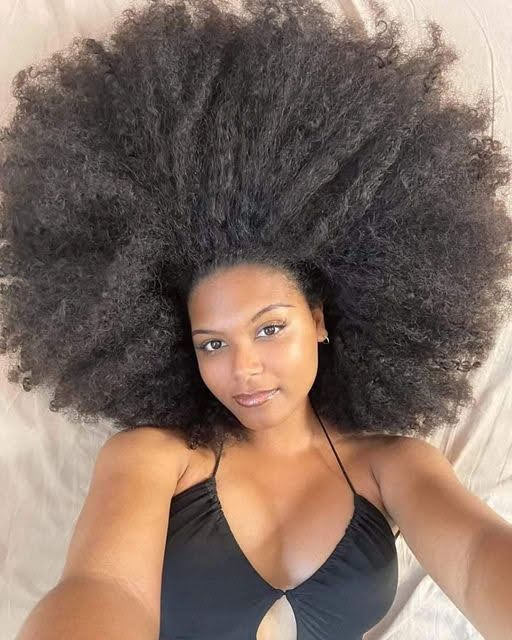
Hair — in coils, curls, waves, and kinks — stands as a living crown. Defying gravity, it rises toward heaven in spirals mirroring galaxies. Every curl is a signature of identity, every coil a testimony to resilience. Black hair is versatile, expressive, regal — a divine engineering of texture and pride.

Black men possess physiques sculpted by nature to command, protect, and endure. Broad shoulders, powerful backs, strong chests, and athletic proportions represent raw strength and disciplined elegance. From warriors to modern athletes, the Black male form proves excellence in structure and motion.

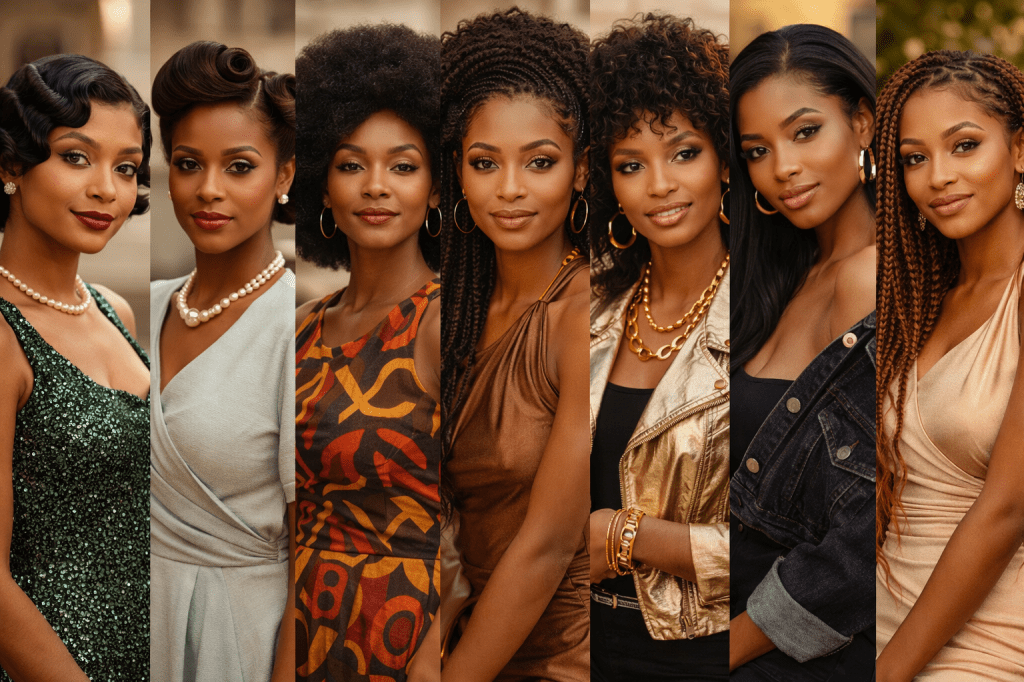
Black women embody curvature as art — hips shaped like crescents, waists sculpted like pottery, and silhouettes that flow like water. Their bodies represent fertility, power, beauty, and grace. Their movement carries rhythm, heritage, and magnetic softness.

The legs of Black men and women tell stories of mobility, endurance, and athletic superiority. Strong thighs, graceful calves, and balanced proportions reveal bodies built for power and speed, as though carved for motion with divine precision.

Black hands reveal labor and love. Strong and expressive, they carry cultural memory — hands that have created, fought, healed, raised nations, and built empires. In their form lies capability, tenderness, and dignity.

Collarbones and shoulders among Black women shimmer like sculpture. Smooth, elegant, and defined, they reflect femininity in pure form. Black men’s shoulders stand broad and unwavering, pillars of masculine power.

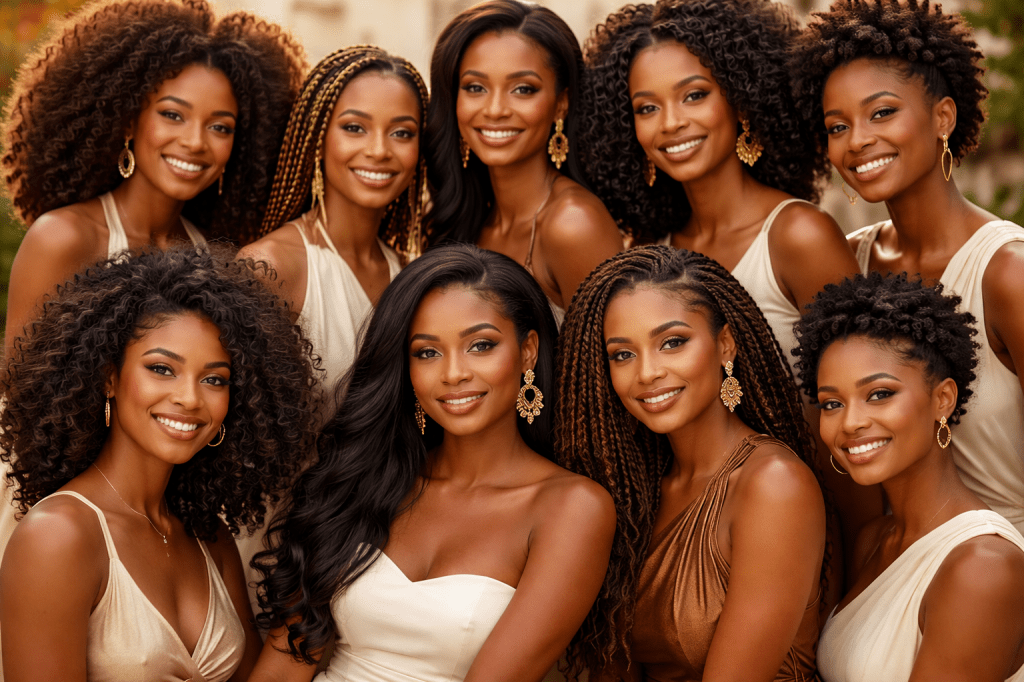
Black smiles, framed by full lips and bright teeth, radiate warmth, vitality, and confidence. There is a glow behind them — one shaped by survival, joy, and soul-deep life force. When Black people smile, the room lights differently.

Posture distinguishes Black beauty — upright, proud, grounded, and graceful. Even in casual stance, there is royal poise, inherited from ancestors who walked like kings and queens despite chains.

Movement in Black bodies is music made visible. Whether walking, dancing, or simply existing, fluidity and rhythm define them. Grace lives in the hips, strength in the back, confidence in the stride.

Masculine beauty among Black men is the fusion of power and nobility. Their features command attention; their presence shifts atmosphere. Feminine beauty among Black women is softness wrapped in steel, elegance intertwined with strength. Together they form a visual symphony — balance, brilliance, and divine complementarity.

The aesthetics of melanin transcend human standards. They reflect an original blueprint — the first beauty shaped by the Creator. Black bodies are not merely physically beautiful — they are historical, celestial, and spiritual. They carry the imprint of Eden, the dignity of royalty, and the radiance of creation itself.

Black beauty is not a trend. It is a truth — ancient, eternal, and unmatched. It does not strive to belong to the world’s standard; the world strives to imitate it. And yet, imitation never surpasses authenticity. Where melanin breathes, beauty lives in its highest form.

Biblical References (KJV)

  • Genesis 1:27 – “So God created man in his own image, in the image of God created he him; male and female created he them.”
  • Psalm 139:14 – “I will praise thee; for I am fearfully and wonderfully made: marvellous are thy works; and that my soul knoweth right well.”
  • Song of Solomon 4:1–7 – Descriptions of physical beauty, including lips, eyes, and skin.
  • Proverbs 31:25–30 – The virtuous woman: strength, beauty, and dignity.
  • 1 Corinthians 15:46 – “First that which is natural; afterward that which is spiritual.”

Scientific / Anthropological References

  • Jablonski, N. G. (2006). Skin: A Natural History. University of California Press.
  • Relethford, J. H. (2012). The Human Species: An Introduction to Biological Anthropology. McGraw-Hill Education.
  • Robins, G. (2014). The Science of Beauty: Facial Symmetry, Melanin, and Aesthetic Perception. Journal of Aesthetic Research.
  • Farkas, L. G. (1994). Anthropometry of the Head and Face. Raven Press.

Sociocultural / Psychological References

  • Banks, I. (2018). The Melanin Millennium: African Aesthetics in the Modern World.
  • Byrd, A., & Tharps, L. L. (2014). Hair Story: Untangling the Roots of Black Hair in America. St. Martin’s Press.
  • Hall, R. E. (2010). African-American Facial Features and Perceptions of Beauty. Journal of Black Studies.
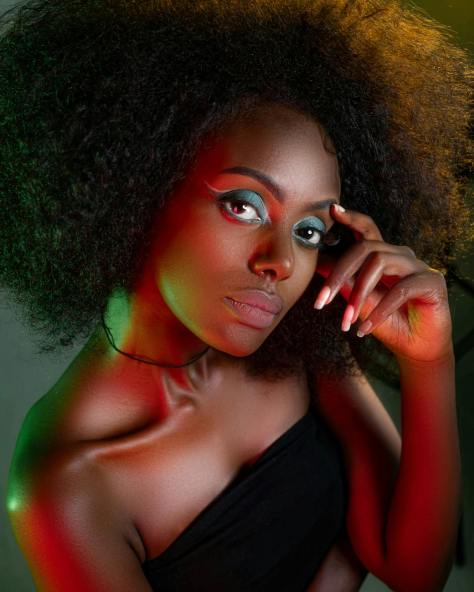
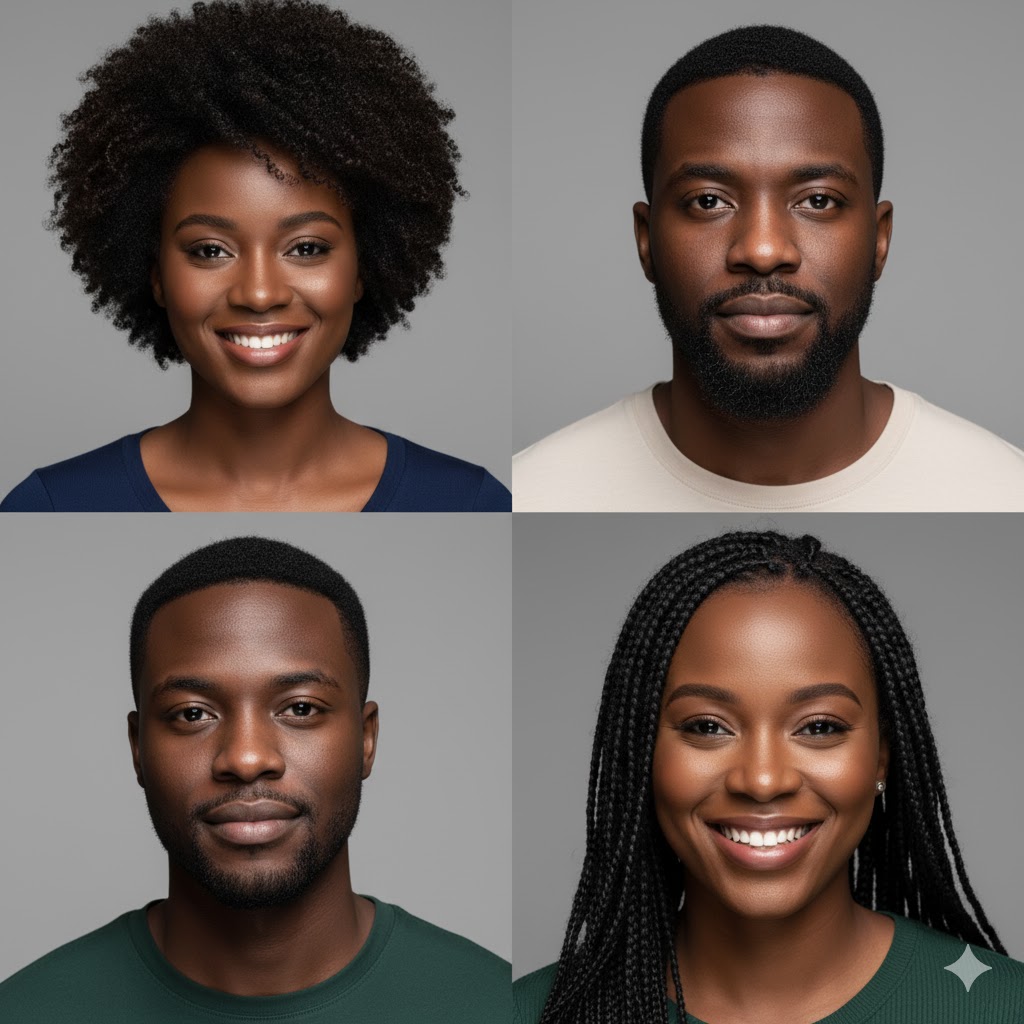
Crowning Confidence: Celebrating Dark Beauty in a Light-Skinned World.

Photo by Abenezer Shewaga on Pexels.com

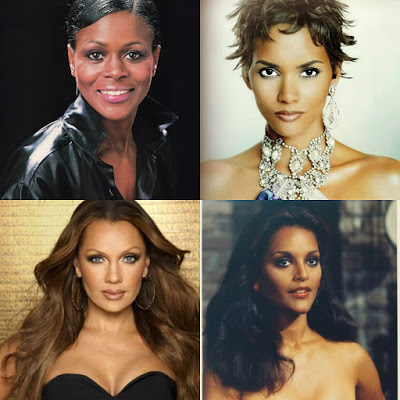
Beauty has long been racialized and hierarchized, with Eurocentric and light-skinned ideals dominating media, fashion, and cultural representation. Lighter skin has often been associated with elegance, refinement, and desirability, giving rise to systemic biases that valorize women like Yara Shahidi, Salli Richardson, and Mari Morrow. These women are celebrated for their features, poise, and charm, yet the broader narrative has historically marginalized darker-skinned women, deeming their beauty less desirable despite its richness, depth, and cultural significance.

Dark-skinned women, however, embody a powerful and resilient form of beauty that defies these narrow societal standards. Lupita Nyong’o, Kenya Moore, and Issa Rae represent a celebration of melanin-rich skin, diverse features, and cultural pride. Lupita’s radiant skin and delicate facial symmetry have been hailed as a “modern masterpiece,” earning her acclaim on red carpets and in film alike. Kenya Moore’s high cheekbones, full lips, and commanding presence have made her a standout in the pageant and reality TV worlds, while Issa Rae’s authenticity and radiant complexion have inspired countless young women to embrace their natural beauty.

While light-skinned beauty continues to dominate mainstream media, the representation of dark-skinned women is gradually increasing, challenging long-held biases. Yara Shahidi, Salli Richardson, and Mari Morrow exemplify elegance and style within lighter-complexion parameters, but their visibility contrasts with the historical underrepresentation of darker-skinned women. This disparity underscores the importance of highlighting figures like Lupita, Kenya, and Issa, whose successes demonstrate that beauty is not bound by shade but by confidence, talent, and presence.

Facial features play a critical role in this narrative. Dark-skinned women often possess unique and striking attributes—full lips, broad noses, defined jawlines, and high cheekbones—that have been historically undervalued. Lupita Nyong’o’s delicate facial symmetry and luminous skin redefine red carpet standards, while Kenya Moore’s sculpted features and radiant smile showcase the allure of dark-skinned aesthetics. Issa Rae combines natural texture, expressive eyes, and a warm, rich complexion to exemplify how authenticity enhances beauty. These features remind us that aesthetic appeal is diverse and culturally embedded.

Cultural and historical context is essential in understanding the challenges dark-skinned women face. For centuries, colonial and Eurocentric beauty standards privileged lighter skin as an aspirational ideal, relegating darker tones to marginal status. Media reinforcement of this hierarchy contributed to colorism, internalized bias, and social exclusion. By celebrating dark-skinned icons, society begins to dismantle these limiting narratives, validating beauty in all shades and promoting a more inclusive understanding of attractiveness.

Psychologically, representation impacts self-esteem and identity. Visibility of dark-skinned role models fosters confidence and resilience, counteracting the effects of colorism and societal marginalization. When young girls see Lupita, Kenya, and Issa celebrated for their melanin-rich skin and natural features, it reinforces the notion that their beauty is valid, desired, and powerful. This affirmation nurtures self-love, pride, and the courage to embrace natural aesthetics in the face of prevailing biases.

Fashion and personal style amplify the power of dark-skinned beauty. Lupita Nyong’o is known for her bold, colorful ensembles that complement her rich skin tone, while Kenya Moore often employs glamorous, classic styling that emphasizes her elegance. Issa Rae embraces chic, modern attire that highlights her unique features and authenticity. These women demonstrate that confidence is expressed not only through physical traits but through presentation, poise, and individuality.

The broader cultural impact of celebrating dark-skinned beauty extends to media, entertainment, and social movements. #BlackGirlMagic and #UnapologeticallyBlack emphasize the power, intelligence, and allure of dark-skinned women. Celebrating these figures challenges ingrained hierarchies, creates space for diverse representation, and educates society on the value and beauty of all skin tones. By centering dark-skinned icons, cultural narratives are reshaped to reflect authenticity, heritage, and resilience.

In conclusion, crowning confidence involves redefining societal standards to celebrate dark beauty in a world that historically prioritized lighter skin. Figures like Lupita Nyong’o, Kenya Moore, and Issa Rae exemplify this celebration through talent, poise, and unapologetic pride in their features and complexion. While light-skinned icons like Yara Shahidi, Salli Richardson, and Mari Morrow remain influential, the elevation of dark-skinned women challenges colorism, promotes inclusive beauty standards, and empowers a generation to embrace melanin-rich aesthetics with confidence, pride, and grace.


References

Hunter, M. (2007). The persistent problem of colorism: Skin tone, status, and inequality. Sociology Compass, 1(1), 237–254.

Byrd, A. D., & Tharps, L. L. (2014). Hair Story: Untangling the Roots of Black Hair in America. New York, NY: St. Martin’s Press.

Fardouly, J., Diedrichs, P. C., Vartanian, L. R., & Halliwell, E. (2015). Social comparisons on social media: The impact of Facebook on young women’s body image concerns and mood. Body Image, 13, 38–45.

Rhodes, G. (2006). The evolutionary psychology of facial beauty. Annual Review of Psychology, 57, 199–226.

The Social Psychology of Looks

Physical appearance plays a significant role in social interaction, perception, and identity. How we look affects how others treat us, how we perceive ourselves, and even the opportunities we receive. The social psychology of looks explores these dynamics, blending insights from psychology, sociology, and cultural studies, while faith reminds us that intrinsic worth is defined by God rather than appearance (1 Samuel 16:7).


Perception and First Impressions

Humans form rapid judgments based on appearance. Facial features, expressions, and posture influence initial assessments of trustworthiness, competence, and attractiveness. These perceptions are often subconscious, yet they shape social interactions and relationships.


Beauty Bias

Society tends to favor those deemed attractive, granting advantages in professional, academic, and personal contexts. Attractive individuals are often perceived as more intelligent, kind, or capable—a phenomenon known as the “halo effect.” Awareness of this bias is crucial for equity and fairness.


Cultural Influence on Standards

Standards of beauty are culturally constructed and evolve over time. Media, historical context, and social norms shape who and what is considered attractive. While Western culture often privileges Eurocentric features, other cultures have historically celebrated diverse facial and bodily characteristics.


Colorism and Social Hierarchies

Skin tone affects social perception within and across communities. Lighter skin is often privileged due to historical, colonial, and media influences, creating intra-group biases that affect self-esteem, social mobility, and interpersonal relationships. Faith reminds us that all skin tones are valuable as reflections of God’s image (Psalm 139:14).


Facial Features and Trust

Research in social psychology indicates that certain facial traits—symmetry, proportion, and expressiveness—can influence perceptions of trust, competence, and leadership potential. These assessments are automatic but not always accurate, highlighting the need for conscious reflection.


The Role of Expression

Beyond static features, dynamic expressions like smiles, eye contact, and microexpressions communicate emotion and influence social judgment. Kindness and warmth can enhance perceived attractiveness regardless of physical features.


The Impact of Media

Television, advertising, and social media amplify narrow beauty ideals, shaping expectations and social norms. Filtered images and celebrity portrayals can distort reality, fostering unrealistic standards that affect mental health and self-perception.


Intersection of Psychology and Faith

While social psychology explains how appearances affect human interaction, scripture reminds believers to value inner character over outward appearance. God sees the heart and measures worth differently from human perception (1 Samuel 16:7).


Social Outcomes of Appearance-Based Bias

Physical appearance can influence education, employment, and social relationships. Attractive individuals often experience advantages, while those outside societal beauty norms may face discrimination or marginalization. Awareness of these dynamics can foster compassion and justice.


Self-Perception and Identity

Our awareness of social judgments affects self-esteem, confidence, and behavior. Internalizing societal standards can lead to stress, body dissatisfaction, or identity struggles. Faith offers a grounding perspective, affirming intrinsic worth and divine purpose.


Cultural Shifts and Diversity

Contemporary movements celebrate diverse features, body types, and skin tones, challenging traditional beauty hierarchies. Recognizing and valuing diversity aligns with biblical principles of honoring all people as God’s creation.


Conclusion

The social psychology of looks reveals the complex interplay between perception, culture, and identity. Physical appearance shapes human interaction, yet it does not define intrinsic value. Scripture reminds us that true worth lies in the heart and character, not outward appearance. Understanding these dynamics promotes empathy, equity, and a holistic appreciation of human beauty.


Scripture References

  • 1 Samuel 16:7 – “Man looketh on the outward appearance, but the LORD looketh on the heart.”
  • Psalm 139:14 – “I am fearfully and wonderfully made.”

When Favor Follows the Face

Favor has never been a neutral force in societies structured by hierarchy. In racialized systems, favor often follows the face—specifically, the faces that most closely resemble those in power. This phenomenon is not accidental; it is the historical residue of slavery, colonialism, and white supremacy, where appearance became a proxy for worth, trust, and access.

During chattel slavery, physical features were weaponized as social currency. Lighter skin, looser hair textures, and Eurocentric features were frequently rewarded with proximity to the slaveholder’s household, less physically punishing labor, and, at times, conditional protection. This “favor” was not benevolence but strategy, designed to manage labor and suppress resistance through division.

The appearance-based distribution of privilege created artificial hierarchies among the enslaved. Those whose faces mirrored whiteness were often perceived—by enslavers and later by society—as more intelligent, more trustworthy, and more civilized. This perception embedded itself into legal, religious, and cultural frameworks that survived emancipation.

Favor following the face extended beyond slavery into postbellum America and colonial societies across the globe. Education, employment, housing, and marriage markets quietly reproduced these hierarchies. Lightness of skin and proximity to whiteness continued to function as silent credentials, opening doors that remained closed to darker-skinned people with equal or greater merit.

Crucially, this favor was conditional and unstable. Proximity to whiteness did not grant equality; it merely granted temporary advantage within an unequal system. Those favored were never fully accepted and could be discarded at any moment. Favor was not freedom—it was leverage.

The internalization of this logic within Black communities gave rise to colorism. Generations taught to associate opportunity with certain features began to replicate those preferences unconsciously. Compliments, assumptions of competence, and romantic desirability often tracked skin tone rather than character or capability.

Psychologically, favor following the face distorted identity formation. Those who benefited were burdened with suspicion, guilt, or pressure to prove loyalty, while those denied favor internalized rejection as personal deficiency rather than systemic bias. Both outcomes fractured communal trust.

Modern institutions continue to reflect these patterns. Research consistently shows that lighter-skinned individuals experience better outcomes in hiring, sentencing, education, and media representation. The face still functions as a résumé before words are spoken or actions observed.

The Media has been one of the most powerful reinforcers of facial favor. Casting, beauty standards, and advertising elevate a narrow range of Black features as aspirational while marginalizing others. These visual hierarchies normalize inequality under the guise of preference.

Favoring following the face also obscures structural injustice. When success is attributed to “looking right,” systems are absolved of accountability. Inequality appears natural, inevitable, or deserved rather than engineered.

From a moral and historical standpoint, favor rooted in appearance is a continuation of plantation logic. It rewards resemblance to power rather than integrity, labor, or righteousness. Such favor is incompatible with justice because it is not earned; it is inherited through trauma.

Healing requires unlearning what slavery taught about faces. It demands recognizing that perceived advantage is not proof of superiority, and lack of favor is not evidence of failure. Both are symptoms of a system that ranked humanity by phenotype.

True equity emerges when favor follows character, wisdom, and righteousness rather than facial proximity to dominance. This shift requires intentional resistance—personally, culturally, and institutionally—to centuries of conditioning.

When favor no longer follows the face, communities move closer to restoration. Dignity is returned to those long denied it, and relationships are rebuilt on truth rather than illusion. Only then can the legacy of visual hierarchy finally be dismantled.


References

Berlin, I. (1998). Many thousands gone: The first two centuries of slavery in North America. Harvard University Press.

Davis, A. Y. (1981). Women, race, & class. Random House.

Du Bois, W. E. B. (1903). The souls of Black folk. A. C. McClurg & Co.

Fanon, F. (1952). Black skin, white masks. Éditions du Seuil.

Hunter, M. (2007). The persistent problem of colorism: Skin tone, status, and inequality. Sociology Compass, 1(1), 237–254. https://doi.org/10.1111/j.1751-9020.2007.00006.x

Jordan, W. D. (1968). White over Black: American attitudes toward the Negro, 1550–1812. University of North Carolina Press.

Spillers, H. J. (1987). Mama’s baby, papa’s maybe: An American grammar book. Diacritics, 17(2), 65–81.

Wilkerson, I. (2020). Caste: The origins of our discontents. Random House.

Beyond Skin Deep: How Society Measures Worth by Appearance.

All photographs are the property of these respective owners. No copyright infringement intended.

Society often equates physical appearance with personal value, creating an environment where beauty, skin tone, and facial features disproportionately influence perceived worth. For Brown girls, this dynamic is intensified by colorism, Eurocentric standards, and media representation that favors lighter skin and Western features. These biases shape how girls are treated socially, academically, and professionally, producing both overt and subtle forms of discrimination that impact self-esteem and life outcomes (Hunter, 2007).

Historically, colonialism and slavery entrenched hierarchies that privileged lighter skin, straight hair, and Eurocentric facial features. These beauty standards were tied to social, economic, and political advantage, establishing a legacy in which lighter-skinned individuals often received preferential treatment. Brown girls inherit these systemic biases, facing the dual burden of navigating societal preference for lightness while seeking to embrace their natural features and cultural identity (Byrd & Tharps, 2014).

Media perpetuates and magnifies these standards. Television, film, and social media platforms frequently showcase lighter-skinned women as aspirational figures, while darker-skinned women remain underrepresented or stereotyped. Celebrities like Yara Shahidi, Salli Richardson, and Mari Morrow exemplify the privilege of visibility afforded to lighter-skinned women, whereas Lupita Nyong’o, Kenya Moore, and Issa Rae disrupt these patterns by embracing melanin-rich beauty and redefining cultural norms. The contrast illustrates how societal worth is often tied to appearance rather than character, talent, or intellect (Fardouly et al., 2015).

Psychological research underscores the consequences of appearance-based valuation. Social comparison theory reveals that individuals measure themselves against perceived standards, leading to self-esteem fluctuations and internalized bias. For Brown girls, repeated exposure to biased beauty standards can create feelings of inadequacy, imposter syndrome, and diminished confidence. Intentional self-reflection, mentorship, and culturally affirming representation mitigate these effects by fostering a holistic sense of self-worth that transcends appearance (Festinger, 1954).

Economic and social implications of appearance bias are profound. Studies show that lighter-skinned women often enjoy higher employment opportunities, increased social mobility, and broader access to resources. This systemic preference for lighter complexions demonstrates that societal valuation is not merely aesthetic; it is embedded in structures of power and access, reinforcing inequalities for darker-skinned individuals (Hunter, 2007).

Cultural and spiritual affirmation offers a corrective lens. Programs that celebrate African and diasporic heritage, such as community workshops, mentorship initiatives, and storytelling sessions, empower Brown girls to recognize the value of their natural features. Proverbs 31:30 (KJV) reminds, “Favour is deceitful, and beauty is vain: but a woman that feareth the LORD, she shall be praised.” Grounding self-worth in faith and character provides resilience against external judgments and societal pressures, emphasizing that value is inherent, not contingent on appearance.

Practical strategies reinforce this holistic sense of worth. Brown girls can engage in self-care, personal expression, and creative outlets to celebrate their identity, features, and heritage. Media literacy, mentorship, and culturally responsive education equip girls to critically navigate bias while cultivating confidence, talent, and leadership. Together, these approaches shift the focus from surface-level validation to substantive personal growth, achievement, and self-respect.

In conclusion, society’s tendency to measure worth by appearance disproportionately affects Brown girls, perpetuating colorism, bias, and unequal opportunity. Yet through cultural affirmation, mentorship, education, media literacy, and spiritual grounding, girls can cultivate a deep sense of intrinsic value that transcends external standards. By emphasizing character, talent, and authenticity, Brown girls redefine worth beyond skin deep, challenging societal hierarchies and inspiring future generations to embrace their full potential.


References

Banks, J. A. (2015). Cultural diversity and education: Foundations, curriculum, and teaching. Routledge.

Byrd, A. D., & Tharps, L. L. (2014). Hair Story: Untangling the Roots of Black Hair in America. St. Martin’s Press.

Fardouly, J., Diedrichs, P. C., Vartanian, L. R., & Halliwell, E. (2015). Social comparisons on social media: The impact of Facebook on young women’s body image concerns and mood. Body Image, 13, 38–45.

Festinger, L. (1954). A theory of social comparison processes. Human Relations, 7(2), 117–140.

Hunter, M. (2007). The persistent problem of colorism: Skin tone, status, and inequality. Sociology Compass, 1(1), 237–254.

Skin Deep Style: Redefining Beauty Beyond the Surface

Beauty and style are often seen as superficial measures, but for Black women, they carry layers of history, culture, and identity. The phrase Skin Deep Style captures the tension between outward appearance and the deeper narratives of self-expression, empowerment, and cultural pride. It reminds us that true style is more than skin—it is a reflection of confidence, heritage, and authenticity.

Beyond Aesthetic Perfection

Society frequently emphasizes flawless skin, symmetrical features, and fashion conformity, but these narrow ideals can overshadow individuality. For Black women, achieving beauty standards often intersects with pressures related to skin tone, hair texture, and body shape. Skin Deep Style challenges the notion that style is merely aesthetic; it argues that personal flair, creativity, and self-confidence define real beauty.

Fashion as Cultural Expression

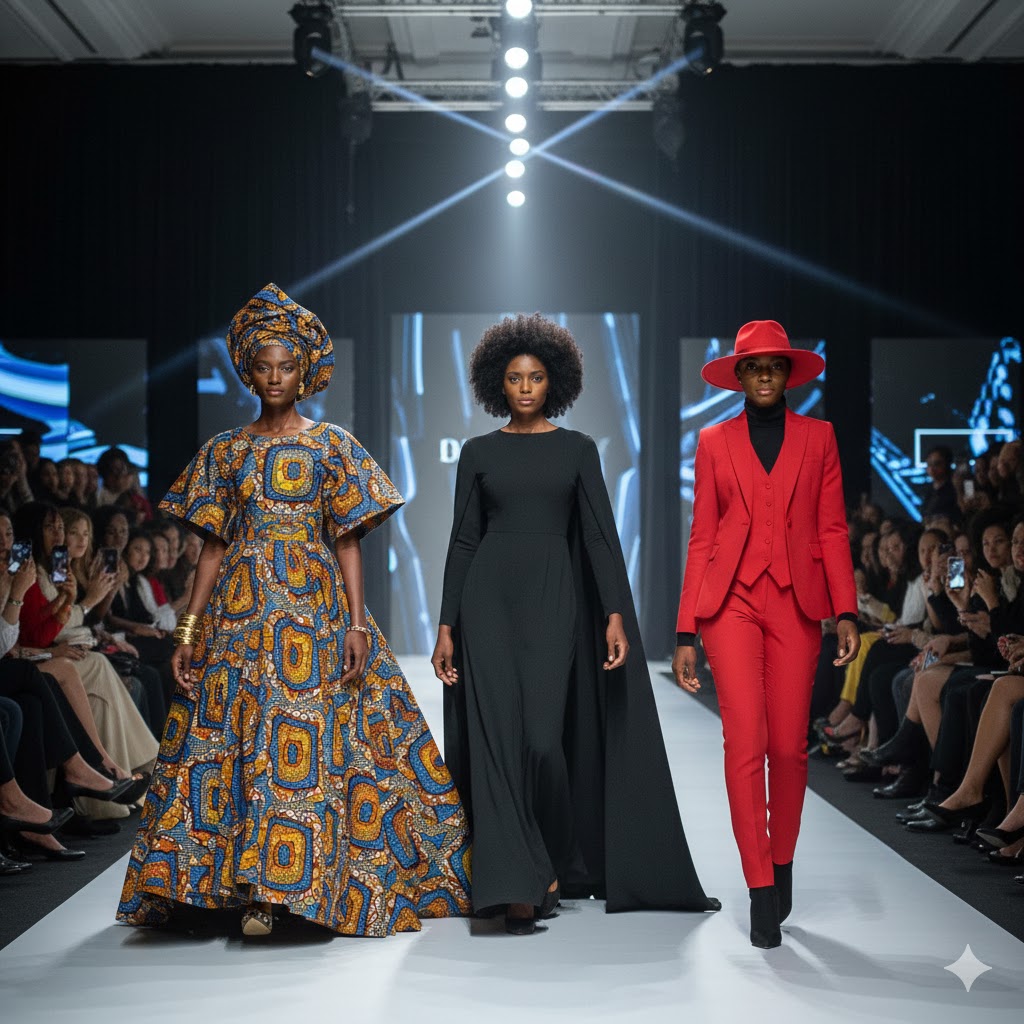
Clothing, hairstyles, and accessories are powerful tools for storytelling. Natural hair, vibrant fabrics, and culturally resonant jewelry are not just fashion choices—they honor ancestry, tradition, and identity. Skin Deep Style celebrates these elements, showcasing how style can assert pride and challenge Eurocentric norms.

Psychological Impact of Style

When style is reduced to surface-level beauty, it can impact self-esteem and social perception. Black women may feel pressure to lighten skin, straighten hair, or conform to trends that erase cultural identity. Recognizing that style extends beyond appearance allows women to reclaim agency, building confidence through choices that reflect personality, values, and heritage.

Redefining Beauty Narratives

Movements like the natural hair revolution, body positivity campaigns, and inclusive fashion lines are transforming the cultural narrative around Black beauty. Skin Deep Style encourages embracing natural textures, diverse body types, and unique fashion expressions. True style honors individuality, challenges stereotypes, and celebrates the multifaceted nature of Black identity.

Practical Ways to Embody Skin Deep Style

  1. Embrace Natural Beauty: Celebrate natural skin tones, hair textures, and body shapes.
  2. Curate Personal Fashion: Select clothing and accessories that reflect personality and heritage rather than following trends blindly.
  3. Mindful Self-Care: Prioritize skincare and wellness for health and confidence, not merely aesthetic perfection.
  4. Support Representation: Engage with brands, media, and creators who celebrate diversity and authenticity.
  5. Own Your Narrative: Use style as a tool to express values, beliefs, and individuality, creating a visual language that speaks beyond skin.

Conclusion

Skin Deep Style is a philosophy that encourages Black women to redefine beauty, fashion, and self-expression on their own terms. It moves beyond superficial judgment and highlights the power of authenticity, cultural pride, and individuality. By embracing a style that reflects identity rather than conforming to imposed ideals, Black women reclaim confidence, visibility, and the true meaning of beauty.

References

Grabe, S., Ward, L. M., & Hyde, J. S. (2008). The role of the media in body image concerns among women: A meta-analysis of experimental and correlational studies. Psychological Bulletin, 134(3), 460–476. https://doi.org/10.1037/0033-2909.134.3.460

Hall, R. E., & Fields, B. (2013). The effect of skin color on Black women’s self-perception. Journal of Black Studies, 44(5), 463–478. https://doi.org/10.1177/0021934713482645

Roberts, T. A., & Mazzeo, S. E. (2013). Colorism and the media: Implications for Black female identity. Feminist Media Studies, 13(2), 198–213. https://doi.org/10.1080/14680777.2013.775442

Masculine Perfection Series: Omari Hardwick, Ben Stephens, and Tyler Lepley.

From the golden glow of the screen to the charisma that lights up a room, certain men embody the essence of masculine perfection — a divine balance of strength, grace, and style. Their skin radiates with health and depth, their eyes hold both power and gentleness, and their physiques are sculpted as though by divine intention. Yet beyond their beauty lies a deeper brilliance — talent, discipline, and a quiet confidence that speaks louder than words. Omari Hardwick, Ben Stephens, and Tyler Lepley represent this rare trifecta of artistry, aesthetic, and authenticity. Each man stands as a reflection of Black excellence — embodying the fusion of regal presence and raw emotion that continues to redefine what it means to be both beautiful and masculine in Hollywood.


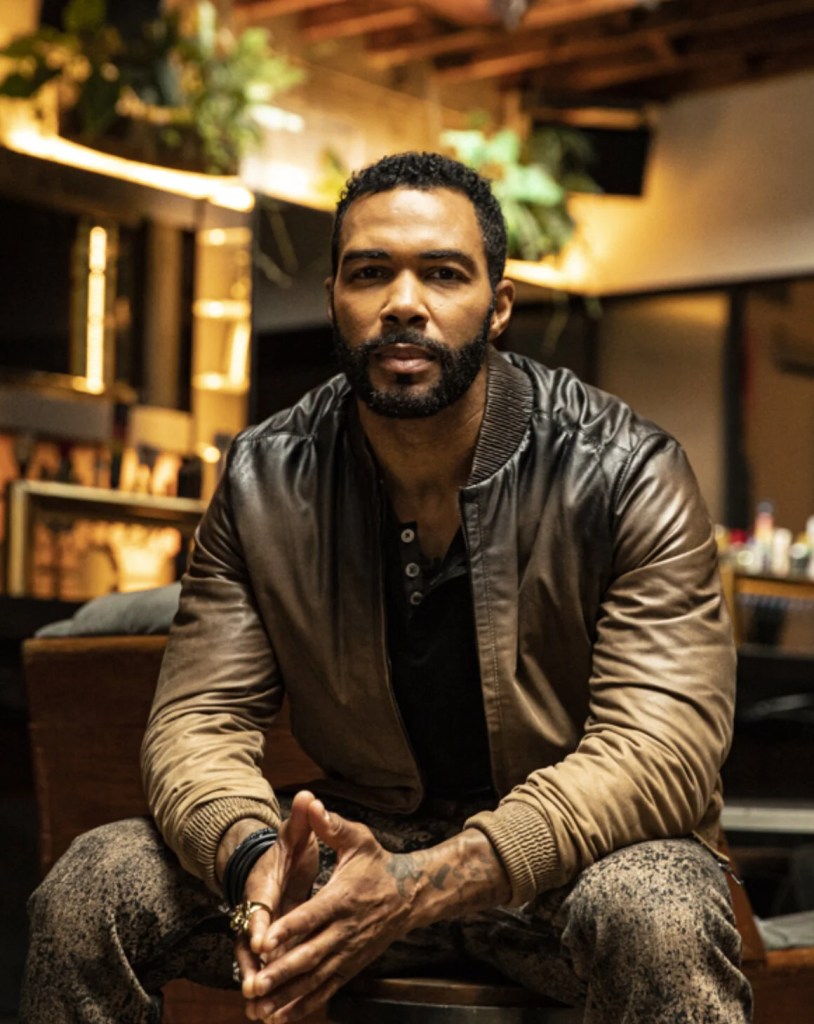
Omari Hardwick

This photograph is the property of its respective owner. No copyright infringement intended.

Omari Hardwick, born on January 9, 1974, in Savannah, Georgia, is an actor, poet, and producer best known for his captivating performances in both film and television. A graduate of the University of Georgia, Hardwick initially pursued a career in football before his passion for storytelling led him to the arts. His perseverance through rejection and struggle eventually paid off with breakout roles in For Colored Girls (2010) and Sparkle (2012), before achieving international fame as James “Ghost” St. Patrick in the Starz hit series Power (2014–2020).

Hardwick’s artistry extends beyond acting — he is also a spoken word poet and founder of the production company Bravelife Films. His performances are marked by emotional depth, intellectual sharpness, and magnetic screen presence. Known for his flawless light cafe au lait skin, chiseled physique, and piercing eyes, Hardwick embodies refined masculinity with poetic grace. In his personal life, he is devoted to his wife, Jennifer Pfautch, and their two children, often crediting family as his grounding force. His recognition includes multiple NAACP Image Award nominations, affirming his place among Hollywood’s most respected leading men.


Benjamin Stephens

This photograph is the property of its respective owner. No copyright infringement intended.

Benjamin “Ben” Stephens, an emerging star known for his suave demeanor and captivating looks, represents the next generation of Black male excellence in entertainment. Born and raised in the United States, Stephens built his reputation through modeling and acting, where his striking facial structures, piercing eyes, smooth skin tone, and athletic frame quickly drew attention. His journey began in the fashion industry, working with luxury brands and major campaigns before transitioning into television and film roles.

One of his most notable performances is in the hit television series Family Business, where he showcases remarkable emotional depth, range, and charisma. Stephens’ portrayal earned him growing praise for his natural on-screen presence and his ability to connect with audiences through both vulnerability and confidence. His work in Family Business demonstrated his gift for bringing authenticity and dimension to every role — a talent that has set him apart in a competitive industry.

Beyond the spotlight, Ben Stephens values family, faith, and personal growth. He often speaks about the importance of discipline, humility, and gratitude in shaping both his personal and professional life. His combination of classic good looks — luminous brown skin, expressive eyes, and a physique that mirrors his dedication to health and balance — complements his strong sense of purpose. Though still early in his Hollywood career, his growing recognition in both fashion and acting circles signals a bright future. Stephens continues to redefine what it means to be a leading man: intelligent, grounded, and beautifully human.


Tyler Lepley

This photograph is the property of its respective owner. No copyright infringement intended.

Tyler Lepley, born on March 24, 1987, in Philadelphia, Pennsylvania, has become one of Hollywood’s most magnetic stars. With his sculpted physique, radiant brown skin, and soulful gaze, Lepley exudes a raw, masculine allure that has captivated audiences worldwide. After earning a degree in criminal justice from Kutztown University, Lepley’s career took an unexpected turn when he was discovered by a producer at a Los Angeles boxing gym. His natural charm and talent quickly opened doors to acting opportunities, leading to his first major role in The Have and the Have Nots (2013–2021) on the Oprah Winfrey Network.

Lepley’s performances are marked by authenticity, vulnerability, and quiet intensity. He later starred in P-Valley (2020–present) and Harlem (2021–present), solidifying his status as a leading man in both drama and romance. Behind the camera, he is a devoted father and man of faith, often speaking about self-growth, humility, and divine timing. Tyler’s work has earned him critical recognition, including nominations for the BET and NAACP Image Awards. His combination of talent, charisma, and good looks — defined by sculpted features, magnetic eyes, and a voice full of calm strength — makes him one of the most captivating figures in modern entertainment.


Conclusion

Omari Hardwick, Ben Stephens, and Tyler Lepley each represent a distinct facet of masculine perfection — the poet, the model, and the warrior. Their beauty is not superficial; it is a reflection of resilience, discipline, and a deep sense of purpose. With glistening skin like polished bronze, eyes that tell stories, and physiques that embody strength and artistry, they redefine Black male elegance for a new generation. Their legacies remind the world that masculinity can be both powerful and tender, and that true perfection lies not just in appearance, but in the spirit within.


References

BET. (2020). Tyler Lepley talks faith, fatherhood, and career growth. Black Entertainment Television. https://www.bet.com

IMDb. (n.d.-a). Omari Hardwick biography. IMDb. https://www.imdb.com/name/nm1617013/

IMDb. (n.d.-b). Tyler Lepley biography. IMDb. https://www.imdb.com/name/nm4700283/

Starz. (2014–2020). Power [TV series]. Starz Network.

OWN. (2013–2021). The Haves and the Have Nots [TV series]. Oprah Winfrey Network.

TV One. (2023). The Family Business [TV series]. Urban Movie Channel & BET+ Productions.

Variety Staff. (2021). Omari Hardwick on his creative journey and poetic roots. Variety Magazine. https://variety.com

Essence. (2022). Tyler Lepley on confidence, humility, and the beauty of Black love. Essence Magazine. https://www.essence.com

The Source. (2023). Ben Stephens: The next face of Black Hollywood. The Source Magazine. https://thesource.com

Black Beauty Through the Decades

Black beauty is not a trend, a season, or a reaction to outside validation. It is an inheritance—carried through ancestry, memory, and survival. From the earliest days of displacement and resistance, Black women have expressed beauty as a language of identity, dignity, and self-definition. Even when dominant societies attempted to erase, ridicule, or redefine Black features, Black women preserved their beauty through ritual, care, adornment, and community knowledge passed from generation to generation.

To speak of Black beauty is to speak of resilience made visible. Hair, skin, body, and style have long served as sites of both oppression and power, shaped by historical forces yet continuously reclaimed. In times when Eurocentric standards were enforced as the measure of worth, Black women transformed beauty into an act of resistance—refusing invisibility and asserting presence. Each braid, curl, wrap, and adornment carried meaning beyond aesthetics, reflecting survival, creativity, and cultural memory.

Black beauty has never been singular. It exists across a spectrum of skin tones, textures, facial features, and expressions that defy narrow definitions. It evolves across time while remaining rooted in African heritage and diasporic experience. Whether expressed through restraint or boldness, tradition or innovation, Black beauty has always reflected autonomy—the right to define oneself without permission.

In the modern era, the reclamation of Black beauty marks a profound cultural shift. What was once marginalized is now celebrated, studied, and emulated, yet its deepest meaning remains internal rather than performative. Black beauty is not merely what is seen, but what is carried—confidence forged through history, grace born of endurance, and a self-love that persists despite centuries of contradiction. It is both personal and collective, timeless and ever-renewing.

Ultimately, Black beauty is a testament. It testifies to the ability of Black women to remain radiant in the face of erasure, to create elegance from limitation, and to transform survival into art. It is not defined by approval, but by continuity—a living expression of identity that honors the past, affirms the present, and shapes the future.

All photographs are the property of their respective owners. No copyright infringement intended.

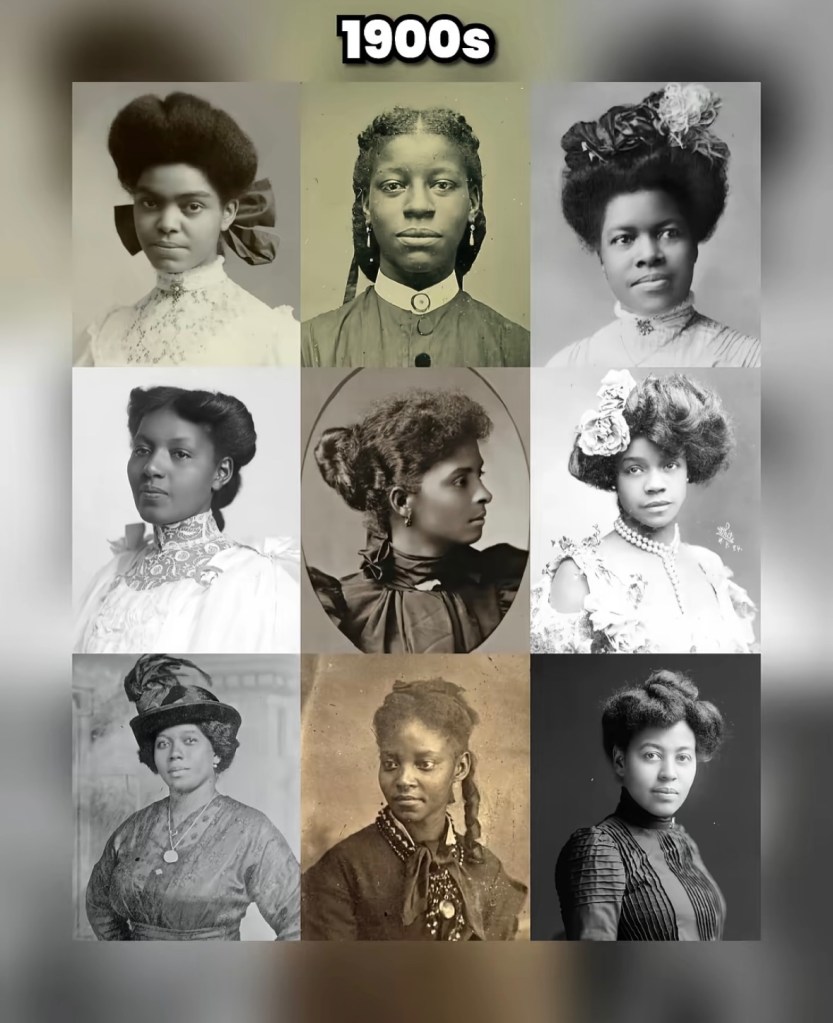
1900s1910s
At the turn of the twentieth century, Black women’s beauty was deeply shaped by resilience, modesty, and self-definition within a racially hostile society. Hairstyles were often practical and protective, including wraps, headscarves, and neatly pressed styles influenced by African traditions and Victorian norms. Despite social limitations, Black women maintained dignity through careful grooming, skin care using natural oils, and adornment that reflected pride and self-respect rather than excess.
During the 1910s, migration from rural Southern communities to urban centers began reshaping Black aesthetics. Hair was frequently styled in soft waves, buns, and pompadours, often achieved through hot combing—a controversial yet common tool of the era. Beauty culture expanded through Black-owned businesses, notably Madam C. J. Walker, who emphasized cleanliness, confidence, and economic independence rather than Eurocentric imitation.

1920s
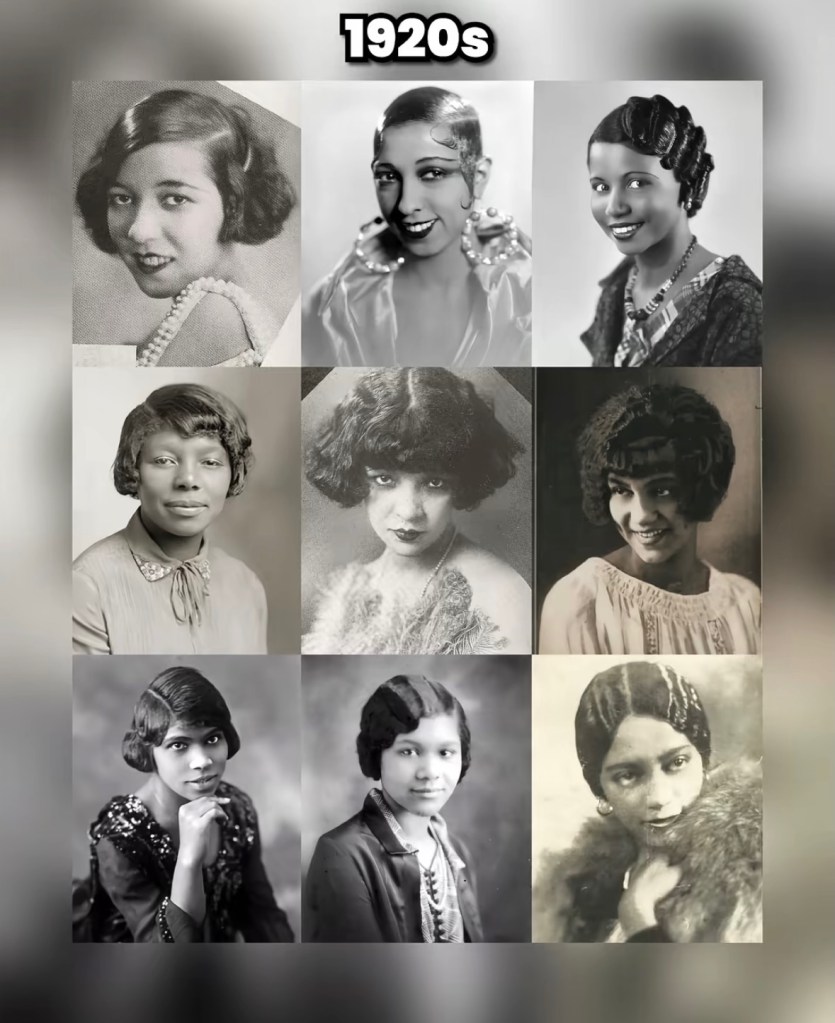
The Harlem Renaissance of the 1920s marked a cultural awakening in which Black beauty became visible, expressive, and artistic. Shorter hairstyles, finger waves, and sleek bobs emerged, paired with bold lipstick and refined fashion. Black women embodied modernity and glamour, asserting intellectual and aesthetic authority through music, literature, and visual style that celebrated sophistication and cultural pride.

1930s
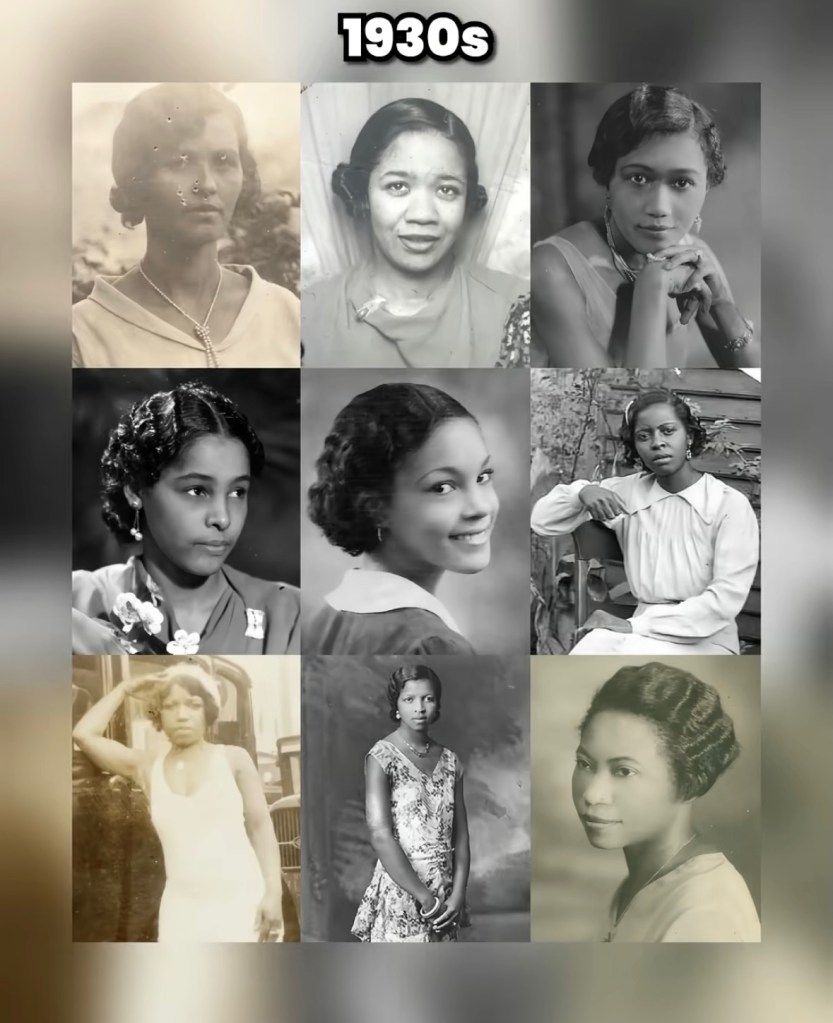
In the 1930s, amid the Great Depression, Black beauty reflected elegance under constraint. Hairstyles favored sculpted waves, rolls, and pinned curls, while makeup remained polished but understated. Beauty became an act of resistance—maintaining poise, femininity, and grace despite economic hardship. Hollywood films influenced aesthetics, though Black women adapted these styles to their own textures and features.

1940s
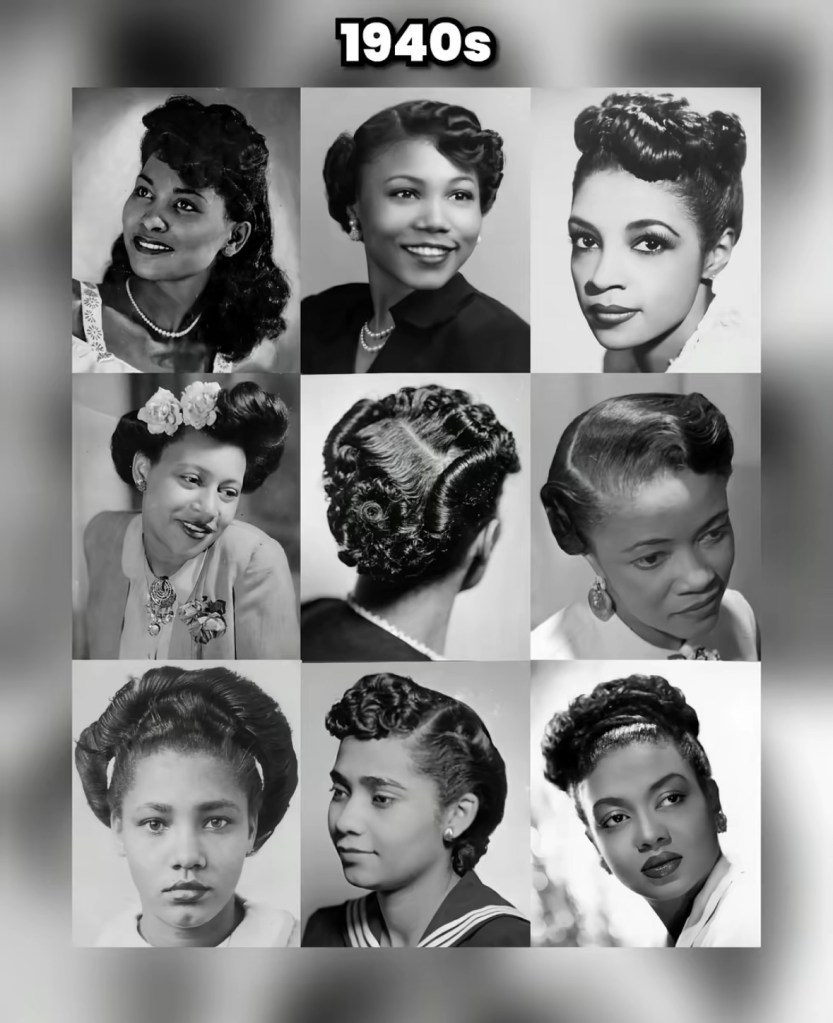
World War II reshaped Black womanhood and beauty in the 1940s as women entered industrial labor and military support roles. Hairstyles were practical yet stylish, including victory rolls, headscarves, and neatly set curls. Beauty symbolized strength and patriotism, with emphasis on clean lines, red lips, and confident posture reflecting both femininity and fortitude.

1950s
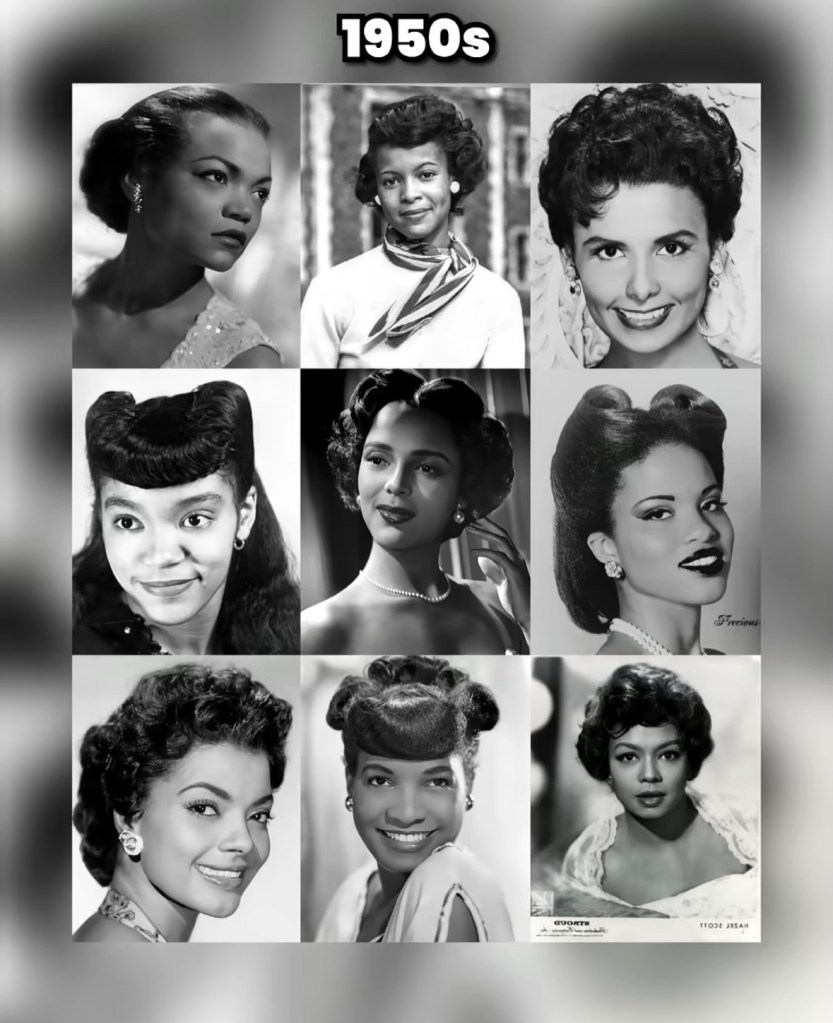
The 1950s emphasized polish, domestic elegance, and hyper-femininity. Black women wore structured dresses, gloves, and coiffed hairstyles, often straightened or softly curled. Beauty standards leaned toward refinement and respectability, particularly within Black middle-class communities, as appearance was closely tied to social mobility, morality, and dignity in a segregated society.

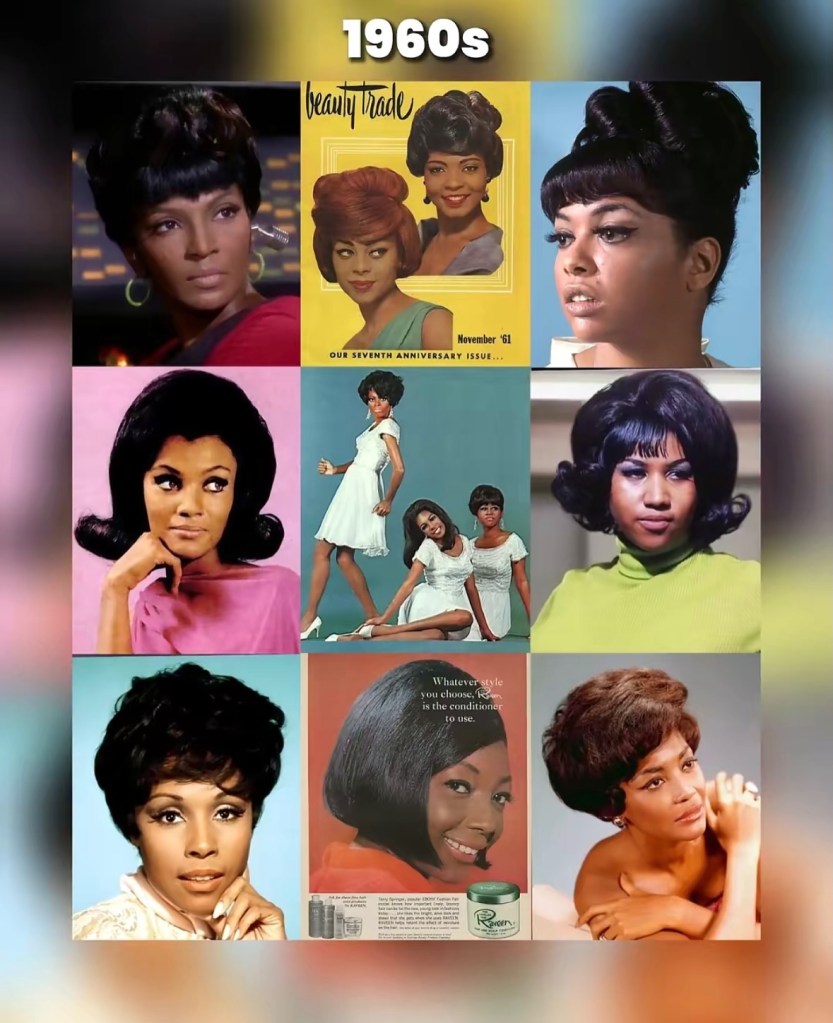
1960s
The 1960s ushered in a radical transformation as the Civil Rights and Black Power movements reframed beauty as political identity. The Afro emerged as a powerful symbol of self-acceptance and resistance, rejecting assimilationist standards. Natural hair, dark skin, and African-inspired clothing were embraced as declarations of pride, autonomy, and cultural truth.

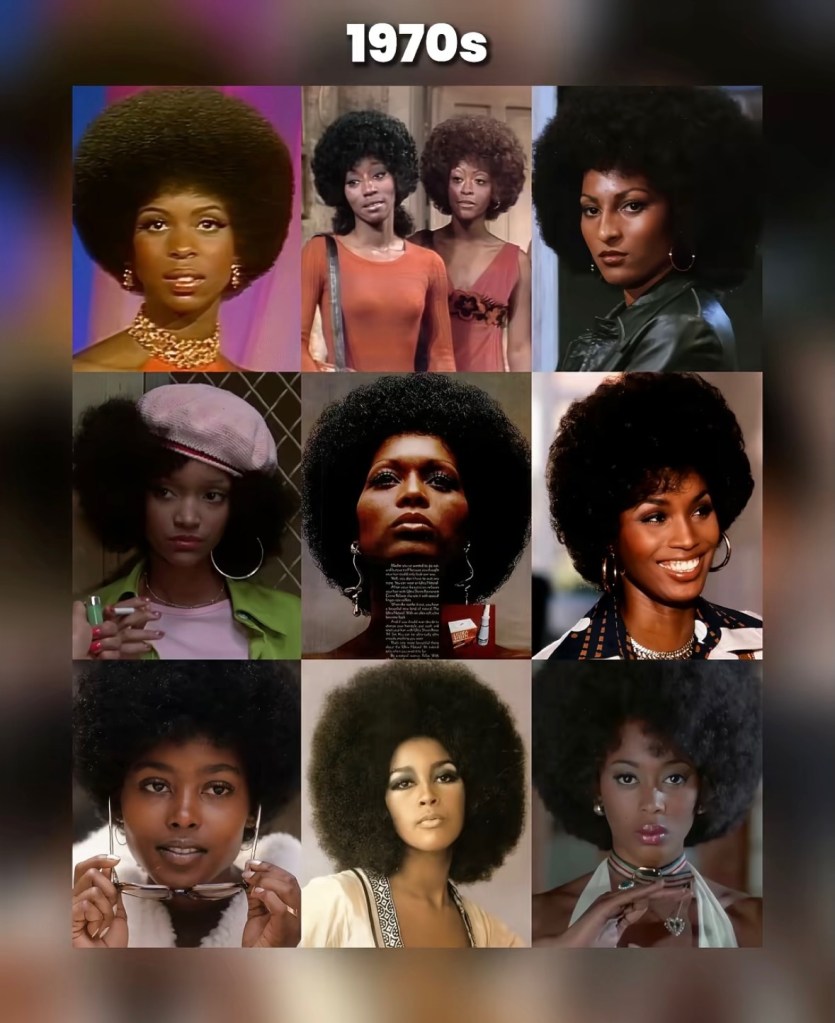
1970s
In the 1970s, Black beauty flourished in boldness, freedom, and Afrocentric expression. Large Afros, braids, cornrows, and natural textures dominated, paired with vibrant makeup and fashion. Icons like Pam Grier and Cicely Tyson embodied a confident sensuality rooted in authenticity rather than approval. Beauty became expansive, expressive, and unapologetically Black.

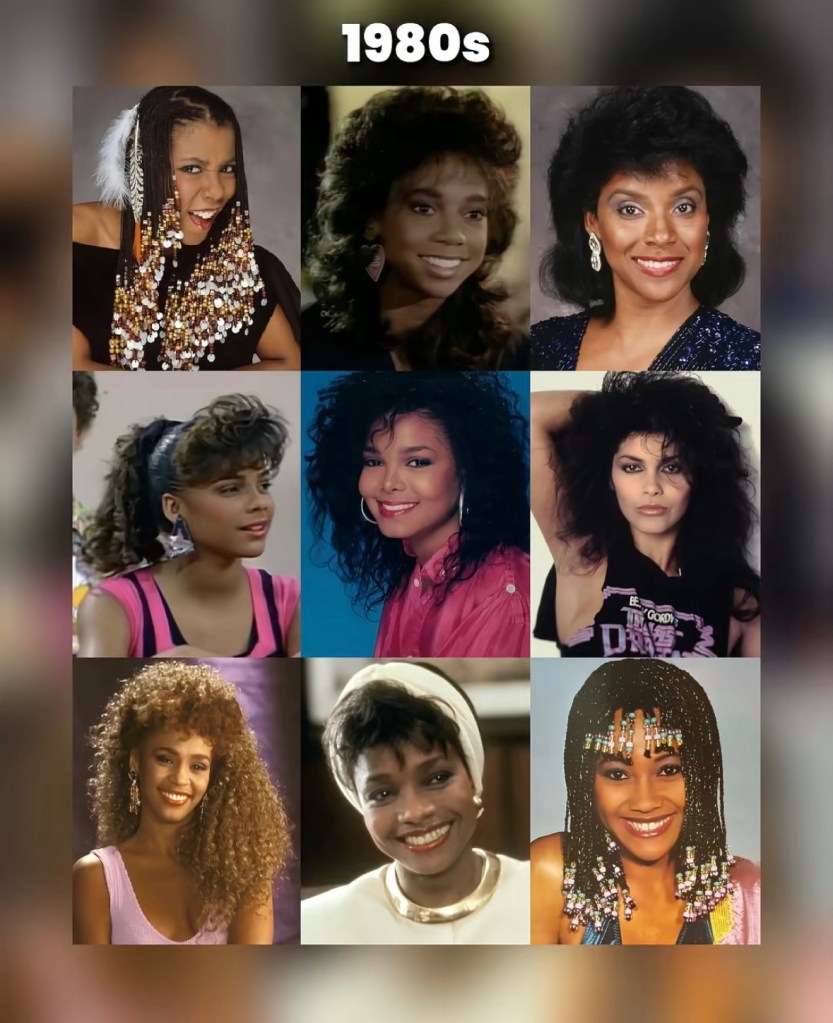
1980s
The 1980s brought excess, experimentation, and glamour. Black women embraced voluminous hairstyles, including jheri curls, blowouts, and elaborate braids. Makeup was bold, featuring strong eyes and glossy lips. Beauty aligned with success, visibility, and power, reflecting growing representation in music, television, and corporate spaces.

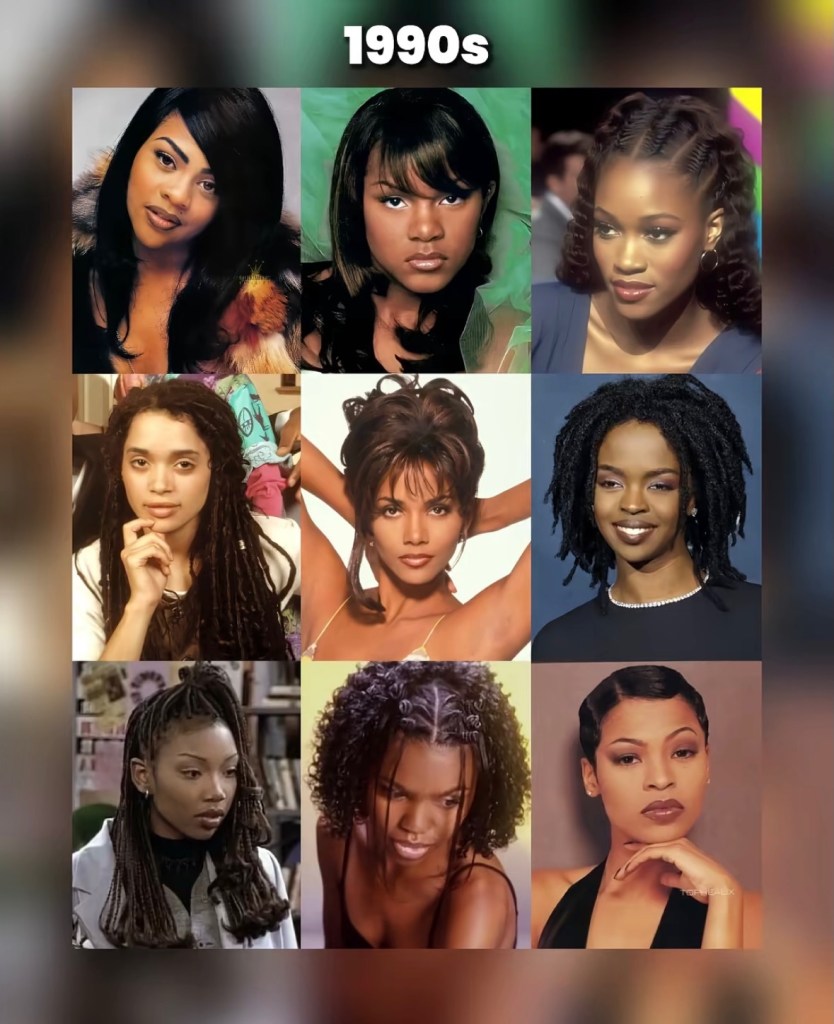
1990s
The 1990s balanced minimalism with cultural edge. Box braids, microbraids, finger waves, and sleek bobs coexisted alongside understated makeup and fashion. Black beauty icons such as Naomi Campbell and Angela Bassett represented strength, athleticism, and global elegance. Authenticity and individuality increasingly defined attractiveness.

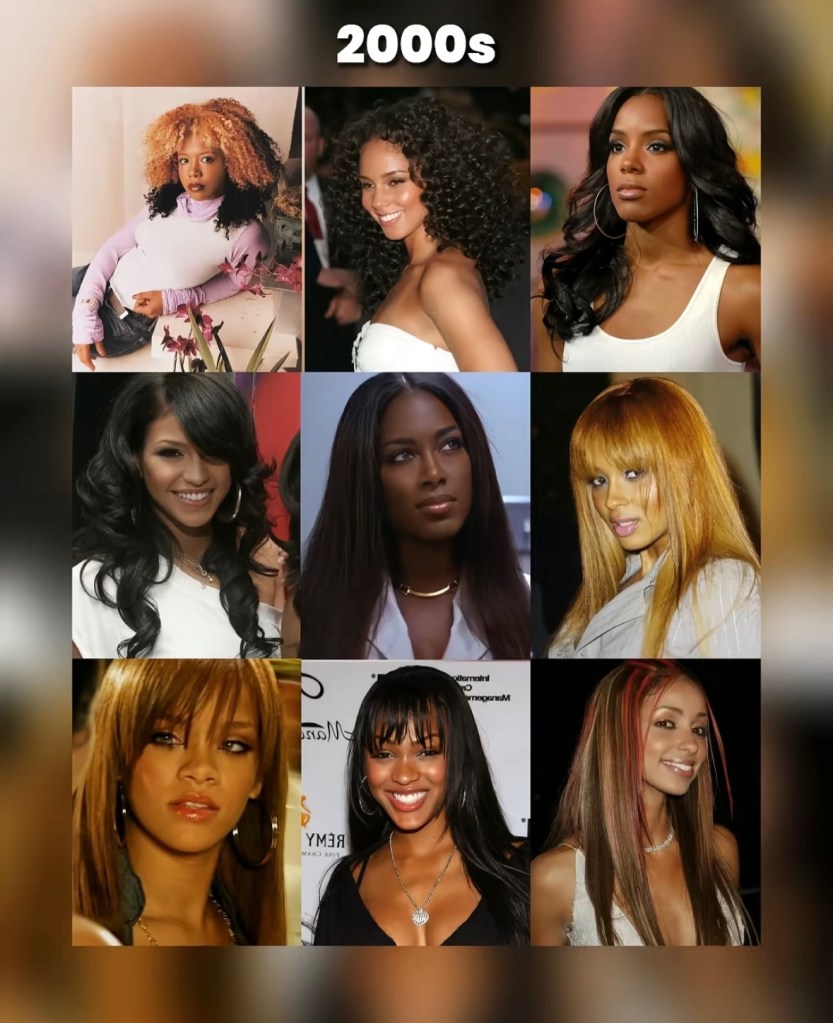
2000s
In the 2000s, Black beauty diversified across mainstream and niche aesthetics. Lace fronts, silk presses, locs, and protective styles gained popularity, alongside experimental makeup and fashion. Media visibility expanded through music videos, magazines, and early digital platforms, allowing Black women to define beauty on their own terms across multiple expressions.

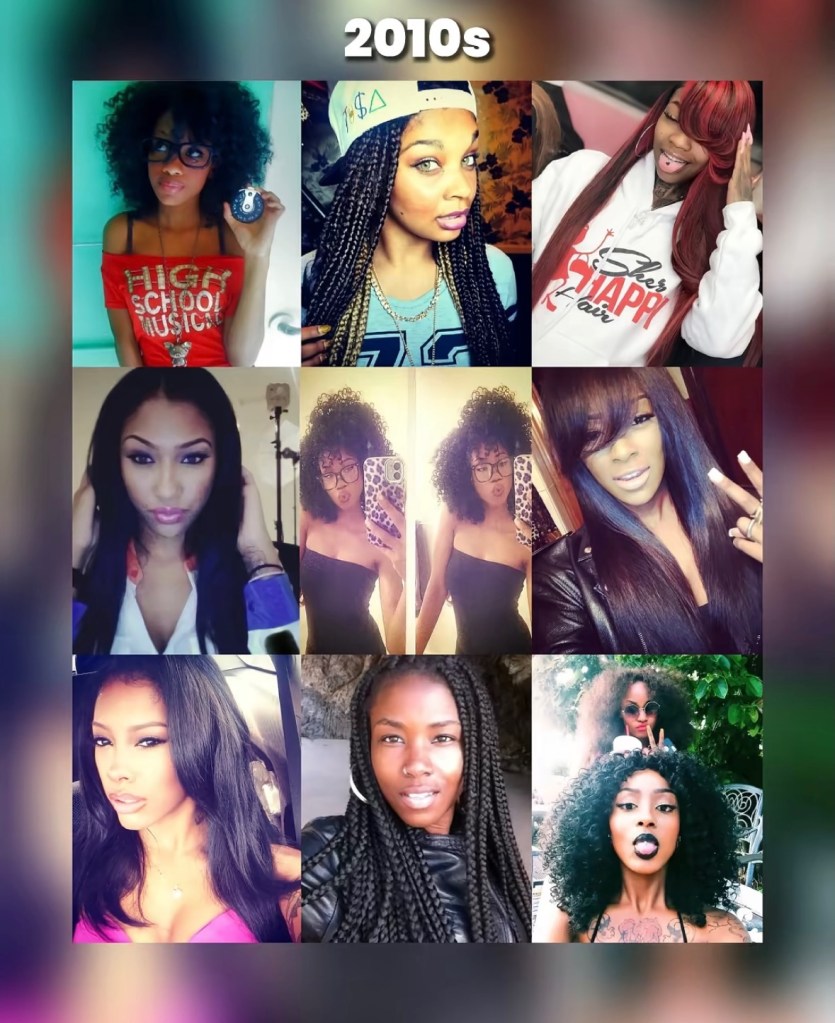
2010s
The 2010s marked a renaissance of natural hair and digital empowerment. Social media amplified Black women’s voices, celebrating coils, curls, dark skin, and wide features once marginalized. Beauty became inclusive, instructional, and affirming, with natural hair movements and makeup brands explicitly centering Black women’s needs and aesthetics.

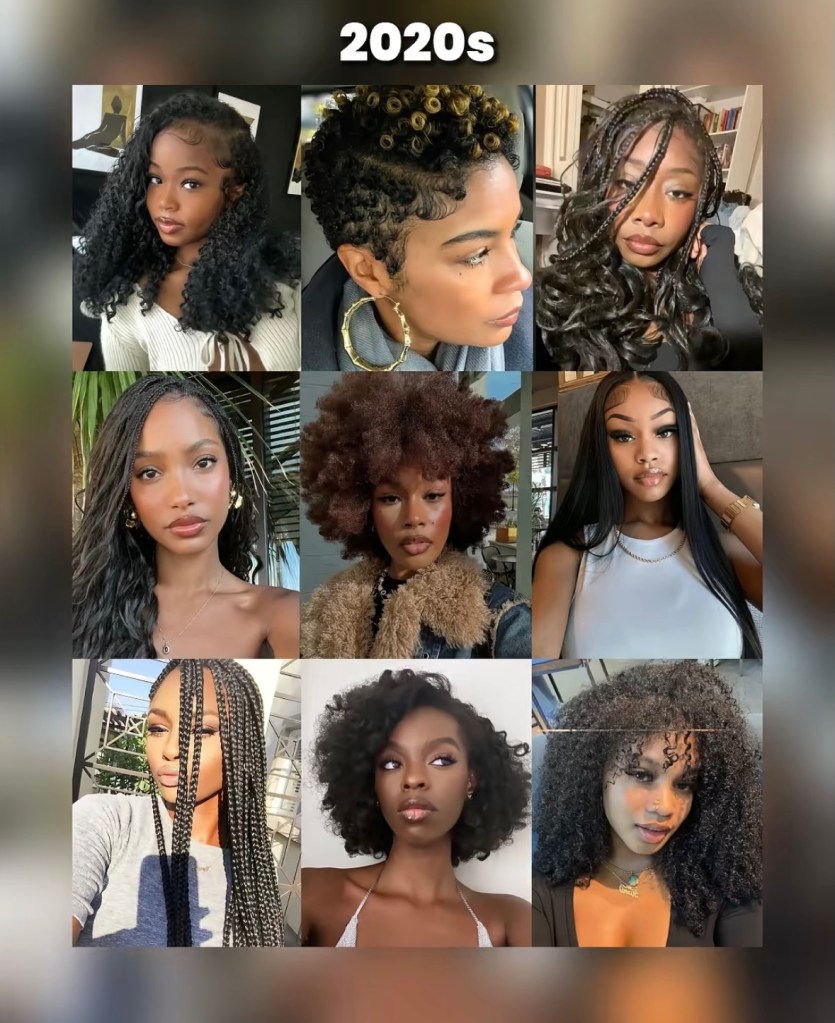
2020s
In the 2020s, Black beauty stands fully autonomous, expansive, and global. There is no single standard—locs, Afros, braids, shaved heads, bold colors, and minimalist looks coexist without hierarchy. Beauty is now framed as wellness, self-definition, and cultural inheritance. Black women lead beauty innovation, redefine luxury, and affirm that Blackness itself is timelessly beautiful.


Black beauty endures because it is rooted in truth rather than approval. It is not borrowed, diluted, or dependent on trends—it is ancestral, self-defined, and ever-evolving. Across centuries of challenge and transformation, Black beauty has remained a quiet force and a bold declaration, reflecting dignity, creativity, and spiritual strength. It is the beauty of survival refined into grace, of history carried with pride, and of identity claimed without apology. In every generation, Black beauty stands as living evidence that what was once denied has always been divine, whole, and worthy.

References

Byrd, A. D., & Tharps, L. L. (2014). Hair story: Untangling the roots of Black hair in America (2nd ed.). St. Martin’s Press.

Craig, M. L. (2002). Ain’t I a beauty queen? Black women, beauty, and the politics of race. Oxford University Press.

Hobson, J. (2005). Venus in the dark: Blackness and beauty in popular culture. Routledge.

Peiss, K. (2011). Hope in a jar: The making of America’s beauty culture. University of Pennsylvania Press.

Walker, S. B. (2007). Style and status: Selling beauty to African American women, 1920–1975. University Press of Kentucky.

Wilson, J. (2016). Black beauty: Aesthetic politics in modern African American culture. University of Illinois Press.

Hair Glory: The History of Black Hair

This photograph is the property of its respective owner. No copyright infringement intended.

Black hair has always held profound significance, serving as a marker of identity, spirituality, and cultural heritage. In Africa, long before colonialism and slavery, hair was a crown of glory, symbolizing lineage, social status, and community belonging (Byrd & Tharps, 2014). For Black people, hair has never been merely aesthetic—it carries history, resistance, and sacred meaning.

In pre-colonial African societies, hair was a living language. Intricate braids, cornrows, and twists conveyed age, marital status, tribal affiliation, and even wealth (Banks, 2000). Hairstyling was often a communal ritual, strengthening social bonds and passing down ancestral knowledge from one generation to the next.

Biblical references further elevate the significance of hair. 1 Corinthians 11:15 (KJV) states, “If a woman have long hair, it is a glory to her: for her hair is given her for a covering.” For Black women, this verse resonates as a recognition of God’s gift, linking hair to divine identity and dignity.

The transatlantic slave trade violently disrupted African hair culture. Enslaved Africans were forced to shave their heads upon arrival in the Americas to erase tribal identities and assert control (Roach, 2018). Hair, once a source of pride, was weaponized as a tool of oppression.

During slavery, hair texture and style were stigmatized. Terms like “kinky” or “woolly” carried derogatory weight, while straightened textures were celebrated. This created layers of internalized racism and colorism that persist in the African diaspora (Thompson, 2009).

Despite oppression, Black hair became a form of resistance. Enslaved women braided escape routes into cornrows, transforming hairstyles into literal maps for freedom (Painter, 2006). Hair thus became a silent yet potent tool of survival and ingenuity.

In the post-slavery era, hair care emerged as a site of entrepreneurship and empowerment. Madam C.J. Walker, often cited as America’s first Black female millionaire, revolutionized hair care for Black women, blending beauty with economic independence (Walker, 1910). While some methods promoted straightening, the enterprise symbolized self-determination.

The 1960s and 1970s saw a radical reclamation of natural hair. The Afro emerged not just as a style but as a political statement aligned with the Civil Rights and Black Power movements. Wearing natural hair boldly rejected Eurocentric standards and asserted African heritage (Craig, 2002).

The natural hair movement also underscored self-love and cultural pride. Public figures and artists embraced their textures as a counter-narrative to centuries of discrimination, emphasizing that Black beauty is not defined by whiteness but by heritage and authenticity.

Black men’s hair has historically carried symbolic weight as well. Styles such as dreadlocks connected spiritual identity with biblical Nazarite traditions, as exemplified in Samson’s story (Judges 16:17, KJV). Hairstyle became a reflection of spiritual and cultural consciousness.

Despite progress, Black hair remains a contested space. Discrimination persists in workplaces and schools, with natural hairstyles often deemed “unprofessional.” The CROWN Act, legislated in several U.S. states, combats this hair-based discrimination, affirming that hair is not only cultural but also legal terrain (CROWN Act, 2019).

Social media has amplified cultural reclamation, providing platforms for tutorials, education, and storytelling. Sites like YouTube and TikTok have created virtual salons, where younger generations can learn protective styling, hair care, and embrace natural textures (Banks, 2000).

Culturally, Black hair has influenced music, film, and fashion, from the Afros of the 1970s to contemporary locs and twists. Icons such as Cicely Tyson, Erykah Badu, and Lupita Nyong’o have reshaped societal notions of beauty, making Black hair a visible emblem of pride (Thompson, 2009).

Hair is intertwined with spiritual symbolism. Isaiah 61:3 (KJV) promises beauty for ashes, suggesting that reclaiming one’s hair after oppression is a reflection of God’s restorative power. For many, embracing natural hair is an act of faith and spiritual resilience.

Throughout history, Black hair has navigated multiple pressures: assimilation, Eurocentric beauty standards, and societal prejudice. Yet it has remained a central marker of Black identity, resilience, and artistic expression.

Today, the diversity of Black hair textures and styles—from twists, braids, locs, and afros—represents freedom, creativity, and cultural continuity. Hair care practices have evolved, but the symbolism endures: hair is power, pride, and self-expression.

Black hair also plays a role in community and mentorship. Stylists pass down ancestral techniques, creating spaces where history, skill, and storytelling converge. Hair salons have historically functioned as cultural hubs for connection, resistance, and affirmation (Banks, 2000).

The history of Black hair reflects the broader African diaspora’s struggle and triumph. From forced shaving during slavery to today’s celebration of curls and locs, hair chronicles a journey from erasure to reclamation, from shame to glory.

In essence, Black hair is sacred, political, and cultural. It embodies resilience, identity, spirituality, and creativity. Hair is glory restored, a living testament to survival and divine beauty.


References

  • Banks, I. (2000). Hair matters: Beauty, power, and Black women’s consciousness. NYU Press.
  • Byrd, A., & Tharps, L. (2014). Hair story: Untangling the roots of Black hair in America. St. Martin’s Press.
  • Craig, M. L. (2002). Ain’t I a beauty queen?: Black women, beauty, and the politics of race. Oxford University Press.
  • CROWN Act. (2019). Creating a Respectful and Open World for Natural Hair. California State Legislature.
  • Painter, N. I. (2006). Exodusters: Black migration to Kansas after Reconstruction. Knopf.
  • Roach, M. (2018). Hair and identity in the African diaspora. Journal of Black Studies, 49(5), 435–456.
  • Thompson, C. (2009). Black women, beauty, and hair: How hair matters in identity formation. Women’s Studies Quarterly, 37(3/4), 101–123.
  • Walker, M. C. J. (1910). Secrets of success. Independent Business Publisher.

The Psychology of Beauty: How Color Shapes Perception and Confidence.

Photo by Express_photographyy Muhd sani abbas on Pexels.com

Beauty is often thought of as merely aesthetic, yet psychology reveals that color—especially skin tone—plays a profound role in shaping perception, identity, and self-confidence. Human beings subconsciously associate certain hues with traits, emotions, and social status, influencing both how individuals see themselves and how they are perceived by others. Understanding the interplay between color and psychology provides insight into cultural biases, self-esteem, and the lived experiences of those navigating societal beauty standards.

Color as a Psychological Signal

Color conveys meaning beyond its visual appeal. In psychology, it is established that lighter and darker shades can trigger different perceptions. For instance, lighter skin tones are often unconsciously associated with attractiveness, approachability, or social privilege in Eurocentric societies, whereas darker tones may face bias or negative stereotyping (Hunter, 2007). These perceptions are reinforced through media, literature, and cultural narratives, affecting both interpersonal interactions and self-image.

The Impact of Skin Tone on Self-Confidence

Color perception significantly affects self-esteem and confidence. Studies on colorism reveal that individuals with lighter skin often experience social advantages, while those with darker skin may face prejudice, impacting psychological well-being (Russell, Wilson, & Hall, 1992). Conversely, individuals who learn to embrace their natural skin tone and its cultural significance report higher self-esteem and a stronger sense of identity. This demonstrates the critical link between color acceptance and psychological empowerment.

Cultural and Historical Contexts

The meaning attached to skin tone is not innate but culturally constructed. Colonialism, slavery, and global media have historically elevated lighter skin as a standard of beauty, relegating darker tones to marginalization (Hunter, 2005). Across African and diasporic communities, these biases influence dating preferences, professional opportunities, and societal treatment. Recognizing this history is essential to addressing internalized perceptions and fostering authentic self-confidence.

Beauty, Color, and Social Perception

Color does more than shape self-perception—it also dictates social perception. People often unconsciously ascribe personality traits, competence, and attractiveness based on color cues. For example, in professional or social contexts, lighter skin may be associated with approachability or higher status, while darker skin may be unfairly linked to negative stereotypes (Russell et al., 1992). Awareness of these biases is the first step toward challenging them and redefining beauty standards on equitable terms.

Psychological Strategies for Embracing Color

Self-reflection, media literacy, and exposure to diverse representations are key strategies for building confidence in one’s natural hue. Affirmations, community support, and representation in media empower individuals to value their skin tone and resist societal pressures. Celebrating diversity in color not only enhances personal confidence but also shifts cultural narratives about beauty, making them more inclusive and representative.

Melanin and Power: Thriving with Confidence in a World of Color Bias

Melanin-rich skin is a source of natural beauty, resilience, and identity. Yet, across cultures and history, darker tones have often been devalued, creating psychological and social challenges for those who bear them. Understanding the intersection of melanin, perception, and confidence allows individuals to embrace their skin fully, redefine beauty standards, and thrive in environments shaped by bias.

The Science of Melanin and Its Beauty

Melanin, the pigment responsible for skin color, offers protection against UV radiation and contributes to youthful, resilient skin. Beyond its biological function, melanin-rich skin carries deep cultural and ancestral significance. It symbolizes survival, heritage, and the legacy of African and diasporic communities, reminding those who bear it of strength passed down through generations.

Psychological Effects of Color Bias

Colorism—the privileging of lighter skin tones over darker ones—has measurable effects on self-esteem and social confidence. Studies show that darker-skinned individuals may experience discrimination in education, employment, and social settings, impacting psychological well-being (Hunter, 2007). Internalizing societal bias can lead to diminished self-worth, while embracing one’s natural shade correlates with higher confidence and identity affirmation.

Empowerment Through Representation

Representation matters. Celebrities like Lupita Nyong’o, Viola Davis, Idris Elba, and Michaela Coel showcase the elegance, power, and beauty of melanin-rich skin on global platforms. Their visibility challenges stereotypes, promotes diversity, and provides role models for younger generations. When media reflects the richness of skin tones, it reinforces positive self-perception and inspires confidence.

Strategies for Thriving with Melanin-Rich Skin

  1. Self-Affirmation: Regularly celebrate your skin tone with affirmations and reflection. Recognize its uniqueness and beauty.
  2. Community Support: Surround yourself with mentors, friends, and communities that uplift all shades of melanin.
  3. Media Literacy: Critically assess media portrayals of beauty and seek diverse, inclusive representations.
  4. Cultural Reclamation: Learn and honor the history, heritage, and achievements of people with melanin-rich skin.
  5. Personal Presentation: Embrace hairstyles, fashion, and skincare routines that make you feel empowered and confident.

The Spiritual Dimension

Scripture celebrates the beauty of all skin tones. The Bible affirms that beauty and dignity are inherent, not contingent on societal approval (Song of Solomon 1:5 KJV: “I am black, but comely, O ye daughters of Jerusalem”). Recognizing the spiritual value of melanin-rich skin reinforces self-love and counters societal pressures that seek to devalue it.

Conclusion

The psychology of beauty underscores that color is more than an aesthetic feature—it is a social and psychological signal that shapes perception, confidence, and identity. By understanding how color influences both self-image and societal treatment, individuals and communities can challenge biases, embrace diversity, and cultivate authentic self-esteem. True empowerment lies in recognizing the inherent value of every shade and redefining beauty beyond narrow cultural constructs. Thriving with melanin-rich skin is both a personal and collective journey. By embracing color, challenging bias, and seeking representation, individuals cultivate self-confidence and redefine beauty standards. Every shade of melanin tells a story of resilience, legacy, and power—reminding the world that true beauty is not dictated by society, but by self-acceptance, pride, and celebration of heritage.


References

  • Hunter, M. (2005). Race, Gender, and the Politics of Skin Tone. Routledge.
  • Hunter, M. (2007). The Persistent Problem of Colorism: Skin Tone, Status, and Inequality. Sociology Compass, 1(1), 237–254.
  • Russell, K., Wilson, M., & Hall, R. E. (1992). The Color Complex: The Politics of Skin Color in a New Millennium. Anchor Books.
  • King James Bible