Category Archives: Beauty

Black History: Tignon Law – When Black Beauty Became a Crime.

The Tignon Law represents one of the most striking examples of how Black beauty and identity have been policed through legislation. Passed in 1786 in Louisiana, this law required Black women, both free and enslaved, to cover their hair in public with a tignon, a type of headscarf. The law was ostensibly aimed at curbing the allure of Black women, reflecting deep anxieties about race, beauty, and social hierarchy in a colonial society.

The law was enacted during the period of Spanish rule in Louisiana, under the governorship of Esteban Rodríguez Miró. Miró was concerned with the growing social influence of free Black women, particularly the Gens de Couleur Libres, or free women of color, who were achieving economic independence and social prominence. Wealthy and attractive, these women challenged the rigid racial and gender hierarchies of the time.

The Tignon Law was framed as a moral and social regulation. Officials argued that Black women’s natural beauty and fashionable adornments threatened social order and risked attracting attention from white men. By forcing women to cover their hair, the law sought to visibly mark them as subordinate, restricting their ability to express themselves through appearance.

Hair and head wrapping have long been deeply symbolic in African and African diasporic cultures. Hair texture, styles, and adornments signify identity, social status, and cultural heritage. The Tignon Law directly targeted these expressions, attempting to erase visible signs of Black beauty that could empower women socially and economically.

Free Black women in New Orleans were particularly affected. Many were wealthy business owners, property holders, and skilled artisans. Their appearance, including elaborately styled hair and colorful scarves, became symbols of their independence and influence. These displays were seen as threats by a white elite intent on maintaining racial hierarchies.

Despite the law’s oppressive intent, Black women creatively subverted it. They wore tignons in elaborate, colorful, and decorative ways, turning what was intended as a mark of subjugation into a fashion statement. This resistance reflected ingenuity, resilience, and the enduring assertion of beauty and identity under racist constraints.

The law illustrates broader societal anxieties about Black female sexuality and power. White authorities feared that attractive Black women could disrupt social control by challenging assumptions of whiteness as superior and Blackness as subordinate. The Tignon Law is a vivid example of how systemic racism extends beyond economics and politics into the policing of appearance and cultural expression.

The Tignon Law was not only about controlling hair—it was about controlling the body and autonomy of Black women. By regulating visibility and beauty, colonial authorities sought to communicate that Black women could not assert power through self-presentation, wealth, or social influence.

Economic success among free Black women further intensified white anxieties. Many were entrepreneurs, running boarding houses, laundries, or small shops. Their wealth and social presence contradicted prevailing stereotypes of Black women as powerless or submissive, prompting legislative efforts to suppress this visibility.

The law also had implications for enslaved women. While their labor was exploited, enslaved women who displayed beauty or elegance could be accused of seduction or insolence. Hair covering laws reinforced a racialized hierarchy that sought to render all Black women invisible, modest, and socially subordinate.

Head wrapping itself carries a long history in African culture, signaling marital status, social rank, or spiritual devotion. The tignon, while imposed by colonial authorities, was adopted and transformed by Black women into an assertion of cultural pride and defiance.

Racist views underpinning the Tignon Law reflect broader European ideologies that sought to contain Black identity and sexuality. Beauty was racialized as threatening, with Black women punished for attractiveness and personal style in ways that white women were never subjected to.

Despite legal restrictions, Black women used the tignon to communicate status, creativity, and elegance. Some tied elaborate knots, layered multiple scarves, and adorned them with jewels or lace. Their adaptation of the law demonstrates the power of cultural expression to resist oppression.

The Tignon Law also highlights intersections of race, gender, and law. Unlike men, whose economic success might be tolerated or co-opted, Black women’s appearance and autonomy were policed as a threat to social order, revealing gendered dimensions of racial control.

Cultural historians argue that the Tignon Law had unintended consequences. By attempting to suppress Black beauty, it fostered a unique fashion aesthetic that blended African heritage with European influences, influencing Caribbean and American styles for generations.

The law remained in effect throughout the late 18th century, though enforcement was inconsistent. Black women’s ingenuity rendered the law largely symbolic, showing that social power can be expressed through appearance even under legal constraints.

The Tignon Law is a precursor to later codes and social norms that restricted Black women’s hair, such as school bans on natural hairstyles or corporate appearance policies. These contemporary issues echo the same underlying anxieties about Black beauty, professionalism, and visibility.

Understanding the Tignon Law is critical for appreciating the ways Black women have historically resisted aesthetic policing. It highlights their creativity, resilience, and ability to claim beauty as a form of power, even in the face of systemic oppression.

The law also reminds modern audiences that beauty is not superficial—it is political. Black women’s choices regarding hair, adornment, and style have long been sites of resistance, negotiation, and cultural affirmation.

Ultimately, the Tignon Law exemplifies the intersection of race, gender, law, and aesthetics. It serves as a testament to the enduring struggle of Black women to define their identity, assert autonomy, and transform imposed limitations into symbols of pride and cultural resilience.


References

Miller, M. (2017). Wrapped in Pride: African American Women and Head Coverings. University of North Carolina Press.

Foster, T. (2013). The Tignon Law: Policing Black Female Beauty in Colonial Louisiana. Journal of Southern History, 79(2), 287–310.

Reed, A. (2005). The Black Past: New Orleans Free Women of Color and the Tignon Law. African American Review, 39(4), 601–618.

Giddings, P. (1984). When and Where I Enter: The Impact of Black Women on Race and Sex in America. HarperCollins.

Hall, K. (1992). Hair as Power: Cultural Identity and Resistance in African American History. Journal of American History, 79(3), 921–939.

Dominguez, V. (2008). Colonial Laws and Racial Control in Spanish Louisiana. Louisiana Historical Quarterly, 91(1), 45–72.

Scott, R. (2006). Beauty and Subversion: The Politics of Black Female Appearance. Feminist Studies, 32(1), 87–112.

The Beautiful Burden of Being Black

The beautiful burden of being Black is a paradox the world rarely understands. It is to carry a history lined with wounds and still walk with a grace that defies logic. It is to bear the weight of collective memory while radiating a joy that refuses to die. This burden is heavy, yet it glows—because Blackness, with all its complexity, is both a cross and a crown.

The burden is beautiful because it begins in brilliance. Before oppression, before colonization, before forced migration, there were nations of power: Kush, Axum, Kemet, Mali, Songhai, and countless others. These civilizations remind the descendants of Africa that their story started with royalty, scholarship, architecture, and spiritual depth. The weight of this legacy is not a hindrance; it is a gift.

Yet the burden became heavier as the transatlantic slave trade ripped families apart and scattered a people across continents. The trauma was immeasurable, the loss irreparable. Still, the burden did not break them. Even within the darkness of the Middle Passage, survival itself became a form of defiance. The beauty lies in the unimaginable strength it took for a people to endure what should have destroyed them.

The burden of being Black in America means carrying the memory of ancestors who labored without recognition, whose brilliance was masked by oppression, and whose identities were reduced to numbers on auction blocks. Yet the descendants of these same people walk with dignity, build communities, shape culture, and preserve faith. This resilience is sacred.

There is beauty in the burden because it forged a spiritual fortitude that becomes evident in every generation. Enslaved Africans found in the Bible a God who saw them, heard them, and walked with them through affliction. They clung to stories of Moses, David, Job, and Christ, discovering divine solidarity in suffering. Their theology, born in the shadows, would one day spark movements of liberation.

The burden is felt in every stereotype overcome, every barrier broken, every expectation exceeded. The world often expects Black people to shrink, yet they expand. They excel. They innovate. This persistent rising—whether in education, art, music, ministry, or activism—is a testimony that hardship cannot extinguish destiny. The beauty emerges in the excellence developed under pressure.

The burden also comes wrapped in the responsibility of representation. To be Black is often to be seen not as an individual but as a symbol—expected to stand strong, be flawless, succeed despite obstacles, and carry the weight of entire communities. This expectation is heavy. Yet the beauty is that Black people continue to rise to the moment, redefining greatness on their own terms.

The burden carries an inherited sorrow, a quiet ache passed down through generations. It lives in stories told around dinner tables, in photographs of relatives who lived through segregation, in the coded warnings parents give their children about how to move safely in the world. Yet even this sorrow is paired with joy—the laughter that fills family gatherings, the resilience that turns pain into poetry, and the hope that refuses to fade.

The beautiful burden is evident in art. From the spirituals of the enslaved to the blues of the Delta, from the jazz of Harlem to the soul of Motown, from hip-hop’s global influence to today’s cinematic masterpieces—Black creativity has always transformed pain into beauty. Art becomes a refuge, a witness, a rebellion, a healing balm.

The burden is felt in the fight for justice, where Black people have long stood at the front lines of movements for equality—not only for themselves but for the world. The Civil Rights Movement, the anti-lynching campaigns, the push for voting rights, and modern racial justice activism all reveal a people deeply committed to righteousness and human dignity. This burden is heavy, yet profoundly beautiful.

There is a burden in knowing that one’s history has been distorted or erased, that one’s ancestors are often misrepresented in textbooks or omitted altogether. Yet the beauty lies in the reclaiming. Black scholars, writers, theologians, and community leaders are restoring the narrative, gathering the fragments of history, and piecing together the truth with authority and pride.

The beautiful burden is carried in the body—melanin rich, historically politicized, culturally celebrated, spiritually significant. Blackness is admired, imitated, criticized, and commodified, often at the same time. The burden is navigating a world that covets Black culture but not Black people. Yet the beauty is in wearing one’s identity with pride in the face of contradiction.

The burden shows up in the constant need to explain, educate, and advocate, even when exhausted. Yet the beauty manifests in the strength of community: generations pouring into each other, sharing wisdom, building networks, and creating safe spaces where identity is affirmed and celebrated.

There is a burden in the existential fear passed down since slavery—the awareness that safety is never guaranteed. Yet the beauty is in the collective determination to protect, nurture, and advocate for life. Black families, churches, and communities become sanctuaries of healing, strength, and love.

The beautiful burden also includes the call to dream. To dream in a world that once outlawed Black literacy, Black autonomy, and Black mobility is revolutionary. Every Black achievement becomes both a personal triumph and a generational victory. Dreams carry the weight of ancestors but also the wings of possibility.

Ultimately, the beautiful burden of being Black is a paradox of power and pain. It is a story soaked in suffering yet overflowing with strength. It is an inheritance shaped by injustice yet crowned with glory. It is a testimony of a people who refused to be broken, whose voices echo across centuries, whose presence transforms nations, and whose identity shines with divine purpose.

The burden is beautiful because it proves that Blackness is not merely a category—it is a calling. A calling to endure. To rise. To create. To liberate. To love fiercely. To shine unapologetically. And to walk in the legacy of ancestors whose sacrifices laid the foundation for every step forward.

The beautiful burden of being Black is, ultimately, a sacred responsibility: to remember, to honor, to rise, and to continue telling a story too powerful for the world to ignore.

References:
Genesis 15:13–14 (KJV); Psalm 68:31; Isaiah 61:1–4; Deuteronomy 32:10–12; Franklin, J. H. From Slavery to Freedom; Diop, C. A. The African Origin of Civilization; Anderson, C. White Rage; Raboteau, A. Slave Religion; Hooks, B. Ain’t I a Woman?; Gates, H. L. The African Americans: Many Rivers to Cross.

Beauty in Context: Cultural Perceptions Across Time

Beauty is a concept both timeless and fluid, shaped by culture, society, and history. What one era or civilization considers beautiful may differ drastically from that of another. While scientific principles like symmetry, proportion, and health inform perceptions of attractiveness, cultural context profoundly influences who is valued and why. Faith reminds us that true beauty transcends these shifting standards, as every human is fearfully and wonderfully made in God’s image (Psalm 139:14).

1. Ancient Egypt and Divine Aesthetics

In Ancient Egypt, beauty was closely linked to divinity, status, and symmetry. Eye makeup, jewelry, and elaborate hairstyles were both aesthetic and symbolic, reflecting moral and social order. Beauty was not only outward; it conveyed spiritual and societal ideals.

2. Greek Ideals of Proportion

The Greeks emphasized balance and mathematical harmony in beauty, exemplified in statues like the Venus de Milo. The concept of the “golden ratio” influenced facial and bodily ideals, suggesting that beauty was a reflection of cosmic order and perfection.

3. Roman and Early European Standards

Romans valued youth, symmetry, and proportion, often sculpting and painting faces to idealize citizens. In these societies, beauty signified power, social standing, and civic virtue.

4. Medieval Europe

During the Middle Ages, pale skin signified nobility, as it indicated one did not labor outdoors. Fuller figures were often admired, symbolizing wealth and prosperity. Religious art frequently depicted saints and angels with ethereal beauty, linking aesthetic appeal to moral virtue.

5. The Renaissance

The Renaissance revived classical ideals, celebrating symmetry, proportion, and idealized human forms. Artists such as Leonardo da Vinci and Botticelli emphasized harmonious facial structures, linking physical beauty with intellect and moral excellence.

6. Non-Western Cultural Standards

African, Asian, and Indigenous societies have historically valued distinct facial and bodily traits, often connected to spirituality, rites of passage, and social identity. Beauty was culturally contextual, emphasizing characteristics meaningful within the community.

7. Colonial Influence and Colorism

Colonization imposed European beauty standards worldwide, privileging lighter skin, straighter hair, and Eurocentric features. Colorism emerged, favoring individuals with lighter skin and marginalizing those with darker complexions.

8. African Beauty Ideals

Traditional African societies celebrated melanin-rich skin, full lips, broad noses, and natural hair. Facial scarification, body art, and adornments highlighted individuality and spiritual identity, emphasizing beauty beyond Eurocentric norms.

9. Asian Beauty Standards

In East and South Asia, historical preferences included fair skin, small facial features, and delicate proportions. Cultural texts, paintings, and rituals reinforced these ideals over centuries, reflecting social hierarchy and health indicators.

10. Modern Western Influence

With globalization, Western media, fashion, and advertising disseminated Eurocentric beauty ideals worldwide. Features such as slim bodies, narrow noses, and light skin became aspirational, impacting self-esteem and cultural perceptions.

11. Psychological Implications

Cultural beauty norms affect mental health, self-worth, and social interactions. Studies show that individuals judged as attractive often receive preferential treatment, while those outside mainstream ideals face bias, stigma, or discrimination.

12. Beauty and Media Representation

Television, film, and social media reinforce narrow beauty standards. The proliferation of edited images and filters creates unrealistic ideals, impacting body image and shaping desires for conformity.

13. Faith Perspective on Beauty

Scripture reminds believers that God values the heart above outward appearance (1 Samuel 16:7). True beauty integrates spiritual, moral, and physical dimensions, honoring God through obedience, kindness, and integrity.

14. Shifts in Contemporary Standards

Recent movements celebrate diverse body types, natural hair, and darker skin tones. Representation matters, challenging Eurocentric norms and reaffirming the dignity of previously marginalized features.

15. Intersection of Science and Culture

While science identifies universal cues—symmetry, skin clarity, facial proportions—culture mediates perception. What is considered beautiful is a dynamic interplay between biology and social conditioning.

16. Beauty Across Ethnicities

Anthropological studies show that aesthetic preferences vary widely, influenced by heritage, environment, and historical experience. Recognizing this diversity affirms that beauty cannot be universally standardized.

17. Aging and Beauty

Beauty evolves with age. Youthfulness is often idealized, but maturity brings wisdom, character, and spiritual depth—qualities that Scripture values alongside outward appearance (Proverbs 31:25).

18. Combating Bias

Understanding the cultural and historical context of beauty helps dismantle lookism and colorism. Promoting inclusivity and self-acceptance aligns with the biblical principle of valuing each person as God’s creation.

19. Beauty as Divine Reflection

Every face, regardless of societal standards, reflects the handiwork of God. Recognizing divine intentionality in human diversity cultivates gratitude, humility, and celebration of uniqueness.

20. Conclusion

Beauty is simultaneously universal and culturally specific, informed by biology, psychology, and society. Yet, the ultimate measure of worth and attractiveness is rooted in God’s design. As Psalm 139:14 affirms, we are all fearfully and wonderfully made, and true beauty lies in acknowledging, celebrating, and honoring that divine creation.


References

  • Hunter, M. L. (2007). The persistent problem of colorism: Skin tone, status, and inequality. Sociology Compass, 1(1), 237–254. https://doi.org/10.1111/j.1751-9020.2007.00006.x
  • Russell-Cole, K., Wilson, M., & Hall, R. E. (2013). The color complex: The politics of skin color among African Americans. Anchor Books.
  • Jones, D., & Hill, K. (1993). Criteria of facial attractiveness in five populations. Human Nature, 4(3), 271–296.
  • Psalm 139:14 (KJV).
  • 1 Samuel 16:7 (KJV).
  • Proverbs 31:25 (KJV).

Melanin and Majesty: A Celebration of Black People.

Melanin is not merely a biological pigment; it is a living testament of divine craftsmanship, an artistic imprint etched into the skin of a global people whose story predates the formation of the modern world. The richness of our hue carries with it the memory of ancient suns, kingdoms, victories, and unshakable faith. To celebrate melanin is to celebrate a lineage of resilience that stretches from the cradle of civilization to the complexities of contemporary society. It is an act of honoring both the science and the spirituality woven into Black identity.

In every shade of brown is a legacy that speaks with authority. The cocoa tones, the ebony richness, the bronze warmth—all reflect a people uniquely fashioned with purpose. Human diversity itself is illuminated through these hues, testifying that beauty was never meant to be monolithic. Instead, it is found in the spectrum of melanin that paints the world with depth and dimensionality. Across continents and cultures, melanin stands as one of humanity’s most ancient inheritances.

This celebration extends far beyond physical appearance. Melanin symbolizes a people’s endurance—weathering centuries of displacement, oppression, and dehumanization. From West Africa’s empires to America’s plantations, from Caribbean resistance to global diasporic flourishing, the story of melanin is a story of survival and triumph. It is the kind of brilliance that no whip, law, or system could erase.

Majesty, then, is not an embellishment but an inherent truth. Black people are descendants of kings, queens, warriors, prophets, and scholars. The world often obscures this truth, offering narratives that shrink our contributions to mere fragments. But history—biblical, African, and global—reveals a lineage marked by innovation, wisdom, and spiritual depth. Our majesty is both ancestral and present.

Across generations, melanin has carried the burden of representation. Whether in art, media, or education, Blackness has often been framed through deficit lenses. Yet, despite these distortions, Black culture continues to influence global aesthetics, music, language, and fashion. Majesty radiates when a people create beauty in spite of being told they are undesirable. It shines when they redefine standards rather than seek permission to belong.

The celebration of melanin is, therefore, an act of reclamation. It calls us to remember what the world has spent centuries trying to make us forget. It invites us to gather the fragments of our stolen narratives and piece them back together with dignity. Through this reclamation, generations learn to love themselves without apology. A celebration of our people is a celebration of truth.

Faith plays a vital role in this majesty. From spiritual songs whispered in fields to the thunderous sermons of modern pulpits, Black spirituality is intertwined with liberation. Biblical reflections—particularly narratives of Exodus, exile, and restoration—have long sustained the soul of a suffering people. Many have looked to scripture as a mirror, finding themselves in the stories of a chosen people preserved through adversity.

Melanin and majesty also encompass the intellectual contributions of the diaspora. Black scholars, inventors, and thinkers have shaped medicine, physics, mathematics, the arts, and theology—often without proper recognition. To spotlight Black excellence is to affirm that genius has no racial boundaries, though society has historically imposed them. The manuscripts of our people are written not only in struggle but in brilliance.

Our celebration must also acknowledge the complexities within the Black community. Colorism, internalized racism, and colonial legacies have left scars that require healing. This healing begins with recognizing that every shade of melanin—light, medium, and dark—is equally sacred. Majesty does not fade with complexion; it is inherent in the soul and history of our people.

Across oceans, the diaspora shares a unified rhythm. From Lagos to Kingston, from Atlanta to London, from Bahia to Johannesburg, Black communities echo each other’s stories through music, dance, spirituality, and shared memory. This global resonance is both cultural and spiritual. Melanin carries an unspoken language understood across borders.

Majesty further appears in the everyday heroism of Black people. Parents who work tirelessly to provide, children who excel despite systemic barriers, elders who carry wisdom, and youth who fearlessly reclaim identity—all contribute to the collective glory. The celebration belongs not only to icons but to ordinary people who embody greatness.

Yet, the world continues to demand extraordinary resilience from Black people. The constant expectation to overcome, endure, or “represent” becomes its own burden. But even in the face of discrimination and structural oppression, the Black spirit remains unbroken. Majesty persists not because of suffering but because of divine design.

The celebration of melanin should also inspire unity. Across generations, families, and communities, there is a call to uplift one another—to reinforce self-worth, love, and solidarity. The more we honor our shared heritage, the stronger we become as a people. Collective celebration fuels collective liberation.

Majesty shows itself through art—through the brushstrokes of painters, the rhythm of drummers, the words of poets, the choreography of dancers, and the storytelling of filmmakers. Art has always been the sanctuary of Black expression, preserving narratives that others attempted to silence. Through art, our glory becomes immortal.

Our beauty is not merely physical but moral and cultural. It is reflected in hospitality, communal care, creativity, and spirituality. These traits, passed down through generations, have shaped the soul of the diaspora. Melanin symbolizes a deep capacity to radiate warmth, love, and connection.

The global impact of Black culture serves as evidence of majesty. From jazz to hip-hop, from cornrows to couture, from liberation movements to intellectual revolutions, Black creativity influences the world at every level. Even when uncredited, the fingerprints of Black genius remain unmistakable.

This celebration also compels us to advocate for justice. Honoring our people requires confronting the inequities that still plague Black communities—mass incarceration, economic disparity, healthcare inequities, and educational suppression. Celebration without justice is incomplete. True majesty demands transformation.

To celebrate melanin is to embrace both the triumphs and the trials that shaped our identity. It is to acknowledge that beauty and struggle have walked hand-in-hand, carving a people of depth and dignity. Our story is one of resurrection—rising again and again despite attempts to bury us.

Ultimately, melanin and majesty invite the world to witness the sacredness of Black existence. They remind us that we are not defined by oppression but by origin, resilience, and divine purpose. This celebration is a declaration: we are more than history’s wounds; we are history’s wonders.

And so, in honoring melanin, we honor the Creator who shaped it. In celebrating majesty, we celebrate the ancestors who carried it. Our people remain a radiant testament to survival and excellence. Melanin is our heritage; majesty is our inheritance. Together, they form the unbroken legacy of a global people whose story continues to shine with glory.


References

Anderson, C. (2021). The Black history reader: 101 questions you never thought to ask. PowerNomics Corporation of America.

Asante, M. K. (2016). The history of Africa: The quest for eternal harmony. Routledge.

Bennett, L. (1993). Before the Mayflower: A history of Black America. Penguin Books.

Brown, R. (2020). African diaspora studies: The past, present, and future. Oxford University Press.

Diop, C. A. (1974). The African origin of civilization: Myth or reality. Lawrence Hill Books.

Fanon, F. (1963). The wretched of the earth. Grove Press.

Gates, H. L. (2011). Life upon these shores: Looking at African American history, 1513–2008. Alfred A. Knopf.

Karenga, M. (2010). Introduction to Black studies. University of Sankore Press.

Kendi, I. X. (2019). How to be an antiracist. One World.

Patterson, O. (2019). The ordeal of integration: Progress and resentment in America’s “racial” crisis. Harvard University Press.

The Brown Standard

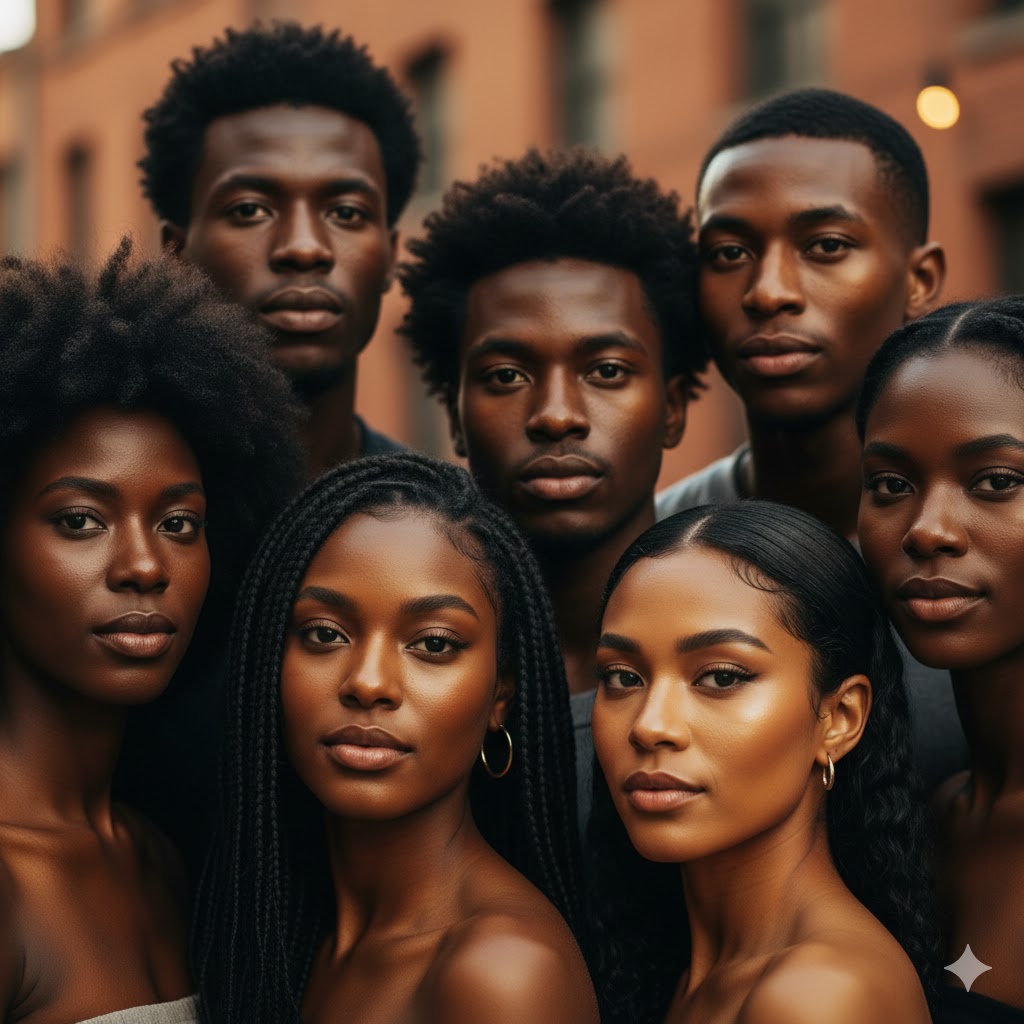
The Brown Standard of beauty is a celebration of melanin-rich aesthetics, cultural heritage, and racial pride. It challenges Eurocentric beauty ideals by centering features historically marginalized yet deeply valued within Black and brown communities. From the warmth of light sun-kissed skin to the richness of deep chocolate tones, from big expressive eyes to small delicate ones, from broad noses to narrow bridges, and from full lips to more subtle contours, the Brown Standard honors the diversity of features shaped by ancestry, environment, and lineage. Hair textures—curly, coily, wooly, and naturally sun-kissed fros—are celebrated as both aesthetic markers and cultural symbols. This standard recognizes beauty not merely as symmetry or proportion but as an embodiment of heritage, identity, and lived experience.

Historically, African civilizations revered features now central to the Brown Standard. Sculptures, carvings, and paintings depict broad noses, full lips, and textured hair as signs of dignity, strength, and nobility. Beauty was intertwined with status, spirituality, and communal values rather than arbitrary or externally imposed standards. As Asante (2003) emphasizes, African societies understood aesthetics as a reflection of balance, harmony, and moral character.

Colorism, however, complicates the Brown Standard. Hunter (2007) observes that lighter skin tones have historically received greater social recognition and privilege, even within communities of color. The Brown Standard emerges as both a reclamation and a counter-narrative: it affirms that beauty exists across the spectrum of melanin-rich skin and that features long devalued by colonial and Eurocentric influence are inherently beautiful.

Socially, the Brown Standard functions as a form of aesthetic capital (Bourdieu, 1986). Individuals embodying these traits often gain visibility, credibility, and social deference within their communities. Big eyes, full lips, and textured hair can signal health, vitality, and cultural alignment. Yet, the standard is not prescriptive; it celebrates diversity and the individuality of melanin-rich features rather than enforcing conformity to a single template.

Psychologically, embracing the Brown Standard enhances self-esteem and cultural pride. Dion, Berscheid, and Walster (1972) demonstrate that perceptions of attractiveness influence assumptions about intelligence, kindness, and capability. In communities honoring the Brown Standard, individuals experience affirmation of their worth, resisting the internalized bias imposed by Eurocentric ideals.

Hair remains one of the most visible markers of the Brown Standard. Natural curls, coils, and fros are celebrated as symbols of authenticity, heritage, and resistance to assimilation. The reclamation of natural hair in recent decades represents both a personal and collective assertion of identity, challenging discriminatory practices in professional, educational, and social contexts (Rhode, 2010).

Facial features such as big eyes and full lips carry expressive power, conveying emotion, vitality, and presence. Broad noses and high cheekbones reflect ancestral lineage and are markers of cultural pride. Each feature contributes to a holistic aesthetic that communicates identity, resilience, and historical continuity.

The Brown Standard also acknowledges the interplay of skin tone and environmental influence. Sun-kissed tones, freckles, and variations in melanin distribution are celebrated as markers of natural beauty rather than flaws. This inclusivity fosters recognition of the wide range of expressions within melanin-rich populations.

Colorism continues to influence access to social and economic opportunities. Hamermesh (2011) notes that lighter-skinned individuals often receive favorable treatment, higher wages, and greater social mobility. The Brown Standard, by affirming the beauty of darker tones, challenges systemic bias and encourages broader societal recognition of diverse aesthetics.

Media representation plays a pivotal role in shaping the Brown Standard. For decades, Eurocentric models dominated television, film, and advertising. However, contemporary Black and brown media increasingly feature melanin-rich beauty in its varied forms, highlighting curly hair, full lips, and diverse skin tones. Representation affirms identity, validates aesthetic preference, and reshapes cultural perceptions.

The spiritual dimension of beauty within the Brown Standard cannot be overlooked. Biblical teachings emphasize that true worth lies in character, integrity, and divine favor rather than external appearance (1 Samuel 16:7). Yet, celebrating the beauty inherent in melanin-rich features aligns with a recognition of God’s creativity and the sacredness of His diverse creation.

Education and cultural discourse are essential to sustaining the Brown Standard. Schools, media, and community institutions can teach the history of Black aesthetics, the social consequences of colorism, and the value of melanin-rich features. Knowledge of ancestral beauty practices reinforces cultural pride and counters internalized bias.

The Brown Standard also intersects with gender. Women, in particular, face societal pressure to conform to Eurocentric ideals, yet embracing features aligned with the Brown Standard fosters empowerment and self-affirmation. Men similarly navigate expectations around masculinity and attractiveness, and recognition of ancestral features enhances confidence and social authority.

Psychologically, the affirmation of the Brown Standard combats feelings of invisibility or inadequacy. When communities celebrate features like sun-kissed fros, curly hair, and full lips, individuals internalize a sense of worth that resists systemic prejudice. This recognition contributes to mental health, social cohesion, and identity formation.

Culturally, the Brown Standard affirms continuity with African and diasporic heritage. Hairstyles, skin tones, and facial features function as living markers of lineage, connecting contemporary individuals to historical identity and ancestral pride. It celebrates the multiplicity of Black and brown beauty without imposing rigid conformity.

Colorism and the fetishization of lighter skin within global contexts reveal the ongoing struggle for equitable recognition. The Brown Standard challenges these hierarchies by emphasizing the legitimacy, attractiveness, and dignity of darker tones. It asserts that all expressions of melanin-rich beauty are valid, desirable, and worthy of visibility.

The Brown Standard also engages with intersectional identity. Skin tone, hair texture, facial features, and body shape intersect with culture, socioeconomic status, and historical context to influence how individuals are perceived. Recognition of this complexity ensures that the Brown Standard honors diversity rather than enforcing a narrow ideal.

Media, fashion, and beauty industries are beginning to reflect the Brown Standard more faithfully. Campaigns featuring a wide spectrum of skin tones, natural hair textures, and facial features expand societal understanding of beauty, affirming that aesthetics rooted in ancestry and melanin are compelling and desirable.

Ultimately, the Brown Standard is not merely a set of physical prerequisites but a holistic framework of cultural pride, identity, and self-affirmation. It celebrates the wide spectrum of melanin-rich skin, curly and wooly hair, big and small eyes, broad and narrow noses, and full or subtle lips. It is a standard grounded in ancestry, history, and lived experience, challenging Eurocentric hierarchies while elevating the dignity and visibility of Black and brown bodies.

In conclusion, the Brown Standard represents the intersection of history, culture, and aesthetics. It affirms the beauty inherent in diversity, the power of melanin-rich features, and the importance of honoring ancestral lineage. By embracing this standard, individuals and communities reclaim identity, resist colorism, and celebrate the unique and radiant expressions of Black and brown beauty.


References

Anderson, T. L., Grunert, C., Katz, A., & Lovascio, S. (2010). Aesthetic capital: A research review on beauty perks and penalties. Sociology Compass, 4(8), 564–575. https://doi.org/10.1111/j.1751-9020.2010.00312.x

Asante, M. K. (2003). The history of Africa: The quest for eternal harmony. Routledge.

Bourdieu, P. (1986). The forms of capital. In J. Richardson (Ed.), Handbook of theory and research for the sociology of education (pp. 241–258). Greenwood Press.

Dion, K., Berscheid, E., & Walster, E. (1972). What is beautiful is good. Journal of Personality and Social Psychology, 24(3), 285–290.

Eagly, A. H., Ashmore, R. D., Makhijani, M. G., & Longo, L. C. (1991). What is beautiful is good, but… A meta-analytic review. Psychological Bulletin, 110(1), 109–128.

Feingold, A. (1992). Good-looking people are not what we think. Psychological Bulletin, 111(2), 304–341.

Hunter, M. (2007). The persistent problem of colorism: Skin tone, status, and inequality. Sociology Compass, 1(1), 237–254. https://doi.org/10.1111/j.1751-9020.2007.00006.x

Langlois, J. H., et al. (2000). Maxims or myths of beauty? Psychological Bulletin, 126(3), 390–423.

Rhode, D. L. (2010). The beauty bias: The injustice of appearance in life and law. Oxford University Press.

Wilson, T. D. (2002). Strangers to ourselves: Discovering the adaptive unconscious. Harvard University Press.

Gafney, W. (2017). Womanist midrash: A reintroduction to the women of the Torah and the Throne. Westminster John Knox Press.

Ethereal Beauty of Brownness

This photograph is the property of its respective owner. No copyright infringement intended.

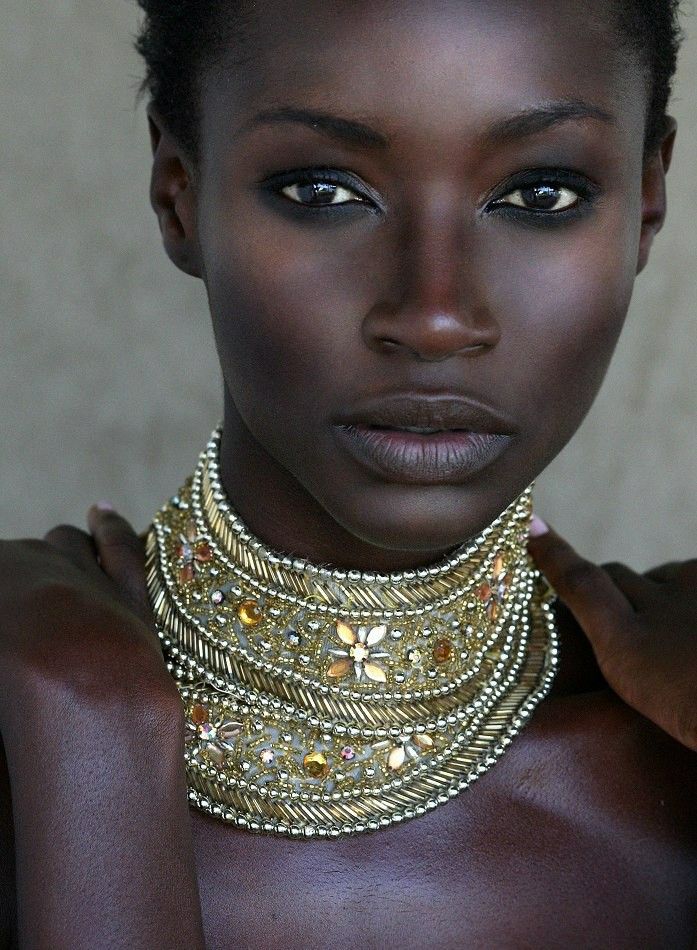
The concept of “brownness” as beauty transcends mere pigmentation; it reflects a complex interplay of history, biology, culture, and aesthetic perception. Brown skin, whether light caramel, golden bronze, deep chestnut, or rich ebony, embodies a spectrum of human variation that has been historically undervalued yet remains one of the most genetically adaptive and visually striking expressions of humanity. In contemporary discourse, browness is increasingly recognized not as a deviation from a Eurocentric standard but as a distinct and ethereal form of beauty rooted in both science and lived experience.

Outer beauty, though often dismissed as superficial, plays a powerful role in social identity and self-concept. Physical appearance shapes how individuals are perceived and how they navigate social spaces, including employment, romance, and media representation. For brown women and men, beauty has historically been filtered through systems of colorism and racial hierarchy, yet despite these barriers, brownness continues to produce some of the most globally celebrated faces, bodies, and aesthetic ideals.

From a genetic standpoint, brown skin is the result of higher concentrations of melanin, a natural pigment produced by melanocytes. Melanin is not only visually significant but biologically protective, shielding the skin from ultraviolet radiation and reducing the risk of skin cancers and premature aging (Jablonski & Chaplin, 2010). Thus, what society often labels as “darkness” is, in scientific terms, a sophisticated evolutionary advantage.

Melanin also contributes to what many describe as the “glow” of brown skin. This glow is not mystical but physiological—melanin reflects light differently, creating depth, warmth, and luminosity across the skin’s surface. Photographers and visual artists have long noted that brown skin captures light with a richness and dimensionality that lighter skin often cannot, making it especially striking in portraiture and cinema (Banks, 2015).

For women, brown beauty has historically been framed through contradiction—simultaneously exoticized and marginalized. Yet brown women possess a unique aesthetic versatility: their skin complements a wide range of colors, fabrics, and textures, from bold jewel tones to soft pastels. This chromatic harmony enhances the visual impact of brown femininity, making it both adaptable and visually powerful in the fashion and beauty industries.

Brown male beauty similarly reflects a blend of strength and softness. High melanin levels often correlate with strong bone density, facial symmetry, and robust physical features shaped by evolutionary adaptation (Jablonski, 2012). These traits contribute to widespread perceptions of brown men as physically striking, athletic, and visually commanding across global cultures.

Facial structure also plays a role in the aesthetics of browness. Many populations with brown skin display prominent cheekbones, fuller lips, broader nasal bridges, and almond-shaped eyes—features increasingly celebrated in contemporary beauty standards. Ironically, these traits were once stigmatized but are now widely emulated through cosmetic surgery and digital filters, revealing how brown features have been culturally appropriated while brown bodies themselves were marginalized (Hunter, 2007).

Hair texture further amplifies the ethereal quality of brown beauty. Coily, curly, wavy, and kinky hair patterns represent a vast genetic spectrum that allows for artistic expression, volume, and sculptural aesthetics. Afro-textured hair, in particular, is biologically engineered for heat regulation and protection, yet culturally functions as a powerful symbol of identity, creativity, and visual presence (Byrd & Tharps, 2014).

The eyes of brown individuals also carry unique aesthetic significance. Higher melanin often produces deep brown or near-black irises that convey intensity, emotional depth, and warmth. The most beautiful eyes are the large, dark, mirrored eyes. Psychologically, darker eyes are associated with perceptions of trustworthiness, strength, and emotional richness, beauty, adding another layer to the perceived beauty of brown populations (Swami & Furnham, 2008).

From an evolutionary psychology perspective, humans are naturally drawn to traits that signal health, fertility, and resilience. Brown skin, protected by melanin, resists environmental stressors more effectively, often maintaining elasticity and smoothness well into older age. This contributes to the common observation that brown individuals “age more slowly,” a phenomenon supported by dermatological research (Taylor, 2002).

Historically, civilizations across Africa, Asia, the Middle East, and the Americas celebrated brown bodies as divine, royal, and sacred. Ancient Egyptian art, for instance, consistently depicted deities and royalty with brown or bronze skin, associating these tones with power, fertility, and cosmic balance (Assmann, 2001). Thus, browness was once the default aesthetic of divinity itself.

Colonialism disrupted these perceptions by imposing Eurocentric standards that privileged paleness as a marker of status and beauty. Colorism emerged within non-white communities, creating internal hierarchies based on skin shade rather than shared humanity. Yet modern scholarship increasingly frames brownness not as a deficiency but as a site of resistance, resilience, and aesthetic sovereignty (Hill, 2009).

In media and popular culture, brown beauty is now reclaiming space. Models, actors, and influencers of brown complexion dominate global fashion campaigns, redefining desirability through representation. Figures such as Lupita Nyong’o, Idris Elba, Naomi Campbell, and Zendaya exemplify how brown skin commands visual attention without needing to conform to Eurocentric norms.

The term “ethereal” is often reserved for lightness and delicacy, yet brown beauty embodies an alternative ethereality—one rooted in warmth, depth, and radiance rather than fragility. This form of beauty feels grounded yet transcendent, earthly yet luminous, reflecting what many describe as a soulful presence rather than a sterile aesthetic.

Genetically, all humans originated from melanated populations in Africa, meaning browness is not an anomaly but the ancestral template of humanity itself (Stringer, 2016). In this sense, brown beauty is not a minority aesthetic but the original human aesthetic, from which all other variations emerged.

Psychologically, embracing brown beauty fosters healthier self-concept among brown individuals, countering internalized racism and color-based shame. Studies show that positive racial and physical identity correlate with higher self-esteem, emotional resilience, and mental well-being (Neblett et al., 2012).

Outer beauty also shapes romantic and social desirability. Despite systemic bias, research indicates growing cross-cultural attraction toward brown features, especially in globalized societies where beauty standards are becoming more diverse and less racially rigid (Rhodes, 2006). This shift reflects a broader cultural awakening to the richness of human variation.

Brown beauty is also dynamic rather than static. Skin tones shift with seasons, lighting, health, and emotional states, creating a living canvas that responds to life itself. This fluidity gives brown skin an organic, almost poetic quality—beauty that moves, adapts, and evolves.

For both women and men, brown beauty challenges the notion that attractiveness must align with narrow ideals. Instead, it affirms that beauty is plural, genetic, and culturally constructed, shaped by biology but interpreted through social meaning. Brownness stands as evidence that diversity itself is aesthetically superior to uniformity.

Ultimately, the ethereal beauty of browness lies not only in its visual qualities but in its symbolic power. Black people with brown skin carry ancestral memory, evolutionary brilliance, and cultural depth. It reflects humanity in its most original form—resilient, radiant, and irreducibly beautiful.


References

Assmann, J. (2001). The search for God in ancient Egypt. Cornell University Press.

Banks, T. L. (2015). Colorism: A darker shade of pale. UCLA Law Review, 47(6), 1705–1745.

Byrd, A. D., & Tharps, L. L. (2014). Hair story: Untangling the roots of Black hair in America. St. Martin’s Press.

Hill, M. E. (2009). Skin color and the perception of attractiveness among African Americans. Journal of Black Psychology, 35(3), 358–374.

Hunter, M. (2007). The persistent problem of colorism: Skin tone, status, and inequality. Sociology Compass, 1(1), 237–254.

Jablonski, N. G. (2012). Living color: The biological and social meaning of skin color. University of California Press.

Jablonski, N. G., & Chaplin, G. (2010). Human skin pigmentation as an adaptation to UV radiation. Proceedings of the National Academy of Sciences, 107(Supplement 2), 8962–8968.

Neblett, E. W., Rivas-Drake, D., & Umaña-Taylor, A. J. (2012). The promise of racial and ethnic protective factors in promoting ethnic minority youth development. Child Development Perspectives, 6(3), 295–303.

Rhodes, G. (2006). The evolutionary psychology of facial beauty. Annual Review of Psychology, 57, 199–226.

Stringer, C. (2016). The origin of our species. Penguin Books.

Swami, V., & Furnham, A. (2008). The psychology of physical attraction. In V. Swami & A. Furnham (Eds.), The body beautiful: Evolutionary and sociocultural perspectives (pp. 3–18). Palgrave Macmillan.

Taylor, S. C. (2002). Skin of color: Biology, structure, function, and implications for dermatologic disease. Journal of the American Academy of Dermatology, 46(2), S41–S62.

Why Don’t You Do Something With Your Hair? Hair Politics in the Black Community.

Photo by Osmar Vasques on Pexels.com

The question “Why don’t you do something with your hair?” carries weight far beyond casual conversation. It reflects the long, complicated history of hair politics within the Black community, where hair is not merely aesthetic but deeply tied to identity, culture, and social status. The question assumes that the natural hair that grows out of a Black woman’s scalp is insufficient, needing alteration to be considered beautiful or presentable. This dilemma plays out daily in salons, workplaces, and even among friends, revealing the enduring tension between assimilation and authenticity.

Hair politics in the Black community have roots that trace back to pre-colonial Africa. African hairstyles once symbolized tribe, social rank, marital status, and even spiritual beliefs (Byrd & Tharps, 2014). Intricate braids, twists, and natural textures were celebrated as markers of identity and belonging. This changed dramatically during the transatlantic slave trade. Enslaved Africans were often forced to shave their heads, stripping them of cultural identity and dignity (White & White, 1998). This dehumanizing act laid the groundwork for centuries of stigma against African hair textures.

During slavery and later segregation, Eurocentric beauty standards dominated. Straight hair was viewed as a marker of respectability and proximity to whiteness. Many Black women began straightening their hair as a means of survival, using hot combs and later chemical relaxers to fit into white society’s expectations (Rooks, 1996). This survival strategy was both empowering—opening doors to employment and social acceptance—and damaging, as it subtly communicated that natural hair was unkempt or undesirable.

This tension birthed the concept of “good hair” versus “bad hair.” “Good hair” was typically defined as straighter, looser, and more European-like, while “bad hair” referred to tightly coiled, kinky textures. This language continues to shape how Black girls grow up viewing themselves. The woman in the store who questioned another’s natural fro echoed centuries of conditioning that privileges one texture over another.

Biblically, this judgment contradicts the affirmation of divine creation. Psalm 139:14 (KJV) declares, “I will praise thee; for I am fearfully and wonderfully made: marvellous are thy works.” If God made hair textures diverse, then natural Black hair is good by design. The cultural insistence on altering hair to be acceptable reflects a deeper issue of internalized oppression rather than divine truth.

Hair also became a political statement during the Civil Rights and Black Power movements of the 1960s and 1970s. The Afro emerged as a symbol of pride, rebellion, and resistance against white supremacy. To wear one’s hair in its natural state became an act of defiance and self-acceptance. Angela Davis famously wore her iconic Afro as both a personal choice and a political statement, making natural hair synonymous with the fight for liberation (Davis, 1981).

However, as mainstream culture commodified Black style, the natural hair movement lost some of its radical edge. The emergence of weaves, wigs, and chemical relaxers in the 1980s and 1990s introduced new standards of glamour and professionalism. While these styles offered versatility and creative expression, they also reinforced the idea that natural hair was only acceptable if controlled or hidden.

Celebrities have weighed in on this hair dilemma, often sparking debate. Viola Davis removed her wig on the hit show How to Get Away With Murder in a powerful scene that revealed her natural hair, stating in interviews that she wanted to normalize textured hair on television (Dockterman, 2014). Solange Knowles has also been vocal about the politics of natural hair, penning the song “Don’t Touch My Hair” as an anthem of autonomy and identity.

On the other side, some celebrities have been criticized for perpetuating Eurocentric beauty ideals. Rapper Lil’ Kim and others who have dramatically lightened their skin and straightened their hair have been accused of reflecting the deep scars of colorism and texturism. These choices are not simply personal but political, given the influence celebrities have on shaping beauty standards.

Workplace politics also play a major role in the natural-versus-straight hair conversation. For years, natural hairstyles such as locs, braids, and twists were deemed “unprofessional” in many corporate environments. It wasn’t until the passing of laws like the CROWN Act (2019) that discrimination against natural hairstyles began to be legally challenged in several U.S. states. This shows that hair policing is not just cultural but institutional.

The debate over natural hair versus weaves or wigs is complex. On one hand, weaves allow Black women to experiment with style, color, and length without damaging their natural hair. On the other, they can become a crutch if they are used to hide self-hatred or avoid confronting the stigma against natural textures. The key issue is not the style chosen but the motivation behind it—whether it flows from freedom or from shame.

Mentally, constant scrutiny over hair can lead to stress and self-esteem issues. Black girls as young as five report feeling pressured to straighten their hair for special occasions or school pictures (Opie & Phillips, 2015). This teaches them early that their natural state is less acceptable, planting seeds of insecurity that can take years to unlearn.

Spiritually, the church can play a role in affirming natural hair. Unfortunately, some church communities have perpetuated respectability politics by favoring women with straightened hair or wigs, especially in leadership roles. This contradicts the biblical principle in 1 Peter 3:3-4 (KJV), which states that beauty should not merely be about “plaiting the hair” or outward adornment but about “the hidden man of the heart.” This verse calls believers to focus on character rather than conformity to beauty standards.

The natural hair movement of the 21st century has made significant strides in reversing stigma. Social media platforms like Instagram and YouTube have created spaces for Black women to share tips, tutorials, and encouragement for embracing natural curls and coils. This digital sisterhood has birthed a new generation of women who proudly wear their afros, twist-outs, and locs as declarations of self-love.

Nevertheless, the pressure to conform to a certain standard of natural hair perfection—“curl envy”—has emerged as a new form of hair politics. Women with looser curl patterns are often celebrated more in natural hair campaigns than those with tighter coils, revealing that even within the movement, hierarchies still exist.

The Politics, Pain, and Power of Black Hair

I was standing in line at a neighborhood store when I overheard two women talking. One wore a sleek weave, carefully laid edges, and perfectly straightened strands; the other rocked a short, natural fro. With a laugh, the first woman asked, “Girl, why don’t you do something with your hair?” The second woman smiled politely, but her face betrayed the familiar sting that so many Black women know too well. That small exchange speaks volumes about the history and politics of Black hair — a history that stretches from the villages of West Africa to the plantations of the Americas, from the barbershops and beauty salons of the Jim Crow era to the hashtags and viral videos of today.

Hair has never been just hair for Black people. In pre-colonial Africa, hair was identity. Styles communicated tribe, social status, fertility, and even spiritual meaning (Byrd & Tharps, 2014). To cut someone’s hair was to humiliate them, stripping away dignity. Enslavers understood this, which is why many Africans brought to the Americas had their heads forcibly shaved, severing a crucial connection to their homeland (White & White, 1998). This trauma planted the seed for centuries of stigma against African textures.

In America, Black hair became a site of both survival and rebellion. For many, straightening hair was a way to gain access to jobs, education, and respectability in a white-dominated society (Rooks, 1996). The hot comb, famously popularized by Madam C.J. Walker, was both a tool of empowerment and a symbol of assimilation. “My grandmother told me that straightening her hair helped her get her first job as a teacher,” said Sharon, 62, in an interview. “But she also told me she always felt like she was wearing a mask.”

The language of “good hair” versus “bad hair” emerged from these survival tactics. “Good hair” was associated with looser, straighter textures — often linked to mixed ancestry — while “bad hair” was used to describe kinky, coily textures. “I grew up in the 90s, and my aunties would sigh whenever I wore my hair natural,” said Angela, 33. “They would say, ‘We gotta do something with this nappy mess.’ It made me feel like who I was naturally was a problem to be fixed.”

Biblically, this tension challenges what Scripture teaches about God’s creation. Genesis 1:31 (KJV) declares, “And God saw every thing that he had made, and, behold, it was very good.” If every hair texture is created by God, then none can be deemed “bad.” Psalm 139:14 reminds us that we are “fearfully and wonderfully made.” To degrade natural hair is to deny the Creator’s artistry.

The Civil Rights and Black Power era redefined hair politics. The Afro became a crown of pride and a political statement. “When I wear my Afro, I am making a statement that I am Black and proud,” Angela Davis wrote (Davis, 1981). To wear one’s hair naturally was to reject assimilation and embrace African identity. This was a time when hair became activism — the body itself was a protest sign.

But as the decades passed, relaxers, weaves, and wigs became mainstream again. For some, this was a matter of convenience and creative expression. For others, it was a return to old pressures to conform. “I love my weave because I can switch up my look,” said Monique, 27, during a focus group. “But I also hate that people assume I don’t love myself when I wear it. It’s not that — I just like the versatility.”

The natural hair movement of the 2010s reignited the call for authenticity. YouTube vloggers and Instagram influencers created a renaissance of tutorials, hair care tips, and motivational content celebrating curls, coils, and kinks. Yet, even within the natural hair community, hierarchies emerged. Looser curl patterns (3A–3C) were celebrated more prominently than tightly coiled textures (4B–4C), leading to what some call “texturism” (Robinson, 2011).

Celebrities have weighed in powerfully on the conversation. Viola Davis’s decision to remove her wig on How to Get Away with Murder was more than just a TV moment — it was a cultural reset. “I wanted to humanize her,” Davis explained. “And part of that is letting her be who she really is — natural hair and all” (Dockterman, 2014). Solange Knowles, in her song “Don’t Touch My Hair,” transformed her experience of unwanted hair-policing into an anthem of bodily autonomy.

Despite these victories, discrimination remains a reality. Studies show that Black women with natural hairstyles are often rated as less professional or less competent in corporate settings (Opie & Phillips, 2015). The passage of the CROWN Act (2019) in multiple U.S. states is a step toward protecting Black hair from workplace discrimination — but the cultural bias runs deep.

The question “Why don’t you do something with your hair?” carries an assumption: that natural hair is undone, messy, or unacceptable. But natural hair is done the moment it grows from the scalp. It does not need fixing to be valid. Romans 12:2 (KJV) reminds us, “Be not conformed to this world: but be ye transformed by the renewing of your mind.” Breaking free from the belief that straight is the only acceptable form is a mental and spiritual renewal.

Healing hair trauma requires unlearning generations of internalized shame. “I had to stop calling my daughter’s hair ‘difficult,’” said Candace, 40. “Now I tell her it’s beautiful, full, and strong — just like her.” This kind of language shift is revolutionary. It teaches young girls that their hair is a source of pride, not a burden.

There is also space for freedom of choice. Some women wear wigs or relaxers not out of shame but for self-expression. The issue is not the style but the root motivation. Galatians 5:1 (KJV) declares, “Stand fast therefore in the liberty wherewith Christ hath made us free.” Freedom in Christ includes freedom from the bondage of beauty standards — whether those standards push toward assimilation or prescribe a rigid idea of “natural purity.”

The politics of hair also affect men, though they are often left out of the conversation. Dreadlocks, cornrows, and afros on Black men have been criminalized, labeled as unkempt or threatening. Celebrities like J. Cole and Bob Marley used their hair as political and spiritual statements, reminding the world that natural hair is not just style but identity.

Moving forward, education is key. Schools, churches, and community spaces must normalize the full spectrum of Black hair. Representation in media matters — children need to see characters who look like them wearing braids, locs, fros, and curls with confidence and beauty.

Ultimately, the woman in the store who questioned the natural fro was voicing a generational script — one we must now rewrite. By embracing natural hair as inherently good, by affirming every style chosen freely, and by dismantling the good-hair/bad-hair dichotomy, the Black community can heal from centuries of hair trauma.

In the end, the question is no longer “Why don’t you do something with your hair?” but “What will we do with the legacy of hair politics?” Will we pass down shame or pass down pride? Will we perpetuate Eurocentric hierarchies or celebrate the God-given diversity of our crowns? The choice is ours — and it is time to choose freedom.

Healing from hair politics requires both internal and communal work. Internally, Black women must embrace that their hair—whatever its texture—is inherently good and worthy of care. Communally, there must be a shift in language, moving away from “good hair” and “bad hair” to affirming the full spectrum of textures as beautiful.

Parents play a critical role in shaping hair identity. Teaching young girls to love their hair early on, letting them see positive representations of their texture in books, movies, and social media, helps inoculate them against the pressures they will face. Such affirmation can prevent the painful moment when a stranger or even a friend asks, “Why don’t you do something with your hair?”

In conclusion, hair politics in the Black community are both a burden and an opportunity. The burden lies in centuries of stigma and division, but the opportunity lies in reclaiming hair as a site of freedom, creativity, and identity. When a woman chooses a fro, a weave, braids, or a bald head from a place of self-love, she resists the narrative that her natural state is not enough. By rooting our worth in biblical truth and affirming the diversity of Black beauty, the Black community can end the cycle of judgment and instead celebrate the crown that God has given.


References

  • Byrd, A., & Tharps, L. (2014). Hair story: Untangling the roots of Black hair in America (2nd ed.). St. Martin’s Press.
  • Davis, A. (1981). Women, race, & class. Vintage Books.
  • Dockterman, E. (2014, October 17). Viola Davis explains why she took off her wig on How to Get Away With Murder. TIME.
  • Opie, T., & Phillips, K. W. (2015). Hair penalties: The negative influence of Afrocentric hair on ratings of Black women’s dominance and professionalism. Frontiers in Psychology, 6, 1311.
  • Rooks, N. (1996). Hair raising: Beauty, culture, and African American women. Rutgers University Press.
  • White, S., & White, G. (1998). Slave hair and African American culture in the eighteenth and nineteenth centuries. Journal of Southern History, 63(1), 45–76.

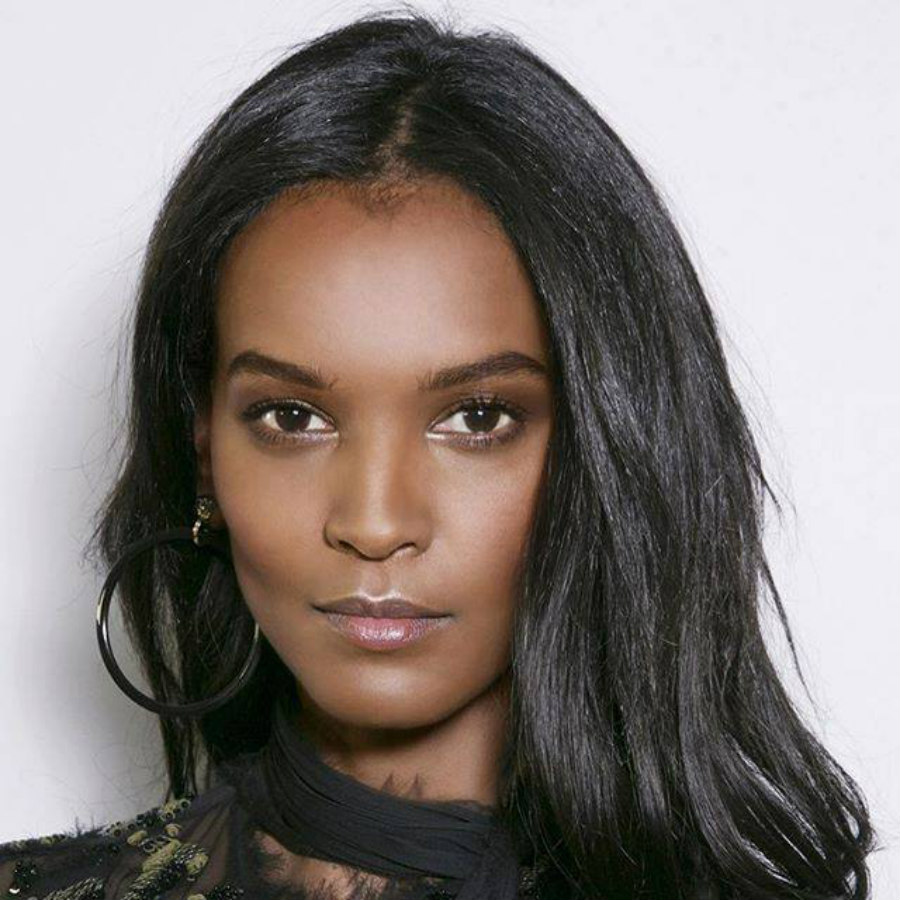
The Ebony Dolls: Liya Kebede

Ethiopian Supermodel and Maternal Health Advocate

This photograph is the property of its respective owners. No copyright infringement intended.

Liya Kebede is an internationally celebrated Ethiopian supermodel, entrepreneur, and global maternal health advocate whose career has transcended fashion to become a platform for humanitarian impact. Born on January 3, 1978, in Addis Ababa, Ethiopia, Kebede emerged as one of the first African models to achieve sustained global dominance in high fashion, redefining the visibility of African beauty within Eurocentric modeling industries.

Kebede was discovered in 1998 while attending Lycée Guebre-Mariam, a French international school in Addis Ababa. A French filmmaker spotted her and encouraged her to pursue modeling in Paris, where she soon signed with a major agency. Her entry into the European fashion scene marked a pivotal moment, as African models had historically been marginalized within elite fashion circuits.

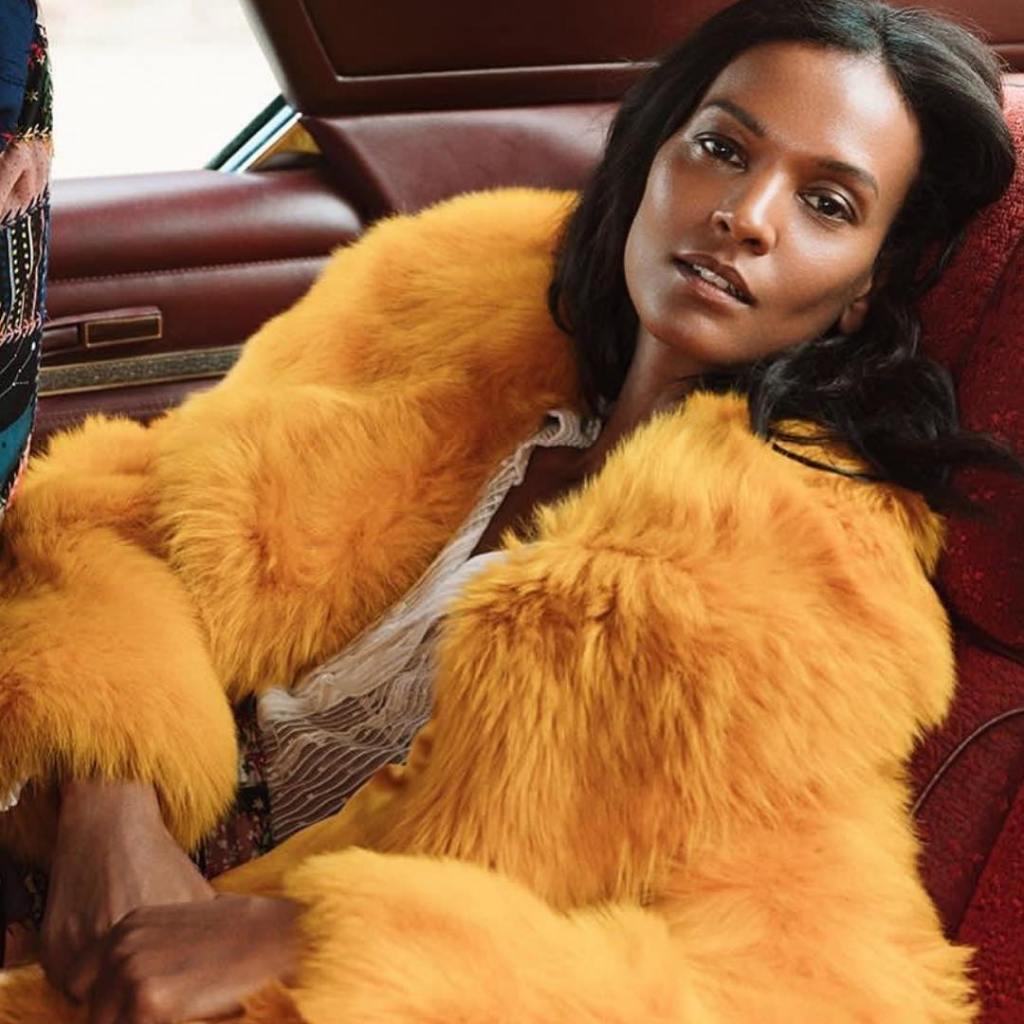
Her breakthrough came in the early 2000s when she walked exclusive runways for designers such as Tom Ford for Gucci, Yves Saint Laurent, Louis Vuitton, Jean Paul Gaultier, and Estée Lauder. In 2003, she made history as the first Ethiopian model to become the face of Estée Lauder, a milestone that placed her among the world’s highest-paid models at the time.

Liya Kebede’s modeling career is distinguished not only by commercial success but by symbolic representation. She embodied a shift in beauty politics, bringing dark-skinned African features into luxury branding spaces that had long privileged whiteness and Eurocentric aesthetics. Her presence disrupted narrow beauty standards and affirmed Black femininity on a global stage.

This photograph is the property of its respective owners. No copyright infringement intended.

In addition to runway and editorial success, Kebede became the face of major advertising campaigns for brands including Estée Lauder, Dolce & Gabbana, Victoria’s Secret, Gap, and L’Oréal. Her campaigns were marked by elegance, refinement, and a classical visual identity that resonated with both haute couture and mass-market audiences.

Beyond fashion, Kebede’s life mission shifted toward global health advocacy, particularly maternal health in Africa. In 2005, she founded the Liya Kebede Foundation, a nonprofit organization dedicated to improving maternal and newborn health in Ethiopia and other developing countries. Her advocacy was inspired by her own experiences and exposure to high maternal mortality rates in sub-Saharan Africa.

In 2011, she was appointed a World Health Organization (WHO) Goodwill Ambassador for Maternal, Newborn, and Child Health. In this role, Kebede worked closely with international institutions to raise awareness about preventable maternal deaths and the structural inequalities affecting African women’s healthcare systems.

Kebede is also a successful entrepreneur. She launched Lemlem, an ethical fashion brand that supports Ethiopian artisans and promotes traditional handwoven textiles. The brand integrates fashion with economic empowerment, creating sustainable employment for African women while preserving indigenous craftsmanship.

Her awards and recognitions include being named among Time Magazine’s “100 Most Influential People in the World” and receiving numerous humanitarian honors for her global advocacy work. These accolades reflect her rare position as both cultural icon and social reformer.

Liya Kebede was married to hedge fund manager Kassy Kebede (Kassé Kebede), and they share two children. Although they later divorced, Kebede has maintained a private family life, emphasizing balance between motherhood, activism, and professional leadership.

As an “Ebony Doll,” Liya Kebede represents a form of Black beauty rooted in classical proportion, regal poise, and ancestral elegance. The term “Ebony Doll” in cultural aesthetics refers not to objectification, but to symbolic idealization—an archetype of dark feminine beauty that embodies grace, depth, and timeless appeal.

Her skin tone, facial symmetry, high cheekbones, almond-shaped eyes, and natural Afrocentric features align with what scholars describe as “classical Black beauty,” a form of aesthetics historically erased or marginalized in Western visual culture. Kebede’s beauty operates not as spectacle but as dignity—quiet, composed, and sovereign.

In contrast to hypersexualized or exoticized portrayals of Black women, Kebede’s image has consistently reflected restraint, intellect, and moral authority. Her modeling persona is refined rather than performative, aligning beauty with character rather than consumption.

From a sociological perspective, Kebede embodies what Pierre Bourdieu would call symbolic capital: beauty converted into cultural authority and ethical influence. She did not merely accumulate visibility; she transformed it into institutional power and social change.

Her role in reshaping African representation in global fashion parallels earlier cultural icons such as Iman, Naomi Campbell, and Alek Wek. However, Kebede’s distinctive legacy lies in her integration of beauty with global health politics.

Liya Kebede stands as a living example of how Black beauty can function as both aesthetic excellence and moral agency. She is not simply admired—she is emulated, respected, and historically significant.

In the broader framework of racial and gender representation, Kebede represents the re-humanization of African femininity within systems that once rendered it invisible. Her success reframes Black womanhood as intellectual, ethical, maternal, and powerful.

Ultimately, Liya Kebede is an Ebony Doll not because she fits a fantasy, but because she transcends one. Her beauty is classical, her mission is humanitarian, and her legacy is cultural sovereignty.


References

Kebede, L. (2010). Liya Kebede Foundation: Maternal health initiatives in Ethiopia. Liya Kebede Foundation.

Time Magazine. (2010). The 100 most influential people in the world: Liya Kebede.

World Health Organization. (2011). WHO Goodwill Ambassador for Maternal, Newborn and Child Health: Liya Kebede.

Entwistle, J. (2009). The aesthetic economy of fashion: Models and symbolic capital. Berg Publishers.

Hunter, M. (2011). Buying racial capital: Skin bleaching and cosmetic surgery in a globalized world. The Journal of Pan African Studies, 4(4), 142–164.

Bourdieu, P. (1986). The forms of capital. In J. Richardson (Ed.), Handbook of theory and research for the sociology of education (pp. 241–258). Greenwood.

Iman. (2011). The beauty of color: Skin, fashion, and representation. HarperCollins.

Crenshaw, K. (1991). Mapping the margins: Intersectionality and identity politics. Stanford Law Review, 43(6), 1241–1299.

The Perfect Man: Does He Really Exist?

The idea of the “perfect man” has occupied human imagination for centuries, appearing in philosophy, religion, psychology, and popular culture. In modern society, the perfect man is often portrayed as wealthy, emotionally intelligent, physically attractive, faithful, ambitious, spiritually grounded, and socially powerful. Yet this idealized image raises an important question: does such a man truly exist, or is perfection merely a social and theological construct shaped by unrealistic expectations?

From a biblical perspective, the concept of perfection is complex. The King James Bible uses the word “perfect” not to imply flawlessness in the modern sense, but spiritual maturity, completeness, or alignment with God’s will. Jesus himself states, “Be ye therefore perfect, even as your Father which is in heaven is perfect” (Matthew 5:48, KJV). This verse sets an impossibly high standard if interpreted literally, suggesting that human perfection is aspirational rather than fully attainable.

Scripture consistently affirms that no human being is without sin. Romans 3:23 declares, “For all have sinned, and come short of the glory of God” (KJV). This includes even the most righteous men in the Bible—Abraham lied, Moses disobeyed, David committed adultery, Solomon fell into idolatry, and Peter denied Christ. These figures were called by God, yet deeply imperfect.

The only truly perfect man in biblical theology is Jesus Christ. Hebrews 4:15 states that Christ “was in all points tempted like as we are, yet without sin” (KJV). Unlike all other men, Jesus is presented as morally, spiritually, and ontologically perfect. In Christian doctrine, perfection is not embodied in human men, but in the divine-man Christ.

Psychologically, the idea of the perfect man reflects projection and idealization. Carl Jung described ideals as archetypes—symbolic representations of inner desires and collective myths. The perfect man often functions as an unconscious projection of safety, validation, authority, and emotional fulfillment rather than a real, embodied human being (Jung, 1969).

Modern dating culture intensifies this illusion. Social media presents curated images of men who appear successful, disciplined, loving, wealthy, and spiritually grounded. Yet these representations hide flaws, struggles, insecurities, and moral failures. What is marketed as “high-value men” often reflects capitalist performance rather than character formation.

From a sociological standpoint, perfection is also shaped by gender expectations. Men are expected to be providers, protectors, leaders, emotionally strong yet emotionally available, dominant yet gentle, ambitious yet present. These contradictory demands make the ideal of the perfect man structurally impossible (Connell, 2005).

Biblically, manhood is not defined by perfection but by obedience, repentance, and growth. Proverbs 24:16 states, “For a just man falleth seven times, and riseth up again” (KJV). The righteous man is not the one who never falls, but the one who returns to God after failure.

The apostle Paul openly rejected the idea of personal perfection. In Philippians 3:12 he writes, “Not as though I had already attained, either were already perfect: but I follow after” (KJV). Paul acknowledges that spiritual maturity is a process, not a destination. Even apostles were in development.

The desire for a perfect man often masks deeper fears—fear of abandonment, fear of instability, fear of emotional harm. Perfection becomes a psychological defense mechanism: if a man is perfect, he cannot disappoint, betray, or fail. But this belief denies the reality of human vulnerability.

In theology, this longing is ultimately misplaced. Augustine argued that human beings are restless until they find rest in God, not in other humans. Expecting perfection from a man places divine expectations on a finite being, which inevitably leads to disillusionment (Augustine, Confessions).

Relationally, the myth of the perfect man can damage intimacy. When one partner is idealized, the other becomes pressured to perform rather than be authentic. This creates emotional distance, resentment, and identity strain. Love becomes conditional on maintaining an image.

From a Black theological perspective, the perfect man narrative is further complicated by systemic racism. Black men are often denied full humanity in social institutions and portrayed through stereotypes—either hypermasculine or socially deficient. The demand to be “perfect” becomes an added psychological burden in an already unequal society (hooks, 2004).

Scripture instead offers a different model: the “whole man,” not the perfect man. Micah 6:8 states, “What doth the Lord require of thee, but to do justly, and to love mercy, and to walk humbly with thy God?” (KJV). Wholeness is ethical, spiritual, and relational—not flawless.

The biblical ideal of manhood centers on character rather than perfection: humility, accountability, faithfulness, self-control, leadership through service, and submission to God. These are cultivated, not inherent. They are fruits of discipline, not genetic traits (Galatians 5:22–23, KJV).

Even marriage in Scripture assumes imperfection. Ephesians 5 calls husbands to love their wives as Christ loved the church, yet the church itself is described as flawed, rebellious, and in constant need of correction. Love, therefore, operates in imperfection, not beyond it.

The fantasy of the perfect man is ultimately a modern form of idolatry. It elevates human relationships to a salvific role, expecting men to provide emotional, spiritual, and existential fulfillment that only God can sustain. This mirrors what theologians call “relational substitution for God.”

Theologically speaking, perfection belongs to the eschaton—the future restored world, not the present fallen one. Ecclesiastes 7:20 states, “For there is not a just man upon earth, that doeth good, and sinneth not” (KJV). Human perfection is postponed until divine restoration.

What does exist, however, is the growing man: imperfect, reflective, accountable, spiritually seeking, emotionally developing, and ethically grounded. This man does not claim perfection but pursues wisdom, repentance, and responsibility.

Thus, the perfect man does not exist in human form. He exists only in Christ. What exists among men are degrees of maturity, integrity, discipline, and faith. The real question is not whether the perfect man exists, but whether we are willing to love imperfect people without turning them into gods.

In conclusion, the perfect man is a theological impossibility and a psychological projection. Scripture, psychology, and sociology all agree: human beings are inherently flawed. The biblical call is not to find perfection in men, but to pursue wholeness in God and growth in character.

The perfect man does not exist—but the faithful, growing, accountable man does. And that man, though imperfect, is the only real man available in this world.


References

Augustine. (2001). Confessions (H. Chadwick, Trans.). Oxford University Press. (Original work published c. 397)

Connell, R. W. (2005). Masculinities (2nd ed.). University of California Press.

hooks, b. (2004). The will to change: Men, masculinity, and love. Atria Books.

Jung, C. G. (1969). The archetypes and the collective unconscious (2nd ed.). Princeton University Press.

The Holy Bible, King James Version. (1611/1769). Cambridge Edition.

Phillips, J. B. (1953). Your God is too small. Touchstone.

Tillich, P. (1957). Dynamics of faith. Harper & Row.

The Perfect Woman: Does She Really Exist?

The concept of the “perfect woman” has existed across cultures, religions, and historical periods, often shaped by ideals of beauty, virtue, intelligence, emotional depth, and moral purity. In contemporary society, the perfect woman is imagined as beautiful but not vain, independent yet nurturing, ambitious yet submissive, sexually appealing yet modest, spiritually grounded yet modern. These contradictions raise an essential question: Does such a woman truly exist, or is she a social fantasy created by unrealistic expectations?

From a biblical perspective, the idea of perfection is not defined by flawlessness but by spiritual maturity and moral alignment with God. As in the case of men, Scripture does not present human women as perfect beings. Ecclesiastes 7:20 states, “For there is not a just man upon earth, that doeth good, and sinneth not” (KJV). The principle applies universally to humanity, meaning no woman is without fault.

The only being described as truly perfect in Christian theology is God. Jesus Christ embodies perfection in human form, but no woman in Scripture is portrayed as morally flawless. Even the most revered women—Sarah, Rebecca, Rachel, Ruth, Esther, Mary—display human limitations, fear, doubt, and imperfection. Yet they are celebrated not for perfection, but for faith, obedience, courage, and transformation.

Psychologically, the perfect woman often functions as an idealized projection of male desire and cultural fantasy. Carl Jung described such ideals as archetypes—symbolic images rooted in the collective unconscious. The perfect woman becomes a mirror of longing: beauty without aging, nurturing without need, loyalty without complexity, and sexuality without autonomy (Jung, 1969).

In modern media, the perfect woman is heavily shaped by capitalism and patriarchy. Advertising industries construct her body through Eurocentric beauty standards—slim waist, symmetrical face, youthful skin, long hair, and sexual availability. These images are digitally edited, surgically enhanced, and commercially engineered, making the “perfect woman” literally unreal (Wolf, 1991).

Sociologically, women face impossible standards. They are expected to be high-achieving in careers, emotionally intelligent in relationships, physically attractive at all times, sexually desirable but not promiscuous, spiritually pure but not restrictive, and maternally nurturing without losing independence. These demands are structurally contradictory (Connell, 2005).

The Bible presents a very different model of ideal womanhood. Proverbs 31 describes the virtuous woman not as flawless, but as disciplined, industrious, generous, wise, and God-fearing. “Favor is deceitful, and beauty is vain: but a woman that feareth the Lord, she shall be praised” (Proverbs 31:30, KJV). Her value lies in character, not appearance.

Even Mary, the mother of Jesus, was not portrayed as perfect. She expressed fear, confusion, and uncertainty when called by God (Luke 1:34, KJV). Her greatness came from submission, not sinlessness. Scripture honors obedience, not flawlessness.

The myth of the perfect woman is deeply tied to fear. Fear of abandonment. Fear of emotional harm. Fear of instability. The fantasy assumes that if a woman is perfect, she will never disappoint, betray, age, argue, struggle, or change. But this denies the reality of human growth and emotional complexity.

Theologically, expecting perfection from women is a form of misplaced worship. Augustine argued that humans seek divine fulfillment in finite beings, which always results in disappointment. The perfect woman becomes a substitute for God—a relational idol (Augustine, Confessions).

Relationally, the fantasy damages intimacy. When a woman is idealized, she is pressured to perform instead of exist authentically. She becomes a role, not a person. This creates emotional exhaustion, anxiety, and identity fragmentation, especially for women socialized to please.

From a Black feminist theological perspective, the perfect woman narrative is even more complex. Black women are historically denied femininity and forced into roles of hyper-strength, emotional labor, and survival. They are rarely allowed softness, vulnerability, or imperfection (hooks, 2000). The demand to be “perfect” becomes a form of psychological violence.

Biblically, God never demands perfection from women—He demands faithfulness. Micah 6:8 states, “What doth the Lord require of thee, but to do justly, and to love mercy, and to walk humbly with thy God?” (KJV). This applies equally to women and men.

The apostle Paul rejected personal perfection. “Not as though I had already attained, either were already perfect: but I follow after” (Philippians 3:12, KJV). Growth is spiritual movement, not moral completion.

Marriage in Scripture assumes imperfection. Ephesians 5 calls wives to love, respect, and submit in partnership, yet both partners are described as sinful beings in need of grace. The biblical model is covenantal, not idealistic.

The perfect woman myth is reinforced by social media culture. Filters, cosmetic surgery, curated lifestyles, and influencer branding construct unattainable femininity. What is marketed as natural beauty is technologically manufactured.

Theologically, perfection belongs only to the future restored world. Ecclesiastes 7:29 states, “God hath made man upright; but they have sought out many inventions” (KJV). Human beings are fallen, fractured, and incomplete.

What does exist is not the perfect woman, but the whole woman: emotionally self-aware, spiritually grounded, intellectually developing, morally reflective, and relationally honest. She is not flawless—she is integrated.

The biblical woman is defined by growth, not glamour. By discipline, not desirability. By faith, not fantasy. By obedience, not perfection.

The perfect woman, like the perfect man, is ultimately a theological impossibility and a psychological projection. She exists only as an idea, not a person.

In conclusion, the perfect woman does not exist in human form. She exists only as a cultural myth and a symbolic archetype. What exists in reality are women who are imperfect, evolving, wounded, resilient, reflective, and becoming.

The question is not whether the perfect woman exists—but whether society is willing to honor real women without turning them into impossible gods.


References

Augustine. (2001). Confessions (H. Chadwick, Trans.). Oxford University Press. (Original work published c. 397)

Connell, R. W. (2005). Masculinities (2nd ed.). University of California Press.

hooks, b. (2000). Feminism is for everybody: Passionate politics. South End Press.

Jung, C. G. (1969). The archetypes and the collective unconscious (2nd ed.). Princeton University Press.

Wolf, N. (1991). The beauty myth: How images of beauty are used against women. HarperCollins.

The Holy Bible, King James Version. (1611/1769). Cambridge Edition.

Tillich, P. (1957). Dynamics of faith. Harper & Row.