Category Archives: babylon

Egypt: The Place of Bondage — Is it Babylon?

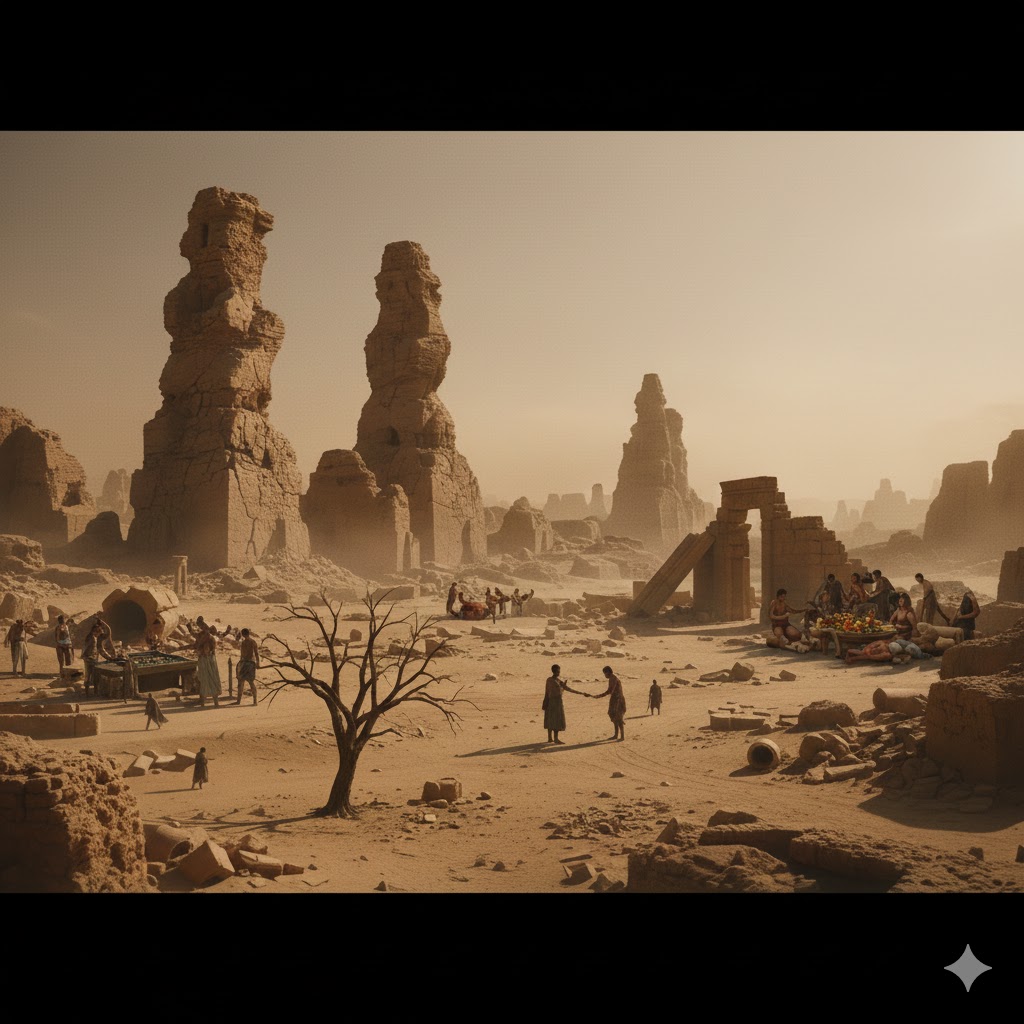
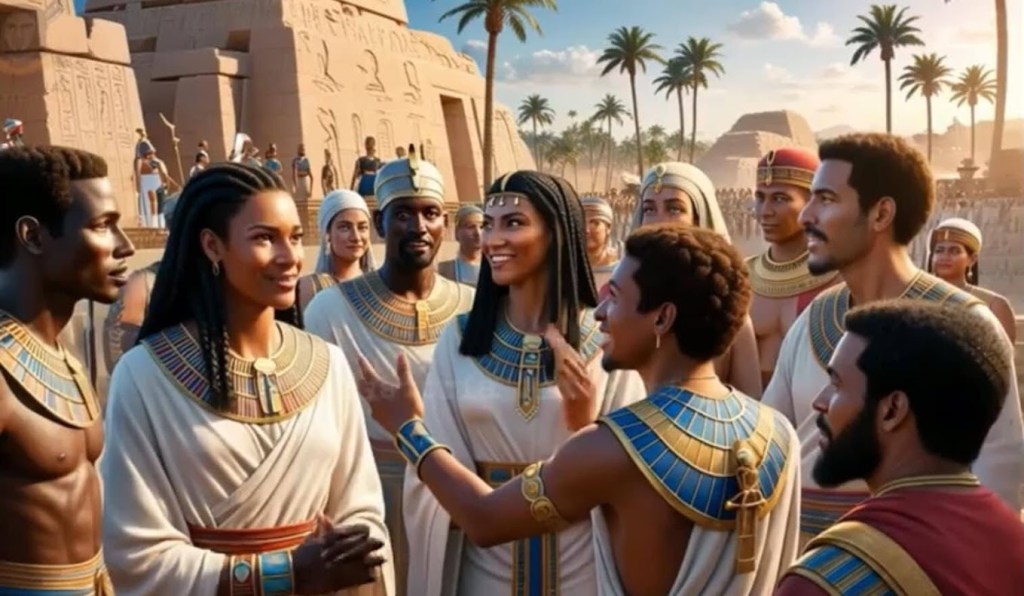
In the Bible, Egypt (Hebrew: Mitzrayim) is often used symbolically as the place of bondage, suffering, and enslavement for the children of Israel. Literally, it refers to the land where Israel was enslaved under Pharaoh until God delivered them through Moses (Exodus 12–14). However, later biblical writers often used “Egypt” metaphorically to represent any place of oppression and captivity.

For example, Deuteronomy 28:68 (KJV) says:

“And the Lord shall bring thee into Egypt again with ships, by the way whereof I spake unto thee, thou shalt see it no more again: and there ye shall be sold unto your enemies for bondmen and bondwomen, and no man shall buy you.”

This prophecy has been interpreted by many, especially within Black Hebraic and Israelite circles, as pointing not just to literal Egypt, but to a second bondage — one involving ships, mass enslavement, and dispersal. The transatlantic slave trade is often connected to this verse because millions of Africans were taken in slave ships and sold across the Americas.


Babylon: Symbol of Captivity

Babylon, on the other hand, represents a different type of bondage in Scripture. The historical Babylon was where Judah was exiled after the Babylonian conquest (2 Kings 25). Spiritually, Babylon is often used in the Bible as a symbol of worldly power, idolatry, and moral corruption. In Revelation, “Mystery Babylon” is described as a global power that seduces nations and persecutes the saints (Revelation 17–18).

Thus, Babylon often symbolizes spiritual captivity — being under the influence of a corrupt, ungodly world system — while Egypt often symbolizes physical captivity and hard labor.


Egypt and Babylon in Prophecy

Isaiah 52:4 (KJV) says:

“Thus saith the Lord God, My people went down aforetime into Egypt to sojourn there; and the Assyrian oppressed them without cause.”

This shows that God saw Egypt and later oppressors as part of the same narrative: foreign domination of His people.

Revelation 11:8 (KJV) offers a fascinating connection:

“And their dead bodies shall lie in the street of the great city, which spiritually is called Sodom and Egypt, where also our Lord was crucified.”

Here, Egypt is used spiritually to describe a future place of bondage. Some interpreters suggest that the modern systems of oppression, mass incarceration, debt slavery, and economic exploitation are a type of spiritual Egypt — a continuation of that same cycle of bondage.


Egypt vs. Babylon: A Biblical Comparison

AspectEgypt (Mitzrayim)Babylon
Meaning“Mitzrayim” in Hebrew means “narrow place, straits” — a place of confinement.“Babel/Babylon” means “confusion by mixing” — a place of spiritual corruption.
Historical RolePhysical place of slavery where Israel was held in bondage under Pharaoh (Exodus 1–14).Ancient empire that conquered Judah and exiled its people (2 Kings 25).
SymbolismRepresents physical captivity, forced labor, oppression, and hardship.Represents spiritual captivity, idolatry, worldliness, and moral decay.
Key ScriptureExodus 20:2 – “I am the LORD thy God, which have brought thee out of the land of Egypt, out of the house of bondage.”Revelation 17–18 – “Mystery, Babylon the Great, the Mother of Harlots and Abominations of the Earth.”
Prophetic MeaningIn Deuteronomy 28:68, Egypt can symbolize a future return to bondage, often linked to slavery via ships (transatlantic slave trade).In Revelation, Babylon is seen as a future or present global system of economic and spiritual oppression.
Form of BondagePhysical — slavery, chains, forced labor, economic exploitation (sharecropping, prison labor).Spiritual — false religion, cultural indoctrination, economic control, moral confusion.
Modern ParallelsDebt slavery, mass incarceration, racial oppression, systemic poverty.Consumerism, secularism, media manipulation, moral compromise.
End-Times RoleRepresents the final “house of bondage” from which God’s people must be delivered (Deut. 30:3).Represents the world empire God will judge before the Kingdom is restored (Rev. 18:2–4).
Call to ActionExodus 3:10 – “Come now therefore, and I will send thee unto Pharaoh, that thou mayest bring forth my people…” (Deliverance from oppression).Revelation 18:4 – “Come out of her, my people, that ye be not partakers of her sins…” (Separation from spiritual corruption).

This chart makes it clear that Egypt = physical bondage and Babylon = spiritual/worldly bondage — and that both still exist in different forms today.

Hebraic-Israelite Perspective

Many teachers in the Israelite movement equate Egypt in Deuteronomy 28 with America (or the West in general), viewing it as the modern “house of bondage.” Similarly, they sometimes equate America with “Mystery Babylon” in Revelation, because it is seen as a dominant empire that exports culture, idolatry, and economic exploitation worldwide.

From this view, Egypt = the condition of physical bondage, while Babylon = the system of spiritual, economic, and cultural captivity. Together, they describe both the external and internal struggles of the children of Israel in the modern era.


Summary

  • Egypt (Mitzrayim) = The house of bondage (Exodus 20:2), symbolizing physical slavery and hard labor.
  • Babylon = Spiritual captivity, idolatry, and global oppression, as seen in Revelation’s “Mystery Babylon.”
  • Today’s world can be seen as both Egypt (economic bondage through debt, wage slavery, mass incarceration) and Babylon (spiritual and cultural enslavement through media, moral decay, and false worship).

In short, Egypt in prophecy represents the condition of oppression, and Babylon represents the system of oppression. They overlap in meaning — both point to captivity, but one is physical and one is spiritual.

References

Biblical References

  • Exodus 1–14 – Narrative of Israel’s bondage in Egypt and deliverance through Moses.
  • Exodus 20:2 (KJV) – “I am the LORD thy God, which have brought thee out of the land of Egypt, out of the house of bondage.”
  • Deuteronomy 28:68 (KJV) – Prophecy of returning to Egypt “again with ships.”
  • Isaiah 52:4 (KJV) – Mentions Israel’s oppression in Egypt and by Assyria.
  • 2 Kings 25 – Historical account of Judah’s exile to Babylon.
  • Jeremiah 50:8 (KJV) – “Remove out of the midst of Babylon, and go forth out of the land of the Chaldeans.”
  • Revelation 11:8 (KJV) – Describes the “great city… spiritually called Sodom and Egypt.”
  • Revelation 17–18 (KJV) – Prophecy concerning Mystery Babylon and her final destruction.
  • Revelation 18:4 (KJV) – “Come out of her, my people, that ye be not partakers of her sins…”

Scholarly & Theological Sources

  • Assmann, J. (1997). Moses the Egyptian: The memory of Egypt in Western monotheism. Harvard University Press.
  • Collins, J. J. (2016). The Bible after Babel: Historical criticism in a postmodern age. Eerdmans.
  • Hayes, J. H., & Holladay, C. R. (2007). Biblical exegesis: A beginner’s handbook (3rd ed.). Westminster John Knox Press.
  • Keener, C. S. (2014). Revelation (NIV Application Commentary). Zondervan.
  • Wright, N. T. (2012). How God became King: The forgotten story of the Gospels. HarperOne.
  • Walton, J. H. (2006). Ancient Near Eastern thought and the Old Testament. Baker Academic.
Just Leave: Exodus from Babylon to the Holy Scriptures

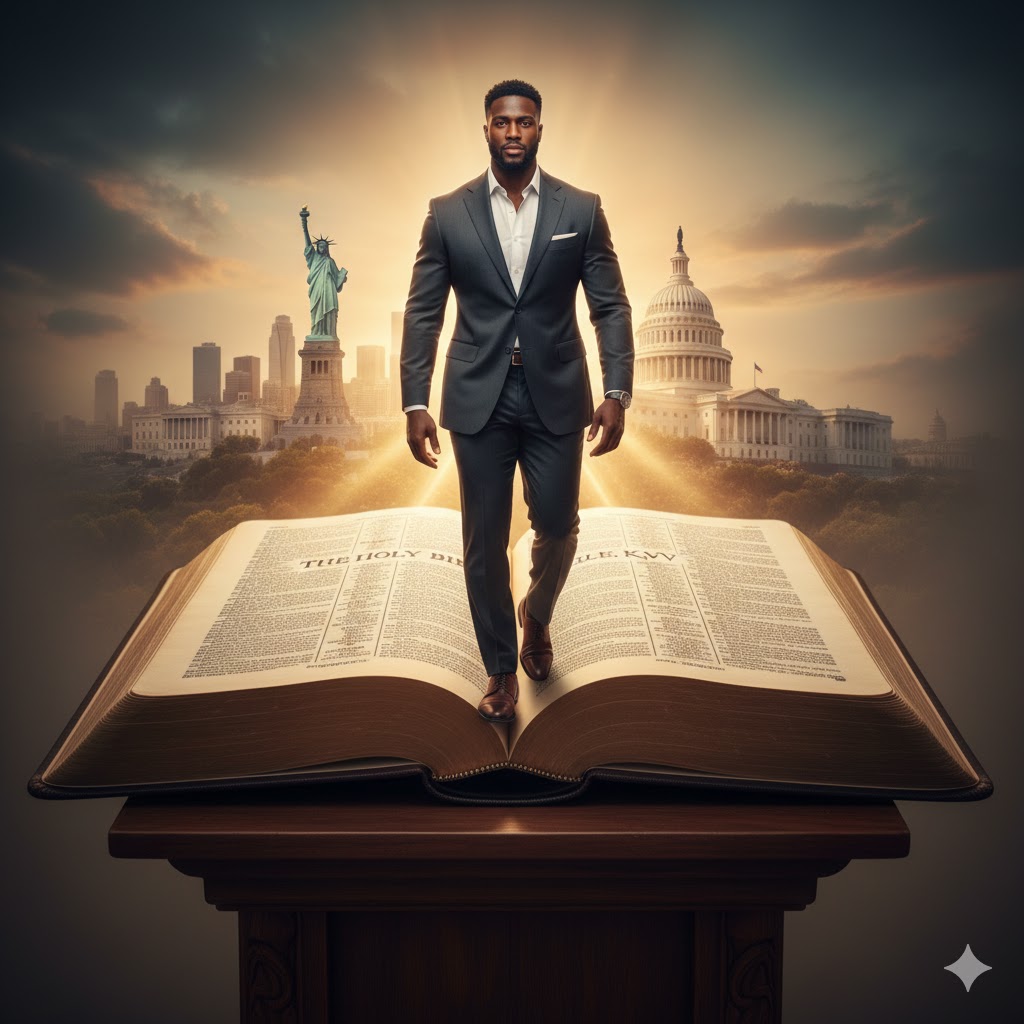
Just leave. That’s the command our spirits whisper when the world grows too loud, too heavy, and too hostile for our survival. But even that command requires clarity, because no man can touch us when we choose truth over bondage, identity over illusion, and liberation over fear. Yet we often respond with the question, “Leave and go where?” It is a valid question, a necessary question, but it is the wrong first question. Before we ask where, we must ask what we are leaving behind.

Leave the mythology. The mythology that insists your worth is measured by proximity to whiteness, by respectability, by silence, or by a palatable softness that does not disturb the empire. Leave the mythology that you must shrink to survive, that your power is dangerous, that your heritage is a burden instead of a blessing.

Leave the lie that you are three-fifths human. That wicked arithmetic still circulates in institutions, in policies, in economic systems, and in subtle social cues that undervalue your intellect, your labor, and your life. Leave the lie that your blood is inherently rebellious, your mind inherently inferior, or your dreams too large for the box they try to confine you in.

Leave the shame they taught you about your hair. The shame that made you hide your curls, your coils, your kinks. Leave the shame they taught you about your skin—its richness, its radiance, its history written in melanin and memory. Leave the shame they placed on your body, treating it as a commodity, a spectacle, or a threat instead of a temple.

Leave the history they curated for you. The watered-down version that sanitizes oppression and glorifies the oppressor. Leave the edited pages, the missing chapters, the erased kingdoms, the silenced voices. Leave the lies that tell you your people began in chains instead of civilizations.

Leave the doctrine that suffering is noble. Especially the doctrine that teaches patience as a virtue only when your suffering benefits those in power. Leave the sermons that glorify endurance when liberation is possible, necessary, and divine.

Leave the celebrity pastors who preach prosperity while their people drown. Leave those who sell visions of wealth without demanding justice, who offer emotional sugar but no spiritual nourishment, who build kingdoms for themselves instead of communities for their people.

Leave the political parties that arrive every four years with promises as temporary as campaign posters. Leave the illusion of loyalty to institutions that invest in your vote but not your well-being. Leave the cycles of hope and disappointment that steal generations of possibility.

Leave the schools that teach your children to dislike their reflection. The schools that discipline their curiosity, punish their brilliance, and withhold their history. Leave the educators who mistake cultural difference for deficiency and who lower expectations instead of raising understanding.

Leave the media that shapes your imagination into narrow roles. The media that scripts you as a sidekick, victim, or clown instead of a leader, builder, and originator. Leave the narratives that deny you complexity, nuance, and humanity.

Leave the debt cycles that suffocate your future. The predatory systems disguised as opportunity, the loans that become chains, the credit traps that mimic freedom but deliver bondage. Leave the financial mythology that praises hustle but hides exploitation.

Leave every system that extracts your labor but denies your dignity. Systems that benefit from your creativity, resilience, and intellect while rewarding you with crumbs. Leave the corporate cultures that want your ideas but not your leadership.

Leave the trauma industries that profit from your pain. The news cycles that sensationalize Black suffering, the social platforms that amplify outrage but not solutions, the institutions that study your wounds but ignore their origins.

Leave the relationships that drain your energy. The people who demand emotional labor without reciprocity, who expect your loyalty without offering love, who take your light but panic when you shine too brightly.

Leave the internal oppressor you inherited. The voice that tells you to dim your brilliance, to fear your own greatness, to distrust your intuition. Leave the self-doubt planted by centuries of psychological warfare.

Leave the silence. The silence that protects those who harm you and imprisons those who carry the truth. Leave the silence that keeps wounds unhealed, stories untold, and futures unbuilt.

Leave the smallness you did not choose. The smallness projected onto you by systems, people, and histories that could not comprehend your magnitude. Leave the places that cannot hold the weight of your calling.

Leave the fear that you must choose between survival and authenticity. Liberation does not ask you to abandon yourself; it invites you to return to yourself. Leave the assumption that freedom is elsewhere—it is first within.

Leave the question “Leave and go where?” behind long enough to ask the deeper question: “Leave what?” Because the departure begins long before the destination is revealed. Leaving is a mental exodus, a spiritual shedding, a reclamation of identity that precedes any physical move.

Just leave—leave the lies, the limitations, the labels. Leave until you rediscover the truth: that you are untouchable, unbreakable, immeasurable, and destined for more than survival. Leave until you walk fully into the power that was always yours.

References
Alexander, M. (2010). The new Jim Crow: Mass incarceration in the age of colorblindness. The New Press.
hooks, b. (1994). Teaching to transgress: Education as the practice of freedom. Routledge.
Kendi, I. X. (2019). How to be an antiracist. One World.
Taylor, K.-Y. (2016). From #BlackLivesMatter to Black liberation. Haymarket Books.
West, C. (1993). Race matters. Beacon Press.

The Fall of Babylon

Babylon in Scripture represents far more than an ancient empire; it symbolizes a spiritual system of rebellion, pride, idolatry, and oppression. In the Old Testament, Babylon rose to power as a wealthy, militarized nation that exalted itself above God, consuming weaker nations and enslaving peoples. Yet its physical fall, recorded in Daniel and Jeremiah, foreshadowed a much deeper truth: Babylon is ultimately a spirit, a mindset, and a world system that continues into the modern age. The modern-day Babylon is not a single city but the global structure of power that exalts wealth above righteousness, self above God, and corruption above truth. Revelation describes it as a great city “which reigneth over the kings of the earth” (Revelation 17:18 KJV), pointing to a worldwide system rooted in spiritual deception and the worship of materialism.

Modern Babylon appears in political empires, economic systems, media powers, and cultural forces that lead humanity away from obedience to God. Its influence blinds hearts, normalizes sin, and rewards wickedness. Revelation declares, “Babylon the great is fallen, is fallen” (Revelation 18:2 KJV), meaning that every proud nation built on exploitation, violence, and immorality will ultimately collapse. Modern Babylon thrives wherever people trust in militaries, governments, wealth, or human intelligence instead of the Most High God. It is the world’s obsession with dominance, luxury, status, and control. It disguises itself as success but leaves spiritual ruin in its wake.

Babylon is also the mindset that prioritizes self-worship. It is the inner rebellion that says, “I will ascend…I will be like the most High” (Isaiah 14:14 KJV). This mindset mirrors Lucifer’s fall, showing that Babylon is fundamentally the spirit of pride. Anyone who believes they can rule, control, or manipulate life without God has adopted Babylon’s mentality. It steals attention away from holiness and seduces people into believing that earthly achievements define worth.

The Bible shows that Babylon is rooted in confusion. The name itself comes from the Tower of Babel, where God confounded the languages of humanity because they tried to build a tower to heaven (Genesis 11:9 KJV). This confusion continues today in systems that preach lies as truth, promote ungodliness as freedom, and intentionally distort moral boundaries. Babylon’s confusion leads people to reject God’s commandments and embrace ideologies that destroy families, communities, and nations.

In the modern world, Babylon is visible in governments built on corruption, corporations that exploit labor, entertainment that glorifies sin, and economic structures that trap people in lifelong debt. It is present in political systems that wage war for profit and in religious institutions that claim God’s name but reject His laws. Revelation describes Babylon as a “habitation of devils” and a “hold of every foul spirit” (Revelation 18:2 KJV), showing that it is spiritually rotten at the core.

Babylon’s mindset also thrives in consumerism. The world encourages people to measure success by possessions, beauty, and social status. It convinces them that happiness comes from external achievements instead of spiritual transformation. This is why Revelation speaks of Babylon’s merchants as “the great men of the earth” who deceived nations through their sorceries (Revelation 18:23 KJV). The modern marketplace, driven by greed and manipulation, is a pillar of Babylon’s influence.

Another characteristic of Babylon is its injustice. Ancient Babylon enslaved Israel, oppressed the poor, and celebrated violence. Today’s Babylon does the same through mass incarceration, exploitation of the poor, racial inequality, and systems that profit from suffering. God warns, “Woe to him that buildeth a town with blood” (Habakkuk 2:12 KJV), showing that any society built on oppression is destined to fall.

Babylon also promotes false religion. It mixes truth with lies, spirituality with witchcraft, and holiness with corruption. It presents itself as righteous but denies the power of God. This is why Scripture calls it “Mystery, Babylon the Great” (Revelation 17:5 KJV). It thrives in religious hypocrisy—churches that preach prosperity instead of repentance, leaders who exploit believers, and doctrines that comfort sin rather than confront it.

The modern Babylon is also moral decay. It normalizes fornication, adultery, idolatry, and perversion. It glorifies rebellion against family structure and mocks righteousness. The Bible says Babylon made “all nations drink of the wine of the wrath of her fornication” (Revelation 14:8 KJV). In other words, the world has been intoxicated by sin, unable to see the danger of its choices.

Babylon trains people to chase pleasure rather than purpose. It distracts the mind with entertainment, lust, and vanity. It pushes people to worship celebrities, technology, and wealth. This constant distraction weakens spiritual discipline and separates people from God. It replaces prayer with pleasure and holiness with indulgence.

The mindset of Babylon is also rooted in rebellion against divine order. It rejects biblical family structures, mocks masculine and feminine roles ordained by God, and promotes chaos instead of stability. God established order to protect humanity, but Babylon seeks to dismantle everything sacred and replace it with confusion. It encourages people to redefine truth according to their emotions rather than God’s Word.

Babylon thrives by creating dependence on worldly systems. Instead of trusting God, people trust governments, corporations, pharmaceutical powers, and political leaders. Yet the Bible warns, “Cursed be the man that trusteth in man” (Jeremiah 17:5 KJV). Babylon’s foundation is misplaced trust—believing that human power can provide what only God can supply.

The fall of Babylon is both spiritual and physical. Revelation promises that its collapse will be sudden: “in one hour is thy judgment come” (Revelation 18:10 KJV). This shows that no matter how powerful an empire becomes, God can bring it down instantly. Babylon’s wealth, military might, and global influence cannot protect it from divine judgment.

God calls His people to separate themselves from Babylon’s system. “Come out of her, my people” (Revelation 18:4 KJV). This is not just a physical command but a spiritual one. Believers must reject Babylon’s mindset—pride, greed, lust, rebellion—and walk in holiness, humility, and obedience. To come out of Babylon is to break free from the world’s deception and submit fully to God’s authority.

Believers must also resist Babylon’s pressure to conform. Babylon rewards compromise, but God blesses righteousness. Daniel refused to eat Babylon’s food or bow to its idols, and God honored him. Likewise, those who stand against modern Babylon’s temptations will receive God’s protection and favor.

Babylon’s fall is also a warning. It teaches that every nation that exalts itself above God will be humbled. Every system that oppresses the innocent will be judged. Every mindset rooted in pride will collapse. God is patient, but judgment comes when wickedness reaches its fullness.

The fall of Babylon signifies the triumph of God’s kingdom. It represents the end of worldly corruption and the beginning of divine restoration. When Babylon falls, truth is restored, justice is lifted, and righteousness prevails. God removes everything that exalts itself against His authority.

Modern-day Babylon will fall just as ancient Babylon did. Its wealth, systems, and power will crumble, and those who placed their trust in it will be left empty. But those who trusted in God will stand strong. Babylon’s fall is not merely destruction—it is deliverance for God’s people.

In the end, the fall of Babylon points to the victory of Christ, who is King of kings and Lord of lords. All human pride, power, and rebellion will bow before Him. Babylon may rise with glory, but its end is certain. Only the kingdom of God will stand forever.

References:

Genesis 11:9 (KJV) – Origin of Babel, meaning confusion.
Isaiah 14:12–14 (KJV) – The prideful mindset connected to Babylon and Lucifer’s rebellion.
Habakkuk 2:12 (KJV) – Judgment on nations built on bloodshed and oppression.
Jeremiah 17:5 (KJV) – Warning against trusting in man rather than God.
Daniel 1:8 (KJV) – Daniel refusing Babylon’s food, symbolizing resisting corruption.
Revelation 14:8 (KJV) – “Babylon is fallen” because of her fornication and corruption.
Revelation 17:5 (KJV) – “Mystery, Babylon the Great,” symbolizing spiritual deception.
Revelation 17:18 (KJV) – Babylon as the city reigning over kings of the earth.
Revelation 18:2 (KJV) – Babylon as the habitation of devils and unclean spirits.
Revelation 18:4 (KJV) – God’s command: “Come out of her, my people.”
Revelation 18:10 (KJV) – Babylon’s sudden judgment “in one hour.”
Revelation 18:23 (KJV) – Merchants deceiving nations through sorceries.