Category Archives: american history

Biblical Slavery Decoded

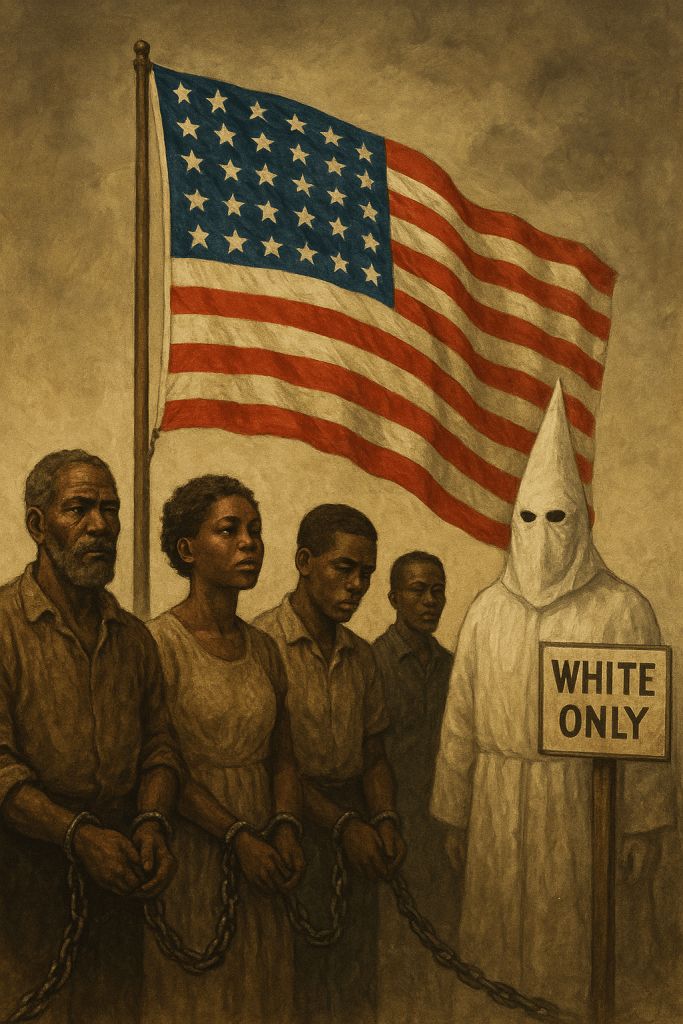
Biblical slavery is one of the most misunderstood and misused subjects in religious history, often weaponized to justify chattel slavery while stripping Scripture of its historical, linguistic, and moral context. A careful reading of the King James Version (KJV), alongside ancient Near Eastern customs, reveals that biblical servitude was fundamentally different from the race-based, perpetual, dehumanizing system imposed on Africans in the transatlantic slave trade.

In Scripture, the English word slave often translates from the Hebrew word ʿeḇeḏ, which broadly means servant, laborer, or bondman. This term encompassed a wide range of social arrangements, including hired workers, indentured servants, royal officials, and covenantal servants of God. Context, not modern assumptions, determines its meaning.

Biblical servitude was primarily economic, not racial. Israelites could enter servitude to repay debts, survive famine, or restore family stability. This system functioned as a form of social welfare in an agrarian society without modern banking or safety nets (Leviticus 25:35–39, KJV).

Unlike chattel slavery, biblical servants retained personhood and legal protections. Exodus 21 outlines clear limits on treatment, including punishment for abuse. If a servant was permanently injured, they were to be released free as compensation (Exodus 21:26–27, KJV).

Time limits are central to understanding biblical servitude. Hebrew servants could not be held indefinitely. They were released in the seventh year, known as the Sabbath year, without payment or penalty (Exodus 21:2, KJV; Deuteronomy 15:12).

The Jubilee year further reinforced freedom. Every fiftieth year, all Israelite servants were released, debts forgiven, and land restored to ancestral families. This system prevented generational poverty and perpetual bondage (Leviticus 25:10, KJV).

The Bible explicitly forbids manstealing, the very foundation of transatlantic slavery. Kidnapping a human being to sell or enslave them was a capital offense under biblical law (Exodus 21:16, KJV; Deuteronomy 24:7).

This prohibition directly condemns the capture, transport, sale, and hereditary enslavement of Africans. Any attempt to justify race-based slavery using the Bible ignores this clear and uncompromising command.

Foreign servants in Israel were also protected under divine law. While non-Israelites could enter long-term servitude, they were still bound by covenantal ethics, Sabbath rest, and humane treatment (Exodus 20:10, KJV).

The Bible commands empathy toward servants by reminding Israel of their own history of oppression in Egypt. God repeatedly anchors social justice in remembrance of slavery and divine deliverance (Deuteronomy 5:15, KJV).

Servants were entitled to rest on the Sabbath, placing them on equal footing with their masters before God. This alone dismantles the notion of absolute ownership (Exodus 23:12, KJV).

Biblical slavery also included voluntary lifelong service. If a servant chose to remain with a master out of love and security, it was a consensual covenant—not coercion (Exodus 21:5–6, KJV).

In the New Testament, the Greek word doulos is often translated servant or bondservant. It is used metaphorically to describe believers’ relationship to Christ, emphasizing devotion, not degradation (Romans 1:1, KJV).

Jesus never endorsed oppression. Instead, He confronted systems of exploitation and emphasized mercy, justice, and love of neighbor (Matthew 23:23, KJV).

Christ’s mission was liberation at every level—spiritual, social, and moral. He declared freedom for the captives and release for the oppressed (Luke 4:18, KJV).

Paul’s epistles address servants and masters within the Roman system, not as approval of slavery, but as guidance for ethical conduct within existing structures. He undermined slavery by affirming spiritual equality (Galatians 3:28, KJV).

Paul explicitly condemns enslavers in his list of lawless sinners, using language that echoes the Old Testament ban on manstealing (1 Timothy 1:9–10, KJV).

The letter to Philemon reveals the heart of biblical ethics. Paul urges Philemon to receive Onesimus not as a servant, but as a beloved brother—an appeal that dismantles hierarchical bondage (Philemon 1:15–16, KJV).

Biblical law consistently places God as the ultimate owner of all people. Humans are stewards, not masters of souls (Leviticus 25:55, KJV).

This divine ownership nullifies the idea that one human can permanently own another. All authority is subordinate to God’s righteousness.

The prophets fiercely rebuked oppression, exploitation, and abuse of the vulnerable. Slavery that crushed dignity was treated as a sin that provoked divine judgment (Isaiah 58:6, KJV).

Biblical justice demanded fair wages, humane conditions, and accountability. The exploitation of labor was never portrayed as righteous (Jeremiah 22:13, KJV).

The misuse of Scripture to justify American slavery represents a theological betrayal, not biblical fidelity. Selective reading severed verses from context to sanctify greed and racial domination.

Chattel slavery violated every biblical principle: it was racial, perpetual, violent, hereditary, and rooted in kidnapping. It mocked Sabbath rest, denied Jubilee, and erased personhood.

The curse of Ham narrative was never about Black people and was distorted centuries later to rationalize European colonialism. Scripture does not assign racial destiny through curses (Genesis 9:25–27, KJV).

Biblical slavery must be understood within covenantal law, not colonial ideology. God’s statutes consistently aimed at restoration, not destruction.

Freedom is central to God’s character. From the Exodus to the Cross, liberation defines His intervention in human history.

When Scripture is read honestly, it condemns systems that thrive on cruelty and profit from suffering. God sides with the oppressed, not the oppressor (Psalm 103:6, KJV).

The Bible does not sanitize suffering, but it never sanctifies it either. Justice, mercy, and humility remain the standard (Micah 6:8, KJV).

Understanding biblical slavery correctly dismantles false theology and restores truth. It exposes how Scripture was manipulated to uphold racism rather than righteousness.

Biblical slavery, decoded properly, reveals a God who regulates human brokenness while pointing relentlessly toward freedom. Any theology that excuses dehumanization stands in opposition to the God of the Bible.


References (KJV)

Exodus 20:10; Exodus 21:2, 16, 26–27; Exodus 23:12
Leviticus 25:10, 35–39, 55
Deuteronomy 5:15; Deuteronomy 15:12; Deuteronomy 24:7
Psalm 103:6
Isaiah 58:6
Jeremiah 22:13
Matthew 23:23
Luke 4:18
Romans 1:1
Galatians 3:28
1 Timothy 1:9–10
Philemon 1:15–16
Micah 6:8
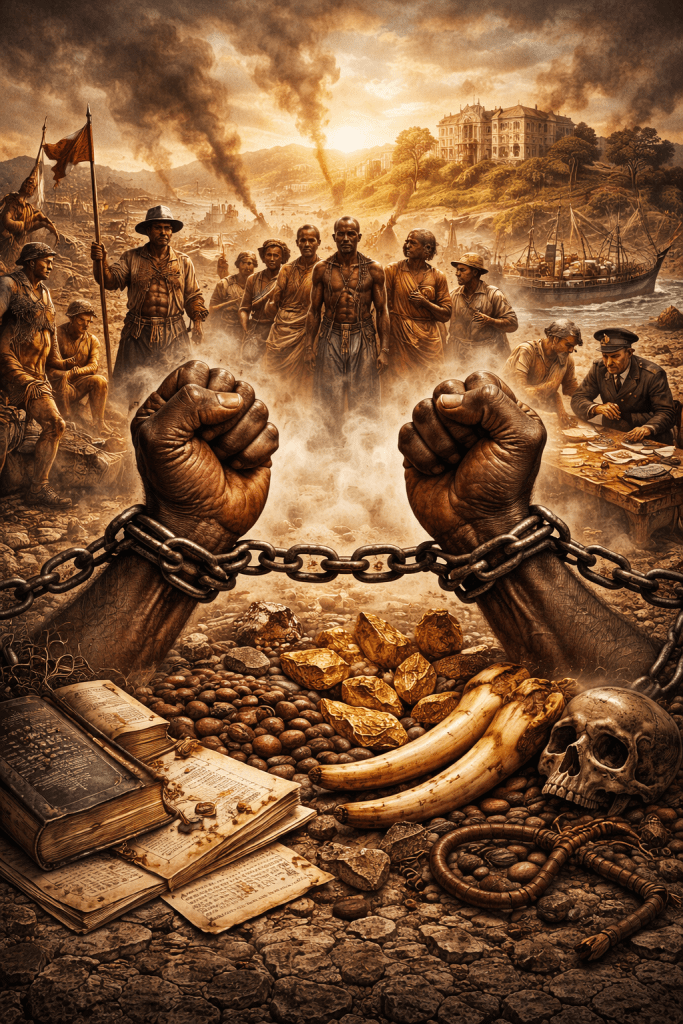

Dilemma: Colonialism

Colonialism represents one of the most enduring and destructive systems in human history, shaping global inequalities that persist long after formal empires collapsed. At its core, colonialism involved the domination of one people by another through force, dispossession, and ideological control. The dilemma of colonialism lies not only in its historical brutality but in its long-term consequences, which continue to structure economic systems, cultural identities, and psychological realities across the modern world.

European colonial expansion was driven by the pursuit of land, labor, and resources, justified through doctrines of racial superiority and civilizational hierarchy. Indigenous societies were not encountered as equals but as obstacles to be conquered or “improved.” This worldview allowed colonial powers to rationalize enslavement, genocide, and cultural erasure as moral and economic necessities.

Economic exploitation was central to the colonial project. Colonized lands were reorganized to serve imperial markets, transforming self-sustaining economies into extractive systems dependent on the export of raw materials. Wealth flowed outward to imperial centers, while poverty was institutionalized in the colonies, laying the groundwork for global inequality.

The transatlantic slave trade functioned as a pillar of colonial capitalism. Millions of Africans were forcibly displaced, commodified, and exploited to fuel plantation economies in the Americas and the Caribbean. This system generated immense wealth for European powers while devastating African societies socially, demographically, and politically.

Colonialism also dismantled indigenous governance structures. Traditional political systems were replaced with colonial administrations designed to extract resources and suppress resistance. Artificial borders divided ethnic groups and forced rival communities into single political units, creating instability that continues to affect postcolonial states.

Cultural domination accompanied economic and political control. Colonial powers imposed their languages, religions, and value systems while denigrating indigenous cultures as primitive or inferior. This process stripped colonized peoples of historical continuity and disrupted intergenerational transmission of knowledge and identity.

Education under colonial rule was not designed to empower but to discipline. Schools trained a small elite to serve colonial administrations while teaching them to internalize European superiority. As Frantz Fanon observed, colonial education often produced alienation rather than enlightenment.

Religion was frequently weaponized to legitimize colonial expansion. Biblical narratives were selectively interpreted to justify conquest, enslavement, and submission. While Christianity offered spiritual comfort to many, it was also used as a tool of social control, obscuring the moral contradictions of colonial violence.

The psychological effects of colonialism were profound. Colonized peoples were subjected to constant messages of inferiority, leading to internalized racism and fractured self-perception. Fanon described this condition as a divided consciousness, where the oppressed come to see themselves through the eyes of the oppressor.

Racial hierarchies were meticulously constructed and enforced. Whiteness became synonymous with intelligence, beauty, and authority, while Blackness and indigeneity were associated with backwardness. These hierarchies did not disappear with independence; they were absorbed into global culture and continue to influence social relations.

Colonialism reshaped gender roles in destructive ways. Indigenous gender systems were often more fluid or complementary, but colonial rule imposed rigid patriarchal norms that marginalized women and erased their leadership roles. Colonial economies also relied heavily on the exploitation of women’s labor.

Environmental destruction was another hallmark of colonial rule. Land was treated as property rather than a sacred resource, leading to deforestation, soil depletion, and ecological imbalance. These practices prioritized short-term profit over sustainability, leaving lasting environmental scars.

Resistance to colonialism was constant, though often erased from dominant historical narratives. Enslaved Africans revolted, indigenous peoples fought invasions, and anti-colonial movements emerged across continents. Freedom was not granted by empires; it was wrested through struggle and sacrifice.

The transition from colonial rule to independence was frequently incomplete. Many nations inherited economies designed for extraction, not development, and political systems modeled on colonial governance. Independence without structural transformation left former colonies vulnerable to continued domination.

Colonial legacies remain visible in global wealth disparities. Former colonial powers continue to benefit from accumulated capital, while former colonies face debt, underdevelopment, and external interference. These inequalities are not accidental but historical outcomes of exploitation.

Colonialism also distorted historical memory. Textbooks and public narratives often minimize imperial violence while celebrating exploration and “progress.” This selective memory impedes reconciliation and allows injustice to persist without accountability.

From a moral and spiritual perspective, colonialism represents a profound violation of divine principles of justice and human dignity. Scripture condemns oppression, theft, and the exploitation of the vulnerable, warning that nations built on injustice cannot stand indefinitely.

The dilemma of colonialism is not simply whether it was harmful, but whether the world is willing to confront its consequences honestly. Apologies without reparative action risk becoming symbolic gestures rather than pathways to healing.

Decolonization requires more than political independence. It demands economic justice, cultural restoration, psychological healing, and historical truth-telling. Without these elements, colonialism merely changes form rather than ending.

Ultimately, colonialism challenges humanity to reckon with power, morality, and memory. Until its legacies are addressed with humility and justice, the wounds it created will continue to shape the present, reminding the world that history is never truly past.


References

Fanon, F. (1963). The wretched of the earth. Grove Press.

Fanon, F. (1967). Black skin, white masks. Grove Press.

Nkrumah, K. (1965). Neocolonialism: The last stage of imperialism. Thomas Nelson & Sons.

Rodney, W. (1972). How Europe underdeveloped Africa. Bogle-L’Ouverture Publications.

Said, E. W. (1978). Orientalism. Pantheon Books.

Smith, A. (1776/2007). An inquiry into the nature and causes of the wealth of nations. MetaLibri.

The Holy Bible, King James Version. (1611/1987). Cambridge University Press.

Who Benefits When the Curriculum is Sanitized, and the History is Whitewashed?

When education omits uncomfortable truths or sanitizes history, it does more than distort knowledge—it shapes identities and values in ways that serve the powerful. A whitewashed curriculum often conceals oppression, marginalization, and systemic injustice, leaving students with a skewed perception of reality.

Sanitizing history benefits those who wish to maintain societal dominance. By minimizing the moral failures of the powerful and glorifying selective narratives, the truth about injustice is obscured. Proverbs 18:13 warns, “He that answereth a matter before he heareth it, it is folly and shame unto him.” Without hearing the full account, society cannot respond with justice.

Whitewashing history perpetuates ignorance. Students grow up unaware of the struggles and resilience of oppressed peoples, creating a populace less likely to recognize injustice in the present. Knowledge of history is a form of power, and withholding it sustains inequity.

This sanitized narrative also undermines moral development. Encountering the realities of human sin is essential for cultivating discernment. Romans 1:18–20 states, “For the wrath of God is revealed from heaven against all ungodliness and unrighteousness of men, who hold the truth in unrighteousness.” Suppressing truth allows unrighteousness to flourish.

Those most harmed by whitewashing are communities whose histories are erased or distorted. Cultural and spiritual identity are shaped by knowledge of one’s past. Deuteronomy 32:7 teaches, “Remember the days of old, consider the years of many generations: ask thy father, and he will shew thee; thy elders, and they will tell thee.” History forms the backbone of identity, and its erasure impoverishes future generations.

Sanitized curricula also obscure the mechanisms of systemic oppression. Understanding slavery, colonization, segregation, and exploitation is essential to preventing their recurrence. Ignorance of these realities benefits the descendants of oppressors, who inherit both unexamined privilege and historical myths.

Economic and social power is often maintained through control of narratives. Ecclesiastes 8:11 reminds us, “Because sentence against an evil work is not executed speedily, therefore the heart of the sons of men is fully set in them to do evil.” Delay or denial of historical accountability allows injustices to continue unnoticed.

Whitewashing history also influences psychological and social development. When young people are taught incomplete or sanitized histories, they may internalize inferiority or fail to appreciate their heritage. Understanding one’s ancestry builds resilience and pride.

Sanitized education can manipulate national or cultural identity. By presenting selective histories, institutions foster loyalty to ideologies that serve dominant groups, rather than encouraging critical thinking or moral responsibility. Proverbs 23:23 states, “Buy the truth, and sell it not; also wisdom, and instruction, and understanding.” Truth must be sought and taught, even when uncomfortable.

In contrast, confronting history honestly fosters justice. Awareness of past wrongs equips society to correct present inequities and cultivate empathy. Psalm 82:3–4 exhorts, “Defend the poor and fatherless: do justice to the afflicted and needy. Deliver the poor and needy: rid them out of the hand of the wicked.” Education that recognizes oppression is a tool for justice.

Those in power benefit materially and socially from sanitized curricula. Wealth and influence are preserved, and social hierarchies remain unchallenged. Historical truths that might provoke moral or political reform are hidden.

Religious texts emphasize the importance of remembering and teaching truth. Proverbs 4:7 teaches, “Wisdom is the principal thing; therefore get wisdom: and with all thy getting get understanding.” Knowledge of history is part of this wisdom.

The erasure of marginalized histories also diminishes collective memory. When atrocities or injustices are minimized, lessons from the past are lost, and societies are more likely to repeat mistakes.

Furthermore, sanitized curricula often valorize the oppressor’s narrative, embedding it as a universal truth. This skews morality and erodes empathy, teaching young people to admire figures or institutions without critical evaluation.

A society that ignores historical suffering undermines the spiritual imperative to pursue justice. Isaiah 1:17 instructs, “Learn to do well; seek judgment, relieve the oppressed, judge the fatherless, plead for the widow.” Ignorance of oppression prevents action aligned with divine justice.

The consequences of whitewashed education are multi-generational. When children grow up unaware of historical realities, social inequalities persist, and systemic injustices are perpetuated silently.

Reclaiming historical truth empowers oppressed communities. Knowledge of ancestral struggles and victories fosters resilience, identity, and social cohesion. Deuteronomy 4:9 emphasizes the importance of remembering and teaching what one has learned: “Take ye therefore good heed unto yourselves; for ye saw no manner of similitude on the day that the LORD spake unto you in Horeb out of the midst of the fire.” Awareness preserves wisdom across generations.

In conclusion, sanitized curricula and whitewashed history benefit the powerful by preserving privilege and suppressing accountability. Yet, God commands the pursuit of truth, justice, and understanding, calling societies to confront their past and act rightly.

True education must confront reality fully. Only through honesty in teaching history can justice, empathy, and spiritual discernment flourish. Societies that conceal history cheat themselves of moral and spiritual growth, while those who face it with courage honor God and humanity alike.


References (KJV Bible):

  • Proverbs 18:13
  • Romans 1:18–20
  • Psalm 82:3–4
  • Deuteronomy 32:7
  • Ecclesiastes 8:11
  • Proverbs 23:23
  • Proverbs 4:7
  • Isaiah 1:17
  • Deuteronomy 4:9

The Altar of American Exceptionalism: Promise, Peril, and Consequence.

American exceptionalism is the belief that the United States occupies a unique moral, political, and historical position among nations. Rooted in Puritan theology, Enlightenment ideals, and revolutionary mythology, it has long framed the nation as chosen, exemplary, and destined for leadership. This belief has functioned as both a guiding philosophy and a civic religion, shaping national identity and public policy across generations.

At its best, American exceptionalism has inspired aspirational ideals. The language of liberty, equality, and self-governance provided a moral vocabulary that fueled abolitionism, civil rights movements, and democratic reforms. By holding itself to a proclaimed higher standard, the nation created a framework through which citizens could critique injustice and demand alignment between principle and practice.

The Declaration of Independence stands as a canonical text of exceptionalist thought, asserting universal rights while situating the American experiment as historically unprecedented. This rhetoric energized oppressed groups who invoked its promises to expose hypocrisy. Frederick Douglass’s famous question—what to the slave is the Fourth of July—demonstrates how exceptionalist ideals could be turned inward as a moral indictment rather than an excuse for complacency.

Yet American exceptionalism has also functioned as an altar upon which truth is sacrificed. When national myth hardens into unquestionable dogma, it suppresses historical accountability. Slavery, Indigenous dispossession, segregation, and imperial expansion were often justified or minimized under the assumption that America’s intentions were inherently benevolent, regardless of outcomes.

The doctrine has repeatedly blurred the line between patriotism and moral exemption. Foreign interventions, from Manifest Destiny to twentieth-century wars, were frequently framed as civilizing missions rather than power pursuits. Exceptionalism provided the moral cover for empire, allowing violence to be narrated as virtue and domination as destiny.

Domestically, exceptionalism has obscured structural inequality. The insistence that America is uniquely free and just has been used to delegitimize claims of systemic racism, economic exploitation, and gender inequality. If the nation is already exceptional, then disparities are framed as personal failures rather than institutional designs.

This mindset has been particularly damaging to Black Americans. The contradiction between exceptionalist rhetoric and lived reality produced what W.E.B. Du Bois called “double consciousness,” a constant negotiation between national belonging and exclusion. Black resistance movements have historically navigated the tension between appealing to American ideals and rejecting America’s false innocence.

American exceptionalism also reshaped capitalism into a moral narrative. Wealth accumulation became equated with virtue, and poverty with moral deficiency. The “American Dream” promised upward mobility while masking the racialized and class-based barriers that structured opportunity. Exceptionalism thus sanctified inequality under the guise of meritocracy.

In education, exceptionalist narratives often sanitize history. Textbooks emphasize triumph while minimizing atrocity, creating citizens who inherit pride without responsibility. This selective memory weakens democratic capacity, as honest self-critique is replaced with defensive nationalism.

Religiously, exceptionalism has fused with Christian nationalism, transforming the state into a quasi-divine instrument. Biblical language of chosenness has been selectively applied to America, displacing its original covenantal context. This theological distortion elevates the nation above moral law rather than subjecting it to prophetic judgment.

The psychological effects of exceptionalism are equally profound. It fosters cognitive dissonance when reality contradicts belief, leading to denial rather than reform. Citizens may experience identity threat when confronted with injustice, responding with hostility instead of empathy.

Globally, exceptionalism damages credibility. When the United States preaches democracy while tolerating human rights abuses at home and abroad, its moral authority erodes. Allies perceive hypocrisy, while adversaries exploit inconsistency, weakening international trust.

However, rejecting blind exceptionalism does not require abandoning national aspiration. A critical patriotism can preserve ethical commitment without mythological arrogance. Nations, like individuals, mature through accountability rather than denial.

Some scholars argue for a post-exceptionalist identity grounded in democratic humility. This approach views the United States not as above history but within it—capable of learning from other nations and from its own marginalized voices. Such humility strengthens rather than weakens democratic life.

The civil rights movement offers a model of reformed exceptionalism. Leaders like Martin Luther King Jr. appealed to America’s professed ideals while exposing its moral bankruptcy. Their vision did not worship the nation; it called it to repentance.

In this sense, American exceptionalism becomes most ethical when desacralized. When stripped of infallibility, it can function as an aspirational ethic rather than a shield against critique. The danger lies not in national ideals, but in their absolutization.

The future of American democracy depends on whether exceptionalism remains an altar or becomes a mirror. A mirror reflects both beauty and blemish, demanding growth. An altar demands worship and excuses failure.

Ultimately, the question is not whether America is exceptional, but how it understands exceptionality. If exceptionalism justifies power without justice, it corrodes the nation’s soul. If it compels responsibility proportional to power, it may yet serve a moral purpose.

The effects of American exceptionalism are therefore paradoxical. It has empowered liberation and legitimated oppression, inspired reform and excused violence. Its legacy demands discernment rather than devotion.

A transformed national consciousness would replace myth with memory, arrogance with accountability, and supremacy with service. Only then can the United States pursue greatness without sacrificing truth upon the altar of its own exceptionalism.


References

Appleby, J. (2018). The virtues of liberalism. Oxford University Press.

Bellah, R. N. (1967). Civil religion in America. Daedalus, 96(1), 1–21.

Du Bois, W. E. B. (1903). The souls of Black folk. A.C. McClurg & Co.

King, M. L., Jr. (1963). Why we can’t wait. Harper & Row.

Lipset, S. M. (1996). American exceptionalism: A double-edged sword. W.W. Norton.

Mills, C. W. (1997). The racial contract. Cornell University Press.

Zinn, H. (2003). A people’s history of the United States. HarperCollins.

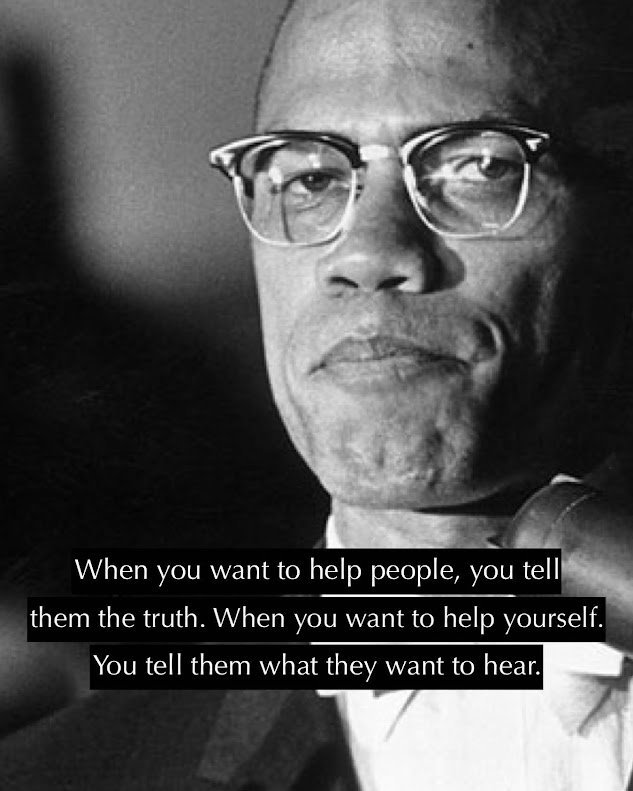
Malcolm says….

This photograph is the property of its respective owner. No copyright infringement intended.

Black Pride & Self-Respect

Malcolm X emphasized that Black people must love themselves first:

“We have been brainwashed, we have been hoodwinked, we have been bamboozled.”

“You can’t hate the roots of a tree and not hate the tree. You can’t hate Africa and not hate yourself.”

“We didn’t land on Plymouth Rock — the rock was landed on us.”

He fought against internalized inferiority and pushed for a mental and spiritual rebirth.


2. Self-Defense & Protection of Black Life

Malcolm rejected passive suffering:

“I am for violence if non-violence means we continue postponing a solution to the American Black man’s problem just to avoid violence.”

“You don’t have a revolution in which you love your enemy.”

His stance was not hatred — it was dignity, safety, and self-preservation.


3. Black Unity

Malcolm believed unity was a divine duty and the key to liberation:

“We need to stop begging the white man for what he cannot give us — freedom.”

“You can’t separate peace from freedom, because no one can be at peace unless he has his freedom.”

He urged Pan-African consciousness and global solidarity.


4. Independence & Self-Determination

He called Black people to build power for themselves:

“If you’re not ready to die for it, put the word ‘freedom’ out of your vocabulary.”

“The future belongs to those who prepare for it today.”


5. The Beauty & Majesty of Blackness

Malcolm preached Black excellence:

“The most disrespected person in America is the Black woman. The most unprotected person in America is the Black woman. The most neglected person in America is the Black woman.”

“You’re not supposed to be so blind with patriotism that you can’t face reality.”

He affirmed Black womanhood, identity, and moral authority.


6. Spiritual Destiny

As his worldview evolved, Malcolm spoke in biblical tones about Black suffering and redemption:

“One day may we all meet together in the light of understanding.”

Toward the end of his life, he emphasized global unity, African sovereignty, and spiritual truth.


Essence of Malcolm X’s Message

Malcolm X said Black people were:

  • A chosen and mighty people
  • Historically oppressed but destined to rise
  • Worthy of dignity, power, and love
  • Capable of creating their own future

His mission was to wake up his people.


In Summary

Malcolm X told Black people:
You are powerful. You are beautiful. Stop apologizing. Rise.

His message remains a prophetic call:

Honor yourself. Protect your people. Know your history. Walk in greatness.

Indigenous People of America

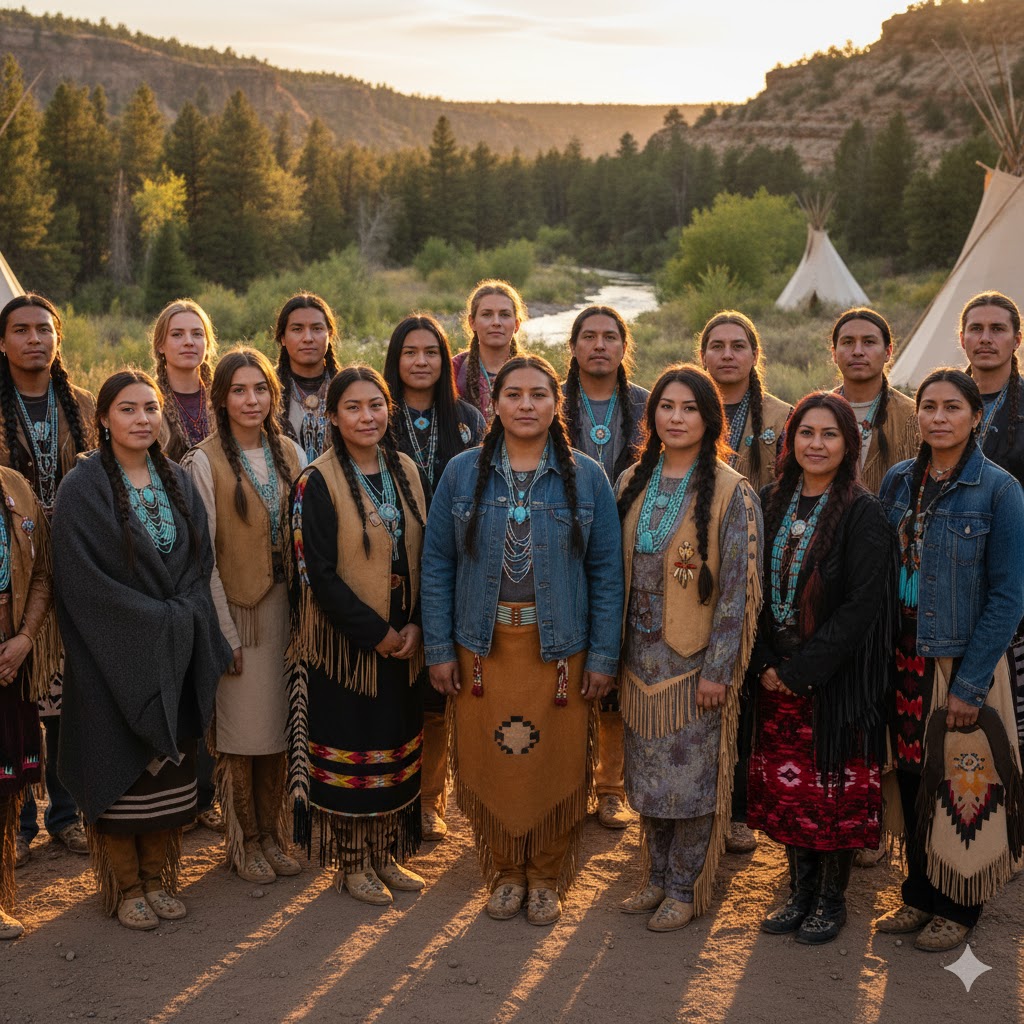
Native American people are the Indigenous peoples of the land now called the United States, and they are known by many names depending on the region and cultural group. The term “Native Americans” is commonly used today, but older names include “American Indians,” “Indigenous Americans,” “First Nations,” and “First Peoples.” Each tribe, however, has its own original name in its own language, often meaning “the people,” “the original ones,” or “human beings.” This diversity reflects the rich cultural and linguistic complexity of Indigenous civilizations long before European arrival.

Native Americans came in a wide range of skin tones, reflecting geographic diversity and ancient migrations. Historical accounts, genetic studies, and artwork created before European contact describe Indigenous peoples as brown-skinned, copper-toned, or deep reddish-brown. Some early explorers described them using terms like “tawny,” “brown,” or “dark.” A small group of historians and Afrocentric scholars argues that some Indigenous groups were Black or had African admixture prior to Columbus, but mainstream anthropology concludes that the first peoples of the Americas descended from ancient Asian populations.

Christopher Columbus’s arrival in 1492 dramatically altered the lives of Indigenous people. Columbus and his crew initially described the Indigenous people of the Caribbean as generous, peaceful, and welcoming. However, his treatment of them quickly turned violent. Columbus enslaved Native men, women, and children, forced them to mine gold, and imposed brutal punishments for failing to meet quotas. Many Indigenous people died from torture, forced labor, and diseases introduced by Europeans. These early actions set the stage for centuries of exploitation and colonization.

The history of Native Americans after Columbus is marked by war, displacement, forced assimilation, and systematic oppression. European settlers pushed Indigenous peoples off their ancestral lands through military force, broken treaties, and deliberate starvation campaigns. Entire communities were destroyed through massacres such as Wounded Knee, Sand Creek, and the Trail of Tears, which forced the Cherokee and other nations to relocate under deadly conditions. These events devastated populations, cultures, and social structures.

Many people ask what happened to the Native Americans, and the answer is complex. Disease brought by Europeans—smallpox, influenza, measles—caused massive population decline. Historians estimate that tens of millions of Indigenous people may have lived in the Americas before 1492, but up to 90% perished within the first century of contact. Survivors were pushed into reservations, stripped of cultural rights, and subjected to assimilation efforts, including boarding schools that prohibited Native languages and traditions.

Regarding reparations, the United States treated Native Americans differently from Black Americans. While Black Americans received no national reparations for slavery, Native Americans received limited forms of compensation in the form of treaties, land rights, and financial settlements—though these were often inadequate or unenforced. The Indian Claims Commission, established in 1946, offered monetary compensation for stolen land, but the payments were small compared to the value of what was taken. Many Indigenous activists note that no amount of money can compensate for genocide, cultural loss, and the destruction of entire nations.

Compared to Black people, Native Americans were treated through a system of removal and replacement, while Black people were subjected to chattel slavery and generational bondage. Both groups experienced racial violence, dehumanization, and systemic oppression, but the mechanisms differed. Enslaved Africans were forced into labor, while Indigenous people were pushed off their land or exterminated. Yet both suffered under white supremacy and colonial expansion.

The languages spoken by Native Americans before colonization were vast and varied. More than 300 Indigenous languages existed in North America, belonging to major language families such as Algonquian, Iroquoian, Siouan, Athabaskan, Uto-Aztecan, and Muskogean. Many tribes today work to preserve or revive these languages through immersion schools and cultural programs.

How Native Americans arrived in the Americas is a continuing subject of research. The most widely accepted theory holds that ancient peoples migrated from Siberia into Alaska across a land bridge called Beringia around 15,000–20,000 (not sure if this is true the amount of years)years ago. Alternative theories suggest coastal migration by boat or earlier arrivals, but these remain debated. Regardless of the exact method, Indigenous peoples developed sophisticated civilizations long before European contact.

The land now known as America had many Indigenous names before colonization. Different tribes had different names for regions, but the continent itself had no single unified name since there was no single unified nation. The English name “America” comes from Amerigo Vespucci, an Italian navigator whose writings incorrectly suggested he discovered a “New World.” European mapmakers later used his name to describe the continents.

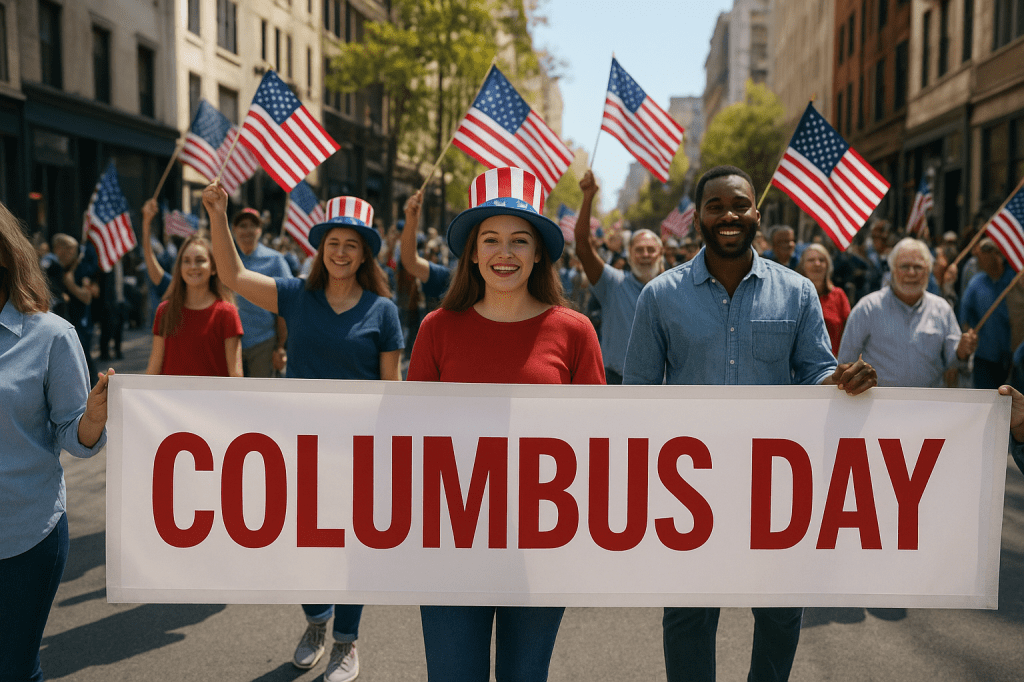
Columbus Day has a complicated and painful history. First celebrated in the late 18th century, the holiday gained national recognition in 1937 as a celebration of Italian American heritage and Columbus’s voyages. However, for Native Americans, Columbus Day represents colonization, enslavement, massacres, and the beginning of genocide. This has led many states and cities to replace Columbus Day with Indigenous Peoples’ Day to honor Native resilience and history.

The treatment of Native Americans varied by region and time period, but their experiences consistently reflected displacement, violence, and cultural suppression. Treaties were broken, families were separated, and children were taken from their homes to be “Americanized.” Yet Indigenous peoples survived through resistance, resilience, and a commitment to preserving their identity.

The debate over whether some Indigenous peoples were Black adds another layer to the discussion. Some scholars point to early European reports describing “dark-skinned” or “Black” Native peoples, while others argue that these descriptions referred to natural variations in skin tone among Indigenous populations. Most anthropologists conclude that any similarity to African features developed independently.

Native Americans today continue to fight for sovereignty, land rights, cultural preservation, and justice. Their survival in spite of centuries of oppression is a testament to their strength. Across the United States, Indigenous nations maintain vibrant cultures, languages, and traditions, ensuring that the legacy of their ancestors endures.

The question of reparations remains ongoing. Many Indigenous communities seek not only financial compensation but also land restoration, legal recognition, and protection of sacred sites. Some progress has been made, but the historical wounds run deep.

Ultimately, Native American history is central to the story of America. Their experiences reveal the contradictions of a nation built on ideals of freedom while practicing colonization and racial hierarchy. By understanding this history, modern society can better honor Indigenous contributions and acknowledge the injustices committed against them.

The legacy of Columbus is deeply contested. While some view him as an explorer, others see him as the initiator of a brutal colonial system. His actions toward Indigenous peoples—including enslavement, torture, and exploitation—serve as a stark reminder of the destructive impact of European colonization.

Native American history is not just a story of suffering but also one of survival, identity, and endurance. Through cultural revival, language preservation, and political activism, Indigenous peoples continue to shape the future. Their presence and contributions remain foundational to the story of the Americas.


References

Calloway, C. G. (2012). First peoples: A documentary survey of American Indian history (4th ed.). Bedford/St. Martin’s.

Dunbar-Ortiz, R. (2014). An Indigenous peoples’ history of the United States. Beacon Press.

Loewen, J. W. (2007). Lies my teacher told me: Everything your American history textbook got wrong. The New Press.

Mann, C. C. (2005). 1491: New revelations of the Americas before Columbus. Vintage Books.

Stannard, D. E. (1992). American Holocaust: The conquest of the New World. Oxford University Press.

Thornton, R. (1987). American Indian Holocaust and survival. University of Oklahoma Press.

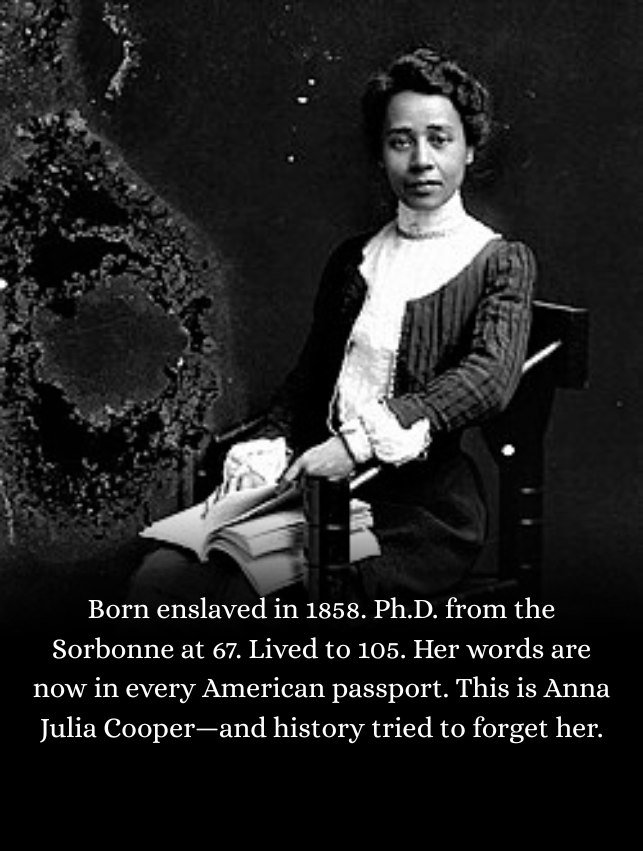
The Slave Files: Anna Julie Cooper

This photograph is the property of its respective owner. No copyright infringement intended.

Anna Julia Cooper was born on August 10, 1858 in Raleigh, North Carolina

Anna Julia Cooper was an influential African American educator, scholar, and author whose life and work left a profound impact on Black education and intellectual thought. Born in the late 19th century, she emerged during a period of systemic oppression and racial discrimination, when opportunities for African Americans—particularly women—were severely limited. Despite these obstacles, Cooper dedicated her life to uplifting her community through education, moral leadership, and scholarly contributions.

Cooper’s early life was marked by a determination to pursue learning despite societal barriers. She believed that education was a fundamental tool for liberation and empowerment. Her passion for teaching and scholarship became a central theme in her life, guiding her professional endeavors and public influence.

As an educator, Julia Cooper worked tirelessly to improve access to quality schooling for African Americans. She advocated for rigorous academic standards, the establishment of Black educational institutions, and curricula that fostered critical thinking and self-worth among students. Her efforts emphasized the transformative power of knowledge as a means to resist systemic oppression.

In addition to teaching, Cooper was a prolific writer and thinker. She authored essays and treatises on the moral, social, and intellectual development of African Americans, emphasizing the necessity of self-respect, cultural pride, and educational attainment. Her writings served as a blueprint for Black uplift during the early 20th century.

Cooper also engaged in public speaking and community organizing. She traveled widely, addressing audiences on the importance of education, civic responsibility, and moral development. Her speeches encouraged African Americans to embrace their intellectual potential and challenge societal narratives that sought to marginalize them.

Her impact extended to her mentorship of younger generations of Black scholars and educators. By providing guidance, encouragement, and access to educational resources, Cooper helped cultivate a new class of African American leaders committed to intellectual excellence and social progress.

Anna Julia Cooper’s work was informed by a deep moral and spiritual philosophy. She believed that personal character and ethical integrity were inseparable from educational and professional achievement. Her vision emphasized holistic development—intellectual, moral, and civic—as essential to individual and communal advancement.

Throughout her career, Cooper confronted racism, sexism, and social prejudice. Her ability to navigate these systemic challenges while achieving professional recognition serves as a testament to her resilience and strategic acumen. She became a symbol of Black female agency in a society structured to limit her potential.

Her legacy is visible in the educational institutions she influenced, the students she inspired, and the broader discourse on African American intellectual empowerment. Cooper’s life exemplifies the potential for knowledge and moral courage to transform communities and challenge entrenched inequalities.

Anna Julia Cooper remains a vital figure in African American history, her life and work illustrating the enduring power of education, scholarship, and leadership in advancing justice and equality. Her contributions continue to inspire educators, students, and leaders committed to intellectual rigor and moral responsibility.


References

  1. Gates, H. L., & Higginbotham, E. B. (2014). African American lives. Oxford University Press.
  2. Gutman, H. G. (1976). The black family in slavery and freedom, 1750-1925. Pantheon Books.
  3. Kelley, R. D. G. (1994). Race rebels: Culture, politics, and the Black working class. Free Press.
  4. Theoharis, J. (2018). A more beautiful and terrible history: The uses and misuses of civil rights history. Beacon Press.
  5. Wiggins, W. H. (2000). The intellectual tradition of African Americans: A historical overview. Greenwood Press.

Dilemma: Hate Crimes

A Scholarly Examination of Systemic Violence and Racial Terror

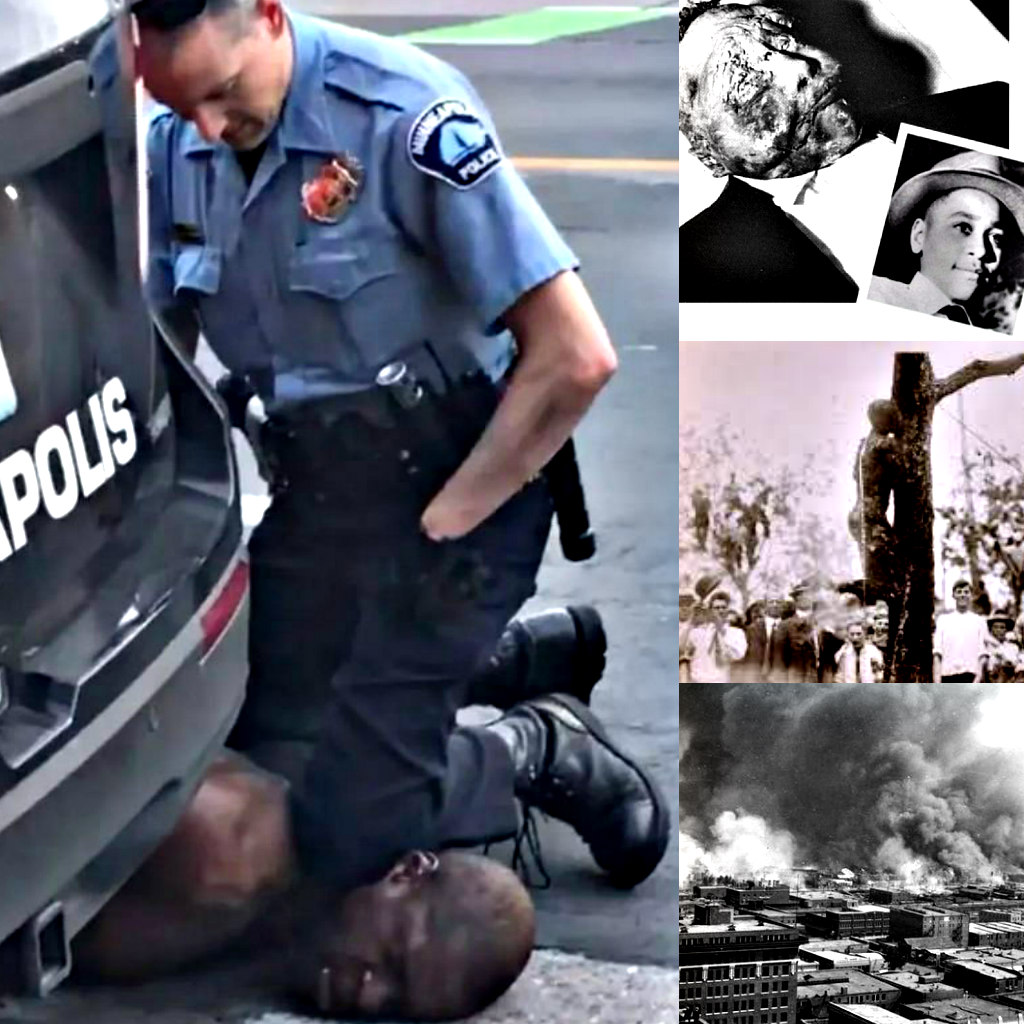
These photographs are the property of their respective owners. No copyright infringement intended.

The history of Black people in America is tragically punctuated by acts of racial terror, lynching, and systemic injustice. Hate crimes against African Americans have not only taken individual lives but also reinforced centuries of inequality and fear. This essay highlights ten of the most significant hate crimes in American history, revealing a consistent pattern of racialized violence that continues to reverberate in the present day.

The lynching of Emmett Till in 1955 stands as one of the most notorious hate crimes in U.S. history. At only fourteen years old, Till was brutally murdered in Mississippi for allegedly whistling at a white woman. His mutilated body, displayed publicly by his mother, Mamie Till-Mobley, exposed the horror of racial hatred to the world. The acquittal of his murderers by an all-white jury demonstrated the deep complicity of the justice system in racial violence (Whitfield, 1988).

The 1921 Tulsa Race Massacre remains one of the most devastating racial attacks on Black prosperity. White mobs destroyed the prosperous Greenwood District, known as “Black Wall Street,” killing an estimated 300 people and displacing thousands. The massacre wiped out decades of economic progress and reinforced the racial hierarchy that dominated early 20th-century America (Ellsworth, 1992).

Another brutal episode occurred during the Rosewood Massacre of 1923 in Florida, where a false accusation against a Black man led to the burning of an entire Black town. Dozens were killed, and survivors fled into swamps to escape white mobs. The incident was later recognized by the state of Florida, which awarded reparations to survivors decades later (D’Orso, 1996).

The Birmingham Church Bombing of 1963, which killed four young girls—Addie Mae Collins, Denise McNair, Carole Robertson, and Cynthia Wesley—shocked the conscience of the nation. The bombing, carried out by Ku Klux Klan members, occurred during the height of the civil rights movement and symbolized white resistance to desegregation and Black empowerment (McWhorter, 2001).

The murder of Medgar Evers in 1963, a civil rights leader and NAACP field secretary in Mississippi, represented another targeted act of racial terrorism. Evers was assassinated in his driveway for his efforts to secure voting rights and challenge segregation. His death galvanized the civil rights movement and intensified national awareness of southern racism (Marable, 1984).

The lynching of Jesse Washington in 1916 in Waco, Texas, was one of the most barbaric acts of mob violence ever recorded. A crowd of thousands gathered to watch as Washington was tortured and burned alive. The atrocity highlighted the normalization of public lynching as entertainment and a tool of white supremacy (Dray, 2002).

The Central Park Five case (1989) exposed how systemic racism can manifest within the criminal justice system without physical lynching. Five Black and Latino teenagers were wrongfully convicted of raping a white woman in Central Park. Media bias, coerced confessions, and racial profiling led to years of imprisonment before their exoneration. The case illustrated how racial fear could replace evidence in shaping narratives (Burns, 2011).

The Charleston Church Massacre in 2015 further proved that racial hatred still thrives in modern America. Dylann Roof entered the historic Emanuel AME Church and murdered nine Black worshipers during Bible study. This act of terror targeted a sacred space and echoed the domestic terrorism once carried out by the Ku Klux Klan (Thompson, 2016).

The murder of James Byrd Jr. in 1998 in Jasper, Texas, was a gruesome reminder that lynching never truly ended. Byrd was chained to the back of a truck and dragged for miles by three white supremacists. His death prompted national outrage and led to the 2009 Matthew Shepard and James Byrd Jr. Hate Crimes Prevention Act, expanding federal hate crime laws (Coleman, 2010).

The killing of George Floyd in 2020 reignited the global fight against racial injustice. Floyd’s death, captured on video as a white police officer knelt on his neck for over nine minutes, symbolized centuries of institutionalized violence against Black bodies. His dying words, “I can’t breathe,” became a rallying cry for the Black Lives Matter movement, leading to one of the largest civil rights protests in modern history (Clayton, 2020).

Each of these incidents illustrates how racism in America transcends time, geography, and form—manifesting in lynchings, massacres, police brutality, and judicial bias. The persistence of hate crimes underscores that racial violence is not an aberration but a fundamental feature of the American racial order.

Historically, these acts were often justified or ignored by law enforcement and political institutions, revealing systemic complicity. The failure to hold perpetrators accountable reinforced cycles of violence and mistrust within the Black community (Alexander, 2010).

Modern hate crimes, including the murders of Trayvon Martin, Ahmaud Arbery, and Breonna Taylor, continue this legacy. Each incident reflects a continuum of racialized fear and control rooted in America’s original sin—slavery and white supremacy (Taylor, 2016).

Sociologists argue that hate crimes against Black Americans are not merely individual acts but collective expressions of dominance intended to maintain racial hierarchy (Feagin, 2013). The violence communicates that Black progress and autonomy are met with punishment.

Media framing has often contributed to victim-blaming and the criminalization of Black identity. From Emmett Till to George Floyd, victims are frequently portrayed as threatening or non-compliant, a tactic that subtly absolves perpetrators (Entman & Rojecki, 2000).

Education about these events remains essential for dismantling ignorance and denial. Erasing or minimizing racial atrocities fosters a dangerous cultural amnesia that perpetuates prejudice (Loewen, 1995).

The psychological impact on Black Americans—manifested in generational trauma, mistrust of institutions, and internalized fear—continues to affect community health and cohesion (Comas-Díaz et al., 2019).

Despite this painful history, Black resilience endures. The collective response to racial violence has birthed justice movements, from civil rights to Black Lives Matter, reaffirming the enduring spirit of a people determined to live free and equal.

Ultimately, these ten hate crimes are not isolated tragedies but interconnected chapters in the story of America’s racial conscience. Understanding them demands not only remembrance but transformation—a collective moral reckoning that ensures such hatred never again defines the nation’s soul.


References

Alexander, M. (2010). The New Jim Crow: Mass Incarceration in the Age of Colorblindness. New Press.
Burns, S. (2011). The Central Park Five: The Untold Story Behind One of New York City’s Most Infamous Crimes. Knopf.
Clayton, J. (2020). George Floyd and the Rebirth of the Movement for Black Lives. Journal of Race and Social Justice, 5(2), 45–58.
Coleman, W. (2010). Hate Crimes in America: James Byrd Jr. and Beyond. Oxford University Press.
Comas-Díaz, L., Hall, G. N., & Neville, H. A. (2019). Racial trauma: Theory, research, and healing. American Psychologist, 74(1), 1–12.
D’Orso, M. (1996). Like Judgment Day: The Ruin and Redemption of a Town Called Rosewood. Perennial.
Dray, P. (2002). At the Hands of Persons Unknown: The Lynching of Black America. Random House.
Ellsworth, S. (1992). Death in a Promised Land: The Tulsa Race Riot of 1921. LSU Press.
Entman, R. M., & Rojecki, A. (2000). The Black Image in the White Mind: Media and Race in America. University of Chicago Press.
Feagin, J. R. (2013). Racist America: Roots, Current Realities, and Future Reparations. Routledge.
Loewen, J. W. (1995). Lies My Teacher Told Me: Everything Your American History Textbook Got Wrong. New Press.
Marable, M. (1984). Race, Reform, and Rebellion: The Second Reconstruction in Black America. University Press of Mississippi.
McWhorter, D. (2001). Carry Me Home: Birmingham, Alabama, the Climactic Battle of the Civil Rights Revolution. Simon & Schuster.
Taylor, K.-Y. (2016). From #BlackLivesMatter to Black Liberation. Haymarket Books.
Thompson, E. (2016). Charleston shooting: White supremacy, religion, and the politics of forgiveness. Journal of American Culture, 39(4), 385–392.
Whitfield, S. J. (1988). A Death in the Delta: The Story of Emmett Till. Johns Hopkins University Press.

ChatGPT can make mistakes. Check important info.

Pagan Holiday Series: The Celebration of Columbus Day – Unmasking the Truth Behind a Controversial Holiday

Columbus Day, celebrated on the second Monday in October in the United States, has long been promoted as a day to honor Christopher Columbus, the Italian explorer credited with “discovering” the Americas in 1492. Yet, beneath this national holiday lies a dark and painful legacy of colonization, genocide, and enslavement. To understand why many now question or reject the celebration of Columbus Day, we must revisit history through the eyes of the oppressed — the Indigenous peoples of the Americas and the enslaved Africans who suffered under European conquest.

Christopher Columbus, born in Genoa around 1451, was an ambitious navigator who sought a western sea route to Asia. Backed by Spain’s monarchs, Ferdinand and Isabella, his 1492 voyage was not a mission of peace or discovery, but one driven by greed, power, and imperial expansion. When Columbus landed in the Caribbean, he mistakenly believed he had reached the East Indies. He called the native people “Indians,” beginning a legacy of misnaming and misunderstanding that persists to this day.

Columbus’s arrival marked the beginning of a brutal system of colonization. The Taíno and Arawak peoples of Hispaniola (modern-day Haiti and the Dominican Republic) were among the first to encounter the Europeans. What followed was devastation. Columbus enslaved the Indigenous people, forced them to mine gold, and imposed cruel punishments on those who resisted. His regime was marked by torture, mutilation, and mass murder, documented even by his contemporaries (Zinn, 1980).

Within a few short decades, the Indigenous population of the Caribbean had been nearly wiped out through violence, disease, and forced labor. Columbus’s legacy was not one of discovery, but of destruction. His expeditions paved the way for centuries of European exploitation across the Americas, leading to the transatlantic slave trade that forcibly brought millions of Africans to the New World. Thus, both Native Americans and Africans suffered under systems of oppression rooted in Columbus’s so-called “discovery.”

Despite this horrific history, Columbus was later glorified as a national hero. The idea of celebrating him gained traction in the late 19th century, particularly among Italian-Americans who viewed him as a symbol of ethnic pride in a time of widespread discrimination. In 1937, President Franklin D. Roosevelt, under pressure from the Knights of Columbus (a Catholic fraternal organization), made Columbus Day a federal holiday. The decision was political, not moral — meant to unite Catholics and immigrants under a banner of patriotism.

However, this government-sanctioned glorification of Columbus ignored the historical atrocities committed under his rule. The myth of Columbus as a brave explorer who brought “civilization” to the New World perpetuated Eurocentric narratives that erased Indigenous voices and justified colonial domination. This narrative served to validate white supremacy, expansionism, and the exploitation of both land and people.

For African Americans, Columbus Day represents a celebration of the very system that enslaved and dehumanized their ancestors. The same European expansion that began with Columbus led directly to the transatlantic slave trade, the Middle Passage, and centuries of racial oppression. In this light, celebrating Columbus Day is akin to celebrating the foundations of systemic racism.

For Native Americans, the day symbolizes genocide and cultural annihilation. Entire civilizations were decimated as European powers claimed their lands, destroyed their spiritual systems, and imposed foreign rule. The diseases brought by European settlers wiped out millions, and survivors were forced into reservations centuries later. Columbus became the emblem of Indigenous suffering — not freedom or progress.

The modern push to replace Columbus Day with Indigenous Peoples’ Day represents a moral reckoning with this painful history. Indigenous activists, scholars, and allies have fought tirelessly to reclaim the narrative, emphasizing survival, resilience, and the truth about colonization. Cities and states across the U.S., including California, Minnesota, and New Mexico, have officially recognized Indigenous Peoples’ Day in place of Columbus Day.

The shift toward Indigenous Peoples’ Day reflects a growing awareness of historical injustice and a rejection of whitewashed history. It honors the first inhabitants of the Americas and acknowledges their enduring contributions to humanity, spirituality, and ecological wisdom. It also calls for repentance and reconciliation for the centuries of violence inflicted by European colonization.

Columbus’s voyages cannot be separated from their consequences — the destruction of Indigenous cultures, the theft of land, and the enslavement of Africans. His story symbolizes the birth of a global system of exploitation that shaped modern capitalism and racial hierarchies. Celebrating him, therefore, is not a tribute to exploration but a denial of historical truth.

Many historians now argue that Columbus should be remembered, not revered. His actions and their aftermath belong in the history books as a warning against the dangers of greed and ethnocentrism, not as a model of heroism. The celebration of Columbus Day perpetuates myths that distort the origins of the Americas and obscure the suffering of millions.

For Black people, the connection to Columbus’s legacy is direct and devastating. The European conquest he initiated laid the groundwork for the dehumanization of Africans, justified through false notions of racial superiority. It began a cycle of exploitation that continues to manifest in systemic inequalities today.

True historical education must include both the achievements and atrocities of the past. To celebrate Columbus without acknowledging the cost of his conquests is to dishonor those who perished because of them. It is to endorse the continued erasure of Black and Indigenous histories in favor of colonial pride.

The time has come for America to replace glorification with truth-telling. Recognizing Indigenous Peoples’ Day is not about erasing history — it is about correcting it. It is about lifting up the stories of those who were silenced and acknowledging that the “discovery” of America came at a horrific human price.

Ultimately, the celebration of Columbus Day reflects who society chooses to honor. Will we continue to idolize an oppressor, or will we honor the resilience of those who survived his legacy? The answer to that question defines not only our understanding of history but our commitment to justice and truth.


References (APA Style):
Zinn, H. (1980). A People’s History of the United States. Harper & Row.
Loewen, J. W. (1995). Lies My Teacher Told Me: Everything Your American History Textbook Got Wrong. The New Press.
Dunbar-Ortiz, R. (2014). An Indigenous Peoples’ History of the United States. Beacon Press.
Sale, K. (1990). The Conquest of Paradise: Christopher Columbus and the Columbian Legacy. Alfred A. Knopf.
Churchill, W. (1997). A Little Matter of Genocide: Holocaust and Denial in the Americas, 1492 to the Present. City Lights.

Dilemma: Slavery – Chains Across the Waters: The Transatlantic Slave Trade, Biblical Prophecy, and the Legacy of Black Enslavement

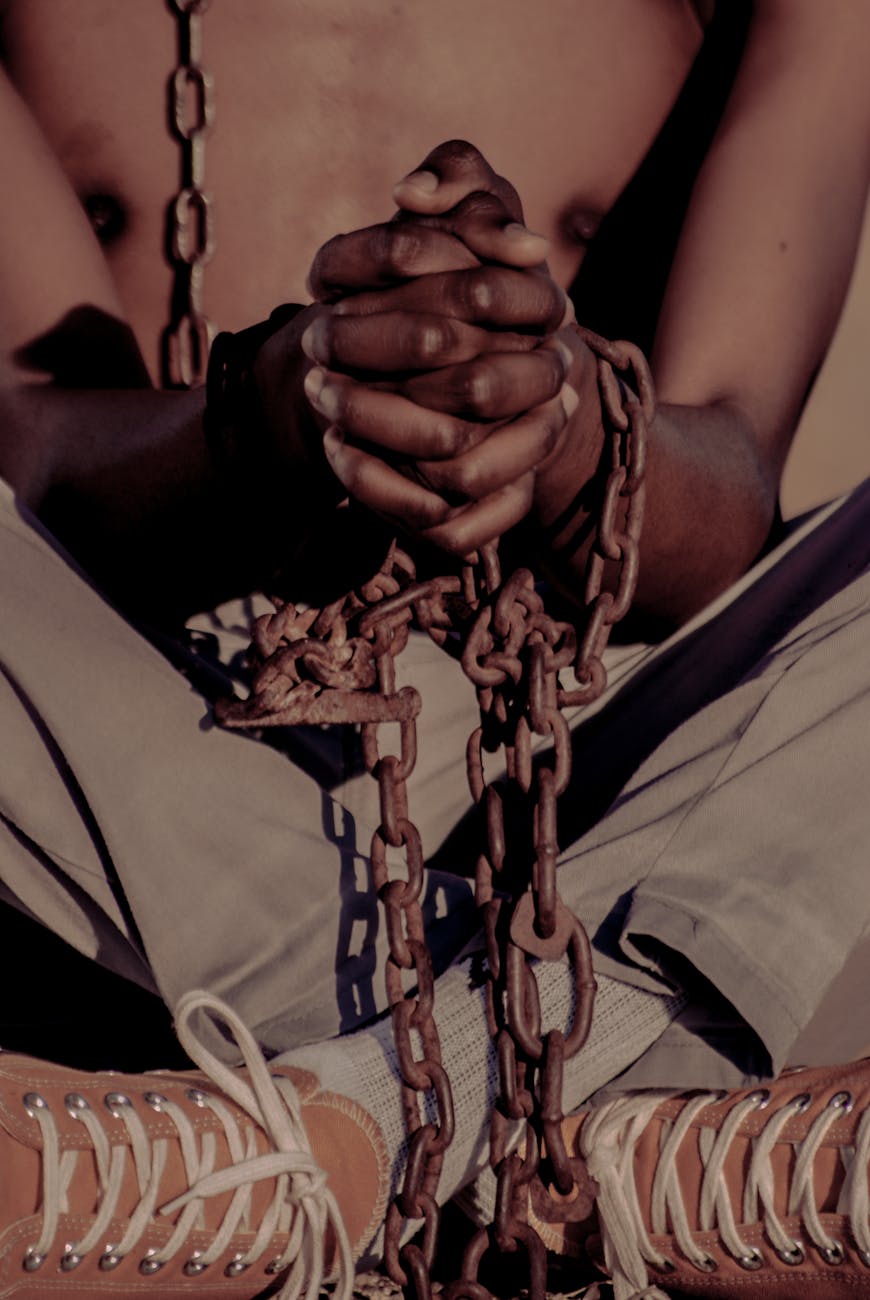
Photo by Thato Moiketsi on Pexels.com

“We Came in the Bottom of Ships”

(A Poem About Slavery)

We came in the bottom of ships, not dreams,
Chained like thunder beneath wooden beams,
Torn from kingdoms kissed by the sun,
From the drums of Dahomey, to the rivers of the Congo run.

We were Igbo, Ashanti, Hebrew, and Ewe,
Mothers of wisdom, warriors of sway,
Fathers of iron, scribes of the scroll,
Our names were gold—but they bartered our soul.

The wind was not freedom but fury and foam,
As they stacked our breath in a floating tomb.
“Amistad,” “Brookes,” and “Jesus” they sailed,
Yet Christ wept each time those hulls prevailed.

We sang in the dark where no sun reached,
We prayed in a tongue they could not breach.
Deuteronomy cried from the sacred page,
“You shall go into Egypt again”—the prophecy aged.

They whipped us at dawn, and raped through the night,
Took our children, and robbed us of sight.
Taught us to bow and forget who we were,
Yet our blood remembered—we came from the Word.

On blocks we stood like cattle and coin,
Sold by the pound, bruised in the groin.
Names lost—Tamar, Kofi, Yaira, Adebayo—
Now called Jack, or Belle, or Uncle Sam’s shadow.

We built this land—its wealth, its walls,
With cotton-picked hands and freedom’s calls.
We bled in silence, we ran, we fought,
We learned to read, though they said we could not.

They broke our backs, but not our will,
For Harriet moved by the Spirit still.
And Frederick wrote fire with a bleeding pen,
While Nat Turner rose like a lion again.

Now we dance in Juneteenth’s flame,
Remembering each forgotten name.
From chains to chants, from songs to speech,
Still reaching the freedom they dared not teach.


Closing Lines

So when you ask where our story begins,
It does not start in chains or sins—
But in a garden, in a scroll, in ancient breath—
Slavery was a shadow. But we are not death.
We are prophecy walking. We are Judah’s drum.
We are the voice that says: “Let my people come.”

.


The transatlantic slave trade remains one of the darkest stains in human history—marked by over four centuries of systemic oppression, brutality, and the forced migration of millions of African men, women, and children. Black people were enslaved in the Americas for approximately 246 years, from 1619 to 1865, and the aftershocks of this atrocity continue to reverberate in modern society. The origin, scale, and spiritual context of this historical trauma require a deep examination—of not only the ships and auction blocks but also the prophetic echoes found in Scripture, particularly Deuteronomy 28.


Origins of African Slavery: Historical and Spiritual Roots

The transatlantic slave trade began in the late 15th century, with European powers—especially Portugal, Britain, Spain, France, and the Netherlands—establishing trading posts along the western coasts of Africa. Africans were kidnapped or sold by rival tribes, many through warfare or debt bondage, and transported across the Atlantic Ocean in horrific conditions.

According to Deuteronomy 28:68 (KJV):

“And the Lord shall bring thee into Egypt again with ships, by the way whereof I spake unto thee, Thou shalt see it no more again: and there ye shall be sold unto your enemies for bondmen and bondwomen, and no man shall buy you.”

This verse is widely cited in Hebraic Israelite theology as a prophetic reference to the transatlantic slave trade, wherein descendants of the biblical Israelites—believed by many to be the so-called African Americans—would be carried in ships to a new “Egypt” (a house of bondage).


Slave Ports and African Origins

Most of the enslaved Africans came from West and Central Africa, regions that include modern-day:

  • Ghana
  • Nigeria
  • Benin
  • Senegal
  • Angola
  • Sierra Leone

The major slave embarkation points were on the Ivory Coast, Gold Coast, Slave Coast, and Bight of Biafra.

There is evidence that Shemites—descendants of Shem, one of Noah’s sons—lived in parts of Africa, particularly among Hebrew-speaking tribes such as the Igbo of Nigeria, the Akan of Ghana, and others who retained oral traditions, circumcision practices, and laws similar to ancient Israel (Hotep, 2016).


Slave Ships and Death at Sea

The names of infamous slave ships included:

  • The Brookes
  • The Henrietta Marie
  • The Jesus of Lübeck (ironically owned by Queen Elizabeth I)
  • La Amistad

Conditions aboard these ships were inhumane. Africans were shackled, stacked tightly in cargo holds with little air, and barely fed. It is estimated that at least 1.8 million of the 12.5 million enslaved Africans died during the Middle Passage (Eltis & Richardson, 2010).

The story of La Amistad (1839) stands out as one of resistance. Enslaved Mende Africans, led by Sengbe Pieh (Cinqué), rebelled against their Spanish captors. The case reached the U.S. Supreme Court, which ruled in favor of the Africans’ freedom—marking a rare legal victory for Black resistance.


Slavery in America and the World

Slavery existed globally, but the transatlantic slave trade was uniquely brutal and racialized. Other nations that held African slaves included:

  • Brazil
  • Cuba
  • The Caribbean colonies
  • Spain
  • Portugal
  • France
  • The Netherlands

In North America, enslaved people were forced into:

  • Plantation labor (cotton, sugar, tobacco)
  • Domestic service
  • Skilled crafts
  • Childbearing (as a source of wealth)

They were often sold at public slave auctions, stripped naked, examined like livestock, and renamed with European or Anglo-Christian names. Most were forced to abandon their original Hebrew names, cultural identities, and languages, such as Ewe, Igbo, Wolof, Yoruba, and Akan.


Sexual Violence and Psychological Warfare

Slavery in America was not only physical but psychological and sexual. “Buck breaking” was a barbaric method where enslaved Black men were raped or publicly humiliated to break their spirit and deter rebellion. It is hard to quantify, but tens of thousands of Black women were also raped by white slave masters, often forced to bear children who were legally still enslaved under the status of the mother (partus sequitur ventrem).


The Abolition of Slavery

Slavery in the United States was abolished in 1865 with the ratification of the 13th Amendment, pushed forward by the efforts of abolitionists like Frederick Douglass, Harriet Tubman, and William Lloyd Garrison, as well as President Abraham Lincoln‘s Emancipation Proclamation (1863).


Slave Narratives and Overcoming

One of the most famous narratives is that of Harriet Jacobs, author of Incidents in the Life of a Slave Girl, who detailed her harrowing experiences as a sexually abused enslaved woman.

Another is Frederick Douglass, who escaped slavery, taught himself to read, and became one of the greatest orators and writers in American history. His book Narrative of the Life of Frederick Douglass (1845) exposed the cruelty of slavery and helped ignite the abolitionist movement.


Modern Black Celebration and Resilience

Today, Black Americans honor their ancestors and freedom through:

  • Juneteenth (June 19th, the date when the last slaves in Texas were freed in 1865)
  • Black History Month
  • Kwanzaa
  • Passover Celebrations (among Hebrew Israelites)

Is the Condition of Black People Better Today?

While legal slavery is abolished, systemic racism, mass incarceration, police brutality, and economic disparities persist. Nevertheless, the resilience, innovation, and cultural power of Black people have reshaped nations—from political powerhouses like Barack Obama to cultural icons like Maya Angelou and Malcolm X.


Conclusion

Slavery was not merely a historical event; it was a fulfillment of biblical prophecy, a global enterprise fueled by greed and racial supremacy, and a foundational trauma in the American story. Understanding its full scope—both physically and spiritually—allows us to honor those who perished, those who resisted, and those who still rise today.


References

  • Berlin, I. (2003). Generations of Captivity: A History of African-American Slaves. Harvard University Press.
  • Deuteronomy 28:68. (n.d.). The Holy Bible, King James Version.
  • Eltis, D., & Richardson, D. (2010). Atlas of the Transatlantic Slave Trade. Yale University Press.
  • Douglass, F. (1845). Narrative of the Life of Frederick Douglass, an American Slave. Boston: Anti-Slavery Office.
  • Jacobs, H. (1861). Incidents in the Life of a Slave Girl. Boston: Thayer & Eldridge.
  • Hotep, D. (2016). The African Hebrews: Biblical Israelites in Africa. Afrikan Mind Publishing.
  • Lovejoy, P. E. (2000). Transformations in Slavery: A History of Slavery in Africa. Cambridge University Press.