All posts by The Brown Girl Dilemma

I welcome everyone— women and men of all nationalities—to read, reflect, and gather insight across the many topics about black people explored here. To the Brown girl and the Brown boy who walk into rooms already carrying history, beauty, and burden—this space is for you. You stand at the intersection of visibility and erasure, desirability and disregard, reverence and resistance, often praised, questioned, desired, dismissed, and debated all at once. In a world that studies your skin more than your soul and distorts what God designed with intention, may truth, healing, and divine purpose meet you here. This is a conversation created to name your journey without silencing your truth, to restore what society has tried to redefine, and to remind you that your worth was never the problem—only the world’s inability to honor it.

Dilemma: Double Consciousness

The Psychological Struggle of Identity in Black America

Double consciousness is a sociological and psychological concept describing the internal conflict experienced by African Americans who must navigate their identity within a society shaped by racial inequality. The term was first introduced by W. E. B. Du Bois in his groundbreaking book The Souls of Black Folk. Du Bois used the concept to explain how Black Americans often feel divided between their own sense of self and the identity imposed upon them by a racially prejudiced society.

Du Bois famously described double consciousness as a feeling of “two-ness.” According to his explanation, African Americans exist as both Black and American simultaneously, yet these identities are often placed in conflict by social structures that marginalize Blackness. This duality creates a constant awareness of how one is perceived by the dominant culture.

The origins of double consciousness can be traced to the historical conditions created by slavery and racial hierarchy in the United States. From the seventeenth century onward, Black people were legally and socially defined as inferior within a system designed to maintain white supremacy. These conditions forced African Americans to constantly interpret their lives through the lens of both their own experiences and the expectations of a racially stratified society.

During the era of slavery, African Americans were denied basic human rights and subjected to brutal labor systems that treated them as property. Although enslaved people maintained rich cultural traditions and strong communal bonds, they were forced to exist within a social order that rejected their humanity. This contradiction laid the foundation for the psychological tension that Du Bois later described as double consciousness.

Following the American Civil War and the abolition of slavery, African Americans entered a new phase of struggle during Reconstruction. Although freedom brought hope for equality, the reality of discrimination, violence, and political backlash quickly became evident. Black Americans were technically citizens but continued to face widespread exclusion from economic and political power.

The development of Jim Crow laws further intensified the experience of double consciousness. These laws enforced racial segregation and reinforced the idea that Black Americans were second-class citizens. In everyday life, African Americans had to constantly navigate spaces where their presence was restricted or stigmatized.

Double consciousness affected nearly every aspect of social life. Black individuals often felt compelled to monitor their speech, behavior, and appearance in order to avoid reinforcing negative stereotypes. This heightened awareness created a psychological burden that required constant self-regulation.

Education was one area where the tension of double consciousness became particularly visible. African Americans pursued education as a pathway to advancement and empowerment, yet many educational institutions were structured around Eurocentric values that marginalized Black history and culture. Students often learned to succeed within systems that did not fully acknowledge their identity.

The workplace also reflected the pressures of double consciousness. Many Black professionals found themselves navigating predominantly white environments where they felt compelled to prove their competence repeatedly. This experience sometimes required balancing cultural authenticity with professional expectations shaped by white norms.

Cultural expression became one way that African Americans resisted the limitations imposed by double consciousness. Literature, music, art, and religion provided spaces where Black identity could be affirmed and celebrated. Movements such as the Harlem Renaissance allowed Black artists and intellectuals to explore and redefine cultural identity.

The concept of double consciousness also influenced political activism. African American leaders recognized that achieving equality required challenging both external discrimination and internalized perceptions shaped by racism. Activists worked to redefine Black identity in ways that emphasized dignity, strength, and intellectual achievement.

The civil rights movement of the twentieth century further highlighted the tensions of double consciousness. Leaders such as Martin Luther King Jr. encouraged African Americans to demand full citizenship and equality while maintaining moral and cultural integrity. Their efforts helped dismantle many legal forms of segregation.

Despite these advancements, the psychological impact of double consciousness did not disappear. Many African Americans continued to experience subtle forms of discrimination, social bias, and unequal opportunities. As a result, the awareness of being viewed through the lens of race remained a persistent reality.

In modern society, double consciousness often appears in conversations about representation and identity. African Americans frequently navigate expectations from both their own communities and broader society. Balancing these expectations can create complex questions about authenticity and belonging.

Media representation has also influenced the experience of double consciousness. For many years, portrayals of Black people in film, television, and literature were shaped by stereotypes that reinforced negative perceptions. These images contributed to the external gaze that Du Bois described.

Social mobility sometimes intensifies the experience of double consciousness. As African Americans enter professional fields historically dominated by whites, they may find themselves negotiating cultural differences between their personal backgrounds and workplace environments.

At the same time, double consciousness has also fostered resilience and creativity within the Black community. The ability to understand multiple perspectives has contributed to rich intellectual traditions, artistic innovation, and social leadership.

Many scholars argue that the concept remains relevant for understanding race relations today. Issues such as systemic inequality, representation, and cultural identity continue to shape how African Americans navigate society.

Importantly, Du Bois did not view double consciousness solely as a burden. He believed that the ability to see the world from multiple perspectives could also offer unique insight and moral clarity. This dual awareness could empower African Americans to challenge injustice and imagine new possibilities for society.

Ultimately, double consciousness reflects the broader struggle for dignity and equality in a nation built on racial divisions. It captures the psychological complexity of living within a society that simultaneously claims ideals of freedom while historically denying them to many of its citizens.

Understanding double consciousness helps illuminate the historical and contemporary experiences of African Americans. By examining the origins and impact of this concept, scholars and citizens alike can better appreciate the resilience, creativity, and determination that have shaped the Black American journey.


References

Du Bois, W. E. B. (1903). The Souls of Black Folk. A.C. McClurg & Co.

Franklin, J. H., & Moss, A. A. (2000). From Slavery to Freedom: A History of African Americans. McGraw-Hill.

Hine, D. C., Hine, W. C., & Harrold, S. (2014). The African American Odyssey. Pearson.

Gates, H. L., & McKay, N. Y. (2004). The Norton Anthology of African American Literature. W.W. Norton.

Appiah, K. A. (1992). In My Father’s House: Africa in the Philosophy of Culture. Oxford University Press.

Library of Congress. African American history and culture collections.

Smithsonian National Museum of African American History and Culture. Historical resources on race and identity in the United States.


Give Me the Keys, Let me Drive!?

Biblical Dating and Gender Roles

Modern dating culture often raises an important question: who should lead in relationships? In a world that increasingly blurs traditional gender roles, many believers return to biblical teachings for guidance. The question “Give me the keys, let me drive” metaphorically reflects a deeper inquiry about leadership, responsibility, and order in relationships. Within a biblical framework, dating is not merely recreational companionship but a preparatory stage for covenant marriage, requiring wisdom, discipline, and spiritual alignment.

Biblical dating differs from modern dating norms because it is rooted in the purpose of marriage rather than casual experimentation. Scripture emphasizes intentional relationships guided by moral character, faith, and spiritual maturity. While the Bible does not provide an explicit manual for modern dating, it offers principles concerning leadership, respect, modesty, and responsibility that shape how men and women interact during courtship.

In biblical tradition, leadership within the family structure is generally associated with the man. This concept stems from passages such as Ephesians 5:23, which describes the husband as the head of the wife, reflecting a model of sacrificial leadership patterned after Christ’s relationship with the church. This leadership is not meant to be authoritarian but rather protective, responsible, and loving.

For this reason, many theological interpretations suggest that during dating or courtship, men should demonstrate initiative and direction. A man who intends to pursue marriage is expected to show stability, discipline, and the capacity to lead a household. Leadership in this context involves emotional maturity, financial responsibility, and spiritual guidance.

The question then arises: should women lead in dating relationships? While women possess leadership abilities in many aspects of life, biblical teaching traditionally frames romantic pursuit differently. In many scriptural narratives, men initiate the pursuit of marriage while women respond with discernment and wisdom. This pattern reflects cultural traditions present in ancient Israelite society.

Women are often encouraged in biblical teachings to exercise discernment rather than aggressive pursuit. Proverbs 31, for example, describes a virtuous woman as wise, industrious, and honorable. Her character attracts respect and admiration, suggesting that virtue and dignity play a significant role in attracting a suitable partner.

The concept of modesty also appears frequently in biblical discussions about relationships. First Timothy 2:9 encourages women to adorn themselves with modesty and self-control rather than focusing solely on outward appearance. Modesty in this sense refers not only to clothing but also to demeanor, humility, and respect.

In the context of dating, modest behavior can involve maintaining boundaries that reflect personal values and spiritual convictions. These boundaries may include emotional restraint, respectful communication, and a commitment to sexual purity. Such practices are intended to protect both individuals from actions that could harm their spiritual or emotional well-being.

Another important question concerns whether women should actively search for a man. While modern culture often encourages women to aggressively pursue romantic interests, biblical perspectives generally emphasize patience and discernment. Proverbs 18:22 states that “he who finds a wife finds a good thing,” suggesting that the act of seeking traditionally belongs to the man.

This does not imply passivity or lack of agency for women. Instead, biblical wisdom literature encourages women to cultivate character, wisdom, and spiritual strength. These qualities not only contribute to personal fulfillment but also help ensure that a woman chooses a partner who shares her values.

Character remains central to biblical dating. Both men and women are encouraged to prioritize integrity, honesty, and faithfulness when evaluating potential partners. External attraction may spark initial interest, but enduring relationships depend on trust and shared moral commitments.

One of the greatest challenges in modern dating culture is the prevalence of sexual permissiveness. Many biblical teachings warn against fornication, emphasizing that sexual intimacy is designed for marriage. First Corinthians 6:18 instructs believers to flee sexual immorality, highlighting the spiritual and emotional consequences associated with such behavior.

Within biblical dating frameworks, sexual boundaries serve to protect the sacred nature of marriage. Couples are encouraged to focus on spiritual compatibility, emotional connection, and shared purpose rather than physical gratification. These boundaries help ensure that relationships develop on foundations of respect and commitment.

Leadership in dating also involves responsibility for the emotional and spiritual direction of the relationship. A man who seeks to lead should demonstrate patience, kindness, and humility. Rather than controlling his partner, he should prioritize her well-being and encourage her spiritual growth.

Women, in turn, are encouraged to evaluate whether a man exhibits qualities consistent with biblical leadership. A man who lacks discipline, integrity, or respect may not be prepared for the responsibilities of marriage. Discernment helps women avoid relationships that could lead to instability or emotional harm.

Mutual respect is another essential element of biblical dating. While the Bible describes complementary roles for men and women, it also emphasizes the equal value of both. Galatians 3:28 affirms that all believers are one in Christ, underscoring the spiritual equality shared by men and women.

Communication plays a crucial role in developing healthy relationships. Honest dialogue about expectations, values, and goals helps couples determine compatibility. Without open communication, misunderstandings can arise that weaken the foundation of the relationship.

Faith is often considered the most important factor in biblical dating. Couples who share spiritual beliefs and practices may find it easier to navigate challenges together. Prayer, scripture study, and shared worship can strengthen emotional bonds and reinforce shared purpose.

Patience is another virtue emphasized throughout scripture. Rather than rushing into relationships based solely on attraction, individuals are encouraged to seek divine guidance. Waiting allows individuals to develop maturity and clarity about their desires and responsibilities.

Ultimately, the question “who drives the relationship?” may oversimplify the complexity of biblical partnership. While men are often encouraged to lead, healthy relationships require cooperation, humility, and mutual support. Leadership is most effective when grounded in love and service rather than dominance.

Biblical dating, therefore, encourages individuals to pursue relationships with intention, integrity, and faith. By prioritizing spiritual values and moral character, couples can build partnerships that reflect both personal fulfillment and divine purpose.


References

The Holy Bible, King James Version. (1769/2017). Cambridge University Press.

Blomberg, C. L. (2014). Christians in an age of wealth: A biblical theology of stewardship. Grand Rapids, MI: Zondervan.

Cloud, H., & Townsend, J. (2005). Boundaries in dating. Grand Rapids, MI: Zondervan.

Köstenberger, A. J., & Jones, D. W. (2010). God, marriage, and family: Rebuilding the biblical foundation. Wheaton, IL: Crossway.

Stanley, S. M., Rhoades, G. K., & Markman, H. J. (2006). Sliding versus deciding: Inertia and the premarital cohabitation effect. Family Relations, 55(4), 499–509. https://doi.org/10.1111/j.1741-3729.2006.00418.x

The Psychology of Texting: Communication, Intimacy, and Emotional Intelligence in Romantic Relationships

Texting has become one of the most dominant forms of communication in modern romantic relationships. What once required handwritten letters or phone calls is now compressed into short digital messages, emojis, and voice notes. Despite its simplicity, texting carries deep psychological implications for how people experience love, attachment, validation, conflict, and emotional security. From a psychological perspective, texting is not merely about exchanging information; it is about regulating intimacy, managing expectations, and negotiating emotional bonds in a digital environment.

At its core, texting activates fundamental human needs for connection and belonging. According to attachment theory, individuals seek emotional reassurance from romantic partners, especially during periods of uncertainty or distance (Bowlby, 1988). Text messages serve as micro-signals of availability, care, and commitment. A simple “Good morning” or “Thinking about you” can function as an attachment cue, reinforcing emotional safety and relational stability.

In relationships, texting often becomes a primary way of expressing affection. For women, psychological research suggests that consistent emotional communication—affirmation, reassurance, and verbal appreciation—plays a major role in perceived relational satisfaction (Reis & Shaver, 1988). Messages that validate feelings, express admiration, and communicate presence (“I appreciate you,” “I’m proud of you,” “How are you feeling today?”) tend to strengthen emotional intimacy.

For men, expressions of love through texting often benefit from clarity, respect, and appreciation. Research on male communication styles shows that men often value affirmation of competence, loyalty, and trust (Levant & Richmond, 2007). Texts such as “I trust you,” “I admire your discipline,” or “I feel safe with you” reinforce emotional bonding while respecting masculine identity needs.

The psychology of “what to say” in texting revolves around emotional intelligence. Emotionally intelligent communication involves empathy, attunement, and timing (Goleman, 1995). Healthy texting includes active listening, emotional responsiveness, and supportive language. This means acknowledging feelings rather than dismissing them, asking open-ended questions, and avoiding defensive or passive-aggressive replies.

Equally important is “what not to say.” Psychologically harmful texting includes sarcasm, ambiguous silence, emotional manipulation, guilt-tripping, and excessive criticism. Studies on digital conflict show that negative emotional tone in texting escalates misunderstandings more than face-to-face communication due to lack of vocal cues and body language (Walther, 2011). Texting is a poor medium for intense conflict because emotional nuance is easily misinterpreted.

One of the most common questions in relationships is: Should you text right away? The answer depends less on “rules” and more on attachment style and emotional regulation. Securely attached individuals tend to respond naturally, without overanalyzing response times. Anxiously attached individuals may over-text or panic over delayed replies, while avoidant individuals may withdraw or delay communication (Hazan & Shaver, 1987).

From a psychological standpoint, healthy texting is not about playing games or appearing unavailable. It is about emotional consistency. Responding in a timely but balanced manner communicates interest without desperation. Emotional security is built not through speed, but through reliability and authenticity.

Texting etiquette in relationships involves boundaries, respect, and intentionality. Proper etiquette includes not using texting as a substitute for serious conversations, not ghosting, not using silence as punishment, and not oversharing during emotional dysregulation. Texting should support the relationship, not replace emotional presence.

Another key psychological dimension is the role of dopamine and validation. Every incoming message triggers small dopamine responses in the brain, reinforcing emotional dependence and reward-seeking behavior (Montag et al., 2019). This explains why people become emotionally attached to texting patterns and feel anxiety when communication decreases.

However, over-reliance on texting can lead to emotional illusion. Psychologists warn that digital intimacy can create a false sense of closeness without deep relational substance (Turkle, 2011). Real intimacy still requires voice, presence, vulnerability, and shared lived experiences. Texting should complement emotional connection, not replace it.

Healthy couples use texting as a tool for emotional maintenance rather than emotional control. They send messages of encouragement, prayer, humor, and daily check-ins. These micro-interactions accumulate into long-term relational trust and emotional safety.

In romantic psychology, “love languages” also influence texting behavior. Individuals whose primary love language is words of affirmation tend to place greater emotional weight on text messages, while those oriented toward quality time or physical touch may find texting emotionally insufficient (Chapman, 1992). Understanding each other’s emotional needs prevents misinterpretation of texting habits.

Spiritual and moral frameworks also influence texting ethics. In faith-based psychology, communication should reflect honesty, patience, self-control, and emotional responsibility (Proverbs 15:1; Ephesians 4:29). Texting becomes not just relational, but ethical—an extension of character and integrity.

In conflict situations, psychologically healthy texting avoids emotional flooding. Research shows that emotionally aroused individuals process information less rationally and are more likely to misinterpret tone (Gottman, 1999). This is why emotionally mature couples delay texting during conflict and resume communication after emotional regulation.

Another psychological principle is mirroring. People unconsciously adapt their texting frequency and tone to match their partner’s style (Chartrand & Bargh, 1999). When one partner consistently invests more emotional energy through texting, relational imbalance may emerge, leading to emotional fatigue or resentment.

From a gender psychology perspective, women often interpret texting frequency as emotional investment, while men may view it as logistical communication. This difference can cause misalignment unless expectations are openly discussed (Tannen, 1990).

Digital Intimacy, Sexual Boundaries, and Purity in a Hypersexual Culture

One of the most critical yet often neglected aspects of the psychology of texting is the issue of sexual boundaries, particularly the normalization of sending nude or sexually explicit images. From a psychological perspective, “sexting” creates a false sense of intimacy that can bypass emotional safety, spiritual discernment, and long-term relational responsibility. While it may feel empowering or romantic in the moment, research shows that sharing explicit images increases vulnerability to emotional harm, exploitation, regret, anxiety, and loss of self-respect (Drouin et al., 2013).

Neuroscientifically, sexting activates the same dopamine-reward pathways associated with impulsivity and short-term gratification. This makes individuals more likely to make decisions based on arousal rather than wisdom, discernment, or emotional maturity (Montag et al., 2019). In many cases, what is framed as “confidence” is actually a form of digital validation-seeking rooted in insecurity and attachment anxiety.

Psychologically, sending nude images can disrupt healthy attachment by replacing emotional bonding with sexual performance. Instead of building trust, communication becomes centered on appearance, desirability, and erotic validation. This often leads to objectification—where a person is valued more for their body than their character, soul, or emotional depth (Fredrickson & Roberts, 1997).

From a relational standpoint, sexting also carries irreversible risks. Once an image is sent, control is lost. It can be saved, shared, manipulated, leaked, or weaponized, even within relationships that once felt safe. Studies show that digital sexual content is a leading contributor to post-breakup harassment, revenge behavior, and long-term psychological distress (Walker & Sleath, 2017).

From a spiritual and theological perspective, the call to purity is not rooted in shame, but in dignity, self-respect, and divine identity. Scripture emphasizes that the body is sacred and not meant to be commodified for temporary pleasure or external validation:

“Know ye not that your body is the temple of the Holy Ghost which is in you… and ye are not your own?” (1 Corinthians 6:19, KJV).

Purity in digital communication means refusing to reduce oneself or others to sexual images. It means honoring emotional and spiritual intimacy over visual exposure. It means understanding that love is demonstrated through patience, consistency, respect, and covenant—not through nudity or erotic access.

In biblical psychology, love is defined by self-control, discipline, and reverence for God:

“For this is the will of God, even your sanctification, that ye should abstain from fornication.” (1 Thessalonians 4:3, KJV)

Sexting before marriage mirrors the same psychological dynamics as physical fornication—it creates emotional bonding without covenant, intimacy without protection, and vulnerability without responsibility. Both psychology and theology converge on the same truth: premature sexual exposure leads to emotional fragmentation, attachment confusion, and spiritual disconnection.

For those seeking emotionally healthy and God-centered relationships, proper texting etiquette includes refusing sexual images, avoiding explicit conversations, and establishing clear digital boundaries. Instead of sending bodies, couples are encouraged to send prayers, encouragement, affirmations, and words of emotional presence.

A man who truly loves a woman does not ask for access to her body; he protects her dignity. A woman who values herself does not market her body for attention; she preserves her worth. In psychological terms, this reflects secure attachment and high self-esteem. In spiritual terms, it reflects obedience, holiness, and identity in God.

Ultimately, staying pure in a digital age is not about repression—it is about alignment. Alignment between emotional health, psychological wisdom, and divine purpose. Texting becomes a tool for building character, trust, and spiritual intimacy rather than lust, impulsivity, and emotional exploitation.

Ultimately, the psychology of texting reveals that communication is not about quantity, but quality. Secure love is expressed through emotional clarity, not constant messaging. Healthy texting nurtures peace, trust, and emotional presence rather than anxiety, dependency, or control.

Texting, when used wisely, becomes a modern form of communication—a digital extension of emotional intelligence, spiritual character, and psychological maturity. It reflects how individuals love, form attachments, regulate emotions, and treat others’ hearts in an age when intimacy is mediated by screens.


References

Bowlby, J. (1988). A secure base: Parent-child attachment and healthy human development. Basic Books.

Chapman, G. (1992). The five love languages: How to express heartfelt commitment to your mate. Northfield Publishing.

Chartrand, T. L., & Bargh, J. A. (1999). The chameleon effect: The perception–behavior link and social interaction. Journal of Personality and Social Psychology, 76(6), 893–910. https://doi.org/10.1037/0022-3514.76.6.893

Drouin, M., Vogel, K. N., Surbey, A., & Stills, J. R. (2013). Let’s talk about sexting, baby: Computer-mediated sexual behaviors among young adults. Computers in Human Behavior, 29(5), A25–A30. https://doi.org/10.1016/j.chb.2012.12.030

Fredrickson, B. L., & Roberts, T. A. (1997). Objectification theory: Toward understanding women’s lived experiences and mental health risks. Psychology of Women Quarterly, 21(2), 173–206. https://doi.org/10.1111/j.1471-6402.1997.tb00108.x

Goleman, D. (1995). Emotional intelligence. Bantam Books.

Gottman, J. M. (1999). The marriage clinic: A scientifically based marital therapy. W. W. Norton.

Hazan, C., & Shaver, P. R. (1987). Romantic love conceptualized as an attachment process. Journal of Personality and Social Psychology, 52(3), 511–524. https://doi.org/10.1037/0022-3514.52.3.511

Levant, R. F., & Richmond, K. (2007). A review of research on masculinity ideologies using the Male Role Norms Inventory. The Journal of Men’s Studies, 15(2), 130–146.

Montag, C., Lachmann, B., Herrlich, M., & Zweig, K. (2019). Addictive features of social media/messenger platforms and freemium games against the background of psychological and economic theories. International Journal of Environmental Research and Public Health, 16(14), 2612.

Reis, H. T., & Shaver, P. (1988). Intimacy as an interpersonal process. In S. Duck (Ed.), Handbook of personal relationships (pp. 367–389). Wiley.

Tannen, D. (1990). You just don’t understand: Women and men in conversation. Ballantine Books.

Turkle, S. (2011). Alone together: Why we expect more from technology and less from each other. Basic Books.

The Holy Bible, King James Version. (1611/2017). Cambridge University Press.

Walker, K., & Sleath, E. (2017). A systematic review of the current knowledge regarding revenge pornography and non-consensual sharing of sexually explicit media. Aggression and Violent Behavior, 36, 9–24. https://doi.org/10.1016/j.avb.2017.06.010

The Black Hamptons

Historic Black Beach Communities

The Black Hamptons is a historic cluster of African-American beachfront communities located in Sag Harbor on Long Island, New York. These communities emerged during the late 1940s, a time when racial segregation and discriminatory housing practices prevented Black Americans from purchasing property in traditional Hamptons resorts. In response to these barriers, African-American professionals, educators, and entrepreneurs created vacation communities where Black families could gather, enjoy leisure, and build generational wealth through land ownership.

The origins of the Black Hamptons are closely tied to Maude Terry, a Brooklyn schoolteacher who frequently vacationed in Sag Harbor. Terry envisioned a seaside retreat where Black families could enjoy the pleasures of summer without facing racial prejudice. Recognizing the scarcity of safe, welcoming spaces for African Americans along Long Island’s coast, she began to explore options for purchasing and developing land specifically for Black buyers.

Maude Terry was joined in her efforts by her sister, Amaza Lee Meredith, who was one of the first documented Black female architects in the United States. Meredith’s expertise in architecture and urban planning helped transform the raw land into a functional and attractive residential subdivision. She designed several of the first homes, combining practicality with aesthetic appeal, and ensuring that the community would be visually appealing while fostering a sense of pride among its residents.

Together, the Terry sisters created what would become the Sag Harbor Hills, Azurest, and Ninevah Beach neighborhoods. These three neighborhoods formed the core of what historians now call the SANS Historic District. Each neighborhood was deliberately planned to provide both privacy and a communal feel, with winding streets, beach access, and small parks that encouraged social interaction among residents.

Sag Harbor Hills became a popular summer destination for Black professionals such as doctors, lawyers, and academics. Its waterfront lots allowed families to enjoy beachside living and boating, creating a sense of leisure that had previously been denied due to racial segregation in other Hamptons communities. The neighborhood quickly became a hub of Black middle- and upper-class culture on the East Coast.

Azurest, the second neighborhood, was the subdivision that benefited most from Amaza Lee Meredith’s architectural vision. Featuring small, charming beach houses, Azurest attracted educators, artists, and entrepreneurs who sought a peaceful summer retreat. Its well-planned layout and proximity to the water made it especially desirable for families looking to spend extended summers in a safe and welcoming environment.

Ninevah Beach, the third primary neighborhood, expanded the Black Hamptons’ reach along the Sag Harbor coast. With additional beach access and residential lots, Ninevah Beach allowed the growing community to accommodate more families and strengthen the cultural and social bonds among residents. Over time, the three neighborhoods formed a contiguous enclave that became synonymous with African-American leisure and affluence.

The initial purchase of land and construction of homes was not without challenges. Most mainstream banks refused to issue mortgages to African-American buyers, a discriminatory practice known as redlining. This barrier could have prevented many families from acquiring property in the Black Hamptons, but community organizers developed cooperative financing strategies that allowed buyers to pool resources, invest in land collectively, and overcome systemic discrimination.

The cooperative financing model was essential for building generational wealth. By purchasing property in Sag Harbor, Black families were able to transfer assets to subsequent generations, securing long-term financial stability. Unlike many urban African-American communities that suffered from systemic disinvestment, the Black Hamptons offered a rare opportunity for homeownership in a desirable coastal location.

The Black Hamptons quickly gained a reputation as a cultural hub. Prominent entertainers and civil-rights advocates began visiting or establishing homes in the community. Lena Horne, the legendary singer and actress, purchased property in Sag Harbor, signaling the area’s growing prestige. Her presence attracted other artists and performers seeking a welcoming, affluent Black community on the East Coast.

Jazz legend Duke Ellington also visited the Black Hamptons, further enhancing its cultural cachet. Ellington’s ties to the area underscored the neighborhood’s appeal to Black artists and performers who were looking for both privacy and prestige. Similarly, civil-rights activist and performer Harry Belafonte was associated with the enclave, linking the community to a broader narrative of Black empowerment and visibility.

Entrepreneur and media personality B. Smith owned property in the Black Hamptons as well. Her investment reflected the community’s appeal to African-American professionals and business leaders who wanted summer residences that provided both status and cultural connection. Former NBA star Allan Houston is another figure linked to Sag Harbor, further illustrating the area’s appeal to accomplished Black individuals.

Over time, the Black Hamptons became a symbol of African-American achievement. While the area was originally created as a vacation community, its cultural and financial significance extended far beyond leisure. It represented the triumph of vision, organization, and resilience in the face of systemic racism.

Financially, property in the Black Hamptons has appreciated dramatically. Homes that once sold for a few thousand dollars now range from $1 million to several million, depending on size, location, and proximity to the water. This growth has both preserved and challenged the community’s identity, as rising property values make it increasingly difficult for younger generations or middle-class families to maintain ownership.

The influx of wealth has attracted outside investors and developers who sometimes purchase modest homes, demolish them, and build large luxury estates. While this trend reflects the desirability of the area, it also raises concerns about gentrification and the erasure of the historic Black cultural identity embedded in Sag Harbor Hills, Azurest, and Ninevah Beach.

Residents and preservation advocates have responded by seeking official recognition and protection for their neighborhoods. In 2019, the three communities were added to the National Register of Historic Places, acknowledging their significance as rare African-American beachfront enclaves and preserving their historical and cultural legacy for future generations.

Today, the Black Hamptons continues to attract influential African Americans, including entertainers, athletes, and business leaders, who value both the cultural history and the leisure opportunities of the area. It serves as a summer refuge, a gathering place, and a living testament to African-American resilience and achievement.

Despite challenges, including rising property costs and external development pressures, the Black Hamptons remains a unique symbol of Black wealth, cultural pride, and community organization. Efforts by local associations aim to maintain the historic character of the neighborhoods while balancing the realities of a highly competitive real estate market.

The Black Hamptons stands as both a historical and contemporary statement: it reflects the triumph of African Americans over systemic barriers while highlighting the ongoing importance of preserving culturally significant spaces. The neighborhoods continue to foster social cohesion, cultural celebration, and intergenerational wealth within the African-American community.

Its legacy also serves as a model for other historically marginalized groups seeking to protect and maintain culturally significant residential spaces. The Black Hamptons’ story demonstrates how deliberate planning, community cooperation, and visionary leadership can create enduring cultural and economic value.

In conclusion, the Black Hamptons is more than a vacation community; it is a testament to African-American perseverance, ingenuity, and the pursuit of leisure, culture, and wealth in a society that historically sought to limit these opportunities. Its founders, residents, and visitors have ensured that the community remains a meaningful space for celebrating Black identity, accomplishment, and generational legacy.

References

Beglane, T. (2019). African-American neighborhoods in Sag Harbor added to NYS Historic Register. WSHU Public Radio. https://www.wshu.org/news/2019-03-27/african-american-neighborhoods-in-sag-harbor-added-to-nys-historic-register

Jefferson, A. R. (2024). Long Road to Freedom: African American History on Long Island. Long Island Museum. https://longislandmuseum.org/wp-content/uploads/2024/09/Long-Road-to-Freedom-Book-FINAL.pdf

Leland, J. (2016). Investors move next door, unsettling a Black beachside enclave. The New York Times.

McMullen, T. (2017). Historically Black beach enclaves are fighting to save their identity. The Washington Post. https://www.washingtonpost.com/realestate/surf-sand-and-race/2017/07/26/f674c5be-61bb-11e7-84a1-a26b75ad39fe_story.html

Sag Harbor Hills, Azurest, and Ninevah Beach Subdivisions Historic District. (n.d.). Wikipedia. https://en.wikipedia.org/wiki/Sag_Harbor_Hills%2C_Azurest%2C_and_Ninevah_Beach_Subdivisions_Historic_District

27 East. (2019). Historic African-American summer communities in Sag Harbor could receive national recognition. https://www.27east.com/east-hampton-press/nehsans0620-1298259

The Sociology of Dating: Love, Power, and Modern Relationships.

Dating, as a social institution, reflects the broader cultural values, power structures, and moral frameworks of a society. Sociologists view dating not merely as a private matter between two individuals (a man and a woman) but as a patterned social practice shaped by historical norms, gender roles, economic expectations, and moral beliefs. In modern society, dating has evolved from structured courtship practices into a more worldly perspective and individualized system of romantic exploration. Yet despite these changes, fundamental questions about love, commitment, morality, and partnership remain central to the dating experience.

Historically, courtship was closely monitored by families and communities. In the nineteenth and early twentieth centuries, relationships were often guided by parental oversight and social expectations surrounding marriage, morality, and economic stability. The goal of courtship was not merely romance but the formation of a stable family unit that contributed to social order. Dating as we understand it today emerged in the early twentieth century, particularly with urbanization and the rise of youth culture (Bailey, 2004).

The transformation of dating was accelerated by technological changes, shifting gender roles, and evolving cultural attitudes toward sexuality. The introduction of automobiles, for example, allowed couples greater privacy and independence from family supervision. Later developments, such as television, the internet, and social media, further reshaped how individuals meet and evaluate potential partners. These changes have expanded opportunities for connection but have also complicated expectations surrounding commitment and intimacy.

From a sociological perspective, dating involves the negotiation of power and status between individuals. Factors such as income, education, attractiveness, and social capital often influence who is perceived as desirable. These dynamics are sometimes described through the concept of the “dating market,” in which individuals evaluate potential partners based on perceived compatibility and resources (Finkel et al., 2012).

Within many cultural traditions, the role of the husband as a provider remains a powerful expectation. The provider model reflects long-standing social norms in which men were expected to secure economic stability for the family while women managed domestic responsibilities. Although contemporary relationships often emphasize equality and shared financial contributions, many individuals still value the security associated with a responsible and hardworking partner.

The concept of a provider husband also carries moral and symbolic significance. In many religious and cultural traditions, a man’s willingness to work, protect, and lead his household is interpreted as evidence of integrity and maturity. Economic responsibility becomes intertwined with emotional leadership and commitment to family well-being.

Integrity plays a central role in healthy dating relationships. Sociologically, integrity refers to the alignment between an individual’s values, actions, and commitments. In the context of dating, integrity manifests through honesty, respect, emotional accountability, and responsible behavior toward one’s partner. Without integrity, relationships often become characterized by manipulation, mistrust, and instability.

One of the most debated aspects of modern dating is the changing attitude toward sexual intimacy. In many societies, sexual relationships before marriage— fornication—have become increasingly normalized. Sociologists note that this shift reflects broader transformations in cultural attitudes toward sexuality, individual autonomy, and personal fulfillment.

However, religious traditions continue to frame sexual intimacy as an act reserved for marriage. Within these traditions, fornication is understood as behavior that undermines spiritual discipline, emotional stability, and long-term relational commitment. Advocates of this perspective argue that delaying sexual intimacy allows couples to develop deeper emotional and spiritual compatibility.

The tension between modern sexual norms and traditional moral teachings illustrates the broader conflict between individual freedom and communal values. While some individuals view sexual expression as a personal choice detached from moral restrictions, others believe that sexual boundaries protect the sanctity of relationships and family structures.

Sociological research suggests that sexual expectations can significantly influence relationship stability. Couples who prioritize communication, mutual respect, and shared values often report higher levels of satisfaction than those whose relationships are primarily based on physical attraction. Emotional intimacy and trust frequently serve as stronger foundations for long-term commitment.

Another dimension of dating involves the negotiation of gender expectations. Despite progress toward gender equality, many cultural narratives continue to portray men as initiators of romantic pursuit and women as evaluators of suitability. These scripts influence how individuals approach dating interactions and interpret rejection or acceptance.

Economic inequality also affects dating dynamics. Individuals with stable employment and financial security often experience greater confidence in pursuing relationships and marriage. Conversely, economic hardship can delay marriage or create tension within romantic partnerships. Sociologists have documented how financial instability shapes decisions about family formation (Cherlin, 2014).

In contemporary society, digital technology has dramatically altered the dating landscape. Mobile applications and social networking platforms allow individuals to connect with potential partners across geographic and social boundaries. While these tools expand opportunities for interaction, they can also create a culture of constant comparison and perceived abundance of alternatives.

This digital environment sometimes encourages superficial evaluation based on appearance rather than character. Profiles and photographs may overshadow deeper qualities such as kindness, discipline, and moral conviction. As a result, individuals seeking meaningful relationships may struggle to navigate platforms designed for rapid judgments.

Amid these challenges, many individuals seek relationships grounded in shared purpose and long-term vision. A partner who demonstrates integrity, responsibility, and commitment can provide emotional security and mutual support. These qualities often outweigh superficial markers of attractiveness when couples build lasting partnerships.

Faith-based perspectives on dating frequently emphasize preparation for marriage rather than casual romantic experimentation. In these frameworks, individuals are encouraged to cultivate personal discipline, spiritual maturity, and emotional readiness before entering a committed relationship.

The concept of waiting—emotionally, spiritually, and sometimes physically—reflects the belief that love should be guided by wisdom rather than impulse. Proponents argue that patience allows individuals to discern compatibility and avoid relationships driven solely by temporary attraction.

At its core, dating represents the search for companionship, trust, and shared destiny. Although cultural norms and technologies may change, the human desire for connection remains constant. Sociologists recognize that romantic relationships are deeply influenced by the social environments in which individuals live.

Biblical Dating Rules: A Cheat Sheet for Men and Women

1. Know Your Purpose

  • Dating = preparation for marriage, not casual fun.
  • Seek alignment in faith, values, and life goals.
    (Proverbs 31:10–31)

2. Prioritize Spiritual Compatibility

  • Read your Bible, pray together, and discuss beliefs.
  • Shared faith strengthens long-term connections.
    (2 Corinthians 6:14)

3. Understand Leadership Roles

  • Men: Lead with love, responsibility, and spiritual guidance.
  • Women: Exercise discernment, cultivate virtue, and honor godly leadership.
    (Ephesians 5:25; Proverbs 31)

4. Exercise Patience

  • Don’t rush into relationships based solely on attraction.
  • Time reveals character, integrity, and readiness.
    (Psalm 37:7)

5. Maintain Sexual Purity

  • Sexual intimacy belongs in marriage.
  • Establish boundaries early to honor God and protect emotions.
    (1 Corinthians 6:18)

6. Evaluate Integrity

  • Prioritize honesty, consistency, and moral discipline.
  • Character > superficial attraction.
    (Proverbs 12:22)

7. Set Healthy Boundaries

  • Protect emotional, spiritual, and physical well-being.
  • Discuss limits on communication, physical touch, and social interactions.
    (Galatians 5:22–23)

8. Observe Leadership in Action

  • Look for responsibility, patience, humility, and care.
  • Leadership = service, not dominance.
    (1 Timothy 3:2–5)

9. Cultivate Your Own Strengths

  • Women: Develop wisdom, skills, and spiritual growth.
  • Men: Build discipline, reliability, and godly character.
    (Proverbs 31:26–27)

10. Communicate Openly

  • Discuss goals, boundaries, and expectations.
  • Transparency prevents misunderstandings.
    (Ephesians 4:15)

11. Guard Your Heart

  • Avoid emotional overinvestment early.
  • Protect yourself from incompatible partners.
    (Proverbs 4:23)

12. Seek Counsel

  • Involve parents, mentors, or spiritual advisors.
  • Accountability helps discern God’s will.
    (Proverbs 15:22)

13. Focus on Character Over Appearance

  • Physical attraction is secondary to integrity, faith, and kindness.
    (1 Samuel 16:7)

14. Lead with Love

  • Men: Serve, encourage, and uplift.
  • Love should guide every decision and action.
    (Philippians 2:3–4)

15. Demonstrate Mutual Respect

  • Respect is a two-way street: discernment + humility = women; care + honor = men.
    (1 Peter 3:7)

16. Prepare for Marriage, Not Just Dating

  • Ask: “Does this person have qualities of a godly spouse?”
  • Dating is a testing ground for a lifelong partnership.
    (Genesis 2:24)

17. Use Prayer as Guidance

  • Pray individually and together for wisdom and clarity.
    (James 1:5)

18. Monitor Red Flags

  • Watch for dishonesty, lack of respect, irresponsibility, or disregard for faith principles.
    (Proverbs 22:3)

19. Celebrate Shared Values

  • Participate in faith practices, community service, and mutual growth.
    (Colossians 3:14)

20. Remember the Greater Purpose

  • Dating = spiritual growth, character-building, and preparation for a covenant relationship.
  • Every challenge is part of God’s design.
    (Romans 8:28)

Ultimately, the sociology of dating reveals that love is never purely private. It is shaped by history, culture, economics, religion, and social expectations. Understanding these forces allows individuals to approach relationships with greater awareness and intentionality.

In a world where romantic options appear endless yet commitment often feels fragile, integrity, responsibility, and shared values remain essential foundations for lasting love. When individuals approach dating with purpose and moral clarity, relationships can transcend the uncertainties of modern culture and become partnerships rooted in respect, faith, and mutual devotion.


References

Bailey, B. (2004). From front porch to back seat: Courtship in twentieth-century America. Baltimore, MD: Johns Hopkins University Press.

Cherlin, A. J. (2014). Labor’s love lost: The rise and fall of the working-class family in America. New York, NY: Russell Sage Foundation.

Finkel, E. J., Eastwick, P. W., Karney, B. R., Reis, H. T., & Sprecher, S. (2012). Online dating: A critical analysis from the perspective of psychological science. Psychological Science in the Public Interest, 13(1), 3–66. https://doi.org/10.1177/1529100612436522

Regnerus, M. (2017). Cheap sex: The transformation of men, marriage, and monogamy. New York, NY: Oxford University Press.

Stanley, S. M., Rhoades, G. K., & Markman, H. J. (2006). Sliding versus deciding: Inertia and the premarital cohabitation effect. Family Relations, 55(4), 499–509. https://doi.org/10.1111/j.1741-3729.2006.00418.x

Biblical Dating Guide: Principles for Men and Women.

1. Know Your Purpose

Dating is not just about companionship or fun—it’s a form of marriage preparation. Approach relationships with intentionality, seeking a partner who aligns with your faith, values, and long-term goals (Proverbs 31:10–31).

2. Prioritize Spiritual Compatibility

Shared faith is foundational. Attend church together, pray together, and discuss spiritual convictions. This alignment strengthens the relationship and ensures both partners are moving toward God-centered goals (2 Corinthians 6:14).

3. Understand Biblical Gender Roles

Men are encouraged to lead sacrificially, reflecting Christ’s love (Ephesians 5:25). Leadership involves protection, provision, and spiritual guidance—not control. Women are called to exercise discernment, cultivate virtue, and respect the leadership demonstrated in humility and faith (Proverbs 31).

4. Exercise Patience

Avoid rushing into relationships based solely on attraction. Take time to evaluate character, integrity, and spiritual maturity. Patience allows the relationship to develop on solid foundations (Psalm 37:7).

5. Maintain Sexual Purity

Fornication is not in alignment with biblical teaching. Sexual intimacy belongs in marriage (1 Corinthians 6:18). Establish boundaries early and communicate openly about expectations to honor God and protect emotional well-being.

6. Evaluate Integrity

Both men and women should demonstrate honesty, consistency, and moral discipline. Integrity in speech, actions, and intentions is non-negotiable for building trust and long-term partnership (Proverbs 12:22).

7. Set Healthy Boundaries

Boundaries protect emotional, spiritual, and physical health. Discuss topics like social media interactions, communication frequency, and physical affection. Boundaries prevent relational patterns that can lead to compromise or hurt (Galatians 5:22–23).

8. Observe Leadership in Action

A man’s leadership is demonstrated by responsibility, emotional maturity, and care for others. Observe how he handles conflict, finances, and family obligations. Leadership is about service, not dominance (1 Timothy 3:2–5).

9. Cultivate Your Own Strengths

Women are not passive in biblical dating. Develop wisdom, discernment, and personal gifts. Pursue education, hobbies, and spiritual growth to become a partner of value, not simply a passive participant (Proverbs 31:26–27).

10. Communicate Openly

Honest communication about expectations, boundaries, and goals prevents misunderstandings. Discuss marriage intentions, lifestyle choices, and faith practices to ensure alignment (Ephesians 4:15).

11. Guard Your Heart

Emotional investment should be proportional to the relationship’s purpose. Avoid entanglement with individuals who display patterns of irresponsibility, dishonesty, or lack of spiritual maturity (Proverbs 4:23).

12. Seek Counsel

Wise counsel from parents, mentors, or spiritual leaders can provide insight and accountability. Avoid isolating yourself in decision-making about serious romantic commitments (Proverbs 15:22).

13. Evaluate Character Over Appearance

Attraction may spark initial interest, but long-term compatibility is built on character, integrity, and shared values. Focus on how a partner treats others and honors God (1 Samuel 16:7).

14. Lead With Love

Leadership in dating is not about control but about love. A man should seek to serve, encourage, and uplift his partner, demonstrating Christlike care in every action (Philippians 2:3–4).

15. Demonstrate Respect

Respect is mutual. Women show respect through discernment and humility; men show respect by honoring her worth, listening, and valuing her voice (1 Peter 3:7).

16. Prepare for Marriage, Not Just Dating

View dating as preparation for a lifelong partnership. Ask: “Does this person exhibit qualities of a godly spouse?” This mindset ensures intentionality and reduces wasted emotional investment (Genesis 2:24).

17. Use Prayer as Guidance

Pray individually and as a couple for wisdom, clarity, and discernment. Seeking God’s guidance prevents hasty decisions and strengthens spiritual alignment (James 1:5).

18. Monitor Red Flags

Look for patterns of irresponsibility, dishonesty, lack of respect, or disregard for faith principles. Address concerns early; ignoring them can lead to relational harm (Proverbs 22:3).

19. Celebrate Shared Values

Cultivate joy in shared faith practices, community involvement, and mutual service. Shared values create strong relational cohesion (Colossians 3:14).

20. Remember the Greater Purpose

Dating is ultimately a journey of spiritual growth, self-discovery, and marriage preparation. Every interaction, challenge, and lesson is part of God’s design for building character and finding a partner aligned with His will (Romans 8:28).


References

The Holy Bible, King James Version. (1769/2017). Cambridge University Press.

Blomberg, C. L. (2014). Christians in an age of wealth: A biblical theology of stewardship. Grand Rapids, MI: Zondervan.

Cloud, H., & Townsend, J. (2005). Boundaries in dating. Grand Rapids, MI: Zondervan.

Köstenberger, A. J., & Jones, D. W. (2010). God, marriage, and family: Rebuilding the biblical foundation. Wheaton, IL: Crossway.

Stanley, S. M., Rhoades, G. K., & Markman, H. J. (2006). Sliding versus deciding: Inertia and the premarital cohabitation effect. Family Relations, 55(4), 499–509. https://doi.org/10.1111/j.1741-3729.2006.00418.x

Skin Deep Secrets: Confessions of a Brown Woman.

This photograph is the property of its respective owner. No copyright infringement intended.

In a world where skin tone often determines social acceptance, professional opportunity, and even perceived beauty, the “brown woman” stands at the crossroads of identity and judgment. Her complexion is both her armor and her battlefield, a silent storyteller of ancestral roots, resilience, and rejection. Yet beneath the surface lies a profound narrative of self-discovery — the confessions of a woman learning to love the skin she’s been taught to hide.

Colorism, a byproduct of colonialism and slavery, remains an insidious force in modern society. While racism distinguishes between races, colorism divides within them, privileging lighter complexions and marginalizing darker tones. The brown woman, often caught between societal ideals and her true self, is forced to reconcile with internalized hierarchies of shade and desirability.

In beauty culture, brown skin is often commodified — praised when exoticized yet criticized when authentic. The media portrays it as “sun-kissed,” “mocha,” or “golden,” terms that sanitize Blackness and dilute cultural identity. The brown woman’s skin becomes a marketing strategy rather than a manifestation of divine creation. Her image is reshaped not to celebrate her but to fit neatly into Eurocentric standards of beauty.

Growing up, many brown girls are told to “stay out of the sun” or “use this cream to lighten your skin.” These comments, passed down through generations, become psychological chains. They create a self-image dependent on proximity to whiteness. What begins as casual advice becomes an internalized inferiority complex, teaching young women to see themselves as “almost enough,” but never fully beautiful.

For many, this painful legacy begins at home. Families unconsciously perpetuate colorism through praise and criticism rooted in shade. “You’re pretty for a dark girl,” a common backhanded compliment, suggests that beauty is exceptional when found in darker tones. Such words wound deeply, shaping how brown women view themselves and others.

The entertainment industry reinforces these wounds. Light-skinned actresses and models often receive more roles, endorsements, and visibility. Meanwhile, brown women are relegated to the margins, portrayed as side characters, helpers, or symbols of struggle rather than elegance. The camera’s gaze has long been biased, framing beauty through a colonial lens.

In music videos, advertisements, and fashion campaigns, the ideal woman often resembles a hybrid — ethnically ambiguous yet close enough to whiteness to be universally marketable. This aesthetic erases brown women who reflect the majority of the global population, especially within the African diaspora, South Asia, and Latin America.

But amidst these systemic structures, the brown woman has begun reclaiming her power. Social media has become both her platform and her protest. Movements like #MelaninMagic and #BrownSkinGirl have amplified voices once silenced. Through self-photography, digital storytelling, and community building, women of color are redefining the narrative.

Still, empowerment comes with complexity. Online validation can be double-edged, reinforcing beauty hierarchies based on features, filters, and follower counts. The brown woman must navigate between self-love and digital performance, questioning whether the praise she receives is genuine or conditional.

Behind every confident selfie lies years of unlearning. It takes courage to stand before the mirror and see beauty rather than burden. It takes faith to reject billion-dollar industries built on bleaching creams and color-correcting foundations. To love brown skin is a political act — a rebellion against centuries of imposed shame.

The confessions of a brown woman are not only about pain; they are about survival. They are stories whispered in dressing rooms, sung in poetry, and written in journals — testaments to endurance and grace. Each confession is a declaration that says, “I am enough as I am.”

Brown women often discover that their beauty lies not in comparison but in contrast. Their tones mirror the earth, the cocoa bean, the sun at dusk — elements of nature itself. They are the shades of continuity, the living tapestry of humanity.

Education plays a crucial role in dismantling colorism. Teaching children about historical oppression, media literacy, and representation cultivates self-acceptance. When young brown girls see women like Lupita Nyong’o, Viola Davis, or Mindy Kaling celebrated for their achievements, it reshapes the standard of beauty for future generations.

Faith also anchors this transformation. Many brown women turn to spirituality to heal internalized wounds. Biblical affirmations such as “I am fearfully and wonderfully made” (Psalm 139:14, KJV) remind them that divine creation does not discriminate by shade. Their melanin is sacred, not shameful.

The global beauty market is slowly shifting. Brands are beginning to expand shade ranges and highlight diverse models, though often for profit rather than principle. True progress will come when darker skin is normalized, not exoticized — when representation reflects authenticity, not tokenism.

Yet the struggle continues. The brown woman’s journey toward self-acceptance is not linear but layered — a process of peeling back colonial residue to uncover divine identity. She learns that her worth cannot be defined by tone, trends, or validation, but by truth.

Her confession ends not in bitterness but in rebirth. She realizes that her melanin holds memory of sun, soil, ancestors, and God’s artistry. The very skin she once prayed to lighten now glows with confidence and consciousness.

The brown woman, once silenced, now speaks boldly. Her skin tells stories of resilience, rebellion, and revelation. She is no longer asking for recognition — she commands it. Her beauty is not skin-deep; it is soul-deep.

References

Ali, S. (2021). Colorism: The social and psychological impact of shadeism. Oxford University Press.
Hunter, M. (2017). Race, gender, and the politics of skin tone. Routledge.
Nyong’o, L. (2014). Lupita Nyong’o’s speech on beauty and self-acceptance. Essence Magazine.
Russell, K., Wilson, M., & Hall, R. (2013). The color complex: The politics of skin color among African Americans (2nd ed.). Anchor Books.
Walker, A. (1983). In search of our mothers’ gardens: Womanist prose. Harcourt.
Wilder, J. (2015). Color stories: Black women and colorism in the 21st century. Praeger.

Girl Talk Series: What Love Is—and Isn’t

Love is one of the most misused words in modern culture. It is often confused with desire, attention, chemistry, or access to someone’s body. This confusion has caused many women to mistake emotional intensity for commitment and physical intimacy for proof of care. This conversation exists to clarify—not to shame, romanticize, or encourage—but to protect.

Before discussing what love is, it is necessary to warn women about what love is not. Love is not urgent. When a man pressures you to rush intimacy, commitment, or decisions, he is revealing impatience, not devotion. True love respects timing, boundaries, and the weight of consequences.

Sleeping with you is not love. Physical access is not a declaration of commitment, nor is it evidence of emotional investment. Desire is biological; love is intentional. Many men are willing to enjoy intimacy without responsibility, which is why actions must always outweigh words.

Love is not manipulation disguised as passion. Excessive flattery, future promises without follow-through, jealousy framed as protection, and guilt used to bypass your standards are all warning signs. Love does not coerce or corner; it invites and honors choice.

A man who truly loves you is willing to wait. Waiting for sex until marriage is not repression; it is restraint. It demonstrates discipline, foresight, and respect for the covenant. A man who can govern his desires is more likely to govern his character.

Biblically, love is patient. Patience is not passive—it is active self-control. A man waiting until marriage shows that he values your soul, your future, and the sacredness of union more than momentary pleasure. That kind of waiting is evidence of reverence, not weakness.

Love does not require you to prove yourself physically. You are not auditioning for commitment through intimacy. If access to your body becomes the price of staying, the relationship is transactional, not loving.

Love is consistent. It does not disappear when boundaries are enforced. A man who withdraws affection, attention, or kindness because you will not sleep with him has revealed his true motivation. Love does not punish purity.

Love is protective, not possessive. A man who loves you will care about your spiritual health, emotional well-being, and long-term stability. He will not place you in situations that compromise your values or peace.

Love involves responsibility. A man serious about love is also serious about provision, leadership, accountability, and legacy. Sex without covenant creates emotional and spiritual vulnerability without security. Love never asks you to accept risk alone.

Love is honest. It does not keep you confused or guessing. If a man says he loves you but avoids commitment, avoids clarity, or avoids future planning, his behavior contradicts his words. Love does not thrive in ambiguity.

Waiting until marriage is not about perfection; it is about alignment. It aligns intimacy with commitment, passion with protection, and desire with destiny. This alignment safeguards women emotionally, spiritually, and psychologically.

Psychological research supports what Scripture has long taught: delayed sexual involvement is associated with higher relationship satisfaction, stronger commitment, and lower rates of regret and emotional distress. Boundaries are not barriers to love; they are frameworks that support it.

Love does not exploit trauma. Men who rush intimacy often target emotional vulnerability, loneliness, or insecurity. Healing should precede bonding. Love contributes to healing; it does not capitalize on wounds.

Love allows room for growth without pressure. It does not rush milestones to secure control. It respects process, seasons, and readiness. What is built slowly is often built to last.

Marriage-centered love understands covenant. Sex within marriage is not merely physical—it is a spiritual union, trust, and responsibility. Love that leads toward marriage honors this reality rather than dismissing it.

A man who waits communicates long-term vision. He sees you as a wife, not an experience. He is willing to sacrifice immediate gratification for lasting union. That sacrifice is a form of love many women have been taught to undervalue.

Love does not ask women to lower their standards to be chosen. It rises to meet standards. If your boundaries repel someone, that person was not aligned with your future.

Women must be cautious not to romanticize struggle or confusion as passion. Peace, safety, and clarity are signs of healthy love. Chaos is not chemistry.

This conversation is not meant to encourage dating or desire but discernment. Love is serious. It is sacred. And it requires wisdom to recognize before intimacy clouds judgment.

Love is patient, disciplined, respectful, and accountable. Anything less—no matter how intense—falls short of what love truly is.


References

Holy Bible, King James Version. (1611/1769).

Gottman, J. M., & Silver, N. (2015). The seven principles for making marriage work. Harmony Books.

Stanley, S. M., Rhoades, G. K., & Markman, H. J. (2006). Sliding versus deciding: Inertia and the premarital cohabitation effect. Family Relations, 55(4), 499–509.

Regnerus, M. (2017). Cheap sex: The transformation of men, marriage, and monogamy. Oxford University Press.

Wilcox, W. B., & Dew, J. (2016). The social and cultural predictors of generosity in marriage. Journal of Family Issues, 37(2), 251–271.

Peplau, L. A., & Fingerhut, A. W. (2007). The close relationships of lesbians and gay men. Annual Review of Psychology, 58, 405–424.

The Ebony Dolls: Lela Rochon

From Sunshine to silver-screen sophistication, Lela Rochon remains the glow that never fades.

Photo Credit: Barry King

There are women in Hollywood who shine — and then there are women who glow. Lela Rochon has long embodied a radiance that transcends screen presence. With luminous brown skin, softly sculpted cheeks, and a smile that carries both sweetness and strength, Rochon represents a generation of Black actresses whose beauty was undeniable and whose talent demanded recognition. In the canon of cinematic elegance, she belongs unmistakably among The Ebony Dolls — women whose image, grace, and cultural impact reshaped how Black beauty was seen on screen.

Born Lela Rochon Staples on April 17, 1964, in Los Angeles, California, she was raised in a culturally rich household that supported her artistic ambitions. She attended California State University, Dominguez Hills, earning a degree in broadcasting and journalism — a foundation that sharpened her poise and public presence. Before film stardom, Rochon appeared in commercials and music videos during the 1980s, slowly carving out space in an industry that often marginalized darker-skinned actresses.

Photo Credit: Barry King

Her early film appearances included roles in Breakin’ 2: Electric Boogaloo (1984) and television guest spots throughout the decade. But it was her comedic turn in Harlem Nights that introduced her to mainstream audiences. Playing the warm-hearted and spirited “Sunshine,” opposite icons like Eddie Murphy and Richard Pryor, Rochon radiated softness and sensual charm. Sunshine was not merely a love interest — she was tenderness in a harsh world, a woman whose vulnerability gave emotional depth to a male-dominated narrative. From that moment, her nickname “Sunshine” became culturally embedded.

The 1990s marked her ascension into leading-lady status. In Waiting to Exhale, directed by Forest Whitaker and adapted from the novel, Rochon portrayed Robin Stokes, an ambitious, sensual, and emotionally complex character. Alongside Whitney Houston, Angela Bassett, and Loretta Devine, she helped redefine Black female friendship on screen. The film became a cultural milestone, presenting professional Black women as layered, desirable, and flawed — yet powerful.

This photograph is the property of its respective owner.

Her performance in Why Do Fools Fall in Love showcased another dimension of her talent. As singer-songwriter Darlene Love, Rochon embodied classic glamour, evoking the golden era of R&B femininity. That same year, she appeared in The Players Club, directed by Ice Cube, portraying a veteran dancer who navigates power, survival, and womanhood in an exploitative industry. Her performance was dignified and nuanced, offering depth where stereotypes often prevailed.

Television became another platform for her enduring presence. Rochon appeared in numerous series over the years, including roles in Family Business and its spinoff Family Business: New Orleans, continuing to demonstrate her versatility and longevity in an evolving industry. These later roles affirmed her staying power — not as a nostalgic figure, but as an active, working actress.

This photograph is the property of its respective owner.

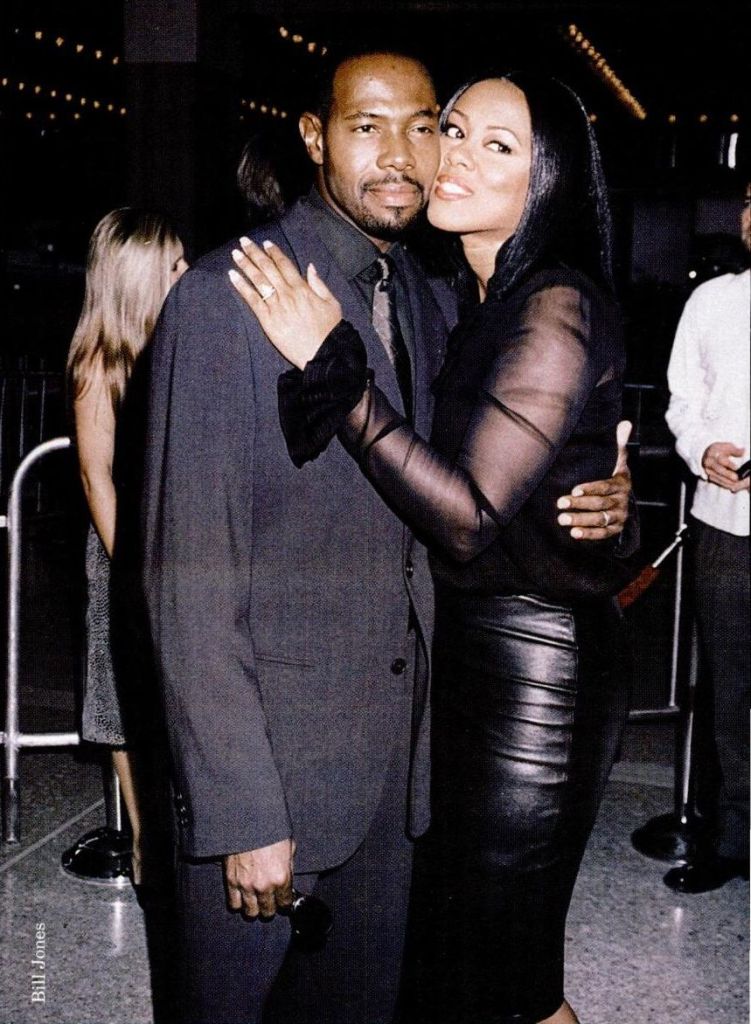
Lela Rochon was first married to dancer and actor Adolfo Quiñones, who was widely known by his stage name Shabba Doo, a pioneering figure in the West Coast break-dancing movement and a star of the film Breakin’. He was a member of the legendary street dance group The Lockers, and his appearance in Breakin’ helped popularize breakdancing in mainstream cinema during the 1980s. The couple married on December 12, 1982. Their marriage lasted approximately five years before the couple divorced in 1987. Later, she married film director Antoine Fuqua in 1999. The couple has two children. Their marriage faced public challenges when media reports surfaced regarding Fuqua’s infidelity. Throughout that ordeal, Rochon maintained dignified silence — embodying resilience rather than spectacle. In an era of oversharing, her discretion communicated strength. She chose privacy over performance, grace over public retaliation.

This composure adds to her legacy as a “strong Black woman,” though that phrase often carries burdens. Rochon’s strength is not loud; it is anchored. It is seen in her career longevity, her maternal devotion, her refusal to be reduced to scandal, and her unwavering elegance amid adversity.

Physically, Rochon represents a standard of Black beauty that defied Hollywood’s narrow casting norms of the late 20th century. Her rich brown complexion, full cheeks, soft eyes, and curvaceous silhouette celebrated natural Black femininity at a time when Eurocentric aesthetics dominated mainstream media. She did not dilute herself for acceptance. She appeared fully embodied — warm, sensual, confident.

Her awards and recognitions include nominations from the NAACP Image Awards and acclaim from Black film critics circles for her ensemble performances. While she may not possess a trophy shelf overflowing with Oscars, her cultural impact transcends hardware. She helped anchor an era of Black romantic cinema that centered women’s desires, friendships, and interior lives.

This photograph is the property of its respective owner.

So why is Lela Rochon an Ebony Doll?

Because Ebony Dolls are not merely beautiful women.
They are cinematic symbols.
They are aesthetic milestones.
They are women whose image defined an era of Black glamour.

Rochon belongs in this series because she represents the archetype of the 1990s Black leading lady — soft yet resilient, sensual yet intelligent, vulnerable yet composed. She stands in a lineage of actresses who expanded the range of Black womanhood onscreen, insisting on complexity over caricature.

Sunshine from Harlem Nights.
Robin from Waiting to Exhale.
Darlene Love.
The veteran survivor.
The wife.
The mother.
The woman.

Lela Rochon is not just remembered.
She is revered.

And in the gallery of The Ebony Dolls, her portrait glows warmly — timeless, dignified, and beautifully Black.


References

Aftab, K. (2019). Waiting to Exhale: Revisiting a cultural classic. Film Quarterly Review.

Bogle, D. (2016). Toms, coons, mulattoes, mammies, and bucks: An interpretive history of Blacks in American films (Updated ed.). Bloomsbury Academic.

IMDb. (n.d.). Lela Rochon filmography. Retrieved from https://www.imdb.com

NAACP Image Awards. (n.d.). Nominees and archives. Retrieved from https://naacpimageawards.net

Whitaker, F. (Director). (1995). Waiting to Exhale [Film]. 20th Century Fox.

Murphy, E. (Director). (1989). Harlem Nights [Film]. Paramount Pictures.

Gregory Nava, G. (Director). (1998). Why Do Fools Fall in Love [Film]. Warner Bros.

Cube, I. (Director). (1998). The Players Club [Film]. New Line Cinema.

BET+. (2018–present). Family Business [Television series].

BET+. (2025). Family Business: New Orleans [Television series].

Bible Study Series: Closer Walk with God

A closer walk with God is the lifelong pursuit of intimacy, obedience, and spiritual maturity. It is not defined merely by religious attendance or verbal confession but by consistent communion and transformation of the heart. Scripture reveals that relationship with God is both covenantal and experiential—rooted in faith yet expressed through daily living. To walk closely with God requires intentionality, humility, and surrender.

From the beginning, Scripture portrays God as desiring fellowship with humanity. In Genesis 3:8 (KJV), God walked in the garden in the cool of the day, illustrating relational proximity. Though sin disrupted that communion, the biblical narrative reveals God’s redemptive plan to restore intimate fellowship. A closer walk with God, therefore, begins with reconciliation through faith and continues through sanctification.

Faith is the foundation of spiritual closeness. Hebrews 11:6 (KJV) declares, “But without faith it is impossible to please him: for he that cometh to God must believe that he is, and that he is a rewarder of them that diligently seek him.” Faith requires trust beyond circumstances, anchoring the believer in confidence that God is both present and responsive.

Prayer is central to cultivating intimacy with God. 1 Thessalonians 5:17 (KJV) instructs believers to “Pray without ceasing.” Continuous prayer does not imply constant verbalization but rather a posture of awareness and dependence. Prayer fosters alignment, gratitude, confession, and intercession, deepening relational connection.

Equally essential is meditation on Scripture. Psalm 1:2 (KJV) describes the blessed individual whose “delight is in the law of the Lord; and in his law doth he meditate day and night.” Engaging Scripture daily renews the mind, clarifies values, and strengthens discernment. It is through the Word that believers learn God’s character, promises, and expectations.

Obedience reflects genuine closeness. John 14:15 (KJV) records Christ’s words: “If ye love me, keep my commandments.” Obedience is not legalism but evidence of devotion. A closer walk with God is demonstrated through ethical decisions, compassion toward others, and integrity in private and public life.

Repentance also sustains intimacy. 1 John 1:9 (KJV) assures believers, “If we confess our sins, he is faithful and just to forgive us our sins, and to cleanse us from all unrighteousness.” Confession restores fellowship when missteps occur. It reflects humility and acknowledgment of human imperfection.

Humility itself is foundational. James 4:8 (KJV) urges, “Draw nigh to God, and he will draw nigh to you.” Drawing near requires submission and the relinquishing of pride. God responds to those who approach Him with reverence and sincerity.

Worship strengthens spiritual connection. Psalm 95:6 (KJV) invites believers to “O come, let us worship and bow down: let us kneel before the Lord our maker.” Worship shifts focus from self to God, magnifying His sovereignty and goodness. It nurtures gratitude and awe, essential components of closeness.

Trust in adversity deepens faith. Proverbs 3:5–6 (KJV) instructs, “Trust in the Lord with all thine heart; and lean not unto thine own understanding. In all thy ways acknowledge him, and he shall direct thy paths.” Trusting God amid uncertainty fosters reliance on divine wisdom rather than human reasoning.

Patience is another dimension of a closer walk. Psalm 27:14 (KJV) counsels believers to “Wait on the Lord.” Waiting refines character and strengthens perseverance. Spiritual growth often unfolds gradually, requiring endurance and hope.

Community plays a role in spiritual maturity. Hebrews 10:25 (KJV) emphasizes not forsaking assembling together. Fellowship with other believers provides encouragement, accountability, and shared worship, reinforcing individual growth.

Love is the supreme evidence of intimacy with God. 1 John 4:8 (KJV) states, “He that loveth not knoweth not God; for God is love.” A closer walk manifests in compassion, forgiveness, and service to others, reflecting God’s character.

The Holy Spirit empowers this journey. Galatians 5:22–23 (KJV) lists the fruit of the Spirit: “love, joy, peace, longsuffering, gentleness, goodness, faith, meekness, temperance.” These qualities signify spiritual maturity and indicate divine influence in daily life.

Discipline and spiritual habits contribute to growth. Paul writes in 1 Corinthians 9:27 (KJV), “But I keep under my body, and bring it into subjection.” Spiritual disciplines such as fasting, study, and prayer cultivate self-control and attentiveness to God’s voice.

Forgiveness fosters freedom and relational harmony. Ephesians 4:32 (KJV) encourages believers to be “kind one to another, tenderhearted, forgiving one another.” Harboring resentment hinders closeness, while forgiveness aligns the heart with divine mercy.

Gratitude strengthens awareness of God’s presence. 1 Thessalonians 5:18 (KJV) instructs believers to give thanks in all circumstances. Gratitude reshapes perspective, focusing attention on divine provision rather than perceived lack.

Bible Study Companion Guide: Closer Walk with God

Week 1: Drawing Near Through Prayer and Faith

Focus Scriptures: Hebrews 11:6; Philippians 4:6–7; James 4:8
Reflection Questions:

  1. What does it mean to “diligently seek” God in your daily life?
  2. How do you currently handle moments when God seems silent?
  3. In what areas do you struggle to maintain faith and trust?

Journaling Prompts:

  • Write about a time when you felt closest to God. What circumstances allowed that closeness?
  • Identify areas in your life where faith could grow. How can you intentionally seek God there this week?

Action Steps:

  • Commit to at least 10 minutes of uninterrupted prayer daily.
  • Practice gratitude by listing three blessings each day.
  • Journal any impressions, scripture verses, or thoughts that arise during prayer.

Week 2: The Word as Your Guide

Focus Scriptures: Psalm 1:2; Romans 12:2; Colossians 3:16
Reflection Questions:

  1. How do you currently engage with God’s Word? Is it routine or sporadic?
  2. What scriptures have brought peace or clarity in past struggles?
  3. How does meditating on God’s Word affect your decisions?

Journaling Prompts:

  • Choose one verse to memorize and meditate on daily. Record how it influences your thoughts or choices.
  • Write about an area of life where God’s Word challenges you to grow.

Action Steps:

  • Dedicate a set time each day for Bible reading.
  • Reflect on the passages and write 1–2 insights per day.
  • Apply one insight from scripture in a practical way (e.g., patience, kindness, self-control).

Week 3: Obedience, Humility, and Love

Focus Scriptures: John 14:15; 1 John 4:8; Micah 6:8
Reflection Questions:

  1. How do you define obedience in your life?
  2. Are there areas where pride prevents you from drawing closer to God?
  3. How is your love for others an extension of your love for God?

Journaling Prompts:

  • List one way you can show obedience to God this week in your actions or choices.
  • Reflect on someone you find difficult to love or forgive. How can God guide your heart toward compassion?

Action Steps:

  • Practice humility in conversations—listen more than speak.
  • Show intentional acts of love, kindness, or service to at least one person daily.
  • Write a short prayer asking God to help you grow in obedience and love.

Week 4: Perseverance, Peace, and Spiritual Maturity

Focus Scriptures: Galatians 6:9; Psalm 27:14; Proverbs 3:5–6
Reflection Questions:

  1. How do you maintain spiritual peace during trials or uncertainty?
  2. Where have you experienced spiritual growth through perseverance?
  3. What areas require patience and trust in God’s timing?

Journaling Prompts:

  • Write about a challenge you are currently facing. How can patience and faith change your response?
  • Record moments where God’s peace guided your decisions.

Action Steps:

  • Identify one stressful situation and consciously follow God’s peace before acting.
  • Continue daily prayer, scripture reading, and journaling to reinforce spiritual habits.
  • Reflect weekly on growth in character, confidence, and closeness with God.

Additional Tips for Your Bible Study

  • Use a prayer journal to track daily communion with God and insights from scripture.
  • Pair reflection with small group discussions to gain perspective and encouragement.
  • Incorporate worship and praise into your daily routine to strengthen spiritual connection.
  • Evaluate progress each week and adjust practices as needed to maintain intentional spiritual growth.

Service embodies devotion. Micah 6:8 (KJV) summarizes God’s requirement: “to do justly, and to love mercy, and to walk humbly with thy God.” Serving others with integrity and compassion reflects a genuine commitment to God’s purposes.

Spiritual perseverance ensures continuity. Galatians 6:9 (KJV) reminds believers not to grow weary in well doing. Consistent effort, even when enthusiasm wanes, sustains spiritual vitality and deepens reliance on God.

Ultimately, a closer walk with God is both relational and transformative. It involves faith, obedience, humility, worship, community, love, and perseverance. As believers draw near, they experience the fulfillment of James 4:8: God draws near in return. This reciprocal relationship shapes identity, character, and purpose, guiding the believer toward spiritual maturity and eternal hope.


References

Bible. (1769/2017). King James Version. (Original work published 1611).

Scriptural references: Genesis 3:8; Psalm 1:2; 27:14; 95:6; Proverbs 3:5–6; Micah 6:8; John 14:15; Romans 12:2; 1 Corinthians 9:27; Galatians 5:22–23; 6:9; Hebrews 10:25; 11:6; James 4:8; 1 John 1:9; 4:8; 1 Thessalonians 5:17–18; Ephesians 4:32.