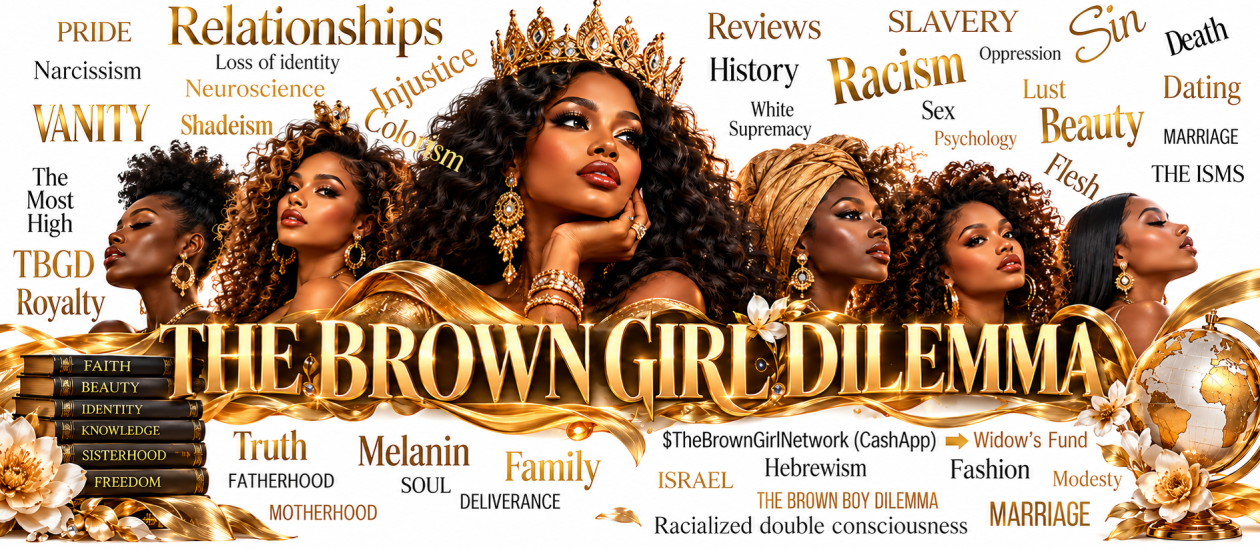


Beauty does not always arrive with an announcement. Sometimes it has been present from the beginning, quietly existing in the face of a little girl before she ever understands what beauty means. She was always beautiful—in the softness of her features, the depth of her eyes, the texture of her hair, the warmth of her complexion, and the individuality that made her unlike anyone else.
Before magazines, advertisements, fashion houses, photographers, and popular culture attempted to define beauty, she already possessed it. Her beauty did not require permission. It did not depend upon comparison. It did not need to resemble someone else to become worthy of admiration. She carried her own aesthetic language, written naturally across her face, her hair, her skin, and her presence.

There is something extraordinary about Black beauty because it encompasses tremendous variation. Black women can possess deep complexions that range from rich brown to nearly blue-black, golden-brown skin illuminated by sunlight, lighter complexions touched by warm undertones, and every shade between. This diversity does not diminish Black beauty; it demonstrates how expansive it is.
Her eyes tell another part of the story. Dark, soulful eyes can communicate tenderness, intelligence, strength, humor, mystery, and emotional depth without saying a word. The shape of the eyes, the fullness of the lashes, the structure of the brow, and the expressions that move across the face create individually distinctive combinations. There is no single Black face, because there has never been a single Black appearance.
Her hair is equally expressive. Coily, tightly curled, loosely curled, wavy, braided, twisted, loc’d, natural, short, long, voluminous, or flowing, Black hair possesses extraordinary versatility. Its textures can be styled into an astonishing range of forms, allowing hair to become not merely an adornment but an extension of personality, creativity, heritage, and self-expression.

The beauty of her features can also be found in their architecture. High cheekbones, full lips, broad or narrow noses, rounded or angular jawlines, prominent brows, soft facial contours, and countless combinations of these characteristics create faces that cannot be reduced to one standard. Human facial appearance is extraordinarily variable, and Black populations contribute an immense range of phenotypic diversity to that human story.
She was beautiful before anyone taught her how to pose. Before she learned which photographs were considered flattering, she possessed a natural expression that belonged entirely to her. There was beauty in the unguarded face of childhood, before self-consciousness entered the picture and before society’s judgments became internalized.
She was beautiful before she learned that certain features were praised more frequently than others. She did not arrive in the world believing that her complexion needed to be lighter, her nose narrower, her lips smaller, or her hair straighter. Those are learned ideas. A child begins life with an instinctive understanding that her own face is simply her face.
The concept of beauty itself is also far more complicated than a single universal formula. Researchers have identified characteristics such as facial symmetry, averageness, proportions, and skin appearance as factors that can influence perceptions of attractiveness, but human judgments of beauty are also shaped by culture, familiarity, individual preference, social experience, and historical context (Rhodes, 2006).
That complexity matters because beauty cannot reasonably be reduced to one complexion, one facial structure, one body type, or one hairstyle. Human beings have always expressed aesthetic preferences through different cultures and historical periods. What one generation celebrates may differ dramatically from what another generation considers desirable.

Black beauty therefore deserves to be understood on its own terms—not as an exception to somebody else’s standard, but as part of the enormous spectrum of human beauty. The Black woman does not need to become a variation of another woman’s appearance to be beautiful. Her beauty can exist independently, confidently, and completely.
There is also beauty in age. A woman’s face does not lose its worth because time moves across it. Expressions deepen. Features mature. Gray hair may appear. Skin changes. Yet the woman remains herself. Beauty does not have an expiration date, and maturity can bring a kind of presence that youth alone cannot reproduce.
This is particularly meaningful because melanin contributes to the pigmentation of human skin and provides some natural protection against ultraviolet radiation. Melanin is not a magical shield against aging or skin damage, and Black skin still requires appropriate sun protection, but differences in pigmentation are an important part of human biological diversity (Jablonski & Chaplin, 2010).

There is beauty in the way Black women have continually expressed themselves through clothing, adornment, hair, music, photography, dance, literature, and art. Across generations, Black women have transformed ordinary materials into expressions of elegance and identity. Fashion can become language, jewelry can become symbolism, and hairstyle can become art.
The doll becomes powerful within this context because a doll is more than an object. It can become a child’s first encounter with representation. Seeing a figure with familiar features can communicate something deceptively simple: someone who looks like me belongs in the picture of beauty. Research on children’s perceptions of race and identity has demonstrated the importance of representation and the social environment in shaping children’s understanding of themselves and others (Derman-Sparks & Edwards, 2020).
That is why She Was Always Beautiful carries a message larger than fashion or aesthetics. It can become a statement about recognition. The doll does not become beautiful because someone finally decided to photograph her. She was beautiful before the camera arrived.
She was beautiful when she was a little girl running through a family home. She was beautiful when she laughed without worrying about how she looked. She was beautiful when her hair was unstyled, when her clothes were ordinary, and when nobody was watching. Beauty did not begin when the world noticed her.

And perhaps that is the most important message of all: being seen is not the same thing as becoming worthy. A person can be overlooked and still possess extraordinary beauty. A culture can fail to represent someone adequately without diminishing that person’s humanity. Recognition may change, but inherent human worth does not.
She Was Always Beautiful therefore becomes a celebration of the Black girl, the Black woman, and the countless forms her beauty can take. It celebrates the face in the mirror, the curls and coils, the eyes, the lips, the skin, the smile, the individuality, and the presence. It does not ask her to become beautiful. It reminds her that she already was.
The message can ultimately be distilled into something beautifully simple: before the world learned to appreciate her beauty, she already possessed it. Before she was photographed, celebrated, admired, or placed on a pedestal, she was already worthy of being seen. She was always beautiful.
References
Derman-Sparks, L., & Edwards, J. O. (2020). Anti-bias education for young children and ourselves (2nd ed.). National Association for the Education of Young Children.
Jablonski, N. G., & Chaplin, G. (2010). Colloquium paper: Human skin pigmentation as an adaptation to UV radiation. Proceedings of the National Academy of Sciences, 107(Supplement 2), 8962–8968. https://doi.org/10.1073/pnas.0914628107
Rhodes, G. (2006). The evolutionary psychology of facial beauty. Annual Review of Psychology, 57, 199–226. https://doi.org/10.1146/annurev.psych.57.102904.190208
Discover more from THE BROWN GIRL DILEMMA
Subscribe to get the latest posts sent to your email.