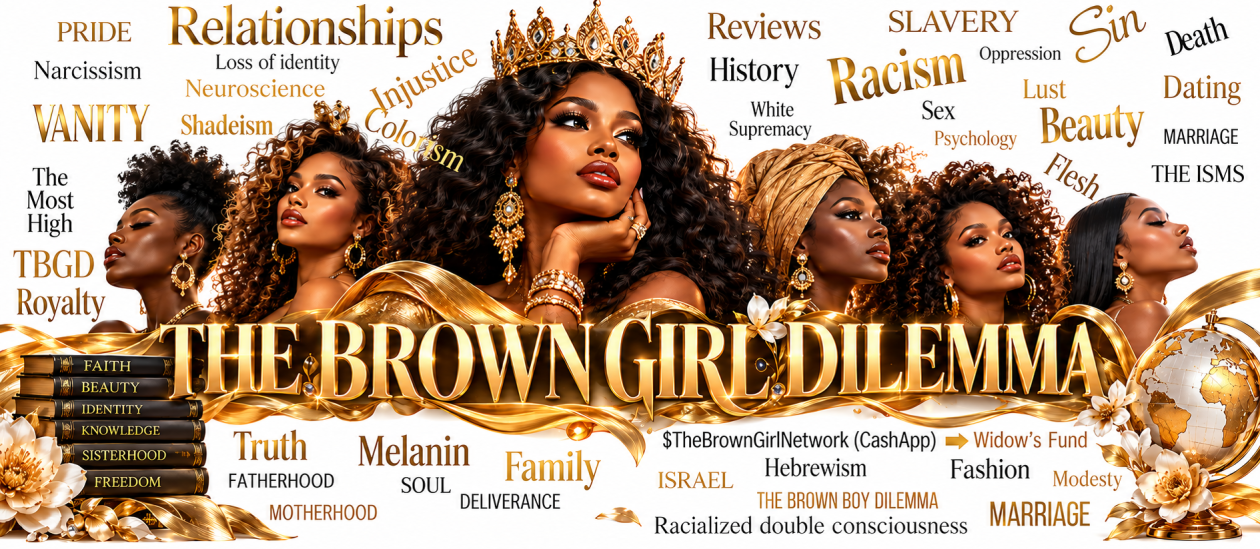


The emergence of artificial intelligence within media ecosystems has fundamentally altered how identity is constructed, perceived, and validated. In earlier historical periods, beauty standards were largely transmitted through painting, sculpture, literature, and later photography; however, in the contemporary digital era, these standards are increasingly generated, optimized, and enforced by algorithmic systems. AI does not merely reflect cultural preferences—it actively participates in shaping them, producing a feedback loop in which human perception is continuously recalibrated by machine-generated ideals. This shift marks a profound transformation in the sociology of beauty and identity formation.
AI-generated beauty standards represent a departure from organic cultural variation toward statistically optimized facial archetypes. Machine learning systems trained on vast datasets of human faces often converge on patterns of symmetry, skin smoothness, and proportional averaging that are interpreted as “attractive.” Yet these outputs are not neutral; they encode the biases of their training data and the aesthetic preferences of dominant cultures. As a result, AI systems risk reinforcing narrow and homogenized ideals of beauty that appear objective but are in fact computationally constructed abstractions.
The psychological implications of these algorithmic standards are significant. When individuals repeatedly encounter AI-enhanced or filtered images, their internal reference points for attractiveness shift. This phenomenon, sometimes described as perceptual recalibration, can lead individuals to evaluate their own appearance against digitally unattainable standards. Over time, this can contribute to diminished self-esteem and body dissatisfaction, particularly among adolescents and young adults whose identities are still forming.
Filters on social media platforms serve as a primary mechanism through which this recalibration occurs. These filters do not simply enhance images; they actively reconstruct facial geometry by altering jawlines, smoothing skin texture, enlarging eyes, and adjusting facial symmetry. The result is a digitally mediated self that often diverges significantly from the unfiltered physical self. This divergence creates a psychological tension between lived embodiment and curated representation.
The concept of identity fragmentation becomes central in this context. Individuals no longer possess a singular visual identity but instead maintain multiple versions of themselves across platforms: the unfiltered self, the filtered self, the AI-enhanced self, and the socially optimized self. Each version is context-dependent, shaped by platform algorithms, audience expectations, and cultural trends. Identity becomes modular, assembled rather than inherent.
Deepfake technology introduces an additional layer of epistemological instability. Unlike filters, which modify self-representation, deepfakes can fabricate entirely new identities or manipulate existing ones with high realism. This destabilizes the traditional assumption that visual evidence corresponds to reality. In a digital environment where faces can be synthetically generated or altered, the trustworthiness of visual perception is fundamentally compromised.
This erosion of visual trust has broader cultural implications. Historically, photography and video were considered reliable records of reality. However, in the age of AI-generated imagery, these mediums are increasingly viewed with skepticism. The boundary between authentic documentation and synthetic fabrication becomes porous, leading to what some theorists describe as a crisis of visual epistemology.
Social media platforms intensify these dynamics through algorithmic curation. Content is no longer displayed chronologically but is instead ranked based on engagement metrics such as likes, shares, and watch time. These metrics indirectly shape beauty norms by privileging content that elicits strong emotional responses, often favoring highly stylized, visually idealized, or sensational imagery. Over time, this creates a homogenized aesthetic environment in which certain facial features and body types are disproportionately amplified.
Algorithm-driven attractiveness also introduces a form of invisible social stratification. Individuals whose appearances align more closely with algorithmically favored aesthetics tend to receive greater visibility, engagement, and social capital. Conversely, those who do not conform to these patterns may experience reduced visibility, regardless of personality, talent, or cultural contribution. This dynamic transforms beauty into a form of digital currency.
The commodification of identity becomes especially pronounced in influencer economies. In these systems, personal appearance is not merely expressive but economically instrumental. AI tools are frequently used to optimize engagement, from facial editing to content recommendation strategies. As a result, identity itself becomes a product designed for algorithmic consumption rather than human authenticity.
One of the most profound consequences of AI-mediated identity is the collapse of stable self-reference. When individuals constantly encounter enhanced versions of themselves and others, the distinction between “real” and “improved” becomes psychologically blurred. This can lead to a phenomenon where the unedited self is perceived as deficient rather than normal, reshaping baseline expectations of human appearance.
The cultural normalization of digital enhancement also alters interpersonal perception. People increasingly expect polished, filtered appearances in both online and offline contexts. This expectation can create discomfort with natural variation, aging, and asymmetry, which were once considered ordinary aspects of human diversity. The result is a narrowing of acceptable aesthetic expression.
From a sociological perspective, AI-driven beauty systems function as a form of soft power. They do not enforce standards through coercion but through desirability. Users voluntarily adopt filters, styles, and enhancements, internalizing algorithmic preferences as personal choice. This makes the influence of AI particularly potent, as it operates under the illusion of autonomy.
The ethical dimension of these systems is complex. While AI tools can empower creative expression and accessibility, they can also reinforce harmful hierarchies of appearance. The challenge lies in distinguishing between augmentation that expands identity possibilities and augmentation that restricts them through normative pressure. Without critical awareness, users may unconsciously align their self-image with algorithmic expectations.
Deep learning models used in image generation further complicate the notion of originality. AI systems trained on millions of human images can generate faces that are statistically plausible yet not tied to any real individual. These synthetic faces often embody exaggerated versions of culturally preferred traits, reinforcing a feedback loop between data, model output, and user preference. Over time, this loop can redefine what is perceived as naturally attractive.
The philosophical implications of AI-generated identity extend to questions of authenticity. If an image is indistinguishable from reality, its ontological status becomes ambiguous. Authenticity, once grounded in physical presence and temporal continuity, becomes a matter of provenance and algorithmic traceability rather than visual inspection.
In this environment, selfhood becomes increasingly performative. Individuals curate their identities not only for human audiences but also for algorithmic systems that determine visibility and reach. Identity thus becomes co-authored by human intention and machine optimization, blurring the boundary between subject and system.
Ultimately, the intersection of AI, media, and digital identity signals a structural transformation in how humans understand beauty, selfhood, and truth. The challenge moving forward is not merely technological but epistemological: how to preserve diversity of perception and authenticity of experience in a world where perception itself is increasingly manufactured. Without intentional ethical design and cultural literacy, algorithmic systems may continue to narrow the range of what is seen as beautiful, real, and valuable.
If this work has informed or inspired you, please consider supporting it so we can continue researching, writing, and sharing these stories.
ChatApp: $thebrowngirlnetwork
Make a one-time donation
Make a monthly donation
Make a yearly donation
Choose an amount
Or enter a custom amount
Your contribution is appreciated.
Your contribution is appreciated.
Your contribution is appreciated.
References
Baym, N. K. (2015). Personal connections in the digital age (2nd ed.). Polity Press.
Boyd, D. (2014). It’s complicated: The social lives of networked teens. Yale University Press.
Crawford, K. (2021). Atlas of AI: Power, politics, and the planetary costs of artificial intelligence. Yale University Press.
Deuze, M. (2012). Media life. Polity Press.
Foucault, M. (1977). Discipline and punish: The birth of the prison. Vintage Books.
Gillespie, T. (2018). Custodians of the internet: Platforms, content moderation, and the hidden decisions that shape social media. Yale University Press.
Noble, S. U. (2018). Algorithms of oppression: How search engines reinforce racism. NYU Press.
Senft, T. M., & Baym, N. K. (2015). What does the selfie say? International Journal of Communication, 9, 1588–1606.
Zuboff, S. (2019). The age of surveillance capitalism. PublicAffairs.
Discover more from THE BROWN GIRL DILEMMA
Subscribe to get the latest posts sent to your email.