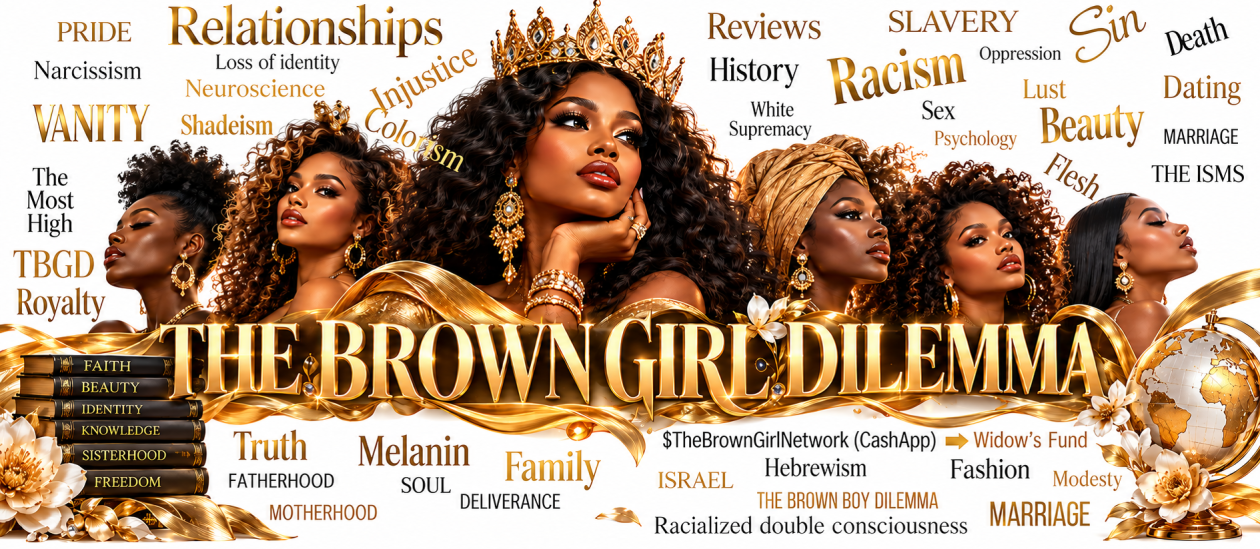

Godly femininity and social media beauty standards represent two fundamentally different frameworks for understanding a woman’s identity, worth, and purpose. One is rooted in divine order, spiritual alignment, and inner transformation, while the other is largely constructed through visual culture, external validation, and ever-changing societal trends.
Godly femininity begins with the acknowledgment that a woman is created in the image of God, endowed with intrinsic value that is not contingent upon appearance. In contrast, social media platforms often reduce femininity to aesthetics—filters, body proportions, and curated perfection—creating a narrow and often unattainable ideal.
The rise of platforms such as Instagram and TikTok has amplified the visibility of beauty standards that prioritize youth, symmetry, and often Eurocentric features. These platforms reward visual appeal through likes, comments, and followers, subtly conditioning users to equate attention with worth.
From a psychological standpoint, repeated exposure to idealized images contributes to comparison, insecurity, and distorted self-perception. Women may begin to measure themselves against edited realities, leading to dissatisfaction and a constant pursuit of external validation.
Godly femininity, however, calls for a reorientation of focus—from outward appearance to inward character. Scripture emphasizes qualities such as humility, wisdom, gentleness, and reverence for God as the true markers of beauty. These traits are cultivated over time and are not subject to trends.
In 1 Peter 3:3–4 (KJV), women are instructed, “Whose adorning let it not be that outward adorning… but let it be the hidden man of the heart.” This passage directly challenges the emphasis on external beauty, highlighting the enduring value of a meek and quiet spirit.
Similarly, Proverbs 31:30 (KJV) declares, “Favour is deceitful, and beauty is vain: but a woman that feareth the Lord, she shall be praised.” This verse dismantles the illusion that physical beauty is a reliable source of worth or success.
Social media beauty standards are inherently unstable. Trends shift rapidly—what is considered desirable today may be obsolete tomorrow. This instability creates a cycle of constant adaptation, where women feel pressured to keep up or risk being overlooked.
In contrast, godly femininity is anchored in unchanging principles that transcend cultural fluctuations. A woman grounded in her faith does not need to chase trends because her identity is secure in something eternal.
The commercialization of beauty further complicates this issue. Industries profit from insecurity, promoting products and procedures that promise transformation. This commodification of femininity reduces women to consumers in a cycle of dissatisfaction and temporary fulfillment.
Colorism, body image issues, and texturism are all reinforced within social media spaces, disproportionately affecting Black women. These standards often marginalize features that do not align with Eurocentric ideals, perpetuating a hierarchy of beauty that contradicts both cultural diversity and biblical truth.
Godly femininity affirms that all women, regardless of complexion or physical features, are fearfully and wonderfully made (Psalm 139:14, KJV). This affirmation challenges the exclusionary nature of modern beauty standards.
The pursuit of validation through social media can also lead to performative identity, where authenticity is sacrificed for approval. Women may present curated versions of themselves, distancing their public image from their true selves.
In contrast, godly femininity encourages authenticity and integrity. A woman is called to be the same in private as she is in public, grounded in truth rather than performance.
The influence of peer culture on social media cannot be overlooked. Trends are often driven by collective behavior, creating pressure to conform. This pressure can overshadow individual conviction and spiritual discernment.
Godly femininity requires discernment—the ability to distinguish between what is culturally accepted and what is spiritually aligned. This discernment is developed through prayer, study, and a close relationship with God.
It is important to note that embracing godly femininity does not mean rejecting beauty or self-care. Rather, it involves placing these practices in proper perspective, ensuring they do not become sources of identity or idolatry.
Balance is key. A woman can appreciate aesthetics without being defined by them. She can engage with social media without being consumed by it. The difference lies in where she derives her sense of worth.
Communities of faith play a crucial role in reinforcing godly standards. When women are surrounded by environments that value character over appearance, it becomes easier to resist societal pressures.
Ultimately, the tension between godly femininity and social media beauty standards reflects a broader struggle between truth and illusion. One offers stability, purpose, and peace; the other often leads to comparison, anxiety, and dissatisfaction.
In conclusion, the path to true femininity is not found in filters or followers but in faith, character, and alignment with divine principles. By shifting focus from external validation to internal transformation, women can reclaim their identity and walk confidently in their God-given purpose.
References
Collins, P. H. (2000). Black feminist thought: Knowledge, consciousness, and the politics of empowerment. Routledge.
Fardouly, J., & Vartanian, L. R. (2016). Social media and body image concerns: Current research and future directions. Current Opinion in Psychology, 9, 1–5.
Hunter, M. (2007). The persistent problem of colorism: Skin tone, status, and inequality. Sociology Compass, 1(1), 237–254.
Perloff, R. M. (2014). Social media effects on young women’s body image concerns. Sex Roles, 71(11–12), 363–377.
The Holy Bible, King James Version.
Discover more from THE BROWN GIRL DILEMMA
Subscribe to get the latest posts sent to your email.