
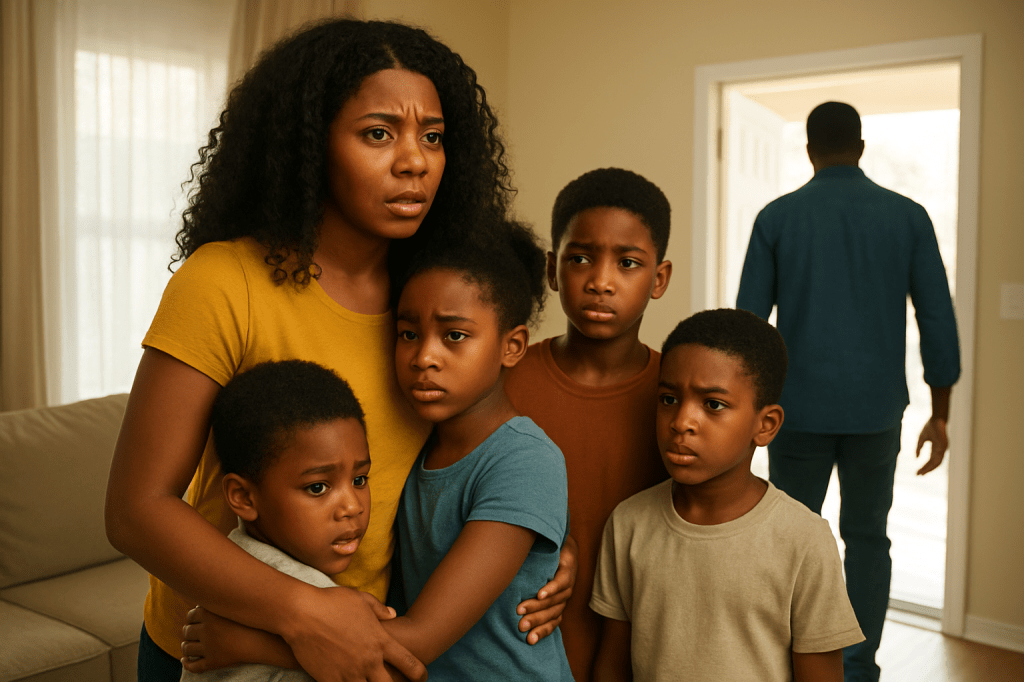
Baby-mama culture refers to a normalized social framework where motherhood and fatherhood occur outside of marriage, often detached from covenantal stability, economic cooperation, and spiritual accountability (Reid-Merritt, 2016). In many communities, particularly those shaped by historical ruptures in family structure, children are born into relational instability rather than covenantal unity.
The phenomenon begins at its root—sexual relations without marital commitment. Scripture frames sex as sacred and covenant-bound: “Marriage is honourable in all, and the bed undefiled: but whoremongers and adulterers God will judge” (Hebrews 13:4, KJV). The biblical worldview denies neutrality—sexual union creates consequence, whether lifelong or burdensome.
Rather than husband and wife, the terms baby-mama and baby-father replace covenant language with consumer-relationship labels, stripping parental identity from spiritual foundation. Proverbs warns that this erosion begins in the mouth and heart: “Keep thy heart with all diligence; for out of it are the issues of life” (Proverbs 4:23, KJV).
Without marriage, co-parenting often shifts into legal co-management rather than spiritual stewardship, introducing child-support systems as substitutes for shared responsibility. “The borrower is servant to the lender” (Proverbs 22:7, KJV) applies symbolically—dependency on state-enforced support turns family matters into institutional debt.
In many cases, fathers become associated more with financial obligation than household presence. While child support can enforce provision, it cannot enforce fatherhood. The Bible asserts a father is more than a provider—he is a guide: “And ye fathers, provoke not your children to wrath: but bring them up in the nurture and admonition of the Lord” (Ephesians 6:4, KJV).
For many Black fathers today, systemic barriers compound cultural misalignment. The family dislocation introduced through slavery makes this conversation generational—Black fathers historically were denied legal marriage and paternal rights, creating historical precedent for fractured kinship models (Franklin, 2010).
Thus, baby-mama culture is not only moral—it is structural and historical. “The fathers have eaten sour grapes, and the children’s teeth are set on edge” (Jeremiah 31:29, KJV) symbolizes generational consequence, though scripture later clarifies personal accountability is required moving forward.
Child-support culture often traps fathers in economic survival mode, where wages are garnished, employment is limited, and housing or credit is compromised. Deuteronomy prophetically warns what disobedience to the covenant brings: “He shall lend to thee, and thou shalt not lend to him: he shall be the head, and thou shalt be the tail” (Deuteronomy 28:44, KJV).
Many fathers still fight to make it. Some hold multiple jobs, trades, delivery routes, construction shifts, night work, entrepreneurial side hustles, hustling not from irresponsibility but from necessity. Paul affirms provision is required, even without cultural praise: “But if any provide not for his own…he hath denied the faith” (1 Timothy 5:8, KJV).
The pressure on these fathers is immense. They serve as financial pillars but emotional ghosts, absent from many narratives, holidays, school mornings, and prayers at night. This imbalance creates psychological distance even when provision is technically met (Payne, 2023).
Mothers also carry burdens. Raising children without marital structure often forces women into masculine economic roles without masculine protection, reversing divine design. Peter outlines the feminine posture that cultivates peace: “Let it not be that outward adorning only…but a meek and quiet spirit” (1 Peter 3:3-4, KJV).
Many relationships collapse into resentment because they begin without covenant alignment. Jesus clarifies what foundationless unions lack: “For out of the abundance of the heart the mouth speaketh” (Matthew 12:34, KJV). When love is thin, words grow sharp, accusations louder than agreements.
Children become unintended theologians of family dysfunction, internalizing instability as normal. Solomon says training begins early: “Train up a child in the way he should go…” (Proverbs 22:6, KJV). A child trained without a model may grow mastered by the culture that raised him.
Community implications extend beyond the household. When men are isolated from fatherhood identity, they often seek validation in alpha culture, street brotherhood, clubs, charisma, cars, and currency, rather than wives and wisdom (Dyson, 2004).
Paul teaches the danger of ungoverned desire: “Flee also youthful lusts…” (2 Timothy 2:22, KJV). Lust builds children but does not build kingdoms, legacies, or homes. Desire without discipleship produces responsibility without reverence.
Many fathers spiritually collapse not because they reject God but because they reject God’s order first, then wonder why life rejects them back. James warns that disordered living destabilizes every direction: “A double-minded man is unstable in all his ways” (James 1:8, KJV).
Healing begins when men reclaim identity beyond economy and court systems. David prayed for restoration not externally but inwardly: “Create in me a clean heart, O God…” (Psalm 51:10, KJV). Restoration requires spiritual re-centring, not just relationship repair.
Fatherhood also demands discipline over the tongue, accountability in + out of conflict. Solomon says: “Death and life are in the power of the tongue” (Proverbs 18:21, KJV). Fathers must speak identity into children, not hostility into mothers.
Likewise, women must discern love from loneliness to prevent repeating cycles. Ruth found covering before the creation of the legacy. Boaz represented the covenant before the seed (Ruth 4, KJV). Biblical design demands “wife first, then womb”, not womb then warfare.
Child support may ensure bread, but Bible culture ensures blessing. Isaac and Rebekah built a legacy through a covenant, not courts (Genesis 25:20-21, KJV). When covenant governs creation, provision flows naturally, not forcefully.
Many fathers survive—but survival is not scripture’s endgame. God calls men into government, legacy, and lineage: “The glory of children is their fathers” (Proverbs 17:6, KJV). God never said the glory of checks is their fathers ‘ presence, name, guidance, or covering.
To dismantle baby-mama culture, the counterculture must be covenant revival, identity restoration, sexual discipline, shared spiritual stewardship, and fathers elevated beyond economic footnotes into apostolic heads of household again (Malachi 4:6, KJV): “And he shall turn the heart of the fathers to the children, and the heart of the children to their fathers…”
References
Dyson, M. (2004). The Michael Eric Dyson Reader. Basic Civitas.
Franklin, J. H. (2010). From Slavery to Freedom. McGraw-Hill.
Reid-Merritt, P. (2016). Fallen Daughters of Eve. Kensington.
Reid, M., & Cazenave, N. (2023). Black family cultural analysis. Journal of Black Family Studies.
Payne, R. (2023). Economic strain on non-custodial fathers. Urban Social Economics Review.
Discover more from THE BROWN GIRL DILEMMA
Subscribe to get the latest posts sent to your email.
 THE BROWN GIRL DILEMMA