
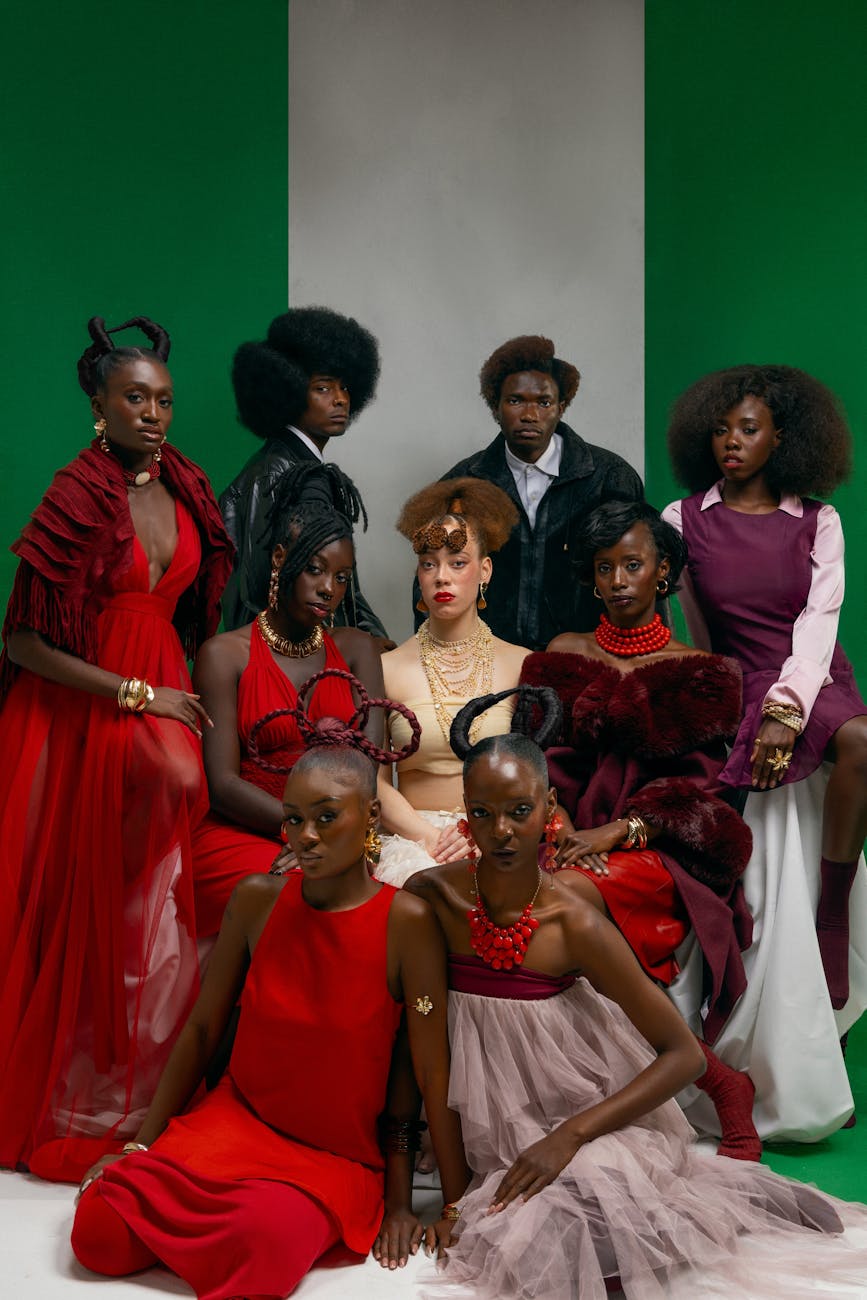
The history of colorism and shade hierarchies within the Black community reveals deep wounds that continue to shape identity, beauty standards, and opportunities. What some scholars call “melanin wars” are battles fought not against external forces of white supremacy alone, but within our own communities. These struggles reflect centuries of colonialism and slavery, where proximity to whiteness translated into privilege, and darker skin became stigmatized (Hunter, 2007).
Pretty privilege operates along this color spectrum, granting advantages to those with lighter skin tones while imposing disadvantages on those with darker complexions. This privilege manifests in dating, marriage prospects, media representation, and professional advancement. The cost is not just individual insecurity, but a collective fracture that keeps us divided rather than united.
During slavery, lighter-skinned Black people, often the children of enslaved women and white slaveholders, were sometimes afforded “house” roles rather than field labor. Though still enslaved, their perceived closeness to whiteness created hierarchies within Black life itself (Russell, Wilson, & Hall, 1992). These divisions laid the foundation for intra-racial tensions that persist centuries later.
The term “melanin wars” is symbolic of the psychological battles that occur when skin shade becomes the basis for worth. Dark-skinned individuals often report being seen as less attractive, less employable, and less trustworthy compared to lighter-skinned counterparts. Research by Keith and Herring (1991) confirms that skin tone has a measurable impact on socioeconomic outcomes, showing lighter-skinned African Americans tend to have higher incomes and educational attainment.
In the realm of beauty, these wars play out with devastating consequences. Lighter-skinned women are often upheld as the ideal, while darker-skinned women are objectified or marginalized. The phrase “pretty for a dark-skinned girl” encapsulates this bias. Such language reinforces the belief that beauty and melanin are at odds, perpetuating harm that seeps into self-esteem and soul.
For Black men, the melanin wars also hold weight. Darker-skinned men are more likely to be perceived as dangerous or aggressive, while lighter-skinned men may be considered less threatening. These stereotypes shape encounters with law enforcement, workplace dynamics, and even interpersonal relationships (Maddox & Gray, 2002).
These internal battles are not only social but spiritual. Genesis 1:31 (KJV) declares, “And God saw everything that he had made, and, behold, it was very good.” Yet, when communities internalize shade hierarchies, they deny the goodness of God’s creation. Melanin wars, at their root, represent a spiritual attack on identity and unity.
One of the greatest costs of this battle is disunity. Instead of standing together against systemic racism, communities fracture over internal shade differences. Galatians 5:15 (KJV) warns, “But if ye bite and devour one another, take heed that ye be not consumed one of another.” The melanin wars are a distraction that consumes energy which could be used to fight real systems of oppression.
Media representation intensifies the wars. Television, film, and music industries disproportionately cast lighter-skinned individuals in leading or romantic roles, while darker-skinned individuals are often relegated to side characters or villains. This symbolic violence reinforces the idea that worth and desirability are tied to complexion.
Families are not immune to the effects of shade hierarchies. Parents may, knowingly or unknowingly, favor lighter-skinned children, praising them more openly or assuming they will have an easier life. Such favoritism breeds resentment and insecurity, creating trauma that carries into adulthood.
Economically, the melanin wars are exploited by billion-dollar industries such as skin bleaching. In nations across Africa, the Caribbean, and Asia, skin-lightening creams promise social mobility and desirability, at the cost of physical and psychological health (Charles, 2003). The demand for these products reflects the global reach of colorism.
Theologically, the melanin wars are contrary to the vision of the kingdom of God. Revelation 7:9 (KJV) envisions a redeemed community of “all nations, and kindreds, and people, and tongues” united before God’s throne. Shade distinctions hold no eternal relevance in God’s presence, reminding us that human hierarchies are temporary and unjust.
Fighting for equality within our community requires first acknowledging the wounds. Denial only deepens harm, but truth opens the door to healing. John 8:32 (KJV) proclaims, “And ye shall know the truth, and the truth shall make you free.” Recognizing the structures of colorism is the first step toward freedom.
Education is critical in dismantling these hierarchies. By teaching children about the history of colorism, the beauty of all skin tones, and their identity as image-bearers of God, we equip future generations to resist these lies. Proverbs 22:6 (KJV) reminds us, “Train up a child in the way he should go: and when he is old, he will not depart from it.”
Healing also requires media accountability. By demanding diverse representation across shades, communities can push industries to portray the full spectrum of Black beauty. This shift is not just cosmetic but cultural, shaping how young people see themselves and others.
Unity is perhaps the most powerful weapon against melanin wars. When communities intentionally uplift one another, celebrate all shades, and refuse to participate in divisive practices, the chains of colorism weaken. As Ecclesiastes 4:12 (KJV) declares, “And if one prevail against him, two shall withstand him; and a threefold cord is not quickly broken.”
Mentorship also plays a role in healing. When darker-skinned individuals see role models who are thriving in faith, leadership, and influence, it counters narratives of inferiority. Representation in leadership, academia, ministry, and business reshapes expectations of worth and potential.
Spiritually, prayer and the renewing of the mind are essential. Romans 12:2 (KJV) commands, “Be ye transformed by the renewing of your mind.” Breaking free from melanin wars requires deliverance from toxic thought patterns and the embrace of biblical truths about identity.
The fight for equality within our community is ultimately a fight for the soul. Melanin wars wound the heart, divide the body, and distort the image of God. But healing is possible through truth, unity, and love. By confronting the cost of shade and dismantling its privileges, the community can move toward wholeness.
In the end, melanin is not a curse but a crown. The wars we fight against each other can be transformed into victories of solidarity if we choose love over envy, affirmation over insecurity, and unity over division. Equality within the community begins when we refuse to let shade determine worth, and instead, embrace the divine truth that every complexion is a reflection of God’s beauty.
References
- Charles, C. A. D. (2003). Skin bleachers’ representations of skin color in Jamaica. Journal of Black Studies, 33(6), 711–728.
- Hunter, M. (2007). The persistent problem of colorism: Skin tone, status, and inequality. Sociology Compass, 1(1), 237–254.
- Keith, V. M., & Herring, C. (1991). Skin tone and stratification in the Black community. American Journal of Sociology, 97(3), 760–778.
- Maddox, K. B., & Gray, S. A. (2002). Cognitive representations of Black Americans: Reexploring the role of skin tone. Personality and Social Psychology Bulletin, 28(2), 250–259.
- Russell, K., Wilson, M., & Hall, R. (1992). The Color Complex: The Politics of Skin Color Among African Americans. Anchor Books.
- The Holy Bible, King James Version.
Discover more from THE BROWN GIRL DILEMMA
Subscribe to get the latest posts sent to your email.
 THE BROWN GIRL DILEMMA