
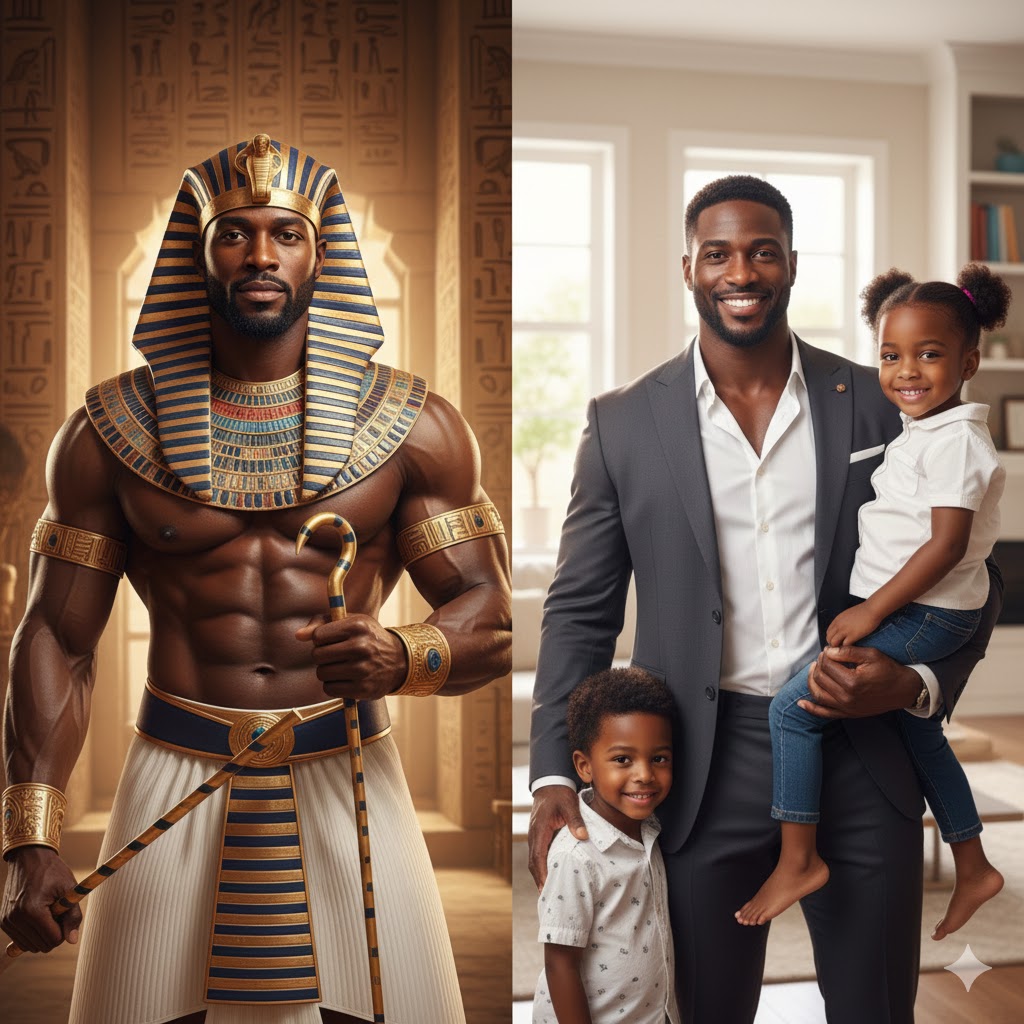
he history of Black men has often been obscured by narratives that diminish their dignity, leadership, and legacy. From the pharaohs of ancient Egypt to the contemporary challenges of fatherhood in the Black community, the journey of Black men reflects both a royal heritage and the struggles of displacement, oppression, and identity loss. Rediscovering this royal bloodline is essential for understanding self-worth, responsibility, and the sacred duty of leadership within the family and society.
The pharaohs of Egypt, many of whom were Black, exemplified the pinnacle of leadership, wisdom, and governance. Men like Pharaoh Thutmose III and Ramses II displayed strategic prowess, cultural sophistication, and spiritual devotion. Ancient texts and archeological evidence highlight their role not merely as rulers but as protectors of societal order and justice, echoing the biblical mandate for leaders to act as shepherds over their people (Exodus 18:21 KJV).
Beyond Egypt, the African continent bore kingdoms rich in culture, commerce, and governance. The Kingdom of Kush, Mali, and Songhai all boasted leaders who wielded influence, amassed wealth, and ensured the spiritual and physical welfare of their people. Mansa Musa of Mali, renowned for his pilgrimage to Mecca and his wealth, serves as a reminder of the grandeur and intellectual capacity of African leadership. These men were embodiments of divine appointment, carrying the responsibility of preserving their lineage and cultural legacy.
The spiritual dimension of Black manhood is highlighted throughout the Scriptures. In Genesis 15:5, God tells Abraham, “Look now toward heaven, and tell the stars, if thou be able to number them: and he said unto him, So shall thy seed be.” This promise underscores the importance of lineage and legacy. Black men, as descendants of the ancient Israelites (Deuteronomy 28), bear the weight of historical continuity, not merely as biological fathers but as spiritual stewards.
Fatherhood, historically, has been a sacred role—one that demands presence, guidance, and protection. The neglect or distortion of this role in modern society has had profound consequences on families and communities. Proverbs 22:6 (KJV) instructs, “Train up a child in the way he should go: and when he is old, he will not depart from it.” Black men, reclaiming their royal heritage, are called to embody this principle, ensuring that their children inherit not only biological life but wisdom, faith, and identity.
The erosion of Black male authority began during the transatlantic slave trade, when men were forcibly separated from families, stripped of agency, and dehumanized. This systematic assault disrupted generational knowledge transfer, creating cycles of trauma that persist today. Yet, understanding one’s history and royal lineage can catalyze restoration, turning pain into purpose.
Modern society often presents Black men with distorted images of masculinity—hyper-aggression, absenteeism, or materialism—as substitutes for the authentic power once held by pharaohs and kings. These portrayals ignore the spiritual and intellectual dimension of Black manhood. Romans 12:2 (KJV) counsels believers to “be not conformed to this world: but be ye transformed by the renewing of your mind,” highlighting the necessity of reclaiming identity through spiritual renewal rather than societal mimicry.
Education and cultural awareness are critical tools in this reclamation. By studying African history, biblical genealogies, and the narratives of ancient leaders, Black men can reconnect with their ancestral wisdom. Knowledge of one’s past is a pathway to empowerment; it transforms self-perception from one of victimhood to one of inherent value and purpose.
The role of community and mentorship is equally vital. Just as ancient kings surrounded themselves with advisors, scribes, and spiritual guides, contemporary Black men benefit from cultivating relationships that reinforce responsibility, moral integrity, and leadership. Proverbs 27:17 (KJV) states, “Iron sharpeneth iron; so a man sharpeneth the countenance of his friend,” illustrating the necessity of accountability and communal growth.
Spiritual discipline anchors the royal bloodline in divine purpose. Prayer, meditation, and adherence to God’s Word provide guidance for personal conduct and familial leadership. Psalm 112:1-2 (KJV) notes, “Blessed is the man that feareth the LORD, that delighteth greatly in his commandments. His seed shall be mighty upon earth: the generation of the upright shall be blessed,” connecting reverence for God with generational influence.
Reclaiming the identity of Black men as heirs to a royal lineage also necessitates confronting societal obstacles. Racism, systemic oppression, and cultural misrepresentation challenge the restoration of dignity. Nevertheless, as 2 Corinthians 4:8-9 (KJV) reminds, “We are troubled on every side, yet not distressed; we are perplexed, but not in despair; Persecuted, but not forsaken; cast down, but not destroyed,” emphasizing resilience amid adversity.
Economic empowerment, civic engagement, and cultural preservation complement spiritual and familial responsibilities. Pharaohs and African kings secured wealth not for selfish indulgence but for community stability and legacy preservation. Similarly, modern Black men are called to steward resources in ways that benefit families and communities, reinforcing the principle that leadership is inseparable from responsibility.
The restoration of the Black male identity also involves healing from historical trauma. Therapy, counseling, and intergenerational dialogue allow men to process inherited wounds and reclaim self-worth. Healing strengthens the capacity to lead effectively and maintain the integrity of the royal bloodline through future generations.
Media representation plays a significant role in shaping perception. By celebrating Black excellence in leadership, scholarship, arts, and family life, society can counteract narratives of deficiency. Highlighting positive examples reinforces the truth that Black men are heirs of kings and pharaohs, capable of guiding their families and communities with honor.
Faith communities provide critical support in this restoration. Churches, synagogues, and spiritual networks offer a space for mentorship, teaching, and the reinforcement of values aligned with divine purpose. Hebrews 13:7 (KJV) encourages reflection on past leaders: “Remember them which have the rule over you, who have spoken unto you the word of God: whose faith follow, considering the end of their conversation,” promoting continuity of moral and spiritual guidance.
Art, literature, and music serve as vehicles for affirming royal heritage. African-centered narratives, hip-hop with conscious messages, and literary works by Black authors transmit culture, history, and identity. These mediums counteract erasure and celebrate lineage, providing inspiration for the next generation of fathers and leaders.
Black fatherhood, when approached as a sacred duty, extends beyond provision. It encompasses emotional presence, moral instruction, spiritual mentorship, and legacy cultivation. By reclaiming their royal bloodline, men can model integrity, resilience, and wisdom, counteracting centuries of marginalization.
Education of the young is both a privilege and a responsibility. Teaching children about ancestral achievements, biblical promises, and the value of lineage fosters self-respect and ambition. Deuteronomy 6:6-7 (KJV) instructs, “And these words, which I command thee this day, shall be in thine heart: And thou shalt teach them diligently unto thy children,” reinforcing the importance of active participation in shaping future generations.
Ultimately, rediscovering the royal bloodline of Black men is a holistic endeavor. It integrates historical awareness, spiritual discipline, familial responsibility, community leadership, and personal integrity. This reclamation restores dignity, instills purpose, and honors God’s design for manhood and family.
By embracing the legacy of pharaohs and kings, Black men can navigate the modern world with confidence and authority. From Pharaohs to Fathers, the journey is one of transformation—reclaiming identity, fostering generational prosperity, and embodying the divine blueprint of leadership, protection, and legacy.
References
Exodus 18:21, KJV.
Genesis 15:5, KJV.
Deuteronomy 6:6-7, KJV.
Deuteronomy 28, KJV.
Proverbs 22:6, KJV.
Proverbs 27:17, KJV.
Psalm 112:1-2, KJV.
Romans 12:2, KJV.
2 Corinthians 4:8-9, KJV.
Hebrews 13:7, KJV.
Martin, M. (2019). The Royal Legacy of African Kings: Leadership and Lineage. New York: Academic Press.
Hilliard, A. G. (2000). The Maroons of Suriname: African Legacy in the Americas. London: Routledge.
Manning, P. (2007). Slavery and African Culture in the Americas: Restoring the Connection. Chapel Hill: University of North Carolina Press.
Discover more from THE BROWN GIRL DILEMMA
Subscribe to get the latest posts sent to your email.
 THE BROWN GIRL DILEMMA