
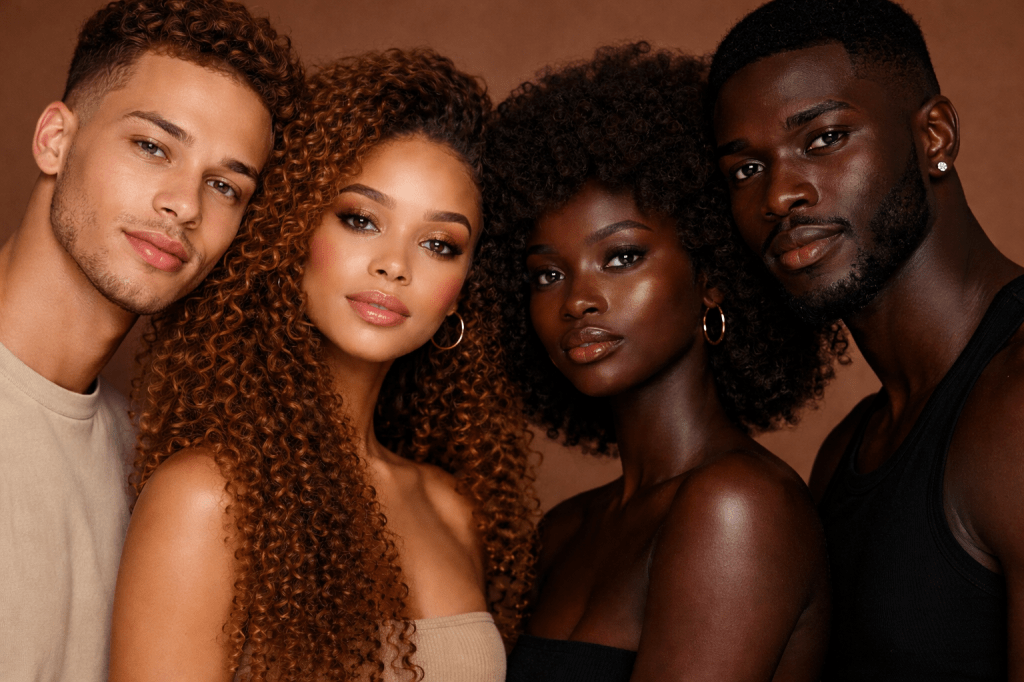
The history of light-skinned Black people in the Atlantic world is inseparable from the violence of slavery, colonialism, and racial domination. Lighter complexions did not emerge as a neutral genetic variation but, in many cases, as the direct result of coercion, sexual violence, and unequal power relations between enslaved African women and European men. To discuss light skin in Black history honestly requires confronting this brutal origin story and the enduring psychological and social consequences that followed.
During chattel slavery, rape was not an aberration but a systemic feature of the institution. Enslaved women had no legal right to consent, and white slaveholders exercised near-absolute power over their bodies. The children born from these assaults often inherited lighter skin, straighter hair textures, or other Eurocentric features, marking their very existence as living evidence of sexual violence and domination.
These mixed-ancestry children were frequently labeled “mulatto,” a term rooted in dehumanization and animalization. The classification was not simply descriptive; it functioned as a legal and social category that helped slave societies manage hierarchy within Blackness. Skin tone became a tool of division, reinforcing white supremacy while fracturing solidarity among the enslaved.
Light-skinned enslaved people were often assigned domestic labor rather than field work. This distinction produced the infamous dichotomy between the “house negro” and the field slave, a hierarchy that was imposed, not chosen. Domestic labor sometimes spared individuals from the harshest physical toil, but it exposed them to constant surveillance, sexual exploitation, and proximity to white power.
Being inside the slaveholder’s home did not equate to safety or privilege in any meaningful sense. House servants were more accessible targets for abuse, especially young girls and women. The home was often the site of repeated assaults, emotional manipulation, and forced compliance masquerading as favor.
Incest further complicates this history. Because slavery followed the legal principle of partus sequitur ventrem, children inherited the status of the enslaved mother regardless of the father’s identity. This meant white men could rape their own enslaved daughters and grandchildren without legal consequence, creating generational cycles of abuse that literally lightened the complexion of the enslaved population over time.
Light-skinned children were sometimes recognized as the biological offspring of white men, yet this recognition rarely translated into protection or freedom. More often, it produced resentment, secrecy, or further exploitation. These children occupied a liminal space—never white, yet treated differently within Black communities because of their appearance.
Colorism did not end with emancipation. After slavery, lighter skin continued to carry social currency within Black communities, a legacy of plantation hierarchies and white aesthetic standards. Access to education, employment, social clubs, and marriage prospects was often influenced by complexion, reinforcing divisions rooted in trauma rather than choice.
The psychological burden placed on light-skinned Black people is rarely discussed with nuance. Many carried the stigma of being perceived as products of rape or favoritism, while simultaneously being resented for “privileges” they neither requested nor controlled. This double bind created identity conflicts that reverberate across generations.
At the same time, darker-skinned Black people bore the brunt of systemic violence and exclusion, creating a false narrative that light skin equaled safety or advantage. This obscured the reality that all Black people, regardless of shade, remained subject to racial terror, disenfranchisement, and economic exploitation.
White supremacy strategically used color hierarchies to weaken collective resistance. By elevating lighter skin as closer to whiteness, slave societies encouraged internalized racism and competition. This divide-and-conquer strategy proved effective, leaving lasting scars in Black social relations long after formal slavery ended.
The myth of the “favored” light-skinned enslaved person ignores the constant precarity of their position. Favor could be revoked at any moment, and proximity to power often meant proximity to punishment. Psychological violence—humiliation, erasure, and forced loyalty—was as real as physical brutality.
In religious and moral discourse, enslaved women were blamed for their own assaults, reinforcing misogynoir and sexual shame. Light-skinned children became symbols onto which communities projected unresolved grief, anger, and confusion about sexual violence that was never acknowledged or healed.
Post-slavery societies institutionalized colorism through laws, media, and social norms. Paper bag tests, “blue vein” societies, and caste-like systems in the Caribbean and Americas continued to privilege lighter skin while stigmatizing darker tones. These practices reflected colonial logic rather than African worldviews.
Light skin thus became a paradoxical inheritance: a marker of survival through violence, yet also a source of alienation. Many light-skinned Black people struggled with belonging, questioned their legitimacy within Blackness, or felt compelled to overperform loyalty to counter suspicions of superiority.
Modern conversations about colorism often flatten this history, framing light skin solely as advantage without acknowledging its traumatic origins. This simplification risks reproducing harm by ignoring how sexual violence, incest, and coercion shaped Black bodies and identities.
Healing requires truth-telling. Acknowledging that many light-skinned Black people exist because of rape does not indict them; it indicts the system that produced them. It reframes colorism as a legacy of white supremacy rather than a natural preference within Black communities.
Reclaiming Black unity demands rejecting plantation hierarchies in all forms. Skin tone must be understood as a consequence of history, not a measure of worth, purity, or authenticity. Both light- and dark-skinned Black people inherit trauma from the same system, expressed differently but rooted in the same violence.
To confront the dark history of being light-skinned is to confront slavery honestly. It requires resisting romanticized narratives of privilege and instead centering the realities of rape, incest, coercion, and psychological harm. Only then can colorism be dismantled at its root.
True liberation lies in dismantling the myths that slavery created about skin, beauty, and value. When Black people collectively reject these imposed hierarchies, they reclaim the dignity that was denied to their ancestors—regardless of shade.
The history of dark-skinned Black people is inseparable from the foundations of global white supremacy and the transatlantic slave system. Darkness of skin was deliberately constructed as a marker of inferiority, danger, and disposability, used to justify enslavement, colonization, and dehumanization on a massive scale. From the earliest encounters between Africa and Europe, dark skin became a visual shorthand for domination.
During chattel slavery, darker skin was closely associated with field labor, brutality, and physical exhaustion. Enslaved Africans with the darkest complexions were often assigned the harshest work under the most violent conditions, reinforcing an imposed hierarchy where darkness equaled expendability. This association was not natural but engineered to align Blackness with suffering.
Slaveholders and overseers frequently treated darker-skinned enslaved people with heightened cruelty. Punishments were more public and severe, intended to terrorize others into submission. Darkness of skin was read as strength and resistance, which paradoxically made dark-skinned bodies targets for extreme violence meant to break both body and spirit.
European racial ideology framed dark skin as evidence of savagery, hypersexuality, and moral inferiority. Pseudoscientific racism used skin color to rank humanity, placing the darkest Africans at the bottom of fabricated racial hierarchies. These ideas were embedded in law, religion, and education, ensuring their persistence beyond slavery.
Dark-skinned women endured a unique intersection of racial and gendered violence. They were depicted as unfeminine, animalistic, and unrapeable, narratives that excused sexual assault while denying their victimhood. Their pain was minimized, and their bodies were exploited without acknowledgment or protection.
Unlike their lighter-skinned counterparts, dark-skinned enslaved women were less likely to be brought into the slaveholder’s home. Instead, they were forced into grueling labor while remaining vulnerable to sexual violence without the contradictory myths of “favor” or proximity to power. Their suffering was both hypervisible and ignored.
After emancipation, the devaluation of dark skin did not disappear. Reconstruction and Jim Crow regimes continued to associate darkness with criminality, poverty, and intellectual inferiority. Dark-skinned Black people were more likely to face harsher sentencing, economic exclusion, and social ostracism.
Within Black communities, colorism took root as an internalized inheritance of slavery. Dark-skinned individuals were often subjected to ridicule, diminished marriage prospects, and limited social mobility. These biases reflected plantation hierarchies rather than African cultural values, yet they became normalized through repetition.
Dark-skinned children frequently absorbed messages that their appearance was something to overcome rather than celebrate. Insults, teasing, and media representation taught them early that beauty, intelligence, and desirability were linked to lighter skin. This psychological conditioning produced long-term effects on self-worth and identity.
In education and employment, studies have shown that darker-skinned Black people often face greater discrimination than lighter-skinned peers. Teachers, employers, and institutions unconsciously reproduce racial hierarchies by associating darkness with incompetence or threat, reinforcing inequality under the guise of neutrality.
The criminal justice system has disproportionately punished dark-skinned Black people, who are more likely to be perceived as dangerous or aggressive. Skin tone bias affects policing, sentencing, and jury decisions, revealing how deeply colorism is embedded in modern systems of control.
Media representations have historically erased or caricatured dark-skinned people. When present, they were cast as villains, servants, or comic relief, rarely afforded complexity or humanity. This absence of dignified representation reinforced societal disdain for dark skin.
Dark-skinned men have often been portrayed as inherently violent or hypermasculine, narratives used to justify surveillance, incarceration, and extrajudicial violence. These stereotypes trace directly back to slavery-era fears of rebellion and resistance.
Despite these conditions, dark-skinned Black people have consistently embodied resilience and leadership. Many of the most vocal resisters, abolitionists, and freedom fighters bore the brunt of racial hatred precisely because their appearance symbolized unapologetic Blackness.
The global preference for lighter skin, seen in bleaching practices and beauty standards, reflects unresolved trauma rather than truth. Dark skin became a site of shame not because it lacked value, but because white supremacy taught the world to fear and reject it.
Healing requires confronting how darkness was weaponized against Black people. It demands rejecting the lie that proximity to whiteness equals humanity and acknowledging that the most violently oppressed bodies were often the darkest.
Reclaiming dark skin as beautiful and sacred is an act of resistance. It challenges centuries of conditioning that equated darkness with evil and lightness with virtue. This reclamation restores dignity stolen by slavery and colonialism.
True racial justice cannot exist without addressing colorism. Ignoring skin tone hierarchies allows slavery’s legacy to persist under new names. Justice requires naming how dark-skinned people have been uniquely targeted and harmed.
The dark history of being dark-skinned is not merely a story of suffering but of survival. Against overwhelming forces designed to erase them, dark-skinned Black people endured, resisted, and shaped the world.
Honoring this history means dismantling the systems that still punish darkness today. Only by confronting the truth of how dark skin was treated can society move toward genuine liberation, healing, and collective Black unity.
The histories of being light-skinned and dark-skinned are not opposing narratives, but parallel wounds carved by the same violent system. Color hierarchies were never born within Black communities; they were engineered by slavery and colonialism to rank, divide, and control. Whether through the sexual violence that produced lighter complexions or the intensified brutality directed at darker bodies, skin tone became a tool of domination rather than a reflection of worth.
Both histories reveal how white supremacy manipulated Black bodies into symbols—of proximity or distance, favor or punishment—while denying all Black people full humanity. These imposed distinctions fractured families, distorted identity, and seeded internalized bias that continues to echo across generations. The pain attached to skin tone is not accidental; it is historical, intentional, and unresolved.
True healing requires rejecting plantation logic in every form. It demands that Black communities confront colorism honestly, without competition or denial, and recognize it as inherited trauma rather than personal failure. Light skin and dark skin alike carry the memory of survival under oppression, not moral ranking or superiority.
Liberation begins when Black people refuse to measure themselves by standards forged in violence. When the false hierarchy of shade is dismantled, space is created for collective dignity, restoration, and unity. In reclaiming the fullness of Blackness—across every tone—we reject the lies of the past and affirm a future rooted in truth, justice, and wholeness.
References
Berlin, I. (1998). Many thousands gone: The first two centuries of slavery in North America. Harvard University Press.
Davis, A. Y. (1981). Women, race, & class. Random House.
Douglass, F. (1845). Narrative of the life of Frederick Douglass, an American slave. Anti-Slavery Office.
hooks, b. (1992). Black looks: Race and representation. South End Press.
Hunter, M. (2007). The persistent problem of colorism: Skin tone, status, and inequality. Sociology Compass, 1(1), 237–254. https://doi.org/10.1111/j.1751-9020.2007.00006.x
Morgan, J. L. (2004). Laboring women: Reproduction and gender in New World slavery. University of Pennsylvania Press.
Painter, N. I. (2010). The history of white people. W. W. Norton & Company.
Smallwood, S. (2007). Saltwater slavery: A middle passage from Africa to American diaspora. Harvard University Press.
Spillers, H. J. (1987). Mama’s baby, papa’s maybe: An American grammar book. Diacritics, 17(2), 65–81.
Wood, B. (2003). Women’s work, men’s work: The informal slave economies of lowcountry Georgia. University of Georgia Press.
Davis, A. Y. (1981). Women, race, & class. Random House.
Du Bois, W. E. B. (1903). The souls of Black folk. A. C. McClurg & Co.
Fanon, F. (1952). Black skin, white masks. Éditions du Seuil.
Hall, R. E. (1995). The bleaching syndrome: African Americans’ response to cultural domination vis-à-vis skin color. Journal of Black Studies, 26(2), 172–184.
Hunter, M. (2007). The persistent problem of colorism: Skin tone, status, and inequality. Sociology Compass, 1(1), 237–254. https://doi.org/10.1111/j.1751-9020.2007.00006.x
Jordan, W. D. (1968). White over Black: American attitudes toward the Negro, 1550–1812. University of North Carolina Press.
Spillers, H. J. (1987). Mama’s baby, papa’s maybe: An American grammar book. Diacritics, 17(2), 65–81.
Thompson, C. (2009). Black women, beauty, and hair as a matter of being. Women’s Studies, 38(8), 831–856.
Wilson, M., Hugenberg, K., & Rule, N. O. (2017). Racial bias in judgments of physical size and formidability. Psychological Science, 28(8), 1136–1144.
Wood, B. (2003). Women’s work, men’s work: The informal slave economies of lowcountry Georgia. University of Georgia Press.
Discover more from THE BROWN GIRL DILEMMA
Subscribe to get the latest posts sent to your email.
 THE BROWN GIRL DILEMMA