
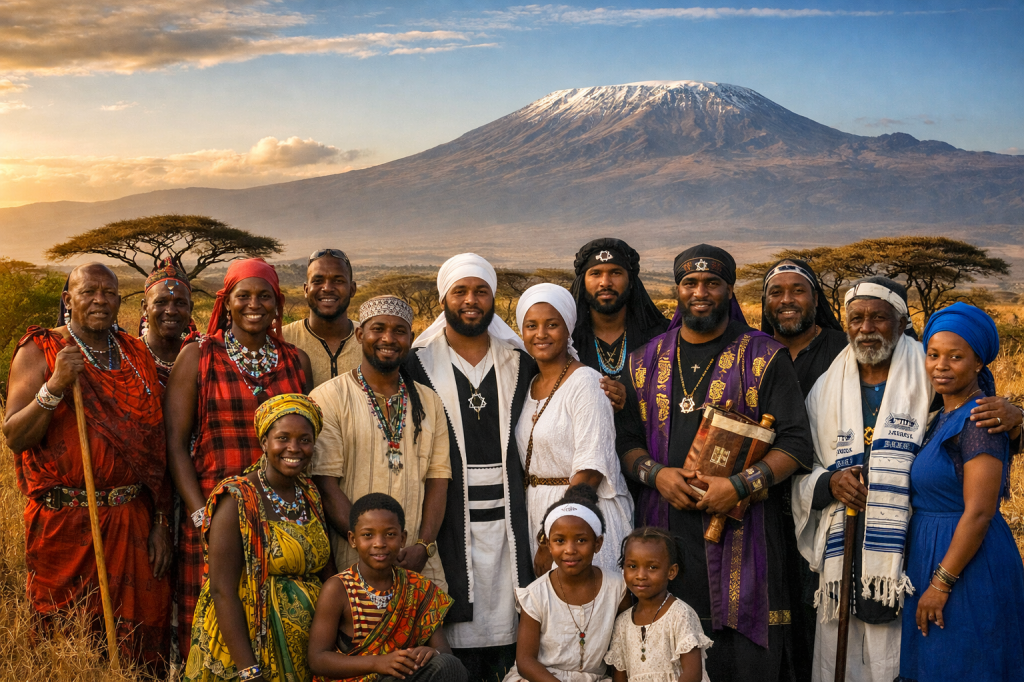
Africa holds a central and indispensable role in biblical prophecy, not as a peripheral landmass, but as a divinely positioned continent woven throughout Scripture from Genesis to Revelation. The Bible consistently presents Africa as a place of refuge, judgment, preservation, and future redemption. When read carefully through a prophetic lens, Africa emerges as a key stage upon which God’s purposes for humanity and Israel unfold.
From the earliest chapters of Genesis, Africa is present in sacred geography. The land associated with Cush, Mizraim, Put, and Ethiopia traces directly to the sons of Ham, whose descendants populated much of the African continent. Genesis records that one of the four rivers flowing from Eden, Gihon, compassed the whole land of Ethiopia, establishing Africa’s presence at the dawn of human history (Genesis 2:13, KJV). This placement signals Africa’s foundational role in God’s original creation narrative.
Africa also serves as a place of divine preservation. Egypt, located in northeast Africa, became the refuge for Joseph and later the entire family of Jacob during famine. God used Africa to sustain the covenant line through which Israel would emerge, demonstrating that African lands were instrumental in preserving the people of promise (Genesis 47:11–12, KJV).
The prophetic significance of Africa intensifies in the Exodus narrative. Egypt stands as both a place of refuge and bondage, illustrating how African territories function in God’s redemptive plan as spaces of testing, judgment, and eventual deliverance. The plagues upon Egypt were not random acts, but prophetic demonstrations of God’s supremacy over nations and false gods (Exodus 12:12, KJV).
Africa’s role extends beyond ancient Israel into messianic prophecy. The Gospel of Matthew records that Jesus Christ was taken into Egypt as a child to escape Herod’s massacre, fulfilling the prophecy, “Out of Egypt have I called my son” (Matthew 2:15, KJV). This moment affirms Africa as a protector of the Messiah and a fulfillment point of prophetic Scripture.
The prophets repeatedly reference African nations in end-time contexts. Isaiah speaks of Ethiopia as a land “shadowing with wings,” sending ambassadors by the sea, indicating geopolitical and prophetic relevance in global affairs (Isaiah 18:1–2, KJV). These passages suggest Africa’s involvement in international movements that precede divine intervention.
Psalm 68 explicitly foretells Africa’s future spiritual awakening, declaring, “Princes shall come out of Egypt; Ethiopia shall soon stretch out her hands unto God” (Psalm 68:31, KJV). This verse is widely understood as a prophetic declaration of Africa’s role in worship, restoration, and alignment with God’s kingdom purposes in the last days.
Africa also appears in prophetic judgments. Ezekiel prophesies against Egypt and its allies, including Cush and Put, demonstrating that African nations are not exempt from divine accountability (Ezekiel 30:4–5, KJV). These judgments align Africa with the broader prophetic pattern of nations being weighed according to righteousness and obedience to God.
The book of Daniel includes Africa in visions of global power shifts. The “king of the north” is said to have authority over “the precious things of Egypt,” along with the Libyans and Ethiopians following at his steps (Daniel 11:43, KJV). This prophecy places African nations within end-time geopolitical alignments.
Africa’s prophetic relevance is also seen in the spread of the gospel. Acts records the conversion of the Ethiopian eunuch, a high official who carried the message of Christ back to Africa, signaling the continent’s early and enduring connection to Christian faith (Acts 8:27–39, KJV). This event foreshadows Africa’s role in global evangelism.
The Bible repeatedly challenges Eurocentric interpretations that marginalize Africa. Scripture itself affirms Africa’s proximity to God’s redemptive acts, revealing that African lands and peoples were never spiritually distant or insignificant within biblical history or prophecy.
Africa’s suffering through colonization, enslavement, and exploitation mirrors biblical patterns of oppression followed by divine reckoning. Just as Egypt was judged for its cruelty toward Israel, Scripture warns that nations will be judged for injustice and bloodshed (Genesis 15:14, KJV). This principle reinforces Africa’s prophetic role as both witness and participant in God’s justice.
The prophetic scriptures also emphasize restoration. Isaiah foretells a time when scattered peoples will be brought back to worship the Lord from distant lands, including Africa (Isaiah 11:11, KJV). This regathering theme resonates strongly with African and diasporic histories.
Africa’s inclusion in prophecy demonstrates God’s global sovereignty. Biblical prophecy does not center exclusively on one region, but reveals a God who governs all nations, including those often overlooked or dismissed by human power structures (Acts 17:26, KJV).
The Book of Revelation depicts all nations and peoples standing before God’s throne, which necessarily includes Africa (Revelation 7:9, KJV). This vision affirms Africa’s presence in the culmination of prophetic history, not as a footnote, but as a redeemed participant in God’s eternal kingdom.
Africa’s prophetic significance also lies in its spiritual resilience. Despite centuries of trauma, African spirituality, worship, and biblical literacy remain deeply rooted, aligning with prophecies of endurance and faith under persecution (Matthew 24:13, KJV).
The repeated biblical mention of African lands underscores that prophecy is inseparable from geography. God acts in real places, among real people, and Africa consistently appears as one of those divinely appointed locations.
Understanding Africa’s role in biblical prophecy challenges distorted narratives that separate faith from Black history. Scripture affirms Africa as central to God’s plan, restoring dignity and biblical identity to African peoples worldwide.
Africa’s place in prophecy ultimately points to hope. The same God who used African lands for preservation, judgment, and refuge promises restoration, worship, and inclusion in His kingdom. This assures that Africa’s story is not marginal, but prophetic.
In the unfolding of biblical prophecy, Africa stands as a witness to God’s faithfulness across generations. From Eden to the Exodus, from the Messiah’s refuge to the final gathering of nations, Africa remains essential to the divine narrative, confirming that God’s promises encompass all lands and all peoples according to His sovereign will.
References
The Holy Bible, King James Version. (1769/2017). Cambridge University Press.
Genesis 2:13 (King James Version).
Genesis 47:11–12 (King James Version).
Exodus 12:12 (King James Version).
Genesis 15:14 (King James Version).
Psalm 68:31 (King James Version).
Isaiah 11:11 (King James Version).
Isaiah 18:1–2 (King James Version).
Ezekiel 30:4–5 (King James Version).
Daniel 11:43 (King James Version).
Matthew 2:15 (King James Version).
Matthew 24:13 (King James Version).
Acts 8:27–39 (King James Version).
Acts 17:26 (King James Version).
Revelation 7:9 (King James Version).
Discover more from THE BROWN GIRL DILEMMA
Subscribe to get the latest posts sent to your email.
 THE BROWN GIRL DILEMMA