
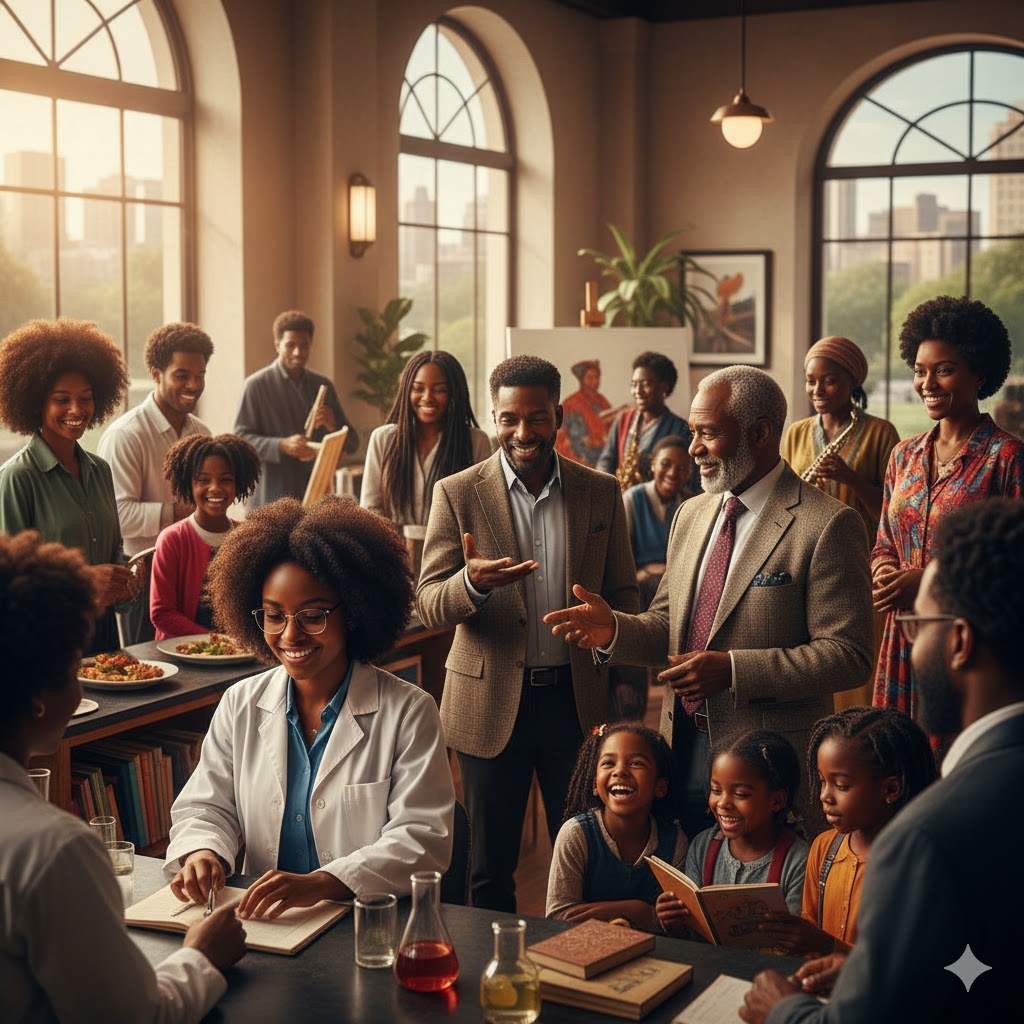
Brown skin tells a story written in melanin, history, and resilience. It is a tapestry of ancestors who survived oppression, fought for freedom, and cultivated culture. To be brown is to carry that legacy, to stand on the shoulders of those who came before, and to embrace identity with pride and consciousness.
Brilliance is inherent in the brown experience. Historically, African civilizations such as Mali, Kush, and Songhai produced scholars, leaders, and innovators whose contributions shaped the world. This intellect is not only historical but living, manifesting in contemporary achievements across academia, arts, and leadership (Asante, 2007).
Belovedness is divine. Psalm 139:14 (KJV) reminds us, “I will praise thee; for I am fearfully and wonderfully made: marvellous are thy works; and that my soul knoweth right well.” This scripture affirms that every brown life is crafted with intention, valued, and worthy of love.
To embrace brownness fully is to resist colorism and societal bias. Hunter (2007) emphasizes the psychological impact of colorism on self-esteem. Rejecting internalized messages of inferiority allows the brown individual to celebrate their heritage and cultivate self-respect.
Brilliance extends beyond natural intelligence; it encompasses creativity, innovation, and strategic thinking. Brown people have continuously contributed to literature, science, music, and politics, demonstrating a multidimensional brilliance that defies stereotypical limitations.
Belovedness requires self-love and acceptance. 1 John 4:19 (KJV) declares, “We love him, because he first loved us.” Recognizing God’s love allows brown individuals to extend that grace inward, affirming their worth and embracing their identity.
The intersection of brownness and brilliance challenges societal narratives. By excelling academically, professionally, and creatively, brown people rewrite misrepresentations and assert visibility, demonstrating the intellectual and cultural wealth of their communities.
Being beloved is also relational. Proverbs 27:17 (KJV) teaches, “Iron sharpeneth iron; so a man sharpeneth the countenance of his friend.” Through supportive networks, mentorship, and community engagement, brown individuals cultivate love, trust, and mutual growth.
Brownness carries historical memory. Awareness of ancestral struggles—from slavery to colonization—anchors identity in resilience. This awareness transforms inherited trauma into motivation, perseverance, and empowerment.
Brilliance flourishes when nurtured. Education, curiosity, and mentorship are tools that enable brown individuals to cultivate gifts and achieve their full potential. The celebration of intellect becomes a radical act of self-determination.
Belovedness involves forgiveness and compassion. Colossians 3:13 (KJV) urges, “Forbearing one another, and forgiving one another, if any man have a quarrel against any: even as Christ forgave you, so also do ye.” Embracing love for self and others strengthens relational bonds and reinforces emotional wellbeing.
Brown bodies are sites of beauty, power, and representation. From the elegance of historical leaders to contemporary icons, physicality is intertwined with identity, affirming dignity and aesthetic pride.
Brilliance is also moral and spiritual. Proverbs 4:7 (KJV) states, “Wisdom is the principal thing; therefore get wisdom: and with all thy getting get understanding.” Ethical and spiritual wisdom enhances intellectual brilliance, guiding decisions and character.
Being beloved requires self-protection and boundary setting. Recognizing one’s value means refusing environments or relationships that diminish self-worth, while cultivating spaces that nurture growth and affirmation.
Brown identity intersects with culture. Music, literature, and traditions are vessels of storytelling and creativity. By engaging with these cultural expressions, brown people celebrate heritage, history, and collective brilliance.
Brilliance persists in adversity. Overcoming systemic oppression, prejudice, and marginalization demonstrates resilience, strategic thinking, and emotional intelligence, all facets of true genius.
Belovedness demands gratitude. Psalm 118:24 (KJV) reminds, “This is the day which the LORD hath made; we will rejoice and be glad in it.” Recognizing daily blessings reinforces joy, self-worth, and connection to divine purpose.
Brownness is revolutionary. Simply existing with pride, intellect, and authenticity challenges narratives of inferiority and inspires future generations to embrace their identity fully.
Brilliance is communal as well as personal. By mentoring, teaching, and uplifting others, brown individuals multiply the impact of knowledge, wisdom, and creativity within their communities.
To be beloved is to affirm life, celebrate achievements, and honor one’s journey. It is a holistic recognition of self, integrating history, intellect, emotion, and spirituality into an empowered existence.
Brown. Brilliant. Beloved. It is an identity, a declaration, and a daily choice. It is the integration of ancestry, intellect, and divine affirmation—a continuous act of living fully, resisting oppression, and embodying purpose.
References
Psalm 139:14, KJV.
1 John 4:19, KJV.
Proverbs 27:17, KJV.
Colossians 3:13, KJV.
Proverbs 4:7, KJV.
Psalm 118:24, KJV.
Asante, M. K. (2007). The History of Africa: The Quest for Eternal Harmony. Routledge.
Hunter, M. L. (2007). The Persistent Problem of Colorism: Skin Tone, Status, and Inequality. Sociology Compass, 1(1), 237–254.
Gates, H. L. (2019). The Black Experience in America: Identity, Culture, and Achievement. New York: Vintage Press.
Du Bois, W. E. B. (2007). The Souls of Black Folk. Oxford University Press.
Discover more from THE BROWN GIRL DILEMMA
Subscribe to get the latest posts sent to your email.
 THE BROWN GIRL DILEMMA