
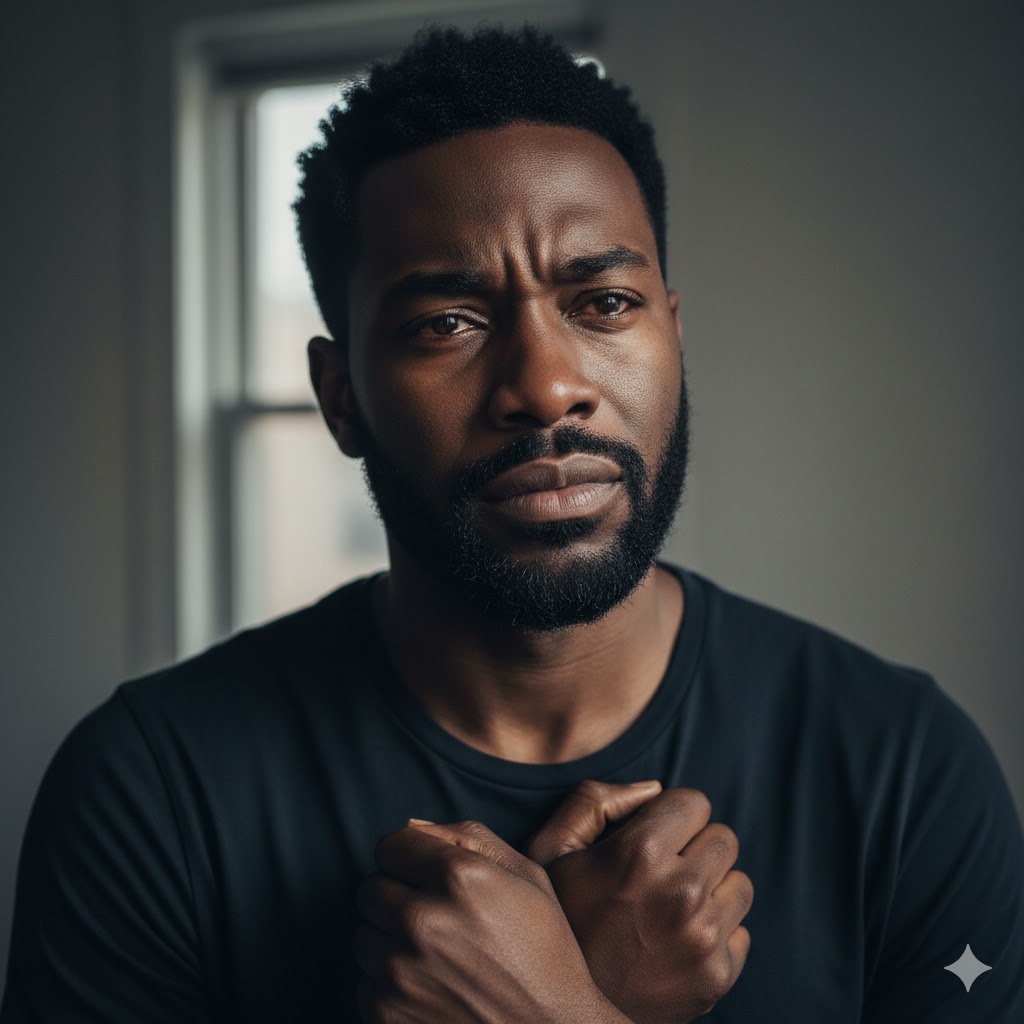
From boyhood, society places a heavy expectation on males: be strong, be tough, be unshakeable. These early lessons become the foundation of a culture that praises male resilience while quietly punishing male vulnerability. The cost of this expectation is profound, shaping men’s emotional lives in ways that often go unseen.
Many boys are taught to “man up” before they even understand what emotions are. Crying, expressing fear, or asking for help are discouraged, replaced by messages that equate emotional expression with weakness (Pollack, 1998).
As these boys grow, they internalize the belief that silence is noble and vulnerability is shameful. Emotional restraint becomes a performance, and the world applauds them for pretending everything is fine.
Men often receive admiration for enduring pain without complaint. But beneath that admiration lies a dangerous expectation: strength is measured by how well a man hides his suffering. This perception leads to emotional suppression rather than emotional resilience (Addis & Mahalik, 2003).
The social script of masculinity teaches men to prioritize stoicism, turning emotional expression into a forbidden language. Over time, many lose the ability to articulate their inner world, leading to frustration, misunderstanding, and broken relationships.
Workplaces reinforce this silence. Men who admit stress or mental fatigue fear being seen as weak or incapable. Professional culture rewards those who suffer quietly and penalizes those who reveal human limitations (Mahalik et al., 2003).
Romantic relationships reveal another dimension of this silent burden. Many men desperately want emotional intimacy but fear rejection or ridicule if they open up. This creates a painful paradox: they crave connection but have been conditioned to avoid the vulnerability that makes connection possible.
Friendships among men are often limited by unspoken rules—jokes, competition, and surface conversation are acceptable, but deeper emotional sharing is discouraged. This results in profound isolation masked by casual companionship (Way, 2011).
Mental health is one of the greatest casualties of this silence. Men are statistically less likely to seek therapy, less likely to share their struggles, and more likely to suffer from untreated depression and anxiety (Addis & Mahalik, 2003).
Society encourages women to express emotion and discourages men from doing the same, creating an emotional double standard. The result is that men appear emotionally distant, not because they lack feeling, but because they have never been given permission to feel freely.
Cultural narratives often depict men as protectors and problem-solvers, roles that leave little room for emotional need. When men do express vulnerability, they may feel they are failing in their masculine responsibilities (Connell, 2005).
Media representations reinforce the expectation that “real men” absorb pain without complaint. Heroes in movies and television rarely cry, rarely seek help, and rarely acknowledge internal battles. These depictions shape how society views male strength.
Yet, beneath the surface, many men suffer from emotional numbness. The habit of suppressing feelings becomes so ingrained that some men struggle to identify their emotions at all, a phenomenon psychologists call “alexithymia.”
This emotional suppression affects men’s physical health as well. Research links chronic stress, unresolved trauma, and unexpressed emotion to heart disease, high blood pressure, and shorter life expectancy (Courtenay, 2000).
The pressure to remain strong at all times can lead some men to cope through harmful behaviors—substance abuse, aggression, or withdrawal. These behaviors are not signs of innate toxicity but of emotional exhaustion.
The cost of silence extends to fatherhood. Many fathers want to be emotionally present but were never taught how. When they attempt to bond or express softness, they may feel they are betraying the expectation of strength they were raised with.
Healing begins when men recognize that vulnerability is not the opposite of strength but a deeper expression of it. Admitting pain, fear, or uncertainty requires courage, not weakness.
Communities must also play a role by creating safe spaces for men to share, heal, and redefine masculinity in ways that honor emotional humanity. When men feel supported in vulnerability, they are more willing to step into wholeness.
Ultimately, society must reconsider its definition of strength. True strength is not silence. It is honesty. It is self-awareness. It is the willingness to confront pain rather than bury it.
When men are free to express their struggles without judgment, they reclaim parts of themselves that silence once stole. And in that reclamation, they discover that the strongest thing a man can be is fully human.
References
- Addis, M. E., & Mahalik, J. R. (2003). Men, masculinity, and the contexts of help seeking. American Psychologist, 58(1), 5–14.
- Connell, R. W. (2005). Masculinities (2nd ed.). University of California Press.
- Courtenay, W. (2000). Constructions of masculinity and their influence on men’s well-being: A theory of gender and health. Social Science & Medicine, 50(10), 1385–1401.
- Mahalik, J. R., Good, G. E., & Englar-Carlson, M. (2003). Masculinity scripts and men’s health. American Journal of Men’s Health, 2(2), 82–92.
- Pollack, W. (1998). Real boys: Rescuing our sons from the myths of boyhood. Henry Holt.
- Way, N. (2011). Deep secrets: Boys’ friendships and the crisis of connection. Harvard University Press.
Discover more from THE BROWN GIRL DILEMMA
Subscribe to get the latest posts sent to your email.
 THE BROWN GIRL DILEMMA