
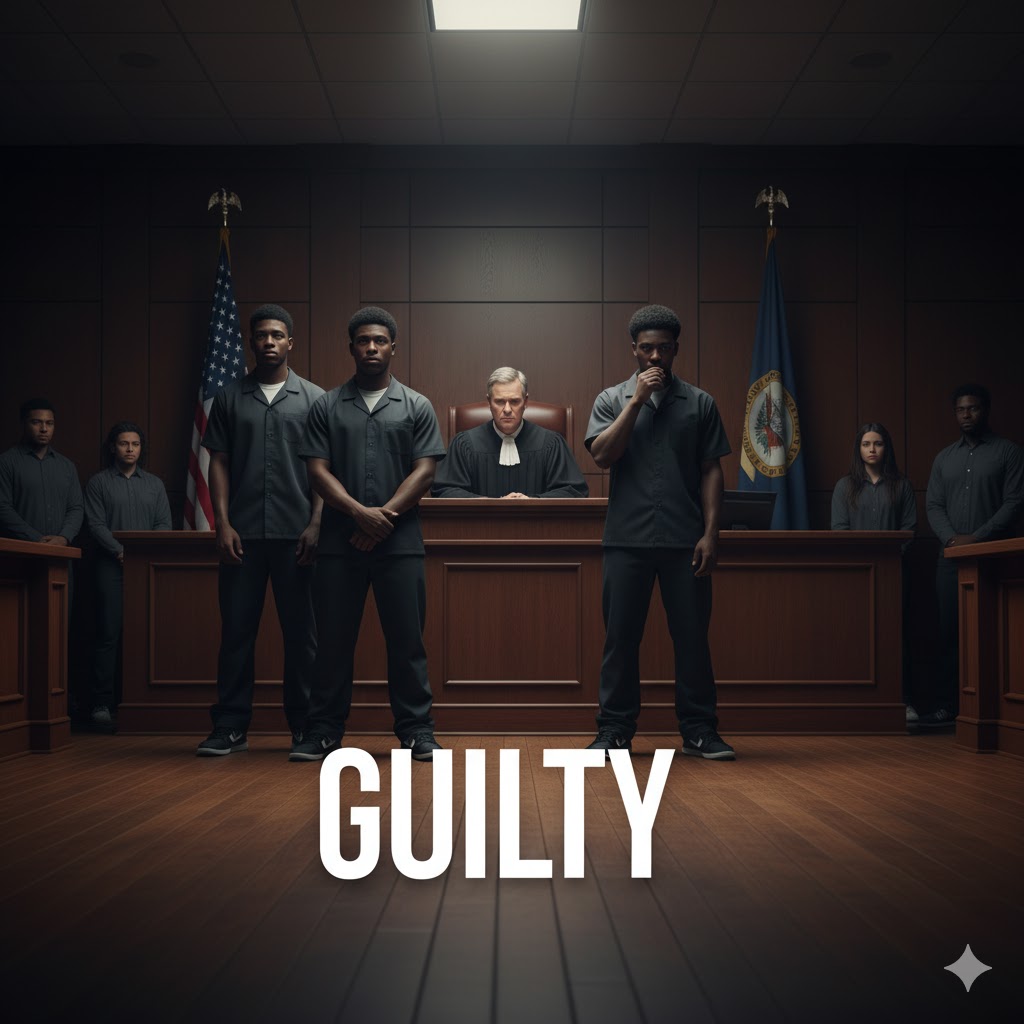
Racial profiling is one of the most pervasive forms of systemic racism in modern society. At its core, it refers to law enforcement, institutions, or individuals targeting or treating people differently primarily because of their race, ethnicity, or national origin, rather than their behavior or credible evidence. (ACLU, n.d.)
The term has its roots in historical forms of discrimination, including slave patrols and discriminatory policing in the post-slavery United States. Over time, it evolved into a widespread practice used to justify surveillance, stops, and searches of Black communities disproportionately.
Racial profiling is not limited to policing. It manifests in education, housing, lending, employment, retail spaces, and travel, affecting Black individuals at almost every stage of life. The cumulative impact is systemic disadvantage and heightened exposure to social, economic, and legal risks.
In law enforcement, studies consistently show that Black people are more likely to be stopped, searched, and arrested than their White counterparts. For example, research using large-scale smartphone location data found that police presence is disproportionately concentrated in Black neighborhoods, independent of crime rates. (Chen et al., 2021)
Traffic stops provide a clear example. Black drivers are more likely to be stopped, searched, and ticketed than White drivers, even when controlling for behavior and location. (Phillips et al., 2017) These interactions reinforce the perception that Black individuals are inherently suspicious, perpetuating mistrust between communities and law enforcement.
Data from the Kaiser Family Foundation shows that nearly 70% of Black Americans report experiencing discrimination or police mistreatment in their lifetime, with almost half stating they felt their lives were in danger during these encounters. (KFF, 2020)
The psychological impact of racial profiling is profound. Exposure to profiling increases stress, anxiety, and trauma among Black individuals. Research shows that both direct and vicarious experiences of profiling contribute to long-term mental health disparities. (PubMed, 2020)
In the workplace, racial profiling can take the form of heightened scrutiny, biased disciplinary actions, and assumptions of incompetence. Black employees often report feeling monitored or distrusted by supervisors and colleagues based solely on racial assumptions.
Educational settings also reflect these patterns. Black students are disproportionately disciplined, searched, or subject to zero-tolerance policies. This early exposure to profiling shapes perceptions of authority and social justice, affecting educational outcomes and long-term life trajectories.
Retail environments often engage in what is called “shopping while Black.” Black shoppers are more likely to be followed, questioned, or suspected of theft compared to White shoppers. Local studies indicate that such profiling contributes to feelings of exclusion and social marginalization.
Housing policies also reflect profiling. Landlords, property managers, and neighborhood associations may treat Black applicants as higher risk, enforce codes more strictly in Black neighborhoods, or limit access to desirable housing. These practices contribute to residential segregation and wealth disparities.
Lending institutions also profile Black borrowers. Studies demonstrate that Black applicants are more likely to be denied loans, offered higher interest rates, or subjected to stricter scrutiny, even when controlling for income and creditworthiness. (Federal Reserve, 2019)
In travel and airports, profiling manifests as disproportionately high rates of stops and security screenings of Black travelers. For example, a news report highlighted that Black passengers at major U.S. airports faced more frequent detentions than their share of overall travelers. (People, 2023)
The legal system is deeply affected by profiling. Black defendants are more likely to face harsher charges, longer sentences, and pretrial detention compared to White defendants. Profiling perpetuates inequities in criminal justice outcomes, reinforcing structural racism.
Community trust is eroded when profiling is widespread. Black communities often report fear and suspicion of authorities, limiting cooperation and civic participation. This distrust has long-term consequences for social cohesion and public safety.
Profiling also exacerbates economic disparities. Encounters with law enforcement and legal systems disrupt employment, schooling, and economic productivity, perpetuating cycles of poverty in Black communities.
The historical roots of profiling, including slave patrols and Jim Crow policing, continue to shape modern practice. These legacies demonstrate how profiling is less an isolated problem and more a systemic feature of racialized institutions.
Structural factors, including zoning, policing budgets, and data collection practices, perpetuate profiling. Lack of transparency and accountability in stop-and-search procedures allows discriminatory practices to continue largely unchecked.
Policy interventions are critical. Mandatory data collection on stops, searches, and arrests, coupled with community oversight and bias training, can mitigate racial profiling. Redress mechanisms for victims are essential to ensure accountability.
Technology can both help and harm. While data analytics may identify discriminatory patterns, surveillance technologies, facial recognition, and predictive policing often disproportionately target Black neighborhoods, exacerbating profiling.
Education and public awareness campaigns are necessary to reduce the social acceptability of profiling. Community engagement, anti-bias training, and advocacy for civil rights strengthen resilience against discriminatory practices.
Culturally, racial profiling affects Black identity and experience. The cumulative stress of profiling contributes to racial battle fatigue, affecting physical health, mental health, and social cohesion. (Clark et al., 1999)
Media representation shapes perception. Over-representation of Black people in crime reporting reinforces stereotypes and justifies profiling in the public imagination. Counter-narratives are critical to challenging systemic bias.
Racial profiling is an ethical dilemma. It violates principles of justice, fairness, and equal protection under law. The practice undermines democratic norms and perpetuates intergenerational trauma.
Ultimately, racial profiling affects every facet of life for Black people: safety, employment, education, health, housing, and community life. Combating it requires structural, cultural, and legal interventions.
References
American Civil Liberties Union. (n.d.). Racial profiling | Race and criminal justice. Retrieved from https://www.aclu.org/issues/racial-justice/race-and-criminal-justice/racial-profiling
Chen, M. K., Christensen, K. L., John, E., Owens, E., & Zhuo, Y. (2021). Smartphone data reveal neighborhood-level racial disparities in police presence. arXiv. Retrieved from https://arxiv.org/abs/2109.12491
Clark, R., Anderson, N. B., Clark, V. R., & Williams, D. R. (1999). Racism as a stressor for African Americans: A biopsychosocial model. American Psychologist, 54(10), 805–816.
Federal Reserve. (2019). Discrimination in lending: Evidence and policy. Retrieved from https://www.federalreserve.gov/publications/files/2019-discrimination-lending.pdf
Kaiser Family Foundation. (2020, June 18). Poll: 7 in 10 Black Americans say they have experienced incidents of discrimination or police mistreatment in their lifetime. Retrieved from https://www.kff.org/racial-equity-and-health-policy/press-release/poll-7-in-10-black-americans-say-they-have-experienced-incidents-of-discrimination-or-police-mistreatment-in-their-lifetime-including-nearly-half-who-felt-their-lives-were-in-danger/
Phillips, C., Goel, S., et al. (2017). A large-scale analysis of racial disparities in police stops across the United States. arXiv. Retrieved from https://arxiv.org/abs/1706.05678
PBS NewsHour. (2016, August 31). Nearly a quarter of young Black people say they’ve been harassed by police, poll finds. Retrieved from https://www.pbs.org/newshour/nation/young-black-adults-less-trusting-police-poll-finds/
People. (2023). Tyler Perry calls out racial profiling of Black airport travelers. Retrieved from https://people.com/tyler-perry-calls-out-racial-profiling-of-black-airport-travelers-8659849
PubMed. (2020). Racial interactions and health consequences: A systematic review. Retrieved from https://pubmed.ncbi.nlm.nih.gov/32253746/
Discover more from THE BROWN GIRL DILEMMA
Subscribe to get the latest posts sent to your email.
 THE BROWN GIRL DILEMMA