
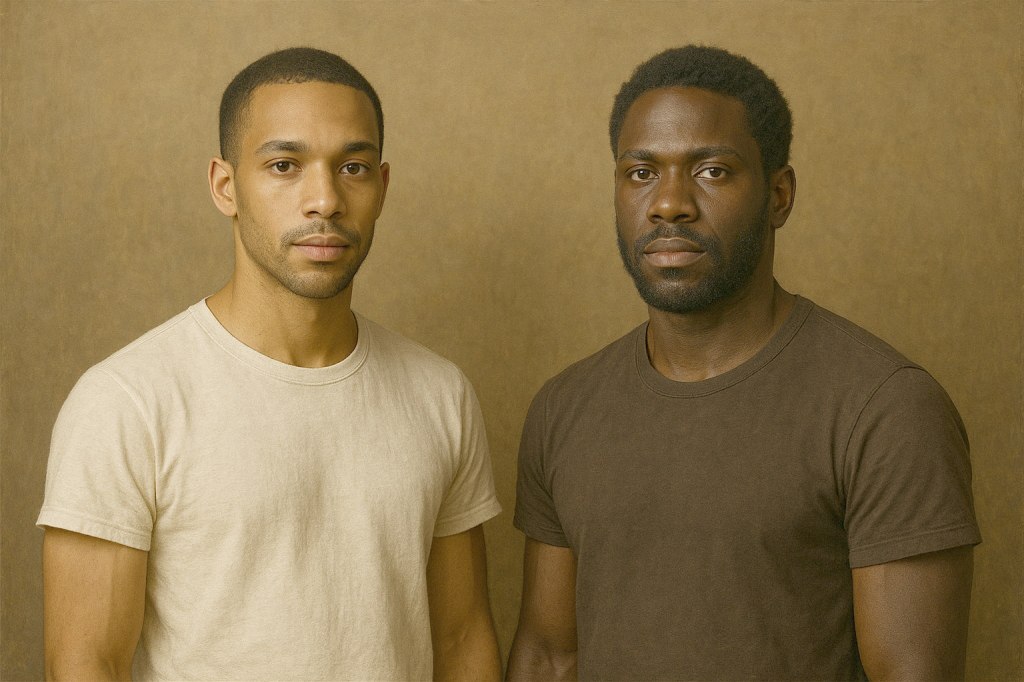
Colorism, the preferential treatment of lighter skin within a racial group, remains one of the most insidious and unspoken wounds in the Black community. For Black men, its effects stretch across centuries—from the brutal days of slavery to the modern workplace and the realm of romantic relationships. This silent divider, rooted in white supremacy, has shaped self-perception, opportunity, and the psychology of manhood itself.
During slavery, color determined labor and proximity to power. Lighter-skinned Black men, often the offspring of white slave owners, were more likely to work inside the plantation homes, serving as butlers, drivers, or craftsmen. In contrast, darker-skinned men endured the harshest field labor, under the blazing sun, viewed as stronger but less intelligent. This early stratification sowed seeds of division that still bear fruit in today’s society.
The color hierarchy in slavery was not only a social construct—it was a method of control. By favoring lighter slaves and pitting them against darker ones, slave masters ensured that unity among Black men remained fractured. Scripture warns of such division, “Every kingdom divided against itself is brought to desolation” (Matthew 12:25, KJV). Colorism became one of the most effective psychological chains ever forged.
After emancipation, many lighter-skinned Black men found greater access to education and economic advancement through institutions that valued European features. Some were even able to “pass” as white to escape racial discrimination entirely. Meanwhile, darker men were left to face the full brutality of Jim Crow laws, systemic oppression, and exclusion from economic resources. This dual reality bred resentment, confusion, and a longing for acceptance that persists through generations.
In modern times, colorism still influences the way Black men are perceived in the workforce. Studies reveal that lighter-skinned Black men often receive more job offers, higher salaries, and better treatment than their darker counterparts (Keith & Herring, 1991). This reality echoes James 2:9, “But if ye have respect to persons, ye commit sin, and are convinced of the law as transgressors” (KJV). Society’s preference for lightness continues to sin against God’s creation by judging men based on melanin rather than merit.
In love and relationships, colorism manifests in subtle but damaging ways. Dark-skinned men are often stereotyped as hypermasculine, aggressive, or intimidating, while lighter-skinned men are portrayed as more desirable or approachable. Media representation reinforces these narratives, making it difficult for Black men to escape the psychological confines of stereotype.
Many Black women, themselves victims of colorism, have internalized similar biases. Preference for lighter-skinned men can mirror a subconscious belief that proximity to whiteness offers safety or beauty. Yet, as Proverbs 31:30 reminds us, “Favour is deceitful, and beauty is vain: but a woman that feareth the Lord, she shall be praised” (KJV). God’s measure of manhood is not complexion but character.
The entertainment industry has historically perpetuated color-based casting. From old Hollywood to hip-hop videos, lighter-skinned men were often depicted as romantic leads or cultural icons, while darker men were relegated to roles of brute strength or villainy. This not only limited opportunities but distorted self-image for young Black boys growing up without balanced representation.
Within the Black community, these divisions create invisible walls. Darker-skinned men may feel alienated or undervalued, developing insecurities masked as arrogance or emotional detachment. Conversely, lighter-skinned men sometimes face accusations of not being “Black enough,” leading to confusion about belonging and cultural authenticity.
This internal conflict is a remnant of colonial thinking that sought to rank human worth by appearance. The Apostle Paul’s teaching in Acts 17:26, “And hath made of one blood all nations of men for to dwell on all the face of the earth,” (KJV) directly dismantles this lie. God’s word affirms equality where man’s systems deny it.
The psychological damage of colorism among Black men is also seen in competition and mistrust. Brotherhood weakens when one man’s skin tone becomes another’s burden. The enemy exploits these differences to divide families, churches, and communities. Unity, which should be their strength, becomes fractured by suspicion and jealousy.
Historically, colorism also influenced leadership and politics within the Black race. During the early 20th century, the “Blue Vein Societies” and elite circles favored light-skinned men, granting them influence in civil and educational institutions. This bias hindered collective liberation, as some leaders subconsciously sought validation through proximity to whiteness rather than solidarity with their darker brethren.
Spiritually, colorism contradicts divine creation. Genesis 1:27 declares, “So God created man in his own image.” To despise one’s brother for the shade of his skin is to insult the very image of God. Black men, whether light or dark, embody divine beauty and strength born of survival and grace.
Colorism also shapes dating dynamics in the age of social media. Online algorithms often amplify Eurocentric features, pushing lighter-skinned Black men to the forefront of visibility. This artificial hierarchy damages self-esteem and perpetuates false notions of worthiness. The result is an identity crisis masked by aesthetics and status.
In workplaces, darker-skinned Black men report more incidents of racial profiling, microaggressions, and stereotyping. Their assertiveness is often mistaken for aggression, while their confidence is labeled as arrogance. Meanwhile, lighter men may be tokenized or expected to conform to white comfort. Both experiences rob Black men of full authenticity.
Even in brotherhood, sports, and ministry, shade bias can subtly influence trust and leadership preference. The healing of this generational trauma requires spiritual renewal, honesty, and repentance. “Be kindly affectioned one to another with brotherly love; in honour preferring one another” (Romans 12:10, KJV).
Healing from colorism begins when Black men learn to see each other as divine reflections rather than societal projections. The rebuilding of unity must be intentional—celebrating every shade as a manifestation of God’s artistry. Only then can they reclaim identity beyond colonial lies.
In the end, colorism is not merely a social problem—it is a spiritual sickness born of racism. It thrives where ignorance reigns and where self-hate is disguised as preference. Through faith, education, and love, the Black man can rediscover his worth not in complexion, but in divine purpose.
For centuries, Black men have been divided by hue yet united by struggle. The path to healing requires collective repentance and re-education. When Black men recognize that their worth is not in tone but in testimony, they reclaim what slavery and colonization tried to destroy: brotherhood, dignity, and divine identity.
References
Holy Bible, King James Version. (1611).
Keith, V. M., & Herring, C. (1991). Skin tone and stratification in the Black community. American Journal of Sociology, 97(3), 760–778.
Russell, K., Wilson, M., & Hall, R. (2013). The Color Complex (Revised): The Politics of Skin Color Among African Americans. Anchor Books.
Hunter, M. (2007). The persistent problem of colorism: Skin tone, status, and inequality. Sociology Compass, 1(1), 237–254.
Discover more from THE BROWN GIRL DILEMMA
Subscribe to get the latest posts sent to your email.
 THE BROWN GIRL DILEMMA