
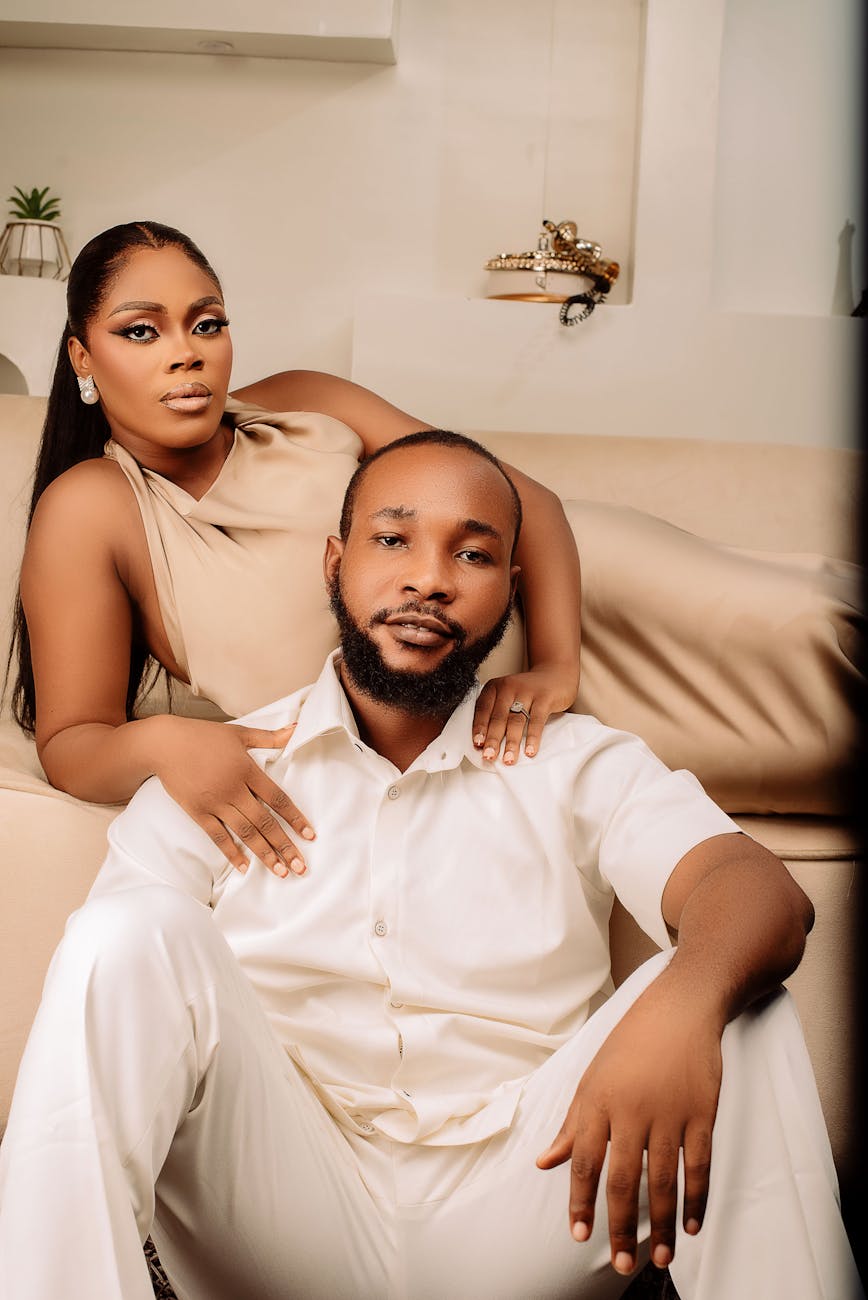
The concept of beauty has always been shaped by cultural narratives, economic power, and historical context. When we discuss good-looking Black people, we are not merely speaking about aesthetics but about visibility, identity, and resistance. The image of Black beauty has long been distorted by Western ideals that equate attractiveness with proximity to whiteness. Yet, in the twenty-first century, representation of beautiful Black people in media, art, and fashion is reshaping how the world perceives Blackness itself (hooks, 1992).
Historically, Eurocentric beauty standards dominated global consciousness, positioning straight hair, lighter skin, and narrow facial features as the epitome of beauty. This framework marginalized darker-skinned people, especially Black individuals whose features deviated from these ideals. The absence of Black beauty in mainstream culture contributed to generations of internalized inferiority and self-rejection (Craig, 2006).
In response, the visibility of good-looking Black people in popular media has become an act of reclamation. Every time a dark-skinned model, actor, or influencer graces the cover of a magazine or headlines a major campaign, it challenges the longstanding myth that beauty belongs exclusively to whiteness. Representation, in this sense, is not about vanity—it is about validation and empowerment.
The struggle for representation began long before modern media. During the Harlem Renaissance, artists and intellectuals like Langston Hughes and Zora Neale Hurston celebrated Black beauty as divine and dignified, countering racist depictions that dehumanized African features. Their work laid the foundation for a cultural revolution that continues to this day (Lewis, 1997).
In contemporary culture, figures such as Lupita Nyong’o, Halle Berry, and Idris Elba have redefined the parameters of beauty. Lupita’s global rise, particularly after her Oscar win, symbolized the triumph of authentic Black beauty in a world accustomed to Eurocentric images. Her dark skin and natural hair became revolutionary symbols of pride, challenging the narrative that darker tones are less desirable (Tate, 2009).
Yet, representation is not simply about presence—it is also about the context of that presence. Too often, the visibility of good-looking Black people is tokenized, reduced to diversity quotas rather than genuine inclusion. When Black beauty is commercialized without cultural understanding, it risks becoming aesthetic appropriation rather than affirmation (Russell, Wilson, & Hall, 2013).
Fashion and film industries have both played complex roles in this transformation. The modeling world, once dominated by Eurocentric ideals, is gradually opening space for diverse complexions and textures. Icons like Naomi Campbell, Tyra Banks, and more recently Adut Akech and Duckie Thot, have proven that African beauty is not niche—it is universal. Their success transcends race and challenges global beauty hierarchies.
In cinema, Black actors have long battled typecasting. Good-looking Black men, for instance, have been portrayed either as hypersexualized threats or desexualized side characters. Similarly, beautiful Black women were often cast as maids, temptresses, or comic relief. The emergence of multifaceted, empowered roles for Black leads marks progress in dismantling these harmful stereotypes (Bogle, 2016).
Television and streaming media have become powerful tools for this cultural shift. Shows like Insecure, Black Panther, and Queen Sugar have showcased Black beauty in its full range—dark and light, natural and polished, urban and regal. The celebration of melanin on screen resonates deeply with audiences who finally see reflections of themselves that are dignified, complex, and desirable.
However, the fight for authentic representation remains ongoing. Even within the Black community, colorism continues to dictate which forms of beauty are celebrated. Lighter-skinned individuals often receive more media visibility, perpetuating internal hierarchies that mirror colonial ideologies (Hunter, 2005). True representation must embrace all shades, hair textures, and body types—not just those that align with marketable ideals.
Social media has become both a battlefield and a beacon. Platforms like Instagram and TikTok amplify diverse expressions of beauty, giving power back to individuals. Hashtags like #BlackIsBeautiful and #MelaninMagic have become movements, celebrating features once ridiculed. Yet, digital spaces also reproduce biases—filters that lighten skin or algorithms that prioritize Eurocentric faces show that the algorithm itself can be an instrument of oppression (Noble, 2018).
Representation is also spiritual. When Black people embrace their God-given appearance, they honor divine intention. Psalm 139:14 declares, “I will praise thee; for I am fearfully and wonderfully made.” This affirmation transcends aesthetics—it reclaims identity as sacred. To see oneself as beautiful, despite centuries of indoctrination, is an act of faith and liberation.
Moreover, Black beauty challenges the notion that attractiveness is static. It evolves through rhythm, resilience, and resistance. From the sculpted cheekbones of African queens to the modern artistry of Afrofuturism, beauty becomes both heritage and prophecy. The good-looking Black person is not merely admired but remembered as a symbol of survival and power (Asante, 2003).
The conversation about beauty also extends to masculinity. Good-looking Black men have had to navigate stereotypes of aggression and hypermasculinity. Figures like Idris Elba, Chadwick Boseman, and Shemar Moore have reshaped this image, merging strength with sophistication and sensitivity. Their visibility encourages young Black men to see beauty not as vanity, but as confidence rooted in self-respect.
In literature and music, the aesthetics of Blackness continue to inspire global admiration. Artists like Erykah Badu, Jill Scott, and Kendrick Lamar weave visual and lyrical narratives that celebrate Black beauty as divine expression. Their work rejects artificial conformity, instead embracing Afrocentric identity as a source of creative power.
The representation of good-looking Black people matters because visibility is validation. For centuries, Black faces were excluded from billboards, film screens, and fashion spreads. Today, each appearance—whether in a global campaign or a local classroom—challenges the world to see beauty beyond prejudice. It tells every young Black child that their reflection is enough.
Still, the work is unfinished. The beauty industry must continue to diversify leadership and decision-making. Representation cannot stop at faces—it must include the voices and visions behind the camera, the designers behind the clothes, and the editors behind the magazines. Equity in representation requires structural change, not symbolic gestures.
Ultimately, good-looking Black people embody more than visual appeal—they represent resilience, divinity, and depth. Their beauty tells a story of overcoming centuries of erasure and reclaiming the narrative of worth. Each smile, each portrait, each performance becomes a testimony that Black is not just beautiful—it is essential.
As Galatians 3:28 reminds us, “There is neither Jew nor Greek, bond nor free, male nor female: for ye are all one in Christ Jesus.” Beauty, therefore, is not a hierarchy but a harmony. When representation reflects this truth, humanity itself becomes more whole.
The recognition of good-looking Black people is not about validation from others but liberation from false standards. It is the realization that every shade, texture, and feature reflects divine creativity. When Black beauty stands unapologetically in the light, it does more than inspire—it transforms the very definition of beauty itself.
References
Asante, M. K. (2003). Afrocentricity: The Theory of Social Change. African American Images.
Bogle, D. (2016). Toms, Coons, Mulattoes, Mammies, and Bucks: An Interpretive History of Blacks in American Films. Bloomsbury Publishing.
Craig, M. L. (2006). Race, beauty, and the tangled knot of a guilty pleasure. Feminist Theory, 7(2), 159–177.
hooks, b. (1992). Black Looks: Race and Representation. South End Press.
Hunter, M. L. (2005). Race, Gender, and the Politics of Skin Tone. Routledge.
Lewis, D. L. (1997). When Harlem Was in Vogue. Penguin Books.
Noble, S. U. (2018). Algorithms of Oppression: How Search Engines Reinforce Racism. NYU Press.
Russell, K., Wilson, M., & Hall, R. (2013). The Color Complex (Revised): The Politics of Skin Color Among African Americans. Anchor.
Tate, S. A. (2009). Black Beauty: Aesthetics, Stylization, Politics. Ashgate Publishing.
The Holy Bible, King James Version (KJV). (1611).
Discover more from THE BROWN GIRL DILEMMA
Subscribe to get the latest posts sent to your email.
 THE BROWN GIRL DILEMMA