
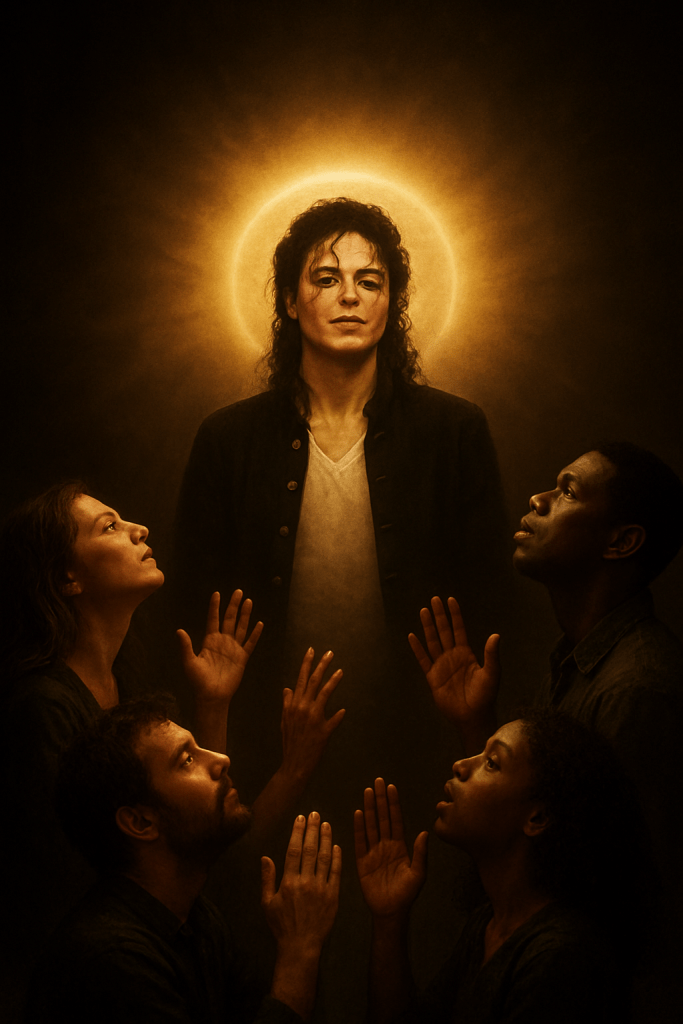
In the modern world, celebrity worship has evolved into a cultural phenomenon that often mirrors religious devotion. From the adoration of musical icons like Michael Jackson and Elvis Presley to the idolization of figures such as Beyoncé and Denzel Washington, society has elevated entertainers to near-divine status. This fascination exposes a deep psychological and spiritual dilemma: humanity’s innate need to worship something greater than itself, redirected toward mortal figures rather than the Creator. As Scripture warns, “Thou shalt have no other gods before me” (Exodus 20:3, KJV).
Celebrity worship taps into an ancient human instinct—the desire to admire, imitate, and find meaning through others. Psychologically, this drive originates from the human need for connection and validation. According to Horton and Wohl (1956), the concept of “parasocial relationships” explains how individuals form one-sided emotional bonds with public figures. These attachments often fill voids of loneliness or inadequacy, creating the illusion of intimacy with someone who represents perfection or success.
The rise of celebrity culture can be traced to the intersection of media, capitalism, and human psychology. The entertainment industry capitalizes on this psychological vulnerability by marketing celebrities as products of aspiration and fantasy. In essence, fans are sold the illusion that by adoring the star, they too participate in their glamour and power. As the Apostle Paul cautioned, “They changed the glory of the incorruptible God into an image made like to corruptible man” (Romans 1:23, KJV).
Michael Jackson’s global fame illustrates the height of this phenomenon. Often referred to as the “King of Pop,” Jackson’s fans displayed forms of devotion that blurred the line between admiration and worship. His death in 2009 triggered worldwide mourning akin to the passing of a religious leader. Sociologists argue that this reflects a transfer of spiritual energy from traditional religion to popular culture. The stage, once symbolic of performance, becomes a modern altar where fame replaces faith.
Elvis Presley, famously dubbed the “King of Rock and Roll,” experienced similar deification. Even decades after his death, Graceland functions as a pilgrimage site for millions. His image—reproduced endlessly on posters, candles, and memorabilia—represents a form of secular sainthood. This reflects what psychologist Raymond Cattell termed “idolized leadership,” where figures of influence become substitutes for spiritual or moral authority. Scripture warns of such misplaced adoration: “Little children, keep yourselves from idols” (1 John 5:21, KJV).
Beyoncé’s cultural influence demonstrates how celebrity worship has adapted in the digital age. Her fan base, famously called the “BeyHive,” exhibits behaviors paralleling religious devotion—defending her reputation online, memorizing her words, and attending concerts with reverence akin to worship. Critics note how her persona blends empowerment with divinity, often portraying herself in celestial imagery. The line between art and idolatry becomes dangerously thin when admiration turns to veneration.
Even actors like Denzel Washington, admired for his talent and faith-driven discipline, are not immune to idolization. While Washington himself frequently credits God for his success, audiences often elevate him to symbolic perfection—confusing his roles and virtues with divine attributes. This conflation reflects humanity’s tendency to worship the image of excellence rather than its Creator. As Jesus stated, “No man can serve two masters” (Matthew 6:24, KJV).
Psychologically, celebrity worship satisfies deep emotional and cognitive needs. The “celebrity worship syndrome,” described by McCutcheon et al. (2002), suggests that excessive admiration can lead to dependency, obsession, and delusion. Individuals begin to integrate the celebrity into their identity, blurring reality with fantasy. In such cases, worship is not merely admiration—it becomes a coping mechanism for self-esteem, loneliness, or unmet purpose.
The entertainment industry exploits this vulnerability by sustaining constant exposure through social media, interviews, and marketing. Algorithms feed audiences with curated perfection, reinforcing parasocial attachments. Psychologist Erich Fromm’s theory of “escape from freedom” posits that individuals seek to lose themselves in something greater when overwhelmed by anxiety or isolation. For many, celebrities become the modern substitute for gods—flawed but glorified beings who embody power, beauty, and control.
From a biblical perspective, celebrity worship represents a form of idolatry that endangers the soul. The Book of Exodus makes this clear: “Thou shalt not make unto thee any graven image” (Exodus 20:4, KJV). In the ancient world, idols were statues of wood and stone; today, they are screens and stages. Whether through music videos, award shows, or social media, modern culture has recreated the temple of Baal in the form of entertainment.
The moral dilemma lies not in appreciation but in obsession. God allows the admiration of human talent, yet He forbids replacing Him with it. When fans attribute salvific power to their favorite artists—believing they “saved” or “completed” them—they cross into spiritual deception. As Paul warned the Galatians, “How turn ye again to the weak and beggarly elements, whereunto ye desire again to be in bondage?” (Galatians 4:9, KJV).
Furthermore, celebrity worship reflects a crisis of identity. In a culture saturated with media, individuals define themselves by association rather than authenticity. The image of a celebrity becomes a mirror reflecting what fans wish to be—beautiful, successful, and adored. Yet such imitation breeds dissatisfaction, as comparison inevitably produces envy and inadequacy. This aligns with the biblical warning: “For where envying and strife is, there is confusion and every evil work” (James 3:16, KJV).
The phenomenon also exposes society’s spiritual hunger. As traditional faith declines, many turn to celebrities for meaning and inspiration. Concerts resemble revivals, red carpets replace temples, and award speeches echo sermons of self-worship. Psychologically, this reveals humanity’s persistent need for transcendence—an emptiness that only divine relationship can fill. Augustine’s words remain timeless: “Our hearts are restless until they find rest in Thee.”
For Christians, the challenge is to navigate admiration without idolatry. Scripture instructs believers to honor human excellence while maintaining perspective: “Cease ye from man, whose breath is in his nostrils” (Isaiah 2:22, KJV). Recognizing talent should lead to thanksgiving, not worship. True reverence belongs only to God, who grants every gift and ability.
Celebrities themselves often struggle under the weight of their own idolization. The psychological pressure of maintaining perfection leads to mental health crises, addiction, and isolation. Michael Jackson’s tragic decline exemplifies how fame, when equated with godhood, destroys the human spirit. His life became a cautionary tale—a mirror reflecting society’s unholy obsession with image and perfection.
Elvis’s death similarly revealed the emptiness of worldly adoration. Surrounded by fans who worshiped him as divine, he died lonely and medicated. The idol becomes both the object and victim of the worship it commands. As Psalm 115:8 warns, “They that make them are like unto them; so is every one that trusteth in them.”
The Church must reclaim the narrative of worship, teaching discernment in a celebrity-driven age. Believers are called to honor God through the lens of humility, not through obsession with fame. Jesus Himself rejected worldly glory, declaring, “My kingdom is not of this world” (John 18:36, KJV). When society replaces spiritual devotion with celebrity fascination, it bows to a false kingdom built on vanity and illusion.
Ultimately, the psychological roots of celebrity worship reveal humanity’s spiritual need. In seeking perfection, belonging, and hope, people look toward stars instead of the Creator of stars. This misplaced devotion perpetuates the illusion that salvation lies in fame and beauty. Yet true deliverance comes only from the One who created both.
Celebrity worship, therefore, is not simply a cultural fad—it is a spiritual crisis. It reveals the human heart’s hunger for transcendence, love, and significance. When these longings are misdirected toward entertainers, the result is emptiness. The remedy lies in realigning the object of worship: from the stage to the sanctuary, from the mortal to the eternal.
References
Fromm, E. (1941). Escape from Freedom. Farrar & Rinehart.
Horton, D., & Wohl, R. R. (1956). Mass communication and para-social interaction. Psychiatry, 19(3), 215–229.
McCutcheon, L. E., Lange, R., & Houran, J. (2002). Conceptualization and measurement of celebrity worship. British Journal of Psychology, 93(1), 67–87.
Cattell, R. B. (1950). Personality: A systematic theoretical and factual study. McGraw-Hill.
Holy Bible, King James Version. (1611). Cambridge University Press.
Augustine. (398 CE). Confessions. Translated by R.S. Pine-Coffin. Penguin Classics.
Twenge, J. M. (2013). The Narcissism Epidemic: Living in the Age of Entitlement. Free Press.
Ward, S. J. (2011). Idol worship: The psychology of celebrity worship. Journal of Media Psychology, 23(1), 15–25.
Discover more from THE BROWN GIRL DILEMMA
Subscribe to get the latest posts sent to your email.
 THE BROWN GIRL DILEMMA