
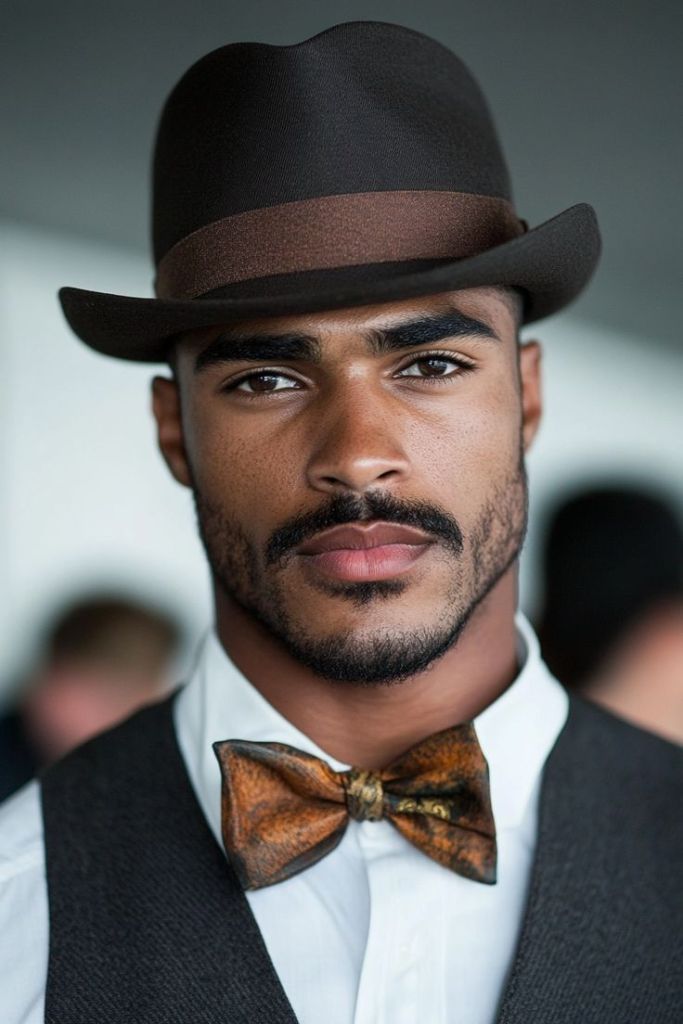
The struggle of the “Brown Boy” in contemporary society represents a complex intersection of race, colorism, masculinity, and identity. It is not merely a question of visibility but of valuation—how the world perceives darker-skinned men of African descent, and how they, in turn, perceive themselves. In a world that constantly dictates beauty, strength, and worth through Eurocentric ideals, the brown-skinned boy grows up negotiating his humanity in spaces that either fear or fetishize him. His story is both sociological and spiritual, a narrative woven through generations of marginalization and resilience.
From childhood, many brown boys encounter subtle yet persistent forms of rejection. Whether through teasing, biased praise toward lighter peers, or the absence of representation in media, they learn early that their skin tone shapes how others respond to them. Studies on colorism confirm that lighter skin is often associated with higher social status, attractiveness, and opportunity, while darker skin triggers stereotypes of aggression or inferiority (Hunter, 2007). These biases distort self-esteem, forcing brown boys to internalize shame before they even understand its source.
The media perpetuates these disparities through selective glorification. In film and advertising, lighter-skinned men are more likely to be portrayed as romantic leads, while darker men are typecast as villains or hypermasculine figures (Russell, Wilson, & Hall, 1992). This limited representation teaches brown boys that their value lies not in emotional intelligence or creativity, but in physical dominance or stoicism. Such portrayals strip away the complexity of Black and brown male identity, reducing humanity to stereotype.
Masculinity becomes a double-edged sword for the brown boy. On one hand, he is expected to embody strength, resilience, and control; on the other, these same traits are used to justify fear and criminalization. Society tells him to “man up” while simultaneously punishing him for appearing “too masculine.” This contradiction leaves little room for vulnerability—a key ingredient of emotional health. As bell hooks (2004) notes, patriarchal masculinity denies men access to their full humanity, trapping them behind masks of silence and anger.
The burden of perception extends beyond media and social norms into institutional life. In schools, brown boys are disproportionately disciplined compared to their lighter or white peers for the same behaviors (Ferguson, 2001). They are labeled “troublemakers” or “disruptive” rather than “leaders” or “gifted.” This early criminalization creates a psychological prison that follows them into adulthood, shaping their self-concept and limiting future possibilities. The result is an invisible cage built from others’ expectations.
Colorism also manifests within the Black community itself, where colonial hierarchies of complexion persist. Brown boys often find themselves “too dark” to be considered desirable in mainstream spaces yet “not dark enough” to be validated as authentically Black in others. This in-between identity can create deep internal conflict. It is a wound inherited from slavery, when lighter-skinned slaves were given preferential treatment as house servants while darker-skinned individuals labored in the fields (Hall, 1992). These divisions fractured unity and continue to echo through generations.
In romantic relationships, the brown boy’s dilemma is intensified. Studies have shown that women across many racial groups often rate lighter-skinned men as more attractive or “safe” partners (Harrison & Thomas, 2009). Meanwhile, darker men are either stigmatized as threatening or exotified as hypersexual. Both extremes deny them full personhood. Such experiences can breed insecurity and mistrust, complicating intimacy and self-acceptance.
Spiritually, the brown boy wrestles with a deeper question: “Who am I beyond what the world sees?” In a biblical sense, he is a reflection of divine creation, made in the image of God (Genesis 1:27). Yet societal conditioning distorts this truth, teaching him to equate his reflection with rejection. The book of Psalms reminds him that he is “fearfully and wonderfully made” (Psalm 139:14, KJV), but without affirmation, he struggles to believe it. His dilemma becomes not only social but spiritual—a battle for his soul’s self-worth.
The psychological toll of colorism on men is often overlooked. While much of the discourse on colorism focuses on women, men also endure its scars in silence. They are taught that emotions are weakness, so they suppress their pain. Over time, this repression manifests as anger, isolation, or detachment. As psychologists have found, unresolved racial trauma can lead to chronic stress and depressive symptoms among men of color (Williams & Mohammed, 2009). Healing thus requires both communal empathy and individual vulnerability.
In the realm of economics, the brown boy’s complexion can even influence professional advancement. Research indicates that darker-skinned men earn less on average than their lighter-skinned peers, even within the same racial group (Hersch, 2006). These disparities reveal that colorism is not just emotional but structural—a system that rewards proximity to whiteness. For many brown men, every professional achievement comes with the burden of overperformance to prove worthiness.
Culturally, however, the brown boy carries within him the strength of his ancestors. His melanin is a testament to resilience, survival, and divine design. African traditions often viewed dark skin as a sign of strength and connection to the earth—a physical manifestation of spiritual power. To reclaim that heritage is to undo centuries of colonial indoctrination. The brown boy must rediscover that his identity is sacred, not shameful.
The brown boy dilemma also reveals the fragility of Western beauty standards. Society’s preference for fair skin stems from colonialism, slavery, and white supremacy—systems designed to devalue darker bodies while exploiting their labor and culture. Undoing this mindset requires conscious re-education. Schools, churches, and families must affirm that beauty, intelligence, and virtue are not determined by shade but by spirit.
In art and literature, the reclamation of the brown male image has begun. Figures like Chadwick Boseman, Daniel Kaluuya, and John Boyega have challenged color hierarchies by embodying grace, intellect, and humanity in their performances. Their visibility offers young brown boys a mirror of possibility. Representation matters—not as tokenism, but as liberation from erasure.
Despite the obstacles, many brown men rise as leaders, scholars, and visionaries. They transform pain into purpose, channeling rejection into creativity and service. Their triumph is quiet yet profound: to love themselves in a world that taught them not to. This act of self-love is revolutionary. As Frantz Fanon (1952) wrote in Black Skin, White Masks, the oppressed must reclaim their identity through self-definition rather than external validation.
The journey of the brown boy is ultimately one toward wholeness. Healing begins when he confronts the lies that equate his worth with whiteness. It continues when he embraces his complexity—strong yet sensitive, dark yet luminous, masculine yet nurturing. His liberation is not the denial of his pain but the transformation of it.
Faith plays a central role in this restoration. In God’s eyes, there is no hierarchy of hue; the soul’s radiance transcends skin. The brown boy must learn to see himself through divine rather than colonial eyes. When he does, he becomes a vessel of light, a living rebuke to the systems that tried to dim him.
In conclusion, The Brown Boy Dilemma is not simply a racial or aesthetic issue—it is a moral one. It challenges humanity to dismantle the illusions of color-based worth and to restore dignity to all shades of creation. The brown boy’s struggle mirrors the world’s sickness, but his healing reflects its hope. His existence testifies that beauty, power, and divinity cannot be measured by tone—they are written in the soul, where no shadow can reach.
References
Fanon, F. (1952). Black Skin, White Masks. Grove Press.
Ferguson, A. A. (2001). Bad Boys: Public Schools in the Making of Black Masculinity. University of Michigan Press.
Hall, R. E. (1992). Bias among African Americans regarding skin color: Implications for social work practice. Research on Social Work Practice, 2(4), 479–486.
Harrison, M. S., & Thomas, K. M. (2009). The hidden prejudice in selection: A research agenda to examine color bias in organizations. Journal of Organizational Behavior, 30(8), 1031–1046.
Hersch, J. (2006). Skin tone effects among African Americans: Perceptions and reality. American Economic Review, 96(2), 251–255.
hooks, b. (2004). The Will to Change: Men, Masculinity, and Love. Atria Books.
Hunter, M. (2007). The persistent problem of colorism: Skin tone, status, and inequality. Sociology Compass, 1(1), 237–254.
Russell, K., Wilson, M., & Hall, R. (1992). The Color Complex: The Politics of Skin Color among African Americans. Harcourt Brace Jovanovich.
Williams, D. R., & Mohammed, S. A. (2009). Discrimination and racial disparities in health: Evidence and needed research. Journal of Behavioral Medicine, 32(1), 20–47.
Discover more from THE BROWN GIRL DILEMMA
Subscribe to get the latest posts sent to your email.
 THE BROWN GIRL DILEMMA