
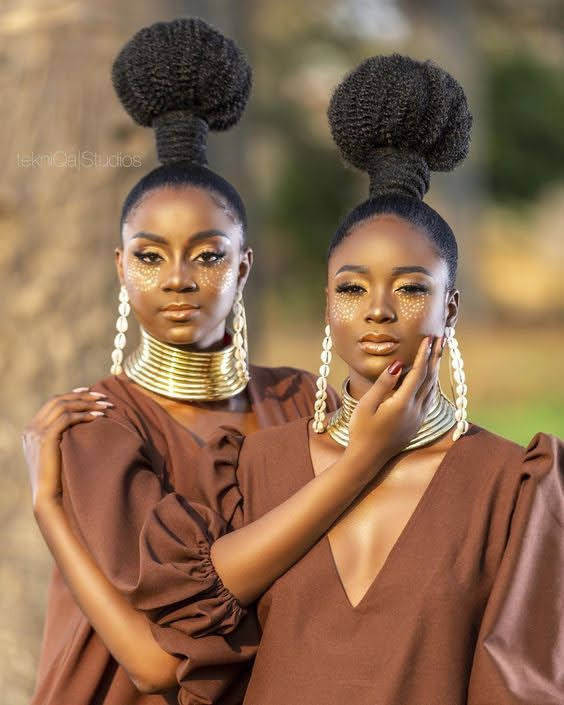
The struggle of identity within the Black community is a painful and persistent issue. One of the most overlooked dimensions of racial identity is the tension that exists between light skin and dark skin among people of African descent. While white supremacy has historically grouped all Black people together as one inferior category, within the Black community itself, a separate hierarchy has emerged—one that privileges certain shades of Blackness while marginalizing others. This creates the paradoxical reality of being “not light enough, not dark enough.”
For centuries, white colonial powers and enslavers classified Black people according to skin shade, hair texture, and physical features. Terms like “mulatto,” “quadroon,” and “octoroon” were not only derogatory but used as social markers to divide people of African descent. The “paper bag test” and other discriminatory practices reinforced the belief that lighter skin granted access to privilege, while darker skin meant rejection and hardship. White society, however, saw no nuance: regardless of tone, Blackness was stigmatized.
From the perspective of white supremacy, “all Black is Black.” The infamous “one-drop rule” in American history defined anyone with any African ancestry as Black. This erasure of diversity among Black people was designed to maintain control and strip away individuality. White America, by and large, treated Black people as a monolithic group—criminalized, marginalized, and dehumanized. Thus, while colorism was weaponized within the Black community, the larger society did not care whether a person was caramel, mahogany, or ebony—they were all subject to racism.
Within the Black community, however, a more complicated story unfolds. Here, color became not just a descriptor but a social currency. Lighter-skinned individuals often received preferential treatment in employment, education, entertainment, and even in dating. Darker-skinned individuals were unfairly stereotyped as more aggressive, less attractive, or less intelligent. This has led to deep wounds of mistrust, resentment, and division that persist to this day.
The painful truth is that Black people, who should be united in solidarity against systemic oppression, sometimes internalize the very biases created by white supremacy. This is evident in beauty standards that favor European features, in families where children of different shades are treated unequally, and in media portrayals that elevate lighter-skinned actors, singers, and models. The oppression from without has been compounded by discrimination from within.
At the heart of the dilemma lies the question: Who gets to define beauty, worth, and identity? The Bible reminds us that true value comes not from outward appearance but from the inward spirit. “But the LORD said unto Samuel, Look not on his countenance, or on the height of his stature; because I have refused him: for the LORD seeth not as man seeth; for man looketh on the outward appearance, but the LORD looketh on the heart” (1 Samuel 16:7, KJV). This verse reminds us that the very measuring sticks of color, shade, and tone are human constructions, not divine truths.
However, despite this spiritual truth, the earthly reality of colorism causes tangible pain. Many brown-skinned women, for example, express feeling invisible—too dark to be considered exotic or glamorous, yet not dark enough to be celebrated for “deep melanin beauty.” Men in similar positions may find themselves caught between stereotypes, never fitting cleanly into societal expectations of attractiveness or masculinity.
This sense of being “in between” breeds confusion in identity formation. Adolescents and young adults often internalize these messages, leading to low self-esteem, identity crises, and even depression. Social psychology research shows that constant invalidation of one’s identity leads to both intrapersonal and interpersonal struggles (Hunter, 2007). Thus, the “not light enough, not dark enough” paradox becomes not just a matter of aesthetics, but of psychological survival.
From the white gaze, Black people are subjected to stereotypes that lump them together: lazy, criminal, hypersexual, or less intelligent. These false narratives have been historically perpetuated through pseudo-science, racist media, and discriminatory policies. From the Black gaze, however, the nuances of complexion become battlegrounds of belonging. This dual oppression creates a unique burden where one can feel simultaneously over-visible to white society and under-valued within their own community.
One of the most tragic consequences of colorism is its impact on family dynamics. In many Black households, siblings of varying shades may be treated differently. A lighter child may be praised for “good hair” while a darker child may be chastised or teased. Such wounds cut deeply and last for generations. This dysfunction reflects the scripture: “Every kingdom divided against itself is brought to desolation; and every city or house divided against itself shall not stand” (Matthew 12:25, KJV). The Black community’s division over shade is one of the tools the enemy uses to weaken unity.
Another issue that arises is how Black men and women perceive each other through the lens of colorism. Research has shown that men often demonstrate preference toward lighter-skinned women in dating and marriage, while women may assume lighter-skinned men are more successful or less threatening (Burke, 2008). These biases play into centuries of social conditioning. Yet, these preferences reinforce division, leaving many feeling unloved and unwanted simply because of their shade.
The entertainment industry has perpetuated these biases. From the casting of actresses in leading roles to the glorification of certain musicians, there is a noticeable pattern: lighter skin is often framed as more marketable. This has left countless talented darker-skinned artists struggling to gain recognition, despite their abilities. Brown-skinned individuals find themselves marginalized as well, rarely fitting the archetype of “beautiful enough” or “authentic enough.”
Education and economics also reflect color bias. Studies have shown that darker-skinned individuals often receive harsher sentences in the criminal justice system, fewer job opportunities, and less pay than their lighter-skinned counterparts (Villarreal, 2010). Brown-skinned individuals again fall into the paradox of invisibility, overlooked in favor of those deemed closer to whiteness or those visibly marked as “other.”
In addition to external discrimination, there are internal struggles of self-love. Many people spend years unlearning negative messages about their hair, their nose, their lips, or their skin. Products like bleaching creams and hair straighteners continue to profit from these insecurities. The Bible warns against this self-hatred: “Thou art all fair, my love; there is no spot in thee” (Song of Solomon 4:7, KJV). To deny one’s natural beauty is to deny the Creator’s design.
Colorism also intersects with class. Historically, lighter-skinned Black people were more likely to be freed from slavery, receive education, or own property. This created a lasting generational wealth gap even within the Black community. Today, economic mobility is still influenced by shade in subtle ways, compounding the cycle of inequality.
Spiritual solutions are necessary to heal these wounds. The Church should play a leading role in dismantling colorism, teaching that all shades of Black are fearfully and wonderfully made (Psalm 139:14, KJV). Yet, churches have not always been free from these biases. It is vital for Christian communities to confront these divisions openly and to re-center identity in Christ rather than complexion.
Another issue worth mentioning is representation in relationships and family. Children raised in homes where one parent is lighter and the other darker may internalize confusion about their own identity. If not guided with love and affirmation, these children can grow up feeling as though they do not belong fully to either side. The danger is raising another generation caught in the cycle of shade hierarchy.
Healing begins with awareness. To break free from the “not light enough, not dark enough” dilemma, the Black community must address the historical roots of colorism and confront the ways it manifests today. This requires honest conversations, re-education, and intentional celebration of all shades of Blackness.
It also requires rejecting the false narratives imposed by white supremacy. The fact remains: whether light, brown, or dark, Black people share the same struggles under systemic racism. Police brutality, mass incarceration, voter suppression, and economic disenfranchisement do not discriminate by shade. To the oppressor, all are Black. Therefore, unity is essential.
At the same time, individuals must commit to personal healing. This means rejecting colorist preferences, affirming the beauty of all shades, and speaking life rather than perpetuating stereotypes. “Death and life are in the power of the tongue: and they that love it shall eat the fruit thereof” (Proverbs 18:21, KJV). Words spoken in families, schools, and communities can either heal or harm.
Ultimately, the dilemma of being “not light enough, not dark enough” is one born out of oppression and sustained by division. Yet, the truth of God’s Word offers freedom: “And ye shall know the truth, and the truth shall make you free” (John 8:32, KJV). The truth is that all shades of melanin are gifts from the Creator, carrying history, resilience, and beauty.
In order for Black people to thrive, there must be a rejection of hierarchies that serve no purpose but to divide. Healing requires a commitment to love, unity, and equality, rooted in both cultural pride and biblical truth. Only then can the scars of colorism begin to fade.
References
- Burke, M. (2008). Colorism and African American women in the United States. Journal of Black Studies, 39(3), 348–367.
- Hunter, M. (2007). The persistent problem of colorism: Skin tone, status, and inequality. Sociology Compass, 1(1), 237–254.
- Villarreal, A. (2010). Stratification by skin color in contemporary Mexico. American Sociological Review, 75(5), 652–678.
- The Holy Bible, King James Version (KJV).
Discover more from THE BROWN GIRL DILEMMA
Subscribe to get the latest posts sent to your email.
 THE BROWN GIRL DILEMMA