
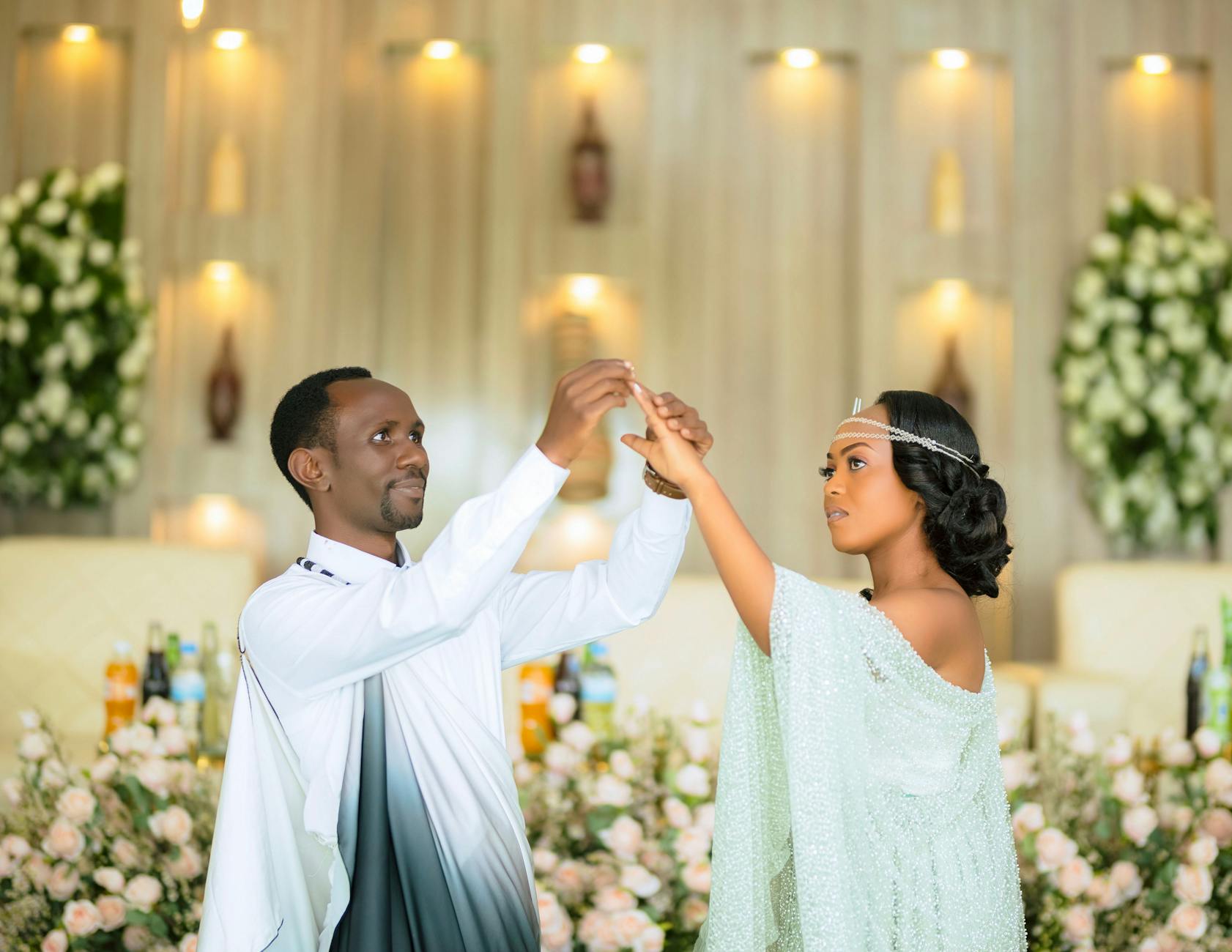
Black love is a sacred rhythm. When Ebony meets Onyx, two distinct yet harmonizing souls begin a dance that is both ancient and revolutionary. This is not just romance—it is the joining of histories, traumas, dreams, and futures. It is a dance choreographed by survival and softened by grace.
The meeting of Black men and Black women is layered with complexity. History has not been kind to their love. Colonialism and slavery sought to dismantle the Black family, separating husbands from wives and children from parents. Yet, love persisted. Secret marriages, whispered promises, and broom-jumping ceremonies were acts of defiance and devotion (King, 2011).
Today, the dance continues, but new obstacles appear. Mass incarceration disproportionately removes Black men from homes, while societal pressures burden Black women with the expectation of endless strength (Alexander, 2010). The result is a relational tension that sometimes feels like a dance with one partner missing.
Psychologically, this dance is about healing attachment wounds. Black couples often carry intergenerational trauma that affects how they trust, communicate, and show affection. Research in trauma psychology shows that secure relationships can actually rewire the brain, restoring safety where there was once fear (Siegel, 2012).
The dance is also spiritual. The union of man and woman is a reflection of divine love. Genesis 2:24 declares, “Therefore shall a man leave his father and his mother, and shall cleave unto his wife: and they shall be one flesh.” When Ebony and Onyx dance in unity, they become a living parable of God’s covenant.
But this dance is not always smooth. Gender wars fueled by stereotypes create friction. Black men are labeled as irresponsible or absent, while Black women are stereotyped as angry or domineering (Collins, 2000). These caricatures must be unlearned for authentic intimacy to flourish.
Communication is the rhythm that keeps the dance flowing. Without honest dialogue, couples misstep and collide. Healthy Black relationships require vulnerability—Black men opening up despite societal messaging that equates emotions with weakness, and Black women finding safe spaces to rest from the pressure of perfection.
Forgiveness is the choreography that keeps the dance alive. Every relationship encounters pain—whether from betrayal, disappointment, or misunderstanding. Forgiveness, both of self and of one’s partner, resets the rhythm and allows the dance to continue (Matthew 6:14–15).
Economics also affects the dance. Financial stress can strain even the strongest relationships. Studies show that economic stability contributes to marital satisfaction (Conger et al., 2010). When Ebony and Onyx build together—saving, investing, and dreaming—they turn their dance floor into an empire.
Culture fuels the soundtrack of Black love. From slow jams to spoken word, from soul food dinners to Sunday mornings in church, culture provides the music that guides each step. Black love is celebrated in everything from gospel duets to R&B ballads to street art murals. 🎶
Representation matters, too. Seeing images of Black couples thriving in media helps rewrite the narrative. Films like Love Jones and shows like Queen Sugar capture the nuance, passion, and vulnerability of Black relationships, showing the world that this dance is beautiful.
Raising children is one of the most powerful parts of the dance. When sons see their fathers lead with integrity and daughters see their mothers loved well, they learn the steps to healthy relationships. This is how generational cycles are broken and re-scripted for the better.
Spiritually, prayer can reset the dance floor. Couples who pray together have higher levels of relational satisfaction and resilience (Mahoney et al., 2013). Prayer invites God to lead, making Him the DJ of the dance.
Ultimately, when Ebony meets Onyx, they teach the world about resilience, about passion, about grace. Their dance is not just for themselves but for the generations watching, waiting, and learning. This is a dance that refuses to die, no matter how often history has tried to silence its music.
And so, the dance continues—sometimes tender, sometimes fierce, always sacred. Ebony and Onyx, hand in hand, moving together toward healing, wholeness, and legacy. Their dance is the sound of survival turning into celebration.
References
- Alexander, M. (2010). The new Jim Crow: Mass incarceration in the age of colorblindness. The New Press.
- Collins, P. H. (2000). Black feminist thought: Knowledge, consciousness, and the politics of empowerment. Routledge.
- Conger, R. D., Conger, K. J., & Martin, M. J. (2010). Socioeconomic status, family processes, and individual development. Journal of Marriage and Family, 72(3), 685–704.
- King, W. (2011). Stolen childhood: Slave youth in nineteenth-century America. Indiana University Press.
- Mahoney, A., Pargament, K. I., Murray-Swank, A., & Murray-Swank, N. (2013). Religion and the sanctification of family relationships. Review of Religious Research, 44(3), 220–236.
- Siegel, D. J. (2012). The developing mind: How relationships and the brain interact to shape who we are. Guilford Press.
Discover more from THE BROWN GIRL DILEMMA
Subscribe to get the latest posts sent to your email.
 THE BROWN GIRL DILEMMA